Home Blog Page 6502

Not giving up

The joy that the Lakers experienced in the aftermath of their triumph over the Rockets the other day was quickly replaced by the disappointment of defeat against the Grizzlies yesterday. It didn’t matter that they trekked to the FedExForum on the second night of a back-to-back set, or that they remained incomplete in the face of injuries and virus protocols. As far as they were concerned, they managed to drop yet another winnable match, with their sixth defeat in seven outings underscoring the unevenness of their roster.

That the Lakers’ travails have coincided with top dog LeBron James’ most productive stretch of hoops in a long, long while serves only to highlight their confounding situation. There was once a time when an outstanding performance from the four-time Most Valuable Player awardee automatically translated to a win. Not anymore; if anything, his singular exploits all the more indicate his relative lack of support. For all the pluses his advanced metrics show, his inability to convert these to positive vibes speaks volumes about his dwindling influence over match outcomes.

It’s not James’ fault, to be sure. And if there’s any silver lining to the Lakers’ swoon, it’s that he seems to have found a place in the lineup where he can be extremely effective in the short and medium terms. Certainly, playing at the five spot in this day and age of pace and space puts the spotlight on his strengths even as Father Time slowly catches up to him. Heck, it even figures to lengthen his career; with the likes of Joel Embiid and Nikola Jokić now clearly the exception than the rule, he can hold his own against opposing centers on defense while running rings around them at the other end of the court.

That said, the Lakers — and James himself — have never been about small victories and simple pleasures. Given their pedigree, it’s invariably the Larry O’Brien Trophy or bust for them. And with the 17-time All-Star, in his own words, “on the other side of the hill,” he knows his chances of adding to his tally of titles are fading fast. So, yes, he’ll keep plodding on. And, yes, he’ll put mind and muscle to work to try and find a solution. He’s not the greatest problem solver in modern hoops for nothing, and the last thing he will be doing is giving up.


Anthony L. Cuaycong has been writing Courtside since BusinessWorld introduced a Sports section in 1994. He is a consultant on strategic planning, operations and Human Resources management, corporate communications, and business development.

World nations try to balance Omicron restrictions while keeping economies open

Image via Flickr/US Navy

ROME/WASHINGTON — Global coronavirus disease 2019 (COVID-19) infections hit a record high over the past seven-day period, Reuters data showed on Wednesday, as the Omicron variant raced out of control and governments tried to contain its spread without paralyzing fragile economies.  

Almost 900,000 cases were detected on average each day worldwide between Dec. 22 and 28. A number of countries posted all-time highs during the previous 24 hours, including Argentina, Australia, Bolivia, the United States and many nations in Europe.   

Studies have suggested Omicron is less deadly than some previous variants. But the sheer number of people testing positive could overwhelm hospitals in some countries and leave businesses struggling to carry on without workers who government officials have ordered to quarantine.   

Researchers in South Africa found that a key part of the immune system’s second-line defense — its T cells — are highly effective at recognizing and attacking the Omicron variant, preventing most infections from progressing to critical illness.  

Political leaders in some nations, fearful of the economic impact of keeping so many workers at home, were considering shortening the period required for isolation after a positive COVID test or exposure. 

Spain said on Wednesday it was reducing the quarantine period to seven days from 10, while Italy said it was planning to relax isolation rules for those who came into close contact with sufferers of the virus.   

Earlier this week US health authorities released new guidance shortening the isolation period for people with a confirmed infection to five days from 10, so long as they are asymptomatic.   

“I am highly concerned that Omicron, being highly transmissible and spreading at the same time as Delta, is leading to a tsunami of cases,” WHO Director-General Tedros Adhanom Ghebreyesus told a news briefing.   

French Health Minister Olivier Veran told lawmakers France was seeing a “dizzying” rise in cases, with 208,000 reported in the space of 24 hours — a national and European record.   

Britain, Italy, Spain, Portugal, Greece, Cyprus and Malta all registered record numbers of new cases on Tuesday, while the seven-day average number of new daily cases in the United States hit a record 258,312, according to a Reuters tally on Wednesday. The previous peak was 250,141, registered last January.   

Despite the surge in coronavirus infections, deaths and hospitalizations are comparatively low, Rochelle Walensky, the director of the US Centers for Disease Control and Prevention, said on Wednesday.   

While the current seven-day daily average of cases is about 240,400, up 60% over the previous week, the hospitalization rate for the same period is up just 14% to about 9,000 per day over the same period. Deaths were down about 7% to 1,100 per day, Ms. Walensky added.   

Some experts questioned the new CDC rules that halve the isolation period for asymptomatic coronavirus infections, saying more infections could result. The new directive does not require testing to confirm that a person is no longer infectious before they go back to work or socialize.   

“They were trying to strike a balance: How do we do good public health principles at the time we don’t have to get to the point where you’re forced to essentially shut the country down,” Anthony Fauci, the US government’s top infectious disease official, told MSNBC in explaining the CDC’s new guidance.   

Britain reported 183,037 COVID-19 cases on Wednesday, a new record and over 50,000 more than the previous high registered just a day earlier, government statistics showed. Ireland, too, reported record cases on Wednesday, with more than 16,000 new infections.   

British Prime Minister Boris Johnson has said he will not issue new restrictions this year to limit the spread of Omicron, which now accounts for roughly 90% of all community infections, according to health officials.   

Australia registered almost 18,300 new cases, eclipsing Tuesday’s previous pandemic high of around 11,300.   

In Spain, demand for free testing kits from the Madrid regional government far outstripped supply, with long queues forming outside pharmacies.   

Governments are increasingly worried by the economic impact of huge numbers of people being forced into isolation because they had been in contact with a coronavirus sufferer.   

“We just can’t have everybody just being taken out of circulation because they just happen to be at a particular place at a particular time,” Australian Prime Minister Scott Morrison told reporters.   

Mr. Morrison wants to make urgent changes to COVID-19 testing rules to ease pressure on testing sites. He said Australia needed “a gear change” to manage overburdened laboratories and get people out of isolation.   

While Spain and Italy moved to relax some isolation rules, China stuck to its policy of zero tolerance, keeping 13 million people in Xian, capital of central Shaanxi province, under rigid lockdown for a seventh day as 151 new cases were reported on Tuesday, albeit none with Omicron so far.   

“I just want to go home,” said a 32-year-old mechanic who was in the city on business last week when it was effectively shut off from the outside world. — Crispian Balmer and Alexandra Alper/Reuters 

Hong Kong police charges two former Stand News editors with sedition

WIKIMEDIA COMMONS

HONG KONG — Two former senior editors arrested in a Hong Kong police crackdown on a pro-democracy media organization were charged on Thursday with sedition-related offences, national security authorities said. 

About 200 police raided the office of the Stand News online publication on Wednesday, froze its assets and arrested seven current and former senior editors and former board members. 

The raid was the latest in a crackdown on the media and on dissent in general in the former British colony since China imposed a tough national security law in the city last year aimed at putting an end to months of pro-democracy protests. 

The National Security Department of the police said in a statement it had laid charges of “conspiracy to publish seditious publications” against two men, aged 34 and 52 respectively. Police did not identify the pair. 

The same charge was extended to an online media company, it said, without identifying Stand News, in line with its practice. 

“The other arrestees are being detained for further enquires,” the department said. 

Police earlier said seven people had been arrested “conspiracy to publish seditious publications.” 

Media said the seven were current and former senior editors and former board members of Stand News. 

Media advocacy groups, some Western governments, including Canada and Germany, and the U.N. Human Rights Office condemned the raid on Stand News and the arrests as a sign of erosion of press freedom in the global financial hub. 

Hong Kong returned to Chinese rule in 1997 with the promise that wide-ranging individual rights, including a free press, would be protected. 

The city government’s leader, Carrie Lam, said the action against Stand News was aimed at seditious activity not the suppression of the media. 

“These actions have nothing to do with so-called suppression of press freedom,” Hong Kong leader Carrie Lam told reporters. 

“Journalism is not seditious … but seditious activities could not be condoned under the guise of news reporting.” 

‘BLACK SHEEP’
Set up in 2014 as a non-profit organization, Stand News was the most prominent remaining pro-democracy publication in Hong Kong after a national security investigation this year led to the closure of jailed tycoon Jimmy Lai’s Apple Daily tabloid. 

Stand News shut down hours after the raid and all of its employees were dismissed. Its website was not accessible on Thursday and its London bureau chief, Yeung Tin Shui, said on Facebook his office had also closed. 

Media said the two people charged were former chief editor Chung Pui-kuen and Patrick Lam, acting chief editor at the time of the arrest. They are expected to appear in the West Kowloon Magistrates’ Court later on Thursday. 

Four former members of the Stand News board  former democratic legislator Margaret Ng, pop singer Denise Ho, Chow Tat-chi and Christine Fang – remain in police detention. Chung’s wife, Chan Pui-man, formerly with Apple Daily, was re-arrested in prison. 

US Secretary of State Antony Blinken called on Chinese and Hong Kong authorities to immediately release those arrested. Ms. Lam, referring to Blinken’s call, said that would be against the rule of law. 

The Chinese foreign ministry’s Hong Kong office said support for press freedom was being used as an excuse to disrupt stability in the city. 

“Those who engage in activities that endanger national security and undermine the rule of law and public order under the cover of journalism are the black sheep tarnishing the press freedom and will be held accountable,” it said in a statement. — Clare Jim and Sara Cheng/Reuters

Italy’s restaurants cry for help as COVID bites into New Year bookings

UNSPLASH

ROME — Italian restaurant and club owners are seeking urgent government support due to increased cancellations prompted by a surge in coronavirus infections, they said in a statement on Wednesday.  

Business group Fipe-Confcommercio said the growing number of cases and the quarantine rules imposed on close contacts of COVID-19 sufferers had prompted 25%–30% cancellations in New Year’s Eve dinner bookings.  

“December … which alone accounts for 10% of restaurant revenues, is largely compromised,” they said, asking the government to extend a coronavirus disease 2019 (COVID-19) debt moratorium and a lay-off compensation scheme for workers.  

Daily cases have soared this week, peaking at a record high 78,313 on Tuesday as the highly contagious Omicron variant spreads.  

Prime Minister Mario Draghi has tightened COVID-19 rules for the holiday period, banning concerts and open-air events and shutting down discos until Jan. 31.  

“Discos and clubs have literally been wrecked without any prior notice,” Confcommercio said.  

The virus is ravaging several sectors of public life, including theaters. Milan’s La Scala opera house was forced to cancel a ballet scheduled for this week due to growing infections among the dancers.  

Italy has also imposed restrictions on travelers, including on those inside the European Union who need to take a coronavirus test before departure, a move that provoked the ire of tour operators and hotel owners.  

Tourism minister Massimo Garavaglia said in a statement he agrees with the concerns about the lay-off scheme and urged the labor ministry to act quickly.  

“The spread of the new variant risks causing social damage, along with harming revenues,” he said. — Reuters

Financial literacy or luck? The year small-time traders made a big impact

UNSPLASH

LONDON/NEW YORK — In May, San Diego-based Emily was feeling flush from a year of double-digit gains earned from trading stocks. Equity options, which some fellow stay-at-home investors were dabbling in, would juice up her returns, she decided.  

Emily was among the army of small-time investors who shook up stock markets in 2021. Some earned fortunes by squeezing out hedge funds from short positions on so-called “meme” stocks such as retailer GameStop and cinema group AMC Entertainment.  

But AMC proved to be Emily’s downfall. As its shares hovered around $15, she began selling “naked call options” that allowed holders to buy underlying stock from her at pre-agreed price. Instead of falling as expected, however, AMC stock rocketed.  

Naked options meant Emily did not actually own the shares. When AMC shares hit $72.62 on June 2, margin calls kicked in — essentially a demand for cash to top up her brokerage account.  

“I was on the phone with [brokerage] TD Ameritrade’s margin team, telling them to give me more time … but it was either I sell it or they sell it,” she said. Eventually, she said she liquidated her portfolio, losing $670,000.  

Emily is not the trader’s real name but she provided documents confirming her identity. Reuters could not independently verify the size of her losses but reviewed brokerage statements showing she sold sizable call options on AMC and other stocks in May.  

“It was very devastating. I couldn’t sleep,” Emily said. Having quit her human resources job at the end of 2019 to trade full time, she now works as a delivery driver.  

Her account is a cautionary tale of what can happen when booming markets tempt inexperienced investors to risk it all.  

But for every Emily, there is a small-time trader who surfed this year’s stock market boom, energized by economic recovery, central bank money-printing and government cash handouts.  

TD Ameritrade, the broker Emily used, says along with broker Schwab, it added six million new accounts this year.  

Conditions were ripe for retail trading even pre-pandemic, as new mobile platforms enabled individuals to buy stocks, or fractions of stocks, at tiny or even non-existent commissions.  

“Everyone can get their bit of the pie,” said Ben Phillips, a 30-year-old London-based pilot who started trading in 2019. He calls himself a long-term investor, but also day trades “as a bit of fun, a bit of gambling.”  

The retail wave was the “main reason” global equity demand reached $1.1 trillion this year, JPMorgan strategist Nikolaos Panigirtzoglou said.  

“By acting as momentum traders, retail investors will most likely continue to propagate the equity markets, at least for the coming year. They will have no alternatives because interest rates will stay near 0%,” he added.  

BIG BUYERS  

Retail trading, unlike meme crazes, seems unlikely to fade.  

US retail traders have bought a net $281 billion worth of US stocks so far this year, against $240 billion in 2020 and $38 billion in 2019, according to Vanda Research.  

Many forayed into equity options, lifting US volumes more than 40% from 2020, analytics firm Trade Alert estimates.  

They also account for up to half the trading in single-stock options — wagers on individual shares — according to JPMorgan. That in turn took such options’ share of total option volumes to a record high this year, Reuters analysis of Trade Alert data shows.  

The retail frenzy is most pronounced in US markets and even platforms popular in Europe say traffic is generally highest in US companies such as Tesla, Nio, Apple, Amazon, and GameStop.  

But the trend is broadening.  

Russia’s Moscow Exchange says 26 million retail accounts are registered with it, up four-fold from early 2020, and both the bourse and brokerage Tinkoff plan to expand trading hours, including into the weekend.  

In India, 19% of trading in November was by mobile phone — one barometer of retail activity — according to Bombay Stock Exchange data, versus 7% in November 2019.  

SLOWDOWN  

Trading activity growth has slowed, possibly as central banks signal higher interest rates are coming.  

Brokerage eToro’s online platform, which has two-thirds of its customers in Europe, saw 106 million trades in the third quarter of 2021, half of the first quarter total, though well above early-2019 levels of 63 million.  

Meagre returns elsewhere persuaded Mr. Phillips, the pilot, to start trading in late 2019.  

While his Tesla holdings were hit hard by the March 2020 sell-off, he bought more after watching YouTube videos where traders advised watchers to “buy the dip.”  

The subsequent bounce quadrupled Mr. Phillips’ initial 15,000-pound ($20,100) outlay, he said, but he has no plans to sell, citing his “10-year conviction” on Tesla.  

Others such as Dan, a 24-year-old student from northern England, caught the trading bug through “boredom” and reading online chatrooms such as “WallStreetBets” that pumped meme stocks.  

Requesting his full name not be used, Dan says he made four times his 1,000-pound investment in GameStop, though friends who got in late lost money.  

He has since quit day trading, calling it “luck,” but invests in stocks via a British savings account. The experience had “helped me be more financially literate,” he added.  

Emily, the Californian trader, also still trades but in smaller volumes. She hopes one day to rebuild her portfolio. — Tommy Wilkes, Saqib Iqbal Ahmed and Elizabeth Howcroft/Reuters  

What can world leaders do to make COP26 deforestation pledge a success?

REUTERS

KUALA LUMPUR — Global leaders who have pledged to halt deforestation by 2030 must move quickly to strengthen forest protection laws, line up funding, and include indigenous people in conservation efforts to have the best chance of success, environmentalists said.  

More than 100 leaders last month agreed to halt and reverse deforestation and land degradation by the end of the decade, underpinned by $19 billion in public and private funds to invest in protecting and restoring forests.  

The commitment — made at the COP26 climate talks in Glasgow and backed by forest-rich countries such as Brazil, Indonesia, and the Democratic Republic of Congo — covers forests totaling more than 13 million square miles (33.7 million sq km).  

Fran Raymond Price, global forest practice lead at environmental group WWF International, said there was an urgent need to see the Glasgow forest declaration turned into meaningful action.  

“The political will demonstrated by the governments who signed this commitment is a welcome first step,” she told the Thomson Reuters Foundation.  

“[But] we need to see this now translated into legislative action within the next year or two, with transparency, accountability and involvement of … indigenous peoples and local communities,” she said.  

Cutting down forests has major implications for global goals to curb warming, as trees absorb about a third of the planet-heating carbon emissions produced worldwide, but release the carbon they store when they rot or are burned.  

Forests also provide food and livelihoods, clean the air and water, support human health, are an essential habitat for wildlife, regulate rainfall and offer flood protection.  

Last year, an area of tropical forest the size of the Netherlands was lost, according to monitoring service Global Forest Watch.  

The Glasgow declaration was broadly welcomed but many environmentalists noted similar zero deforestation pledges had repeatedly been made and not met by both governments and businesses.  

Those include the 2014 New York Declaration on Forest (NYDF), the United Nations sustainability goals and targets set by global household brands.  

Under the Glasgow pledge, further leader and ministerial meetings are expected in 2022 and beyond to assess progress and drive implementation of the pact.  

“Transparency, as well as continued pressure from civil society, indigenous groups and local communities, and consumers, will be critical elements to monitor the progress on commitments and enable success,” said Ms. Price on the deal’s implementation.  

“For the future of our forests, we need this declaration to succeed.”  

FOREST CONVERSION BANS  

An annual report published in late October on the NYDF — backed by more than 200 countries, firms and green groups — found that the sustained reductions in forest loss needed to meet its 2030 target to end deforestation are highly unlikely.  

To avoid the Glasgow pact meeting a similar fate, countries that committed to the accord and that import deforestation-risk commodities — like palm oil, soy, timber and beef — need to quickly introduce legislation and regulations to boost conservation.  

Companies in richer countries like China, the United States, Britain and those in the European Union often rely on such raw materials to fuel their businesses — but don’t always have safeguards to protect forests.  

There has been some progress, however, with both the EU and the United States proposing new laws aimed at curbing the import of commodities linked to deforestation.  

Countries should also make it mandatory for businesses in those commodity sectors to put in place human rights and deforestation safeguards, environmentalists said.  

As well, companies should use technology to monitor forest destruction and ensure supply chains are sustainable and transparent, they said.  

Forest-rich nations where many of these commodities are produced will also need to implement new and stricter laws to halt deforestation and land conversion, they added.  

Those should include incentives for small landowners and local communities to bolster forest protection, they said.  

“A good and logical first step by the signatory governments would be to issue a moratorium on all further destruction and degradation of intact forests,” said Toerris Jaeger, secretary general of the Oslo-based Rainforest Foundation Norway.  

“Once an area of intact forests is fragmented and opened up through road construction, it’s extremely hard to avoid further deforestation and loss of carbon to the atmosphere.”  

Indonesia’s environment minister dismissed as “inappropriate and unfair” the Glasgow deal to end deforestation by 2030, in an abrupt about-face just days after her country agreed to the pledge.  

But the Southeast Asian nation, which is home to the world’s third-largest tropical forests and also its biggest palm-oil producer, has seen deforestation rates buck the worsening global trend in recent years.  

That is partly due to an Indonesian moratorium on new conversion permits for primary forest and peatland, and on new palm oil plantations.  

Mr. Jaeger said the most recent national climate action plans submitted by the five largest rainforest countries under the Paris Agreement would still allow 20 million hectares (49 million acres) of tropical forests to be cut down over the next decade.  

“Ending deforestation will require changes in policy, regulation, governance and financial incentives across different countries and actors, to make it more valuable to keep the forest than destroy it,” he said.  

ACT FAST  

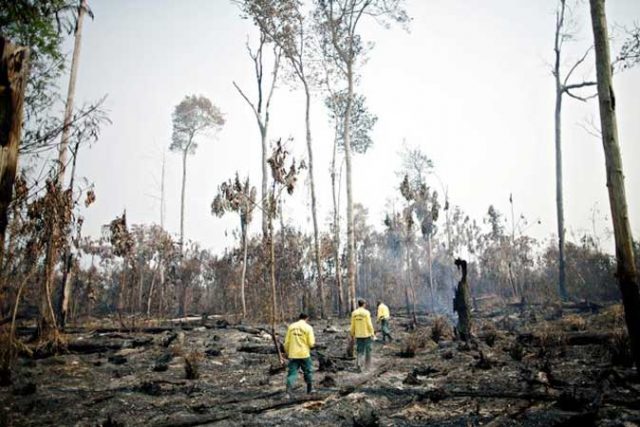
In a sign of the scale of the challenge, deforestation in Brazil’s Amazon rainforest soared 22% in a year to the highest level since 2006, the government’s annual report showed last month.  

The data undercut President Jair Bolsonaro’s assurances that the country is curbing illegal logging.  

And while causes of deforestation vary from place to place, some of the challenges faced are common across different regions, Mr. Jaeger said.  

These include a lack of policies that efficiently regulate land use and deforestation, lax or missing enforcement of the laws and regulations that do exist, and weak land rights for the traditional communities that live in and off the forests.  

Other problems are financial incentives that stimulate economic or subsistence activities driving deforestation, and a lack of financial reward for protecting forests, he added.  

“A joint approach across all these dimensions is needed to bend the curve and end deforestation by 2030,” he said.  

“It’s important to act fast and not wait as we approach 2030 to start reducing deforestation.”  

Nations also have to develop ways to reward the maintenance of intact forests and the restoration of degraded and deforested areas, to make it feasible to end deforestation and increase forest cover, Mr. Jaeger said.  

Funding for this will in large part have to come from rich countries, he added.  

A study published late last month by Britain’s University of Sheffield found that, globally, indigenous peoples’ lands have roughly a fifth less deforestation than non-protected areas.  

“Indigenous peoples must be at the center of forest protection,” said Kiki Taufik, head of Greenpeace’s Indonesian forests campaign.  

“Efforts to halt deforestation cannot succeed without rapid recognition of indigenous peoples’ land rights.”  

JOIN HANDS  

For the Glasgow pledge to be effective, it must include a simple reporting mechanism that transparently discloses progress, said Emmanuelle Berenger, sustainable forest management lead at certification body the Rainforest Alliance.  

As well, all government ministries must work together, not separately, on tackling deforestation, she added, while financiers and businesses also need to build strong alliances around the Glasgow declaration’s goals.  

In agriculture, firms should move rapidly to responsible sourcing, ensuring human rights are respected and local communities’ livelihoods are considered, Berenger said.  

Affordable technologies — such as satellite images — are available to monitor progress of the declaration, she said.  

Forest protection received unprecedented visibility at the COP26 meeting but countries now need to pivot swiftly from commitments and goodwill to action, including providing more finance, said Tim Christophersen, who leads the UN Environment Programme’s nature-for-climate branch.  

That should happen no later than by COP27, set to be held next year in Egypt, he added.  

The Glasgow meeting should provide the impetus for nations to build strong partnerships with buyers, sellers and other parties in the “forest carbon value chain,” especially indigenous and local people, he said.  

“Never have we attempted this kind of complex systems change in such a short time frame … but we have all we need to make it happen,” he said of the 2030 goal.  

“We have climate champions across society — from youth leadership in the Global North to the indigenous peoples of the Global South. We have only to join hands and make it happen.” — Michael Taylor/Thomson Reuters Foundation  

When should you go to hospital for a headache? A doctor explains how to tell if it’s an emergency

UNSPLASH

“I waited for hours in emergency last night with this dreadful headache, but eventually gave up and left. Should I have kept waiting at the hospital?” 

This is a surprisingly common scenario I encounter as a general practitioner. If you’re wondering how bad your headache needs to be to go to the hospital, here’s the advice I give my patients.  

Let’s start with when you definitely should go to the hospital for a bad headache.  

Serious and urgent causes of headaches include infection, bleeding, clots, and tumors. Don’t hesitate to go straight to the hospital (via ambulance, or with a trusted driver) if you notice one or more of the following:  

  • sudden onset of the worst headache you’ve ever had  
  • headache that worsens with exercise or sexual intercourse  
  • neck stiffness (new since the headache started)  
  • high fever that doesn’t lower with over-the-counter pain medication  
  • headache after trauma to your head or neck
  • personality changes and/or strange behavior
  • weakness/numbness on one side of your body.  

Three specific situations are also urgent:  

  • pregnant or recently pregnant women who develop a sudden severe headache  
  • people who are immunocompromised (such as someone living with HIV or on strong immune-suppressing medications)  
  • people who’ve had any COVID-19 vaccine in the previous four to 42 days, and who have a persistent headache despite taking simple painkillers.  

If you are reading this and identify with any of the above, stop reading now and go straight to the hospital.  

Thankfully, most headaches are less serious and can be managed without a hospital trip. But they can still take a serious toll.  

As you read this, 15% of Australians are taking painkillers for a headache.  

But just because you don’t need to race to the hospital doesn’t mean you shouldn’t get help, especially if you’re experiencing regular headaches.  

Start by making a long appointment to see a GP to discuss your headache and nothing else. Give it the time and attention it deserves.  

It’s helpful to take a record of your headaches for your doctor’s appointment: a “headache diary.”  

The most important tool doctors have to diagnose headaches is your history. You may feel they are asking a lot of questions, but that’s because there are so many possible causes. Bear with your GP as they try to get you the most accurate diagnosis.  

Here are the kinds of questions a doctor may ask, or be asking themselves while they assess you:  

  • Is the pain caused by something straightforward?  

Possible common causes include dehydration, eye/neck strain, teeth grinding, lack of sleep, or caffeine withdrawal. Even taking regular painkillers can cause “medication overuse” headaches; the cure can become the cause.  

  • Where in your head is the pain?  

Sometimes the location of the pain gives a clue. For example, about 35% of headaches are “tension headaches”, which feel like a tight band around both sides of your head. Another 4% are “cluster headaches”, which start behind one eye (which can go red and watery) and are often associated with a stuffy nose.  

  • Do you have any other symptoms accompanying the headache?  

A migraine episode may be preceded by an “aura” (such as flashes of light), and often includes symptoms like nausea or vomiting, extreme sensitivity to noise and light, and blurred vision.  

Fevers, an altered sense of smell, fatigue, and pressure in your ears are features associated with acute sinusitis.  

  • Is there a pattern to your headaches?  

Certain headaches, such as migraine episodes or tension headaches, may have triggers that set them off, including certain foods, sleep deprivation, particular smells, or emotional stress.  

Hormonal headaches track with menstrual cycles. Once an association is noticed, you may be able to pre-empt and treat headaches early.  

  • Do you have any other medical conditions?  

Rarely, very high blood pressure (a hypertensive crisis) can cause a headache. However, raised blood pressure during a headache is usually simply your natural response to pain.  

It’s essential to have chronic and recurrent headaches diagnosed properly by a doctor. Your GP may send you to another specialist (such as a neurologist or ear, nose and throat surgeon) depending on how complicated your situation appears.  

Headaches rarely need diagnostic investigations, but if your doctor is worried they may organize a CT scan, MRI scan, or lumbar puncture.  

Even if you’re sent for further testing, a specific cause may not be found. If that’s the case, your doctor’s goal will be to help you manage your headaches and lessen their impact on your life.  

Migraines deserve a special mention here as they can be so debilitating and poorly understood.  

Many people self-diagnose “migraines” incorrectly. But a bad headache is not the same thing as a migraine attack, and some migraine attacks do not even include a headache.  

If you think you have migraine attacks, get them diagnosed and treated properly.  

If you can avoid going to the hospital unnecessarily when you have a headache, you’ll benefit yourself and Australia’s healthcare system.  

Every time you present to an emergency department, it costs you hours of your life, and the community an average of A$561.  

Seeing your GP is obviously more time-efficient and instead costs the community between A$38 to A$75.  

If headaches interfere with your life, please prioritize your health. See a doctor, get a management plan for them — and save yourself a painfully long wait in emergency. 


Natasha Yates is Assistant Professor, General Practice, at Bond University in Australia. 

This article is republished from The Conversation under a Creative Commons license. Read the original article. 

From one family-owned business, a new way of nurturing Filipino communities

Haus Talk Board of Directors: (L-R): Agnes Siapno (Chief Finance Officer), Albert Madlambayan (AVP of Construction), Luis Pio Madalambayan (Director / Construction Council-Bataan), Noemi Madlambayan (Corporate Secretary), Leah Madlambayan (Director / VP of Sales & Marketing) , Rachel Madlambayan (Director / President), Terence Madlambayan (Chairman / VP of Business Development), Joselito Madlambayan (AVP Construction - South), Judith Madlambayan (VP Treasury) and Edward Madlambayan (VP of Construction)

A breed of their own, family-run  small and medium enterprises (SMEs) are usually tricky to manage because of the many challenges that can threaten–or, unfortunately, end–their existence, which include: tension among the owners, whether related to the business itself, or personal; the lack of a proper succession plan; and the ever-changing needs of the market.

However, of the many family-owned SMEs that don’t quite make it, there are those that stand out as beacons of success and resiliency–enterprises such as Haus Talk, a homegrown real-estate company run by the Madlambayans of  Pampanga. Established in the 1980s, Haus Talk was the product of the family’s pivot from a completely different industry: sugar.

“Even at that time, our parents had that foresight—they were future-oriented and had the willingness and ability to adapt and plan ahead for market shocks and tumbles. These traits were necessary to protect and ensure the viability of our assets,” says Haus Talk Director and President, Maria Rachel Madlambayan. 

Despite the blow to their sugar business, Maria Rachel and siblings – Terence Madlambayan, Chair and VP for Business Development; Luis Pio Madlambayan, Director and Construction Council (Bataan Project); Maria Leah Madlambayan, Director and VP of Sales and Marketing; Joselito Madlambayan, Director and AVP of Construction; Noemi Madlambayan, Corporate Secretary; Maria Agnes Siapno, Chief Finance Officer; Gloria Judith Madlambayan, VP of Treasury; Rufino Albert Madlambayan, AVP of Construction; and Edward Madlambayan, VP of Construction—maintained a steadfast entrepreneurial spirit. Their ventures were led by their mother Pacita, Haus Talk Chair Emeritus, after their father Jose suddenly passed away in 1985.

The beginnings of Haus Talk

Madlambayan Family ( L-R): Agnes, Edward, Joey, Noemi, Terence, Leah, Albert, Maita, mom Pacita, Luis Pio and Judith.

Rolling up their sleeves and leveraging their property in Pampanga, the family raised livestock and tried their hand in farming (and even opened a pawnshop), before finally deciding to venture into real estate by dividing their one-hectare property and selling lots to other families in the province. This marked the beginnings of Haus Talk, as well as the Madlambayans’ expansion outside of Pampanga.

Haus Talk’s first stop was Cavite, where the Madlambayans established a 3.6-ha development that catered to underserved mid- to low-income families who wanted to live in an affordable gated community.  The company’s formal establishment in 1994 spurred more residential developments, which included Eastview Homes 1 and 2 in Antipolo; Southview Homes 1 and 2, and South Hills in San Pedro  Laguna; and Eastview Homes Marikina, Tradition Square Maceda, Eastview Town Homes Marikina, Tradition Square, and Winn Residences in Metro Manila.

Ongoing developments

In the works are more horizontal developments in Brgy. San Roque (Eastview Homes 3 and Eastview Residences Premiere) and Brgy Baguyo (Celestis 1 and 2) in Antipolo; and Sta. Rosa (Southview Homes) and San Pedro (Southview Homes Calendola) in Laguna. Early next year, the Eastview Condominiums is set to be launched in Antipolo, as well as their high-end development in Quezon City, 50 Jocson Residences.

Also in the pipeline are more economic and mid-market housing projects in  Antipolo and San Pedro Laguna, as well as Mariveles, Bataan, and Calasiao, Pangasinan.

All of these projects feature Haus Talk’s competitive strengths: they are one of the leading residential developers in Antipolo and San Pedro Laguna; all their locations are strategic; they have a diversified portfolio and have socially responsible, affordable developments; and their integrated operations are led by an experienced management team.

Today, Haus Talk stands out because of a simple business formula that the Madlambayans have followed throughout the years: Build houses for the working class that is worth every peso of their investment; design houses that exceed the buyer’s expectations; develop idle lands into some of the country’s finest locations; and, finally, create communities that would be a source of pride, especially for the first-time home buyer.

“And in every development, we also want to present to our buyers’ properties that we ourselves would be proud of,” says Maria Leah, Director and Vice President for Sales and Marketing. “As a family-run business, we know how important it is for a family to have a place to call their own, and we want to be the ones to help our fellow Filipinos build and achieve their dreams.”

The Madlambayans’ strong sense of family has also been the secret sauce to Haus Talk’s success. Since the early 1990s, Terence, the eldest, has led his siblings in navigating the ins and outs of their ventures, and each family member takes ownership of their roles across all functions, from operations to sales, marketing, business development, finance, purchasing, and construction. 

It’s a synergy that is guided, still, by their late father’s business philosophy: Aim high, but keep your feet close to the ground.

“It’s a great privilege to be able to help steer this company, a legacy from our family, and make it an instrument, so that every Filipino is able to achieve the ultimate dream – to own a piece of land on which they can build a home of their own,” says Terence.  “We will continue to be a conduit for that great Filipino dream as we begin to look at new land development investments and opportunities in the coming years.”


Spotlight is BusinessWorld’s sponsored section that allows advertisers to amplify their brand and connect with BusinessWorld’s audience by enabling them to publish their stories directly on the BusinessWorld Web site. For more information, send an email to online@bworldonline.com.

Join us on Viber to get more updates from BusinessWorld: https://bit.ly/3hv6bLA.

Eastwood – Quezon City New Year countdown returns with safe, socially-distanced celebration

Zild, Leanne and Naara, and Darren Espanto to lead annual New Year’s Eve revelry to welcome 2022

One of Manila’s longest running and most -anticipated New Year’s Eve celebrations, Eastwood – Quezon City New Year Countdown, makes its highly awaited return this year with a celebration centered on ensuring the safety of revelers while providing world-class entertainment and dazzling spectacles.

Darren Espanto

Eastwood – Quezon City Countdown to 2022 is open to fully-vaccinated guests, who are given the option to avail one of the exclusive dining pods spilled across the expansive alfresco areas of the Eastwood Mall Open Park.

Each dining pod can accommodate up to 4 pax of all ages and comes with a set of food and beverage. Ticket prices are: Gold – Center – P6,000, Silver (Left Wing) – P3,000 and Silver (Right Wing) P3,000. Tickets are available at Ticketnet.com.ph and at the Eastwood Mall Concierge from Dec. 29 to 31, 2021.

Zild

Guests who will avail of the dining pods can enjoy a sumptuous meal prepared by Eastwood Richmonde Hotel and the best views of the celebrations, which will feature live performances by Zild, Leanne and Naara, and Darren Espanto from 9PM onwards.

Hosted by Will Devaugn and Stefany Stefanowitz, the Eastwood-Quezon City New Year Countdown to 2022 will also feature the Dazzling Star Drop, Eastwood City’s own version of the world-famous Ball Drop in New York’s Times Square, and will be followed by a grand fireworks display at 12MN. For the first time ever, the grand fireworks display will be held in two locations, with one lighting up the sky at the Eastwood Mall Open Park and another at the Global One Building near Eastwood Citywalk.

Leanne and Naara

“We are thrilled to once again welcome back our customers safely to our annual New Year’s eve tradition. Rest assured that we have intensified our safety protocols and we designed the event area with limited seating capacity to ensure proper social distancing among guests. Our goal is to really encourage everyone to welcome 2022 with renewed hope, reinvigorated spirit and a more optimistic outlook in life,” says Graham Coates, head of Megaworld Lifestyle Malls.

Guests in Eastwood City can also enjoy various promos and deals from participating stores, and buy New Year merchandise from different pop-up stores in the venue. They can also stop by the mobile bars and choose from a wide selection of drinks, or take souvenir photos at the projection photo wall located at the Eastwood Mall Open Park.

Those at home, meanwhile, can join the festivities online via the live stream on Eastwood City and Megaworld Lifestyle Malls Facebook page.

For more information and full mechanics, guests can call the Eastwood Mall Concierge at 8709-9888 or 8709-0888, 0917-8380111 or log on to www.megaworld-lifestylemalls.com. Guests can also visit Eastwood City (@eastwoodcity) or Megaworld Lifestyle Malls (@megaworldlifestylemalls) on Facebook and Instagram for quick updates.


Spotlight is BusinessWorld’s sponsored section that allows advertisers to amplify their brand and connect with BusinessWorld’s audience by enabling them to publish their stories directly on the BusinessWorld Web site. For more information, send an email to online@bworldonline.com.

Join us on Viber to get more updates from BusinessWorld: https://bit.ly/3hv6bLA.

BSP says Dec. inflation likely slowed

PHILIPPINE STAR/ MICHAEL VARCAS

THE BANGKO SENTRAL ng Pilipinas (BSP) said headline inflation likely eased in December as local oil prices slipped, although Typhoon Odette may have pushed food prices higher.

The consumer price index (CPI) probably rose within the 3.5% to 4.3% range this month, BSP Governor Benjamin E. Diokno told reporters in a Viber message on Wednesday.

If realized, inflation could fall within the BSP’s 2-4% target.

To compare, headline inflation settled at 4.2% in November and at 3.5% in December 2020.

“Higher electricity rates along with the uptick in food prices due to weather disturbances are the primary sources of inflationary pressures during the month,” Mr. Diokno said.

The Manila Electric Co. earlier said the overall rate for typical residential consumers increased by P0.3143 per kilowatt-hour (/kWh) to P9.7773/kWh this month from P9.4630/kWh in November.

Agricultural damage caused by Typhoon Odette reached P8 billion, according to the latest estimate of the Department of Agriculture.

On the other hand, Mr. Diokno said the rollback in pump prices and the peso appreciation may have helped slow inflation.

For this month, the price of gasoline, diesel, and kerosene declined by about P0.50, P1.40, and P1.65 per liter, respectively, based on data from the Department of Energy (DoE). 

A mandatory price freeze was implemented for kerosene in areas that were placed in a state of calamity due to Typhoon Odette, the DoE said. Some oil companies have also suspended price hikes for gasoline and diesel in typhoon-hit areas in Visayas and Mindanao.

Meanwhile, the peso has generally appreciated in December, thanks to the strong remittance inflows from overseas Filipino workers during the holidays. The peso’s best close so far this month was at P49.93 on Dec. 20, also its strongest finish since it closed at P49.85 on Nov. 12.

However, at its close of P50.46 on Tuesday, it depreciated by seven centavos from its P50.39 finish on Nov. 29.

“Looking ahead, the BSP will continue to monitor emerging price developments to help achieve its primary mandate of price stability that is conducive to balanced and sustainable growth of the economy,” Mr. Diokno said.

Headline inflation has exceeded the BSP’s target in 2021, except in July when it stood at 4%. This was mainly attributed to food supply issues. Inflation year to date is at 4.5%, which is still above the central bank’s 4.4% forecast for the year.

At its last policy review for the year on Dec. 16, the BSP kept rates at record lows as it cited the need to support growth amid the threat of the Omicron variant.

Mr. Diokno has said they are ready to respond to potential second-round effects of inflation. He noted constraints to the supply of key food items and petitions for transport fare hikes may cause faster inflation.

The Philippine Statistics Authority will release the December CPI report on Jan. 5, Wednesday. — Luz Wendy T. Noble

NG debt hits P11.9-T as of end-November

REUTERS

By Jenina P. Ibañez, Senior Reporter

THE NATIONAL Government’s (NG) outstanding debt stood at P11.93 trillion as of end-November, preliminary data from the Bureau of the Treasury (BTr) showed.

The end-November debt level was 17.7% higher year on year, but it slipped by 0.3% from P11.97 trillion in October.

BTr in a statement on Wednesday said the debt level slipped month on month due to the net redemption of domestic securities and favorable foreign exchange rate.

Government debt grew by 21.8% since the start of the year, or the equivalent of P2.14 trillion over 11 months.

The end-November debt figure also exceeds the P11.73-trillion government debt projection for the year.

Domestic borrowings accounted for 70.7% of the total, while the rest was sourced from foreign creditors.

Domestic debt at the end of November dipped by 0.3% to P8.44 trillion from the previous month, but grew by 17.4% year on year.

Outstanding government securities slipped by 0.3% to P7.9 trillion from the end-October level, but rose by 18.8% from the same period in 2020.

The government still owes the P540 billion it borrowed from the central bank to continue funding the country’s pandemic response.

Meanwhile, external debt declined by 0.4% to P3.49 trillion month on month, but jumped by 18.6% from end-November last year.

“The lower external debt for the month was attributed to (Philippine peso) appreciation against the (US dollar) and other foreign currencies adjustments amounting to P11.64 billion and P4.05 billion respectively,” the Treasury said.

“This more than offset the net availment of external obligations amounting to P2.90 billion.”

Broken down, foreign debt included P1.53 trillion in loans, dipping by 0.1% since the end of October.

Government securities also slipped by 0.6% to P1.96 trillion in November.

This included P1.54 trillion in dollar notes, P231 billion in euro bonds, P86 billion in yen paper, P19.79 billion in yuan notes and P85.6 billion in peso global bonds.

Total outstanding guaranteed debt declined by 2% to P417.85 billion as of end-November from a month earlier, and fell 5.6% from the same period last year.

“The lower level of guaranteed debt was due to the net redemption of both domestic and external guarantees amounting to P4.94 billion and P3.49 billion, respectively,” BTr said.

“Local currency appreciation also trimmed P0.77 billion to offset the P0.58 billion effect of net appreciation on third-currency denominated guarantees against the US dollar.”

Rizal Commercial Banking Corp. Chief Economist Michael L. Ricafort said the slight month-on-month decline in outstanding debt could be attributed to the depreciation of the peso in November.

This resulted in the lower peso equivalent of the country’s external debts denominated in foreign currencies, he said in a Viber message.

“Further re-opening of the economy would help increase business activities that help increase tax revenue collection and also help reduce government spending on various (coronavirus) programs, thereby narrowing the budget deficit and, in turn, reduced the need for more borrowings.”

Ruben Carlo O. Asuncion, UnionBank of the Philippines, Inc. chief economist, said he was expecting slightly higher National Government debt.

“But with spending targets yet to be met, it seems the National Government is sticking to what they have now.”

In a Viber message, he noted the country’s change-in-cash, which was at P643 billion as of end-November.

“I don’t expect any huge rise by end-2021 as well,” he said.

Home prices jump in Q3 amid robust demand

REUTERS
A silhouette of the skyline is pictured at sunset in Quezon City, Nov. 27, 2020. — REUTERS/ELOISA LOPEZ

By Luz Wendy T. Noble, Reporter

THIRD-QUARTER residential property prices rose by its fastest pace since the second quarter of 2020, thanks to an uptick in demand for condominium units and townhouses.

The Bangko Sentral ng Pilipinas (BSP) said the Residential Real Estate Price Index (RREPI) jumped by 6.3% year on year in the third quarter, following two consecutive quarters of annual decline.   

This was the fastest growth since the 26.6% seen in the April to June period last year amid the strict lockdown to curb the coronavirus pandemic.

Housing prices recover in Q3 (2021)

The central bank attributed the higher home prices partly to “stronger consumer demand,” especially for condominium units and townhouses.

“This is consistent with the outcome of the third-quarter Consumer Expectations Survey, which showed a higher percentage of consumers preferring to buy real estate property in the reference quarter amid signs of economic recovery,” the BSP said in a statement.

Nationwide home prices also inched up by 0.7% quarter on quarter.

The rise in home prices in the third quarter reflects the recovery in the property market, said Colliers Philippines Associate Director Joey Roi H. Bondoc.

“Pent-up demand for condominium units is fueling take-up for vertical projects,” Mr. Bondoc said in an e-mail.

He added that remittance inflows are driving demand for both landed homes and condominium units across the country.

JLL Philippines Research Head Janlo C. de los Reyes said buyers may have taken advantage of promotional offerings by developers.

“The favorable monthly amortization and discounts (in select projects) offered by developers helped buoy residential sales and push prices in general,” Mr. De los Reyes said.

The RREPI takes into account the average change in home prices across building types and locations. This provides the BSP guidance into the property market where bank exposure is regulated.

Condominium unit prices increased by 13.6% year on year in the third quarter, reversing the 15% drop a year ago. This was the fastest increase since the 30.1% in the second quarter of 2020.

Bank of the Philippine Islands (BPI) Lead Economist Emilio S. Neri, Jr. said the slowdown in demand from employees of Philippine Offshore Gaming Operators (POGO) should have translated to “meaningful price deflation” for condominiums, but instead prices have gone up.

Prices of townhomes surged by 37.1% in the third quarter, the quickest rise since the series started in 2016.

“Townhouses are fast becoming exclusively for the rich [as they are] up 37.1% year on year, just as wages fall and unemployment remains elevated,” Mr. Neri said.

On the other hand, prices of single detached/attached homes and duplexes dropped by 4.2% and 0.2%, respectively.

In Metro Manila, home prices increased by 11.4%, ending four straight quarters of annual contraction. Prices of townhomes and condominium units jumped by 26.4% and 13.4%, respectively, while prices of single detached/attached houses fell by 8.8%.

In the provinces, average home prices rose by 4.9%, driven by higher prices in townhomes (46.2%), duplexes (13.8%) and condominium units (13.2%). On the other hand, prices of single detached/attached houses declined by 3.8%.

The third quarter saw granted home loans surge by 51.1% year on year and by 32.3% quarter on quarter. New housing units accounted for 84.7% of the residential real estate loans.

Colliers’ Mr. Bondoc said improving economic conditions and easing restrictions may continue to fuel demand for residential properties next year.

On the other hand, JLL’s Mr. De los Reyes said housing demand may decline in the next quarters “as the post-holiday COVID landscape and the upcoming national elections may see waning buyer and investor sentiment in the short term.”

BPI’s Mr. Neri said the low interest rates may have partly contributed to the continued rise in home prices.

“For financial stability reasons, the Monetary Board may have to consider unwinding some of its emergency policy settings, especially the protracted negative real policy rate environment,” Mr. Neri said.

Earlier this month, the central bank maintained the key policy rates at record lows.