Home Blog Page 6500

Radisson Hotel Group plans Asia-Pacific expansion as travel restrictions ease

https://www.radissonhotels.com/en-us/

MANILA – Radisson Hotel Group plans to add 150 hotels in Asia-Pacific this year as it banks on travel, tourism, and economic recovery in the region, its CEO said on Thursday.

Radisson, one of the world’s largest hotel groups, is in the midst of a five-year plan to double its properties to 3,200 hotels in 120 countries by 2025.

“Overall, Asia plays a significant role in our business plans because of the significant presence that we can build in the future,” Radisson CEO Federico Gonzalez told reporters.

Radisson last year signed deals to put up 200 hotels worldwide, of which 137 are in Asia-Pacific. It takes three to five years for hotel deals to reach operation stage.

Radisson sees its China and India portfolios increasing to 1,000 and 200 hotels, respectively, by 2025, Gonzalez said, adding that around 150 deals will be signed this year. But China’s stringent lockdown measures could impact the completion of new hotels, he said.

Travel in Asia-Pacific is trailing the rest of the world and should expect a bumpy recovery, because of slower border reopenings, a Booking.com executive said in March.

At the end of the company’s expansion programme, Asia-Pacific will account for most of Radisson’s hotel rooms though much of revenues will still come from Europe.

Revenues and profits are expected to return to pre-pandemic levels by next year, Gonzalez said, as COVID-19 restrictions are lifted around the world. — Reuters

UN panel coordinator urges stepped up focus on North Korea cyber crime

REUTERS

WASHINGTON — The coordinator for the UN body monitoring enforcement of sanctions on North Korea said on Wednesday a stepped up focus was needed on cybercrime, which had become fundamental to Pyongyang’s ability to finance its banned weapons programs. 

Eric Penton-Voak, of the UN Security Council’s Panel of Experts on North Korea, noted that despite the widest sanctions regime ever imposed by the United Nations on a nation state, North Korea had markedly accelerated its missile testing, particularly over the past six months. 

“It may be no coincidence that the words cyber and cryptocurrency do not actually appear in the UN sanctions resolutions,” he told a discussion hosted by Washington’s Center for a New American Security think tank. 

Mr. Penton-Voak said he believed cyber activity had become “absolutely fundamental” to North Korea’s ability to evade UN sanctions to raise money for its nuclear and missile programs, but biannual reports of the experts’ panel had not reflected this as member states had been reluctant to report breaches. 

“We rely on UN member states to inform us about breaches in order to investigate. But many, many member states are quite cautious about their own cyber capabilities,” he said. 

“Victims for their part are often very reluctant to discuss how hacks happened and how extensive they were … I do hope and expect that our reports in the future will rather better reflect the central importance of cyber-enabled financial crime to (North Korea).” 

Mr. Penton-Voak said North Korean hackers were at the cutting edge of cyber technology, as shown by the recent hack of the Axie Infinity video game. 

The United States last week linked North Korean hackers to the theft of hundreds of millions of dollars’ worth of cryptocurrency tied to Axie Infinity

Ronin, a blockchain network that lets users transfer crypto in and out of the game, said digital cash worth almost $615 million was stolen on March 23. 

A post on the official Ronin blog said the FBI had attributed the hack to the Lazarus Group, a hacking entity the Washington says is controlled by the Reconnaissance General Bureau, North Korea’s primary intelligence bureau. 

It has been accused of involvement in the “WannaCry” ransomware attacks, hacking of international banks and customer accounts, and 2014 cyber-attacks on Sony Pictures Entertainment. 

Washington has been pushing the UN Security Council to blacklist Lazarus and freeze its assets, according to a draft resolution reviewed by Reuters last week. — Reuters

Filinvest Land and Cebu province commemorate partnership

Left to right: Filinvest Land Executive Vice-President and Chief Strategy Officer Tristan Las Marias, Cebu Board Member Glenn Anthony Soco, Cebu Gov. Gwen Garcia, Filinvest Land President and CEO and Filinvest REIT Chairwoman Josephine Gotianun Yap, Filinvest REIT President Maricel Brion Lirio, Cebu Board Member Christopher Baricuatro, and Cebu Board Member Victoria Toribio

Filinvest Land unveiled a new marker to commemorate its fruitful partnership with the Province of Cebu for the prime office development Filinvest Cyberzone Cebu in Lahug. Province of Cebu Governor Gwen Garcia joined Filinvest Land President and CEO Josephine Gotianun Yap, Chief Strategy Officer Tristan Las Marias, and Filinvest REIT President Maricel Brion Lirio for the unveiling ceremony.

“We were put together at the right time for the right reasons. And this is the right reason, a mutually beneficial partnership with Filinvest that can only mean more revenues for the Province of Cebu, added assets for the province of Cebu and, together with Filinvest, give more opportunities for progress and development of our beloved Province of Cebu,” said Gov. Garcia.

The unveiling ceremony was held at Tower Two of Filinvest Cyberzone Cebu attended by other provincial government officials and key executives of Filinvest Land. Filinvest Cyberzone Cebu is a 1.2-hectare PEZA-accredited, 4-tower modern office development designed to cater to blue chip companies. It was recently given a Grade A rating by Jones Lang LaSalle. Notably, Filinvest Cyberzone Cebu remained operational 24/7 during Typhoon Odette’s onslaught.

“Filinvest Cyberzone Cebu is one of our biggest investments in the province. Through this development, we aim to provide world-class office spaces to empower global and local businesses to thrive in Cebu. We are ever grateful for the support of our joint-venture partner the Province of Cebu, led by Gov. Gwen Garcia,” said Ms. Gotianun Yap.

“Filinvest has always strived to be the province’s partner in progress. This marker is testament to the strength of the partnership between Filinvest Land and the Province of Cebu,” added Mr. Las Marias.

Filinvest Cyberzone Cebu is a joint-venture commercial development between Filinvest and the Cebu Provincial Government. The completed towers 1 and 2 have a combined gross leasable area of 48,233 square meters of office space and 1,307 square meters of retail space. The remaining towers 3 and 4 set for completion in 2023 have a combined gross leasable area of 38,718 square meters of office space and 5,471 square meters of retail space.

“We are proud to say that through Filinvest Cyberzone Cebu Towers 1 and 2, approximately 29,000 new jobs were created while for the upcoming Towers 3 and 4, we expect to generate approximately 21,000 new jobs from the office spaces alone. Our retail spaces are expected to add another 1,000 jobs,” said Ms. Brion Lirio.

The first tower of Filinvest Cyberzone Cebu is part of the portfolio of Filinvest REIT Corp. (FILRT), the real estate investment trust of the Filinvest group. Listed in the Philippine Stock Exchange, FILRT’s portfolio consists of 17 Grade A office buildings totaling over 300,000 square meters of gross leasable area.

“We expect that the easing restrictions for COVID-19, return-to-work policies, and the untiring support of the provincial government of Cebu will boost the resurgence of the province’s BPO office industry. We are proud to have seen an increase in occupancy for Filinvest Cyberzone Cebu after Typhoon Odette and we expect this trend to continue for the rest of 2022,” said Ms. Brion Lirio.

Filinvest REIT Corp. is backed by one of the country’s largest developers, Filinvest Land. Filinvest Land has been a part of Cebu for decades with 14 projects across the province. Filinvest Cyberzone Cebu is part of the developer’s extensive portfolio nationwide with over 250 projects in over 50 key areas nationwide. A steadfast partner of the province, Filinvest Land donated vaccine doses, medical supplies, and equipment to various cities of Cebu province. Filinvest Land also conducted relief operations which included distribution of relief goods and clean potable water for Typhoon Odette victims through its Pusong Filinvest program.


Spotlight is BusinessWorld’s sponsored section that allows advertisers to amplify their brand and connect with BusinessWorld’s audience by enabling them to publish their stories directly on the BusinessWorld Web site. For more information, send an email to online@bworldonline.com.

Join us on Viber to get more updates from BusinessWorld: https://bit.ly/3hv6bLA.

Inflation in Russia hits highest since early 2002

WIKIMEDIA COMMONS

Annual inflation in Russia accelerated to 17.62% as of April 15, its highest since early 2002 and up from 17.49% a week earlier, the economy ministry said on Wednesday, as the volatile ruble sent prices soaring amid Western sanctions.

Prices on nearly everything from vegetables and sugar to clothes and smartphones have risen sharply in recent weeks after Russia on Feb. 24 began what it calls “a special military operation” in Ukraine.

But weekly inflation in Russia slowed after a big rise in the past few weeks, data from statistics service Rosstat showed on Wednesday, giving the central bank reason to consider cutting rates at its board meeting on April 29.

The central bank has said it may cut its key interest rate from 17% at the upcoming board meetings and will try not to lower inflation, which it targets at 4% in annual terms, by any means.

Weekly inflation in Russia slowed to 0.20% in the week to April 15 from 0.66% a week earlier, taking the year-to-date increase in consumer prices to 11.05%, Rosstat said.

In the same period a year ago, consumer prices rose 2.72%.

Inflation could reach between 17% and 20% this year, Alexei Kudrin, the head of Russia’s audit chamber, said last week. Analysts polled by Reuters in late March had on average forecast 2022 inflation to accelerate to 23.7%, its highest since 1999. — Reuters

Yen’s past points to more pain ahead

SINGAPORE — The yen has tumbled 10% to a two-decade low to the dollar in a matter of weeks. But history suggests that still isn’t cheap, and investors are betting that it’s going to fall even further. 

The drop, precipitous for a major currency in the $6.6-trillion-a-day global foreign exchange market, has been triggered by the fragility of the world’s third-largest economy and the Bank of Japan’s (BOJ) reluctance to follow the United States and the rest of the world in tightening monetary policy. 

That has created an unfavorable gap in government bond yields which has widened at the same time as the soaring cost of energy imports has slammed Japan’s trade balance into deficit. 

Yet even as yen selling extended for a record 13-day streak, analysts say the downtrend has room to run. The trade outlook and lessons from previous bouts of yen weakness point to a further decline, especially while tourism flows are absent. 

“This is a regime change and when the regime changes there is no support,” Junichi Inoue, who manages a portfolio of Japanese stocks at Janus Henderson, said by phone from Tokyo. 

“I think there is no valuation on the currency,” he said, leaving it adrift after breaching resistance around 125-per-dollar. 

“Once the direction is set towards weakening there are no hedging activities — until something happens. So I think 130 yen isn’t going to stop (the currency’s decline),” referring to a level where some traders think Japanese authorities may intervene. 

Selling carried the yen close to that on Wednesday, when it touched 129.43 per dollar, its weakest since April 2002. 

Back then, investors thought Japan was beginning to emerge from its “lost decade” of the ’90s and the yen was beginning a long rise. Today, traders are drawing parallels with the yen’s weakness at the advent of deflation-fighting “Abenomics” in 2013 to make a case that there is no such turning point ahead. 

In 2013, when a weaker yen was part of then-Prime Minister Shinzo Abe’s drive to raise inflation, the gap between the benchmark U.S. and Japanese 10-year yields widened about 120 basis points and the yen fell by nearly 27%. 

This year, the rates move is comparable, but the yen has lost less in percentage terms, dropping about 20%. Thus far traders have also discounted officials’ verbal efforts to steady the yen, while the BOJ has been spending billions to anchor bond yields. 

At the same time, capital has flowed out of Japan to seek better returns elsewhere, and for eight months in a row the trade balance has been negative. 

“The most convincing turns on the currency are apt to occur when trade and financial accounts combine,” said Alan Ruskin, macro strategist at Deutsche Bank. 

He said average growth rates for Japan’s exports are lagging near the bottom of 45 countries the bank’s analysts cover. 

“We still seem some way from a yen positive scenario,” he added. 

PAST PERFORMANCE 

In theory, a weaker yen improves exporters’ competitiveness, driving growth and prompting a policy response that lifts the yen back up. The yen’s value, weighted for trade and inflation among its biggest trading partners, is at a multi-decade low. 

Shifting production patterns — for example, cars made abroad now account for some two-thirds of Japanese automakers’ sales — make that less likely to support growth and can be more than offset by the dampening effects of rising import costs. 

For some analysts, this raises the risk of government intervention to steady the currency, especially as higher energy costs are starting to hurt households. 

There is also an outside chance that the BOJ raises or abandons its bond yield target, which would cause the yen to jump. 

But previous experience has most betting that even an intervention wouldn’t be enough to turn around the momentum. 

“History shows that intervention rarely delivers its policy objective of changing the trend in the currency,” said Joe Capurso at the Commonwealth Bank of Australia in Sydney, who has analyzed the past four BOJ interventions dating back to 2010. 

“We found success in only the March 2011 episode,” he said, when the BOJ was helped by other big central banks to weaken the yen in the wake of a devastating earthquake and tsunami. In the other three instances, the yen reverted to its pre-intervention levels within two weeks, Mr. Capurso said. 

The four interventions were all aimed at stemming yen strength. The last time Japan intervened to buy yen was in 1998. 

Positioning data also shows long dollar/yen positions have built to a three-and-a-half year high but are short of peaks hit in 2017, 2013 and 2007, suggesting there is room for investors to keep on selling for a while yet. 

Dollar-yen risk-reversals, which show the biases in the options market, showed dollar longs in favor, but not as much as in 2015, which Citi analysts said was consistent with the idea that the yen has further to fall. 

Neither Japanese retail long positions in yen nor foreign speculative short positions had kept pace with the speed of the yen’s selloff, J.P. Morgan FX strategist Benjamin Shatil noted. 

“We see neither as posing a significant headwind to further yen depreciation,” he said, adding that a move to 130 or beyond would be consistent with a 10-year Treasury yield in the low 3% range. It was last at 2.91%. — Tom Westbrook/Reuters

Britons embrace savings apps as inflation hits household finances

UNSPLASH

LONDON — When Welsh civil servant Amy Cunningham’s water bill went down earlier this year, she used the spare money to top up the gas and electricity “savings pot” in her digital banking account as she braced for higher energy prices. 

Ms. Cunningham, who set up her first “savings pot” on the Monzo app to put money aside for her wedding, is among a growing number of Britons using personal finance apps to budget as rising energy and food costs push inflation to a 30-year high. 

She now splits all her income into such pots, helping her prepare for an expected hike in energy bills this month due to a 54% increase in the price cap by regulators. 

“We know exactly now which pot’s going up … and we know that we’ve got a little surplus money in another pot if we ever need it,” said Ms. Cunningham, 38, by phone from her home in the town of Merthyr Tydfil in South Wales. 

Rising outgoings appear to be driving thousands of people to try money management apps for the first time. 

Another such tool, Emma, was downloaded more than 2,000 times every day in January, according to the company, while budget planner app Snoop registered a 56% jump in downloads in the first quarter of 2022 from the previous three months, said co-founder Scott Mowbray. 

“This is no doubt down to the pressure people are facing on the cost of living,” Mr. Mowbray said. 

With such users in mind, Snoop recently introduced a cost-of-living calculator that predicts how a user’s household bills could increase on the basis of inflation, price cap rises and their spending history. 

FINTECH BOOM 

The digitization of banking services and the easing of regulations have helped spark a boom in fintech (financial technology) worldwide, with users from Brazil to Indonesia embracing digital lending apps and budgeting apps. 

But privacy advocates have warned that users’ data may not be protected on these apps, while financial experts say basic budgeting skills are still needed, and that older people and those who are not comfortable with technology may be excluded. 

“Apps are great tools, and if you’re digitally native then they’re a fantastic tool. But there’s a whole cohort of people who are a little bit more averse to technology,” said Russell Winnard, chief operating officer of financial education at the Young Enterprise charity. 

The average age of a Monzo user is 32, though nearly 100 of the app’s users are in their 90s, the company said. Snoop, meanwhile, appears to have a slightly older following, with 40% of customers aged over 45. 

Kim Tracey, 58, a journalist from Yorkshire began to manually calculate her expenses from shopping receipts a week before the energy price cap was due to change. 

“It’s difficult to make the transition (to tech). It’s definitely an age-related thing,” she told the Thomson Reuters Foundation, adding that she has struggled to find an app that she is comfortable using, and that she trusts. 

“Data leaks are clearly a worry. There’s potentially a massive downside,” she added. 

TOO OLD FOR TECH? 

In 2018, Britain introduced the Open Banking directive, which facilitates the sharing of bank data, and allowed fintech services to offer users all their banking data in one place. 

While the global fintech boom has led to data breaches, especially on digital lending platforms, the British directive has helped boost financial inclusion, according to the Bank of International Settlements (BIS). 

Among some 200 firms enrolled in Open Banking in Britain, are fintech companies providing services aimed at helping lower-income or financially vulnerable groups to manage their money, the BIS said. 

But budgeting apps alone are no panacea for the rising cost of living, said Anthony Villis, managing director of financial planning company First Wealth. 

“(Tech) can only help in terms of being aware of what your situation is,” he said. “With the best financial advisors, the best technology, there is only so much you can do, and to say otherwise would be misleading.” 

Mr. Villis runs an Instagram page, Let’s Talk About Money, that provides basic personal finance tips to young people, and has seen its following more than double in the last year, he said. 

There has also been an explosion in so-called “finfluencers,” or social media influencers offering financial advice. 

Ms. Cunningham, who follows several such pages on Instagram, said she did not learn how to budget when she was young, so is now trying to teach her eldest daughter to do so. 

“It’s been a massive eye opener, and I know I can pass on this learning to the kids,” she said. “I wish I’d known this years and years ago, to be in a better position.” 

“But it’s never too old to start.” — Beatrice Tridimas/Thomson Reuters Foundation

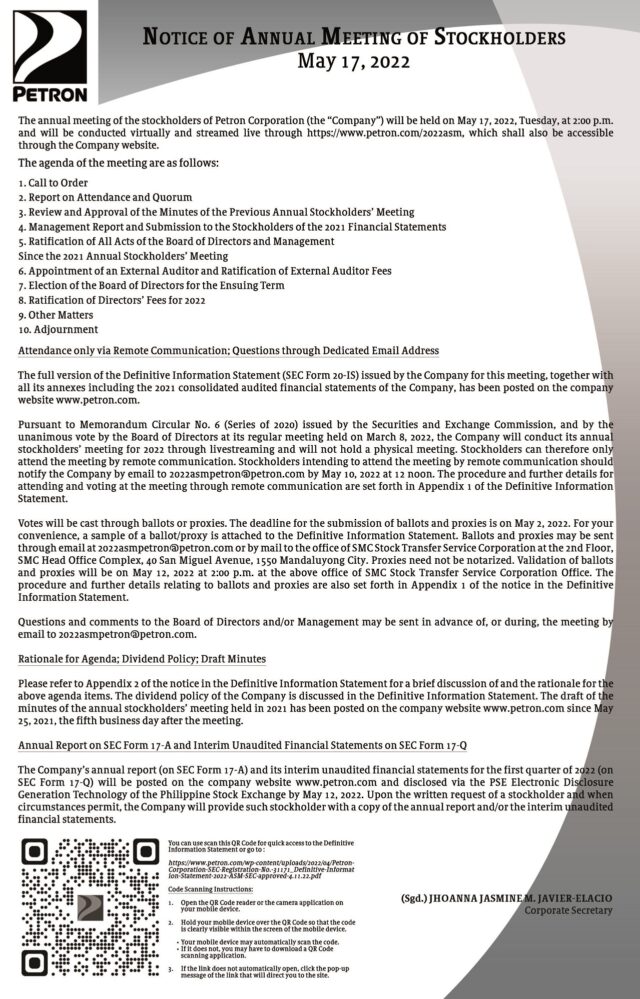
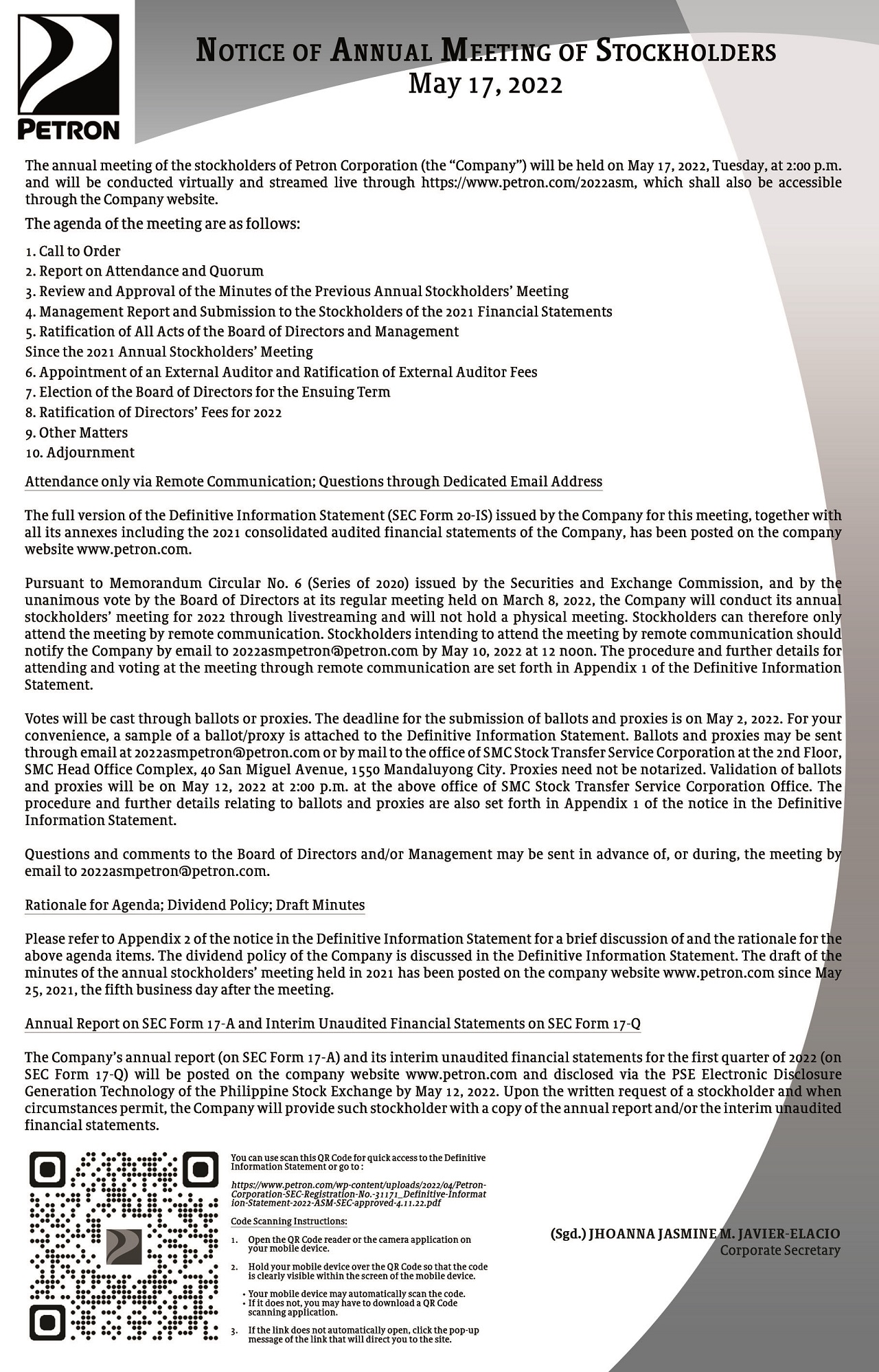
Petron Corporation announces schedule of annual meeting of stockholders

Click to enlarge.
Click to enlarge.


Spotlight is BusinessWorld’s sponsored section that allows advertisers to amplify their brand and connect with BusinessWorld’s audience by enabling them to publish their stories directly on the BusinessWorld Web site. For more information, send an email to online@bworldonline.com.

Join us on Viber to get more updates from BusinessWorld: https://bit.ly/3hv6bLA.

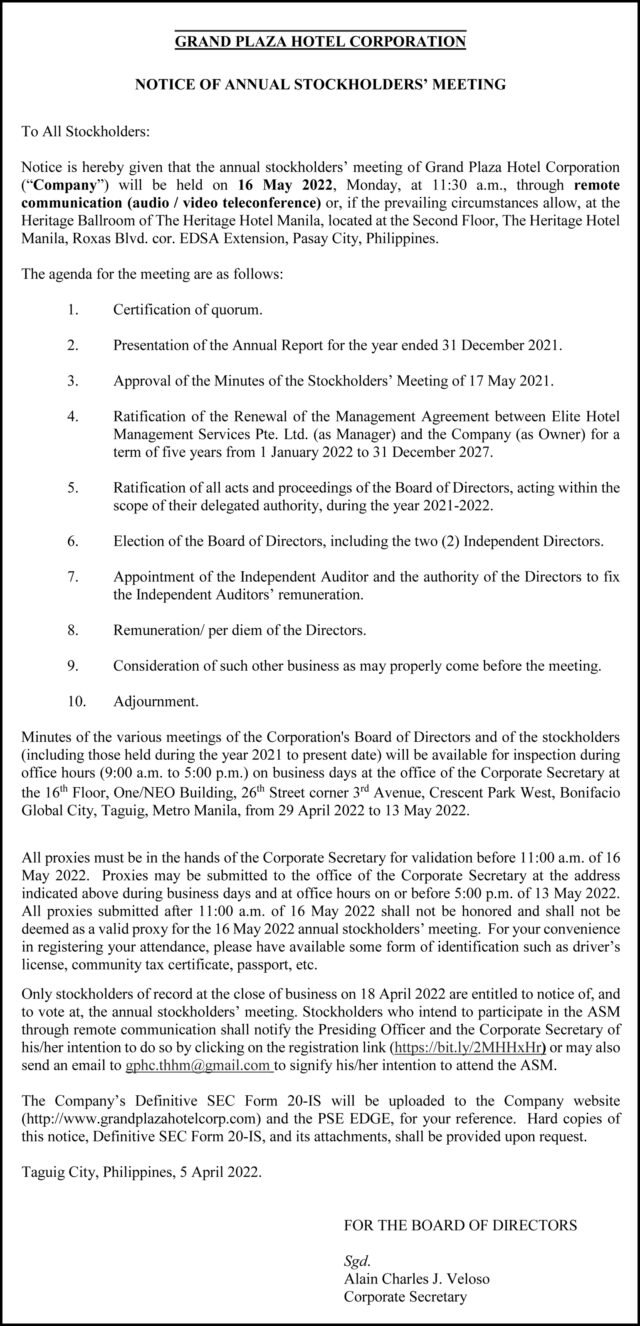
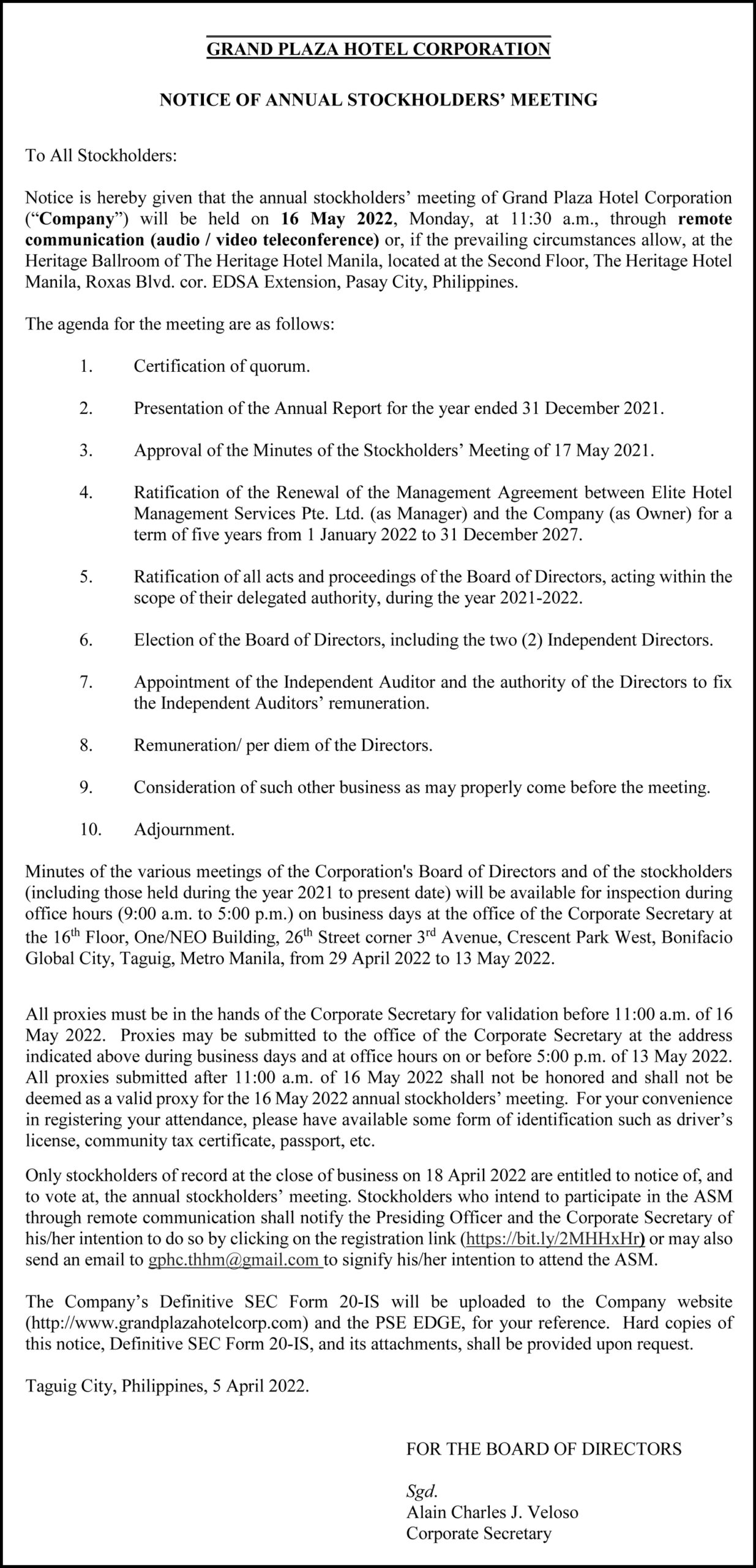
Grand Plaza Hotel Corp. to conduct annual stockholders’ meeting through remote communication on May 16

Click to enlarge.
Click to enlarge.

Spotlight is BusinessWorld’s sponsored section that allows advertisers to amplify their brand and connect with BusinessWorld’s audience by enabling them to publish their stories directly on the BusinessWorld Web site. For more information, send an email to online@bworldonline.com.

Join us on Viber to get more updates from BusinessWorld: https://bit.ly/3hv6bLA.

Remittances seen to support recovery

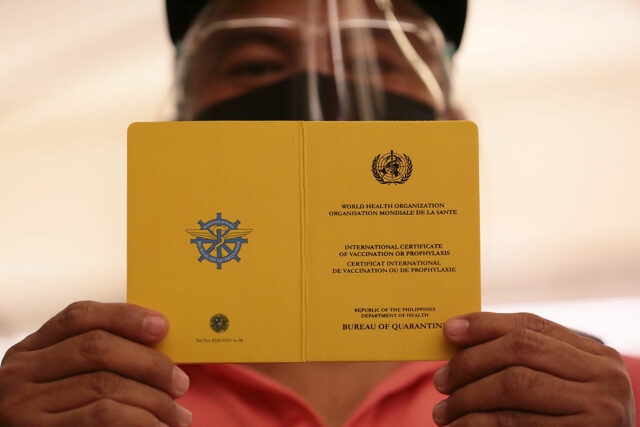
AN overseas Filipino worker shows off his International Certificate of Vaccination, Aug. 31, 2021. — PHILIPPINE STAR/ MICHAEL VARCAS

THE Philippine central bank expects remittances from overseas Filipino workers (OFWs) to continue supporting the economy’s recovery from the pandemic, and ease the burden on public finances.

“Remittances will continue to be a significant force in the Philippine economy over the medium term. For one, rising incomes in host countries will continue to serve as a magnet to those whose skills are in demand overseas,” Bangko Sentral ng Pilipinas (BSP) officials said in a discussion paper titled “Remittances from Overseas Filipinos in the Time of COVID-19: Spillovers and Policy Imperatives.”

The paper was authored by BSP Deputy Governor Maria Almasara Cyd N. Tuaño-Amador; Director for Supervisory Policy Research Department Veronica B. Bayangos, and bank officers Marie Edelweiss G. Romarate and Carl Francis D. Maliwat.

The BSP projects cash remittances to grow 4% this year, after the 5.1% rise to a record $31.418 billion in 2021.

The study cited the increased global demand for overseas workers, particularly medical workers, this year as more economies reopen. More countries have also eased border and travel restrictions as the number of coronavirus disease 2019 (COVID-19) cases fall worldwide.

“More employment opportunities could bode well for OFW job prospects and remittances, helping support the country’s economic recovery. This could also take off some of the burden on public finances, especially at a time when fiscal revenues have declined due to the slowdown in economic activity,” the BSP study said.

The BSP study said the crucial role of remittance “cannot be denied” as it provided foreign exchange and policy space needed to undertake the necessary macroeconomic policy adjustments and institute structural reforms during the pandemic.

In 2020, cash remittances to the Philippines dipped by an annual 0.8% to $29.903 billion. Although this was the first contraction in two decades, the fall was relatively small compared to the 20% decline in global remittances expected by the World Bank for that year.

The strength of remittance inflows despite the crisis reflects the willingness of Filipinos to continue sending money during a crisis that match what they send in normal times, the BSP study said.

“There is anecdotal evidence that overseas Filipinos’ risk-taking behavior is such that they find ways to augment their incomes by finding second jobs, working longer hours or switching occupations where employment is less uncertain,” it said.

However, the BSP study warned the uncertainty over the Russia-Ukraine war may cloud the outlook for remittances.

In case of a protracted Russia-Ukraine war, the BSP study said the impact on remittance inflows will likely deepen. It noted slower economic activities in Russia, Ukraine and Belarus would hurt jobs and income of OFWs, while their weaker currencies against the US dollars will reduce the nominal US dollar value of remittances.

“Importantly, the sanctions on the Russian banking system in the form of exclusion from the SWIFT network for fund transfers is likely to directly disrupt remittances through formal channels, which could lead to a partial shift to indirect and informal channels. Also, the sanctions can affect remittance flows indirectly if they lower employment and incomes for Filipino migrant workers in the Russian Federation,” it said.

Russia invaded Ukraine in late February, a move supported by its close ally, Belarus.

Combined cash remittances from these three economies stood at $2.4 million or around 0.01% of total inflows in 2021.

To optimize the use of remittances, the BSP study said policies should support the development of digital remittance channels and continue efforts to lower remittance costs. — L.W.T.Noble

Philippines has potential for 21 GW of offshore wind by 2040

PHILIPPINE STAR/ MICHAEL VARCAS
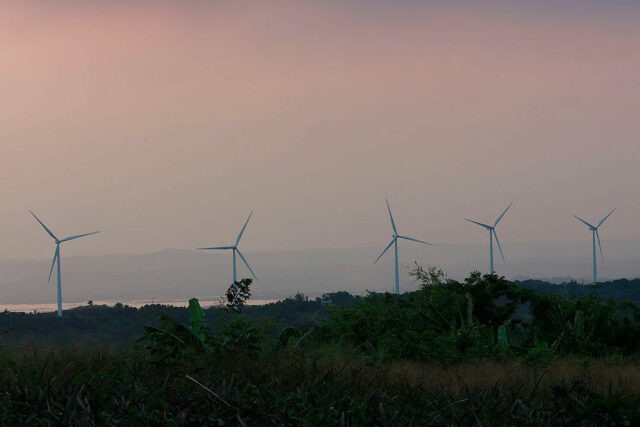
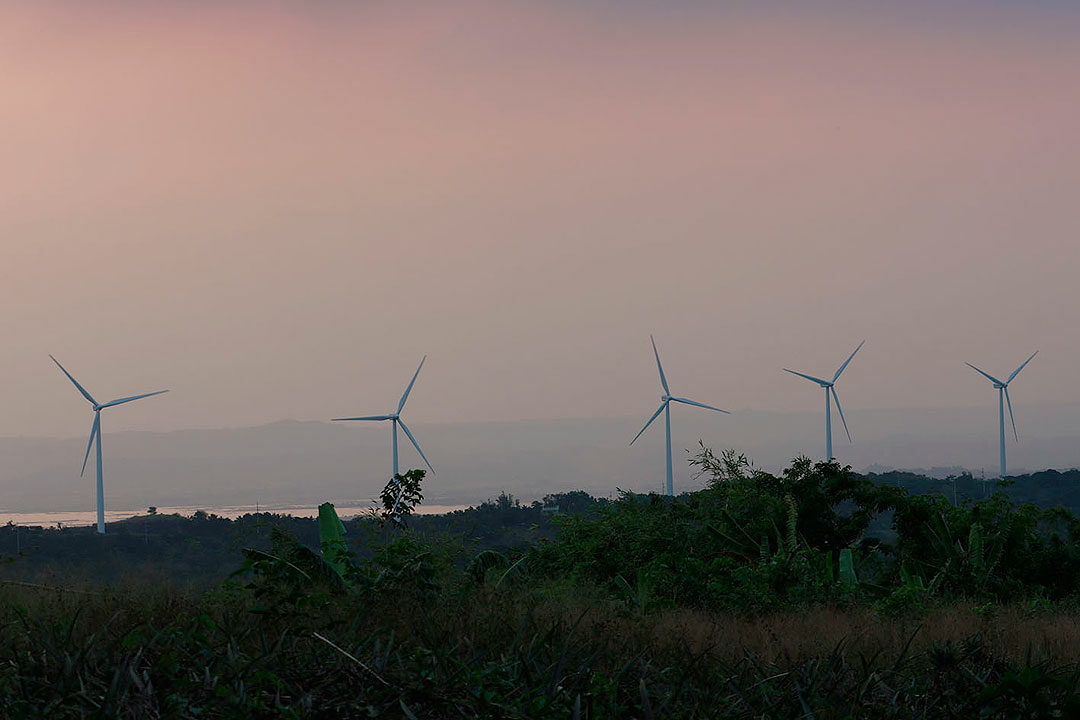
WIND TURBINES can be seen in a wind farm in Pililia, Rizal, April 25. — PHILIPPINE STAR/ MICHAEL VARCAS

THE PHILIPPINES has the potential to install up to 21 gigawatts (GW) of offshore wind power by 2040 to meet the country’s growing demand, a study by the Department of Energy (DoE) and the World Bank (WB) showed.

The DoE and WB released the Philippines Offshore Wind Roadmap on Wednesday, which lays out the opportunities and challenges in developing the wind power industry.

“The Philippines’ waters have conditions that are well-suited to offshore wind. This abundant, indigenous energy resource offers an opportunity for the Philippines to boost energy security, reduce greenhouse gas emissions, and increase renewable energy supply,” Ndiame Diop, World Bank country director for Brunei, Malaysia, the Philippines and Thailand, said in a statement.

Under a high-growth scenario, the Philippines has a potential to install 21 GW of offshore wind by 2040, accounting for 21% of its electricity supply.

In a low-growth scenario, the Philippines can only install 3 GW, representing 3% of the country’s power supply.

The WB and DoE study identified several potential offshore wind development zones, such as Northwest Luzon, Manila, Northern Mindoro, Southern Mindoro, Negros/Panay West, and Guimaras Strait.  

“It is highly likely that these six zones will be able to provide all the 20 GW capacity assumed in the high-growth scenario up to 2040, with the potential to provide all the 40 GW capacity assumed up to 2050,” it added.

However, the WB and DoE study cited several challenges the Philippines faces in establishing a large-scale wind power industry, such as high costs, lack of transmission network, limited local supply chain, and foreign ownership restrictions.

“Purely on a cost of energy basis, offshore wind is more expensive than other forms of renewable energy… To connect projects at large scales sufficient to drive down the cost of energy, transmission grid upgrades and strengthening will be required to deliver power to demand centers,” it said.

The study noted that offshore wind projects are currently covered by the 40% foreign ownership cap. “Removing this restriction will allow the use of lower-cost international financing and, therefore, help reduce the cost of energy,” it added.

The roadmap also provided recommendations for the government to successfully develop an offshore wind industry, such as a long-term plan for offshore wind until 2050; establishing offshore wind development zones; and investing in transmission, port and other energy infrastructure.

“It is clear from this roadmap that offshore wind can play a major role in meeting our country’s energy demand indigenously, while also accelerating decarbonization,” Energy Secretary Alfonso G. Cusi said in the same statement.

The installation of more wind power will help cut the country’s dependence on fossil fuels, which in 2020 accounted for about 79% of its power generation mix, government data showed.

Renewable energy only had a 21% share of the energy mix in 2020, down from 34% in 2008, with solar, wind and biomass together accounting for a little less than 4%.

Coal accounted for nearly 60% of the 2020 mix as many energy producers opted for projects using this fuel.

The government aims to increase the share of renewable energy to 35% by 2030 and to 50% by 2040.

The push comes as the Philippines, which is vulnerable to weather-related disasters sometimes linked to climate change, has pledged a 75% reduction in greenhouse gas emissions by 2030 under the Paris Agreement on Climate Change. — R.C.S.Agustin with Reuters

Halt on WPS oil search seen to discourage investments 

REUTERS

By Kyle Aristophere T. Atienza, Reporter

ECONOMIC and maritime experts on Wednesday warned that the government’s decision to halt oil exploration activities in parts of the South China Sea claimed by the Philippines would push firms to rethink their investments in the area.

They issued the warning after listed firm PXP Energy Corp. was directed by the Department of Energy (DoE) to put on hold its exploration activities in its service contracts in the West Philippine Sea (WPS) until it secures clearance from a Cabinet cluster overseeing diplomatic and national security concerns.

“Other service contractors have seen what happened to PXP, which already has a long-standing contract and the best prospects for development. If despite that, the Philippines remains unwilling to commit to the contract, I expect those other contractors to start thinking twice,” Jay L. Batongbacal, a maritime expert from the University of the Philippines, said in a Viber message.   

Mr. Batongbacal said potential investors in the country’s energy sector would probably reconsider offshore petroleum exploration and other related investments in the WPS.

“They will either move on to other countries if they have no other areas, or try to shift to other energy investments that do not involve offshore petroleum if they can,” he said. “There is no point in wasting time and money on contracts which will not even be implemented.”

The DoE’s order came a month after President Rodrigo R. Duterte said at a public address that the country had no choice but to comply with a supposed joint exploration deal with China to avoid any conflict. He said someone from Beijing had reminded him of the supposed agreement upon learning of some companies’ planned activities in the disputed area.   

“If the next administration echoes the position of the current one, I would not be surprised if contractors decide to pull out,” Mr. Batongbacal said, who earlier claimed that China is “seriously out” to prevent any petroleum exploration and development by the Philippines within its own waters.

He said the Philippine government’s flip-flopping on the exploration project in the WPS is a sign that it is highly favoring China’s demands.   

“The economy would find it challenging to reap benefits from this,” John Paolo R. Rivera, an economist at the Asian Institute of Management, said in a Viber message. “The Philippines must simultaneously leverage on its legal victory and relationship with China.”

In 2020, the DoE, with Mr. Duterte’s approval, issued a resume-to-work notice to the service contractors conducting oil exploration in the areas of service contracts (SC) 59, 72, and 75. PXP operates under SC No. 75 while its subsidiary, Forum Energy Ltd., operates under SC No. 72.   

Mr. Duterte’s spokesperson, Jose Ruperto Martin M. Andanar, said recently that the DoE had already sought the reconsideration of the suspended oil exploration activities.

“Current and potential investors will certainly look to the next administration for policy clarity on these questions, as they cannot rely on tentative, shifting decisions on these concerns,” said Terry L. Ridon, convenor of infrastructure and investment think tank InfraWatchPH.

Citing an arbitral ruling that rejected China’s claim to more than 80% of the sea based on a 1940s map, Mr. Ridon said exploration activities within the WPS should be allowed to proceed as these are within the country’s territorial sea and exclusive economic zone.

“This has been upheld by the Hague ruling recognizing our rights over these waters, including disputed waters.”

The experts urged the Philippine government to create a contingency plan that would be enforced should Beijing become more aggressive in the area due to Philippine government-led exploration activities.

Local media earlier reported that two ships hired by PXP to do a seismic survey in the WPS were tailed and overshadowed by a Chinese Coast Guard ship earlier this month.

“It’s been long past the time for the government to have contingency plans for this kind of activities in WPS,” Mr. Batongbacal said, noting that Chinese ships’ presence and possible interference should have already been “considered and planned for, even before.”

“The reaction of the government to the incident with PXP shows that it does not plan at all,” he said.

Mr. Batongbacal said the next administration should not only allow the resumption of exploration activities in the area “but be willing to protect the survey to ensure it is carried out.”   

“The Philippines should act with confidence and be ready to call out China if it moves more aggressively,” he said. “It should not be afraid of exercising its lawful and legitimate rights.” 

Meanwhile, Center for Energy, Ecology, and Development Executive Director Gerry C. Arances reminded the government that it must reconsider any oil exploration since it has committed to drastically reduce the country’s greenhouse gas emissions. 

“On one hand, halting explorations for oil in the West Philippine Sea is welcome for the energy transition demanded by the climate crisis,” he said, noting that the International Energy Agency made quite clear last year that no development of new gas and oil fields should be allowed beginning 2021 if the country still wants to keep the 2050 net-zero ambitions possible.   

“If the ban on oil exploration is put in place as a permanent response to the need to decarbonize and not a product of intimidation by foreign powers, we would be sending a signal that the Philippines as a sovereign nation is deliberately turning its attention to clean energy over oil and other fossil fuels, and will welcome investments as such.” 

Infrastructure spending likely picked up in March

PHILIPPINE STAR/ RUSSELL PALMA

INFRASTRUCTURE spending likely picked up pace in March, as agencies sought to fast-track projects before the end of the first quarter and ahead of the election ban on public works, analysts said.

Data from the Budget department showed infrastructure spending declined by 16.3% to P19 billion year on year in February.

“We could see a pickup in March as line agencies rush to finish up allocation head of the quarter-end as well as before the start of the campaign related spending ban,” ING Bank N.V. Manila Senior Economist Nicholas Antonio T. Mapa said in an e-mail.

The election ban on public works began on March 25, and will run for 45 days until May 8, a day before the national elections. The law, which also prohibits social welfare dole-outs, seeks to prevent politicians from using state resources for their election campaign.

Mr. Mapa said the 16% drop in infrastructure spending in February was more likely due to the higher figure in the same month of 2021.

“I believe the dip was due largely to timing issues that helped boost last year’s numbers more than anything,” he said.

The Department of Budget and Management (DBM) likewise attributed the spending decline to the timing of payables for completed projects of the Department of Agriculture (DA), road works of the Department of Public Works and Highways (DPWH), foreign-funded rail projects of the Department of Transportation (DoTr), and the Revised Armed Forces of the Philippines’ Modernization Program (RAFPMP) under the Department of National Defense (DND).

“We could see infrastructure spending continue as ongoing projects resume after the elections,” Mr. Mapa said.

The national elections will be held on May 9.

However, Mr. Mapa said that infrastructure spending may face challenges in the long term, adding that the next administration would be hampered by budgetary limitations, considering the current high level of debt.

Debt as of end-February was P12.09 trillion, while the country’s debt-to-GDP (gross domestic product) ratio hit a 16-year high of 60% last year. This is above the 60% threshold considered manageable by multilateral lenders for developing economies.

“The new president will have [their] hands full with carefully navigating a challenging global landscape while being saddled with a fiscal handicap,” Mr. Mapa added. “As such, infrastructure spending, outside the continuation of ongoing projects, may face headwinds.”

UnionBank of the Philippines, Inc. Chief Economist Ruben Carlo O. Asuncion said infrastructure spending will again pick up after the elections.

“We will have to look to the current budget that the next administration will inherit from the previous one,” Mr. Asuncion said. “A considerable part of this said national budget has been allotted for infrastructure development, and we think that this will show at the end of this current fiscal year.”

The national budget this year is P5.024 trillion, almost a quarter of economic output and 11.5% higher than last year. Around P1.2 trillion is allocated for infrastructure this year, or the equivalent of 5.3% of GDP. — Tobias Jared Tomas