Home Blog Page 6421

Carbon tax revenue potential could be ‘false hope’

PEXELS-PIXABAY

By Marielle C. Lucenio

THE taxation of carbon emissions is not expected to be of much help in raising revenue to pay down foreign debt, analysts said.

While calling such a tax “laudable, timely… (and) consistent with our international commitments,” Tax Lawyer and Certified Public Accountant Kenneth L. Manuel told BusinessWorld in an e-mail that the promise of using such revenue to reduce foreign debt levels could be raising “false hope.”

Mr. Manuel estimated that a carbon emissions tax will raise the equivalent of 1% of the Bureau of Internal Revenue’s (BIR) collections.

“According to 2016 estimates, a carbon tax would give the government P20 billion in revenue. …Without the carbon tax, the BIR was able to collect P1.9 trillion in taxes in 2020. Hence, the imposition of carbon tax is only expected to generate roughly 1% of collections, and that’s just BIR. We have not yet factored in other revenue-generating government agencies such as the Bureau of Customs,” he said.

Speculation over new taxes arose over the weekend after Finance Secretary Carlos G. Dominguez III granted an interview with CNBC International TV on Friday. Reports emerging in the wake of the interview cited unnamed sources as saying that the government will be looking at “relatively untaxed” sectors of the economy.

When asked to comment, the Finance department told BusinessWorld it is still exploring various tax package options.

Raegan L. Capuno, tax lawyer at Siguion Reyna, Montecillo and Ongsiako Law Offices, said that consumers ultimately bear the burden of nearly all taxes.

“The challenge here is to determine the appropriate tax base for carbon tax imposition,” he said, adding that it is not the most feasible way to raise funds to pay down foreign debt.

Meanwhile, lawyer and energy and environmental policy Antonio M. La Viña said any carbon tax will be beneficial especially if focused on addressing environment, climate change, and revenue needs.

“The backlash will be if the carbon intensive companies pass it on to consumers so that must be prevented or regulated. Otherwise, a carbon tax is like a sin tax. Carbon emissions are bad for society and they should be treated like sin products — cigarettes and alcohol,” he said in a Telegram message.

The Philippines has committed to reducing its greenhouse gas emissions by 75% by 2030 under the Paris Climate Change agreement.

Coconut water firm sending trial shipment to China customer

PHILSTAR FILE PHOTO

A COMPANY exporting organic coconut products is sending a trial shipment of young coconut to China soon to meet growing demand, estimated at up to 300 40-foot containers monthly, according to the Department of Agriculture-Davao (DA-11) regional office.

The regional office’s marketing assistance team recently facilitated a meeting between a group of Chinese buyers and Cocowild Philippines, Inc. for the supply of young coconut, which is the source of fresh coconut water.

Cocowild representative Geralyn M. Hobrero said the company, based in Polomolok, South Cotabato, currently has two satellite facilities that can package young coconut at a volume of up to 18 container vans.

Ms. Hobrero said with the trial shipment, the company is seeking to verify whether it can comply with Chinese entry standards and the buyer’s quality requirements.

Apart from young coconut, the company also exports coconut sugar, coco syrup, and honey-cured vinegar.

Regional Executive Director Abel James I. Monteagudo said the DA agency is ready to provide further assistance to strengthen market linkages.

In 2019, Davao-based Eng Seng Food Products started exporting fresh young coconut to China, but could not meet the volume demand.

Davao Region was the third-biggest coconut producer in the country, according to September quarter data from the Philippine Statistics Authority. The top producing region was Calabarzon, followed by Northern Mindanao. — Marifi S. Jara

COVID infections fewer than 2,000 for second day

PHILSTAR

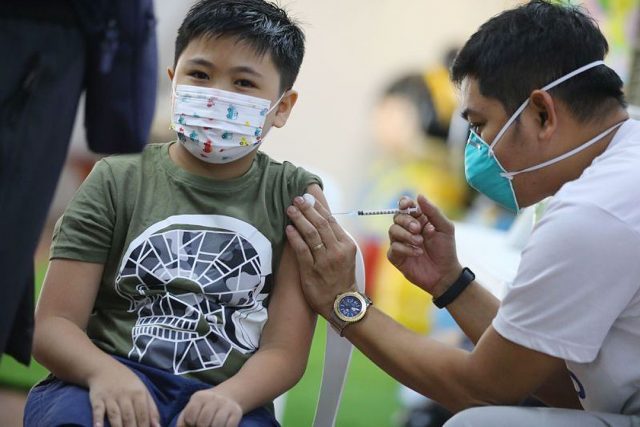
THE PHILIPPINES reported 1,712 coronavirus infections on Sunday — the second straight day the tally fell below 2,000 — bringing the total to 3.65 million.

The death toll hit 55,684 after 77 more patients died, while recoveries rose by 3,686 to 3.54 million, the Department of Health (DoH) said in a bulletin.

The agency said 8.8% of 28,500 samples from Feb. 18 tested positive for coronavirus disease 2019 (COVID-19), still above the 5% threshold set by the World Health Organization (WHO).

Of 60,532 active cases, 856 did not show symptoms, 55,102 were mild, 2,848 were moderate, 1,421 were severe and 305 were critical.

DoH said 94% of new cases occurred on Feb. 7 to 20. The top regions with cases in the past two weeks were Metro Manila with 316, Calabarzon with 221 and Western Visayas with 180 infections. It added that 66% of new deaths occurred in February and 26% in January.

It said 257 duplicates had been removed from the tally, 246 of which were recoveries, while 61 recoveries were relisted as deaths. Three laboratories failed to submit data on Feb. 18.

Infections might slightly increase as the Philippines accepts more foreign tourists, the OCTA Research Group from the University of the Philippines said.

“There could be upticks again,” OCTA fellow Fredegusto P. David said in a Facebook Messenger chat. “But we are not really expecting any significant increase at this time.”

He said the country’s healthcare system is more prepared now to handle a fresh spike in cases. “We have low hospitalization rates,” he said, noting that only a quarter of Metro Manila’s hospital system had been used.

The government has kept the capital region’s Alert Level 2 status until the end of February, as it reopens the economy.

The virus reproduction rate in Metro Manila was very low, while the positivity rate was moderate, Mr. David said, citing data from the Health department.

The capital region had an average daily attack rate of 3.19, which is also considered moderate.

The Philippines has relaxed the lockdown in many areas as it welcomes fully vaccinated foreign travelers to spur economic recovery.

Various countries have started easing restrictions amid observations that the heavily mutated Omicron variant, which was first detected in South Africa, might have peaked.

A drop in COVID-19 testing rates worldwide was likely contributing to a decline in reported cases in the world, even as deaths were rising, WHO technical lead on COVID-19 Maria Van Kerkhove said on Wednesday.

“The bigger concern right now, I think, is the still increasing number of deaths,” she told an online  discussion streamed live on YouTube.

Ms. Van Kerkhove noted that in the past week alone, almost 75,000 people died, which was probably underestimated.

The coronavirus has sickened about 424 million and killed 5.9 million people globally, according to the Worldometer website, citing various sources including data from the WHO.

About 348.9 million patients have recovered, it added.

The United States had the most infections at 80.07 million with 959,130 deaths, followed by India with 42.82 million infections and 511,935 deaths.

They were followed by Brazil with 28.17 million infections and 643,938 deaths, France with 22,23 million infections and 136,594 deaths; and the United Kingdom with 18.58 million cases and 160,507 deaths.

Is a personality-and-platform campaign strategy changing voters’ minds?

PRESIDENTIAL ASPIRANTS have been striking a balance between highlighting their personal qualities and political platforms in the campaign, said political analysts, except for the candidate dominating pre-election opinion polls and surveys.

“I think that most of the candidates except one attempt to balance personality politics and platform-based campaigning,” Cleve V. Arguelles, a political science lecturer at De La Salle University, told BusinessWorld via Facebook Messenger.

He cited in particular Vice President Maria Leonor “Leni” G. Robredo as having a comprehensive pandemic recovery and economic plan as well as a track-record in delivering public service, but added that the same could be generally said for most of the other prominent candidates who are all incumbent officials in elected positions. 

“The standout candidate, and who is really disappointing, is (Ferdinand “Bongbong” R.) Marcos Jr. whose campaign is driven purely by personality politics,” Mr. Arguelles said. 

He noted that the popularity of Mr. Marcos is built on the legacies of his father, the late dictator Ferdinand E. Marcos, Sr., and their family’s prominence. “Despite talks about unity, it is very rarely discussed to what end is this desired national unity for.” 

Despite the Marcos strategy, his competitors are not resorting to personal attacks as mudslinging no longer resonates with the electorate, according to Froilan C. Calilung, an assistant political science professor at the University of Santo Tomas (UST).

“So, it’s a case of a futile strategy, so if there is no traction and it will only backfire against them, why bother to continue it?” he told BusinessWorld in a Viber message. 

He said no candidate would want to antagonize the voting public, which appears to be currently in control of the electoral exercise based on preference survey results indicating a lead for Mr. Marcos. 

Ms. Robredo stands at a far second in most surveys. The other key contenders are: Manila Mayor Francisco “Isko” M. Domagoso, Senator Panfilo M. Lacson, and Senator Emmanuel “Manny” D. Pacquiao. Labor leader Leodegario “Ka Leody” Q. de Guzman, meanwhile, has been emerging as a dark horse.  

“We can say that at this point, the voting public is able to run the show and not the other way around as in the previous elections,” the UST professor said.  

If Mr. Marcos is chanting unity without concrete measures yet remains popular, Mr. Calilung said this may be an indicator that people have become “fed up with divisiveness that has pestered our political milieu from the time of Marcos until post-EDSA era.” 

It may be that for voters, programs don’t necessarily have to be extensive, he added.

“In effect, the reality is that some good programs fail to take off because there is a lot of opposition to begin with,” Mr. Calilung said, “and sometimes, the opposition happens because it gravitates around the idea that it’s not that they don’t like the policy or the program, rather they just hate the proponent.” — Alyssa Nicole O. Tan

Shifting to a zero-trust mindset

As the world continues to operate under remotely while grappling with the pandemic, the danger of cyberattack remains a constant threat. The current situation has resulted in people using their own devices and networks to ensure business continuity from anywhere, but these are not as secure as corporate systems and connections, and cybercriminals are not letting these easy opportunities pass.

Data security is more critical than ever, with traditional data protection techniques functioning under a “trust but verify” strategy. This perimeter-driven paradigm entrusts its internal users with unobstructed network access and provides security controls only for external or untrusted networks. However, this introduces the issue of misplaced trust that can lead to the IT landscape of an organization being exposed to vulnerabilities.

With organizations dramatically accelerating their transformation journey, effective cybersecurity that expands beyond the organizations’ territories becomes even more significant — and this is where the concept of zero trust comes in.

Zero trust is a security model based on the principle of maintaining strict access controls without trusting anyone by default, including internal users. Everyone is trusted by default in a traditional IT network, and once an attacker gets inside the network, they are free to move and gain access to protected customer data, intellectual property, or network controls. Zero-trust application security understands that attackers can be present both within and outside of a network, which is why zero-trust policy enforcement dictates that no user should be trusted automatically.

With effective zero-trust frameworks in place, organizations can enforce several critical steps as part of their arsenal to reduce cyber risk while establishing access and identity controls.

THE NEED TO ADAPT ZERO TRUST
Newer organizations are now adapting this model as it requires a simpler approach but at the same time yields ever stronger security controls.

The “trust but verify” strategy is no longer an option as targeted, more advanced threats are now capable of moving inside the corporate perimeter. Because of the nature of remote working, accessing applications from multiple devices outside of the business perimeter has become even more prolific. This results in the increasing risk of exposure to data breaches, malware and ransomware attacks.

The zero-trust paradigm requires organizations to continuously analyze and evaluate the risks that involve their business functions and internal IT assets, then form strategies to mitigate them. The zero-trust model also restricts access by only providing access to users who need it while depending on whether they successfully authenticate each access request. The purpose of this process is to help eliminate unauthorized access to services and data while employing a positive security enforcement model. Because it uses a different lens to view data protection, the zero-trust model allows certain criteria that govern access and restrictions.

STEPS TO START THE ZERO-TRUST JOURNEY
The looming challenge for these organizations actually involves where to start. They can begin their zero-trust journey with three simple steps, starting with building a zero-trust center of excellence. This entails creating a cross-functional working group of all the teams that will be working together on a zero-trust architecture. This includes cybersecurity and IT teams that will handle actual deployment, as well as business leaders who will help define the necessary business objectives to ensure successful implementation.

Second, the center of excellence will need to engage in workshops to ensure that everyone is aligned and understands the basic concepts of this model, the business objectives of the organization, and what to protect — data, applications, assets, and services (DAAS). The prototype zero-trust network can be planned during the workshop to allow IT and security practitioners in the organization to better move to a more formal design phase.

Third, start with something low-risk, instead of proceeding ahead with the “crown jewels” of the organization. Deploy zero trust first in an environment where implementation teams can get hands-on experience and develop confidence as they build this simpler but more secure network.

MAXIMIZING DATA SECURITY WITH ZERO TRUST
While there are many misconceptions surrounding the zero-trust architecture model, from its overall functionality to implementation, organizations can focus on five major aspects identified by Murali Rao, EY India Cybersecurity Consulting Leader, to better maximize their data security.

Prioritize top risks. Organizations must understand the attack surface and threat landscape to qualify risks, before prioritizing the ones that will need the most focus.

Enterprise-wide policy. Organizations will need to set policies according to the sensitivity of services, assets and data housed. The potential of zero-trust architecture relies on the access policies that organizations define.

More granular network enforcement. Organizations must always assume that the network is hostile, and that they cannot trust any user or incident. This will mean removing implicit trust from the network and building trust into devices and services.

Implement the zero-trust network based on an inside-out view. Organizations need to include zero-trust architecture as part of their overall transformation strategy. They will also need to implement technologies that help achieve zero trust as their transformation moves them more to the cloud and retires old legacy systems.

A strong Identity and Access Management. Organizations need to work on the authentications of their workloads, devices and users. Technologies such as privilege ID management, multifactor authentication, behavioral analytics and file system permissions must be enforced based on defined rules to minimize the compromise of trust.

THE KEY TO SUCCESSFUL ZERO-TRUST ARCHITECTURE ADOPTION
Breaches that result in lost or stolen data cost organizations significant financial and reputational damage. The zero-trust model aids in both simplification and standardization of access control enforcement across an enterprise with improved compliance and the continuity of critical business processes, and it is most effective when integrated across the entire digital IT estate.

In an era where customers, partners and the supplier ecosystem access data and services from literally anywhere, applying a zero-trust model reduces the risks of security issues that arise due to how organizations often lean on perimeter-based approaches.

This article is for general information only and is not a substitute for professional advice where the facts and circumstances warrant. The views and opinions expressed above are those of the author and do not necessarily represent the views of SGV & Co.


John N. Panes is a manager from the Technology Consulting practice of SGV & Co.

Future of railway, bridge projects in Mindanao at stake in May election

TWO big-ticket projects in Mindanao under the centerpiece infrastructure program of the Duterte administration, which is exiting by June 30, have yet to break ground and their future now lies in large part on the new leaders who will be elected in May. 

“The new government will have a big role as they will play a big part in the continuance of the big-ticket projects in Mindanao,” Secretary Mabel Sunga-Acosta, chair of the Mindanao Development Authority (MinDA), said in a virtual briefing on Thursday as the agency celebrated its 12th anniversary.

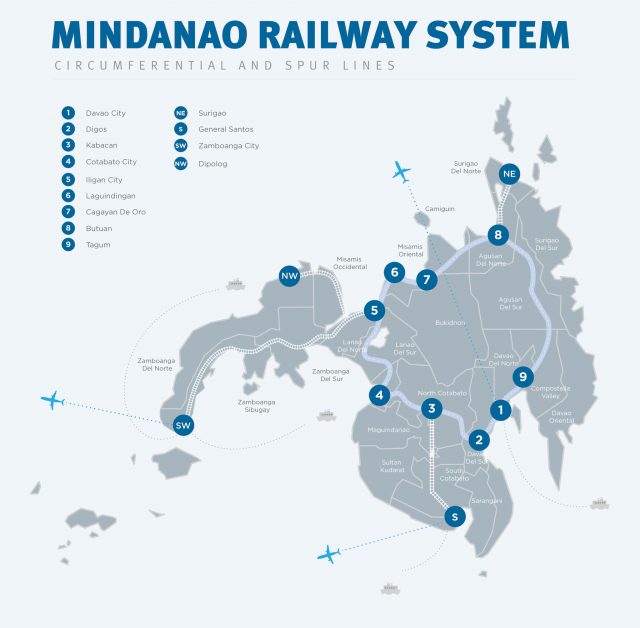
These projects are the Mindanao railway and the Samal Island-Davao City bridge, both to be financed under loan deals with China. 

“It will be the main agenda of MinDA to push for these big-ticket projects,” Ms. Acosta said, noting that transport connectivity is crucial in the development and economic growth of the country’s southern islands. 

“We need connectivity within Mindanao and with other areas in the Philippines and BIMP-EAGA,” she said, referring to the Brunei-Indonesia-Malaysia-Philippines East ASEAN Growth Area.   

MinDA Deputy Executive Director Romeo M. Montenegro said the railway is moving along in terms of land acquisition through funds allocated under the national budget, but this only covers the first 100-kilometer segment across the cities of Tagum, Davao, and Digos. 

In January, the Transportation department said China is expected to give its short list of bidders for the first segment construction within the first quarter this year.

“This has a government counterpart under the General Appropriations Act. As announced by the Department of Transportation, the Mindanao Railway Project, particularly TDD (Tagum, Davao, and Digos) segment, is going to be started,” he said.

The entire Mindanao Railway Project is envisioned as an 830-kilometer circular train system with over 700 kilometers of spur lines that will run around the entire southern mainland.

For the bridge that will connect Samal, a popular tourist destination, to mainland Mindanao through Davao City, Mr. Montenegro said the government has started to issue notices of taking to property owners on the Davao side.

“The Samal side none yet because this will have to be anchored on the finalization of the loan agreement between the Department of Finance (DoF) and Chinese counterpart. Once that agreement is firmed up and signed, that will already set into motion among other specific activities that will be undertaken for the start of the project,” he said.

He said the DoF — along with the National Economic and Development Authority and the Department of Public Works and Highways — are still aiming to finalize the “specific details” of these priority projects before President Rodrigo R. Duterte steps down. 

“We still have between now until June 30,” he said. — Maya M. Padillo

Pacquiao calls for crackdown on smuggling of over-the-counter drugs,  not small neighborhood stores

MANNY PACQUIAO OFFICIAL FACEBOOK PAGE

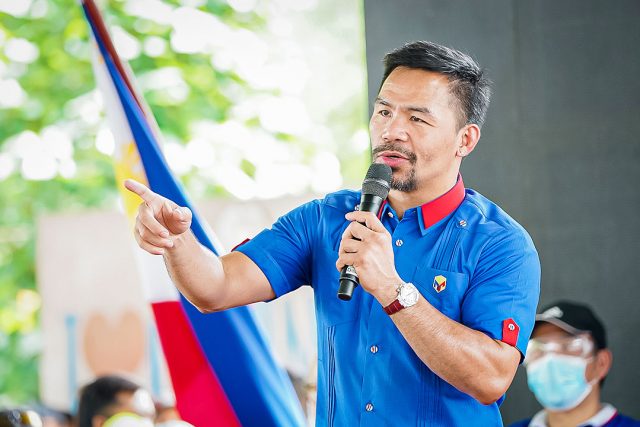
SENATOR and presidential candidate Emmanuel “Manny” D. Pacquiao, Sr. on Sunday called on authorities to go after smugglers of over-the-counter medicines rather than clamping down on neighborhood retail shops.

“We need to restrict the entry of counterfeit drugs and small miscellaneous stores should not be oppressed. No counterfeit can be sold if none can enter,” the retired boxing champion said in a statement in Filipino. 

“We just need to implement our generic (medicine) law well so that it will make cheap but effective drugs accessible,” he said. 

The Department of Interior and Local Government (DILG) recently announced that it will launch a campaign to stop small shops, commonly known as sari-sari stores, from selling nonprescription medicines. 

Mr. Pacquiao suggested that sari-sari stores can just be required to submit a list of drugs they are selling to their barangay units for monitoring. 

Restricting these convenience shops from selling over-the-counter medicines — for such ordinary ailments like flu, diarrhea or stomach ache, and body pains, — is “anti-poor and very impractical for rural folks,” he said.  

“Not everyone is close to drug stores… Not everyone has a car to go to town to buy medicine at night,” he added.

From Jan. 13 to Feb. 11, the Food and Drug Administration (FDA) received 185 reports of sari-sari stores allegedly selling nonprescription drugs, with 78 already confirmed guilty. Nine of these stores were also found to be selling fake medicines, including those supposedly intended for treatment of coronavirus disease 2019 (COVID-19). 

Under the law, only FDA-licensed retail drug outlets or pharmacies are allowed to sell drugs and medicine to the public. — Alyssa Nicole O. Tan

Chief justice rallies judges to tap technology to improve Philippine legal system

PHILSTAR FILE PHOTO

THE COUNTRY’S chief justice has urged judges to adopt technological innovations to improve the Philippine legal system, citing in particular the important role of first-level courts as “frontliners” of the judiciary.

“Technology is very important, with your support, we will be able to achieve these innovations that we want to introduce,” Chief Justice Alexander G. Gesmundo said in a statement on Feb. 18 after leading the oath-taking of the newly appointed officers and directors of the Philippine Judges Association (PJA). 

Mr. Gesmundo noted that he has been pushing for technology-driven court processes such as online filings and hearings since his appointment last year. 

“We might say that the ambition of the Court is hard to reach but if we decide and we have the will, we can do it,” he said.

The Supreme Court chief stressed that municipal and metropolitan trial courts are the first stop of litigation and their performance reflects the entire judicial system. 

“As frontliners, ideally and under normal circumstances, you are the first contact persons of the litigants, especially the first level courts,” Mr. Gesmundo said. “For that reason, we must assure that people transacting with the court involving cases must be satisfied with the way you are doing things at the trial court, because if they are frustrated it reflects on the entire Judiciary.” — John Victor D. Ordoñez

Party-list group asks gov’t to include inter-island banca operators in fuel subsidy program

BW FILE PHOTO

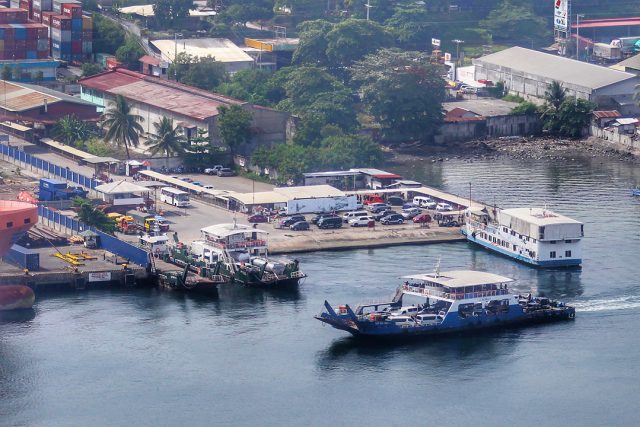
SEA TRANSPORT operators, especially for small inter-island boats and fishing vessels, should also be included in the government’s fuel subsidy program, Marino party-list said in a statement released over the weekend. 

“The pandemic has brought distress to all sectors of the country, but we see less emphasis to meeting the needs of our Filipino domestic shipping operators, including banca operators and fishermen, in these difficult times,” said Marino, which represents Filipino seafarers.

“As such, we call on the national government, as well as our colleagues in the House of Representatives and the Senate, to include our domestic shipping operators and fisherfolk in the Fuel Subsidy Program of the government that is scheduled for release this year.”

Marino said that the government should have a more holistic approach in helping the transportation industry, and not just focus on helping land-based sectors such as jeepneys and tricycles. 

“The high cost of gasoline isn’t only felt on the streets but also in the seas and the oceans… If not for our fishermen and small boat operators, many Filipinos would not have any food to serve their families,” the party-list said in Filipino. — Jaspearl Emerald G. Tan

IBP denounces attack on lawyer in Surigao del Sur

THE PHILIPPINE’S official organization of lawyers condemned the recent gun attack on the residence of a lawyer in Surigao Del Sur, the latest incidence of violence directed at a member of the legal sector. 

“The threat to a lawyer’s personal safety and life may unduly compromise his zeal in representing his client to the fullest extent under the law,” said the Integrated Bar of the Philippines (IBP) in a statement issued by its Board of Governors on Feb. 19.

Unidentified assailants opened fire at the vehicle of IBP Surigao del Sur Chapter President Florante T. Sanico, which was parked inside his home. While no injuries were reported, IBP maintained that the attack was a clear message of coercion to an officer of the court.

“Apart from instilling fear and restlessness in the hearts and minds of the family of Atty. Sanico, such scheme clearly undermines the administration of justice, which is one of the hallmarks of our free and civilized society,” IBP said.

The group called on authorities, particularly the Philippine National Police and the National Bureau of Investigation, to thoroughly investigate the incident and provide the necessary protection to Mr. Sanico and his family. 

“The IBP stands beside Atty. Sanico on his quest to bring the perpetrators to justice and in his fidelity to the oath he gave as a member of the bar,” IBP said. — John Victor D. Ordoñez

To the next administration: Primum non nocere (‘first, do no harm’)

WIKIPEDIA
WIKIPEDIA

In a two-part column last year, “The First 365 days” (https://www.bworldonline.com/the-first-365-days-2/), I wrote a wish list for the first year of the next administration, a collective work of a handful of economist and subject matter expert friends from the Foundation for Economic Freedom, the Management Association of the Philippines (MAP), the Makati Business Club, the Philippine Disaster Resiliency Foundation.

Last week, I had the privilege of moderating a MAP forum on the Philippine economic outlook, featuring three most knowledgeable and articulate economists — current Socioeconomic Planning Secretary Karl Chua, professor and former Socioeconomic Planning Secretary Ciel Habito, and World Bank Senior Economist Rong Qian.

There was good alignment in their basic analyses and thrusts, and richness in their recommendations. As I concluded in the forum, “I so hope national candidates and/or their teams were tuned in.” Here is the video recording for the benefit of readers, maybe including some candidates: https://youtu.be/XB0LoxxOu4E.

What struck me most is how much we are in agreement on “what not to do,” and that surfaced sharply especially during the open forum. I summarize: “Don’t reverse reforms that have been done over successive regimes that strengthened Philippine macro stability and resilience, and improved productivity and global competitiveness, and helped contain inflation by opening up the economy.”

This is important to keep in mind as politicians are under pressure to promise the moon during the campaign period, and worry about delivery later on. Many may know the adage that “one should never hold to their word three kinds of people: those who are drunk, those who are proposing marriage, and those running for public office.” However, with the prevalence of recording and social media, candidates may have boxed themselves into having to do shortsighted populist measures, despite being inimical to long-term broad public interests.

What are these past reforms that need preserving?

1) Tax Reform for Acceleration and Inclusion (TRAIN) Law, Corporate Recovery and Tax Incentives for Enterprises (CREATE) Law, and other tax reform measures over several administrations that have made the tax system more buoyant, equitable, and investment-friendly. These have provided us the fiscal space to manage the pandemic, as the pre-COVID public debt-to-GDP ratio was brought down over time to a record low of 40% in 2019. Today it is now up to 60%, on account of much needed COVID-related spending, the lower tax revenues that raised the public debt numerator, and the contraction in GDP that accompanied restricted mobility over two years that depressed the GDP denominator.

Candidates have been promising suspending one tax or another, generous fiscal incentives for one deserving sector or another. And yes, side by side with massive spending programs — from free houses for all to legislated minimum wages that are multiple the current levels. Clearly a recipe for fiscal disaster and a debt crisis.

What is needed instead is what Dr. Qian said during the forum:

“To regain policy space, the government will need to start a gradual, fiscal consolidation process, the pace of fiscal consolidation needs to be studied. Too fast consolidation might slow down growth, which will be counterproductive to reduce debt-to-GDP ratio. Too slow, it will dampen confidence in government’s commitment to consolidate, while the higher interest payment will prevent productive investment.

On the revenue side, the government can introduce new taxes, increase existing taxes, and expand tax collection. As for spending, the government could spend less in areas that produce fewer jobs so it could spend more in areas that do, such as education. The government could also spend better by trying to use fewer resources to get the same outcome.

Finding the right mix to achieve the inclusive growth agenda needs to be a priority for the next government.”

2) Rice Tariffication Law and other liberalization in imports of food (pork, chicken, fish) that have helped contain inflation especially in the past two years. More fundamentally — as well discussed in the columns of Dr. Ciel Habito, University of the Philippines Economics Professor Ramon Clarete, and Agriculture Undersecretary Dr. Fermin Adriano — this milestone reform will improve the nutrition of the poorest quarter of our people (addressing physical and mental stunting), prevent the past fiscal wastes, leakages and rent seeking of the National Food Authority and its patrons, redirect public spending and implicit subsidies towards more productivity-enhancing activities, esp. within the agriculture sector.

This will also enable us to be more wage competitive, since our high cost of food is pushing up wages — a drag on investments and job creation economy-wide.

Finance Secretary Carlos G. Dominguez III and the whole economic team working with reform minded legislators deserve our gratitude and congratulations for this difficult milestone reform — started over three decades ago — that rent seekers are now actively lobbying to reverse; and at least one national candidate has embraced harking back to a flawed reading of economic history, so-called rice self sufficiency in the ’70s. (See, for example, the column of Dr. Clarete: https://www.bworldonline.com/rtl-can-modernize-the-countrys-rice-industry-and-lock-in-rice-security/ )

3) Opening up the economy to more FDI (foreign direct investment). Credit again to the economic team and progressive legislators for bringing to the finish line three investment liberalization laws for economic recovery. More FDIs will mean more jobs, increased competition to bring down prices and improve productivity. These have just hurdled both houses of Congress and are awaiting the President’s signature.

a) amendment of the Public Service Act — opens up to 100% foreign investors such essential infra as shipping, telcos, rail, ports, transportation, digital services, etc.

b) amendment of the Retail Trade Liberalization Act — that lowers the minimum capital investment by foreign investors.

c) amendment of the Foreign Investment Act — excluding the “practice of professions” from the coverage of the law and reducing the number of required direct local hires of foreign investments in small and medium enterprises from 50 to 15.

d) The Regional Comprehensive Economic Partnership (RCEP), negotiated by Trade Secretary Mon Lopez, signed by Pres. Duterte, and now awaiting ratification by the Senate — As I wrote in a column a year ago: “… RCEP with the lower tax regime under CREATE along with proposed amendments to the Public Services Act (PSA), the Foreign Investments Act (FIA), and the Retail Trade Liberalization Act (RTA) strung together would send a powerful signal of the Philippine’s readiness to welcome foreign capital to help with post-pandemic recovery, offering a light at the end of the current gloomy tunnel.” (https://www.bworldonline.com/legislation-in-aid-of-investments-jobs-recovery/)

4) Energy sector reforms

a) Oil deregulation done during the Ramos Administration. Christine Tang and I wrote a case study on this for the World Bank Growth Commission chaired by Nobel Laureate Michael Spence (https://openknowledge.worldbank.org/handle/10986/28020).

We concluded in 2008, a time when oil prices were surging like we are again seeing today.

“… The benefits of oil deregulation became evident during the most recent run-up in world oil prices. The full pass-through of world oil price increases to domestic oil prices helped to shield the fiscal sector from the burden of providing oil subsidies at a time when government finances were most fragile. Other benefits have included (i) increased competition in the industry with the entry of new players; (ii) less politicization of oil pricing; (iii) proper market response to high oil prices, including conservation and the search for substitutes like biofuels; and (iv) clean and good restrooms at service stations all over the country as a byproduct of introducing competition in the industry, helping support tourism.”

b) Electric Power Industry Reform Act (EPIRA) — there have been noises about government getting back into power generation, to address the high cost and possible shortage of power. This will be a big mistake. As I have written in the past, the way forward is to fully and properly implement EPIRA. (See https://www.fef.org.ph/opinion/the-way-forward-for-the-power-industry/, and https://www.bworldonline.com/power-regulation-in-the-dark/)

My appeal to the next administration: preserve our gains; build on what has been built by past administrations, that have, until COVID came along, propelled our economy to a higher and more inclusive growth path. Primum non nocere, “first, do no harm.”

Former Pres. Gloria Arroyo in her 2002 State of the Nation Address paid homage to Dr. Jose Rizal and her father who captured poetically what is the job of a President:

“Jose Rizal wrote: ‘A life not dedicated to a great ideal is useless; a mere pebble in the field that forms no part of an edifice.’”

Diosdado Macapagal touched on this theme as he assumed the mantle of national leadership 40 years ago: “No President can build the whole edifice of a nation. All that he is called upon to do is add a fine stone to that edifice, so that those who shall come after him may add other fine stones that will go for a strong and enduring structure.”


Romeo L. Bernardo was finance undersecretary during the Cory Aquino and Fidel Ramos Administrations. He is a trustee/director of the Foundation for Economic Freedom, Management Association of the Philippines, and FINEX Foundation.

romeo.lopez.bernardo@gmail.com

Marcos: Bad for OFWs and remittances

PHILIPPINE STAR/MIGUEL DE GUZMAN

I worry over the news that overseas Filipino workers (OFWs) will vote for Ferdinand “Bongbong” R. Marcos, Jr. Hence, I attempt to explain why Ferdinand Marcos, Jr. is bad for them. (And why Marcos Jr. is bad for everyone.)

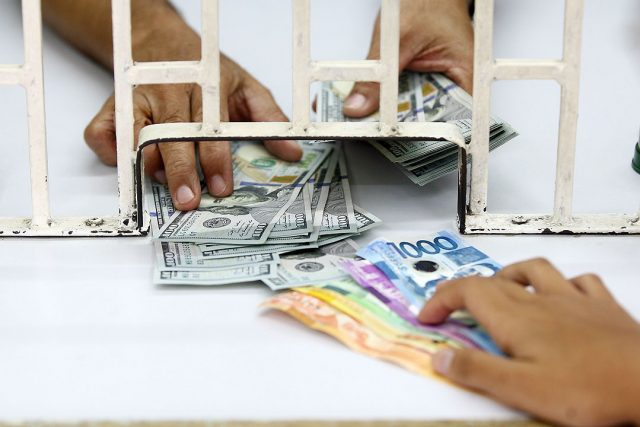
The Philippines is on the “grey list” of the Financial Action Task Force (FATF). This has negative effects on the country’s capital flows, including the remittances of OFWs. Being on the grey list translates into higher transaction fees for remittances and delays in remittances because of tighter scrutiny. It, too, undermines our creditworthiness, trade, and flow of investments.

The grey list, says the FATF, covers those jurisdictions that are “under increased monitoring” because of “strategic deficiencies in their regimes to counter money laundering, terrorist financing, and proliferation financing.” A country on the grey list is committed to cooperating with the FATF in addressing the “strategic deficiencies” within an agreed timeframe.

Kapronasia, a leading Asia fintech consulting firm, wrote on Aug. 25, 2021, why the Philippines is on the grey list:

“FATF has been urging Manila to toughen up its AML [anti-money laundering] and CFT [Combating the Financing of Terrorism] controls for several years now, with a focus on enhancing risk-based supervision in non-financial businesses (especially casino gambling and real estate), cracking down on unregistered and illegal remittance operators, increasing money laundering investigations and prosecutions and strengthening the targeted financial sanctions framework for both terrorist and proliferation financing.”

The FATF wants an amendment of the anti-money laundering law, which reformers in government, the private sector and civil society support. Said Kapronasia, this “will give the Philippine central bank stronger investigative powers, making it easier for the regulator to examine suspicious bank accounts, and impose heavy penalties.”

BusinessWorld (Oct. 23, 2021) reported that the government has “to strengthen and streamline the access and accuracy of beneficial ownership information that are used by law enforcement agencies.”

To be removed from the grey list, the Philippines has to take concrete steps to comply with 40 FATF recommendations. In turn, each recommendation has a set of criteria to be met.

The Asia Pacific Group (APG) on Money Laundering evaluates whether a member country is effectively implementing the FATF standards against money laundering, financing of terrorism, and proliferation financing. In August 2021, the APG released a “2nd Follow-up Report: Mutual Evaluation of the Philippines.” It acknowledged the progress of the Philippine government in addressing the FATF’s 40 recommendations.

Nonetheless, the Philippines remains partially compliant in some areas and still has to meet full compliance in other areas. Examples where the Philippines shows partial compliance include: 1) addressing deficiencies related to the cross-border declaration system and 2) having restraints on currencies and bearer monetary instruments. Such will require Philippine Congress to amend existing laws.

Another area of concern pertains to the vulnerabilities associated with virtual asset service providers (VASP), the scope of VASP activities, and the VASP’s wire transfer provisions.

To meet the many FATF recommendations and criteria, the Philippine leadership must muster political will. On the other hand, inaction makes the country’s financial system suffer from tighter scrutiny, delayed processing of transactions, higher transaction costs, and even a downgrading of the country’s credit rating. The latter in turn will jack up interest rates and slow down investments, jobs, and growth.

The question is whether the next administration has the will to complete the reforms that will strengthen the country’s anti-money laundering law and put in place other complementary measures to fight money laundering, tax evasion, and terrorist financing.

Investors, creditors, and financial institutions fear that a Marcos Jr. presidency will not deliver the reforms. Their concerns include the history of corruption, non-filing of tax returns, tax evasion, and money laundering of the Marcos family. Add to all that Marcos Jr.’s uninspiring governance record and his unsound economic program.

The UK-based Capital Economics says that Marcos Jr.’s plans are “far from encouraging.” In the same breath, it says: “It is unlikely the situation will improve under Mr. Marcos and could easily get worse.”

Pantheon Macroeconomics, another UK-based think tank, says that a victory of Marcos Jr. in the 2022 elections would “carry significant event risk.”

Nomura Global Research views Marcos Jr. as lacking national political experience, not being market-friendly, and lacking fiscal discipline.

The report of Fitch Solutions Country Risk and Industry Research states that a Marcos Jr. presidency is “posing risks of increased authoritarianism.”

Consider, too, the following:

Marcos Jr. has flip-flopped on disclosing his Statement of Assets, Liabilities and Net Worth (SALN). Is he hiding anything?

Despite the international and domestic pressure to strengthen the Anti-Money Laundering Law (AMLA), Marcos Jr. when he was a senator, voted for a softer, deficient AMLA in 2012.

To toughen anti-money laundering, LexisNexis Risk Solutions Asia Pacific Managing Director Bharath Vellore proposed a three-pronged approach: legislation, supervision, and prosecution. That goes against the self-interest of the Marcos family.

Marcos Jr. has been convicted for tax evasion, specifically the non-payment of taxes from 1982 to 1985.

In October 2012, a US Court of Appeals for the Ninth Circuit upheld a contempt judgment against Marcos Jr. and his mother Imelda, being the executors of the estate of Ferdinand E. Marcos. This was in relation to a human rights class suit against the dictator Marcos.

Marcos Jr. and Imelda violated an injunction that prohibited them from dissipating the assets of the Marcos estate. The judgment amounted to $353.6 million, which the Marcoses have refused to pay. The Court can issue a warrant to compel the Marcoses to appear in order to comply with the judgment.

Switzerland’s Federal Supreme Court ruled that Marcos assets hidden in Swiss banks had criminal ownership. Following the Court’s order, the Swiss government transferred to the Philippines bank deposits amounting to $627 million in 1998.

During the Rodrigo Duterte administration, in 2018, the Sandiganbayan convicted Imelda Marcos on seven counts of graft for laundering $231 million in Swiss accounts. She named herself and her children as the beneficiaries of the Swiss accounts.

In 2016, investigative journalists revealed the Panama Papers, containing loads of information on how the ultra-rich, including Filipinos, created shell corporations to secure their assets and taxes. The leak included the listing of Marcos Jr.’s sister Irene Marcos Araneta and her husband Gregorio Araneta III as officers of Orient Wind Development Limited, registered in the British Virgin Islands, a tax haven.

Bloomberg Tax (May 7, 2021) said: “The use of shell companies means that the ownership and financial history of these assets can be hard to determine.” Many of these shell corporations may be able to escape charges of tax evasion, but they surely are examples of deplorable tax avoidance. To quote Bloomberg Tax again: “Although shell corporations are not illegal in and of themselves, their anonymity and lack of transparency mean that they can be used for tax evasion, fraud, and evading sanctions.”

All the facts and circumstances above lead to this conclusion: Marcos Jr. and family lack transparency in disclosing assets and taxes. Marcos Jr. does not have the credibility to fight money laundering and tax evasion. Marcos Jr. does not have the high level of political commitment to undertake the reforms for the country to be removed from the grey list.

The US government’s Financial Crimes Enforcement Network (FinCEN) closely monitors the Philippines in light of our country being on the grey list. The FinCEN treats the Philippines as a high-risk jurisdiction for money laundering and other financial crimes.

FinCEN’s heightened vigilance towards the Philippines and actions it can take to penalize bad behavior will have a negative impact on Filipino citizens. The US is the largest source of overseas Filipino remittances. Moreover, financial transactions from other countries that use the US currency also flow to US financial centers. They are all subject to the tight scrutiny and discipline of FinCEN.

The situation becomes all the more dangerous when government is bereft of a reform agenda. The worst scenario, God forbid, is a Marcos Jr. presidency rolling back the previous measures to fight financial crimes. This is plausible, for the Marcoses want to preserve the ill-gotten wealth, which the government has yet to fully recover.

This scenario makes possible the Philippines being included on the FATF black list. That means the global community is called upon “to apply counter-measures” against a country violating the FATF standards. Currently, two countries are on the black list, namely Iran and North Korea. Blacklisted countries are subject to more restrictive measures and economic sanctions.

Being on the black list brings terrible consequences. It damages the credibility and creditworthiness of a country. Thus, investments will be diverted, loans will be subject to higher interest rates, and trade will be disrupted.

OFWs will be inconvenienced by the delay in remittances brought about by stricter due diligence measures. Worse, the cost of making remittances will increase.

To the OFWs and their families, beware of Marcos Jr. We do not want to punish the remittances. And we do not want our economy to become a North Korea.


Filomeno S. Sta. Ana III coordinates the Action for Economic Reforms.

www.aer.ph