Home Blog Page 6351

SMIC stock finishes flat as borrowing costs rise

INVESTORS sold SM Investments Corp. (SMIC) last week as the market remained cautious amid global tightening financial conditions to contain rising consumer prices.

Data from the Philippine Stock Exchange showed a total of 1.15 million shares worth P964.92 million were traded from May 23 to 27.

Shares went down by 0.8% week on week, finishing at P838.50 apiece on Friday from its P845 closing on May 20. For the year, the stock has dropped by 10%.

Globalinks Securities and Stocks, Inc. Head of Sales Trading Toby Allan C. Arce said that inflationary pressures, the Russia-Ukraine conflict, China’s lockdown, and tightening financial conditions still played a part in how investors dealt with the stock market last week.

“Inflationary pressures remain a major concern for investors, as the nation’s headline inflation figures released earlier this month showed a bigger-than-expected jump, indicating that prices will remain high in the near term,” he said via e-mail.

“Traders and investors came in and took advantage of the lower price levels. This is the tug-of-war in the market between those saying the market has become attractively valued, versus those who are saying ‘not really,’ because it’s not factoring in much slower growth,” he added.

Rising borrowing costs meant to temper inflation could slow down expansionary plans of companies such as SMIC this year, Mr. Arce said.

“The rate increase translates to a lower number of firms like SMIC doing expansionary activities and less households making purchases of real estate or durable goods,” he said.

The latest inflation rate was posted at 4.9% in April. The Bangko Sentral ng Pilipinas said inflation could exceed 5% in the next few months amid higher oil and non-oil price increases brought by the ongoing Russia-Ukraine war.

To address this, the central bank increased key rates by 25 basis points on May 19. This was the first rate hike since 2018.

It also revised its inflation forecast to 4.6% from 4.3% previously, already above the 2-4% target band.

“The market is generally becoming less volatile now, which typically means increased demand for riskier assets,” Regina Capital Development Corp. Equity Analyst Anna Corenne M. Agravio said in a separate e-mail.

“Add this to the fact that the economic team of the next administration has started to take shape, boosting investor confidence. There was most likely a rotation out of your usual blue chips — index heavyweights like SM — into stocks that are more volatile,” she said, referring to the company’s ticker symbol.

The holding firm of the SM group of companies booked an attributable net profit of P12 billion in the first quarter, higher by 26.7% from P9.47 billion in the same three months a year ago.

Mr. Arce expects SMIC to net P10.1 billion in the second quarter. He estimated the company to finish the year with around P46.5 billion in profit.

Ms. Agravio forecasts a P10-P15 billion second-quarter net income, and a full-year net profit of between P45 billion and P50 billion.

Both their full-year bottom line forecasts were lower than the company’s P52.73-billion consolidated net income in 2021. Net income attributable to owners of the parent company climbed 64.6% last year to P38.50 billion.

For the week, Mr. Arce put his support and resistance levels at P813 and P855.50, respectively.

Meanwhile, Ms. Agravio placed her support and resistance levels at P800 and P870, respectively. — Bernadette Therese M. Gadon

How PSEi member stocks performed — May 27, 2022

Here’s a quick glance at how PSEi stocks fared on Friday, May 27, 2022.


China not seen sharing EV tech, likely to expand mining presence

REUTERS

By Kyle Aristophere T. Atienza, Reporter

THE PHILIPPINES will be an important market for China’s electric vehicle (e-vehicle) industry via exports of complete units, with no prospect for domestic manufacturing, though greater involvement in the Philippine minerals industry is likely, analysts said.

Terry L. Ridon, a public investments analyst, described as unlikely Chinese assistance in developing a domestic e-vehicle industry, “as this is currently an emerging and lucrative sector in China.”

“Instead, we should expect that the Philippines will be one of the major markets for Chinese-made EVs in the coming years,” he said via chat. “But nothing more: no transfer of technology, no new manufacturing facilities in the country.”

President Rodrigo R. Duterte last month signed a law that seeks to accelerate the shift to e-vehicles by imposing a 5% EV fleet quota for organizations that operate vehicles, within a timeline that will be set by regulators.

“That e-vehicles should account for 5% of fleets. China can supply these vehicles without necessarily helping Manila develop its own e-vehicle sector,” Mr. Ridon said.

China exported nearly 500,000 electric cars in 2021 — more than any other country, “thanks to increasing sales in Europe and Southeast Asia by emerging cost-competitive automakers,” according to a report by Nikkei Asia.

“China will take advantage of the Philippines’ shift to e-vehicles to establish their market niche (as in) most developing countries,” according to John Paolo R. Rivera, an economist at the Asian Institute of Management.

He said in a Viber message that Beijing is likely to seek enhanced economic ties “with their source of raw materials and target market,” referring to the Philippines’ role as a supplier of strategic minerals.

China’s mineral refiners typically import ore to make metals needed in e-vehicle batteries. The Philippines has the fourth-largest reserves of cobalt and is a major producer of copper and nickel.

Most of the cobalt refined by China comes from the Democratic Republic of the Congo, whose mining sector is dominated by Chinese companies and has been plagued by environmental issues.

With the lifting of a four-year-old ban on open-pit mining and the disruption of supply chains across the world, China is expected to firm up its supply arrangements for key mineral resources essential to e-vehicles.

China is expected to increase its dependence on Philippine nickel, according to the Board of Investments.

The Philippines will fill the void left by Indonesia, which banned exports of nickel and other minerals in 2020 to develop its domestic processing industry, it said.

George N. Manzano, an economist at the University of Asia and the Pacific, said building up a domestic EV industry is “quite challenging as access to technology is critical.”

“Even if minerals are abundant, if access to technology is limited, the local e-vehicle industry may not develop smoothly,” he said in a Viber message.

Mr. Manzano, meanwhile, said the Philippines should ensure that it is part of the global EV supply chain.

“Once it is part of the global value chain, then the next step is to continue improving competitiveness so it can upgrade within the value chain,” he said.  “If the Philippines is not in the global value chain, then it may miss out on access to technology and investment in e-vehicle production.”

Michael L. Ricafort, chief economist at Rizal Commercial Banking Corp., said the government should ensure that the shift to e-vehicles will create opportunities for Philippine suppliers.

“There would be a need to introduce investment incentives for local EV production,” he said in a Viber message.

Mr. Ricafort said the ongoing conflict between Ukraine and Russia, a major exporter of nickel and other minerals, would lead to “diversification of supply chains,” which should allow the Philippines to position itself as a major supplier of minerals essential for the EV industry. 

“The increase in global and local demand for e-vehicles and self-driving vehicles would boost demand for minerals such as nickel, copper, among others,” he said. “That should benefit the mining industry amid some easing of restrictions recently.”

The Philippines aims to rationalize its fiscal regime for the extractive industry to ensure that the government gets a fair share of revenue generated from mining activities.

Mr. Ridon, who believes China sees opportunity in the Philippines’ shift to e-vehicles, said the government should look thoroughly “at the impact of e-vehicles not only on emissions but on the environment in general.”

“There have been clear instances in which e-vehicle components are extracted through questionable means,” he said. “This includes the use of child labor, and extractive activities in conflict areas.”

Tourist arrivals exceed 517,000 by late May

PHILSTAR

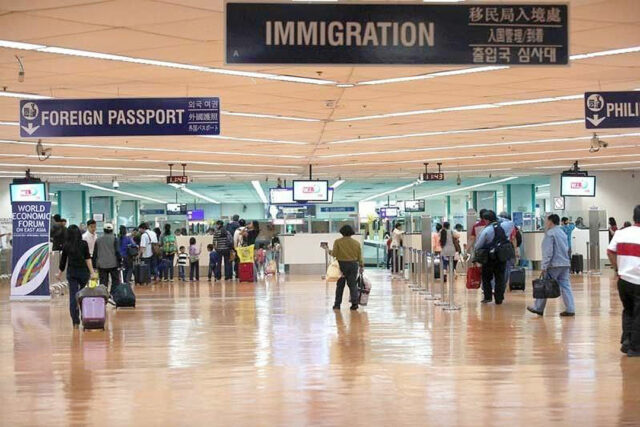
FOREIGN VISITORS have totaled 517,516 as of May 25, since the reopening of borders with minimal quarantine requirements in February, according to the Department of Tourism (DoT). 

The DoT said in a statement that the US was the top source of arrivals between Feb. 10 and May 25 with 104,589, followed by South Korea with 28,474 arrivals, and Canada 24,337.

“Australian nationals, British, and Japanese were next on the list with 23,286; 20,846; and 13,373 respectively,” the DoT said.  

“Other foreign visitors during the early months of the year include Vietnamese, Singaporeans, Malaysians, Italians, Irish and French,” it added.

On Feb. 10, the Philippines started accepting nationals that do not require visas to enter the country. Since April 1, borders have been opened to all nationals.  

“The DoT is looking forward to an uptick in tourist arrivals in the coming weeks following the further easing of entry requirements,” Tourism Secretary Bernadette Romulo-Puyat said. 

Starting May 30, the DoT said fully vaccinated and boostered inbound foreign visitors will no longer be required to have a pre-departure test for coronavirus disease 2019 (COVID-19). The looser entry rules are authorized by Inter-Agency Task Force for the Management of Emerging Infectious Diseases (IATF-EID) Resolution No. 168.

However, the DoT said arriving passengers are still encouraged to obtain travel insurance. All types of vaccination certificates, regardless of country of origin, will also be accepted.

“Based on the resolution, the visitor must be at least 18 years old and must have received the primary series of COVID-19 vaccines and at least one booster shot,” the DoT said.

“Also exempted from the pre-departure reverse transcription polymerase chain reaction (RT-PCR) requirement are foreign nationals aged 12 to 17 who have received their primary COVID-19 vaccine/s; and those aged below 12 and traveling with fully vaccinated or boostered parents or guardians,” it added. — Revin Mikhael D. Ochave

DoF signals possible coco trust fund asset disposals

PHILSTAR FILE PHOTO

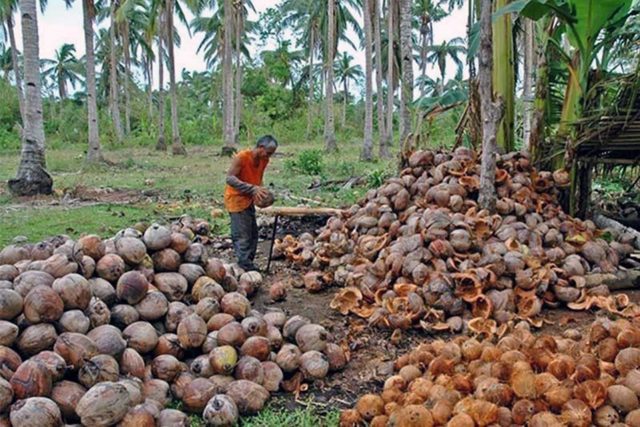
FINANCE Secretary Carlos G. Dominguez III is seeking a review of the assets obtained using the coconut levy funds in order to identify possible candidates for disposal, the Department of Finance (DoF) said in a statement.

The review will use as its basis a Commission on Audit (CoA) report on assets acquired using the coconut levy funds collected from farmers in the 1970s. It will be conducted by the Coconut Farmers and Industry Trust Fund (CFITF) Manager, Finance Undersecretary Antonnete C. Tionko, and the Trust Fund Management Committee (TFMC) Secretariat, headed by National Treasurer Rosalia V. de Leon. 

“Please go over this report and parse it, and to go through this with a fine-tooth comb, and report to the Committee as soon as possible of what is the real status of the assets, what can be disposed, what cannot be disposed, what’s tied up in court, and other related matters,” Mr. Dominguez was quoted as saying during the meeting of the committee, which he chairs.

The CoA report was presented at the 7th TFMC meeting on May 4.

Ms. Tionko said that the CoA audit report was a “good starting point” for a trust fund investment strategy to benefit coconut farmers.

Republic Act (RA) No. 11524 created the CFITF, which aims to raise coconut output, bring farmers out of poverty, and modernize the industry.

The CoA audit sought “to determine the completeness of the inventory (of assets), establish reasonableness of the asset valuation, trace the flow of the Coconut Levy Funds and to determine compliance with pertinent laws, rules and regulations on the reconveyance of the Coconut Levy Assets and/or Fund to the Republic.”

Assets of the coconut levy amounted to P113.88 billion as of 2020. The CoA audit knocked that total down to P111.25 billion.

“The TFMC also resumed discussions on the legal options available to speed up the disposal of several coco levy assets so that their proceeds can be used for the benefit of the country’s coconut farmers,” the DoF said. — Tobias Jared Tomas

GOCC subsidies decline 78% in April

PHILSTAR FILE PHOTO

SUBSIDIES provided to government-owned and -controlled corporations (GOCCs) declined 78% year on year to P5.117 billion in April, the Bureau of the Treasury (BTr) reported.

Budgetary support to GOCCs also fell 52% compared to the March total, while they amounted to P24.391 billion in the year to date, according to the BTr.

Subsidies are granted to GOCCs to cover operational expenses not supported by their revenue.

The top beneficiaries were the National Food Authority (NFA), receiving P2.055 billion, and the National Irrigation Authority (NIA), receiving P1.303 billion.  Both accounted for over half of the total for the month. The NFA received no subsidies in March, while subsidies to the NIA this month were half their previous total. 

The Light Rail Transit Authority received P250 million, triple the amount it got the preceding month.

Other top recipients for the period were the Civil Aviation Authority of the Philippines and the Small Business Corp., receiving P204 million and P200 million respectively. The Philippine Children’s Medical Center also received P184 million, while the Philippine Rubber Research Institute got P193 million.

Other GOCCs that received more than P50 million were the Cultural Center of the Philippines, the Lung Center of the Philippines, the National Kidney and Transplant Institute, the Philippine Coconut Authority, and the Philippine Heart Center.

GOCCs that received no subsidies during the month were the National Housing Authority, the National Privacy Commission, the Bases Conversion and Development Authority (BCDA), the Philippine Crop Insurance Corp., the Subic Bay Metropolitan Authority, the Social Housing Finance Corp., and the Sugar Regulatory Administration. The BCDA was a top beneficiary in March, when it received P2 billion. 

The NHA received nearly P3 billion in March, topping the GOCC subsidy list for that month. 

The year-to-date total subsidies extended to GOCCs was P24.391 billion, down 30%from a year earlier. In the four months to April, the NIA received P9.001 billion, the most of any GOCC, followed by the NFA and NHA at P3.243 billion and P3.194 billion.

Government subsidies to GOCCs totaled P184.8 billion in 2021, a nearly 20% decline from the previous year. The Philippine Health Insurance Corp. received P80.9 billion, nearly 44% of the total. — Tobias Jared Tomas

Fintech: Powering digital transformation in financial services

(First of three parts)

When the smartphone became commonplace more than a decade ago, it was inconceivable for many consumers to make online purchases using their credit cards. It felt way too risky to give away sensitive credit card information in an online transaction, especially when done on a mobile device. Today, we’re faced with yet another inconceivable wave: that of opening our banking data to entities other than the bank itself.

Fintech services have become widespread in Asia and the eastern Pacific Rim. Advanced fintech systems are now woven into the fabric of daily life practically in all markets in Asia where the majority of consumers have smartphones that provide them access to a growing range of virtual financial services.

Asia is seen to be taking the lead in the development of fintech. Due in part to significant concerns with financial inclusion, economies in Asia are seeing a rapid pace of fintech growth. Consumer use of fintech-powered services have doubled in only two years across key Asia-Pacific markets. Fintech adoption has been at 67% in Hong Kong, Singapore, and South Korea, based on the latest EY Global FinTech Adoption Index. China, which leads with a penetration rate of 87%, sets the pace for fintech innovation. The index found that 99.5% of Chinese respondents are aware of online apps that facilitate money transfer, mobile payments, and non-bank money transfers.

Many more changes are anticipated in Asia’s financial services landscape. We expect three dominant themes in Asia-Pacific markets over the next two to three years: financial regulation taking on a more active role in encouraging innovation; increased competition among virtual banks; and, increased adoption of open banking, a system that requires banks and clients to give third-party providers access to a most guarded information – clients’ banking data.

REGULATORS’ OPENNESS TO INNOVATION
Financial regulators have to weigh competing priorities, and in relation to fintech development, they have to strike a good balance between ensuring regulatory processes preserve stability and fostering financial innovation. In many parts of the world, regulators are reported to be trying new approaches to regulation so they could significantly boost oversight.

In a study, leading science and technology think tank Information Technology and Innovation Foundation (ITIF) observed that many governments, seeing the value of fintech transformation, are taking steps to promote financial innovation. It cited Singapore’s creation of a fintech and innovation group to facilitate deployment of technology in its financial sector. It also took note of the launch of fintech promotion strategies in Australia and the UK. The level of stringency differs across economies, but the common thread is that they are “taking novel and interesting approaches to financial innovation with an eye to maximizing their relative competitiveness in financial services,” according to ITIF.

It’s a role that regulators are embracing as markets continue to deregulate. Where before financial regulators in Asia tended to be the gatekeepers of banking and other financial services, now they are becoming advocates for flexibility, innovation and inclusion.

VIRTUAL BANK COMPETITION HEATS UP
Financial regulators in the Philippines have been equally proactive as their peers in the region in pushing for fintech innovation even as they strive not to lose sight of their responsibility to foster financial stability. FinTech Alliance Philippines has been appreciative of the role of regulators, citing the creation of the Financial Sector Forum that brings together representatives from regulatory agencies as a means to rationalize regulations.

The Philippines is among a few economies in Southeast Asia where regulators have issued licenses for digital banking, one area that is anticipated to record significant developments that will contribute to altering the financial landscape in the next few years. The Bangko Sentral ng Pilipinas (BSP) has already approved several digital banks’ applications. The emergence of these new entrants is seen as a game-changer in the delivery of financial products.

The BSP sees the rise of digital or branch-less banks potentially driving the digital transformation of incumbent banks to stay competitive and to innovate their service offerings. Digital banking, which essentially does away with the need for customers to physically visit a bank branch to open an account or make transactions, is an important component of the central bank’s Digital Payment Transformation Roadmap. The level of encouragement from financial regulators varies across markets in Asia-Pacific, which may relate to the goal of financial inclusivity, a key theme in Southeast Asia.

While the entry of virtual banks is fueling competition in banking in the region, their impact on the banking landscape is not expected to be dramatic in the short term. But in the long run, they can drive meaningful change. The traditional big banks are taking notice. In the case of Hong Kong, incumbent banks are lowering deposit minimums and sweetening account offers in anticipation of the launch of new digital banks.

OPEN BANKING IN ASIA
While virtual banking does deserve all the attention it is getting, some industry observers also see the future in open banking, a system that allows fintech providers access to banking data with customer consent to provide the latter additional services or perform transactions on their behalf. Open banking is foreseen to dramatically improve the customer digital experience.

It goes far beyond the convenience of digital banking in which the set-up of bank branches is no longer required save for an office to receive customer complaints. In open banking, a mobile wallet platform or a ride-hailing service can be a super-app with expanded services to include lending, for instance, and can evaluate loan applications quickly by having pre-approved real-time access to a customer’s banking data. It can also be a personal finance app that lets you program it to “manage” your finances and tell you how much you can invest in stocks according to how much money goes into your linked bank accounts at any given month.

Access is granted through open application programming interface (API), which establishes a connection between third-party providers and users’ bank accounts. This allows for banking data to be gathered and leveraged to perform a service for the customer.

International Data Corporation and Finastra’s Open Banking Readiness Index found Hong Kong, Singapore, and Australia to be the top three markets in Asia in terms of progressive open banking. In the case of the Philippines, the BSP is laying down the foundations for open banking with the release of the first version of the draft Circular on Open Finance. Released in December 2020, the draft circular proposes the creation of an Open Finance Oversight Committee, an industry-led self-governing body overseen by the central bank. It would supervise open banking practices and set procedures and standards, including API architecture, data, security, and outsourcing standards.

In January, the Bangko Sentral once again reinforced its support for innovation with the presentation of its three-year strategy to get open finance off the ground to boost innovation and competition in the Philippines by enabling third parties, such as fintech companies, to access and use customer finance data to develop new apps and services. 

Increased fintech adoption and innovation will continue to benefit most markets in Asia, contributing immensely to transforming the financial services landscape in ways that improve financial inclusion in emerging markets.

There can only be progress by leaps and bounds for the fintech industry in the Philippines in the years to come as the market nears that era when very few Filipino workers would still know life before the internet. Banks have already had a good peek into the digital space due to the limitations that the pandemic created, and this can only lead to more confident steps to incorporating fintech products into their offerings.

In the second part of this article, we discuss issues on taxation of fintech companies in the Philippines.

This article is for general information only and is not a substitute for professional advice where the facts and circumstances warrant. The views and opinions expressed above are those of the author and do not necessarily represent the views of SGV & Co.


Vicky B. Lee-Salas is a markets leader of SGV & Co.

Activists may face troubles under Marcos DoJ chief

PHILIPPINE STAR/ RUSSEL A. PALMA

By John Victor D. Ordoñez

POLITICAL activists in prison face an uphill battle after President Ferdinand R. Marcos, Jr. named a Justice chief who had accused some people of being communists, analysts said at the weekend.

“While he is a lawyer by training, he spent most of his time as a politician,” Maria Ela L. Atienza, who teaches political science at the University of the Philippines, said in a Viber message, referring to incoming Justice Secretary Jesus Crispin C. Remulla. She added that the public should watch how he runs the Justice department given his loyalty to President Rodrigo R. Duterte.

The tough-talking Philippine leader had accused community pantries that offered free food amid a coronavirus pandemic of being part of the Maoist movement.

Mr. Remulla’s so-called red-tagging of certain personalities does not inspire confidence in the Justice department since many activists have been imprisoned on fabricated charges, said Fides M. Lim, convenor of rights group Kapatid.

Presumption of guilt has no place in the Department of Justice (DoJ), especially if you claim to be a professional and constitutionalist,” she said in a Facebook Messenger chat. “It will be a big challenge to sit down with him, but it takes two to have a dialogue.”

Mr. Remulla, who was among Mr. Duterte’s allies in Congress who opposed the franchise renewal bid of ABS-CBN Corp., earlier said he would be “more reserved” about accusing activists of being part of the communist movement. 

During the campaign period, he linked supporters of Vice-President Maria Leonor “Leni” G. Robredo to the Maoist movement.

“Red-tagging is a political term, I’m just unmasking them,” he told the ABS-CBN News Channel last week. “I am just telling the truth.”

Human Rights group Karapatan earlier said Mr. Remulla’s appointment is concerning due to his history of red-tagging. It added that injustice and impunity would likely continue under the new justice chief.

Last week, Mr. Remulla vowed to fast-track pending criminal cases and keep track of the jail sentences of all prisoners. He would do this by creating a digital database of criminal cases and developing a data tracking system, as part of reforms he seeks to enforce as Justice chief, he told CNN Philippines.

He also said he was open to reviewing the case of detained Senator Leila M. de Lima, who has been in jail since February 2017  on drug trafficking charges, even as he noted that courts frown upon retractions.

“That’s already a cause of concern, that is a red flag that there is something wrong,” he told CNN Philippines.

Several witnesses have retracted their testimonies implicating Ms. De Lima, one of the most outspoken critics of  Mr. Duterte’s war on drugs, in the illegal drug trade. They claimed to have been coerced by government officials into falsely accusing her.

Mr. Remulla also said he would look at the initial results of the DoJ’s review of extralegal killings by police in Mr. Duterte’s anti-illegal drug campaign.

“The recent statement of the incoming Justice secretary about the ‘red flags’ relating to the cases of detained Senator Leila de Lima should apply as well to the rest of the political prisoners who are likewise victims of systematic trumped-up cases that have become weaponized as a tool of political persecution,” Ms. Lim said.

As justice chief, Mr. Remulla will become a member of the newest anti-terror law’s Anti-Terrorism Council. He will also head a committee that investigates the killings of activists and dissenters.

Philippines backs global call for safe working conditions

PHILIPPINE STAR/ MICHAEL VARCAS

THE PHILIPPINES is backing a global call to include safe and healthy working conditions in a revised international labor treaty, according to the Labor department.

In a statement, the agency said it supports the call to include the issue in the International Labour Organization’s (ILO) Framework of Fundamental Principles and Rights at Work.

Local labor representatives are participating in a 15-day discussion on world labor issues that started on May 27 and organized by the ILO.

The international conference focuses on occupational safety and health, apprenticeships and the social and solidarity economy, the Department of Labor and Employment (DoLE) said.

The Philippine contingent led by Labor Secretary Silvestre H. Bello III includes members from Kilusang Mayo Uno, Trade Union Congress of the Philippines, Sentro ng mga Nagkakaisa at Progresibong Manggagawa, Federation of Free Workers and Employers Confederation of the Philippines. 

A broadened ILO Declaration on Fundamental Principles and Rights at Work is expected at this year’s conference.

The ILO Declaration on Fundamental Principles and Rights at Work was adopted in 1998 and “commits its member-states to respect and promote principles and rights in four categories, whether or not they have ratified the relevant conventions,” DoLE said.

Conference participants will also discuss the international standardization of the quality apprenticeship and social and solidarity economy, which is being pushed as an alternative to a market-oriented economy.

“It is an alternative to capitalism and other authoritarian, state- dominated economic systems,” according to RIPESS, a global network committed to the promotion of economy.

Social and solidarity economy is increasingly used as an umbrella concept that refers to the production and exchange of goods and services by a broad range of organizations and enterprises that pursue explicit social and environmental objectives, according to the United Nations (UN) website.

“It also aims to transform the social and economic system that includes public, private and third sectors,” it said. The group “seeks systemic transformation that goes beyond superficial change in which the root oppressive structures and fundamental issues remain intact.”

The proposed alternative economy is aligned with the call of UN Secretary-General Antonio Gutteres for a new socioeconomic order.

Benjamin Quinones, founder of the Asian Solidarity Economic Council, said in a study that the existing market-oriented economy, which promises trickle-down development, has “brought about loss of export incomes and jobs, and reduced revenues and capacities of states to deliver social services.”

“The failure of the neoliberal market-oriented economy to redistribute wealth and income more equitably and to eradicate poverty is turning the attention of more and more people to social solidarity economy as an alternative,” he said.

The ILO last week said work hours globally dropped in the first quarter from a quarter earlier amid a coronavirus pandemic. This was equivalent to 112 million full-time jobs, it said in a report published on May 23.

These estimates present a marked deterioration compared with the ILO’s January 2022 projections — a working-hour deficit equivalent to 52 million full-time jobs.

The group blamed the coronavirus pandemic and other multiple crises that have increased inequalities within and between countries.

These include inflation, especially in energy and food prices, financial turbulence, global supply chain disruptions exacerbated by Russia’s invasion of Ukraine, it said.

These factors have worsened the global market recovery in the first quarter, the international labor body said. — Kyle Aristophere T. Atienza

Bangsamoro plans to make Marawi land dispute committee permanent, regionwide

DAMAGED HOUSES surround a new four-floor school building, the first of 10 planned for construction under the Marawi integrated school buildings project. — TASK FORCE BANGON MARAWI FB PAGE

A COMMITTEE formed to address land disputes in areas of Marawi destroyed during the 2017 siege is being eyed to become a permanent and regionwide government body that will handle real estate ownership contentions, according to an official of the Bangsamoro Ministry of Human Settlements and Development (MHSD).

“We are planning to institutionalize LDRC (Land Dispute Resolution Committee). Maybe this needs an executive order or an act from the Bangsamoro Transition Authority (which currently serves as the region’s parliament),” said Minalang M. Barapantao, Sr., designated project operations manager of the committee that was formed in 2021 to focus on and hasten the settlement of property ownership disputes in Marawi’s so-called most affected areas.

The disputes involve multiple party claimants, and between government and private parties.   

Mr. Barapantao, speaking at the DXMS Alerto Bangsamoro radio program co-hosted by International Alert Philippines last week, said of the 796 disputes logged in, 49 have been settled so far while 57 are ongoing.

The LDRC aims to resolve cases outside the judicial system for faster resolution and avoid legal costs.   

Mr. Barapantao said they are anticipating more claims and conflicts to arise with the implementation of the recently-signed compensation law that will benefit owners and relatives of destroyed properties.

“With the enactment of the compensation law, we expect that once that is operational, more conflicts will come out,” he said.

The LDRC is an ad hoc body that is originally set to expire by the end of this month. Mr. Barapantao said the National Government, through Task Force Bangon Marawi, has agreed in principle to extend its mandate to at least end-June or up to the end of the Duterte administration.

When the committee does become a permanent agency, Mr. Barapantao said they foresee it operating on a wider scale to address other land disputes within the Bangsamoro Autonomous Region in Muslim Mindanao.

“It will be a board already, not a committee, maybe a ‘Regional Land Dispute Resolution Board’,” he said.

Meanwhile, Johary Lumna of the Task Force Bangon Marawi Field Office reported that 2,800 building permits have been issued to verified property owners.

Of these, 1,000 have started repairs or reconstruction of their damaged properties, he said.

He added that there is a plan to extend the Task Force Bangon Marawi, which is supposed to be co-terminus with President Rodrigo R. Duterte, up to the end of the year to continue with the processing of displaced residents, among other functions relating to the city’s rehabilitation. — MSJ

Environmental group reiterates warning vs mining operation near Davao Oriental protected areas

MATI CITY LGU FB PAGE

AN ENVIRONMENTAL advocacy group has called on local authorities to move towards the full closure of an open-pit mining project in Davao Oriental that is near the two protected areas of Mt. Hamiguitan and Pujada Bay.

“What alarms us is that the Pujada Nickel Open-Pit Mining Project straddles between and within close proximity of Mount Hamiguitan Wildlife Range, a UNESCO Heritage Site and protected by Republic Act 9303 and Pujada Bay Protected Seascape and Landscape,” Davao City-based Interfacing Development Interventions for Sustainability, (IDIS) Inc. said.

The group issued the statement last week after the city government of Mati, Davao Oriental’s capital and host of the project, allayed public concern triggered by photos posted on social media about the mining site’s location.

“The mining site of the Austral-Asia link Mining Corporation and Hallmark Mining Corporation comprising a total area of 17,215.49 hectares is outside the protected areas… the mining area is four kilometers away from the boundary of the Pujada Bay Seascape…  It is also outside the Mt. Hamiguitan Range Wildlife Sanctuary,” the Mati City government said.

IDIS, however, asserted that “regardless of the claim that it is outside the protected area delineation, we strongly uphold and fight for the ecological rights and integrities of these watersheds from ridge to reef.”

Portions of these protected areas are within a proximity radius of only eight kilometers from the open-pit mining site, it said. “The environmental impacts of open-pit mining affect water quality, air, hydro-geology, biodiversity, resources, and communities in a wider and regional scope and could not be contained compactly as pollution will always exceed spatial boundaries and delineations.”

The group appealed to local officials and the regional head of the Department of Environment and Natural Resources to suspend the companies’ Mineral Production Sharing Agreement (MPSA) with the government.

The Mati City Environment and Natural Resources Office pointed out that the 25-year MPSA was awarded in 2004 and mining activities have been in operation since then. The companies halted operations from 2017-2021 when the National Government imposed an open-pit mining ban.

“Aside from the MPSA, the mining companies… are also given the environmental compliance certificate by the National Government which certifies that ‘the development, construction and operation of the mine/quarry will not bring about unacceptable environmental impacts’,” the local environment office said.

The Mati City government also said that they have been “constantly monitoring the operation of the mining company since 2004” to ensure compliance to safety measures. — Maya M. Padillo

Ruud, Rune lead Viking charge into last 16 at French Open

PARIS — Norway’s Casper Ruud and Denmark’s Holger Rune led a Viking charge into the last 16 of the French Open with impressive wins at Roland Garros on Saturday.

Eighth seed Ruud battled back to beat Italy’s Lorenzo Sonego to take his place in the fourth round in Paris for the first time having reached round three for the past three years.

A little later, 19-year-old Danish Rune continued his sensational progress as he trounced France’s Hugo Gaston.

Things looked bad for Ruud when a fired-up Sonego won the third set 6-1 to move within a set of progressing, but the 23-year-old took control to win 6-2, 6-7(3), 1-6, 6-4, 6-3.

Sonego threw the kitchen sink at Ruud as he hit back from losing the first set and ended up with 62 winners to Ruud’s 39 in the 3-1/2 hour duel.

But Ruud, who owns two claycourt titles this year, calmly weathered the storm and was the stronger player as he finished off the match in style.

He will face 12th seed Hubert Hurkacz in the last 16.

“I just tried to think that it’s tough for someone to play this level over a longer period, and when it’s best-of-five sets there will always be some up-and-downs,” Ruud, the first Norwegian to reach the fourth round in Paris, told reporters.

“It’s tough to say if I did something different or not to change it, but I just knew at some point I was hoping his level would drop a little bit.”

Rune, who beat 14th seed Denis Shapovalov in straight sets in the opening round and followed up with another comfortable win in round two, was too good for home hope Gaston.

The French Open debutant dominated from the word go as he chalked up a 6-3, 6-3, 6-3 victory.

He will face Greek fourth seed Stefanos Tsitsipas next. — Reuters

ADVERTISEMENT
ADVERTISEMENT