Home Blog Page 633

Brazil challenges legitimacy of US trade probe, urges dialogue

NATANAELGINTING-FREEPIK

 – Brazil submitted its formal response to a U.S. trade investigation on Monday, rejecting the allegations while challenging the legitimacy of the probe itself.

While calling for “constructive dialogue,” the Brazilian government stated that it does not recognize Washington’s authority to launch the unilateral investigation.

The probe, initiated in July under Section 301 of the Trade Act of 1974, aims to determine whether Brazil’s policies on digital trade and tariffs are “unreasonable or discriminatory and burden or restrict” U.S. commerce, according to U.S. Trade Representative Jamieson Greer.

This action adds to growing friction between the two countries, including 50% tariffs imposed by the administration of U.S. President Donald Trump on imports of Brazilian goods and U.S. sanctions targeting a Brazilian Supreme Court justice.

In its 91-page response, Brazil refuted U.S. arguments concerning its trade practices, including its ethanol market and the popular digital payment system, Pix. The government argued Brazil’s acts, policies and practices are not unreasonable, discriminatory or burdensome to U.S. commerce.

Brasilia also objected to the investigation taking place outside the legal framework of the World Trade Organization (WTO). The government has already requested consultations at the WTO over the U.S. tariffs.

The office of the USTR did not immediately respond to a request for comment.

“Brazil reiterates its long-standing position that Section 301 is a unilateral instrument inconsistent with the principles and rules of the multilateral trading system,” Latin America’s largest economy said. – Reuters

India, China envoys discuss border peace, trade to boost cooperation

STOCK PHOTO | Photo by Lara Jameson: https://www.pexels.com/photo/compass-placed-on-a-world-map-8828681/

 – Indian Foreign Minister Subrahmanyam Jaishankar and his Chinese counterpart Wang Yi on Monday discussed border peace, trade issues and bilateral exchanges, aiming to strengthen cooperation between the two countries.

“We had productive conversations on our economic and trade issues, pilgrimages, people-to-people contacts, river data sharing, border trade, connectivity and bilateral exchanges,” Mr. Jaishankar said.

He added that the discussions would contribute to building a stable, cooperative and forward-looking relationship between India and China.

The Chinese foreign minister said exchanges and dialogue at all levels between both countries had been gradually restored and bilateral relations were returning to cooperation, a Chinese readout showed.

Mr. Wang also urged both sides, as major countries, to set an example for other developing countries to unite and strengthen themselves, according to the statement.

China and India should establish “correct strategic understanding, regard each other as partners and opportunities, not as rivals or threats,” the statement cited Mr. Wang as saying.

Mr. Wang arrived in the Indian capital on Monday for a two-day visit during which he will hold the 24th round of border talks with Indian National Security Adviser Ajit Doval and also meet Prime Minister Narendra Modi.

Earlier in the day, Jaishankar had said that discussing border issues was very important because the basis for any positive momentum in India-China ties was the ability to jointly maintain peace in border areas.

“Having seen a difficult period in our relationship, our two nations now seek to move ahead. This requires a candid and constructive approach from both sides,” Mr. Jaishankar told Mr. Wang in his opening remarks.

It is also important for the two countries to pull back their troops amassed along their disputed border in the western Himalayas since a deadly border clash in 2020, Jaishankar said.

Mr. Wang’s visit comes days before Modi travels to China – his first visit in seven years – to attend the summit of the Shanghai Cooperation Organisation, a regional political and security group that also includes Russia.

Relations between the Asian giants began to thaw in October after New Delhi and Beijing reached a milestone pact to lower military tensions on their Himalayan border following talks between Chinese President Xi Jinping and Modi in Russia.

Ties between the two countries deteriorated sharply following a military clash on that border in the summer of 2020 in which 20 soldiers from India and four from China were killed. – Reuters

US charity says halt in visitor visas for Gazans will harm wounded kids

PALESTINIAN children sit as they wait to receive food from a charity kitchen, amid a hunger crisis in Gaza City, July 14, 2025. — REUTERS/MAHMOUD ISSA

 – U.S.-based charity HEAL Palestine and other rights groups criticized the State Department’s decision to stop visitor visas for Palestinians from Gaza, saying it will harm wounded children seeking medical treatment on short-term U.S. visas.

The State Department said on Saturday it was halting all visitor visas for Gazans while it conducted “a full and thorough” review, after far-right conspiracy theorist Laura Loomer said Palestinian refugees were entering the U.S.

HEAL Palestine said there was no refugee resettlement program as stated by Loomer and that the group’s efforts were part of a medical treatment program. It also said the program was run on donations and did not use U.S. government money.

The charity sponsored and brought “severely injured children to the U.S. on temporary visas for essential medical treatment not available at home,” it said in a statement.

“After their treatment is complete, the children and any accompanying family members return to the Middle East.”

The U.S. has issued more than 3,800 B1/B2 visitor visas, which permit foreigners to seek medical treatment in the U.S., to holders of Palestinian Authority travel documents so far in 2025. That figure includes 640 visas issued in May.

The Palestinian Authority issues travel documents to residents of the Israeli-occupied West Bank and Gaza.

The State Department said a small number of temporary medical-humanitarian visas were issued to people from Gaza in recent days but did not provide a figure.

The Council on American Islamic Relations and the Palestine Children’s Relief Fund condemned the decision to stop the visas.

Loomer told the New York Times she spoke to Secretary of State Marco Rubio to warn about what she called a threat from “Islamic invaders.”

Rubio said the government was evaluating the process of granting such visas after concerns by some members of Congress regarding alleged ties to extremism. He said their offices had presented evidence of such ties but he gave no details.

Gaza has been devastated by Israel’s military assault, which has killed tens of thousands, caused a hunger crisis, and prompted genocide and war crimes accusations at international courts.

The U.S. ally denies the accusations and says its offensive is in self-defense after an October 2023 attack in Israel by Hamas militants in which 1,200 were killed and about 250 taken hostage. – Reuters

BTr sells P507 billion worth of RTBs

BW FILE PHOTO

THE GOVERNMENT sold P507.16 billion worth of retail Treasury bonds (RTB), exceeding the target as investors sought better yields.

National Treasurer Sharon P. Almanza told reporters on Monday that the RTB demand was driven by “very good fundamentals” and expectations that rates will continue to drop.

“I think [the market] expects that rates will go down. The rates rallied. They fell after the [rate-setting] auction,” she said.

The amount raised for the five-year RTBs was almost 17 times the P30-billion target but below the record-high P584.86 billion raised from the RTB offering in February 2024.

In a statement, the Bureau of the Treasury (BTr) said the government raised P425.5 billion in new money, while the remaining P81.65 billion came from a bond exchange.

Ms. Almanza said there was more foreign participation for this RTB offering, compared with last year when foreign participation was around 5% of the total.

“Foreign participation was substantial for this RTB, which we didn’t see in the past… Very much more than 5%, double-digit percentage,” she said.

The RTBs were offered in minimum denominations of P5,000 through bank branches and other digital channels.

However, this was the first time that RTBs were sold via electronic wallet GCash via the GBonds function.

“Proceeds from the RTB-31 issuance will be used to support the government’s budgetary requirements for various projects and programs in education, health, infrastructure, agriculture, among others,” the BTr said.

The government raised an initial P210 billion from its offer of five-year RTBs at the rate-setting auction held on Aug. 5, with tenders reaching P354.175 billion.

The notes were priced at 6% per annum, payable quarterly. This is higher than the 5.8469% quoted for the five-year tenor based on PHP Bloomberg Valuation Service Reference Rates data provided by the Treasury as of Aug. 18.

The public offer period ran from Aug. 5 to 15, while settlement is on Aug. 20.

The BTr also had a swap program for individual holders of government bonds maturing on Sept. 9, 2025, Feb. 4, 2026, and Feb. 14, 2026. It ended the exchange program on Aug. 8 due to strong demand.

The BTr also limited bids to online channels starting Aug. 14.

A trader said in a text message that the amount raised from RTBs “highlights the fact that BTr indeed really wanted to borrow that much,” adding that it was still close to last year’s record-high P585 billion.

“On the other hand, this is a good issuance given that a good portion were really for individual investors,” the trader added.

The trader said Treasury bill and bond auctions for the rest of the year will likely be unaffected due to P200 billion in maturities next month.

Rizal Commercial Banking Corp. Chief Economist Michael L. Ricafort said in a Viber message that demand for government securities could weaken in the near term after the RTBs absorbed liquidity.

“Though the latest RTB offering effectively siphoned off some of the excess peso liquidity from the financial system and could have somewhat sapped future demand for Treasury bills and Treasury bonds in the near term since some investors already invested beforehand,” he said.

The government borrows from local and foreign sources to help fund its budget deficit, which is capped at P1.56 trillion or 5.5% of gross domestic product this year.

The government expects total gross borrowings to reach P2.6 trillion this year, before going up to P2.68 trillion in 2026. — A.M.C.Sy

NG debt to hit P24.7 trillion by 2030; debt-to-GDP ratio to fall to 58% — DoF

Crowds flock to the Manila Esplanade along the Pasig River. — PHILIPPINE STAR/JOHN RYAN BALDEMOR

FINANCE Secretary Ralph G. Recto on Monday said the government is working to ensure that economic growth would outpace debt accumulation, as outstanding debt is projected to hit P24.7 trillion by 2030.

“We will make sure that the economy would continue to outgrow the country’s debt,” he said during the Development Budget Coordination Committee briefing before the House of Representatives Appropriations Committee. “This would ensure that we have the ability to pay off our obligations.”

Economic managers are targeting 5.5-6.5% economic growth this year, and 6-7% growth from 2026 to 2028.

Mr. Recto said the value of the Philippine economy is projected to reach P42.6 trillion by 2030, while the debt of P24.7 trillion would account for 58% of gross domestic product (GDP).

This would be the first time since 2020 that the debt-to-GDP ratio would fall below the 60% threshold considered by multilateral lenders to be manageable for developing economies.

The National Government (NG) debt jumped to a fresh high P17.27 trillion as of end-June, bringing the debt-to-GDP ratio to 63.1%.

NG debt is projected to reach P17.4 trillion by the end of 2025, although the debt-to-GDP ratio is seen slipping to 61.3%.

In 2026, outstanding debt is expected to rise to P19.1 trillion, with the debt-to-GDP ratio inching up to 61.8%.

Debt is projected to rise to P20.5 trillion in 2027, with a debt-to-GDP ratio dipping to 61.3%.

By 2028, debt is forecast to reach P21.9 trillion with the debt-to-GDP ratio dropping to 60.3%.

The Department of Finance (DoF) expects debt to hit P23.3 trillion but the ratio is seen to fall to 59.5% of GDP by 2029.

These projections are only possible if the government maintains disciplined and efficient spending, while “strictly” following the Marcos administration’s fiscal consolidation strategy aimed at reducing the debt stock, said Mr. Recto.

“We are determined to stick to our medium-term fiscal program by exercising the highest level of fiscal prudence,” he said.

Mr. Recto’s economic projections are only possible if the debt taken on by the government is used to fund projects that could increase productivity and generate jobs, said Reinielle Matt M. Erece, an economist at Oikonomia Advisory and Research, Inc.

“These actions will ensure that income growth remains strong, and higher income results in higher tax revenues for the government,” he said in a Viber message.

The government’s borrowing program to help fund next year’s P6.793-trillion national budget was set at P2.68 trillion, up 3.15% from P2.6 trillion in 2025. Domestic borrowing was set at P2.05 trillion for 2026, while external loans were pegged at P627.1 billion.

The government should also prioritize investments in education, infrastructure and digital transformation — sectors that could compound growth via a multiplier effect — to meet the economic forecast, Jonathan L. Ravelas, a senior adviser at Reyes Tacandong & Co., said in a Viber message.

Mr. Ravelas said authorities should also look at broadening the tax base, but without overburdening Filipinos.

Meanwhile, Mr. Recto did not mention any new tax measures that the DoF wants Congress to approve.

“People are naturally resistant to taxes,” said Mr. Recto. “But their tax obedience can be won if they will see how the taxes they paid are spent for the right things, by the right agency, at the right time.”

In a statement after Mr. Recto’s presentation, the Finance department said the government has expanded its revenue collection by double digits in the last three years, averaging 13.8% annually.

“From 2025 to 2028, tax revenues are projected to grow 10.2% annually, pushing total revenues to hit nearly P6 trillion by the end of the President’s term. By 2030, total revenues will breach the P7-trillion mark,” it said. — Kenneth Christiane L. Basilio

ERC proposes lower open access threshold

A LINEMAN checks the wires on top of utility poles in Marikina City, July 17. — PHILIPPINE STAR/MIGUEL DE GUZMAN

SMALL ELECTRICITY end-users will be able to choose their preferred power supplier soon as the Energy Regulatory Commission (ERC) is now looking to lower the threshold.

In a draft resolution, the ERC is looking to lower the eligibility threshold for the government’s Retail Competition and Open Access (RCOA) program to an average monthly peak demand of at least 100 kilowatts (kW).

The regulator said that the initiative is expected to encourage “a more dynamic and competitive retail electricity market, enabling a broader range of consumers to benefit from competitive pricing, improved service quality, and supply options.”

Republic Act No. 9136 or the Electric Power Industry Reform Act of 2001 mandates the ERC to promote competition, encourage market development, and ensure greater consumer choice in the electric power industry.

At present, qualified consumers with an average peak demand of at least 500 kW for the preceding 12 months are given a choice to contract with a preferred retail electricity supplier under RCOA.

As of May, a total of 2,225 retail customers, or 60% of the eligible customers, have switched to RCOA.

Approximately 12,154 end-users from Luzon, Visayas, and Mindanao are already meeting the minimum 100-kW eligibility threshold, the ERC said.

“The Commission finds it necessary to align the eligibility thresholds across all Customer Choice Programs to ensure consistency and regulatory coherence,” it said.

The customer choice programs in the retail market include the RCOA, the Green Energy Option Program (GEOP), and the Retail Aggregation Program.

The proposed 100-kW threshold for RCOA is aligned with the level currently implemented under the GEOP, or the program that allows eligible consumers to choose renewable energy as their power source from licensed suppliers.

The ERC said, however, that some stakeholders raised concerns on infrastructure readiness and market impact, particularly the availability of metering equipment and the capacity of retail metering service providers to deploy meters at scale.

They also stressed the importance of the timely deployment of the Advanced Metering Infrastructure in enabling the transition of smaller end-users to various customer choice programs.

Concerns also include the potential impact of stranded capacity arising from long-term supply contracts held by distribution utilities to the remaining captive customers.

“The Commission continues to engage in policy dialogue with affected industry players, to develop responsive implementation strategies,” the agency said.

The ERC is inviting interested parties to submit their comments on the proposed resolution on or before Aug. 30. A series of public consultations will be held in September. — Sheldeen Joy Talavera

PHL current account deficit seen to further widen over medium term

ICTSI

THE PHILIPPINES’ current account deficit could further widen over the medium term as global trade uncertainties affect external demand, Fitch Solutions unit BMI said.

“We now expect the Philippines’ external position to deteriorate as trade fragmentation and its knock-on effects on global demand will weigh heavily on exports,” it said in a report.

BMI expects the current account deficit to average -2.8% of gross domestic product (GDP) over the next three years. This is wider than the -0.4% average during the 2015-2019 period.

It sees the current account gap to settle at -3% of GDP this year, before narrowing to -2.8% in 2026, -2.6% in 2027, and -2.3% in 2028.

Data from the Bangko Sentral ng Pilipinas (BSP) showed the current account deficit widened to -3.7% of GDP in the first quarter, versus -1.9% in the same period in 2024. The BSP expects the current account deficit to be -3.3% this year, and -2.5% in 2026.

BMI said the outlook is “hardly surprising” as key trading partners such as the US and China are facing more challenges, which could dampen demand for Philippine exports.

The US is projected to grow by 1.7% this year, slowing from 2.8% in 2024, while China GDP is forecast to ease to 4.8% this year from 5% in 2024.

“Beyond the two economic giants, the global trade landscape is clouded by a rise in US tariffs, which we think will impact the global economy more negatively in the coming years,” BMI said.

The US started implementing higher tariffs on most of its trading partners earlier this month, with Philippine goods now subject to a 19% tariff.

In June, the US was the top destination for Philippine-made goods with $1.22 billion (17.3% share). It was closely followed by Hong Kong ($1.065 billion or 15.2% share), Japan ($974.8 million or 13.9% share), and China ($733.99 million or 10.5% share).

BMI said weak global demand could likewise hit services exports, particularly the business process outsourcing (BPO) industry.

“The Philippines is a major player in global BPO, holding 15% of global market share and contributing 7.5% to domestic GDP. This makes it highly exposed to a weak global services environment,” it said.

Remittances are also expected to slow as growth is linked to economic conditions in key source countries such as the US, Singapore, Saudi Arabia, Japan and the United Kingdom, BMI said.

Meanwhile, Moody’s Ratings said the recently implemented US tariffs could pull down economic and investment growth in Asia.

“The tariffs have left countries across Europe and APAC (Asia-Pacific) feeling bruised because the US is the largest trading partner for a majority of them, and a decline in sales to their largest customer will hurt,” the credit rater said.

Despite this, Moody’s noted that a recession remains unlikely.

“We expect global growth to slow, but we don’t appear to be staring down the barrel of a recession,” it said. — Katherine K. Chan

Konektadong Pinoy bill nears lapse; IRR input seen as next option for telcos

PHILSTAR FILE PHOTO

TELECOMMUNICATIONS (telcos) companies PLDT Inc. and Converge ICT Solutions, Inc. said they are willing to offer input on the implementing rules and regulations (IRR) of the Konektadong Pinoy bill, in the event it lapses into law, as a way to address industry concerns.

“There are a lot of options, of course, [which PLDT can explore]. Our first option is the IRR. That is what we are looking at,” PLDT Inc. Chief Legal Counsel Joan de Venecia-Fabul told reporters on Monday.

“We do not know what will happen with the legal challenge. We are looking at a cooperative approach with DICT (Department of Information and Communications Technology) to see how the IRR can be crafted in such a way that it will address the industry’s concerns,” she said.

“We are not yet in a position to say what legal remedies, but we are actively studying all [options] because ultimately we want to support the goal of the President, especially for greater connectivity,” she added.

For its part, Converge ICT Solutions, Inc. Chief Executive Officer (CEO) Dennis Anthony H. Uy said that the company is hopeful that the private sector will be tapped for the crafting of the Konektadong Pinoy IRR.

“About Konektadong Pinoy, I fully support it because the more the player, the better for the consumers. The more you open up, the better. The private sector needs to work with the government to support the IRR to be strong; every angle should be protected,” he told reporters.

This comes after PLDT said last week it would challenge the Konektadong Pinoy bill in court if it becomes law, citing concerns over the measure’s constitutionality.

The bill, which aims to increase internet access by relaxing regulations and allowing more entrants into the data transmission industry, has been opposed by telecommunications companies.

The measure was transmitted to the Palace for President Ferdinand R. Marcos, Jr.’s signature last month and is expected to lapse into law on Aug. 24.

Globe President and CEO Carl Raymund R. Cruz said the company maintains its stance that the measure should be vetoed and sent back to Congress to incorporate feedback from industry stakeholders.

“[We support] the ambition of the bill in terms of the underlying objectives, which is to provide affordable universal access, to expand and improve the network, but as we have indicated, we cannot support the bill in its current state or form,” Mr. Cruz told reporters on the sidelines of an event on Monday.

“We are hoping, from an industry lens, that the President sends it back so we can have inputs into the proposed measure as an industry moving forward.”

Information and Communication Technology Secretary Henry Rhoel R. Aguda said his department remains confident that Mr. Marcos will sign the proposed measure into law.

“He supports it. The Konektadong Pinoy bill is not against telcos. It is pro-consumer,” Mr. Aguda said.

He added that telecommunications companies have the right to legally challenge the measure if it is enacted or lapses into law.

DITO Telecommunity Corp. earlier said it supports the industry’s call for a level playing field, emphasizing that new entrants should follow the same rules as existing players.

Hastings Holdings, Inc., a unit of the PLDT Beneficial Trust Fund subsidiary MediaQuest Holdings, Inc., holds a majority stake in BusinessWorld through the Philippine Star Group, which it controls. — A.E.O. Jose

Robust demand causes T-bill yields to go down

BW FILE PHOTO

THE GOVERNMENT made a full award of the Treasury bills (T-bills) it offered on Monday as rates dropped across all tenors on robust demand and expectations of further monetary easing by both the Bangko Sentral ng Pilipinas (BSP) and the US Federal Reserve.

The Bureau of the Treasury (BTr) raised P25 billion as planned from the T-bills it auctioned off as the offer was more than four times oversubscribed, with total bids reaching P113.751 billion. This was also higher than the P94.926 billion in tenders recorded on Aug. 11.

The Auction Committee fully awarded the T-bills as the average rates fetched for the papers were all lower than those seen at the previous auction and prevailing secondary market yields, the BTr said in a statement.

Broken down, the Treasury borrowed P8 billion as planned via the 91-day T-bills as total tenders for the tenor reached P36.58 billion. The three-month paper was quoted at an average rate of 5.234%, down by 5.3 basis points (bps) from the 5.287% seen in the previous auction. Yields accepted ranged from 5.21% to 5.26%.

The government likewise raised P8 billion as programmed from the 182-day securities as tenders amounted to P40.662 billion. The average rate of the six-month T-bill was at 5.435%, declining by 7.1 bps from the 5.506% fetched last week, with accepted yields ranging from 5.433% to 5.438%.

Lastly, the Treasury sold the planned P9 billion in 364-day debt as demand for the tenor totaled P36.509 billion. The average rate of the one-year T-bill dropped by 4.8 bps to 5.564% from 5.612% previously. Tenders accepted carried rates ranging from 5.55% to 5.572%.

At the secondary market before Monday’s auction, the 91-, 182-, and 364-day T-bills were quoted at 5.2921%, 5.5066%, and 5.6592%, respectively, based on PHP Bloomberg Valuation Service Reference Rates data provided by the Treasury.

“Treasury bill average auction yields were again mostly slightly lower for the seventh straight week as markets have been anticipating a possible 25-bp BSP rate cut as early as the next rate-setting meeting on Aug. 28, as supported by benign inflation recently,” Rizal Commercial Banking Corp. Chief Economist Michael L. Ricafort said in a Viber message.

Growing expectations of policy easing by the Fed next month following the release of a spate of US economic data in the last two weeks also caused T-bill yields to decline, Mr. Ricafort said.

“The upcoming FOMC (Federal Open Market Committee) meeting may confirm more upcoming rate cuts this year, affecting the market’s buying sentiment greatly,” a trader said in a text message.

BSP Governor Eli M. Remolona, Jr. said last week that a rate cut is “quite likely” at the Monetary Board’s meeting next week as they expect inflation to remain within target this year.

He also said that they are expecting to deliver only two more rate cuts this year, including the one they could implement this month. After this month’s review, the Monetary Board’s remaining meetings for this year are scheduled for Oct. 9 and Dec. 11.

The BSP has lowered benchmark interest rates by a cumulative 125 bps since August 2024, with the policy rate now at 5.25%.

Philippine headline inflation slowed to a near six-year low of 0.9% in July, marking the fifth straight month that inflation settled below the central bank’s 2-4% target range.

For the first seven months of the year, inflation averaged 1.7%.

Meanwhile, the Fed has kept its target rate at the 4.25%-4.5% range since December last year.

Markets are now pricing in an 84% chance the Fed would ease rates by a quarter point next month, down from 98% last week, after a raft of data including a jump in US wholesale prices last month and a solid increase in July’s retail sales figures dimmed the prospect of an oversized 50-bp cut, Reuters reported.

Key for markets this week will be the Kansas City Federal Reserve’s Aug. 21-23 Jackson Hole symposium, where Fed Chair Jerome H. Powell is due to speak on the economic outlook and the central bank’s policy framework.

The government fully awarded the T-bills amid strong demand, Mr. Ricafort added, with market liquidity normalizing following the closure of the BTr’s public offering of five-year retail Treasury bonds (RTB).

“Total bids for the Treasury bills again increased after the Bureau of the Treasury already raised a total of P507.2 billion as the RTB offering period ended on Aug. 15.”

The trader said demand for the T-bill offering was “noticeably higher,” noting that this could be “due to investors parking at lower yields due to the relatively flat yield curve recently.”

The BTr is looking to raise P185 billion from the domestic market this month, or P125 billion through T-bills and P60 billion via Treasury bonds.

The government borrows from local and foreign sources to help fund its budget deficit, which is capped at P1.56 trillion or 5.5% of gross domestic product this year. — Aaron Michael C. Sy with Reuters


Filipino-Ghanaian artist traverses genres

Jewel Owusu releases new single ahead of EP

FOR Filipino-Ghanaian artist and producer Jewel Owusu, exploring genres and staying true to her identity as a musician has helped her stay motivated. Her latest single, “Spark,” delves into what happens when one tries to break out of stagnation.

“I feel like a lot of us feel like we get stagnant in our life and bored with the things going on, and we mistake that with wanting to be with a new person,” Ms. Owusu said at a virtual press conference on Aug. 14.

Produced by fellow Australia-based musician Aria Wood, “Spark” speaks to the universal desires to “want something more in life and be more connected with yourself.”

“Beyond that, I hope listeners have a good time while listening to my music and it provides them a space to move around and dance,” said Ms. Owusu.

She also shared her experiences forging a new path in electronic pop — being raised in New Zealand as a person of color and traversing various genres in her music meant she doesn’t easily fit in any boxes.

“When I first started, I made lo-fi, pop, and bedroom R&B, which is very different from what I’m making now. That’s kinda the music that’s easiest to produce and it also felt like the music people wanted to hear,” she explained.

“Now I’m making music that I want to hear, music that I want to make.”

Her single before “Spark” was “Slip Away,” released last month, with lyrics that talk about growing up a person of color in predominantly white spaces. “That isolation, feeling different from everyone else, follows you through the rest of your life,” she added.

Ms. Owusu also found that staying in touch with her roots in Ghana and in the Philippines has helped her gain confidence to take up more space in the electronic-pop music scene. Last year, she collaborated with Filipino avant-pop artist Ena Mori on the track “Time Machine,” which was dedicated to her Filipino mother’s experiences.

Her upcoming EP, which will include both “Spark” and “Slip Away,” is set to blend many genres: alternative pop, dance music, and even indie rock.

“The sound I’m making comes naturally based on what I like and enjoy listening to,” she said on how purposeful she is with standing out. “In electronic music spaces, it’s dominated by non-people of color, so it’s important to be as loud as you can be to take up space.”

The last time she was in the Philippines was in 2020, before the COVID-19 pandemic hit. She has always used the time during visits to be with family in San Fernando, Pampanga.

“I’ve never done anything music-related. It’s always just family time,” Ms. Owusu said. “But I’d love to do some gigs and music sessions!” — Brontë H. Lacsamana

Tower companies may get longer licenses under DICT proposal

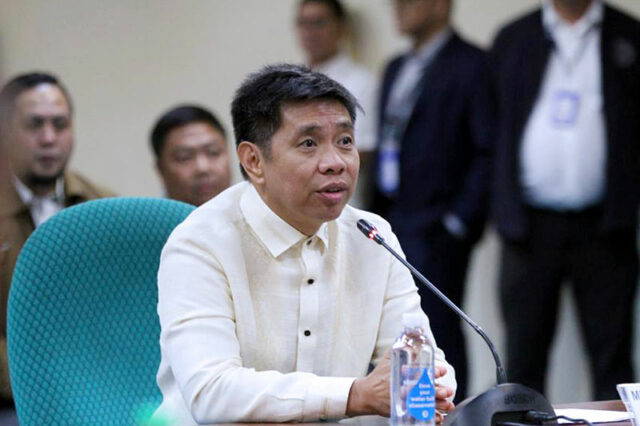
DICT SECRETARY Henry Rhoel R. Aguda — PNA/AVITO C. DALAN

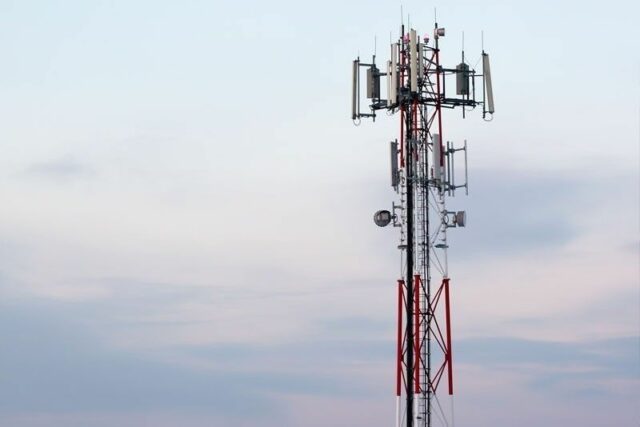
THE Department of Information and Communications Technology (DICT) plans to extend the validity of independent tower companies’ (ITCs) licenses beyond the current five-year period to align with the expected life of their assets.

“The problem with their licenses is that they are given five years, but the life of an asset is 15 to 20 years, so it doesn’t match,” DICT Secretary Henry Rhoel R. Aguda said during Globe Telecom Inc.’s 2025 Technology & Innovation Summit on Monday.

While the department has yet to finalize the length of the extension, Mr. Aguda said a new circular will be released specifying the extended period for tower companies’ licenses.

“I cleared it with the President (Ferdinand R. Marcos, Jr.) and he said, ‘Tama naman, you want them to invest, you have to match their license to operate.’ So, that’s going to happen, and I’m happy to say that it’s almost 90% there,” Mr. Aguda said.

Under DICT Department Circular No. 8, issued in 2020, an independent tower company’s certificate of registration is valid for five years and can be renewed for another five years if the proper application is submitted within three months before its expiration.

Speaking to reporters after the event, Globe Telecom, Inc. President and Chief Executive Officer Carl Raymond R. Cruz said he supports the DICT’s proposal to extend the five-year validity of ITC licenses.

“I think we need to enable the viability of the tower companies in the Philippines… If the tower companies and the operators work well, it is going to be good for the industry and the consumers,” he said.

Meanwhile, Mr. Aguda said the DICT is proposing to make internet connectivity a mandatory requirement under Republic Act No. 6541, the National Building Code of the Philippines.

“As people have mentioned, internet is now a utility,” he said.

The 48-year building code includes guidelines for water, electrical, and mechanical regulations.

Mr. Aguda said the proposed changes to the building code will be presented to lawmakers during their upcoming hearing on Sept. 10.

Dapat parang tubig at kuryente yan, ‘pag gumawa ka ngayon ng bagong building at bahay, may kasama nang internet (Similar to water and electricity, you should install connectivity infrastructure when constructing a new building or house),” he said.

Also on Monday, the DICT signed a two-year memorandum of understanding (MoU) with Globe to establish a stronger, more integrated framework for combating fraud, scams, and other ICT-enabled crimes.

The partnership formalizes the Collaborative Framework for Fraud Prevention and Investigation, Globe said in a statement. The MoU has a validity of two years, subject to renewal. — Beatriz Marie D. Cruz

Insurance sector posts higher premiums

THE INSURANCE INDUSTRY recorded higher premiums as of June, pushing up the country’s insurance penetration rate.

Total premiums paid for life and nonlife insurance products grew by 12.98% to P242.842 billion at end-June from P214.941 billion in the same period last year, the Insurance Commission (IC) said in a statement on Monday.

As a result, insurance penetration, or the ratio of insurance premiums to the gross domestic product, rose to 1.79% from 1.71% a year prior.

Insurance density, or the average spending of each individual on insurance, also increased by 12.07% to P2,137.32.

“This considerable increase was driven by a rise in total premiums that exceeded the population growth rate of 0.87%. The growth suggests a higher level of adoption and use of insurance services within the population as of the quarter,” the IC said.

Broken down, life insurers registered a 12.01% increase in premiums collected to P195.05 billion in the first semester from P174.14 billion a year prior.

Of this total, variable life premiums climbed by 15.47% to P130.7 billion, while traditional life premiums went up by 5.59% to P64.35 billion, the data showed.

Meanwhile, nonlife insurance companies’ net premiums written jumped by 20.48% year on year to P39.63 billion as of end-June from P32.89 billion.

For their part, mutual benefit associations’ total contributions went up by 3.09% to P8.16 billion from P7.91 billion.

The insurance industry’s combined net income increased by 3.62% to P28.78 billion in the first half, the IC added.

Benefits paid out by the sector also went up by 1.18% to P77.57 billion.

The industry’s total assets rose by 7.56% year on year to P2.54 trillion as of end-June. Invested assets stood at P2.26 trillion, up by 10.7% from the year-ago level.

Insurance companies’ combined net worth also grew by 8.7% to P493.76 billion from P454.24 billion.

Total paid-up capital and guaranty fund went up by 7.95% to P84.98 billion.

Meanwhile, the industry’s total liabilities grew by 7.29% to P2.05 trillion as of end-June from P1.91 trillion a year prior. — Aaron Michael C. Sy