Home Blog Page 6319

Biden hits oil refiners for record profits on pain at the pump
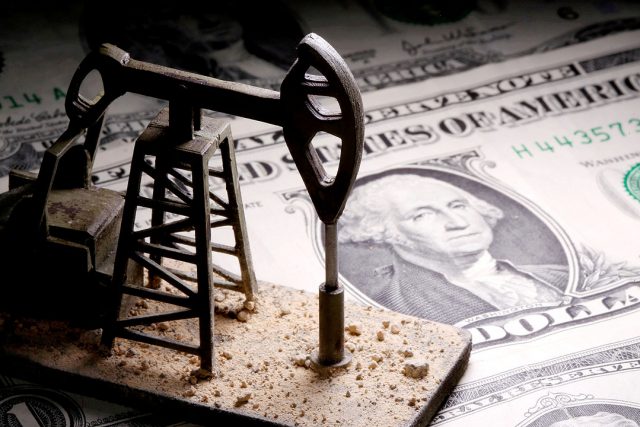
A 3D printed oil pump jack is placed on dollar banknotes in this illustration picture, April 14, 2020. — REUTERS/DADO RUVIC/ILLUSTRATION/FILE PHOTO

WASHINGTON — US President Joseph R. Biden, under pressure over sky-high gasoline prices, on Wednesday demanded oil refining companies explain why they are not putting more fuel on the market as they reap windfall profits.

Mr. Biden wrote to executives from Marathon Petroleum Corp., Valero Energy Corp. and Exxon Mobil Corp., and complained they had cut back on oil refining to pad profits, according to a copy of the letter seen by Reuters.

The letter was also sent to Phillips, Chevron Corp., BP and Shell, a White House official, who declined to be identified, told Reuters.

“At a time of war, refinery profit margins well above normal being passed directly onto American families are not acceptable,” Mr. Biden wrote, adding the lack of refining was driving up gas prices faster than oil prices.

Mr. Biden said the industry’s lack of action is blunting the administration’s attempts to offset the impact of oil-rich Russia’s invasion of Ukraine, such as releases from the US oil reserves and adding more ethanol to gasoline.

Energy companies have been enjoying bumper profits since the invasion, which added to a supply squeeze driving crude prices above $100 a barrel. Fuel demand has remained robust despite record-high gasoline prices.

White House spokesperson Karine Jean-Pierre said refiners have a “patriotic duty” to increase supplies and cut consumer costs.

“We are calling on them to do the right thing, to be patriots here,” she told reporters.

US refining capacity peaked in April 2020 at just under 19 million barrels per day (bpd), when prices tanked during the pandemic and refiners shut several unprofitable facilities. As of March, refining capacity was 17.9 million bpd, but there have been other closures announced since then.

US refiners are running at near-peak levels to process fuel — currently at 94% of capacity. They say there is little they can do to quickly satisfy Mr. Biden’s demands.

“Our refineries are running full out,” Bruce Niemeyer, corporate vice president of strategy and sustainability at Chevron, said on the sidelines of a Reuters energy transition conference on Tuesday, before the letter was made public.

Shell is “producing at capacity” and looking at options to increase oil and gasoline production, a spokesperson said.

Exxon, the focus of the president’s ire against oil companies last week, has invested to expand its refining capacity by 250,000 bpd, the equivalent of a medium-sized refinery, said spokesman Todd Spitler.

Mr. Spitler said the administration in the short term could lift the Jones Act provisions that force domestic shippers to use US flagged vessels that employ union labor, or waive fuel regulations.

The US government has waived summertime bans on the use of cheaper, smog causing fuel components in emergency cases. The administration recently used emergency powers to lift the ban on gasoline with higher blends of ethanol.

Phillips 66, Valero and Marathon Petroleum said they would work with the administration. Chevron and BP did not immediately comment.

Mr. Biden has escalated his rhetoric against oil companies as pump prices have raced to record highs above $5 per gallon.

Privately, White House officials have been asking refiners about idled plants and spare capacity and whether there are other ways to increase gasoline supply, according to two sources familiar with the discussions.

Rising gas prices have helped drive unexpectedly persistent consumer price inflation and voter anger before Nov. 8 midterm elections where Mr. Biden’s Democratic Party is defending its control of Congress.

Mr. Biden has attributed rising oil prices primarily to US-led sanctions that took Russian energy supplies off the global market.

He has also blamed major oil companies riding rising energy prices to record earnings, and giving profits to investors rather than spending on new drilling and refining capacity.

“Exxon made more money than God this year,” Mr. Biden said last week, after the major’s first quarter profit doubled from the previous year to $5.48 billion.

Exxon’s Mr. Spitler said the top US producer has invested more than $50 billion over the past five years that resulted in a nearly 50% increase in US oil output.  Reuters

N. Korea faces infectious disease outbreak amid COVID battle

REUTERS

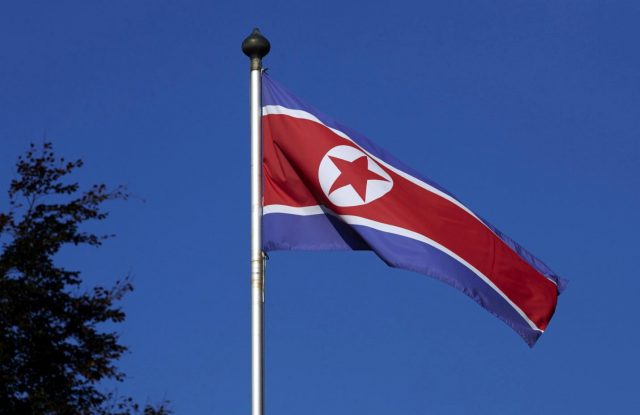
SEOUL — North Korea reported an outbreak of an unidentified intestinal epidemic in a farming region on Thursday, putting further strain on the isolated country as it battles chronic food shortages and a wave of coronavirus disease 2019 (COVID-19) infections.

Leader Kim Jong Un sent medicines to the western port city of Haeju on Wednesday to help patients suffering from the “acute enteric epidemic,” state news agency KCNA said, without giving the number affected, or identifying the disease.

The term enteric refers to the gastrointestinal tract.

“(Kim) stressed the need to contain the epidemic at the earliest date possible by taking a well-knit measure to quarantine the suspected cases to thoroughly curb its spread, confirming cases through epidemiological examination and scientific tests,” KCNA said.

An official at South Korea’s Unification Ministry handling inter-Korean affairs said the government is monitoring the outbreak, suspected to be cholera or typhoid.

The reported outbreak comes as the North tackles its first outbreak of COVID-19 infections. It declared a state of emergency last month, amid concerns over a lack of vaccines and medical supplies.

South Korea’s spy agency earlier told lawmakers that waterborne diseases, such as typhoid, were already widespread in North Korea before it announced the coronavirus outbreak.

“Intestinal diseases such as typhoid and shigellosis are not particularly new in North Korea but what’s troubling is that it comes at a time when the country is already struggling from COVID-19,” said professor Shin Young-jeon at Hanyang University’s College of Medicine in Seoul.

South Korea is willing to cooperate with the North to tackle the disease outbreak, but Pyongyang remains unresponsive to any offers for dialogue, including Seoul’s earlier proposal to provide COVID vaccines, said another official at the unification ministry.

South Hwanghae Province, where Haeju is located, is North Korea’s key agricultural region, raising concerns over possible impacts on the country’s already dire food shortage.

While the possibility of infections spreading through crops appears low, the key will be disinfecting water supply sources as the disease likely to be waterborne, said Eom Joong-sik, an infectious disease expert at Gachon University Gil Medical Center.

Pyongyang has been daily announcing the number of fever patients without specifying them as COVID patients, apparently due to a lack of testing kits. Experts also suspect underreporting in the figures released through government-controlled media.

North Korea reported 26,010 more people with fever symptoms on Thursday, with the total number of fever patients recorded across the country since late April nearing 4.56 million. The death toll linked to the outbreak is at 73.

The North has said the COVID wave has shown signs of subsiding, but the World Health Organization cast doubts on Pyongyang’s claims earlier this month, saying it believes the situation is getting worse. — Reuters

Portugal to speed up visa issuance to attract more foreign workers

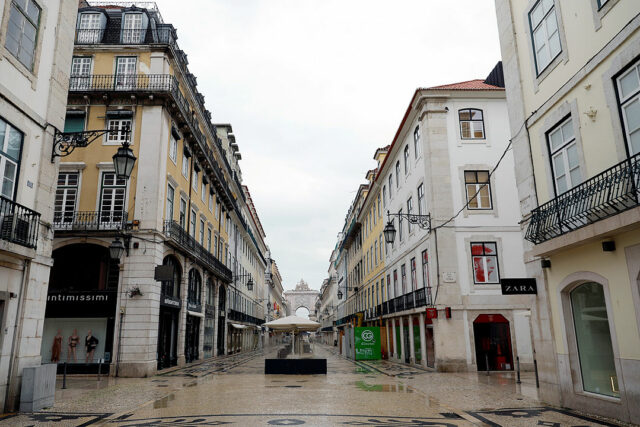
Augusta street is pictured during partial lockdown as part of state of emergency to combat the coronavirus disease (COVID-19) outbreak in Lisbon, Portugal March 30, 2020. — REUTERS/RAFAEL MARCHANTE/FILE PHOTO

LISBON — Portugal is speeding up the issuance of immigrant visas for foreign workers, members of Portuguese-speaking countries, university students and digital nomads to help tackle a labor shortage and revive the economy.

Minister for parliamentary affairs Ana Catarina Mendes said on Wednesday that a new type of visa has been created, the work-seeker visa, which allows entry into Portuguese territory of foreign nationals looking to work for up to 180 days.

“This diploma foresees the removal of bureaucratic barriers that prevented visas from being given quickly. New visas will be created, namely visas for seeking work, quotas for those seeking work will be eliminated and therefore it will be easier to find work opportunities in Portugal,” Ms. Mendes said.

“No tax incentive is foreseen.”

Digital nomads will be granted a residence or temporary stay visa and British citizens, through access to biometric data, now have access to all the rights “that every citizen here has” despite Brexit, the minister added.

Portugal has been facing labor shortages, especially in hospitality and tourism, one of the major drivers of the economy, but the minister declined to say how many people were expected to apply for visas.

The ruling Socialists have a majority in parliament, meaning the bill should be easily approved. — Reuters

Australians urged to switch off lights to ease power crunch

REUTERS

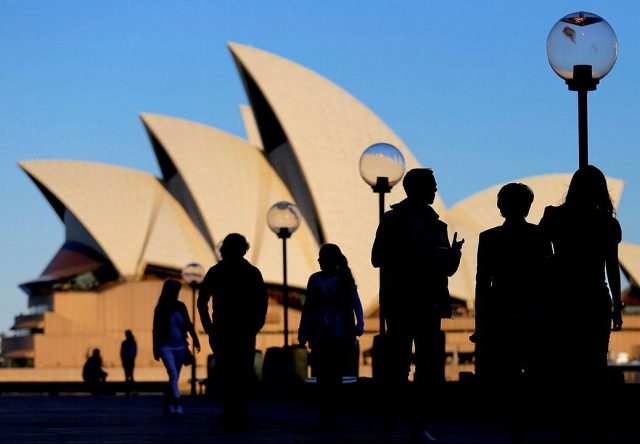
MELBOURNE — Australia’s energy minister on Thursday urged households in Sydney to switch off lights in the evening to avert blackouts, as the country’s power market remained suspended with more than a quarter of its coal-fired capacity knocked out.

The country’s energy market operator suspended the electricity spot market on Wednesday in an unprecedented move to secure power supplies, its latest drastic step to tackle an energy crisis that began in May.

Efforts were focused on reviving output from coal-fired generators, Climate Change and Energy Minister Chris Bowen said on Thursday, while urging households in New South Wales to conserve power as much as possible, without sacrificing essentials such as heating.

“We are confident we can avoid blackouts,” Mr. Bowen said at a televised media conference in Canberra.

“If you have a choice about when to run certain items, don’t run them from 6-8 (p.m.),” he said.

Prime Minister Anthony Albanese will host a dinner on Thursday with state leaders ahead of a meeting on Friday — their first formal gathering since the new Labor government was elected in May — and said energy will be on the agenda.

Mr. Bowen said the main problem behind the power crunch was unscheduled outages at ageing coal-fired power stations.

“Everybody is working to fix that,” he said.

Australia’s top power producer AGL Energy said on Thursday that one of three crippled units at its Bayswater coal-fired plant in New South Wales would be back online on Thursday and another by Saturday.

“We’re continuing to work cooperatively with the Australian Energy Market Operator to help ensure continuity of supply,” an AGL spokesperson said. — Reuters

The independence they fought for

A JOGGER passes by a mural depicting the Philippine Revolution led by Andres Bonifacio in San Juan City. — PHILIPPINE STAR/ MIGUEL DE GUZMAN

The 124th anniversary of the declaration of Philippine independence came and went in the midst of an information crisis. That crisis has prevented the making of the independently minded, informed, and politically engaged mass of citizens any society with democratic pretensions needs to understand its problems, and to propose and be part of the solutions to them.

Millions of Filipinos know little or next to nothing about their own history and are practically clueless about the most recent events and issues. Some have never even heard of the Noli Me Tangere, or the Kalayaan newspaper. These millions recently went through an election and decided its results with hardly any awareness of the track records, backgrounds, and programs of government (if they had any) of the people they voted for, and hence are completely in the dark about what they are likely to do once they’re in power.

Due to, among other factors, a flawed educational system whose error-filled textbooks, and even some teachers, glorify authoritarian rule, and the troll farms maintained by dynastic interests that unrelentingly spread falsehoods, still others have never heard of the Bill of Rights either. And if they have the slightest inkling at all of the 1972-1986 martial law period, with a straight face will they tell everyone that it was a peaceful and prosperous “golden age.”

Research has established how ill-informed and unprepared for the responsibilities of citizenship Department of Education (DepEd) wards and products are. A worldwide 2019 study by the Program for International Student Assessment (PISA) rated Filipino basic education students last in reading comprehension and second to the last in mathematics and science. Things could have changed since — but most likely for the worse, due to the technical and other problems (internet connectivity issues, teacher unpreparedness, limited parental mentoring capacity, etc.) of the DepEd shift to distance learning at the height of the COVID-19 pandemic.

Equally relevant is a 2018 survey of 39 countries by the Ipsos MORI Social Research Institute of London, United Kingdom. It found Filipinos, who had presumably made it through the basic education system and even college, to be the third most ignorant on public issues while being among the most certain of the validity of their opinions about them.

The attempts at reasoned and fact-based discourse in the public sphere, where such concerns as economic recovery, health, human rights, food security, climate change, and foreign relations among others can be addressed through consensual proposals for the adoption of appropriate State policies have foundered on the rocks of mass mis- and disinformation-cum-arrogance as a result.

If there is anything that not only the history of the Philippines but also that of other nations teaches, it is how vital information is to the achievement of individual, social, and national freedom. The bodeguero (warehouseman) and Katipunan founder Andres Bonifacio and his fellow workers were as aware of it as much as Jose Rizal and other Ilustrados were, hence the Katipunan’s Kalayaan newspaper, and Rizal and company’s many issuances (satires, parodies, manifestos, open letters), including Rizal’s own novels, Noli Me Tangere and El Filibusterismo. Apparently, all of them, despite their class differences, knew that the realities of poverty, inequality, injustice, and oppression alone are not enough to drive any attempt at social revolution and national independence; identifying and understanding the cause and sources of those conditions and the means to correct them is also needed.

The same awareness also informed the leaderships of the armies of the Revolution and the first Asian Republic. Not only with arms did the Emilio Aguinaldo revolutionary government defend the Revolution. It also published El Heraldo de La Revolucion under different names in 1899. And Antonio Luna had earlier published La Independencia in 1898.

In the succeeding decades of US colonial rule, periodicals such as El Renacimiento and Muling Pagsilang continued the fight to recover Philippine independence. During the Japanese occupation, the guerrilla press countered Japanese propaganda with its own accounts of the war in the Pacific and the anti-Japanese resistance in the Philippines. Almost from day one of the martial law period, the underground and semi-legal publications of the many anti-dictatorship groups rigorously reported and provided analyses on the human rights violations, the plunder, and the corruption of the regime.

Despite this record attesting to Filipino appreciation of the indispensable role of information in defending Philippine independence and in combating foreign and domestic foes, the decades after 1980s witnessed the steady decline of mass awareness, much more understanding, of both the Philippine past and its present. The process accelerated during the Duterte regime, the oppressive media policies of which discouraged investigative and enterprise journalism while it orchestrated the spread of disinformation through the government media system, its keyboard army of trolls, and its mercenaries in print and broadcast media.

Previous administrations had preserved and even strengthened through a web of military, economic, and other agreements the Philippines’ dependency on its former colonizer that has so often mocked its claims to independence and sovereignty. But among the consequences of the information crisis is not only the Duterte regime’s ending with the country’s US dependency intact despite its supposedly “independent” foreign policy. It has also added to that unequal relationship the country’s surrender of its rights to its own territorial waters to imperialist China’s designs in the West Philippine Sea. Only a handful of journalists have subjected to any analysis the Philippines’ de facto subordination to one more foreign power, while only sporadically have there been any protests from a citizenry that hardly sees any truth, meaning, relevance or virtue in the much-abused but beguiling allegation that the Philippines is an independent country.

To begin the process of making independence truly meaningful today, 124 years after June 12, 1898, the educational system has to admit and review how much it has contributed to the crisis in information and communication so it can find the means to help end it — not in the way Education Secretary-to-be Sara Duterte wants (recasting what she mistakenly thinks is the DepEd’s anti-Marcos and anti-martial law bias) but towards providing its young wards the truth not only about the problematic periods in Philippine history, but also about everything else.

As powerful purveyors of information, journalists and their media organizations — at least those who are independent and aware that truth-telling is a fundamental responsibility in communication — must once more commit themselves to the unending task of combating mis- and disinformation. It will not be only for the country’s sake but also for their own: journalistic independence and press freedom are best protected by a citizenry that appreciates the service the media provide.

This demands the reinvention of the “he said, she said” “just the facts” journalism that makes a fetish out of “objectivity” but which for years has been drummed into their heads by their old-school elders and the 200-plus diploma factories that offer journalism and other media and communication programs in this benighted country. It means getting at the facts first of all, yes, but also putting them in context, interpreting what they mean, and subjecting them to the analysis that one sees only rarely in much of the media.

Independence of mind as well as of the Filipino nation that was yet to be was what Rizal, Bonifacio, Apolinario Mabini, and company wrote, fought and died for. And they are inextricably linked, the first being the essential condition for the achievement of the second.


Luis V. Teodoro is on Facebook and Twitter (@luisteodoro).

www.luisteodoro.com

Goodbye Internet Explorer. You won’t be missed (but your legacy will be remembered)

After 27 years, Microsoft has finally bid farewell to the web browser Internet Explorer, and will redirect Explorer users to the latest version of its Edge browser.

As of June 15, Microsoft ended support for Explorer on several versions of Windows 10 — meaning no more productivity, reliability, or security updates. Explorer will remain a working browser, but won’t be protected as new threats emerge.

Twenty-seven years is a long time in computing. Many would say this move was long overdue. Explorer has been long outperformed by its competitors, and years of poor user experiences have made it the butt of many internet jokes.

Explorer was first introduced in 1995 by the Microsoft Corporation, and came bundled with the Windows operating system.

To its credit, Explorer introduced many Windows users to the joys of the internet for the first time. After all, it was only in 1993 that Tim Berners-Lee, the father of the web, released the first ever public web browser (aptly called WorldWideWeb).

Providing Explorer as its default browser meant a large proportion of Windows’s global user base would not experience an alternative. But this came at a cost, and Microsoft eventually faced multiple antitrust investigations exploring its monopoly on the browser market.

Still, even though a number of other browsers were around (including Netscape Navigator, which pre-dated Explorer), Explorer remained the default choice for millions of people up until around 2002, when Firefox was launched.

Microsoft has released 11 versions of Explorer (with many minor revisions along the way). It added different functionality and components with each release. Despite these improvements, it lost consumer trust due to Explorer’s “legacy architecture,” which involved poor design and slowness.

It seems Microsoft got so comfortable with its monopoly that it let the quality of its product slide just as other competitors were entering the battlefield.

Even just considering its cosmetic interface (what you see and interact with when you visit a website), Explorer could not give users the authentic experience of modern websites.

On the security front, Explorer exhibited its fair share of weaknesses, which cyber criminals readily and successfully exploited.

While Microsoft may have patched many of these weaknesses over different versions of the browser, the underlying architecture is still considered vulnerable by security experts. Microsoft itself has acknowledged this:

… [Explorer] is still based on technology that’s 25 years old. It’s a legacy browser that’s architecturally outdated and unable to meet the security challenges of the modern web.

These concerns have resulted in the United States Department for Homeland Security repeatedly advising internet users against using Explorer.

Explorer’s failure to win over modern audiences is further evident through Microsoft’s ongoing attempts to push users towards Edge. Edge was first introduced in 2015, and since then Explorer has only been used as a compatibility solution.

In terms of current market share, more than 64% of browser users use Chrome. Explorer has dropped to less than 1%, and even Edge only accounts for about 4% of users.

What has given Chrome such a leg-up in the browser market?

Chrome was first introduced by Google in 2008, on the open-source Chromium project, and has since been actively developed and supported.

Being open source means the software is publicly available, and anyone can inspect the source code that runs behind it. Individuals can even contribute to the source code, thereby enhancing the software’s productivity, reliability, and security. This was never an option with Explorer.

Moreover, Chrome is multi-platform: it can be used in other operating systems such as Linux, MacOS, and on mobile devices. It was supporting a range of systems long before Edge was even released. Meanwhile, Explorer has mainly been restricted to Windows, Xbox, and a few versions of MacOS.

Microsoft’s Edge browser is using the same Chromium open-source code that Chrome has used since its inception. This is encouraging, but it remains to be seen how Edge will compete against Chrome and other browsers to win users’ confidence.

We won’t be surprised if Microsoft fails to nudge customers towards using Edge as their favorite browser. The latest stats suggest Edge is still far behind Chrome in terms of market share.

Also, the fact Microsoft took seven years to retire Explorer after Edge’s initial release suggests the company hasn’t had great success in getting Edge’s uptake rolling.

Web browsers play a vital role in establishing privacy and security for users. Design and convenience are important factors for users when selecting a browser. So ultimately, the browser that can most effectively balance security and ease of use will win users.

And it’s hard to say whether Chrome’s current popularity will be sustained over time. Google will no doubt want it to continue, since web browsers are significant revenue sources.

But Google as a corporation is becoming increasingly unpopular due to massive data gathering and intrusive advertising practices. Chrome is a key component of Google’s data-gathering machine, so it’s possible users may slowly turn away.

As for what to do about Explorer (if you’re one of the few people that still has it sitting meekly on your desktop) — simply uninstall it to avoid security risks. Even if you’re not using Explorer, just having it installed could present a threat to your device. No one wants to be the victim of a cyberattack via a dead browser!

THE CONVERSATION VIA REUTERS


Mohiuddin Ahmed is a lecturer of Computing and Security, while M IMRAN MALIK is a cybersecurity researcher, at the Edith Cowan University. Paul Haskell-Dowland is a professor of Cyber Security at the same university.

Is Putin’s war more like WWI or WWII?

Consequences of the shelling in Kharkiv — FOTORESERG/DEPOSITPHOTOS

BEWARE the “lessons of history” as drawn by charlatans, ignoramuses, or tyrants, for they will be daft, wrong, and possibly disastrous. The self-serving amateur historiography of Russian President Vladimir Putin is an example.

Last year, he invented a narrative On the Historical Unity of Russians and Ukrainians, which was subsequently revealed as one of the hallucinations that made him attack Ukraine. The other day, he was at it again, comparing himself to Peter the Great, and hinting that “it seems it has fallen to us, too, to reclaim and strengthen.” That implied he might like to wage war against Sweden (as Peter did in the 18th century) and seize lands that are now part of Estonia, a member of NATO.

Oh dear. If Putin were a pub drunk, real historians would be guffawing. His overall legacy will be nothing like Peter’s — the Tsar, like Putin, was brutal and imperialistic, but also known for opening Russia toward the West and progress. Yet Putin is a dictator in possession of the launch codes for the world’s largest arsenal of nuclear weapons, so his ravings are terrifying.

That said, the inevitability that some people will draw inane conclusions from history shouldn’t prevent the rest of us from trying to be more sophisticated about it. As the Maori of New Zealand say, we walk backwards into the future with our eyes fixed on the past. We need history to make sense of the world; we need yesterday to understand today.

The trick is to be eclectic, precise, and subtle. Nobody today is exactly like Hannibal, Boudica, Charlemagne, Genghis Khan, Catherine the Great, or any other historical figure. But specific aspects of people and events in the past do echo down the ages. We just have to be clear about what those are in each context.

In groping for analogies to Putin’s war against Ukraine, there are lots of possibilities. I’ve compared the scenarios to the outcomes of the Korean War and the Winter War between the Soviet Union and Finland; others have looked to the Russo-Japanese War of 1904-05 and beyond.

For most people, however, the most evocative comparisons are to the First and Second World War — not least, because of fears that Putin may yet escalate and hurl us into a Third one. But those two previous conflagrations were completely different, and offer diverging lessons.

Poles, Estonians, Latvians, Lithuanians, and other Eastern Europeans tend to view Russia’s war of aggression as comparable to Nazi Germany’s assaults on Czechoslovakia and Poland in 1938-39. Polish President Andrzeij Duda, for example, has explicitly compared Putin to Adolf Hitler.

By contrast, German and French intellectuals and politicians prefer analogies to World War I. In part, that’s because of a German taboo against comparing anything to Hitler (a sort of reverse Godwin’s Law), since that would seem to cast doubt on the historical singularity of the Fuehrer’s crimes, above all the Holocaust.

By citing World War I, these observers are also signaling concern that the West, like Europe in 1914, could accidentally stumble into a bigger disaster. German Chancellor Olaf Scholz has invoked The Sleepwalkers by Christopher Clark. That book describes in minute detail how Europe’s statesmen (they were all men), in responding to the assassination by a Bosnian Serb of an Austro-Hungarian prince in a Balkan backwater, slid into a continental fratricide because they didn’t comprehend the automatic escalation spirals they had built into their alliance systems and mobilization schedules.

With such precedents in mind, leaders will tend to view Ukraine’s Donbas as akin to Bosnia Herzegovina in 1914 — a land where the West has interests, but also a liminal place that could be a potential trap, luring NATO countries into a shooting war against Russia, with unknowable consequences.

The World War I analogy also explains why French President Emmanuel Macron worries about outcomes that would “humiliate” Putin. The Treaty of Versailles humiliated Germany, leaving it resentful and thereby seeding the next World War.

But these comparisons miss the mark, according to Martin Schulze Wessel, a German historian of Eastern Europe. In the First World War, several leaders and powers shared responsibility for a disaster they could have prevented. In 1939, by contrast, one man launched an unprovoked attack against a weaker neighbor, as part of a pattern of irredentist, chauvinistic, and imperialist aggression. This most closely fits Putin in 2022.

In that analogy, those leaders in the West who spent years trying to “appease” the tyrant — during the previous century or this one — misread the situation, the threat and the man. It also follows, as Poland’s Duda said, that negotiating with Putin — talking for the sake of talking — won’t help, unless and until the aggressor is stopped on the battlefield. This is why the Poles and Balts say bluntly what Scholz so far refuses to state: Ukraine must win.

Note that the analogy of World War II does not extend to whatever Hitler did in the years after 1939. The comparison does not imply that Putin is planning a Holocaust, nor that he must eventually commit suicide — or that Russia, like Nazi Germany, must end up occupied and dismembered. To understand how Putin’s war could end, we need to observe how this tragedy unfolds, while reaching again and again for the most appropriate lessons of the past.

BLOOMBERG OPINION

Going Green for Good: McDonald’s opens new solar-powered restaurants

The newest solar-powered McDonald’s store in Arayat, Pampanga. These solar panels will become a significant source of electricity for the restaurant, providing employees and customers with clean and renewable energy.

Quick service restaurant giant McDonald’s Philippines, majority owned and operated by its Master Franchise Holder, Chairman & Founder Dr. George T. Yang is poised to strengthen its Green & Good initiative, the company’s commitment to the environment, by scaling innovative and sustainable restaurant solutions in more of its new stores in the country.

Since 2020, McDonald’s has opened two Green & Good flagship stores in Manila and Mandaluyong to test and learn green solutions for sustainable restaurant practices. Previously, the company also conducted a pilot test in its Quezon Avenue, Quezon City and Malasiqui, Pangasinan stores to explore rooftop solar power systems.

Today, McDonald’s is now set to roll out its first batch of new stores in Arayat, Pampanga and Ligao, Albay to be solar-powered. These stores are equipped with grid-tied/on-grid solar photovoltaic (PV) systems connected to the local utility grid and is a cost-effective option to supplement energy requirements. With potentially more than 70,000 KWH in estimated annual power generation, equivalent to approximately less 17,000 kg of CO2 emissions. With the solar rooftop being its significant source of electricity, McDonald’s will be able to power these stores with clean and renewable energy, enhancing its other sustainable solutions for its restaurants.

McDonald’s pilot test for solar power rooftop in its Malasiqui, Pangasinan store.

“McDonald’s Philippines is embarking on our journey towards becoming a better McDonald’s for the environment. We recognize the role we play and the impact we can make by committing to learn and scale initiatives that reduce waste and emissions”, shared McDonald’s Philippines President & CEO Kenneth S. Yang. “Our goal is for our stores to become sustainable developments that feature sustainable restaurant solutions that enable waste reduction, energy conservation, upcycling, and inclusive dining solutions.”

McDonald’s pilot test for solar power rooftop in its Quezon Avenue, Quezon City store.

Similar to its existing branches in U.N. Del Pilar Manila and Shaw Wack-Wack Mandaluyong, the new stores will also feature solar lamp posts, photo and motion sensors, and high-performance glass film as part of its utility efficiency solutions, as well as eco-friendly air conditioning for less energy consumption. Green building solutions such as light gauge steel frames, ecopavers/panels and concrete fiber are incorporated as well. Meanwhile, sustainable packaging, proper waste disposal, and active mobility continue to be part of Green & Good stores’ upcycling and inclusive dining experiences.

This year, the company projects to further expand its commitment to the environment by opening more new Green & Good flagship stores in the country and convert more of its existing stores to use solar power energy.


Spotlight is BusinessWorld’s sponsored section that allows advertisers to amplify their brand and connect with BusinessWorld’s audience by enabling them to publish their stories directly on the BusinessWorld Web site. For more information, send an email to online@bworldonline.com.

Join us on Viber to get more updates from BusinessWorld: https://bit.ly/3hv6bLA.

Battered by economic crisis, Sri Lankans seek passport to a better life

Sach.S/Flickr/CC BY-NC-SA 2.0

COLOMBO — R.M.R Lenora stood in a snaking queue outside Sri Lanka’s Immigration and Emigration Department headquarters for two days last week, hoping to get a passport and, with it, a chance to leave a country wilting under an economic crisis. 

A garment worker, 33-year-old Ms. Lenora decided to apply for a job as a maid in Kuwait after her husband was laid off from a small restaurant where he worked as a cook. 

“My husband lost his job because there is no cooking gas and food costs have skyrocketed. It is very hard to find work and the salaries are very low,” said Ms. Lenora, who said she earns about 2,500 Sri Lanka rupees ($6.80) a day. 

“With two children that is impossible.” 

So last week, carrying a change of clothes and an umbrella to fend off a blistering sun, the petite woman boarded a train from the town of Nuwara Eliya, in Sri Lanka’s central hills, and traveled 170 km (105 miles) to the commercial capital, Colombo, to hand in her papers for her first passport. 

In the queue, Ms. Lenora was joined by laborers, shop owners, farmers, public servants and housewives, some of whom camped out overnight, all looking to escape Sri Lanka’s worst financial crisis in seven decades. 

In the first five months of 2022, Sri Lanka has issued 288,645 passports compared with 91,331 in the same period last year, according to government data. 

The island nation of 22 million people is running short of food, cooking gas, fuel and medicine, after economic mismanagement and the COVID-19 pandemic wiped out its foreign exchange reserves. 

Currency depreciation, inflation of more than 33%, and worries of prolonged political and economic uncertainty is pushing many to migrate. 

The government is keen to support more people hoping to work abroad to boost remittances, which have halved in recent months, according to central bank data. 

‘THEY GET ANGRY’
Inside the Immigration and Emigration Department, where people pack counters for hours to get their photos and fingerprints taken, a senior official said the 160 members of staff were exhausted trying to meet demand for passports. 

The department has tightened security, expanded working hours, and tripled the number of passports it issues but at least 3,000 people are dropping off forms every day, said H.P. Chandralal, who oversees the authorization of most applications. 

The online application system is backlogged for months and many new applicants can’t get necessary appointments. 

“It is very difficult dealing with the people because they are frustrated and do not understand that the system is not equipped to deal with this kind of demand,” said Mr. Chandralal. 

“So they get angry and blame us but there is nothing we can do.” 

The urgency for many people aiming to leave was compounded recently by a warning from Prime Minister Ranil Wickremesinghe that a food crisis is only months away. 

The United Nations says Sri Lanka risks a full-blown humanitarian emergency, and it has launched a plan to provide $47.2 million to 1.7 million of the country’s most vulnerable people. 

In a bid to fix the crisis, Sri Lanka is in talks with the International Monetary Fund (IMF) for a bailout package, having suspended repayment on about $12 billion in foreign debt in April. 

The government estimates it will need at least $5 billion to meet essential imports for the rest of the year. 

Ms. Lenora is determined to do what she can for a better life, for her and her children. 

“I want to spend two years in Kuwait then I’m sure I can earn and save enough to come back,” she said. 

“I want to educate my daughters. That’s the most important thing.” — Reuters

Facing deadlock, WTO negotiations grind on despite Indian defiance

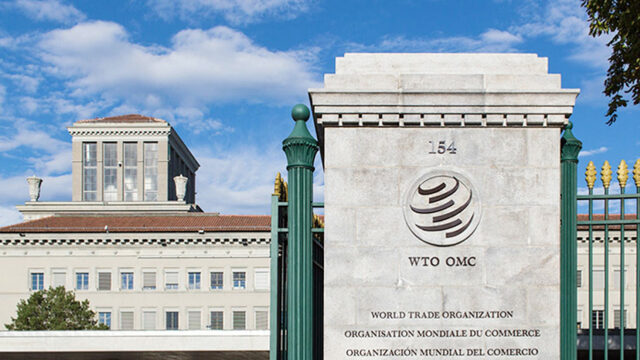
WORLD TRADE ORGANIZATION

GENEVA — The World Trade Organization (WTO) negotiations on food, fisheries, and vaccines stretched into the early hours on Thursday amid growing doubts that tough bargaining could deliver deals in the face of Indian intransigence. 

During the WTO’s ministerial conference this week, its first major meeting in over four years, the 164-member body is seeking to agree a response to the coronavirus disease 2019 (COVID-19) pandemic, a reduction of fishing subsidies, food security pledges and the launch of internal reform in a package of deals badly needed to prove the body’s relevance. 

“There’s not a single outcome yet,” said a source involved with the talks that are ongoing in the “Green Room” of the WTO’s Geneva headquarters. Pakistan Commerce Minister Syed Naveed Qamar earlier told Reuters he thought the WTO was heading towards a “no-result ministerial.” 

A WTO spokesperson was more upbeat, saying there had been significant progress and that it was not far from agreements. 

WTO Director-General Ngozi Okonjo-Iweala told the more than 100 ministers present that time was running out and that they should “go the extra mile.” The June 12–15 conference has already been extended by an extra day into Thursday. The US trade representative Katherine Tai leaves in the morning, a US official confirmed, adding pressure to strike deals in the coming hours. 

The WTO takes decisions by consensus, so just one objection can sink a deal. 

Delegates said India, which has a history of blocking multilateral trade deals, appeared far from ready to compromise. That view was supported by comments Indian Commerce Minister Shri Piyush Goyal made in closed sessions and which New Delhi chose to publish. 

India and South Africa and other developing countries have sought a waiver of intellectual property rights for vaccines, treatments and diagnostics for over a year, but faced opposition from several developed nations with major pharmaceutical producers. 

A provisional deal between major parties — India, South Africa, the United States and the European Union — emerged in May, but drew criticism from campaign groups that it fell short of what is needed. 

Activists staged a “die-in” protest at the WTO building on Wednesday, coughing and pretending to drop dead to the floor to highlight the deaths they say are caused by the absence of a broad intellectual property waiver. 

Mr. Goyal echoed that view. 

“My own sense is that what we are getting is completely half baked and it will not allow us to make any vaccines,” he said. 

The WTO has also pushed hard for a global deal to cut fishing subsidies, which would be only the second multilateral agreement since its creation 27 years ago and a demonstration of its relevance in an era of growing trade tensions. 

Mr. Goyal, in comments to delegates, said India was a strong advocate of sustainability, but its fishing industry did not operate huge fleets and relied on small-scale and often poor fishers. 

The minister said India and similar countries should be granted a 25-year transition period to phase out fishing subsidies, far longer than what most other WTO members have suggested. 

“It’s not yet clear though that there is a deal to be had…. with the Indians throwing in even more objections to texts,” one diplomat close to the talks said. 

However, civil society groups said it was rich nations, with inflexibility towards the needs of the developing world, that were responsible for the impasse. — Philip Blenkinsop and Emma Farge/Reuters

More than 80% of Japanese firms back nuclear restart, tourism resumption

International Atomic Energy Agency (IAEA) experts visit Fukushima Daiichi Nuclear Power Station in Japan in November 2013. — Greg Webb / IAEA

TOKYO — A large majority of Japanese companies support both restarting idled nuclear reactors and this month’s resumption of foreign tourism, a Reuters survey showed, highlighting broad approval for two measures seen as likely to ease strain on the economy. 

Results of the monthly Reuters Corporate Survey are among the strongest signs yet of Japan Inc.’s endorsement of a return to nuclear power, as higher global energy prices and a tumbling yen drive up input costs for manufacturers and squeeze households. 

Nuclear power remains a sensitive issue in Japan after a devastating earthquake and tsunami in 2011 crippled the Fukushima Daiichi plant and caused the world’s worst nuclear accident since Chernobyl. But rising energy prices from the Ukraine crisis appear to be turning public opinion on the issue. 

“Until we get new energy sources, such as hydrogen, economic activity won’t move forward without restarting nuclear reactors,” a manager at a paper and pulp company wrote. 

Japan idled the bulk of its nuclear reactors — more than 40 — in the aftermath of the Fukushima disaster, leaving it with around 10 operational now. 

Overall, 85% of firms were in favor of restarting nuclear reactors if safety requirements were met, according to the poll of 500 large and mid-size non-financial firms conducted from June 1 to 10 by Nikkei Research for Reuters. Around 240 firms responded. 

Their comments showed economic concerns playing a prominent role in consideration of nuclear power. 

“Structural power shortages have a big impact on the economy, making nuclear power restart essential,” wrote a manager at a wholesaler. 

The results compared with those of the April survey, in which almost 60% of firms said the government should move “quickly” to restart reactors. The latest survey did not ask about timing of a restart, however, so direct comparison is difficult. 

A public opinion poll by the Nikkei newspaper in March showed 53% of voters believed the government should restart reactors. 

WELCOME BACK
Similarly, the survey showed 89% of firms welcoming the government’s decision to again permit limited inbound foreign tourism. Many firms expected the move would aid in the recovery from the pandemic —  though it suggested they did not want border limits to be fully relaxed until 2023. 

Since June 10, the government has allowed a limited number of foreign tourists to enter on package tours. This is a first phase, after two years of coronavirus disease 2019 (COVID-19) curbs. 

Policymakers have faced the difficult task of trying to balance the economic benefits of tourism with concerns that travelers would trigger a COVID resurgence. 

An industry executive said local governments remained worried that foreign tourists might spread the virus, which would make it hard to open the country fully. 

About a quarter of firms said the government should bring the number of foreign visitors back to pre-pandemic levels this year, while 58% said it should wait until 2023 before doing so. 

“You cannot rule out the possibility (a re-opening) could trigger resurgence of infections,” a manager at a ceramics company wrote in the survey on condition of anonymity. “However, vaccines are keeping infections from becoming worse. Even considering the risk, merits stemming from inbound demand outweigh demerits.” 

Before the COVID-19 outbreak, tourism was a rare bright spot for Japan, with a record of about 32 million foreign tourists spending 4.81 trillion yen ($35.80 billion) in 2019. The government aims to bring in 60 million tourists a year by 2030. 

Japan imposed some of the strictest border controls in the world during the pandemic, banning the entry of almost all non-residents and causing tourism demand to plunge. 

Seven out of 10 firms in the survey expected that, upon easing of border measures, inbound tourism would help boost economic growth “somewhat” this fiscal year, while 18% saw it “greatly” contributing to growth. — Tetsushi Kajimoto/Reuters

Ancient DNA solves mystery over origin of medieval Black Death

Yersinia pestis bacteria. — Centers for Disease Control and Prevention/ Dr. H.E. Stark

Ancient DNA from bubonic plague victims buried in cemeteries on the old Silk Road trade route in Central Asia has helped solve an enduring mystery, pinpointing an area in northern Kyrgyzstan as the launching point for the Black Death that killed tens of millions of people in the mid-14th century. 

Researchers said on Wednesday they retrieved ancient DNA traces of the Yersinia pestis plague bacterium from the teeth of three women buried in a medieval Nestorian Christian community in the Chu Valley near Lake Issyk Kul in the foothills of the Tian Shan mountains who perished in 1338–1339. The earliest deaths documented elsewhere in the pandemic were in 1346. 

Reconstructing the pathogen’s genome showed that this strain not only gave rise to the one that caused the Black Death that mauled Europe, Asia, the Middle East and North Africa but also to most plague strains existing today. 

“Our finding that the Black Death originated in Central Asia in the 1330s puts centuries-old debates to rest,” said historian Philip Slavin of the University of Stirling in Scotland, co-author of the study published in the journal Nature

The Silk Road was an overland route for caravans carrying a panoply of goods back and forth from China through the sumptuous cities of Central Asia to points including the Byzantine capital Constantinople and Persia. It also may have served as a conduit of death if the pathogen hitched a ride on the caravans. 

“There have been a number of different hypotheses suggesting that the pandemic may have originated in East Asia, specifically China, in Central Asia, in India, or even close to where the first outbreaks were documented in 1346 in the Black Sea and Caspian Sea regions,” said archaeogeneticist and study lead author of the University of Tübingen in Germany. 

“We know that trade was likely a determining factor to the dispersal of plague into Europe during the beginning of the Black Death. It is reasonable to hypothesize that similar processes determined the spread of the disease from Central Asia to the Black Sea between 1338 and 1346,” Ms. Spyrou added. 

Pandemic origins are hotly contested, as evidenced by the debate over the current coronavirus disease 2019 (COVID-19) pandemic’s emergence. 

The Black Death was the deadliest pandemic on record. It may have killed 50% to 60% of the population in parts of Western Europe and 50% in the Middle East, combining for about 50–60 million deaths, Mr. Slavin said. An “unaccountable number” of people also died in the Caucasus, Iran and Central Asia, Mr. Slavin added. 

“Already in medieval times we see the high mobility and fast spread of a human pathogen,” said archaeogeneticist and study co-author Johannes Krause, director of the Max Planck Institute for the Science of Human History in Germany. “We should not underestimate the potential of pathogens to spread around the world from rather remote locations, likely due to a zoonotic event” — an infectious disease jumping from animals to people. 

The researchers analyzed teeth, a rich source of DNA, from seven people buried in cemeteries of communities called Burana and Kara-Djigach, obtaining plague DNA from three in Kara-Djigach. 

The cemeteries, excavated in the 19th century, included headstones attributing deaths to “pestilence” in the Syriac language. Objects like pearls, coins and clothing from far-flung locales indicated that the towns were involved in international trade, perhaps offering stop-and-rest services for long-distance caravans. 

Bubonic plague, untreatable at the time but now curable using antibiotics, caused swollen lymph nodes with blood and pus seeping out, with the infection spreading to the blood and lungs. 

In Europe, it was transmitted mainly through bites of fleas carried on infected rats. The pandemic originated in wild rodents, most likely marmots, a type of ground squirrel, Slavin said. Rodents tagging along in caravans may have helped spread it, but other transmission mechanisms may have included human fleas and lice. 

“We found that the closest living relatives of that Y. pestis strain that gave rise to the Black Death are still found in marmots in that region today,” Mr. Krause said. — Reuters

ADVERTISEMENT
ADVERTISEMENT