Home Blog Page 6258

The new US export rules designed to freeze Russian tech

STOCK PHOTO | Image by Gerd Altmann from Pixabay

The United States on Thursday restricted exports to Russia of a broad set of US-made products as well as foreign-produced goods built with US technology, following the invasion of Ukraine.

Here is how the rules are expected to affect US tech companies, according to six experts on US trade law.

What technology is newly restricted from export to Russia? 

US companies must now obtain licenses to sell computers, sensors, lasers, navigation tools, and telecommunications, aerospace and marine equipment. The United States will deny almost all requests.

“We expected something sweeping, and this was certainly sweeping,” said Ama Adams, partner at law firm Ropes & Gray.

The new rules also force companies making tech products overseas with US tools to seek a US license before shipping to Russia.

A similar restriction was first applied in recent years to companies shipping to Chinese technology giant Huawei, to great effect.

Which US companies will be most impacted? 

Many companies may opt to suspend all sales to Russia out of caution, legal experts said.

US exports to Russia were limited to about $6.4 billion last year, US census data show, with machinery and vehicles among big categories in past years.

The most severe tech hits to Russia could come from curbs on foreign goods.

For example, the Semiconductor Industry Association (SIA), which represents US chipmakers, noted that “Russia is not a significant direct consumer of semiconductors” and that Russia’s communications and tech spending “totaled only about $25 billion out of the multi-trillion global market” in 2019.

But many products made in Asia and destined for Russia include chips made with US tooling. Over two dozen members of the European Union, as well as the United Kingdom, Canada, Japan, Australia, and New Zealand, are imposing similar export restrictions to limit Russia’s options.

How will Russia be affected? 

Emily Kilcrease, senior fellow at the Center for a New American Security and former deputy assistant US Trade Representative, said the restrictions will freeze Russia’s technology where it is today.

“You won’t be able to get new tech into the country,” she said.

William Reinsch, a trade expert at the Center for Strategic and International Studies and a former Commerce Department export official, expects a slow escalation of impact.

“Eventually they will be hurting, but maybe not for months,” he said. “It’s not an immediate body blow.”

The curbs and sanctions are not as comprehensive as US trade actions on Iran and North Korea, but they could have bigger consequences globally because Russia is more intertwined with the world economy, attorneys said.

What technology is not covered by new restrictions? 

The measures include carve-outs for consumer items such as household electronics, humanitarian goods, and technology necessary for flight safety. Cell phones are permitted as long as they are not sent to Russian government employees or certain affiliates.

Also not restricted are consumer encryption technologies, which one attorney described as a sign that the United States and its allies do not want to disrupt protesters and media.

Nothing precludes the US from later extending sanctions to more items.

South Korea was not listed among countries partnering on the rules, and its assistance would be important for blocking Russia’s access to chips from there, Ms. Kilcrease said.

A senior US administration official said Thursday that more countries were expected to join.

The South Korean Embassy in Washington did not immediately respond to a request for comment.

South Korea said on Thursday it would join in unspecified multilateral economic sanctions on Russia in response to its military operations in Ukraine, but is not considering adopting unilateral measures.

Which companies could benefit from the new rules? 

Ms. Kilcrease and legal experts expect that Chinese technology companies may want to fill some voids created by restrictions on Western tech companies, though Ms. Kilcrease said the US rules would discourage them. But the senior US administration official said that China cannot supply Russian crucial military needs, especially for the most advanced chips. — Paresh Dave and Jeffrey Dastin/Reuters 

China steps in to steer Hong Kong’s COVID crisis as risks loom

Carrie Lam/Facebook

HONG KONG — As coronavirus disease 2019 (COVID-19) rages across Hong Kong at the start of a sensitive political year for China and President Xi Jinping, Beijing is determined not to be embarrassed and undermined as it was by the often-violent protests that rocked the city in 2019.

In the past week, since Mr. Xi told the city its “overriding mission” was to control the worsening crisis, Hong Kong has stepped up anti-COVID measures, including plans for mass testing buttressed by equipment, testing vehicles, and personnel from the mainland.

Foremost for Beijing, some advisers to China’s government say, is a fear that, unless Hong Kong contains the virus and prevents a lot of people from suffering, the city could see a return to the instability of 2019 when anti-government protests posed a major crisis for Mr. Xi.

“Beijing understands there are still a lot of anti-government, anti-China forces in Hong Kong which may be waiting for an opportunity to come back,” Lau Siu-kai, an adviser to the Chinese government, told Reuters.

“If the epidemic spills over from Hong Kong into the mainland, particularly Guangdong, then it will become an issue of national security for the central government,” added Mr. Lau, deputy director of the Association of Hong Kong and Macau Studies, a top think-tank directly under China’s Hong Kong and Macau Affairs Office.

There was no immediate response to faxed questions to China’s main “Liaison Office” in Hong Kong, or China’s cabinet-level Hong Kong and Macau Affairs Office.

As the COVID crisis grows, Hong Kong-based mainland officials including the head of China’s Liaison office, Luo Huining, have appealed to Hong Kong tycoons to provide financial and logistical support; while mainland construction teams are now rushing to build a 10,000-bed temporary isolation center on an outlying island.

POLITICAL RISKS 

The stakes are especially high for Mr. Xi in a crucial year when China’s Communist Party is set to hold a five-yearly Congress where he is expected to secure an unprecedented third term, even as his zero-COVID policy makes China increasingly isolated in a world that is learning to live with the coronavirus.

This year also marks 25 years since Britain handed Hong Kong back to Chinese rule, and Mr. Xi would ordinarily be expected to attend anniversary celebrations.

Mr. Lau said part of the problem was that while China’s national security ambit encompasses many sectors including public health, Hong Kong’s definition of national security had been “less coherent,” leading city officials to underestimate the risks, political and otherwise, spilling onto a national level.

Since COVID-19 emerged in late 2019 in Wuhan, China has contained the outbreak with aggressive measures including keeping its borders nearly shut, an effort that is exacting rising economic costs and that could be harder to sustain as more infectious variants such as Omicron emerge.

Those methods are harder to implement in Hong Kong, an international financial hub known for cramped living quarters in high-rise buildings and a population that can be recalcitrant when it comes to complying with government orders.

“It’s been a battle since the Wuhan outbreak, to show the supremacy of China’s governance over the West in controlling the virus,” a second person with ties to senior Chinese officials overseeing Hong Kong affairs told Reuters.

“Hong Kong has no choice but to be part of the China strategy, to make sure its outbreak isn’t used to undermine the legitimacy of Xi’s leadership.”

China’s national priorities over Hong Kong’s COVID outbreak have again left the city’s government with little room to find its own path out of the pandemic, according to some observers, hampering Hong Kong’s role as an international and open financial hub.

Even as some local experts urge a more moderate path of home isolation for those with COVID-19, Hong Kong’s Chief Executive Carrie Lam insists the city must stick to “zero-COVID” policies.

At a press briefing on Tuesday, Ms. Lam repeatedly praised Beijing’s backing and policies in the COVID fight, speaking beneath a banner that highlighted “staunch national support”.

“This is a repeat of 2019. A doubling down of failed policies,” said one senior Western diplomat, noting that balancing the interests of Hong Kongers and Beijing could not always be reconciled in times of crisis.

The office of Hong Kong leader Lam gave no immediate response to a request for comment from Reuters.

Back in 2019, during the mass protests, Lam told a private audience in an audio recording obtained by Reuters that she had “very, very, very limited” room for political maneuver, and that she ultimately “has to serve two masters by constitution” — Beijing and the people of Hong Kong.

Steve Tsang, who heads the China Centre of London’s School of Oriental and Asian Studies (SOAS), said the parameters of the city’s autonomy depended on Beijing’s interpretation.

“Their meaning can modify as Beijing sees fit,” Mr. Tsang told Reuters. “Zero-COVID being one of Xi’s hallmark policies, [it] must therefore be implemented in Hong Kong as it is on the mainland, unless and until Xi decides to change his mind.” — James Pomfret and Greg Torode/Reuters

Why Russia and Ukraine are fighting for Chernobyl disaster site

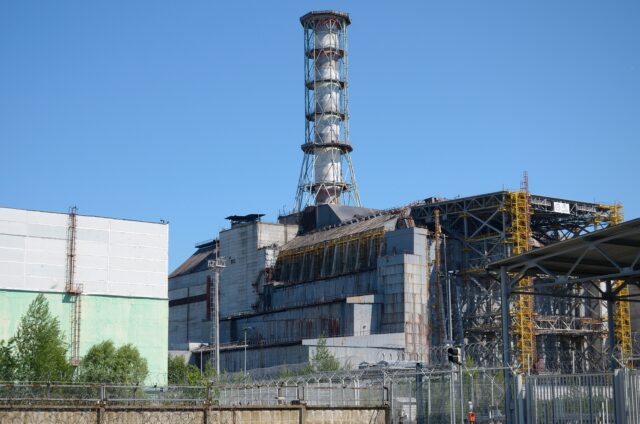
Chernobyl Nuclear Power Plant

WASHINGTON — Russian and Ukrainian forces fought on Thursday for control of  Chernobyl, the still radioactive site of the world’s worst nuclear accident and a factor in the collapse of the Soviet Union.

“Our defenders are giving their lives so that the tragedy of 1986 will not be repeated,” Ukrainian President Volodymyr Zelenskiy tweeted before the defunct nuclear power plant, scene of a deadly fire and explosion in 1986, was captured by Russian forces.

But why would anyone want an inoperative power plant surrounded by miles of radioactive land?

The answer is geography: Chernobyl sits on the shortest route from Belarus to Kyiv, Ukraine’s capital, and so runs along a logical line of attack for the Russian forces invading Ukraine.

In seizing Chernobyl, Western military analysts said Russia was simply using the fastest invasion route from Belarus, an ally of Moscow and a staging ground for Russian troops, to Kyiv.

“It was the quickest way from A to B,” said James Acton of the Carnegie Endowment for International Peace think tank.

Jack Keane, a former chief of the US Army staff, said Chernobyl “doesn’t have any military significance” but sits on the shortest route from Belarus to Kyiv, the target of a Russian “decapitation” strategy to oust the Ukrainian government.

Mr. Keane called the route one of four “axes” Russian forces used to invade Ukraine, including a second vector from Belarus, an advance south into the Ukrainian city of Kharkiv, and a push north out of Russian-controlled Crimea to the city of Kherson.

The combined offensives amounted to the biggest attack on a European state since World War Two.

Taking Chernobyl was part of the plan, and a senior Ukrainian official said it was captured on Thursday by Russian forces, though a senior US defense official said the United States could not confirm this.

The fourth reactor at Chernobyl, 67 miles (108 km) north of the Ukrainian capital Kyiv, exploded in April 1986 during a botched safety test, sending clouds of radiation billowing across much of Europe and reaching the eastern United States.

The radioactive strontium, cesium, and plutonium mainly affected Ukraine and neighboring Belarus, as well as parts of Russia and Europe. Estimates for the numbers of direct and indirect deaths from the disaster vary from the low thousands to as many as 93,000 extra cancer deaths worldwide.

Soviet authorities initially sought to cover up the disaster and did not immediately admit to the explosion, tarnishing the image of reformist Soviet leader Mikhail Gorbachev and his “glasnost” policies for greater openness in Soviet society.

The catastrophe was widely seen as contributing to the collapse of the Soviet Union just a few years later.

Mr. Acton said Russia’s capture of Chernobyl on Thursday was not to protect it from further damage, saying Ukraine’s four active nuclear power plants present a greater risk than Chernobyl, which sits within a vast “exclusion zone” roughly the size of Luxembourg.

A make-shift cover, or “sarcophagus,” was built within six months of the disaster to cover the stricken reactor and protect the environment from radiation. In November 2016, a so-called “New Safe Confinement” was moved over the old sarcophagus.

“Obviously an accident within Chernobyl would be a big issue. But precisely because of the exclusion zone, it probably wouldn’t impinge on Ukrainian civilians very much,” Mr. Acton said.

Ukraine’s four operational nuclear power plants are running safely and there has been no “destruction” at the remaining waste and other facilities at Chernobyl, the UN nuclear watchdog said on Thursday, citing Ukraine’s nuclear regulator.

Mr. Acton said Ukraine’s other reactors are not in exclusion zones and they contain nuclear fuel that is a lot more radioactive. “The risks of fighting around them are significantly higher.” — Arshad Mohammed and Jonathan Landay/Reuters

Global finance grapples with Ukraine crisis as shares slump

Deutsche Bank Towers in Frankfurt, Germany. DB.COM

FRANKFURT/LONDON/NEW YORK — Financial firms from Frankfurt to Wall Street suffered heavy share price falls on Thursday as they grappled with the impact of Russia’s invasion of Ukraine, digested newly imposed sanctions and rushed to advise clients on how to respond.

While many bankers have played down the importance of Russia to their operations, it is the European Union’s fifth-largest trading partner, with a 5% share of trade, data shows. US trade with Russia is less than 1% of its total.

Deutsche Bank, Germany’s largest lender, said it had contingency plans in place as US and European officials imposed further sanctions on Moscow.

British bank Lloyds said it was on “heightened alert” for cyberattacks, while German insurance and asset management giant Allianz said that it had frozen its Russian government bond exposure.

While US banks were well-prepared for the measures announced so far over Russia’s aggression towards Ukraine, they worried that new measures could increase the cost and complexity of enforcing them. Financial institutions are the primary enforcers of sanctions.

“Anytime there is any type of financial strain across borders, financial companies, particularly banks, tend to be in the center of it because they have businesses in all those areas,” said Jamie Cox, managing partner at Harris Financial Group in Richmond, Virginia.

The United States imposed fresh sanctions against major Russian banks, including the country’s two largest lenders, Sberbank and VTB, aimed at limiting Russian access to the U.S. financial system.

Shares in Sberbank and VTB fell by 37% and 41% respectively.

“These sanctions target Russia’s domestic financial system, causing bank runs and forcing Russia’s central bank to continue hiking rates,” said Clay Lowery, executive vice president at the Institute of International Finance (IIF), the largest international banking group.

Shares of leading banks plunged with the European banking sector closed down 8%, steeper than a 3.3% fall for the Euro Stoxx index.

In the United States, the S&P 500 banking index, closed down 2.5%. Citigroup, which has the biggest Russian exposure among U.S. banks, fell 4%.

Some banks organized calls for clients with experts to analyze the situation, invitations seen by Reuters showed, with JPMorgan scheduling one with Michael Singh, senior fellow at the Washington Institute for Near East Policy.

Goldman Sachs ran a call for its private wealth clients hosted by Alex Younger, a former chief of British foreign intelligence service MI6, who is now an employee of the firm.

CONTINGENCY PLANNING 

European banks are most exposed to Russia, especially in France, Italy and Germany, far outstripping US banks’ exposure, data from the Bank for International Settlements shows.

And those banks with significant operations in Russia were hardest hit after its forces invaded Ukraine by land, air and sea, with the biggest attack by one state against another in Europe since World War Two.

Austria’s Raiffeisen Bank International fell 23%, while shares in Societe Generale lost 12%, although the French bank said its Russian unit Rosbank continued to operate normally.

UniCredit shares fell 13.5% and triggered an automatic trading suspension, although the Italian bank said its Russia “exposures are highly covered.”

Shares in Deutsche Bank, which like many lenders in recent years has reduced its presence in Russia as sanctions have expanded, were down 11%, the biggest decline among German blue chips.

“We have contingency plans in place,” the bank said in a statement. A spokesperson declined to elaborate, but said “risks are well contained”.

German financial regulator BaFin said it was keeping a watchful eye on the crisis.

FRESH SANCTIONS 

European Union leaders will impose new sanctions on Russia, freezing its assets, halting access of its banks to the European financial market and targeting “Kremlin interests” over its “barbaric attack”, senior officials said.

But in what will be a relief to Europe’s banks, the EU is unlikely at this stage to take steps to cut off Russia from the SWIFT global interbank payments system, several EU sources said.

British Prime Minister Boris Johnson unveiled a package of “severe” sanctions against Russia on Thursday, targeting banks, members of President Vladimir Putin’s closest circle and the extremely wealthy who enjoy high-rolling London lifestyles.

Both Deutsche Bank and Allianz, two of Europe’s most important financial businesses and both with operations in Russia, said they were ready to comply with sanctions.

Allianz, one of the world’s biggest asset managers, said that the share of Russian government bonds in its portfolio was “very low” and that it had implemented a freeze on them.

RBI this month said it had earmarked 115 million euros ($129 million) in provisions for possible sanctions on Russia. As its shares dropped sharply on Thursday, the bank said that it was “premature to assess” the impact of sanctions on its business.

The Austrian group said its banks in Russia and Ukraine were “well capitalized and self-financing”.

Some top bankers have been more concerned about the potential secondary effects of the crisis.

The boss of HSBC, one of Europe’s largest banks, said this week that “wider contagion” for global markets was a concern, even if its direct exposure was limited. — Tom Sims, Iain Withers, and David Henry/Reuters

Exploring home financing in the Philippines

Hints of an economic recovery are bolstering the confidence of aspiring homeowners in the country. In the haze of the pandemic, many Filipinos looking to acquire their dream homes found it hard to justify taking on such a significant investment amidst the economic uncertainty. But with the country’s growth exceeding expectations for 2021, and the government finishing the construction of many of its major infrastructure projects outside Metro Manila, the new year could be the best time to finally make the dream a reality.

In fact, real estate services firm Colliers Philippines expects that there will be increased interest in the northern-central part of Luzon thanks to the upcoming completion of major infrastructure projects and new township projects of property developers.

“Colliers also believes that Bulacan will most likely be an attractive residential investment destination as it will benefit from major infrastructure projects,” Colliers firm said, citing the completion of the New Manila International Airport and MRT-7.

There are also projects such as the NLEx–SLEx Connector, North–South Commuter Railway, and the Central Luzon Link Expressway, nearing completion, benefiting key provinces in Northern-Central Luzon, including Pampanga and Bulacan.

Meanwhile, developers are offering an increasing number of options, with a number of township developments in Northern-Central Luzon corridor already underway, including Rockwell Land’s Nepo Center in Angeles, Pampanga, which will feature mid-rise residential condominiums and a Power Plant Mall; and Megaworld’s Northwin Global City in Marilao, Bulacan, which will feature high-rise residential condominiums, shophouses, office buildings, hotels, schools, and mall.

Taking the plunge

If you’re looking to take advantage of this opportunity to invest in a new home but find the purchase too costly, then you might be interested in securing a home or housing loan.

A home loan or mortgage is essentially an amount of money an individual borrows from a financial institution like a bank to fund the purchase of a house, apartment, a piece of land, or any other type of residential real estate. The individual promises to pay for the loan on an installment basis with interest over an extended period of time, the property offered up as a collateral. The creditor then finances the transaction, and will profit from the interest on the mortgage.

In the Philippines, one of the most common ways of securing a home loan aside from private banks is through the Home Development Mutual Fund, otherwise known as the Pag-IBIG Fund. As a government-owned and controlled corporation under the Department of Human Settlements and Urban Development of the Philippines, the Pag-IBIG fund is mandated to aid in providing affordable shelter financing for Filipinos.

In 2021, the Pag-IBIG Fund financed 22,028 socialized homes for low-income Filipinos, 30% more than the 16,975 socialized units funded in 2020, with the amount of socialized housing loans surging 37% to P9.71 billion compared to the P7.10 billion released in 2020.

“As the pandemic subsists, Pag-IBIG Fund’s Affordable Housing Program continues to help more low-income workers secure homes of their own. For 2021, we have released more funds so that more of our low-wage members have a safe place of their own. Providing service to the underserved is our contribution to the recovery of our country,” said Secretary Eduardo D. del Rosario, chairman of the Department of Human Settlements and Urban Development (DHSUD) and the 10-member Pag-IBIG Fund Board of Trustees.

Pag-IBIG Fund’s Affordable Housing Program (AHP) is a special home financing program that caters to the needs of minimum-wage and low-income members who earn up to P15,000 a month in the National Capital Region (NCR) and members who earn up to P12,000 per month outside the NCR. Under the AHP, home loans worth up to P580,000 come with a subsidized rate of 3% per annum, which is still the most affordable rate in the market today.

Another organization aspiring homeowners should look into is the National Home Mortgage Finance Corporation (NHMFC). As a government body created to increase the availability of affordable housing loans through the development and operation of a secondary market for home mortgages, the NHMFC aims to address the housing needs of the low-income and underserved sectors of the society.

Unlike SSS or Pag-IBIG Fund, the NHMFC caters to the secondary market that operates or finances for home mortgages, meaning the financial institutions, developers, local government units, cooperatives, and other private sector groups. The NHMFC works with them to create more affordable housing loans with lower interest rates and extended repayment periods for Filipinos.

Organizations like the Social Security System (SSS) and the Government Service Insurance System (GSIS) also provide their own housing loans, specifically catering to their members or by working with key shelter agencies like the Pag-IBIG Fund. — Bjorn Biel M. Beltran

Home financing basics and considerations

Photo from freepik

Having one’s dream house turned into a reality is a pivotal achievement and milestone for many Filipinos. But everyone is aware that buying a property in the Philippines can be costly.

To be able to afford the procurement or building of a property, one can look into housing loans for financial support. The process, while can be overwhelming for some and involves several considerations to mull over, can help to own one’s dream home.

Most people apply for housing loans for home purchase. Such kind of loan are provided by banks, government agencies, and real estate developers. But housing loans can also be used to fund the house construction, home renovation or improvement, and refinancing of an existing housing loan.

Homebuyers have housing loan options to choose from. These options, of course, have their own ups and downsides.

Pag-IBIG Fund is likely the first that comes to mind among Filipinos when exploring housing loans, which allows borrowing of up to P6 million.

“Arguably the most affordable and flexible home financing option, the Pag-IBIG Fund enables minimum wage earners to have a home of their own,” Lamudi stated in an article published on its website.

Meanwhile, most banks in the country offer housing loans, with interest rates and loan terms may be varying among banks. According to Lamudi, a commercial bank’s housing loans are a popular choice because their terms can be flexible and they can usually have lower interest rates. However, some banks can also be more stringent in approval and require more documents.

“[Banks] have stricter qualifications, so it is important to get yourself prequalified to know if you are eligible to secure a housing loan. One way to get your chances of getting approved for a loan is to have your credit history cleaned up before sending an application,” the online real estate platform advised in another article.

One can also get help from real estate developers through in-house financing. Such a scheme may be advantageous, according to Lamudi, because of its “relatively lenient and quicker application processes.” But while it may not involve much paperwork or background checks, it can come with higher interest rates and shorter loan terms.

Lenders would evaluate one’s housing loan application and ability to pay the amount through one’s income, employment, credit history, and loan amount, among other aspects. So, what are the considerations to remember before applying for financial support to avail of one’s dream house?

The important points to consider are to be clear of one’s housing need, whether to purchase, build, or refinance one’s mortgage. According to an article published by Moneymax, an online comparison platform for financial products, this can help to know the right type of housing loan and where to get it. Also, make certain to explore, assess, and compare different lenders, from their eligibility requirements, down payment, loan terms, to interest rates.

In addition, homebuyers should also save and prepare to pay more than the required down payment. Moneymax reminded that housing loans, especially mortgages for a home purchase, come with other payments like transfer taxes, application fees, and notary fees.

Homebuyers can also consult a professional, as a mortgage broker can help in choosing a housing loan that would befit one’s needs and in refining one’s housing loan application, Moneymax explained in an article published on its website. MoneyWise added to consult with one’s real estate agent and ask the loan officer of one’s lending institution to surely get the important details about the housing.

But while housing loans can entail a considerable amount, homebuyers must not wipe out their income or savings. A rule of thumb, for Lamudi, is not to spend more than 30% of one’s income on housing. Otherwise, it may be hard to meet other expenses.

In addition, aside from the amount to pay for the house itself, homebuyers should also keep in mind the cost of living such as the monthly bills and transportation. As MoneyWise reminded in an online article, one of the first considerations before applying for a housing loan is the cost and ease of living of the house to purchase. So, assure to “pick the right home that won’t cost you more in the long run.” — Chelsey Keith P. Ignacio

As crude surges to over $100 a barrel, DBCC closely monitoring oil prices

PHILIPPINE STAR/ MICHAEL VARCAS

By Luz Wendy T. Noble, Reporter
and Jenina P. Ibañez, Senior Reporter

GOVERNMENT ECONOMIC managers are keeping a close eye on oil price hikes as Brent crude surged over $100 for the first time since 2014 on Thursday after Russia’s attack on Ukraine, offering assistance to sectors affected most by the crisis.

“The Development Budget Coordination Committee (DBCC) is closely monitoring the factors affecting the oil prices in the country,” the interagency group said in a statement on Thursday.

The Bangko Sentral ng Pilipinas (BSP) in its latest assessment said Dubai crude oil would average $83.3 per barrel this year, but would slow down to $79 by the end of 2022.

The fuel subsidy budget can only be released when the average Dubai crude oil price based on the Mean of Platts Singapore reaches or exceeds $80 per barrel for three consecutive months.

Brent crude on Thursday exceeded $100 a barrel for the first time since 2014 after Russia invaded Ukraine, Reuters reported. It rose by 6.5% to $103.78 a barrel, or the highest since August 2014.

US West Texas Intermediate crude futures increased by 6% to $97.58 a barrel.

Despite the surge in crude futures, BSP Governor Benjamin E. Diokno said the central bank is keeping its oil price projections for now.

“As far as the oil price is concerned, our threshold is $95 per barrel, there will be no change in our forecast,” he said at an online briefing.

“But it has to be a sustained increase over $95 to make a significant change in our forecast. But as you know, we adjust our forecast based on the most recent data,” he added.

As the Philippines is an oil importing country, higher oil prices have caused the peso to weaken in recent days. On Thursday, the peso weakened by 24 centavos to P51.34 per dollar.

“I know that many people are getting nervous because of the Russia-Ukraine incident, and of course, the rising oil prices. We don’t know yet [as] the situation is… fast-moving, very fluid,” Mr. Diokno said.

The DBCC on Thursday said the government is preparing to release P2.5 billion for the Transportation department’s fuel subsidy program for over 377,000 qualified PUV drivers. It also noted the Department of Agriculture (DA) has a P500-million budget to provide fuel discounts for farmers and fisherfolk.

Latest data from the Department of Energy showed gasoline, diesel and kerosene have increased by P8.75, P10.85, and P9.55 per liter, respectively, since the start of 2022.

“The DBCC remains committed to taking decisive action to ensure the unhampered supply of goods and services despite the rising oil prices amid the pandemic. These will support our full recovery and sustained growth in 2022 and beyond,” it added.

In a statement sent to BusinessWorld, Energy Secretary Alfonso G. Cusi said the Philippines does not directly import oil from Russia or Ukraine, but imports finished products from China, South Korea and Japan, which get crude from Russia.

“There is already high price speculation coming from the uncertainty of Russia sanction not necessarily on oil supply but indirectly on the monetary ability of Russia to continue accessing the global financial system which will ultimately affect the export-import negotiations with Russia,” he said, adding that crude prices are expected to continue increasing in the next few days.

In a report released on Friday, Moody’s Investors Service said the developments in Ukraine and its impact to oil prices will be a challenge for global central banks.

“Further escalation of Russia-Ukraine tensions would pose an additional challenge for central banks because it would exert upward pressure on inflation due to higher energy prices and would weigh on economic activity,” it said.

REPATRIATION
At the same time, Asian Institute of Management economist John Paolo R. Rivera said the economic impact of the Ukraine situation may also be reflected in remittance inflows.

Data from the central bank showed cash remittances from Ukraine dropped by 10.7% to $121,000 in 2021 from $135,000 in 2020. Its share is relatively minimal to the $3.745 billion inflows that come from Europe.

Malacañang said the Department of Foreign Affairs is currently undertaking the repatriation of Filipinos living in Ukraine. There are about 380 Filipinos immigrants and workers in Ukraine, and six of them have been repatriated.

“Remittances from Ukraine may not be significant [in figures] but they still form part of the contribution in times of economic recovery. We do not discount their contribution,” he said in a Viber message.

STOCKS SLUMP
Meanwhile, the Philippine stock market, along with its regional peers, slumped on Thursday as Russia began its invasion of Ukraine.

The benchmark Philippine Stock Exchange index (PSEi) plunged 151.98 points or 2.06% to close at 7,212.23 on Thursday, while the broader all shares index declined by 75.01 points or 1.91% to close at 3,842.85.

“Market selldown was the knee-jerk reaction due to further inflation threat. Margin squeeze looms for consumer stocks but miners will benefit from rising gold, nickel and copper prices while wider loan spreads favor the banks,” First Metro Investment Corp. Head of Research Cristina S. Ulang said in a Viber message.

Ms. Ulang said investor sentiment will get a boost from the expected move to place Metro Manila under a looser Alert Level 1 by March 1.

Timson Securities, Inc. trader Darren Blaine T. Pangan said investors may stay on the sidelines in the coming days, while observing how the Ukraine-Russia conflict unfolds.

“We’ll have to see if support at the 6,940 level holds, otherwise immediate resistance may be pegged at 7,510,” he said. — with Keren Concepcion G. Valmonte, Alyssa Nicole O. Tan, Marielle C. Lucenio and Reuters

PHL economy seen to grow by 6% this year but still vulnerable to pandemic disruptions

BW FILE PHOTO

THE PHILIPPINE ECONOMY will likely grow at a faster pace than expected this year even as it remains vulnerable to pandemic-related disruptions, GlobalSource Partners, Inc. said.

The New York-based market research firm said the country’s gross domestic product (GDP) will expand by 6% in 2022, higher than its previous 5.5% forecast.

“Considering expanding vaccination coverage and increased chances of less severe illness from COVID-19 (coronavirus disease 2019) infections in light of the experience with the Omicron variant, we are factoring in greater willingness among individuals to resume more normal activities and among health authorities to relax restrictions, although likely still in a one-step-forward-half-step-back fashion,” it said.

The projection is lower than the government’s 7-9% target.

Obstacles to economic growth such as weak labor markets and a reduced fiscal and monetary policy space along with supply chain disruptions remain, GlobalSource Partners said.

Economic growth could be supported by higher confidence that COVID-19 is becoming more endemic, which would push tourism and education recovery.

Risks to growth include more variants of the virus, along with geopolitical factors like the crisis in Ukraine.

The Philippine economy expanded by 7.7% in the fourth quarter last year for a full-year 2021 expansion of 5.6%. This reverses the 9.6% contraction in 2020, but is still lower than the pre-pandemic 6.1% expansion in 2019.

While GlobalSource expects 5.5% growth in 2023, this could be raised later this year with more information on how the next administration will address its budget constraints and create jobs.

As for political continuity after the elections, the research firm said Vice-President Maria Leonor “Leni” G. Robredo would likely take “an antagonistic stance.”

“After all, she has openly criticized the Duterte administration and is the clear opposition candidate,” GlobalSource said.

But the firm also said that policy continuity under Ferdinand “Bongbong” R. Marcos, Jr. could be questionable as well, noting that his proposals are similar to his late father and dictator Ferdinand Sr., which damaged government finances in the long term.

“These include the use of price stabilization mechanisms for politically sensitive goods such as rice and oil that were sound on paper but were in practice vulnerable to politicization and rent seeking and led to larger and larger public sector deficits,” the firm said.

“At a time when markets are eager to learn how the next government proposes to reduce the pandemic-induced jump in its debt ratio, one could understand why analysts would find such budget draining proposals unsettling.”

Mr. Marcos continued to lead in several opinion polls ahead of the May 9 polls. — Jenina P. Ibañez

Urban poor facing more disaster risk

PHILIPPINE STAR/ MICHAEL VARCAS

THE GROWING NUMBER of poor in the Philippines is facing more disaster and climate risks, emphasizing a need for targeted social interventions at the city level, a consultant’s report for the Asian Development Bank (ADB) said.

Kristoffer B. Berse, public administration and governance professor at the University of the Philippines, said in a report on advancing inclusive urban development that social protection, health, and education interventions must be localized to address deprivation and disasters.

“Such would require a closer investigation of the actual condition of certain cities, starting with those that have relatively high poverty incidence, poor social protection, and multiple exposure to natural hazards, as discussed previously,” he said in the report dated Feb. 23.

The report showed that the urban poor are vulnerable to rain-induced landslides, floods, and liquefaction — an earthquake risk that could damage properties.

Mr. Berse said that some cities need more aid than others, including those that have a bigger percentage of urban poor that need social assistance.

“However, there are also cities who may have a lower share of urban poor, but are in a more challenging situation due to their high exposure to certain natural hazards and other sectoral limitations,” he said.

These areas, he said, would need social protection that are linked with disaster risk reduction.

Mr. Berse recommended that the public health insurance system be promoted as social protection in areas vulnerable to disaster.

Cities with large numbers of workers in agri-fisheries should also be targeted for more disaster risk protection, while public health facilities should be built in areas with more poverty and higher hazard risks.

Asian Institute of Management economist John Paolo R. Rivera said that interventions should be preventive instead of reactive. Resources also need to be available so that plans are done seamlessly, he said in a Viber message.

“(It) has to be systemic in such a way that unintended consequences of such interventions are mitigated,” Mr. Rivera added. This means housing, for example, should be accompanied by job opportunities.

Mr. Berse added that city-level data is limited, which would mean that challenges experienced by the poor outside main city centers remain unassessed. — Jenina P. Ibañez

Wilcon Depot income up 23% on better profit margin

@WILCONDEPOT.PH

WILCON Depot, Inc. logged a 22.8% increase in net income to P692 million in the fourth quarter last year, as the retailer’s gross profit margin improved with the higher contribution from its in-house brands.

“We delivered stronger quarter-on-quarter performance for the fourth quarter, which raised our net income for the year higher than initially expected,” Wilcon Depot President and Chief Executive Officer Lorraine Belo-Cincochan said in a statement on Thursday.

Net sales during the quarter grew 9.1% to P7.47 billion from P6.84 billion. The company said its depot-format stores made up for the majority or 97.2% of net sales.

Depot stores’ contribution grew 9.3% or P616 million and accounted for P7.26 billion as the opening of three new depots during the quarter brought new store sales. Comparable sales “remained approximately flat” with a 0.8% growth rate.

Home Essentials stores made up 1.9% or P130 million of the company’s total net sales. Sales from the segment went down 7.8% or P12 million year on year as comparable sales also declined 8%.

The company launched one new Home Essentials store in Central Luzon in the fourth quarter.

Meanwhile, its project sales went up 43.6% to P70 million.

Wilcon Depot’s gross profit improved 21.2%% in the fourth quarter to P2.84 billion from P2.35 billion. The company had a gross profit margin of 38.1%, improving 381 basis points year on year “as exclusive and in-house brands started its climb back up contributing 50.1% from the below 50% levels in the preceding three quarters and the 49.8% contribution for the same period in 2020.”

For 2021, the company posted a 76.8% income jump to P2.56 billion from P1.45 billion the previous year.

Wilcon Depot said this was “driven mainly by the increase in net sales and the expansion of gross profit margin, partly offset by the increase in operating expenses.”

The company’s net sales for the year increased 21.6% to P27.51 billion as comparable sales went up 12.1%. The company logged an improved sales performance after stores in Luzon remained open despite the surge in coronavirus disease 2019 (COVID-19) infections.

Sales from its depot stores made up for 97.4% or P26.79 billion of the company’s net sales, while Home Essentials stores accounted for 1.9% to P530 million.

Last year, Wilcon Depot launched 10 stores, nine of which are in depot format and one is a Home Essentials branch. The company spent P2.16 billion in 2021, which was used mainly for the construction of new stores and warehouses.

Due to its store expansion, the company’s operating expenses went up 16.8% to P7.2 billion.

“We are planning to add a minimum of eight stores in 2022 in line with our target to have 100 branches by the end of 2025,” Ms. Belo-Cincochan said.

“Should the COVID-19 situation continue to improve during the year, we are expecting private construction to normalize and our annual sales growth to stabilize and return to pre-pandemic trend,” she added.

Wilcon Depot shares at the stock exchange declined 1.41% or 40 centavos to close at P27.90 each. — Keren Concepcion G. Valmonte

Film about Gomburza in the works

JESUIT Communications (JesCom), the media arm of the Philippine province of the Society of Jesus, is developing a new feature film based on the lives of the three martyred priests who are known to most Filipinos by the collective name Gomburza (or GomBurZa).

The Catholic priests Mariano Gomez, Jose Burgos, and Jacinto Zamora were executed via garrote by Spanish authorities on Feb. 17, 1872. The three — who all advocated for the rights of native-born priests — were falsely accused of instigating a mutiny in Cavite.

The film is JesCom’s second following 2016’s Ignacio de Loyola, a biopic on the founder of the Society of Jesus, St. Ignatius of Loyola. The new film is JesCom’s contribution to the celebration of the Filipino Catholic Church’s quincentenary in 2021.

JesCom Executive Director Fr. Emmanuel Alfonso, SJ said that their goal is to share the truth behind the historical event and about the involvement of the church in politics at the time.

“We were inspired by the statement of our [Filipino Jesuit historian and educator] Fr. Jack N. Schumacher, that the church, especially these events of the Gomburza, was a trigger point for the emergence of the Filipino nation,” Mr. Alfonso said at an online press conference on Feb. 18.

“In this time of great political turmoil, we would like to give inspiration. From our faith, we can draw courage and a sense of involvement in the life of our nation,” he added.

Gomez, Burgos and Zamora were falsely accused of being the masterminds behind the Cavite Mutiny, a short-lived uprising among troops and workers in an arsenal over the removal of certain privileges they had enjoyed. The Spanish governor of the time used the mutiny as an excuse to clamp down on other Filipinos seeking reforms, including Filipino priests involved in the secularization movement which infuriated Spanish friars.

The death of the three priests was a spark for what would eventually become a revolution. National Hero Dr. Jose Rizal dedicated his second novel, El Filibusterismo, to the memory of Gomburza.

GomBurZa will be directed by Pepe Diokno, who won the 2009 Venice International Film Festival Orrizonti Prize winner for his debut feature film Engkwentro. The screenplay for GomBurZa is by playwright, theater actor, and director Rody Vera. Cinematography will be by Carlo Mendoza, and production design by Ericson Navarro.

Mr. Vera said that he wrote the script based on his interpretations of Fr. Schumacher’s books.

“I had to understand the story on my own and I have to piece them all together and find connections,” Mr. Vera said. “Hindi sila pare-pareho ng pag-interpret or pagtanggap ng sa kamatayang kinakaharap nila (They did not share the same view or accept the death they were about to face),” he said of the three priests.

Mr. Vera pointed out that he wanted to show the three priests as ordinary people with distinct personalities, hobbies, and their relationships with friends and family.

The story spans nearly a decade, from 1863 to 1872, and will also highlight the impact of the three priests’ death on the country’s political history.

“With this project, we really hope to present a different perspective for today’s audiences. Many Filipinos know the three priests for their death and, unfortunately, maybe only for the death. With our film, we hope to present their life and legacy, what they lived for, what they fought for, and how that became the seeds of a revolution,” the film’s director, Mr. Diokno, said.

Casting is ongoing and production is targeted to begin in July. The release date is yet to be announced.

For details and updates about GomBurza, visit the Jesuit Communications Facebook page or visit jescom.ph. Michelle Anne P. Soliman

Globe proposes hike in capital stock to more than P11B

GLOBE Telecom, Inc. announced on Thursday its proposal to increase the company’s authorized capital stock to P11.25 billion from P10.25 billion.

The amount will be divided into 168.93 million common shares with a par value of P50 per share, 160 million voting preferred shares with a par value of P5 per share, and 40 million nonvoting preferred shares with a par value of P50 per share, the company said in a disclosure to the stock exchange.

Without giving details, the company said the move is “for business purposes.”

Globe management expects approval of the company’s board of directors “on or before April 25.”

The company’s annual stockholders’ meeting will be held on April 26, and among the agenda is the approval of the amendments to the articles of incorporation: seventh article — to increase the authorized capital stock.

Globe saw its core net income for 2021 grow by 9% to P21.2 billion from P19.5 billion in 2020.

Its full-year consolidated service revenues grew by 4% to P151.5 billion from the P146.4 billion reported in 2020.

The company attributed its growth to the “sustained outstanding performance of home broadband as well as corporate data.”

It invested P92.8 billion for capital expenditure (capex) projects last year. The total capex for 2021 represented 61% of gross service revenues and 124% of EBITDA, or earnings before interest, taxes, depreciation and amortization, it said in a statement.

About 86% of the capex went to data-related requirements.

Globe’s capex budget for 2022 will be around P89 billion, as it aims to continue expanding and improving its network, with increased funding for the rollout of the fiber network and the 5G (fifth-generation network) service.

Globe Telecom shares closed 0.15% lower at P2,698 apiece on Thursday. — Arjay L. Balinbin