Home Blog Page 6209

Negros Occidental court issues injunction against plan to import 200,000 MT of sugar

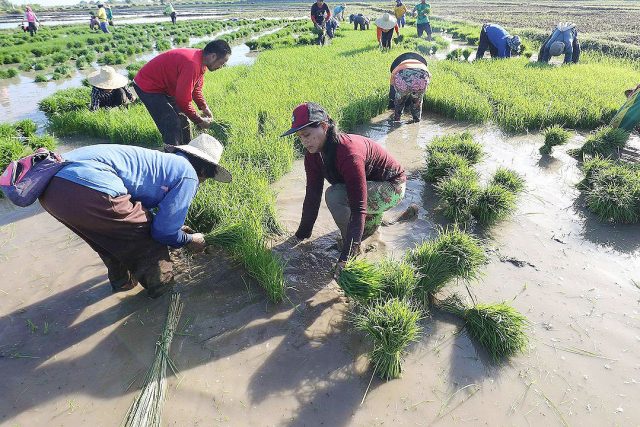
PHILSTAR FILE PHOTO

THE Sugar Regulatory Administration (SRA) has been issued a writ of preliminary injunction by a court in Negros Occidental, ordering it to desist from implementing a plan to import 200,000 metric tons (MT) of sugar.

In a six-page decision, Judge Reginald M. Fuentebella of Sagay City’s Regional Trial Court (RTC) Branch 73 ordered the maintenance of the status quo prior to the implementation of the import plan. The freeze on the imports applies until the resolution of the case, unless earlier lifted by order of the court.

United Sugar Producers Federation (UNIFED) President Manuel R. Lamata said the decision is a “victory” for sugar producers.

“This decision just affirms that the industry was right and the SRA was wrong,” Mr. Lamata said in a statement.

Sugar Order (SO) No. 3 calls for the import of 200,000 MT of standard and bottler’s grade refined sugar to serve as a supply buffer in storm-hit regions and to stabilize prices.

“We are not against imports per se, but we have been pushing for proper consultation and a calibrated import program which is beneficial to all and not just for a particular sector,” UNIFED Director Joseph Edgar M. Sarrosa said.

Mr. Sarrosa sought the injunction on behalf of the Rural Sugar Planters Association, Inc., a member of UNIFED.

UNIFED has been urging the government to recall the sugar order because of the lack of consultation and poor timing. The order was issued during the milling season, depressing the price obtained by planters from the mills.

“News of SO No. 3 led to a huge drop in sugar prices, prompting us to (seek) a temporary restraining order against it,” UNIFED said.

Asked to comment on the court ruling, the SRA said in reply to a query that it has “yet to officially receive any decision from RTC Sagay as to whether a writ of preliminary injunction had been issued on SO No. 3, or the sugar importation program. This legal matter shall be seasonably endorsed to the Office of the Government Corporate Counsel for appropriate action. Meantime, as SRA is precluded from discussing the merits of the pending case, all it could maintain is that the assailed SO is within the mandate of SRA, on the valid grounds as stated in the SO. The SRA shall endeavor to avail of legal remedies to ensure that it adheres to its legal mandates, all for the sake of the sugarcane industry.”

Separately, the Philippine Chamber of Food Manufacturers, Inc. (PCFMI) expressed its support for the import order, suggesting a divergence of interests between planters and the food industry.

“Due to the current local shortage of refined sugar that conforms with the quality requirements of food manufacturers, particularly premium and bottler’s grade refined sugar, we join the SRA in its assessment that there is an urgent need for such imports,” the PCFMI said in a statement.

“The inability to import refined sugar that meets the quality standards of food manufacturers poses a threat to food security, specifically the continued supply of essential food commodities. Existing sugar stocks for food manufacturing are dwindling, and therefore imports under the circumstances are necessary,” it added.

At the House of Representatives, Deputy Speaker and Negros Occidental Rep. Arnulfo A. Teves, Jr. said at a committee hearing on Tuesday the sugar industry was not adequately consulted on the import order.

“First of all, I’d like to say that what (SRA Administrator Hermenegildo R.) Serafica said about stakeholders not knowing the intricacies of business was insulting. I’m also a stakeholder. I grew up on sugar,” he said in Filipino in an online committee hearing. “One more thing, it is a lie to say that all stakeholders agreed. I did not agree. He could say that most stakeholders agreed, but not all. So, he’s wrong.”

Mr. Teves also asked why the SRA was not addressing high fertilizer and fuel costs.

“If they are really looking at the big picture, why are they so focused on imports? Why are they not looking at importing cheap fertilizer? And having cheaper fuel?” he said. — Luisa Maria Jacinta C. Jocson, Jaspearl Emerald G. Tan

Philippine smartphone market shrank in 2021 amid lockdowns, supply pressures

STOCK PHOTO | Image by terimakasih0 from Pixabay

THE Philippine smartphone market contracted 5.6% to 17.8 million units in 2021, with lockdowns dampening buying activity and global supply bottlenecks restricting supply, the International Data Corp. (IDC) said.

“The recurring lockdowns and global supply constraints in the second half of 2021 hampered the market’s growth with several vendors struggling to fulfill orders during the holiday season, resulting in low inventories across the channels,” the IDC, a market research company for the tech industry, said in a statement on Tuesday.

The IDC said sales in the fourth quarter of 2021 declined 23.3% year on year even as shipments increased 18.4% quarter on quarter.

“The gradual reopening of retail shops resulted in more consumers buying through physical stores,” it said.

The IDC expects “double-digit growth” in the smartphone market this year, recovering from a weak second half of 2021, and as supply constraints ease.

Angela Jenny V. Medez, client devices market analyst at IDC Philippines, said the smartphone market’s growth this year will be driven by fifth-generation (5G) smartphones, which accounted for 12.7% of shipments in 2021.

“The share is expected to double in 2022. In addition, aggressive pricing among Chinese vendors has dragged the average price for 5G Android smartphones down from $471 in 4Q20 (fourth quarter of 2020) to $386 in 4Q21 (fourth quarter of 2021), with some 5G models priced less than $200,” she added.

The top five smartphone brands in terms shipments to the Philippines last year were realme (3.96 million), OPPO (2.62 million), Transsion (2.47 million), Samsung (2.40 million), and vivo (2.39 million).

Last year, realme had a 22.2% market share in the Philippines, followed by Samsung (15.3%), OPPO (14.7%), Transsion (13.8%), and vivo (13.4%).

“Shipments to retail channels are expected to bounce back in 2022, as foot traffic continues to increase in the shopping malls, where most of the key smartphone stores and kiosks are located in the larger cities. The vendors are expected to restart their retail expansion and open more stores across the country, which had taken a hiatus during the lockdowns,” Ms. Medez said. — Arjay L. Balinbin

BoC February revenue tops P59 billion, beating target

BW FILE PHOTO

THE Bureau of Customs (BoC) said its revenue in February exceeded its target by over 17%, due mainly to an improved process of valuing goods.

The bureau in a statement on Tuesday said it collected P59.04 billion, 17.4% higher than the target.

Collections in February also exceeded the year-earlier total by over 25%.

Fourteen of the 17 collection districts exceeded their February targets.

The outperformers are the Port of San Fernando, Port of Manila, Manila International Container Port, Batangas, Iloilo, Cebu, Tacloban, Cagayan de Oro, Zamboanga, Davao, Subic, Clark, Aparri, and Limay.

In the year to date, collections amounted to P117.52 billion.

“Aside from this positive performance, the bureau maintained its border security measures against undervaluation, misdeclaration and other forms of technical smuggling, and collect lawful revenues,” the BoC said.

In 2021, Customs collected a total of P645.77 billion, 20% higher than the previous year and 4.7% above the bureau’s target, as international trade rebounded after the pandemic. — Jenina P. Ibañez

Agencies granted power to rule on relevance of info requests

GOVERNMENT agencies have been authorized to determine whether requests for the personal information of public officials are a matter of public concern, the National Privacy Commission (NPC) said.

In a statement on Tuesday, the NPC said Privacy Commissioner John Henry D. Naga signed NPC Advisory No. 2022-01, which hopes to make information requests conform to privacy norms by subjecting them to tests for transparency, legitimacy of purpose, and proportionality. The person whose information is being requested also has the right to be notified of such requests, and to be informed of action taken.

“The advisory aims to strike a balance between the right of the people to information on matters of public concern and the right to privacy of an individual,” Mr. Naga said.

“Thus, the advisory recognizes the Filipino people’s right to information and the necessity of an open and transparent government, while also giving due consideration and respect to the dignity, safety, and human rights of public officers,” he added.

The NPC said every government agency is responsible for personal data under its control or custody.

Section 7 of the advisory defines the coverage of the guidelines to include public officers and individuals under contract of service.

The section also requires that requests have a clear purpose that is not contrary to law, morals, or public policy.

“When evaluating requests, the government agency shall determine whether the information requested is a matter of public concern and whether there is a public purpose to be served that may outweigh the rights and freedoms of the public officer as a data subject,” the NPC said.  

“If the requested document or information is denied and deemed not of public concern, the requestor must be informed within a reasonable time accompanied by a justification,” it added.  

The government agency also has the authority to determine whether sensitive personal information is relevant to the purpose of the requesting party.

If deemed irrelevant, the commission said any sensitive personal details can also be redacted.  

“Some of these information may include (the) home address of the declarant; details of any unmarried children below 18 years of age living in declarant’s household, if any, particularly their names, dates of birth, and ages; signatures of the declarant and co-declarant; and government-issued ID numbers of the declarant and co-declarant,” the NPC said.

Permitted for disclosure include titles, business address, and office telephone numbers of the data subject; the classification, salary range, and responsibilities of the position held by the subject; and whether the subject is a current or former employee of a government institution.

“Documents (e.g., Personal Data Sheet or PDS, Statement of Assets, Liabilities and Net Worth or SALN) that contain sensitive personal information of the concerned public officer, or his or her family, may be granted if there is a declared, specified, and lawful purpose,” the NPC said.  

Deputy Privacy Commissioner Leandro Angelo Y. Aguirre said: “We hope that this circular addresses some misconceptions that data privacy and the freedom of information are in conflict with each other. A key mandate of the NPC is to ensure the free flow of information.”  — Revin Mikhael D. Ochave

Spot market regulator calls for more RE to minimize power outages

A MORE diverse power mix featuring an increased share of renewable energy (RE) will ensure the stability of the power supply, the governing body of the Wholesale Electricity Spot Market (WESM) said.

At the Philippine Solar PV Energy Virtual Summit last week, Leonido J. Pulido III, the president of the Philippine Electricity Market Corp. (PEMC), said the Philippines cannot continue to rely on conventional generators which are subject to periodic breakdown or maintenance periods.

Conventional power generators are fired by fuel oil, coal, and natural gas.

“We have to look into other sources to augment our supply… through the increased penetration of renewable (RE) sources,” he said.

“Institutionalizing effective strategies is imperative for us to fully harness the benefits of these RE resources, which include energy prices and supply stability to power up the Philippine economy in the new normal,” he said.

PEMC has partnered with the United Nations Office for Project Services to help implement the energy transition roadmap and introduce market mechanisms to boost the RE market.

During a virtual economic briefing hosted by the Philippine Embassy in Washington on Feb. 24, Energy Secretary Alfonso G. Cusi said the Philippine Energy Plan 2020-2040, which outlines the strategy for a clean energy transition, “opens up vibrant investment prospects” that have been further enhanced by “bold policies to increase the interest and participation of domestic and international investors.”

Mr. Cusi also expressed the government’s interest in alternative energy sources and technologies like modular reactors, hydrogen, and electric vehicles for transport.

The Philippines is expected to add capacity of 7,910.96 megawatts by 2027, with coal-fired plants accounting for 46.68%, natural gas 38.71%, renewable energy 11.39%, and facilities fueled by oil 6.67%, according to DoE data on committed projects from last year.

In 2020, the power mix consisted of 57% coal-fired, 21% RE, 19% natural gas, and 2% oil. — Marielle C. Lucenio

Australian gov’t, Macquarie channel investment to female-led Philippine SMEs

THE Australian government and the Macquarie Group Foundation said they helped channel capital to 13 small- and medium-sized enterprises (SMEs) led by women in the Philippines, creating 1,068 full-time jobs.

Australian Ambassador to the Philippines Steven J. Robinson said in a virtual briefing on Tuesday that the program was financed by the Macquarie-Investing in Women RISE Fund.

“With P68 million of investments from the RISE Fund, our investing partners leveraged P127 million of private-sector investment for these women’s SMEs. This led to a cumulative capital of P195 million deployed for business expansion of SMEs across the Philippines. In turn, these 13 women-led SMEs created 1,068 quality jobs,” Mr. Robinson said.

The RISE fund has allowed local partners of the Australian government, the Foundation for a Sustainable Society, Inc. and InBest Ventures, to provide investment to the SMEs.

“These women entrepreneurs operate in industries that are traditionally male-dominated, such as agriculture, tech and infrastructure, as well as fish and poultry trading. This outstanding performance proves that women’s leadership should become the norm, not an exception, in a post-COVID world,” Mr. Robinson said.

According to Mr. Robinson, five of the SMEs worked with over 13,000 farmers to expand their market access, while another SME used technology to make education more accessible to 881 students in the first half of 2021.

Investing in Women Chief Executive Officer Julia Newton-Howes said the initiative will end in June 2023 and is still expecting to take in more investment this year.

“We will be continuing to work with our investment partners over that period. We were expecting at least another five investments to be made by our partners in 2022,” Ms. Newton-Howes said. — Revin Mikhael D. Ochave

Duterte calls officials to meeting on Ukraine

PHOTO of a destroyed Russian T-90 tank. — REDDIT

PHILIPPINE President Rodrigo R. Duterte on Monday night said he would hold a special meeting with Cabinet and security officials to discuss the local implications of Russia’s invasion of Ukraine.

Some businessmen and civilians would also join the meeting, he told a taped Cabinet meeting.

“We will discuss about what is evolving, what is happening in Europe,” the tough-talking leader said. “I want you to listen to how important it is for you to know what is happening now.”

“The invitation is for all so that we can have an exchange of ideas between the military and police on one hand, and businessmen, so we can come up with a sensible front of how to handle this thing,” he added.

Russia has launched a devastating attack by air, land and sea on Ukraine, a European democracy of 44 million people, and its forces were on the outskirts of the capital, Kyiv. President Vladimir Putin denied for months he would invade his neighbor, but then tore up a peace deal and sent forces across borders in Ukraine’s north, east and south.

The Department of Foreign Affairs (DFA) on Monday night said the Philippines had voted yes to a United Nations General Assembly resolution and expressed “explicit condemnation” of the Russian attack on Ukraine. It sought an end to the fighting and appealed for the protection of civilians and civilian infrastructure.

“We strongly urge the cessation of hostilities; but while an offense can be stopped at will, the defense cannot rest until the offense stops,” it said.

“Our plea in the plenary would really be to join the call for restraint and to deescalate the violence there,” Mr. Duterte said.

Mr. Duterte has appointed Cabinet Secretary Karlo Alexei B. Nograles as the sole spokesman to discuss what will happen at the meeting.

Mr. Nograles told a news briefing on Tuesday they had not decided whether to air the meeting live on television because it’s a sensitive topic. The presidential palace was also concerned about its national security implications.

“At the end of the meeting, we will issue a statement to apprise the people,” he said. “What’s important is the president’s instruction to make sure all Filipinos are aware of the situation, what’s happening in Europe, particularly Ukraine, and its implication to the country, Filipinos and the economy,” he said in mixed English and Filipino.

Meanwhile, Senator Aquilino “Koko” L. Pimentel III, who heads the foreign relations committee, said he agrees with the government condemnation of Russia’s invasion of Ukraine, but said the Philippines should stay neutral on the Eastern European nation’s application for membership at the North Atlantic Treaty Organization (NATO).

“For the sake of the children, women and elderly, I agree that military operations must immediately be stopped by Russia and all others involved,” he told reporters in a Viber message.

“But on the main issue itself, like Ukraine’s application for NATO membership and Russia’s response to it, we should in the meantime be neutral pending deeper study of the issue and the root causes of Russia-Ukraine disputes by our experts in the Department of Foreign Affairs (DFA),” he added.

Ukrainian President Volodymyr Zelensky last month pleaded that his country be admitted to NATO so that the 30-member intergovernmental alliance, which consists of 28 European and two North American countries, could provide military assistance.

NATO on Monday said it would provide Ukraine with air defense missiles and anti-tank weapons after NATO Chief Jens Stoltenberg held another call with Mr. Zelensky. The alliance and the United States earlier said they would not send forces to fight alongside Ukraine.

DFA on Monday echoed the appeal of the UN secretary-general to respect humanitarian principles. “Safe access to humanitarian assistance must be assured by the most effective means.”

All states enjoy the right to full sovereignty in all their areas of jurisdiction, the Philippines said, citing the UN Charter.

“We especially condemn the use of separatism and secession as a weapon of diplomacy for inviting and inflicting terrible cruelties and indiscriminate killings far in excess of that of any other kind of conflict,” the Philippines said, alluding to Russia’s deployment of troops in two breakaway regions in Ukraine.

Meanwhile, presidential aspirant and Senator Panfilo M. Lacson, Sr., who had argued against neutrality, said he expected the Philippines’ official condemnation of the Russian invasion.

“I knew it was forthcoming because it was the right thing to do and the UN Charter says it,” he tweeted on Tuesday.

“I was surprised the others in the CNN debate didn’t see it that way,” he added, referring three presidential bets who agreed the Philippines should stay neutral.

During the CNN Philippines debate, Mr. Lacson said the country has an obligation to condemn a foreign aggressor and renounce war as a UN member.

He also saluted the Ukrainian president whom he called a “living hero” for standing with his soldiers amid a war, ready to die for his people. “That is the real leader.” — Kyle Aristophere T. Atienza and Alyssa Nicole O. Tan

Philippines probing 250 more cases of drug war killings

PHILSTAR FILE PHOTO

THE PHILIPPINES would ask government agents to investigate 250 more cases of what could have been wrongful deaths in the government’s anti-illegal drug campaign, the country’s Justice chief told the United Nations Human Rights Council on Monday. 

Philippine prosecutors have filed charges in court against law enforcers in four of 52 cases where suspected drug pushers died in President Rodrigo R. Duterte’s war on drugs, Justice Secretary Menardo I. Guevarra said in his UN statement, a copy of which was given to reporters on Tuesday. 

He represented the Philippines virtually during a high-level segment of the 49th regular session of the UN council in Geneva, Switzerland.

The 250 cases could cover police raids from July 2016 to June 2020, Justice Undersecretary Emmeline Aglipay-Villar told reporters in a Viber message.

An inter-agency committee formed 15 teams last year that probed extralegal killings and human rights violations, Mr. Guevarra said.

The Philippines has also invited two representatives from the United Nations to discuss human rights issues and ways to make violators accountable, he said.

“The Philippines will remain positively engaged with the international community and all human rights mechanisms on all issues concerning rule of law and institutions in the country,” he said. “But we will draw the line between parties that engage in good faith, and those that abuse and exploit these mechanisms to make demands of accountability with little or no factual basis.”

Justice Undersecretary Adrian S. Sugay last year said the International Criminal Court (ICC) might use the Department of Justice’s findings in the 52 cases in its own investigation.

The ICC, which investigates and prosecutes people charged with genocide, crimes against humanity, war crimes and crimes of aggression in November said it would ask the Philippine government to provide proof that it had investigated its war on drugs that has killed thousands, days after the tribunal suspended an initial probe.

The ICC was also set to probe vigilante-style killings in Davao City when Mr. Duterte was still its vice mayor and mayor.

“Never mind about the ICC, I don’t care about that,” Mr. Duterte said in mixed English and Filipino in a televised speech on Tuesday night. “I just hope that somebody, maybe not even the next president, would find the resolve to just continue with the drive against drugs because I said it will destroy our country.”

The Philippines would continue to cooperate with the UN on human rights under the next government, Department of Foreign Affairs (DFA) said in a separate statement, citing Mr. Guevarra’s speech at the UN meeting.

Philippines’ “commitment to human rights will remain unaffected by the passing incumbency of administrations, rooted as it is in our long history of engagement with this council and reflected in policies that protect and promote the fundamental rights and freedoms of our people,” Mr. Guevarra said.

Filipino lawyers have been calling on the ICC to resume its probe of Mr. Duterte’s anti-drug campaign, saying the Philippine Justice department was only looking into 52 deaths out of the tens of thousands killed.

The government has taken an increasingly large role in targeting civilians, “no longer trying to create distance by ‘outsourcing’ the majority of violence to vigilantes,” US-based Armed Conflict Location and Event Data Project said in a report on Nov. 18.

After analyzing data and information from at least 40 sources, the group said in a report the Philippine government had been undercounting civilian deaths in the drug war.

At least 1,100 deaths in the bloody campaign have not been counted by the government. “We now estimate at least 7,742 civilians have been killed in the drug war since 2016.” — John Victor D. Ordoñez and Alyssa Nicole O. Tan

DoH to stop daily COVID-19 tallies starting March 7

THE DEPARTMENT of Health (DoH) on Tuesday said it would stop reporting daily coronavirus infections starting March 7.

The agency would issue weekly bulletins instead, Health Undersecretary Maria Rosario S. Vergeire told a televised news briefing.

“We will be issuing a revised bulletin where we will focus on severe and critical cases and the utilization of our intensive care units,” she said. “It’s going to be once a week compared with before when we would release case bulletins daily.”

She said the agency would keep the COVID-19 tracker on its website, but it would eventually be updated weekly.

“As to the case numbers, if it’s mild, we treat it like it’s part of our lives,” Ms. Vergeire said. “We live with the virus; we focus on the critical.”

DoH reported 1,067 new cases on Tuesday, bringing the total to 3.66 million. Recoveries increased by 1,652 to 3.56 million, it said.

It did not report any deaths, which stood at 56,451. The country had 4.3% COVID-19 positivity rate, the lowest this year.

Of 51,592 active cases, 489 did not show symptoms, 46,609 were mild, 2,779 were moderate, 1,417 were severe and 298 were critical.

DoH said 61% of new cases occurred on Feb. 16 to March 1. The top regions with cases in the past two weeks were Metro Manila with 144, Calabarzon with 92 and Central Luzon with 72 infections.

Five duplicates were removed from the tally, three of which were recoveries. Nine laboratories failed to submit data on Feb. 27.

The capital region and 38 other areas are now under Alert Level 1 amid decreasing infections.

The country had overcome the threat of the highly mutated Omicron variant, Carlito G. Galvez, Jr., chief enforcer of the country’s pandemic plan, told a taped Cabinet meeting on Monday night.

He said areas under the lowest virus alert would begin the roadmap to the new normal starting March 1 or exactly a year after the country started its vaccination program.

The country had fully vaccinated 63.22 million as of Feb. 28, while 68.81 million people have received their first, Cabinet Secretary Karlo Alexei B. Nograles told a televised news briefing on Tuesday. The government has injected 10.21 million booster shots.

The Philippines, which was among the hardest hit by coronavirus disease 2019 (COVID-19) in Southeast Asia, endured one of the longest lockdowns in the world.

President Rodrigo R. Duterte locked down the main island of Luzon in mid-March of 2020 to contain the virus that was first detected in Wuhan, China. — Kyle Aristophere T. Atienza

Financial institutions, regulators vow to tighten watch vs digital vote buying

REGULATORS, financial institutions and other stakeholders vowed to tighten monitoring and reporting of digital transactions that could be related to vote buying even as they assured that mechanisms are in place to avert illegal practices.

“We can only imagine how creative they (vote buyers and sellers) can be in the forthcoming election,” Socorro B. Inting, Commission on Elections acting chairperson, said in a virtual gathering entitled “Advocacy Campaign on the Responsible Use of Digital Payment Platforms” held on Tuesday.

“What we can do is embrace (innovation) wholeheartedly, study it meticulously, and calibrate our approaches in order to deal with it,” she said. 

Vote buying and selling, an illegal practice under Philippine law, involves an exchange of money or other forms of valuable goods for guaranteed support to a candidate or candidates on election day.

“Stories are aplenty of election operators sourcing payments to vote sellers via money transfers or through GCash,” Ms. Inting said.

Bangko Sentral ng Pilipinas Governor Benjamin E. Diokno acknowledged that digital payment channels that have made transactions easier during the pandemic are at risk of being abused by digital vote buyers. 

He said the central bank has directed its supervised financial institutions to enhance surveillance and monitoring in light of possible election-related activities.

In a statement released following the digital event, FintechAlliance.Ph and the eMoney Association of the Philippines committed to proactively report unfair practices that could compromise a free and fair elections. 

They also assured they have control mechanisms against vote buying, including a stringent onboarding process, which includes a one-is-to-one account registration and account verification. — Luz Wendy T. Noble

Senate files resolution calling for suspension of online cockfighting

PAGCOR.PH

THE SENATE filed a resolution, with 23 of the 24-member chamber signing, on Monday calling on the Philippine Amusement and Gaming Corp. (PAGCOR) to suspend the operation of online cockfighting establishments until the cases of the disappearance of gamblers is resolved. 

Senator Ronald “Bato” M. Dela Rosa, who introduced Senate Resolution 996, said the President had indicated support to the proposal during a conversation in a recent social gathering.

“I got the impression that he supports the Senate resolution urging PAGCOR to suspend the license to operate of ‘e-sabong’ operators,” the chairman of the Senate Public Order and Dangerous Drugs committee said in a statement.

Sabong is the Filipino word for cockfighting.

The palace on Tuesday said President Rodrigo R. Duterte will have to wait for a recommendation from PAGCOR, following the Senate resolution, before issuing a related order. 

In a televised news briefing, Palace spokesman Karlo Alexei B. Nograles said there’s no document yet that would formalize the suspension of online cockfighting permits in the country.

Senator Francis “Kiko” N. Pangilinan, who is running for vice president, expressed shock and frustration over the matter, and called on both the police and the National Bureau of Investigation to hasten the resolution of the alleged abductions of at least 31 gamblers. 

“Let’s not wait for this concern of missing people due to gambling to become a national crisis,” he said. 

During a previous committee hearing, Senate President Vicente C. Sotto III had proposed the suspension of the licenses issued to seven online gambling operators.  

The Senate body’s next hearing is scheduled on Friday. Expected attendees include representatives of licensed online cockfighting companies and alleged witnesses to the abductions. — Alyssa Nicole O. Tan and Kyle Aristophere T. Atienza 

Robredo supporters ask SC to stop Comelec’s campaign vs oversized posters; Domagoso to push for farm-loan penalty condonation

A GROUP of supporters of presidential candidate Vice President Maria Leonor “Leni” G. Robredo has asked the Supreme Court (SC) to stop the Commission on Elections (Comelec) from removing oversized campaign posters in private properties. 

In a 52-page petition dated Feb. 28, the group represented by lawyer Ray Paolo J. Santiago said the poll body has no authority and legal basis to regulate the sizes and posting of election materials by private citizens within their properties.

“Respondents cite the Constitution, laws, and jurisprudence to support their position that they had the power to regulate the tarpaulin. However, all of these provisions pertain to candidates and political parties,” the group said citing jurisprudence from 2015.

“Comelec does not have the authority to regulate the enjoyment of the preferred right to freedom of expression exercised by a non-candidate in this case.” 

The petitioners said the country’s Highest Court had previously ruled that the election body’s “supervisory power does not extend to the very freedom of an individual to express his preference of candidates in an election by placing election campaign materials on his private property.”  

The group asked the Supreme Court to treat the petition with “extreme urgency and without delay,” along with the issuance of a temporary restraining order against Comelec while the case is pending. 

Last week, election lawyer Romulo B. Macalintal asked Comelec to temporarily suspend the policy in question, also citing that it has no authority to regulate private citizens’ freedom of expression. 

Comelec Spokesman James B. Jimenez, in a press briefing on Monday, said the poll body will abide by a restraining order should there be one issued by the Supreme Court. 

Domagoso
Meanwhile, Manila Mayor and presidential aspirant Francisco “Isko” M. Domagoso on Tuesday said he will provide fuel subsidies for drivers and push for the passage of a bill that will condone the loans of agrarian reform beneficiaries (ARBs) from state-owned Land Bank of the Philippines (LANDBANK). 

“On gasoline, the reduction of its price or its tax will be a huge help to drivers,” he said in Filipino in a live-streamed interview held in Malabon.

“Then, I also mentioned that the lands will be given to farmers. This will be condoned by the government amounting to P75 billion. So that they will have their own land because they are beneficiaries of CARP (Comprehensive Agrarian Reform Program).”

A related measure on the condonation of all unpaid amortizations, interests, and surcharges on loans secured under CARP — Senate Bill 268 authored by Senator Ralph G. Recto — was filed in July 2019. 

Mr. Domagoso said he also plans to give drivers and ARBs cash aid using tax collections from the Marcos estate based on a 1997 Supreme Court decision in favor of the Philippine government. 

He was referring to the Supreme Court decision marked GR No. 120880 dated June 5, 1997.

“The question is, where will we (the government) get the cash aid? There is a decision… wherein our country won the case, and we could collect tax from a certain family,” he said. “At that time, 1997, I think it’s P23 billion. But now, because of penalties, surcharges, and interests, it reached about P208 billion.” 

“If this will be collected by the next administration, with God’s mercy, and with your help, we will get this P200 billion and distribute it to drivers, farmers and people who lost their jobs,” he said. — John Victor D. Ordoñez and Jaspearl Emerald G. Tan