Home Blog Page 6179

Ballistic missiles hit Iraq’s Kurdish capital

ERBIL, Iraq — A dozen ballistic missiles launched from outside Iraq struck the country’s northern Kurdish regional capital Erbil on Sunday, Kurdish officials said, adding there were no casualties.

The attack was launched from Iran, a US official told Reuters. The official, who spoke on condition of anonymity, did not provide further information.

There was no immediate claim of responsibility or further details available. A US State Department spokesperson called it an “outrageous attack” but said no Americans were hurt and there was no damage to US government facilities in Erbil.

Iraqi state TV quoted the Kurdistan region’s counter-terrorism force as saying 12 missiles launched from outside Iraq hit Erbil. It was not immediately clear where they landed.

US forces stationed at Erbil’s international airport complex have in the past come under fire from rocket and drone attacks that US officials blame on Iran-aligned militia groups, but no such attacks have occurred for several months.

The last time ballistic missiles were directed at US forces was in Jan. 2020 — an Iranian retaliation for the US killing earlier that month of its military commander Qassem Soleimani at Baghdad airport.

No US personnel were killed in the 2020 attack but many suffered head injuries.

Iraq and neighboring Syria are regularly the scene of violence between the United States and Iran. Iran-backed Shi’ite Islamist militias have attacked US forces in both countries and Washington has on occasion retaliated with air strikes.

An Israeli air strike in Syria on Monday killed two members of Iran’s Revolutionary Guards Corps (IRGC), Iranian state media said this week. The IRGC vowed to retaliate, it said.

Kurdish officials did not immediately say where the missiles struck. A spokesperson for the regional authorities said there were no flight interruptions at Erbil airport.

Residents of Erbil posted videos online showing several large explosions, and some said the blasts shook their homes. Reuters could not independently verify those videos.

Iraq has been rocked by chronic instability since the defeat of the Sunni Islamist group Islamic State in 2017 by a loose coalition of Iraqi, U.S.-led and Iran-backed forces.

Since then, Iran-aligned militias have regularly attacked US military and diplomatic sites in Iraq, US and many Iraqi officials say. Iran denies involvement in those attacks.

Domestic politics has also fueled violence.

Iraqi political parties, most of which have armed wings, are currently in tense talks over forming a government after an election in October. Shi’ite militia groups close to Iran warn in private that they will resort to violence if they are left out of any ruling coalition.

The chief political foes of those groups include their powerful Shi’ite rival, the populist cleric Moqtada al-Sadr, who has vowed to form a government that leaves out Iran’s allies and includes Kurds and Sunnis. — Reuters

NYC’s Museum of Modern Art patron stabs 2 employees when denied admission

NEW YORK    A Museum of Modern Art (MoMA) patron whose membership card was recently revoked for unruly behavior stabbed two MoMA employees on Saturday when they denied him admission to the famed midtown Manhattan site and then fled, police said.

The two victims, both women, were rushed to a local hospital for treatment of multiple stab wounds to their upper bodies, but “we’re told they’re going to be OK,” John Miller, deputy New York City police commissioner, told a news briefing afterward.

New York City Police Department (NYPD) officers launched a manhunt for the suspect, whom Mr. Miller said was familiar to MoMA staff as a museum “regular” and to police from previous “disorderly conduct” incidents, including at least one at MoMA, in recent days.

NYPD was not aware of any record of arrests or other brushes with the law, says Mr. Miller.

A letter revoking the man’s MoMA membership card was sent to him on Friday, and he showed up late on Saturday afternoon “with the stated intention” of seeing a film being screened at the museum, Mr. Miller said.

When he was told that his membership card had expired and was refused entrance, he became upset, jumped over the reception desk and stabbed the two employees, according to Miller. Surveillance video footage showed him fleeing the museum moments afterward on foot.

The New York Post posted photographs showing each of the two women being moved on gurneys to waiting ambulances outside the museum. The Post said the stabbings triggered a chaotic scene that sent visitors scurrying from the museum, renowned for one of the world’s largest and most influential collections of modern art. — Reuters

Cebu BPOs seek exemption from on-site work rules, cite continuing typhoon impact

By Arjay L. Balinbin, Senior Reporter

CEBU’S information technology and business process management (IT-BPM) industry is seeking an exemption from a government order to return to office work starting April 1, noting that the region continues to be affected by December’s Typhoon Odette.

“If they really want to implement it nationwide, maybe they can exempt Cebu because of the typhoon,” Cebu IT-BPM Organization (CIB.O) Executive Director  Buddy R. Villasis told BusinessWorld in a phone interview last week.

The Fiscal Incentives Review Board (FIRB), which regulates industries eligible for incentives, particularly those that operate in economic zones, has declined to extend an old order allowing the industry to conduct the bulk of its work with home-based employees. The denial of the extension effectively means the industry’s workforce must revert to on-site work starting April 1.

Mr. Villasis said Cebu’s IT-BPM workforce of about 200,000 remains dispersed all over Mindanao, Samar, Leyte, Bohol, and Negros, to which employees with roots in those places returned during the pandemic.

Government policy has centered on increasing the proportion of on-site work in order to propel the recovery of the transport industry and small businesses that depend on spending by office workers.

“Is the city ready? Is the transport sector ready? Are all the telecommunications facilities fully restored? Are all the boarding houses ready to accommodate the thousands of people who will be coming back to Cebu? These should be considered,” Mr. Villasis said.

Cebu, he said, will need about two more months to get ready for the returning workers, with pending tasks including preparing offices and allowing their workers to look for accommodation.

Finance Secretary and FIRB Chairman Carlos G. Dominguez III said on Wednesday that the board, at a Feb. 21 meeting, rejected a petition by the Philippine Economic Zone Authority (PEZA) to extend work-from-home arrangements for workers in IT-BPM companies registered for incentives.

Mr. Dominguez said the increased vaccination rate wallows “safe measures for physical reporting of employees, including those working in the IT-BPM firms operating within economic zones (ecozones) and freeports.”

Work-from-home arrangements were only meant to be temporary in response to the pandemic, he said. The IT-BPM industry’s entitlement to incentives is tied to their use of premises located in economic zones.

Asked to provide comment, PEZA Director General Charito B. Plaza said in a phone message: “We’re negotiating” the FIRB ruling and preparing “a letter of reconsideration.”

“The companies are not against returning to sites fully but not that fast. It will take them some time to bring in everybody back to onsite,” Mr. Villasis said.

CIB.O members met with officials of the Inter-Agency Task Force for the Management of Emerging Infectious Diseases (IATF)-Cebu and other government officials on Thursday to “lobby… for Cebu to delay the full implementation of the return-to-office order, otherwise it will be problems,” he added.

“We got our power and telco (connections) back five days after the typhoon, but not all. Losses reached P500 million per day of no operations. So that’s a major headache,” Mr. Villasis noted.

Diesel power plants dominate DoE’s endorsements to ERC

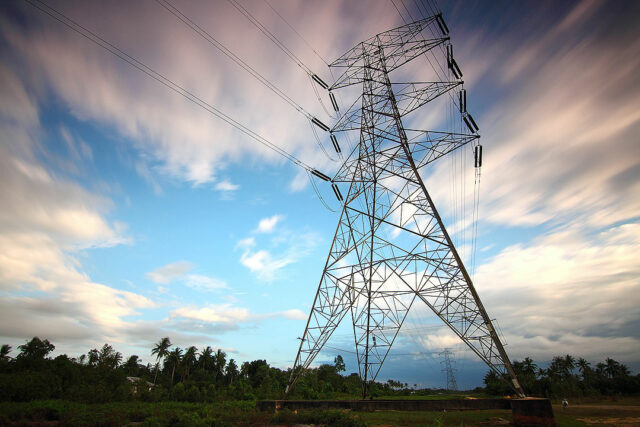
POWER PLANTS endorsed to the regulatory commission for five-year operating permits included 12 diesel-powered facilities out of 17 overall, according to a list posted to the Department of Energy’s (DoE) website five years.

Of the other plants endorsed to the Energy Regulatory Commission (ERC), three are coal-fired, one hydro-powered and one using biomass as feedstock.

If issued a Certificate of Compliance by the ERC, the 17 plants are expected to add 1,495.41 megawatts (MW) of capacity to the power grid.

Mariveles Power Generation Corp.’s Mariveles Coal-fired Power Plant and SMC Consolidated Power Corp.’s new Kimay Circulating Fluidized Bed Coal-fired Power Plant had the largest capacity of any plant on the list at 600.1 MW each.

The DoE endorsement paves the way for the grid operator to conduct a system impact study, which will generate a finding that a plant is suitable for connection to the power grid.

Eleven of projects are being developed by the National Power Corp. and the remaining six by South Luzon Thermal Energy Corp.; DMCI Power Corp., Mindoro Grid Corp., SMC Consolidated Power Corp., Mariveles Power Corp.; and Cleangreen Energy Corp.

The DoE has said that the energy grid is expected to have 7,910.96 MW of additional capacity by 2027, with coal-fired plants accounting for 46.68%, natural gas 38.71%, renewable energy 11.39%, and oil-based facilities 6.67%. — Marielle C. Lucenio

Energy official calls for pricing reform in natural gas market

REUTERS

THE critical role of natural gas as a “transition fuel” en route to achieving the world’s environmental objectives warrants a new pricing system decoupled from the volatility of most energy commodities, an energy department official said.

Energy Undersecretary Gerardo D. Erguiza called for a system of “fair pricing” for natural gas, demand for which has grown because of the Russian invasion of Ukraine. Fear of sanctions on Russia, a major gas supplier to Europe, has sent Europe scrambling for alternative sources of supply, making energy more expensive overall. 

At a March 9 panel discussion for Cambridge Energy Research Associates Week (CERAWeek) in Houston, Mr. Erguiza argued for a pricing system that makes natural gas affordable in order to ensure a smooth transition to clean energy.

The Philippines “is currently in a transition stage from fossil fuel to clean energy and our transition fuel is natural gas. Along with other fuel prices, natural gas prices also unexpectedly rose,” Mr. Erguiza said separately via Viber.

Manila Electric Co., which sources most of its natural gas from the offshore Malampaya field, warned consumers on Thursday that the impact of the Russia-Ukraine crisis will be felt by power consumers in May.

Energy prices are set globally and tend to move in unison based on calculations of the equivalency of each form of fuel in generating a given amount of energy.

As of March 10, Dubai crude oil is at $114.13 per barrel, according to Bloomberg.

“Expensive natural gas doesn’t serve its purpose,” Mr. Erguiza added.

Separately, Atlantic Gulf & Pacific Company (AG&P) is set to open the Philippines’ first integrated liquefied natural gas (LNG) import terminal in Ilijan, Batangas, in July, marking the Philippines’ transition to gas importer after decades of tapping Malampaya, which is approaching commercial depletion by 2027.

Alexander P. Gamboa, managing director and global head of business development for AG&P Manila, Inc., said the terminal will help service the gas market that had been created by Malampaya.

Mr. Gamboa has said that high demand for LNG has exerted upward pressure on prices but has also created arbitrage opportunities as more sites store gas, effectively making prices less volatile overall.

“The ability of LNG to be moved through a growing network of terminals gives developing countries in Asia effective access to global arbitrage and (and the ability to diversify) supply. In turn, this reduces dependence on global gas reserves, not to mention coal, and mitigates geopolitical trading risk,” he said. 

AG&P’s LNG terminal will store and deliver LNG to power plants. It is expected to have an initial annual capacity of 3 million tons of regasified LNG.

“Without the safety net of natural gas, renewable energy would struggle to establish itself as the backbone of stable energy systems,” Mr. Gamboa said. — Marielle C. Lucenio

PHL waives P23.4 billion worth of duties on pandemic-related imports

REUTERS

THE Department of Finance (DoF) said it approved P23.4 billion worth of import tax and duty exemptions in 2021, close to the pre-pandemic total, after the approval of exemptions for coronavirus vaccine shipments.

The DoF approved 254 coronavirus disease 2019 (COVID-19) tax exemptions valued at P8.7 billion last year, it said in a statement on Saturday. This represents 37% or nearly two-fifths of the total import tax exemptions processed by the department’s revenue office.

The P23.4 billion in estimated total foregone revenue from imports in 2021 is close to the pre-pandemic total of P23.9 billion in 2019.

“However, this is primarily due to the foregone revenue attributable to imports of COVID-19 vaccines, as well as imports of items related to the COVID-19 response,” Finance Assistant Secretary Dakila Elteen Napao said.

The office also approved over 800 applications for value-added tax exemptions for COVID-19 medicine and medical devices. Total foregone revenue from these exemptions hit P382.1 million.

Finance Secretary Carlos G. Dominguez III has included COVID-19 vaccines in the revenue office’s express lane, making such shipments eligible for tax exemption processing within 24 hours, as against the usual three-day process. Filing fees for express lane applications have been waived for vaccines.

The department announced in February 2021 that the vaccines had been granted tax and duty exemptions.

The Bureau of Customs collected P645.77 billion in revenue in 2021, up 20% as import volumes gradually improved. The 2020 total had declined by 14% as the pandemic slowed down international trade. — Jenina P. Ibañez

Patent filing assistance program extended to Dec. 31

THE Intellectual Property Office of the Philippines (IPOPHL) said patent filing assistance on offer to inventors under the Patent Cooperation Treaty (PCT) has been extended until Dec. 31, facilitating such registrations across multiple jurisdictions.

The IPOPHL said in a statement on Sunday that Memorandum Circular 2022-007 was issued on Jan. 24, authorizing the program for PCT registrants.

Under the PCT system, inventors can file a single patent in multiple or all 155 contracting states for reduced fees.

“With the continued reopening of the economy, we hope to encourage more inventors and companies to seek global opportunities,” IPOPHL Director General Rowel S. Barba said.

IPOPHL’s filing assistance initiative, which is implemented by the Bureau of Patents (BoP), waives the fees for an International Search Report (ISR), which normally costs $400 for small entities and $1,000 for large entities, as well as those for an International Preliminary Examination Report (IPER), which costs $200 for small entities and $500 for large entities.  

“An ISR identifies the existing patents and prior art which may affect an invention’s patentability. Meanwhile, an IPER is an initial assessment of an application’s novelty, inventive step and industrial applicability prepared according to international standards. Both reports help an applicant evaluate the chances of the invention being patented under the PCT,” IPOPHL said.   

Eligible beneficiaries under the filing assistance program are individual Filipino inventors, higher educational institutions that are members of IPOPHL’s Innovation and Technology Support Office Program, and foreign inventors from PCT contracting states that designate the IPOPHL as an International Searching and Preliminary Examining Authority and select the IPOPHL is their selected office of first filing from Feb. 1 to Dec. 31, 2022.   

According to preliminary IPOPHL data, international applications processed under the PCT system increased 137% to 45 last year.

“With their inventions or utility models patented, our Filipino inventors can gain greater competitiveness with their exclusive rights to prevent others from making, using, offering for sale, selling or importing their inventions,” BoP Director Lolibeth R. Medrano said. — Revin Mikhael D. Ochave

LANDBANK loan approvals for LGU pandemic projects top P100B

LAND BANK of the Philippines (LANDBANK) said it approved over P100 billion in loans to local government units (LGUs) to finance their coronavirus response initiatives, or about two-thirds of its loanable funds for pandemic-related LGU projects.

LANDBANK approved P101.1 billion worth of loans to 365 LGUs as of the end of January, the bank said in a statement on Sunday. The LGU coronavirus disease 2019 (COVID-19) lending program was launched in July 2020.

The lending program’s funding is P150 billion, raised drastically from the initial P10 billion, in order to accommodate more LGU needs.

Eligible uses for funding from the RISE-UP LGUs program, or Restoration and Invigoration package for a Self-Sufficient Economy towards UPgrowth for LGUs, include the purchase of produce from farmers in their jurisdictions and the construction of facilities that link products to their markets.

Projects enhancing basic and support services, social welfare, healthcare, and infrastructure are also eligible under the program.

The bank also encouraged LGUs to take advantage of an interest subsidy program.

Republic Act No. 11494 or the Bayanihan to Recover as One Act (Bayanihan II) allotted P1 billion each to state-run banks to provide interest subsidies to LGUs that require additional financing for pandemic recovery programs.

“LANDBANK is the biggest development partner of the LGU sector, with all provinces, cities, and municipalities now maintaining deposit accounts with LANDBANK,” LANDBANK President and Chief Executive Officer Cecilia C. Borromeo said.

LANDBANK posted a net profit of P21.75 billion in 2021, up 27%. — Jenina P. Ibañez

Opportunities for tech companies to seize in 2022

(Second of two parts)

As the digitalization of the world economy further accelerates, the technology sector will likely continue to grow, especially now that vaccines and proactive health and safety measures are helping manage the pandemic. In line with this, EY ranks the top 10 opportunities from its annual report that technology companies should seize for growth while navigating volatility and risks in 2022.

In the first part of this article, we discussed the first five opportunities: attracting and retaining more motivated people in a hybrid workplace, strengthening growth profile with M&A, securing business continuity by de-risking supply chains, embedding security in new activity designs, and leading in ESG to strengthen stakeholder relations.

In the second part of this article, we continue by discussing the remaining five: transforming the business for consumption-based sales, realigning tax organizations with digital business models, streamlining operations and increasing agility, cultivating customer trust to drive digital engagement and anticipating the transition to 5G technology.

TRANSFORM BUSINESS FOR CONSUMPTION-BASED SALES
During the pandemic, consumption-based business models offered a higher valuation from investors and better protection against economic volatility compared to traditional one-off payments. With more and more customers preferring the flexibility of cloud-based services and software, subscription payments are expected to rapidly replace traditional license payments over the next five years.

In order to enable this shift, companies need to change their pricing tools, transform their sales organizations, adopt new incentive schemes, realign their major business processes and track different performance indicators. Though the transition will be challenging, companies will be rewarded with more time to build customer relations, recurring revenues, and the opportunity to generate higher revenues from each user through upselling and cross-selling.

REALIGN TAX ORGANIZATIONS WITH DIGITAL BUSINESS MODELS
Taxation and legislation changes are targeting the technology sector worldwide, with governments looking to shift the taxation base to capture more value from the growing economic contributions made by digital services. Sudden changes are caused by trade disputes and governments who are looking to protect or strengthen their key industries, and this often includes technology segments.

Tech companies need a robust approach to global trade and taxation with regard to their large international footprints as well as their large base of assets, both material and immaterial. This approach has to be built on early planning, real-time insights and an agile operating model.

STREAMLINE OPERATIONS AND INCREASE AGILITY
With the current unprecedented economic uncertainty and volatility, customer preferences are shifting overnight and causing large swings in demand. This is especially true in the technology sector. The risk profiles in the sector have also changed due to supply chains getting stretched and geopolitical factors influencing trade. This further increased the need for organizations to transform.

To remain competitive, tech companies need to match operational agility with the future levels of volatility in their business. This can be achieved by leveraging data analytics, cloud capabilities and automation tools, streamlining business processes, and identifying ways to simplify the organization.

CULTIVATE CUSTOMER TRUST TO DRIVE DIGITAL ENGAGEMENT
Digital companies rely on trust to keep driving customers to visit, interact and share the necessary data to create a business and drive growth. Because alternatives are a click or two away, a lack of trust can instantly send customers to competitors.

EY research has found that the main drivers of trust and distrust include transparency, ethics, security, regulatory compliance and content. To gain the trust of customers, companies must prioritize protecting customer data and maintain clear policies on dealing with issues that include fake content, discrimination and online abuse. A digital trust strategy that incorporates all the elements of trust has to be established.

PREPARE FOR 5G ADOPTION
The tech industry is gearing up for large-scale implementation with the rollout of 5G driving revenue across the entire technology stack. According to Reimagining industry futures, an EY survey of attitudes across multiple enterprises worldwide, a little over half of enterprises at 52% are more interested in 5G now compared to before the pandemic. This shows that 5G is not just a new connectivity standard, it is also expected to change how objects and devices interact as well as how machine learning and data analytics can be used to improve logistics, identify supply chain bottlenecks and reshape customer interaction.

As many as three out of four enterprises in the survey believe that 5G will be integrated into their business processes over the next five years, but for this to happen, tech companies need to prepare adoption roadmaps and use cases to stay ahead.

EMBRACING OPPORTUNITIES FROM VOLATILITY AND RISK
Although the world is still experiencing uncertainty from geopolitical issues and the pandemic, these risks reshape the opportunities that can help tech companies develop new markets and increase their competitiveness. Regrouping organizations around security and trust to increase stakeholder commitment as well as organizational transformation and the adoption of new business models can help drive market relevance and agility.

This article is for general information only and is not a substitute for professional advice where the facts and circumstances warrant. The views and opinions expressed above are those of the author and do not necessarily represent the views of SGV & Co.


Rossana A. Fajardo is the EY ASEAN business consulting leader and the consulting service line leader of SGV & Co.

Why a woman is likely a better President than a man

FREEPIK

Let’s talk about how women can transform our country. After all, the month of March is National Women’s Month.

The good news is that the Global Gender Gap Report 2021 published by the World Economic Forum ranked the Philippines 17th among 156 countries. In East Asia and the Pacific, the Philippines came second, behind New Zealand (ranked fourth over-all).

The world has closed the gender gaps in relation to health and survival and educational attainment. For example, out of the maximum grade of 1.00 (which suggests gender parity), the Philippines scored 0.979 for health and survival and 0.999 for educational attainment.

For most countries, much still has to be done in narrowing the gap with respect to economic participation and political empowerment. For economic participation, the whole world has to close 48% of the gap. For political participation, the disparity is worse, a gap of 78%.

Relative to the rest of the world, however, the Philippines is not doing badly with regard to economic participation and political empowerment.

The 2021 report gave the Philippines a respectable score of 0.795 on economic participation and opportunity. Here, the Philippines ranked 18th among 156 countries. That said, the challenge for the Philippines is to increase labor force participation among women and further narrow the wage and income gaps between sexes.

On political empowerment, the Philippines had a low score of 0.362. But that was still above the international average. The Philippines was ranked 33rd among 156 countries in terms of political empowerment. Less than a third of Filipino lawmakers are women. And only two women are formally appointed members of the President’s Cabinet.

We can observe that women in political leadership remain unappreciated. Strong, competent women are disparaged.

Take the case of presidential candidate Leni Robredo. We hear stories of people, especially males, who opt not to vote for her because babae siya (she’s a woman). The prejudice against Leni for being a woman candidate is also fueled by propaganda to smear her.

But Filipinos are no strangers to having women presidents. So being babae is not an impregnable barrier to winning the presidency.

To be sure, a stark difference exists between Cory Aquino and Gloria Macapagal Arroyo. Cory is revered for leading the fight against the dictatorship and restoring democracy. Gloria is disliked for the electoral fraud (“Hello Garci”) and the corruption scandals (NBN-ZTE overpricing and fertilizer scam, among others) that happened during her term.

The corruption of the Arroyo administration gives credence to the argument that not only men but also women can abuse power, particularly when weak institutions do not constrain them. But as we shall see, Gloria is not the archetype of the woman politician. As various studies have shown, greater women representation in political leadership results in less corruption.

Uncannily, what’s common between the two is that their ascendancy to power was a consequence of the fall of corrupt regimes. It was the despotism and greed of the Marcoses that paved the way for the economic and political crisis. This led to people power and Cory’s victory. It was the jueteng pay-off that triggered Erap’s removal and Gloria’s accession to the presidency.

Corruption is a perennial issue. And corruption is going to be a major issue in the 2022 elections. Surveys confirm this. For example, a private survey done in December 2021 reveals that corruption is “the main source of anger.” The procurement scandal known as Pharmally, which affected government’s pandemic response, remains fresh in people’s minds. All the major presidential candidates but Marcos Jr. have a strong anti-corruption message.

Here’s the thing. In an article dated February 18, 2022, The Economist tackles “why women are less likely to be corrupt than men.” What the article says is nothing new. The same explanation and conclusion can be drawn from a slew of studies. Worth citing, too, is the 2020 report of the United Nations Office on Drugs and Crime (UNODC) titled “The Time is Now: Addressing the Gender Dimensions of Corruption.”

The Economist, citing Transparency International, states that corruption all over the world remains unabated and has even worsened in some countries. Still, the same old prescriptions are used to combat corruption.

It however presents an unorthodox insight: Get women to fight corruption. Studies from the World Bank and the academe provide the evidence.

A 2001 World Bank study that covered 100 countries concluded that in countries with a greater percentage of female legislators, the likelihood of officials demanding bribes was less.

Another study found out that between 1979 and 2014, Chinese women bureaucrats in senior positions were 81% less likely to have been detained for corruption than their male counterparts. Similarly, from 2000 to 2016, Italian women officials were 22% less likely than their male equivalents to undergo investigation for corruption.

Other studies offer explanations. One strand of thought is that even if women gained access to power, they would be risk-averse to committing corruption. Getting caught would mean facing more severe ostracism and punishment than what men would undergo.

Further, women politicians are not typically connected to the corruptive networks. They do not belong to the “old boys’ clubs” or the male-dominated patronage networks. Male politicians dominate the big traditional political parties and sideline the women politicians from having a bigger role.

Further, in Mexico, it has been observed that women who emerged as politicians first worked for nonprofits. Only later did they make a transition to electoral politics. Their formation anchored on voluntarism and altruism has made their values and priorities very different from the traditional, patriarchal politicians.

Women are very exposed to everyday corruption especially those relating to the provision or delivery of public goods on health, education, social welfare, and justice. In this regard, to quote the 2020 UNODC report, “women in leadership roles have been shown to be more motivated and invested in addressing aspects of corruption that are closer to their own reality.”

Come to think of it, Leni Robredo fits the archetype of the honest woman politician who will be able to effectively fight corruption.

Her becoming a politician and her joining the Liberal Party (LP), which, like it or not, is seen by the public as a traditional political party, was a historical accident. The sudden death of her husband Jesse shoved her into politics. She was not even part of the Liberal Party’s inner core when it was the ruling party. And now she is running for President as an independent.

Before becoming a legislator, Leni was involved in development work with nongovernmental organizations. As a lawyer, she joined the Public Attorney’s Office where she rendered legal assistance to the poor. She later became part of the alternative law group called SALIGAN, a nongovernmental organization that provides free legal services to the marginalized sectors. Her local civic engagement then also included women’s empowerment.

Leni’s record speaks for itself. No stain of corruption. The Commission on Audit has given her Office of the Vice-President the highest rating, an “unqualified opinion,” for three consecutive years (2018, 2019, and 2020).

So, there you are: A woman is likely better than a man to become a President. As Leni herself said: “The last man standing is a woman.”


Filomeno S. Sta. Ana III coordinates the Action for Economic Reforms.

www.aer.ph

The fallout from a faraway war

KERFIN7-FREEPIK

I am pleased to share with readers our March 10, 2022 post to GlobalSource Partners subscribers (https://www.globalsourcepartners.com/). Christine Tang and I are their Philippine Advisor.

The updates below are intended to give readers a better sense of how Russia’s invasion of Ukraine is affecting the local economy.

• Gas stations carried out this week their heftiest price increase so far this year, bringing gasoline prices about 20% above December 2021 levels. The upward adjustments will continue if world crude oil prices stay elevated or continue to rise. Bangko Sentral ng Pilipinas (BSP) Governor Benjamin Diokno told reporters that a worst-case scenario where oil prices are sustained at $120-140/barrel (bbl) would push up the annual average inflation to 4.4% to 4.7%, above the monetary authority’s inflation target. As of yesterday, Dubai crude oil, the BSP’s benchmark, was already above $122/bbl.

However, the worst-case scenario for inflation will not be limited to oil prices. We earlier wrote about other transmission channels, including food and feeds, other fuel inputs for electricity, a weaker currency and other second round impacts. Additionally, experts warn that high fertilizer prices that may cause farmers to reduce application could lead to lower crop production, including rice, which will add to price pressures.

• Clamors for transport fare adjustments and suspension of oil taxes are rising. Economic managers appear resolute in granting neither. Instead, Finance Secretary Carlos Dominguez has agreed to double the budget for targeted subsides to key sectors, i.e., public utility vehicles and agriculture, which is deemed a more equitable solution. The overall package is estimated to cost government P6.1 billion, a small sum compared with lawmakers’ proposal to suspend oil excises which over a six-month period would cost about P40 billion (0.2% of GDP).

Public finances, already strained by pandemic assistance and stimulus programs, are coming under increasing pressure, both on the revenue and expenditure sides. In addition to fuel subsidies, economic managers are also proposing to temporarily reduce tariffs and remove other trade barriers on imports of basic food and fuel items. Among the target commodities are rice, corn, pork, fish, chicken, sugar, wheat, and coal. These surgical measures, which are expected to be done through Executive Orders, will nonetheless translate into foregone revenues.

Further, the Treasury has been rejecting this month market bids for its primary auction of Treasury bills and bonds due to higher-than-expected bid rates. Although it could afford to do this after raising P458 billion of retail treasury bonds last month, Secretary Dominguez has acknowledged that the conflict in Ukraine will likely raise borrowing costs even more, apart from US monetary policy tightening.

The peso has shed close to P1 against the US dollar this month, closing at P52.24/$1 yesterday, with the BSP intervening to temper losses. This is reflective of market expectations of a worsening current account as the terms of trade deteriorate with rising world commodity prices. Last quarter, the BSP forecasted a current account deficit of 2.3% of GDP this year. At the time, Dubai crude oil still averaged below $80/bbl. As we noted in our last Forecast report, although the country has ample foreign reserves, markets under risk-off conditions may choose to focus on the direction of change, and any demand response to the higher prices notwithstanding, a widening current account deficit will increase exchange rate volatility.

The best-case scenario for the Philippines is one where the crisis will not, in the words of the finance secretary, “last very long.” Although the President seems quite supportive of his economic managers at this time, the team is expected to be replaced by mid-year (not including BSP Governor Diokno who has a fixed term till June 2023.) and it is very difficult to predict what a new administration confronted with rising inflation will do to preserve its popularity.


Romeo L. Bernardo was finance undersecretary during the Cory Aquino and Fidel Ramos Administrations. He is a trustee/director of the Foundation for Economic Freedom, Management Association of the Philippines, and FINEX Foundation.

romeo.lopez.bernardo@gmail.com

Ukraine: Faith and State

FREEPIK

“Russians and Ukrainians are one people — a single whole,” Russian President Vladimir Putin wrote in a passionate article on Kremlin.ru on July 12, 2021. It was a long dissertation on the common origins of Russians, Belarusians, and Ukrainians in medieval Kievan Rus’ and their history through the century, concluding that “true sovereignty of Ukraine is possible only in partnership with Russia.” He also argued that the Ukrainian leadership had “wasted and frittered away the achievements of many generations,” accusing them of imposing a nationalist, anti-Russian sentiment against the will of the Ukrainian people (Retrieved Jan. 21, 2022 from the original by Wikipedia).

What urged Putin to say all that? In April 2021, Ukrainian Foreign Minister Dmytro Kuleba said that provocations by Russia with the relocation of troops to the border with Ukraine and the aggravation of the situation in the east (the Ukrainian secessionists supported by Putin) were the most serious since the attack on Ukrainian sailors in the Kerch Strait in November 2018 (Retrieved May 31, 2021 from the original by Wikipedia). Putin alternately denied the unspoken threat to Ukraine by the massing of troops on their common borders, and his spoken affirmation of the oneness of Russia and Ukraine.

But History will not be silenced, as it repeats itself in the re-enactment of the past that already forbode the continuing conflicts between Russians and Ukrainians. Perhaps Putin is wrong. Russians and Ukrainians are not one people. Maybe he knows that, too.

The dissolution of the Union of Soviet Socialist Republics (USSR) three decades ago divided the people of the union. Some say it was inadvertently started by then-President Mikhail Gorbachev when he introduced glasnost (transparency of government) and perestroika (participative public-private cooperation) at that time when the Cold War was thawing between the communist governments and the democratic “West” led by America, and the peoples of the Soviet states became aware of how other nations lived and thrived. It lit the fire of individual nationalism and identity in the constituent national republics, who realized their own capabilities and powers beyond the communistic yet autocratic control of the Supreme Soviet.

The liberalization led indirectly to the revolutions of 1989 in which Soviet states first clamored to choose their representatives, not the Party-nominated candidates, to sit in the Soviet Legislature. In 1989 the Communist Party of the Soviet Union (CPSU) introduced limited competitive elections to a new central legislature, the Congress of People’s Deputies (although the ban on other political parties was not lifted until 1990). But the states wanted more. They wanted to make their own laws and rule their own lives. Protests for independence spread like wildfire in the 1990s.

In 1991, the leaders of three of the Union’s founding and largest republics (the Russian SFSR, the Ukrainian SSR, and the Byelorussian SSR) declared that the Soviet Union no longer existed, and eight more republics joined them shortly thereafter. Kazakhstan was the last nation to leave the Union, proclaiming independence on Dec. 16. All the republics, with the exception of Georgia and the Baltics, joined the CIS on Dec. 21, signing the Alma-Ata Protocol.

Gorbachev resigned. There was no more USSR. The former constituent national republics were just neighbors. Not one people, as Putin says of Russians and Ukrainians — contradictory to his assault on Ukraine today. What else can Russian air strikes and bombings, tanks plunging into Ukrainian border cities, the killing of civilians and young soldiers mean but that the Russian bully does not care for its own, if Ukraine were really its dearest brother. As of last Friday, Russia had not agreed to a ceasefire requested by Ukraine.

The world is aghast and angry at Putin’s aggression into Ukrainian territory and sovereignty, and his coddling and arming of Ukrainian separatist rebels who have pledged allegiance to him in exchange for successful secession and independence from Ukraine. Except for China, North Korea, and Cuba (all communist), nations have called the Russian attacks on Ukraine “criminal” and imposed economic and diplomatic sanctions on Russia. The United Nations Secretary General António Guterres qualified the decision of the Russian Federation “related to the status of certain regions of Ukraine” to be “a violation of the territorial integrity and sovereignty of Ukraine and inconsistent with the principles of the Charter of the United Nations” (ungeneva.org. Feb. 22, 2022).

In the midst of the anxieties of the two-year-long COVID-19 pandemic, there is a fear of the pandemonium and upheaval of a looming possible World War III. Pope Francis called for peace several times during Sunday Angelus in Rome and his weekly General Audiences, describing war as “madness” (Vatican News, Jan. 23, 2022). At the start of the Lenten season of the Church year, the Pope exhorted Christians to pray harder for Russia to relent and repent, for the conflict to end and for peace and harmony to again cover the world.

And no other can be praying harder for peace than Ukraine. It is an overwhelmingly Orthodox Christian nation, with nearly eight in 10 adults (78%) identifying as Orthodox (compared with 71% in Russia), according to a 2015 Pew Research Center survey. (Roman Catholics are 7.5% of some 38.4 million Christians [Catholics, Orthodox, Protestants] who make up 81.9% of the total population.)

The Pew Research Center says that “Orthodox Christianity is closely tied to Ukraine’s national and political life. Roughly half of all Ukrainians (51%) say it is at least somewhat important for someone to be Orthodox to be truly Ukrainian. The same is true for Russia, where 57% say being Orthodox is important to being truly Russian. In both countries, about half (48% in each) say religious leaders have at least some influence in political matters, although most Ukrainians (61%) and roughly half of Russians (52%) would prefer if this were not the case.

“The split between the Orthodox churches in the two countries is part and parcel of a wider history of political tensions between Russia’s geopolitical ambitions in the region and Ukraine’s resistance to them — even as some other predominantly Orthodox countries in Eastern Europe look toward Russia for political and religious leadership. For example, majorities of Orthodox Christians in countries such as Serbia (77%) and Georgia (62%) say Russia has an obligation to protect Orthodox Christians outside its borders, but fewer Orthodox Ukrainians (41%) feel this way,” the Pew research points out (https://www.pewresearch.org/fact-tank/2019/01/14).

In the time of the USSR, the Ukrainian Orthodox Churches were under the Moscow Patriarchate of the Russian Orthodox Church, meaning that the Russian Patriarch (who is like the Roman Catholic Pope) made the decisions on spiritual and temporal issues for the church and even the state. The political leaders and the church leaders coordinated and cooperated in ruling the people — but under the Soviet Party.

In 1990, the Ukrainian Christian community broke its shackles. When the constituent national republics were demanding autonomy and independence from the USSR, the local Ukrainian church leaders were the first and most decisive to initiate reforms. In January, the Ukrainian Greek-Catholic Church held its first synod since its liquidation by the Soviets in 1946 (an act which the gathering declared invalid). In April that year, the Lviv City Council voted to return St. George Cathedral to the Ukrainian Greek Catholic Church. The Russian Orthodox Church refused to yield. In June, Metropolitan Mstyslav of the Ukrainian Orthodox Church was elected patriarch of the Ukrainian Autocephalous Orthodox Church (UAOC) during that Church’s first synod. The UAOC declared its full independence from the Moscow Patriarchate of the Russian Orthodox Church, which in March had granted autonomy to the Ukrainian Orthodox church headed by the Metropolitan Filaret (from “Dissolution of the Soviet Union” — Wikipedia).

“More things are wrought by prayer than this world dreams of,” the poet Alfred Lord Tennyson (1809-1892) said.

Russia may well relent and repent — if the world prays fervently enough.


Amelia H. C. Ylagan is a doctor of Business Administration from the University of the Philippines.

ahcylagan@yahoo.com