Home Blog Page 6168

Digital interventions vs climate change

FREEPIK

It’s summer. Temperatures are rising, and now that most mobility restrictions have been lifted, many children can be seen playing outdoors. One sunny, sweltering afternoon, however, the sky turned gray, and a downpour ensued.

This might seem erratic to many of us, but the Department of Science and Technology’s Philippine Atmospheric, Geophysical and Astronomical Services Administration (PAGASA), says we should not be surprised. Most of their climate models, they say, suggest that La Niña is likely to continue through the months of March, April, and May, despite the warm and dry season that has started this month.

The combined effects of these weather systems may potentially trigger rains that may cause floods, flash floods, and rain-induced landslides in vulnerable areas. Moreover, the rainfall forecast for the month of March suggests we should expect near to above normal rainfall conditions in most parts of the country.

Climate change is indeed upon us. The complex environmental challenges it triggers affect everyone, especially the most vulnerable, at a far greater level than what was expected before.

The Philippines is one of the countries most vulnerable to the effects of climate change. Tragically, Filipinos still have a low awareness and understanding of the dangers and consequences of climate change.

In a Social Weather Stations (SWS) survey conducted from Oct. 20-23, 2021, respondents were asked what they thought was the main reason preventing the country from addressing climate change. Thirty-four percent said they don’t know, can’t understand the question, were not aware of climate change, or had no answer.

Alarmingly, another 40% responded with an invalid answer.

Yet the same survey found that 89% of Filipinos agree that there are benefits in the integration of digital technologies in the country’s economic activities. Some 82% of Filipinos also agree that the growth of the Philippine economy will be accelerated if the government collaborates with the private sector, and 81% agree that the government should engage the private sector to invest in public infrastructure.

Philippine Business for Environmental Stewardship (PBEST) believes that climate action is one of the areas where the government can collaborate with the private sector. Specifically, the private sector’s initiatives and expertise in digital technologies can help advance our efforts in combatting the effects of climate change.

Planting trees is perhaps the most conventional nature-based solution. It is a relatively inexpensive way of tackling climate change and its environmental side effects. In addition to their natural carbon sink capabilities, trees help prevent soil erosion and provide clean air, shade, and shelter. Forest products such as wood are also essential in the economy’s infrastructure development.

Our forest cover, however, has been on a steady decline. According to the Food and Agriculture Organization (FAO) of the United Nations, the Philippines had a forest area of 12 million hectares in 1960. The World Bank (WB) says this significantly decreased to only 7.19 million hectares in the years that followed. Some 24.1% of the total landmass remains as forest area.

Fortunately, there are some bright, encouraging spots.

There are private sector-led interventions. A good model is the data-backed Liveable Cities Challenge (LCC) Dashboard project of the Philippine Disaster Resilience Foundation (PDRF), and its private sector partners which contains multi-year data on local communities’ basic information such as labor, education, local economy, doing business, mobility and connectivity, health, urban environment, resiliency and emergency response, and safety and security.

This data helps local communities and their governments spot local trends and their connections to enable community stakeholders to make timely and effective decision-making and help determine vulnerabilities and issues that need to be addressed.

Digital technologies are now being harnessed not just to champion environmental stewardship but also in implementing environment, social, and governance (ESG) initiatives. Several companies have linked their tree-planting advocacies to actual trees being planted and monitored. Sites that need reforestation and scaling of tree-related sustainability programs are efficiently identified and prioritized. People can now help fight climate change by using these smart platforms to participate in these programs while availing themselves of the online services through their phones.

The fast transition to online platforms for daily business transactions since the COVID-19 pandemic broke out two years ago has reduced carbon emissions and business interactions to a digital-first attitude, resorting to face-to-face meetings only when very necessary and observing the required safety protocols.

Still, the potential of digital tools and technologies, in terms of advancing climate action and resiliency, remains largely untapped, primarily because of the lack of a general understanding of climate change itself and how digitalization can address it. The government should also lead in its integration into Philippine communities and their infrastructure. Enough government resources must be allocated to build up our national digital infrastructure to a level that is globally competitive.

National and local policies and frameworks should be conducive in enabling the sectors’ ESG-based initiatives and investments that are sure to provide Filipinos with access to financial tools while participating in environmental stewardship programs. The Philippines must now step up its climate risk preparedness investments that would enhance nature-based solutions to climate change. These would also reduce physical risks to the people and the environment.

Climate change has a profound effect on our economic sustainability and resiliency. Having access to reliable digital tools is now considered a basic human need. It is also an indispensable factor to ensure economic continuity and recovery, and a sustainable post-pandemic era.


Engineer Felix M. Vitangcol is a Stratbase ADRi Environment fellow and secretary general of Philippine Business for Environmental Stewardship (PBEST).


A strategic plan for the IT-BPM industry: India

FULLVECTOR-WFREEPIK

(Part 2)

Although India and the Philippines are the top two countries (leaders) among the 11 countries evaluated on location, both are rated weak in business environment in comparison with the other criteria such as financial attractiveness, people skills, and availability factors. India was perceived to be a top global service destination and scored the highest among the 11 countries. The country’s affordable investment cost and large talent pool attract global companies to set up or outsource their business to India, resulting in a higher ranking for financial attractiveness, people skills and availability. India, however, ranks the lowest in business environment among the 11 countries. Likewise, despite its second-place position in the global outsourcing market, the Philippines ranks only 7th in the Global Services Location Index because of its relatively poor business environment.

The weaknesses in business environment of countries are especially monitored by two international organizations, the World Bank and the Institute for Management Development (IMD). When the Frost & Sullivan study was conducted in 2015 (“Accelerate PH (Future Ready) Roadmap 2022,” done in association with the IT & Business Process Association of the Philippines or IBPAP), in the Ease of Doing Business Index of World Bank, the Philippines ranked 8th and India last among the 11 countries considered for IT-BPM (Information Technology-Business Process Management) location sites. The most business-friendly countries among the 11 were Malaysia, Poland, and Mexico in that order. Under the World Competitiveness Index of IMD, the Philippines ranked also 8th and India second to the last. In 2019 — the last time the World Bank came out with the Index since it decided to discontinue the series on Sept. 16, 2021 and replace it in the future with what will be called the Business Enabling Environment (BEE) — the Philippines ranked second to the last among the 11 countries. The 2019 ranking was as follows: Malaysia (12), Thailand (21), China (32), Poland (40), Chile (59), Mexico (60), India (62), Vietnam (70), Indonesia (73), Philippines (95), and Brazil (124).

The Administration that will be elected in May 2022 will have a great challenge to undo the damage done during the Duterte Administration to our ease of doing business. To be fair, however, much has been done after 2019, despite the pandemic, to improve the business environment, the outstanding accomplishments among which are the much-improved infrastructures resulting from the Build, Build, Build program, greater competition in the telecom sector, and the passing of the Public Service Act that has liberalized the entry of Foreign Direct Investments.

As regards the World Competitive Index of IMD, the latest rankings were in 2021. The IMD Competitiveness Ranking analyzes and ranks countries according to how they manage their competencies to achieve long-term value creation. It is based on the assumption that economic progress cannot be reduced only to GDP and productivity because enterprises also have to cope with political, social, and cultural dimensions. Governments have the obligation to provide an environment characterized by efficient infrastructure, institutions, and policies that encourage sustainable value creation by the enterprises. The Yearbook provides extensive coverage of 64 countries (which does not include Vietnam), based on the availability of comparable international statistics and collaboration with local Partner Institutes. For 2021, the ranking of the 10 countries (Vietnam excluded) in our list of leading destinations for IT-BPM outsourcing enterprises is as follows: China (16), Malaysia (25), Thailand (28), Indonesia (37), India (43), Chile (44), Poland (47), the Philippines (52), Mexico (55) and Brazil (57). It is advisable that those who will govern the Philippines in the next Administration examine closely the criteria used by IMD in computing the rankings which go much beyond physical infrastructures, institutions and policies and include innovation, digitalization, welfare benefits and social cohesion.

In fact, IBPAP President Jack Madrid recently came out with what are their expectations of the types of help and assistance they would like to obtain from the next Administration. He said that the next Administration should continue to improve the digital infrastructure of the country to allow further expansion in other areas across the country. There are other regions (Tier 2 and Tier 3) where there are surplus pools of highly educated professionals because of the high-quality education, especially in the English language, available in their universities. Examples of these are Baguio, Puerto Princesa, Tuguegarao, Dumaguete City, Iloilo City, Cagayan de Oro, Naga and others that can supplement the depleting human resources supply of Metro Manila. In fact, in some of the municipalities, university graduates speak better English than those in Metro Manila. Unfortunately, these cities leave a lot to be desired in terms of digital infrastructure. The Government should actively attract foreign telecom and other related enterprises to take advantage of the Public Service Act that now permits as much as 100% foreign ownership in telecom and other public services related to the digital infrastructure. As Mr. Madrid was quoted by BusinessWorld (March 3) as saying, “Much progress has been made during the coronavirus disease COVID-19 pandemic, but more work needs to be done to allow our telecommunications partners, private sector, and the government giving us more incentives to make internet connectivity more cost-efficient and available across the countryside.”

Mr. Madrid also said that the next Administration can help implement a permanent work-from-home (WFH) law after such a work arrangement has been in place for some two years during the pandemic. The IBPAP can help the government to enact a more permanent long-term WFH, in fact work-from-anywhere, law. This would be essential to maintain our country’s competitiveness. We should be prepared for the WFH or hybrid work arrangement to be adopted by countries all over the world. To keep our competitiveness, we must be ahead of the game in crafting a plan to allow BPO firms to transition more smoothly to these new work arrangements. Mr. Madrid said that their association is crafting a plan to provide their member companies a smoother and longer runway because, after all, a great number of workers in varied sectors have already been working from home during the last two years. The IT-BPM industry just needs a little bit more time to secure a healthy and well-organized transition back into what will be a hybrid work environment. The next Government must be quick and ready to help provide the necessary legislation and policy, especially as regards labor and social security issues.

There is also a need to change existing school curricula to come out with skills required for digitized work. As Mr. Madrid said, “More of our work is increasingly complex and increasingly digital and we need to match the expectations of our customers to the needs of the industry for more digitized work. The more complex tasks that are needed must be matched with what our universities provide with their respective curricula.”

As I had discussed in my series of articles on “A Strategic Plan for Philippine Education,” we must get rid of the obsession with college diplomas of parents and the youth in our country. True, there are high levels of skills in the digital industry, such as those of data scientists, that can only be produced in traditional bachelor’s and masteral programs in the universities. But there is a need for a variety of non-college programs, more along the TESDA or tech/voc track, to train skilled workers for other jobs in the digital sector. In the field of Big Data alone, the numerous data encoders and data analysts that will be employed have no need for a college diploma. In fact, the hundreds of thousands that have been employed in the call centers could have been better trained in short programs focused on verbal English proficiency. Filipino talents in the animation industry have no need of a college degree but could have been more cost effectively trained through short upskilling, reskilling or retooling programs in the visual arts. As AI and robotics increasingly replace human beings in the customer care services or call center business, the IT-BPM industry, working together with the government and the academe, must be ready with upskilling, reskilling and retooling programs that will upgrade our call center agents to higher knowledge-based skills such as application development and maintenance (ADM), Finance and accounting (F&A), Healthcare services, and animation and game development. Again, our educators and human resource experts must be able to distinguish those skills in these knowledge-intensive digital occupations that require a college or even post-graduate degree and those that can be effectively trained in short vocational or technical courses. In my opinion, this distinction is one of the most important educational reforms that the next Administration must be able to introduce to the Philippine educational system.

(To be continued.)


Bernardo M. Villegas has a Ph.D. in Economics from Harvard, is professor emeritus at the University of Asia and the Pacific, and a visiting professor at the IESE Business School in Barcelona, Spain. He was a member of the 1986 Constitutional Commission.

bernardo.villegas@uap.asia

Ukraine invasion splits Orthodox Church, isolates Russian patriarch

NATANAELGINTING-WFREEPIK

VATICAN CITY — Russian Patriarch Kirill’s full-throated blessing for Moscow’s invasion of Ukraine has splintered the worldwide Orthodox Church and unleashed an internal rebellion that experts say is unprecedented.

Kirill, 75, a close ally of Russian President Vladimir Putin, sees the war as a bulwark against a West he considers decadent, particularly over the acceptance of homosexuality.

He and Putin share a vision of the “Russkiy Mir,” or “Russian World,” linking spiritual unity and territorial expansion aimed at parts of the ex-Soviet Union, experts told Reuters.

What Putin sees as a political restoration, Kirill sees as a crusade.

But the patriarch has sparked a backlash at home as well as among Churches abroad linked to the Moscow Patriarchate.

In Russia, nearly 300 Orthodox members of a group called Russian Priests for Peace signed a letter condemning the “murderous orders” carried out in Ukraine.

“The people of Ukraine should make their choice on their own, not at gunpoint, without pressure from the West or the East,” it read, referring to millions in Ukraine now split between Moscow and Kyiv.

Moscow says its action is a “special military operation” designed not to occupy territory but to demilitarize and “de-Nazify” its neighbor.

Of 260 million Orthodox Christians in the world, about 100 million are in Russia itself and some of those abroad are in unity with Moscow. But the war has strained those relations.

NO PRAYERS FOR THE PATRIARCH
In Amsterdam, the war convinced priests at St. Nicholas Orthodox parish to stop commemorating Kirill in services.

A Russian bishop in Western Europe visited to try to change their minds but the parish severed ties with the Moscow Patriarchate, calling the decision a “very difficult step (taken) with pain in our hearts.”

“Kirill has simply discredited the Church,” said Rev. Taras Khomych, a senior lecturer in theology at Liverpool Hope University and member of Ukraine’s Byzantine-rite Catholic Church. “More people want to speak out in Russia but are afraid,” he told Reuters in telephone interview.

Ukraine has about 30 million Orthodox believers, divided between the Ukrainian Orthodox Church of the Moscow Patriarchate (UOC-MP) and two other Orthodox Churches, one of which is the autocephalous, or independent, Ukrainian Orthodox Church.

Ukraine is of visceral significance to the Russian Orthodox Church because it is seen as the cradle of Russian civilization, where in the 10th century Byzantine Orthodox missionaries converted the pagan Prince Volodymyr.

Kyiv Metropolitan (Archbishop) Onufry Berezovsky of the UOC-MP appealed to Putin for “an immediate end to the fratricidal war,” and another UOC-MP Metropolitan, Evology, from the eastern city of Sumy, told his priests to stop praying for Kirill.

Kirill, who claims Ukraine as an indivisible part of his spiritual jurisdiction, had already severed ties with Bartholomew, the Istanbul-based Ecumenical Patriarch who acts as a first among equals in the Orthodox world and backs the autonomy of Ukraine’s Orthodox Church.

“Some Churches are so angry with Kirill over his position on war that we are facing an upheaval in world Orthodoxy,” Tamara Grdzelidze, professor of Religious Studies at Ilia State University in Georgia and a former Georgian ambassador to the Vatican, told Reuters.

In a joint statement, Orthodox theologians from institutions including the Orthodox Christian Studies Center of Fordham University in New York and the Volos Academy for Theological Studies in Greece condemned those Church leaders “directing their communities to pray in ways that actively encourage hostility.”

Other Orthodox leaders who have criticized the war include Patriarch Theodore II of Alexandria and all Africa, Patriarch Daniel of Romania and Archbishop Leo of Finland.

CHASM WITH OTHER CHRISTIANS
Kirill’s stand has also created a chasm between the Russian Orthodox Church and other Christian churches.

The acting Secretary General of the World Council of Churches (WCC), Rev. Ian Sauca, wrote to Kirill asking him to “intervene and mediate with the authorities to stop this war.”

Kirill responded that “forces overtly considering Russia to be their enemy came close to its borders” and that the West was involved in a “large-scale geopolitical strategy” to weaken Russia. The WCC released both letters.

After the 1917 Russian revolution, Soviet leaders began liquidating the Russian Orthodox Church. Stalin revived it after Hitler’s invasion of Russia in World War Two to rally society.

“This same idea is being revived now by Putin,” said Olenka Pevny, professor of Slavonic and Ukrainian Studies at the University of Cambridge in the UK and an American of Ukrainian origin.

“As the Russian position in the world and Russian identity began faltering, Putin once again enlisted the Church to help him gather the Russian people under his control and attempted to tie the peoples of independent nations such as Ukraine to Russia by pushing the notion of a unified Russia Orthodox Church so as to deny any religious diversity,” she told Reuters in a telephone interview.

Kirill’s pro-Putin stand also has upended relations with the Vatican.

In 2016, Pope Francis became the first Roman Catholic pontiff to meet a leader of the Russian Orthodox Church since the great schism that split Christianity into Eastern and Western branches in 1054.

A second meeting that both Francis and Kirill said they wanted to hold this year is now virtually impossible, the experts said.

Singapore still wants smart, rich expats

MACROVECTOR-FREEPIK

SINGAPORE appears to be shutting its doors to foreign talent just as the exodus of expatriates from Hong Kong gathers pace. The government recently tightened visa rules for white-collar workers, adding hoops to a process that employers already complain is too onerous. Will the city-state miss its golden opportunity to scoop up Hong Kong’s disgruntled elites? Hardly. It’s a different slice of the labor market that will feel the pinch from these stricter measures.

Within a matter of weeks, Singapore introduced a series of dramatic changes to its work visa for highly skilled foreigners, raising the minimum salary requirements and introducing a points system not unlike what’s used in the UK and Canada. Starting next year, new applicants will need to accumulate a certain score across a range of criteria that includes educational qualifications and skills, as well as salary relative to comparable locals (the higher the better). Companies willing to shell out big expat paychecks must have found truly exceptional talent, the thinking goes. Another important assessment is whether an applicant’s nationality contributes to company diversity.

The new regulations come as economic anxiety hits an apex, with inflation rising at its fastest clip in almost a decade. But years before the surging price of lattes and staggering electricity bills, locals bemoaned widening income inequality as aspirations of home ownership fell increasingly out of reach. It’s also hard to un-see the two-toned Rolls Royces roaring down Orchard Road when you’re puttering around as a Grab driver in a weathered Camry after a full day’s work.

As in many other rich countries, the pandemic brought those fears to the foreground. Social media buzzed with worries about losing jobs to foreigners and nationalist rhetoric started becoming more common. The concern isn’t unjustified: Non-residents comprise 27% of a population of 5.5 million, and foreigners make up more than 20% of the professional labor force.

In the most basic terms, there are two different types of expats: Those willing to get paid less than Singaporeans, thus undercutting the domestic workforce, and the handsomely compensated executives from abroad who make more. Employment-pass holders in the first group often do unglamorous but decently paid IT and back-office work in the financial sector. Expats in the second category are more likely to be the managing-director and wealth-adviser types coming in from Hong Kong.

Which set is more vulnerable to the new rules? Think about it: Raising the minimum salary requirement for the financial sector to S$5,500 ($4,000) a month — S$66,000 a year — isn’t going to hit fancy executives, who pull in several hundred thousands of dollars, if not more. These are exactly the sort of residents Singapore wants, splashing out on spacious apartments, BMW leases, and pricey bottles of wine. In 2020, then-Transport Minister Ong Ye Kung, who has since become the health minister, said in Parliament that the median wage for Singaporeans in the financial sector was S$6,000 to S$8,000 a month, compared with S$8,000 to S$10,000 for permanent residents and foreigners.

What will narrow is the pipeline of expats from the first category, who were getting paid right at the cut-off and below. Fewer such workers will open up opportunities for fresh graduates and middle-class Singaporeans to get jobs they should be perfectly capable of doing: Singapore is a highly educated country, whose graduates gravitate toward engineering, business, and the sciences. While it’s true that the city-state’s shrinking population may not be able to meet all of the demand in the labor market, locals certainly should get the first bite. On social media, the government is urging mid-career professionals to reskill.

The new nationality requirement is a curious one. Though the parameters apply to candidates of all backgrounds, they appear to be aimed at deterring companies from hiring large clusters of Indian, Chinese, British, or American employees. Singapore’s Indian community, in particular, has become a target of racist attacks in recent months amid accusations of unfair competition for jobs. “The perception exists in large part because the Indian middle-class professional is very visible — and perceived as different to the local-born Indian,” said Laavanya Kathiravelu, an associate professor in the School of Social Sciences at Nanyang Technological University in Singapore. “Thus, highly successful Indian immigrants, even after naturalization, are still often perceived as ‘outsiders’ to the nation, stealing jobs from locals.” Don’t forget that many Indians in Singapore are top-end earners, according to Binod Khadria of Jawaharlal Nehru University in New Delhi.

It’s hard to know whether there’s any justification for these suspicions. The government does not provide public data on the nationality of employment pass holders. Amid lengthy debate about the role of foreign workers in Singapore’s labor market in July, Manpower Minister Tan See Leng told Parliament that the share of Indians in this category had risen quickly, from about one-seventh of the total in 2005 to a quarter in 2020. By contrast, those from China, another top nationality, had remained relatively steady.

In a roundtable attended by Bloomberg Opinion last week, Tan said that sharing nationality information could compromise Singapore’s “security interests” and “competitiveness.” The only way to understand this view, it seems, would be to think of the city-state as a company, unwilling to divulge its staffing on sensitive projects. In reality, the absence of a transparent discussion in the public domain risks sowing skepticism, even if the points system offers the business community a more predictable framework to plan hiring.

The biggest mystery may be how such an inwardly oriented, pro-labor policy made it through Singapore’s mill of globalist technocrats in the first place, without much visible opposition from the business community. The changes being introduced to protect domestic wages are nothing short of a wish list for advocates of reform to skilled migrant visas in the US, who meet stiff resistance from well-funded tech and corporate lobbies. Tan said the new rules were well signaled months, if not years, in advance, and that corporations are on board. Some may simply be intent on finding loopholes.

But make no mistake about the direction of travel. The world’s smartest, richest expats will always be welcome in Singapore. Whether they can hire below them to their liking will be another matter entirely.

BLOOMBERG OPINION

China’s richest drop $53 billion in a day as stocks plunge

REUTERS
COINS and banknotes of China’s yuan are seen in this illustration picture taken Feb. 24. — REUTERS

CHINA’s stock rout cost the nation’s richest tycoons more than $53 billion on Monday.

Zhong Shanshan, known as China’s king of bottled water, led the plunge as his fortune fell by $5 billion, while Tencent Holding Ltd.’s Pony Ma dropped $3.3 billion, according to the Bloomberg Billionaires Index.

Shares of Zhong’s Nongfu Spring Co. tumbled 9.9% in Hong Kong trading — the most since the company went public 18 months ago — though he still remains China’s wealthiest person with a fortune of $60.3 billion. Tencent fell the most since 2011 after a report that it’s facing a record fine for violating anti-money laundering rules. Pony Ma, once the country’s wealthiest person, is now third with a net worth of $35.2 billion.

The slide in Chinese stocks accelerated Monday after US officials said Russia asked Beijing to help with the war in Ukraine, raising concerns over a backlash against Chinese companies, potentially even sanctions. The Hang Seng China Enterprises Index tracking shares traded in Hong Kong sank the most since Nov. 2008, while the Hang Sang Tech Index tumbled 11% for the worst decline since its inception. The rout continued on Tuesday.

With Monday’s drop, the 76 Chinese billionaires among the world’s 500 richest people have lost $228 billion this year — one-fifth of their combined fortune.

Tencent fell 9.8% on Monday and dipped further on Tuesday, heading to its lowest price since 2019. The Wall Street Journal reported the People’s Bank of China found its WeChat Pay had allowed the transfer of funds for illicit purposes, along with other issues. While China’s industry crackdown has already erased billions from the value of the nation’s tech giants, Tencent had so far mostly managed to avoid regulatory action.

Zhang Yiming of ByteDance Ltd. — which is private and therefore more shielded from the recent market volatility — is the country’s second-richest person, with a fortune of $44.5 billion.

Jack Ma, who was China’s wealthiest before Pony Ma surpassed him, now ranks No. 4 with a net worth of $34 billion. His fortune surpassed $60 billion in late 2020, before the government started an anti-monopolistic campaign, halting the listing of his Ant Group Co. payments company just two days before it was scheduled to go public.

Since then, China’s tech shares have struggled amid increased regulatory scrutiny and worries about potential delistings from the US.

On Friday, Didi Global, Inc. shares slumped a record 44% as the ride-hailing giant suspended preparations for a Hong Kong initial public offering. Its founder, Cheng Wei, lost his billionaire status. — Bloomberg

U.S. warns China against helping Russia as sanctions mount

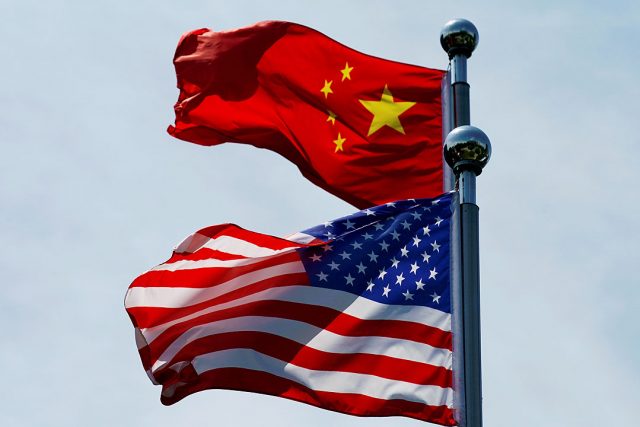
CHINESE AND US flags flutter near The Bund in Shanghai, China July 30, 2019. — REUTERS

The United States warned China against providing military or financial help to Moscow after its invasion of Ukraine, as sanctions on Russian political and business leaders mounted and civilians sought to flee intense fighting on the ground.

Further talks between Ukrainian and Russian negotiators to ease the crisis were expected on Tuesday after discussions on Monday via video ended with no new progress announced.

Thousands have been killed in intense fighting and bombardments since Russian President Vladimir Putin ordered the invasion of Ukraine on Feb. 24.

Russia calls its actions a “special military operation” to “denazify” the country and prevent genocide, a claim the United States and its allies reject as a pretext for an unjustified and illegal attack.

According to U.S. officials, Russia has asked for military and economic support from Beijing, which signaled a willingness to provide aid.

Moscow denies that, saying it has sufficient resources to fulfill all of its aims. China‘s foreign ministry has labelled the reports on assistance as “disinformation”.

“We have communicated very clearly to Beijing that we won’t stand by,” State Department spokesperson Ned Price told reporters after U.S. national security adviser Jake Sullivan met with China‘s top diplomat Yang Jiechi in Rome. “We will not allow any country to compensate Russia for its losses.”

The seven-hour meeting was “intense” and reflected “the gravity of the moment,” according to a U.S. official.


‘NO WAR’

In Russia, a rare anti-war protest occurred in a studio during the main news programme on state TV’s Channel One, which is the primary source of news for millions of Russians and closely follows the Kremlin line.

A woman held up a sign in English and Russian that said: “NO WAR. Stop the war. Don’t believe propaganda. They are lying to you here.” Read full story

Britain’s defence ministry said Russia could be planning to use chemical or biological weapons in Ukraine in response to a staged fake attack on Russian troops, without citing evidence. U.S. officials have made similar statements.

Russia has accused Ukraine of planning to use biological weapons. The United Nations on Friday said it had no evidence Kyiv had such a program.

Moscow on Monday allowed the first convoy to escape besieged Mariupol, home to the worst humanitarian crisis of the conflict.

“In the first two hours, 160 cars left,” Andrei Rempel, a representative of the Mariupol city council told Reuters.

Local authorities say as many as 2,500 civilians have died so far, a toll that cannot be independently confirmed.

The United Nations says more than 2.8 million people have now left Ukraine since the start of the war.

“I am fleeing with my child because I want my child to stay alive,” said a Ukrainian woman named Tanya who said she traveled from the town of Mykolaiv in southern Ukraine across the Danube river to Romania. “Because the people that are there now are Russians, Russian soldiers, and they kill children.”

Russia says it does not target civilians.


FURTHER SANCTIONS

EU member states agreed on Monday to a fourth package of sanctions against Russia, according to France. Read full story

Details were not officially disclosed, but diplomatic sources said they would include an import ban on Russian steel and iron, an export ban on luxury goods and a ban on investment in the energy sector. Chelsea soccer team owner Roman Abramovich and 14 others would be added to the EU blacklist, the sources said.

Japan on Tuesday announced an asset freeze for 17 Russian individuals, including 11 members of the Russian Duma, or parliament, five family members of banker Yuri Kovalchuk, as well as billionaire Viktor Vekselberg.

Western-led sanctions have cut Russia off from key parts of global financial markets and have frozen nearly half of the country’s $640 billion gold and foreign exchange reserves, triggering the worst economic crisis since the 1991 fall of the Soviet Union.

Russia’s finance ministry said it is preparing to service some of its foreign currency debt on Wednesday, but such payments will be made in rubles if sanctions prevent banks from honouring debts in the currency of issue. –Reuters

Bermuda ban on same-sex marriage is constitutional, London tribunal says

PIXABAY 

A London tribunal on Monday ruled that a 2018 Bermuda law that bans samesex marriage in the British overseas territory is constitutional, a departure from the broad trend towards legalization of gay marriage in the West.

Bermuda‘s top court in 2018 ruled that the 2018 Domestic Partnership Act, which allows samesex couples to form partnerships but prohibits them from marrying, violates constitutional freedom of conscience.

London‘s Privy Council, the highest court of appeal for British territories, ruled on Monday that the constitution does not in fact require the state to recognize samesex marriages, in response to an appeal by Bermuda‘s government.

“Our supporters often say ‘love wins.’ This time it didn’t,” said Roderick Ferguson, lead co-plaintiff in the legal case against the law, in a statement by LGBTQ advocacy group OUTBermuda. “Our work as a society is not done until everyone’s humanity is recognized both in law and in life.”

OUTBermuda called on the government to clarify how it will treat samesex marriages that had been lawfully performed since 2017. The Bermuda court’s 2018 ruling had suspended the prohibition.

“The Government is pleased with the outcome of the appeal,” Attorney General and Minister of Legal Affairs Kathy Simmons said in a statement. “The Government will now take time to consider the full judgment and its impact.”

Authorities in Bermuda, a wealthy, socially conservative island in the Atlantic of 60,000 people, have said that domestic partnerships provide the same rights as marriage. Thousands of people support the gay marriage ban. – Reuters

Anti-war protester in studio disrupts live Russian state TV news

An antiwar protester interrupted a live news bulletin on Russia’s state TV Channel One on Monday, holding up a sign behind the studio presenter and shouting slogans denouncing the war in Ukraine.

The sign, in English and Russian, read: “NO WAR. Stop the war. Don’t believe propaganda. They are lying to you here.” Another phrase, which looked like “Russians against war“, was partly obscured.

The extraordinary act of dissent took place on day 19 of the war which began when Russian President Vladimir Putin ordered the invasion of Ukraine on Feb. 24 in what he called a special military operation. Read full story

“Stop the war. No to war,” the woman protester could be heard shouting, as the news anchor continued to read from her teleprompter.

The protester could be seen and heard for several seconds before the channel switched to a different report to remove her from the screen.

Ukraine’s President Volodymyr Zelenskiy thanked the protester in his nightly video address:

“I am grateful to those Russians who do not stop trying to convey the truth. To those who fight disinformation and tell the truth, real facts to their friends and loved ones,” Zelenskiy said. “And personally to the woman who entered the studio of Channel One with a poster against the war.”

Kira Yarmysh, spokeswoman for jailed opposition leader Alexei Navalny, wrote on Twitter: “Wow, that girl is cool.”

She posted a video of the incident, which quickly racked up more than 2.6 million views.


PRO-KREMLIN CHANNEL

State TV is the main source of news for many millions of Russians, and closely follows the Kremlin line that Russia was forced to act in Ukraine to demilitarize and “denazify” the country, and to defend Russian-speakers there against “genocide”. Ukraine and most of the world have condemned that as a false pretext for an invasion of a democratic country.

The woman was named by OVD-Info, an independent protest-monitoring group, and by the head of the Agora human rights group, as Marina Ovsyannikova, an employee of the channel.

Pavel Chikov, head of Agora, said Ovsyannikova had been arrested and taken to a Moscow police station. Tass news agency said she may face charges under a law against discrediting the armed forces, citing a law enforcement source.

The law, passed on March 4, makes public actions aimed at discrediting Russia’s army illegal and bans the spread of fake news or the “public dissemination of deliberately false information about the use of the Armed Forces of the Russian Federation”. The offense carries a jail term of up to 15 years.

In a video recorded before the incident and posted online, a woman who appeared to be Ovsyannikova described herself as a Channel One employee and said she was ashamed to have worked for years spreading Kremlin propaganda. She said her father was Ukrainian, and her mother Russian.

“What is happening now in Ukraine is a crime, and Russia is the aggressor country. The responsibility for that aggression lies on the conscience of only one man, and that man is Vladimir Putin,” she said.

“Now the whole world has turned away from us and the next 10 generations of our descendants will not wash away the shame of this fratricidal war,” she said.

She urged Russians to go out and demonstrate.

Authorities have broken up antiwar protests. According to OVD-Info, which monitors protests and provides legal assistance to those detained, a total of 14,911 people have been arrested. – Reuters

E-commerce startup ITOOH Homestyle champions Filipino design through tech

A wave of new promising markets has emerged as the digital transformation that has swept the globe in response to the COVID-19 pandemic continues to empower consumers and entrepreneurs, especially those in underserved communities. E-commerce has reached its tipping point, and is now projected to eclipse previous forecasts to be worth $363 billion by 2025 as more people learn to utilize the potential of digital platforms to ply their trade online.

Beyond this, however, Jules Veloso, Andrew Bercasio, and Enah Baba, co-founders of furniture and home lifestyle e-commerce platform ITOOH Homestyle, recognized the potential for e-commerce platforms to do something more.

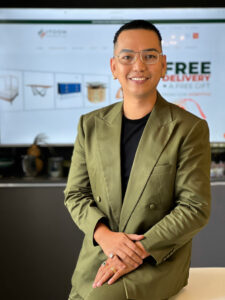
ITOOH Homestyle co-founder Andrew Bercasio

Mr. Bercasio, who had previous experience working as one of e-commerce giant Lazada’s first employees, and has expertise in business development and marketing, said that they have decided to offer a platform for quality, locally-made furniture online.

“During the pandemic, my two co-founders and I were aggressively looking into various segments in the local e-commerce industry. We were looking into a market that we considered was underserved, especially in the beginning,” Mr. Bercasio said in an interview.

At the time, the e-commerce market was saturated with gadgets, accessories, and fashion items sold through marketplaces. There was not quite a market for bigger ticket items, they noticed.

“When you buy furniture, it’s really a commitment. It’s like buying a car. When you purchase a dining table, you plan to use it for the next five to 10 years. It’s not a decision that you can make with just a few clicks, but we hope that as a community, we are slowly learning how to make these purchases online,” Mr. Bercasio said.

ITOOH Homestyle aims to change this perception by offering a “one-stop shop for frictionless discovery and purchase of everything homestyle.” The platform showcases a variety of quality Filipino brands and merchants, catering to the entire spectrum of budgets and lifestyles through careful curation.

Since launching in July 2021, ITOOH Homestyle has grown to offer 60 brands, with an inventory of around 2,000 unique products ranging from home to outdoor furniture. All of the items are presented with detailed descriptions, precise measurements, maintenance instructions, and a meticulous photo gallery for accurate representation.

“Furniture is an investment piece and people really take their time before they buy them. We’re a touch-and-feel market. That’s the main barrier that we’re trying to break, to educate and hopefully have people trust us and our website, trust the product photos we post online. We make sure to take all of our product photos, refrain from using filters, we don’t edit. We are very clear about our descriptions and we want to make sure that we’re truthful with our offering,” Mr. Bercasio said.

ITOOH Homestyle also offers a consumer-friendly return and exchange policy, which encourages buyers to unbox their orders upon delivery for easy returns should they be dissatisfied with the product.

Mr. Bercasio understands the importance of trust in the digital ecosystem, and an accessible and frictionless user experience is one of the most effective ways to build that trust.

“We have a very friendly return or exchange policy. If we deliver the items to you, we encourage our customers to unbox it as soon as it gets delivered so they can see it, sit on it, feel it. And if they end up not liking it, we can accommodate and take it back,” he said.

“Our standards of returns and exchanges have also dramatically changed, thanks to the influence of all these foreign brands coming to Manila. I think it’s very healthy for consumers. And we don’t want anyone to have something from our website that they don’t like or don’t want to have. That’s the trade-off of an e-commerce website, you have to be accommodating,” he added.

Creating a platform to showcase Filipino artistry

One of ITOOH’s goals is to work with a variety of different creative industries such as interior designers, architects, and craftsmen to build its platform. At present, the website offers interior decorating services, in partnership with Grupo Santamaria, an established design firm with a 20-year history.

Mr. Bercasio revealed that the company is working on offering art pieces next, tapping into artists from all over the country and offering them a platform to showcase their work. As with their furniture offerings, ITOOH Homestyle wishes to become a platform in which the creative spirit of the Filipino artist is properly recognized and showcased.

“We all have so many good local brands. We are such good craftsmen that are artistic and creative, and we see that with our furniture design,” he said.

He added, “The goal of the company is to be a sort of home online website that everyone will use and love. We want to continue to offer quality home furniture and quality home accessories. We want to champion local designers and craftsmen.”

Currently, ITOOH Homestyle offers free delivery to the National Capital Region and Greater Manila, but the company is working on establishing coverage in certain key cities in Visayas and Mindanao, with the target of representing Filipino pieces abroad. They also currently have sale running from March 15 to 31 for selected summer pieces, going up to 50% off retail price.


Spotlight is BusinessWorld’s sponsored section that allows advertisers to amplify their brand and connect with BusinessWorld’s audience by enabling them to publish their stories directly on the BusinessWorld Web site. For more information, send an email to online@bworldonline.com.

Join us on Viber to get more updates from BusinessWorld: https://bit.ly/3hv6bLA.

Facebook owner to help train Australian politicians, influencers in run-up to election

BYCGZR-FREEPIK AND RAWPIXEL.COM-FREEPIK

Facebook owner Meta Platforms FB.O will help train Australian political candidates on aspects of cyber security and coach influencers to stop the spread of misinformation in a bid to boost the integrity of an upcoming election, it said on Tuesday.

Australia has not yet set a date for its next election, which is due by May. Authorities are already on high alert for electoral interference, having previously highlighted foreign interference attempts aimed at all levels of government and targeting both sides of politics. Read full story

“We’ll stay vigilant to emerging threats and take additional steps, if necessary, to prevent abuse on our platform while also empowering people in Australia to use their voice by voting,” Josh Machin, the company’s Australian chief of public policy, said in a statement that is to be posted online.

The social media giant added that it had drafted in a university to help with fact-checking operations in Australia and would require disclosure of the names of those paying for election-related advertisements, in what it called its most comprehensive election strategy.

The steps show how social media firms are seeking to combat online distortion and abuse of information during the lead-up to an election, a time when such efforts are typically at their most heated.

The Facebook Protect security program for high-profile individuals launched in Australia in December, with the company vowing to work with election officials and political parties to offer training for candidates on its policies and tools and ways to keep safe.

To avert hacking, it will prompt candidates to upgrade security to two-factor authentication. The company said it would also coach influencers, or those who earn advertising income from online commentary, to spot fake news.

People seeking to run election-related ads will need to furnish government-issued identification, as well as mandatory disclosures of funding sources for them, it said.

Ads by unauthorized parties, without funding disclosure, would be taken down and stored in a public archive for seven years, it added.

RMIT University, which joined Meta’s third-party fact-checking effort, said it would review posts the company identified as potential misinformation and try to verify them via interviews with primary sources and checks of public data.

“A continuing focus of our work is to identify the super spreaders of misinformation and the ecosystems in which they operate,” said RMIT FactLab Director Russell Skelton in a statement.

“High impact misinformation disrupts evidence-based public policy and debate and so it is crucial we gain a better understanding of what drives this.” – Reuters

ZTE awaits judge’s ruling after U.S. probation hearing

An FBI agent testified on Monday that Chinese nationals brought to the United States under research visas went to work for ZTE Corp 000063.SZ in New Jersey – a possible sign the Chinese tech company violated its probation from a 2017 U.S. plea deal.

At a hearing in federal court in Dallas, FBI special agent Marcus Wondergem said Chinese nationals came to the United States under the guise they would be doing research at the lab of Georgia Tech professor Gee-Kung Chang, but spent little time there and moved to apartments near ZTE in Morristown, New Jersey.

“Is it true that some of these individuals spent months without entering the lab?” Assistant U.S. Attorney John de la Garza asked Wondergem.

“Yes, it is,” Wondergem replied.

U.S. District Judge Ed Kinkeade said he hoped to issue a written ruling in a matter of days.

ZTE is on probation from its guilty plea in a case tied to illegally shipping American technology to Iran. Kinkeade summoned the company to his courtroom over the possible violation involving an alleged conspiracy to commit visa fraud.

ZTE‘s shares declined after word of the hearing surfaced about a week ago, falling more than 12% last week in Hong Kong and then slipping 7% further on Monday.

Chang and Jianjun Yu, a former ZTE research director in New Jersey, are accused of conspiring to bring Chinese nationals to the United States to conduct research at ZTE between at least 2014 and 2018, according to an indictment unsealed in March 2021.

The Chinese nationals were in the United States on J-1 visas, which are intended for work and study at sponsoring institutions like Georgia Tech.

During his testimony, the FBI’s Wondergem said he checked the door logs for the Georgia Tech lab and produced leases for apartments in Morristown.

On cross-examination by Dallas lawyer Scott Barnard, who represents ZTE, Wondergem acknowledged that the sponsor of the J-1 visas – Georgia Tech, not ZTE – was responsible for the accuracy of the visa applications and that “research scholars” are permitted to work at more than one location.

Wondergem also said that, despite years of investigation in the Georgia Tech case, neither ZTE nor a U.S. subsidiary was indicted.

No other witnesses were called at the hearing.

In closing arguments, Robert Buehler, a lawyer for ZTE, said Yu was a professor at Shanghai’s Fudan University and, in many cases, recommended former students to Georgia Tech. He described their work at ZTE as an “informal internship.”

Buehler also argued that Georgia Tech was responsible for the visas and for the conduct of scientists and engineers in the United States.

“If anyone here should have done more, it was Georgia Tech,” Buehler said.

De la Garza argued that Yu and Chang conspired to use J-1 visas for people to work at ZTE because it was a “cheaper, faster, easier way” to get foreign nationals into the United States.

“It’s a sham,” de la Garza said.

Chang has pleaded not guilty. A lawyer for Chang, Robert Fisher, declined to comment. Yu’s status is unclear. ZTE said he left the company in 2019. – Reuters

Wilcon Depot launches third store in Antipolo City

Wilcon Depot, the Philippines’ leading home improvement and construction supply retailer, opened its third branch in Antipolo City on March 11, 2022.

The retail giant first entered the city with the opening of Wilcon Depot Antipolo and Wilcon Depot San Isidro.

Wilcon Depot Mayamot is the company’s first branch to open this year. It serves as its 5th store in the province of Rizal and 74th store nationwide.

With a total selling area of over 9,000 square meters, the newly-opened store carries the wide product selection that Wilcon offers ranging from Tiles, Sanitarywares, Plumbing, Furniture, Home Interior, Building Materials, Hardware, Electrical, Appliances, and other DIY items.

Grand store opening celebration

Wilcon brings top-of-the-line products and home solutions with the highest quality standards, innovative, and sustainable features to all Rizaleños.

Wilcon Depot AntipoloThe store opening was celebrated with a ribbon-cutting ceremony led by (L-R) Kent Floors President Jerry Tiu, Boysen Paints Vice President for Sales & Operations Justine Ongsue, Fellow and Chairman for Marketing of the United Architects of the Philippines Arch. Romulo Reyes, Wilcon Depot President & CEO Lorraine Belo-Cincochan, Rizal Province 1st District Representative Roberto Puno, Antipolo City Vice Mayor Josefina Gatlabayan, Wilcon Depot SEVP-COO Rosemarie Bosch-Ong, Wilcon Depot Ambassador Tessa Prieto-Valdes, Matimco President & CEO Charlie Liu, and Kohler Country Manager Mary Ann Rabonza.



Wide product offering

Wilcon Depot Mayamot offers limitless home and building products and solutions. Discover the various exclusive brands and in-house brands like GROHE and KOHLER Sanitarywares, FRANKE Kitchen Systems, POZZI Bathroom Solutions, Sanitarywares, Whirlpool Bathtubs, Ceramics, and Shower Enclosures, ARISTON Water Heaters, GEBERIT Monolith Puro, MACROAIR HVLS Fans, RUBI Tile Cutter, and REHAU Premium PPR pipes.

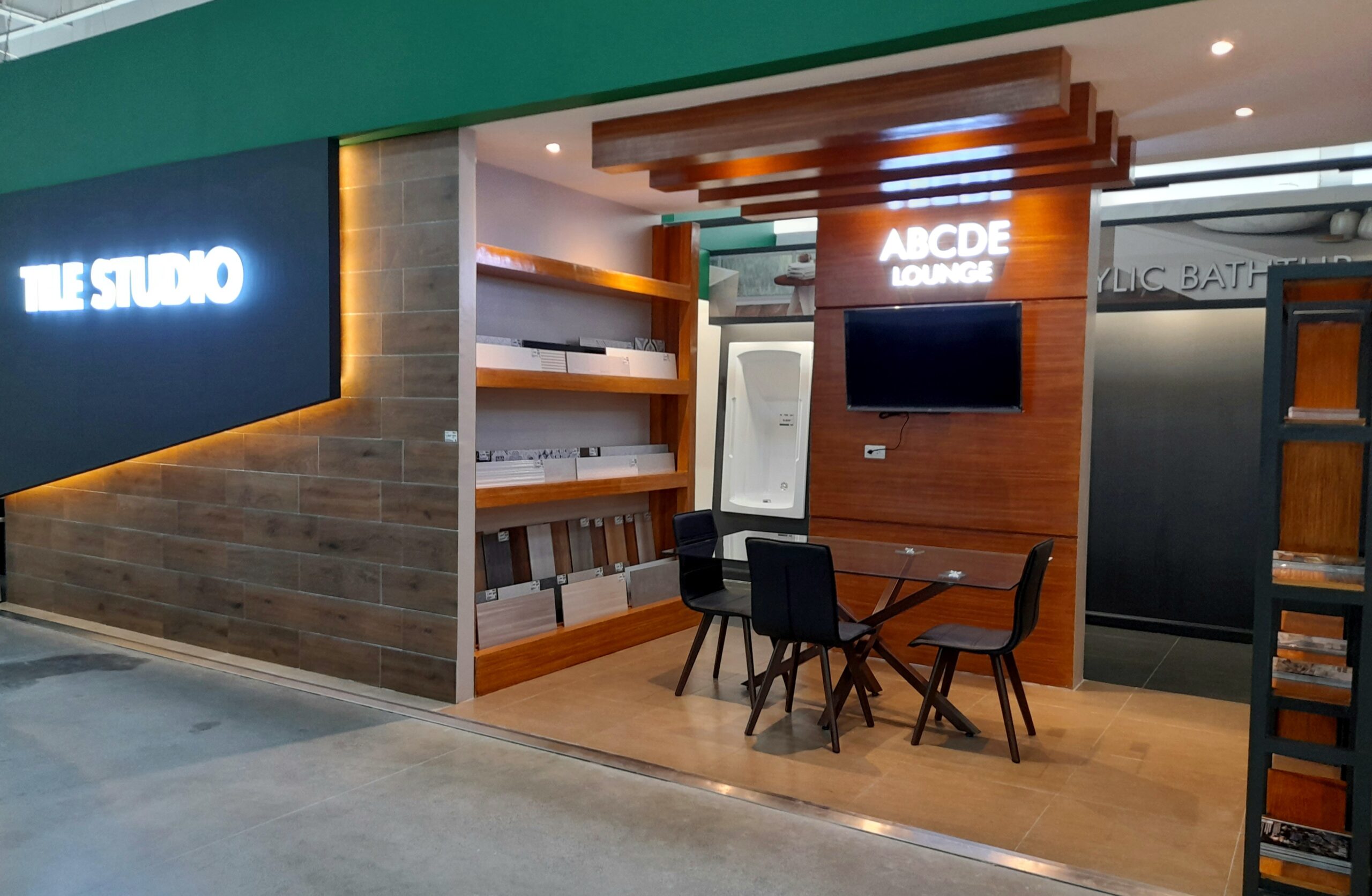
Premium quality Italian tile brands such as NOVABELL, ENERGIE KER, GARDENIA, IMOLA, HERBERIA, OPERA, CASTELVETRO, KERADOM, NAXOS, DOM, and VERSACE alongside with Spanish tile brands ALCALAGRES, GRESPANIA, ROCERSA, CIFRE, EMIGRES, KEROS, TESANY, ONIX, OSET, VITACER, GRUPO HALCON, MYR, ECO CERAMICA, and ETILES are showcased in their Tile Studio.

Asian tile brands are also available like ARTE, SOL, LOLA, HUANQIU, VERONA, PICASSO, ROMAN, MULIA, KIA, CHINA NATURAL GRANITE, BASEL, SAIGRES, and GEMMA.

HERITAGE and NOBIZZI Furniture and HEIM Home Interior, Furniture, and Decor are exhibited at the Home Living Showroom. The Appliance, Kitchen, Lighting section displays HAMDEN Kitchen Appliances, KAZE Ceiling Fans and Air conditioners, and ALPHALUX Lighting Solutions.

HOMEBASICS and INTERDESIGN Housewares, BIRKE faucets and Bathroom Accessories, SEFA Specialty Bathroom Faucets, Bathroom Accessories, Shower Heads, and Kitchen Organizers, SUNCRUST BBQ Grills, LANDJACK Bicycles, CROWN and PRUSSIA Kitchen Sink QUARTEX Quartz Kitchen Sink, ELECTRON Generators, DIRECT HARDWARE, TRUPER Tools, P.TECH Builder’s Aid and Quartz Stone, FOREST Wood Products, Woodland flooring, IGLOO and RUBBERMAID coolers, UNITED SOLUTIONS Outdoor trash bins, and SOLUTHERM PPR pipes and 304 stainless Steel Pipe Fittings are displayed in the DIY Section of the store.

Bigger and better home shopping experience

Wilcon Depot Mayamot also provides the utmost customer satisfaction. It has redefined the home and building shopping experience through its Design Hub, Home Living Showroom, Tile Studio, and Architects, Builders, Contractors, Designers, and Engineers (ABCDE) Lounge, including their value-added services such as ample free parking spaces, reliable delivery service, and tile cutting service.

For a bigger and better home shopping experience, valued customers can also shop online at Wilcon by visiting shop.wilcon.com.ph. Shop for all your all-around home needs and have your items delivered right at your doorsteps or choose to pick-up in store. Online store customers can conveniently pay with their credit card, debit card, BancNet, and GCash.

To ensure a safe and convenient shopping environment in all Wilcon stores, the company continuously prioritizes the implementation of safety protocols for the health and well-being of both employees and valued customers. Wilcon also offers Browse, Call, and Collect or Deliver, and Wilcon Virtual Tour services to complement the in-store shopping experience. In addition, Wilcon provides contactless payment options like bank transfers, GCash, PayMaya, Instapay, PesoNet, WeChat, and Alipay for customers’ convenience.

Wilcon makes loyalty more rewarding for their valued customers by offering exclusive perks and discounts. The Wilcon Loyalty Mobile App allows customers to earn and check their points and convert their purchases to rewards after signing up. The Wilcon Loyalty Mobile App is available for download at the Google Play Store and App Store for free.

Store expansion plans

Wilcon Depot now has 18 branches in Metro Manila and 56 stores in key cities and municipalities of Luzon, Visayas, and Mindanao.

The newly-launched store represents Wilcon’s relentless commitment to providing its valued customers a more convenient and better home shopping experience by offering thousands of high-quality home improvement and building needs and excellent customer experience.

Every store opening is part of their #FlyingHighTo100 store expansion campaign, wherein the company aims to have 100 operating stores nationwide by 2025, barring any unexpected external factors.

Start building big ideas for your home and shop now at Wilcon Depot Mayamot at Lot 1-9 Marcos Highway, Brgy. Mayamot, Antipolo City, open daily from 8:00 AM to 7:00 PM.


Spotlight is BusinessWorld’s sponsored section that allows advertisers to amplify their brand and connect with BusinessWorld’s audience by enabling them to publish their stories directly on the BusinessWorld Web site. For more information, send an email to online@bworldonline.com.

Join us on Viber to get more updates from BusinessWorld: https://bit.ly/3hv6bLA.