Home Blog Page 6138

Pandemic pushes SDGs further out of reach of Asia-Pacific region

FREEPIK

THIS YEAR, 2022, marks the second anniversary of the COVID-19 pandemic, and while an end to the pandemic is in sight, it is far from over and the consequences will be felt for decades to come. At the same time, the 2030 Agenda for Sustainable Development is becoming increasingly distant. The region must use the 17 Sustainable Development Goals (SDGs) as a roadmap to a fairer recovery.

This year’s edition of the Asia and the Pacific SDG Progress Report published by ESCAP (United Nations Economic and Social Commission for Asia and the Pacific) reveals three alarming trends. First, the region is losing ground in its 2030 ambitions. In addition to our slowed progress, human-made crises and natural disasters have also hampered our ability to achieve the Goals. We are seeing the gaps grow wider with each passing year: at its current pace, Asia and the Pacific is now only expected to achieve the 17 SDGs by 2065 — three-and-a-half decades behind the original goalpost. The region must seize every opportunity to arrest this downward trend and accelerate progress.

Second, while headway on some of the Goals has been made in scattered pockets around the region, we are moving in a reverse direction for some of them at a disturbing rate. Although the climate crisis has become more acute, there has been regression on responsible consumption and production (Goal 12) and climate action (Goal 13). And the news is marginally better for targets dealing with industry, innovation, and infrastructure (Goal 9) and affordable and clean energy (Goal 7) as they fall short of the pace required to meet the 2030 Agenda.

Lastly, the need to reach those who are furthest behind has never been greater. The region is experiencing widening disparities and increased vulnerabilities. The most vulnerable and disadvantaged groups — including women, children, people with disabilities, migrants and refugees, rural populations and poorer households — are the victims of our unsustainable and non-inclusive development trends. Some groups with distinct demographic or socioeconomic characteristics are disproportionately excluded from progress in Asia and the Pacific. Understanding the intersection of key development challenges with population characteristics such as age, gender, race, ethnicity, health, location, migratory status, and income is critical to achieving a more equitable recovery. We must work together as a region to ensure that no one or no country falls behind.

Although these trends are extremely worrying, there is some good news that helps our understanding of them: The number of indicators with data available has doubled since 2017. Collaboration between national and international custodian agencies for the indicators of the SDGs has significantly contributed to enhancing the availability of data. We must, however, continue to strengthen this cooperation to close the remaining gaps, as 57 of the 169 SDG targets still cannot be measured.

The sole focus on economic recovery post-pandemic is likely to hinder progress towards the SDGs, which was already lagging to begin with. As the region strives to build back better and recover, the 2030 Agenda can serve as a guiding mechanism for both economic and social development. We — the governments, stakeholders, and United Nations organizations that support them — must maintain our collective commitment towards a more prosperous and greener world.


Armida Salsiah Alisjahbana is under-secretary-general of the United Nations and executive secretary of the Economic and Social Commission for Asia and the Pacific (ESCAP).

Ballots printed without observers: How come?

PHILIPPINE STAR/ MICHAEL VARCAS

There are, as I write this column, about 57 days before the May 9 national and local elections. The elections will mark the culmination of all the work at planning and carrying out hard-fought campaigns in many instances.

National campaigns are normally planned a year or two in advance under normal circumstances. Exceptions are the presidential snap polls in 1986 decreed by Ferdinand Marcos at the behest of the Americans and other democracies who were alarmed at the continuing political unrest and subsequent economic damage triggered by the execution of former senator Benigno Aquino as he returned from exile in the United States. Another exception is the seemingly belated decision of Vice-President Leni Robredo to contest the presidency against Marcos Jr. who had prepared his ground organization and media campaign and messaging, through historical falsification, as early 2017.

Whether one has eyed a position several years before the election or less than a year before election day, a sensible candidate and his/her handlers have to come up with an overall plan whose component parts are further subdivided and broken down into parts that are carried out eventually by a working organization on the ground.

All serious campaigns start with research or data acquisition and gathering. This is the basic first step, whether done with exacting rigor or with rudimentary techniques. As early as 1971, I remember then-senator Ninoy telling me of his plans to run for president in 1973 under the then 1935 Constitution which prohibited Marcos Sr. from being president beyond 1973. I was then doing my Management Research Report (MRR), a prerequisite for graduation at the Asian Institute of Management (AIM), on “Image Management in the 1967 Senatorial Campaign of Senator Benigno S. Aquino, Jr.” It was in the course of preparing this paper that Senator Ninoy revealed to me some of his preparations for the 1973 presidential elections.

At the core of his preparations was an IBM Mainframe which stored data that Ninoy and his American and Filipino campaign strategists felt were essential to planning and eventually mounting a no-nonsense campaign. Interestingly, the research work starts with the candidate: family background; experience in private and government administration; performance as mayor, governor, and senator; potential issues and all other data including so-called skeletons in the closet which may surface if one is confronted by an equally research-oriented opponent. Basic to this element of the total plan is research on possible opponent(s). I recall Ninoy pulling out the originals of several yellow columnar sheets pasted together. The most prominent initial in that sheet was “FL” which could have meant First Lady Imelda Marcos, or Fernando Lopez, the then vice-president of Marcos Sr. Lopez, a member of the economically and politically powerful clan, had been removed as Secretary of Agriculture and Natural Resources by Marcos in 1969 as the relationship between Marcos and the Lopezes soured.

Research, conducted by foreign and local groups, is very much part of the Marcos Jr. campaign as the handlers of the dictator’s son addressed a major part of the electorate which were too young to have knowledge of and experience with, illegal arrests, abductions, kidnappings, torture, rigged plebiscites, massive cheating and terrorism during elections, cheating supervised by the Constitutional body mandated to administer and manage elections, media censorship, Imeldific extravagance, People Power, presidential decrees, Amendment No. 6, economic hardship, and other horrors of Marcos rule. These young men and women were the main objects of historical falsification which anti-Marcos forces took some time to correct.

My own experience with other communications campaigns is that the expense involved is directly proportional to the lies, the type of lies one disseminates, and the fact twisting one has to do. One social media practitioner stated that “telling the truth is much less expensive than concocting lies and ensuring the consistency of the lies. Usually, liars end up contradicting themselves and it becomes more expensive to undo the lies, scramble and cover it up.”

And because the lies have to be passed off and packaged as truth, the influencers have to keep on repeating the lies, almost ad nauseum. To support the lies, a few embellishments are needed to create that “feel good” feeling. Usually, flag-waving and “love of country” messages are used to distract people from the core issues and to change the narrative.

Issues are surfaced, either through focus group discussions or actual polling or variations of the latter. Veteran politicians will always say “we know the people” and often dismiss such research as a “waste of time or paying to get information I already know.”

It is important to have a fairly good idea of issues because such information is crucial for conserving one’s resources. A solid idea of issues for a particular geographic area and demographics allows one to sharpen one’s messaging. A message that tries to cover too many issues and different demographics will result in a diffused message that promises everything to everyone and will therefore not appeal to anyone or to the number of voters one desires or has set as a target.

As the campaign enters a most crucial stage, with certain candidates creating momentum while others are fading after a very strong start, we can expect more frenzied activity at the ground level. It is at this point that a candidate’s ground organization is tested and will be given a chance to prepare for the actual day where mobilization will be a key factor.

Even as candidates and their supporters and thousands of genuine, not paid, “volunteers,” ramp up their respective operations, we must continue to be vigilant and monitor the acts and statements of the Commission on Elections (Comelec) which has managed to shoot itself in the foot repeatedly.

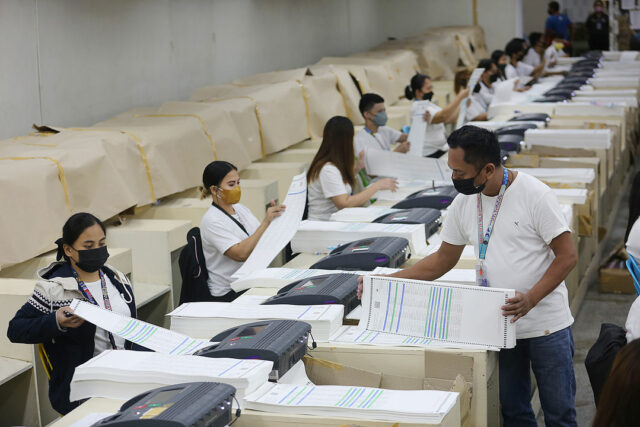
The latest episode is an admission by its commissioners made under oath during a Senate hearing on March 9. In that hearing, the Comelec admitted that it had caused the printing of 65% of the ballots and configured Secure Data (SD) cards in most regions without observers or away from public view. These revelations have further eroded the public’s faith in Comelec’s sincerity to have clean, honest and transparent elections.

Citizens’ groups have raised a collective howl. And rightly so. After all, clean, honest and transparent elections is the essence of democracy. There can be no democracy without consent of the governed.

If uncorrected immediately and transparently, these and other perceived lapses of the Comelec can radically change the course of events in the country.


Philip Ella Juico’s areas of interest include the protection and promotion of democracy, free markets, sustainable development, social responsibility and sports as a tool for social development. He obtained his doctorate in business at De La Salle University. Dr. Juico served as secretary of Agrarian Reform during the Corazon C. Aquino administration.

Politics and market sentiment

UPKLYAK-FREEPIK

ONE MINOR TOPIC in political discussions, below the impact of surveys and endorsements, is the effect of a candidate on the investment climate should he be elected as leader. Market sentiment embraces the investment climate and the projected regulatory regime, based on characteristics and policies of candidates like integrity, transparency, and the acceptance of a free-market regime and a vigorous private sector.

Even unlikely winners like the extreme left with its program of higher minimum wages, free everything for everyone, and the takeover of the private sector activities by government can be part of the discussion in a debate involving a survey frontrunner and those with asterisk ratings.

In economic briefings, the introduction of politics is almost apologetically introduced — we are not endorsing anyone, just discussing the impact of certain personalities on the economic climate. There is the demurral that economists do not dabble in politics, as if to reinforce the belief that discussions of pairings, surveys, and platforms are the exclusive purview of TV resource persons who fancy themselves as “political analysts.” To frame the unlikely topic of politics in economic briefings, the slides on elections are introduced at the end of the talk, as a reluctant foray into personalities rather than numbers — which candidate will be good for the market?

Sometimes, this relationship between politics and economics can be unhealthy when it is too cozily joined, sometimes at the hip. But their marching in step seems inevitable. Even in highly regarded economies like Switzerland, what the government does with bank secrecy laws and legitimate inquiries into hidden wealth are political realities. And in a hyper-connected world, a distant invasion in Eastern Europe can rattle the economic cages here as well.

Yes, it matters who becomes president. Here are some examples of corporate attitudes on politics, and what limited role it should play in private business.

Business shouldn’t have to check with the palace if it can do a gigantic deal which anyway conforms to the laws of the land. The private sector stays private. There is no need to “clear” with politicians every major move like mergers and acquisitions. It’s only the regulatory agencies involved, if any, that will need to be informed for requisite approvals. If the enterprise involves foreign investment, a courtesy call may still be welcome for the photo op that gives the assurance of government openness to business.

There should be no need for business to claim political connections. Anecdotes about childhood links with the newly elected leader is not a corporate topic of interest, except over wine. Intimacy with the inner circle of new appointees should just be fodder for small talk. These stories should not be seen as somehow giving comparative advantage to a particular group, even those who may have donated to a successful campaign.

Concentration should be on running the business. The economy will improve if the CEOs and major stockholders need not be bothered with paying homage to government leaders and remembering birthdays and what appropriate gifts to give. This alone reduces the cost of doing business and shifts the focus on efficiency and marketing for the private enterprise.

If political connections no longer apply, then market share will depend on better products, cheaper costs, more efficient delivery systems, better marketing, inventory control, and the ability to delight customers — and all those old-fashioned ways of making money for the stockholders… without using or needing political clout.

There is no “party politics” in the country which is driven by ideology and think tanks. The multi-party system has turned into a variant of the personality politics we are accustomed to. Who even remembers the parties that the candidates belong to? These constantly shift shapes like vampires when the sun goes down.

In economic briefings dealing with politics and politicians, it is personal history that gets the most attention. Is a call for unity a valid economic program? And does the invitation extend to foreign countries? (How’s the fishing, Gents?)

For sure, an advocate of using the country as a personal piggy bank does not help the economic climate. Market sentiment does not favor a porcine diet. In the metaphor for optimism and its opposite, we only find bulls and bears.

The pig is not usually part of the corporate fauna. The porcine role is limited to the roasted variety, with a bamboo pole through it… to keep it firmly in place.


Tony Samson is chairman and CEO of TOUCH xda

ar.samson@yahoo.com

US firm specializing in remote work technology expanding to the Philippines 

By Patricia Mirasol 

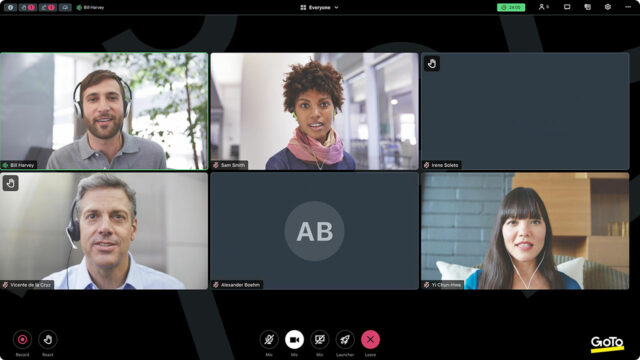
GoTo, a Massachusetts-based company specializing in remote work technology, is expanding to Singapore, Malaysia, and the Philippines. The Philippine market’s demographics are ripe for opportunities in the remote work sphere, according to the company in a March 16 briefing. 

“This is a good place for us to double down and focus, because of the landscape of SMEs (small- and medium-sized enterprises) in the Philippines and Southeast Asia (SEA),” said Lindsay Brown, vice-president and general manager of Asia Pacific for GoTo. “It’s ready for disruption. This is why we are positioning ourselves here.” 

SMEs make up 99% of all businesses in SEA. In the Philippines, GoTo’s figures show 58% of employees prefer full-time remote work. An additional 35% are satisfied with the technology that can support such a work arrangement. 

“Employees are looking for flexible work, but also the tools that allow for it,” Mr. Brown told the audience at the briefing. “From an employers’ perspective, if you want to keep your key talent… offering flex is paramount. Otherwise, they will leave and go elsewhere that can offer it.” 

The company’s SEA team established a local channel program over the past year with partners including Ingram Micro in Singapore, Malaysia, Indonesia, and Thailand, as well as VST ECS in the Philippines. It also plans to hire locals to support its regional expansion plans in 2022. 

“The advantage of GoTo is that it is bandwidth-friendly. It doesn’t consume lots of bandwidth,” said Jimmy D. Go, president and CEO of VST ECS Phils., Inc., at the event. “It also has great security and is easy to use… A lot of SMEs don’t have IT (information technology) departments. This is the kind of solution they’re looking for.” 

“Our annual IT Decision Makers survey revealed that more than 81% of businesses in Southeast Asia will have more than 50% of their workforce working remotely on a part-time or full-time basis,” added Krishna Baidya, director of digital transformation practice at Frost & Sullivan, in a press statement. “Such a shift will continue to change how businesses support their employees’ changing requirements for flexible work.” 

GoTo’s rebranding from LogMeIn on Feb. 2 also signaled the company’s simplification of its portfolio into two flagship products: GoTo Resolve, an IT support product that features zero trust security and has functions like system diagnostics; and GoToConnect, a communications-as-a-service product that allows for calls, meetings, and messages from any device. 

The company’s roots can be traced to Hungary two decades ago, when its co-founder, Michael Simon, found himself always running late because of the traffic he had to contend with daily when going from Buda to Pest. The first iterations of GoTo’s cloud-based remote access tools were borne from this pain point. 

The company has over 3,000 global employees at present and counts Siemens, Hilton, and Isuzu as among its clients.

A board seat has no gender

FREEPIK

Among the many ways to push for gender equality in the Philippines is to promote the inclusion of female board members in companies. Aside from benefiting one’s own career as a woman, this can also strengthen a company’s decision-making moving forward, according to various female board members from around the world. 

“When you have women on the board, I believe discussions are richer and more colorful and the diverse points of view make for stronger and more compelling decisions,” said Nina D. Aguas, executive chair of Insular Life Assurance Co., Ltd., at a forum by the Management Association of the Philippines (MAP) and Filipina CEO Circle (FCC). 

Ms. Aguas was recognized as a gender equality champion for leadership commitment at the 2021 Women’s Empowerment Principles (WEPs) Awards. 

“A board seat has no gender,” she emphasized at the forum on March 10, but noted that “We are just as qualified as the male species.” 

Whether it’s instilling nationwide policies, building an internal culture that’s empowering for women, or setting up sustainable gender reporting, the Philippines has made strides to close the gender gap in the workplace

This gap exists on boards of companies all over the globe, which makes the visibility of women as leaders all the more important, said MargueriteSoeteman-Reijnen, chair of the executive board of Aon Holdings in Netherlands.  

As chair of the advisory board of the Dutch nationwide diversity C-suite female empowerment initiative, she added that laws to ensure more diverse boards have begun to be implemented across Europe, and the rest of the world.  

“We’ve started to make women visible. [In the Netherlands] we started a database so that when people are looking for new directors and commissioners, there are eligible women for those roles,” she said. 

Marjorie Lao, the non-executive director of Logitech International SA, recommended that women in multinational companies first become members of subsidiary boards, which may not be the same but can at least be a first step towards sitting on a bigger board. 

“People would often say that the access to board roles is dependent on networks, meaning it’s people sitting on boards who recommend other board members,” she explained. “There now is an increasing deliberateness in terms of defining and building the required skills and capabilities that they need.” 

The size of a board is also a factor in encouraging more diversity, said Sheridan Broadbent, independent director of Trustpower Ltd., in New Zealand. 

She said that women on boards of seven or eight people have to be bold and go after what they want based on their judgment: “If you’re on a board that is large enough to have diversity around that table, especially if you’ve got newer directors, it can be great way to unleash the potential of diversity.” 

For Filipina CEOs in particular, Ms. Aguas summarized everyone’s advice by encouraging women to simply raise their hand. 

“If you hear the opportunity to be on a board, the first thing to do is raise your hand,” she said, “Because often we’re very shy about this.” — Bronte H. Lacsamana

InLife recognizes its top financial advisors and agency leader

For amplifying the company’s mission to serve Filipinos through financial planning, InLife recognized its top financial advisors and agency leaders who made it to the 2021 Club of Honors.

InLife honored a total of 224 top producers nationwide for their excellent sales performance in 2021 during the Club of Honors Annual Awards Night at the Grand Hyatt Hotel in Taguig City.

InLife Executive Chairperson Nina D. Aguas commended the Club of Honors awardees for their hard work and dedicated service to policyholders, especially during uncertain times.

“Our awardees’ achievements underscore their commitment to give the best service consistently amid the many challenges happening globally. Rather than seeing the difficulties as unclimbable walls, they turned them into opportunities for growth. Even in the toughest of situations, excellence can still manifest,” Aguas said.

InLife President and CEO Raoul E. Littaua lauded the awardees for championing the noble mission of life insurance professionals and for helping policyholders prepare for life’s uncertainties.

“InLife’s Annual Awards Night is a most fitting culmination of our financial advisors’ and agency leaders’ year-long quest to help as many of our fellow Filipinos as possible to protect their families and build their dreams. This event is also a triumphant welcome to the heroes and sheroes of InLife as they journey on to pursue service excellence. It is a quest that was never meant to end. The mission for every InLifer to bring ‘A Lifetime for Good’ knows no boundaries,” Littaua said.

InLife Chief Agency Officer Geraldine B. Alvarez also thanked the awardees for being agents of the company’s commitment to help Filipinos achieve their financial goals.

“With a single-minded determination, InLife’s Club of Honors awardees continue to uphold the values of their profession and strive to maintain the highest standards of service, ensuring that our policyholders will enjoy the best customer experience. InLife honors our top financial advisors and agency leaders for their wholehearted commitment to what InLife stands for, and for their excellent work in guiding Filipinos in their financial journey,” Alvarez said.

Eleven President’s Circle of Excellence awardees led InLife’s “Club of Honors,” including Arslie Malipero of CPV Malipero and Associates Insurance Agency, Inc., Top Underwriter of the Year; Julmer Noro of Agila Financial Team General Insurance Agency, Inc., Top Unit Manager of the Year; Ida Jacob of Binondo District Sales Office (DSO), Top Agency Head of the Year; Jefferson Albis of One Lucena DSO, Top Rookie Underwriter of the Year; and Faith Mislang of VIP DSO, Top Group Producer of the Year.

Completing the roster of President’s Circle of Excellence awardees are Lina Abrantes of Davao Mega DSO, 2nd place, Underwriter of the Year; Richmond Baguno of Baguio DSO IV, 3rd place, Underwriter of the Year; Antonio Romulo Abrantes of Davao Mega DSO, 2nd Place, Unit Manager of the Year; Julianne Nicole Benitez of EYJ Insurance Agency, Inc., 3rd place, Unit Manager of the Year; Cecile Gurrea of Agila Financial Team General Insurance Agency, Inc., 2nd place, Agency Head of the Year; and Nila Ceniza of Cebu DSO IX, 3rd place, Agency Head of the Year.

Here is the complete list of InLife’s “Club of Honors” awardees: 2022 Club of Honors


Spotlight is BusinessWorld’s sponsored section that allows advertisers to amplify their brand and connect with BusinessWorld’s audience by enabling them to publish their stories directly on the BusinessWorld Web site. For more information, send an email to online@bworldonline.com.

Join us on Viber to get more updates from BusinessWorld: https://bit.ly/3hv6bLA. 

Pandemic erased over 9 million jobs in Southeast Asia, ADB says

PHILIPPINE STAR/ MICHAEL VARCAS

The coronavirus pandemic obliterated 9.3 million jobs in Southeast Asia as lockdowns hit the region’s traditional engines of growth such as hospitality and tourism, according to the Asian Development Bank.

This pushed 4.7 million people to extreme poverty last year, measured as living on less that $1.90 a day, the ADB said in a report Wednesday. Inequality also widened as movement restrictions hit hardest the retail and informal sectors, where women, young people and unskilled workers are typically employed.

“The pandemic’s impact on poverty and unemployment will likely persist as inactive workers become de-skilled and poor people’s access to opportunities further deteriorates,” the ADB said. “When this happens, the deterioration in inequality could transfer across generations.”

Green shoots are emerging though, with close to 60% of Southeast Asia’s population vaccinated and public mobility rebounding. Gross domestic product is expected to grow 5.1% this year, though the omicron wave could slash this by as much as 0.8 percentage points.

Equipping small businesses with digital tools and providing skills training for displaced workers will ensure they’re not left behind in the “new normal” of work, the ADB said. Increasing health spending to 5% of GDP, from 3% in 2021, will also improve disease surveillance and add 1.5 percentage points to growth. — Bloomberg

Globe celebrates the women of Brgy. Barangka Ilaya, Mandaluyong for their strength and support for the community

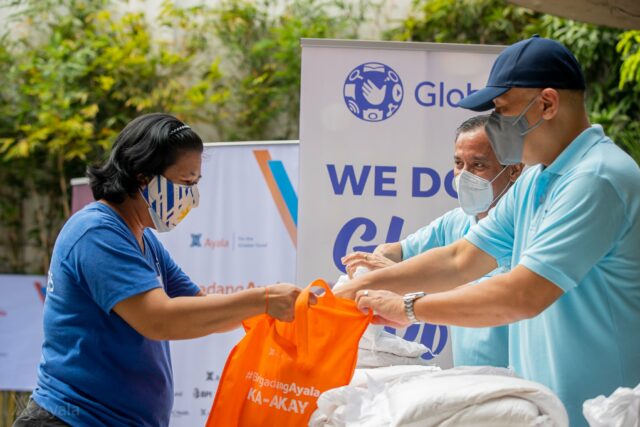
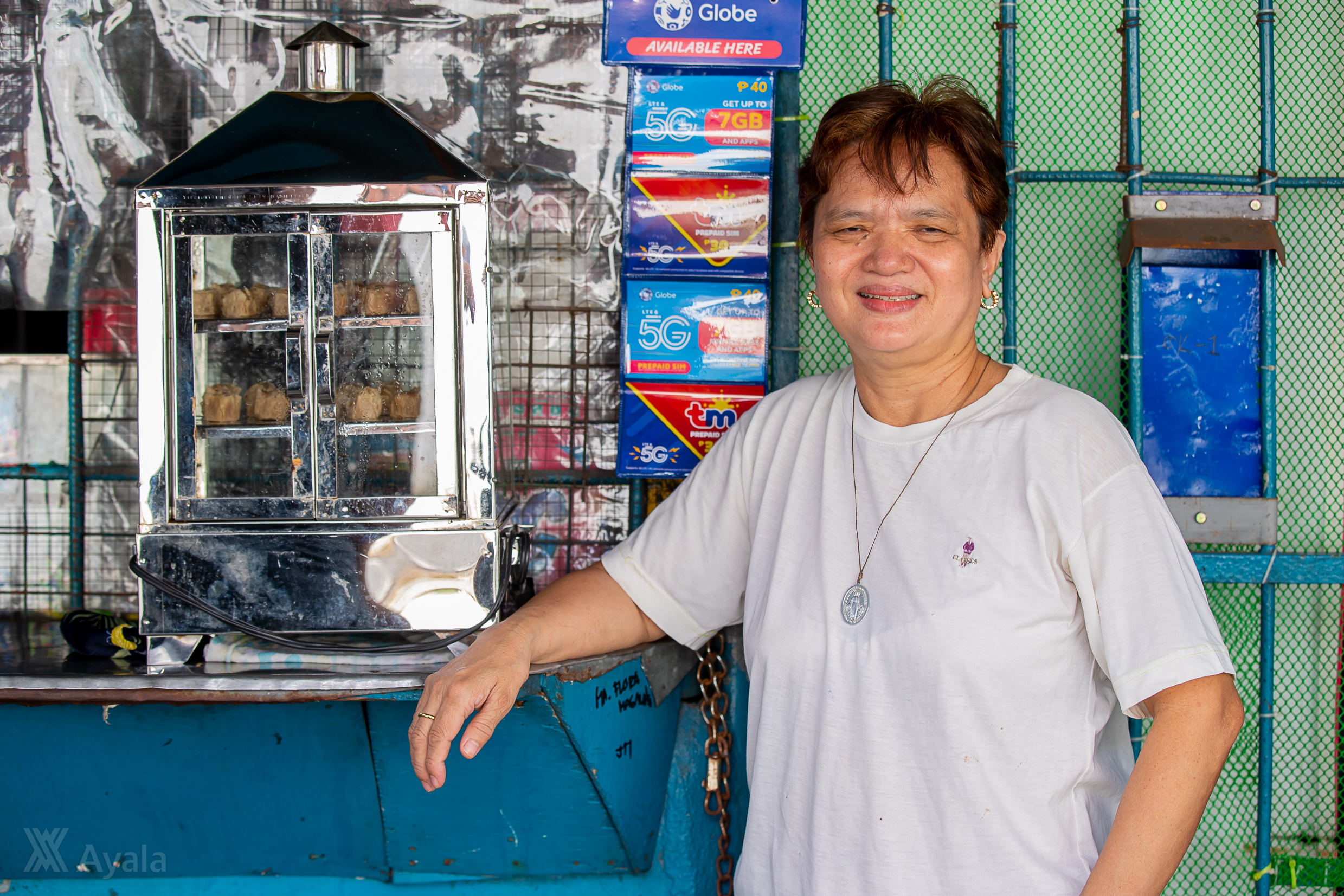
Globe President and CEO Ernest Cu led food distribution in a community in Mandaluyong City at a recent #BrigadangAyalaKaakay event. At the event, he also paid a visit to Globe prepaid load retailers including 60-year-old Mary Magaling, who relied on her sari-sari store business to make ends meet during the pandemic.

The pandemic posed many challenges to Filipino families – many survived through the guidance and leadership of the women in their communities.

For Kathleen Anne Quiambao, Mary Magaling, and Rebel Caadan, they did not let the hardships and unexpected situations get the better of them, as they stood strong and found ways to adapt to what life in the pandemic threw at them.

True to its commitment to creating a #GlobeOfGood, Globe became a bridge for these three women to become pillars of their homes during the health crisis. They were able to earn extra money through Globe’s products and services to keep their families afloat and ensure an uninterrupted learning environment for their kids.

The women of Barangay Barangka in Mandaluyong City served as pillars of strength for their families during difficult times of the pandemic. They were among beneficiaries of a recent #BrigadangAyalaKaakay event, where Globe provided food packs to residents.

Quiambao is the main contributor to their household income. She was previously employed but transitioned to online selling when she had to leave her job for health reasons. She now sells a variety of products in her online store, including frozen goods, apparel, and sanitation essentials. She has since gained a number of patrons who support her business and attributes the small successes of her online selling to Globe’s accessible internet connection in their area.

Very convenient ‘yung may malapit na cell towers dito sa Mandaluyong para madali ma-access ang mga sites na gamit namin sa online selling,” she shared.

At the start of the pandemic, 60-year old Magaling found herself at the brink of bankruptcy and almost closed down her sari-sari store, which has been her primary source of livelihood for nearly two decades. Amid the lockdowns, she persevered to keep her store open to serve her customers within her neighborhood, especially those who became her suki and friends.

Magaling has been a mobile prepaid load retailer for years and intends to expand her reach and become a merchant of Electronic Commerce Payments Inc. (ECPay), another Globe affiliate that provides a wide array of services, ranging from bill payments, top-up load, electronic PINS, cash-ins, and money transfers.

“Hindi ko na masyadong alam ‘yung mga online o apps pero gusto ko subukan para dagdag kita. ‘Yan rin kasi ang hinahanap ng mga suki ko kaya gusto ko rin i-offer sa kanila.

Mary Magaling has been a mobile prepaid load retailer for years. She intends to expand her services and become an ECPay merchant, with the hopes of offering her customers bill payments, top-up load, electronic PINS, cash-ins, and money transfers services in the future.

Meanwhile, Caadan, a mother of three children aged 7 to 14, uses Globe as her partner to prepare them for the future. They have challenges getting a broadband connection since they share a household with two other families, but are grateful that they are able to utilize mobile data for their online learning and communication with the teachers.

With her children experiencing difficulty keeping up with online classes, she makes sure that she is constantly available when they need help, closely coordinates with their teachers, and remains supportive to help them finish their studies.

The three women are part of the community where the Globe of Good and #BrigadangAyalaKaakay programs operate, which consists of a 12-week food distribution program that provides rice, fresh vegetables, canned goods, and bread to 10,000 families across Metro Manila.

At a food distribution event in Mandaluyong last month, Globe President and CEO Ernest Cu expressed his gratitude and excitement at seeing the beneficiaries of San Roque Parish, Barangay Barangka Ilaya, Mandaluyong City. He emphasized Globe’s commitment to driving digital adoption by catering to the community’s needs through their products and services.

“A very big focus of Globe is sustainability. Conducting these types of programs allows us to help address the needs of the community, and continue to drive adoption of products that really serve our customers,” he said.

Cu added that employees and executives’ on-ground experiences in these programs are very valuable to the culture that they foster at Globe.

On top of its community engagement efforts, Globe continues to expand its network services to provide connectivity to more Filipinos, Cu said. Being a digital solutions provider, the company intends to strengthen its GCash e-money services for broader financial inclusion.

Globe supports the United Nations Sustainable Development Goals, particularly UN SDG No. 8, which promotes inclusive and sustainable economic growth, full and productive employment, and decent work for all, and SDG No. 9 on fostering innovation. Globe is committed to upholding the UN Global Compact Principles and contributing to 10 UN SDGs.

To learn more about Globe’s sustainability initiatives, visit https://www.globe.com.ph/about-us/sustainability.html.


Spotlight is BusinessWorld’s sponsored section that allows advertisers to amplify their brand and connect with BusinessWorld’s audience by enabling them to publish their stories directly on the BusinessWorld Web site. For more information, send an email to online@bworldonline.com.

Join us on Viber to get more updates from BusinessWorld: https://bit.ly/3hv6bLA. 

The CEO Summit 2022 draws a positive response from leading industry names

The CEO Summit to be held in Baguio City in April has received a warm response from leading names in technology.

The much-awaited face-to-face conference post-pandemic will be held at the Baguio Country Club from April 3 to 6, 2022 with this year’s theme as “4IR Ready: The Era of Digital Transformation.” Over 200 business leaders, industry experts, and C-level executives are expected to gather in the City of Pines for four days of thought-provoking talks and exchange of views.

DTI – CAR Regional Director, Juliet Palpal Lucas enthused: “We welcome the CEO Summit 2022 in the Creative City, Baguio.  This is a timely and significant event just as the economy is set to get back better from the impact of the pandemic. We are excited to listen to remarkable speakers that are coming for the conference to pitch in trendy technologies and innovative solutions which our business leaders today will surely benefit from.”

Angelo Cenon Valdez, Harper, and Hill Conference and Exhibition, Inc. Managing Director and summit organizer, shared: “We saw the strong need for a face-to-face gathering after two years of doing virtual conferences brought about by the COVID-19 pandemic. And where else should we kick it off but in Baguio, the smart city of the North? We want to create a relaxing atmosphere behind the exchange of opinions and sharing of insights between top conglomerates during the conference.”

The summit is highly supported by the Department of Trade and Industry — Cordillera Administrative Region (CAR) which will showcase MicroSME PhilExport products to create access to large businesses participating in the event.

Technology and top companies confirm participation

917Ventures, Globe’s corporate venture builder and home to some of the most successful digital pioneers like GCash, KonsultaMD, Adspark, and many more, confirmed participation in the summit.

Natasha Dawn Bautista, 917Ventures’ Head of Growth and Programs Group said, “Conferences like the CEO Summit are a great platform to sharpen our knowledge and skills, bump into old connections & create new ones, and celebrate the excellence of the Filipinos. I’m looking forward to this year’s summit!”

Crypto Master Traders, Inc., President, and CEO, James Sali Dongla shared, “This is the first time we are joining the CEO Summit and we are excited to showcase our technology solution called ServiCoina cryptocurrency which I believe will revolutionize the payment systems for many services and businesses today.”

The CEO Summit’s main highlight will be the presentations of brilliant speakers which will focus on four topic tracks on digital transformation — Opportunities for Growth, Collaborative Governance, Transformative Leadership, and the Future of Smart Cities.

For more information on how to participate in the CEO Summit 2022, please contact HRTech500, visit www.ceoasiasummit.com, or email cris@harperandhill.com.



Spotlight is BusinessWorld’s sponsored section that allows advertisers to amplify their brand and connect with BusinessWorld’s audience by enabling them to publish their stories directly on the BusinessWorld Web site. For more information, send an email to online@bworldonline.com.

Join us on Viber to get more updates from BusinessWorld: https://bit.ly/3hv6bLA.

A decade of service, pioneering Filipino digital transformation

Fostering digital transformation requires more than the ability of acquiring new technologies. It also means creating environments where business can leverage innovation to deliver meaningful change and drive best results. Moreover, utilizing the right tools creates more opportunity for businesses that allows them to stay steady in the industry.

MYBUSYBEE, INC.(BUSYBEE) has always been consistent through the years of service in pioneering Filipino Digital Transformation. True to its mission, creating high-quality and innovative applications that incorporate technology to unravel solutions for brands and companies is top priority of the team. Harnessing the advancement of technology for public service that resulted in a greater good. Moreover, the innovation of these digital products helps improve and even sustain the heartbeat of the business environment in the Philippines.

The Paradigm Shift of Digitization

Prior to the pandemic, there is already a paradigm shift towards digitization that will greatly influence the move of the economy underway. Most businesses have this foresight, especially updating their marketing plans and goals every year. They need customized digital platforms and services aligned to the core and business goals of their company.

Fortunately, BUSYBEE is already ahead of the game in making this possible through providing its clients the right gear for digital transformation since 2012. Through the efforts of BUSYBEE CEO Mr. Rico Hernandez, the firm grew from producing Basic SMS software to a full-pledged digital agency, covering the entire spectrum of digital marketing. BUSYBEE is the Number 1 provider of SMS messaging platform and services that also offers other digital marketing services such as domain and web hosting subscription, web development & design, software, app and chatbot development, SEO, email marketing platform, social media management, cybersecurity, Virtual Event Platforms (VEP) and a lot more. Hence, Mr. Hernandez constantly pushes the business to adapt to the advancement of technologies as this is where the future lies.

BUSYBEE provides excellent service in Website design and development services which help companies successfully have their own compelling website to increase their brands’ credibility and client engagement. The first ever website project of BUSYBEE in 2015 is for Octaplas Industrial services Inc. followed by Mazda Philippines and many other startups and SMEs. Government agencies like the National Bureau of Investigation (NBI), Philippine Travel Exchange, Tourism Promotions Board and many more also chose BUSYBEE for the creation of their websites. To further improve our services and product offering, BUSYBEE partnered with credible brands such as Zoom, Coursera, Rakuten, Blackboard, and ISSUU. BUSYBEE also joined the Internet and Mobile Marketing Association of the Philippines (IMMAP), IT & Business Process Association of the Philippines (IBPAP), Philippine Software Industry Association (PSIA), and other businesses organizations to stay updated with industry trends and learn from other business leaders.

Digital Essence in a Pandemic

According to a recent study from data management consultancy, Transunion Information Solutions revealed that utilization of digital platforms and applications could possibly be permanent for Filipino businesses. Due to the pandemic, most institutions (finance, education, government transactions and more) in the country have delved completely to the digital realm. There is no other option for it is only the solution to make the world go round again.

Digital solutions companies, like BUSYBEE had an opportunity to serve more Filipino businesses during these challenging times. It gained exponential growth not only in revenue but also in the range of digital solutions offered and its agency force. While the COVID 19 pandemic may have disrupted our normal lives; on the other hand, it created opportunities for people to explore online businesses or migrate their existing businesses online.

“In this period of rapid digitization, it is imperative for experts in the field of technology to take initiative and help recalibrate the business landscape in the Philippines. We envisioned BUSYBEE 10 years ago as an agent of change, empowering businesses with our digital solutions. Definitely, this is not just a milestone we achieved but also a decade of impactful service to our clients,”  said Rico Hernandez, CEO of MYBUSYBEE, INC.

This March 16, all BUSYBEE members from all over the Philippines will gather through a virtual event called BUSYBEE AFTER HOURS to celebrate its 10th Year Anniversary. There will be promos and giveaways for both the general public and all their clients who were onboarded in the past ten years.

As a part of BUSYBEE’s commitment in helping the Filipino community go digital, they have been providing support to organizations and initiatives that aims promote digitalization. BUSYBEE is the Digital Transformation Partner of many events happening this 2022. This includes the Philippine SME Business Expo that will be held on March 16-18, 2022, virtually. It is the country’s biggest B2B expo, conference, and networking event that aims to empower small and medium enterprises, Start-Ups, and Entrepreneurs, organized since 2013.

We believe that collaboration is the key to success as we continue to be at top of the digital transformation initiatives in the country. Our team welcomes collaboration proposals.

For more details, contact BUSYBEE’s Business Development Manager, Mr. Ellirie Aviles through ellirie@mybusybee.net.


Spotlight is BusinessWorld’s sponsored section that allows advertisers to amplify their brand and connect with BusinessWorld’s audience by enabling them to publish their stories directly on the BusinessWorld Web site. For more information, send an email to online@bworldonline.com.

Join us on Viber to get more updates from BusinessWorld: https://bit.ly/3hv6bLA.

KMC Solutions’ foam party for a cause fundraises P380K for recovering provinces post-Odette

KMC Solutions, the country’s largest flexible workspace and talent-as-a-service provider recently hosted the “Luau Foam Party for Odette”, a fundraising event to support the rehabilitation efforts of various Visayas provinces following Typhoon Odette’s damage. The party, which took place last March 10 (Thursday) in the company’s Skydeck at their headquarters in BGC, Taguig, raised a total of PHP380,000 in donations, garnered from event ticket sales and additional cash pledges. Spinning their beats and providing great music to the fundraiser was DJ Katsilly and DJ Arra Gunio, officially welcoming back KMC’s signature foam parties in style.

The innovative flexible workspace company in the past has launched Corporate Social Responsibility initiatives that were also in line with assisting these affected communities, donating hundreds of portable water filtration straws to provinces like Siargao, Cebu, and Negros Oriental — giving access to clean drinkable water to these provinces back when they were still reeling from the after-effects of Odette.

The “Luau Foam Party for Odette” additionally served as the official launch party for KMC’s latest incentive program, Flex by KMC, designed to enable clients, members, and staff to work from picturesque beach destinations across the Philippines. Partnering with several hotel establishments, the incentive program lets managers and team leaders purchase hotel vouchers and reward hard-working teammates with a beach workcation — gifting them the flexibility to lounge by the beach while still staying on top of work.

As Metro Manila and 38 other areas descend into Alert Level 1, workplace flexibility has started to become a large talking point for companies, as they contemplate their next move regarding mandates about returning to the office. Worldwide, workforces are slowly transitioning to hybrid work, splitting their time between working from home and the office. Combining both the benefits of remote and on-site work, hybrid work is believed to be the next big step for businesses in the coming months. Being a flexible workspace company, KMC is currently the most equipped and experienced to help other

businesses enable a hybrid work arrangement for their own teams. With lowered alert levels and economic activity slowly returning to normal, this has enabled employees to explore alternative work environments — as well as the lessened restrictions on gatherings letting KMC’s famous foam parties officially and more importantly, safely, make a comeback.

The “Luau Foam Party for Odette” sold Silver and Gold-tier tickets which served as entry to the event and doubled as a cash pledge to the event’s cause, with the donation proceeds coming mostly from ticket sales.

A total of PHP380,000 was raised by the end of the night via ticket sales and additional cash pledges, which will go towards the rehabilitation of several provinces in Visayas. Staying true to their vision of making work + life better and having close ties to affected communities, KMC looks forward to supporting many of these provinces’ recovery post-Odette.


Spotlight is BusinessWorld’s sponsored section that allows advertisers to amplify their brand and connect with BusinessWorld’s audience by enabling them to publish their stories directly on the BusinessWorld Web site. For more information, send an email to online@bworldonline.com.

Join us on Viber to get more updates from BusinessWorld: https://bit.ly/3hv6bLA.

PHL workers need more training, safety nets after pandemic ‘scarring’

BW FILE PHOTO

LABOR MARKET scarring due to the pandemic will require the Philippines to roll out training programs and improve social protections in order not to worsen the gap between employee skills and workplace expectations, the Asian Development Bank (ADB) said in a report.

The ADB in its Southeast Asia: Rising from the Pandemic report launched Wednesday said the coronavirus disease 2019 (COVID-19) pandemic disproportionately affected young people in the Philippines.

While Filipinos in many sectors lost their jobs, employment in information and communications technology along with professional and business services was more resilient.

“This divergence will increase skills mismatches as workers do not transition easily between sectors given differences in required skills. Companies have also been rapidly adopting digital technology in their business models, further raising demand for higher value-added skills,” the ADB said.

“These developments are likely to increase the mismatch between new skills demanded by employers and those possessed by displaced workers.”

The jobless rate for 2021 eased to 7.8% from 10.4% a year earlier.

Philippine unemployment had hit a record high of 17.6% in April 2020, when the government implemented strict lockdowns to contain the pandemic.

The International Labour Organization (ILO) in January said Philippine unemployment could hit 1.1 million in 2022, or 10% higher than pre-pandemic levels.

The impact of the pandemic on jobs could be even bigger after a large-scale exit from the labor force, which does not count as unemployment, the ILO said.

“While job losses have occurred across most sectors, the hardest-hit sectors are those dependent on personal contact, such as accommodation, food services, transportation, and recreational services,” the ADB report said.

In response, the ADB said the Philippines should invest in upskilling through industry-led training and apprenticeship programs. Public-private partnerships, the report added, can help link those that do not have access to digital technology to training.

The ADB also noted that unemployment insurance is limited in the Philippines.

“It is critically important that the Social Security System has a well-funded unemployment insurance scheme to provide workers with income stability during major economic shocks and disruptions to the labor market,” it said.

The report said that Southeast Asian governments should invest more in health systems to respond to future pandemics and support economic growth.

“We encourage Southeast Asian governments to invest in smart, green infrastructure and adopt technological innovations to reinvigorate economic growth,” ADB President Masatsugu Asakawa said. — Jenina P. Ibañez