Home Blog Page 6095

Tax court denies BIR’s appeal in case vs power firm

THE Court of Tax Appeals (CTA) has denied the appeal of the commissioner of the Bureau of Internal Revenue (BIR) to reverse a prior ruling to set aside Agusan Del Norte Electric Cooperative, Inc.’s deficiency tax assessment of P11.5 million.

In a resolution on March 22, the court found no reason to reverse its previous decision as the petitioner’s arguments lack merit.

“After a careful and thorough review of the issues raised by petitioner, these issues are but a mere rehash of the grounds already evaluated and passed upon the court a quo, thus, the Court finds no cogent reason to reverse the appealed decision,” it said in the ruling written by CTA Associate Justice Juanito C. Castañeda.

The petitioner is the commissioner of the BIR, who has the authority to decide disputed assessments and cancel tax liabilities in line with the country’s tax code.

The respondent is a nonstock, nonprofit electric cooperative based in Butuan City, Agusan Del Norte. It has a franchise to operate electric services in municipalities within the province until 2054.

The BIR commissioner argued that the tax court made an error in ruling that it had jurisdiction to decide on the case and the electric cooperative was not liable to pay its deficiency income taxes.

Under the new CTA law, it has the authority to review appeal decisions of the commissioner in cases involving disputed assessments.

The CTA reiterated that the entity engaged in the generation and distribution of electricity is exempt from payment of income tax as provided by the country’s tax code.

The tax court said it is “undisputed” that the petitioner is organized and existing pursuant to Presidential Decree 269, the law that created the National Electrification Administration, and was granted a franchise.

“Section 39 of PD 269 provides for the exemption from taxes,” it said. — John Victor D. Ordoñez

Style (03/28/22)

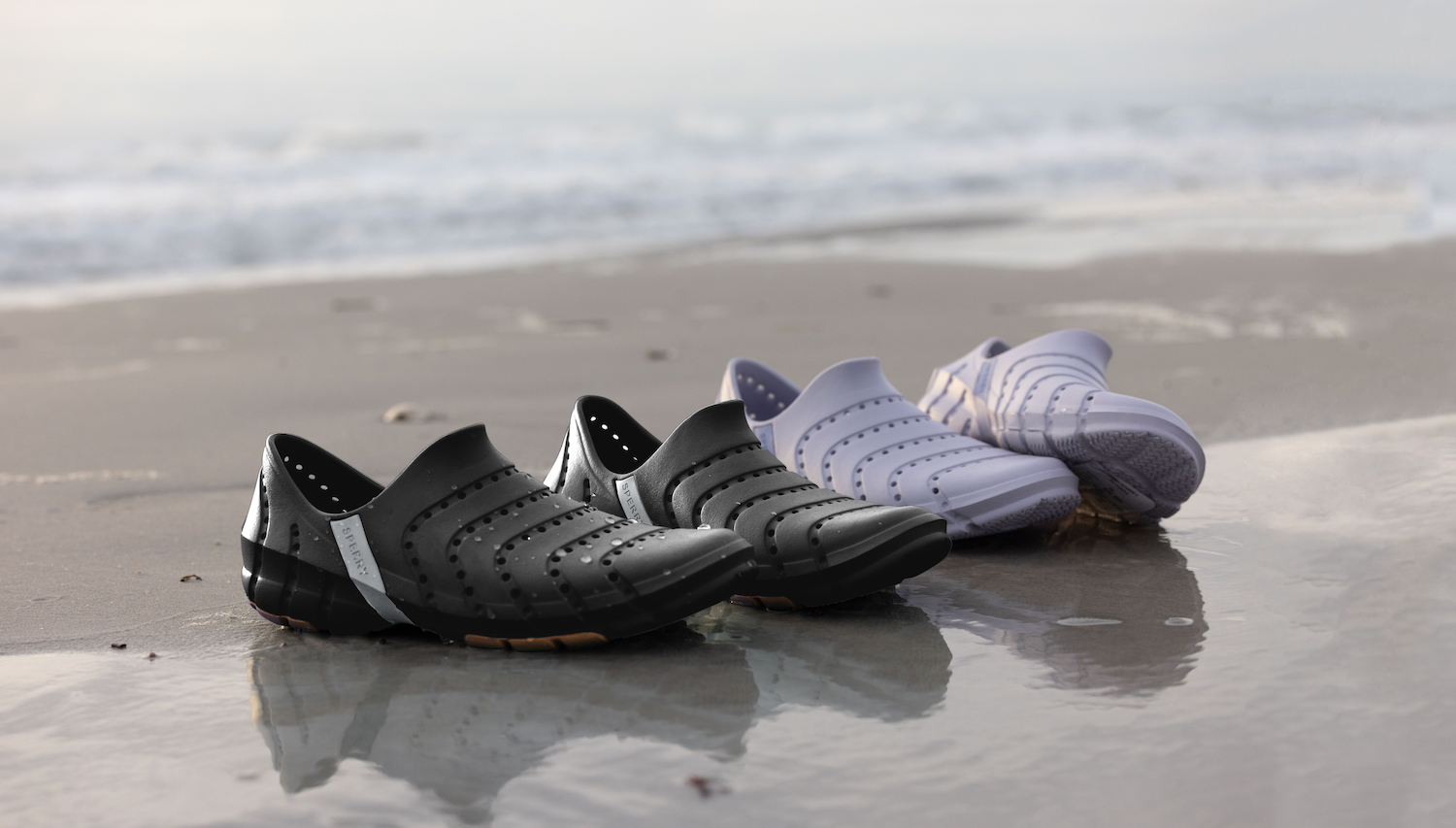
The Winward Float Slide in Men’s Taupe and Women’s Cream from Sperry

Sperry’s new summer shoes

SPERRY, a favorite among seafarers and preppy dressers alike, is inextricable from the classic boat shoe silhouette that had defined its legacy. This season, Sperry adds fresh colors to its Sperry Float line and a couple of all new styles just in time for summer. For an easy-on, easy off summer sandal, Sperry introduces the Winward Float slide. Made of super lightweight injected EVA foam, the Windward is cushioned in all the right places and is water-resistant to boot. There are three men’s and five women’s colors to choose from. Meanwhile, the Water Strider is a versatile yet comfy shoe. Its sleek yet sporty design is best paired with shorts. This lightweight slip-on for men and women hugs the foot during various summertime activities and like the Windward slide is made of hydrophobic EVA foam. Launched last year, the A/O Float Boat Shoe is a fun reimagining of the classic topsider but in molded EVA foam. With breathable “portholes” located on the sides, this shoe keeps feet feeling fresh. Its strategically placed “gills” ensure water stays out. This season, Sperry is adding a new men’s and two women’s colorways to the collection. Sperry’s Summer collection is available on Sperry.com.ph, and at TriNoMa, Glorietta, Bonifacio High Street, UP Town Center, SM Aura, SM North EDSA, SM Fairview, SM Mall of Asia, SM East Ortigas, Robinsons Manila, SM Southmall, SM Lipa, Robinsons Ilocos Norte, SM Baguio, Ayala Cebu, SM Cebu, SM Seaside Cebu, SM Bacolod, SM Iloilo, Centrio, SM Lanang Premier, SM Davao Ecoland, and Gaisano Mall Tagum.

Uniqlo to open new stores across PHL

JAPANESE global apparel retailer Uniqlo is ready to welcome the summer season with new and renovated stores across the Philippines, starting with an improved SM Fairview, Quezon City. In the second quarter of this year, Uniqlo will open stores in SM Cauayan in Isabela and Festive Walk in IloIlo. In addition, Uniqlo will relocate to a different area in SM Mall of Asia. “We are happy with the unending support we have received from Filipinos since we opened our first store in the Philippines. This encourages us to widen our network and continue opening new stores while improving existing ones, so more Filipinos can have access to high-quality and affordable clothing that suits their everyday needs,” says Geraldine Sia, Chief Operating Officer of Uniqlo Philippines.

Deoproce to the (skin) rescue

IN 2021, Deoproce Philippines was lauded for its breakthrough in two things: skincare innovation in championing green sea caviar or sea grapes (commonly known as lato) and its stereotype-smashing choice for a male skincare endorser, Korean hallyu star Song Kang (Navillera, Nevertheless, Forecasting Love and Weather).  The Deoproce Natural Green Caviar range launched last year championed green caviar, an unusual ingredient but chock full of Vitamins A and C, Amino, and Omega-3 fatty acids. Song Kang and Deoproce continue their collaboration with newest line, the Green Caviar + Skin Rescue range. Formulated with a blend of its signature green caviar, plus sugar kelp and sparkling water, the new line can help rescue users from skin woes such as enlarged pores, excessive oil, and rough, problematic skin. The Green Caviar + Skin Rescue range features Laminaria Saccharina Fermen or Sugar Kelp, known as European Kelp, which has antioxidant properties that help prevent skin aging and are also anti-inflammatory. Meanwhile, sparkling water gently removes dead skin cells and effectively controls the excretion of excess sebum. The range has five products: the Skin Rescue Peeling Gel is a skin-balancing formula that removes dead skin cells; the Skin Rescue Day and Night Moisturizer, a light and non-sticky cream for morning use but which can also be used at night to target excess sebum and clear skin of dirt and impurities while sleeping; the Cleansing Foam;  Toner; and Ampoule. Deoproce is available in Watsons and SM Beauty and online on Amorfia.

Repairing sun damage

TO help repair one’s skin from sun damage, a natural and organic health and wellness product and services provider, Santé, formulated the Soleil Marula Oil with Lavender and Santé Barley Extract. Using marula oil extracted from the nut of the marula tree’s fruit from South Africa, the product is a good source of antioxidants that help improve the skin’s condition. It is supposed to assist in stimulating the production of collagen in the skin and aid in minimizing its water loss, leading to youthful, rejuvenated, and moisturized skin. Along with lavender that delivers a soothing scent, it contains Santé Barley extract gathered from organic barley grass in New Zealand, which is supposed to have anti-inflammatory, anti-acne, and anti-aging properties. The product is a moisturizer, primer, and make-up remover in one bottle, and meant for morning and evening use by women and men who are over 25 years of age. To learn more about this and other  Santé products, visit its website at mysante.com.

Injured Nonoy’s La Salle debut will have to wait a little longer

MARK NONOY — UAAP

By John Bryan Ulanday

MARK Nonoy’s debut for host La Salle will have to wait a little longer after sitting out the Green Archers’ 71-66 win over University of the East (UE) to cap off University Athletic Association of the Philippines (UAAP) Season 84’s opener over the weekend at the Mall of Asia Arena.

One of the most anticipated players in UAAP’s return following his transfer from Santo Tomas, Mr. Nonoy is apparently nursing a hamstring injury according to coach Derrick Pumaren.

Mr. Pumaren said they are taking their sweet time to fully heal Mr. Nonoy’s injury before fielding him into play for a much-awaited backcourt partnership with Evan Nelle from San Beda.

“We’re making sure he’s 100% healthy. We’ll see in the next couple of days if he’ll be ready. We’re looking at the long term here, not just the short term,” said Mr. Pumaren in a triumphant La Salle return at the expense of his former squad UE.

Without Mr. Nonoy in the meantime, La Salle leaned on a scattered attack led by another new guy Schonny Winston with 22 points. Mainstay Justine Baltazar (12), Mr. Nelle (11) and Bright Nwankwo (10) threw in help.

Once cleared, Mr. Nonoy is expected to deliver big time as UAAP’s best rookie in Season 82 before its two-year break due to the pandemic behind averages of 11.1 points, 3.8 rebounds and 2.8 assists with the Tigers.

Save for the Negros Occidental product though, new and returning stars in the UAAP shone bright for their respective squads in the opener led by Gilas Pilipinas guards Dave Ildefonso and RJ Abarrientos.

Mr. Ildefonso, who returned to Ateneo from NU, sizzled for 19 markers in the Eagles’ 91-80 win over UP while Abarrientos drained 18 in his debut as FEU trumped Santo Tomas, 76-51.

Bulldogs rookie Janjan Felicilda also impressed with 20 in NU’s 71-69 escape act against Adamson, which was led by another freshman Didat Hanapi with 20 of his own.

Despite the losses of their squads, CJ Cansino (21), Malick Diouf (18), and Carl Tamayo (13) of UP together with Joshua Fontanilla (19) also had solid campaigns with their new teams.

As sanctions bite Russia, fertilizer shortage poses threat to world food supply

REUTERS

CHICAGO — Sky-high fertilizer prices have farmers worldwide scaling back its use and reducing the amount of land they’re planting, fallout from the Ukraine-Russia conflict that has some agricultural industry veterans warning of food shortages.

Western sanctions on Russia, a major exporter of potash, ammonia, urea and other soil nutrients, have disrupted shipments of those key inputs around the globe.

Fertilizer is key to keeping corn, soy, rice and wheat yields high. Growers are scrambling to adjust. The pivot can be seen in agricultural powerhouse Brazil, where some farmers are applying less fertilizer to their corn, and some federal legislators are pushing to open protected indigenous lands for the mining of potash.

In Zimbabwe and Kenya, small farmers are reverting to using manure to nourish their crops. In Canada, one canola farmer has already stockpiled fertilizer for the 2023 season in anticipation of even higher prices ahead.

Farmers elsewhere are making similar moves. Reuters spoke with 34 people on six continents, including grain producers, agriculture analysts, traders and farm groups. All expressed concern about the cost and availability of fertilizer.

In the US, fertilizer bills are expected to jump 12% this year, after rising 17% in 2021, according to American Farm Bureau Federation and US Department of Agriculture (USDA) data. Some growers are contemplating switching to crops that require fewer nutrients. Others plan to cultivate less acreage. Others say they’ll simply use less fertilizer, a strategy crop experts predict will hurt yields.

Production is most at risk in developing nations, whose farmers have fewer financial resources to weather the storm, said Tony Will, chief executive of Illinois-based CF Industries Holdings, a leading producer of nitrogen fertilizer.

“My concern at the moment is actually one of a food crisis on a global basis,” Will told Reuters.

On Saturday, Peru declared a state of emergency in its agriculture sector over fears of food insecurity. The decree said the nation’s planted areas have fallen 0.2% since August due to rising fertilizer prices, and that the volume of grain Peru imports for animal feed has likewise declined over cost concerns. The government is now drafting a plan to increase the country’s food supply.

Global fertilizer prices were already high prior to Russia’s Feb. 24 invasion of its neighbor, as record natural gas and coal prices forced some fertilizer makers to cut output in that energy-hungry sector. Ukraine’s cities have been besieged by missiles, tanks and troops in what Moscow has dubbed a “special operation” to demilitarize the country. Russia denies targeting civilians in the conflict.

Western nations responded with tough economic sanctions on Russia, while the US and the European Union imposed new sanctions on Belarusian President Alexander Lukashenko, who has provided support for Russia’s offensive.

Combined, Russia and Belarus accounted for more than 40% of global exports of potash last year, one of three critical nutrients used to boost crop yields, Dutch lender Rabobank said this month. Additionally, Russia accounted for about 22% of global exports of ammonia, 14% of the world’s urea exports and about 14% of monoammonium phosphate (MAP) — all key kinds of fertilizers.

Sanctions have disrupted sales of fertilizer and crops from Russia. Many Western banks and traders are steering clear of Russian supplies for fear of running afoul of the rapidly changing rules, while shipping firms are avoiding the Black Sea region due to safety concerns.

It all amounts to a double whammy for the global food supply. Russia and Ukraine are major grain producers. Together they account for about 30% of global wheat exports and 20% of corn exports.

Grain shipments through the Black Sea have already been disrupted. Stalled deliveries from those two countries have helped spur galloping global food inflation.

The World Bank said last week that a number of developing countries face near-term wheat supply shortages due to their high dependence on Ukrainian exports. But the fertilizer crisis is in some respects more worrying because it could inhibit food production in the rest of the world that could help take up the slack, said Maximo Torero, chief economist for the UN Food and Agriculture Organization.

“If we don’t resolve the problem of fertilizer, and trade of fertilizers doesn’t continue, then we’ll have a very serious problem of supply next year,” Torero told Reuters.

Brazil, the world’s biggest soybean exporter, relies heavily on imported fertilizers such as potash, which accounted for 38% of the crop nutrients it used last year. Russia and Belarus were the source of half of those shipments.

Prior to the Ukraine-Russia conflict, Brazilian farmers were already reducing corn plantings due to rising fertilizer prices. Soybean cultivation will likely be impacted as well, with growers expanding more slowly than in previous years, according to Agroconsult, a Brazilian agriculture consulting firm.

In the west-central state of Mato Grosso, farmer Cayron Giacomelli told Reuters he has already reduced fertilizer use on his current corn crop. He said he’ll do the same when he plants soybeans later this year, a move he reckons might shrink his harvest by at least 8%.

Giacomelli said fertilizer is hard to get and that some dealers won’t finalize sales until cargo ships dock in Brazil. He’s still kicking himself for not closing a purchase he was negotiating just before Russia invaded Ukraine. “I got distracted and now am paying more,” Giacomelli said.

Lawmakers from Brazilian farm states, meanwhile, are pushing for legislation that would open indigenous lands in the Amazon to potash mining. That measure is opposed by members of the local Mura tribe, who say mining would despoil the natural habitat upon which they depend. The bill is still making its way through the nation’s congress.

In Zimbabwe, scarce and pricy imports have forced corn growers such as Boniface Mutize to make their own fertilizer. “We mix cow dung or chicken waste with zinc,” he said. It’s the same in rural Kenya. Farmer Mary Kamau said she, too, has slashed purchases of commercial fertilizer and is using manure to nourish the coffee and avocados she grows on 12 acres in Murang’a County. She worries about the consequences for her family.

“If I don’t get a good harvest, I don’t get good prices. And that will affect me for the next two years — it’s not just this season,” Kamau said.

In the US, fifth-generation New Mexico farmer Mike Berry has similar worries. He recently paid $680 a ton for liquid nitrogen to fertilize his corn crop, an “exorbitant” price he said was 232% above last year’s price.

Berry said he plans to cut his spring plantings of corn for livestock feed to about 300 acres from his usual 400 to 600 acres. Berry said he will also reduce applications of liquid nitrogen by about 30%, which could drop his yields by 25%.

Bottom line: “We’re going to produce less,” he said. That might seem short-sighted considering commodity prices have jumped sharply in recent weeks. But the cost of growing crops is outpacing potential revenue for many farmers.

“Planting decisions are increasingly being made not on market fundamentals but rather on the cost of production driven by the price and supply of fertilizer,” dozens of US lawmakers wrote in a March 17 letter to the US International Trade Commission. They were seeking relief from duties on fertilizer imports from Morocco and Trinidad and Tobago.

US farmer Don Batie described the stressful process of securing enough fertilizer for this year’s planting. “It’s nuts,” said Batie, who grows corn and soybeans on 1,500 acres in Lexington, Nebraska. “By the time they get a price and they quote it to you, the price changes.”

Asia is struggling, too. India, which imports fertilizer for its sprawling agriculture sector, is increasingly turning to Canada and Israel to replace its Russian supplies. Thailand, meanwhile, is facing pressure on its signature rice crop. Russia and Belarus accounted for about 12% of its fertilizer imports last year, Thai government data show.

But buying from elsewhere could prove tricky, in part because domestic price controls on fertilizer are squeezing Thai importers as global market prices explode, according to Plengsakdi Prakaspesat, president of the Thai Fertilizer and Agricultural Supplies Association.

“If you’re a merchant, and you’re absolutely going to lose money, will you still import more stuff?” Plengsakdi said. China last year imposed fertilizer export curbs to protect its own farmers as global prices soared due to strong demand and high energy prices.

Beijing was expected to ease those restrictions this year, potentially boosting world supply, said Gavin Ju, principal fertilizer analyst in the Shanghai office of commodities consultancy CRU.

But he said that’s less likely now with the global market in chaos. Concerns over rising inflation and a protracted Ukraine war have some farmers planning well ahead.

In Manitoba, Canada, corn and canola farmer Bert Peeter recently agreed to spend more than $500,000 Canadian dollars buying 80% of the fertilizer he’ll need — for 2023. Although prices are soaring, he figured things could still get worse.

This “might not be over after one year,” Peeter said. — Reuters

New Changan CS35 Plus heats up war in sub-P1M crossover segment

PHOTO FROM CHANGAN PHILIPPINES

CHANGAN PHILIPPINES recently grew its local portfolio with the launch of the CS35 Plus. The five-seater subcompact crossover flaunts aggressive design and a healthy mix of technological features promising heightened value for money.

It bears a strong front fascia with a grille design inspired by obsidian rock formation, and a split headlamp layout of its front-positioned LED DRLs and low-positioned LED automatic headlamps. For a sporty touch, a racing line wraps around the front headlamps, running along the muscular side body and seamlessly connecting to the new LED taillamps on whale-tail rear design. Changan said that the CS35 Plus boasts aircraft-inspired lighting.

An LED high mount stop lamp increases visibility on the road, while a shark fin antenna is an edgy accessory that contributes an aerodynamic design. The vehicle has functioning dual stainless steel exhaust pipes for a sportier allure, and rides on 18-inch two-tone alloy wheels with a square-wheel arch design.

Drivers can start the engine and air-conditioning system before entering the vehicle through Engine Remote Start. For safety, if the vehicle isn’t boarded and driven within 10 minutes, the engine will automatically shut off.

Changan said that the CS35 Plus cabin interior is ergonomically refined and features controls within arm’s reach, along with “comfortable head and legroom for driver and passenger.” A multi-functional D-shaped steering wheel has an integrated vehicle control layout for cruise control and the digital instrument display. The vehicle’s auto climate control system features a PM 0.1 filter. A rear A/C vent for the Hype and Luxe variants extend cooling comfort for passengers at the back.

At the center of its dashboard is a large 10-inch touchscreen with Bluetooth connectivity for personal music, smartphone mirroring for calls, navigation, video playback, and more. There is also a built-in wireless charging pad for cordless compatible smartphone charging, plus two USB ports. Dual-tone leather-wrapped seats have body-supporting foam. The new CS35 Plus is said to showcase Deep Sea Silence Technology that “effectively isolates and absorbs exterior noise, thanks to Changan’s application of 50 noise dampeners in 20 strategic cabin areas alongside the thickened glass on the front windshield and side windows.” A panoramic sunroof is available on Hype and Luxe trims.

Its 403 liters of cargo space can be increased to 950 liters with the second-row seats’ 4:6 configuration. The Luxe trim receives a powered tailgate, which can be operated using the key fob or simply standing behind the vehicle with that in hand for about four seconds.

Powering the CS35 Plus is a turbocharged, 1.4-liter gasoline direct injection engine delivering 160 horsepower and 260Nm. It is paired with a seven-speed wet dual clutch transmission system for “effortless gear changes with quicker reaction and delivers ample acceleration on demand.” The driver may choose from three modes: Sport for more stable control during high speed, Comfortable for lighter control while parking or navigating through traffic, and Standard for everyday city driving on normal road conditions.

The new CS35 Plus comes with the Safe-tech System in the Luxe and Hype variants — a comprehensive suite of safety features including adaptive cruise control, autonomous emergency braking, and front collision warning. Additional features are a panoramic camera system that affords 2D or 3D visibility with a 360-degree view of surroundings for easier parking or maneuvering in tight spaces.

In the event of a collision, the new CS35 Plus (in the Luxe and Hype trims) has an advanced six air bag system comprised of front and side driver, and passenger seat air bags, and front-to-rear side air curtains to help reduce injury to occupants. In addition, the cabin is engineered with Changan’s ultra-high strength body frame that maintains rigidity while mitigating the impact force to its crumple zone areas to create a safe cabin for occupants. Other safety amenities are a smart window system with anti-pinch function on all four windows, tire pressure monitoring system, Isofix for child safety seats, and an auto close feature that closes all open windows and sunroof if left open upon locking the vehicle.

The CS35 Plus gets Changan’s Vital 5 Plus program: a five-year/150,000-km warranty, Changan Pacesetter roadside assistance and towing service, Changan Fastlane’s 60-minute service guarantee with free PMS Labor for the first year or first 20,000 km (whichever comes first), Changan Veloservice for quicker online service appointments, and quick and efficient assistance from Changan’s AI Chatbot CAIA.

The new CS35 Plus variants have introductory pricing as follows: Lite (P898,000), Hype (P969,000), and Luxe (P999,000). It comes in Wunderlust White, Timber Wolf Gray, and Draco Red. For more information, visit www.changanphil.com or chat with CAIA through ChanganPhil on Facebook.

Shares to remain volatile on rising inflation risks

BW FILE PHOTO

STOCKS are seen to remain volatile this week amid the Russia-Ukraine crisis, which will continue to affect commodity prices and cause inflation pressures.

The benchmark Philippine Stock Exchange index (PSEi) went up by 42.23 points or 0.59% to close at 7,124.84 on Friday, while the broader all shares gained by 15.24 points or 0.40% to 3,774,59.

Week on week, the PSEi gained 207.21 points from its finish of 7,007.63 on March 18.

“Philippine shares continued to claw their way up as jobless claims dropped to over a decade low of 187,000, pointing that the economic recovery of the US could keep growing through headwinds like the Ukraine-Russia war and higher interest rates,” Regina Capital Development Corp. Head of Sales Luis A. Limlingan said in a Viber message.

The US Labor Department said initial jobless claims fell to 187,000 from 28,000, the lowest level since 1969, pointing to rapidly diminishing labor market slack that will keep boosting wage inflation, Reuters reported.

Claims have been declining in part as coronavirus disease 2019 (COVID-19) restrictions across the country have been lifted amid a massive drop in coronavirus cases. They plunged from a record high of 6.149 million in early April 2020.

“Back home, the Bangko Sentral ng Pilipinas (BSP) kept the key policy rate steady at a record low of 2% for an eleventh consecutive meeting yesterday, as expected. As per BSP Chief Benjamin E. Diokno, the central bank remains vigilant over possible implications of the dragging Ukraine war on the local economy. He also noted that the regulatory body is ready to take action on potential second-round effects from elevated pressures to inflation,” Mr. Limlingan added.

The central bank kept benchmark interest rates steady for an 11th straight meeting on Thursday, even as it warned that its inflation target might be breached this year amid surging global oil prices due to Russia’s continued invasion of Ukraine.

For this week, the market will continue to monitor the ongoing war between Russia and Ukraine and its impact on commodity prices.

“The market will continue to be volatile dependent upon the Russia-Ukraine war status, Global inflation will continue to dominate the market movements due to the supply constraints of the war,” Diversified Securities, Inc. Equity Trader Aniceto K. Pangan said in a text message.

Rockets struck the western Ukrainian city of Lviv on Saturday, signaling a potential new front in Moscow’s invasion as US President Joseph R. Biden, Jr. decried Russian President Vladimir Putin’s grip on power and sought to steel Europe for a long fight ahead, Reuters reported.

After more than four weeks of fighting, Russia has failed to seize any major Ukrainian city and the conflict has killed thousands of people, sent nearly 3.8 million abroad and driven more than half of Ukraine’s children from their homes, according to the United Nations.

For this week, Mr. Pangan placed the PSEi’s immediate support at 6,950 and resistance at 7,450. — L.M.J.C. Jocson with Reuters

Peso may drop amid rising oil prices, hike bets

PIXABAY

THE PESO may weaken anew this week as oil prices continued to increase due to the Russia-Ukraine war and amid hawkish signals from the US Federal Reserve.

The local unit closed at P52.15 per dollar on Friday, stronger by 18 centavos from its P52.33 finish on Thursday, based on data from the Bankers Association of the Philippines.

It also appreciated by 18.5 centavos from its P52.335-per-dollar close a week earlier.

The peso opened Friday’s session at P52.305 a dollar, which was also its worst showing. Meanwhile, its intraday best was at P52.12.

Dollars traded increased to $1.105 billion on Friday from $960.95 million on Thursday.

The peso appreciated on Friday following upbeat US jobless claims data, Rizal Commercial Banking Corp. Chief Economist Michael L. Ricafort said in a Viber message.

Data released by the US Labor department on Thursday showed initial claims for unemployment benefits declined by 28,000 to a seasonally adjusted 187,000 for the week ended March 19, which is the lowest level since September 1969, Reuters reported.

Meanwhile, UnionBank of the Philippines, Inc. Chief Economist Ruben Carlo O. Asuncion said the market also factored in the latest policy decision of the Bangko Sentral ng Pilipinas (BSP).

The BSP Monetary Board kept rates steady on Thursday, as expected by the market, although it now expects faster inflation as the Russia-Ukraine war continues to cause the surge in oil and commodity prices.

The central bank now expects inflation to breach their 2-4% target at 4.3% this year from 3.7%, previously. Inflation next year is estimated to rise by 3.6% from 3.3%

For this week, Mr. Asuncion said market participants will consider the hike in global oil prices and Fed’s hawkish signals.

Brent crude and West Texas Intermediate crude prices rose by 11.5% and 8.8% from a week earlier. Oil prices increased by more than 1% on Friday after a missile attack on an oil distribution site in Saudi Arabia.

US Fed Chairman Jerome H. Powell last week said the US central bank should “expeditiously” raise rates to prevent high inflation from becoming entrenched. Analysts said the strong jobs data could back this stance.

Meanwhile, Mr. Ricafort said the peso-dollar movement may also reflect market sentiment on manufacturing activity and the announcement of the pandemic measures for next month.

The March Philippine purchasing managers index will be reported by IHS Markit on Friday, April 1.

Meanwhile, some stakeholders have floated the idea of further easing pandemic restrictions to Alert Level 0, although the Department of Health said current pandemic restrictions may likely be kept until the end of President Rodrigo R. Duterte’s term.    

For this week, Mr. Asuncion gave a forecast range of P52.25 to P52.50 per dollar, while Mr. Ricafort expects the local unit to move within P52 to P52.40. — Luz Wendy T. Noble with Reuters

Which areas in the Philippines are vote-rich?

Which areas in the Philippines are vote-rich?

How PSEi member stocks performed — March 25, 2022

Here’s a quick glance at how PSEi stocks fared on Friday, March 25, 2022.


PHL reports China ship breach of sea regulation

PHOTO FROM PHILIPPINE COAST GUARD

By Kyle Aristophere T. Atienza, Reporter

A PHILIPPINE government vessel on Sunday reported a recent close distance maneuvering incident involving a China Coast Guard (CCG) ship in Scarborough Shoal.

The Philippine Coast Guard said it was the fourth time within a 10-month period since May last year that CCG ships sailed too close to Philippine vessels, a “clear violation of the 1972 International Regulations for Preventing Collisions at Sea (COLREGS).”

“The behavior of the involved CCG vessels increased the risk of collision with four of our capital ships,” said PCG commandant, Artemio M. Abu in a statement on Sunday.

“Hence, we immediately coordinated with the National Task Force for the West Philippine Sea (NTF-WPS) and the Department of Foreign Affairs (DFA) to address this issue through rules-based and peaceful approaches,” he said.

The most recent incident was on March 2 where a “CCG vessel with bow number 3305 conducted a close distance maneuvering of approximately 21 yards towards BRP Malabrigo (MRRV-4402) while the said PCG vessel was sailing at the vicinity waters off” Scarborough Shoal, which the Philippines calls  Bajo de Masinloc.

The first incident, which involved a vessel of the Bureau of Fisheries and Aquatic Resources manned by PCG personnel, was reported in May 2021.

The second and third incidents were reported by two PCG vessels during a maritime capability enhancement exercise on June 1 to 2 last year.

“We are fully aware of dangerous situations at sea, but these will not stop our deployment of assets and personnel in Bajo de Masinloc, Philippine Rise, and other parts of the country’s exclusive economic zones (EEZ),” Mr. Abu said.

SEA DISPUTE, OTHER POLICIES
President Rodrigo R. Duterte’s handling of the country’s territorial dispute with China topped the policies that Filipino voters want to change once a new president is elected after the May 9 elections, according to a survey conducted by a public opinion research firm last year.   

WR Numero Research, citing its 2021 survey, said in a statement sent to BusinessWorld that 45.13% of Filipino voters want the new administration to “deviate from President Duterte’s soft China approach in asserting the country’s claims” over the West Philippine Sea.

Mr. Duterte has been accused of gambling Philippine territories to appease China, from which he got about P1.2 trillion in investment and loan pledges to boost big-ticket infrastructure projects. But critics said few of these have materialized.

The survey also revealed that Filipino voters want changes in how the government handled ABS-CBN Corp.’s franchise renewal as well as in the implementation of the Tax Reform for Acceleration and Inclusion (TRAIN) law, which was cited by 44.27% and 24.77% of the respondents, respectively.

It also showed that a portion or 12.49% of the electorate wants a change in how the government runs its campaign against the illegal drug trade, which has killed thousands of suspects.

Filipino voters also want a change in the “Build, Build, Build” (BBB) program (7.18%), as well as in granting the free tuition fee in state universities (4.93%), WRN said.

“While some respondents want change in the massive infrastructure program, the BBB also emerged as the top choice that voters want the new administration to continue,” it said.

The research firm said around 66% of the respondents preferred the administration’s infrastructure program, followed closely by the free higher education program (64.6%), and the drug war (60.83%).

It said only 16.55% preferred the TRAIN law, while 15.75% and 11.87% want the same handling of the South China Sea dispute and the same approach to ABS-CBN franchise, respectively.

WRN said it used several levels of statistical intervention in its digital surveys to arrive at accurate results.

“The firm conducted a digital survey of 1,200 unique respondents with a 95% confidence interval from a high-quality online panel that is representative of all classes.”

Marcos heirs refuse to pay tax, assert case still pending

PHILSTAR

THE HEIRS of the late dictator Ferdinand E. Marcos maintained at the weekend their refusal to settle the family’s unpaid estate tax that has ballooned to more than P200 billion, asserting that the tax liability case is still pending in court.

“Our rivals are misdirecting everyone by claiming that the case has attained finality when the truth of the matter is, it is still pending in court,” Victor D. Rodriguez, spokesperson of Mr. Marcos’ only son Ferdinand “Bongbong” who is running for president in the May elections, said in a statement.

The Marcos family’s P23-billion estate tax liability has yet to be settled, the agency tasked to recover the family’s ill-gotten wealth said earlier this month.

The amount had ballooned to P203.8 billion due to interests and penalties after the Marcoses refused to pay it, retired Supreme Court Justice Antonio T. Carpio said in a Sept. 30, 2021 column for the Philippine Daily Inquirer.

He said that a 1997 High Court ruling that affirmed a decision by the Court of Appeals on the Marcos family’s estate tax liability is already final and executory.

The country’s tax agency last week confirmed that it sent a written demand to the Marcos family to settle their tax liabilities.

Mr. Rodriguez also claimed that the ownership of the properties in litigation has yet to be settled. “That being the case, the fair and just tax base to be used in computing the estate tax cannot yet be established with certainty.”

Former Bureau of Internal Revenue (BIR) chief Kim S. Jacinto-Henares said last week that the Marcoses should have asked the High Court to reconsider the amount of their estate tax liability when it released its decision.

“They had 30 days I believe to have appealed it,” she told ABS-CBN’s Teleradyo. “If they have not, it’s now final and executory.”

Critics, including Mr. Carpio, have been calling on the BIR to file a criminal case against the Marcoses for refusing to pay their estate tax liability.

Ms. Henares, who was BIR commissioner from 2010 to 2016, said that it would be hard to pursue a criminal case against Mr. Marcos if he wins in May because of presidential immunity.

She said that the BIR under her leadership did not file a criminal case because they prioritized collecting properties that the family illegally acquired.

“During my time, we had been identifying and collecting properties,” Ms. Henares said, noting that government coffers were depleted when the late Benigno S.C. Aquino III assumed the presidency.

“I most probably would not have filed it also because if we did, we would not be able to do anything other than answering Marcos, which is not our main objective” she said. — Kyle Aristophere T. Atienza

Task force must  pursue conviction of vote buyers, sellers

PHILSTAR

By John Victor D. Ordoñez  

THE COMMISSION on Elections(Comelec) planned task force against vote-buying should resolve to jail vote buyers and sellers, political analysts said at the weekend.  

“Vote-buying may be almost impossible to stop, but could be kept in check if Comelec will resolve to really jail violators,” Gerard V. Eusebio, a political science professor at the De La Salle University, said in a Facebook Messenger chat.  

Otherwise, he said, “That inter-agency task force is just a knee-jerk reaction to create the impression that the Comelec really means business.”  

Election Commissioner George M. Garcia said last week that the poll body intends to form a team composed of representatives from law enforcement agencies and the Department of the Interior and Local Government.  

He said that the task force is expected to respond to incidents of vote-buying based on either formal requests or motu proprio, meaning upon its own initiative.  

Comelec Spokesperson James B. Jimenez said in February that under the election body’s rules, vote buying and selling incidents can only be investigated upon the filing of a complaint. These incidents may also be reported to Comelec’s social media and email accounts. 

“The number one problem of vote-buying has been in the gathering of evidence including the identifying of potential witnesses who would be committed to providing affidavits and to testify in a court of what happened,” Carlo Africa, a policy specialist for election watchdog Legal Network for Truthful Elections (LENTE), said in a Facebook Messenger chat.   

“So, part of the solution would be a more robust witness protection program for vote-buying whistleblowers, and reminding people who sold their vote that they can be exempted from criminal liability if they cooperate with the case filed against the vote buyers,he said.  

Election watchdog Kontra Daya earlier asked Comelec to probe a possible vote-buying violation at a rally for the Marcos-Duterte tandem in Cavite City as the incumbent mayor gave out money to people from the audience who were called on stage before the candidates arrived.  

Mr. Garcia earlier urged the public to file formal complaints on these alleged vote-buying incidents so they could study evidence presented and require defendants to respond to the allegations. 

“We want a formal investigation because definitely, we cannot file cases based on news reports,” he said last week. “Cases with concrete evidence are the ones that can stand in court.” 

Mr. Africa noted that Comelec could also go after vote-buyers through buy-bust operations. 

He added that digital platforms such as e-wallets should be studied to understand how perpetrators may use these for the election offense. 

“Part of the information we would hope to get would be the frequency of use, the range of the amounts disbursed, and the number of accounts being used,” he said. “Tracking all of this data would allow regulators to potentially identify the fraudulent use of e-wallets for the purpose of vote-buying.”  

Under the Omnibus Election Code, vote-buying is defined as “Any person who gives, offers or promises money or anything of value, in order to induce anyone or the public, in general, to vote for or against any candidate.”  

“They need to work with the courts and other agencies that form part of the justice system in making sure that complainants and witnesses are protected and the investigation and decisions are fair but timely or speedy,” said Maria Ela L. Atienza, a political science professor from the University of the Philippines, in a Viber message.   

“People want to see perpetrators be punished and be a warning for others that Comelec is a trustworthy institution that acts swiftly and fairly.”  

GUN BAN
Meanwhile, Comelec will review its regulations on applying for exemptions for the gun ban imposed during the election period.  

“We will push for the review and recalibration of the gun ban exemption and security application guidelines,” Mr. Garcia said in a Viber message on Sunday.  

“We have to make it easier and expeditious thereby removing hindrances and tedious administrative requirements.” 

The commissioner noted that the review is especially important for members of the judiciary, prosecutorial service, government personnel, and Comelec field officers who face threats while performing their duties.  

Under a resolution dated Nov. 10 last year, only regular members of the Philippine National Police, the Armed Forces of the Philippines, and other law enforcement agencies deputized by Comelec may be authorized to carry firearms during the election period.  

“Likewise, we will decentralize the filing and processing of the application to our regional offices in view of the improved pandemic situation,” he added.