Home Blog Page 6064

PHL upsets Carlsen-less  Norway, finishes 32nd place

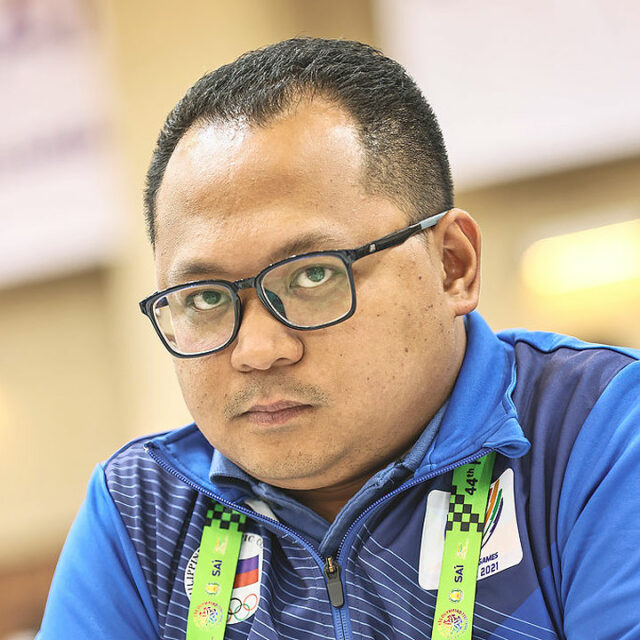
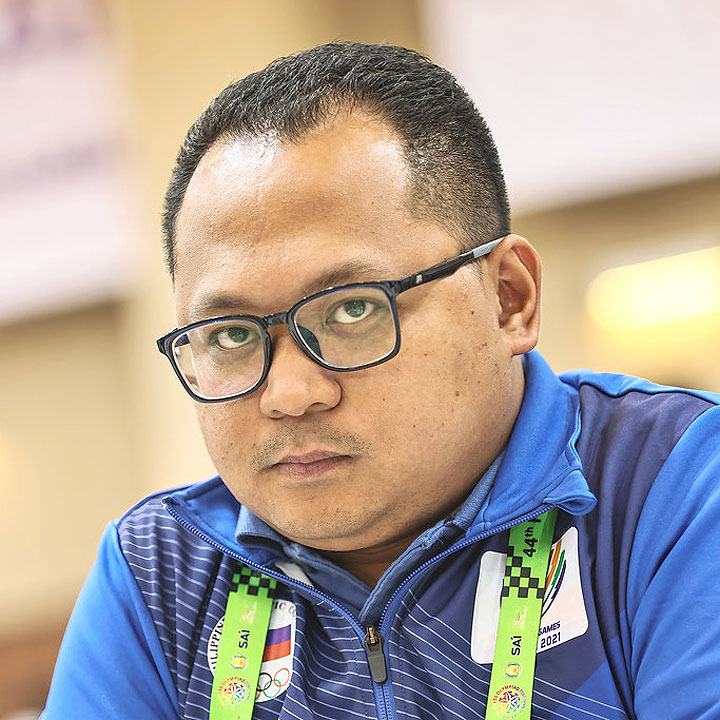
GM MARK PARAGUA — FIDE

GM Paragua sets his sights at SEAG gold next year

GM MARK PARAGUA — FIDE

AFTER spearheading the country’s solid effort in the 44th World Chess Olympiad in Chennai, India, Grandmaster (GM) Mark Paragua has set his sights at capturing nothing less than a gold medal in next year’s Southeast Asian Games (SEAG) in Phnom Penh, Cambodia.

And he is not the only GM interested to see action in Cambodia as Julio Catalino Sadorra, Oliver Barbosa and Banjo Barcenilla may answer the call if given the chance.

“If Inno and Oli are in the team, we’ll have better chances to win the gold especially in the team event,” said Mr. Paragua referring to fellow United States-based GMs Messrs. Sadorra and Barbosa.

“Hopefully, if given a chance again, I will play in the SEA Games,” said Mr. Barcenilla.

Messrs. Paragua and Barcenilla were fresh from helping steer the team to a 32nd-placed finish in Chennai that they capped with a shock 2.5-1.5 win over a third seed, Magnus Carlsen-less Norway in the final round.

Part of that GM Eugene Torre-squad were GMs John Paul Gomez and Darwin Laylo and International Master (IM) Paulo Bersamina, who stunned GM Frode Olav Olsen Urkedal on fourth board to seal the Filipinos upset win over the fancied Norwegians, who shot themselves on the foot by resting Mr. Carlsen — the reigning world classical champions.

While all five members of the team earned FIDE rating points, it was Mr. Paragua who gained the most after earning 21.2 points by scoring 6.5 points out of 10 that he highlighted by his magnificent triumph over World Cup king and World No. 18 Jan-Krzysztof Duda of Poland.

The Filipinas, for their part, failed on their bid of registering their best effort in the Olympiad after faltering against the 14th-seeded Cubans, 2.5-1.5.

The defeat was sealed by WIM Jan Jodilyn Fronda’s defeat on board two that came after WGM Janelle Mae Frayna and WIMs Marie Antoinette San Diego and Kylen Joy Mordido all drew their games on boards one, three and four, respectively.

They finished at 37th with 13 points, which surpassed their embarrassing 67th-place finish in Batumi.

Another consolation was Mses. Frayna’s and Mordido’s individual feats as the two finished in the top 20 on boards one and five, respectively.

With a potential all-GM squad in the SEA Games, expect the Filipinos to finally strike gold after failing to snare one in last year’s Hanoi Games where they settled for a pair of silver and three bronzes. — Joey Villar

Adalem staves off Builders, 90-87, in KO quarter match to face EcoOil in semis

ADALEM CONSTRUCTION-ST. CLARE — PBA MEDIA

Games Tomorrow
(Smart Araneta Coliseum)
9 a.m. – Marinerong Pilipino vs. Apex Fuel-San Sebastian
11 a.m. – EcoOil-La Salle vs. Adalem Construction-St. Clare

ADALEM Construction-St. Clare marched on to the semifinals of the 2022 Philippine Basketball Association (PBA) D-League Aspirants’ Cup, staving off a gritty Builders Warehouse-University of Santo Tomas (UST) challenge with a slim 90-87 win in the knockout (KO) quarterfinals duel on Wednesday at the Smart Araneta Coliseum.

NAASCU MVP Johnsherick Estrada turned in 20 markers, five rebounds and three assists as the third-seeded and twice-to-beat Saints got the job done in the last try after a tough loss in Game 1.

Jolo Sumagaysay added 14 while Joshua Fontanilla, John Rojas, and Gab Gamboa chipped in 12 for St. Clare, which arranged best-of-three semis duel with No. 2 EcoOil-La Salle.

“Hats off to UST. I know they will play hard and they know how to win already. Kami naman, we just told our players that we have to perform this time,” said coach Jinino Manansala.

Motivated by a 98-93 loss in Game 1, the Saints took control of the match and erected what appeared to be a deciding 82-70 cushion in the last four minutes.

But as they’ve shown resiliency all-season long marked by a four-game winning spree until the quarters, the Growling Tigers fought back and struck within 90-87 in the last 17 seconds behind incoming rookie Kean Baclaan’s layup.

Santo Tomas then forced a five-second inbound violation for a chance to send it to extra time, but Mr. Baclaan muffed his long heave at the buzzer.

Mr. Baclaan, who dropped 35 points in Game 1 stunner, had 17 while Nic Cabañero unloaded 19 in a losing cause for Santo Tomas that exited in style after making the playoffs from a 0-4 start.

The Scores:

Adalem-St. Clare 90 — Estrada 20, Sumagaysay 14, Fontanilla 12, Gamboa 12, Rojas 12, Ndong 10, Lopez 6, Sablan 4, Estacio 0.

Builders Warehouse-UST 87 — Cabanero 19, Baclaan 17, Concepcion 15, M. Pangilinan 13, Santos 12, Mantua 5, Manalang 4, Manaytay 2, Crisostomo 0, Herrera 0.

Quarterscores: 24-14, 37-35, 59-57, 90-87. — John Bryan Ulanday

MPL Philippines Season 10 goes live on Aug. 12

AFTER two years of hosting previous MPL-PH seasons online, the Regular Season for MPL Philippines officially returns live, for its tenth iteration. Starting Aug. 12, the much-anticipated tournaments of one of the strongest leagues in the world will be held in ICite Bldg. Auditorium, Mercury Avenue, Bagumbayan, Quezon City.

Those who wish to watch the tournament and see their idols live can head to the venue, register, and submit a negative antigen test result taken within the day. If not available, they can purchase antigen test kits in the venue for P150. Vaccination cards or proof of coronavirus disease 2019 (COVID-19) certification is required. Attendees are encouraged to line up at the registration area at least 30 minutes before the start of the show. Tickets will be distributed on a first-come, first-served basis.

On Fridays and Sundays, a total of 90 lucky fans can watch the tournaments on-ground. On Saturdays, 70 persons per day can be accommodated. MPL-PH viewers are also encouraged to check out the league’s official Facebook Group and Twitter for live updates on venue and crowd management.

This season, McDonald’s Philippines joins the pool of sponsors to support the initiatives of MPL Philippines. Through their McDelivery PH app, McDonald’s Philippines will make tournament streaming more exciting as the community can order their favorite food items hassle-free. The fastfood chain giant will also launch some activities for MPL-PH audience.

“McDonald’s Philippines is proud to continue supporting Mobile Legends: Bang Bang Professional League (MPL) Philippines for Season 10. With this year’s LAKAS NA’10 TO theme, we’re excited to partner with MOONTON Games in unifying and immortalizing greatness within the esports community. Through our McDelivery PH App, we will continue to power up the community as they pursue their great passion for gaming through delicious food accessible anytime, anywhere. All they need to do is to tap to order and we’ll take care of the rest,” said Oliver Rabatan, McDonald’s Philippines AVP for Marketing and Channels.

Serena Williams to retire from playing after US Open

NEW YORK — American great Serena Williams said on Tuesday she was “evolving away from tennis” and planned to retire from the sport she dominated with 23 Grand Slam titles following the US Open tournament, which begins later this month.

On Monday, Williams played only her second singles match since she returned to action at Wimbledon in June after a year-long absence from competition, beating Spain’s Nuria Parrizas Diaz to reach the second round of the Toronto Open.

But the 40-year-old said after the match that she could see the light at the end of the tennis tunnel in her career.

“I have never liked the word retirement,” Williams wrote in a Vogue article.

“Maybe the best word to describe what I’m up to is evolution. I’m here to tell you that I’m evolving away from tennis, toward other things that are important to me.

“A few years ago, I quietly started Serena Ventures, a venture capital firm. Soon after that, I started a family. I want to grow that family.”

Williams won her last Grand Slam in 2017 and has been chasing an elusive 24th crown that would draw her level with Australian Margaret Court who holds the record.

The American came tantalizingly close to achieving that feat, featuring in four major finals since giving birth to daughter Olympia in 2017.

“There are people who say I’m not the GOAT (greatest of all time) because I didn’t pass Court’s record, which she achieved before the ‘Open era’ that began in 1968,” said former world number one Williams, who sought the advice of her friend Tiger Woods before picking up a racket again this spring.

Williams later said in an Instagram post that it was time to move in a “different direction.”

“The countdown has begun. I have to focus on being a mom, my spiritual goals and finally discovering a different, but just exciting Serena.”

For nearly a decade she has backed early stage companies, including MasterClass, one of 16 unicorns — companies whose market value exceeds $1 billion — to receive funding from Serena Ventures. — Reuters

NLEX, Blackwater will play friendship game with French team ASVEL Lyon-Villeurbanne

LOCAL ball clubs Blackwater and NLEX will have their mettle tested against decorated French team ASVEL Lyon-Villeurbanne in a series of goodwill games as part of the 75th year anniversary of friendship and diplomatic ties between the Philippines and France.

The Road Warriors and the Bossing, fresh from a quarterfinals stint in the ongoing Philippine Basketball Association (PBA) Philippine Cup, will have one game each against the French squad with Greater China’s Bay Area Dragons serving as the other guest team.

The friendship games set on Aug. 31 to Sept. 4 at the Smart-Araneta Coliseum was an initiative of Michèle Boccoz, French Ambassador to the Philippines, in a bid to foster stronger bilateral relations with the Philippines through sports this time.

“There has been a long cooperation between the Philippines and France but there’s a lot more we can do. Having sports as part of the anniversary is something we look forward to for another 75 years,” she said in a presser hosted by Blackwater on Wednesday.

NLEX and Blackwater also shared the excitement when they host Asvel, owned by NBA legend Tony Parker and the 21-time champion of French League, on Sept. 2 and 4, respectively.

In fact, the Bossing and the Road Warriors are pulling out all the stops to bring their imports for the PBA Commissioner’s Cup early to give Asvel a stronger competition.

“It will solidify the friendship between the Philippines and France. We have the whole week of September to entertain our Filipino fans with world-class basketball. I hope it inspires our young Filipino players,” said Sy.

“We’re really excited. I’m a fan of European basketball and Tony Parker so it’s our honor to be playing them. It’s also a learning opportunity for us as we play a world-class team,” added NLEX general manager and head coach Yeng Guiao.

Bay Area, for its part, will play ASVEL on Aug. 31 as part of its own buildup as a guest team in the PBA Commissioner’s Cup next month and as one of pioneering clubs in East Asia Super League (EASL) in October. — John Bryan Ulanday

NFL owners OK sale of Broncos to Walmart heir Rob Walton

NATIONAL Football League (NFL) owners unanimously approved the sale of the Denver Broncos to an ownership group led by Rob Walton, whose father founded Walmart, on Tuesday at league meetings in Bloomington, MN.

The Walton-Penner Ownership Group agreed to pay $4.65 billion — a record price for a sports franchise — to settle the purchase from the Bowlen family. The late Pat Bowlen, and his heirs, had owned the team for 38 years.

The two sides agreed to the deal in June.

“We are grateful for the support and trust of the National Football League and the 31 other teams with today’s vote. We couldn’t be more excited to join the Denver Broncos,” Walton said in a news release on Tuesday.

“It’s a responsibility and privilege to serve as stewards of such an iconic franchise. We have tremendous respect for what Pat Bowlen has meant to the Broncos and look forward to building on this organization’s championship legacy.”

Forbes pegs the net worth of the 77-year-old Walton at $65 billion, putting him in 19th place on the publication’s list of billionaires. He is the richest owner in the NFL, with only Steve Ballmer of the Los Angeles Clippers worth more — $91.4 billion — among North American sports teams.

The previous record sales price for an NFL franchise was the $2.275 billion David Tepper paid for the Carolina Panthers in 2018.

Walton’s ownership team also includes his daughter, Carrie, and her husband, Greg Penner, as well as notables such as Condoleezza Rice, former secretary of state, and Formula One driver Lewis Hamilton. The Penners are expected to lead day-to-day operations.

“Looking ahead, I am confident the Walton-Penner Family Ownership Group will add to the Broncos’ championship tradition on and off the field while putting their own stamp on this great organization,” said longtime Broncos president and CEO Joe Ellis, who is stepping down as the franchise changes hands. “I was asked by them to serve as an advisor to ownership for this season, and I’ve accepted their request to help in the transition however possible.”

Forbes valued the Broncos at $3.75 billion in 2021, estimating it at No. 10 on the list of franchise valuation.

Rob Walton now becomes the second NFL owner from the extended Walton family. Ann Walton Kroenke, who is Rob Walton’s cousin, is married to Stan Kroenke, owner of the Los Angeles Rams.

And they can have a family reunion of sorts. The Kroenkes also own the Colorado Avalanche of the NHL and the Denver Nuggets of the NBA.

While the Waltons have roots in Arkansas, where Walmart was founded, the ownership group intends to make a difference in Colorado, Walton said.

“While we’re deeply committed to fielding a great team to win Super Bowls, our family and extraordinary partners are also dedicated to our off-the-field responsibilities to Broncos Country and the Rocky Mountain region,” he said. “Most importantly, we will strive to make the Denver Broncos the best team to cheer for, play for and work for in all of sports.” — Reuters

Our capacity to defend our countrymen

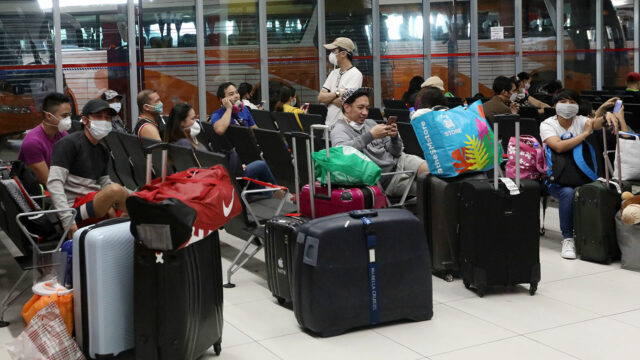
OVERSEAS Filipino workers at the Parañaque Integrated Terminal Exchange. — PHILIPPINE STAR/EDD GUMBAN

All throughout the continuing saga of US Women’s National Basketball Association (WNBA) player Brittney Griner, we had wondered whether it is the obligation of governments like the Philippines to defend every citizen who is accused of a crime in a foreign land. The US government provided counsel to Griner and other forms of assistance. Last Thursday, however, a Russian court sentenced Griner to nine and a half years in prison, almost the maximum number, for the crime of international drug smuggling.

Griner’s ordeal started with her arrest for carrying less than one gram of cannabis or hashish oil in vape cartridges. Griner claimed during her trial she had mistakenly put the cartridges in her luggage in her rush to catch a flight to Moscow to play in Russia’s women’s professional basketball league. Over the last five years, she had been going to Moscow during the WNBA off-season, as most WNBA players do. The Russian league reportedly paid five times more than the WNBA. Griner, in effect, was an American overseas worker or an expat. That arrest at the airport on Feb. 17 was totally a surprise to her as during all those earlier trips to Moscow, she never encountered any problem.

It was Griner’s misfortune, however, that relations between Washington and Moscow were heating up. On Feb. 24, the Russians invaded Ukraine. Other sources stated that being black and being in a same-sex marriage further invited the attention of the Russians. The detention of Griner should therefore be viewed in the light of tensions between the US and Russia. Griner was charged with international drug smuggling, a major offense in Russia. To further strain relations between the two nations, the US claimed there were unjustified delays in Griner’s trial and that she was “wrongfully detained.”

As the Russia-Ukraine war escalated, Griner vanished from sight even if she was detained in a Russian jail. Fellow athletes, civil society groups, and the US government itself denounced the athlete’s disappearance. Eventually, Russian authorities produced Griner.

At this point, it is clear that Griner is what is called a “diplomatic hostage” and is now in the center of a prisoner swap together with another American detained in Moscow, ex-Marine Paul Whelan. Whelan is one of 64 Americans detained in prisons in Iran, China, Venezuela, and other countries that could use these detainees as bargaining chips in any dispute.

Apparently, the Russians have decided to do just that: use Griner as leverage to extract concessions from the Americans such as the release of Russian arms dealer, Viktor Bout. Bout, a military interpreter, is spending time in a US jail for smuggling weapons from Eastern Europe to Africa and the Middle East. A spokesman of the Biden administration has said that they had made Russia a substantial offer to bring both Griner and Whelan home. If they are indeed brought home, the negotiation would be considered a success.

At this time when plain citizens, tourists, businessmen, journalists, and researchers can be picked off the street and used as some kind of pawn in a diplomatic crisis, it is understandable that athletes like Griner would hesitate to travel to countries that have a diplomatic axe to grind with other nations. An added dimension here is that Russia seems to be in some kind of mood to get back at those responsible for the ban on their athletes in the Olympics and other world competitions because of state-sponsored doping.

Let us go back to our original question of whether governments like the Philippines have an obligation to defend or provide for the defense of their citizens who are charged with criminal offenses in countries hosting these citizens. The question becomes relevant because of the big number of Filipinos working or living overseas. Secretary of Labor and Employment Bienvenido Laguesma says that there are between 10 million and 12 million Filipinos working abroad, depending on who is making the estimate.

The 71-year-old Laguesma, now on his second stint as Secretary of Labor after having occupied the same position in 1998 during the administration of President Joseph Estrada, says that it is indeed the legal and moral obligation of the government to do its best to defend a Filipino who is in some kind of legal trouble overseas. Laguesma, however, adds that we must take into account our resources and respect the sovereignty of the host country, as they should respect ours.

Laguesma says that, then as now, Overseas Filipino Workers (OFWs) are made to undergo pre-departure orientation seminars (PDOS). These seminars are supposed to guide departing workers on essentially how to behave in their country of work. It’s like briefing workers on codes of conduct, the “do’s and don’t’s,” if you will, and can be specific to the country where one is assigned. Despite these seminars, however, a number of OFWs manage to get into some kind of trouble. Some departing workers don’t attend such seminars and even submit forged certificates of attendance. And, as admitted even by some labor officials, some of our countrymen do instigate the problem out of need, frustration, and loneliness. When there are signs that our fellow citizens may be at fault, the government is very careful in extending legal assistance. Government representatives, however, do exercise moral responsibility and assist the worker in whatever way they can.

The question that is asked now is, if it is the obligation of government to provide legal assistance to an embattled fellow Filipino, are the agencies tasked to provide such legal assistance provided with the budget, the wherewithal to hire the counsel who can adequately defend the accused Filipino? Laguesma says that the Department of Foreign Affairs (DFA) and the newly created Department of Migrant Workers will have the funds for such purposes.

The example of the US government going all out in defense of Griner who is “wrongfully detained” is probably inapplicable in the case of the Philippines. To begin with, Griner and Whelan have become pawns in US-Russia relations. However, with millions of Filipinos working overseas, we are most vulnerable to all sorts of crisis situations involving our nationals stationed overseas. And the potential for each crisis becoming an opportunity to blame the government for its inability to come to the aid of the lowly and lonely overseas worker is great.

The most celebrated case of a Filipino being executed abroad was Flor Contemplacion who was accused of killing a fellow Filipino maid, Delia Maga, and the three-year-old son of Maga’s employer. All attempts to save Contemplacion from the death penalty were unsuccessful. The Singaporean government executed her at Changi prison. Relations between the Philippines and Singapore were strained for some time.

Despite all the efforts of the government to save Contemplacion, organized labor still blamed the government for her execution. It was clear that overall frustration with the plight of OFWs had reached a boiling point and had become a political issue in the Philippines with the May 1995 elections just around the corner.

It was expected, that the execution of an overseas worker — regarded as a “Bayani ng Bayan” (Hero of the Country) — will always be a political and emotional issue among many Filipino families whose well-being is dependent on those offshore dollars that their loved ones send to the country.


Philip Ella Juico’s areas of interest include the protection and promotion of democracy, free markets, sustainable development, social responsibility and sports as a tool for social development. He obtained his doctorate in business at De La Salle University. Dr. Juico served as secretary of Agrarian Reform during the Corazon C. Aquino administration.

Over New York, London, and Hong Kong? Time to move on

MOHD AZRIN-UNSPLASH

THE FINANCIAL CAPITALS of the world have lost their luster. The bright lights of New York City seem to have dimmed. London has far too many issues to contend with, from inflation, messy politics, and homes not built for the heat to a dysfunctional international airport. Hong Kong is a dark shadow of what it once was: A former British colony filled with tycoons and billionaires whose fast, wheeling-dealing, free spirit has faded.

Other close contenders like Tokyo, Singapore, and Shanghai don’t hold the same allure as they once did. So, what’s left?

Financial centers have typically been places with well-formed regulatory oversight and deep capital markets. Naturally, an ecosystem of workers is created around this, drawing in professionals like bankers, lawyers, accountants, and headhunters.

Factors like tax rates and the ability to draw capital — equity and debt — that facilitate business and bolster a city’s competitiveness help, too. There are various ways to measure that: The size and depth of capital markets, along with detailed, weighted indices that take into account everything from tax rates to office occupancy and legal jurisdiction.

These measures, though, ignore an underappreciated but increasingly relevant factor in the post-COVID era: human capital. We can no longer measure workers based on one-dimensional factors like education level or income bracket. Where do people want to live? And where can professionals do their jobs smoothly and, therefore, successfully? That’s changed since COVID turned our world upside down.

The latest rankings of the Global Financial Centers Index, or GFCI, based on 150 quantitative measures and almost 75,000 assessments of cities, as well as around 12,000 survey respondents, put New York, London, Hong Kong, and Shanghai at the top of the list. Notably, human capital was the most-mentioned area of competitiveness when respondents were asked what issue they considered the most important.

Contrary to popular understanding, financial-sector development was the lowest on that list because remote working and the ease of digital services through the pandemic have shown that there’s a different way to do business. The caveat, however, is the need for “a reliable and trustworthy ecosystem.”

It’s time to redefine global financial centers based on more subjective criteria. But where do you even begin? Cost and quality of living, for instance, help set a baseline to assess the cities that help attract — or put off — talent. Hong Kong remains the most expensive city, with its sky-high rents and COVID-19 measures that have made the cost of logistics, and life in general, exorbitant. Even the price of beer has shot up there. It ranks 71 on consultancy firm Mercer LLC’s quality of living index, while places like Vienna and Zurich top the list. London is 41, while the world’s foremost global financial center, New York, comes in at 44.

Then there’s connectivity. Travel to and from any of the top three financial centers is currently in shambles during what executives have described as the busiest season ever. Hong Kong barely has any flights out, and let’s not even start talking about its quarantine system, while London can’t handle passengers and New York remains hectic and full of delays.

It isn’t hard to see why, then, people in the US and elsewhere are leaving their jobs for greener pastures. The Great Resignation has been as much about people doing what they want — and not being tied to work — as the other economic factors that have allowed it. People choose to live in big cities because being employed in the finance world, or the ecosystem around it, is lucrative. Yet, it’s also expensive to live in and around these areas. Consider what’s happening with tech jobs — the first sector to go remote: US white-collar salaries are converging across the country, regardless of whether they are in a major hub or away from headquarters. Wages in DC are reaching those in the Bay Area.

To retain talent and lure the best and brightest, businesses will have to shift tactics. As BlackRock, Inc.’s and Goldman Sachs Group, Inc.’s office openings in places like West Palm Beach and Birmingham show, it isn’t all that difficult. Spreading talent out across places that offer better living standards, easy travel, and flexible work hours to match time zones and trading hours could go a long way to resolve the current labor problems and, ultimately, the cost of human capital.

This isn’t to say companies should let workers head off to remote islands with spotty wi-fi and poor infrastructure. Instead, it’s about acknowledging that places traditionally thought of as white-collar finance workers’ hubs just aren’t that anymore.

Globally, there are now few places where the world’s financiers want to live. One fast emerging hub for instance, is Dubai. (Full disclosure: I’ve lived in New York, London, and Hong Kong, and am a recent Dubai transplant.) It isn’t just the influx of expats fleeing other less-friendly regimes like Singapore and Hong Kong. Capital is flooding in too. The emirate has put in place measures to attract talent through visa programs, housing, and incentives for asset managers to set up shop. Schools are plenty and increasingly well-established. Its neighbor, Abu Dhabi, has done similar things, too.

There are, no doubt, shortcomings, like Dubai’s move to protect its telecom operator at the expense of consumers (you can’t use applications like WhatsApp or FaceTime to make voice or video calls, for example).

But history shows financial centers can evolve quickly, breaking with their traditional molds. In the aftermath of the global financial crisis, hubs vying for importance like Dubai, Shanghai, and Sao Paulo emerged, although some haven’t quite lived up to their promise.

One of the most significant changes was the evolution of financial technology, or fintech, which raised questions over whether it would eventually make financial hubs unnecessary for the global economy to function.

Such changes — and the ability for employees and employers to live with them and make it work — show that it’s time for a reassessment.

BLOOMBERG OPINION

Vaguely undefined

CLAUDIO SCHWARZ-UNSPLASH

RELATIONSHIPS between the greatest superpower and a certain territory claimed by the other superpower can amble along with “strategic ambiguity.” Lines are not broken but just pushed a bit. Can personal relationships also benefit from a vaguely undefined status? Household arrangements or rearrangements are not always straightforward. Neat labels are no longer solicited — it is what it is.

How often do we hear those in an undefined arrangement that is bumpy, if not off the road, maybe with detours and extended foray into the woods involved, struggling to be in the general vicinity? What’s the obsession with definitions and setting things straight? Can’t things just be left dangling and vaguely undefined? Is it necessary to specify what the new status is? (Let’s just be friends without benefits?)

Ambiguity can be an uncomfortable status in any alliance, even one that is all done and for which a modus vivendi, like no longer taking calls or ghosting, prevails. Celebrity couples whose joint accounts have been raided by one of the parties, or both, may still feel obliged to issue a public statement that they are trying to work out a process on the best way to bring some closure — to the joint bank account, anyway.

A definitive ending that allocates responsibility for payment of utilities and trips to the beach has nothing to do with the loss of reciprocal affections. Anyway, payments are seldom current. Even for unmarried live-in couples, an arrangement no longer exceptional nowadays, explanations to the easily shocked spinster aunts fall in the category of a long engagement — we’re saving up for a condo.

The only negotiated conditions, not left open to any ambiguity, refer to financial obligations. What is a pre-nuptial contract, after all, but a setting down of the terms and condition of the break-up of a merger without further acquisitions?

It is for these mundane details perhaps that some clarity is required. Also, new parties may have joined the old duets to make a discordant quartet sing off-key. (Are we on the same music sheet?) So, closure brings with it mostly unsavory fiscal issues that intrude into an eroded relationship where love no longer conquers all.

Complications set in when the estranged couple (this modifier seems to be favored over the more accurate “toxic”) cross paths on a quotidian basis, say working in the same office, or dealing with each other in business transactions as client and service provider, or in the entertainment business being in the same noontime program — we’re all professionals here, we only claw each other’s eyes out off-camera.

In business too (let’s not forget this is a business column in a business paper) ambiguity is allowed after a deal is concluded in principle with certain provisions still dependent on due diligence. (Do we have veto power on nominated independent directors?) Tender offers to minority shareholders are postponed to a later date, even when the company has already been taken over by a new set of charioteers whipping the old horses. Still, not all eventualities can be foreseen and provided for. Some vagueness driven by the desire to make the deal work must be addressed later in an agreed conciliation process.

What about the ambiguous status of an early political appointee? No forthright denial is issued when the matter of a forced resignation is bruited about in media. The ambiguous denial (I was just here at my office) brings up more questions than answers. Sometimes, “fake news” (this is always the default excuse for unconfirmed rumors) has some basis. Where there’s smoke, there’s somebody smoking.

Still, in business as in social relations, ambiguity suffices for those in the middle of an unresolved conflict. The boss who has remorse over an appointment may continue to give lukewarm support to his successor — of course we meet regularly. And there are no slide presentations needed: Do you see my chart?

An ambiguous person is afforded some flexibility. His commitments are vague — we can do a virtual lunch. Buy your own burger.

The word “ambiguous” comes from Latin ambi — both, plus agere — to drive. To be able to drive both ways clearly allows the driver to set the direction and the destination at the last minute and determine how long the trip will take with all the detours. Will he eventually reach his destination? Perhaps… but not always the one either party expected.


Tony Samson is chairman and CEO of TOUCH xda

ar.samson@yahoo.com

Dozens sickened by new ‘Langya’ virus in China

REUTERS

NEARLY three dozen people in China have been sickened by a newly identified virus from the same family as the deadly Nipah and Hendra viruses, though there’s no evidence the pathogen can be transmitted from person-to-person.

The virus, named Langya henipavirus or LayV, was found thanks to an early detection system for feverish people with a recent history of exposure to animals in eastern China. The patients — mainly farmers — also reported fatigue, cough, loss of appetite and aches, with several developing blood-cell abnormalities and signs of liver and kidney damage. All survived. 

Among the 35 patients, 26 were infected only with LayV, according to a report published in the New England Journal of Medicine.

There was no evidence they had been in close contact or had a common exposure history, suggesting human infection may be sporadic, the researchers said. Tests detected the virus in 27% of shrews, a known vector for similar henipaviruses, suggesting the small, furry mole-like mammals may be a natural reservoir, they said. 

Further investigation is needed to better understand the infection, according to the researchers from Beijing, Singapore and Australia. Taiwan’s Centers for Disease Control said it is paying attention to the report, and plans to start screening for the virus.

The spread of germs from animals to humans, called zoonosis, is common, accounting for more than six of out of every 10 known infectious diseases in people, according to the US Centers for Disease Control and Prevention.

Most of the time they cause limited disease, dying out without having a major impact. In the aftermath of COVID-19, however, more tracking systems now are in place and picking up novel pathogens. — Bloomberg

Torrential rain lessens in S.Korean capital amid heavy flood damage

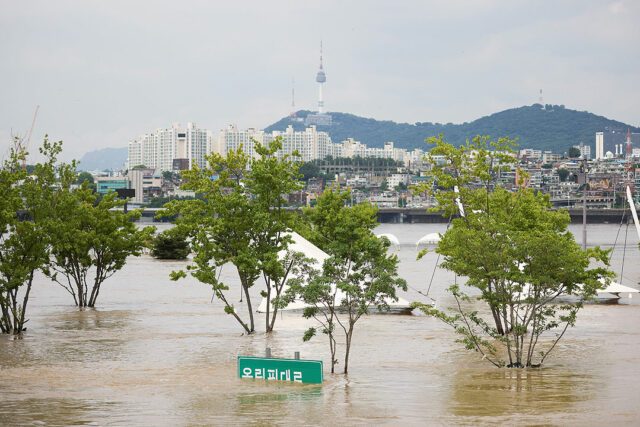
A GENERAL VIEW of the submerged Han River Park by torrential rain in Seoul, South Korea, Aug.10. — REUTERS

SEOUL — Torrential rains that have slammed South Korea’s capital, Seoul, diminished on Wednesday after killing at least nine people and damaging about 2,800 homes and other buildings.

More rain was forecast for Wednesday, but less than the heavy downpours on Monday and Tuesday that submerged some streets and buildings, trapping people in flooded apartments and stranding cars.

At least five people had been killed in Seoul as of early Wednesday, as well as three in the neighboring Gyeonggi Province and one in Gangwon Province, according to the Central Disaster and Safety Countermeasures Headquarters.

At least 17 people have been injured, and seven are missing.

Flooding in some buildings around the glitzy Gangnam district continued on Tuesday, while subway stations and several roads there had been blocked.

Data showed at least 2,800 public and private facilities had been damaged across South Korea, and more than 1,100 households had been displaced. Most highways and subway lines had been cleared by Wednesday.

The accumulated rainfall in Seoul since midnight Monday stood at 525mm as of 7 a.m. Wednesday, according to the Korea Meteorological Administration (KMA), with more forecast. In neighboring Yangpyeong County, total rainfall hit 532.5 mm. — Reuters

China extends military drills around Taiwan after Pelosi’s visit

A globe is seen in front of Chinese and Taiwanese flags in this illustration, Aug. 6, 2022. — REUTERS/DADO RUVIC/ILLUSTRATION

TAIPEI/BEIJING — Chinese navy ships remained active off both Taiwan’s east and west coasts on Wednesday morning, a source briefed on the matter told Reuters, as Beijing kept up military drills in protest against last week’s visit to the island by US House Speaker Nancy Pelosi.

A furious China has extended its largest-ever exercises around the self-ruled island it claims as its own beyond the originally scheduled four days. The drills last week included ballistic missile launches, some of which flew over the island’s capital Taipei, and simulated sea and air attacks in the skies and seas surrounding Taiwan.

Video released by Chinese state broadcaster CCTV on Wednesday showed Chinese fighter jets scrambling and refueling while airborne, as well as navy ships on what it said were drills around Taiwan.

The Eastern Theatre Command of the Chinese People’s Liberation Army said the drills were focused on blockades and resupply logistics, “under a complex electromagnetic environment to refine joint containment and control capabilities,” according to CCTV.

About 20 Chinese navy and Taiwan navy ships remained close to the median line of the Taiwan Strait, an unofficial buffer separating the two sides, as of Wednesday morning, a source briefed on the matter told Reuters.

Several other Chinese ships continued to conduct missions off Taiwan’s eastern coast, according to the source, who spoke on the condition of anonymity.

Taiwan’s foreign minister said on Tuesday that China was using the military drills as a game-plan to prepare for an invasion of the self-ruled island.

“It is conducting large-scale military exercises and missile launches, as well as cyberattacks, disinformation, and economic coercion, in an attempt to weaken public morale in Taiwan,” Joseph Wu said on Tuesday, without providing evidence or offering a timetable.

“After the drills conclude, China may try to routinize its action in an attempt to wreck the long-term status quo across the Taiwan Strait.”

Ms. Pelosi, a long-time China critic and a political ally of President Joseph R. Biden, visited Taiwan last week on the highest-level visit to the island by an American official in decades, despite Chinese warnings. She said her visit showed unwavering US commitment to supporting Taiwan’s democracy.

China says its relations with Taiwan are an internal matter and it reserves the right to bring the island under its control, by force if necessary. Taiwan rejects China’s claims, saying only Taiwan’s people can decide their future.

Washington was sticking to its assessment that China would not try to invade Taiwan for the next two years, a Pentagon official said on Monday.

Taiwan’s Defense Ministry on Wednesday released a video showing its armed forces on exercises, saying its military is “at the ready keeping our country safe” and China had not stopped its “incursions” in areas near Taiwan.

Taiwan troops were guarding their posts “24-7” and have increased their alertness level, the ministry said, following the guidelines of “defending median line, defending territorial waters and defending sovereignty” to maintain the status quo. — Reuters