Home Blog Page 6037

Lufthansa Technik eyeing Bulacan, Cavite expansion
COMPANY HANDOUT

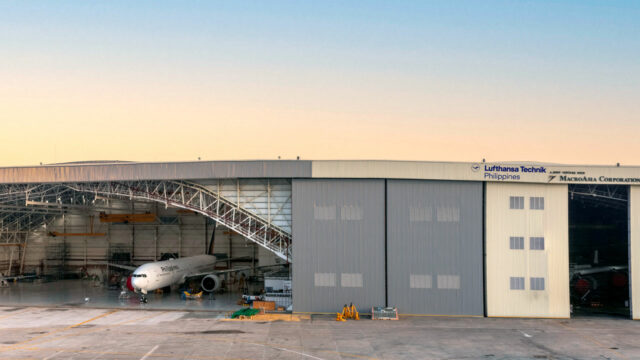
LUFTHANSA Technik Philippines, Inc. (LTP) is eyeing to expand outside the National Capital Region (NCR), with new airports to be built in Cavite and Bulacan as potential locations for its aircraft maintenance, repair and overhaul (MRO) services hubs, the company’s chief executive officer said.

“In the Philippines, in Luzon, besides NAIA (Ninoy Aquino International Airport), [there is] currently only Clark,” LTP President and Chief Executive Officer Elmar Lutter told reporters on Friday on the sidelines of the formal opening of the company’s new hangar in Pasay City.

“But you know, two more airport projects are being contemplated, Bulacan and Sangley ports, and we are observing what is happening,” he added.

LTP, a joint venture of Germany’s Lufthansa Technik AG and Lucio C. Tan-led MacroAsia Corp., inaugurated on Friday its Hangar 1A, a 9,000-square-meter facility in Pasay City, after nearly two years of delay caused by the pandemic.

In terms of capacity, Hangar 1A adds three lines to the existing seven base maintenance lines in NCR, according to the company. It adds 20% to LTP’s capacity and allows it to employ at least 275 more personnel.

The new facility is designed to provide base maintenance for various commercial aircraft of short- to long-range capacities, including Airbus jets A320, A330, A380, and the Boeing 777.

“The Philippines is an excellent place for aviation with Asia’s oldest airline, Philippine Airlines, its tradition, infrastructure, and the depth and the breadth of its talent pool. Resilience has been invented here,” Mr. Lutter said.

LTP provides aircraft MRO services at various airports in the country, including NAIA, Mactan-Cebu International Airport, Kalibo International Airport, and Puerto Princesa Airport, among others.

“We are optimistic to soon further grow our business again,” Mr. Lutter noted. “We have reached our limits here at NAIA.”

“We will seek discussions with possible partners and explore possibilities in the Philippines and beyond with the end in mind to add affordable high-quality MRO to our region and deliver safety and reliability to our customers,” he added.

In April, MacroAsia said LTP’s maintenance volumes are expected to reach pre-pandemic levels this year.

“Foreign airline clients that have opted to delay their heavy maintenance programs in the midst of the pandemic starting 2020 have been recalling their stowed planes into service,” the company said in its annual report.

“The line maintenance business, which is essentially airport-flight driven will follow the airport volume growth in NAIA, Cebu, Clark, and Davao where LTP operates,” it noted. — Arjay L. Balinbin
Mondelez posts growth, cites economic reopening, spending

BW FILE PHOTO

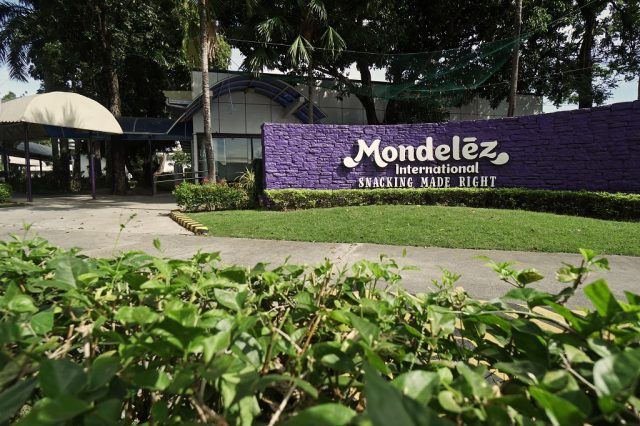
FOOD manufacturer Mondelez Philippines, Inc. has posted growth on the back of more sales and on the opening up of the Philippine economy.

Aleli H. Arcilla, Mondelez Philippines vice president and managing director, said on the sidelines of a media briefing in Quezon City last week that the company has benefited from increasing consumption.

“We’re actually seeing some growth already. There is a lot of pick-up from our products. We are recovering from last year. The business has rebounded from last year and we are seeing that it is following the market growth,” Ms. Arcilla said.

“As we experience the opening up of the economy, there is more consumption, more influx of income as many Filipinos are becoming employed. We are seeing consumption go up,” she added.

Further, Ms. Arcilla mentioned that the sales of some of the company’s products have already reached pre-pandemic figures due to stronger demand.

“In some of the categories or the products that we have, they have already reached pre-pandemic levels, we’re hitting pre-pandemic levels already. These products include beverages like Tang and our biscuits since it is back to school,” Ms. Arcilla said.

Moving forward, Ms. Arcilla mentioned that Mondelez Philippines is planning to introduce new products that will bolster its current offerings. She declined to give details on the upcoming products.

“We will be coming up with new products that we will be introducing either on the premium side or on the mainstream side. We will be working on it in the coming months,” Ms. Arcilla said.

The company also disclosed that its items are not as affected by the current tight supply and soaring prices of sugar in the country.

“For Mondelez, we’re not as affected as the other beverage companies and even the other fast-moving consumer goods [that] use a lot of sugar and are dependent on imports. We are less impacted by the sugar shortage right now,” Ms. Arcilla said.

“The products that require sugar are manufactured outside of the Philippines. The sugar shortage does not necessarily impact us because we have the supply for our products based in other plants in other countries. We get our products as finished goods already,” she added.

Some of the brands sold by Mondelez Philippines include Tang drink mix, Cadbury chocolate, Chips Ahoy cookies, Cheez Whiz bread spread, and Toblerone chocolate. — Revin Mikhael D. Ochave

Hyundai rising

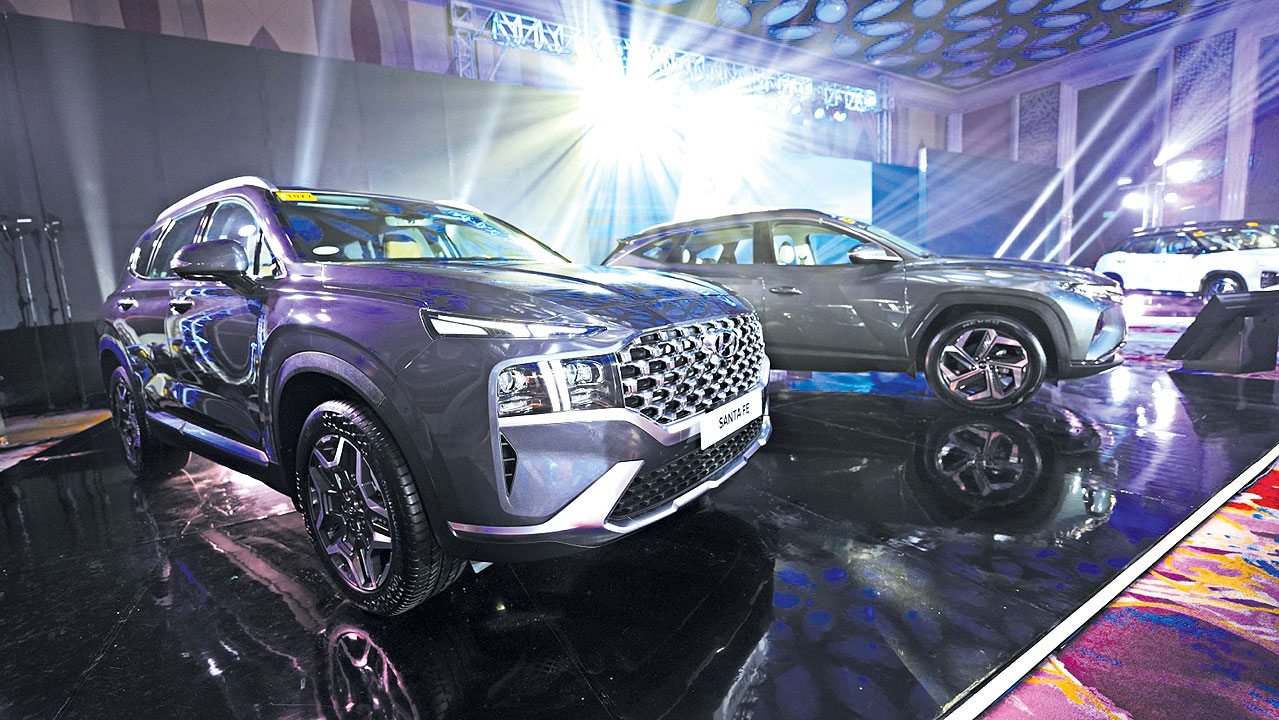
Familiar stalwarts: The refreshed Santa Fe (left) stands beside the all-new Tucson. — PHOTO BY KAP MACEDA AGUILA

New vehicles and clear priorities are expected to restore the auto brand’s prominence

BACK IN JUNE, representatives of Hyundai Motor Philippines (HMPH) first met with select members of the media to announce that the company was taking control of the passenger car portfolio of Hyundai in the country from longtime distributor group, Hyundai Asia Resources, Inc. (HARI), which had overseen the growth of the brand since 2001. HMPH assumes responsibility for Hyundai’s passenger car models, while HARI retains the trucks and buses of the South Korean marque.

Last Wednesday, HMPH made it public by staging a launch activity at Okada — first with the media at lunchtime, then bank partners in the evening.

The message is clear: Hyundai is back.

Just to underscore its resurrection in the country where it was once the third best-selling auto brand, Hyundai presented three all-new models (the Creta, Tucson, and Staria) and a refreshed nameplate (Santa Fe).

“This marks a major turning point for the car company, (which) aims to continue strengthening the brand while also renewing customers’ enthusiasm in its lineup of offerings,” HMPH said in a release.

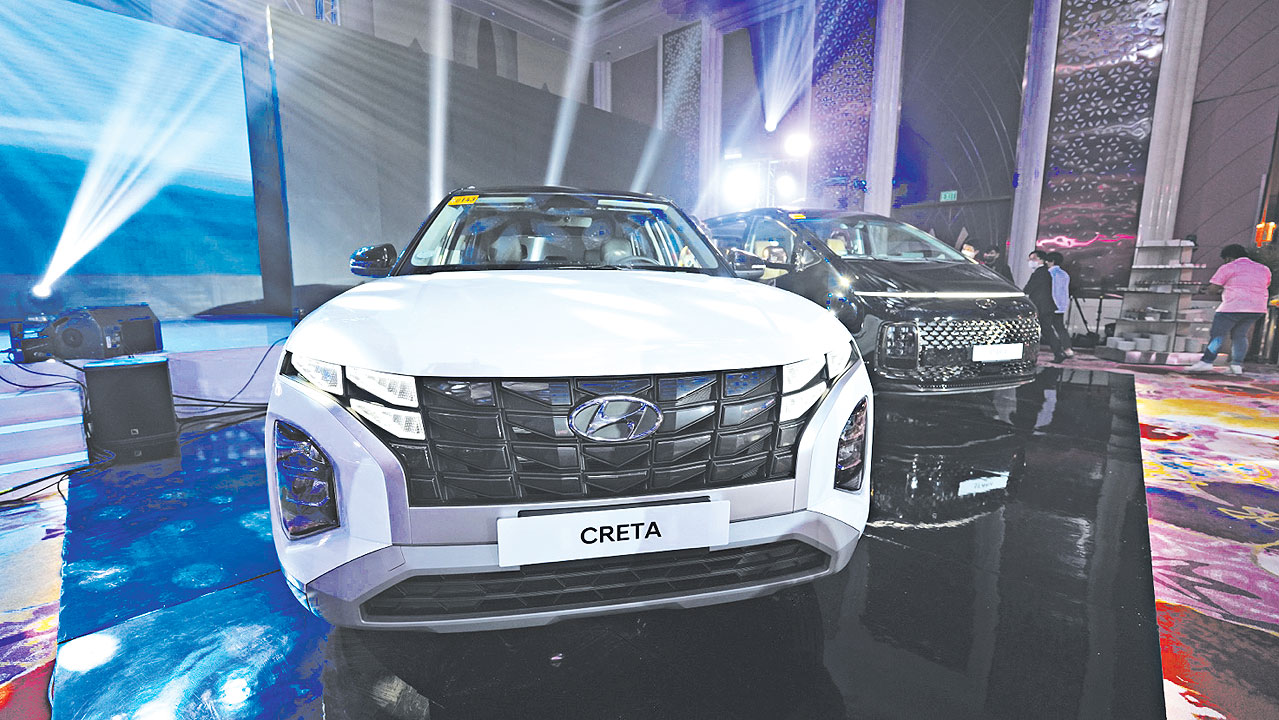
The all-new, 4.3-meter-long second-generation Creta is positioned as a “premium B-segment SUV,” boasting the brand’s so-called “Sensuous Sportiness” design language. Powered by a 1.5-liter Smartstream gasoline engine mated with an improved CVT (the base model has a six-speed manual), the Creta is said to offer a “smoother and fuel-efficient ride without compromising power output.” It outputs 115ps and 144Nm. HMPH boasts that the Creta has the most number of active safety features in its segment. It has LED daytime running lamps and rear combination lamps, 17-inch alloy wheels, and sporty bumpers.

Three variants are available, with the following prices: 1.5 GL 6MT (P998,000), 1.5 GL IVT (P1.17 million), and 1.5 GLS IVT (P1.332 million). The 1.5 GL IVT in “limited-red” edition retails for P1.323 million.

The much-awaited Starex successor, the futuristic-looking Staria, is now here in the country as well. It is headlined by a “lounge” concept, with a lower beltline and taller vehicle height — contributing to “a sense of openness.” The range-topping seven-seater variant gets premium design elements, smart sliding doors, a smart power tailgate, dual sunroofs, and a cache of active safety features. Meanwhile, the 11-seater commuter variant and a three-seater cargo variant boast twin swinging doors.

Four Staria variants are available: the 2.2 CRDi 6MT Cargo (P1.56 million), 2.2 CRDi 6MT Commuter (P1.85 million), 2.2 CRDi GLS+ 8AT (P2.32 million), and 2.2 CRDi Premium+ 8AT (P2.93 million).

Finally, two familiar nameplates round out the four-model juggernaut from HMPH. The all-new Tucson, the first SUV to bear the aforementioned “Sensuous Sportiness” design aesthetic, now gets an eye-catching front fascia with the Parametric Jewel Pattern Grille and unique side character lines. Stretching 4.6 meters long and with a wheelbase of 2.7 meters, the Tucson offers extra legroom. Buyers can choose between the diesel-powered variant (2.0 CRDi GLS+ 8AT) priced at P1.84 million or the gas-sipper (2.0 GLS 6AT), costing P1.57 million. The Smartstream D2.0 engine generates 186ps and 416Nm, while the Smartstream G2.0 submits 156ps and 192Nm.

The Santa Fe now gets T-shaped DRLs that create a unique light signature. These complement the cascading grille and front bumper which make the vehicle’s face look wider. Under the hood is a Smartstream 2.2 Diesel engine paired to eight-speed wet DCT, a first in Hyundai’s SUVs. Only one trim is offered, the 2.2 CRDi GLS 8DCT, priced at P2.42 million.

Aside from these, the refreshed portfolio of Hyundai will feature the flagship Palisade three-row SUV and the H100 workhorse.

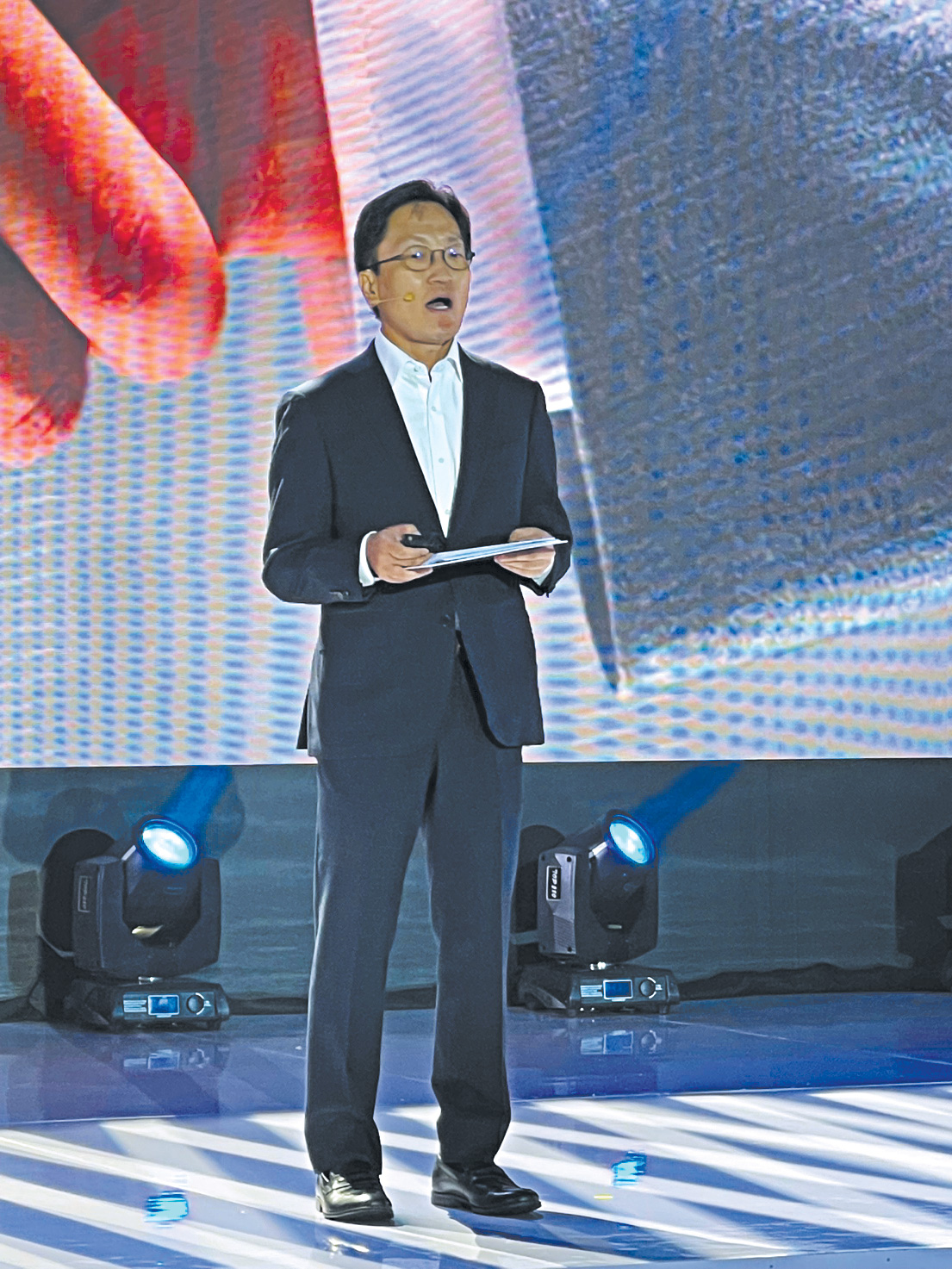
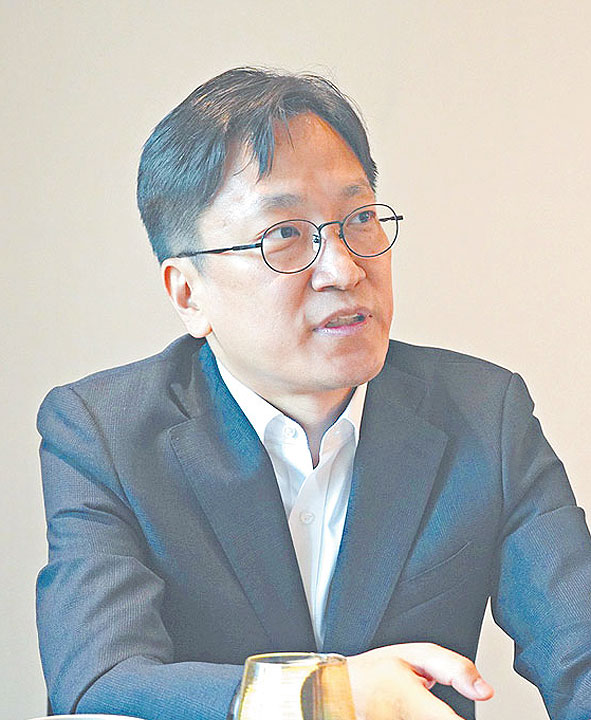
At the helm of HMPH is the affable Lee Dong Wook, a longtime Hyundai hand with international stints in India and Malaysia. Perhaps more importantly, he has been exposed to, and been responsible for, Asia-Pacific markets.

The company explained that the key to restoring the brand’s prominence is “a nationwide service campaign and warranty program that aims to highlight the brand’s improved after-sales.” HMPH also intends to enhance the reach of the dealership network by growing the number outlets from 38 to 45 by 2023.

Additionally, Hyundai Live is slated for launch next month. “This is a two-way communication with our customers using the website as our online showroom that will provide information to meet (their) needs,” added Mr. Lee.

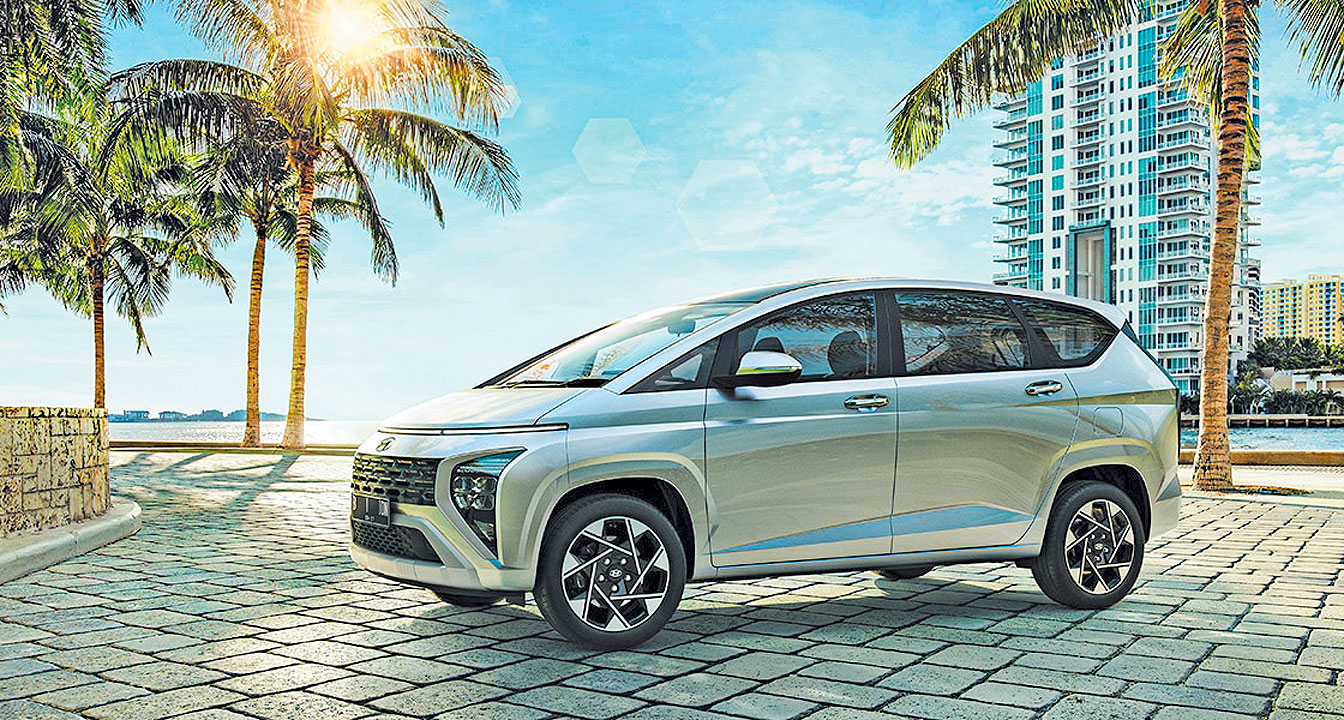
Before the end of the year, HMPH is set to grow its portfolio even further with the anticipated launch of the Stargazer MPV (which, along with the Creta, is manufactured in Indonesia) — expected to battle in the segment where the Mitsubishi Xpander and Toyota Avanza are. Also being studied is the launch of the Ioniq 5 full EV, and the Santa Fe Hybrid (See our Q&A with Mr. Lee).

To be scratched from the lineup are the Accent, Reina, Kona, and even the Venue.

HMPH is making sweeping changes inside and out — openly declaring that it is moving from the Association of Vehicle Importers and Distributors, Inc. (AVID) to the Chamber of Automotive Manufacturers of the Philippines, Inc. (CAMPI). “There are a lot of benefits in joining CAMPI and for us to join them at this opportune time would give us a huge boost. There is so much excitement and interest in what we will do next and we can’t wait to show everyone once again what Hyundai Motor is all about,” underscored Mr. Lee.

The executive had revealed in June, “Dealers would say ‘I don’t have any cars for display in my showroom. So many customers visit our showroom, and the customer (would ask) when can I buy our Hyundai cars? I gave a promise to our dealer principals like this: My first role is to fill up our cars in your showroom display, then customers will visit (so) they can enjoy and see the choices. We will move forward.”

Fast forward, it seems.

Petron targets to spend up to P15B annually in next 3 years

BW FILE PHOTO

PETRON Corp. is targeting to spend up to P15 billion annually for the expansion of its operations until 2025, a company official said last week.

“The company is programming to spend between P10 [billion and] P15 billion on [an] annual basis for the next three years,” said Albertito S. Sarte, vice president and deputy chief finance officer of Petron, during a virtual press briefing last week.

He said that the amount will be spent in the Philippines and Malaysia, with a sharing of 70% and 30%, respectively.

“A good bulk of this will be allocated for the service station expansion in both countries because we see that as our growth strategy, to be able to sell more and reach more customers in the future,” he added.

Petron, the country’s largest oil refining company, has a refining capacity of 268,000 barrels per day, producing a full range of fuels and petrochemicals.

It operates about 40 terminals in the region and has around 2,800 service stations where it retails gasoline and diesel, the company previously said.

“We are planning to add more stations but probably at a more cautious tone,” Mr. Sarte said.

Mr. Sarte also said that the company is looking to expand its logistical capabilities and expanding its storage facilities for both countries.

Meanwhile, Erich Y. Pe Lim, manager and investor relations officer at Petron, said that the company is also targeting to further reduce its carbon footprint by 2025.

“We have actually been able to reduce our carbon emissions by 3% in 2021. We are looking at reducing it further to 12% by 2025,” he said.

Mr. Pe Lim said that Petron was able to reduce its carbon emissions through various initiatives such as reconfigurations, improving its operations in the refinery, and replacing of thermal power plants with steam generating facilities. — Ashley Erika O. Jose

Peso may drop further vs dollar on hawkish Fed

BW FILE PHOTO

THE PESO may continue to depreciate against the dollar this week as market players anticipate the US Federal Reserve’s policy direction in bringing inflation within target at their annual global central bankers’ conference on Friday.

The local unit closed at P55.93 on Friday, weakening by 4.2 centavos from its P55.888 finish on Thursday, data from the Bankers Association of the Philippines showed.

The peso also depreciated by 32 centavos from its P55.61-per-dollar close a week ago.

Dollars exchanged inched down to $889.6 million on Friday from $939.3 million on Thursday.

The peso declined on Friday as investors priced in hawkish signals from the US Federal Reserve, Rizal Commercial Banking Corp. Chief Economist Michael L. Ricafort said in a Viber message.

On Thursday, St. Louis Fed President James B. Bullard said he was leaning towards a third straight 75-basis-point (bp) increase on their Sept. 20-21 policy review.

“I don’t really see why you want to drag out interest rate increases into next year,” Mr. Bullard said in an interview with the Wall Street Journal.

Mr. Bullard also said he would like to get the US central bank’s benchmark overnight interest rate to a target range of 3.75% to 4% by end-2022. The Fed’s policy rate is currently 2.25%-2.50%.

Moreover, San Francisco Fed President Mary C. Daly said hiking rates by either 50 or 75 bps would be a “reasonable” way to get borrowing costs to “a little bit above” 3% by the end of this year.

In an interview with CNN International, Ms. Daly said the exact pace would depend on US employment data and August inflation.

The peso also weakened as the country’s balance of payments (BoP) position was at a deficit in July, Mr. Ricafort said.

The country’s BoP position stood at a $1.82-billion deficit last month, a turnaround from the $642-million surplus last year. This is the widest deficit posted in 17 months or since $2.019 billion in February 2021.

The July deficit is also higher than the $1.574-billion gap in June. In the first seven months of the year, the BoP deficit widened to $4.920 billion, from the $1.297 billion deficit in the same period in 2021.

The BSP expects the country’s BoP to yield a deficit of $6.3 billion this year or equivalent to -1.5% of gross domestic product.

For this week, the dollar may strengthen as investors may try to get a better read on the Fed’s likely policy actions in the coming months, said UnionBank of the Philippines, Inc. Chief Economist Ruben Carlo O. Asuncion.

Fed Chairman Jerome H. Powell will give a highly anticipated speech on the economic outlook at the annual Atlanta Fed’s Jackson Hole Economic Symposium.

Additionally, the market will factor in China’s macro developments, including the geopolitical tension over Taiwan, according to Mr. Asuncion.

Back home, Mr. Asuncion said investors will be on the lookout for the Philippine central bank’s policy direction that would continue to support the peso.

The Bangko Sentral ng Pilipinas (BSP) raised its benchmark interest rate on Thursday and signaled it has room to further hike rates as it battles inflation.

The Monetary Board increased the overnight reverse repurchase rate by 50 bps to 3.75%, as expected by 13 out of 18 analysts in a BusinessWorld poll.

The rates on the overnight deposit and lending facilities were also increased to 3.25% and 4.25%, respectively.

Inflation rose by 6.4% year on year in July, the fastest in nearly four years, and exceeded the central bank’s 2-4% target band for a fourth straight month. The average inflation rate in the first seven months is 4.7%, still below the BSP’s full-year revised forecast of 5.4%.

For this week, Mr. Ricafort expects the peso to move within the P55.60 to P56.10 levels, while Mr. Asuncion gave a wider forecast range of P55.60 to P56.20 per dollar. -— Keisha B. Ta-asan with Reuters

The Velocity Q&A: Lee Dong Wook (President Hyundai Motor Philippines)

PHOTO BY KAP MACEDA AGUILA

Interview by Kap Maceda Aguila

PHOTO BY KAP MACEDA AGUILA

LEE DONG WOOK smiles broadly after someone tells him he shares a name with a famous Korean actor, host, model, and entertainer. He surely must have heard this numerous times, but Mr. Lee gamely acknowledges the comment. Coffee and lunch with the man in June revealed a lot about his qualities as a no-nonsense yet polite executive who is relishing the chance at a reboot for Hyundai.

Affable and always bowing as he thanks people, it’s hard to imagine a more appropriate person to be the face of the brand as it aspires to be the powerhouse it once was here in the country. We caught up with Mr. Lee for a short, exclusive interview following the formal announcement of the brand’s return to the action.

Here are excerpts of our talk with him.

VELOCITY: What is your number one priority as far as the Hyundai brand is concerned?

LEE DONG WOOK: Two things are very important. The first one is customer experience. We want to deliver a new customer experience. Another one is customer satisfaction. So, these two things are the most important, and we are now preparing our dealer partners to provide excellent customer satisfaction and customer experience.

We’ve seen new models on the road already, particularly your new SUVs.

The reason we launched the SUVs first is because these are globally loved models by our customers. So, we launched the Santa Fe, Tucson, and Creta. The Creta is a well-received model produced in Indonesia. (The plant) started production in January this year. So, new factory, new cars. I think Filipinos will enjoy our new products, with very nice features.

What does this mean for the other models that Filipinos are also familiar with? For example, during the first HMPH press conference, you said something about the Reina sedan’s discontinuation. Aside from the Creta, Tucson, Santa Fe, and Staria, what other models are you going to be selling in the Philippines?

We’ve been seeing that the market trend is changing from passenger cars to SUVs. Although I’m driving the Sonata Hybrid in Korea, so many customers there choose SUVs instead of cars. During weekends, they enjoy weekend drives with their family. SUVs, as you know, are very nice for the family.

Since you’ve mentioned hybrids, your competitors are already bringing in electrified — in some cases full electric — vehicles. What is the plan for HMPH? Are you looking at that space as well?

Hyundai Motor Co. has good technologies, including the hybrid for EVs and we also have a specific Santa Fe hybrid. So, we are now studying which models and specifications are right for Filipino customers. We are now studying to launch the Santa Fe hybrid and also the Ioniq 5, but first of all, we have to consider the market demand. After studying, we will make a decision.

Can we say that probably we might see that sooner or later? Sooner, hopefully?

(In terms of) consumption, an EV is better than a hybrid, as you know. Also, our Ioniq 5 has won so many prizes — as a global COTY (Car of the Year), in UK, Germany. We’ve received so many awards, including design awards. So now we are considering to display our Ioniq 5 through the Philippine International Motor Show (PIMS) and EV Summit. We are considering to launch the Ioniq 5 for the Philippine market.

You told us before that HMPH is seeking membership in CAMPI (Chamber of Automotive Manufacturers of the Philippines, Inc.). How is that going right now?

We have a good relationship with CAMPI, and so we are waiting for good news. Anyway, I think we can provide a good experience for the Philippine customers with our Ioniq 5 in the two events (PIMS and the EV Summit).

So you will be launching there?

We’ll just display first. Hopefully, maybe, this year. So, we are now considering to launch the Ioniq 5.

One of the lingering issues in the industry right now is vehicle supply. There’s a global crisis as far as parts go — even production. How is the situation in terms of inventory for HMPH? If I wanted to get a Tucson now, and I walked into one of your showrooms, can I get one right away?

Yes. If you want to buy our cars, you can get them at any time in our showroom. HMPH is now providing our cars to dealerships because our customers have been waiting for our cars for a long time — two years. The Philippine market is a very important market — one of the important markets in Asia. Five years ago, the Philippines was the number one Hyundai market (in Asia), so we would like to focus on this market, even though we have the same challenges like other brands. We will do our best to provide our cars to our customers.

It’s very notable you mentioned that Hyundai Motor Co. is aware of how important the Philippine market is. As you said, Hyundai was once a very strong brand in the country. So maybe as a parting word, what are your ultimate dreams for the brand in the Philippines? Are you gunning for number one?

Hopefully, it is possible. We would like to be number one, but we have to prepare the dealer network, increase customer satisfaction, increase customer confidence — then we can get to first place.

Kitsch and the power of youth

‘If there’s one thing that emblematized family, and was something personal to me, it was the Pieta’. — INSTAGRAM/JUDE.MACASINAG/ PHOTO BY THOMASDHERTE

IN the hands of young fashion designer Jude Macasinag, kitsch becomes translated into grand clothes.

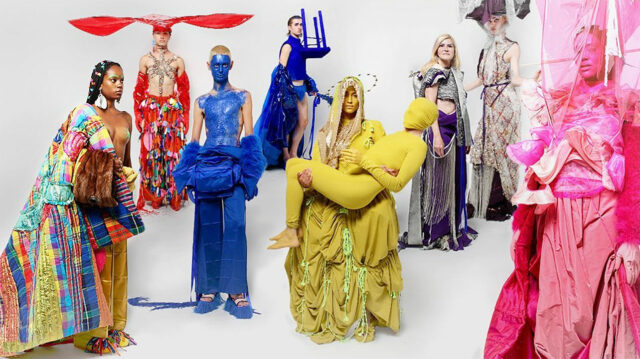
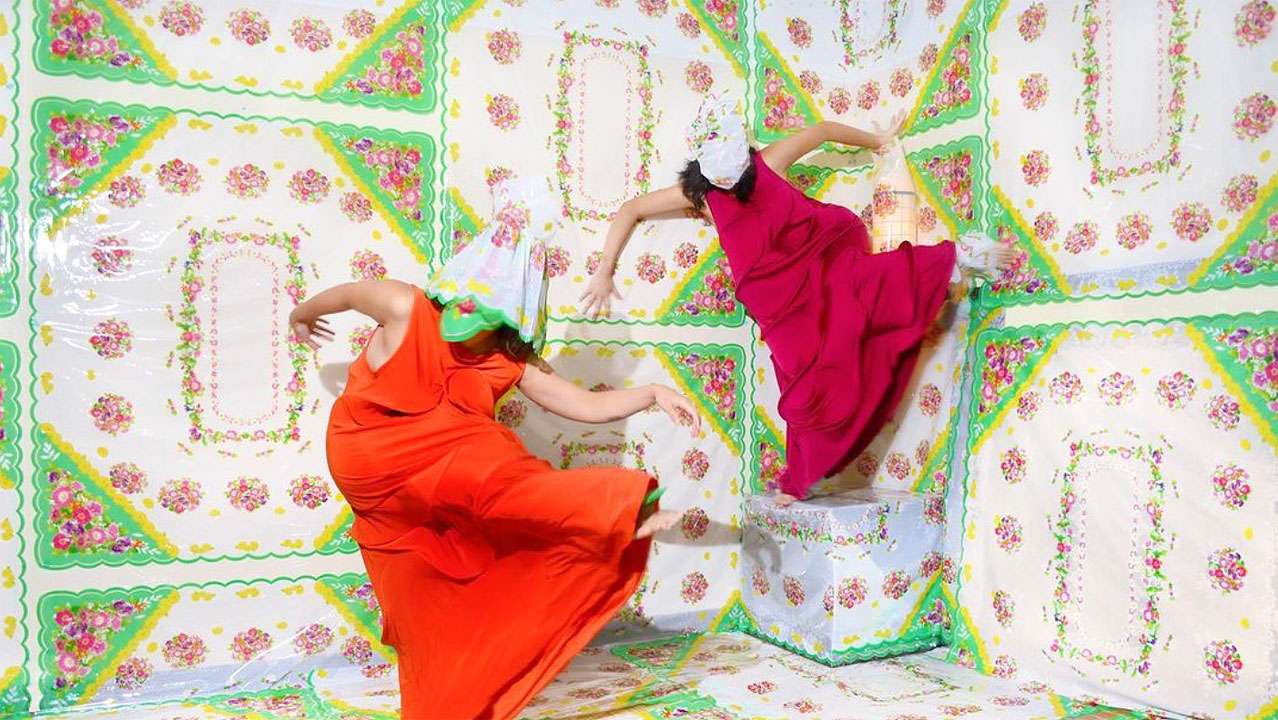
When we met him at this year’s MaArte Fair over the weekend, Mr. Macasinag was in the middle of a Filipino child’s birthday party. The room at the Peninsula Manila which served as his “booth” was covered in the bright floral plastic tablecloths seen in roadside eateries. Marshmallows and hotdogs on sticks were prominently displayed next to a bright birthday cake covered in rainbow sprinkles. All of these jostled for space with pieces from his graduation collection from the Institut Français de la Mode (IFM), a part of which (a blue garment covering the waist of a model painted blue) was featured in Vanity Fair France.

Despite his education at the world’s fashion capital, it seems as if he’s still influenced by his roots. “Now that I think of it, actually, it’s not a Filipino aesthetic. It’s just things that I grew up with,” he said. He says that the floral tablecloths decorating his booth were inspired by a memory of a similar plastic wardrobe owned by his grandmother. “I guess it’s just a personal thing that I myself am drawn to kitsch elements,” he noted. He contrasts this kitsch with the dramatic, also present in how he was raised. “I guess, with the environment that I grew up in, there the sense of [the baroque]. We see things in a cinematic way.”

“I guess that they’re more personal…[rather] than something that’s national.”

The graduation collection itself is an example of the mixture of these elements. Work for the collection started sometime after the death of his grandfather. In reviewing family photographs, he kept seeing a sculpture depicting the Pieta (a motif in art showing the Virgin Mary holding the body of the dead Jesus Christ). This particular sculpture had been commissioned by his great-grandmother, and was passed down to his grandmother. “If there’s one thing that emblematized family, and was something personal to me, it was the Pieta,” he told BusinessWorld. For his graduation show, a model wearing an ochre garment flounced up like it was the 1700s, wearing a veil and a halo of stars. The model held another model, wrapped completely in yellow. That same ochre garment, trimmed in bright green nylon cords, was displayed at his space at The Pen.

By September, he will be back in Paris for a two-year Master’s degree at the same school. In the future, he would like to spend five to 10 years working in design studios, while maintaining a (limited) made-to-measure line here (he has already dressed celebrities like Pia Wurtzbach and Nadine Lustre). While he plans to set up shop in another country to tap into a more global market, he says, “Of course, I don’t want to stay away from my own roots.”

“It’s about how we take things from our past, from our own history, from the things that we like. Just our own personality and how we convey it into a design vocabulary,” he said, explaining his collection, which he titled “Manifesto.” “I feel like it’s a matter of making clothes more personal. I feel like the idea of making clothes personal gives it more value.”

He counts Japanese designer Rei Kawakubo as one of his influences. This is evident in one of his collections, dresses modified with boning that lands on the body to give it a waving shape. An artist from a famed artistic family was choosing between one in black jersey and another in green lace at the MaArte booth. Rei Kawakubo made garments that similarly artistically distorted the body. “I feel like she really gave me a new perspective on clothes. Now, the idea of clothes as Not-Clothes, or clothes as Object are things that I constantly think about in my work,” he said.

Mr. Macasinag told us what a Paris education in fashion gave him that he couldn’t get anywhere else. “Craft, for one.”

“It’s so cliché, but the vibrance of life, the daring to do things, that’s something that I don’t often see here. Having that grit, having that daring, being able to wear something like this and not caring,” he said.

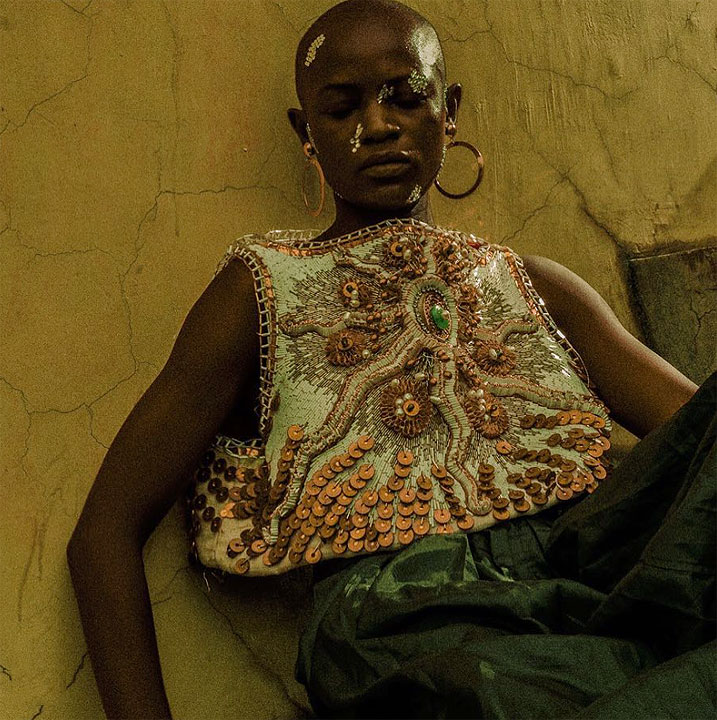
He himself was wearing something like a plastron, heavily beaded, trimmed with Philippine centavo coins, decorated at the solar plexus with a jade and pearl pendant capping a T’boli brass charm. He made that for his mother to wear at her wedding anniversary.

He’s only 22 years old, and he entered the IFM at 19.

“There are people who don’t really want to take you seriously. To contrast that, it’s just a matter of doing good things, whether workwise of things in general. I did experience that when I was a bit younger, but now I feel like there are people who actually believe and support and listen to what I do have to say,” he said.

On the advantages of being young, it’s just about not giving a flying fig about what others think.

“I don’t know if it’s really about youth, or if it’s my own personality. I personally don’t feel like I’m necessarily attached to what other people are supposed to think of me. Maybe it’s a sort of rebelliousness that comes with youth, but I don’t want to attach it to that also. I guess it’s also a sense of freedom. That’s the most important thing about designers that are supposed to be young,” he said.

A teacup was hanging around his neck on a black gauze ribbon. “I just found it funny to wear a two-year-old teacup,” he said.

“When I’m at the club, I just take shots with it.” —  Joseph L. Garcia

7-Eleven store count up by 161 in the first half

BW FILE PHOTO

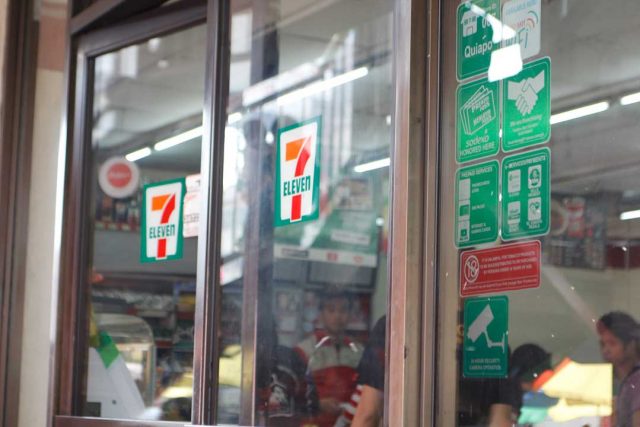
PHILIPPINE Seven Corp., the operator of 7-Eleven convenience stores, reported that it completed 161 new stores in the first semester, surpassing half of its target 300-store network expansion in 2022.

By the end of the first half, the number of 7-Eleven stores reached 3,241 — 1,057 in Metro Manila, 1,402 in Luzon (outside Metro Manila), 464 in the Visayas, and 318 in Mindanao.

“Shopping close to home will be the trend that will persist,” Philippine Seven’s President and Chief Executive Officer Jose Victor P. Paterno said at the Philippine Stock Exchange STAR Investor Day on Thursday, “the smaller the store, the closer to home, the better.”

Mr. Paterno said that stores in the Visayas-Mindanao region had been expanding faster and would continue to do so.

The company also reported that as of July 31, the number of its 7-Bank automated teller machines (ATMs) rose to 1,854 or 946 machines short of its target in 2022.

These cash recycler ATMs allow 7-Eleven store operators to deposit the money they get from store sales that the machine “recycles” to fund the withdrawals of its customers.

“[This] reduces cash handling risks and allows immediate usage of funds,” the company said.

In the second quarter, Philippine Seven reported an attributable net income of P691.28 million, reversing the P103.24-million net loss last year.

Its systemwide sales registered a growth of 49.8% to P16.62 billion in the second quarter from P11.1 billion a year ago.

Year to date, the company’s net income was up to P890.41 million, turning around from last year’s net loss of P402.9 million, while systemwide sales climbed by 35.9% to P30.18 billion from P22.2 billion last year.

On the stock market on Friday, Philippine Seven shares declined by 3.31% or P2.50 to P73 apiece. — Justine Irish D. Tabile

T-bill rates seen to rise ahead of retail bond offering

BW FILE PHOTO

RATES of Treasury bills (T-bills) could increase this week as the government’s upcoming retail bond offer is expected to reduce liquidity in the market.

The Bureau of the Treasury (BTr) will offer P15 billion in T-bills on Monday, or P5 billion each in 91-, 182- and 364-day securities.

The BTr canceled T-bond auctions on Aug. 23 to make way for its sale of five-and-a-half-year retail Treasury bonds (RTBs).

Rizal Commercial Banking Corp. Chief Economist Michael L. Ricafort said the T-bill yields this week will be slightly higher on expectations of reduced demand as the RTB offering will siphon off some liquidity from the market.

Moreover, a trader sees T-bill rates rising by 10 basis points (bps), while a second trader expects a 20-bp increase in T-bill rates from those seen at the previous auction.

“We continue to factor in the Monetary Board’s recent and subsequent decisions. Investors are determined to park their funds at the short end for now until firm cues on interest rates come to light,” the first trader said.

The Bangko Sentral ng Pilipinas (BSP) raised its benchmark interest rate on Thursday, and signaled it has room to further hike rates as it battles inflation.

The Monetary Board increased the overnight reverse repurchase rate by 50 bps to 3.75%, as expected by 13 out of 18 analysts in a BusinessWorld poll.

The rates on the overnight deposit and lending facilities were also increased to 3.25% and 4.25%, respectively.

The BTr will sell at least P30 billion in five-and-a-half-year RTBs this month, its second RTB offer this year. The offer period for the peso-denominated debt is Aug. 23 to Sept. 2.

In March, the government raised P457.8 billion from the issuance of five-year RTBs, which have a coupon rate of 4.875%.

Mr. Ricafort said the RTB’s coupon could be at 5.43% to 5.62%, while the first trader gave a forecast range of 5.375% to 5.750% and the second trader sees a 5.625% to 6% range.

“The RTB issuance could shatter records in terms of market demand and award on price setting date tomorrow. RTBs usually offer some premium over current benchmarks so that’s usually a plus to those yearning for yields,” the first trader said.

Retail bonds are targeted for small investors who want low-risk, higher-yielding savings instruments backed by the government.

At the secondary market on Friday, the 91- 182- and 364-day T-bills were quoted at 2.0531%, 3.0595%, and 3.7651%, respectively, based on the PHP Bloomberg Valuation Reference Rates published on the Philippine Dealing System’s website.

The government made a full award of P15 billion as planned via the T-bills it auctioned off last week as total tenders reached P40.532 billion.

Broken down, the Treasury made a full P5-billion award of its offer of 91-day securities as the tenor attracted P14.61 billion in bids. The average rate of the three-month T-bill went up by 2.4 basis points (bps) to 1.874% from the 1.85% fetched at the previous auction. Accepted rates ranged from 1.825% to 1.91%.

The government also borrowed P5 billion as planned via the 182-day securities as tenders reached P18.01 billion. The average rate of the tenor rose by 1.5 bps to 3.226% from the 3.211% fetched at the previous auction as accepted rates were from 3.22% to 3.243%.

Lastly, the BTr raised P5 billion as programmed from the 364-day debt papers, with demand for the tenor reaching P7.92 billion. The average rate of the one-year T-bill rose by 7.7 bps to 3.712% from the 3.635% fetched at the previous auction, with the government accepting offers with yields from 3.6% to 3.8%.

The Treasury wants to raise P215 billion from the domestic market this month, or P75 billion through T-bills and P140 billion via T-bonds.

The government borrows from local and external sources to help fund a budget deficit capped at 7.6% of gross domestic product this year. — Keisha B. Ta-asan

Can domestic savings cover the country’s increasing investment needs?

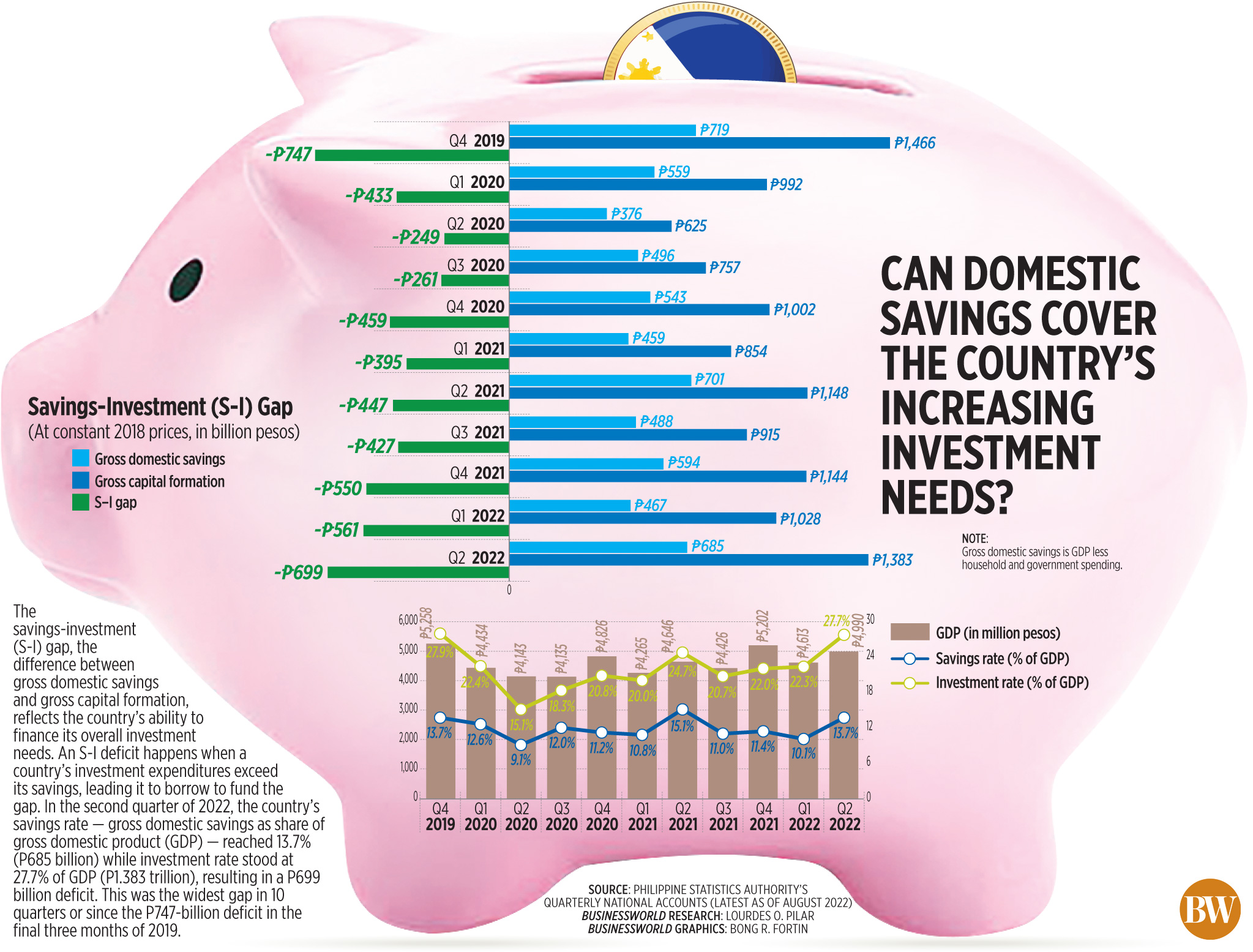
The savings-investment (S-I) gap, the difference between gross domestic savings and gross capital formation, reflects the country’s ability to finance its overall investment needs. An S-I deficit happens when a country’s investment expenditures exceed its savings, leading it to borrow to fund the gap. In the second quarter of 2022, the country’s savings rate — gross domestic savings as share of gross domestic product (GDP) — reached 13.7% (P685 billion) while investment rate stood at 27.7% of GDP (P1.383 trillion), resulting in a P699 billion deficit. This was the widest gap in 10 quarters or since the P747-billion deficit in the final three months of 2019.

Can domestic savings cover the country’s increasing investment needs?

Sally Carrera of ‘Cars’ goes from reel to real

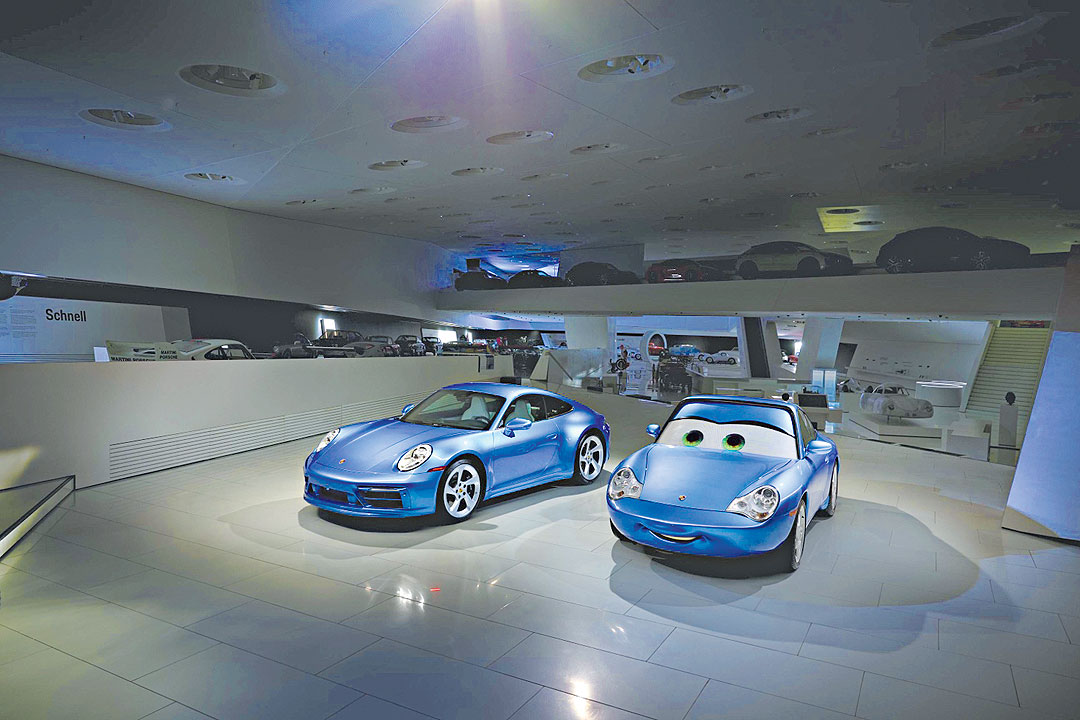
The Sally Special takes inspiration from “Sally Carrera” in the movie Cars. — PHOTO FROM PORSCHE

WE’VE OFTEN heard of iconic cars being made into toys and diecast scale copies — or even Legos. But how often have we seen cartoon and fictional automobiles crossing into real life?

That’s exactly the case with Sally Carrera, the enchanting “lady” car in the Disney and Pixar animation flick Cars. The quirky cartoon character based on a Porsche 911 has now been rendered in real life. The one-off — painstakingly created and worked on to be faithful to the on-screen character, while paying tribute to the Cars franchise — is meant for a noble plan as well.

As “Velocity” goes to press, the aptly called “Sally Special” is to go under the hammer through RM Sotheby’s during the Monterey Car Week in California. Proceeds will be donated to two charities: Girls, Inc. and USA for UNHCR, an organization supporting refugees from Ukraine.

Said Porsche AG Vice-President for Communications, Sustainability, and Politics Sebastian Rudolph, “Vehicles need a face and a story, and the animated Pixar’s film Cars has impressively done just that: brought cars to life on the big screen.” The street-legal 911 will definitely be much coveted, and the winning bidder will get to have something no one else has. “The story conveys values such as friendship, love and mutual support — and in the middle of it all is a Porsche. Together with Pixar, we have brought the spirit of Sally to life in a new way, not on the screen, but off the screen,” he continued.

The project to turn Sally from reel to real began in November last year, uniting the members of the original Cars team who first came together more than two decades ago. Pixar Animation Studios Franchise Creative Director of Franchise Jay Ward and Production Designer Bob Pauley (who first drew Sally Carrera) were assisted by members of the Sonderwunsch team at Porsche Exclusive Manufaktur in Stuttgart and designers from Style Porsche in Weissach. The team worked together for 10 months to create Sally Special.

Aside from being a fun project, the 911 Sally Special was a challenging one. “We decided early on that we wanted to create a completely drivable 911 — inspired by Sally Carrera, but just not an exact copy. Sally Carrera loves to drive — that was our inspiration. We asked ourselves: if Sally were built today as a road-approved model, what would she look like?”

But of course, the 911 Sally Special is a, well, special car on its own — predicated on the “fastest and most variant of the 911 Carrera model line, the 480ps 911 Carrera GTS… The car is equipped with a manual gearbox, tapping into Sally Carrera’s passion for driving,” said Porsche Exclusive Manufaktur Director Boris Apenbrink, adding, “The customization elements are detailed and extensive. 911 Sally Special was one of the most intense, emotional and detailed Sonderwunsch projects our team has worked on. One example is that the car is painted in ‘Sallybluemetallic,’ a custom paint that was hand-applied specifically for this project. We also thought of Sally’s tattoo, of course. Implementing that was a very special challenge.” Sally Carrera’s Turbo-look rims were reinterpreted by Style Porsche designers in Weissach and manufactured especially for the 911 Sally Special. Meanwhile, a “five-arm design” rim made it to the real-life 20-/21-inch wheel dimensions of the current 911 generation and establishes a visual link to the 911 Type 996 on which Sally Carrera is based.

During an online press conference, “Velocity” asked if the Sallybluemetallic hue would ever make it to the 911 palate of colors which customers could choose. The answer is no — further making the Sally Special even more special, indeed.

Porsche interior designer Daniela Milošević led the team that worked with Pixar to design the new blue color as well as the vehicle’s interior. Sallybluemetallic made it into the cabin of the one-off as well. “It creates both obvious highlights and subtle details that will hopefully bring a smile to the future owner’s face. At the same time, it was important to us not to forget everyday usability and practicality. (The) 911 Sally Special is meant to be driven often and gladly. We developed a special Pepita houndstooth fabric upholstery in three colors, combined with chalk-colored leather and stitching in Speed Blue. Working out these details makes the project special and brings back a lot of memories of the movie and Sally Carrera,” she said.

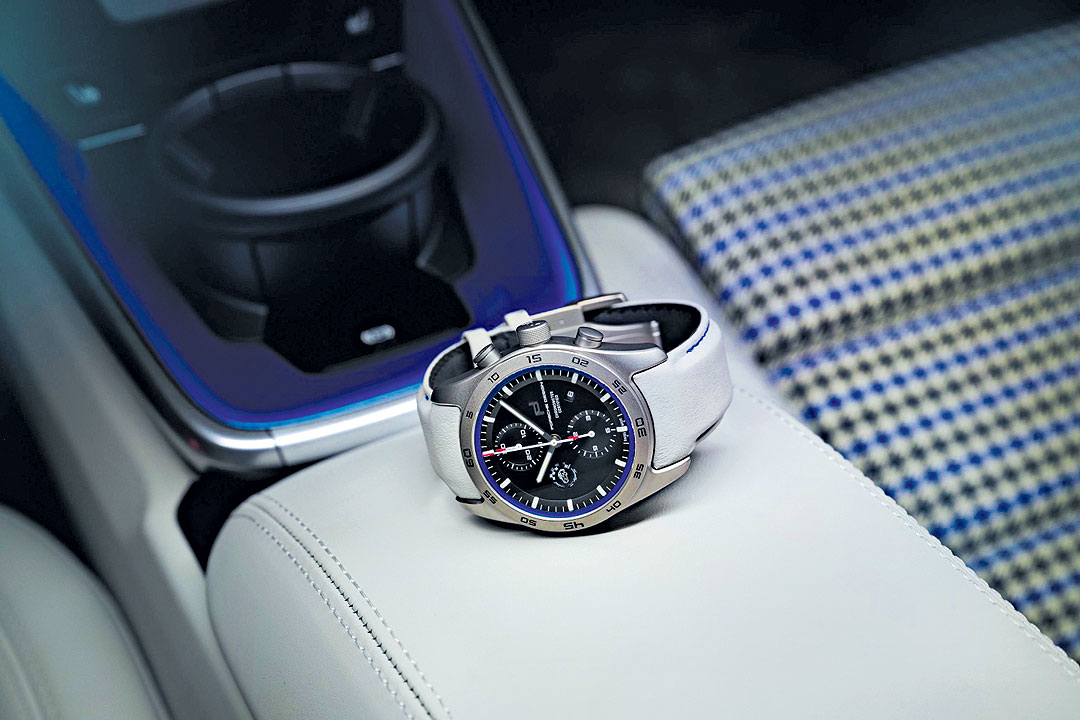
Aside from the car itself, the auction also includes other highlights — such as a unique chronograph by Porsche Design, also created in collaboration with Pixar. The watch’s colored ring is, of course, painted in Sallybluemetallic as well, with a chalk-colored leather strap with Speed Blue stitching underscoring the sporty design of the watch. The strap can be quickly and easily swapped out for a second strap in Speed Blue with chalk-colored stitching (without the need for tools). A limited-edition marking is on the case back. Powering the one-of-a-kind piece is a COSC-certified Porsche Design Werk 01.100 movement. The 911 Sally Special Chronograph was precision-engineered and manufactured at Porsche’s own watchmaking facility in Solothurn, Switzerland.

The auction will also feature a special indoor car cover from Porsche Tequipment, a wheel rack with an additional wheel set consisting of Carrera Exclusive Design wheels, a book on the development and production of the one-off model and original drawings by designers Shuichi Yamashita and Bob Pauley. — Kap Maceda Aguila

Coca-Cola says F&B industry needs 450,000 MT of premium refined sugar

SLASHIO §PHOTOGRAPHY-UNSPLASH

By Revin Mikhael D. Ochave, Reporter

SLASHIO §PHOTOGRAPHY-UNSPLASH

COCA-COLA Beverages Philippines, Inc. (CCBPI) said that the local food and beverage (F&B) industry requires at least 450,000 metric tons (MT) of premium refined sugar in order to serve the orders of customers amid tight supply and high prices.

“We have shared with the President (Ferdinand R. Marcos, Jr.) that the industry needs at least 450,000 MT of premium refined bottler grade sugar to utilize 100% of its manufacturing capacity for the balance of the year and serve the orders of customers who are depending on our products for their sales and income,” the beverage manufacturer said in a statement released over the weekend. 

Recently, beverage manufacturers — namely CCBPI, Pepsi-Cola Products Philippines, Inc., and ARC Refreshments Corp. — announced that they are experiencing a shortage of premium refined sugar that is used for production of their products.

According to CCBPI, F&B manufacturers require premium refined sugar to maintain the quality of their products.

“We’d like to emphasize, however, that not all sugar is the same. Food and beverage manufacturers need premium refined sugar to maintain high-quality products,” the CCBPI explained.

“Currently, there is approximately a 400,000 MT gap on top of a starting gap of 200,000 MT of the local sugar supply for 2022. This is based on a projected demand of 2.3 million metric tons for 2022 for the entire country,” it added.

On Aug. 18, Press Secretary Rose Beatrix Cruz-Angeles announced that Mr. Marcos, Senate President Juan Miguel F. Zubiri, and sugar stakeholders had agreed to import 150,000 MT of sugar in a bid to address low supply and soaring prices.

Mr. Marcos is currently the head of the Department of Agriculture and the chair of the Sugar Regulatory Administration (SRA). Mr. Marcos previously rejected the SRA’s plan to import 300,000 MT of sugar.

The Office of the Press Secretary on Aug. 19 also disclosed that big supermarkets — particularly Robinsons Supermarket, SM Supermarket, Puregold Supermarket, and S&R Membership Shopping — would reduce their selling price of sugar to P70 per kilogram, down from as high as P110 per kilogram, in a bid to help consumers.

Meanwhile, CCBPI said that it is implementing “various efforts” to reduce the effect of the premium refined sugar supply shortage to its business.

“As always, we are keeping our consumers, customers, and our people front and center,” the company said. 

“We and the broader industry look forward to continuing to work with the President and all relevant government offices to address the situation and deliver a sustainable solution as we get back to delivering our full line-up of beverages and supporting the country’s economic recovery,” it added.