Home Blog Page 5957

Shanghai residents turn to NFTs to record COVID lockdown, combat censorship

Vector Image | Blockchain cryptocurrency vector created by pikisuperstar - www.freepik.com

 – Shanghai residents are turning to the blockchain to preserve memories of the city’s month-long COVID-19 lockdown, minting videos, photos and artworks capturing their ordeal as non-fungible tokens to ensure they can be shared and avoid deletion.

Unable to leave their homes for weeks at a time, many of the city’s 25 million residents have been unleashing their frustrations online, venting about draconian lockdown curbs and difficulties procuring food, and sharing stories of hardship, such as patients unable to get medical treatment.

That has intensified the cat-and-mouse game with Chinese censors, which have vowed to step up policing of the internet and group chats to prevent what they describe as rumors and efforts to stoke discord over seething public frustration with the lockdown.

While some people have defiantly continued reposting such content, others are turning to NFT marketplaces like the world’s largest, OpenSea, where users can mint content and buy or sell it using cryptocurrencies, attracted in part by the fact that data recorded on the blockchain is unerasable.

The height of Shanghai‘s lockdown minting moment is rooted in April 22, when netizens battled censors overnight to share a six-minute video entitled “The Voice of April”, a montage of voices recorded over the course of the Shanghai outbreak. Read full story

As of Monday, 786 different items related to the video can be found on OpenSea, alongside hundreds of other NFTs related to the lockdown in Shanghai.

On April 23, a Chinese Twitter user with the handle imFong said in a widely retweeted post, “I have minted the ‘Voice of April’ video into an NFT and have frozen its metadata. This video will exist forever on the IPFS,” referring to the interplanetary file system, a type of distributed network.

Like most major foreign social media and news platforms, Twitter is blocked in China, although residents can access it using VPNs.

A Shanghai-based programmer told Reuters that he was among those in the city who viewed their effort to keep the video alive as part of a “people’s rebellion”.

He has himself minted an NFT based on a screenshot of Shanghai’s COVID lockdown map, showing how most of the city has been sealed off from the outside world.

“Being stuck at home because of the outbreak leaves me a lot of time,” he said, speaking on the condition of anonymity.

Other Shanghai content available on OpenSea as NFTs for sale includes Weibo posts containing complaints about the curbs, images from inside quarantine centers, and works of art inspired by life under lockdown.

Simon Fong, a 49-year-old freelance designer from Malaysia who has been living in Shanghai for nine years, began creating satirical illustrations on life under lockdown in the style of Mao-era propaganda posters.

He started minting them into NFTs, having dabbled in the market since late last year, and has now managed to sell nine of his works for an average price of 0.1 ether ($290)

His pieces include scenes dramatizing PCR testing, as well as residents‘ demands for government rations.

“I chose the Mao-era propaganda style for these pieces because some people are saying that the lockdown situation is taking Shanghai backward,” Fong said.

While China has banned cryptocurrency trading, it sees the blockchain as a promising technology and NFTs have been gaining traction in the country, embraced by state media outlets and even tech companies including Ant Group and Tencent Holdings.

The protracted lockdown in Shanghai, China’s financial hub, is party of Beijing’s controversial zero-COVID strategy, a policy which has growing risks to its economy.

The COVID outbreak in Shanghai, which began in March, has been China’s worst since the early months of the pandemic in 2020. Hundreds of thousands have been infected in the city. – Reuters


N.Korea mobilizes office workers to fight drought amid food shortages

REUTERS

North Korea’s office workers and factory laborers have been dispatched to farming areas around the country to join a fight against drought, state media reported on Wednesday, amid concerns over prolonged food shortages.

North Korean leader Kim Jong Un had called for measures to improve a tense food situation caused by the coronavirus pandemic and typhoons, despite slight improvements early last year. Read full story

Drought and floods have long posed a seasonal threat to North Korea, which lacks irrigation systems and other infrastructure, and any serious natural hazards could cripple its reclusive economy already reeling from international sanctions and a near halt of trade. Read full story

The North’s Rodong Sinmun newspaper said government officials and company and factory workers joined hands with farmers nationwide in distributing pumping equipment and developing water resources in drought-prone regions.

It did not specify any damages so far, but said those efforts are aimed at countering an ongoing dry spell and bracing for an upcoming drought.

“Systematic, aggressive efforts are under way to raise public awareness and mobilize all available capabilities to prevent crop damages from drought in advance,” the paper said.

North Korea’s weather authorities on Tuesday warned of prolonged dry weather across the country until early next week, according to the official KCNA news agency.

The weather agency said last week that the average temperature for April was 2.3 Celsius (36.1 Fahrenheit) degrees higher than usual, with just 44 percent of its average rainfall nationwide.

In Anju and Kaechon, north of the capital Pyongyang, people created ponds, added fertilizer and growth enhancer to crops, and sent tractors, trucks and cultivators to carry water to farms, Rodong said.

Another dispatch said young labor units, which are called dolgyeokdae or youth brigades and usually mobilized in major infrastructure projects, have recently built waterways in the eastern port city of Hamhung as part of efforts to modernize and expand irrigational facilities.

In March, the United Nations urged Pyongyang to reopen its borders to aid workers and food imports, saying its deepening isolation may have left many facing starvation. Read full story

North Korea has not officially confirmed any COVID-19 cases, but it had closed borders and travel restrictions, before briefly resuming trade with China early this year.

The World Food Program estimated that even before the pandemic hit, 11 million, or more than 40 percent of the population, were undernourished and required humanitarian assistance. Read full storyReuters

Abortion-rights protesters rally in U.S., spurred by draft Supreme Court opinion

 – Protesters rallied under the slogan “off our bodies” in cities across the United States on Tuesday, demanding abortion rights be protected after the leak of a draft Supreme Court opinion that would overturn the landmark 1973 Roe v. Wade decision.

Thousands of people turned out for an abortionrights rally in New York City, one of the largest demonstrations as Americans awoke to political and social upheaval, months before voters go to the polls in congressional midterm elections.

“I hope it inspires people to show up in the midterms and vote, and that’s the one thing that I’m looking at as a positive,” Alaina Feehan, 41, a talent manager in New York City, told Reuters, calling the moment a “call to action.”

Protests were held in U.S. cities coast to coast, including Atlanta, Chicago, Denver, Los Angeles and Seattle, as the national Women’s March organization urged supporters to bring families and signs to “courthouses and federal buildings everywhere” promoting the social media hashtag #BansOffOurBodies.”

The Supreme Court itself became the epicenter for some of the earliest protests on both sides of the issue after the surprise publication of the 98-page draft ruling late on Monday by the news outlet Politico.

Demonstrators converged on the sidewalk just beyond the barricaded marble steps of the courthouse across from the U.S. Capitol, boisterously but peacefully voicing support for and opposition to ending a constitutional right to abortion nationwide.

Several dozen anti-abortion activists dominated the protests early in the day, beating on drums and chanting through megaphones: “Pro-choice is a lie, babies never choose to die,” and “Abortion is violence, abortion is oppression.”

Some knelt in prayer.

One man wearing a pink sweatshirt in support of Roe v. Wade tried in vain to tamp down the chants of an anti-Roe protester by holding his hand over her megaphone.


‘WE’RE GOING BACKWARDS’

Abortion rights advocates shouted back, “Off our bodies” and “abortion saves lives.” Others held signs reading, “Abortion is healthcare” and “Abortion is not a dirty word.” One sign displayed by a group identifying as Roman Catholics supporting abortion access said: “Thou shalt not steal my civil rights.”

By late afternoon, a larger and growing assembly of well over 1,000 abortionrights protesters held sway, with about two dozen anti-abortion activists relegated to the sidelines, one of them yelling, “Abortion is murder” through a megaphone.

“I just feel that we’re going backwards,” Jane Moore, 64, said of the prospect that Roe, which legalized abortion nationally nearly 50 years ago, could be struck down. “It actually breaks my heart and makes me angry at the same time.”

“It makes me very afraid. I feel very sorry for … young women. You’re starting all over again,” Paula Termini, 70, a nurse who has worked in delivery rooms and Planned Parenthood clinics, told Reuters outside the court. “It’s going to take a long time to get those gains back again.”

The protests in Washington were a prelude to rallies planned by abortion rights advocates in cities across the country.

About 300 people gathered in downtown Atlanta just outside the city’s Centennial Olympic Park on Tuesday evening, their chants in support of abortion rights drowned out periodically by the din of honking horns from passing motorists.

“We will fight in these streets, we will fight in every street in America if we need to,” said 19-year-old Wendy Nevarez-Sanchez, holding a “Hands off my uterus” sign.

In the Los Angeles suburb of Pasadena, some protesters carried coat hangers, a grim reference to “back-alley” abortions that experts say could become common again in states where abortion is outlawed.

Addressing abortionrights demonstrators in Seattle, Governor Jay Inslee declared, “Washington state is a pro-choice state and we’re going to fight like hell to keep Washington a pro-choice state. That’s why we’re here today.”

Perhaps the day’s largest rally emerged in New York City, where at least 2,000 abortionrights protesters assembled in lower Manhattan’s Foley Square, waving signs with such slogans as “Bans Off Our Bodies” and “Abortion is Freedom.”

“I’m here standing up for my people. I’m here to say that reproductive justice is immigrant justice,” said Diana Moreno, 34, pointing to how low-income women and the undocumented would be disproportionately affected by the loss of abortion rights.

A handful of demonstrators around Foley Square waded into the street and briefly blocked traffic.

One of the more colorful acts of anti-abortion protest earlier in the day emerged in San Francisco, where a man calling himself the “Pro-Life Spiderman” scaled a downtown skyscraper while posting video footage of his climb on Instagram. Local news media reported that police took the man into custody. – Reuters

India sets end-June coal import targets as power woes mount

A WORKER folds an Indian flag at a workshop in India, Aug. 11, 2005. — REUTERS

 – India has asked state and private sector utilities to ensure delivery of 19 million tons of coal from overseas by endJune, according to a power ministry letter, reflecting an urgency to secure supplies in a pricey market amid increasing blackouts.

The move, which marks the first time the world’s second largest coal importer is issuing timelines for imports, can put pressure on the global prices of coal as the utilities rush to avoid a repeat of the electricity crisis in April.

If the timelines are adhered to, the imports by the states and private utilities over the next five months for blending with domestic coal will surpass annual imports by the entities in at least six years.

An unrelenting heatwave pushed electricity demand to a record high in April, leading to the worst power crisis in over six years and forcing India to go back on a policy to cut down coal imports.

The federal government has asked state government-owned utilities to import over 22 million tons of coal and private power plants to import 15.94 million tons, the power ministry said in a letter reviewed by Reuters.

The power ministry asked all utilities to ensure delivery of 50% of the allocated quantity by June 30, another 40% by end-August and the remaining 10% by the end of October, according to the letter to top officials at state energy departments and heads of private power plants.

State government-run utilities have not imported for blending more than 7.1 million ton and private companies not more than 13.1 million ton since at least the year ending March 2017. Data predating year ended March 2017 is not available.

The federal power ministry did not immediately respond to a request seeking comment.

Utilities are not obligated to honor the federal government directives, but two government officials who attended meetings related to rising power demand said that states were warned of blackouts if the suggested quantities were not imported.

States and private companies “must import coal and “ensure continuous power supply in the respective states”, the letter read.

“To ensure minimum required coal stocks in power plants before onset of monsoon, it is necessary that placement of awards for importing coal for blending purpose is completed by 31.5.2022,” the ministry said in the letter dated April 28.

Private companies including Adani Power ADAN.NS, Tata Power TTPW.NS, Reliance Power RPOL.NS, Jindal Steel and Power JNSP.NS, Torrent Power TOPO.NS and Sembcorp SEBM.NS have been given import targets, the letter showed.

The companies did not immediately respond to requests for comment.

“All the State generation companies and independent power plants must submit weekly management information system report by every Friday to the Central Electricity Authority (CEA) and the Ministry of Power about port wise indents placed, arrival and delivery of imported coal plant wise,” the letter read. – Reuters

Starbucks misses sales estimates on China COVID curbs, suspends guidance

HENRY & CO.—UNSPLASH

Starbucks Corp SBUX.O suspended its guidance for the rest of its fiscal year on Tuesday as sales growth missed Wall Street targets due to China‘s tough COVID-19 curbs.

Comparable sales in China, where the chain has rapidly expanded in recent years to tap rising coffee consumption, declined 23%, overshadowing 12% growth in North America.

China‘s strict lockdown measures to meet its zero-COVID policy have upended operations of most global companies that have a significant presence in the Chinese market, including Apple AAPL.O, Gucci-parent Kering PRTP.PA and Taco Bell-owner Yum China 9987.HKRead full story

“I remain convinced Starbucks‘ business in China will be eventually larger than our business in the U.S.,” Chief Executive Officer Howard Schultz said in a call with investors.

The company expects “even greater impact” to its third-quarter results because of the timing of lockdowns in Shanghai and resurgence of the virus in Beijing and other cities.

Even so, demand in its U.S. stores has been “relentless,” Schultz said. Shares rose 5% in extended trading following the results.

“Demand and revenue are key drivers,” said Ivan Feinseth, chief investment officer at Tigress Financial Partners. Tigress owns Starbucks stock on behalf of clients and accounts it manages. “Everything is going well in spite of the pandemic and strength in the United States offset the weakness in China.”

Global comparable sales at Starbucks, which recently brought Schultz back to lead the company amid a wave of unionization at its U.S stores, rose 7% in the second quarter, while analysts polled by Refinitiv had expected 7.1% growth.


UNION APPROACH

More than 50 U.S. cafes have elected to join the Workers United union out of roughly 240 altogether that have sought to hold elections since August.

Despite already raising wages since last year, the company will invest an additional $200 million in fiscal 2022 to lift pay for store managers, increase training, revitalize its “Coffee Master” program for baristas and launch an internal app to communicate directly with its 240,000 U.S. employees.

The company will also accelerate the rollout of new ovens and espresso machines and speed up maintenance and repairs. And it will update its consumer-facing app to give customers more accurate times to pick up their beverages. Read full story

The new money will bring total investments in employees and cafes to $1 billion this fiscal year alone.

Schultz also said customers will be able to start adding tips to their credit and debit card purchases by late 2022, something that baristas at unionized stores in Buffalo, New York, asked for at the bargaining table.

“Federal law prohibits us from promising new wages and benefits at stores involved in union organizing. And by law, we cannot implement unilateral changes at stores that have a union,” Schultz said, adding that “the union contract will not even come close to what Starbucks offers.”

Schultz said his latest term as CEO will be temporary and that he and the board hope to name a successor by the autumn, with the aim for that person to take over entirely by the first calendar quarter of 2023. Schultz plans to remain on the board afterwards.

Higher costs for labor, freight and commodities ate into North American operating margins, which contracted to 17.1% from 19.3% in the prior year.

Total net revenue rose to $7.64 billion from $6.67 billion a year earlier, as the company opened 313 net new stores during the quarter. Analysts had expected $7.59 billion in quarterly revenue. – Reuters

Globe bags Opensignal’s Excellent and Core Consistent Quality awards

Independent global standard Opensignal has recognized Globe for delivering the most consistent mobile quality in the Philippines. Globe bested its global peers in the Excellent and Core Consistent Quality categories of Opensignal’s Mobile Experience Awards*.

The digital solutions platform bagged the Excellent Consistent Quality award with 51.6 percent or 7.8 percentage points higher than the nearest competitor, according to Opensignal’s April 2022 Mobile Network Experience Report for the Philippines. The report is based on data collected from Jan. 1 to March 31 this year.

“Globe is the outright winner of the Excellent Consistent Quality award, as the highest proportion of users’ tests met the minimum recommended performance thresholds to watch HD video, complete group video conference calls, and play games on its network,” Opensignal said.

Likewise, Globe topped in Core Consistent Quality with 74.6 percent, beating the nearest competitor by 12.8 percentage points. Core Consistent Quality uses thresholds for less demanding applications.

“Our measures of consistent quality quantify how often users’ experience on a network was sufficient to support common applications’ requirements,” Opensignal said.

Globe users also had the best experience when streaming video over 5G networks. The company emerged as the winner of the 5G Video Experience Award with 71.2 points.

Opensignal’s 5G Video Experience quantifies the quality of mobile video streamed when connected to 5G. It includes picture quality, video loading time, and stall rate, with the perceived video experience as reported by the users.

As of February, Globe has over 1.62 million devices registered on its 5G network. In terms of 5G outdoor coverage, it now covers 96 percent of Metro Manila and 84 percent of key cities in Visayas and Mindanao.

“We are glad to be recognized by Opensignal for the consistency of our network performance. Globe has been focusing on improving its overall quality of service, not only Internet speed. Today we serve our customers a diverse range of digital services and content delivered through our network. These are all designed to meet the evolving digital lifestyle of our customers and enrich their lives,” said Ernest Cu, Globe President and CEO.

The company continues to enhance its network by earmarking a large portion of the P89 billion for its capital expenditures this year. It intends to build new cell sites, upgrade existing sites to 4G/LTE, accelerate the rollout of 5G connectivity, and ramp up the fiberization of Filipino homes nationwide.

To learn more about Globe, visit www.globe.com.ph.


*Opensignal Awards – Philippines: Mobile Network Experience Report April 2022, based on independent analysis of mobile measurements recorded during the period January 1 – March 31, 2022 © 2022 Opensignal Limited.


Spotlight is BusinessWorld’s sponsored section that allows advertisers to amplify their brand and connect with BusinessWorld’s audience by enabling them to publish their stories directly on the BusinessWorld Web site. For more information, send an email to online@bworldonline.com.

Join us on Viber to get more updates from BusinessWorld: https://bit.ly/3hv6bLA.

Duterte stops e-sabong operations

REUTERS
Roosters are seen during a cockfight bout in Manila, Jan. 24, 2009. — REUTERS

By Kyle Aristophere T. Atienza, Reporter

PRESIDENT Rodrigo R. Duterte said on Monday he will order the termination of online cockfighting operations in the Philippines, after earlier flaunting the hundreds of millions of pesos in government revenues generated from these games.

At the Cabinet meeting televised on Tuesday morning, Mr. Duterte said his order was based on the recommendation of Interior Secretary Eduardo M. Año, who was tasked to do a survey on the social costs of online cockfighting, also known as “e-sabong.”

“The recommendation of Secretary Año is to do away with e-sabong and he cited the validation report coming from all sources,” he said. “So it’s his recommendation and I agree with it, it’s good, so e-sabong will end.”

Mr. Duterte’s sudden decision to stop online cockfighting operations might force operators and their workers to go underground, according to policy analysts.

Stopping e-sabong operations abruptly without providing a clear strategic roadmap for affected sectors would likely force small-time operators and their workers to operate illegally, said John Paolo R. Rivera, an economist at the Asian Institute of Management.

“Just like the other gambling operations suspended, this latest decision might temporarily fail to totally disenfranchise operations,” he said in a Viber message.

“Other operators may continue operating underground…The unintended consequences of this sudden decision would kick in.”

Jefferson A. Arapoc, an economist at the University of the Philippines (UP) Los Baños, said underground e-sabong operations are expected to flourish as the government has shown it is unable to regulate online activities such as scams and sex trafficking.

“The Duterte administration’s order to stop e-sabong operations would depend on the government’s capability to implement it,” he said. “His decision could have done more damage than good — imagine the government losing revenues while e-sabong continues to thrive in the underground economy.”

Mr. Duterte previously refused to suspend e-sabong because of the revenues it generates for the government, which saw its budget deficit widen during the pandemic.

The Philippine Amusement and Gaming Corp. (PAGCOR) earlier estimated revenues from online cockfighting averaged P400 million monthly last year and P640 million a month since January 2022.

Mr. Duterte acknowledged that the government’s previous stand was only based on e-sabong’s economic benefits. 

“It’s working against our values,” he said of the game. “The impact on families and on people, it turns out players are not sleeping for 24 hours.”

E-sabong gained popularity during the pandemic, as Filipino gamblers only needed to place bets using their mobile phones. However, the disappearance of at least 30 people allegedly linked to online cockfighting sparked a Senate investigation and prompted calls for its suspension.

Sought for comment, PAGCOR Chair Andrea D. Domingo said via text message that the regulator has to implement the President’s decision.

“We are duty bound to follow whatever is the decision of the President on e-sabong, which I am sure is always guided for the people in general,” PAGCOR President and Chief Operating Officer Alfredo C. Lim said via Viber.

Mr. Duterte gave Mr. Año until Tuesday (May 3) to finalize the order to terminate e-sabong operations. As of 5 p.m. yesterday, Malacañang had yet to release the order.

“Providing no certainty as to the exact date of the closure is unhelpful,” said Michael Henry Ll. Yusingco, a fellow at the Ateneo de Manila University Policy Center. “This date should have been settled before the announcement was even made.”

Mr. Yusingco said Mr. Duterte’s decision might push Congress to evaluate the domestic gaming industry and make it more responsive to emerging security and social threats.

“The broader context, the responsibility of re-examining the gaming industry falls on Congress,” he said in a Messenger chat. 

“Establishing a legal framework that is responsive to the times is the job of our legislators… So the future of this revenue-generating activity, and similar activities as well, is in the hands of our lawmakers.”

Congress has been urged to pass a law regulating online cockfighting. PAGCOR previously issued licenses to several e-sabong operators.

Mr. Yusingco said lawmakers should ensure “public safety and the general welfare are protected in the gaming industry now that we are on the path of digitalization.”

“E-sabong is only one activity, it should be examined among many others in a holistic way, including all forms of gambling,” said Edna Estifania A. Co, a professor and former dean of the UP National College of Public Administration and Governance.

“The government should rationalize its decisions by weighing the positive and negative aspects in terms of management. Financial gains, regulatory framework, and social impacts,” she added.

Senators welcomed Mr. Dutere’s latest decision.

“The suspension of e-sabong operations in the country, while delayed, will pave the way for families to recover from their financial losses,” Senate President Vicente C. Sotto III said.

Senator Ronald M. dela Rosa, who previously pushed the President to suspend e-sabong, said there is no time for Congress to act on a bill that would transfer the authority to issue permits for e-sabong operators from PAGCOR to Congress.

“(This) would mean demise of the e-sabong industry unless the next administration would decide to resurrect it,” he said.

Senator Francis N. Pangilinan, meanwhile, said the debates on e-sabong should be left to the next Congress to give lawmakers more time to assess the popular online game. — with inputs from Tobias Jared Tomas

Next president needs to build on Duterte’s reforms — economist

PHILIPPINE STAR/KRIZ JOHN ROZALES
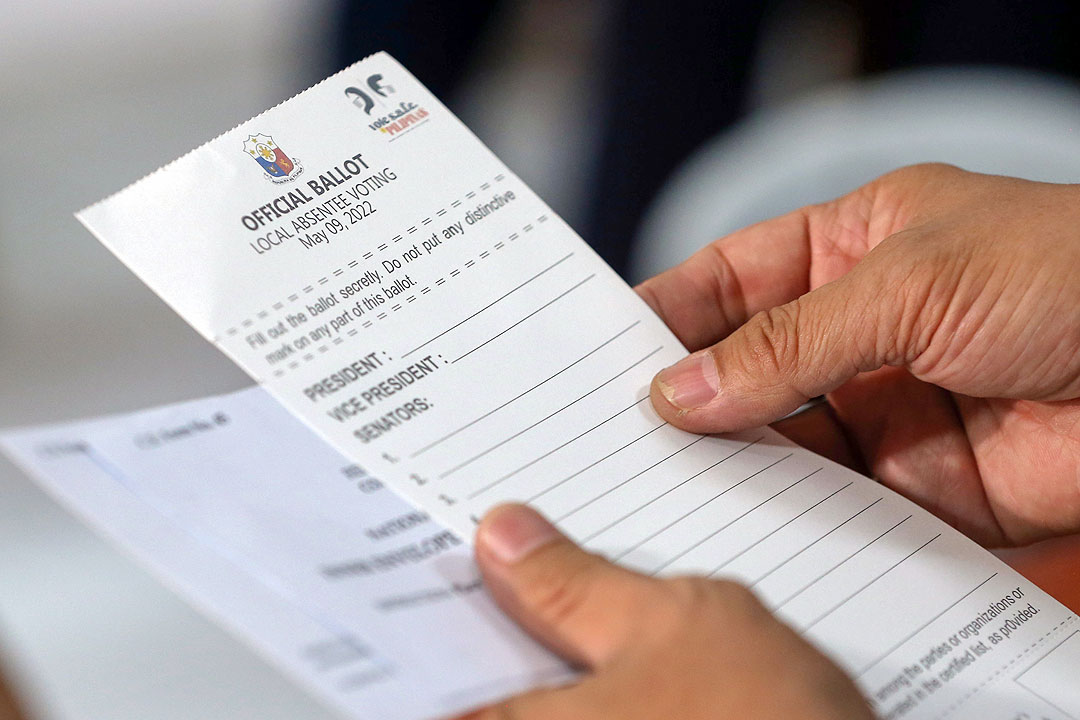
A person holds a ballot as he participates in the local absentee voting, April 27. — PHILIPPINE STAR/ KRIZ JOHN ROZALES

THE COUNTRY’S next president will need to build on the economic reforms started by the Duterte administration in order to sustain recovery from the pandemic, according to think tank GlobalSource Partners.

In a May 2 note titled “Is it game over?,” GlobalSource Partners Philippine country analyst Romeo L. Bernardo said former Senator Ferdinand “Bongbong” R. Marcos, Jr. continued to enjoy a wide lead in the latest Pulse Asia survey. The same survey showed Vice-President Maria Leonor “Leni” G. Robredo was a distant second despite large crowds at her recent campaign rallies.

“For the economy to return to sustaining the 6-7% pre-pandemic growth rates, the next administration needs to build on the economic reforms of the Duterte government to attract private capital, whether in infrastructure or elsewhere,” he said.

“Mr. Marcos, if he does win next week’s vote, will need to quickly assure markets that he has a well-thought-out, cohesive plan. And just as important, an economic team that can competently implement it.”

The Philippine economy grew by 5.7% in 2021, a turnaround from the record 9.6% contraction in 2020. The government is targeting 7-9% gross domestic product (GDP) growth this year.

While there appears to be no wild swings in price and flows in the financial markets that indicate apprehension about a Marcos win, Mr. Bernardo said “it is not clear that this has not already been fully priced in as a Marcos 2.0 has been looming for months now.”

Mr. Bernardo identified some risks from a possible Marcos win at the May 9 polls, such as the former senator’s lack of a clear economic plan for the country.

“To date, Mr. Marcos has yet to present a coherent economic program. His refusal to participate in debates, notwithstanding one-on-one challengers from other contenders, has left observers guessing whether it is safe to bet policy continuity under the new administration,” he said, adding some do not expect any drastic changes under a Marcos presidency.

If he wins a “high majority” in the elections, Mr. Bernardo said Mr. Marcos may be encouraged to pursue “fiscally unsound measures” such as price stabilization measures for rice and oil.

Mr. Marcos Jr. earlier promised to bring down the prices of rice by P20-30 per kilogram should he win.

Another risk is Mr. Marcos’s plan to continue the Duterte administration’s aggressive infrastructure program.

“While the Duterte administration inherited substantial fiscal space from its predecessor, Mr. Marcos will not have that luxury, especially after considering continuing social supports needed for post-COVID recovery and managing the impact of high global commodity prices,” Mr. Bernardo said.

“As it is, players in the public infrastructure sector have told us that ongoing construction projects have little budget cover and the risk of contractors not getting paid on time is worrisome.”

The Philippines ended 2021 with P11.73 trillion in outstanding debt, pushing the GDP ratio to a 16-year high of 60.5%. This was higher than the 60% threshold considered manageable by multilateral lenders for developing economies.

The country also borrowed P1.3 trillion and received grants worth P2.7 billion to fund its pandemic response, including coronavirus vaccines.

Outstanding debt stood at a record P12.09 trillion at the end of February. — Tobias Jared Tomas

Bulk prices surge to over 10-year high

PHILIPPINE STAR/ RUSSELL A. PALMA
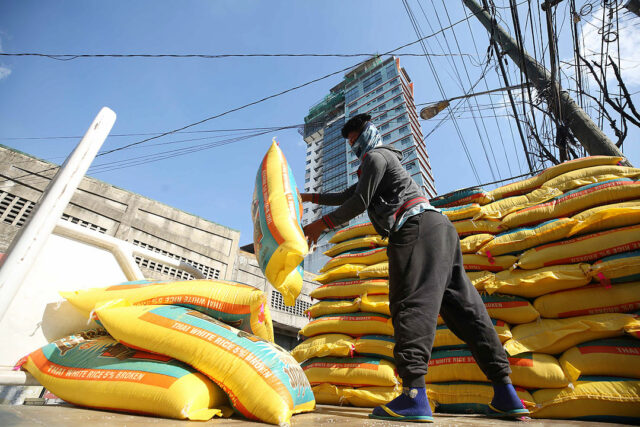
A man carries a sack of rice to a rice store in Divisoria, Manila, March 31. — PHILIPPINE STAR/ RUSSELL A. PALMA

By Bernadette Therese M. Gadon, Researcher

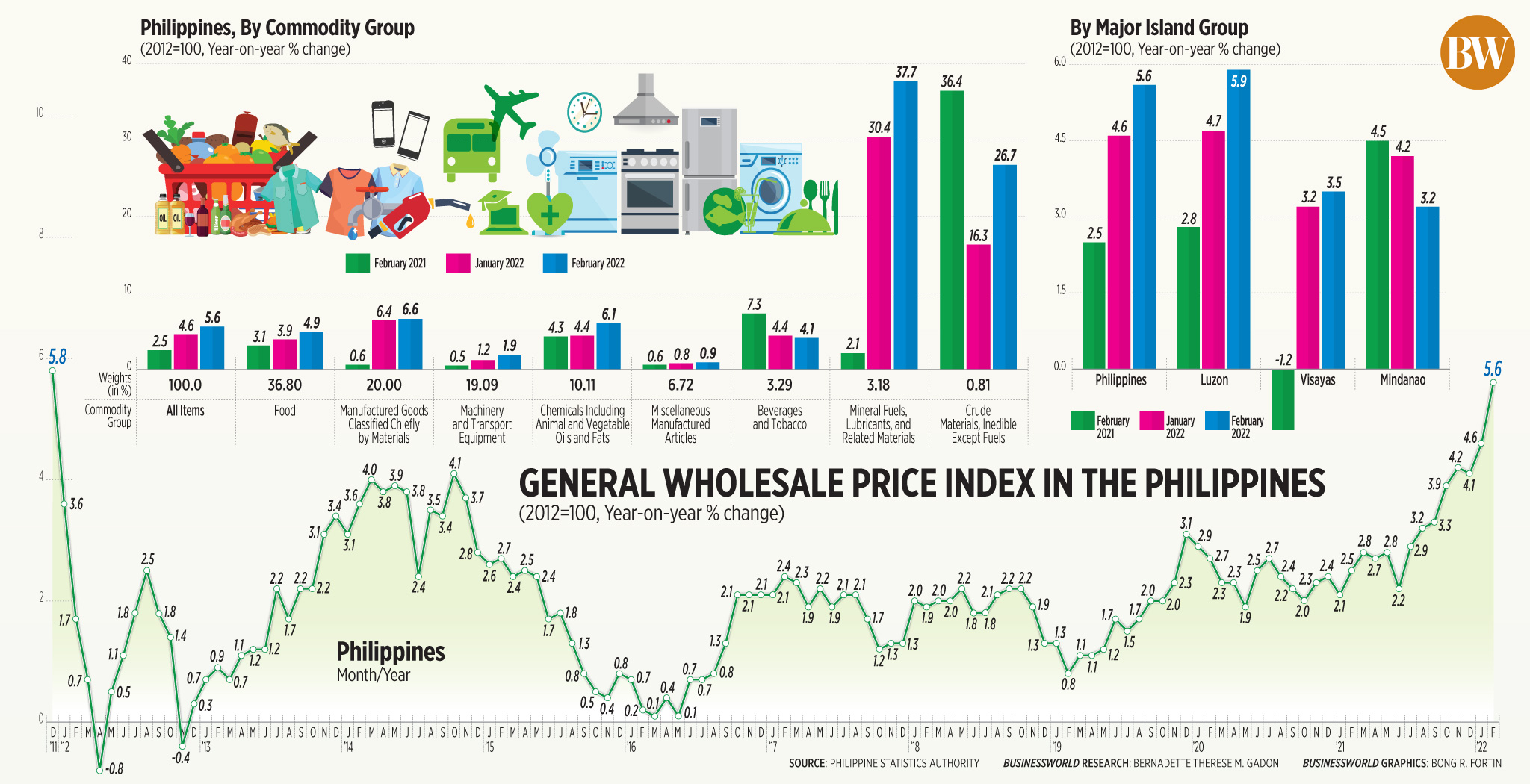
NATIONWIDE BULK PRICES of general goods rose to their highest level in more than a decade in February due to higher fuel costs caused by the Russia-Ukraine war, latest preliminary data from the Philippine Statistics Authority (PSA) showed.

The country’s general wholesale price index (GWPI) jumped 5.6% in February, from 4.6% in January and 2.5% in February 2021.

This was the highest index reading in more than 10 years or since the 5.8% growth recorded in December 2011.

General Wholesale Price Index in the Philippines

Year to date, the national GWPI averaged 5.1%, faster than the 2.3% in the same period in 2021.

The GWPI is used to monitor the wholesale trade sector and serves as a basis for price adjustments in business contracts and projects.

University of Asia and the Pacific Senior Economist Cid L. Terosa said the surge in bulk prices in February was mainly due to the spike in global oil prices after Russia invaded Ukraine.

“Higher global fuel and commodity prices due to the Russia-Ukraine conflict pushed prices higher. In addition, prices of housing, electricity, and water added upward pressure on prices in February,” he said in an e-mail interview.

Global crude oil prices soared above the $100-per-barrel mark after Russia began its invasion of Ukraine on Feb. 24. Concerns over global supply contributed to the volatility in oil prices since Russia is the world’s second-largest producer of crude oil.

Nearly all eight commodity groups monitored by the agency posted growth on an annual basis in February. Only beverages and tobacco saw slower growth at 4.1% from 7.3% in February 2021, and eased from 4.4% in January.

The heavily weighted food index, which contributed 36.8% in the theoretical wholesale basket of goods, went up by 4.9% year on year in February from 3.9% the previous month.

Manufactured goods classified chiefly by materials likewise increased by 6.6% in February from 6.4% the previous month. This group accounted for a fifth of the wholesale market basket under 2012 prices.

Mineral fuels, lubricants, and related materials surged by 37.7% in February, higher than 30.4% the previous month and 2.1% in February last year. This commodity group accounted for 3.2% of the market basket.

Crude materials, inedible except fuels, which made up 0.8% of the wholesale basket, also jumped by 26.7% from 16.3% in January.

By island group, Luzon outpaced the national level’s GWPI with 5.9% in February. This was faster than the 4.7% print in January, and the 2.8% in February 2021.

Luzon had the quickest growth in over a decade or since the 6.6% print in December 2011.

The GWPI in the Visayas also inched up to 3.5% from January’s 3.2%. It was a turnaround from the 1.2% contraction recorded in February last year. This matched the print logged in October 2011 and was also the quickest pace in more than 10 years or since the 4.2% growth in September 2011.

Meanwhile, Mindanao’s GWPI reading in February slowed to a 13-month low of 3.2% from 4.2% in January and 4.5% a year ago. This was Mindanao’s lowest GWPI reading since the 2.8% growth in January last year.

For the year, Mr. Terosa expects bulk prices to continue to climb based on the continued rise in commodity prices here and abroad.

“The GWPI will continue to climb in March and even in April, the confluence of global (persistence of the Russia-Ukraine war and the continued rise of global food and commodity prices) and domestic events (domestic transmission of increases in global food and commodity prices as well as brisk election-related activities) will keep prices above levels achieved last year and last February 2022,” Mr. Terosa said.

YouTube, TikTok replace consultation: Students self-diagnose their mental health

UNSPLASH

By Brontë H. Lacsamana, Reporter

FILIPINO university students are “overwhelmed with responsibilities” and have little to no time for self-care and a social life, leading many to self-diagnose their mental health instead of seeking professional help, according to study by the University of Santo Tomas (UST).

Conducted from 2021 to 2022, the study funded by the Department of Science and Technology surveyed over 200 students with anxiety and depression from six universities in Manila, Palawan, Benguet, Leyte, South Cotabato, and Albay.

Of the UST respondents, 20% performed self-diagnosis. Of those from Mindanao State University – Iligan Institute of Technology (MSU-IIT), 71.4% self-diagnosed.

“There are some ways they get to the point of, ‘maybe there’s something wrong with me,’” said Maria Carinnes P. Alejandria, project leader and UST associate professor, at an April 28 virtual summit that presented the results of the study.

These methods include taking a psychology class on mental health, conversing and consulting with peers, reading online articles and watching YouTube videos on their problems, and observing their own behavioral and emotional changes.

Jean S. Taypa, assistant professor at MSU-IIT, shared that one participant became aware of her condition through mental health professionals disseminating information on short-form video platform TikTok.

“Although they are self-diagnosed, the participants themselves notice the symptoms. … Despite the awareness of mental health services, students chose not to access help,” she said. Reasons cited for not doing so include long processes, the expensive cost of services, a lack of family support, and social stigma.

The study also found that the top external factors affecting the youth’s mental health are disasters (such as the coronavirus pandemic), family, peers, history of trauma and abuse, and academic pressure.

According to Ms. Alejandria, the delivery of mental health services can be improved by funding at the national and institutional level for mental health programs, and hiring of more psych personnel.

UNFILLED GAPS
The clamor for emergency sessions and consultations was so high when the pandemic started that clinics and services in the country were flooded by these requests, according to speakers at the summit.

“Now, we’re still plagued by the same problems: Where do we get support? How can we afford it? Are we getting the right kind that we need?” said Jun Angelo M. Sunglao, a psychologist from the London School of Hygiene and Tropical Medicine.

“There are still unfilled gaps,” he added, citing that the National Center for Mental Health struggled with nearly double the distress calls in 2020 than they did in 2019.

Filipino workers are also overwhelmed by multiple mental health challenges, with a 2021 study by mental health firm MindNation showing that 53% of Filipino workers suffered mentally during the global health crisis.

The survey pointed out top external factors affecting the workforce that were similar to that of the students — the coronavirus pandemic, family matters, personal problems, and pressure (but this time from work and financial matters).

Stigma against even having these mental health challenges was also found to play a part in workers’ low focus, motivation, productivity, and self-confidence.

MENTAL HEALTH MAP
Philippine-based health and wellness clinic LifeScience Center launched in February a genetic test called the Genomind Mental Health Map.

Leslie K. Lim-Carlos, a psychotherapist at LifeScience Center, said that Filipinos can use genetics to proactively understand “what we have no control over, while the rest is modifiable and changeable based on actions and habits.”

The service, which costs P23,600, starts off with an appointment for a registered medical technologist to collect one’s cheek swab. After this, the specimen is sent to the Genomind laboratory in Pennsylvania, USA, where the test originated.

Analysis takes two to three weeks and yields results for seven core genetic health capabilities — stress and anxiety, mood, focus and memory, sleep, eating behavior, habits and substance abuse, and social behavior. The client can access the report online to view these.

For instance, those who test as predisposed to heightened stress and/or decreased working memory can get insights on brain derived neurotrophic factor (BDNF), a protein that helps produce neurons and their healthy connections to the brain’s fear center.

Based on this result, the website then recommends eating more food with omega-3 fatty acids to boost BDNF and box breathing exercises to calm the system. It also links to a self-reported questionnaire by Mental Health America that screens for generalized anxiety disorder — for people to track symptoms over time.

On top of receiving a health map, those who want their results and recommendations explained to them can book a 30-minute consultation with an expert.

“Factors like genetics, environment, lifestyle, are all cumulative in one’s mental health journey,” said Dr. Harris Nguyen, a Genomind pharmaceutical expert in a video call with BusinessWorld.

Like the free mental health assessment offered by Break Your Stigma, the LifeScience test is open to those already diagnosed with mental health conditions and those who don’t have any history but want to understand themselves better.

What sets it apart is the deep dive into how various factors come together plus personalized, evidence-based recommendations that a consultation then interprets.

PRACTICAL TIPS
Meanwhile, the Benilde Well-Being Center (BWC) of the De La Salle-College of Saint Benilde, with Northeast Ohio Medical University psychiatry professor Dr. Dimitrios Tsatiris, released in March five questions that can help anxious minds identify “unease-provoking” thought patterns and seek calm:

1. Why am I anxious? This is for identifying the cause or source of one’s worries. Enumerating all doubts and prioritizing them can establish a sense of control.

2. What are the odds that my fear will become a reality? By estimating the probability of one’s worries turning real, these sources of anxiety become less impending.

3. What can I do to lower the chances? The anxious can further ease their minds and take charge by considering reasonable steps to lower these worries becoming real.

4. Even if the worst-case scenario were to occur, can I handle it? In unavoidable situations, people can recall and reflect on times that they overcame worst-case scenarios before, as guidance for present and future challenges.

5. What is the cost of anxiety? Rather than fixate on what can go wrong, thinking of one’s personal growth can help with reaching full potential as a result of the situation.

Bird flu puts organic chickens into lockdown from Pennsylvania to France

US DEPARTMENT OF AGRICULTURE/CC BY 2.0/WIKIMEDIA COMMONS

CHICAGO/PARIS — Organic and free-range chickens have been thrown into lockdown.

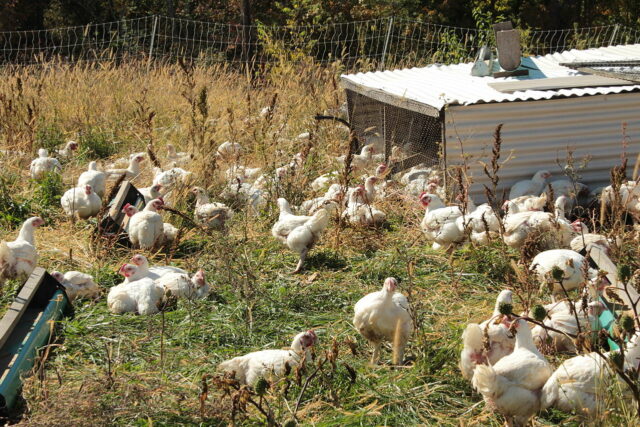
Egg-laying hens that normally have access to the outdoors can no longer roam as freely or feel the sun on their beaks as some US and European farmers temporarily keep flocks inside during lethal outbreaks of bird flu, according to egg producers and industry representatives.

The switch comes as a surprise to shoppers already shelling out more money for eggs due to cullings of infected flocks. Consumers pay extra for specialty eggs, thinking they come from hens that can venture out of barns.

US watchdogs say retailers and egg companies must do a better job informing customers that hens are kept inside, as shoppers track their spending amid record global food inflation. Keeping birds inside is safest for now, according to government officials, because a single case of bird flu results in entire flocks being culled. The virus can also infect humans, though experts say the risk is low.

In France, where the government has temporarily required farmers to keep chickens indoors since November, some retailers are defying obligations to post clear information for consumers about the mandate, according to checks of grocery stores by Reuters.

“I didn’t know that they had to stay inside,” said Josephine Barit, 34, a shopper at a small Paris store that had no indications hens may have been confined.

“So it’s not really ‘free range’ anymore?” she said. “I suppose there is no other choice because of bird flu, but they could say so.”

Allowing chickens time outside is thought to be more humane, giving consumers some peace of mind about buying animal farm products.

Veterinarians say poultry with outdoor access are particularly vulnerable to becoming infected with bird flu, officially known as highly pathogenic avian influenza (HPAI), because migratory birds spread the disease. Poultry can fall ill from contact with infected wild birds, their feathers or feces.

The US Department of Agriculture recommends farmers keep poultry indoors “as long as the HPAI outbreak is ongoing,” but has not required confinement.

DISSATISFIED CUSTOMERS
The US outbreak is the second-worst in history, with more than 35 million birds wiped out this year. France has culled nearly 16 million birds in its worst outbreak ever, while infections have also hit nations including Britain, Italy, and Spain.

European requirements to confine chickens have left some consumers dissatisfied even when retailers post signs notifying customers of the change.

“At the end of the day you still pay the price of ‘free range’ or organic eggs when the fowls have actually never seen the sky,” said Marc Dossem, 52, a shopper who spoke in a large supermarket in Paris.

EU and British marketing standards allow for free-range laying hens to be kept inside for up to 16 weeks before companies must issue advisories to customers.

Britain temporarily required eggs from “free-range” hens kept indoors to be labeled “barn eggs,” but has allowed farmers to let hens outside again starting in May.

In Spain, hens must be kept indoors in special risk and surveillance areas of the country, said Mar Fernández, Spanish head of the Interprofessional Organization of Eggs and Egg Products. They have not yet been indoors for more than 16 weeks, she said.

“There are countries that no longer have eggs from free-range hens available for months,” Ms. Fernández said.

US authorities do not require organic egg producers to update labels when unexpected events like bird flu change production practices, the agriculture department said. Eggs labeled “organic” as well as “free range” must come from hens with access to the outdoors in the United States.

MISSING THE SUNSHINE
Among the suppliers now prohibiting outdoor access is Pete and Gerry’s, which says it is the leading US producer of organic, free-range and pasture-raised eggs. The business sells eggs in stores owned by Kroger Co. and Amazon.com, Inc.’s Whole Foods Market.

“We will be constantly evaluating the exposure risk and will have them back outside in the sunshine as soon as possible,” Pete and Gerry’s said.

Vital Farms, Inc., another US producer of pasture-raised eggs, said it confined hens after outbreaks in Europe. Both producers have information online about the switch, but their “free-range” and “pasture raised” labels remain the same.

Whole Foods, Kroger and Target Corp. did not respond to questions about whether they would post notices for shoppers.

“Consumers should get what they pay for and they’re not getting the product as advertised,” said Danielle Melgar, a food advocate for the US Public Interest Research Group.

Some European producers are resisting orders to confine poultry, despite the risks.

“Laying hens can be quite aggressive so we let them out a little bit every day or they will kill each other,” said Emilie Ravalli, who runs an organic farm in Corcoue-sur-Logne in western France.

But barns can be comfortable, and chickens do not always go outside each day even when they are able to, said Gregory Martin, a poultry scientist at Pennsylvania State University.

“Confinement gives us safety,” Mr. Martin said. “Only live birds produce eggs, so it’s to our advantage to keep our birds safe.” — Reuters

Get boosted against COVID, doctors say

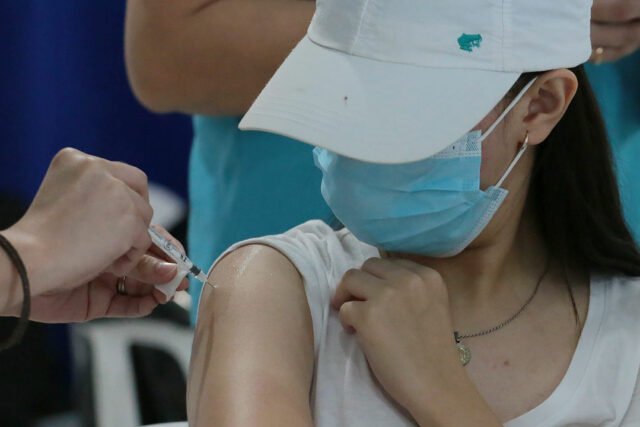
A woman gets a booster shot at an elementary school in Marikina City, Nov. 25, 2021. — PHILIPPINE STAR/ MICHAEL VARCAS

WHILE the government began rolling out the second booster against coronavirus disease 2019 (COVID-19) this April, only about a fifth of fully vaccinated Filipinos have had their first booster, prompting doctors to remind the public that a third dose is needed to maintain protection.

A booster dose, regardless of the brand, restores protection against serious COVID-19 outcomes, according to a review of 79 real-world studies on VIEW-hub, an interactive platform for data visualization on vaccine use and impact by the Johns Hopkins Bloomberg School of Public Health and IVAC (International Vaccine Access Center).

Conducted by 18 Southeast Asian infectious disease experts, the review posted April 25 included outcomes for both mRNA vaccines and the AstraZeneca vaccine.

“We live in an Omicron world, and two doses is not optimal protection against [the coronavirus variant],” said Dr. Bruce Mungall, Asia area medical director of vaccines and infectious diseases at AstraZeneca, during an April 27 event organized by the multinational pharmaceutical company and the Philippine College of Physicians (PCP).

“A booster dose is important for protection against Omicron,” he added.

As of May 1, only 19.8% of fully vaccinated Filipinos (or 13,487,275 of 67,911,471) have had their first booster.

RESTORED PROTECTION
Data from the UK shows that vaccine-induced protection against symptomatic COVID-19 infection wanes over time, Dr. Mungall said.

“For [the] Delta [variant], there is a sustained effectiveness over time — but effectiveness against Omicron drops 30% after six months of the second dose,” he added.

The same UK data shows that when individuals are given either an AstraZeneca or Pfizer primary series plus an mRNA booster, there is an immediate restoration of protection (in the 80%–90% effectiveness range) against hospitalization.

Dr. Mungall said another study had similar results: “If AstraZeneca is given as a booster, the effectiveness against overall infection goes up about 60%.”

Data from the review will help take the Philippines into the endemic phase of COVID-19, according to Dr. Ma. Encarnita C. Blanco-Limpin, PCP president.

“Anyone vaccinated with either the viral vector or mRNA vaccines can be assured that they will be highly protected from death or hospitalization due to the virus,” she said.

“The most important part of this expert review is that we can’t rely on measuring antibodies as a measure of [a vaccine’s] effectiveness against complications,” added Dr. Rontgene M. Solante, a vaccine expert with the Department of Health and one of the authors of the Southeast Asia review.

Antibodies for the virus that causes COVID-19 are expected to wane over time.   

“Even with waning antibodies, the [vaccine’s] protection is still there against severe COVID-19 and severe hospitalizations,” Dr. Solante said. “That’s why we discourage people from taking antibody tests. What’s more important is that you are protected against severe forms of complications.” — Patricia B. Mirasol