Home Blog Page 5908

Szoboszlai penalty earns Hungary first win over England in 60 years

BUDAPEST — A second-half penalty from Dominik Szoboszlai earned Hungary a shock 1-0 win over England in the Nations League on Saturday — their first victory against Gareth Southgate’s side in 60 years.

Looking to get their preparations for the Qatar World Cup, which begins later this year, up and running, England were surprisingly second best from the off in Budapest, and were fortunate to go into the break all square.

The hosts kept coming and made their pressure count as Szoboszlai converted from the penalty spot in the 66th minute after Zsolt Nagy was fouled by Chelsea defender Reece James — a decision which incensed the England players.

England pressed as they looked for a leveler, but they could not create that killer chance as their Nations League campaign got off to a disappointing start.

The tests keep coming with Germany England’s next League A, Group Three opponents on Tuesday, while Hungary will look to make it five wins in six when they face European champion Italy.

“We’ve got a massive game coming up on Tuesday,” England defender Conor Coady told Channel 4. “We need to look at this performance and learn from it very quickly.

“I thought we started off quite well. We need to tidy up and bounce back. We need to look at how we performed and how we move forward because these are big games for us.”

Hungary were forced to host England “behind closed doors” after being disciplined by both FIFA and the Union of European Football Associations (UEFA) for repeated racist behaviour from their fans, but the Hungarian FA said last month that children could attend the match at the Puskas Arena.

Under Article 73 of UEFA’s disciplinary regulations, children up to the age of 14 from schools and/or football academies can be invited to a ‘behind closed doors’ match free of charge, provided they are accompanied by an adult, meaning the stadium could be half full, mostly with children.

Some of those in attendance chose to boo the England players as they took the knee in protest against racial injustice before kickoff.

The most unfancied team in Nations League League A, Group Three, Hungary almost gave their youthful support something to shout about early on as Coady was forced to clear off the line after Szoboszlai had bundled the ball towards goal.

England, who handed debuts to West Ham United’s Jarrod Bowen and Leicester City defender James Justin, failed to make any inroads in the first half, as Adam Szalai almost scored a sensational opener from the halfway line.

The visitors improved after the break, with substitute Bukayo Saka seeing an effort well saved, before Hungary did take a deserved lead, but the decision from the Portuguese referee was one that did not sit well with England.

James seemed to lead with his arm, which did catch Nagy, who went down very easily. Szoboszlai’s finish from the spot was emphatic.

England committed more forward after falling behind, with Coady glancing a header agonizingly wide from a free kick.

Otherwise, the hosts were comfortable, seeing out their victory, a first in 15 attempts since a win at the 1962 World Cup in Chile, with ease. — Reuters

Germany draws with Italy to stretch unbeaten run under Flick

BOLOGNA, Italy — Joshua Kimmich’s well-taken equalizer earned Germany a 1-1 draw with Italy in their Nations League opener on Saturday, ensuring his side remain unbeaten under coach Hansi Flick.

Looking to get over their disappointment at failing to qualify for the World Cup for the second successive tournament, Italy named an experimental side for their League A, Group Three match in Bologna, and gave Flick’s team a real test.

AS Roma’s Lorenzo Pellegrini edged the hosts in front 20 minutes from fulltime as Italy looked primed to secure only their second win in their last six games, but Kimmich pounced three minutes later to earn his side a point.

The draw means Germany have won eight and drawn two of their games since Flick took over from Joachim Loew after last summer’s European Championships, with England up next in the Nations League on Tuesday, with Italy taking on Hungary.

“It is a pity we conceded the equalizer straight after, we were naive, because it was not an easy game, especially at the start,” Italy coach Roberto Mancini told RAI Sport.

“It was the first time these players played together, they did a great job, they suffered when they had to, attacked when they had to. The lads did really well, they played on a par with what is a great national team at this moment.”

Mancini mixed things up after the Azzurri’s 3-0 defeat to Argentina in the “Finalissima” on Wednesday, with only goalkeeper Gianluigi Donnarumma keeping his place in the starting team.

But the new-look Italy impressed, with Sassuolo striker Gianluca Scamacca going closest to a first-half opener as his well-hit strike from 25 meters clipped the post.

The visitors did waste a glorious opportunity of their own in the opening period, with Serge Gnabry firing over from a good position.

Mancini continued to blood young players after the break, with one debutant substitute —18-year-old Wilfried Gnonto — setting up Pellegrini to give Italy the lead.

Sloppy defending then cost Italy dear as they failed to clear the loose ball in the penalty area and Kimmich leveled things up.

The hosts pressed for a late winner but settled for a point as Flick became the third coach in the history of the German national team to stay undefeated in his first 10 matches after Sepp Herberger and Josef Derwall.

“Whether the point was deserved or not, I don’t know, but it was too little,” Kimmich told RTL. “We wanted to win.

“We know that Italy are in transition at the moment and didn’t necessarily have their best team on the pitch, so we wanted to win.

“We didn’t always manage to play our game, we weren’t as intense as we wanted to be, perhaps that was down to the humidity and heat. I know I had a chance to make it 2-1 as well, maybe I should have scored that.” — Reuters

Built to last

Winning skeins are extremely hard to accomplish in tennis, and not simply because of the depth of talent in any given tournament. Players need to be at their best to keep pace with the competition, and, even then, they’re still subject to luck, or lack thereof; a wrong turn during sleep, a negative biorhythm, even an errant bounce — literally and figuratively — can stop a run in its tracks. And it’s even harder to sustain on the distaff side for a variety of reasons, not least among them the increased possibility of upsets in best-of-three affairs.

Which, in a nutshell, is why the continuing dominance of Iga Świątek is no mean feat. She was certainly on top of her game in the French Open women’s singles final the other day, hitting the ground running to make short work of 18-year-old Coco Gauff. And as she held the Coupe Suzanne Lenglen, she reflected on her 35th straight victory, a pinnacle not even Serena Williams, arguably the greatest of all time, was hitherto able to reach. Even as the pandemic added to the uncertainty, she remained the single sure thing in the sport.

True, Świątek benefited from a confluence of events, not least of which was the sudden retirement of erstwhile World Number One Ashleigh Barty in March. By then, she was already piling up the triumphs and cementing her reputation as competition that had to be avoided at all costs on tour. So good had she become that even four-time major champion Naomi Osaka talked about being “scared” in a dream that had her as the first-round opponent. Perhaps it was because she dropped only four games when the two met in the Miami Open final last April.

Indeed, Świątek didn’t merely outlast all those who cast moist eyes on the crown at Roland Garros. She plowed through them; even Qinwen Zheng, who had the singular distinction of taking a set from her in the fourth round, was then summarily dismissed; after losing the tie-break, she took 12 of the next 14 games. What’s more, she looks primed to keep going. She has a wicked forehand, and, more importantly, knows how to construct points. She also understands the value of going after every single ball, making full use of her outstanding footwork. And lest she lose her killer instinct, she has resolved to stay focused both on and off the court, shunning any and all distractions throughout a tournament.

In other words, Świątek is built to last. As she noted, “I feel like I’ve proven myself.” And how.


Anthony L. Cuaycong has been writing Courtside since BusinessWorld introduced a Sports section in 1994. He is a consultant on strategic planning, operations and Human Resources management, corporate communications, and business development.

Q2 consumer confidence drops due to inflation

PHILIPPINE STAR/ MICHAEL VARCAS

CONSUMER sentiment deteriorated in the second quarter due to concerns about inflation, low incomes, and persistent high unemployment, the Bangko Sentral ng Pilipinas (BSP) said, though it noted that the outlook is more positive over the next 12 months.

The BSP confidence index for the second quarter of the year fell to 6.4% in the first three months of the year from 9.3% in the final quarter of 2021, according to the results of its Consumer Expectations Survey issued on Friday. 

“Respondents’ less upbeat sentiment for Q2 2022 stemmed from their concerns about: (a) the faster increase in the prices of goods, (b) low to no increase in income and (c) high unemployment rate,” the BSP said in a statement.

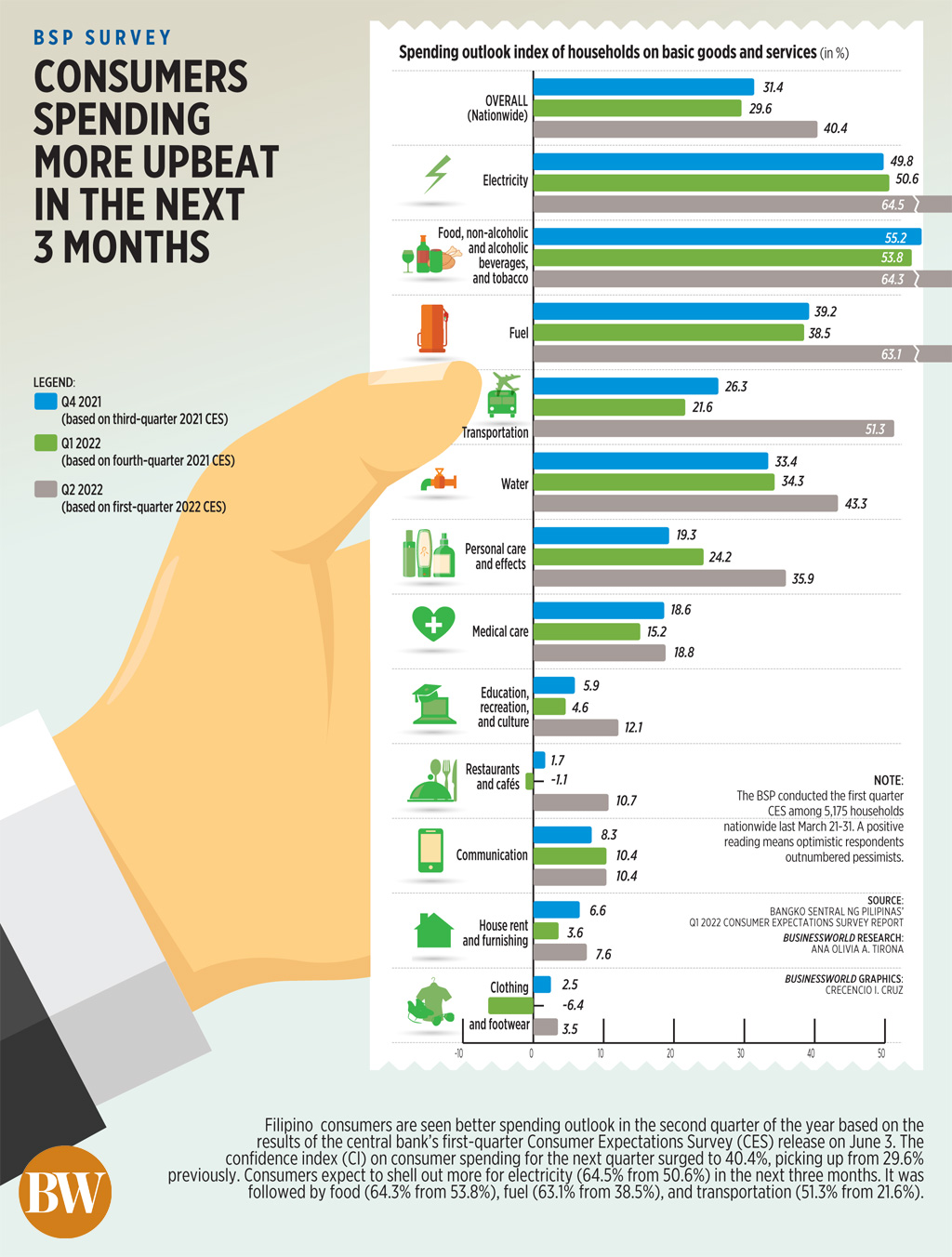
Consumers spending more upbeat in the next 3 monthsInflation is likely to breach 5% in May led by food and oil prices amid disruptions in global supply chains.

BusinessWorld poll of 16 analysts yielded a median estimate of 5.4% for May inflation, the highest in more than three years, matching the midpoint of the 5% to 5.8% forecast by the BSP.

Some 40.4% of households surveyed said they expect increased spending on goods and services for the second quarter, from 29.6% at the end of 2021.

Households reporting a positive outlook for the next 12 months rose to 30.4% from 23.6% at the end of 2021.

“Respondents attributed their brighter year-ahead outlook to expectations of: (a) more available jobs, (b) additional and high income, (c) good governance and (d) salary increase,” the BSP said.

The survey indicated that households that consider the next 12 months a favorable time to buy big-ticket items increased to 5.7% from 5.1% at the end of 2021.

Respondents planning to buy property within the next 12 months increased to 6.3% from 4.2% previously. This was driven by the higher number of households that plan to acquire single-detached houses (at 52.1% from 39.4%), and apartment units (at 2.6% from 0.8%).

“When asked about the price range of real properties they intend to purchase in the next 12 months, majority, or 57.5% of the households indicated a range of P450,000 and below,” the report said.

Consumers expect interest rates to increase in the current quarter, the next quarter, and the next 12 months, the survey found.

Some 6.9% and 7.4% of households expressed their intention to apply for a loan in the second quarter and in the next 12 months, respectively.

Most respondents plan to seek unsecured loans.

The central bank’s latest Consumer Expectations Survey was conducted from March 21 to 31.

The BSP surveyed 5,282 households, with 2,720 (51.5%) from the NCR and 2,562 (48.5%) from the rest of the country. — Keisha B. Ta-asan

Expanded public consultation sought on managing gov’t debt

BW FILE PHOTO

By Kyle Aristophere T. Atienza, Reporter

CIVIL SOCIETY organizations (CSOs) need to be given a place at the table in determining how to deal with the national debt, after they were largely left out of discussions on the record levels of debt the current government has taken on, a think tank said.

The government has tended to exclude the broader public from discussions on public finances, leaving them uninformed of the costs of foreign-funded projects, according to Sonny A. Africa, executive director of think tank Ibon Foundation.

“Governments have for too long portrayed economic policymaking as the domain of experts and of finance in particular as its most rarefied realm,” he said in a Messenger chat. “This results in the broader public being excluded from vital decisions that bear on them, their livelihoods and their economic welfare.”

Failure to engage the public on the national debt and inform them of the consequences effectively excludes them from governance, Mr. Africa said.

“CSOs have long proven their ability to serve as organized channels of the broad public interest independent of vested political and economic interests,” he said. “Even just the presence of civil society in key decision-making bodies can go far in bringing the people’s perspective into the process and improving transparency.”

President Rodrigo R. Duterte will leave behind a record P12.76 trillion in debt when he steps down on June 30. Outstanding debt rose by 16.2% from a year earlier according to preliminary data from the Bureau of the Treasury.

“The public should be involved in decisions on national debt for the simple reason that it’s the public that pays for the national debt through their taxes and whatever the government earns using public assets and resources,” Mr. Africa said.

Sri Lanka has been rocked by weeks of protests after its government defaulted on a multi-million foreign debt payment, pushing its economy to the brink of collapse.

The Sri Lankan economic crisis was attributed to the government’s handling of the national debt, allegedly accompanied by corruption. 

Sri Lanka’s economic crisis is a consequence of its government’s failure to ensure transparency and people’s participation in the management of national debt and public finances, said Rene E. Ofreneo, president of the Freedom from Debt Coalition.

In an e-mail, he called for “debt transparency — transparency in government plans to borrow and service debt, transparency on the rationale for borrowings and purposes, transparency in the selection of creditor institutions,  transparency on the conditionalities and cost/terms of borrowings.”

Mr. Ofreneo noted that when the government went to the Asian Development Bank (ADB) in 2020 for a $1.5-billion budgetary support loan, both the bank and the Department of Finance (DoF) claimed that the debt scenario for the Philippines was “sustainable” and is not expected to exceed the  debt-to-GDP threshold of 60%.

“But this was breached in 2021 and we are now headed towards mid-60%, with serious economic implications,” he said.

“It is our collective hope that President-elect Ferdinand R. Marcos, Jr. and DoF Secretary-designate Benjamin E. Diokno will be open to frank and sustained dialogue on debt and economic issues affecting the people within the framework of government and civil society organizations finding best solutions to our economic maladies.”

Mr. Ofreneo said the 1987 Constitution requires that information on foreign loans obtained or guaranteed  by the government must be made available to the public.

“The essence of such a provision means not only full disclosure but also advance information sharing and consultation with the widest segments of the public,” he said.

Mr. Ofreneo, an academic, noted that the Philippines’ external debt under the leadership of Mr. Marcos’ late father, Ferdinand E. Marcos, Sr., drastically increased to $20 billion in 1980 from $2 billion in 1972, the year Martial Law was declared.

“A number of people were alarmed by the debt then. But technocrats serving in the Marcos dictatorship said there’s nothing to worry because the economy was growing and the growth can pay for the debt,” Mr. Ofreneo said separately by telephone. “People were not informed of the growing external debt at that time and look where we are now.”

He said public financial management that involves various sectors is required by democratic governance.

Terry L. Ridon, a former legislator and public investment expert, said the public should not concede the management of the country’s public debt to technocrats “as our current limited fiscal space has a direct impact on whether existing social programs for poor Filipinos will continue under a new government.”

“CSOs and grassroots organizations should actively engage with policymakers in both the executive and legislative branches to make sure that the core agenda of government remains to be poverty alleviation and job generation amid the continuing pandemic,” he said in Messenger chat.

This active engagement is critical in each step of the budget process to monitor appropriations that do not focus on a social development agenda “such as expanding funding to confidential and intelligence funds, and infrastructure projects which have been subjected to various controversies,” Mr. Ridon said.

“This is important because a peso given to unnecessary expenditure is a peso lost for social programs, such as conditional cash aid and free education.”

While there are provisions on transparency and accountability in the 2022 General Appropriations Act, there is currently no law ensuring that people’s organizations are involved in debt management, said Zyza Nadine Suzara, executive director at Institute for Leadership, Empowerment, and Democracy (I-Lead).

“This is perhaps one area that can be addressed through a Freedom of Information law,” she said in a Messenger chat.

Mr. Marcos has said a new stimulus measure will be among his priority bills for the incoming Congress, although potential revenue sources are still being studied.

Public finance experts have asked the Marcos team to clarify whether that plan would entail more foreign borrowing.

Members of the 19th Congress will take office on July 25, when Mr. Marcos delivers his first state of the nation address.

Electronics industry to pursue dialogue with incoming gov’t on pathways to growth

REUTERS

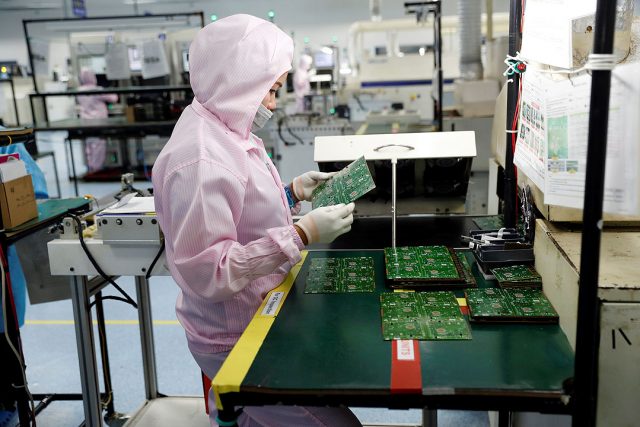
THE Semiconductor and Electronics Industries in the Philippines Foundation, Inc. (SEIPI) said it is seeking a dialogue with the incoming administration to discuss how to attract more investment in the electronics industry, the country’s leading generator of exports.

SEIPI President Danilo C. Lachica said that the electronics industry wants to “get a dialogue scheduled with (President-elect Ferdinand R. Marcos, Jr.), the Cabinet, the Senate, and the House of Representatives. This dialogue will essentially clarify our concerns and hopefully prevent more capital flight and attract investment,” Mr. Lachica said in a recent television interview.   

“We’d like to discuss how we can harmonize policies, how we can possibly review Republic Act No. 11534 or the Corporate Recovery and Tax Incentives for Enterprises (CREATE) Act, specifically the incentives rationalization, eliminating corruption, and promote ease of doing business, and upgrading education to improve the skills of university graduates,” he added.

According to Mr. Lachica, “The first order of business is helping the government, helping the President, understand the electronics industry because once they do, then everything else falls into place,” he said, adding that both sides can work towards “reducing operating costs and enhancing the incentives package.”

Previously, Mr. Lachica has said that the Philippines lost $3.6 billion worth of investment and 25,000 jobs to Vietnam, Thailand, and China as a result of investor concerns regarding the rationalization of incentives.

Earlier this year, SEIPI said electronics exports for 2021 rose 12.9% to $45.92 billion due to higher demand for technologies such as the Internet of Things, artificial intelligence, automation, and applications that enable working from home and telemedicine.

For 2022, SEIPI has set a target of 10% growth for the industry. — Revin Mikhael D. Ochave

España-PUP section of NLEX-SLEX connector project seen complete by end of Q2 next year

DPWH

THE second section of the North Luzon Expressway-South Luzon Expressway (NLEX-SLEX) Connector Road Project is expected to be completed by the second quarter of 2023, the Department of Public Works and Highways (DPWH) said.

The 5.15-kilometer first section of the project between Caloocan and España is expected to be completed by the third quarter of 2022, the DPWH said on its website, citing the updated timeline of the project.

Meanwhile, the completion of the 2.75-kilometer second phase between España and PUP Sta. Mesa is expected to be completed next year.

Section 1 is now “70.92%” finished while Section 2 is at “1.65%,” the department said.

The project is being undertaken by NLEX Corp., a subsidiary of Metro Pacific Tollways Corp. (MPTC).

The P23.3-billion eight-kilometer NLEX-SLEX Connector Road Project, on which construction started in May 2019, is an all-elevated four-lane toll expressway extending NLEX southward from the end of Segment 10 in C3 Road Caloocan City to Sta. Mesa, Manila and connecting to the Skyway Stage 3, mostly along the route of the Philippine National Railways rail line, the DPWH said.

When completed, the project is expected to cut travel time from SLEX to NLEX from two hours to 20 minutes and reduce travel time from Clark to Calamba from about three hours to one hour and 40 minutes.

The project is expected to benefit at least 35,000 motorists or vehicles per day and improve connectivity between NAIA and Clark airports.

MPTC is the tollways unit of Metro Pacific Investments Corp., one of three key Philippine units of Hong Kong-based First Pacific Co. Ltd., the others being Philex Mining Corp. and PLDT, Inc.

Hastings Holdings, Inc., a unit of PLDT Beneficial Trust Fund subsidiary MediaQuest Holdings, Inc., has a majority stake in BusinessWorld through the Philippine Star Group, which it controls. — Arjay L. Balinbin

Fintech: Powering digital transformation in financial services

(Second of three parts)

Over the past five years, the Philippines has gained traction in financial technology (fintech), growing from strength to strength and quickly earning the attention of the global fintech community. The Global Fintech Index 2020, the fintech ecosystems ranking created by Findexable, grouped the Philippines along with a few others as countries to watch because it is one of the fastest growing fintech destinations.

In the first part of this article, we discussed the key themes expected to dominate headlines in the fintech market in Asia and the Philippines. In the second part of this series, we look at the taxation issues in a market that is experiencing phenomenal growth.

The dramatic change in the financial services industry landscape reflects the Philippines’ astounding growth as a fintech destination. In 2017, the Philippines had only 115 fintechs, which is tiny when compared with Singapore, which had the highest concentration (490) out of the 1,268 fintechs in ASEAN, and Indonesia (262). However, the Philippine total nearly doubled to 212 by the end of 2020. Growth in the Philippine fintech industry has since slowed, but a study by the Philippine Institute for Development Studies notes that investment surged 762.5% from 2016 to 2018.

In its rankings, Findexable also found that the Philippines excelled in fintech categories like payments, enabling processes and technology, and banking and lending. Stunning growth in numbers posted by the largest mobile e-wallet service supports this observation as it breached its initial full-year target of P3 trillion in gross transaction value for 2021, or three times the record set in 2020.

Much of the growth of in the fintech market stems in part from a supportive regulatory environment. Financial regulators in the Philippines have been equally aggressive as their peers in the region in pushing for fintech innovation even as they strive not to lose sight of their responsibility to foster financial stability. The Philippines is among a few economies in Southeast Asia where regulators have issued licenses for digital banking, an area that is anticipated to post significant development that will alter the financial landscape in the next few years.

There can only be progress by leaps and bounds for the fintech industry in the years to come as the market nears a point where very few in the workforce will have known of life before the internet. Banks have had a good look into the digital space due to the limitations that the pandemic imposed, and this can only lead to more confident steps in incorporating fintech products with their offerings.

TEAMING UP ON REGULATION AND TAX
In anticipation of a further surge in fintech activity, regulators have begun to set standards for the industry. All eyes have been on the tax agency for an issuance that will provide guidance in connection with the tax regime for the industry.

At the end of 2021, the Bureau of Internal Revenue (BIR) and the Securities and Exchange Commission (SEC) said they were working together to ensure that fintech companies are properly regulated and taxed even as the government encourages their growth and continued innovation. The Department of Finance instructed the two agencies to closely monitor fintech firms and find out what new digital business models they have been adopting to determine how they should be regulated and taxed.

Given the dramatic changes that fintech has brought into the financial services landscape, market participants have been on the lookout for clear guidelines or revenue regulations that explicitly apply to them. In the absence of such rules, fintech companies may have been advised to assess and analyze their transactions and apply the basic taxation principles and procedures to comply with tax obligations.

The tax agency said it will continue to impose the current Tax Code rules on compliance and taxation based on actual activities of fintech companies, which are similar to those of ordinary corporations or financial institutions. In the same vein, a previous article by this column titled “Taxation of fintech companies in the Philippines” noted that fintech companies are subject to regular income tax based on net taxable income at the rate of 25% effective July 1, 2020. The tax rate will be lowered to 20% for fintech companies with net taxable income not exceeding P5 million and with total assets not exceeding P100 million, excluding land on which the particular business entity’s office, plant, and equipment are situated during the taxable year for which the tax is imposed. But given the infancy of the industry, in lieu of this regular tax rate, a minimum corporate income tax (MCIT) of 2% may be imposed on a new fintech company beginning on the fourth taxable year immediately following the year in which it began business operations. This MCIT rate shall be 1% from July 1, 2020 until June 30, 2023. Withholding taxes on such income may also apply.

The ongoing joint initiative of the BIR and SEC aims to broaden the tax base of fintech-related enterprises by ensuring the two agencies have enough regulatory and collection capability to deal with these digital companies. The Finance department said the BIR will continue to gather information from other regulatory agencies on identifying, addressing and closing the gaps resulting from the development and proliferation of fintech entities not clearly or explicitly covered by existing regulations. In 2021, BIR planned to have a team that will evaluate the tax obligations of fintechs based on categories identified by the SEC and those regulated by the Bangko Sentral ng Pilipinas (BSP).

VAT ON DIGITAL TRANSACTIONS
Lawmakers are also considering a house bill that, once enacted, would subject the value created in the digital economy to withholding/income tax and value-added tax (VAT). House Bill 7425 (previously HB 6765) would impose a 12% VAT on the digital sale of services such as online advertising, subscription services, and the supply of other electronic and online services that can be delivered through the internet such as mobile applications, online marketplaces, online licensing of software, and webcasts, among others.

A key provision of the bill also seeks to add a new section in the National Internal Revenue Code of 1997 that would require foreign digital service providers to collect and remit VAT for all transactions made through their platforms.

In addressing concerns, the measure could unduly burden small enterprises and freelance workers who are dependent on digital channels to make a living, the BSP recently proposed VAT exemptions for low-value digital transactions and for service fees charged by payment service providers.

DIGITAL SERVICE TAX
In light of the infancy of the fintech services industry, it has become imperative for Philippine regulators to also find out what their peers in other countries have done for income tax purposes. The Finance department is monitoring developments in countries where digital services taxes have been imposed on online platforms.

In mid-2020, the department focused its efforts on collecting VAT on both local and cross-border digital transactions, similar to initiatives by neighbors in ASEAN. It said, however, that it was looking to review and propose tax reforms to levy income tax on cross-border digital transactions after international consensus has been reached on the taxation of the digital economy. Once passed into law, this digital service tax will come on top of the 12% VAT on online transactions.

As we look forward to guidance from the government on the taxation and regulation of fintech companies, the fintech market continues to become more complex, as adoption deepens and its benefits broaden to further impact the lives of consumers.

It is imperative for fintech providers, particularly those that handle transactions, to keep abreast of tax regulations and staying compliant, as doing otherwise and relegating tax considerations as an afterthought can be detrimental to their customers, partners and even their own bottom line.

Government regulators want regulation that does not to impede growth in this young market that has the potential to power the digital transformation of financial services. However, they are also wary of appearing to provide support that can be interpreted as giving fintechs an unfair competitive advantage. Active engagement with the government on the part of market participants will be key as the policy regime for the fintech market takes shape.

This article is for general information only and is not a substitute for professional advice where the facts and circumstances warrant. The views and opinions expressed above are those of the author and do not necessarily represent the views of SGV & Co.


Allenierey Allan V. Exclamador is a tax partner of SGV & Co.

N. Korea fires volley of missiles

A North Korea flag flutters next to concertina wire at the North Korean embassy in Kuala Lumpur, Malaysia March 9, 2017. — REUTERS/EDGAR SU/FILE PHOTO

South Korea calls it a ‘test’ of new government

SEOUL — North Korea fired eight short-range ballistic missiles towards the sea off its east coast on Sunday, likely its largest single test, a day after South Korea and the United States ended joint military drills.

The bilateral exercises involved an American aircraft carrier for the first time in more than four years.

South Korea’s Joint Chiefs of Staff said that at least eight missiles were fired from the Sunan area of the North Korean capital Pyongyang and they flow between 110 km-600 km (70-370 miles) at altitudes between 25 km to 90 km.

In response, South Korea President Yoon Suk-yeol convened a National Security Council (NSC) meeting and ordered “expanded deterrence of South Korea and the United States and continued reinforcement of united defense posture”.

The NSC meeting concluded that the missile launch was North Korea’s “test and challenge” of the security readiness of South Korea’s new administration, which took office last month, the president’s office said in a news release.

South Korea’s Ministry of Foreign Affairs said Kim Gunn, its Special Representative for Korean Peninsula Peace and Security Affairs, discussed the provocation with US Special Representative Sung Kim, the US point man on North Korean affairs. Kim Gunn also held a telephone conference with his Japanese counterpart Funakoshi Takehiro.

Japanese Defense Minister Nobuo Kishi said the North had launched multiple missiles, and that the act “cannot be tolerated.” He said at a briefing that at least one missile had a variable trajectory, which indicates it could maneuver to evade missile defenses.

The US Indo-Pacific Command said in a statement that North Korea’s multiple ballistic missile launches highlighted the destabilizing impact of its illicit weapons program but that the event didn’t pose an immediate threat.

Michael Duitsman, with the US-based James Martin Center for Nonproliferation Studies (CNS), said it appeared to be the largest single test ever by North Korea. A large number of missiles also suggests a military drill or show of force, rather than a test of new technology.

The launch also followed a visit to Seoul by Sung Kim, who departed on Saturday.

He met his South Korean and Japanese counterparts on Friday to prepare for “all contingencies” amid signs North Korea was preparing to conduct a nuclear test for the first time since 2017.

MORE SANCTIONS
Washington has made very clear directly to Pyongyang that it is open to diplomacy, Kim said during the visit, noting that he was willing to discuss items of interest to Pyongyang, such as sanctions relief.

Last week, the United States called for more U.N. sanctions on North Korea over its ballistic missile launches, but China and Russia vetoed the suggestion, publicly splitting the U.N. Security Council on North Korea for the first time since it started punishing it in 2006, when North Korea conducted its first nuclear test.

In recent weeks, North Korea has test-fired a range of missiles, including its largest intercontinental ballistic missile (ICBM).

North Korea’s last tests were on May 25, when it launched three missiles after US President Joseph R. Biden ended an Asia trip where he agreed to new measures to deter the nuclear-armed state.

The first missile appeared to be the North’s largest ICBM, the Hwasong-17, while a second unspecified missile appeared to have failed mid-flight, South Korean officials said at the time. The third missile was a short-range ballistic missile (SRBM).

On Saturday, South Korean and American ships concluded three days of drills in international waters off the Japanese island of Okinawa, including air defense, anti-ship, anti-submarine, and maritime interdiction operations, South Korea’s Joint Chiefs of Staff said.

It has said the exercises “consolidated the two countries’ determination to sternly respond to any North Korean provocations”.

The exercises included the USS Ronald Reagan, a 100,000-ton nuclear-powered aircraft carrier, among other major warships.

South Korean President Yoon Suk-yeol, who took office on May 10, had agreed with Mr. Biden to increase bilateral military drills to deter North Korea.

North Korea has criticized previous joint drills as an example of Washington’s continued “hostile policies” toward Pyongyang, despite its talk of diplomacy. — Reuters

Prince Charles pays heartfelt tribute to mum Queen Elizabeth

A DRONE DISPLAY is seen during the BBC Platinum Party at the Palace, as part of the Queen’s Platinum Jubilee celebrations, in London, Britain, June 4. — REUTERS/HENRY NICHOLLS/POOL

LONDON — Prince Charles paid an emotional personal tribute to his mother, Queen Elizabeth, on Saturday during celebrations to mark her Platinum Jubilee, praising the monarch for uniting the nation and continuing to make history during her 70-year reign.

Charles spoke at a pop concert that opened with a comic sketch of the 96-year-old monarch having tea with Paddington Bear and tapping out the tune to the Queen anthem “We Will Rock You” on her china teacup.

The heir-to-the-throne appeared towards the end of the concert at Buckingham Palace. As images of Elizabeth’s reign were displayed on the walls, Charles, 73, said the Jubilee had given the country the chance to say thank you.

“You pledged to serve your whole life — you continue to deliver. That is why we are here,” he said in a message to the queen, who was at her Windsor Castle residence outside London.

“You have met us and talked with us. You laugh and cry with us and, most importantly, you have been there for us, for these 70 years,” he added, referring to the queen as “mummy”.

The Saturday festivities were among a number of Jubilee events that Elizabeth has missed because of “episodic mobility problems” that have caused her to cancel engagements recently.

The opening video with the fictional character Paddington had echoes of 2012 when the queen appeared with Britain’s most famous fictional spy, James Bond, in a video for the opening ceremony of the London Olympics.

In the clip released on Saturday, she told Paddington she always kept the Bear’s favorite — a marmalade sandwich — in her ever-present handbag.

A palace spokesman said: “The opportunity to invite a famous bear to tea was just too much fun to miss.”

Queen’s “We Will Rock You” then opened the show before the cast of “Hamilton,” Andrea Bocelli, Alicia Keys and Diana Ross performed in front of tens of thousands of people crammed around the palace, down the Mall grand boulevard and in a nearby park.

Charles and wife Camilla; son William, wife Kate and their two eldest children sang along with the crowd before an aerial drone light show projected images into the sky, including the monarch on a stamp and the outline of her dogs.

The four days of celebrations to mark the monarch’s seven decades as queen began on Thursday with a military parade and a Royal Air Force flypast, and a National Service of Thanksgiving on Friday.

At the concert, Prince William spoke about his family’s record on the environment, while Charles also acknowledged his father, Prince Philip, who died last year aged 99.

“My papa would have enjoyed the show and joined us wholeheartedly in celebrating all you continue to do for your country and your people,” he said.

“You continue to make history.”

Elizabeth ascended the throne aged 25 on the death of her father, George VI, in 1952, inheriting dominion over a Britain still emerging from the ravages of World War II and with Winston Churchill as prime minister.

In total, there have been 14 prime ministers and 14 US presidents during her reign; the Berlin Wall rose and fell; Britain joined and left the European Union; and her nation’s own once-mighty empire disintegrated, replaced by a Commonwealth of 54 nations. Elizabeth was instrumental in creating the latter and many regard its success as her greatest achievement.

Polls suggest a comfortable majority believe the monarchy should remain. A recent Ipsos survey put support for the queen at 9 out of 10 respondents. But Charles is less popular and support among the young is waning.

Supporters see the queen as a source of soft power in the world and a stabilizing factor: a bridge between the nation’s past and its present.

As Charles delivered his tribute, projections of the queen, which he had selected, were beamed onto the walls of the palace.

These included a carriage ride with former South African President Nelson Mandela during his 1996 state visit and her famous 2012 handshake with former IRA guerrilla commander Martin McGuinness, who later became the deputy first minister of Northern Ireland. — Reuters

Australia says Chinese fighter jet intercepted surveillance craft in May

REUTERS

SYDNEY — A Chinese fighter aircraft dangerously intercepted an Australian military surveillance plane in the South China Sea region in May, Australia’s defense department said on Sunday.

The Royal Australian Air Force P-8 maritime surveillance aircraft was intercepted by a Chinese J-16 fighter during “routine maritime surveillance activity” in international airspace in the region on May 26, the defense department said in a statement.

“The intercept resulted in a dangerous maneuver which posed a safety threat to the P-8 aircraft and its crew,” it said.

Prime Minister Anthony Albanese told reporters in Perth that his government had expressed concerns to China “through appropriate channels”.

China’s embassy in Australia did not immediately respond to a request for comment.

Defense Minister Richard Marles said the Chinese jet flew very close in front of the RAAF aircraft and released a “bundle of chaff” containing small pieces of aluminum that were ingested into the Australian aircraft’s engine.

“Quite obviously this is very dangerous,” Mr. Marles told ABC television.

Australia has previously joined the United States in stating that China’s claims around contested islands in the South China Sea do not comply with international law.

The Defense department said for decades it had undertaken maritime surveillance in the region and “does so in accordance with international law, exercising the right to freedom of navigation and overflight in international waters and airspace”.

Relations between Australia and China, major trading partners, have been strained recently over growing Chinese influence in the Pacific after China sought a regional security deal with Pacific Island nations.

Also in May, a Chinese intelligence ship was tracked off Australia’s west coast within 50 nautical miles of a sensitive defense facility, which is used by Australian, US and allied submarines. — Reuters

Top Duterte critic insists drug charges against her fabricated

SENATOR Leila de Lima listening to a police officer who served the warrant for her arrest at the Senate grounds in Pasay City on Feb. 24, 2017.

ONE of President Rodrigo R. Duterte’s most vocal critics on Sunday said the government had fabricated the drug trafficking charges against her to shut her out, after four witnesses retracted their charges against her.

“The fact that all of this is coming out as Duterte’s term ends indicates that the Duterte administration’s cases against me are purely manufactured and fabricated in order to persecute, destroy and silence me,” Senator Leila M. de Lima, 62, said in a statement.

The Justice department, which will have a new chief chosen by incoming President Ferdinand R. Marcos, Jr., has said it would review evidence against Ms. De Lima.

Justice Secretary Menardo I. Guevarra, a Duterte appointee, on Saturday said the review would take a few days.

“The prosecution needs to reassess the strength of its overall evidence in the light of the retractions of certain witnesses,” he said. “If the prosecution believes that such recantations do not affect its case, then the prosecution will maintain its course.”

The drug charges against Ms. De Lima started after she led a Senate investigation of Mr. Duterte’s war on drugs that has killed thousands.

As head of the Commission on Human Rights, she also probed the assassination of suspected drug pushers by the so-called Davao Death Squad, allegedly upon the orders of Mr. Duterte when he was still the city mayor.

In April, self-confessed drug lord Rolan “Kerwin” Espinosa took back his testimony implicating Ms. De Lima in illegal drugs when she was still Justice secretary.

“Any statement I made against the senator is false and was the result only of pressure, coercion, intimidation and serious threats to my life and family members,” he said in an affidavit submitted to the Justice department.

He claimed to have been coerced by police into testifying against Ms. De Lima during Senate hearings investigating the illegal drug trade inside the national jail when the senator was still Justice secretary. He apologized to the senator for linking her to the illegal drug trade.

Days later, former Bureau of Corrections Director General and ex-National Bureau of Investigation Deputy Director Rafael Z. Ragos took back his allegations that Ms. De Lima had received P5 million in drug money from him — care of convicted drug lord Peter Co — when she was still Justice secretary in 2012. She allegedly used the fund to finance her senatorial bid in 2016. 

Another witness, Joel Capones, testified at Ms. De Lima’s bail hearing in a Muntinlupa trial court that he did not have knowledge of drug money worth P1.4 million she had allegedly pocketed.

On May 24, Marcelo L. Adorco said he had been coerced into implicating the senator and other people in the illegal drug trade.   

“The truth is, I was only forced to sign my previous affidavit which accused these people of being involved in illegal drugs because I feared for my life and safety,” he said in a statement.

He said a former high-ranking police officer had forced him to sign affidavits in 2016 and 2017, which said Ms. De Lima and Espinosa had met up in Baguio City.

“The affidavit was written by a police officer in a police station in Albuera, Leyte, by the orders of the former chief of the Albuera police,” Mr. Adorco said.

Ms. De Lima has asserted her innocence, saying she was being prosecuted for criticizing Mr. Duterte’s drug war.

Human Rights Watch has said Ms. De Lima has suffered five years in detention for a crime that key witnesses now dispute. “The authorities should immediately drop the politically motivated charges and release her, and impartially investigate the witnesses’ claims that they were coerced to give false testimony,” Phil Robertson, deputy Asia director at Human Rights Watch, said in a statement. — Alyssa Nicole O. Tan