AN ELECTRON MICROSCOPIC image shows mature, oval-shaped monkeypox virus particles as well as crescents and spherical particles of immature virions, obtained from a clinical human skin sample associated with the 2003 prairie dog outbreak in this undated image obtained by Reuters on May 18, 2022. — CYNTHIA S. GOLDSMITH, RUSSELL REGNERY/CDC/HANDOUT VIA REUTERS
The Canadian province of Quebec confirmed 15 cases of monkeypox as of Monday, the Quebec health department said on Tuesday, with more cases from other parts of the country expected.
Nearly 20 countries where monkeypox is not endemic have reported recent outbreaks of the viral disease, with more than 230 confirmed or suspected infections mostly in Europe. Read full story
Canada‘s federal health minister said more samples from other parts of the country were being sent to a laboratory in Winnipeg for testing.
“We expect more cases to be confirmed in the coming days,” Jean-Yves Duclos said in a statement. It wasn’t immediately clear what symptoms the people infected were showing, nor how serious their condition might be.
Monkeypox is a rare viral infection similar to human smallpox, though milder, first recorded in the Democratic Republic of Congo in the 1970s. The number of cases in West Africa has increased in the last decade.
Canada confirmed its first two cases of monkeypox last week after authorities in Quebec said they were investigating 17 suspected cases. Read full story
Duclos said the federal government began “pre-positioning of the vaccine Imvamune and therapeutics from our National Emergency Strategic Stockpile in jurisdictions across the country.” A small shipment of the Imvamune vaccine was sent to Quebec on Tuesday, he said.
“I want to reiterate to Canadians that this is a different situation than we saw ourselves in with the emergence of COVID-19,” Duclos said, noting that unlike the coronavirus pandemic Canada has a supply of vaccines on hand already. – Reuters
MotoEats runs all weekend until May 29 at The Fora Mall Tagaytay.
Spend an exciting weekend in Tagaytay and indulge in the visual and gastronomic treats the cool city has to offer! If you feel like you’ve seen it all, fret not. There’s a new weekend hot spot al fresco at Fora Mall Tagaytay where you can take your barkada or your family for delicious food.
Tagaytay’s local businesses such as Ready Coffee, Bubble Waffle, Unique K-Food, Better Blend, Manang Joy, Pinoy Street Foods, Steak Garage, and Bogo Burger Food Truck have set up camp ala food bazaar at the Fora Piazza. A short walk away is The Forest Landing, an instagrammable garden amphitheater perfect for that Tagaytay OOTD shot. You can take a snap or two of the breathtaking sunset view, too — something for your Tiktok, My Day, or IG reel, maybe? At night, you will even get serenaded by Tagaytay’s local acts. Talk about a feast of the senses!
Two-wheeler enthusiasts are also in for a treat with a display of one-of-a-kind motorbikes at the Fora Piazza from cute Vespa scooters, and classic VHM motorbikes, to impressive BMW big bikes.
There’s definitely something for everyone! The event aptly called MotoEats is at Fora Mall Tagaytay, located right along the iconic Tagaytay Rotunda, and runs all weekend until May 29. It’s open from 10 a.m. to 8 p.m. Those who plan to stay overnight in Tagaytay can also give Quest Hotel Tagaytay a try, located right beside Fora Mall.
Spotlight is BusinessWorld’s sponsored section that allows advertisers to amplify their brand and connect with BusinessWorld’s audience by enabling them to publish their stories directly on the BusinessWorld Web site. For more information, send an email to online@bworldonline.com.
Army soldier figurines are displayed in front of the Ukrainian and Russian flag colors background in this illustration taken, Feb. 13, 2022. — REUTERS/DADO RUVIC/ILLUSTRATION
DAVOS – Billionaire financier George Soros said on Tuesday that Russia’s invasion of Ukraine may have been the beginning of World War Three so the best way to preserve free civilization was for the West to defeat President Vladimir Putin’s forces.
Soros, 91, a legendary hedge fund manager who earned fame by betting against the pound in 1992, cast the Ukraine war as part of a broader struggle between open societies and closed societies such as China and Russia which were in the ascent.
“The invasion may have been the beginning of the Third World War and our civilization may not survive it,” Soros told Davos, according to a text of his speech released by his office.
“The best and perhaps only way to preserve our civilization is to defeat Putin as soon as possible. That’s the bottom line.”
Soros said that Putin, who says the “special operation” in Ukraine is going to plan and will achieve all the Kremlin’s aims, now believed the invasion was a mistake and was preparing to negotiate a ceasefire.
“But the ceasefire is unattainable because he cannot be trusted,” Soros said. “The weaker Putin gets the more unpredictable he becomes.”
Soros said the European Union had to understand that Putin could turn off Russian natural gas, which currently accounts for about 40% of Europe’s needs, “while it really hurts”.
Russia’s Feb. 24 invasion of Ukraine has killed thousands of people, displaced millions more and raised fears of the most serious confrontation between Russia and the United States since the 1962 Cuban Missile Crisis.
Putin says the United States was using Ukraine to threaten Russia through NATO enlargement and Moscow had to defend against the persecution of Russian-speaking people. Ukraine and its Western allies reject these as baseless pretexts to invade a sovereign country.
“I can’t predict the outcome, but Ukraine certainly has a fighting chance,” Soros said.
CHINA’S XI
Soros cast Russia, by far the world’s biggest country by area, and China, the world’s second largest economy, as the leading members of a group of ascendant “closed societies” where the individual was subservient to the state.
Echoing U.S. President Joe Biden, who has said the West is locked in a battle with autocratic governments, Soros also added some pessimism.
“Repressive regimes are now in the ascendant and open societies are under siege,” Soros said. “Today China and Russia present the greatest threat to open society.”
Soros said digital technology, especially artificial intelligence, had helped China to collect personal data for the surveillance and control of its citizens more aggressively than ever before.
Chinese officials dismiss foreign criticism as clouded by outdated colonial thinking. Such officials laud the Communist Party for throwing off foreign oppressors and rebuilding China by lifting 800 million people out of poverty.
Soros criticised President Xi Jinping’s ‘zero-COVID’ strategy, saying it had failed and tipped Shanghai towards “the verge of open rebellion.”
Along with the COVID policy, Soros said Xi had made a series of mistakes which could cost him significant influence as the Communist Party prepares for a decision on awarding him a precedent-breaking third term.
“Contrary to general expectations Xi Jinping may not get his coveted third term because of the mistakes he has made,” Soros said. “But even if he does, the Politburo may not give him a free hand to select the members of the next Politburo.” — Reuters
DAVOS, Switzerland – A growing world food crisis is precipitating protectionist moves by countries which are likely to compound the problem and could lead to a wider trade war, business leaders and policymakers at the World Economic Forum said.
In a sign of the escalating squeeze on food supplies and rising prices, a government source told Reuters that India could restrict sugar exports for the first time in six years to prevent a surge in domestic prices.
Meanwhile Indonesia, the world’s biggest palm oil exporter, will remove a subsidy on bulk cooking oil and replace it with a price cap on the raw materials for local refiners.
“It is a major issue, and frankly I think the problem is even bigger ahead of us than it is behind us,” Gita Gopinath, first deputy managing director of the International Monetary Fund, told Reuters of rising food security concerns.
Protectionism is looming large at Davos, prompting calls for urgent negotiations to avoid a full-blown trade war.
“It’s very important for the leaders of the world to sit at the table with calm and talk about how we will manage trade and food and investment,” Jay Collins, vice chairman of banking, capital markets and advisory at Citigroup told the Reuters Global Markets Forum in Davos.
“There’s a lot of conversations actually with the G7 happening here in the past 48 hours,” Collins said.
HOARDING
For residents in countries in Sub-Saharan Africa, for instance, 40% of their consumption is spent on food, Gopinath said. As well as a “huge hit to the cost of living”, price rises have given rise to hoarding by governments.
“We have about 20 plus countries that have put restrictions on exports of food and the fertilizers, and that can only compound the problem and make things worse,” she said on Monday.
Russia’s invasion of Ukraine, which Moscow describes as a “special military operation”, has led to a sudden crunch in a crisis that was already in the offing.
“We were facing an extraordinary food crisis before Ukraine, food costs, commodity prices, shipping costs were already doubling, tripling, quadrupling,” David Beasley, Executive Director for the United Nations World Food Programme, said.
The number of people “marching to starvation” has risen from 80 million to 276 million over the last four to five years, Beasley told Reuters in an interview in Davos.
“To keep the ports closed as the harvest season is now coming in Ukraine in July and August, it means a declaration of war on global food supply,” he said.
Many companies at Davos have been in touch about how they can act to address the food crisis, Beasley added.
‘NOT SUSTAINABLE’
“Agriculture has to be part of the solution to climate change and has to tackle food security,” Erik Fyrwald, CEO of Syngenta Group, said during a panel discussion on Monday.
Fyrwald said Syngenta has demonstration farms that show how farming practices such as not tilling the soil and covering crops in the winter to prevent soil erosion were better for soil, food security and climate change.
Another potential solution to the food crisis is to tackle waste, Gilberto Tomazoni, CEO of JBS SA, the world’s largest meat processor, told a WEF panel on Tuesday.
“Humanity is faced with two big emergencies at the same time, we need to face climate change and we need to produce more to feed a growing population,” Tomazoni said.
“And the way we are producing today is not sustainable. This is our big, big challenge. Food waste, we need to take on this situation,” Tomazoni added. — Reuters
Meat has always been a luxury for many low-income Pinoys. Argentina took it to heart by becoming the brand that provides them with good-quality canned meat that they can afford, and make a difference in their lives.
For many years, corned beef had always been a little luxury… a rare payday treat. As a family favorite, mothers wish they could serve it to their children as often as they would ask for it.
And then Argentina Corned Beef came along. It’s a delicious, high quality corned beef at an incredibly affordable price. Because more families can now enjoy it, it happily changed mindsets, habits, and meals on the family table.
Even those in the lower income bracket can enjoy delicious corned beef. And even working parents and active children benefited from its protein-rich beef that can fuel their day.
With Argentina Corned Beef, Mommy can serve the family’s favorite corned beef more often! Every Argentina Corned Beef meal uplifts spirits and makes the days brighter. It gave them exactly what Argentina promises in its brand essence “Fullness of life” – that bringer of positivity, a ray of joy and hope that brightens everyone’s day. Truly, it’s a “Busog ang araw ko!” (My day is full!) experience every single time.
Argentina delights with every meal because it has a range of canned meat products such as Beef Loaf, Meat Loaf, Liver Spread, Vienna Sausage, Spicy Sisig, Corned Chicken, and Pork Giniling.
Argentina Beef Loaf is a delicious meat loaf alternative in the non-pork-eating VisMin market. Up against strong homegrown brands, it won the hearts of the locals because, unlike its competitors, the loaf is buo (full) and therefore walang butas (no holes at the end) when sliced. This definitely gives them better value for their money – both literally and figuratively captured as “Buo ang araw ko!” (My day is full).
Families also love Argentina Meat Loaf – a fun, sliceable meaty snack for children. It makes meryenda (snack) time a filling yet play-like experience.
Chicken lovers also have their own delicious treat with Argentina Corned Chicken – an enjoyable and versatile replacement for shredded chicken.
Argentina Ready-to-Use Giniling was borne out of extensive listening to consumers and is true to its mission of providing affordable nutrition. It’s canned ground pork that is affordable, delicious, and convenient. It is yet another life-changing product that make consumers feel they have elevated their status in life. In their own words, “nakakagaan ng buhay” or lightens life’s load.
Argentina canned meats continue to provide Filipinos a mealtime experience that is busog (full) in every way:
Busog sa sarap. Timpladong sarap na made with 100% pure meat – beef, pork, or chicken.
Busog sa nutrition. Fortified with Zinc and Iron to help strengthen immunity.
But beyond these, there are the bright rays of joy and hope that each can of Argentina is brimming of. It’s simply, deliciously called fullness of life.
Spotlight is BusinessWorld’s sponsored section that allows advertisers to amplify their brand and connect with BusinessWorld’s audience by enabling them to publish their stories directly on the BusinessWorld Web site. For more information, send an email to online@bworldonline.com.
Notice is hereby given that the Annual Stockholders Meeting will be held on Monday, June 20, 2022 at 8:30 in the morning.
The agenda for the said meeting shall be as follows:
Call to Order
Secretary’s Proof of Due Notice of the Meeting and Determination of Quorum
Approval of the Minutes of the Stockholders’ Meeting held on July 15, 2021
Management’s Report
Ratification of Acts of the Board of Directors and Management During the Previous Year
Election of Directors (including Independent Directors)
Appointment of External Auditor
Other Matters
Adjournment
A brief explanation of the agenda items which require stockholders’ approval are provided on the Information Statement. The Information Statement and Annual Report will be uploaded to the Corporation’s website https://www.shakeyspizza.ph/ and PSE EDGE.
In light of current conditions and in support of the efforts to contain the outbreak of COVID-19, stockholders may attend the meeting and vote via remote communication only.
Upon registration, Stockholders shall be asked to provide the information and upload the documents listed below (the file size should be no larger than 5MB):
A. For individual Stockholders:
Email address
First and Last Name
Birthdate
Address
Mobile Number
Phone Number
Current photograph of the Stockholder, with the face fully visible
Stock Certificate Number and number of shares held by the stockholder
Valid government-issued ID
For Stockholders with joint accounts: A scanned copy of an authorization letter signed by all Stockholders, identifying who among them is authorized to cast the vote for the account
B. For corporate/organizational Stockholders:
Email address
First and Last Name of stockholder
Address
Mobile Number
Phone Number
Stock certificate number and number of shares held by the stockholder
Current photograph of the individual authorized to cast the vote for the account (the “Authorized Voter”)
Valid government-issued ID of the Authorized Voter
A scanned copy of the Secretary’s Certificate or other valid authorization in favor of the Authorized Voter
Stockholders who will join by proxy shall download, fill out and sign the proxy found in https://www.shakeyspizza.ph/investors/register. Deadline to submit proxy forms is on May 31, 2022.
All registrations shall be validated by the Corporate Secretary in coordination with the Stock Agent. Successful registrants will receive an electronic invitation via email with a complete guide on how to join the meeting and how to cast votes.
Only stockholders of record as of the close of business on May 4, 2022 are entitled to notice and to vote at the meeting.
Spotlight is BusinessWorld’s sponsored section that allows advertisers to amplify their brand and connect with BusinessWorld’s audience by enabling them to publish their stories directly on the BusinessWorld Web site. For more information, send an email to online@bworldonline.com.
Spotlight is BusinessWorld’s sponsored section that allows advertisers to amplify their brand and connect with BusinessWorld’s audience by enabling them to publish their stories directly on the BusinessWorld Web site. For more information, send an email to online@bworldonline.com.
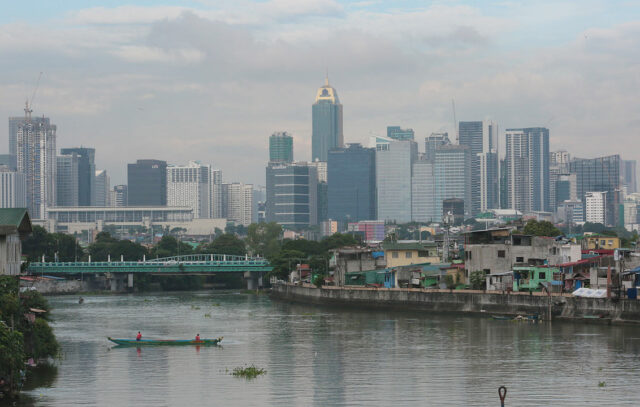
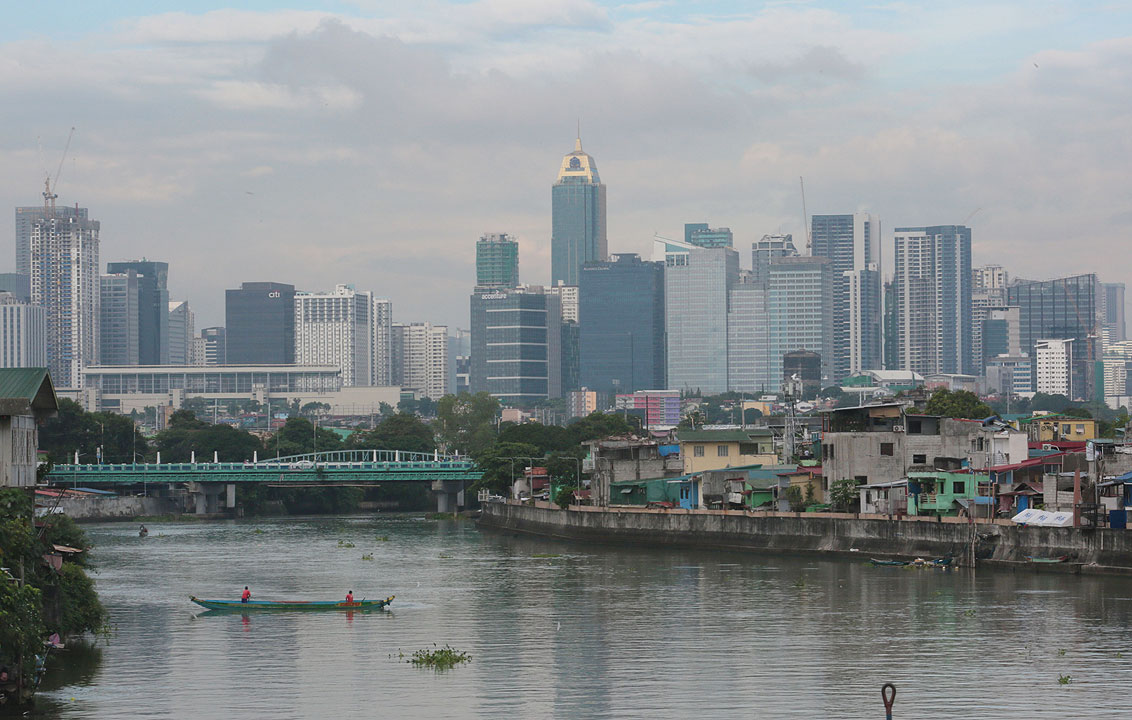
ORTIGAS business district is seen in the background, Nov. 9, 2021. — PHILIPPINE STAR/ MICHAEL VARCAS
ECONOMIC MANAGERS now expect gross domestic product (GDP) to expand by 7-8% this year, as the outlook may be clouded by the prolonged Russia-Ukraine war, economic slowdown in China and monetary policy tightening in the United States.
After a meeting on Tuesday, the Development Budget Coordination Committee (DBCC) said in a statement that it adjusted macroeconomic assumptions, fiscal program and growth targets for 2022 to 2025 “to take into account recent domestic trends and external developments.”
The DBCC sets the official macroeconomic assumptions and fiscal program.
“The Philippine economy’s strong recovery in the first quarter of 2022 has moved us closer to our goal of achieving at least 7% growth this year,” the Cabinet-level committee said, referring to the 8.3% GDP in the January to March period.
“However, in light of heightened external risks such as the Russia-Ukraine conflict, China’s slowdown, and monetary normalization in the United States, the full-year growth target was slightly revised from 7-9% to 7-8% for 2022.”
Socioeconomic Planning Secretary Karl Kendrick T. Chua said the DBCC kept the lower bound of the original target since the domestic economy showed significant improvement in the first quarter, despite the external risks.
“Nonetheless, we will grow by 7 to 8% this year, supported by our very strong domestic economy. The more we shift to Alert Level 1, begin face-to-face schooling, accelerate vaccination, especially of children and seniors, we can fully reopen the economy,” he said during a briefing after the DBCC meeting.
“We will continuously monitor and improve our economic domestic base to counter these external shocks.”
The DBCC said it kept the GDP growth target at 6-7% for 2023 to 2025.
The average inflation rate assumption was raised to 3.7-4.7% for 2022, from 2-4% previously, reflecting the impact of soaring oil and food prices caused by the ongoing Russia-Ukraine war and supply chain disruptions.
However, the DBCC is expecting inflation to return to the 2-4% target range for 2023 to 2025.
The assumption for the price of Dubai crude oil per barrel is now projected at $90-$110 this year, significantly higher than the previous projection of $68-70 per barrel. This is expected to drop to $80-$100 per barrel in 2023, and $70-$90 per barrel in 2024 and 2025.
Global oil prices spiked after Russia’s invasion of Ukraine in late February, bringing pain at the pump for consumers around the world.
For this year, the DBCC raised the export growth target to 7% from 6% previously, and import growth goal to 15% from 10% previously.
The export growth target was kept at 6% for 2023 to 2025. However, imports are expected to expand by 6% in 2023 and by 8% in 2024 to 2025.
FISCAL PROGRAM The DBCC revised its revenue projections upward as it expects economic activity to continue improving over the medium term.
It now targets to generate P3.633 trillion in revenues (15.3% of GDP) for 2023, up from P3.624 trillion previously. The government expects to collect P4.063 trillion (15.6% of GDP) in 2024, and P4.549 trillion (16.1% of GDP) in 2025.
The expenditure program was also increased to P5.086 trillion (21.3% of GDP) and P5.392 trillion (20.8% of GDP) for 2023 and 2024, respectively. Disbursements are seen to hit P5.723 trillion (20.2% of GDP) in 2025.
“Given the revised revenue and disbursement program, the DBCC maintained its target deficit at 6.1% of GDP for 2023, 5.1% of GDP for 2024, and projected the figure of 4.1% of GDP for 2025 as the government continues to adopt a fiscal consolidation strategy to lower the deficit back to pre-COVID-19 levels,” it said.
The DBCC said next year’s proposed national budget is now at P5.268 trillion, representing 22.1% of GDP.
“The DBCC remains strongly committed to exercise prudent macroeconomic and fiscal management in prioritizing expenditures that translate to the betterment of micro communities in the country,” it said.
Meanwhile, the Department of Finance (DoF) said it is in the process of creating a fiscal consolidation program for the incoming Marcos administration.
“The DoF is working double time on hammering out the details of a fiscal consolidation and resource mobilization program,” Finance Assistant Secretary Valery A. Brion said. “We will publicly announce the components of this package in the coming days.” — Tobias Jared Tomas
A worker prepares the finishing touches on the Philippine national flag at a store in Manila, May 24. — PHILIPPINE STAR/ KRIZJOHN ROSALES
By Tobias Jared Tomas
THE PHILIPPINES is unlikely to face an economic crisis such as the one being experienced by Sri Lanka right now, economists said, citing the country’s relatively strong fiscal position and economic reforms.
Socioeconomic Planning Secretary Karl Kendrick T. Chua said in a Viber message that the Philippines and Sri Lanka are in “two very different situations.”
“Our country is on the way to further growth and development,” he said.
The Philippine economy grew by 8.3% in the first quarter, on track to meet the government’s revised 7-8% target this year.
Department of Finance (DoF) Chief Economist Gil S. Beltran called the prospect of a Sri Lanka-like crisis in the Philippines “outlandish,” noting the country has far healthier gross international reserves (GIR) than Sri Lanka.
“If you look at Philippine data, the Philippines has outstanding external debt of $106.4 billion and its GIR as of end-March is $107.3 billion,” Mr. Beltran said in an e-mail. “We have more GIR than debt. We can pay off all of it immediately.”
In comparison, Sri Lanka had a GIR of $1.6 billion, while its debts totaled $7 billion, or nearly 5 times their reserves.
Sri Lanka is currently experiencing the worst economic crisis in its history. It defaulted on its sovereign debt earlier this month and is facing a shortage of foreign exchange, fuel and medicine.
“At this point, I do not think that the Philippines will end up in the same economic position as Sri Lanka,” UnionBank of the Philippines, Inc. Chief Economist Ruben Carlo O. Asuncion said in an e-mailed message. “Pre-pandemic, the Philippines and Sri Lanka were far from being the same as well.”
Mr. Asuncion said that the country’s GIR was sufficient to cover import costs for an extended period.
“Debt stock is predominantly in local currency, mitigating currency risk to some extent,” he added.
As of end-March, the National Government’s outstanding debt stood at a record P12.68 trillion. Of this, P8.8 trillion is owed to domestic lenders, while the remaining P3.8 trillion is owed to foreign lenders.
“I think the Philippines enjoys a relatively robust external position, in particular in terms of our current account dynamics. Although now in deficit territory due to surging imports related to the economic reopening, the country still enjoys structural flows in the form of remittances, which have proved to be robust even in the face of a global crisis,” ING Bank N.V. Manila Senior Economist Nicholas Antonio T. Mapa said in an e-mail.
However, Mr. Mapa warned that since the Philippines depends on imported food and fuel, it is more vulnerable to import inflation.
“The Philippines must remain vigilant as the economy attempts to navigate a very challenging global landscape,” he said.
‘STILL MANAGEABLE’ The Philippines’ external debt stock stood at $106.4 billion at the end of 2021, up by 8.2% from the $98.5 billion as of end-2020.
In a Department of Finance (DoF) economic bulletin on Tuesday, Mr. Beltran said the external debt-to-gross domestic product (GDP) ratio stood at 27.4% as of end-2021, slightly lower than the 27.59% in the year prior.
“At 27.4% of GDP, the country’s external debt is at a manageable level. This ratio is less than half of the level in 2005, at 57.3%,” he said.
Mr. Beltran pointed out the Philippines’ external debt-to-GDP ratio was the lowest among five Association of Southeast Asian Nations (ASEAN) members.
“The Philippines is in the middle of 5 ASEAN countries in the ranking of percentage point change in external debt-to-GDP ratio during the pandemic. At 5.2 percentage points, the Philippines is higher than Indonesia and Vietnam but lower than Thailand and Malaysia,” he said.
The external debt-to-GDP ratio of Indonesia and Vietnam stood at 36.2% and 38.6%, respectively. Thailand and Malaysia recorded ratios of 44.3% and 69.6%, respectively.
“This implies continued prudence in debt management,” Mr. Beltran said.
The Philippines’ total debt-to-GDP ratio was 63.5% as of end-March, above the 60% considered manageable by multilateral lenders.
Last week, the Philippine Institute for Development Studies forecasted that the debt-to-GDP ratio could peak at 66.8% in 2024, before easing to 65.7% by 2026.
However, the institute said that this debt surge was less severe than previous instances, as the debt shock was largely due to outside factors, particularly the pandemic.
The country borrowed extensively both from foreign and domestic lenders in order to finance its coronavirus disease 2019 pandemic response.
A BUREAU of Internal Revenue (BIR) regional office’s plan to issue a closure order against listed developer Megaworld Corp. had no basis, Finance Secretary Carlos G. Dominguez III said.
“There was a threat to close down a publicly listed company without any basis. There is no finding that they (Megaworld) did not pay the tax, there is none,” Mr. Dominguez said to reporters on the sidelines of a Department of Finance (DoF) event in Manila on Monday.
Shares of Megaworld plunged on May 17 after the BIR Revenue Region 8B – South NCR sent a media advisory regarding its plan to issue a closure order against the company the next day.
The order was withdrawn later that day, after Megaworld said it would comply with the audit.
“I’m just saying I haven’t seen an assessment and charge sheet. I haven’t seen it. By announcing it publicly like that on a publicly listed company, you are not affecting only the company, you are affecting the shareholders. It is not correct,” the Finance chief said, noting the Social Security Service (SSS) and the Government Service Insurance System (GSIS) are shareholders of Megaworld.
In a separate Viber message to reporters, Mr. Dominguez said shareholders of Megaworld collectively lost about P111 million in value between May 17 to 23. Of this total, the paper losses of SSS and GSIS are around P37 million.
The BIR Revenue Region No. 8B – South NCR had claimed the closure order stemmed from Megaworld’s refusal to comply with an audit to check if the company paid taxes on one-time transactions on the sale of properties in Taguig City.
However, Mr. Dominguez said Megaworld did not deny the BIR access to its books, but was only questioning the regional office’s jurisdiction.
“Settle the jurisdictional issue first before you go out. Don’t be stupid. It was the left hand not knowing what the right hand is doing. Come on, that’s not professional thought,” he said, adding that the BIR closure order never reached his desk.
Mr. Dominguez said the audit on Megaworld would now be conducted by the Large Taxpayers Service of the BIR National Office, not the regional office.
On Saturday, the DoF ordered the suspension of orders creating special audit tax forces on real estate developers and multilevel marketing firms, as well as task forces for Philippine Offshore Gaming Operators and electronic sabong firms. It also ordered a halt on all field audit and other operations under these task forces.
“I stopped these investigations because I don’t want something like that, a legitimate thing to do to be used to harass people for false pretense, for nothing,” Mr. Dominguez said. — Tobias Jared Tomas
A participant stands near a logo of the International Monetary Fund at the annual meeting in Nusa Dua, Bali, Indonesia, Oct. 12, 2018. — REUTERS/JOHANNES P. CHRISTO/FILE PHOTO
DAVOS, Switzerland — While the world economy faces headwinds, current growth forecasts offer a buffer against a potential global recession, the International Monetary Fund’s (IMF) No. 2 official said on Monday.
Among the major threats to economic growth, IMF First Deputy Managing Director Gita Gopinath told Reuters that the conflict in Ukraine could escalate, adding: “You could have sanctions and counter sanctions.”
Ms. Gopinath said in an interview on the sidelines of the World Economic Forum in the Swiss resort of Davos that the other challenges included inflation, a tightening of interest rates by central banks and a slowdown in Chinese growth.
“So, all of these provide downside risks to our forecast,” Ms. Gopinath said, with reference to the IMF’s 2022 growth forecast issued last month of 3.6%, a downgrade from a 4.4% estimate in January.
“I would say at 3.6% there is a buffer,” she said, conceding, however, that risks are uneven around the world.
“There are countries that are getting hit hard… countries in Europe that are getting hit hard by the war, where we could see technical recessions,” Ms. Gopinath added.
Ms. Gopinath said inflation “will remain significantly above central bank targets for a while,” adding: “It is very important for central bankers around the world to deal with inflation as a clear and present danger, that is something they need to deal with in a very forceful manner.”
“Financial conditions could tighten much more rapidly than we’ve already seen. And growth in China is slowing,” she added.
The US Federal Reserve is leading the charge among the largest central banks, with two rate hikes so far this year.
Its second, at half a percentage point, was the largest in 22 years. At least two more of that size are expected at the coming meetings.
“What is very important is for the Fed to watch the data carefully and respond at a scale that’s needed to deal with the incoming data,” Ms. Gopinath said.
“So, if it turns out that inflation is especially broad… is going up even more, they may need to react more strongly.” — Reuters
GLOBE Telecom, Inc. is working to typhoon-proof its fiber network by shifting to an underground cabling system, a company official said on Tuesday.
“One of the interesting things we’re doing now is seeing how we can typhoon-proof our network, moving our cables underground,” said Don Rae, senior advisor for Globe’s enterprise group, during a briefing.
Services of telecommunications companies are constantly disrupted whenever a strong typhoon hits the country. In December last year, several areas in Mindanao and the Visayas lost telecommunication lines due to Typhoon Odette.
Various groups have urged the government to consider underground cables as part of its disaster resiliency strategy to prevent massive blackouts during calamities like Typhoon Odette.
Utility service providers have said they are willing to shift to an underground cable system, but this would require government subsidies and proper planning on the part of public officials.
Department of Public Works and Highways-National Capital Region (DPWH-NCR) Regional Director Nomer Abel P. Canlas told BusinessWorld in February that there was a proposal to bury overhead utility lines in Metro Manila.
In March, Mr. Canlas said his office requested some P200 million for the project in the 2023 National Expenditure Program.
The funding will support both the feasibility study and infrastructure that will house the buried cables.
The DPWH is also hoping to “subsidize the transfer costs” for distribution companies that use overhead cable like Manila Electric Co. (Meralco) and telecommunications companies. Water utilities may also be supported in moving their above-ground transmission assets.
Mr. Canlas noted that the project could be revenue-positive for the government by making utility companies pay to use the infrastructure that will house the buried lines.
The feasibility studies were planned to be conducted along the Epifanio de los Santos Avenue (EDSA) and the Katipunan Avenue Extension. Mr. Canlas said the DPWH also wants to include the Radial Road 10 or R10.
Among the benefits to utility companies is that they get to skip the step of acquiring road right-of-way for their posts,Mr. Canlas said.
Mr. Rae likewise said that Globe group is building “extensive facilities” for cybersecurity, which is becoming increasingly important as more people work from home. — Arjay L. Balinbin