Home Blog Page 5878

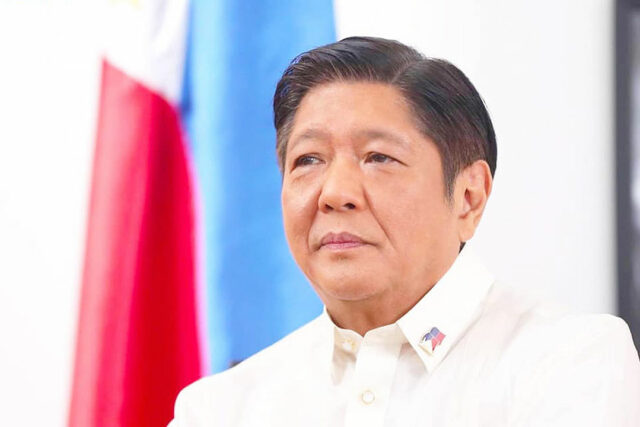
Here comes the Son

FACEBOOK.COM/BONGBONGMARCOS

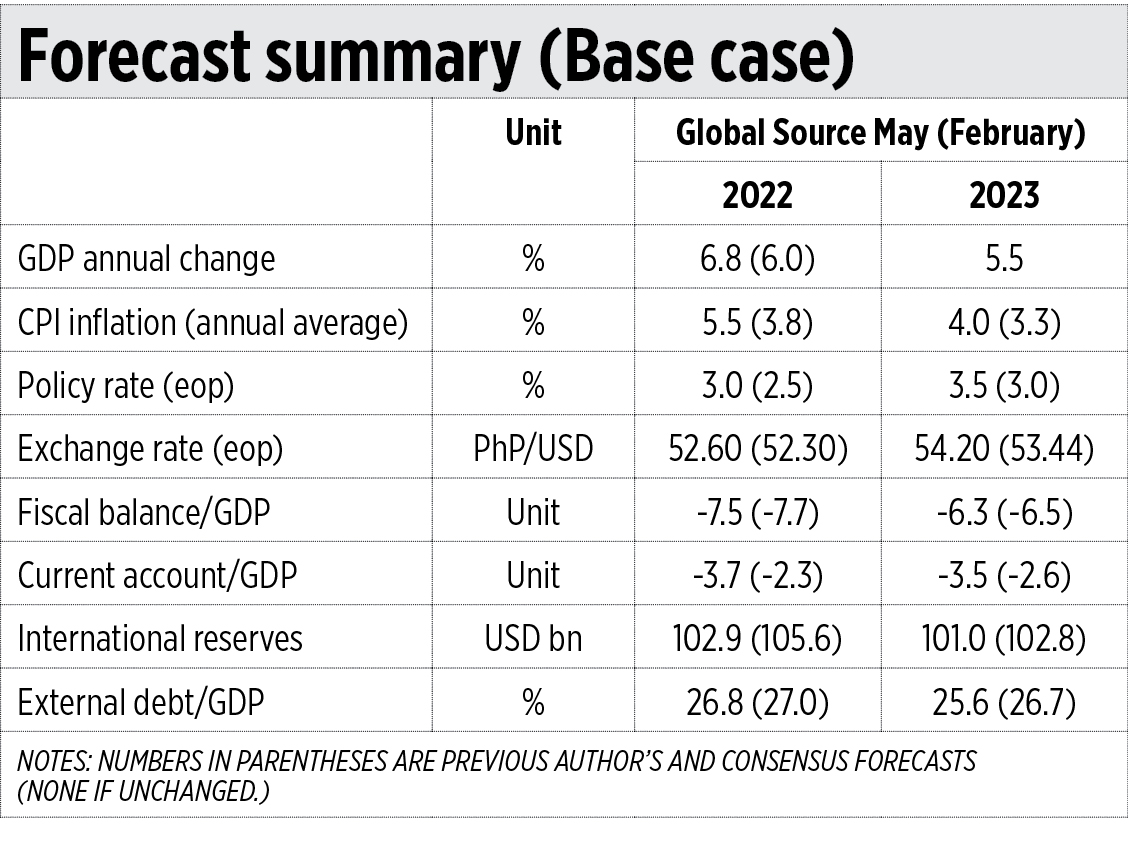
I am pleased to share excerpts from our Globalsource Partners quarterly forecast report (May 31), the summary page, and the concluding political section. GSP (globalsourcepartners.com) is a subscriber supported network of independent analysts in emerging market countries providing macro, financial and political risks analysis and forecast based in New York. Christine Tang and I are their Philippine Advisers.

SUMMARY FORECAST
The Philippines just elected its first majority president since the return of democracy in 1986 and delivered a not typical “tandem vote” by choosing his running mate as well. The convincing mandate given to President-elect Ferdinand Marcos, Jr. and Vice-President-elect Sara Duterte resulted from a generally orderly election and subsequent quick count. The new administration will take office on June 30.

So far, the incoming administration has handed the business community what it wanted — a knowledgeable and experienced economic team, drawn from current and past administrations, that could hit the ground running. Despite looking like a gerontocracy, media interviews given by key members of the team reveal readiness to put into action learnings gleaned from decades of working in their respective fields.
Although there is palpable unease, including among foreign observers, with the rise of the son of the former dictator, we, like the rest of the business community, are opting to give the president-elect the benefit of the doubt especially during his honeymoon period. A challenging global environment awaits his administration with economic growth slowing down, commodity prices staying elevated, monetary policies and financial conditions tightening, neighbor China still under COVID-19 lockdown, and geopolitical tensions causing greater policy unpredictability.

Domestically, the president-elect will be facing difficult choices. At the macro level, fiscal policy is constrained by much higher public debt and continuing large budget deficits, monetary policy is constrained by rising inflation with interest rates on their way up, and the external sector is impaired by the deterioration in the terms of trade, increased reliance on food imports to manage domestic inflation and potential risk-off conditions aggravating capital outflows. He will also need to act quickly to avert power shortages over the medium-term.

Although Q1 GDP growth was higher than expected, we think much of the surprise was due to election spending and unlikely to be sustained beyond 1H. However, the increased likelihood that COVID-19 has become endemic in the Philippines has raised our confidence in continuing freer mobility and gradual expansion of close-contact services, particularly tourism and in-person classes. We are thus raising our GDP forecast for 2022 from 6% to 6.8% but keeping our 2023 forecast at 5.5% pending clearer demonstration of the executive’s ability to build on and implement recent reforms, particularly in attracting foreign investments.

Downside risks are significant, emanating mainly from the many risks in the global environment, including US recession risk from much more aggressive Fed policy rate hikes and the impacts on highly indebted economies and emerging markets, possible escalation of the war in Ukraine and sanctions on Russia that could cause not just energy prices to soar anew but food shortages and more export bans, as well as a further slowdown in world growth due to the knock-on effects and China’s strict zero-COVID policy. Locally, downside risks include the continuing challenge of managing possible COVID-19 outbreaks, more rapid increases in inflation that de-anchors expectations and lead to more aggressive monetary tightening, and failure to maintain financial market confidence in the new administration’s commitment to macroeconomic stability in general and fiscal sustainability in particular.

Any upsides to enable the economy to sustain growth above 6% will hinge on the new administration’s ability to raise market confidence in its managerial ability and economic program (including broadening the base of economic growth), as well as a less tumultuous global environment that makes cross-border investment decisions possible. In this regard, recently legislated freer foreign investment rules can help attract foreign capital.

POLITICS: WHO HAS THE PRESIDENT’S EAR?
He may look, talk and even share his father’s name but by all accounts, President-elect Ferdinand Marcos, Jr. is not his father, the strongman who ruled the Philippines for 20 years until his ouster in 1986.

For many, this is both good and bad: good, because he does not have the drive to become the autocrat that his father was; bad, because he does not have the vision to catapult his presidency to the heights afforded by his majority electoral win. In fact, the most worrisome political risk we hear now is that his may be a feckless presidency marked by indecisiveness and unresponsive leadership…

For longtime observers of policy making in the Philippines, it does not really matter who occupies the presidential palace and what his background and temperament are, as long as he knows how to delegate. President Duterte provides a radical example, practically giving his finance secretary, Carlos Dominguez, full control on the executive’s economic policy. His being the head of the economic team as finance secretary was greatly facilitated by the full trust of and access to the president, a relationship developed as early as primary school…

…. Many, ourselves included, think that Mr. Marcos could not have chosen a better economic team with the qualifications and experience that could hit the ground running during these challenging times. On the other hand, some of the members of this team must still remember their time in the Estrada government in the late 1990s, Mr. Diokno included who was then budget secretary, when the good policies framed by a first-rate economic team could not withstand the harm devised by an informal rent-seeking “midnight” cabinet.

For now, we can only give Mr. Marcos the benefit of the doubt that goes with his honeymoon period and trust in the experience and political instincts of his economic team. There are many challenging decisions on the economic policy front in the near term, including clarifying the President-elect’s campaign statements supporting direct government intervention in the rice and oil markets, that will reveal who has the president-elect’s ear.


Romeo L. Bernardo was finance undersecretary from 1990-96. He is a trustee/director of the Foundation for Economic Freedom, Management Association of the Philippines, and FINEX Foundation.

romeo.lopez.bernardo@gmail.com
Empire ambitions

YURIIKOCHUBEY-DEPOSITPHOTOS.COM

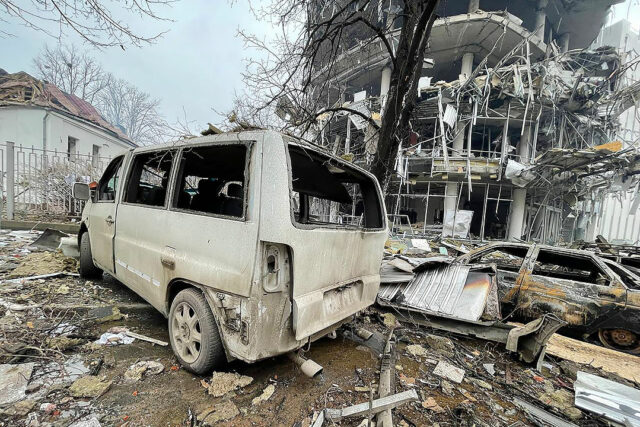
The invasion of Ukraine launched by Russian autocrat Vladimir Putin continues without let up four months since it started on Feb. 24. The Russians had hoped to proclaim victory by capturing Ukraine’s capital Kiev and disposing of the Ukrainian President Volodymyr Zelensky, his family, and all other Ukrainians, government and private personalities, who “brought Ukraine closer to the west,” a few days after marching into Kiev.

Putin’s first rationale for the invasion was to “de-Nazify” Ukraine. The truth of the matter is the message did not fly since Zelensky and millions of Ukrainians are Jews. The Denazification message was meant to camouflage his personal dislike and disdain for Zelensky, a former actor-comedian who won election by a substantial margin over a Russian-backed candidate.

In a recent television address to the world, Zelensky issued a renewed appeal for help from the West, pleading for heavier artillery to counter the invasion which, by Zelensky’s count, has launched 2,606 cruise missiles, hitting different cities to cause deaths and untold suffering. It seems the Russian objective is to bring down Ukraine “no matter the cost.” Achieving that objective meant adopting a “scorched earth” policy which calls for destroying every object around and killing anything that moves. Farm lands which produce wheat that is supplied to many regions, most notably Africa and Latin America, have been destroyed. Milling facilities have been bombed. Grain that is being shipped to other countries has been blocked by the Russian naval armada in the Black Sea, threatening to create a serious famine especially among vulnerable nations already confronting an oil crisis. In short, a double whammy.

As of now Putin and his generals (a number of whom have perished in the battlefront more likely for recklessness based on over-reliance on Russia’s military superiority) are concentrating on capturing the key industrial city of Severodonetsk in Ukraine’s eastern region. This shift in focus occurred almost four months after Putin invaded Ukraine to “de-Nazify” the former member of the Union of Soviet Socialist Republics (USSR). Now, Putin has radically changed his tone. The Russian President, who has ruled Russia for more than 20 years, is now invoking Peter the Great to justify the invasion of Ukraine.

During a tour of Moscow and the Red Square in 2013, our Ukrainian tour guide (who has, incidentally, gone incommunicado after expressing deep sadness on the first day of the invasion of Ukraine), described Peter the Great as an egotistical and self-centered leader, who co-ruled Czarist Russia with a step-brother for some time, from the age of 10 until he died at 52. Peter the Great formed an anti-Sweden alliance and waged war against Sweden to recover lost territories and to enhance his stature and prestige among monarchs during the 17th century. Like Peter the Great, Putin is whipping up patriotic fervor with the aid of media which were nonexistent during Peter the Great’s reign. During Putin’s reign, Kremlin-controlled media is leading the formation of so-called patriotic youth groups. For example, these patriotic groups are told that Ukraine — and probably other now-independent countries like Lithuania and Estonia — have to be recovered at some point to complete and rebuild Russian glory. Such threats have led to calls by Putin allies for the derecognition of the independence of Lithuania. Of course, Putin’s sagging image will be rebuilt by these wars. Putin is clearly copying Peter the Great — although physically, the 6’7” Peter the Great dwarfs Putin who is probably no more than 5’9”.

Many measures are being taken by Russian authorities to support the use of patriotism as the reason for the war against Ukraine. One of these is the creation of normalcy among Russian cities. One obvious example of this attempt is, as reported by CNN, to assure the Russian person-in-the street, especially the middle class, that everything is under control despite all the sanctions that have hit the Russian economy. Several American and global brands have left Russia in protest over its illegal invasion and occupation of Ukraine.

McDonald’s, the burger chain which represents American business presence in virtually all countries, left Russia and closed all its stores to protest the invasion. Kremlin made sure the burger chain, very popular among its middle class, was replaced almost immediately by a new local brand, Vkusho & Tochka (Tasty and That’s it), lest Russians start to wonder why global brands and businesses are terminating business in increasing numbers. Putin’s propagandists probably felt it was not enough that Russians are incessantly bombarded by state media about patriotism, recovering territory that is theirs, and reliving the glory days of Czarist Russia. They have to see and feel for themselves that everything is normal by being able to enjoy the simple pleasures of daily living in a world power like Russia. All these are designed to take their minds off the few bits of news that slip through the censorship net about atrocities committed by Russian soldiers, including rape, bombing of hospitals, the loss of Russian lives and the enormous expense to wage an unjustifiable war. Whatever, however you call it in whatever language, it is still not McDonald’s.

What are the implications of this war on the Philippines?

The Philippines voted to condemn the Russian invasion of Ukraine in a Resolution passed by the United Nations General Assembly. Although a moral victory for the West and its allies like the Philippines and Singapore in Southeast Asia, the Resolution is non-binding and it is up to individual countries to carry out that Resolution, if at all. Consistent with the Duterte administration’s approach to Philippine relations with Russia and the United States, it was reported later on that the president declared that the Philippines is neutral in this conflict.

According to statistics provided by the Bangko Sentral ng Pilipinas (BSP), the country’s total exports to Russia in 2021 amounted to about $120 million, or about 0.2% of its total exports, while the Philippine exports to Ukraine amounted to $5 million. Imports from Russia in the same year comprised 0.6% of its total imports and for Ukraine, 0.1%. While trade between Russia and the Philippines has increased over the years, Russia remains far down the list, at 31, of the Philippines trading partners. Ukraine must even be much lower.

The modest level of trade and business involving the Philippines and Russia on one hand, and the Philippines and Ukraine on the other, is probably one of several reasons why economic managers like Finance Secretary Carlos Dominguez III thinks the impact of the Russia-Ukraine crisis on the country is “temporary.”

Whether temporary or longer lasting, the impact that the conflict will have on the country is in energy and food prices, the two major cost items for most Filipinos. And the impact is not a direct one but rather due to the effect the crisis has on our major trading partners like the US and the European Union.

The problem and issues can be broken down into smaller components to have a better sense of what solutions would have a better chance of success. The incoming administration has its work cut out for it.


Philip Ella Juico’s areas of interest include the protection and promotion of democracy, free markets, sustainable development, social responsibility and sports as a tool for social development. He obtained his doctorate in business at De La Salle University. Dr. Juico served as secretary of Agrarian Reform during the Corazon C. Aquino administration.

The honeymoon period

MOTORISTS drive past the National Museum of the Philippines in Manila with the facade lit up with the colors of the Philippine flag on June 3 as part of the commemoration of flag week and the coming 124th Philippine Independence Day. The National Museum of Fine Arts, which was the Old Legislative Building, is to be the venue for the inauguration of President-elect Ferdinand “Bongbong” R. Marcos, Jr. on June 30. — PHILIPPINE STAR/MIGUEL DE GUZMAN

THE first hundred days of a new administration are used as an indicator of its policy priorities, style of decision-making, and political value system. This “honeymoon period” is characterized by some measure of goodwill extended to the new leadership, even by traditional media (not the social one) which still have little basis for criticism — The economic team looks experienced, even with hair dye.

Media (though not all) can get into an adversarial stance, maybe by day 10. Critics can also jump into the fray by then. Political friends and supporters (including old, recent, and two-hours old) caught in the euphoria of change are not yet squabbling over what they feel are betrayed promises. Watch out for the new coalitions of critics from former cheerleaders, especially those expecting to be appointed but who end up disappointed.

The 100-day period establishes the new brand of leadership. Shall the country’s brand continue to be a political story in the international media, or an economic one? Can the new administration relaunch a new brand for the country?

To be avoided are “unforced errors.” In basketball, which is our metaphor for life, this term refers to infractions that could be avoided like too leisurely bringing down the ball from full court and incurring the eight-second violation to cross half-court. Other examples are stepping on the line and 24-second violation without having taken a shot.

Such issues include sisterly comments (we don’t mind media personalities migrating) or attempts to change the names of highways or airports or thinking of commemorative holidays for the upcoming 50th anniversary of you-know-what in September.

After the contest where all issues are divisive and political, the new administration can re-frame its advocacy as an economic one as it has already started to do in its slogans of recovery and coming back to prosperity. One can include climate change and food security just for variety.

Restating the new administration’s goal as the pursuit of efficiency, consistency, and a simplification of the rules sharpens the business message and focuses effort and resources in the right direction.

There are possible low-hanging fruits to start with.

The economic team has already been announced. This sent a strong message to media when priority was given to designating the Secretaries for Finance, Trade and Industry, NEDA, and Tourism. The first headlines were on the economic team. Note that we include tourism here since this defines the new brand too in the international scene.

Using the economy as a theme for the first few speeches includes improving government focus on ease of doing business with digitalization and greater transparency. In selecting speaking engagements, some emphasis needs to be given to business groups most likely to move forward with the economic theme.

Selecting spokespersons that are economically literate helps. The spokesperson or other media-facing personalities should be able to discuss with ease the economy and the improving business sentiment regarding government, especially with foreign investors. An economically savvy communicator will be comfortable with explaining GDP growth, inflation, and reduction of foreign debt.

Ceremonial events should focus on the economy. Inaugurations of plants, especially large ones with a high component of employment potential present photo opportunities for the overarching theme that the country is open for business.

Surely, it is naive to suppose that the honeymoon period can stick to a purely economic narrative. (Even in real honeymoons, it’s not all about… the scenery.) For so long, the country has been a symbol of missed opportunities because of political baggage. There needs to be a concerted effort to stick to an economic story.

A political narrative will persist for sure. There are still unsolved issues like the framing of a legislator needing to be freed from incarceration, or the issue of the freedom of the press with the abrupt non-renewal of a franchise. There are too the persistent statistical arguments on the election results. Some quarters are still fighting that battle.

But has the honeymoon period already started with the end of the canvassing? Then the messaging needs to be launched earlier.

The first 100 days are a narrow window where hope and the feeling of immense possibilities intersect. Love of country should be about believing that economic prosperity is part of our future… and that requires moving forward together.


Tony Samson is chairman and CEO of TOUCH xda

ar.samson@yahoo.com

Getting the most out of a Zoom meeting

Image via PhilCare

A Zoom meeting is only as good as its facilitator. Tina Lucic, a member of Zoom’s customer marketing team, gave tips on how to create a conducive meeting.  

“Set the right expectations,” she said in a webinar organized by the videoconferencing app. “Tell them what they can expect in your session and how you expect them to contribute.”  

Before the meeting:  

  • Check your lighting — Position yourself in front of a window, or use a ring light. For low light environments, adjusting the light in the video settings is an option.
  • Know your platform — Familiarize yourself with the controls of the videoconferencing app you’re using. Know what eye level looks like for your gadget.

At the start of the meeting:  

  • Address housekeeping items — How long is the meeting going to last? Will the meeting be recorded?
  • Inform people how they can participate — Will the chat box be open throughout the meeting, or should attendees use the Raise hand feature instead?
  • Acknowledge your virtual meeting attendees by name — Introductions are also useful especially for smaller groups. 

“Start your meeting off with an ice breaker,” Ms. Lucic added in the aforementioned webinar. “Maybe ask the [virtual attendees] to use a backdrop to show where they’re from.”   

During the meeting: 

  • Assign an in-person meeting facilitator — Given that in-person connection is “arguably more powerful than digital connection,” assign an in-person meeting facilitator to be the virtual attendees’ in-person representative. He/she works in the background: supporting the main facilitator, raising questions sent through the Q&A box, and sending links related to the meeting’s talking points in the chat.
  • Ensure breaks are scheduled throughout the hybrid meeting
  • Utilize collaboration tools — Support the real-time flow of ideas through digital canvasses like Zoom’s Whiteboard, or promote interaction through game-based apps like Kahoot!
  • Manage participants privileges for more efficient proceedings — Zoom’s security button, for instance, allows hosts and co-hosts to enable closed captioning, request that a participant start their video, or put participants in a waiting room. Participants in a Zoom call, meanwhile, have access to controls such as changing their screen names, accessing the chat box, and clicking meeting reactions.

“Give [everyone] a chance to be an active part of the session,” said Ms. Lucic, adding that a host should allocate a portion of the meeting to questions. “People are giving you their time… Even though you cannot answer all of them, make sure that you try to.” 

A hybrid meeting is a meeting with any combination of people joining from an in-person location, like an office space, or remotely, as in their homes. While this option offers flexibility and cost-effectiveness, it also comes with challenges that include distractions from external interruptions, as well as a lack of tools to enable collaboration.  

Per PhilCare’s 2021 Survey of Filipino Workers, half of the respondents said they worked from home. Of these, 20% had a hybrid work setup. A quarter of all respondents (25.2%) also said they preferred a new normal work setup where they worked more in their workplace than at home. — Patricia B. Mirasol 

BW Insights x Maya: “BSP’s QR Ph: Accelerating Digital Adoption with the National QR Standard for Person-to-Merchant Payments”

With the Bangko Sentral ng Pilipinas (BSP)-mandated full implementation of QR Ph this year, consumers can conveniently scan to pay one QR code for their retail purchases using various bank and e-wallet apps. Merchants, meanwhile, can easily accept payments from more customers using this unified QR code.

This massive adoption is expected to help support our country’s cash-lite goal to transform 50% of the volume of total retail payments into digital form by 2023.

On June 15, join our high-profile speakers from government and business to find out the benefits of QR Ph to you. Hurry up and register your slot via https://www.virnew.com/BWQRPH/.

This session of #BUSINESSWORLDINSIGHTS is co-presented by Maya, with partners Management Association of the Philippines, Philippine Franchise Association, Go Negosyo, Philippine Chamber of Commerce and Industry, Makati Business Club, and Philippine Retailers Association; and media partner The Philippine STAR.

Tier One Entertainment, Bent Pixels Asia to boost content creator revenue on YouTube

The content creators of Tier One

Bent Pixels Asia (BPA), a revenue accelerator that connects brands and YouTubers, partnered with talent company Tier One Entertainment to boost the reserved media offerings of its creators on the video sharing platform. 

Advertisers or ad agencies can buy placements on a reservation basis instead of an ad auction.   

“We believe that gaming creators should be provided with tools and best practices to start their video-on-demand (VOD) content — YouTube being the best platform to start this with,” said said Erwin L. Razon, general manager of BPA, in an e-mail. “In the coming years, Bent Pixels Asia will build VOD creator programs to help not just create, but also monetize, VOD content for our partner channels.”  

The partnership also marks the expansion of BPA in the Philippines, home to over 43 million active gamers as of 2020, with 43% spending one to two hours per gaming session 

This brings BPA’s total network of gaming and eSports YouTube creators to over 400 from the Philippines, Singapore, Indonesia, US, and European markets, enabling advertisers to potentially reach over 300 million subscribers.   

In Southeast Asia, BPA has also partnered with gaming content creators, such as Dyland PROS (15.4 million subscribers), HecaTroll (1.51 million subscribers), EVOS LJ (1.11 million subscribers), Kristian PH (3.1 million subscribers), and King FB (418k subscribers).  

Tier One counts in its talent roster co-founder Alodia Gosiengfiao as well as eSports personalities OhMyV33nus and Wise Gaming.   

“We’ve been saying for years — since Tier One was founded, one of our 

main goals is to open doors for aspiring creators, for gamers with big dreams,” said Tryke Gutierrez, chief executive officer and co-founder of Tier One Entertainment, who is a content creator himself, in a press statement. 

Tier One Entertainment also has in its roster Lincoln “Cong” Velasquez, better known as Cong TV, a vlogger and founder of the Team Payaman channel founder, who hit 10 million subscribers on his YouTube channel. The talent company also recently acquired four famous international cosplayers: Harfie, Hakken, Knite, and Shunsuke.

Through the partnership, Tier One Entertainment’s creators will be offered to advertisers as part of YouTube Reserved Media deals. Creators can potentially unlock opportunities to increase their YouTube revenue via access to branded content deals and access to premium tools.   

“BPA has access to technology that allows us to serve video ads [such as] pre-roll and mid-roll ads, specifically to channels that are part of the network,” Mr. Razon told BusinessWorld. “Oftentimes, we package Reserved Media together with sponsored segments within a creator’s video.” 

This can be a thirty-second segment within a video — with the brand “organically inserted” — or a full sponsored video where the creator will do product reviews, he added.  

BPA will also offer creator development programs and troubleshooting support for Tier One Entertainment’s talents who have YouTube channels, to help them grow their reach and subscribers’ base.  

BPA is part of the Hepmil Media Group, a technology-driven media network. — Patricia B. Mirasol

China’s factories perk up, but frail consumption points to weak economic recovery

REUTERS

China’s economy showed signs of recovery in May after slumping in the prior month as industrial production rose unexpectedly, but consumption was still weak and underlined the challenge for policymakers amid the persistent drag from strict COVID curbs.

The data, however, provides a path to revitalise growth in the world’s second-biggest economy after businesses and consumers were hit hard due to full or partial lockdowns in dozens of cities in March and April, including a protracted shutdown in commercial centre Shanghai.

Industrial output grew 0.7% in May from a year earlier, after falling 2.9% in April, data from the National Bureau of Statistics (NBS) showed on Wednesday. That compared with a 0.7% drop expected by analysts in a Reuters poll.

The uptick in the industrial sector was underpinned by the easing of COVID curbs and strong global demand. China’s exports grew at a double-digit pace in May, shattering expectations, as factories restarted and logistics snags eased.Read full story

The mining sector led the way with annual output up 7.0% in May, while that in the manufacturing industry eked out a meagre 0.1% growth, mostly driven by the production of new energy vehicles which surged 108.3% year-on-year.

“Activity data paints an economic recovery picture in May, but only a slow one,” said Iris Pang, Chief China economist at ING.

The government is likely to respond to this economic weakness by delivering more fiscal stimulus,” Pang said.

Chinese shares rose after the data were released, with mainland China’s bluechips .CSI300 up 1.8% and Hong Kong shares .HSI 1.4% higher, in contrast with a largely subdued session for most other Asian share markets. Read full story

Fu Linghui, a spokesman at NBS, told a press conference that he expects the recovery to improve further in June due to policy support.

However, “the international environment is still complex and severe,” he said, highlighting the risks to the outlook.

“Our domestic recovery is still at its initial stage with the growth of key indicators at low levels,” Fu said.


WEAK CONSUMPTION, EMPLOYMENT CONCERNS

That caution was underscored in consumption data, which remained weak as shoppers were confined to their homes in Shanghai and other cities. Retail sales slipped another 6.7% in May from a year earlier, on top of a 11.1% contraction the previous month.

They were slightly better than the forecast of a 7.1% fall due to the increased spending on basic goods such as grains, edible oils and food and beverages. Read full story

“We should not be overly optimistic about consumption as the recovery has been quite slow. Affected by repeated COVID outbreaks, slower income growth, a cautious view of the future expectations, there will not be a revenge spending, as people have expected,” said Wang Jun, chief economist at Zhongyuan Bank.

Sales in the catering industry, a sector highly sensitive to COVID curbs, contracted by 21.1% in May, compared with a fall of 22.7% in April.

Fixed asset investment, a growth driver that policymakers have hoped would prop up the economy, rose 6.2% in the first five months, beating an expected 6.0% rise but slowed from a 6.8% gain in the first four months.

China’s property sales fell at a slower pace in May, suggesting improved buyer sentiment after a slew of easing policy steps taken by cities across the country to boost demand. The data sent shares of Chinese developers soaring. Read full story

Employment remained a big concern, however. The nationwide survey-based jobless rate fell to 5.9% in May from 6.1% in April, still above the government’s 2022 target of below 5.5%.

In particular, the surveyed jobless rate in 31 major cities picked up to 6.9%, the highest on record. Some economists expect employment to worsen before it gets better, with a record number of graduates entering the workforce in summer.

The central bank on Wednesday kept medium-term policy rate unchanged for a fifth straight month, matching market expectations. Read full story

China’s cabinet recently announced a broad package of economic support measures, although analysts say the official GDP target of around 5.5% for this year will be hard to achieve without doing away with the zero-COVID strategy. Read full story


FRESH LOCKDOWN FEARS LOOM

Fears of fresh lockdowns also loom large under the stringent COVID policy. Authorities in Beijing warned on Tuesday that the city of 22 million was in a “race against time” to get to grips with its most serious outbreak since the pandemic began, as cases tied to a 24-hour bar grew. Read full story

Shanghai is still grappling with lingering COVID cases after it emerged from a two-months long lockdown.

Any further lockdowns and supply chain disruption risks amid future COVID outbreaks may constrain the rebound of the economy, analysts say.

“The short-term trend of recovery in June is becoming obvious, but the economy is still some distance away from normal operations,” said Wang from Zhongyuan Bank. – Reuters

Shared values improve employee retention

PIXABAY

Businesses that value family, education, faith, health and wellness, and basic needs are more likely to keep their employees, according to a human resources (HR) professional. 

“We need to go back to our shared Filipino values to [also] preserve our national heritage and enhance our national image,” said Sonnie E. Santos, co-founder of HR Kolektivs, a company that offers HR services to micro, small, and medium enterprises (MSMEs), in a June 12 episode of The HR Café, a talk show program by the Philippines HR Group (PHILHRG Inc.) 

In a year-long study titled “What is important for Filipinos” conducted in 2020, the National Commission for Culture and the Arts identified 19 common and shared values, the top five of which are mentioned above.

Mr. Santos related that the reason why he did not migrate when he had chances was because all these opportunities did not allow him to bring along his family.   

“Employees work for their families,” he said. “If ang family malalagay sa alanganin [would be compromised] because of work, then we know what the employee’s decision would be.”  

Companies can show that their priorities are aligned with their employees’ by developing training programs that extend to other family members, or by offering health benefits that cover dependents. 

“Whenever my clients extend HMO (health maintenance organization) coverage to their employees, the question employees usually ask is, ‘Can we also enroll our dependents?’” he said. 

Including employee dependents helps in employee retention, and also reduces cash advance requests when a family member falls ill, Mr. Santos added in the vernacular.  

Asked for initiatives to cope with rising inflation, Mr. Santos presented three options: a hybrid work arrangement; a temporary inflationary allowance; and perks for those working onsite, such as unlimited rice from the office pantry. 

Empathy, he added, does not mean ignoring company policy. In the case of tardiness because of long commutes, he said, the option might be for management to offer different shifts (e.g., 7 a.m.–3 p.m.; 9 a.m.–5 p.m.; and 11 a.m.–7 p.m.)  

A separate study by Singapore-based market research firm Milieu Insight, showed that honesty and integrity were valued the most by Filipino workers. 

Katapatan [Honesty] is important. It causes unnecessary stress among Filipinos if they belong to a certain group that is not aboveboard in their practices,” Mr. Santos said. — Patricia B. Mirasol

European official raises alarm about Russia flying Western-made airplanes

The European Union’s top aviation safety regulator said on Tuesday that he is “very worried” about the safety of Westernmade aircraft continuing to fly in Russia without access to spare parts and proper maintenance.

The European Union and the United States have moved to restrict Russia‘s access to spare parts following its invasion of Ukraine. Russia calls its actions in Ukraine a “special operation.”

“This is very unsafe,” Patrick Ky, executive director of the European Union Aviation Safety Agency (EASA), told reporters on the sidelines of a conference, adding regulators do not have good data on many of the planes flying in Russia or if any have experienced safety issues in recent months.

Mr. Ky said regulators should consider requests for exemptions from Russia “on a case by case basis, what would be the justification, why do you absolutely need to operate this type of aircraft.”

Mr. Ky added he was in favor of reviewing specific cases if it were needed “for humanitarian reasons … but then it should not become the norm.”

Mr. Ky said as time goes on the risks grow. “In six months – who knows? In one year – who knows?” He said there were reports Russia will be forced cannibalize airplanes to keep others operating.

In early March, Boeing Co BA.N and Airbus SE AIR.PA said they suspended the supply of spare parts to Russian carriers.

In April, the Federal Aviation Administration (FAA) downgraded its air safety rating for Russia, saying the country’s Federal Agency for Air Transport was not complying with International Civil Aviation Organization (ICAO) safety standards.

The United States in March banned Russian carriers from American airspace, joining the European Union and Canada.

The US Commerce Department in March added more than 150 Boeing airplanes operated by Russia airlines to a list of aircraft believed to violate U.S. export controls.

The planes were Russian passenger and cargo carriers including flag carrier Aeroflot, AirBridge Cargo, Utair, Nordwind, Azur Air and Aviastar-TU in a move that the department said would “effectively ground” the planes from traveling outside Russia.

The department said any refueling, maintenance, repair, or spare parts or services for those planes violates US export controls and subjects companies to U.S. enforcement actions that could include “substantial jail time, fines, loss of export privileges.”

Earlier this month, the department added 70 Russian entities to its trade blacklist including several aircraft factories. – Reuters

Biden touts grain silos on Ukraine border to help exports; Kyiv wants ports open

US President Joe Biden said on Tuesday that temporary silos would be built along the border with Ukraine in a bid to help export more grain and address a growing global food crisis.

Since the Russian invasion and blockade of Ukrainian Black Sea ports, grain shipments have stalled and more than 20 million tonnes are stuck in silos. Ukraine says it faces a shortage of silos for a new crop.

The war is stoking prices for grains, cooking oils, fuel and fertilizer.

Russia and Ukraine account for nearly a third of global wheat supplies. Ukraine is also a major exporter of corn and sunflower oil and Russia a key fertilizer exporter.

“I’m working closely with our European partners to get 20 million tons of grain locked in Ukraine out onto the market to help bring down food prices,” Mr. Biden told a Philadelphia union convention. “It can’t get out through the Black Sea because it’ll get blown out of the water.”

Since the war started, Ukraine and Russia have laid sea mines. Some 84 foreign ships are stuck in Ukrainian ports – many with grain cargoes onboard. Read full story

Mr. Biden said Washington was developing a plan to get grain out by rail, but noted Ukrainian track gauges were different from those in Europe, so the grain has to be transferred to different trains at the border.

“So we’re going to build silos, temporary silos, on the borders of Ukraine, including in Poland,” BMr. iden said.

Grain could be transferred from Ukrainian railway cars into the new silos, and then onto European freight cars to “get it out to the ocean and get it across the world,” he said, adding the plan was taking time.

“This is just one of the possibly useful steps in ensuring food security. But we also need a green corridor for our ports,” Andriy Yermak, chief of staff to Ukrainian President Volodymyr Zelenskiy, said in an online post.

Ukraine‘s agriculture ministry on Tuesday said European countries were considering providing temporary silos to “preserve the harvest and secure future grain supplies”. Read full story

Ukraine says the best way to get grain exports moving again is through Black Sea shipments. Read full story

UN Secretary-General Antonio Guterres is trying to broker what he calls a “package deal” to resume Ukrainian Black Sea exports and Russian food and fertilizer exports, which Moscow says had been hit by sanctions. The UN has so far described talks with Russia as “constructive.” – Reuters

Globe joins list of top 200 Asia-Pacific Climate Leaders

Leading digital solutions platform Globe has made it to the list of top 200 Climate Leaders in Asia Pacific based on a special report entitled “Asia-Pacific climate leaders: Which companies cut emissions?” developed by the Financial Times, Nikkei Asia, and Statista for making headway in reducing emissions intensity, coming from an evaluation of publicly disclosed data on greenhouse gas emissions and revenues reported from 2015-2020.

Globe is one of only two companies from the Philippines included in the report.

The joint initiative among the three organizations acknowledged 200 outstanding companies across the Asia Pacific region for their impressive environment, social and corporate governance (ESG) performance and continued dedication to reducing their carbon footprint.

Selection for the Climate Leaders Asia-Pacific 2022 list included months of intensive research, scrutiny of existing emissions data, public calls for participation, and direct contact with thousands of companies in the region.

According to their official release, “The survey takes account of so-called Scope 1 and Scope 2 emissions: those produced by the company itself, plus those produced in generating the energy it used. Scope 3 emissions, or indirect emissions arising in businesses’ supply chains, were excluded from the review.”

“We are happy to be recognized for our efforts in putting ESG as a priority in our organization. There’s still a lot to be done to help the country achieve its carbon reduction ambitions. We hope to serve as an example for other companies in the region to set their ambitions and work towards a net zero GHG goal,” said Yoly Crisanto, Chief Sustainability and Corporate Communications Officer at Globe.

Globe has initiated strategic initiatives to reduce its greenhouse gas emissions to net zero by 2050. It also became the first and only publicly listed company in the Philippines to commit to set science-based targets aligned to the 1.5 degrees pathway of the Paris Agreement. It has partnered with key industry experts to operationalize its climate action plans.

So far, it has deployed over 8,500 green network solutions such as fuel cell systems, direct current-hybrid generators, free cooling systems, and lithium-ion batteries that are more energy efficient and use cleaner fuel with lower emissions.

It has also shifted 14 key facilities to renewable energy and continues to buy renewable energy bundled with verified carbon offsets as part of the company’s decarbonization journey. The company looks to move more of its high-energy utilization facilities to renewable energy via Power Purchase Agreements (PPA) this year, in alignment with current provisions of government’s programs on RE.

Globe has also included sustainability as part of its sustainable power purchasing criteria. Furthermore, the company continues to engage business partners, vendors, suppliers, and customers to ensure that sustainable practices are adopted and promoted across the total value chain.

In managing its climate impact, the company is also into responsible waste management through e-waste recycling and nature-based solutions including virtual tree planting through the GForest game in the GCash app, reforestation, and mangrove conservation.

Last year, Globe formally joined the Task Force on Climate-Related Financial Disclosure (TCFD) as part of its commitment to mitigating the impact of climate change through a science-based, numbers-backed report. This will increase transparency on climate-related risks and opportunities within financial markets.

The company increased its CDP (formerly Carbon Disclosure Project) Rating to a B last year, following continuous efforts to reduce carbon emissions.

The digital solutions group’s efforts to reduce carbon emissions is part of its commitment to the United Nations Sustainable Development Goals, particularly UN SDG No. 13, which underscores the importance of climate action to save lives and livelihoods to address climate emergencies.

To see the full list of companies recognized by FT-Nikkei-Statista, view here: https://www.ft.com/reports/asia-pacific-climate-leaders.

To learn more about Globe, visit www.globe.com.ph.


Spotlight is BusinessWorld’s sponsored section that allows advertisers to amplify their brand and connect with BusinessWorld’s audience by enabling them to publish their stories directly on the BusinessWorld Web site. For more information, send an email to online@bworldonline.com.

Join us on Viber to get more updates from BusinessWorld: https://bit.ly/3hv6bLA.

Virtual storefronts, messaging to act as bridge between businesses and metaverse

UNSPLASH

Virtual storefronts that allow customers to message businesses are essential to growth, according to global tech firm Meta.

“A lot of the features we have built are inspired by how businesses in Asia Pacific are using our platforms to find and connect with customers in a personal, timely, and relevant way,” said Ankur Prasad, global product marketing director for business messaging at Meta, at a virtual roundtable on June 14.  

These include Facebook and Instagram Live, which put small business owners and big brand names in the same playing field. 

Mr. Prasad explained that “seamless discovery and messaging experiences” are the goal. In the Asia Pacific, Meta found that 7 out of 10 people felt more connected to businesses they can message. 

“Southeast Asia in particular is a key region for Messenger. Many small businesses within the region set up and operate their businesses purely on Meta’s apps, whether it’s Facebook, Messenger, Instagram, and/or WhatsApp,” he said.

Ragde Falcis, co-founder and chief executive officer of multi-channel commerce platform ChatGenie.PH, added that messaging apps increase customer satisfaction, which, in turn, brings more growth and scaling opportunities. 

“And it’s all because they bring more convenience,” he said. 

Messaging, both panelists said, is a potential bridge to the metaverse, a virtual world widely regarded as the successor of the internet.  

For businesses to capitalize on virtual storefronts and messaging, internet connectivity will have to improve as the Philippines ranks 14th out of 22 Asian countries (and 53rd out of 100 countries globally) in the 2022 Internet Inclusivity Index commissioned by Meta. 

Despite infrastructure woes, Mr. Prasad maintained that the future remains bright for APAC: “Communication between people and businesses have evolved, and I’m sure it will continue to evolve.” — Brontë H. Lacsamana