Home Blog Page 5877

12 Abu Sayyaf members surrender in Sulu

PHILIPPINE ARMY KALINAW NEWS

A DOZEN members of the Abu Sayyaf, a kidnap-for-ransom group that has also in recent years allied with the extremist Islamic State, turned themselves in to security forces Friday, the military reported on Sunday.  

The 12 men surrendered to the Joint Task Force Sulu through the 1101st Infantry Brigade headquarters in Talipao, Sulu on June 10 and gave up weapons, including M16 rifles, grenade launches and pistols, according to the JTF commander, Maj. Gen. Ignatius N. Patrimonio.  

The influx of (Abu Sayyaf) returnees is an indicative of our successful peace and security campaign in Sulu. Let us therefore continue our concerted efforts to finally end terrorism,Mr. Patrimonio said in a statement released by the Philippine Army.   

The government has a program for former rebel group members that include social assistance and livelihood training.   

Since 2017, the Sulu task force has recorded 823 Abu Sayyaf returnees, according to Mr. Patrimonio.  

For this year, 65 members of the group have surrendered so far, he added. MSJ  

Salceda vows to refile bill for establishment of disease control agency

REELECTED Albay Rep. Jose Maria Clemente S. Salceda will refile a bill in the incoming 19th Congress for the creation of a center for disease control, citing such an institutions role in pandemic preparedness.   

I hope President (Ferdinand BongbongR.) Marcos will also make it his priority, as PRRD (President Rodrigo R. Duterte) did,Mr. Salceda said in a statement on Saturday.   

Its a waste, it was sponsored on the Senate floor, but there was not enough time in the 18th Congress,he added. So, I will refile it, and this time, we will hopefully be able to get it through Congress. Because the infections you want to deal with will not go away.” 

He cited the recent resurgence of monkeypox cases in several countries. As of June 9, around 1,300 cases have been identified worldwide.   

No monkeypox case has so far been detected in the Philippines.  

These infections, whether mild or serious, will come to the Philippinesso you have to have the capacity to deal with it. You have to have the institutions, the surge capacity, the culture, and the resources to adapt,he said.  

Under the bill, the proposed Center for Disease Control and Prevention will serve as an umbrella agency for existing infectious disease units. It will have expanded health emergency powers with staff trained to respond to sudden-onsetdiseases such as the coronavirus 2019.  

The 18th Congress adjourned sessions with the bill pending on second reading under special order at the Senate, while it was passed on third reading at the House of Representatives. Alyssa Nicole O. Tan 

Philippines forges investment promotion agreement with UAE

JCOMP-FREEPIK

THE PHILIPPINES and United Arab Emirates (UAE) signed an investment promotion and protection agreement (IPPA) on June 9, with the Trade department expressing an interest in tapping Dubai investment in agriculture and energy, among others. 

In a statement on Sunday, the Department of Trade and Industry (DTI) said Trade Secretary Ramon M. Lopez and UAE Minister of State for Financial Affairs Mohamed Bin Hadi Al Hussaini signed the IPPA, which it said is expected to create 2,500 jobs and over P7.1 billion worth of investment.

“The parties intend to promptly facilitate the internal procedures needed for the entry into force of the IPPA. Sectors of interest from the UAE include import and distribution, the manufacture of scaffolding and formwork, engineering services, defense, telecommunications, tourism, poultry, aerospace, retail (such as medical equipment/devices), and renewable energy,” the DTI said.  

The DTI said it is eyeing investment in agribusiness and agriculture, energy efficiency technology and renewable energy, infrastructure and public–private partnership  projects, artificial intelligence, information technology and business process management  and shared services, manufacturing, oil and gas, processed and specialty food, and tourism and hospitality.

Philippine products the DTI expects to promote to the UAE are plastic and rubber products such as gloves, vulcanized rubber, and vulcanized rubber thread and cord, and spices such as cloves and pepper.

The IPPA establishes a Joint Committee on Investments (JCI) which find areas of cooperation between the two countries. The JCI is headed by undersecretaries of the DTI and the UAE’s Ministry of Finance.

Mr. Lopez said that the IPPA comes at the start of the process for forging a Comprehensive Economic Partnership Agreement (CEPA), with Dubai.

“The IPPA will boost investment between the countries and the CEPA will also pave the way for the Philippines’ enhanced access to the broader Middle Eastern region and could be UAE’s strategic hub in the Southeast Asian market,” he added.

In February, the DTI said that a CEPA with UAE is expected to contain elements of a free trade agreement.

Philippine interests for inclusion in a CEPA include fresh and processed fruit, seafood, food products, beverages, electronics, appliances, machinery, personal care goods, iron and steel, wood, cement, chemicals, automotive and automotive parts, ships and aircraft, textile and garments, footwear, and leather.  

According to the DTI, the UAE was the Philippines’  23rd largest partner in terms of two-way trade, the 21st largest export market and the 26th largest source of imports in 2020. — Revin Mikhael D. Ochave

Three deals with Israel expected to broaden B2B contracts with PHL

RAWPIXEL.COM-FREEPIK

THREE newly signed agreements with Israel are expected to enhance business-to-business (B2B) interaction between Israel and the Philippines, bringing bilateral trade beyond pre-pandemic levels, the Israeli embassy said.

“The challenge is to show to both sides that the Philippines is an interesting market which brings interesting opportunities,” Israel Ambassador to the Philippines Ilan Fluss told reporters on Friday.

“This is done not only with figures, statistics and by sending e-mails, you have to have interaction,” he added. “Our plan now is to work more on the interaction between business to business, the private sector.”

The ambassador noted that Israel is currently searching for new partners since it depends on exports as a small country. “We always look abroad,” he added, noting that its traditional markets include the United States and Europe, with the recent addition of China and the United Arab Emirates.

Israel Embassy Economic Attaché and Head of the Economic Mission Tomer Heyvi said there is great potential for trade and investment in the Philippines. “We do expect it to grow in the coming years.”

Israel is targeting more electronics imports from the Philippines, as well as food, agriculture-based products, and consumer goods such as garments and textiles.

However, more support must be given to the private sector to achieve its potential, Mr. Fluss said. “We are not tapping the potential, this is the main message, and it is up to us to help the private sector to fulfill this potential.”

The three agreements signed last week included an investment promotion and protection agreement (IPPA), a memorandum of understanding (MoU) forming the Joint Economic Commission (JEC), and a MoU seeking to strengthen cooperation with the Israel Innovation Authority.

The IPPA, which needs ratification from Congress, provides the framework for a closer investment relationship between Israel and the Philippines. It also specifies investment protection elements such as national treatment, most favored nation treatment, free transfers, rules-based expropriation and compensation, and investor-state dispute settlement.

The JEC seeks to intensify the bilateral economic cooperation and linkages, enhance the current state of trade and investment, and address trade barriers.

Cooperation with the Israel Innovation Authority will take place in research and development and commercial relations.

Bilateral trade in goods between the Philippines and Israel peaked in 2019 at $338 million. It dropped in 2020 due to the pandemic, but rebounded to $323 million in 2021.

Mr. Heyvi said Israeli exports to Philippines are still “relatively low, consisting of only 0.3% of Israel’s total exports.

“But I’m sure that with the two major agreements, the IPPA and the joint committee, we (have) planted the seeds for better economic and trade relations between the two countries,” he added.

Once further growth has been attained, both countries can begin negotiations on a free trade agreement, Mr. Heyvi said. — Alyssa Nicole O. Tan

Dominguez wants ADB to take the lead on ASEAN-specific climate action program

FINANCE SECRETARY CARLOS G. DOMINGUEZ III

FINANCE Secretary Carlos G. Dominguez III urged the Asian Development Bank (ADB) to lead a climate action information and best-practices exchange program within the Association of Southeast Asian Nations (ASEAN).

“Climate change might be a global problem,” Mr. Dominguez said in a statement on Saturday. “The issue, however, exhibits itself most starkly in our smallest communities. I am sure that the ADB will be ready to help us promote the exchange of climate change action and adaptation practices among the ASEAN countries.”

Mr. Dominguez also said an ADB program would be a better alternative to relying on international entities, such as the United Nations Climate Change Conference of the Parties (COP), which he says leans heavily towards big-picture problem-solving and not solutions specific to local communities.

Mr. Dominguez brought up the prospect during the signing of two loan agreements on June 3. One was a $250-million policy-based loan intended to finance the Climate Change Action Program, Subprogram 1 (CCAP1), and the other the Capital Market-Generated Infrastructure Financing, Subprogram 2 (CMGIF2), a $400-million policy-based loan intended to help develop and boost the domestic capital market, infrastructure financing, and insurance and pension funds.

“The two programs (CCAP1 and CMGIF2) are not unrelated. An improved infrastructure backbone will increase the efficiency of our economy. It will enable us to improve our climate resiliency and spur sustainable growth,” Mr. Dominguez said.

CCAP1 is the ADB’s first climate change-based policy loan, making the Philippines a pioneer in climate policy development financing in the region.

“This initiative will hopefully encourage other countries to design and accelerate the implementation of their own climate programs,” Mr. Dominguez said. “This sends a very strong signal to the international community that the Philippines is fully committed to deliver on our climate ambitions.”

The Philippines has set a goal of cutting its greenhouse gases (GHG) emissions by 75% by 2030, particularly from agriculture, waste material, industry, transport, and energy, based on its Nationally Determined Contribution to the Paris Agreement, in which nearly 200 countries pledged to mitigate their respective GHG emissions.

The Philippines is considered one of the countries most at risk to climate change, with an average of 20 typhoons landing in its territory every year, causing flooding and damage to infrastructure.

On Thursday, the ADB greenlit a $4.3-billion loan for the South Commuter Railway Project, which is expected to halve travel time between Metro Manila and Calamba. It is expected to generate 35,000 jobs during construction and another 3,200 permanent jobs for its operation, including giving those along its line potential access to more than 300,000 jobs. — Tobias Jared Tomas

Xendit payment platform eyes clients of all sizes, even in remote areas

By Keisha B. Ta-Asan

INDONESIAN financial technology (fintech) company Xendit said it is positioning itself as a payment infrastructure platform supporting businesses of all sizes in Southeast Asia, to tap into demand for digitally transformative services in the region, even in areas with little broadband penetration.

Xendit said its target set takes in the whole range, from individual sellers, micro-, small-, and medium-sized enterprises (MSMEs), growth-stage startups, and large enterprises.

In the current climate, businesses need to digitize for them to grow faster, Xendit Philippines Managing Director Yang Yang Zhang said in an interview.

“I think that adopting emerging technologies, introducing these kind of new business processes, accepting online payments, is crucial for any business’s survival,” Ms. Zhang said.

“We really, really want to make sure that we are not just building out for the top 10% of companies. (The target is) 100% of the businesses that are out there,” she added.

The fintech industry in the Philippines has adopted emerging technologies to overcome the advantages held by incumbent financial institutions as well as the challenges posed by coronavirus disease 2019 (COVID-19).

According to the Philippines FinTech Report 2022, the number of fintech companies in the Philippines was 222, up 16.8% from the number recorded in 2020.

“I think that Filipino businesses were able to figure out how to thrive by transforming themselves,” Ms. Zhang said, “And so I think that, as we kind of emerge from the pandemic, (digital transformation) will continue.”

Ms. Zhang said the company, which entered the Philippine market in 2020 is seeking out partnerships to achieve an innovative digital payments offering that will differentiate itself from the rest of the field.

“We had this really lean team that had to figure out how we’re going to distinguish ourselves from people who’ve been in the market one year longer, five years, longer, 10 years longer than us,” Ms. Zhang said.

A recent partnership with DragonPay, one of the pioneers in providing alternative payments in the Philippines, gave Xendit room to expand, Ms. Zhang said. The eventual aim is to serve remote and underserved areas.

“The way that we want to reach these specific kind of far flung areas (where) there’s really been no penetration… (of) digital payments, is really by working with the… platforms that are working towards those sari-sari store enablers, or organizations that work primarily with farmers and fishermen,” Ms. Zhang said.

DATA SECURITY
When consumers entrust personal information to digital platforms, data security becomes mission-critical, Ms. Zhang said.

“Within Xendit, we actually have an entire team of hackers who hack us every single day. It’s their sole job is to come in, and to figure out where the vulnerabilities are, and so proactively they figure out where they are, so we can address them before anyone else can,” Ms. Zhang said.

She added that part of the journey to creating “a world-class payments experience… is making sure that the customer is very aware at each step of what is happening.”

“For example, there are many ways you can facilitate a bank transfer. When we facilitate that, we make it very clear to customers where the touch point with a bank is, and the touch point with the app, and also what they’re actually signing up for,” she added.

Fintech: Powering digital transformation in financial services

(Last of three parts)

Anyone who has transferred money to another person’s account without having to deal with a bank employee — by e-mail, text, call or physical visit to a bank branch — is no longer a total stranger to financial technology. But keeping up with developments in the market can be dizzying, as fintech has grown exponentially of late, helped in part by the global health crisis that provided the impetus to reexamine processes and put the customer at the core of solutions.

Fintech trends have been disruptive and will continue to be so especially now that the mobility restrictions since 2020 forced financial institutions to take a good look at what a digital economy is going to look like. Looking at the practical responses of banks to stay agile during the pandemic by examining processes that can be automated and making them more customer-centric, we can see that financial institutions have already set into motion what could be the beginnings of digital transformation.

In some countries, financial firms are proactively taking steps to understand how their organizations can benefit from the wide array of available and emerging technologies. The experience over the past two years points to an acceleration of technological innovation in the years to come. Making sense of all the buzzwords can be a task for the uninitiated in the fintech world. It would be wise to identify which tech trends to focus on in relation to how they can impact the industry and diverse organizations.

In the first part of this three-part series, we discussed the key themes anticipated within the next two years in the fintech market in Asia. In the second, we looked at tax considerations in the Philippines. In this last part of the series, we take a look at a few of the tech trends that are worth keeping an eye on as the industry continues to experience dramatic change.

WHITE LABEL FINTECH
White labeling allows firms to sell products without incurring significant development expense, time or navigating regulatory compliance. Also referred to as “Banking as a Service,” it is an authorization to brand and sell products or services developed by another company. This allows fintech firms to create a branded front-end offering layer over white label application programming interface or API-enabled platforms.

This solution leverages the innovation ecosystem without the need to reinvent, reinvest in and go through the entire technology development life cycle. It significantly reduces go-to market offerings to customers and seamlessly integrates technology innovation, creative product offerings and compliance requirements in a highly regulated industry to better serve customers.

White labeling is a great and attractive option for businesses to leapfrog into the modern digital world. It is a strategy for emerging companies to reduce risks and free up resources to focus on what they’re good at — develop products, build the brand, and grow their client base. For fintech startups, white label solutions allow them to meet the demands of customers, minus the learning curve. Companies availing of these solutions, however, will have limited control over product development, and the drawbacks can range from bugs and security weaknesses to failure to observe the law.

DATA AGGREGATORS
A customer’s financial footprint is distributed across various institutions, instruments, and platforms, making it difficult to have a full view of their transaction history. Data aggregators collate customers’ bank accounts, mortgages, brokerage accounts, and credit card data, among others, so they could provide one financial view of customers, irrespective of channel and the businesses the customers transact with. They accomplish this through APIs used by fintech firms through which customers log in to their platforms.

This aggregation of data at scale is also the backbone of open banking and a free-flowing financial ecosystem. Data aggregation powers a wide gamut of fintech applications to provide financial services on demand like advising, lending, quicker money transfers etc. The portability enabled by data aggregators cuts down paperwork and allows customers to improve eligibility and access to better products/services. With a free flow of data in the financial ecosystem, firms can have a better view to offer personalized products in real time.

Data aggregators’ connection with many institutions, however, can equate with multiple points for possible breaches and leaks. Security risks can also arise from web data scraping, a process that involves a computer program logging into a bank’s website using a client’s credentials and reading code to extract financial data. The industry though continues to look into superior ways of aggregating data without compromising the protection of customers. This, nevertheless, brings to the fore the question of greater regulations that establish guidelines on how financial data is accessed and stored safely. 

ROBOTIC PROCESS AUTOMATION OR RPA
Customer experience drives loyalty to brands. Financial institutions, in turn, grow revenue and margins based on customer loyalty. Hence businesses are increasingly automating core operations to focus on enhancing customer experience and loyalty.

Robotic process automation or RPA accomplishes mundane and repeatable backend processes better, faster, and more accurately. RPAs are easy, flexible, budget friendly, and quick to deploy, improving productivity while enhancing serviceability and incremental revenue. RPAs ensure mistake proofing, compliance, real-time reporting and insights in a highly regulated fintech sector.

Automation is a great boost to operational efficiency. RPA’s future popularity in the world of fintech will likely be borne out of its utility to compliance and regulatory needs. With automation, businesses are able to efficiently keep audit trails for every process, supporting high compliance.

VOICE-ENABLED PAYMENTS (VEP)
More and more people get recommendations, shop for the best deals, and perform tasks using rapidly evolving voice assistants (e.g., Alexa, Siri, Google) backed by sophisticated natural language processing and artificial intelligence. Digital voice assistant-enabled devices are estimated to double to 8.4 billion by 2024 providing a smarter and more connected ecosystem than ever before.

Many banking services are rapidly being integrated and are accessible through voice assistants. As voice encryption, voice-biometrics, multifactor authentication and voice tokenization advances, a secure voice assistant has the potential to disrupt how customers will pay in the future. The pandemic and millennials comfortable with voice over typing will accelerate adoption. VEP is projected to be used by 31% of the US adult population in 2022.

This technology allows seamless, end-to-end, integrated concierge-like experience, allowing customers to multi-task better. As digital payment is the largest segment within the global fintech sector, voice integration with digital touch points will separate fintech leaders from laggards. To drive new opportunities, growth and leadership, fintech players will need to continue to rapidly adopt disruptive VEP technology.

As we keep an eye on these and many other tech trends, we will continue to witness the evolving behavior of consumers, which in turn will feed into the appetite of organizations to embrace and capitalize on this wave of technological innovation. There is, however, an element of uncertainty in technologies that, although disruptive, have yet to pass regulatory scrutiny. Financial firms will have to look at how best to jump onto the bandwagon, so to speak — to work on their own projects or fire up their collaborative spirit and forge alliances with industry peers to push new technologies to wider adoption.

The potential of these tech trends to help make a world of difference in how processes are improved and productivity raised can be astounding. At the end of the day though, leaders will have to go back to what matters most when embracing innovation — enhanced customer experience, services transformation, and a proven track to successful business models.

This article is for general information only and is not a substitute for professional advice where the facts and circumstances warrant. The views and opinions expressed above are those of the author and do not necessarily represent the views of SGV & Co.


Anurag Mishra is a technology consulting principal of SGV & Co.

Breakaway LIV Golf tour signs 2018 Masters champion Reed

THE LIV Golf International Series on Saturday announced the signing of 2018 Masters winner Patrick Reed.

The 31-year-old American has won nine Professional Golfers’ Association (PGA) Tour titles and earned nearly $37 million during his career.

He is the ninth major winner to join the Saudi-backed rival golf circuit, a list that includes Phil Mickelson, Dustin Johnson, Sergio Garcia and Bryson DeChambeau.

“(Reed) has a proven track record as one of the most consistent competitors in pro golf and adds yet another big presence at our tournaments,” LIV Golf CEO and commissioner Greg Norman said in a statement.

“He’s a major champion who has had a significant impact playing international team competitions, and he’ll bring another impressive dynamic to our team-based format at LIV Golf.”

Reed has represented the US at three Ryder Cup competitions (2014, 2016, 2018) and three Presidents Cup events (2015, 2017, 2019). “It’s refreshing to see team golf again. It takes me back to college and Ryder Cup days,” Reed said.

“You’re not just playing for yourself — you’re playing for your team over there and that camaraderie. I’m excited about seeing more golf. You’re not just seeing coverage from featured groups — you’re seeing it from everywhere.”

LIV Golf is currently playing its inaugural event outside London. Reed is expected to participate in the series’ first US-based event at Pumpkin Ridge in Portland from June 30-July 2.

Reed, who was hospitalized with double pneumonia in August, finished tied for 53rd last week at the Memorial.

He tied for 35th at this year’s Masters and tied for 34th at the PGA Championship.

Reed can expect to receive a suspension notice from the PGA Tour, which announced the suspensions on Thursday of Mickelson and 16 other tour members who are participating in this week’s LIV Golf event in London. — Reuters

Zion Williamson making it clear he wants to play for Pelicans

ZION WILLIAMSON — REUTERS

ZION Williamson is putting last season behind him and focusing on remaining with the New Orleans Pelicans.

Williamson missed the entire 2021-22 season due to a broken right foot, and speculation persisted that he might prefer to play elsewhere.

But while speaking to reporters at a local YMCA basketball camp he was holding, Williamson was all-in on playing for the Pelicans.

“I do want to be here. That’s no secret. I feel like I’ve stood on that when I spoke,” Williamson said on Saturday. “Currently, this does not really have anything to do with that. This is just me wanting to be a pillar in my community.”

Williamson, who turns 22 in July, was fully cleared physically by the team on May 26 and has been working out in New Orleans with some of his teammates. 

“It was a long year for me on rehab and mental battles,” Williamson said. “I’m fine now. I’m ready to get to work.”

Since being the No. 1 pick of the 2019 NBA Draft, Williamson has played just 85 games (all starts) for the Pelicans. He missed the first three months of the 2019-20 season due to a knee injury.

Williamson was an All-Star in the 2020-21 season, when he averaged 27.0 points and 7.2 rebounds per game in 61 contests. He has career averages of 25.7 points, 7.0 rebounds and 3.2 assists.

Williamson could be in line for a five-year, $186-million extension from the Pelicans. Speculation has New Orleans seeking protections in the deal due to Williamson’s injury history.

As for getting an extension, Williamson smiled and said, “You have to ask the Pels, baby.” Williamson is slated to make $13.5 million in base salary next season.

Even with Williamson sidelined, New Orleans advanced through the play-in format to make the playoffs this season and lost in six games against the top-seeded Phoenix Suns in the first round of the Western Conference playoffs.

An in-season trade for CJ McCollum bolstered the club while star Brandon Ingram had another big season.

In addition, some of the team’s emerging role players excited Williamson as he ticked off the names of Jose Alvarado, Trey Murphy III, Herbert Jones and Jaxson Hayes. “That’s all I needed to see to really be excited to get back out there,” Williamson said. — Reuters

Everything starts and ends with Steph

It was clear from the outset that Stephen Curry resolved to play better in Game Four of the National Basketball Association Finals. For all the deficiencies of the Warriors in the previous match, he understood that everything started and ended with him. And while he started out well at TD Garden in Game Three, he ended badly; a basket and a dime to accompany three turnovers and four missed shots in most certainly explained why they scored just 11 in the fourth quarter and ultimately bowed by 16. In short, he knew that he could carve the outcome of the first championship series match hosted by the Celtics in 12 years with his performance: Anything less than a singular showing would further tilt the balance of the best-of-seven affair against them.

That Curry would come up with exactly what the Warriors needed was, perhaps, to be expected. He was due for a breakout on the sport’s grandest stage — not the kind of supposition you would expect of a two-time Most Valuable Player awardee in his sixth title series appearance in eight years. And, under the circumstances, it was fitting that his star was brightest precisely when just about everyone else didn’t exactly live up to billing. Defensive anchor Draymond Green was once again a bust, and splash brother Klay Thompson still didn’t have the legs to provide more than mere support alongside the likes of Andrew Wiggins, Jordan Poole, and, yes, Kevon Looney. 

True, the Warriors claimed Game Four on the strength of their stout defense in the crunch, during which they outscored the Celtics 17 to three. Then again, they would not have been able to generate as much offense against the equally stingy coverage of the competition had Curry not come up with 10 markers and required constant attention in the payoff period. Little wonder, then, that even fellow marquee names following the proceedings could not help but sing his praises on social media.

Indeed, the 43 (on 26 shots), 10, and four Curry put up stands as proof of his best Finals performance ever. He’s not done, though. If the Warriors want to bring home the Larry O’Brien Trophy, he can’t be done. He will welcome the myriad advantages that familiar Chase Center brings, and he needs to use them all in order to carry the rest of the blue and yellow on his shoulders. The Celtics have never lost back-to-back outings yet in the 2022 Playoffs for a reason, not least of which is superior play on the road. There’s one thing they don’t have, however. They don’t have him, and he’s bent on ensuring that it will make all the difference.


Anthony L. Cuaycong has been writing Courtside since BusinessWorld introduced a Sports section in 1994. He is a consultant on strategic planning, operations and Human Resources management, corporate communications, and business development.

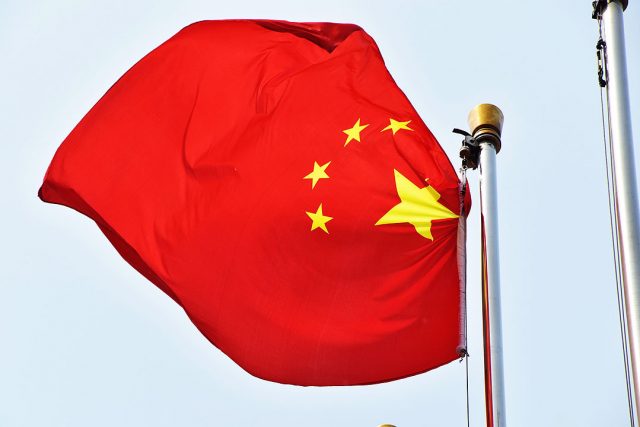
Chinese defense minister says country’s nuclear arsenal ‘for self-defense’

PIXABAY

CHINA has made “impressive progress” in developing new nuclear weapons, but will only use them for self-defense, and never use them first, Chinese Defense Minister Wei Fenghe told delegates at the Shangri-La Dialogue on Sunday.

In response to a question about reports last year on construction of more than 100 new nuclear missile silos in China’s east, he said China “has always pursued an appropriate path to developing nuclear capabilities for protection of our country”.

He added nuclear weapons displayed in a 2019 military parade in Beijing — which included upgraded launchers for China’s DF-41 intercontinental ballistic missiles — were operational and deployed.

“China has developed its capabilities for over five decades. It’s fair to say there has been impressive progress,” he said. “China’s … policy is consistent. We use it for self-defense. We will not be the first to use nuclear (weapons).”

He said the ultimate goal of China’s nuclear arsenal was to prevent nuclear war.

“We developed nuclear capabilities to protect the hard work of the Chinese people and protect our people from the scourge of the nuclear warfare,” he said.

The US State Department last year called China’s nuclear buildup concerning and said it appeared Beijing was deviating from decades of nuclear strategy based around minimal deterrence. It called on China to engage with it “on practical measures to reduce the risks of destabilizing arms races.” — Reuters

S. Korea says it will boost defense capacity to counter N. Korean threat

A view from South Korea towards North Korea in the Joint Security Area at Panmunjom. North and South Korean military personnel, as well as a single US soldier, are shown. — WIKIPEDIA

SINGAPORE — South Korean Defense Minister Lee Jong-sup said on Sunday that his country would dramatically enhance its defense capabilities and work closely with the United States and Japan to counter North Korea’s nuclear and missile threat.

Mr. Lee, speaking at an Asian security meeting in Singapore, said the situation on the Korean peninsula posed a global threat and he urged North Korea to immediately end its nuclear weapon and missile programs.

The United States warned this month that North Korea is preparing to conduct a seventh nuclear test, and says it will again push for United Nations sanctions if that happens.

“Our government will strengthen capabilities to better implement the US extended deterrents and will dramatically enhance response capabilities,” Mr. Lee said in a speech at the Shangri-La Dialogue, a top regional security summit.

“Moreover, we seek to strengthen ROK (Republic of Korea), US, Japan trilateral security cooperation to respond to North Korea’s nuclear and missile threats.”

North Korea promoted its key nuclear negotiator to foreign minister, state media said on Saturday, as leader Kim Jong Un vowed to his ruling party that he would use “power for power” to fight threats to the country’s sovereignty.

North Korea has carried out at least 18 rounds of weapons tests this year, underscoring its evolving nuclear and missile arsenals. — Reuters