Home Blog Page 5674

China defends ditching US talks, says Washington must bear ‘serious consequences’

REUTERS

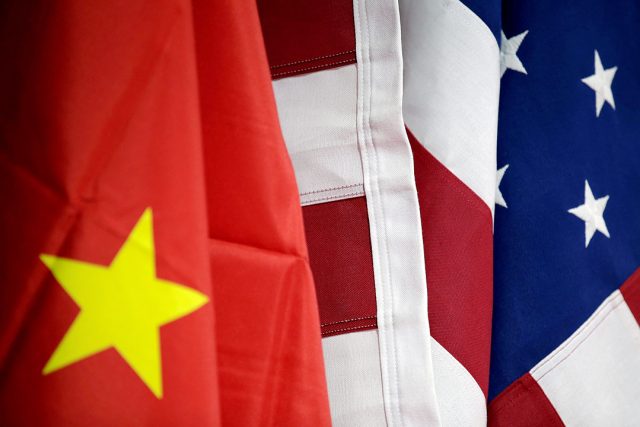
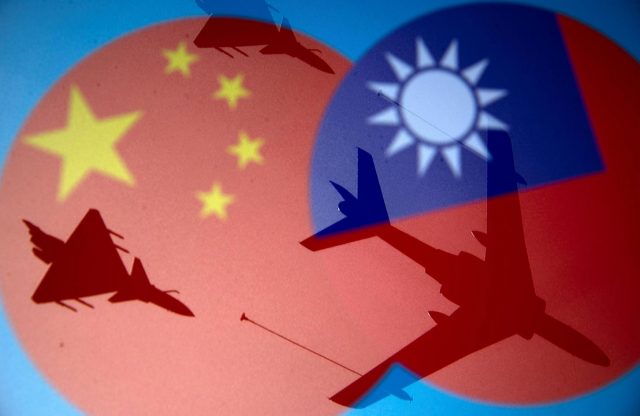
BEIJING — China’s defense ministry on Monday defended its shelving of military talks with the United States in protest against House Speaker Nancy Pelosi’s visit to Taipei last week, warning that Washington must bear “serious consequences.”

Ms. Pelosi’s visit last week infuriated China, which regards the self-ruled island as its own and responded with test launches of ballistic missiles over Taipei for the first time, as well as ditching some lines of dialogue with Washington.

“The current tense situation in the Taiwan Strait is entirely provoked and created by the US side on its own initiative, and the US side must bear full responsibility and serious consequences for this,” defense ministry spokesman Wu Qian said in an online post.

“The bottom line cannot be broken, and communication requires sincerity,” Mr. Wu said.

Four days of unprecedented drills were scheduled to end on Sunday. Chinese authorities have not officially confirmed they have ended, amid fears among some security analysts that the situation in the Taiwan Strait, particularly near the unofficial median line buffer, remains tense.

About 10 warships each from China and Taiwan maneuvered at close quarters around the line on Sunday, according to a person familiar with the situation who is involved with security planning.

The island’s defense ministry said Chinese military ships, aircraft, and drones had simulated attacks on the island and its navy. It said it had sent aircraft and ships to react “appropriately”.

China called off formal talks involving theatre-level commands, defense policy co-ordination and military maritime consultations on Friday as Ms. Pelosi left the region.

Pentagon, State Department and White House officials condemned the move, describing it as an irresponsible overreaction.

China’s cutting of some of its few communication links with the US military raises the risk of an accidental escalation over Taiwan at a critical moment, according to security analysts and diplomats.

One US official noted that Chinese officials had not responded to calls from senior Pentagon officials amid the tensions last week, but that they did not see this as a formal severing of ties with senior figures, such as US Defense Secretary Lloyd Austin.

Asked directly about those reports, defense ministry spokesman Mr. Wu said, “China’s relevant countermeasures are a necessary warning to the provocations of the United States and Taiwan, and a legitimate defense of national sovereignty and security”. — Reuters

Globe Group’s Cascadeo named in 2022 Gartner® Magic Quadrant™ for Public Cloud IT Transformation Services

Cascadeo, a leading cloud IT transformation services provider and Globe’s cloud services delivery arm, announced its inclusion in the 2022 Gartner® Magic Quadrant™ for Public Cloud IT Transformation Services for the second consecutive year.

The Gartner Magic Quadrant evaluates industry players across multiple factors in two major categories: Ability to Execute and Completeness of Vision. The Magic Quadrant notes that “as organizations continue their journey to the cloud and digital transformations, the need for top-down, application-driven transformation continues its rapid growth.” It also posits that the “ability to provide transformation services, cloud-native application development, managed services and vertical industry insight are key factors of success for providers in this market.”

“As public cloud deployments continue to accelerate worldwide, we believe we will see both continued investments and innovation in the cloud,” said Raymond Policarpio, Vice President for Product Management and Marketing at Globe Business, Enterprise Group. “Globe is well positioned as a global partner to these organizations who need expertise across cloud disciplines.”

Cascadeo is a longtime AWS Premier Tier Services Partner that provides cloud managed services, professional services, and cloud management through its proprietary platform cascadeo.io. The company has over 100 AWS certifications, is a Microsoft Azure Gold Partner, and Certified on Google Cloud Platform (GCP).

According to a Gartner press release, the worldwide infrastructure as a service (IaaS) market grew 41.4 percent in 2021, to total $90.9 billion “The IaaS market continues to grow unabated as cloud-native becomes the primary architecture for modern workloads,” said Sid Nag, VP analyst at Gartner.

“Our position is that a cloud strategy is a fundamental requirement for businesses to be competitive,” said Jared Reimer, President of Cascadeo. “Cloud transformation has long since moved past being a buzzword and evolved into a true imperative.”

Earlier this year, Cascadeo and Globe announced a Strategic Collaboration Agreement (SCA) with AWS. The agreement enables the latter to invest in an existing pool of trained and certified professionals from Globe and Cascadeo, whose customers will benefit from accelerated business transformation and modernized IT services.

Power up your business transformation with the Cloud. Learn more about Cascadeo and the rest of Globe Cloud Solutions by visiting our website or getting in touch with your Globe Business Account Manager.

Gartner does not endorse any vendor, product or service depicted in its research publications, and does not advise technology users to select only those vendors with the highest ratings or other designation. Gartner research publications consist of the opinions of Gartner’s research organization and should not be construed as statements of fact. Gartner disclaims all warranties, expressed or implied, with respect to this research, including any warranties of merchantability or fitness for a particular purpose.


Spotlight is BusinessWorld’s sponsored section that allows advertisers to amplify their brand and connect with BusinessWorld’s audience by enabling them to publish their stories directly on the BusinessWorld Web site. For more information, send an email to online@bworldonline.com.

Join us on Viber to get more updates from BusinessWorld: https://bit.ly/3hv6bLA.

UN chief demands international access to Ukraine nuclear plant after new attack

Zaporizhzhia nuclear plant in Ukraine. — WIKIMEDIA COMMONS

United Nations Secretary-General Antonio Guterres called on Monday for international inspectors to be given access to the Zaporizhzhia nuclear plant after Ukraine and Russia traded accusations over the shelling of Europe’s largest atomic plant at the weekend. 

“Any attack to a nuclear plant is a suicidal thing,” Mr. Guterres told a news conference in Japan, where he attended the Hiroshima Peace Memorial Ceremony on Saturday to commemorate the 77th anniversary of the world’s first atomic bombing. 

Ukraine said renewed Russian shelling on Saturday had damaged three radiation sensors and hurt a worker at the Zaporizhzhia power plant, the second hit in consecutive days on the site. 

Ukrainian President Volodymyr Zelenskyy accused Russia of waging “nuclear terror” that warranted more international sanctions, this time on Moscow’s nuclear sector. 

“There is no such nation in the world that could feel safe when a terrorist state fires at a nuclear plant,” Mr. Zelenskyy said in a televised address on Sunday. 

Russian forces captured the plant in southeastern Ukraine in early March but it is still run by Ukrainian technicians. 

The Russian-installed authority of the area said Ukrainian forces hit the site with a multiple rocket launcher, damaging administrative buildings and an area near a storage facility. The Russian embassy in Washington also released a statement itemizing the damage. 

“Ukrainian nationalists launched an artillery strike on the territory of the specified object on Aug. 5. Two high-voltage power lines and a water pipeline were damaged as a result of the shelling. Only thanks to the effective and timely actions of the Russian military in covering the nuclear power facility, its critical infrastructure was not affected,” the embassy said. 

Reuters could not verify either side’s version. 

Events at the Zaporizhzhia site — where Kyiv alleged that Russia hit a power line on Friday — have alarmed the world. 

Mr. Guterres said the International Atomic Energy Agency (IAEA) needed access to the plant. 

“We fully support the IAEA in all their efforts in relation to create the conditions of stabilization of the plant,” Mr. Guterres said. 

IAEA chief Rafael Mariano Grossi warned on Saturday that the latest attack “underlines the very real risk of a nuclear disaster.” 

Elsewhere, a deal to unblock Ukraine’s food exports and ease global shortages gathered pace as another four ships sailed out of Ukrainian Black Sea ports while the first cargo vessel since Russia’s Feb. 24 invasion docked. 

The four outgoing ships had almost 170,000 tonnes of corn and other food. They were sailing under a deal brokered by the United Nations and Turkey to try to help ease soaring global food prices that have resulted from the war. 

Before Moscow’s Feb. 24 invasion, which Russian President Vladimir Putin calls a “special military operation,” Russia and Ukraine together accounted for nearly a third of global wheat exports. The disruption since then has threatened famine in some parts of the world. 

BATTLE FOR DONBAS
Mr. Putin’s troops are trying to gain full control of the Donbas region of east Ukraine where pro-Moscow separatists seized territory after the Kremlin annexed Crimea to the south in 2014. 

“Ukrainian soldiers are firmly holding the defense, inflicting losses on the enemy and are ready for any changes in the operational situation,” Ukraine’s general staff said in an update on Monday. 

Russian forces stepped up their attacks north and northwest of Donetsk city in the Donbas on Sunday, Ukraine’s military said. The Russians attacked Ukrainian positions near the heavily fortified settlements of Piski and Avdiivka, as well as shelling other locations in the Donetsk region, it said. 

In addition to tightening its grip over the Donbas, Russia is entrenching its position in southern Ukraine, where it has gathered troops in a bid to prevent a potential counter-offensive near Kherson, Kyiv has said. 

As the fighting rages, Russians installed in the wake of Moscow’s invasion have toyed with the idea of joining Ukraine’s occupied territory to Russia. Last month, a senior pro-Russian official said a referendum on such a move was likely “towards next year.” 

Mr. Zelenskyy said any “pseudo-referendums” on occupied areas of his country joining Russia would eliminate the possibility of talks between Moscow and its Ukrainian counterparts or their allies. 

“They will close for themselves any change of talks with Ukraine and the free world which the Russian side will clearly need at some point,” he said. 

Ukraine’s chief war crimes prosecutor on Sunday said almost 26,000 suspected war crimes committed since the invasion were being investigated, with 135 people charged, of whom 15 were in custody. Russia denies targeting civilians. 

Shelling and missile strikes were reported overnight in the Ukrainian city of Kharkiv and around military sites in the western region of Vinnitsya, among other places, Ukrainian authorities said. There was no immediate word on casualties. — Reuters

A year on, Afghans hide out fearing death by data

PIXABAY

Sadaf was at work last year at the attorney general’s office in suburban Kabul when her sister rang with news that the Taliban had entered the Afghan capital, and begged her to race home. 

“Cover your face! And don’t tell anyone where you work,” her sister said, her voice shaking with fear. 

Sadaf didn’t know it then but this was the start of exile within her own country, a life of lying low to avoid death by data. Like thousands of Afghans, she has spent the past year hiding out in a series of safe houses, hoping to evade her digital trail and prevent the Taliban tracking her family. 

When her sister broke news of the takeover, Sadaf grabbed her bag and rushed from the office, pulling her headscarf low over her face and tucking her office ID into her shoe. 

Outside was chaos. 

Streets were jammed with vehicles and people running in every direction, desperate to flee. After walking part way home, Sadaf hitched a ride and made it to her house two hours later. 

She quickly hugged her three children, then shut herself in the bedroom, gathered all her identity papers and any documents related to work, and burnt the lot in the bathroom sink. 

“I was very scared,” said Sadaf, who had worked at the government office for more than 25 years — over half her life. 

The 48-year-old, who asked that her last name not be used, knew only too well the danger she faced. 

The Taliban had previously bombed their vehicles; Sadaf was injured in two of those attacks and had lost several colleagues. 

“I didn’t want anything to fall into the hands of the Taliban,” she said by text message from an undisclosed location in Afghanistan. 

A week after the Taliban took over, men knocked on Sadaf’s door and spent hours searching her home. They knew where she worked, and left with a warning that they were watching. 

The next day, Sadaf packed her belongings and fled, along with her children and husband, a carpenter. They have been in hiding ever since, lodging with relatives and friends, and never staying anywhere for more than two weeks. 

“I am in danger because of my job,” said Sadaf. 

DIGITAL DANGER
Sadaf is among the tens of thousands of Afghans — including former government officials, judges, police and human rights activists — who remain in hiding one year on, fearful of being tracked with digital ID and data systems that the militants gained with regime change. 

In the past year, human rights groups and the United Nations have documented the killing or enforced disappearance of hundreds of former members of the security forces, as well as journalists, judges, activists and LGBT+ people. 

A Taliban spokesman did not respond to a request for comment. 

Like many poor nations, Afghanistan pushed to digitize its data in recent years with funding and expertise from the World Bank, United States, European Union, the United Nations’ refugee agency (UNHCR), World Food Program and others. 

One such program is the digital ID system known as e-Tazkira, which holds a wealth of personal and biometric data including a person’s name, ID number, place and date of birth, gender, marital status, religion, ethnicity, language, profession, iris scans, fingerprints, and a photograph. 

The ID is needed to access services, jobs and to vote. But it also exposes vulnerable ethnic groups, and people who worked in government or with foreign agencies, rights groups say. 

“Everyone is vulnerable,” said Aziz Rafiee, executive director of the non-profit Afghan Civil Society Forum, who gets hundreds of desperate messages every day from Afghans in hiding. 

The systems were “a big mistake right from the beginning”. 

“In a country like Afghanistan, there is always the possibility that the information would end up in the hands of terrorists, and you could be killed,” said Rafiee, who did not apply for an e-Tazkira, fearing this very outcome. 

Earlier this year, Human Rights Watch confirmed that the Taliban controlled payroll data of the government and the supreme court, and biometric systems of the police and army, and those who worked with foreign governments and aid agencies. 

“For those in hiding, there is no way to avoid detection because the Taliban is carrying out identity checks — with photos, fingerprints, iris scans — at checkpoints,” said Belkis Willie, a senior researcher at Human Rights Watch. 

“So people are not able to leave the houses they are hiding in. In addition, anyone who goes to the passport office to get their passports to try and leave the country — their identity would be very clear to anyone,” she said. 

“It really isn’t possible to avoid detection.” 

LIFE AND DEATH BY DATA
Advocates for biometric registration say it enables more accurate counts and identification of people in need, ensures more efficient aid delivery, and helps prevent fraud. 

But critics say registers can be misused for profiling and surveillance, and many exclude the most vulnerable of people. 

The events in Afghanistan have underscored the risks of ID systems that are built without considering the possible impact on human rights, and without safeguards to prevent abuse, said Raman Jit Singh Chima at Access Now, a digital rights group. 

Over the past year, digital rights groups have called on aid agencies, foreign donors, and telecom and tech companies to rethink how they gather biometric data, and to secure their systems to prevent harm. 

But this has not happened, said Mr. Chima, a policy director. 

“Digital ID programs with grave implications for human rights are still being implemented, or encouraged, even in high risk or crisis hit environments,” he said. 

And in Afghanistan, Sadaf is still in hiding. 

“Lack of employment and poverty on the one hand, and fear on the other hand, has made my life very difficult,” Sadaf said. 

“I wish this was a nightmare and that I could wake up.” — Orooj Hakmi and Rina Chandran/Thomson Reuters Foundation

US Senate approves bill to fight climate change, cut drug costs in win for Biden

Image via Architect of the US Capitol

WASHINGTON — The US Senate on Sunday passed a sweeping $430 billion bill intended to fight climate change, lower drug prices and raise some corporate taxes, a major victory for President Joseph R. Biden, Jr., that Democrats hope will aid their chances of keeping control of Congress in this year’s elections.

After a marathon, 27-hour weekend session of debate and Republican efforts to derail the package, the Senate approved the legislation known as the Inflation Reduction Act by a 51–50 party line vote Vice President Kamala Harris cast the tie-breaking ballot.

The action sends the measure to the House of Representatives for a vote, likely Friday when representatives plan to reconvene briefly during a summer recess. They are expected to pass it, which would then send the bill to the White House for Mr. Biden’s signature. In a statement, Mr. Biden said he looked forward to signing the bill into law.

“The Senate is making history,” an elated Senate Majority Leader Chuck Schumer said, after pumping his fists in the air as Democrats cheered and their staff members responded to the vote with a standing ovation.

“To Americans who’ve lost faith that Congress can do big things, this bill is for you,” he said. “This bill is going to change America for decades.”

Mr. Schumer said the legislation contains “the boldest clean energy package in American history” to fight climate change while reducing consumer costs for energy and some medicines.

Democrats have drawn harsh attacks from Republicans over the legislation’s $430 billion in new spending and roughly $740 billion in new revenue.

Nevertheless, Democrats hope its passage will help the party’s House and Senate candidates in the Nov. 8 midterm elections at a time when Mr. Biden is suffering from anemic public approval ratings amid high inflation.

The legislation is aimed at reducing carbon emissions and shifting consumers to green energy, while cutting prescription drug costs for the elderly and tightening enforcement on taxes for corporations and the wealthy.

Because the measure pays for itself and reduces the federal deficit over time, Democrats contend that it will help bring down inflation, an economic liability that has also weighed on their hopes of retaining legislative control in the run-up to the 2024 presidential election.

Republicans, arguing that the bill will not address inflation, have denounced the measure as a job-killing, left-wing spending wish list that could undermine growth when the economy is in danger of falling into recession.

Democrats approved the bill by using a parliamentary maneuver called reconciliation, which allows budget-related legislation to avoid the 100-seat chamber’s 60-vote threshold for most bills and pass on a simple majority.

After several hours of debate, the Senate began a rapid-fire “vote-a-rama” on Democratic and Republican amendments on Saturday evening that stretched into Sunday afternoon.

Democrats repelled more than 30 Republican amendments, points of order and motions, all intended to scupper the legislation. Any change in the bill’s contents wrought by an amendment could have unraveled the Democrats’ 50-senator coalition needed to keep the legislation on track.

NO CAP ON INSULIN COSTS

Senators were due to break for an August recess after the session.

Democrats were unable to muster the votes necessary to retain a provision to cap soaring insulin costs at $35 a month on the private health insurance market, which fell outside the reconciliation rules. Democrats said the legislation would still limit insulin costs for those on Medicare.

In a foreshadowing of the coming fall election campaign, Republicans used their amendment defeats to attack vulnerable Democrats who are seeking reelection in November.

“Democrats vote again to allow chaos on the southern border to continue,” Senate Republican leader Mitch McConnell said in a statement that named four Democratic senators who are facing tight contests for reelection.

The bill was 18 months in the making as Mr. Biden’s original sweeping Build Back Better plan was whittled down in the face of opposition from Republicans and key legislators from his own party.

Mr. Biden made calls to senators about the bill over the weekend, a White House official said, and senior aide Steve Richetti kept an open line with Democratic US Senator Joe Manchin of West Virginia over the last several months to help move the measure forward. “It required many compromises. Doing important things almost always does,” Mr. Biden said in a statement. — Richard Cowan, David Morgan, and Rose Horowitch/Reuters

With Taiwan drills, Xi tries to salvage Pelosi crisis

REUTERS

BEIJING — Chinese President Xi Jinping may not have been able to stop Nancy Pelosi’s visit to Taiwan, but he ordered his country’s military to rehearse a much more aggressive step: a blockade crucial to taking the island by force, security experts say.

China’s military planners have long discussed a blockade of Taiwan, but until now most likely saw practicing such a move as too provocative, security experts say.

But after US House Speaker Pelosi’s visit, China’s military for the first time fired missiles over Taipei, flew waves of drones over Taiwan’s offshore islands, sailed warships across the median line of the Taiwan Strait and surrounded the self-ruled island in what Taiwan’s military said amounted to a practice “blockade.”

“These first actions in effect changed the status quo of Taiwan’s security,” said Li Mingjiang, an associate professor at the S. Rajaratnam School of International Studies in Singapore.

“This gives China’s military a new basis from which to push more boundaries in future exercises,” he said.

The show of capability and resolve comes from a People’s Liberation Army (PLA) that is far more formidable than it was during the “Third Taiwan Strait Crisis” in 1996, the last time it fired missiles near Taiwan.

The ability to enforce a blockade would give Beijing leverage to bring Taiwan to the negotiating table during a conflict.

If Taiwan, unwilling to suffer large-scale death and destruction, accepted unification bloodlessly, Mr. Xi would secure the biggest prize in his long-term goal of “rejuvenation of the Chinese people”.

Although Taiwan’s public, jaded by decades of Beijing’s threats, appeared unfazed, some observers said its military leaders might be worried.

Michael Chang, who managed the 1996 Taiwan missile crisis when he was Secretary General of Taiwan’s National Security Council, told local media the drills could be a preview of a Chinese invasion scenario.

The United States and its allies such as Japan condemned the drills. Because they did not want to escalate the situation, they did not directly intervene to halt the blockade rehearsal.

A former Chinese defense official told Reuters that their reaction would be cold comfort to Taiwanese politicians and military leaders.

“Seeing how the US and its allies responded to the drills, how confident can Taiwan leaders be in counting on them to come to the rescue should the PLA attack?” he said.

The exercises were scheduled to end on Sunday.

TRICKY TIMING

The episode comes at a sensitive time for Mr. Xi, China’s most powerful leader since Mao Zedong.

Mao founded the People’s Republic of China by winning a civil war in 1949, sending the nationalist Kuomintang government retreating to Taiwan, which has been self-ruled ever since.

Bringing Taiwan into Beijing’s embrace is the key piece of unfinished business that would cement Mr. Xi’s stature alongside Mao’s and justify his move in 2018 to abandon term limits.

Despite widespread frustration over a zero-COVID policy that has put the country into a third year of self-imposed isolation and battered the world’s second-largest economy, Mr. Xi is expected to secure a precedent-breaking third five-year leadership term at a key Communist Party congress this year.

Domestically, Beijing must balance the outrage it whipped up over Pelosi’s visit with the embarrassment of not preventing it, observers said.

State media played up the drills with videos and commentary extolling China’s advanced military capabilities.

Former Singaporean diplomat Bilahari Kausikan said the hype is partly a face-saving effort for Mr. Xi, who cannot afford to look weak before the party congress.

“The hard and incontrovertible fact is that for all the bluster, China failed to deter the Pelosi visit. So the CCP has to put up a show in its response,” he said.

FAILURE NOT AN OPTION

Although China may have edged a step closer to using force on Taiwan, most experts don’t believe a war is imminent.

“Invasion within this decade is far from certain to succeed. Failure would spell the end of Xi Jinping, his dream and possibly the CCP,” said Charles Parton, a retired British diplomat.

Mr. Xi, who has not spoken publicly about Ms. Pelosi’s visit but as chairman of the Central Military Commission is effectively the PLA’s commander-in-chief, would be well aware of the risks of action, experts say.

“China would’ve hoped that these drills could somehow stop the worrying trend of the US, Europe and many other countries becoming more sympathetic to Taiwan,” said Mr. Li, the security analyst. “So far, that effect remains to be seen.” — Yew Lun Tian/Reuters

Monkeypox in the US: Where could it spread next?

UNSPLASH

CHICAGO — The United States declared monkeypox a public health emergency last week, an effort to bolster the US response to contain the outbreak.

The virus continues to be largely transmitted among gay and bisexual men, but experts say the disease could spill over into other populations, especially due to vaccine shortages. Monkeypox is spread by contact with puss-filled sores and is rarely fatal.

Here is the state of monkeypox now and some other the populations US experts believe may be at risk:

WHO IS GETTING MONKEYPOX NOW?

Last month, the World Health Organization declared monkeypox a global public health emergency. So far, 80 countries where the virus is not endemic have reported 26,500 cases of monkeypox, according to a Reuters tally.

In the United States, 99.1% of U.S. monkeypox cases occurred among those assigned the male sex at birth as of July 25, according to a technical report by the US Centers for Disease Control and Prevention (CDC). Among male patients, 99% reported having sexual contact with other men.

About 38% of cases occurred among white, non-Hispanic males. Another 26% were in Black males and 32% in Hispanic males.

The pattern of sexual transmission in men is not typical. In Africa, where monkeypox has been circulating since the 1970s, 60% of cases are in men, and 40% occur in women.

One reason may be that the virus appears to be “very efficiently transmitted through anal receptive intercourse and to some degree oral sex,” said Dr. Celine Gounder, an infectious disease epidemiologist and an editor-at-large at Kaiser Health News.

WHO ELSE IS AT RISK?

Although the current explosion of cases has occurred in men, experts say there is no biological reason the virus will remain largely within the community of men who have sex with men.

“We certainly know it’s going to spread to family members and to other non-male partners that people have,” said Dr. Jay Varma, director of the Cornell Center for Pandemic Prevention and Response. He said the virus could also spread through massage parlors or spas.

The real question, he said, is whether it spreads as efficiently in those groups as it does among close sexual networks of men who have sex with men.

Experts point to the way HIV spread as a possible indicator for where the virus will go next.

“My greatest fear is that as we try to contain this, it’s going to seep along the fractures in our social geography and go where HIV did, and that’s going into communities of color in the rural South,” said Dr. Gregg Gonsalves, an associate professor of epidemiology at Yale University and a leading HIV/AIDS activist.

Those are places with limited infrastructure for testing, vaccines and treatments.

Dr. Gounder is especially concerned about infections among Black women, who account for the largest share of new HIV infections in the United States, and already suffer significantly higher rates of maternal complications and deaths.

WHO ELSE MIGHT BE AT RISK?

Other at-risk settings include college dormitories, health clubs, and sports teams.

Dr. Gounder is aware of some sports leagues that are preparing for possible infections, noting that sports such as wrestling involve close skin-to-skin contact.

Wrestling, football, rugby and other sports teams have previously had outbreaks of the superbug MRSA, according to the CDC.

“I think it is something we need to be thinking about and prepared for,” she said.

Employers may also need to start preparing. Dr. Gounder said some theaters in New York, for example, are considering how they might protect their workers from possible monkeypox infections through contact with shared costumes.

“We’re still in the beginnings of that, but I am encouraged to see that some are already thinking about that.” — Julie Steenhuysen/Reuters

Philippines’ Q1 GDP y/y growth revised down to 8.2% from 8.3%

People flock to the Markina public market on the first day of implementation of Alert Level 1, March 1. — Philippine Star/ Michael Varcas

MANILA – The Philippine economy grew 8.2% in the first quarter of 2022 from a year earlier, only slightly lower than the previously-reported growth of 8.3%, the statistics agency said on Monday.

The government will release second-quarter gross domestic product data at around 0200 GMT on Tuesday. — Reuters

MetroCity AI, Polytechnic University of the Philippines launches talent ecosystem

Processed with VSCO with c6 preset

Building a talent ecosystem is a top priority for many HR leaders. Unfocused shotgun hiring is ineffective, unsustainable, and very expensive especially with the Great Resignation. Quickly acting on feedback from its corporate users, MetroCity AI started to form partnerships with universities and colleges early this year. First to formally team up is Polytechnic University of the Philippines with a MOA signing at Romulo Café in Quezon City last July 5, 2022.

Present during the MOA signing were PUP Vice President for Student Affairs and ServicesTomas O. Testor, Assistant to VP for SAS/Director of ARCDO Engr. Florinda H. Oquindo, ChiefCDPSJane S. Pulma, Chief ARSMavel B. Lagarde, MetroCity AI co-founders Jayr Castro and King del Rosario, and UP Diliman’s UPSCALE Senior Consultant Johnny Sy.

The vision is quite simple. First, it will ensure companies will have quality applicants by going directly to the source of top fresh talent. All companies have to do is to post their job opportunities on the MetroCity AI platform and activate the AI screening process. So even with thousands of applicants, recruiters are guaranteed an organized stack ranking that can quickly identify a shortlist and cuts down manual work.

Second, applicants will have quality opportunities from industry partners. The asynchronous video interview process is also convenient because it can be answered at their own time. The AI screening also provides automatic feedback so there’s no more guesswork or ghosting by recruiters.

Finally, universities will greatly benefit with the treasure trove of aggregate data to improve their career services or academic offering. MetroCity AI will provide administrators such as PUP’s Alumni Relations and Career Development (ARCDO) a tailor-fit portal that provides data on hireability, areas for improvement, and feedback of their graduates.

PUP plans to have the first virtual job fair utilizing MetroCity AI’s platform by Q4 2022.

MetroCity AI is part of the Batch 10 startups of UPSCALE Incubation Program of the University of the Philippines – Diliman. They are one of the recipients of the Accenture startup grant via UP Engineering Research and Development Foundation, Inc. (UPERDFI) and UPSCALE Innovation Hub.

PUP is one of the country’s highly competent educational institutions. It is considered to be the largest state university in the Philippines with over 70,000 students and approximately 10,000 graduates applying for jobs every year.

For more information, you can visit www.metrocity.ai. You can also email the founders at hello@metrocity.ai.

Final call to nominate entries to The Real Deal: Asia CEO Awards 2022

With two weeks left until the deadline of nominations on Aug. 15, everyone is encouraged to submit their entries and to be part of one of the grandest business awards in the Philippines and the Asian Region, the Asia CEO Awards.

NOMINATE NOW: https://www.asia-ceo-awards.org/nominations.

For more than a decade, this most-awaited award-giving body has been recognizing pillars of industries like Ramon S. Ang of San Miguel Corp., Manuel V. Pangilinan of PLDT, Inc., as well as movers of the nation like former Philippine President Fidel V. Ramos.

Big and small enterprises, local and international companies, and executives of different nationalities are welcome to join.

Asia CEO Awards Chairman Chris Mills said they also want to highlight young men, young women, young leaders, small companies, and start-ups. “In all cases, it’s to really show the best that the Philippines is doing,” said Mr. Mills who is also past president of the Canadian Chamber of Commerce in the Philippines.

This year’s Asia CEO Awards is backed by Title Sponsor, PLDT Enterprise, a leading company that equips businesses with digital solutions fit for the changing times and expanding needs of customers.

“We call on all Filipinos especially those who are passionate about nurturing business excellence to help promote the Philippines as an important economic hub in Asia. Together, let us build this country as a first-world nation,” urged Rebecca Bustamante, Asia CEO Awards president.

Major Sponsors and Categories

This year’s Major Sponsors include Airspeed, Arthur Nowak CX, Insular Life, Kyani, LBC Business Solutions, Reed Elsevier, Regus, Smart Enterprise, TOA Global, United Neon. Official Knowledge Partner is PwC while the Official Venue is Manila Marriott.

Asia CEO Awards 2022 and its partners offer the following categories:

• Airspeed Service Excellence Company of the Year — The award is open to any Philippine-based organization that achieved important success in service excellence. The accomplishment(s) must demonstrate an organization providing high service level standards.

• Arthur Nowak Diversity Company of the Year — The award is open to organizations in the Philippines that demonstrated proactive acceptance and respect for human differences. Human differences may include, but are not limited to race, religion, gender, gender identity and physical ability.

• InLife Young SHERO of the Year — The award is open to Filipino women leaders who are under age 40 and who have achieved recognizable success, overseeing organizations in the Philippines that have advanced the nation’s economic and/or social standing in the eyes of the world.

• Kyani Wellness Company of the Year — The award is open to any Philippines-based organization that achieved important success at workplace health promotion activities or organizational policy designed to support healthy behavior in the workplace and to improve health outcomes of employees.

• LBC Business Solutions SME Company of the Year — The award is open to any Profit-Making Company that achieved important success. Small and medium-sized enterprises (SMEs) are defined as non-subsidiary, independent firms employing between 10 and 500 employees.

• Reed Elsevier Top Employer of the Year — The award is open to any Philippines-based organization that achieved important employer success while overseeing a business enterprise either within Philippines or outside of it. The accomplishment(s) must demonstrate Filipino (or mixed Filipino/expatriate) management talent performing at the highest standards and be recognized as internationally significant.

• Regus Entrepreneur of the Year — The award is open to individuals who started enterprises from scratch and built them into larger organizations providing pioneering services and product, employment for Filipinos and expansion into multiple locations.

• Smart Enterprise Global Filipino Executive of the Year — The award is open to any Filipino citizen or person of Filipino descent who achieved recognizable success in Philippines or outside of it. Award candidates can be in any discipline but more attention is given to fields such as business, government and academics.

• TOA Global Young Leader of the Year — Candidates for this award are individual young leaders who have accomplished remarkable achievements that advance the nation’s economy or social standing in the eyes of the world. The young leaders should not be older than 35 years old during the year considered and have the title ranging from manager and up.

• United Neon Most Innovative Company of the Year — The award is open to any Philippines-based organization that achieved important success within Philippines or outside of it. The accomplishment(s) must demonstrate management talent performing at the highest standards and be recognized as internationally significant. The innovation must be meaningful to the organization and to society.

• Executive Leadership Team of the Year — The award is open to any Executive Management Team that achieved important success while overseeing a major organization. The team should have also demonstrated exceptional leadership skills resulting to the maximization of stakeholders values.

• CSR Company of the Year — The award is open to corporate and non-corporate organizations that highlight corporate social responsibility (CSR) in providing a social commitment to the Filipino people by promoting environmental protection & awareness, livelihood programs and youth development projects that contribute to the society.

• Technology Company of the Year — The award is open to corporate organizations, academe and startup companies that focuses on Information and Communications Technology, Bio Technology & Material Science, Sciences and Math & Engineering.

• Expatriate Executive of the Year — The award is open to any non-Filipino who achieved measurable success while overseeing an organization within Philippines. The accomplishment must have made a strong contribution to the development of the country’s economic capabilities.

• Sustainability Company of the Year — The award is open to any Philippines-based organization that achieved important success at environment progress and demonstrated leadership and commitment to sustainability. The accomplishment(s) must demonstrate specific initiative Filipino (or mixed Filipino/expatriate) managers have initiated to drive environmental progress and impact global sustainability.

To book tickets for the awards night of the Asia CEO Awards 2022 to be held on Oct. 11, 6:00 p.m. at the Manila Marriott Grand Ballroom, visit https://www.asia-ceo-awards.org/. Fo updates, follow them at https://www.facebook.com/AsiaCeoAwards.


Spotlight is BusinessWorld’s sponsored section that allows advertisers to amplify their brand and connect with BusinessWorld’s audience by enabling them to publish their stories directly on the BusinessWorld Web site. For more information, send an email to online@bworldonline.com.

Join us on Viber to get more updates from BusinessWorld: https://bit.ly/3hv6bLA.

Jobless rate steadies at 6% in June; job quality improves

Unemployment rate steadied in June, while job quality improved to its best in over a year, the Philippine Statistics Authority reported on Monday.

Preliminary results from PSA June round of the Labor Force Survey (LFS) showed unemployment rate at 6% in June, steady for the second straight month. It was also lower than the 7.7% posted in June last year.

The ranks of unemployed Filipinos slightly increased by 62,000 to 2.990 million in June from 2.927 million in May. However, it shrank by 781,000 from 3.770 million last year.

In the first half, PSA reported unemployment rate average at 6%, lower than the 7.8% average in 2021 and 10.4% average in 2020. However, this was still higher than the pre-pandemic average of 5.1%.

Meanwhile, employment rate steadied at 94% in June from May. This was higher than the 92.3% in June last year.

In absolute figures, employed Filipinos were up by 508,000 to 46.592 million in June from 46.084 million in May. This was also higher by 1.516 million from 45.076 million a year ago.

The quality of jobs improved in June as underemployment rate — the share of those already working, but still looking for more work or longer working hours to total employed population — decreased by 12.6% in June from 14.5% in May and 14.2% in June last year.

This was equivalent to 5.888 million Filipinos looking for more work or longer working hours, a 780,000 reduction from 6.668 million in May. It was also down by 522,000 from 6.410 million a year ago.

Underemployment rate in June was the lowest in 13 months or since the 12.3% recorded in May 2021.

The labor force size also went up by 570,000 to 49.581 million in June from 49.011 million in May. This was also higher by 735,000 from the 48.846 million labor force size in the same month last year.

This put the labor force participation rate — the share of labor force to the total population 15 years old and over — to 64.8% in June, higher than 64% in May, but lower than the 65.1% in June last year.

This is the highest LFPR in three months or since the 65.4% in March.

On a monthly basis, the number of new entrants to the Filipino workforce decreased by 237,000 to 980,000 in June. This translated to a 2% share of new entrants to the total labor force that month, slightly lower than 2.5% in May.

A Filipino workers worked an average of 40.3 hours a week in June, higher than the 39.8 hours a week in May and 39 hours a year ago.

Services sector remained the largest employer in June with 56.5% share, down from 59% a month ago.

It was followed by agriculture and industry with 24.5% and 19%, respectively.

The June round of LFS was conducted from June 8 to 28, covering 10,915 sample households. — Bernadette Therese M. Gadon

[B-SIDE Podcast] What I’ve learned after helping write the 1987 Constitution

Follow us on Spotify BusinessWorld B-Side

By Patricia B. Mirasol, Reporter
speaking to Bernardo M. Villegas

WITH EVERY CHANGE of administration comes the question of what needs to change, and what needs to be retained. In this episode of BusinessWorld B-Side podcast, multimedia reporter Patricia B. Mirasol takes a look back at how the 1987 Philippine Constitution was drafted with Bernardo M. Villegas, an economist and one of its framers. They also discuss foreign ownership liberalization, the additional factors driving foreign direct investments, plus the key area the next administration needs to focus on.

Don’t enshrine provisions that can change with circumstances.

“Except for vital issues like the right to life and the family as a foundation of society, all other issues are debatable and should not be enshrined in the constitution,” Mr. Villegas said in response to possible drawbacks to the recent constitutional amendments pertaining to foreign ownership and liberalization.

Things can change decades down the road that can necessitate changing the laws, he added. Right now, however, “we need (foreigners) badly, because we’re buried in debt.”

The ideal constitution is a short constitution — a defect the 1986 Constitutional Commission was not able to address, according to Mr. Villegas.

“It’s too verbose…” he said. “You should understand that we were traumatized by Martial Law and the EDSA revolution. We overdid it by putting in too many restrictions.”

The Filipino First mentality is backward and must be expunged.

“I’m very happy we have those three amendments,” Mr. Villegas said, referring to Republic Act (RA) No. 11647 (The Amended Foreign Investment Act), RA 11595 (The Amended Retail Trade Liberalization Act), and RA 11659 (The Amended Public Service Act).

RA 11647 eases restrictions and requirements on foreign ownership in businesses. RA 11595 removes the categorization of enterprises and reduces the minimum paid-up capital of foreign retailers from $2.5 million to P25 million. RA 11659 allows full foreign ownership in sectors like telecommunications, railways, subways, and airlines.

All three are expected to generate more jobs, improve basic services, allow the exchange of technology, and help the economy recuperate from the COVID-19 pandemic.

These are also expected to inject much-needed foreign capital into the economy that will ultimately help fund programs such as “Build, Build, Build.”

He was one of the few in the constitutional commission who wanted to do away with the “Filipino First” provisions, Mr. Villegas told BusinessWorld. Because there wasn’t much competition from overseas, the ultra-nationalist protections soon gave rise to oligopolies, an outcome he described as “Rich Filipinos First, Damn the Rest of Us.”

While the Duterte administration has done a good job with “Build, Build, Build,” Mr. Villegas added that the next two administrations will have to do even better, since the country’s infrastructure as compared with its neighbors is “still so poor.”

Agriculture is the Achilles heel of the economy.

The National Economic and Development Authority’s AmBisyon Natin 2040 vision of having every Filipino “enjoy a strongly rooted, comfortable, and secure life” is doable, Mr. Villegas said.

It will, however, hinge upon equality of education, infrastructure development, and a focus on agriculture. The latter alone will reduce the poverty rate, Mr. Villegas added, as about three-quarters of the poor are from rural areas. 

“I would like to emphasize — for the next administration — the importance of rural and agricultural development,” Mr. Villegas said. “Our biggest failure came from decades of neglecting poor farmers.”

Apart from continuing to build farm-to-market roads, Mr. Villegas told BusinessWorld that small-scale farmers can adopt models, such as the nucleus estate, to achieve economies of scale even with their small landholdings.

In such a model, small-scale farmers lease their land to corporations, who are then responsible for coordinating the transfer of technology, as well as the processing of the produce to higher-value products. 

“We were able to do it with pineapples. (We can do it) in cacao, coffee, durian, avocado… but that requires leadership,” said Mr. Villegas. “That requires cooperation between the executive and the legislative.”

Follow us on Spotify BusinessWorld B-Side