Home Blog Page 5660

Ports agency studying ways to implement DoTr directive to cut shipping, travel costs
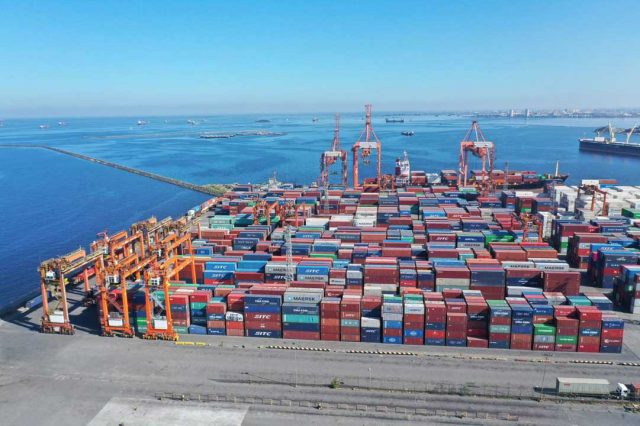
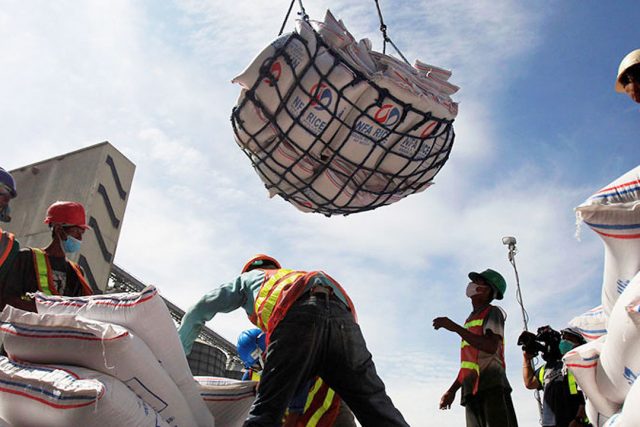
THE Philippine Ports Authority (PPA) is looking into reducing port costs by reviewing statutory and regulatory expenses paid by users, Officer-in-Charge General Manager Manuel A. Boholano said, noting that the agency is under orders to effect such reductions from the Department of Transportation (DoTr).

“Our first order of business is to comply with the directive of (Transportation Secretary Jaime J. Bautista) to lower travel and shipping costs,” Mr. Boholano said in his anniversary message delivered during the 48th anniversary of the agency on Tuesday. 

Port users have been complaining about increasing shipping costs and the impact of higher fuel oil prices.

Shipping companies have raised their freight charges by an average of 25% starting March, logistics companies said.

“Fuel prices continued to increase with the Ukraine conflict and this pushed the group’s bunkering cost to P486 million, a 43% increase year on year. Consequently, cost of sales and services escalated to P1.22 billion,” Chelsea Logistics and Infrastructure Holdings Corp. said in its first quarter report.

Lorenzo Shipping Corp. said in its report for the first quarter that it saw “an increase in direct cost amounting to P796 million from last year of P711 million mainly due to soaring fuel prices.”

Industrial designer Kenneth Cobonpue said during The Chiefs on One News program last week that cargo shipping rates have risen significantly.

“In terms of exports, shipping, logistics (are) a big problem. Before, a 40-foot (container) shipping from Cebu to Los Angeles used to cost $3,000. Now the price is anywhere from $15,000 to $18,000. That price really wipes out all the margins. That’s the problem with exports,” Mr. Cobonpue said.

The PPA said that any possible reduction in port-related costs will come on top of the current terminal fee exemptions enjoyed by students, senior citizens, differently-abled persons, uniformed personnel, and Medal of Valor awardees and their first-degree kin.

“Since its first application prior to the pandemic, the free terminal fee is equivalent to a benefit (that costs) P7 million a month (on) average,” it noted.

The agency also said that its ports “continue to climb out” of the pandemic, citing an increase of 130% to 20.87 million passengers handled from January to May 2022, from 9.07 million passengers a year earlier.

Containerized cargo traffic grew by 3.84% to 3.12 million twenty-foot equivalent units (TEUs) from 3 million TEUs previously.

Meanwhile, ship calls rose 13.4% for the period compared to 153,007 ship calls in the same period last year.

Total cargo volume remains flat at 101.74 million metric tons, the PPA said. — Arjay L. Balinbin

Japan eyes better Philippine Coast Guard equipment

PHILIPPINE COAST GUARD FACEBOOK PAGE

By Alyssa Nicole O. Tan, Reporter

JAPAN wants to boost coast guard and security cooperation with the Philippines, Japan’s Ministry of Foreign Affairs said in a statement on Tuesday.

Japan Foreign Affairs Minister Hayashi Yoshimasa had also sought “asset reinforcement and capacity enhancement” of the Philippine Coast Guard, the agency said on its website, citing a phone call between the Japanese official and his Philippine counterpart, Enrique A. Manalo.

“In response, Secretary Manalo expressed his appreciation for Japan’s cooperation thus far and willingness to strengthen cooperation in the aforementioned fields,” according to the statement.

Both agreed to advance working-level consultations on improved cooperation such as in exercises between the Self-Defense Forces and Armed Forces of the Philippines.

“We both reaffirmed the strong and mutually beneficial Philippine-Japan strategic partnership and committed to continue our vibrant cooperation on maritime issues, trade and economy, infrastructure development and other areas,” Mr. Manalo separately tweeted on Tuesday.

Meanwhile, defense experts said an alliance with its neighbors is the Philippines’ strongest strategy against China’s militarization of the South China Sea.

“Although diplomacy and the peaceful settlement of disputes are important, the Philippine government must not allow any state to circumvent international law and threaten the country’s national security,” Stratbase ADR Institute President Victor Andres Manhit told a forum.

“The new administration should prioritize the development of policies that will allow the country to step up and strategically work with allies and partners to ensure that international laws, treaties and agreements in the preservation of a rules-based international order are being strictly followed,” he added.

The forum in Manila was held on the sixth anniversary of a United Nations-backed tribunal’s ruling that voided China’s claim to more than 80% of the waterway.

Mr. Manhit renewed the call for the government to uphold its sovereignty and territorial integrity.

The South China Sea, a key global shipping route, is subject to overlapping territorial claims involving the Philippines, China, Brunei, Malaysia, Taiwan and Vietnam. Each year, trillions of dollars of trade flow through the sea, which is also rich in fish and gas.

Former Philippine Foreign Affairs Secretary Albert F. del Rosario said the Marcos government would have to deal with China.

“In the contest between China and the US in terms of real allies… I go back to the belief that China is out to devastate… the rules-based order,” he told reporters on the sidelines of the forum. “They’re out to demolish the rule of law.”

“For those who believe in the rule of law and rules-based order, we should… get together with our allies, stay together and stay strong,” he said.

Philippine Ambassador to the US Jose Manuel G. Romualdez, on the other hand, said the Philippine position remains the same. “We want to solve issues peacefully and in keeping with international law.”

President Ferdinand R. Marcos, Jr. seems to be working in such a way that the Philippines would benefit from both China and the US, as well as from allies like Japan, the EU and Australia, said Murray Hiebert, director for research at Bower Group Asia and a senior associate at the Center for Strategic and International Studies. “Economic and diplomatic costs” might be inevitable to stop China’s “aggressive behavior,” he told the forum. John Blaxland, an intelligence studies professor from the  Australia National University, said China is taking advantage of the Philippines’ desire to remain neutral.

“You are being the victims of exploitation by a China that is throwing its weight around understandably to grind economic and military power,” he said at the forum. The Philippines needs to be more “hard-nosed about its interests.” Ex-President Rodrigo R. Duterte led a foreign policy pivot to China away from the US when he took office in 2016 in exchange for investment pledges, most of which have never materialized. “The Philippines has to find a way to balance this very tense environment between China and the United States,” Mr. Hiebert said.

Lisa Curtis, director of the Indo-Pacific security program of the Center for a New American Security, said the Philippines should be “subtle about how they address China’s assertiveness,” noting that it must always remain nuanced and clever.

Rising prices top concern among Filipinos — Pulse Asia

PHILIPPINE STAR/ WALTER BOLLOZOS

SPIRALING prices are the top concerns of Filipinos in a June poll by Pulse Asia Research, Inc.

Six of 10 Filipinos or 57% identified inflation as the most urgent national concern that President Ferdinand R. Marcos, Jr. should prioritize, Pulse Asia said in a statement on Tuesday.

Filipinos were also worried about their income (46%), poverty (33%) and jobs (29%).

People were less worried about state cash aid amid a coronavirus pandemic, and fighting corruption and hunger, Pulse Asia said.

The pollster interviewed 1,200 adults on June 24 to 27 for the poll, which had an error margin of ±2.8 points.

A recent survey by market research firm Ipsos Group S.A. showed that inflation, which is expected to be the main feature of 2022, is the biggest concern of people around the world.

“On average globally, almost one in four say inflation is a top issue facing their country (37%), up three points from last month,” it said in a report, citing its survey from May 27 to June 6. The concern about inflation had risen for 11 straight months, it added.  

Included in the top five global worries were concerns about poverty and social inequality (31%), unemployment (28%), crime & violence (27%) and financial or political corruption (24%), the research firm said.

Inflation has forced the government to temper its economic growth target this year.

The government is now aiming for growth of 6.5-7.5% this year, slightly lower than the 7-8% target earlier set by the Development Budget Coordination Committee (DBCC), but faster than the 5.7% expansion last year.

The government also seeks to bring down the poverty rate to 9% by the end of Mr. Marcos’ term in 2028.

His predecessor, Rodrigo R. Duterte, had aimed to bring down the poverty rate to 13-15% by 2022, but this was revised to 15-17.5% due to the pandemic. The poverty rate stood at 23.7% at the end of June.

Mr. Marcos, 64, has promised cheaper food, more jobs and better infrastructure, urging overseas workers to come back because a prosperous future supposedly awaits them.

But experts said he would be hunted by the country’s ballooning external debt, which might force him to take a different path.

Mr. Marcos’ Finance chief, Benjamin E. Diokno, has pushed new taxes on digital services and pollutants, but analysts said these might not be enough to bail the country out of its ballooning debt. — Kyle Aristophere T. Atienza

Former DA chief says rice law made smuggling easier

REUTERS

THE Rice Tariffication Law must be amended to re-establish the role of the National Food Authority (NFA) as industry regulator, after the liberalization of imports opened the doors to rampant smuggling of the staple grain, former Agriculture Secretary Emmanuel F. Piñol said.

“We don’t need to repeal the law. We only need to amend it. Number one, we need to bring back the regulatory and supervisory powers of the NFA over the rice industry,” Mr. Piñol said on One News.

“While the government was able to collect a lot from tariffs, there is so much technical smuggling. No one is supervising what kind of rice is being brought in,” he added.

Signed in 2019, the law, also known as Republic Act No. 11203, allowed private parties to freely import the grain, on which they paid tariffs of 35% on shipments originating from Southeast Asia. It also reduced the role of the NFA, formerly the primary importer of rice via government-to-government deals, to maintaining emergency rice stocks.

The Federation of Free Farmers (FFF) urged President Ferdinand R. Marcos, Jr. and the new Congress to review the law and propose amendments as necessary.

“Officials of the Department of Finance (DoF) have been insisting that law made rice more affordable by cutting the retail price by P7 per kilo, from its alleged peak of P46 per kilo during the rice crisis in 2018,” the FFF has said.

“These figures were deceptive because they compared current rice prices to their levels in 2018, when prices were abnormally high due to the rice crisis,” it added.

FFF National Manager Raul Q. Montemayor said that although the law allowed the entry of cheaper imported rice, the savings were mostly captured by importers and traders and were not passed on to consumers.

“Also, most of the imports were for premium rice grades for sale to well-off consumers, not the more affordable grades that NFA used to import for the poor. That is why poor consumers today are actually paying almost the same as in 2016 and 2017. To top it off, the P27 per kilo rice that the NFA used to distribute has disappeared from the market,” he added.

ING Bank N.V. Manila Senior Economist Nicholas Antonio T. Mapa said that he hopes the law is retained.

“The law was an important legislation passed by the previous administration and was instrumental in helping lower prices in the Philippines. Part of the law was the Rice Competitiveness Enhancement Fund (RCEF), which funds the improvement of domestic rice production,” he said in an e-mail.

“Given the short-term benefits, like lower rice prices, and medium-term benefits, which is improved rice production domestically, we hope that the law will not be touched,” he added.

Mr. Piñol added that he supported the decision of Mr. Marcos to take over the Department of Agriculture (DA) which would “get things going.”

“I really believe that if Mr. Marcos would like agriculture to develop and flourish during his term, he should hold on to that position until the end of his term,” he said. — Luisa Maria Jacinta C. Jocson

Agricultural and biosystems engineering law IRR signed

AGRICULTURAL & BIOSYSTEMS ENGINEERING — DON MARIANO MARCOS MEMORIAL SU FB PAGE

THE GOVERNMENT has signed the Implementing Rules and Regulations (IRR) of Republic Act No. 10915, also known as the Philippine Agricultural and Biosystems Engineering (ABE) Act of 2016, according to an official whose board regulates the ABE profession.

“The implementation of the IRR of ABE will greatly help in increasing the food production thrust of President Ferdinand R. Marcos, Jr.’s administration,” Professional Regulations Board of Agricultural and Biosystems Engineering (PRBABE) Director Ariodear C. Rico said in a statement.

Mr. Rico said that the signing of the IRR will help with future partnerships and collaboration in agriculture, fisheries, veterinary medicine and foresters.

He said that the IRR has been subjected to several rounds of consultation with various Professional Regulations Boards (PRBs).

“The main issues raised during these meetings focused on overlaps and encroachment in the practice of the profession. The PRBABE has taken these into consideration and addressed these concerns,” Mr. Rico said.

These include a rule in the IRR which states “the board, may, after due consultations with the appropriate boards and subject to the approval of the commission, enter into a joint resolution and/or appropriate memorandum of agreement to clarify, delineate or define the interface of the activities constituting their respective professional practice.”

The PRBABE added that it entered a joint resolution with the PRB of Real Estate Service on Valuation. It also signed a memorandum of agreement with the PRB of Fisheries and the PRB of Foresters. — Luisa Maria Jacinta C. Jocson

Russia, Belarus athletes may face Paris 2024 ban — Reedie

ATHLETES from Russia and Belarus may not be allowed to compete at the Paris 2024 Games over Moscow’s invasion of Ukraine, senior International Olympic Committee (IOC) member Craig Reedie said.

The IOC issued guidance to sports governing bodies in February to remove the two countries’ athletes from competition. Belarus has been used as a staging ground for Russia’s invasion, which Moscow calls a “special military operation.”

“A decision is going to have to be taken on what happens to each of these two countries, and my guess is that the general feeling would be that they should not qualify,” former IOC vice-president Reedie told British media.

Athletes will miss qualification events for Paris as a result of the measures, and IOC President Thomas Bach said in May that Russia’s participation was unclear. — Reuters

NBA may penalize teams that ‘take fouls’ during fastbreaks

THE National Basketball Association (NBA) may start to penalize teams that stop an opponent’s fastbreak by fouling in transition, according to a Monday report from Yahoo! Sports, which cited league sources.

The league’s Competition Committee, which began meetings in Las Vegas last weekend, is moving ahead with a proposal that would grant the team being fouled on the play one free throw as well as possession. Previously, the team that was fouled would only resume possession out of bounds.

The so-called “take foul” is under increased scrutiny because it allows teams to negate their opponents’ fastbreak opportunities, especially when the opponent has the numbers advantage.

The committee’s recommendations, including another that deals with players’ conduct on the bench, are expected to be approved when they’re made to the league’s Board of Governors, the sources told Yahoo! Sports.

One of a few bench decorum issues concerns players who remain standing during long stretches rather than taking their seats during games. Fans who are sitting behind teams’ benches, typically in pricey seats, have complained that their views of the game are obstructed.

The committee is mulling stiffer penalties for players who fail to stay seated, per the report. — Reuters

Subdued Novak

In the wake of a remarkable run to the top of Wimbledon’s men’s singles draw, Novak Djokovic was subdued at best. Forget that he ruled the All England Club for the fourth straight year. Never mind that he thereby managed to move past living legend Roger Federer with his 21st Grand Slam title. Even as he appreciated the feat, he understood that it represented a blip in the grand scheme of things. The start of the year saw him miss out on the Australian Open, the other major championship in which he could be considered an overwhelming favorite. The end of the year could find him in the sidelines as well, unable to travel to America for a stab at his fourth United States Open crown. And while the situation puts a major crimp on his plan to finish his career with the highest number of trophies of all time from the sport’s four holy grails, he’s at peace with the development.

As far as Djokovic is concerned, it’s a matter of principle. He got in trouble with immigration authorities in Australia due to his failure — or, to be more accurate, refusal — to be vaccinated against the COVID-19 virus. And because inoculation is a requirement to get a visa to the US, he’s slated to be on the outside looking in, literally and figuratively, for the last Grand Slam event of 2022. He knows that the pandemic shows no signs of abating, so the prerequisite for competition doesn’t seem headed to the scrap heap anytime soon. And that’s all right for him.

Perhaps Djokovic believes that the mark will ultimately be his, anyway. As the youngest, and fittest, of the Big Three that also includes provisional leader Rafael Nadal, he does seem to be in the best position to end up with the most crowded mantel. That said, “seem” is the operative word, since he’s doing himself no favors in slashing his chances by half from the outset. And here’s the thing: No matter how he spins his beliefs, they go against science, not to mention the need to protect the population at large. In other words, his cause is far from worthy or worthwhile, and yet he has seen fit to plant his flag on it, head held high.

It’s a wonder, really, because Djokovic cares about public opinion. In fact, he has been trying hard — make that very, very hard — to be on the good graces of fans who can’t, or don’t, think of him as fitting of adulation, his otherworldly successes on the court notwithstanding. In this particular case, though, it isn’t that he’s not trying hard enough. It’s that he’s not trying, period. Which, in the final analysis, puts him right where he wants to be, and exactly where he deserves to be — in the crosshairs of critics who feel just as strongly that the tennis alone won’t be enough.


Anthony L. Cuaycong has been writing Courtside since BusinessWorld introduced a Sports section in 1994. He is a consultant on strategic planning, operations and Human Resources management, corporate communications, and business development.

Climate researcher picked as Environment chief 

RESILIENCECOUNCIL.PH

PRESIDENT Ferdinand R. Marcos, Jr. has picked Ma. Antonia ToniYulo-Loyzaga as secretary of the Department of Environment and Natural Resources (DENR), according to the presidential palace.  

Her nomination will still be subject to the fulfilment of the required documents,Press Secretary Rose Beatrix TrixieCruz-Angeles said in a statement. 

Ms. Yulo-Loyzaga is the president of the National Resilience Council, which promotes science and technology-based public-private partnerships to strengthen the Philippines disaster risk management, preparedness, and response.   

She served as chairperson at the International Advisory Board of the Manila Observatory, which promotes science-based approach to development problems and advocates for climate justice.   

At the Jesuit scientific research institution, Ms. Yulo-Loyzaga advocated for more scientific research on climate and disaster resilience,Ms. Cruz-Angeles said.   

Ms. Yulo-Loyzaga also became a technical adviser of the Philippine Disaster Resilience Foundation. 

She is also a member of the senior advisory board of the Armed Forces of the PhilippinesCommand and General Staff College.  

As DENR chief, Ms. Yulo-Loyzaga is expected to work with various agencies as well as the international community to address the climate crisis, which heavily affects developing countries such as the Philippines.  

Mr. Marcos has said that climate change is among his top concerns.  

Anti-mining advocacy group Alyansa Tigil Mina said they are cautiously optimisticabout the choice for Environment chief. Kyle Aristophere T. Atienza 

New school year starts Aug. 22 regardless of COVID alert level 

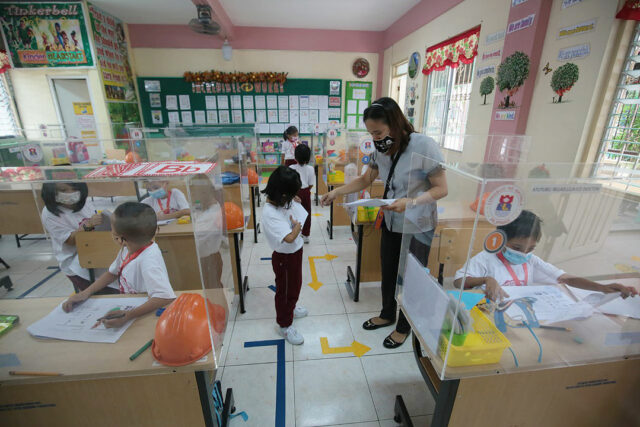
A TEACHER assists students at a school in Manila where face-to-face classes resumed on Feb. 9, 2022. — PHILIPPINE STAR/MICHAEL VARCAS 

THE DEPARTMENT of Education on Tuesday announced that the next school year will start August 22 and end on July 7 next year, rejecting an appeal by some stakeholders to delay the opening of classes for at least two weeks to give teachers more time to rest and prepare.  

The school reopening will push through regardless of the COVID-l9 alert level imposed by the Inter-Agency Task Force for the Management of Emerging Infectious Diseases or the Department of Health in areas where schools are located,according to the guidelines of the DepEd order.  

The TeachersDignity Coalition earlier asked Vice President and Education Secretary Sara Duterte-Carpio to move the school years start to mid-September or the first week of October.  

The group said teachers still performed tasks even during the break. We need to read forms and prepare documents for performance rating,it said. And in the coming weeks until August, teachers should attend in-service training, Brigada Eskwela, and other back-to-school and enrollment activities.”  

Under the guidelines, blended learning or even full distance schooling will be allowed only until Oct. 31.   

By Nov. 2, all public and private schools shall have transitioned to 5 days of in-person classes,DepEd said, except those duly accredited for the Alternative Delivery Modes. Kyle Aristophere T. Atienza

DepED asks NBI to probe reported abuses at PHL school for young artists 

THE EDUCATION department on Tuesday said it has asked the National Bureau of Investigation (NBI) to conduct its own probe on the alleged sexual abuse and harassment of students at the Philippine High School for the Arts (PHSA).  

In a statement, the department said Vice President and Education Secretary Sara Z. Duterte requested the NBI to provide a comprehensive report on the issue as soon as possible.  

“The Department would like to reiterate that the agency does not tolerate abuses in any form,” it said.   

Justice Secretary Jesus Crispin C. Remulla told reporters in a Viber message on Tuesday that he will direct the NBI to prioritize the investigation of the PHSA. 

The Department of Education (DepEd), meanwhile, said it is doing its own investigation through its Child Protection Unit and Child Rights in Education Desk.  

Allegations of various forms of abuses at the specialized school for budding artists were reported in an in-depth feature article published by VICE World News, which included testimonies from alumni who detailed their own experiences.   

DepED noted that it is also working with the PHSA, located in Los Baños, Laguna, in reviewing existing campus policies to ensure the safety of students.  

The school’s management said in an earlier statement that they sympathized with the alumni who reported the abuses and advised them to file formal legal complaints in court and/or to the school’s committee on decorum and investigation.  

The state-owned institution called VICE‘s portrayal “unfair” and denied accusations that it is a “haven for abuse.”  

Last week, advocacy group Child Rights Network urged the Philippine government to act on the reported abuse in PHSA, adding it was “enabling the continuation of these horrid abuses.” 

“The reported crimes against children are crimes of power, with power relations between teachers and house parents in the boarding school tilted against their victims,the group said. John Victor D. Ordoñez

House bill on SIM card registration filed 

STOCK PHOTO | Image by terimakasih0 from Pixabay

A BILL requiring the registration of all mobile phone subscriber identity module (SIM) cards to help address the proliferation of scams and criminal activities has been filed at the House of Representatives. 

This bill seeks to require ownership registration of SIM cards to eradicate mobile phone-aided criminal activities,Leyte Rep. Martin G. Romualdez, who is expected to become the next House speaker, said in House Bill 14.  

Having an unregulated SIM card market has also given way to several mobile phone scams,the lawmaker said. Cases ranged from simple text messages asking users to send cellular loads, to voice phishing methods and spams attempting to gain unauthorized access to sensitive personal information. 

A 2020 World Bank report showed that for every 100 Filipinos, there are 137 cellular phone subscriptions, indicating that some individuals owned more than one card.  

Cellular phone service providers have had to block millions of text messages and SIM cards due to complaints from subscribers, he added. Even then, perpetrators easily replace said SIM cards and continue with their scheme. 

Due to the lack of SIM card registration, it becomes nearly impossible to trace the persons behind the text scams and hold them accountable for fraud, breach of data privacy or other punishable offenses that they committed using an unknown mobile number,Mr. Romualdez said.  

Counterpart bills were filed in the Senate last week.    

The proposed measure had passed the last Congress but was vetoed by President Rodrigo R. Duterte, citing the inclusion of a provision that also requires the registration of social media accounts. Alyssa Nicole O. Tan