Home Blog Page 5641

DoF chief to miners: Follow sustainable practices

PHILIPPINE STAR/KRIZ JOHN ROSALES

MINING COMPANIES can potentially be a key driver of the Philippines’ long-term growth, but Department of Finance (DoF) Secretary Benjamin E. Diokno made it clear that they should follow responsible and sustainable practices.

“The mining industry holds the greatest potential to be a key driver in our recovery and long-term growth, especially now that world metal prices are high… We recognize that apart from boosting local development, mining is a strong magnet for investments that can propel our economy into a higher growth trajectory,” Mr. Diokno said during the listing of Philex Mining Corp.’s (Philex) common shares at the Philippine Stock Exchange (PSE) on Wednesday.

The Marcos administration is committed to creating an enabling environment that will allow the mining industry to flourish, he added.

“In turn, we expect the mining industry to strictly adhere to responsible and sustainable practices. This is a non-negotiable condition so we can guarantee the sustainability of the industry and the strong economic growth of its host communities,” Mr. Diokno said.

The Finance chief said Philex, one of the biggest copper and gold producers in Southeast Asia, has been an industry leader in principled mining.

“I challenge Philex to continue setting an example for the country’s mining industry in striking a delicate balance between protecting the environment, uplifting local communities, and supporting our socioeconomic agenda,” Mr. Diokno said.

Philex on Wednesday held a listing ceremony for its stock rights offering (SRO). Around P2.65 billion raised from the SRO will be used for its Silangan project located in Surigao del Norte.

The Department of Finance in a statement estimated the Silangan project will generate around P8.5 billion in excise taxes alone for its entire mine life.

In 2021, the mining and quarrying industry posted output growth of 5%, from 2.6% in 2020, according to the Philippine Statistics Authority.

The Duterte administration began a crackdown on the mining industry in 2016 as part of its effort to reduce the damage to natural resources.

However, the government lifted the four-year ban on open-pit mining in December 2021. In April this year, President Rodrigo R. Duterte had also lifted the nine-year moratorium on granting mining permits. — Diego Gabriel C. Robles

US SEC charges Forsage operators after PHL exposé

UNSPLASH

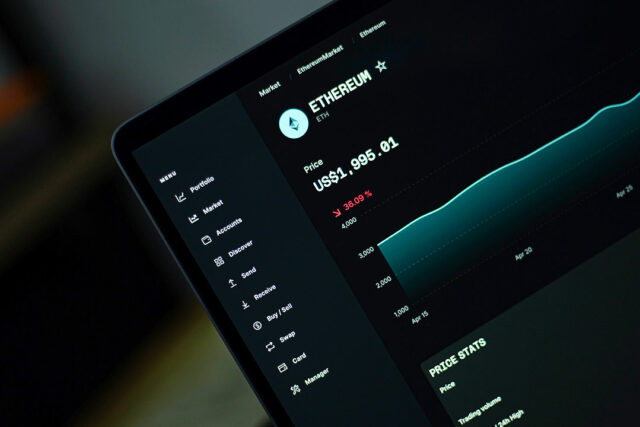
FOUNDERS and promoters of Forsage, a decentralized application for Ethereum cryptocurrency, were charged by the US Securities and Exchange Commission (SEC) assisted by the Philippine SEC for operating a fraudulent pyramid scheme.

In a media release on Wednesday, the Philippine SEC said four founders, three US-based promoters of the investment scam on websites and social media platforms, and members of Forsage’s promotional group, Crypto-Crusaders, were charged by the US SEC.

The local regulator cited a statement issued by its US counterpart on Aug. 1 that 11 individuals were charged for their roles in creating and promoting Forsage.

Forsage allegedly raised more than $300 million from millions of retail investors worldwide, including in the Philippines.

Vladimir Okhotnikov, Jane Doe or Lola Ferrari, Mikhail Sergeev, and Sergey Maslakov were said to have launched Forsage.io in January 2020.

Forsage allowed millions of retail investors to enter into transactions via smart contracts that operated on the Ethereum, Tron, and Binance blockchains, the media release said.

However, the decentralized application has operated as a pyramid scheme wherein investors earned profits by recruiting others while using assets from new investors to pay earlier investors like a typical Ponzi structure.

The Philippine SEC provided assistance to the US SEC by sharing information gathered while investigating Forsage.

On Sept. 27, 2020, the Philippine SEC issued a cease-and-desist order against Forsage for illegal solicitation through a crowdfunding platform based on the Ethereum blockchain technology.

The local regulator said the Montana Commissioner of Securities and Insurance also ordered Forsage to cease and desist from operating in March 2021.

“The SEC Philippines is always ready to collaborate with its counterparts in other jurisdictions, as well as other regulators, to stamp out investment scams in other parts of the world. We remain committed to promoting the rights and welfare of investors, as we work toward the common goal of protecting the investing public,” Philippine SEC Chairperson Emilio B. Aquino said. — Justine Irish D. Tabile

SM Investments posts 27% profit increase to P25.5B

SM INVESTMENTS Corp. records a 26.8% increase in consolidated net income in the first half to P25.5 billion, which it attributed to strong consumer spending on eased mobility restrictions.

“Our financial performance was led by strong consumer spending across all categories and formats of our retail business and the return of crowds in malls,” SM Investments President and Chief Executive Officer Frederic C. DyBuncio said in a press release on Wednesday.

“Despite rising inflation, we are encouraged to see shoppers’ robust spending in the first half,” he added.

The company’s consolidated revenues also rose in the first half to P238.5 billion, a 23% increase from last year’s level.

Its banking business accounted for 48% of the net earnings, followed by the property segment at 26%, retail at 20%, and portfolio investments at 6%.

BDO Unibank, Inc. delivered P23.9 billion in net income in the first half, up by 12% from its previous year’s record.

Meanwhile, China Banking Corp. posted P10.1 billion in net income or a 39% increase from last year.

Property unit SM Prime Holdings, Inc. reported a 21% increase in consolidated net income to P14.1 billion.

SM Prime’s residential business, led by SM Development Corp., recorded P18.2 billion in revenues, 25% lower than the figure in the same period last year.

“The decrease in revenues was partly due to canceled sales as an effect of the expiration of the Bayanihan Act, which gave a reprieve to unit buyers during the height of the pandemic, affecting the entire industry,” the company said.

Meanwhile, SM Retail reported revenues of P163.7 billion, higher by 18% than the same period last year.

“This consumer-driven momentum brings more optimism moving forward as we keep innovating on our retail offerings to ensure an excellent shopping experience for the Filipino consumer,” Mr. DyBuncio said.

Retail net income was higher by 91% to P7 billion from the previous period.

In the first six months of the year, SM Retail and its affiliates added 147 stores, bringing its total store count to 3,336 — 69 SM Stores, 1,543 Specialty Retail, 62 SM Supermarket, 52 SM Hypermarket, 214 Savemore, 1,320 Alfamart, and 75 WalterMart stores.

“Consumers are back to safe shopping in SM stores which drove up retail growth. Further supporting this growth are SM Retail’s efficient operations and strategic expansion,” the company said.

On the stock market on Wednesday, SM Investment shares went up by P26 or 3.38% to P795 apiece. — Justine Irish D. Tabile

San Miguel food, beverage unit posts 8% income rise

SAN MIGUEL Food and Beverage, Inc. (SMFB) recorded an 8% increase in first-half consolidated net income to P18.8 billion as revenues increased, driven by volume gains and pricing adjustments across its product lines.

“Our financial position and long-term fundamentals remain strong, notwithstanding current macroeconomic headwinds. We remain committed to delivering operational excellence and value to all our stakeholders, as well as good quality products for the everyday needs of all our consumers,” SMFB President and Chief Executive Officer Ramon S. Ang said in a press release on Wednesday.

SMFB, a unit of conglomerate San Miguel Corp., reported a 17% increase in consolidated revenues to P172.1 billion.

Its beer business registered consolidated revenues of P65 billion for the first six months, 20% higher than the level a year ago.

“As restrictions eased following the COVID-19 (coronavirus disease 2019) Omicron surge in January with more on-premise outlets reopening, the beer business implemented various campaigns in key channels. As a result, its domestic operations reported a marked volume improvement of 20% quarter on quarter,” the company said.

Revenues from its spirits and food businesses jumped by 14% to P23.1 billion and 16% to P84 billion, respectively.

“The food business has been actively working to drive its costs down by improving efficiencies, enhancing productivity, and maximizing utilization of its expansion facilities,” the company said.

“While the global macroeconomic outlook remains uncertain and the remainder of the year may continue to be challenging, SMFB will continue to implement various strategies and efficiencies to mitigate cost pressures and help protect profits,” it added.

SMFB shares climbed by 60 centavos or 1.4% to P43.60 apiece on Wednesday. — Justine Irish D. Tabile

MPIC expects 2022 results to ‘at least approach’ 2019 level

PANGILINAN-LED Metro Pacific Investments Corp. (MPIC) announced on Wednesday an attributable net income of P9.5 billion for the first half of 2022, down 9% from the same period last year when it booked gains from asset sales.

“We expect that this year will be better than last year,” MPIC Chairman Manuel V. Pangilinan said during a virtual briefing.

“We (also) hope that 2022 numbers will at least approach what we accomplished in 2019, or before the pandemic,” he added.

The holding company, which also controls power, toll roads, hospital and rail businesses, posted a core net income of P15.6 billion in 2019, up 4% from 2018.

The company’s core net income for the first half of 2022 was P7.5 billion, up 24% from P6 billion in the previous year, it said in a press statement on Wednesday.

MPIC has yet to release its complete financial report for the second quarter.

“Improved financial and operating results of the constituent companies delivered a 15% increase in contribution from operations, mainly driven by a strong recovery in toll road traffic and growth in power consumption as more industries ramped up operating capacity,” the company said.

The company said its power business brought in P5.9 billion, or 60% of the net operating income. Toll roads contributed P2.5 billion, or 26%, and water brought in P1.4 billion, or 15%.

Meanwhile, the other businesses, mostly real estate, hospitals, fuel storage, and light rail, incurred a net loss of P35 million.

“Average interest rates on borrowings have been significantly reduced and resulted in a 12% decline in net interest costs in the first half of 2022,” MPIC said.

“This was made possible by the company’s strategic rerating and refinancing of expensive debt facilities ahead of the current rising interest rate environment,” it added.

Mr. Pangilinan said the company remains steadfast in its pursuit of other potential growth areas, particularly in agriculture, tourism, and logistics.

“But we are still mindful of the crucial role that MPIC plays in Philippine infrastructure and enabling the progress that our government envisions. I am hopeful that the positive tone toward infrastructure investment set by the new administration will lead to accelerating development for our country,” he added.

Last year, MPIC recognized gains from the sale of power generation company Global Business Power Corp. and Thai toll road operator Don Muang Tollway Public Co. Ltd.

On Wednesday, MPIC shares closed 2.93% lower at P3.64 apiece.

MPIC is one of three key Philippine units of First Pacific, the others being Philex Mining Corp. and PLDT Inc.

Hastings Holdings, Inc., a unit of PLDT Beneficial Trust Fund subsidiary MediaQuest Holdings, Inc., has a majority stake in BusinessWorld through the Philippine Star Group, which it controls. — Arjay L. Balinbin

PAL reports ‘first positive’ half-year results since 2016

REUTERS

PHILIPPINE Airlines, Inc. (PAL) announced on Wednesday a net comprehensive income of $71 million (P4.2 billion) for the first six months of 2022, the first positive first-half financial performance for the flag carrier since 2016.

In a phone message to BusinessWorld, PAL Spokesperson Cielo C. Villaluna said the airline reverted to profitability in the first half from a total comprehensive loss of $344.3 million in the same period in 2021.

The airline also reported an operating income of $125 million (P6.6 billion) for the January-to-June period, making a profit after posting an operating loss $191.5 million in the same period in 2021.

“PAL generated $1.1 billion (P58.1 billion) in revenues, representing a 258% growth in passenger revenues and a 31% growth in cargo revenues for January to June 2022, as compared to the same period in 2021,” the airline said in an e-mailed statement.

“Operating expenses amounted to $986 billion (P51.5 billion) for the period, which includes $380 million (P19.9 billion) in fuel expenses, reflecting the impact of significantly higher fuel prices afflicting the aviation industry worldwide,” it added.

PAL President and Chief Operating Officer Stanley K. Ng said the airline views the positive operating results for the first half of 2022 “as a demonstration of the loyal support of our PAL customers, for which we are deeply grateful, and a validation of the efforts of our shareholders, management and personnel to rebuild our international and domestic network amidst the strengthening recovery of air travel.”

“We acknowledge tough challenges ahead, as various regions grapple with rising inflation, higher energy costs and economic uncertainties,” he added. “So we will continue to be fiscally prudent as we mobilize our talents and resources to grow responsibly, in a way that helps boost tourism, supports overseas Filipinos and offers the best value to travelers and cargo shippers.” — Arjay L. Balinbin

Yields on BSP’s term deposits rise on rate hike bets, inflation

BW FILE PHOTO
TERM DEPOSIT yields went up on Wednesday on expectations of another rate hike this month and ahead of the release of July inflation data. — BW FILE PHOTO

YIELDS on the Bangko Sentral ng Pilipinas’ (BSP) term deposits climbed further on Wednesday ahead of the release of July inflation data and following rate hike signals from the central bank chief.

Demand for the term deposit facility (TDF) of the central bank amounted to P390.94 billion on Wednesday, above the P330-billion offering as well as the P247.361 billion in tenders recorded last week.

Broken down, bids for the seven-day term deposits amounted to P218.96 billion, higher than the P170 billion auctioned off by the BSP. It also surpassed the P149.475 billion in tenders seen a week earlier.

Accepted rates ranged from 3.25% to 3.65%, narrower than the 3.125% to 3.75% margin seen in the prior auction. With this, the average rate of the one-week paper rose by 12.5 basis points (bps) to 3.5089% from 3.3839% previously.

Meanwhile, the 14-day papers attracted P171.98 billion in bids against the P160-billion offering. Demand for the two-week tenor also went up from the P97.886 billion in tenders seen on July 27. 

Banks asked for yields from 3.4% to 3.725%, also slimmer than the 3.25% to 3.75% band recorded a week earlier. This caused the average rate of the two-week term deposit to increase by 8.23 bps to 3.5723% from 3.49%.

The BSP has not auctioned off 28-day term deposits for more than a year to give way to its weekly offerings of securities with the same tenor.

The TDF and the 28-day bills are used by the BSP to gather excess liquidity in the financial system and to better guide market rates.

Term deposit yields went up ahead of the release of July inflation data on Aug. 5, Friday, Rizal Commercial Banking Corp. Chief Economist Michael L. Ricafort said in a Viber message.

The rise was also due to signals from the BSP chief on more rate hikes at their meeting this month amid expectations of continued tightening by the US Federal Reserve, Mr. Ricafort added.

BSP Governor Felipe M. Medalla on Tuesday said the central bank still has room to hike borrowing costs without sacrificing the economy’s recovery as real interest rates remain negative.

He said their planned hike of 25 bps or 50 bps at their Aug. 18 meeting is still supportive of growth. Mr. Medalla added that it is too early to tell if the August increase will be the last for now amid lingering uncertainties at home and abroad.

The Monetary Board last month raised the benchmark interest rates by 75 bps in an off-cycle move, as it sought to contain inflationary pressures exacerbated by the peso’s weakening versus the dollar amid the Fed’s aggressive stance. It has raised rates by 125 bps so far since May.

Headline inflation hit a near four-year high of 6.1% in June, bringing the first-half average to 4.4%, above the central bank’s 2-4% target and 5% forecast for the year.

The BSP expects the July reading to be in the 5.6-6.4% range. July inflation data will be released on Friday.

Meanwhile, the Fed last week raised its key rates by 75 bps for the second straight meeting, as expected, to temper rising inflation. To date, the Fed has raised its policy rates by a total of 225 bps. — K.B. Ta-asan

Semirara Mining’s earnings climb to nearly P11 billion

SEMIRARA Mining and Power Corp. (SMPC) reported a second-quarter net income of P10.8 billion, nearly triple the P4 billion a year ago, driven by higher coal and electricity prices.

“As expected, we had a weaker performance quarter over quarter because of the China lockdowns but compared to last year, we did very well,” SMPC President and Chief Operating Officer Maria Cristina C. Gotianun said in a disclosure on Wednesday.

“We maintain our view that the second semester will be anemic because of market volatility and unfavorable weather conditions,” she added.

Of the total, contributions from the coal segment grew by 195% to P9 billion, followed by Sem-Calaca Power Corp. (SCPC), which was up 81% to P1 billion; and Southwest Luzon Power Generation Corp. (SLPGC), which increased by 107% to P742 million.

In the second quarter, total shipments from coal operations dropped by 24% to 3.7 million metric tons (MMT) to 4.9 MMT as China imposed coronavirus disease 2019 (COVID-19) lockdowns and shifted to Russian coal.

Export sales by 44% to 1.8 MMT from 3.2 MMT while domestic sales grew by 12% to 1.9 MMT from 1.7 MMT.

“Buffering the impact of lower shipments was the 126% increase in average selling prices from P2,393 to P5,399, the highest for any given quarter,” SMPC said.

“Heavy rainfall and higher stripping activities curbed coal production, dropping 21% to 3.4 MMT from 4.3 MMT. This, together with lower sales volume, raised high-grade coal inventory by 50% to 1.5 MMT from 1.0 MMT,” it added.

Meanwhile, the overall gross generation from its power operations was “mostly flat” at 984 gigawatt-hours (GWh) due to the forced outage of SCPC’s second unit because of a defective generator stator.

Total electricity sales contracted by 9% to 900 GWh from 987 GWh. Of the total, 56% was sold to the spot market while the remainder was sold through bilateral contracts.

“High uncontracted capacity allowed SMPC to boost spot electricity sales by 188% to 507 GWh from 176 GWh. Average spot selling prices remained elevated at P6.91 versus P6.87 last year,” the firm added.

Total spot purchases also went down by 60% to P245 million from P617 million on higher plant availability.

At the stock exchange on Wednesday, SMPC shares rose by 0.74% or 30 centavos to close at P40.85 apiece. — Luisa Maria Jacinta C. Jocson

LANDBANK’s net profit surges by 93.5% in the first semester

LAND BANK of the Philippines (LANDBANK) recorded a net income of P20.3 billion in the first half, a 93.5% increase from the P10.3 billion it earned in the same period last year.

“LANDBANK’s substantial expansion in net income is attributed to its prudent management of the cost of funds as well as sustained interest income from loans and investments,” the state-owned bank said in a press release on Wednesday.

“LANDBANK’s robust financial performance will continue to drive its intensified assistance to key industries, especially the agriculture sector, in support of the country’s continuing recovery. We will also build on this growth momentum to further our efforts to rebuild local communities, advance financial inclusion, and support the National Government’s development agenda,” LANDBANK President and Chief Executive Officer Cecilia C. Borromeo was quoted as saying.

LANDBANK did not provide figures on its second-quarter performance. In the first quarter, it posted a net income of P13.2 billion, 141% higher than the P5.48 billion a year prior, on the back of a one-time gain from its merger with United Coconut Planters Bank, which took effect in March.

The bank’s first-semester performance translated to a return on equity of 15.43% and return on assets of 1.19%.

Its net interest margin was at 2.92%.

LANDBANK’s assets grew by 11.8% to P2.8 trillion as of June.

Deposits with the bank went up by 10.1% year on year to P2.5 trillion.

Broken down, the government sector accounted for bulk of LANDBANK deposits, cornering a 62% share worth P1.5 trillion total deposits.

Meanwhile, 38% or P930 billion of total deposits were from the private sector.

The bank’s capital inched up by 1.9% year on year to P206.5 billion, which it attributed to the increase in its net income.

LANDBANK is mandated to provide financial assistance and support services to its priority sectors: farmers and fisherfolk, agrarian reform beneficiaries, as well as agri and aqua businesses and agri-aqua related projects of local government units and government-owned and -controlled corporations.

In 2021, the state-run bank’s net profit grew 27% to P21.75 billion from P17.14 billion a year earlier and higher than its P19.68-billion income target. — D.G.C. Robles

Century Pacific Food income climbs to P1.5B

CENTURY Pacific Food, Inc. (CNPF) reported a 7.7% increase in attributable net income to P1.54 billion in the second quarter from P1.43 billion a year ago as revenues rise after the robust performance of its branded businesses.

“The environment has been tough for the milk category, but we’re grateful that our efforts translated to a year-on-year revenue growth of 23% in the first half. BirchTree’s market share increased from 22% to 24% during this time,” CNPF Vice-President and General Manager of Milk division Pyrus A. Dela Cruz said in a press release.

The company posted a 20% in net revenue to P16.35 billion from the previous year’s P13.62 billion.

“Entering the second half of the year, we are seeing some respite as cost pressures begin to ease for some inputs like tuna, packaging, and freight. We are still pursuing a mid-teens topline growth for the year,” CNPF Executive Chairman Christopher T. Po said.

The company reported higher operating expenses totaling P2.23 billion, a 51.2% increase from the previous year’s P1.47 billion.

It attributed the rise to higher logistics costs, continuous investment in recently launched innovations, support for demand amidst rising input prices, and brand-building activities like its Century Tuna Superbods LoveStrong campaign.

Year to date, the company’s attributable net income rose by 8.5% to P2.95 billion from P2.72 billion a year earlier.

CNPF manufactures, markets, and distributes processed marine, meat, milk, coconut, plant-based, and pet products. It has developed a roster of household names, which include Century Tuna, Argentina, 555, Angel, and Birch Tree.

CNPF also operates as one of the Philippines’ leading providers of private label tuna and coconut products for export overseas.

On the stock exchange on Wednesday, CNPF shares went up by P1.15 or 4.93% to P24.50 apiece.

Pizza Hut goes for younger image by choosing boy band SB19 as endorsers

PHOTO FROM FACEBOOK.COM/PIZZAHUTPHILIPPINES

A POPULAR pizza-loving boy band has been tapped to endorse the venerable brand Pizza Hut as a way of appealing to a younger market.

Industrialist Jorge Araneta, Chair of the Araneta Group, personally picked the new Pizza Hut endorsers, P-Pop boy band SB19.

“It’s really looking for a right channel, a right way to communicate our strategy, and Pizza Hut’s strategy really, is to make the brand younger. How [else] can we make the brand younger than by tying up, collaborating, with the P-pop number one band?” said Pizza Hut Philippines’ Head of Marketing Raymund Nobleza, during a press conference on July 26.

“They had a concert in the middle of the pandemic, in Araneta Coliseum. It was a virtual concert — not a lot of people inside the Coliseum then,” said PPI Holdings, Inc. COO Chacha Juinio during the press conference. Still, the virtual tickets sold out. “We were so impressed,” she said. “Mr. Araneta, who’s not present today, was the one who was most impressed, and said: ‘Get them’,” she said.

Jorge Araneta is the chair of the Araneta group, which owns PPI Holdings, Inc., which holds the Philippine franchises for Pizza Hut, Taco Bell, and Dairy Queen. “Our chairman is on-trend, all the time,” said Ms. Juinio.

The band, with members John Paulo Nase, Josh Santos, Stell Ajero, Felip Suson, and Justin de Dios (all otherwise known by their stage names Pablo, Josh, Stell, Ken, and Justin), was launched in 2018.

SB19 member Pablo said, “When we were still trainees, after an event, talagang pagod na pagod kami (we would be really tired). Iyong parang comfort food namin (was) always pizza. Pizza Hut, naeenjoy ng lahat. (Our comfort food was always pizza. Pizza Hut, enjoyed by all).”

The endorsement deal comes with a television commercial and a song, “Make It Great.” Their commercial (with the signature announcement of the Pizza Hut delivery number) premiered on July 31, during a commercial break on the Bb. Pilipinas Grand Coronation Night.

As part of the deal, the band members will be showcased on social media, said Mr. Nobleza. They will also be releasing SB19-branded meals in Pizza Hut restaurants, as requested by fans. Ms. Juinio said, “If we want to stay long in this industry, you’ve got to go for the youth.”

Discussing the continued trust in the brand, Ms. Juinio noted that “Pizza Hut has been in the Philippines for the last 38 years. Longevity-wise, we started the pizza industry in the Philippines. We will make sure that we outclass anyone.

“We’ve made it great for a long, long time, and we are known for being consistent and delivering quickly, and fast, and great,” she said. “It has consistently been the same quality for the last 38 years, and we’re very proud of that.” — Joseph L. Garcia

Fed officials stay resolute on need to make policy more restrictive

A TRIO of US Federal Reserve officials from across the policy spectrum signaled on Tuesday that they and their colleagues remain resolute and “completely united” on getting US interest rates up to a level that will more significantly curb economic activity and put a dent in the highest inflation since the 1980s.

Moreover, one of them — San Francisco Fed President Mary Daly — said she was “puzzled” by bond market prices that reflect investor expectations for the central bank to shift to rate cuts in the first half of next year. On the contrary, she said her expectation is the Fed will keep raising rates for now and then hold them there “for a while,” remarks that triggered a wave of selling in rate-futures markets.

In a separate appearance, Cleveland Fed President Loretta Mester struck a similarly hawkish tone, noting that inflation has yet to peak and she needs to see several months of very compelling evidence that inflation is on a sustainable path down to the central bank’s 2% goal before policy makers can ease off.

Their new uniform remarks reverberated in bond and interest rate futures markets that had emerged from last week’s meeting positioned for the central bank to dial back the pace of rate hikes.

Expectations the Fed would reverse course and start cutting rates in the first half of 2023 diminished significantly as reflected in fed fund futures pricing, while the probability of another 75-basis-point (bp) increase next month moved notably higher.

The yield on the 2-year Treasury note — the government bond maturity most sensitive to Fed policy expectations — rose by 20 bps, the most in nearly two months.

Fed Chair Jerome H. Powell said last week the central bank may consider another “unusually large” rate hike at its Sept. 20-21 policy meeting, with officials guided in their decision making by more than a dozen critical data points covering inflation, employment, consumer spending and economic growth between now and then.

Chicago Fed President Charles Evans told reporters on Tuesday that if inflation does not abate before then, he would back such a move.

“If you really thought things weren’t improving … 50 (bps) is a reasonable assessment but 75 could also be okay. I doubt that more would be called for,” Mr. Evans said during a question-and-answer session at the regional bank’s headquarters in Chicago, effectively dismissing the prospect of raising rates by a full percentage point next month.

The central bank raised its benchmark overnight lending rate by another three-quarters of a percentage point last week to a target range between 2.25% and 2.50%. It has hiked that rate by 225 bps since March as officials have been increasingly aggressive to try and quash stubbornly high inflation even as recession fears gather pace.

‘NOWHERE NEAR’
San Francisco Fed’s Ms. Daly said the central bank’s work of bringing down inflation is “nowhere near” almost done and there is still “a long way to go” to lower inflation from four-decade highs.

“That would not be my modal outlook,” she said in an interview streamed on LinkedIn and hosted by a CNBC anchor when asked about investor expectations of rate cuts. “My modal outlook, or the outlook I think is most likely, is really that we raise interest rates and then we hold them there for a while at whatever level we think is appropriate.”

Ms. Mester struck a similarly bullish note. “We have more work to do because we have not seen that turn in inflation,” Ms. Mester said in an interview with the Washington Post. “It’s got to be a sustained several months of evidence that inflation has first peaked — we haven’t even seen that yet — and that it’s moving down.”

“You wouldn’t want to conclude too quickly inflation is on a downward path because of how high it is… I want to see it broadly across many inflation measures, not just one, not just two,” she added.

Mr. Evans too noted that he thinks the Fed’s policy rate will have to rise to between 3.75% and 4.00% by the end of next year, but cautioned against too quick a path to get there should it have to retrench unexpectedly on the back of a changing landscape.

The economy continues to flash conflicting signals with the tightest labor market in decades strongly pushing up labor costs in the second quarter but economic growth contracting for a second straight quarter. The Fed is trying to dampen demand across the economy to help bring down price pressures without causing a spike in unemployment.

US job openings fell by the most in just over two years in June as demand for workers eased in the retail and wholesale trade industries, the Labor department reported on Tuesday, although other details suggested the labor market remained extremely tight.

Mr. Evans said that he had downgraded his expectations for economic growth this year and now sees it coming in at 1% or lower, but added that he still sees a path for the Fed to bring down inflation while keeping the unemployment rate below 4.5%. — Reuters