Home Blog Page 5640

Food stalls temporarily closed in Davao City district as diarrhea cases reach 147, one child dead 

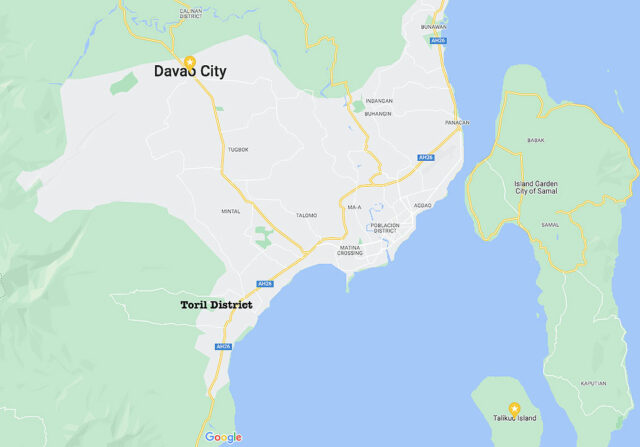
A 10-YEAR OLD who died from severe dehydration was among the 147 cases of diarrhea recorded as of June 19 in a district in Davao City, prompting the local government to order the temporary closure of food stalls and suspension of street food vendors in the area.  

Pending results of laboratory tests, the City Government has suspended the operations of food stalls in Toril District until further notice,the local government said in a statement on Tuesday.  

Food and drink samples from the sellers were collected for testing and analysis to rule out any possible source of infection that might have caused the outbreak,it said.  

At the same time, the city is conducting an independent analysis of the water supply in the area.    

Distributor Davao City Water District (DCWD) said on July 18 that results from its water sampling and testing in the affected area yielded negative results for the presence of Escherichia coli and total coliform with chlorine residuals of 0.3-1.5 ppm.   

The results mean that the water DCWD distributes to its customers is not contaminated with bacteria causing waterborne diseases such as diarrhea. It also indicates that there is enough chlorine to protect and disinfect the water through the distribution network,the utility said.    

DCWD also said it found no major leaks in its distribution line along the affected areas, which could have been a point of contamination from flood water.  

The diarrhea outbreak was first reported last weekend with an initial 40 people seeking medical treatment.  

The City Health Office has set up an incident command center at one of the Rural Health Units in Toril for immediate medical response and referral to medical facilities for severe cases.   

Pending the laboratory results on the food and drinks samples as well as the water supply from the distribution system, the city government has advised all residents to properly boil water for consumption or use bottled water, and observe hygiene practices such as washing of hands. MSJ 

Good buy or goodbye?

PHILIPPINE STAR/KRIZ JOHN ROSALES

Obviously, we are learning to live with COVID-19. But at the same time, we seem to get bogged down in our efforts to leap forward. New variants come and go, and some linger longer than others. Meanwhile, vaccine effectiveness also wanes over time. And while quite a number of people have received vaccine boosters, I believe the majority have not.

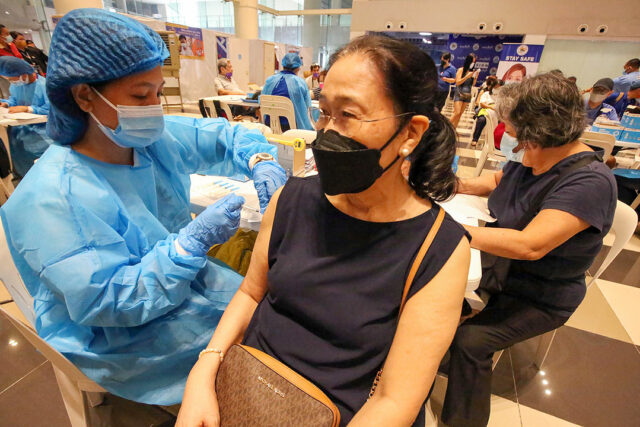
In this line, perhaps those willing among the adult population in general should already be allowed to get first and second boosters, rather than “reserving” the present stock of vaccines for the effort to fully vaccinate (three doses) against COVID-19 the entire population in the next three months. The issue is time-bound: a big portion of the local stock expires this month.

I therefore support calls for the Department of Health (DoH) to temporarily go beyond prioritizing A1, A2, and A3 for second boosters. I believe A4 and the Rest of the Adult Population should be allowed to jump the cue, just this time. Second boosters, temporarily, should no longer be limited to just healthcare workers, senior citizens, and immunocompromised individuals.

It is in this light that I find interesting the April 2021 Working Paper by University of Chicago economist Casey Mulligan titled, “The Backward Art of Slowing the Spread? Congregation Efficiencies during COVID-19.” Mulligan analyzed data to test the presumption used to justify lockdowns and stay-at-home orders — that the workplace was less safe than the home.

He found that in many instances in the United States, workplaces actually became safer than homes because businesses had the incentive or the motivation as well as the capital to invest in so-called “mitigation protocols,” to ensure workers’ safety, and to allow for continued business operations. On the other hand, households were less likely to adopt similar levels of precaution and actually go beyond the minimum.

“The available data from schools, hospitals, nursing homes, food processing plants, hair stylists, and airlines show employers adopting mitigation protocols in the spring of 2020. Coincident with the adoption, infection rates in workplaces typically dropped from well above household rates to well below,” he noted.

“When this occurs, the sign of the disease externality from participating in large organizations changes from negative to positive, even while individuals continue to have an incentive to avoid large organizations due to the prevention costs they impose on members. Rational cooperative prevention sometimes results in infectious-disease patterns that are opposite of predictions from classical epidemiology,” Mulligan wrote.

He added, “Micro evidence contradicts the public-health ideal in which households would be places of solitary confinement and zero transmission. Instead, the evidence suggests that ‘households show the highest transmission rates’ and that ‘households are high-risk settings for the transmission of [COVID-19]’.”

Moreover, “schools, businesses, and other organizations implemented a range of prevention protocols — from adjusting airflow to installing physical barriers to monitoring compliance to administering their own testing services — that households did not, and perhaps could not. Something in these organizations greatly reduced the spread.”

For expiring vaccines, perhaps we can waive the priority list. Over 1.5 million vaccine doses bought by the private sector are set to expire by the end of July, said Go Negosyo founder Joey Concepcion, who wants the DoH to allow second boosters particularly for workers. “If you look at these expiring vaccines, that’s a lot of money. Yes, we have to focus on the first boosters, but the private sector bought these vaccines. This is my frustration.”

Of the total expiring vaccines in warehouses, over 628,000 doses are AstraZeneca ($5 each dose), while 887,000 doses are Moderna ($27 each dose). These were bought under a tripartite agreement among the private sector, vaccine makers, and the government — and where half of the vaccines acquired go to the government for distribution to the public for free.

“The vaccines should be used rather than left to expire. Many productive members of the workforce fall outside of the age limit set by the HTAC. Yet they also have risk factors and are exposed to the virus every day when they come to work,” Concepcion told a press forum, as reported by the Philippine Star.

He added, “The private sector has already proven that it is willing to get vaccinated. There is no need for mandates when it comes to the private sector. They don’t want to get sick and use up their sick leaves…[But] the sense of urgency is not there. Government is trying to do its best, but there is this body that is moving quite slow.”

DoH data indicate over 65 million Filipinos have been fully vaccinated, but only about 15 million for them have gotten their first booster as of July 17. Some estimates put at 71 million the number of vaccinated people. But the booster uptake has been slow, for some reason. In Makati City, for instance, vaccination sites have been operating at below 30% capacity.

In fact, the SM Makati vaccination site is already scheduled to be closed by end-July. The same goes for the Nayong Pilipino Mega Vaccination Site. I believe a number of other vaccination sites in Metro Manila are all winding down operations and are just depleting present stocks — many of which are probably about to expire this July or early August.

“We asked the private sector to buy the vaccines but now they are given difficulties in using the vaccines that they bought. Do we want the people to get vaccinated illegally? … Clamor to allow a second booster has been there for months. But it seems nobody is listening,” noted Iloilo Rep. and former Health Secretary Janette Garin, who is also pushing for second boosters for the general population.

Garin presents a more dire scenario: she claims that only 152 million out of 245 million vaccine doses procured by the government have been administered. And, not only 1.5 million but actually four million doses bought by the private sector were about to expire. While another 23 million doses donated and procured by the government were also set to expire.

Whose numbers are more precise is anybody’s guess. But, no matter how the issue is viewed, Concepcion and Garin present compelling arguments against wasting resources and opportunities. And with only 10 days left in the month, for sure millions of expensive COVID vaccine doses will soon end up in the bin. Public and private money all down the drain.


Marvin Tort is a former managing editor of BusinessWorld, and a former chairman of the Philippine Press Council

matort@yahoo.com

Friendship is the best way to counter China in the Pacific

REGIONAL POWERS have been watching China’s growing influence in the Pacific with rising alarm, and casting around for ways to counter it. After Beijing signed a security pact with the Solomon Islands earlier this year and offered a similar deal to other Pacific Island nations, efforts stepped up a gear.

At the annual Pacific Islands Forum last week, Vice-President Kamala Harris last week promised to build new embassies in Tonga and Kiribati and offered a near-tripling of aid for marine resilience and security. “In recent years, the Pacific Islands may not have received the diplomatic attention and support that you deserve,” she said. “So today I am here to tell you directly: We are going to change that.”

In all this effort, one policy that’s been central to neighbors’ relations with the Pacific for decades has been ignored: migration.

The challenges for small island countries like those of the Pacific are unique. Their numbers include relatively affluent territories like Palau, the Cook Islands, and French Polynesia, which occupy a status in between full independence and support by their former colonists. On the other hand, the region also includes nations like Vanuatu, Papua New Guinea, and Kiribati, which receive far less aid and whose development levels are often comparable to those in sub-Saharan Africa.

Alongside the longstanding challenges of physical isolation and slow economic development, the region is also most at risk from climate change. Tuvalu and the Marshall Islands are among the world’s lowest-lying nations. Long before the islands themselves are claimed by the sea, the fragile layers of rainwater that keep thin soils irrigated risk being disrupted by saltwater. The high dependence on imported food throughout the Pacific is one reason that the region has some of the highest incidence of diabetes worldwide.

Migration has long been central to the Pacific’s relations with the wider world. The Marshallese and Palauan diasporas in the US number about half as many people as live in those respective countries, thanks to the fact that they, along with citizens of the Federated States of Micronesia, have full work and residency rights there. There’s about four times as many Samoan Americans as there are residents of American Samoa. People born in New Caledonia, French Polynesia, Guam, and the Northern Mariana Islands are full citizens of France and the US. New Zealand has a green card-style program for citizens of Samoa and four other Pacific nations that grants permanent residency to 1,750 people a year.

The gap in this picture is Australia. In contrast to New Zealand, whose Pacific Islander population accounts for about 8% of the total (Maori comprise an additional 16.5%), it has long turned its back on the region.

In the 19th century, tens of thousands from the islands of Melanesia were kidnapped or tricked into working in the Queensland sugar industry in conditions little different to slavery. One of the first laws passed after independence in 1901 was an act to deport the roughly 10,000 who remained, a plank of the racist “White Australia” policy that was only finally dismantled in the 1970s.

The country’s Pacific-born population numbers just 190,170 now, compared to 381,642 in New Zealand and 1.4 million in the US — proportionately not much higher than it was in 1901. In the popular mind, “migration” and “Pacific islands” are associated mainly with the grim detention centers on the islands of Manus, in Papua New Guinea and Nauru, where Australia has sent refugees for many years instead of processing their claims onshore.

To its credit, the new Labor government has promised to provide a permanent migration program similar to New Zealand’s, that would provide 3,000 visas a year to islanders. It’s also boosting existing temporary labor migration streams to allow family members to travel as well, and strengthening protections against worker exploitation.

That’s welcome, but it could afford to be far more generous. If 10,000 visas a year were available to the most isolated Pacific populations — those from Kiribati, Tuvalu, the Solomon Islands, and Vanuatu — then within a decade Australia could boast diasporas equivalent to 10% of the populations of their home countries. Those migrants would be able to support island economies through sending remittance money home, while building a web of links that Beijing would struggle to disrupt.

More visas should be provided for Papua New Guinea, Australia’s closest neighbor and a nation that it’s neglected since the end of colonial rule in 1975 — though its population of nearly 9 million is unlikely to become as intertwined with an overseas diaspora as smaller island nations.

Nations seeking to counter China’s influence in the Pacific shouldn’t be surprised if island governments are enthusiastic about the arrival of a new power in the region. If they want to counteract this shift, friendship and migration will do far more than hectoring and promises of aid.

BLOOMBERG OPINION

A widow as role model

FORMER Prime Minister Shinzo Abe (R) of Japan, accompanied by his wife Akie Abe, meets the Indian President at Rashtrapati Bhawan in New Delhi on Jan. 25, 2014. — MEAPHOTOGALLERY-FLICKER

The assassination of Japanese former Prime Minister Abe, continues to deserve air time on international media. The legacy that Abe left behind remains a subject of discussion. The man was Prime Minister twice, from 2006 to 2007, and again, when he made a comeback in 2012, to remain in office up to 2020. He resigned in September 2020 for health reasons.

Abe will be remembered for his nationalist position. This particular stance turned off most Japanese liberals who felt his desire to rejuvenate the Japanese armed forces would be a return to Japan’s long history of aggression and war with neighbors. The resuscitation of the Japanese self-defense forces would have required the amendment of Article 9 of the Japanese constitution which the United States forced on Japan at the end of World War II when Japan surrendered.

Abe had set a deadline of 2020 to revise the Constitution and legitimize the Japan Self Defense Forces. Article 9 outlawed war as a means of settling international disputes. Abe did not stay long enough to help rebuild the military which naturally alarmed China, East Asia’s military power.

Aside from the regeneration of Japan’s military forces into a key component of restoring Japan’s reputation and stature, Abe had Tokyo bid for the 2020 Olympics which he had hoped would help jumpstart an economy which had entered a period of deflation. The deflation discouraged the production of goods by manufacturers who did not see the wisdom in producing goods that were sold at low prices or were not being bought at all. Abe did not live long enough to see the effects of his policies on the Japanese economy and politics. Fumio Kishida, present prime minister, and regarded as Abe’s protégé and member of the Liberal Democratic Party (LDP), is expected to pursue Abe’s initiatives and policies.

The assassination of Abe triggered the customary investigation on the circumstances behind the killing in broad daylight in a country not known for political violence and with strict gun controls. Abe’s death raised serious questions about the personal security of Japanese politicians and former public officials.

Mari Yamaguchi of the Associated Press (AP) reports that a top police official “has acknowledged possible security lapses that allowed an assassin to fire his gun into Japanese former Prime Minister while he was addressing a campaign rally” for a Liberal Democratic Party candidate in Nara City. Police arrested the attacker, ex-Navy man Tetsuya Yamagami, 41.

Police said, the assassin killed Abe because “he believed rumors that Abe was connected to an organization that he resents.” According to Yamaguchi, Japanese media reported that Yamagami developed a hatred toward a religious group that his mother was obsessed about and that caused his family financial problems.

The AP story stated that Nara prefectural chief Tomoaki Onizuka said Abe’s assassination was his “greatest regret” in a 27-year career. Onizuka said, “I cannot deny there were problems with our security. Whether it was a setup, emergency response, or ability of individuals, we still have to find out. Over-all, there was a problem and we will review it from every perspective.”

Observers who watched videos of the attack that went viral noted a lack of attention to the open space behind Abe. This obvious gap did not go unnoticed, calling the lapse so “un-Japanese” who are noted for paying meticulous attention to detail, especially in matters involving security and protection of so-called very important persons. AP reported that a former Kyoto prefectural police investigator, Fumikazu Higuchi said the footage suggested security was sparse at the event and insufficient for a former prime minister.

Other experts wondered why Abe was speaking from a street level island and not from a platform which would have made it more difficult for an assassin to execute his plan. In addition, there was “too much focus frontward” without giving attention to what was behind Abe.

The death of Japan’s longest serving prime minister left behind a nation and the many who admired Abe, in grief and mourning. Shinzo Abe also left behind a 60-year-old widow, Akie Abe. CNN’s Nectar Gan and Emiko Juka wrote that Akie “set a new mold for Japanese first ladies.”

And here’s why.

Gan and Juka report that when Akie Matsuzaki married Shinzo Abe, then a rising political aide in 1987, she followed a path well-trodden by Japanese wives and gave up her job at the country’s largest advertising agency, Dentsu.

Over the years, including the nine that she was First Lady, Akie proved to be an unconventional Japanese wife and certainly an unconventional political wife.

According to CNN, “Akie is best known in Japan for her outspoken and progressive views.

“Unlike her predecessors, she refused to stay in the shadow of her husband. Instead, the socialite carved out a public role for herself in a style akin to American first ladies.”

When word reached her on Friday, July 8, of the fatal attack on her husband, she took an hour-long journey by train to be beside her husband at the Nara hospital. Abe failed to survive the attack suffering from massive blood loss from wounds in his left arm, collar bone and other parts of his body.

The next day, Akie was bringing her husband’s body back to Tokyo by car. Two days later she mourned alongside relatives and guests at a private wake.

In life, Akie “refused to stay in the shadow of her husband.” She spoke her mind and took different positions on issues often enough to be referred to by Japanese media as Abe’s “domestic opposition” But this time, all throughout the funeral services and wake for her husband, she remained, per CNN, outwardly composed and quiet when appearing in public. She was thrust into public view two years after she faded from the same public view when her husband resigned in 2020. Japan now looks at her again, this time, as it mourns its fallen former leader.

Gan and Jozuka report that Tobias Harris, a senior fellow for Asia at the Center for American Progress, states that Akie’s support for progressive causes, freewheeling ways, and cheerful confidence endeared her to the Japanese public.

She took positions at variance with her husband’s policies, from Abe’s push for nuclear power, to the Trans Pacific Partnership trade deal, to meeting with protesters against the expansion of a US Marine Corps base in Okinawa, which Shinzo Abe supported.

In explaining to Bloomberg in 2016 her outspoken stance on issues, Akie was quoted to have said, “I want to pick up and pass on the views that don’t get through to my husband or his circle.”

CNN reports that she has been a vocal advocate for LGBTQ rights, joining a gay pride parade in Tokyo in 2014. She also supports the use of medical marijuana, having posed for photos in a sprawling cannabis field in 2016.

Despite their opposing views on a number of issues, the couple had a loving relationship as reported by Gan and Jozuka: Akie and Abe did not shy from letting the public know about their genuine affection for each other. The couple did not hesitate to hold hands when disembarking from a plane during official trips — a public display of attention rarely seen in Japanese political circles. On their 30th wedding anniversary, Akie posted a wedding picture of them dressed in kimonos. On their 32nd anniversary — the last they would have together — they celebrated with cherry cream cake and wine.

Perhaps a lot of Akie’s pleasing personality and cheerful confidence can be traced simply to good and unpretentious breeding. A daughter of a confectionery magnate, Akie grew up in a wealthy and privileged family in Tokyo. She was educated at a private Catholic school and a women-only vocational school and speaks fluent English.

Abe and Akie had no children. The couple sought fertility treatment but to no avail. The man is gone leaving behind a widow who is a role model — and probably a successor.


Philip Ella Juico’s areas of interest include the protection and promotion of democracy, free markets, sustainable development, social responsibility and sports as a tool for social development. He obtained his doctorate in business at De La Salle University. Dr. Juico served as secretary of Agrarian Reform during the Corazon C. Aquino administration.


Answering questions from the floor

EDWIN ANDRADE-UNSPLASH

ONLINE SEMINARS (or webinars) are giving way to face-to-face (FTF) events. Both formats require answering questions from the floor. Often, the speaker is not the only one who prepared the presentation. A small group of assistants and cut-and-paste artists provide the slides and text which is read out in a modulated voice with indicated pauses for applause or laughter.

There are scripted answers for anticipated questions. But there are always curve balls no one at rehearsals has prepared for. (Can we go back to chart number 40? Kindly explain the algorithm used to determine the demand side of Maine lobsters served at five-star hotels.)

There is no need to admit ignorance or desperately direct the questions to the one moving the slides forward. (Can I refer your question to my able assistant?) The interrogator is not out to be enlightened anyway but to project his own expertise and make the speaker look like a mixed metaphor, a deer caught in the horns of a dilemma.

Here are some ways to handle questions from the floor.

Restate the question to one you can answer. If someone asks a technical question on the state of digital banking in unserved rural areas in the country (Good question, Ma’am) — “So, you want to know how sea food exports to Japan are affected by the West Philippine Sea incursion by China?” You relate this to seaweed wrappers also increasing in price and describe the impact of cosplay costumes on Japanese millennials.

Speakers shouldn’t be thrown off by a follow-up comment — “I’m sorry, Sir. But I don’t think you are answering the question I asked.” This naked display of discourtesy deserves an aggressive response. Can we give others a chance to ask questions please? The gentleman in a white shirt and black bowtie, carrying a tray at the back — please can we hear from you? (Yes, you can put down the drinks and get to the microphone.)

There is bound to be a particular question you are really prepared for. Don’t rush with an answer since this gives the game away. Pause thoughtfully, as if reading the words on the billboard outside the hotel. (What happened to the skin whitener ad there yesterday?) And then slowly deliver the rehearsed response. End with a thought for the day (Not all swans are white) and reach for a glass of water.

Data-driven insights tend to impress the crowd. When the question is hostile, implying that management is clueless and cannot tell its elbow from its macaroni, numbers need to be trotted out. The more obscure the statistic, the better. Turnover of clients was in the low twenties, last quarter at 20.5%. (It’s good to stick to one decimal place if only to show accuracy.) Stickiness and retention indices have been climbing in Q3 by 3.7% and the trajectory seems to be going North, though not in a hockey-stick curve.

Jargon is another weapon. It is best to use terminology the audience is unfamiliar with. When facing financial analysts, technobabble is preferred. (Zero-day cyber-attacks have been non-existent as our firewalls are holding up.) With techno geeks, throw in some financial terms — leverage of debt has been improving with rises in free cashflow in Q2. When facing both, Latin phrases win the day — as they say, de gustibus non est disputandum. Any further questions?

View with suspicion anybody who opens with, “I have three questions for you.” A trap is being set here with the first easy question — Why do you use Tony for your column byline? Take your time to answer — I don’t see where you’re going with this. Tony is a pseudonym I sometimes use. Can we move on?

When do you wind up the open forum? Even with long answers and platitudes, the allotted time is usually too generous. The moderator should be coaxed to announce the last question.

Reviews of the speaker’s performance only apply to inaugural speeches (your dream is my dream) and maybe policy statements on the alert level applicable to NCR.

Otherwise, the informal feedback on a speaker’s impact can be gauged by the number of tables that still have warm bodies around, and maybe some oblique reference to the talk — that was a waste of time.

One needs to be reminded to put the face mask back on.


Tony Samson is chairman and CEO of TOUCH xda

ar.samson@yahoo.com

China says US is ‘maker of security risks’ after Taiwan Strait sailing

THE FLAGS of the United States and China fly from a lamppost in Boston, Massachusetts, US, Nov. 1, 2021. — REUTERS

BEIJING — The United States is a “maker of security risks” in the Taiwan Strait with its frequent provocations there, China’s military said on Wednesday after another US warship sailed through the sensitive waterway.

The US Navy’s 7th Fleet said the destroyer USS Benfold conducted a “routine” Taiwan Strait transit through international waters “in accordance with international law”.

The United States has been carrying out such voyages about once a month, angering China, which views them as a sign of support for Taiwan, the democratically governed island that Beijing views as Chinese territory.

The People’s Liberation Army’s Eastern Theatre Command said in a statement that its forces had followed the ship throughout and “warned” it.

“The frequent provocations and showing off by the United States fully demonstrate that the United States is a destroyer of peace and stability in the Taiwan Strait and a maker of security risks in the Taiwan Strait,” it said in a statement.

“Theatre forces remain on high alert at all times and resolutely defend national sovereignty and territorial integrity.”

The US Navy said the ship “transited through a corridor in the Strait that is beyond the territorial sea of any coastal State”.

“The ship’s transit through the Taiwan Strait demonstrates the United States’ commitment to a free and open Indo-Pacific.”

Taiwan’s Defense Ministry said the US ship sailed north through the strait, and that the situation in the waterway was “as normal”.

The Benfold has been operating in the disputed South China Sea, where it has carried out two “Freedom of Navigation Operations” in the past week. — Reuters

New Zealand unveils new investor migrant visa

Image via Anup Shah/Flickr/CC BY-SA 2.0

WELLINGTON — The New Zealand government said on Wednesday that it had created a new investor migrant visa to attract experienced, high-value investors to invest in domestic businesses.

The new Active Investor Plus visa will replace the old investment visa categories and would require migrants to make investments in New Zealand (NZ) businesses, Economic and Regional Development Minister Stuart Nash said in a statement.

He said the old visas had often resulted in migrants investing in shares and bonds rather than directly into New Zealand companies.

“We want to encourage active investment into New Zealand, which generates more high-skilled jobs and economic growth compared to passive investment,” Mr. Nash said.

Eligibility criteria for the new visa includes a minimum NZ$5 million ($3.1 million) investment and only 50% of that can be invested in listed equities. The visa category will open on 19 Sept. 19 2022. — Reuters

Indonesia court junks call to legalize marijuana

JAKARTA — Indonesia’s Constitutional Court on Wednesday rejected a judicial review of the country’s narcotics law that would have paved the way for legalizing marijuana for medicinal use, a panel of nine judges ruled.

Three mothers of children with cerebral palsy backed by civil society organizations had in 2020 filed a judicial review of the country’s strict narcotics law, arguing for the use of medicinal marijuana to treat symptoms.

The judges said there was insufficient research to justify a ruling in favor of the plaintiffs, but urged the government to “immediately” conduct research on the therapeutic usage of narcotics.

“The court needs to emphasize that the government [should] immediately follow up … The results of which can be used to determine policies, including in this case the possibility of changing the law,” said judge Suhartoyo, who like many Indonesians uses one name only.

The plaintiffs had argued that not being allowed to use narcotics for medical reasons was a constitutional violation of citizens’ rights to obtain health services and benefit from the development of science and technology.

The Southeast Asian nation has one of the world’s strictest anti-drug laws, with penalties for possession or trafficking of large quantities of narcotics including life imprisonment and death. 

But the issue has recently gained traction after a mother, Santi Warastuti, whose 13-year-old daughter has cerebral palsy, called for the legalization of marijuana for medical research on a busy street in downtown Jakarta.

The 43-year-old mother went viral after she held a placard on a crowded thoroughfare that read: “Help, my child needs medical marijuana.”

Indonesia’s parliament has recently discussed amending the rules governing medicinal marijuana, saying it would undertake a comprehensive study on its benefits.

Any moves to legalize would follow Thailand, which became the first country in the region to green-light medical marijuana in 2018, and cannabis cultivation and consumption this year. — Reuters

UK inflation hits new 40-year high

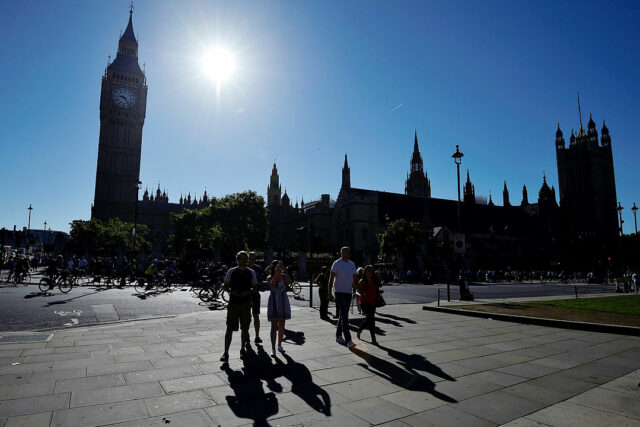
People walk past the Houses of Parliament and the Big Ben clock tower in London, Britain, August 23, 2016. — REUTERS/HANNAH MCKAY

LONDON — Surging petrol and food prices last month pushed British inflation to its highest rate in 40 years, according to official figures that bolstered the chances of a rare half percentage-point Bank of England (BoE) interest rate hike next month.

The Office for National Statistics (ONS) said annual consumer price inflation rose in June to 9.4%, the highest since February 1982, up from May’s 9.1% and above the 9.3% consensus in a Reuters poll of economists.

The latest increase means Britain had the highest rate of inflation in June among the Group of Seven (G7) advanced economies, although many smaller European Union countries are seeing even faster growth in prices.

Wednesday’s data bolstered bets that the BoE will opt for a 50-basis point rate hike next month.

Governor Andrew Bailey on Tuesday said that the scale of the increase in borrowing costs — unseen in Britain in a quarter of a century — was on the table but not “locked in”.

The BoE has raised borrowing costs five times since December as it tries to stop the surge in inflation from becoming embedded in Britain’s economy, and it is expected to increase them again on Aug. 4 after its next monetary policy meeting.

The ONS pointed to a 42% year-on-year rise in petrol prices and an almost 10% increase in food prices as the primary drivers of inflation last month.

“Soaring inflation means that momentum for a half-point interest rate rise in August is growing,” Suren Thiru, economics director of accountancy trade body ICAEW, said.

“However, tightening monetary policy too aggressively increases the risk of recession and will do little to address the global factors driving this inflationary surge.”

Investors now see an almost 100% chance of the BoE raising Bank Rate to 1.75% from 1.25% next month. It said in June that it was ready to act “forcefully” if needed.

The cost-of-living crunch has triggered a wave of industrial action by trade unions and been hotly debated among the three remaining candidates in the race to replace Boris Johnson as prime minister.

Two are promising immediate tax cuts, something the other contender, former finance minister Rishi Sunak, says risks fueling inflation further.

The ONS said core inflation in June fell to 5.8% from 5.9% in May, in line with the Reuters poll median forecast, which could reassure BoE rate-setters who might be reluctant to hike rates more aggressively.

In response to the data, finance minister Nadhim Zahawi said Britain was not alone in facing runaway inflation and the government was joining forces with the BoE to tackle the problem. — Reuters

With value-adding services, e-commerce to persist despite looser restrictions

Image via ShopBack/Google Play 

People will continue to shop online even after coronavirus disease 2019 (COVID-19) restrictions have been loosened as long as businesses provide more value than they did during pre-pandemic times, according to e-commerce company partners of ShopBack, a cashback rewards program.  

Panda Pro, a subscription program under FoodPanda PH, offers customers exclusive monthly deals and benefits brand partners through promotions. 

“There is a habit that’s been created,” said Amer Bakshi, head of strategic partnerships of FoodPanda PH, at ShopBack’s July 19 event celebrating its seventh anniversary. “At the end of the day, having multiple options won’t stop them from purchasing from you. It just enhances it, because it doubles down on their decision that, ‘This is where I was purchasing from. I’m most comfortable [with this platform]. I know how it works.’”

Nathalie C. Salcedo, growth lead of local grocery delivery service MetroMart, added that convenience means being present on all channels instead of converting customers from offline to online.

“It’s providing different options to consumers who value convenience. It’s also a matter of creating that relationship,” she said. “We’ve instilled trust in them. That’s something we want to keep and improve on.”  

Edamama, which offers a curated collection of baby and maternal products and services, integrated its various channels leading to its highest gross merchandising value (GMV) since its launch in 2019.

The platform wants to maintain its 50% client repeat rate. “There will never be a shortage of babies in the Philippines,” said Karla M. Siguitan, Edamama’s director of brand and community. “If we won’t use it for our babies, it’s not going in the app.”  

Two-thirds (or 67%) of Filipino consumers who purchased online plan to continue to buy online even after quarantine restrictions are removed, per global measurement company NielsenIQ in March 2021. The Chicago-headquartered firm also noted that the change in Filipinos’ shopping culture due to the pandemic crisis is becoming permanent. 

ShopBack, which is gearing up for its year-end shopping festival ShopFest, is investing P40 million to market the event through podcasts, radio ads, and billboards. 

In last year’s festival, which covered six sales dates from September to December, the ShopBack app was opened 60.9 million times leading to 51 million user redirects and P12 billion in overall sales. About 330,000 diapers and 375 million calories were also delivered during the four-month period. 

“People are getting smarter about how they spend their money,” said Mary Jane P. Legaspi, business-to-business affiliate marketing lead of e-commerce marketplace Lazada PH. “We have been [coming out of the challenges] of the pandemic by introducing promos and prioritizing vouchers to our consumers,” she said. — Patricia B. Mirasol

PHL among SEA countries where smartphones are unaffordable — iPrice

SAMSUNG

Smartphones in the Philippines are among the “least affordable,” according to a recent study by e-commerce aggregator iPrice Group that compared mobile phone prices and monthly wages in Southeast Asia.

According to Highly Connected, But Highly Priced: Smartphones Out of Reach for Many in SEA, the average price for a mid-range smartphone in the Philippines is two times the average monthly salary — second in expensiveness only to Vietnam — where it’s 2.2 times the average monthly salary.

Even low-end smartphones cost over 70% of the average monthly wage in Indonesia, the Philippines, and Vietnam, compared to Malaysia and Singapore where they cost just a third of a month’s salary or less.

Meanwhile, high-end models are simply out of reach for many in the three countries where smartphones are less affordable, costing three to six times the monthly salary. In Malaysia and Singapore, these cost just around a month’s wage or less.

This shows that, despite widespread mobile adoption, smartphone affordability varies widely across the region, according to iPrice.

“This appears to be driven not only by differences in average income levels, but also by variations in smartphone pricing where strong demand in some local markets is outstripping supply and allowing online sellers to increase pricing,” it said in its report.

iPrice also found that online sellers offered the latest iPhone models with only 10% price variation between markets, while top-end models from Oppo, Vivo, and Samsung varied up to 50% between markets, with Indonesia and the Philippines at the higher end.

The study is based on the e-commerce site’s catalog of 7.5 billion offers from various marketplaces, sellers, and brands, and pricing from 250,000 smartphone listings of Apple, Samsung, Vivo, and Oppo. For each brand, high-end, mid-range, and low-end specification phones were selected.

This information was then supplemented with average monthly salary data from the World Bank to assess affordability. — Brontë H. Lacsamana

China warns of ‘forceful measures’ if US House Speaker Pelosi visits Taiwan

 – China‘s government warned on Tuesday that it would take “forceful measures” if US House of Representatives Speaker Nancy Pelosi visited Taiwan, after the Financial Times said she would go to the Chinese-claimed island next month.

Ms. Pelosi and her delegation will also visit Indonesia, Japan, Malaysia and Singapore, and spend time in Hawaii at the headquarters of US Indo-Pacific command, the London newspaper added, citing people familiar with the matter.

Taiwan‘s Foreign Ministry said it has “not received relevant information” about any visit.

Asked about the report, Drew Hammill, Pelosi‘s deputy chief of staff, said, “We do not confirm or deny international travel in advance due to longstanding security protocols.”

The Democratic leader’s visit to Taiwan had been postponed from April, after she tested positive for COVID-19. At the time, China said such a visit would severely affect Chinese-U.S. relations. Read full story

Speaking in Beijing, Chinese Foreign Ministry spokesman Zhao Lijian said any visit by Ms. Pelosi would “seriously undermine China‘s sovereignty and territorial integrity”.

“If the US side obstinately clings to this course, China will definitely take resolute and forceful measures to firmly defend its national sovereignty and territorial integrity,” he said. “The United States must be fully responsible for all the consequences caused by this.”

US State Department spokesperson Ned Price, asked about China‘s reaction, said: “I believe the foreign ministry was weighing in on a hypothetical. That is something that I will hesitate doing here”.

Taiwan faces mounting pressure from China, which considers the democratically governed island its own territory. The issue is a constant irritant in ties between Beijing and Washington.

Taiwan, however, has been heartened by continued support offered by US President Joe Biden’s administration, which has repeatedly spoken of its “rock-solid” commitment to the island.

Ms. Pelosi, a long-time critic of China, held an online meeting with Taiwanese Vice President William Lai in January as he wrapped up a visit to the United States and Honduras. Read full story

The White House had expressed concern about the Pelosi trip, the Financial Times said, citing three people familiar with the situation.

There were divisions in the Democratic U.S. administration over whether Pelosi should visit Taiwan, the FT quoted two sources as saying.

Some officials believed it had been easier to justify a visit in April, as that was just after the start of Russia’s invasion of Ukraine, it added.

A spokesperson for the US National Security Council would not comment on “travel that the Speaker‘s office itself has not announced,” and reiterated that the United States remains committed to its One China policy.

Separately, the US Navy’s 7th Fleet said the Arleigh Burke-class destroyer USS Benfold conducted a routine Taiwan Strait transit on Tuesday, “through international waters in accordance with international law.”

“The ship transited through a corridor in the Strait that is beyond the territorial sea of any coastal state,” it said in a statement.

The United States has been carrying out such voyages through the stretch of water separating Taiwan and China about once a month. This has angered Beijing, which views them as a sign of support for the island.

This month, China sent fighters across the Taiwan Strait’s median line, an action Taiwan described as a provocation. The incident came during a visit to Taipei by Senator Rick Scott, a Republican member of the U.S. Senate Armed Services Committee. Read full story

On Monday, China asked the United States to immediately cancel a potential sale of military technical assistance to Taiwan worth an estimated $108 million. Read full storyReuters