Home Blog Page 5618

Marianos dominate PhilCycling BMX competitions

BMX freestylist Armand Mariano — ARMAND MARIANO OFFICIAL FB

A FAMILY of bicycle motocross (BMX) freestylists dominated on Sunday’s PhilCycling’s National Championships in Tagaytay City.

Meet the Marianos — father Armand, son Guetler and daughter Asianity.

The 18-year-old Guetler and the 43-year-old Armand finished 1-2 in the men’s competition with scores of 99.18 and 96.10 points, respectively, while 19-year-old Asianity stamped her class in the women’s section with 94.80 points.

The Marianos would have performed better in the finals had the afternoon deluge did not force officials to cancel it and relied on qualification round results instead.

There was no question though that the Marianos were too dominant and could be the country’s bets in the sport that is part of the Olympic calendar.

“Too bad the rain fell, but these championships will kickstart BMX competitions, an Olympic event,” said PhilCycling and Philippine Olympic Committee President Abraham Tolentino.

“We envision BMX [racing and freestyle] as a sport where Filipinos could potentially excel in,” he added.

Paulo Diaz, Jr. tired to challenge the Marianos but ended up snaring the bronze in the men’s with 95.10 points.

Rhea Marie Aldamar was just glad to finish second behind Asianity with a 77.40.

Georich Cardino and Angelina de Guzman reigned supreme in the flatland with 66.005 and 51.30, respectively.

Filipino-American Daniel Caluag is an illustrious BMX racing athlete with a stint at the London 2012 and a gold medal — the country’s lone mint — at the Incheon 2014 Asian Games.

He missed the nationals because of his commitment as a registered nurse in the US.

Tagaytay City will host the Asian BMX Championships, a multi-nation continental competition, next year.

Expect the Marianos to be there also. — Joey Villar

The Velocity Q&A: Rashid Delgado (WM Motor Philippines President)

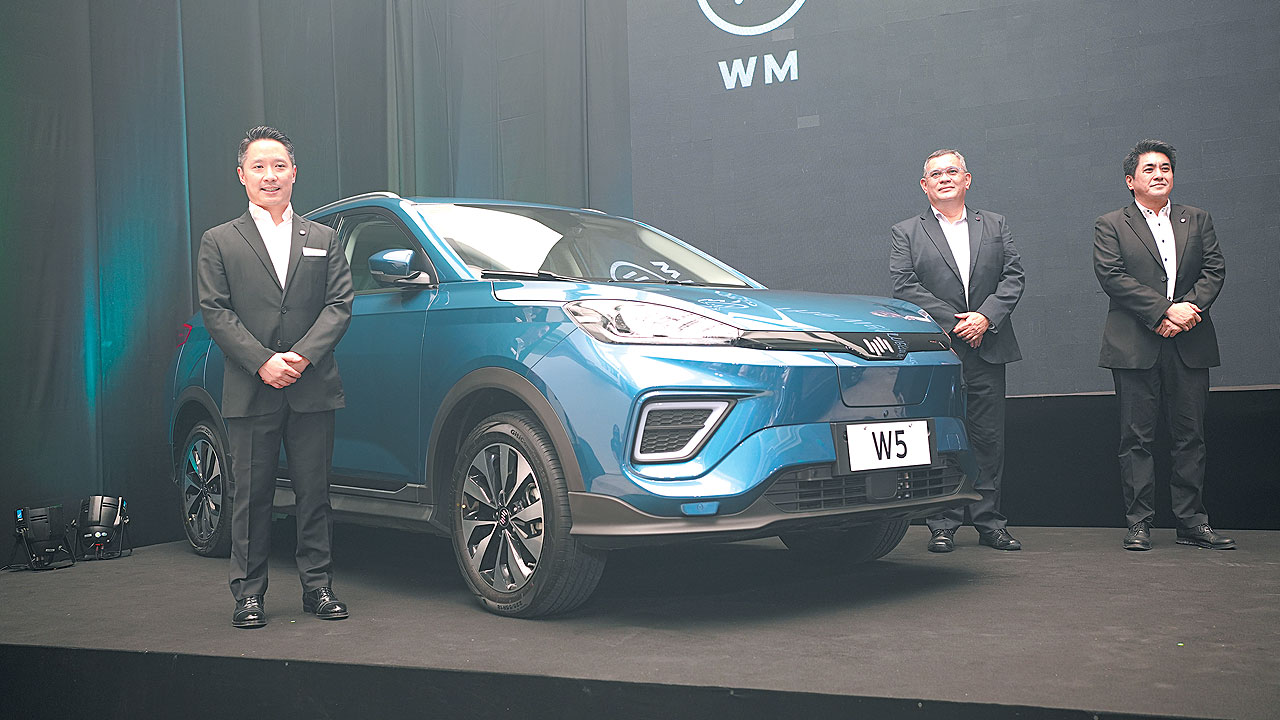
Rashid Delgado (left) with WM Motor Philippines (WMPH) VP and GM Bob Shaw, and WMPH Senior Adviser Lawrence Mendoza — PHOTO BY KAP MACEDA AGUILA

Interview by Kap Maceda Aguila

WELTMEISTER (or WM) might be an unfamiliar name in the Philippine automotive scene at the moment, but Rashid Delgado is expecting that it won’t be the case for very long.

Despite its German-sounding name, the firm is actually headquartered in Shanghai, China, and specializes solely in developing battery electric vehicles (or BEVs). Notably, it’s a brand with big names behind it, such as Chinese tech brands Baidu and Tencent. The company was started in 2015 “under the leadership of former Geely board member Freeman Chen.”

It’s now set to wage war in the EV space here.

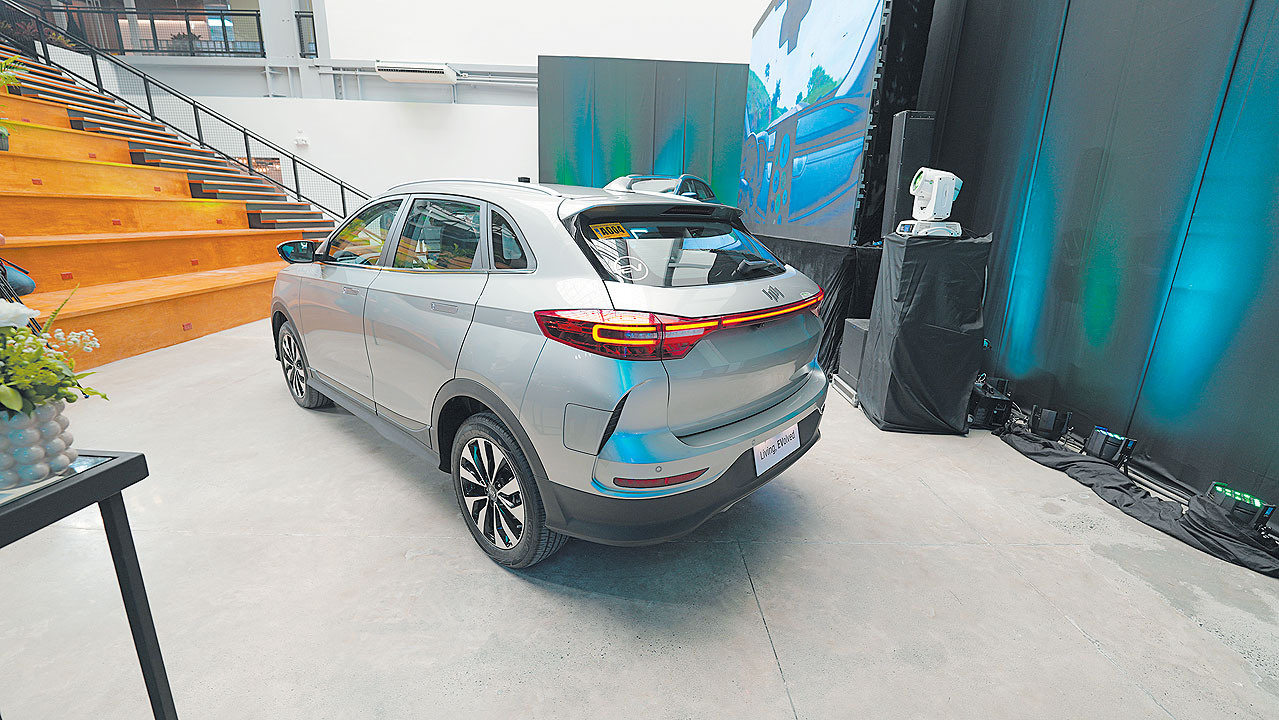
Mr. Delgado, president of WM Motor Philippines, the local distributor and service provider, said that the timing is right. Last week, the company formally unveiled the Weltmeister W5, a crossover that will, pardon the pun, lead the charge of brand in the country. Priced at P2.584 million — affordable by EV standards — the W5 is expected to get people’s attention (if the aforementioned fuel prices haven’t yet).

It’s a brave move nonetheless. Having nothing but EVs now and in the future in its portfolio, WM Motor Philippines (WMPH) now lays claim to being “the first-ever full-play electric vehicle distributor outside of China.” The first Philippine dealership for WM is at SEVEN/Neo in Bonifacio Global City.

“Our impact on the environment and pollution is not getting any better. So we feel that electric vehicles offer a very compelling value proposition to the Philippine consumer. And we feel that the WM W5 is the right product at the right time,” continued Mr. Delgado.

Here are excerpts of our interview with the WM Motor Philippines President.

VELOCITY: The most obvious question has to do with the fact that you will be distributing only electric vehicles. That’s a very significant development. What makes you think that the Philippines is ready for these types of vehicles?

RASHID DELGADO: We’re very excited for this important milestone. We feel that the time is right and the time is now to introducing a more sustainable option for consumers, especially at this time when gas prices are rising day by day. Our impact on the environment and pollution is not getting any better. So we feel that electric vehicles offer a very compelling value proposition to the Philippine consumer. And we feel that the WM W5 is the right product at the right time.

Of course we’ve had hybrids for a while now — more than a decade. But the purely electric vehicle is probably something that still needs to be introduced to quite a number of people. You’ve made a significant investment in this space. Again, what gives you the confidence to say that the country is ready for WM and its pure-EV portfolio?

Well, as a company, TDG (Transnational Diversified Group) which has been (our) holding company, believes in sustainability and giving back to the planet. It’s part of our group purpose to co-create a better Philippines working together as a force for good. We identified electric vehicles as an untapped opportunity in the Philippines compared to our neighbors in Southeast Asia and definitely compared to more mature markets such as China, Europe, in the US. We’re, as you say, further behind. We have a lot to catch up on — especially on the infrastructure side, and also in terms of the models available in the marketplace. But that to us creates an opportunity to take a market leadership position to promote EVs and to start to make a positive impact here.

Not only is WM Motor Philippines offering solely EVs. You’re also introducing a new brand. What are the company’s unique selling propositions or value propositions compared to the other brands that are now in this space?

Well, the other brands that are introducing electric vehicles are from more established brands — brands that have already been in the market for many years, of course, you know, with successful products — mainly ICE-powered vehicles. Some of them are starting to introduce EVs. We feel that WM offers a different approach as a pure EV brand. They come in with technology. The platform that they’ve built over the years in China, with all the Tier-One suppliers in terms of batteries and components, they have strong support also from technology companies in China, with Baidu, Tencent as investors. So we felt that they are strongly backed in China and already have a successful track record with the EX5 or the W5 as one of the best-selling EVs there.

We wanted to bring in WM and their products and replicate the success they’ve had in China. One of the things I think what they do that sets WM apart is really their positioning in the market. And you know, they really wanted to bring in a product with technology and sustainability, and offer that to as many people as they can. There’s mass market appeal and pricing that’s attainable. We don’t want EVs to be a high-end luxury item which only very few can afford. We want to bring in a product that will have more appeal to more people — to the everyday Filipino — as much as possible.

Ultimately, we want to make a difference in terms of sustainability in terms of the impact on our environment, and that doesn’t come with one or two cars. Now we’ll come with many, many more cars with many more Filipinos driving EVs in the future.

How happy are you with the government support and legislation for EVs?

We’ve been hopeful for strong support from the government. We’re still hoping that the government would consider stronger support for the EV industry. You know, whether it’s in the form of more fiscal incentives, tax incentives, we feel that it’s important to jump-start the industry in that way. But nevertheless, we’re going push ahead with our plans, you know — with or without the tax incentives.

We feel that we have a competitive power even without (additional incentives). But if you look at other markets around the world — you know, countries like China and in Europe and US, they had some form of tax incentives just to kick-start market to help generate more and more consumer demand.

While the price of EVs upfront have a premium, over time, especially now with the cost of the fossil fuel, we feel that the total cost of ownership of EVs are actually very competitive. Charging our EV costs about P500 for a 400-kilometer range. Compare that to filling up your tank with gas; you’re talking P5,000 to P6,000 right? There’s that plus the ease and the lower cost of maintenance; we feel that it now starts to make sense financially also to consider EVs at this time.


Of tradition, tech, and tolerances

Less is more through a ‘reductive’ design approach.

The all-new Range Rover comes over

IN OCTOBER last year, the fifth generation of the Range Rover debuted with much pomp and pageantry — set in no less than the Royal Opera House in London, and beamed to the rest of the world. Speaking at the event, Jaguar Land Rover Chief Executive Officer Thierry Bollore opined, “The new Range Rover is a superb manifestation of our vision to create the world’s most desirable luxury vehicles for the most discerning of customers. It writes the next chapter in the unique story of pioneering innovation that has been a Range Rover hallmark for more than 50 years.”

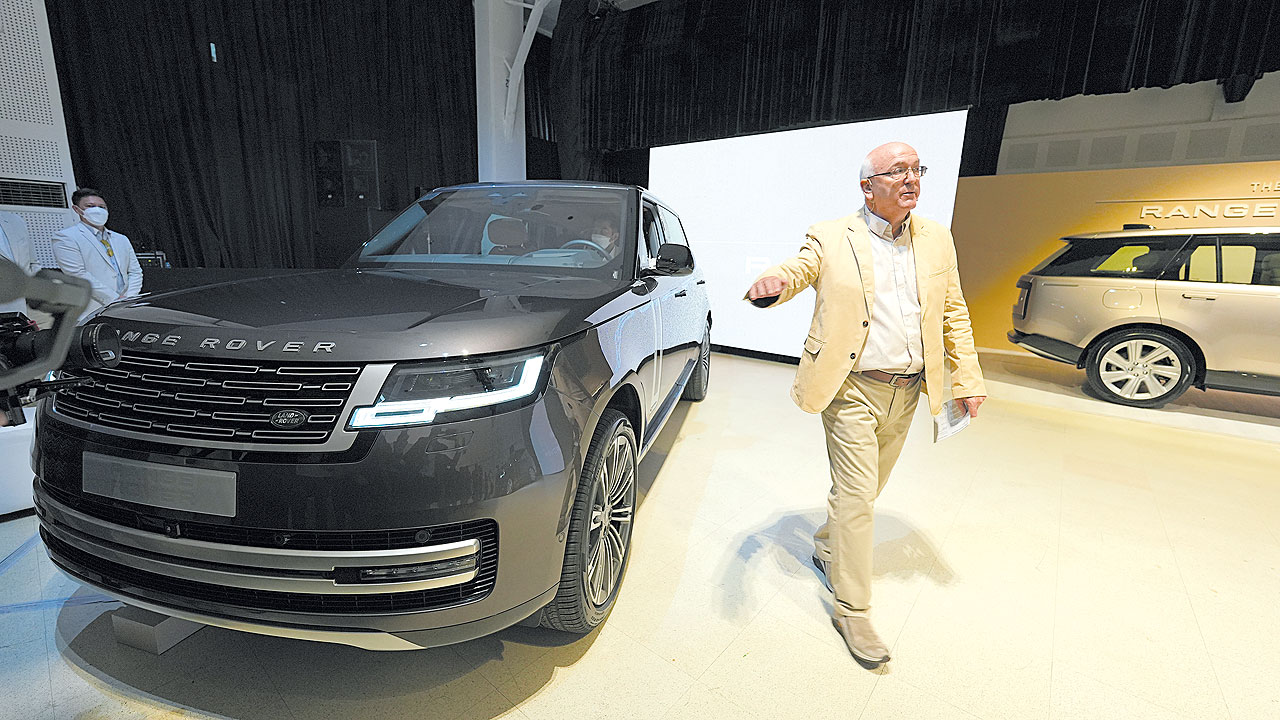
“Velocity” spoke exclusively to Jaguar Land Rover Philippines President Chris Ward after the local unveiling at the Whitespace Manila in Makati City, asking him about the essence of the all-new iteration. “I think from an outside perspective, yeah, we’ve played a lot of attention to keeping the core and the DNA of Range Rover. It’s still very present, but really, really modernized.”

He added, “It’s an all-new body but still unmistakably Range Rover.”

One would guess it is a tricky business to evolve what already is, verily, an icon — with the first Range Rover rolling onto the scene in June of 1970 to much acclaim as “a car for all reasons,” on account of its on- and off-road capability which was seen to have bettered “any other four-wheel-drive vehicle of its era.” Interestingly, the first-gen Range Rover was a two-door model for 11 years until its first four-door iteration in 1981.

Even then, the Range Rover was no stranger to venues for the arts. According to Jaguar Land Rover Philippines, in 1971 the Range Rover Classic became the first car to be displayed at the Louvre in Paris “for its exemplary work of industrial design.”

It’s perhaps for renowned aesthetics that present Range Rover designers treated the original template with much reverence. “I think a lot of our customers like evolution, not revolution, when it comes to the Range Rover’s design. This generation just naturally takes us on that journey,” averred Mr. Ward. The signature design aspects remain: “the falling roofline, strong waistline — with its horizontal emphasis — and lower rising sill.” Add to these familiar design cues the short front overhang, “formal” front fascia, upright windshield, and boat tail rear.

Much attention to detail also remains to be the order of the day. The Range Rover is marked by “flush elements and tight tolerances” for a “honed-from-solid appearance.”

The Range Rover is a convergence of high technology, luxury, and the aforementioned respect for heritage. Land Rover also gives it the first dibs on the brand’s new flexible Modular Longitudinal Architecture.

It’s also a showpiece of addition through subtraction. Mr. Ward used the word “reductive” to describe the ethos employed for the Range Rover’s benefit. The executive explained to this writer, “Reductive effectively means less is more. What we’ve done is to really clean up the car and do away with any excess, any noise around the interior. There are a lot less buttons now. It’s become more predictive, more reactive, and we’ve gone into a larger entertainment PIVI Pro screen, and a lot of the features now are embedded in that.”

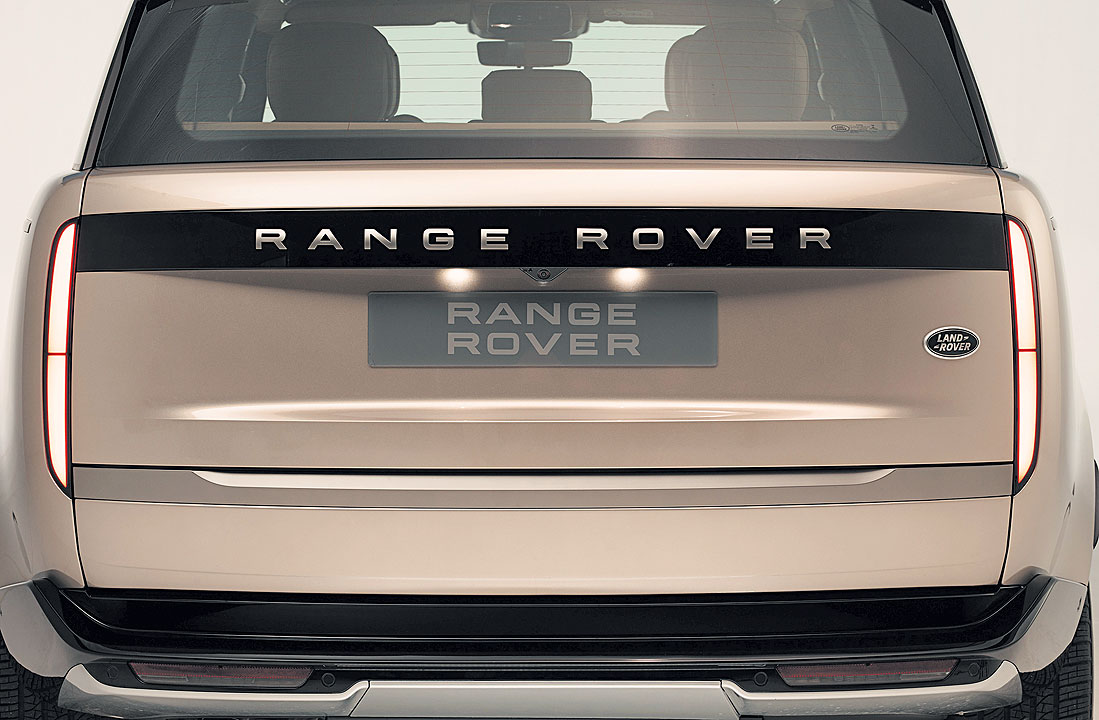
It’s about imbuing the vehicle a “lovely, clean, simple design inside,” he continued. “It’s the same outside, so ‘reductive’ means simple things. We’ve reduced the panel gaps… We’ve gotten rid of some of the embellishments… The star of this design is at the rear because we’ve got something called ‘hidden-until-lit’ taillights. So we’ve even done away with the usual red and amber (lights). They’re completely black — until you need to use them. That’s very, very clever; very much Range Rover.”

The all-new Range Rover also seeks to deliver on comfort — even the aural kind. “It’s the same noise-canceling technology you find in headphones that we might buy from the (gadget) store. But it’s now inside Range Rover and it’s listening for road noise and suspension sounds; the noise that we all hear in our cars. Now we have microphones in each of the wheel arches. They’re listening, picking this up. It then figures out the corresponding opposing sound and then plays that through the 35-speaker sound system — which includes two speakers in each of the headrests for the four passengers. So that noise canceling is right where it needs to be. So you have this beautiful, quiet environment.”

Adjustable, well-appointed seats deliver more sensorial comfort, in addition to the pampering and heightened sense of well-being provided by Cabin Air Purification Pro which employs dual-Nanoe X technology to help remove allergens and pathogens — significantly reducing odors and viruses. CO2 Management and PM2.5 cabin air filtration further enhance air quality. Advanced Nanoe X technology is scientifically proven to significantly reduce viruses and bacteria — yes, including SARS-CoV-2 viruses.

The Range Rover comes in HSE and Autobiography trims; two body design options (standard and long wheelbase) and different engine sizes and types. A pure-electric Range Rover is slated to join the portfolio in 2024. This will be the first EV Land Rover, with the company committing to make available pure EVs by the end of the decade — toward the ultimate goal of making the company net zero carbon status by the 2039.

When asked who the Range Rover is for, Mr. Ward replied, “You know, it’s interesting. We have a wide range of customers: Principally, both gentlemen and ladies who wish to drive or be driven in a Range Rover. And there’s an interesting point there because a lot of our customers do prefer to be driven. And that’s why we’ve paid a huge amount of attention to the rear cabin, not just in the seating but the entertainment system, that noise canceling, to make it a really special place — across the age range. We don’t seem to have a barrier, to be honest. So it appeals to all ages, all sexes. It’s a broad spectrum. We just seem to get everybody.”

For a closer look, visit the All British Cars showroom in EDSA Greenhills and at the BGC Boutique Showroom in 5th Ave. cor. 24th Street. Clients are requested to set an appointment before visiting the showroom or book a virtual appointment by contacting (02) 8784-5003 or 0919-083-6397 (Greenhills), or (02) 8424-4200 or 0919-083-6726 (BGC). — Kap Maceda Aguila

Philippines 2nd most fragile state in Southeast Asia

In the 2022 edition of the Fragile States Index by Fund for Peace, an American nonprofit institution, the Philippines improved by a notch to place 50th out of 179 countries. The index measured a state’s vulnerability to conflict or collapse that may manifest in various ways such as loss of physical control of territory; erosion of “legitimate authority” to make collective decisions; the inability to “provide reasonable public services”; and to interact with other states as a member of the international community. A higher index score and ranking showed worsening state fragility and instability. The country’s score improved to 80.5 from 82.4 previously. Among its Southeast Asian neighbors, the Philippines was the second most vulnerable after Myanmar (10th overall) and tying with Cambodia (50th).

Philippines 2nd most fragile state in Southeast Asia

Style (07/18/22)

Teddy Santis’ 1st seasonal collection for New Balance out

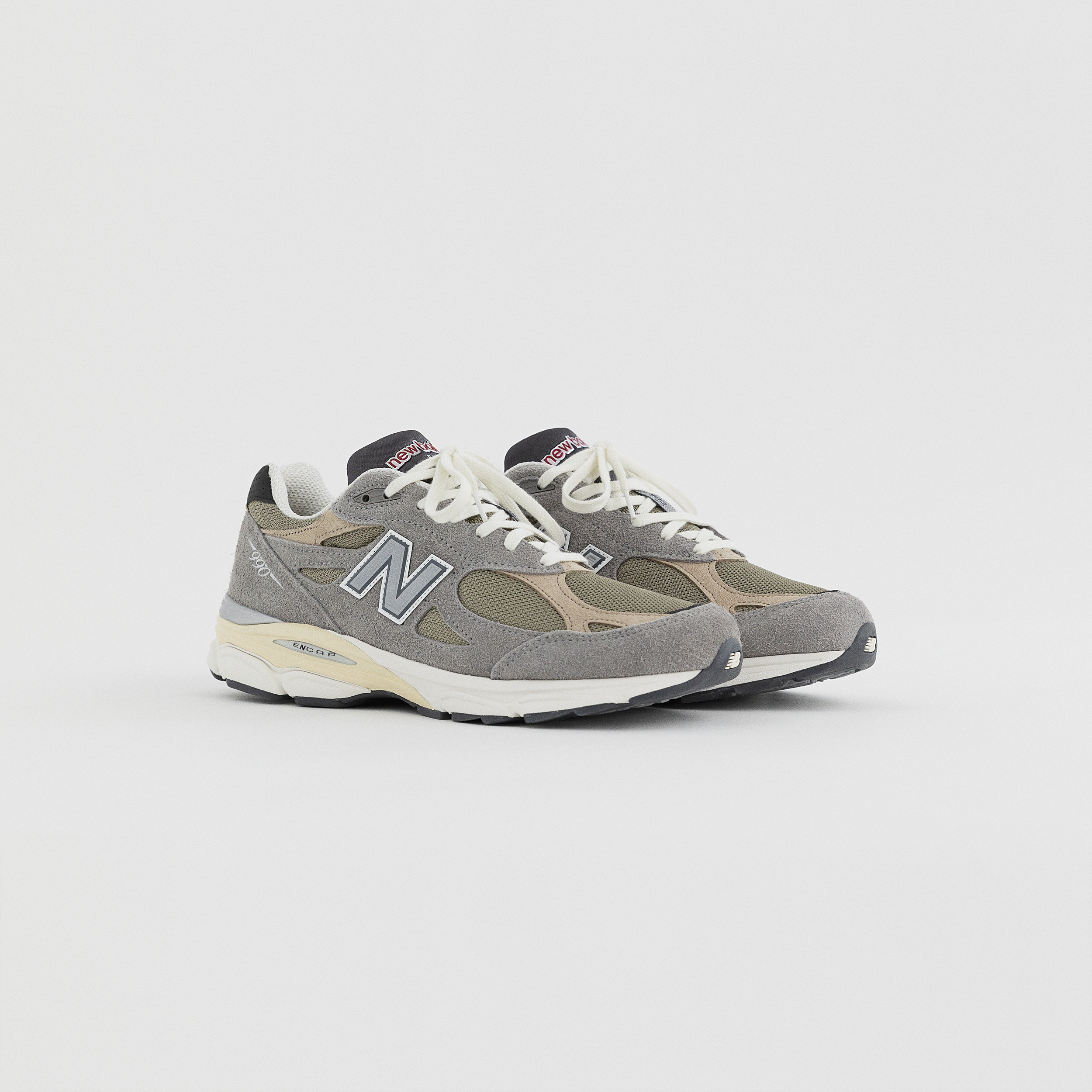
TEDDY Santis, founder and creative director of NYC apparel and lifestyle brand Aimeì Leon Dore (ALD), recently released his first seasonal collection as Creative Director for New Balance MADE in USA. As part of the “MADE in USA” collection and to mark the 40th anniversary of the iconic 990 silhouette, Santis designed seasonal, limited-edition models of the 990v1, 990v2 and 990v3 which were released in the US in April, with new introductions each month. The collection also includes classic American sportswear apparel, including sweatshirts, sweatpants, shorts, long sleeved T-shirts and short sleeved T-shirts. The next drop is set to be released locally this month in select New Balance stores and in Commonwealth stores. To learn more about the collection, follow New Balance Philippines on its official Facebook page https://www.facebook.com/NewBalancePhilippines.

Fendi reveals Flavus diamond collection

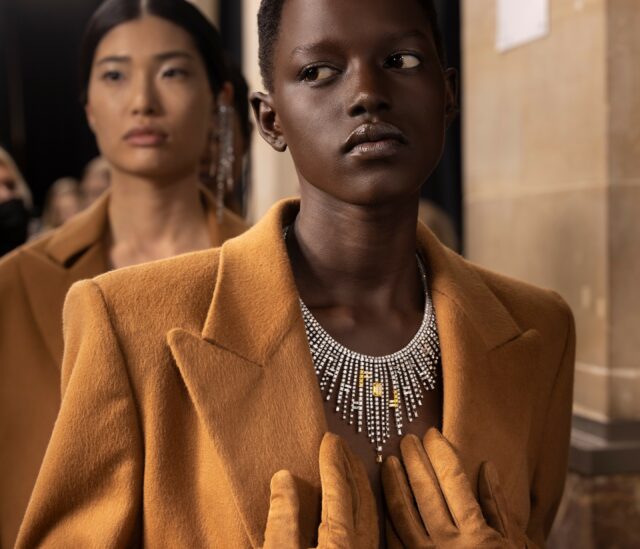
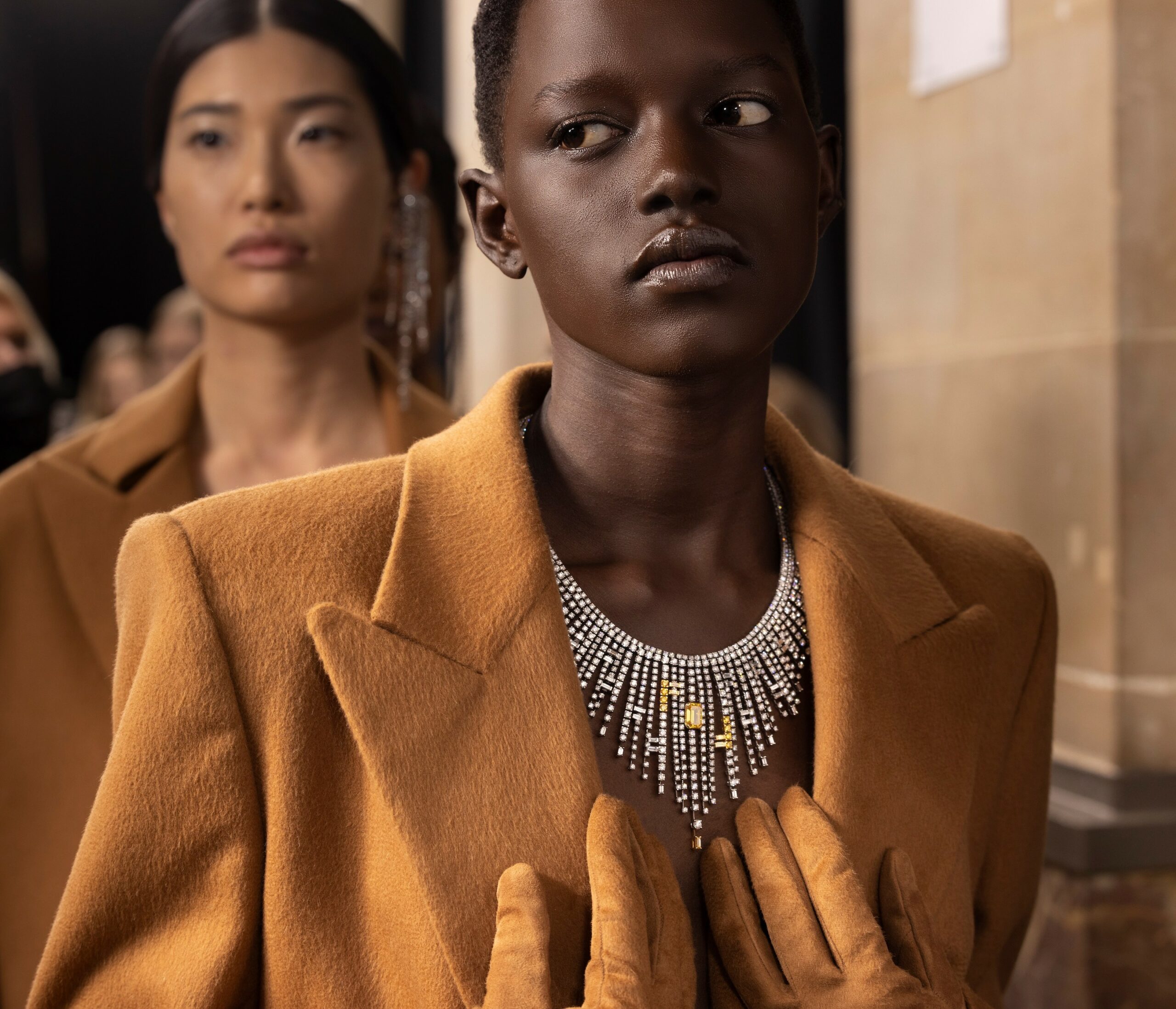
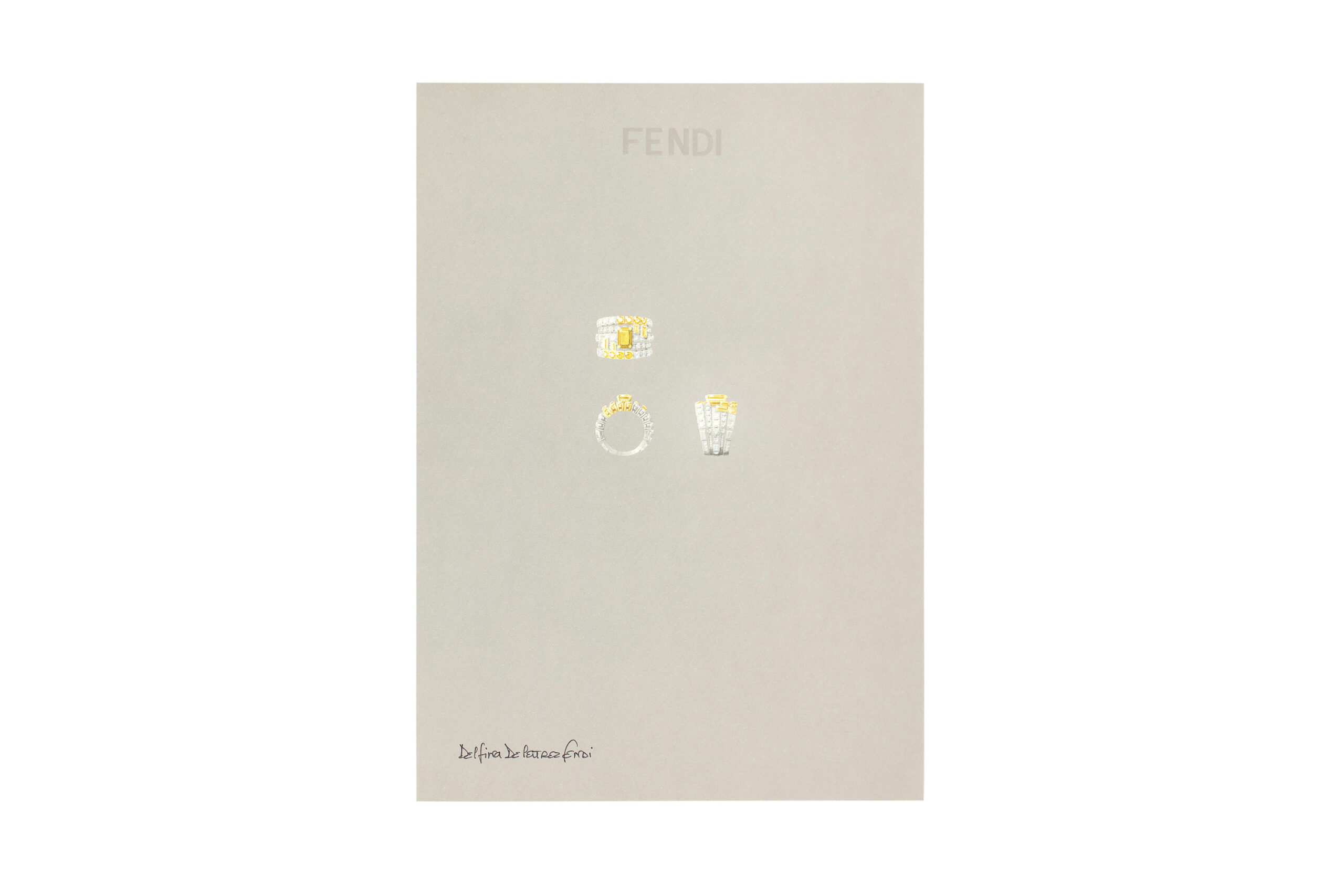
DESIGNED by Fendi Artistic Director of Jewelry Delfina Delettrez Fendi, Fendi released the debut High Jewelry designs from the House during the Fendi Couture Autumn/Winter 2022 collection in Paris, France. Consisting of a necklace, earrings, and cocktail ring, the Fendi Flavus parure uses a mix of white and yellow diamonds. Rooted in Roman mythology, the Fendi Flavus parure melds the mechanical and the organic with a dose of sculptural, mid-century glamor from the Cinecittà.

Bambi Harper donates Farrales gowns to exhibit

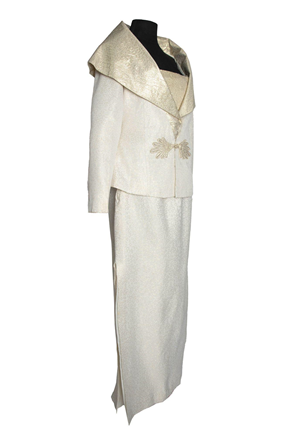
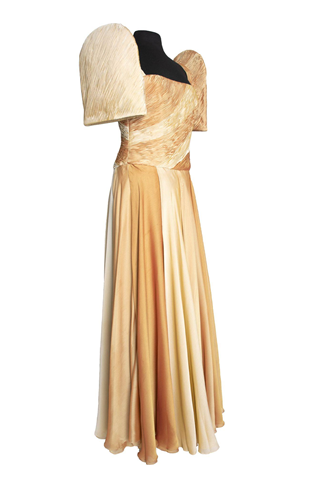
INSPIRED after visiting the ongoing FARRALES@BENILDE, a physical exhibition of choice ensembles by Ben Farrales, known as the Philippine Dean of Fashion, at the Main Gallery of the Benilde’s Design and Arts Campus, once-upon-a-time Manila’s toast of a model, Bambi Harper, has donated select Farrales ternos, evening gowns, and fabric drapes from her own personal wardrobe, in order for future students to likewise learn from the fashion giant. The ongoing show features Farrales’ Filipiniana creations, traditional ternos, and Muslim-inspired pieces, works that led to his being honored with The Outstanding Filipino award by the Junior Chamber International Philippines and Gawad CCP Para sa Sining by the Cultural Center of the Philippines. Ms. Harper’s pieces will be incorporated in the ongoing exhibit, which runs until Sept. 10. The entire collection will then be transferred to a permanent site in the DLS-CSB campus. FARRALES@BENILDE is on view at the 12F Main Gallery of the Design and Arts Campus, De La Salle-College of Saint Benilde, 950 Pablo Ocampo St., Malate, Manila. Those who wish to share their Farrales gowns for exhibit and safekeeping, contact Gerry Torres and the CCA at campus.art@benilde.edu.ph.

SSI holds End-Of-Season Sale

THE SSI Group is holding its End of Season sale until Aug. 31, with discounts of up to 70% on select items from the SSI Group’s premium and luxury brands: Anne Klein, Armani Exchange, Bally, Banana Republic, Bershka, Coach, Cortefiel, DKNY, Furla, Gap, Kate Spade New York, Lacoste, Marc Jacobs, Marks & Spencer, Massimo Dutti, Nine West, Old Navy, Pazzion, Polo Ralph Lauren, Pottery Barn, Springfield, Stradivarius, Steve Madden, Superga, Tommy Hilfiger, Women’s Secret, and Zara. Shoppers can also fit, try, and buy when shopping in-store, or order online through Trunc.ph, bananarepublic.com.ph, gap.com.ph, lacoste.com.ph, marksandspencer.com.ph, massimodutti.com/ph, oldnavy.com.ph, superga.ph, and zara.com/ph. Shoppers can also opt to order through The Specialist, The SSI Group’s At-Home concierge service: e-mail customerservice@ssigroup.com.ph, call 8-830-5000, reach out via Viber at 0917-552-9359, or send a message to www.facebook.com/SSILifePH. Customers can also join a social media challenge for a chance to win SSI Purple Cards, which can be used as a gift card when purchasing in the physical stores of participating brands. To qualify, the customer must shoot an unboxing video describing items bought from any SSI brand or Trunc.ph and post this on their Instagram, Facebook, or TikTok account on or before Aug. 15. Tag @SSILife and use the hashtags #SSILifeUnboxed #SSILifeEndofSeasonSale.

Filipino jewelry brand opens branch at Shangri-La Plaza

FILIPINO jewelry brand V!, known for its chic and playful collection, recently opened its new store at Shangri-La Plaza. Offering every day and statement jewelry, V! has a variety of rings, necklaces, earrings, and bracelets in youthful designs mainly using ethically sourced Palawan South Sea pearls as their centerpiece. V! is located at Level 2, Main Wing of Shangri-La Plaza. Visit V! @vjewelryoffcial on Instagram and Facebook to learn more about the brand.

adidas Ph unveils adiClub x Maker Lab Artist Series by V.O.N.

FOLLOWING last month’s launch of its new membership program adiClub, adidas Philippines announces the first-ever member-exclusive release through the adiClub x Maker Lab Artist Series by V.O.N. Starting July 22, a collection of patches and stickers designed by feature artist V.O.N. will be available at the Maker Lab of adidas Brand Center in Glorietta, Makati. Von “V.O.N.” (Very Own Name) Alcantara is a self-taught multimedia artist whose portfolio includes a variety of design projects for global brands such as SEGA, Capcom, Sony, and Illest. He is no stranger to adidas, with the collaboration first starting in 2021 when he helped the brand bring to life the adidas Brand Center through designing the store’s different moment areas. In this collection of patches and stickers, adidas releases designs that put creative spins to the “adiClub” logo — from the classic adiClub logo in earth tone colors to the Philippine-, Kawaii-, and even KPOP-inspired designs. Sticker designs will be given to adiClub members for free with every purchase at the Brand Center, and heat press patches will be available at the Maker Lab for P250 for members who want to customize their apparel or bags.

Peso may rebound vs dollar as BSP turns hawkish

BW FILE PHOTO

THE PESO may rebound versus the dollar this week on hawkish remarks from the Bangko Sentral ng Pilipinas (BSP) chief following the surprise rate increase on Thursday.

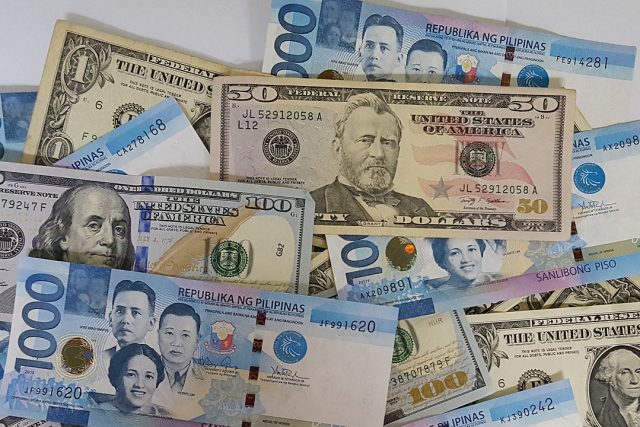
The local unit closed at P56.36 per dollar on Friday, depreciating 21 centavos from its P56.15 finish on Thursday, based on Bankers Association of the Philippines data.

The peso also declined by 44 centavos from its P55.92-a-dollar finish a week earlier.

Year to date, it has weakened by 10.5% or by P5.36 from its close of P51 versus the dollar on Dec. 31, 2021.

The local currency opened Friday’s session at P56.35 against the dollar. Its weakest showing was at P56.44, while its intraday best was at P56.315 versus the greenback.

Dollars exchanged declined to $678.3 million on Friday from $1.65 billion on Thursday.

The peso weakened versus the dollar on Friday following hawkish signals from the US Federal Reserve after US inflation hit a fresh 40-year high, Rizal Commercial Banking Corp. (RCBC) Chief Economist Michael L. Ricafort said in a Viber message.

US consumer prices jumped by 9.1% annually in June, the fastest in more than 40 years, data released on Wednesday showed. This fueled bets of an even bigger hike by the Fed at its July 27-28 review following the 75-basis-point (bp) increase made in June.

For this week, UnionBank of the Philippines, Inc. Chief Economist Ruben Carlo O. Asuncion said the peso may be supported by the BSP’s hawkish turn.

RCBC’s Mr. Ricafort likewise said the BSP’s move “is meant to support or at least stabilize the peso exchange rate, as part of the toolkit related to the exchange rate vis-a-vis the inflation-targeting framework since 2001 and the price stability mandate.”

The BSP raised its benchmark interest rates by an all-time high 75 bps in an off-cycle move on Thursday and left the door open for further tightening amid growing risks to inflation.

BSP Governor Felipe M. Medalla said the Monetary Board’s “significant” hike was due to signs of “sustained and broadening price pressures” as well as spillover effects from aggressive tightening in other countries, such as the United States, amid global inflation concerns.

The move came ahead of the Monetary Board’s Aug. 18 review and follows the back-to-back 25-bp hikes done in May and June, bringing total increases for the year to 125 bps.

On Friday, Mr. Medalla said in an interview with Bloomberg Television that he would not rule out another interest rate increase in the August review, although the need for a 50-bp hike at that meeting is “much less now” following the 75-bp increase on Thursday.

Headline inflation rose by 6.1% year on year in June, the fastest in nearly four years and exceeding the central bank’s 2-4% target band for a third straight month. The average inflation rate in the first six months is 4.4%, still below the BSP’s full-year forecast of 5%.

For this week, Mr. Ricafort gave a forecast range of P56 to P56.45, while Mr. Asuncion expects the local unit to move within P55.80 to P56.50 per dollar. — Keisha B. Ta-asan

Emperador shares jump after Singapore debut

By Bernadette Therese M. Gadon, Researcher

INVESTORS snatched up Emperador, Inc. after it debuted on the Singapore stock exchange last week.

Data from the Philippine Stock Exchange showed a total of 32.24 million shares worth P562.55 million were traded from July 11 to 15.

Shares in Emperador jumped by 6.5% week on week, finishing at P18.40 apiece on Friday from its P17.28 closing on July 8. Since the start of the year, the stock has fallen by 9.4%.

Analysts said Emperador’s secondary listing in Singapore helped draw market players to the company last week.

“The run-up of the stock starting April 13 was due to positive reactive moves following disclosures in relation to its secondary listing on SGX,” China Bank Securities Corp. Research Associate Lance Gabriel U. Soledad said in a separate e-mail.

He said trading in more than one stock exchange helps a company shore up its liquidity and diversify its capital-raising options.

“It will be important to watch out for how Emperador will capitalize on such benefits moving forward,” Mr. Soledad added.

“EMI’s international base is one of its strongest suits, so expanding this segment would greatly benefit the company in the long run,” Regina Capital Development Corp. Equity Analyst Anna Corenne M. Agravio said in an e-mail, referring to the ticker symbol of Emperador for both bourses.

“Building on its already existing customer base for its scotch whiskey segment, for example, would definitely be value-accretive in the longer scheme of things,” she added.

Mr. Soledad said that Emperador’s performance in Singapore will depend on both its fundamentals and the growth trajectory of the alcoholic beverages sector.

Boosting its presence in the international markets, the Andrew L. Tan-led manufacturer of brandy and other alcoholic beverages made its debut in the Singapore Exchange Securities Trading Ltd. (SGX-ST) last Thursday.

Emperador opened the trading at S$0.435 apiece and finished at S$0.450 (about P18.06 per share). On Friday, it ended at S$0.455.

Emperador is the first Philippine-listed company that conducted a secondary listing in the Singapore stock exchange.

Its product portfolio is composed of domestic and foreign brands which include Emperador and Fundador brandies as well as Andy Player whisky, Smirnoff Mule, The Bar, The Dalmore and Jura single malt whiskies.

Emperador’s attributable net income in the first quarter amounted to P2.10 billion, a bit higher than P2.08 billion in the same period last year.

Ms. Agravio expects Emperador’s second-quarter income to reach P2 billion to P2.5 billion, and its full-year bottom line to hit P11 billion to P13 billion.

She placed the company’s support and resistance levels at P17.00 and P19.00, “as long as Emperador’s buying momentum continues to pick up” this week.

“Over the near term, we think EMI will consolidate within the P17.30-P20 range,” Mr. Soledad said.

BSBios to build Brazil’s first big wheat ethanol plant as crop expands

REUTERS

SAO PAULO — Brazil’s largest biofuel producer BSBios will build the country’s first big facility that uses wheat to make ethanol, which will increase, not diminish, food supplies, its chief executive said, amid a global discussion on prioritizing food over fuel production.

Whereas wheat-based ethanol plants are common in Europe and Canada, most of Brazil’s production comes from sugarcane and more recently from corn. CEO Erasmo Battistella told Reuters in an interview late Wednesday BSBios’ project underscores his confidence that farmers will expand wheat area and output, reducing dependence on imports and creating an even bigger domestic market for the cereal.

Brazil is forecast to produce a record 9 million-ton crop this year, with growers sowing the largest area in 32 years. BSBios’ facility should go on-stream in the second half of 2024 in Rio Grande do Sul, Brazil’s southernmost state and the country’s biggest wheat producer. It will produce 111 million liters (29.3 million gallons) of ethanol in the project’s first phase.

Mr. Battistella noted his factory will increase food supplies as it will also sell dried distillers grains, a by-product of ethanol production used as livestock feed. “I don’t want any person to look at our company and say: you are taking our daily bread off the table!” he said. “I want them to say: you are helping to increase the supply of meat, milk and eggs and making food cheaper through this project.” 

The government is also relying on research to boost “tropical wheat” in Brazil’s Cerrado biome, considered a new wheat farming frontier. The Cerrado’s hotter and drier weather requires plants to be adapted, and planting wheat there is seen as key for the South American country to become wheat self-sufficient in 10 years, a government goal.

Brazil’s wheat yields jumped fivefold to about 3,000 kilos a hectare since the 1970’s, according to agriculture research agency Embrapa. Also, Brazil recently began testing a variety of drought resistant, genetically modified wheat in the Cerrado in partnership with Argentina. — Reuters

Arellano ousts José Rizal to face Benilde in Finals

ARELLANO University sets a Final showdown with College of St. Benilde. — SYNERGY/GMA NETWORK, INC.

ARELLANO University (AU) put an end to José Rizal University’s (JRU) fairy tale run while bolstering its chances of snaring a four-peat feat with a 19-25, 25-20, 27-25, 25-17 victory on Sunday in the 97th NCAA volleyball tournament at the Filoil EcoOil Centre.

Unheralded Pauline de Guzman came out of nowhere and unleashed a match-best 19 points including 15 on kills and three service aces to carry the Lady Chiefs to their fourth straight finals appearance and a chance for an amazing four-peat feat.

There, AU will clash with the league titan in College of St. Benilde (CSB), which swept its way straight to the best-of-three finals on a magnificent nine-win elimination round record.

The series starts on Wednesday while Game Two on Friday.

A deciding Game Three, if necessary, is Sunday.

It looked like though that AU won’t make it that far after starting the game a little nervous and sluggish and dropped the opening set to the gritty JRU team that was seeking a first finals trip in its history in the first and oldest collegiate league in the land.

But the Lady Chiefs managed to shake off the rust and showed nerves of steel from there to take the final three sets and the match.

“We got a little lucky there,” said AU Obet Javier.

But luck was far from the reason the reigning three-peat champions made it through.

It was actually Mr. Javier’s brilliance of pulling Ms. De Guzman, who was never even in the top 50 in the league’s top scorers, out of his hat of magic tricks that spelled the biggest difference.

“I asked her (Ms. De Guzman) if she wants play and she answered with a firm yes,” said Mr. Javier.

That magic stroke sent the Lady Bombers packing and in tears as they missed the chance of having a date with destiny.

It was AU who will try to test fate instead as it faces an unflappable CSB in a finale that the latter is heavily favored to win.

“It’s like playing a wall, a tower. But we’ll take the challenge,” said Mr. Javier. — Joey Villar

Stocks may drop on bets of aggressive Fed hike

BW FILE PHOTO

PHILIPPINE SHARES may decline further this week on expectations of another aggressive rate hike from the US Federal Reserve due to soaring inflation in the world’s largest economy.

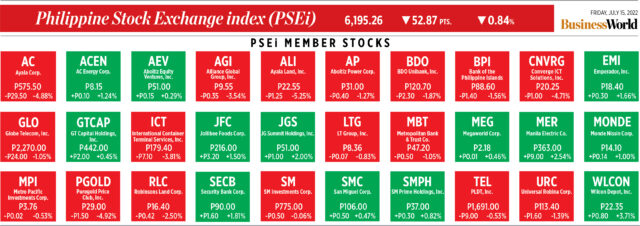
The benchmark Philippine Stock Exchange index (PSEi) went down by 52.87 points or 0.84% to close at 6,195.26 on Friday, while the broader all shares index declined by 21.27 points or 0.63% to 3,345.73.

Week on week, the PSEi sank by 166.56 points or 2.62% from its close of 6,361.82 on July 8.

China Bank Securities Corp. Research Director Rastine Mackie D. Mercado said selling pressure remained strong last week amid US data and developments at home.
“Market weakness prevailed starting Wednesday as investors likely lightened their positions ahead of the US inflation data report. The June US inflation surprised to the downside at 9.1% and the BSP (Bangko Sentral ng Pilipinas) subsequently delivered a 75-basis-point (bp) off-cycle rate hike — its biggest rate hike on record — which resulted in the marked increase in selling pressure,” Mr. Mercado said in an e-mail.

Rizal Commercial Banking Corp. (RCBC) Chief Economist Michael L. Ricafort said Philippine shares went down as the BSP’s surprise move could lead to higher financing costs for businesses and could cause a slowdown in economic activity.

“The PSEi [was] also lower, moving in line with the US stock markets that hovered among one-week lows recently amid lingering market concerns over a possible US economic slowdown or even recession amid aggressive Fed rate hikes to bring down elevated US inflation, as well as the continued hawkish signals by Fed officials,” Mr. Ricafort added.

US stocks closed sharply higher on Friday. The Dow Jones Industrial Average rose 658.09 points or 2.15% to 31,288.26; the S&P 500 gained 72.78 points or 1.92% to close at 3,863.16; and the Nasdaq Composite added 201.24 points or 1.79% to end at 11,452.42.

US consumer prices jumped 9.1% annually in June, the fastest in more than 40 years, data released on Wednesday showed. This fueled bets of an even bigger hike by the Fed at its July 27-28 review following the 75-bp increase made in June.

For this week, AP Securities, Inc. Equity Research Analyst Carlos Angelo O. Temporal said via Viber: “For the early part of [this] week, the local bourse may take a breather before continuing on its downtrend, taking cue from US market’s rebound last Friday which reflected abating expectations for a 100-bp Fed rate hike after policy makers remained firm on a possible 75-bp move this July.”

Mr. Ricafort said aside from the Fed, leads include local budget balance and external position data, as well as reports on US jobless claims and home sales. He placed the PSEi’s immediate support at psychological 6,000 mark and resistance at 6,300-6,500.

“The market was unable to adhere to the 6,300-6,500 range for [last] week, even breaching the 6,200-support level. This opens up the possibility of revisiting the 6,000 level as the index struggles to establish a strong support base,” Mr. Mercado added. — JIDT

How PSEi member stocks performed — July 15, 2022

Here’s a quick glance at how PSEi stocks fared on Friday, July 15, 2022.


EV production to hinge on vehicle takeup levels

REUTERS

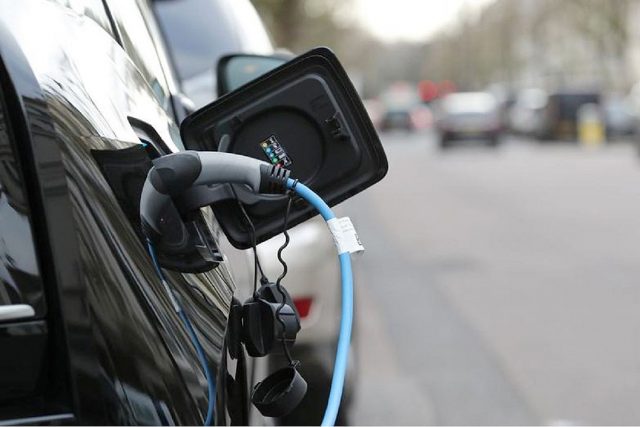
THE possibility of domestic electric vehicle (EV) production will depend on the market reaching critical mass in both adoption and the number of charging stations, according to the Department of Trade and Industry (DTI). 

“We will come to a stage where we will assemble the vehicles here (in the country). But we’re not yet there because there’s so many preconditions to bringing in EVs here. You need a critical number so you can have charging stations along the way. Otherwise, there will be no buyers if users cannot bring their EVs out of Metro Manila,” Trade Secretary Alfredo E. Pascual said on the sidelines of the Management Association of the Philippines general membership meeting in Taguig City last week.

He did not provide an estimate for which levels of adoption might make investors believe critical mass has been achieved.

Mr. Pascual said that the DTI is aiming to build a parts ecosystem for EVs from among medium-sized Philippine suppliers.

“I want Philippine manufacturers, particularly, medium-sized companies, to become suppliers of parts and components, to be part of the global value chain,” Mr. Pascual said.

In April, former Trade Secretary Ramon M. Lopez proposed the issuance of an executive order that would grant the remaining slot for local manufacturing under the Comprehensive Automotive Resurgence Strategy (CARS) program to a domestic EV producer.  

Asked to comment, Mr. Pascual said that he is pushing for the CARS program, but maintained that some issues should be dealt with before EVs can be included in the initiative.

“We need to address the fundamental issues. It will take time to set up charging stations and the price of electricity in the country is high,” Mr. Pascual said.

The CARS program offers fiscal support to participating car manufacturers domestically producing at least 200,000 units within six years.

The program was supposed to have three car manufacturers, but only two companies enrolled — Toyota Motor Philippines Corp. (TMPC) and Mitsubishi Motors Philippines Corp. (MMPC).

TMPC manufactures its Vios small sedan while MMPC produces the Mirage under the program. The deadline for MMPC to achieve the Mirage production quota is 2023 while TMPC has until 2024 to manufacture the required number of Vioses.

The DTI has also proposed a zero-tariff policy for EV imports to reduce purchase prices and encourage broader adoption.

The Philippines recently passed Republic Act No. 11697 or the Electric Vehicle Industry Development Act. Under the law, companies, public transport operators, and government units are required to maintain vehicle fleets that include at least 5% EVs. — Revin Mikhael D. Ochave