Home Blog Page 5472

PAL plans to seek gov’t help to make air travel more affordable

PHILIPPINE STAR/EDD GUMBAN

FLAG carrier Philippine Airlines, Inc. (PAL) said it plans to seek government help to make air travel more affordable for the public by either deferring or reducing airport fees.

“[This is] to make travel more affordable,” PAL President and Chief Operating Officer Capt. Stanley K. Ng told reporters recently.

He said such fees include terminal fees, take-off and landing fees, and navigational charges.

When asked if they would request deferral or reduction of fees, he responded, “That one I have to check with them anong kaya nilang ibigay (to see what they can give us).”

PAL is expanding its Cebu hub in mid-September, the airline announced on Tuesday, citing growing demand for travel.

This means that there will be more domestic flights from Mactan to cities in Luzon and Visayas.

“The Philippine Airlines Cebu Hub is our investment in the revival of domestic tourism and our national economy. Our goal is to build up more flights out of our hub at Mactan Cebu International Airport, improving connectivity among points in Luzon, Visayas and Mindanao,” the flag carrier said in an e-mailed statement.

Local airlines have said they would lower their fuel surcharges next month.

The Civil Aeronautics Board (CAB) has lowered the applicable passenger and cargo fuel surcharge for domestic and international flights to Level 9 from Level 12 in September. It cited the lower average price of jet fuel (P46.73 per liter) between July 10 and Aug. 9, against the P54.73 average between June 10 and July 9.

Level 9 on the CAB matrix permits a fuel surcharge per passenger of between P287 and P839 for domestic flights and between P947.39 and P7,044.27 for international flights.

Currently, the fuel surcharge per passenger runs between P389 and P1,137 for domestic flights and P1,284.40 and P9,550.13 for international flights.

AIRASIA PHILIPPINES
For its part, low-cost carrier Philippines AirAsia, Inc. (AirAsia Philippines) said it is working to return to its pre-pandemic domestic capacity next month.

“Our goal is to really achieve our pre-pandemic capacity as early as September for domestic,” AirAsia Philippines Spokesperson Steve F. Dailisan said in an appearance on One News PH’s Agenda program on Tuesday.

“We’re really having a hard time achieving 100% for international because some of the markets are not yet open,” he noted.

The airline aims to open more domestic routes in the second half of the year.

“We are trying to get all our aircraft back flying to accommodate the pent-up demand for the ‘Ber’ months, and hopefully, we get to open more domestic routes before the year ends,” Mr. Dailisan said.

“We’re looking at Butuan, Laoag, and Tawi-Tawi via Zamboanga, and also Legaspi,” he added. — Arjay L. Balinbin

Jollibee group relaunches Yoshinoya chain in PHL

JOLLIBEE Foods Corp. reopened the Yoshinoya branch in Glorietta 1 mall on Aug. 19 as part of its joint venture with Yoshinoya International Philippines, Inc. (YIPI), the firm said on Tuesday.

The branch was originally opened in 2012 and was redesigned and relaunched to adapt a contemporary and casual Japanese style.

“Giving Filipinos the authentic Yoshinoya experience is an important milestone for us at Jollibee Foods,” said Joseph C. Tanbuntiong, Jollibee president for Philippine business, in a press release.

“This is our first time to serve Japanese cuisine, and we’re proud to have partnered with the best Japanese food chain, Yoshinoya International,” he added.

In June 2021, the Jollibee group formed a 50-50 joint venture with YIPI — the Philippine subsidiary of Asia Yoshinoya International Sdn. Bhd. and Yoshinoya Holdings Co. Ltd. — to operate and expand the Yoshinoya brand in the Philippines.

The partnership established Yoshinoya Jollibee Foods, Inc., which will operate the Yoshinoya stores in the country with a plan of expanding Yoshinoya’s store network to 50 stores in the long term.

“Yoshinoya has now teamed up with the greatest partner, Jollibee Foods. I have high hopes that, together, we will create a company that will bring joy to new customers in an even bigger market,” Asia Yoshinoya International Chief Executive Officer Tetsuya Naruse said.

Kazuhiko Koshikawa, the ambassador of Japan to the Philippines, said: “Filipinos can once again indulge in Yoshinoya’s taste. It will be very awesome if Filipinos will enjoy this Japanese favorite with the same quality and price here in the Philippines.”

Apart from the Glorietta 1 branch, “customers may also enjoy Yoshinoya’s beefed-up menu and contemporary and casual Japanese-style stores in the redesigned store in SM North EDSA, and the news stores in Eastwood and SM Grand Central in Caloocan,” a Jollibee representative said in a text message.

Yoshinoya is the newest addition to the Jollibee group’s foreign franchised brands, which include: Burger King, PHO24, and Panda Express.

“These foreign franchised brands are expected to contribute to the sustainable growth of Jollibee Group’s domestic business.” the company said.

At present, Yoshinoya has over 2,000 locations around the world, which include the Philippines, Japan, the US, Hong Kong, China, Singapore, Malaysia, Taiwan, Indonesia, Thailand, Cambodia, and Vietnam.

Meanwhile, Jollibee operates in 34 countries, with over 6,200 stores globally. It has eight wholly owned brands: Jollibee, Chowking, Greenwich, Red Ribbon, Mang Inasal, Yonghe King, Hong Zhuang Yuan, and Smashburger.

On Tuesday, shares in Jollibee dropped by P2 or 0.86% to P231 apiece. — Justine Irish D. Tabile

Kadayawan Festival returns to the real world

PAMULAK sa Kadayawan — PHOTO BY MICHELLE ANNE P. SOLIMAN

AFTER two years of virtual events, the City of Davao’s Kadayawan Festival has returned to face-to-face celebrations on its 37th year.

The Kadayawan Festival is a celebration of thanksgiving for a bountiful harvest. The festivities are held every third week of August and highlight the 11 tribes of Davao.

“During the 1970s, the very first elected Bagobo mayor, Elias B. Lopez, encouraged to celebrate the bountiful harvest,” Davao City tour guide Jonathan R. Engbino told visiting media.

The festival was called the Apo Duwaling Festival in the 1980s, named after Davao’s three icons — Mount Apo (the highest mountain in the Philippines at 2,956 meters above sea level), the durian fruit, and the waling-waling orchid.

In 1988, it was given a new name: Kadayawan. “Kadayawan” is derived from the greeting “madayaw” (from the Davaoeño word “dayaw” which means “good” or “beautiful”).

Dati, may community parade and at konting mga sayaw. In 1995, nagstart na may pa-contest hangang sa ito na iyon, palaki na nang palaki. Ngayon, tumatanggap na tayo ng contigents from the different parts of Mindanao, even outside the region (It used to be just a parade and a few dances. In 1995, it started to host contests, until what it has become today, the celebration gets bigger. Now, we welcome contingents from the different parts of Mindanao, even outside the region, to participate),” Mr. Engbino said.

This year’s Kadayawan festival was held from Aug. 15 to 21.

BusinessWorld was invited to experience the tail-end of the festivities last weekend.

THE KADAYAWAN VILLAGE
The setting up of the Kadayawan Tribal Village at the Ramon Magsaysay Park started in 2017 as a way of showcasing the culture of the 11 ethnolinguistic tribes of Davao. They are the Ata, Maguindanaon, Matigsalug, Bagobo Klata, Maranao, Obo Manuvu, Bagobo-Tagabawa, Tasug, Sama, Iranun, and Kagan.

The village is a cultural hub during the festival, and where houses of the Lumad and Moro groups are reconstructed displaying the architecture from the 11 indigenous and Moro groups. Visitors are welcome to explore the inside of the houses and interact with the communities.

Aside from the houses, the tribes’ unique textiles, clothing, and tribal delicacies are showcased. Guests are welcome to put on their tribal attire for a donation of any amount.

Members of the tribes also perform their music and dances.

INDAK-INDAK SA KADALAN
The Indak-indak sa Kadalan is the annual street dance competition which culminates at San Pedro Square in front of the Davao City Hall. The event’s name comes from the words “indak,” which means “to dance,” and “kadalan,” which means “street.”

Every participating group has to create a free interpretation of a legend, fable, or a story relative to the 11 tribes in a performance that lasts not more than eight minutes. The competition has an open category and school-based section.

This year’s open category grand champion was the Sindac Anib Performing Ensemble from Bislig City, Surigao del Sur; while the school-based grand champion was the Bernardo D. Carpio National High School Performing Ensemble whose performance depicted a bountiful harvest.

The grand winners brought home P1 million and a trophy, with each member receiving a medal.

AGONG KULITANGAN
The Agong Kulintangan is a new music competition that was introduced just this year. It features the region’s musical instruments such as the agong, a large hanging kettle gong, and the kulintang, a row of small gongs laid out horizontally.

Seven ensemble groups joined the inaugural competition. Aside from the playing of instruments, some groups incorporated dances and entertaining challenges such as playing the kulintang blindfolded.

The Kagan Group was named the first grand champion of the competition and took home P50,000; the Kagan Kulintang Culture Ensemble and Mamayug sa Magindanao Ensemble finished in second and third place, respectively.

“It’s really good that we’re having this face to face now, you can really feel the Kadayawan vibe, masaya (it’s fun),” Department of Tourism XI regional director RD Tanya Rabat-Tan told reporters. “The festival is spearheaded by the LGU of Davao. We (the tourism department) are supporting in terms of promoting the festival,” she explained.

She said that this year’s inaugural Agong Kulintangan competition is sponsored by the Department of Tourism Region XI. “We’d like to bring it back next year,” she said. “Hopefully, we can draw more tourists next year.”

FLIGHTS TO DAVAO
To stimulate travel to the region, Cebu Pacific has an ongoing seat sale that is exclusive for the Davao region that runs until Aug. 26. Rates are P88 for a one-way base fare, for travel until Jan. 31, 2023.

“We want to give every Juan convenient and affordable air travel, that is why we encourage families, friends, and even solo backpackers to take advantage of this promo and fly to Davao. Likewise, those from Davao can also book to other destinations in the country, like Bohol, Cebu, Iloilo, and Zamboanga,” Carmina Romero, Corporate Communications Director of Cebu Pacific, said in a statement.

Beginning Aug. 24, Cebu Pacific will increase its flight frequency between Davao and Zamboanga from five times to seven times weekly. It currently has eight daily flights from Manila to Davao, three flights daily from Davao to Cebu, three flights weekly from Davao to Bohol (every Wednesday, Friday, and Sunday), and daily flights from Davao to Iloilo.

For more information and to see the events of the Kadayawan Festival, visit https://www.facebook.com/kadayawanfest. For more information on CEB flights, visit Book Now via www.cebupacificair.com.

BusinessWorld traveled to Davao City as a guest of Cebu Pacific. — Michelle Anne P. Soliman

TB testing, reporting still lagging in PHL due to pandemic

Medical illustration of drug-resistant Mycobacterium tuberculosis bacteria via US Centers for Disease Control and Prevention/Antibiotic Resistance Coordination and Strategy Unit

ONLY 13% of the 2022 target for bacteriologic testing of presumptive tuberculosis (TB) patients was reached as of June, showing that testing for the disease still lags two years into pandemic, according to data from the Department of Health (DoH).  

The DoH’s Integrated Tuberculosis Information System showed that just 446,552 presumptive TB patients were tested out of the 3,454,259 patients targeted by the Philippine Strategic TB Elimination Plan (PhilSTEP) for 2022.  

“Let’s refocus and consider that it’s not only COVID-19 (coronavirus disease 2019) that we should look at. Let’s look back at our interventions and strategies and intensify them to make sure we’re active in reporting and case findings,” said Dr. Imelda M. Mateo, president of the Philippine College of Chest Physicians, at an Aug. 23 webinar.  

PhilSTEP’s screening strategies, which include active case finding, are already in place and testing in all health facilities complies with mandatory notification laws.  

“For reporting and notification, we’re lagging, and it really suffered because of the pandemic because we lost the constant follow-ups from our patients,” she said at the event hosted by the Philippine College of Physicians for National Lung Month.  

The overall number of TB cases reported to the government as of June is 210,534, or 43% of the 2022 target of 493,325 cases.   

The National Tuberculosis Program’s 2021 report highlighted how the pandemic-caused disruption of services reversed previous gains — in 2020, about 152,000 fewer people with TB were detected compared to 2019 due to lower testing rates. 

The Philippines ranks fourth among the eight countries that accounted for two-thirds of total TB cases globally, according to the World Health Organization’s Global Tuberculosis Report 2020.  

“We already have good tools and strategies but we have to ensure implementation again. We will have to double up and make it more efficient,” Dr. Mateo said. — Brontë H. Lacsamana

RLC prepares its workspaces for ‘better normal’

ROBINSONS Land Corp. (RLC) has put in place a work environment that aims to address the needs of employees, including their mental health, ahead of a “new normal” in the office.

“One of the challenges that have been raised from the work-from-home [setup] is that it’s been quite difficult [because] sometimes people feel isolated. We are social beings and more often than not, we need to interact with fellow human beings,” said Jericho P. Go, RLC vice-president and business unit general manager of the office buildings division.

RLC responded to this need by creating “a home away from home” in its new workspaces in time for a better normal, Mr. Go said during Tuesday’s BusinessWorld One-on-One Online Interview Series: Innovations Reshaping the Future of Key Industries.

“We wanted to make sure that there are opportunities to create and increase productivity through the office rooms, the internet connection, the backup generators, in short [providing] continuity of work […] when you’re already on site,” he said.

RLC has put up amenities that will cater to its employees’ need for socialization and relaxation, one of which is through incorporating a living room into its office space.

“So we put in what we refer to as the sala or living room in our workspace so these people when they say ‘we want to step out from the office for the time being to be able to unwind a bit or to relax or to be in a fresh perspective,’ [there is] that space for them in the office,” Mr. Go said.

Workspaces in RLC also have billiard tables, ping-pong tables, and board games like chess and Games of the General, which help in creating an environment that makes work fun.

Mr. Go also mentioned that RLC has a Friday get-together where employees can enjoy pizza parties and open mics within its offices. 

“We have a town hall where people can gather and that town hall also serves as a venue where we can have first Friday masses, again, taking care of not only the mental wellbeing [of employees] but also the spiritual as well,” he said.

“All of these activities I refer to them as the software, the hardware being providing them the right spaces and the right areas within the work environment, […] we make it very fun for them to come back to work,” he added.

Meanwhile, Mr. Go emphasized the importance of making conducive facilities in workspaces to drive productivity.

“We always make sure that the internet speed or the bandwidth is more than adequate for us to be able to operate because, understandably, we also have some clients that do hybrid [work] or some are [on a] work-from-home [arrangement]. So, we want to be able to accommodate that because we are 100% work-on-site,” Mr. Go added.

RLC launched three kinds of customized work areas in its office: workable, privacy pods, and phone booths.

“It started with our workable. Workable is our co-working flexible workspace. So, when we saw that it is being used [and] it was being utilized very efficiently and effectively, we said that we want to definitely use this in our new office,” Mr. Go said.

The privacy pods or meeting pods are areas in RLC’s office that look like “a house inside a house” with a desk in the middle and covered with a roof-like ceiling.

“To add to that, we also have a phone booth. This phone booth, basically, what it does: one person can fit into that phone booth. So, if that person has a video call, then [that person] doesn’t have to take up an entire conference room, that’s good for eight people,” Mr. Go said.

The phone booths are soundproofed, properly ventilated, and equipped with whiteboards and electrical outlets where employees can plug in their computers and phones. RLC currently has three such phone booths in its office.

“It’s a model that we hope we can share with our peers so it can help facilitate the coming back to the workspace,” Mr. Go said. — Justine Irish D. Tabile

Interested in having an Intramuros photoshoot in your Filipiñana-inspired outfit? There is a tour for that.

IN an effort to draw more visitors to the walled city, a special tour has been organized that mixes history, Filipiñana fashion, and photography.

The tour —  the Intramuros Filipiñana Tranviaganza —  involves visiting the scenic sites of the Walled City while dressed in Filipiñana attire and having your picture taken. To be held on Sept. 3, the tour is organized by WanderManila, Renacimiento Manila, The Heritage Collective, Don’t Skip Manila, and AKIM / Manila Girls.

“We’ve known for quite a bit that we need to introduce new elements and gimmicks to our Intramuros tour and staging a costume tour seemed like a fun experiment we were all excited to try. Simply put, if you can avail of costume service in other countries, why not Manila? Why not Intramuros? We really want to start (or restart) this trend,” Head Tour Guide of WanderManila Benjamin Canapi told BusinessWorld on Messenger.

“This tour is open to all demographics, as long as they’re game to do a bit of a dress-up. With that said, this would a great way to introduce Intramuros to kids,” he added.

While outfits will be made available for rent, guests can opt to come dressed in their own Filipiñana outfits.

They can choose from four tour schedules on Sept. 3 —  8 a.m., 10 a.m., 2 p.m., and 4 p.m. A maximum of 20 registered guests can ride the blue tranvia (streetcar) per schedule.

As of this writing, Mr. Canapi said that the 10 a.m. and 2 p.m. timeslots are still open.

The blue tranvia will stop at five major destinations: the Manila Cathedral, San Agustin Church, the Plaza San Luis Complex, Baluarte de San Diego, and Fort Santiago.

Heading the tour alongside Mr. Canapi are Renacimiento Manila president Diego Torres, and Don’t Skip Manila founders Andre Julian and Anne Uy-Julian.

“While we’ll have guides on hand to talk about the sites, more time will be dedicated to the actual photo sessions,” Mr. Canapi said.

Joining the exploration of the walled city are official photographers who will e-mail the photographs a week after the tour. Participation will also include a goodie bag.

“We want people to start appreciating our Filipiñana costumes. They’re very beautiful and filled with history. We also want people to start thinking of their own ways to make their Intramuros experience more memorable,” Mr. Canapi said.

To register, visit https://forms.gle/bzmoA4Jb1KKhnDZ78. Ticket are P1,000 per head. — Michelle Anne P. Soliman

New Ebola case confirmed in eastern Congo, linked to previous outbreak

EN.WIKIPEDIA.ORG/NIAID

DAKAR — A new case of Ebola virus has been confirmed in the city of Beni in eastern Democratic Republic of Congo, the country’s National Institute for Biomedical Research (INRB) said on Monday.  

Testing showed the case was genetically linked to the 2018–2020 outbreak in North Kivu and Ituri provinces, which killed nearly 2,300 people, said a statement from Placide Mbala, chief of the Pathogen Genomics Laboratory at INRB.  

Another flare-up from that outbreak killed six people last year. Congo’s most recent outbreak was in a different part of the country, and was declared over in July after five deaths.  

Ebola can sometimes linger in the eyes, central nervous system and bodily fluids of survivors and flare up years later.  

The case was confirmed in a woman who died on Aug. 15 after being admitted to a hospital in Beni on July 23, the statement said.  

“Our initial findings indicate that this case likely represents a new flare-up of the 2018–2020 Nord Kivu/Ituri outbreak, initiated by transmission of Ebola virus from a persistently infected survivor or a survivor who experienced a relapse,” it said.  

Investigations are ongoing to determine the source.  

At least 131 contacts of the woman have been identified including 60 frontline healthcare workers, 59 of whom are vaccinated against Ebola, said the statement.  

The World Health Organization said on Saturday that authorities were investigating a suspected Ebola case in Beni after a 46-year-old woman died.  

Congo’s dense tropical forests are a natural reservoir for the Ebola virus, which causes fever, body aches, and diarrhea.  

The country has recorded 14 outbreaks since 1976. The 2018-2020 outbreak in the east was Congo’s largest and the second largest ever recorded, with nearly 3,500 total cases. — Reuters 

Peso climbs vs dollar as RTB offer starts

BW FILE PHOTO
THE PESO rebounded versus the dollar on Tuesday on the back of the government’s ongoing retail bond offering. — BW FILE PHOTO

THE PESO rebounded against the greenback on Tuesday on preference for the local unit amid the government’s retail Treasury bond (RTB) sale and ahead of a likely weaker US durable goods report. 

The local unit closed at P56.07 per dollar on Tuesday, gaining 14 centavos from its P56.21 finish on Monday, data from the Bankers Association of the Philippines showed.

The peso opened Tuesday’s session weaker at P56.25 per dollar. Its worst showing was at P56.26, while its strongest was at P56.05 against the greenback.

Dollars traded climbed to $864.05 million on Tuesday from the $804.95 million seen on Monday.

The peso strengthened versus the dollar as investors preferred the local unit as the offer period for the government’s RTBs began on Tuesday, Rizal Commercial Banking Corp. Chief Economist Michael L. Ricafort said in a Viber message, as this “could entail some foreign buyers/investors and could siphon off hundreds of billions of excess liquidity from the financial system, thereby partly triggering some healthy profit taking in some parts of the local financial markets after hefty gains recently, as some investors shift some of their funds to RTB investments with relatively higher yields compared to recent years.”

The government on Tuesday raised an initial P162.72 billion from the price-setting auction for its offer of 5.5-year retail bonds as tenders reached P225.32 billion, or more than seven times the P30-billion plan.

The retail bonds fetched a coupon rate of 5.75%, higher than the 4.875% set for the five-year RTBs offered in March.

Mr. Ricafort said the peso rose despite a stronger US dollar, which is due to the possible continuation of aggressive US Federal Reserve rate hikes as inflation in the world’s largest economy remains elevated.

The dollar has regained strength “as markets anticipate the yearly Fed monetary policy symposium/Jackson Hole Forum in Wyoming (Aug. 25-27) on possible new leads on the pace of Fed rate hikes/hawkish Fed in view of the need to further bring down still elevated US inflation; as well as the recent increase in US Treasury yields, with the benchmark 10-year US Treasury yield at new 1-month highs recently, breaching above 3%, now at 3.01%, amid hawkish signals from some Fed officials recently,” he added.

Meanwhile, a trader said “the peso appreciated ahead of potentially weaker US durable goods report for July 2022.”

“The local currency might weaken anew ahead of the second release of the US second-quarter GDP (gross domestic product) report [on Wednesday],” the trader added. 

For Wednesday, Mr. Ricafort gave a forecast range of P55.95 to P56.15 per dollar, while the trader expects the local unit to move within P56 to P56.20.

Meralco launches sustainability scorecard

MANILA Electric Co. (Meralco) vowed to strengthen and operationalize its sustainability agenda with the adoption of a sustainability scorecard covering the company’s entire value chain.

“Our aim is to ingrain sustainability in all we do, placing it at the core of our strategy and operations as a company,” said Raymond B. Ravelo, first vice-president and chief sustainability officer of Meralco, in a media release on Tuesday.

He described the Meralco Supplier Sustainability Scorecard, or MS3, as “a breakthrough step in broadening the reach and impact of our sustainability efforts as we collaborate closely with our vendor partners in powering the good life for all.”

MS3 was created as a tool to assess suppliers and contractors on various environmental, social, and governance criteria, using the United Nations’ Sustainable Development Goals and the Global Reporting Initiative Standards as its guidelines.

Meralco said that MS3 will provide the company with a comprehensive view of its business partners’ ESG performance and is now incorporated into its accreditation process.

Through the company’s supply chain management (SCM) office, Meralco said that it maintains a network of active suppliers and contractors integral to its ability to deliver high-quality and reliable electric service to customers.

“With the implementation of MS3, Meralco is making headway in increasing awareness on the importance of sustainability among our external stakeholders. Working with different suppliers, we, at SCM, are in a distinctive position to influence and inspire other companies to also embed sustainability in their operations,” said Maria Luisa V. Alvendia, Meralco’s chief of staff to the president and chief executive officer and supply chain advisor.

MS3 will cover all of Meralco’s active suppliers as the company moves towards sustainability excellence throughout its supply chain.

Meralco’s controlling stakeholder, Beacon Electric Asset Holdings, Inc., is partly owned by PLDT, Inc.

Hastings Holdings, Inc., a unit of PLDT Beneficial Trust Fund subsidiary MediaQuest Holdings, Inc., has an interest in BusinessWorld through the Philippine Star Group, which it controls. — Ashley Erika O. Jose

National Museum receives donation of 4 Amorsolo paintings

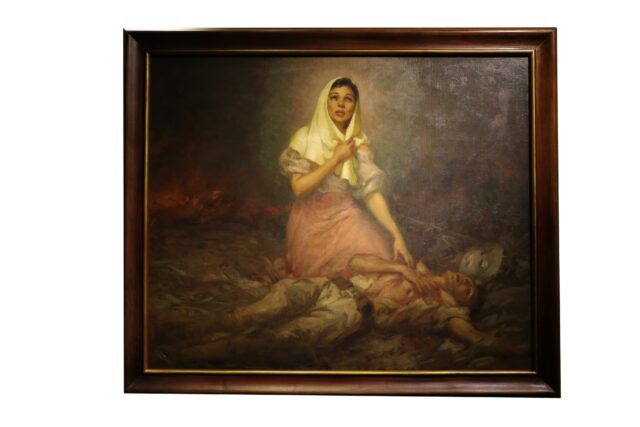
BATAAN by Fernando Amorsolo — FACEBOOK.COM/NATIONALMUSEUMOFTHEPHILIPPINES

FOUR works by National Artist for Visual Arts Fernando C. Amorsolo have been donated to the National Museum of the Philippines.

On Aug. 19, the National Museum formally accepted four noteworthy works by the National Artist from the Judge Guillermo B. Guevara Foundation, Inc. The museum’s Director-General Jeremy R. Barns accepted the paintings from Victor Guevara, chairman of the foundation.

The four paintings — which have been on loan to the National Museum since 2020 — are: Portrait of Judge Guillermo B. Guevara (1950), Bataan (1942), Assassination of Governor Bustamante (1965), and Wakas ni Magallanes (1963).

A deed of donation was signed by the representatives of the museum and the Judge Guillermo B. Guevara Foundation signifying the formal transfer of the oil paintings.

The Portrait of Judge Guillermo Guevara is the earliest work the sitter commissioned from Amorsolo, along with the portrait of his wife, Asuncion Palma Guevara. This is exhibited at the Early 20th Century Philippine Portrait Hall of the National Museum of Fine Arts (NMFA).

Bataan is currently exhibited in Gallery VIII — Silvina and Juan Laya Hall. Reminiscent of Michelangelo’s Pietà, where the Virgin Mary is depicted mourning over the dead body of her son, Jesus Christ, the center of the painting a woman looking up to the sky as she kneels next to the body of a fallen soldier.

According to one of Mr. Guevara’s family members, the artist feared the Japanese who were occupying the Philippines at that time and decided to erase the USAFFE (United States Army Forces in the Far East) buckle on the soldier’s uniform. The artist kept the painting for 14 years before Mr. Guevara acquired it in 1956.

Mr. Guevara also commissioned two works that reflect important historical events: The Assassination of Governor Bustamante and Ang Wakas ni Magallanes.

Completed in 1963, Ang Wakas ni Magallanes is Amorsolo’s artistic rendition and interpretation of the death of Ferdinand Magellan in Mactan, Cebu. It is currently exhibited as part of the exhibit The Longest Journey: The First Journey Around the World in Galleries XXV and XXVI.

Meanwhile, The Assassination of Governor Bustamante is the artist’s creative depiction of the assassination of Governor-General Fernando Bustamante and his son on Oct. 11, 1719, at the Palacio del Gobernador in Intramuros. A painting of the same subject made by Felix Resurreccion Hidalgo can be found at the National Museum of Fine Arts’ Spoliarium Hall.

For more information on the Judge Guillermo B. Guevara Foundation, Inc., visit https://judgeguillermobguevara.org/.

URC ventures into spiked spirit drink

UNIVERSAL Robina Corp. (URC) is expanding into the spiked spirit category with its new product, Chill Spiked Spirit, the firm said on Tuesday.

“Chill Spiked Spirit will offer a refreshing, laid back drinking experience, with just the right kick, minus the heavy feeling,” URC Chief Marketing Officer Anna Milagros D. David said in a press release.

Ms. David added that people are now looking for “the same relaxing, light, personal moments they experienced when drinking at home” during the pandemic, which URC tries to mimic through Chill.

“In URC, our purpose is to delight consumers with better food and beverage choices. Chill is an embodiment of that purpose. It’s a delightful drink that’s refreshing and delicious. It’s better than others because it contains real fruit juice and just the right level of alcohol plus zero added sugar,” she added.

Chill Spiked Spirit is said to have 5% double distilled alcohol, real fruit extract, and soda water, which the company said will give the drink the same alcohol strength with a more refreshing taste.

“It has no artificial sweetener and with zero trans fats, eliminating that heavy feeling in the gut that beer drinkers feel,” the company added.

URC said that spiked spirits, hard seltzers, and similar beverages “have been disrupting the global beer category,” which it said to account for a 6% share of the alcoholic beverages market in the United States and is projected to soar to $3 billion by 2023.

Chill will be available in 330-milliliter cans at a suggested retail price of P51 each and will come in three flavors: red apple, lemon lime and lychee.

“We are looking at young consumers of legal drinking age, who are authentic with their outlook and passionate with their calling, but who still know how to have fun. They like to let loose and unwind after a long day without going over the top,” Ms. David said.

On the stock market on Tuesday, shares in URC were unchanged at P124 apiece. — Justine Irish D. Tabile

Cholera tragedy in Indian village sheds light on power debts

MUMBAI — Clean water had just started sputtering from newly installed taps in Pachdongri village in western India last month when the power supply to the hilly hamlet was cut off for unpaid bills.

Residents link this power outage to a cholera outbreak that followed, claiming five lives.

Pachdongri’s outstanding power bill of 52,000 rupees ($657), pending for about five months, accounts for a tiny part of the huge strain on India’s stressed electricity supply chain, in which power distributors owe $12.52 billion to largely thermal generating companies.

The utilities must pay coal firms upfront to buy the fossil fuel to produce electricity, but are struggling to do so as their cash flow is squeezed due to consumers failing to pay for their power, threatening supply.

As India tries to cut its power sector’s losses with financial aid to utilities and promotion of solar energy in agriculture, the financial stress on the sector has tragically impacted Pachdongri, a village of fewer than 1,000 people. 

“If water supply had continued, the deaths could have been avoided as people consumed contaminated water from a well,” said Sanjay Bhuta Jamunkar, 32, the council head for five villages, including Pachdongri, in western Maharashtra state.

Following the cholera outbreak, the government issued orders to utilities not to disconnect the power supply to public water works, and the state is also now considering clearing the debts of village councils, utility officials said.

“This was our first power bill for operating the water pump. We weren’t sure we had to pay it, as work on the water connections was still underway,” said Mr. Jamunkar, noting that the council pays bills from the property and water taxes it levies on households.

“But collections are poor as this is a tribal area, people are either landless or small landowners. Many are unemployed. We try to manage,” he told the Thomson Reuters Foundation by phone.

DEMAND SPIKE
Extreme heat in India this year pushed up electricity use to unprecedented highs, causing widespread power cuts as utilities scrambled to meet demand amid dwindling coal supplies.

Officials at power distribution companies say they are walking a tightrope in their day-to-day dealings with generation firms as they clear just about enough debts to keep the power supply online.

Pachdongri gets its power from the state-run Maharashtra State Electricity Distribution Co. Ltd (MSEDCL), which warned its 30 million consumers last December it would disconnect supplies for those who did not pay their bills.

The utility cited “an unprecedented amount of arrears and increasing financial burden” as a threat to its very existence.

Vijay Singhal, MSEDCL chairman and managing director, said his company had to purchase power to provide it to consumers.

“I am asking people to pay up as I am not getting it for free,” he added.

Data from MSEDCL shows rural consumers owe it more than 600 billion rupees ($7.53 billion), ten times more than unpaid dues from urban consumers of 62 billion rupees.

Mr. Singhal said MSEDCL used hydro-power during this year’s heat waves and is adding wind and solar energy to overcome coal shortages and cut costs.

Local officials who turned off the power supply to Pachdongri in Maharashtra’s Amravati district said they had informed the village council about the impending cut if it failed to pay at least some of its dues.

The power was restored within a day, they added.

“If they have used power, they need to pay for it,” said Dilip Khanande, superintending engineer for MSEDCL in Amravati.

Officials at Jal Jeevan Mission, a pan-India project to ensure every rural household gets 55 liters of water per capita per day, estimated that about 40% of village councils’ power bills are linked to operating water pumps.

Mr. Khanande said he was able to recover only half of monthly bills of about 10 million rupees accrued for running about 2,000 rural water connections in his district.

RURAL REALITY
Power availability in rural areas has gone up to about 22.5 hours daily from about 12.5 hours in 2015, with all villages now electrified, the central government said this year.

But as long-awaited electricity and water connections reach more rural areas, the cost of consuming the resources has risen.

“We are looking at solar-based water pumps so they don’t require electricity connection to avoid these challenges,” said Hrishikesh Yashod, Maharashtra director for Jal Jeevan Mission.

With water pumps running more to supply household taps, power consumption has gone up and so have councils’ electricity bills, said Yusuf Kabir, a water and health specialist with the United Nations children’s agency, UNICEF, in Maharashtra.

Samit Mitra, program head for Smart Power India, a Rockefeller Foundation subsidiary that works to boost electricity access in rural India, said poor collection is often rooted in infrequent billing and billing amounts that do not reflect consumption, denting consumer trust.

“We see the intention to pay is there. All they need is a certain level of service,” Mr. Mitra said.

UNICEF’s Mr. Kabir suggested installing water meters so households pay taxes on their consumption, which would improve village councils’ revenue collection to help cover power bills.

CONTAMINATED WATER
Residents of Pachdongri village had hoped the completion of the tap water project in July would lead to a steady supply and end their dependence for drinking water on a well 2 kilometers away.

Farmer Akshay Amode, 24, saw clean water gush from his household tap the first time a day before power was cut.

The villagers then resorted to well water again — but it was contaminated with sewage due to runoff triggered by heavy rains, said health officials who tested the water.

About 200 people took ill after drinking it and five died, officials said.

Among them was Sahdev Ramaji Akhande’s wife, who had yet to see a running tap in her home.

The 32-year-old farmer, a father of two, recalled the night his wife writhed in pain as he struggled to organize a private car to rush her to hospital.

Three days after she died, Mr. Akhande’s home got a tap water connection. But the supply is still intermittent, so he drinks water from tankers serving the village since the cholera outbreak and buys water for his farm.

He knew nothing of another impending expense: the village council — yet to pay its outstanding power bill — is mulling a doubling of the monthly water tax from 100 rupees per household.

“Life has become difficult,” said the widower, now left to bring up his children alone. ($1 = 79.8810 Indian rupees) — Thomson Reuters Foundation