Home Blog Page 5345

South Korea, Japan hold first bilateral talks since 2019, seek stronger ties

Thomas Classen/Flickr/CC BY 2.0

UNITED NATIONS/SEOUL — South Korean President Yoon Suk-yeol and Japanese Prime Minister Fumio Kishida held their first one-on-one talks on Wednesday and agreed on the need to improve relations dogged by historical disputes.

The meeting took place in New York on the sidelines of the UN General Assembly, the first such talks between leaders of the two countries since 2019. 

Mr. Yoon, who took office in May, has been keen to improve relations with Tokyo, which have been plagued by disputes stemming from Japan’s 1910–45 colonization of the Korean peninsula, at a time when both countries face North Korea’s evolving nuclear and missile threats. Japan has also stressed the importance of strategic cooperation. 

“The two leaders agreed on the need to improve relations by resolving pending issues, for which they agreed to accelerate diplomatic talks while continuing discussions between themselves,” Mr. Yoon’s deputy spokesperson, Lee Jae-myoung, said in a statement. 

Mr. Lee said the leaders shared serious concerns about North Korea’s nuclear program, including its recent law authorizing first use of nuclear weapons and the possibility of a resumption of nuclear testing for the first time since 2017. 

Both sides described the meeting, which lasted 30 minutes, as “informal.” 

Japan’s Foreign Ministry Press Secretary Hikariko Ono said the two leaders “shared the need to bring back the sound bilateral relationship with the resolution of various issues.” 

She said they agreed to develop relations “in a future-oriented manner based on the foundation of the friendly and cooperative relationship that both countries built since the normalization of diplomatic relations in 1965.” 

Messrs. Yoon and Kishida first met on the sidelines of the North Atlantic Treaty Organization (NATO) summit in Madrid in June, and also at a trilateral summit with US President Joseph R. Biden, Jr., but Wednesday’s meeting was the first time they had sat down for one-on-one talks. 

At stake are South Korean court orders for a seizure of assets of Japanese companies accused of not compensating some of their colonial-era laborers. 

Tokyo says the issue of compensation was settled under a 1965 treaty normalizing diplomatic ties and providing South Korea with economic assistance, and has warned of serious repercussions if the orders are enforced. 

Japan has urged South Korea to present a solution, and a Seoul official said it would devise a “realistic, feasible proposal” that can win consent from both victims and Tokyo. 

But the Yoon administration’s efforts to gather opinions from victims, lawyers and experts via a public-private panel have faced a setback with the victims’ group refusing to attend its meetings since last month. 

The testy relations were highlighted ahead of Wednesday’s meeting, with Mr. Kishida considering calling it off after being upset by an announcement from Yoon’s office of their planned summit, Japan’s Asahi Shimbun daily reported. 

An official at Mr. Yoon’s office declined to comment on the report. — Reuters

 

Globe Business treats enterprise clients at Enchanted Kingdom for 917 GDay Everyday

Aside from empowering its enterprise clients through reliable ICT solutions, Globe Business also wants to make them feel valued through memorable experiences that are beyond transactional.

In efforts to meet this goal, Globe Business recently took to a higher level its appreciation for its loyal clients with an exclusive event held at a well-known go-to theme park in Southern Luzon.

Last Sept. 17, the enterprise arm of Globe Telecom held its EK GDay event at Enchanted Kingdom (EK), where key customers got to enjoy exciting rides and attractions, but also interactive booths, games, food and merchandise, and hourly raffle draws prepared by Globe Business and its partners.

Booths were scattered around the theme park for guests to enjoy activities and even get prizes from Globe Business and partners Samsung, Philippine Airlines, Unilab, Pharex Health Corp., Petron Corp., Shakey’s, Nestlé, San Miguel Corp., NutriAsia, Generika, and Sodexo.

Aside from partner booths, Globe Business set up its own booth with activities for all ages, including games creatively designed to give participants a chance to have fun while learning about Globe’s solutions. The booth offered awesome amenities like a kiddie playground, ice cream station, and lounge with charging stations; as well as activities like face painting, and do-it-yourself tote bag designing.

To make the experience of attendees more exciting, Globe Business set up an event passport system using exclusive wristbands, which encouraged guests to visit booths of Globe partners and customer brands. The first 1,000 attendees who completed and visited all the booths got an exclusive 0917 cap, plus a loot bag consisting of prizes from Globe Business partners.

Attendees also got more chances to win prizes by answering mini trivias placed across different areas of EK and by posting social media pictures using the event’s hashtag for a chance to win in the hourly raffle draws.

Among the prizes offered during the hourly raffles included a 917 food bundle courtesy of Shakey’s; 9,000 miles worth of perks from Philippine Airlines; gift certificates worth P5,000 from Sodexo; and phones, tablets, and TVs from Samsung.

Aside from these activities, EK GDay also provided a way for attendees to participate in The Hapag Movement, a collective initiative of Globe together with Ayala Foundation, Caritas Philippines, Tzu Chi Foundation Philippines, and World Vision Philippines to alleviate hunger, as well as provide a livelihood to impoverished Filipinos.

Customers during the EK GDay were given the opportunity to get involved in The Hapag Movement by buying Globe 917 shirts and merchandise from event sponsors. Part of the proceeds from the sold merchandise will be donated to the Hapag Movement. Donations via QR codes distributed across the venue were also accessible to thousands of guests. Aside from that, attendees were allowed to drop off their unused Wizard Money in designated booths across the park. Attendees were given Wizard Money, which they could use to purchase food and merchandise throughout the day.

Globe Business expanded its GDay programs further with Donut Day wherein Enterprise Account Managers in Metro Manila, Visayas, and Mindanao visited key customers to give away customized donuts as a token of appreciation for their continued trust.

With these grand celebrations held for clients for the first time since the pandemic, Globe Business shows how much it values its customers and seeks to build more substantial and long-term relationships with them by further meeting their needs in business and even beyond.

Learn more about Globe Business at www.globe.com.ph/business/enterprise.


Spotlight is BusinessWorld’s sponsored section that allows advertisers to amplify their brand and connect with BusinessWorld’s audience by enabling them to publish their stories directly on the BusinessWorld Web site. For more information, send an email to online@bworldonline.com.

Join us on Viber to get more updates from BusinessWorld: https://bit.ly/3hv6bLA.

World leaders pledge billions to fight AIDS, tuberculosis, malaria on UN sidelines

Speakers from the Presidential session of the Global Fund partnership’s Seventh Replenishment Conference celebrate the announcement of $14.25 billion so far for the next three years of work to fight HIV, TB and malaria. From left: Bill Gates, Co-chair of the Bill & Melinda Gates Foundation; Fumio Kishida, Prime Minister of Japan; Emmanuel Macron, President of France; Ursula von der Leyen, President of the European Commission; Joseph R. Biden, Jr., President of the United States; Connie Mudenda, (RED) Ambassador; Yoon Suk-yeol, President of the Republic of Korea; Justin Trudeau, Prime Minister of Canada; Olaf Scholz, Chancellor of Germany; and Peter Sands, Executive Director of The Global Fund. -- The Global Fund/Tim Knox

UNITED NATIONS/NEW YORK — The Global Fund to fight AIDS (acquired immunodeficiency syndrome), tuberculosis and malaria on Wednesday reached $14.25 billion pledged as world leaders seek to fight the killer diseases after progress was knocked off course by the coronavirus disease 2019 (COVID-19) pandemic.

US President Joseph R. Biden, Jr., who hosted the conference in New York on the sidelines of the annual high-level meeting of the United Nations General Assembly, said the funding is crucial to combating the diseases.

“This is an investment that will save another 20 million lives, reduce mortality from these diseases another 64% in the next four years,” Mr. Biden said.

The United States had previously said it would pledge $6 billion for the next funding cycle.

The fund, a public/private alliance based in Geneva, is seeking $18 billion for its next three-year funding cycle from governments, civil society and the private sector. Before Wednesday’s conference, it had already raised more than a third of the total.

The Global Fund said the $14.25 billion figure is likely to increase as more donations are expected.

“For the government and people of Malawi, this is not a conference but a life saver,” Lazarus Chakwera, the president of Malawi, said earlier in the day, pledging $1 million.

According to UNAIDS, there were 990,000 adults and children in Malawi living with HIV in 2021, and USAID says that tuberculosis is a “major public health problem in Malawi.”

European Commission chief Ursula von der Leyen pledged 715 million euros ($703.63 million) to the fund, which she said was an increase of 30% from its previous pledge.

“We can cure tuberculosis. We can prevent malaria. We can fight these terrible diseases. We will end AIDS, we will end tuberculosis, we will end malaria — once and for all,” she said.

French President Emmanuel Macron pledged another 300 million euros, bringing France’s total contribution for the funding period to 1.6 billion euros.

Nigeria pledged $13.2 million, the Netherlands pledged 180 million euros and Indonesia pledged $15.5 million, alongside private sector pledges.

In its 2022 report, the fund said the reach of its treatment and prevention efforts rebounded last year after declining for the first time in almost 20 years in 2020, but the world is still not on track to defeat these diseases.

The fund estimates its work has saved around 50 million lives since its inception in 2002.

But in 2020, the numbers treated for tuberculosis fell by 19%, to 4.5 million. In 2021, this went back up by 12%, to 5.3 million — still just below the 5.5 million pre-pandemic number.

While malaria and AIDS programs did exceed 2019 levels, the pandemic’s impact means they are still off-track from ending the diseases by 2030.

The Fund has also warned the war in Ukraine and the global food crisis could exacerbate the situation. Infectious diseases are usually much deadlier for people whose bodies are weakened by malnutrition, and they also do not respond as well to treatment or prevention efforts. — Reuters

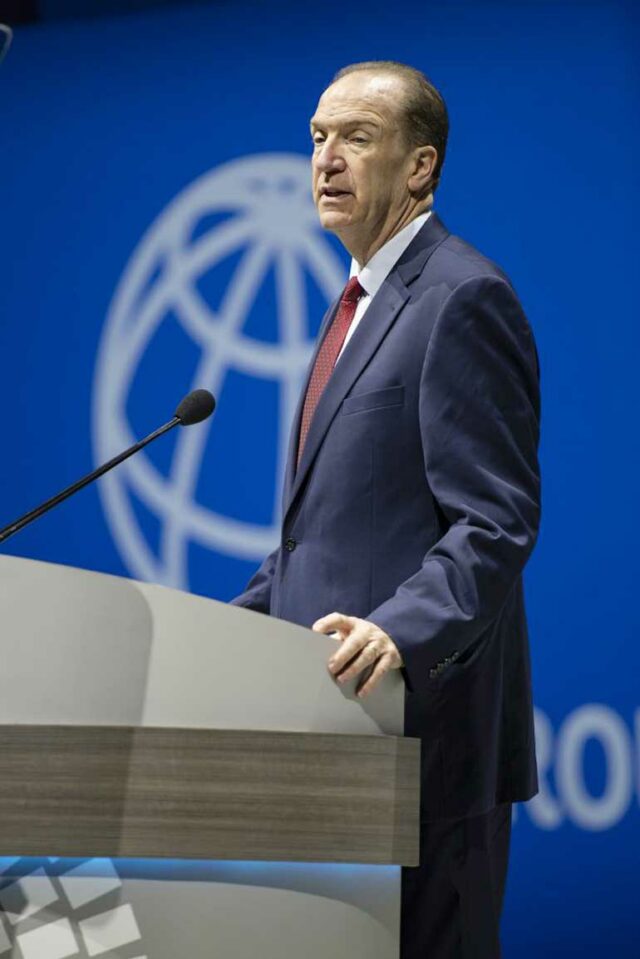
World Bank’s Malpass faces calls to resign after climate change doubts

IMAGE VIA WORLD BANK / GRANT ELLIS / CC BY-NC-ND 2.0

WASHINGTON — World Bank President David Malpass came under heavy criticism on Wednesday after he declined to say whether he accepts the scientific consensus on global warming, rekindling concerns about the bank’s lack of a deadline to stop funding fossil fuels.

Mr. Malpass appeared at an event hosted by the New York Times at Climate Week in New York City on Tuesday and was asked whether he believes that the “manmade burning of fossil fuels is rapidly and dangerously warming the planet.” Mr. Malpass tried at first to dodge the question but later said: “I don’t even know. I’m not a scientist.”

The remarks, which circulated on social media, drew criticism from former climate diplomats and civil society groups who called on President Joseph R. Biden, Jr., to replace Mr. Malpass as the president of the multilateral development bank.

The president of the United States, the largest World Bank shareholder, traditionally appoints World Bank presidents. Former president Donald Trump appointed Mr. Malpass to a five-year term in 2019.

The future of a second Trump development bank appointee, Inter-American Development Bank head Mauricio Claver-Carone, is also in doubt after an investigation into allegations of a relationship with a staffer.

“How is this possible in 2022? This apathy produces weak climate action when countries so badly need @WorldBank aid & finance,” Laurence Tubiana, a former French climate envoy and key architect of the 2015 Paris climate accord, said on Twitter.

“People & governments now need a WB leader who listens to science,” said Mr. Tubiana, now CEO of the non-profit European Climate Foundation.

A coalition of civil society groups on Wednesday called for the World Bank to fire Malpass.

The World Bank and White House declined to comment.

The US Treasury said it expected all partners to be committed to fighting climate change.

“We expect the World Bank Group to be a global leader of climate ambition and the mobilization of significantly more climate finance for developing countries,” a spokesperson said. “We have — and will continue — to make that expectation clear to World Bank leadership. The World Bank must be a full partner in delivering on this global agenda.”

Last year, over 70 non-governmental organizations had jointly called for Malpass to be replaced on the grounds that the Bank was falling short on climate action.

The World Bank reduced its new coal power investments in 2013 and stopped funding upstream oil and gas operations in 2019, but has so far resisted pressure from European board members and climate campaigners to phase out fossil fuel financing entirely.

In January 2021 the Bank’s board approved a $620 million investment in a multibillion-dollar liquified natural gas project in Mozambique.

“It is time for the White House and governments all over the world to think hard as to who they want at the helm of the World Bank,” said Sonia Dunlop from think tank E3G. “You don’t need to be a scientist to understand climate science.”

Other experts said a strong grasp on climate science should be a pre-requisite for the job of World Bank president during a time in which climate-driven catastrophes are becoming more frequent and impacting many developing countries that receive financial support from the Bank.

“Climate change will impact the poorest in the world the most so to have the head of the World Bank not being clear and forceful on taking on climate change sends the wrong message,” said Gilbert Metcalf, former deputy assistant Treasury secretary for environment and energy under the Obama administration.

Former US Vice President Al Gore earlier this week described Mr. Malpass as a climate denier.

Selwin Hart, special adviser to the UN secretary-general on climate action, had also criticized the World Bank at the COP26 climate summit in Glasgow last year.

Large banks, especially the World Bank, “cannot continue to fiddle while the developing world burns,” he said. — Reuters

PHILGBC rolls out green rating system for wide-scale projects

Liora Homes in Naic, Cavite. — MYCITIHOMES.COM.PH

The Philippine Green Building Council (PHILGBC) opened to the public a rating tool that measures the design sustainability of wide-scale development projects, such as communities and campuses.

The first version of Berde — Districts, unveiled Sept. 19, evaluates the environmental, social, and economic impact of green projects based on management; use of land and ecology; energy; water; waste; materials; transportation; health and well-being; emissions; community engagement; and economic opportunity.  

“[Berde — Districts] aims to be holistic in its criteria, including developmental and environmental aspects, but also elements related to livelihood, and proximity between work and home,” said John Philip Wang, executive vice president of Citihomes Builder and Development, Inc., at a Sept. 19 session of PHILGBC’s Building Green 2022 Conference. 

The goal of the green building rating system, he added, is “contribute to the principle of balance — the hardest thing to achieve in life, as opposed to success, which many people identify with.” 

Certification ratings are on a five-star scale, with five stars or “world class” being the highest and one star or “good practice” being the lowest. 

Only projects that comply with the minimum system requirements, completed the assessment process, and achieved at least the minimum rating, may be certified under the Berde rating scheme. 

Citihomes’ Liora Homes Naic in Cavite, which received three stars (“exemplar practice”), is the first residential community certified under Berde — Districts.  

Other certifications from the pilot implementation are:

  • LIMA Land, Inc.’s LIMA Estate in Lipa City, Batangas (the first certified industrial estate, five stars)
  • Arthaland Corporation’s Sevina Park in Binan, Laguna (the first certified mixed-use community, five stars);
  • and Filinvest Alabang Inc.’s Filinvest City (the first central business district, three stars).

The 794-hectare LIMA Estate also won PHILGBC’s Leadership in Sustainable Design and Performance for the Commercial category of the council’s Leadership in Green Building Awards.  

“In a rapidly changing and competitive world, the only way forward is to elevate and transform the way we do business,” Rafael Fernandez de Mesa, president of conglomerate Aboitiz Group’s LIMA Land, Inc., at the same event. “Therefore, we are committed to putting sustainability at the forefront of everything we do.”  

Aboitiz Power’s retail electricity supplier delivers 18 megawatts of renewable energy from its geothermal power plants to LIMA’s customers. Majority of industrial locators, meanwhile, use solar roof-mounted systems to help cover their energy demand and produce a combined 17 megawatts of power from solar energy. In the works too is a smart and interconnected water network.

Liora, for its part, aims to bring the Citihomes closer to its objective of net carbon zero, Mr. Wang said. It features solar panel systems rated at 1.64-kilowatt peak per unit, which will yield a 30% savings on electric bills, and rainwater harvesting tanks at 700-liter capacity per unit, which will yield about 35% savings on water consumption. 

“The developer must be eternally vigilant in the quality of its construction … to maximize disaster resiliency,” he said. “The developer must also be fully supportive of local jobs, good businesses, environmentally responsible procurement practices, and active lifestyles for its residents — all the while keeping price points within an affordable range.”  — Patricia B. Mirasol


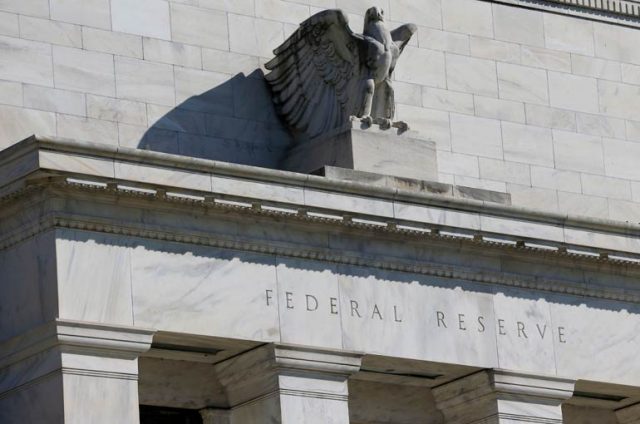
Fed delivers another big rate hike; Powell vows to ‘keep at it’

REUTERS

WASHINGTON — Federal Reserve Chair Jerome Powell vowed on Wednesday that he and his fellow policymakers would “keep at” their battle to beat down inflation, as the US central bank hiked interest rates by three-quarters of a percentage point for a third straight time and signaled that borrowing costs would keep rising this year.

In a sobering new set of projections, the Fed foresees its policy rate rising at a faster pace and to a higher level than expected, the economy slowing to a crawl, and unemployment rising to a degree historically associated with recessions.

Mr. Powell was blunt about the “pain” to come, citing rising joblessness and singling out the housing market, a persistent source of rising consumer inflation, as being likely in need of a “correction.”

Earlier on Wednesday, the National Association of Realtors reported that US existing home sales dropped for a seventh straight month in August.

The United States has had a “red hot housing market … There was a big imbalance,” Mr. Powell said in a news conference after Fed policymakers unanimously agreed to raise the central bank’s benchmark overnight interest rate to a range of 3.00%-3.25%.

“What we need is supply and demand to get better aligned … We probably in the housing market have to go through a correction to get back to that place.”

That theme, of a continuing mismatch between US demand for goods and services and the ability of the country to produce or import them, ran through a briefing in which Mr. Powell stuck with the hawkish tone set during his remarks last month at the Jackson Hole central banking conference in Wyoming.

Recent inflation data has shown little to no improvement despite the Fed’s aggressive tightening — it also announced 75-basis-point rate hikes in June and July — and the labor market remains robust with wages increasing as well.

The federal funds rate projected for the end of this year signals another 1.25 percentage points in rate hikes to come in the Fed’s two remaining policy meetings in 2022, a level that implies another 75-basis-point increase in the offing.

“The committee is strongly committed to returning inflation to its 2% objective,” the central bank’s rate-setting Federal Open Market Committee said in its policy statement after the end of a two-day policy meeting.

The Fed “anticipates that ongoing increases in the target range will be appropriate.”

GROWTH SLOWDOWN

The Fed’s target policy rate is now at its highest level since 2008 — and new projections show it rising to the 4.25%–4.50% range by the end of this year and ending 2023 at 4.50%–4.75%.

Mr. Powell said the indicated path of rates showed the Fed was “strongly resolved” to bring down inflation from the highest levels in four decades and that officials would “keep at it until the job is done” even at the risk of unemployment rising and growth slowing to a stall.

“We have got to get inflation behind us,” Mr. Powell told reporters. “I wish there were a painless way to do that. There isn’t.”

Inflation by the Fed’s preferred measure has been running at more than three times the central bank’s target. The new projections put it on a slow path back to 2% in 2025, an extended Fed battle to quell the highest bout of inflation since the 1980s, and one that potentially pushes the economy to the borderline of a recession.

The Fed said that “recent indicators point to modest growth in spending and production,” but the new projections put year-end economic growth for 2022 at 0.2%, rising to 1.2% in 2023, well below the economy’s potential.

The unemployment rate, currently at 3.7%, is projected to rise to 3.8% this year and to 4.4% in 2023. That would be above the half-percentage-point rise in unemployment that has been associated with past recessions.

“The Fed was late to recognize inflation, late to start raising interest rates, and late to start unwinding bond purchases. They’ve been playing catch-up ever since. And they’re not done yet,” said Greg McBride, chief financial analyst at Bankrate.

US stocks, already mired in a bear market over concerns about the Fed’s monetary policy tightening, ended the day sharply lower, with the S&P 500 index skidding 1.8%.

In the US Treasury market, which plays a key role in the transmission of Fed policy decisions into the real economy, yields on the 2-year note vaulted over the 4% mark, their highest levels since 2007.

The dollar hit a fresh two-decade high against a basket of currencies, gaining more than 1%. The US currency’s strength — it has appreciated by more than 16% on a year-to-date basis — has stoked concern at central banks around the world about potential exchange rate and other financial shocks.

Some are not even trying to match the Fed’s blistering pace of tightening, with the Bank of Japan on Thursday expected to hold fast to its ultra-easy policy and keep its policy rate at minus 0.1%, likely leaving it as the last major monetary policy authority in the world with a negative policy rate.

Others are making an effort to stay somewhat abreast of the Fed. The Bank of England, for example, is expected to lift its policy rate by at least half a percentage point on Thursday. — Reuters

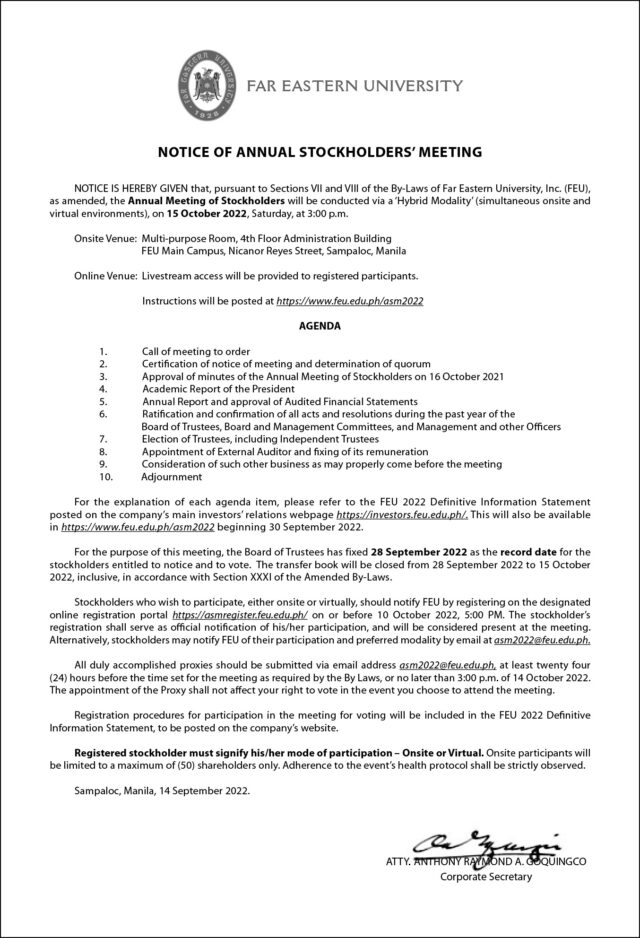
Far Eastern University, Inc. to hold annual stockholders’ meeting on Oct. 15


Spotlight is BusinessWorld’s sponsored section that allows advertisers to amplify their brand and connect with BusinessWorld’s audience by enabling them to publish their stories directly on the BusinessWorld Web site. For more information, send an email to online@bworldonline.com.

Join us on Viber to get more updates from BusinessWorld: https://bit.ly/3hv6bLA.

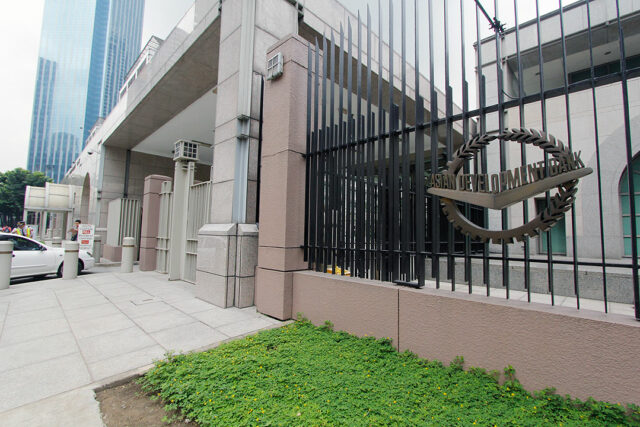
ADB keeps PHL GDP forecast at 6.5%

BW FILE PHOTO

THE ASIAN Development Bank (ADB) has retained its growth forecast for the Philippines for this year, citing a strong rebound in domestic demand as the economy continues to reopen despite growing inflation risks.

In its Asian Development Outlook (ADO) 2022 Update report released on Wednesday, the multilateral lender said it expects the country’s gross domestic product (GDP) to grow by 6.5% this year, steady from its July forecast.

However, this is at the lower end of the government’s 6.5-7.5% target for this year.

Philippine GDP expanded by 7.4% in the second quarter, slowing from the 8.2% seen in the previous quarter. This brought the first semester average to 7.8%.

“The normalization of socioeconomic activity will usher the Philippine economy to a steady, pre-pandemic pace of expansion,” ADB Philippines Country Director Kelly Bird was quoted as saying in a statement.

“The recovery in tourism and private investments, coupled with sustained public spending on large infrastructure projects and remittances from overseas Filipinos, will bolster the country’s economic recovery this year.”

At 6.5%, the Philippines is expected to be the fastest-growing economy in Southeast Asia this year, along with Vietnam. This forecast is also above the ADB’s 5.1% growth outlook for the entire region, which was raised from 5% in July.

However, the ADB now expects Philippine inflation to average at 5.3% this year, up from the July forecast of 4.9%, due to “sharp upward shocks to global energy and commodity prices” and “the negative impact of natural disasters on domestic agricultural supply [that] will likely lead to higher food prices until the end of the year.”

“The import-dependent economies have been hit hard simply because, across the region, import bills have ballooned, more so for the smaller economies,” ADB Senior Regional Cooperation Officer for Southeast Asia Dulce Zara said in a webinar on Wednesday.

“Price increases coupled with weaker local currencies, it has inflated their import bills,” she added.

The central bank sees headline inflation averaging 5.4% this year, well above its 2-4% target.

Headline inflation eased to 6.3% in August from a near four-year high of 6.4% in July, bringing the eight-month average to 4.9%.

Ms. Zara also flagged risks from China’s slowdown, especially since it is among the Philippines’ top trade partners.

Meanwhile, the ADB also kept its Philippine GDP growth forecast for 2023 at 6.3% “as monetary policy tightening and accelerating inflation both crimp domestic demand.” This is the second-fastest forecasted expansion in Southeast Asia for next year, following Vietnam’s 6.7%, and is below the official target of 6.5-8%.

It likewise maintained its inflation forecast of 4.3% for next year “since the return to steady economic growth will keep inflation relatively stable, and with energy prices likely to decelerate.”

Abdul Abiad, director of ADB’s Macroeconomic Research Division, said central bank policy rates are expected to continue rising to counter inflation and to support weakening currencies due to the dollar’s strength amid the US Federal Reserve’s tightening cycle.

“The peso has depreciated by about 13% so far… [but] the Philippines is not at the extreme end; it’s very much close to the average for the region,” Mr. Abiad said. “Much of the depreciation in the Philippine peso reflects, not so much weakness in the peso, but strength in the dollar, driven by the Fed tightening.”

The Bangko Sentral ng Pilipinas (BSP) has hiked borrowing costs by a cumulative 175 basis points since May, and is expected to continue hiking rates to rein in rising inflation.

On Wednesday, the peso closed at a new low of P58 per dollar, down by 52 centavos from the previous day, as markets awaited the Fed’s decision overnight.

Year to date, it has lost 13.73% in value against the greenback, making it one of the region’s worst performers.

Aside from inflation, which it mostly attributed to the Russia-Ukraine conflict, the ADB said other risks to growth, include a sharper slowdown in major advanced economies and heightened geopolitical tensions.

DEVELOPING ASIA
Meanwhile, the ADB cut its growth forecast for developing Asia this year and 2023, amid tighter global monetary policy, the Russia-Ukraine conflict, and the lockdowns in China due to the coronavirus disease 2019 (COVID-19).

The ADB downgraded its 2022 growth outlook for developing Asia to 4.3%, slower than the 4.6% projection in July.

In 2023, developing Asia is projected to expand by 4.9%, down from the previous 5.2% forecast.

“Domestic consumer spending and investment are driving growth as economies in the region continue to relax pandemic restrictions, thanks in part to vaccination drives and declining COVID-19 mortality. However, the continuing invasion of Ukraine has heightened global uncertainty, worsened supply disruptions, and unsettled energy and food markets,” the ADB said.

“More aggressive monetary tightening by the US Federal Reserve and the European Central Bank is denting global demand and rattling financial markets. Meanwhile, sporadic COVID-19 outbreaks and new lockdowns have slowed growth in [China], the region’s largest economy,” it added.

Excluding China, which is also challenged by a weak property sector, the rest of developing Asia is projected to grow by 5.3% in both 2022 and 2023.

“This will be the first time in more than three decades that China will be growing slower than the rest of developing Asia. In other words, it’ll be a drag on growth rather than an engine of growth for the region,” said Mr. Abiad in an episode of ADB Insight released on Wednesday.

ADB Chief Economist Albert Park said while the region has seen some recovery, risks still “loom large,” including slower global growth that could affect exports, as well as aggressive monetary tightening that could lead to financial instability. — Diego Gabriel C. Robles

Peso sinks to new low of P58 on hawkish Fed bets

PHILIPPINE STAR/MIGUEL DE GUZMAN

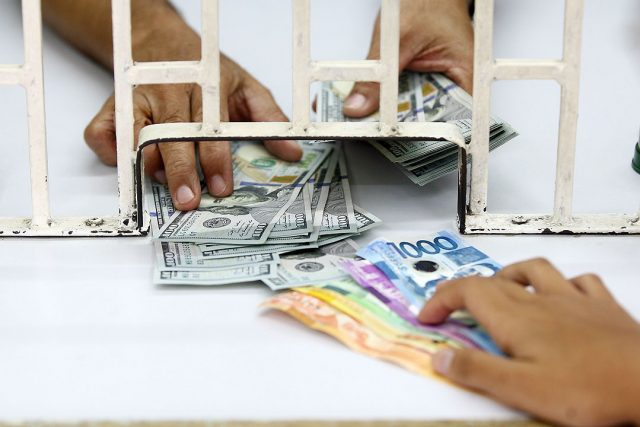
THE PESO plunged to a new record low of P58 on Wednesday as the dollar remained strong on expectations of a huge rate hike from the US Federal Reserve overnight.

Analysts said the Philippine central bank may likewise need to be more aggressive to support the local currency and reduce its depreciation’s impact on domestic inflation.

The local unit on Wednesday sank by 52 centavos from its P57.48 finish on Tuesday, Bankers Association of the Philippines data showed.

Year to date, the peso has weakened by 13.72% or P7 from its P51-per-dollar close on Dec. 31, 2021.

Just for this month, the peso has lost 3.3% or P1.855 in value versus the greenback so far from its Aug. 31 close of P56.145 as the dollar hit new highs following Fed Chief Jerome H. Powell’s statement at the Jackson Hole symposium late in August that the US central bank may keep rates higher for longer to stem inflation.

The local unit opened Wednesday’s trading session at P57.70 versus the dollar, which was also its intraday best. Its weakest showing was its close of P58.

Dollars exchanged climbed to $1.05 billion on Wednesday from $967 million on Tuesday.

“The peso closed significantly weaker at exactly the P58 level amid the possibility of a strong 100 bps (basis points) US policy rate hike from the Federal Reserve,” the first trader said in an e-mail. 

“The peso’s weakness was caused by broad dollar strength as Fed is expected to hike rates by 75 bps,” a second trader said in a Viber message.

The Fed was expected to announce another huge rate increase and signal more hikes at the end of its Sept. 20-21 policy meeting overnight. It has raised borrowing costs by 225 bps so far since March, including back-to-back 75-bp rate increases in June and July.

With the dollar’s strength causing the peso to hit a fresh all-time low, the Bangko Sentral ng Pilipinas (BSP) may need to deliver a larger rate hike at its Thursday meeting to keep inflation expectations anchored, former Philippine central bank deputy governor Diwa C. Guinigundo said.

“US Fed is expected to do a 75 to 100 bps while the consensus here is a BSP move of 50 bps. It might even be necessary to outdo the market and deliver a higher blow to inflation,” he said in a Viber message.

“That would further assure the market of monetary policy decisiveness, help firm up the currency and cement inflation expectations,” Mr. Guinigundo added.

He said while the BSP “remains on the tightening offensive,” aggressive actions from the Fed would make the dollar more attractive.

“The external payments position at nearly $5.5-billion deficit for the first eight months of 2022 is not helping any because imports remain so much more substantial than our export earnings, and the decline in FX (foreign exchange) reserves to just about $97 billion could further fan market nervousness and contribute to the peso weakening further. Given the exchange rate pass through, that could further be inflationary even as the pass through has shown some reduction since 2002,” Mr. Guinigundo added.

The BSP Monetary Board will meet to revisit policy settings on Sept. 22, Thursday, where it is widely expected to fire off another 50-bp rate increase to tame inflation. It has hiked borrowing costs by a cumulative 175 bps since May.

Headline inflation eased to 6.3% in August from a near four-year high of 6.4% in July, bringing the eight-month average to 4.9%, both above the BSP’s 2-4% target for the year.

Meanwhile, for the first eight months of the year, the country’s balance of payments deficit widened to $5.492 billion from the $253 million seen in the same period in 2021, latest central bank data showed.

This reflects the final gross international reserves level of $97.4 billion at end-August, down by 2.4% from $99.8 billion as of July.

Rizal Commercial Banking Corp. Chief Economist Michael L. Ricafort likewise said in a Viber message that a bigger-than-expected increase from the BSP will support the peso, inflation and price expectations.

“Rate hike expectations continued to put pressure on the peso today (Wednesday), and as such, the BSP should opt for a stronger message by way of clearer forward guidance beyond the actions tomorrow (Thursday),” Security Bank Corp. Chief Economist Robert Dan J. Roces said, noting a weaker peso poses upside risks to inflation.

For Thursday, Mr. Ricafort gave a forecast range of P57.85 to P58.05, while the first trader expects the local unit to move from P57.80 to P58 per dollar. — Keisha B. Ta-asan

Mounting prices, weaker peso to hit consumption

PHILIPPINE STAR/ RUSSEL PALMA

THE PHILIPPINE ECONOMY may grow slower than initially expected as rising rates due to stubborn inflation and the peso’s continued depreciation could affect consumption, Moody’s Analytics said on Wednesday.

In a note titled “APAC Outlook: The Coming Test of Resilience,” Moody’s Analytics said Philippine gross domestic product (GDP) is likely to expand by 6.8% this year, slower than the 7.2% forecast it gave in August. Still, this falls within the government’s 6.5-7.5% target for the year.

On the other hand, it raised its 2023 forecast to 6.4% from 5.4% previously, still slightly below the government goal of 6.5-8%.

Philippine GDP grew by 7.4% in the second quarter, bringing the first semester average to 7.8%.

The lower 2022 GDP outlook is due to the impact of the Bangko Sentral ng Pilipinas’ (BSP) rate hikes amid the peso’s depreciation and inflation on the economy, Moody’s Analytics Associate Economist Sonia Zhu said in an e-mail.

“Rising interest rates will squeeze household spending, making business investments and government debt servicing more costly,” Ms. Zhu said.

“However, the biggest risks facing the Philippines are currency weakness and persistent inflation (import-inflation). The BSP will be pressured to move in tandem with the US Federal Reserve to support its currency,” she added.

Ms. Zhu said their latest GDP forecast also takes into account the economy’s first-half performance.

“The June quarter GDP release showed that the economy is slowing and contracted compared to the March quarter,” she said.

Private consumption is a major growth driver for the economy, contributing around three-fourths of GDP each year.

The BSP has hiked borrowing costs by 175 basis points so far this year as it seeks to keep inflation in check. BSP Governor Felipe M. Medalla has also signaled more hikes as the Fed’s hawkish stance and its impact on the currency could pose an upside risk to prices.

On Wednesday, the peso closed at a new record low of P58 per dollar, down by 52 centavos from the previous day, as markets awaited the Fed’s decision overnight.

Headline inflation eased slightly to 6.3% in August from a near four-year high of 6.4% in July, bringing the eight-month average to 4.9%, both above the BSP’s 2-4% target for the year.

Moody’s Analytics said strong infrastructure spending will support the economy’s growth.

“Infrastructure spending will do the heavy lifting to support the country’s growth next year as President Ferdinand R. Marcos, Jr. pledged to expand [former President Rodrigo R.] Duterte’s infrastructure program, setting aside 13.5% of the 2023 fiscal budget for infrastructure spending in 2023,” Ms. Zhu said.

“Infrastructure development has been the backbone of the economy and better connectivity will help to attract foreign investments,” she added.

For the Asia-Pacific (APAC) region, Moody’s Analytics Chief Asia-Pacific Economist Steven Cochrane said the growth outlook has likewise been dampened by rising interest rates to combat accelerating inflation.

“In this environment, APAC central banks continue to normalize policy interest rates. Aside from China and Japan, policy makers have their eyes not only on domestic inflation but on the fast pace of policy increases by the Federal Reserve that are strengthening the value of the dollar,” Mr. Cochrane said.

“Along with China and Japan, the currencies of India, South Korea, Malaysia, the Philippines, and Thailand are under some pressure. Not only will the APAC central banks need to raise rates further through the end of this year and into next year, but they will have to stay at high levels for longer if the US federal funds rate remains at a high rate through 2024 as is now expected,” he added.

Moody’s Analytics said the region’s fastest-growing economies, such as Malaysia, Vietnam, and India, are likely to see a slowdown next year as their post-pandemic recovery tapers. — K.B. Ta-asan

Insurance, policies vital to bolstering cybersecurity in the Philippines — experts

PIXABAY

By Arjay L. Balinbin, Senior Reporter

INSURANCE, workforce education, enactment of more cybersecurity laws, and addressing obstacles to implementing the government’s existing policies are crucial for strengthening the Philippines’ defenses against cyberattacks, experts said.

“I would advocate for more local market support for cybersecurity insurance,” Ana Margarita “Miren” Sanchez, Philpacific Insurance Brokers & Managers, Inc. (Philinsure) vice-president for strategy and engagement, said at the BusinessWorld Insights virtual forum on Wednesday.

She noted that the trend of moving data to the cloud from the web is seen to accelerate over the next 12 years.

“We should expect whatever data we have online to be 12 times that in the next 12 years,” Ms. Sanchez said.

This means more exposure to cybercrime, cyberthreats, or cyber risks, she noted.

According to a recent study by online marketing firm Reboot Digital PR Services, the Philippines is the ninth “least cyber secure” in Asia, mainly due to a huge number of phishing and malware-hosting sites.

The average cost of losing our data globally is “$200,000 (or more than P11 million) per cyberattack regardless of company size,” Ms. Sanchez said, adding that small and medium enterprises (SMEs) are the most vulnerable entities.

Despite the need for insurance in response to cyberattacks, she said it has been challenging to secure such a product, noting there is no local market support for it.

Melchor T. Plabasan, director and head of the Technology Risk and Innovation Supervision Department of the Bangko Sentral ng Pilipinas, said the Philippines is still “evolving” in terms of cybersecurity.

“There are some pending legislation or measures right now, which can help address the known gaps in addressing cyberthreats,” he noted.

Francisco “Cocoy” Claravall, vice-president for Partner Ecosystem for Globe Business – Enterprise Group, said there is a need to “increase awareness and education about threat problems and how to protect ourselves.”

This also means that Philippine organizations, both private and public, need to train more cybersecurity professionals to keep up with the growing number of threats.

“In the Philippines, we’ve seen an average of 2,115 weekly attacks against companies and organizations, higher than the standard in Southeast Asia,” Mr. Claravall said.

He stressed that all stakeholders should prioritize countermeasures and identify where resources are needed to defend against sophisticated attacks.

Organizations also need to “deploy technology to continuously validate the legitimacy of digital interactions and establish rapid response capabilities to quickly address the early signs of a breach,” he added.

Allan S. Cabanlong, founder and chief executive officer of CyberGuardians, Inc., said the government already has cybersecurity awareness programs and a cybersecurity plan in place, but implementation is difficult.

“The main challenge now with the government is the implementation. All the plans and guidelines have already been laid out,” he said.

“The laws are there already, although there are some proposed measures that we also need. The question now is how these [policies] are implemented.”

He stressed that the approach to implementation should be “whole of society.”

“The government is expected to be able to change the mindset that cybersecurity should not be operated under the radar, but with strong participation of stakeholders.”

DTI: Australia’s Sacgasco keen on PHL offshore oil

BW FILE PHOTO

AUSTRALIAN energy firm Sacgasco Ltd. is targeting more offshore oil developments in the Philippines, according to the Department of Trade and Industry (DTI).

The DTI said that Sacgasco, which is locally operating as Nido Petroleum Philippines Pty. Ltd., is aiming to get a drilling rig in early 2023 to perform an extended well test on the revitalization of the Cadlao oilfield, which is covered by Service Contract (SC) 6B in the Palawan basin.

“This project will be followed with a plan to drill the exciting Nandino Prospect, through SC 54A, also offshore Palawan and to conduct an extended well test as the basis for more to fully developing a discovery at Nandino,” the DTI said in a statement on Wednesday.

Further, the DTI said that Sacgasco’s initial investments for the oil projects in SC 6B and SC 54A are $15 million each for the drilling and testing of oil production with a follow-up investment ranging from $10 to $50 million for each project.

It added that Sacgasco is also involved in SC 14C2, which covers the potential redevelopment of the West Linapacan oilfield.

Gary Jeffery, Sacgasco managing director, said that the company sees “massive opportunities” to develop oil and gas in the territory of the Philippines.

“Our highest desire is to explore frontier areas with large potential near the Malampaya Gas Field that supplies natural gas to Manila and surrounding areas. The size of the prospects in this area (SC 58) are such that successful drilling would dramatically change the Philippines’ energy picture for the better,” the DTI quoted Mr. Jeffery as saying.

“We can help the Philippines address its energy challenge and in the most successful scenario, the country can even become a net exporter of energy,” he added.

According to the DTI, Sacgasco representatives were initially part of the Pacific Business Mission to the Philippines held in August, but delayed their plans due to the coronavirus disease 2019 (COVID-19) pandemic.

“The government prioritizes the equilibrium price for energy and assures continued support for foreign investments as the Board of Investments, with endorsement from the Department of Energy (DoE), guarantees enhanced incentives focused on energy-related projects to achieve efficiency, cost reduction, ensure continuous supply of petroleum products, and enhance environmental protection,” the DTI said.

“As stated on the Downstream Oil Industry Deregulation Act of 1998; such incentives include additional deduction for labor expenses, minimum tax and duty of three percent (3%) and value-added tax on imported capital equipment, unrestricted use of consigned equipment, exemption from taxes and duties on imported spare parts, among others,” it added. — Revin Mikhael D. Ochave