Home Blog Page 5329

What to expect during the green comet’s encounter with Earth

Edu INAF/CC BY-SA 2.0/Wikimedia Commons

A green-hued comet that has been lurking in the night sky for months is expected to be the most visible to stargazers this week as it gradually passes Earth for the first time in about 50,000 years. 

The cosmic visitor will swing by our planet at a distance of about 26.4 million miles (42.5 million km). 

Here is an explanation of comets in general and this one in particular. 

WHAT IS A COMET?
Nicknamed “dirty snowballs” by astronomers, comets are balls of ice, dust and rocks that typically hail from the ring of icy material called the Oort cloud at our solar system’s outer edge. One known comet actually originated outside the solar system — 2I/Borisov. 

Comets are composed of a solid core of rock, ice and dust and are blanketed by a thin and gassy atmosphere of more ice and dust, called a coma. They melt as they approach the sun, releasing a stream of gas and dust blown from their surface by solar radiation and plasma and forming a cloudy and outward-facing tail. 

Comets wander toward the inner solar system when various gravitational forces dislodge them from the Oort cloud, becoming more visible as they venture closer to the heat given off by the sun. Fewer than a dozen comets are discovered each year by observatories around the world. 

This comet last passed Earth at a time when Neanderthals still inhabited Eurasia, our species was expanding its reach beyond Africa, big Ice Age mammals including mammoths and saber-toothed cats roamed the landscape and northern Africa was a wet, fertile and rainy place. 

The comet can provide clues about the primordial solar system because it formed during the solar system’s early stages, according to California Institute of Technology physics professor Thomas Prince. 

WHY IS THE COMET GREEN?
The green comet, whose formal name is C/2022 E3 (ZTF), was discovered on March 2, 2022, by astronomers using the Zwicky Transient Facility telescope at Caltech’s Palomar Observatory in San Diego. Its greenish, emerald hue reflects the comet’s chemical composition — it is the result of a clash between sunlight and carbon-based molecules in the comet’s coma. 

NASA plans to observe the comet with its James Webb Space Telescope (JWST), which could provide clues about the solar system’s formation. 

“We’re going to be looking for the fingerprints of given molecules that we can’t access from the ground,” said planetary scientist Stefanie Milam of NASA’s Goddard Space Flight Center in Maryland. “Because JWST’s so sensitive, we’re expecting new discoveries.” 

HOW CAN I SEE THE GREEN COMET?
Using binoculars during a clear night, the comet can be seen in the northern sky. On Monday, it appeared between the Big Dipper and Polaris, the North Star. And on Wednesday, it was positioned to appear near the constellation Camelopardalis, bordered by Ursa Major, the Big Dipper and the Little Dipper. 

Finding a remote location to avoid light pollution in populated areas is key to catching a nice view of the comet as it journeys past our planet heading away from the sun and back toward the solar system’s outer reaches. — Reuters

In climate resilience push, US federal cash flows to coastal rich

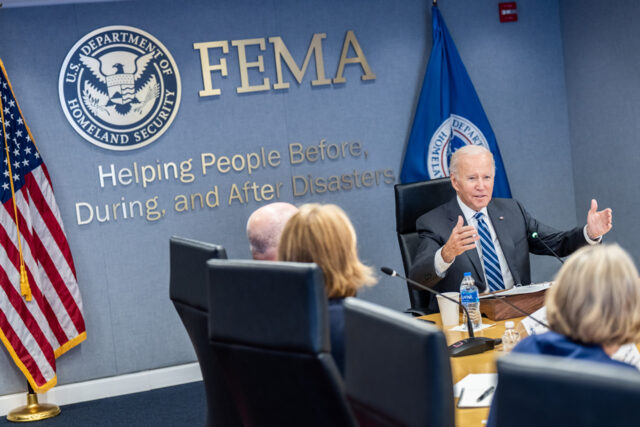
US President Joseph R. Biden, Jr., receives a briefing on the impact of Hurricane Ian on Sept. 29, 2022, at FEMA Headquarters in Washington, DC. — Official White House Photo by Adam Schultz/Flickr

MOSELEY, Virginia — When deputy clerk Kelly Smith saw how changing flood risk maps could saddle many of her Montana city’s about 2,000 residents with costly new building requirements or limitations, she pondered quitting her job. 

“When people get upset with the government, especially here, they complain to the office people,” said Ms. Smith, who is also treasurer of Three Forks, Montana, set near the confluence of three rivers that mark the start of the Missouri River. 

The city ultimately was able to secure a more than $4 million federal grant to help prepare for possible flooding — but only after it was turned down for a different resilience grant with no explanation, she said. 

As more federal funding becomes available to help communities deal with growing climate change-related flood risk, much of it has been steered to wealthier, coastal communities better able to manage the sometimes complex and time-consuming application processes, researchers say. 

That has left smaller inland cities like Ms. Smith’s struggling to prepare their residents for worsening floods, storms and other risks. 

“What’s required is almost out of reach for small communities,” said Ms. Smith, who spoke by phone from the western US city in between handling people trying to pay their water bills. 

“The smaller populations aren’t going to have the funds to get all the engineering (data) and everything that’s required to apply for these grants,” she said. 

Aware of such concerns, the Federal Emergency Management Agency (FEMA) is in the midst of reworking the program, known as Building Resilient Infrastructure and Communities (BRIC), to ease the burden on more rural and disadvantaged areas. 

Still, the challenges underscore how the United States is not immune to a long-time problem in the developing world: the difficulty in getting climate cash to communities most affected by global warming but often least equipped to access help. 

The issues are “very reminiscent” of those facing communities in poorer countries from Africa to Asia that have struggled to mobilize funds, said Clare Shakya, director of the climate change research group at the London-based International Institute for Environment and Development (IIED). 

“You’ve got the most capable always winning and therefore becoming even more capable” of winning competitive grants and undertaking resilience work, she said. 

“So you’re creating further unintended consequences of the most socially vulnerable falling out the bottom.” 

THINKING AHEAD
The US BRIC program marks a shift in attitude toward disaster relief for FEMA, which runs point for the US federal government’s response to major disasters such as hurricanes and floods. 

Rather than doling out money during or after a disaster, it awards funding on a rolling basis to help communities steel for climate impacts, paying for projects like stabilizing creek banks and upgrading water pipelines. 

FEMA is “thinking proactively,” said Kristin Smith, of Headwaters Economics, a nonprofit research group that has worked with Three Forks on resilience efforts. 

“I think what we know is it’s just a better use of tax dollars to help communities prepare for disasters rather than react,” she said. “BRIC really makes that possible.” 

But in 2020, 94% of the funding was set to flow to wealthier, coastal states, according to an analysis from Ms. Smith’s group. 

The ratio improved somewhat in 2021, but more rural, lower-capacity states are still being left out of the process, she said. 

BRIC is just one tool the Biden administration is using to help communities prepare themselves for climate change impacts — and hitting such resilience goals won’t happen overnight, FEMA spokesperson Jeremy Edwards said. 

“We are encouraged by the progress we have made to reach communities and people nationwide, with more inland states taking advantage of this program and nearly 50% of total funding being delivered to disadvantaged communities,” he said. 

In addition to staff shortages and capacity issues, the requirement that local governments foot up to 25% of the costs of work is another of the chief obstacles blocking access to cash for smaller, vulnerable towns, said Kyle Magyera of the Wisconsin Wetlands Association. 

Mr. Magyera’s nonprofit group helped Ashland County, in the north of the state, implement a disaster mitigation grant — secured from a different pool of federal funding — to study wetlands and flooding issues. 

“In addition to limited capacity, a lot of these communities don’t even have a computer, a tablet … there’s limited cell service,” he said. “No matter what, the towns are unlikely to have the resources themselves to pursue funding.” 

Globally, another major hindrance to getting climate financing where it needs to go is a failure by those delivering help to defer to local communities that have their own solutions in mind, said Shakya of the London research group. 

She pointed, for example, to a ward-level group in Kenya, working to manage drought. It invested in veterinary services after observing that sick cattle were among the first to die in dry periods. 

“What they really needed was healthier cattle so they could be more resilient,” she said. “So their idea was entirely (out of) left field. I mean, no one would have come up with a veterinary diagnostic service as being a critical thing.” 

HAVE THE MOST, GET THE MOST
Despite its growing pains, BRIC has seen improvements and better geographic diversity in its most recent round of funding, said Anna Weber of the Natural Resources Defense Council (NRDC), a nonprofit environmental advocacy group. 

“Of course FEMA is … a really big ship and it turns pretty slowly,” she admitted. But she said she was confident those working on programs like BRIC “are dedicated to making positive change”. 

Ms. Weber noted that an explanatory statement accompanying a 2023 government spending bill, which became law in December, directs FEMA to allocate $1.5 million for each of the 50 US states for “capacity building.” 

“That is, we think, a really good step forward,” she said. “If the process wasn’t designed with you in mind, you are already starting behind everybody else.” 

To address capacity concerns, FEMA is also increasing the number of communities that can take advantage of direct technical assistance and boosting the federal cost share to 90% for socially vulnerable areas, according to the agency. 

As well, the infrastructure law President Biden signed in 2021 helped more than double available funding for BRIC to almost $2.3 billion in 2022. 

In the United States, federal disaster aid has historically been slow to reach lower-income populations and communities of color, which often bear the brunt of the damage from climate-fueled floods, wildfires and storms. 

Antoine Richards, of the nonprofit Institute for Diversity and Inclusion in Emergency Management, said he’s a fan of the intentions behind BRIC — but it hasn’t entirely lived up to its promise yet. 

“It’s tying into the fact that those who are wealthy or those who have the means or the capacity typically get the resources,” he said. Basically, “those with the most get the most.” — Thomson Reuters Foundation

In diplomatic coup, Taiwan president speaks to Czech president-elect

XANDREASWORK-UNSPLASH

TAIPEI/PRAGUE — Taiwan President Tsai Ing-wen held a telephone call with Czech President-elect Petr Pavel on Monday, a highly unusual move given the lack of formal ties between their countries and a diplomatic coup for Taipei that is sure to infuriate China. 

The two leaders stressed their countries’ shared values of freedom, democracy and human rights during their 15-minute call, their offices said, and Mr. Pavel said he hoped to meet Ms. Tsai in the future. 

Most countries avoid high-level public interactions with Taiwan and its president, not wishing to provoke China, the world’s second largest economy. 

Beijing views Taiwan as being part of “one China” and demands other countries recognize its sovereignty claims, which Taiwan’s democratically-elected government rejects. 

In 2016, US President-elect Donald J. Trump spoke by telephone with Ms. Tsai shortly after winning the election, setting off a storm of protest from Beijing. 

Ms. Tsai said she hoped that under Mr. Pavel’s leadership the Czech Republic would continue to cooperate with Taiwan to promote a close partnership, and that she hoped to stay in touch with him. 

“Bilateral interaction between Taiwan and the Czech Republic is close and good,” her office summarized Ms. Tsai as having said. 

Mr. Pavel, a former army chief and high NATO official who won the Czech presidential election on Saturday, said on Twitter that the two countries “share the values of freedom, democracy, and human rights.” 

‘ONE-CHINA’ PRINCIPLE
Earlier, China’s foreign ministry had said it was “seeking verification with the Czech side” on media reports that the call was to take place. 

“The Chinese side is opposed to countries with which it has diplomatic ties engaging in any form of official exchange with the Taiwan authorities. Czech President-elect Mr. Pavel during the election period openly said that the ‘one-China’ principle should be respected,” the ministry said. 

Mr. Pavel will take office in early March, replacing President Milos Zeman, who is known for his pro-Beijing stance. 

Mr. Zeman spoke with Chinese President Xi Jinping this month and they reaffirmed their “personal friendly” relationship, according to a readout of their call from Mr. Zeman’s office. 

The Czech Republic, like most countries, has no official diplomatic ties with Taiwan, but the two sides have moved closer as Beijing ratchets up military threats against the island and Taipei seeks new friends in Eastern and Central Europe. 

The center-right Czech government has said it wants to deepen cooperation with democratic countries in the India-Pacific region, including Taiwan, and has also been seeking a “revision” of ties with China. 

In 2020, the head of the Czech Senate visited Taiwan and declared himself to be Taiwanese in a speech at Taiwan’s parliament, channeling the late US President John F. Kennedy’s defiance of communism in Berlin in 1963. — Reuters

Philippines’ proposed tax on nickel ore exports could ‘kill’ industry – group head

BW FILE PHOTO

MANILA — The head of the Philippine nickel mining industry warned on Tuesday that the government’s plan to impose an up to 10% tax on nickel ore exports could force local producers to close up shop.

“The initial proposal in the House of Representatives was 10%. That will kill the industry,” Dante Bravo, president of the Philippine Nickel Industry Association, told Reuters.

“We need to be heard so the government will understand our side,” said Bravo, who is also the president of miner Global Ferronickel Holdings Inc.

The Philippines is looking at taxing nickel ore exports to encourage miners in the world’s second-biggest supplier of the material – which is used in making stainless steel and batteries for electric vehicles – to invest in local processing instead of just selling raw ore.

Bloomberg News on Monday quoted Environment and Natural Resources Secretary Antonia Yulo Loyzaga, whose department also oversees the mining sector, as saying “there’s a range of actions including a progressive look at taxing exports” of raw nickel.

The idea is to follow in the footsteps of Indonesia, where a ban on nickel ore exports has attracted massive investment into processing plants. Indonesia wants to replicate the policy for other metals, including tin.

But, Bravo said, a comparison to Indonesia is flawed because it has more reserves to support investments in local mineral processing.

The Philippines has 34 operating nickel mines and exports most of its nickel ore to China and some to Japan. But it has only two nickel processing plants, which are both partly owned by the Philippines’ biggest ore producer Nickel Asia Corp.

Nickel Asia is partly owned by Sumitomo Metal Mining Co Ltd.

Latest government data show the Philippines produced 22.5 million dry metric tonnes (dmt) of nickel ore in January to September last year, valued at 46.8 billion pesos ($859 million), compared with 27.2 million dmt in the same period in 2021.

The proposed tax on mineral ore exports is part of the overall plan to establish a new fiscal regime for the industry to boost government revenue.

A pending legislative bill proposes royalty payments of 3% on gross output of large-scale miners, a margin-based windfall tax, on top of other taxes. — Reuters

IMF lifts 2023 growth forecast on China reopening, strength in US, Europe

A participant stands near a logo of the International Monetary Fund at the annual meeting in Nusa Dua, Bali, Indonesia, Oct. 12, 2018. — REUTERS/JOHANNES P. CHRISTO/FILE PHOTO

SINGAPORE/WASHINGTON – The International Monetary Fund on Tuesday raised its 2023 global growth outlook slightly due to “surprisingly resilient” demand in the United States and Europe, an easing of energy costs and the reopening of China’s economy after Beijing abandoned its strict COVID-19 restrictions.

The IMF said global growth would still fall to 2.9% in 2023 from 3.4% in 2022, but its latest World Economic Outlook forecasts mark an improvement over an October prediction of 2.7% growth this year with warnings that the world could easily tip into recession.

For 2024, the IMF said global growth would accelerate slightly to 3.1%, but this is a tenth of a percentage point below the October forecast as the full impact of steeper central bank interest rate hikes slows demand.

IMF chief economist Pierre-Olivier Gourinchas said recession risks had subsided and central banks are making progress in controlling inflation, but more work was needed to curb prices and new disruptions could come from further escalation of the war in Ukraine and China’s battle against COVID-19.

“We have to sort of be prepared to expect the unexpected, but it could well represent a turning point, with growth bottoming out and then inflation declining,” Gourinchas told reporters of the 2023 outlook.

STRONG DEMAND

In its 2023 GDP forecasts, the IMF said it now expected U.S. GDP growth of 1.4%, up from 1.0% predicted in October and following 2.0% growth in 2022. It cited stronger-than-expected consumption and investment in the third quarter of 2022, a robust labor market and strong consumer balance sheets.

It said the euro zone had made similar gains, with 2023 growth for the bloc now forecast at 0.7%, versus 0.5% in the October outlook, following 3.5% growth in 2022. The IMF said Europe had adapted to higher energy costs more quickly than expected, and an easing of energy prices had helped the region.

Britain was the only major advanced economy the IMF predicted to be in recession this year, with a 0.6% fall in GDP as households struggle with rising living costs, including for energy and mortgages.

CHINA REOPENS

The IMF revised China’s growth outlook sharply higher for 2023, to 5.2% from 4.4% in the October forecast after “zero-COVID” lockdown policies in 2022 slashed China’s growth rate to 3.0% – a pace below the global average for the first time in more than 40 years. But the boost from renewed mobility for Chinese people will be short-lived.

The Fund added that China’s growth will “fall to 4.5% in 2024 before settling at below 4% over the medium term amid declining business dynamism and slow progress on structural reforms.”

At the same time, India’s outlook remains robust, with unchanged forecasts for a dip in 2023 growth to 6.1% but a rebound to 6.8% in 2024, matching its 2022 performance.

Gourinchas said together, the two Asian powerhouse economies will supply over 50% of global growth in 2023.

He acknowledged that China’s reopening would put some upward pressure on commodity prices, but “on balance, I think we view the reopening of China as a benefit to the global economy” as it will help ease production bottlenecks that have worsened inflation and by creating more demand from Chinese households.

Even with China’s reopening, the IMF is predicting that oil prices will fall in both 2023 and 2024 due to lower global growth compared to 2022.

RISKS, UP AND DOWN

The IMF said there were both upside and downside risks to the outlook with built-up savings creating the possibility of sustained demand growth, particularly for tourism, and an easing of labor market pressures in some advanced economies helping to cool inflation, lessening the need for aggressive rate hikes.

But it enumerated more and larger downside risks, including more widespread COVID-19 outbreaks in China and a worsening of the country’s real estate turmoil.

An escalation of the war in Ukraine could further spike energy and food prices, as would a cold winter next year as Europe struggles to refill gas storage and competes with China for liquefied natural gas supplies, the Fund said.

Although headline inflation has come down in many countries, a premature easing of financial conditions leaves markets vulnerable to sudden repricings if core inflation readings fail to come down.

Gourinchas said core inflation may have peaked in some countries such as the United States, but central banks need to stay vigilant and be more certain that inflation is on a downward path, particularly in countries where real interest rates remain low, such as in Europe.

“So we’re just saying, look, bring monetary policy slightly above neutral at the very least and hold it there. And then assess what’s going on with price dynamics and how the economy is responding, and there will be plenty of time to adjust course, so that we avoid having overtightening,” Gourinchas said. — Reuters

Smart, TNT roll out SIM Registration touchpoints at SM Supermalls to assist subscribers

Smart and TNT-assisted SIM Registration Booth at SM Bacoor.

Customers of Smart Communications, Inc. (Smart) and value brand TNT may go to SM Supermalls across the country to register their SIMs and comply with the SIM Card Registration Act.

As of January 30, Smart booths and touch points offering assisted SIM Registration services for prepaid and postpaid subscribers have been deployed in 36 SM establishments from Cauayan, Isabela in North Luzon, all the way to General Santos, South Cotabato in Mindanao. Eight more SM establishments will host Smart and TNT-assisted SIM Registration booths in the next few days, bringing to 44 the total count of covered SM Supermalls.

“With the reopening of the local economy, we have seen a surge of mall visitors, especially in SM Supermalls. Given the importance and urgency of complying with the law, we partnered with The SM Store and SM Supermalls because of their foot traffic and presence across the country. Starting January 23 we began to deploy our assisted SIM registration booths at SM Supermalls,” according to Alex O Caeg, SVP and head of the Consumer Sales Group at PLDT and Smart.

For the protection of all mobile users

According to Republic Act (RA) 11934 or the Subscriber Identity Module (SIM) Registration Act, all SIM users have until April 26, 2023 to register their SIMs under their name. The SIM Registration Act regulates the use of SIM cards to help curb the proliferation of text scams and other mobile phone-aided criminal activities.

“Promoting the welfare of our customers is one of the pillars of SM Supermalls’ mission and purpose. By providing a venue where mall-goers can conveniently get assistance and register their Smart and TNT SIMs, we hope to contribute to the protection of all mobile users through SIM Registration,” according to Mr. Dhinno Francis S. Tiu, EVP and SM Store’s Operations and Sales Support Head.

About 14 million Smart and TNT SIM registrants

Smart and TNT were the first to set up assisted SIM Registration booths across the country, on the same day as the SIM Registration portal http://www.smart.com.ph/simreg was launched on December 27, 2022. Through the online platform and the assisted SIM Registration touchpoints at the PLDT Smart retail stores and distributor shops, about 14 million Smart and TNT customers have been able to conveniently register their SIMs to date.

Smart and its value brand TNT have also deployed assisted SIM Registration booths in 15 far-flung municipalities in Luzon, Visayas, and Mindanao since last week. The deployments, which have been done in close collaboration with the National Telecommunications Commission (NTC), the Department of Information and Communication Technology (DICT), the Department of Interior and Local Government (DILG) and the LGUs, the inter-agency committee on remote areas registration, and other public telecommunications entities, have enabled thousands of mobile users to easily and conveniently complete their registrations.

Inclusive SIM Registration process 

“Through our partnership with SM and the other sites across the country, our assisted SIM registration booths offer information and guidance as to how to register their Smart or TNT SIMs using acceptable ID cards, as well as provide physical assistance to senior citizens, persons with disabilities as well as those using non-data phones. This is part of our commitment that our SIM Registration will be inclusive and that no one will be left behind,” added Caeg.

PLDT and Smart’s support for SIM Registration underscores the PLDT group’s longstanding consumer protection initiatives, which include blocking SIMs that send ‘smishing’ messages and Uniform Resource Locators (URL) or links that lead to illegal activities, to help safeguard the public against emerging cyberthreats, vulnerabilities, and other online criminal activities.


Spotlight is BusinessWorld’s sponsored section that allows advertisers to amplify their brand and connect with BusinessWorld’s audience by enabling them to publish their stories directly on the BusinessWorld Web site. For more information, send an email to online@bworldonline.com.

Join us on Viber to get more updates from BusinessWorld: https://bit.ly/3hv6bLA.

President Marcos, Jr. on food and nutrition security

Photo from pco.gov.ph

Food is a basic human necessity, and everyone needs food to live. However, providing enough food security and, moreover, nutrition security poses a global challenge to mitigate the risks of hunger, malnutrition, and even climate change, among other conflicts.

To address the global challenge of food security, the United Nations’ second sustainable development goal (SDG) is set to prioritize sustainable agriculture by the year 2023, as the World Economic Forum (WEF) noted. According to the WEF, agricultural sustainability can be achieved by implementing public-private partnerships, and effective business strategies, and by engaging in greenhouse emissions, water, and waste usage can boost productivity in agricultural sectors.

It is important to note that food insecurity is a significant driver of non-communicable diseases and, in worst-case scenarios, can impact the health of the planet.

Earlier this January, the WEF Annual Meeting once again tackled this issue in a panel session themed “Moving Towards Nutrition Security.” President Ferdinand R. Marcos Jr., one of the speakers, shared that steps that should be taken so that nations can attain nutrition security, which include boosting agricultural and fishery productivity, improving logistics systems and changing people’s lifestyles.

“We must invest in facilities, logistics and systems that bring nutritious food to our people, much like a grander scale of farm-to-table and increase the capacity of our institutions to enforce regulations that enhance food quality,” Mr. Marcos was quoted as saying.

He also raised the need to “cooperate to develop technologies that increase the nutritional value of our food and content and prolong their shelf life.”

The President also shared how he sees food security is being addressed in the country.

“Food security remains at the forefront of our national agenda. Anchored in our vision for a prosperous, resilient, and secure Philippines by the year 2040,” Mr. Marcos said.

“The overreaching goals of this administration are to build an inclusive society where no one is hungry, where Filipinos live long and healthy lives and where they are provided by an environment built upon trust and security and where they can be innovative, remains smart, and responsive to the problems of the day,” he added.

Prior to this session at Davos, Switzerland, Mr. Marcos told world leaders that food security is a serious global problem that it serves as a lens in which other global threats such as climate change and conflicts are seen through.

“Food security must be a top priority for all governments and developing economies must have the policy flexibility needed to ensure an increased domestic food production and diversification and to improve the local agricultural supply and value chain,” Mr. Marcos was quoted as saying in his speech at the Asia-Pacific Economic Cooperation (APEC) CEO Summit in Bangkok, Thailand last November.

The President mentioned as well at Davos that with the goal of providing sufficient and quality nutrition for all Filipinos, the Philippines has already developed nutritional programs, including the Nutritional National Council (NNC), that focus on addressing the hunger and nutritional needs of the country. Specifically, the NNC was established to formulate, coordinate, and evaluate national food and nutritional policies.

In addition, for Mr. Marcos, not only is the administration working on providing quality food security for all, but also on improving and strengthening the country’s agricultural sector, which plays an integral role in the impact of climate change and economic growth; and becoming one step closer in making the Philippines a “leading agricultural resource hub in the region and the world.”

Photo from pco.gov.ph

“The work to improve our agricultural sector and improve the plight of our farmers and fisherfolk has only just begun, we need to continue to open more opportunities to improve their well-being,” he was quoted as saying last October in a BusinessWorld report.

As cited by the 2021 Food Security Index, the Philippines was ranked 64 out of 113 countries in the food security matrix. Though not quite there yet, Mr. Marcos said, the Philippines was able to develop growth in food security, but it needs more.

“If we are to attain SDG on zero hunger, it bears emphasizing that the challenge of nutrition is different for you and for me, from your economy to mine, from us here to the people back at home. Among our priority interventions are those geared toward making food available, affordable, accessible, amid the looming global food and energy shortage,” Mr. Marcos explained in his opening remarks at the said WEF session.

According to Mr. Marcos, the administration is set to focus on productivity-enhancing interventions, research and development, and government spending on the agriculture and distribution sectors, by boosting productivity in the sector, using climate-resilient technologies, promoting agricultural production in non-agricultural areas, investing in facilities, logistics, and systems, and developing technologies that will help provide nutritious foods and increase the quality of food.

During the APEC CEO Summit, Mr. Marcos shared that alongside local nutritional programs, the Philippine government has expanded irrigation projects, worked on developing agri-trading and food logistics hubs, and collaborated with cooperatives and organizations to obtain refrigerated vans, freezers, chillers, and other related equipment.

Nonetheless, the administration is looking forward to their partnership with WEF towards sufficient and actionable plans for attaining food and nutrition security.

“The work of the WEF’s New Frontiers of Nutrition, a vital component of the equally vital Future of Consumption Platform, is commendable in this regard in providing us all in a first big leap towards nutrition security through a common paradigm on the purpose of nutrition and the future of food and developing principle and indicators to sustain our efforts while aiming to create economic value,” Mr. Marcos explained during the WEF panel session.

Additionally, he said the local government will also prioritize feeding programs in local schools, where the government will provide food for children in schools and assistance to Filipinos who are severely affected by the COVID-19 pandemic.

Mr. Marcos also mentioned the key to achieving food security is through system-based and data-driven cooperation.

With the Philippine leader’s commitment to the second SDG, he continues to aim for agricultural excellence and to grow and sustain development in food security and agricultural development.

“Let us incentivize a nutritious lifestyle, promote active and healthy-seeking behaviors across different ages and income levels and create an ecosystem based on the concept of a green and circular economy,” Mr. Marcos added. — Angela Kiara S. Brillantes

The President at Davos 2023: Highlights and issues raised

Photo from pco.gov.ph

The World Economic Forum (WEF) concluded its Annual Meeting for this year last Jan. 20, after a five-day convention of government and business leaders across the world, including Philippine President Ferdinand R. Marcos, Jr. and several other government officials as well as the country’s prominent tycoons.

Held in Davos, Switzerland, the 53rd WEF Annual Meeting was themed “Cooperation in a Fragmented World.” It aimed to serve as a platform to participate in dialogues and help find solutions through public-private cooperation.

During the annual meeting, Mr. Marcos talked about the state of the country’s economy, among others, as well as secure some investments on the sidelines.

The president also joined in a High-Level Dialogue on “Investing in Infrastructure for Resilience” and opened a panel session on “Moving Towards Nutrition Security,” as the Presidential Communications Office (PCO) reported.

PHL economy

In his opening remarks during the Country Strategy Dialogue at the WEF, Mr. Marcos highlighted the strength of the Philippine economy.

The PCO said the President cited the 2023 global economic growth projection of the International Monetary Fund (IMF), which is expected to be at 2.7%, slower than the previous year’s 3.2%.

“But for the Philippines, we project our economy to grow by around 7% in 2023. Our strong macroeconomic fundamentals, fiscal discipline, structural reforms, and liberalization of key sectors instituted over the years have enabled us to withstand the negative shocks caused by the pandemic and succeeding economic downturns and map a route toward a strong recovery,” Mr. Marcos was quoted as saying.

“We have seen inflation accelerating globally in recent months… We are mindful that while protectionist policies may be appealing, even necessary in the short term, there will ultimately be no long-term winners… We join the call for all governments to unwind any trade restrictions and reinforce our commitment to the World Trade Organization (WTO) reform,” he added.

Initiatives being carried out for the country’s continued recovery and making it more conducive for business were also shared by Mr. Marcos to investors during his opening remarks, the PCO said.

Mr. Marcos also claimed on Jan. 21 that economic leaders at the WEF tagged the country as part of the “VIP Club” of Southeast Asia for its economic performance.

However, IBON Foundation conveyed dismay over the Palace’s bullish assertion regarding the economy. In a Jan. 22 report by BusinessWorld, the think tank said that “facts show that last year was a tough one for poor and middle-class Filipinos.”

IBON also said that the relatively rapid growth seen in 2022 is a “misleading indicator of the economy’s trajectory,” as it was merely “a rebound from reopening and there was a statistical boost from being measured against the low base of an economy pressed down by lockdowns.”

The Philippine economy grew by 7.6% last year, according to data released by the Philippine Statistics Authority on Jan. 26. Last month, the government lowered its 2023 growth target to 6-7%.

Photos from pco.gov.ph

Investment commitments

During the WEF, Mr. Marcos also secured investment pledges from at least two foreign companies.

According to PCO, the president met with Gokul Laroia, Morgan Stanley’s chairman for Asia-Pacific, on the sidelines of the annual meeting.

Mr. Laroia told Mr. Marcos that the investment management and financial services firm would set up an office in Manila, and swore to support the government’s development initiatives.

The Malacañang also said that the President secured an investment commitment from DP World. The Emirati logistics company is looking into setting up an industrial park in Clarkfield, Pampanga.

“We are committed to investing in the Philippines. We’re committed to expand,” Chairman and Chief Executive Officer Sultan Ahmed bin Sulayem told the President on the sidelines of the WEF, according to the Palace. “We’re interested in the Philippines, in industrial parks.”

DP World currently operates ports in Manila and Batangas.

Despite these commitments, investment analysts were unimpressed.

“Investment pledges are always good, but until we actually see these pledges on the ground and start to get implemented, only then can we realize and reap real benefits,” Ruben Carlo O. Asuncion, chief economist at UnionBank of the Philippines, Inc., told BusinessWorld in a report last Jan. 20.

Meanwhile, Terry L. Ridon, a public investment analyst, said that Morgan Stanley’s commitment to building an office in Manila “does not constitute a commitment to undertake foreign direct investment (FDI) in the Philippines.” He said that the investment bank’s primary business covers portfolio investments and not FDIs.

He also said that DP World is “already well-established” in the country, and that the President does not have to go to Davos if only to persuade the logistics company to expand its operations here.

“In the final analysis, the president’s Davos trip should be judged based on the total cost of funding the delegation against actual investment pledges originating from the WEF itself,” Mr. Ridon was quoted as saying.

“It is difficult to put a specific number on the value of raising the president’s and the country’s international prestige through Davos, because this can also be done in other more significant and consequential international meetings and conferences,” he added.

Invitation to tech-collab center

Another highlight of the Philippine delegation’s attendance to Davos, WEF Founder Klaus Schwab had a meeting with Mr. Marcos as well, inviting the Philippines to join a technology-sharing center to be established by the WEF.

“When we inaugurate it, we will invite the Philippines to be amongst the first countries to (take) residence (and) showcase your investment opportunities in a much more effective manner compared to video conferencing because you bring people into the next (stages) of what’s happening,” Mr. Schwab was quoted as saying.

He told the President about the many discussions on the internet about three-dimensional, virtual interaction communities, joint with artificial intelligence, driving WEF to develop a global collaboration platform.

“We have all the representations of some countries, of companies and you can interact every time,” he said.

According to PCO, Mr. Marcos said he would task the Department of Information and Communications Technology (DICT) to engage with the WEF as the organization hands over materials to the country as a starting point.

Photos from pco.gov.ph

Sovereign wealth fund

The proposed sovereign wealth fund was also pitched by Mr. Marcos at the WEF, saying that it is one of the government’s efforts to diversify the country’s financial portfolio, according to PCO.

The President further talked about setting up a sovereign wealth fund in a breakfast meeting with international CEOs on the sidelines of the WEF. According to PCO, the President said that setting up such fund is a “good idea” to leverage government assets and pursue big-ticket infrastructure projects, especially in the agriculture and energy sectors.

The proposed sovereign wealth fund, or the so-called Maharlika Investment Fund bill, has been swiftly approved by the House of Representatives on Dec. 15. And recently this month, through Senator Mark Villar, a bill to create the Maharlika Investment Fund has been filed in the Senate.

Several critics and analysts have raised concerns over the controversial sovereign wealth fund.

The WEF Annual Meeting was held on Jan. 16-20. Along with Mr. Marcos and other government officials, the convention was also joined by seven of the country’s biggest tycoons to support the president’s participation. These businessmen included Sabin Aboitiz of Aboitiz; Kevin Andrew Tan of Alliance Global; Jaime Zobel de Ayala of Ayala Group; Lance Gokongwei of JG Summit Holdings; Ramon Ang of San Miguel Corp.; Teresita Sy-Coson of SM Investments; and Enrique Razon of International Container Terminal Services, Inc. — Chelsey Keith P. Ignacio

Martinez Vergara & Gonzalez Sociedad (MVGS): Driven by recent accelerations, now a driving force in the growth of the legal industry

MVGS founding partners Attys. Eduardo A. Martinez, Manuel Z. Gonzalez and Mark O. Vergara

By Angela Kiara S. Brillantes

Despite the past years under the pandemic, Martinez Vergara & Gonzalez Sociedad (MVGS) saw steady progress in the legal industry as it expanded in Asia and strengthened its position as a cross-border firm. The expansive expertise and capability of MVGS when it comes to providing legal services have driven the law firm to establish its reputation and to continually thrive as one of the best firms in the Philippines.

“The outbreak of the pandemic served as a great driver for MVGS to reexamine its capabilities at both organizational and individual levels, with the aim of not just surviving but of thriving amidst the crisis,” Atty. Manuel Z. Gonzalez, senior partner at MVGS, told BusinessWorld in an e-mail.

The young law firm is known for its expertise in the fields of Banking and Finance, Capital Markets, Mergers and Acquisitions, Projects and Energy, Real Estate and Construction, Intellectual Property, Litigation, Dispute Resolution, Labor and Employment, Business Formation and Foreign Investment, Immigration, Antitrust and Competition, Taxation, Restructuring and Insolvency, and Corporate Services.

The need to adopt technological developments to be able to provide relevant legal services to clients has long been recognized by the legal industry, with said need becoming more apparent in the past few years.

The firm adopted many changes within the organization in order to adjust to the disruptions the pandemic has brought. MVGS employed systems for effective remote work arrangements; cloud technology for storing, managing, and sharing documents; business communication platforms for business operations and communication purposes with employees and clients; e-signatures for efficient transactions; and time-tracking applications for monitoring productivity within the organization.

While digitalization brings benefits to business operations, firms are also at risk when it comes to cyberattacks. Implementing cybersecurity is thus essential as well for firms, and in the case of MVGS, the firm invested in offsite data storage and online security to protect from cyberattacks, including hacking and cybercrime within the organization.

“These steps [digital solutions] not only allowed the firm to implement offsite and hybrid work arrangements but also enabled more convenient and faster access of clients to the Firm’s lawyers for legal services. Employing digital solutions allowed MVGS to expand its reach and engage with clients based outside of Metro Manila and even the country,” Atty. Gonzalez shared.

As MVGS celebrated its 15th year in the legal industry in 2022, the firm continues to live up to its reputation as a leading legal firm in the country, as it has earned recognition from esteemed rankings and directories of leading law firms, such as The Legal 500 Asia Pacific, IFLR 1000, Chambers and Partners Asia Pacific, and AsiaLaw.

In recognition of the firm’s recent achievements, MVGS also was ranked as a Tier 1 firm for Banking and Finance, Capital Markets, Immigration, Labour and Employment, Projects and Energy, and Real Estate and Construction by the Legal 500 Asia Pacific 2023. Whereas, for Corporate and M&A, Dispute Resolution, Intellectual Property, and Tax, the firm was ranked as Tier 2.

On top of the firm’s recognition, MVGS lawyers have also received recognition as top professionals and counsel in various fields. Attys. Shirley F. Alinea and Eduardo A. Martinez are recognized as renowned experts in the field of Dispute Resolution; Attys. Rosalia S. Bartolome-Alejo and Mark O. Vergara for Banking and Finance; and Atty. Manuel Z. Gonzalez for Projects and Energy.

Additionally, since 2020, Atty. Martinez was listed as one of the country’s top lawyers in the Philippines Top 100 Lawyers in the A-List of Philippines’s Top 100 Lawyers by Asia Legal Business.

“MVGS always aims to match its clients’ needs with appropriate strategies and legal services of the highest quality in a cost-efficient and timely manner. With its reputation for being an innovative and business-oriented law firm, MVGS has cemented its position in the legal industry and enjoys the confidence and trust of its local and foreign clients, including some of the Philippines’ largest conglomerates and institutional clients,” Atty. Bartolome-Alejo said.

On October 2021, the firm has partnered with Drew Network Asia (DNA), a formidable blue-chip legal network consisting of top-tier South East Asian law firms, such as Drew & Napier LLC, Makiram & Taira S., and Shearn Delamore & Co. The partnership with DNA resulted in the firm’s regional expansion while strengthening and diversifying the firm’s legal services. The addition of MVGS expanded DNA’s regional footprint in ASEAN which now boasts more than 480 fee earners and 150 partners in four countries: Singapore, Indonesia, Malaysia and the Philippines.

The firm has also maintained active membership across disciplines, namely the Integrated Bar of the Philippines, Philippine Dispute Resolution Center Inc., Philippine Institute of Arbitrators, Dispute Resolution Board Foundation, Tax Management Association of the Philippines, Financial Executives Institutes of the Philippines, Philippine Judicial Academy, TrustLaw, and the Intellectual Property Association of the Philippines.

A key takeaway from the pandemic years was that hybrid work or full remote work can bring and even further enable efficiency and productivity at work. Yet, for firms like MVGS, face-to-face interaction is still seen as an important part of their work.

“The legal profession, being one established and built on trust, however still requires regular personal interactions. Requirements of law have also not fully adopted digital solutions which means that secure offices for files, records, and documents, are still needed even post-pandemic,” Atty. Bartolome-Alejo said.

The MVGS partners also shared that the firm is looking to establish satellite offices outside of Manila as it recognizes the wider range of clients they are now able to reach, as well as the viability of working offsite with minimal capital required for the establishment of a physical space for operations.

“MVGS is also committed to keeping up to date with latest trends to ensure that it is able to competently and efficiently meet its clients’ needs,” Atty. Gonzalez added.

Gorriceta Africa Cauton & Saavedra: Adapting to emerging technology in the legal industry

By Bjorn Biel M. Beltran, Special Features and Content Assistant Editor

It is no overstatement to say that technology has completely changed the landscape of every industry in the world of business. From remote work through developments in information and communications technology, to artificial intelligence (AI)-powered retail networks and customer support, the way we do business is almost completely unrecognizable from that just a few decades ago.

Even in the legal industry, technology’s impact is unmistakable. The courts and other government agencies are relying more on online filings and submissions with regulators, as well as on technologies like videoconferencing.

Due to changes in the market, the legal industry is also facing new competition from businesses as well as other non-legal partnerships that offer tech-enabled services that were previously only offered by law firms.

Atty. Mark S. Gorriceta, managing partner at Gorriceta Africa Cauton & Saavedra (Gorriceta), said in an interview that the industry is evolving so rapidly and technology will play a crucial role in revolutionizing the Philippine legal and justice system.

“The rising adoption of emerging technologies has, and continues to change the world and this pushed the legal industry and even the regulators to also innovate. In this age of constant and rapid disruption through technological innovation, the regulatory status quo needs an upgrade,” he said.

“We foresee that the use of AI could potentially become the most significant disruptive innovation especially when used wisely. Although we do not think AI will replace lawyers, we believe it will only likely aid or complement our legal work.”

Gorriceta is an award-winning top-tier full service law firm in the Philippines. The firm is internationally ranked, recognized and multi-awarded for its excellence, innovative approach, and outstanding client service by organizations such as the Asia Business Law Journal’s Philippine Law Firm Awards.

The company specializes in the areas of Capital Markets, Mergers & Acquisitions, Technology Media & Telecommunications, Corporate and Securities Law, Banking and Financial Services, Data Privacy & Cybersecurity, Construction and Real Estate, Transportation Law and Taxation.

Gorriceta has also been ranked #1 for Technology Media & Telecommunications by various international and local organizations and have been consistently considered as Top Tier in various practice areas such as Mergers and Acquisitions, Tax and Trusts, Capital Markets, Banking and Finance, Projects & Energy, Data Privacy, Labor, Real Estate and Construction.

The law firm has offices in Singapore, Malaysia and Thailand through its partner firm Yusarn Audrey.

Atty. Kristine Torres, junior partner at the firm,noted that they take full advantage of technology to further bolster their services. “Being the leading law firm in the fields of Tech and Fintech, we have continuously invested in innovating the way we deliver our services through the use of technology,” she said.

“In fact last year, our firm has launched our virtual office space in the metaverse powered by our client, f(Dev)’ METAVRS. As far as we know, we are the only law firm to date who has created a dedicated virtual office space to further promote collaboration between our team and clientele and leverage our legal services through adoption of blockchain technology.“

Gorriceta has also spearheaded a widely-successful Law x Tech Summit for the past three years, and has continuously boosted its capabilities including training for their team to further adopt to the evolving legal landscape.

Navigating transformations in the business of law

Photo from freepik

By Bjorn Biel M. Beltran, Special Features and Content Assistant Editor

In a span of a few decades, the world has moved from an analog way of life to an almost entirely digital one. Nowadays, a person can work, study, order food, check finances, get a medical checkup, and purchase all their daily necessities without ever leaving the house.

It is through technology that many industries have seen massive transformations in their operations, prospects, and even revenues. The legal industry is no different.

For instance, New York-based expert consulting and insights firm Expert Institute have developed its Expert IQ software, which can automatically do the upkeep usually done by attorneys in doing background checks on their expert witnesses.

“Many attorneys unknowingly put more time and effort into conducting background checks on their retained expert witnesses than they need to. Even with all the research attorneys and paralegals conduct on experts, it’s possible to miss a detail about the expert that could impact their case,” Expert Institute wrote.

Another example is AI company ROSS Intelligence utilizing the capabilities of IBM Watson to perform legal research. Being able to learn legal terminology to conduct research automatically, Watson can sift through a volume of case law and statutes that standard legal search engines cannot compare to.

In the Philippines, attorneys at Martinez Vergara & Gonzalez Sociedad (MVGS) have been using technology to remotely access their data from anywhere and respond quickly to clients’ needs. Time-tracking applications are also making it easier to monitor productivity across the firm’s various projects and transactions, as well as transparency in services rendered.

Rosalia S. Bartolome-Alejo, head of Business Formation & Foreign Investment Practice Group and co-head of Banking & Finance Practice Group at MVGS, said that lawyers are now more equipped to collaborate on important matters using more productive digital tools.

“Legal technology has exponentially grown in the last decades, with emerging new technologies quickly outdating old methods of lawyering and doing business. From the days when legal technology merely provided communication, word processing, and documents handling facilities, digital technology now offers new approaches to solving old problems to make a lawyer’s life easier,” she said in an interview.

“Knowledge has become more readily available because of online research, forums, websites, search engines and legal databases. Advising clients has likewise become easier because clients have the same access, and so they become also more educated about their rights and remedies.”

Opening to change

The transformation has been far from smooth, however. Erika Paulino, partner at the Corporate and Commercial Group of MVGS, noted that there has been some resistance from law firms with regard to adapting to the changes brought about by digital technology.

Meanwhile, MVGS Senior Partner Eduardo “Dindo” A. Martinez noted that “legal practitioners were just happy developing digital capability in a leisurely phase, but the pandemic has forced law firms and lawyers to accelerate this learning process.”

Atty. Martinez added that “while the legal industry’s initial response may have been reactive, the pandemic provided the opportunity for law firms to reexamine their toolsets and make long-term changes to ensure business continuity and remain relevant in the face of technological developments.”

MVGS Senior Partner Manuel Z. Gonzalez also noted that there is likewise the challenge of weighing the operational efficiencies brought about by having hybrid work arrangements in place, against the professional isolation of lawyers among their peers. Regardless of the type of legal practice, great lawyers are honed by interaction with peers.

“Recognizing the impact of digital transformation to the legal profession, it has become a necessity for the legal industry to continue to adapt to the ever-fluid digital environment. Law firms will have to be flexible and open to continually transform themselves to be responsive to the changing needs of their clients and the global market,” Atty. Paulino added.

Because of the rapid development of the sector, Atty. Mark S. Gorriceta, managing partner at Gorriceta Africa Cauton & Saavedra (Gorriceta), said in another interview that for the legal industry digitization and adopting technology are the way forward to providing better legal service and client solutions

“We have seen a big shift in utilizing technology in the way we conduct court hearings and business meetings — which, prior to the pandemic, are typically conducted face-to-face. Many law firms like our firm, have also incorporated technology in its processes, internal communications and team collaboration, generating client leads, business development, and client engagements.” he said.

As more industries further digitize their operations, both legal firms and regulators must recognize and respond to every change to meet the demands of their clientele.

“Digitization has transformed the way law firms deliver legal services. Specific to our firm, while we adopt a hybrid approach, most of our dealings with clients have gone seamlessly remote with the shift to technology-enabled collaboration apps and platforms. Our work-flow and efficiency have also improved since we took advantage of legal technology tools such as virtual assistants, AI-enabled chatbots, cloud storage, online platforms, video-conferencing tools, digital signatures, remote notarization, and automation of traditional law firm practices such as e-billing, e-filing and e-hearings. Being the leading law firm in the fields of Tech and Fintech, we are proud that we have been on the forefront in this technological shift.”

The managing partner said that these opportunities do not come without any challenges or price. Like other industries, law firms should always remain cognizant and prepared to manage data and security  risk concerns, as well as the rising financial cost of adopting digitization in its traditional legal processes.

Adapting further

Atty. Bartolome-Alejo, meanwhile, pointed out that the country is still far behind its ASEAN neighbors in adapting government services to the digital age.

“We are a long way from full digital transformation, and with the pandemic experience which exposed the need for a faster and meaningful digital implementation, it is hoped that this remains prioritized,” she said.

“As a whole, though, the Philippine regulatory framework is supportive of innovation and digitalization. Governing laws are generally in place providing an enabling environment for technology-driven activities and transactions, with regulations covering among others basic contracting, consumer protection, data privacy, and intellectual property protection.”

Atty. Paulino added, “There are, however, uncertainties as to the actual implementation of these regulations and regulatory overlaps, which may be due in part to novelty of application as we slowly turn to technology.”

Even as the country moves past the pandemic, its impact will be felt for years to come. Mr. Gorriceta said that he foresees fintech, particularly emerging technology initiatives such as Web 3.0 and artificial intelligence (AI), will continue to make disruptions in the sector.

“We foresee that the use of AI could potentially become the most significant disruptive innovation especially when used wisely. Although we do not think AI will replace lawyers, we believe it will only likely aid or complement our legal work,” he said.

MVGS Senior Partner Mark O. Vergara added that lawyers face the challenge of learning technology so that they become comfortable with it and able to effectively use it to aid, rather than impede, their practice. 

“We need to accept that technology and digital innovations will continue to remove boundaries and drive us into the complex world of cross-border transactions and multi-jurisdictional issues. So, it should be a natural reaction that we integrate ourselves into this interconnected society and develop digital capability, but retain the inherent conservative values of respect for diversity, rule of law and social justice,” Atty. Vergara added.

Marcos signs EO adopting dev’t plan

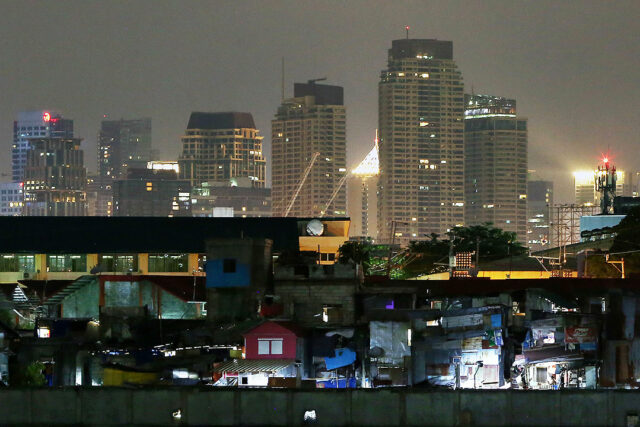
THE TOWERING BUILDINGS of Makati’s central business district are seen in the background in this May 13, 2020 file photo. — PHILIPPINE STAR/ MIGUEL DE GUZMAN

PRESIDENT Ferdinand R. Marcos, Jr. has signed an executive order (EO) adopting the Philippine Development Plan (PDP) 2023-2028, which he said will help the country achieve its goal of becoming an upper middle-income economy by 2025.

“(PDP) is a plan that will set the Philippines towards becoming an upper middle-income country by the year 2025. But beyond economic development, the plan also focuses on social development and protection, disaster resilience, digital transformation and many other things,” Mr. Marcos said during the “From Plan to Action: PDP 2023-2028 Forum” in Pasay City on Monday.

The Philippines is currently classified as a lower middle-income country by the World Bank. It earlier targeted to graduate to upper middle-income status by 2022, but this was derailed by the coronavirus pandemic.

Under the PDP, the government targets 6-7% gross domestic product (GDP) growth this year, and 6.5-8% from 2024 to 2028. It also aims to lower the unemployment rate to 4-5% by 2028.

The Philippine economy expanded by 7.6% in 2022, the fastest economic growth since 1976. The jobless rate eased to 4.2% in November, the lowest level in over 17 years.

“The trajectory of our post-pandemic recovery is undoubtedly promising. Still, we cannot rest easy, knowing that we have much work ahead of us as we strive to sustain and improve our performance,” National Economic and Development Authority Secretary Arsenio M. Balisacan said at the same forum.

Mr. Marcos on Jan. 27 signed EO No. 14, which directs all concerned government agencies to adopt and implement the PDP, which is described as the country’s roadmap for the next six years. All agencies should align their budgets and programs with strategies identified in the PDP, as well as identify priority programs and projects under the Public Investment Program (PIP) 2023-2028.

“The timely signing of this EO sets us off to a promising start this 2023. By taking stock of the many lessons that we have learned from the past three years, the PDP clearly and coherently maps out our vision, timeline, and strategies for deep and genuine socioeconomic transformation,” Finance Secretary Benjamin E. Diokno said in a separate statement.

INFRASTRUCTURE
Department of Public Works and Highways (DPWH) Secretary Manuel M. Bonoan said that the government will focus on infrastructure, especially to alleviate traffic congestion.

“We will be embarking on addressing traffic congestion. The Philippines has about 510 kilometers (km) of expressway so we intend to continue the development of high standard highways through public-private partnerships and increase it towards the end of the medium term by another 700 km of expressway,” he said.

In an ambush interview, Mr. Balisacan said the government is finalizing its list of infrastructure projects.

“We are now in the process of finalizing the long list. Many of the agencies started submitting their priorities. We are reviewing all the submissions in the context of their responsiveness to the PDP. Out of this Philippine Infrastructure Program, it will be quite long because we have so many development needs and requirements,” he said.

Mr. Balisacan said these projects should be “sensitive to the goals and objectives of the PDP.”

Meanwhile, Tourism Secretary Ma. Esperanza Christina G. Frasco said the government will work to further improve roads, bridges, water systems, gateways, airports and seaports in key tourist destinations as part of the PDP.

Trade Secretary Alfredo E. Pascual said that the government is working on revitalizing industries.

“Our main goal is to retain quality jobs, jobs that are stable and higher paying. How do we achieve this? Through industrialization. Our strategy calls for science, technology and innovations so we can make and produce globally competitive and innovative companies. We want our industries to adapt technology like Artificial Intelligence (AI), smart manufacturing,” he said.

Other sectors that the government wants to further develop include industry, manufacturing and transport; technology, media and telecommunications; and health and life sciences.

‘RIGHT DIRECTION’
UnionBank of the Philippines, Inc. Chief Economist Ruben Carlo O. Asuncion said the PDP is a step in the right direction.

“The biggest challenge, even in past PDPs, is the gargantuan task of administration, enforcement, and/or execution of the plan’s different parts and intricacies,” he said in a Viber message.

Nicholas Antonio T. Mapa, a senior economist at ING Bank N.V. Manila, said he hopes that results can be felt as the government implements its development roadmap.

“Authorities must now move past these outlines and start to deliver short-term results that get us closer to the goals of robust growth, more resilient jobs, low food prices, fiscal consolidation, innovation and lower poverty incidence,” he said in a Viber message.

On the other hand, Jose Enrique A. Africa, executive director of think tank IBON Foundation, said the plan does not include any new ideas to develop local industries.

“The Philippines can build Filipino industry, distribute income and wealth fairly, and protect the environment,” he said in a statement. “But not with the PDP 2023- 2028, which is stuck in the past.” — Luisa Maria Jacinta C. Jocson and John Victor D. Ordoñez

ADVERTISEMENT
ADVERTISEMENT