Home Blog Page 5326

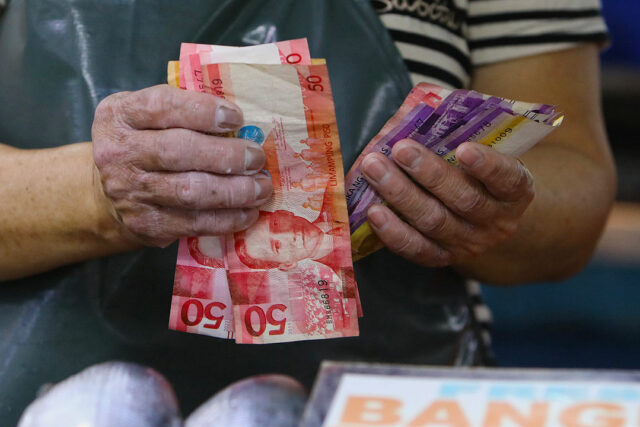
Peso tumbles to P55-per-dollar level as headline inflation surges in Jan.

PHILIPPINE STAR/ WALTER BOLLOZOS

THE PESO sank to the P55-per-dollar level on Tuesday as January headline inflation was faster than expected and amid hawkish signals from the US Federal Reserve.

The local currency closed at P55.085 versus the greenback on Tuesday, declining by 69.5 centavos from Monday’s P54.39 finish, data from the Bankers Association of the Philippines showed.

The peso opened Tuesday’s trading session at P54.65 per dollar. Its weakest showing was at P55.10, while its intraday best was at P54.60 against the greenback.

Dollars traded rose to $1.274 billion from $1.053 billion on Monday.

The peso declined following the release of January inflation data and hawkish signals from a Fed official, Rizal Commercial Banking Corp. Chief Economist Michael L. Ricafort said in a Viber message.

“The peso weakened significantly after the Philippine headline inflation for January 2023 was reported at 8.7%, surpassing market and central bank’s expectations,” a trader said in an e-mail.

Headline inflation was at a 14-year high of 8.7% in January, faster than the 8.1% in December and 3% a year ago.

This also surpassed the 7.6% median estimate in a BusinessWorld poll conducted last week and the 7.5% to 8.3% forecast range given by the Bangko Sentral ng Pilipinas (BSP) for the month.

Meanwhile, Atlanta Federal Reserve Bank President Raphael Bostic told Bloomberg that the Fed may need to lift borrowing costs higher than previously anticipated 25 basis points (bps) given the unexpectedly strong jobs data in January.

The US central bank hiked borrowing costs by 25 bps at its Jan. 31 to Feb. 1 meeting, bringing the fed funds rate to a 4.5% to 4.75% range, the highest since 2007.

The Fed has now hiked rates by 450 bps since March 2022.

For Wednesday, the trader said the peso could weaken further against the dollar on expectations of hawkish remarks from Fed Chair Jerome H. Powell overnight.

The trader expects the peso to move between P55 and P55.25 per dollar on Wednesday, while Mr. Ricafort gave a wider forecast range of P54.90 to P55.20. — AMCS

Gov’t investment target from Japan trip P150B

President Ferdinand Marcos Jr. answers questions from the media after his first Cabinet meeting in Malacañan Palace, July 5, 2022. — PHILIPPINE STAR/KRIZ JOHN ROSALES

THE PHILIPPINES is expected to obtain P150 billion in investment pledges during President Ferdinand R. Marcos, Jr.’s official visit to Japan.

“We are expecting that substantial returns in terms of new projects, the value of which we currently estimate at P150 billion, and we estimate too these will generate employment for 8,000 Filipinos,” Philippine Ambassador to Japan Mylene J. Garcia-Albano told ABS-CBN News Channel on Tuesday.

Ms. Albano said Mr. Marcos is set to meet executives from electronics, semiconductor, printer and wiring harness manufacturing companies.

Companies from these industries “comprise the bulk of our industrial relations with Japan,” she said, adding, “They will discuss how the private sector, the Japanese investor companies, the government and other stakeholders can work more closely together to ensure the success of these businesses in the Philippines.”

Foreign Affairs Assistant Secretary for Asia and Pacific Affairs Nathaniel Imperial in an earlier briefing said Mr. Marcos will be attending roundtable and business meetings, as well as a business conference to be held on Feb. 9 and 10.

Ms. Albano also noted the expected “signing of several letters of intent and agreements which are expected to significantly expand Japanese investments.”

Mr. Marcos is expected to sign seven key bilateral deals.

“During the visit, we anticipate the signing of seven key bilateral documents or agreements covering cooperation in infra development, defense, agriculture and information and communications technology — areas that are in the President’s priority agenda,” Mr. Imperial said.

The government is set to sign the exchange of notes on loan agreements for the North-South Commuter Railway project from Malolos, Bulacan to Clark International Airport, and from Manila’s Tutuban station to Calamba, Laguna.

“This will involve around $3 billion worth of loans that will be later signed also by the Department of Finance (DoF),” Mr. Imperial said.

Also on the list are agreements on humanitarian assistance and disaster relief cooperation between the Department of National Defense and its Japanese counterpart.

Japan is the only country with which the Philippines has a bilateral free trade agreement — the Japan Economic Partnership Agreement. Japan is the Philippines’ second-largest trading partner, third-largest export market and third-largest source of exports. — Alyssa Nicole O. Tan

Farmers call for gov’t-backed push to make industry competitive under RCEP

REUTERS

AGRICULTURE industry representatives said the government has not adequately supported farmers in achieving competitiveness against imports, which they called a necessary step before opening up the market under the terms of the Regional Comprehensive Economic Partnership (RCEP).

During a Senate hearing on the world’s largest free trade agreement on Tuesday, United Broiler Raisers Association President Elias Jose M. Inciong said: “What will provide true protection is competitiveness… the reason why we did not become competitive, the reason why we are so prone to imports, the reason why the agriculture sector cannot provide adequate supply is because of the dereliction of duty of the NEDA (National Economic and Development Authority and the DA (Department of Agriculture) in the implementation of the overall design of the WTO (World Trade Organization),” he said.

He was referring to the trade regime the Philippines signed on to in 1995, which guarantees market access for foreign commodities up to a minimum volume.

“There is no path for development for the sector; however, the path is very wide for import development,” he added.

Mr. Inciong compared the current pitch to join the RCEP with the campaign to join the WTO, noting that only features benefiting importers were implemented while provisions specifying domestic support were neglected.

The last major commodity to be opened up to imports was rice. The Rice Tariffication Law opened up rice imports to private parties, who had to pay tariffs of 35% on Southeast Asian grain.

Of these tariffs, P10 billion a year is allocated to the Rice Competitiveness Enhancement Fund (RCEF), which supports the industry’s modernization by funding mechanization, upgraded seed, and rice cultivation know-how, among other things.

Mr. Inciong said the rest of the farm industry as well as fisheries have yet to undergo modernization, and added that database support for the industry remains inadequate.

“Whenever we have hearings here and at the House, on tariffs and the like, 30% of the time, there is a debate on the correctness of the data,” Mr. Inciong said.

“We could produce all of these products but because we did not do our homework, we become more and more reliant on imports, and that will be the scenario in RCEP,” Raul Q. Montemayor, national manager of the Federation of Free Farmers, said.

He noted that the agricultural trade deficit continues to grow despite claims of adequate protection provided by trade deals.

“They told us that there was nothing to worry about because tariffs will not go down, but we have seen over the past few years that the agricultural trade deficit has ballooned to $90 billion,” he said.

Under RCEP, he added, 84% of agricultural tariff lines will have zero tariff protection.

Trade Assistant Secretary Allan B. Gepty said the trade deal only calls for the additional liberalization of 33 tariff lines to four trade partners, with most other commodities already subject to other free trade agreements.

“Mr. Montemayor is correct to say that we have trade deficits, that’s the reality. In fact,… as early as the ’60s, deficit in trade and goods has been creeping in,” he said.

However, “before we characterize deficits, we have to consider that importing is not outrightly wrong,” he added. “As long as what you’re importing is being used for consumption, like food security, then it’s good since you’re giving food to the people.”

Mr. Gepty said that between 2018 and 2020, the Philippines mostly imported, at a deficit, cereals including rice, prepared animal fodder, miscellaneous edible preparations, meat and edible meat offal, and dairy products.

“We are at a deficit because we need them and we don’t have them here, so we import them,” he said. “Importing is good if you will use these inputs to farms or for further production.”

Trade Secretary Alfredo E. Pascual, speaking at the hearing, said that while he recognizes the concerns raised, “it is important to understand the bigger picture and view RCEP in terms of the opportunities it can bring to us.”

“We are situated in a dynamic region of the world and we cannot afford to remain out of its further economic integration,” he said.

“In any case, the government will continue to provide the needed support and level the playing field to help equip and sharpen the capacity of our businesses,” he added.

 Mr. Pascual noted that RCEP provides a framework of rules that ensure regulatory consistency.

It creates a “conducive business environment that is key to ensuring the confidence of the business sector, and spurring further economic growth,” he said.

Mr. Pascual believes that the Philippines’ current linkages to the global supply chain may deteriorate if investors and businesses begin to look elsewhere for a better economic environment and opportunities.

“Considering that a number of key trading partners and competitors are also participating in this agreement, delays in Philippine participation will result in the diversion of trade and investments toward countries already within the regional bloc, at the expense of our industry and people,” he said.

“Even our exports could become less competitive, including electronic and agricultural products, as intermediate goods used as inputs for further production and manufacturing become more expensive in comparison to our competitors,” he added.

On the other hand, Mr. Pascual said the trade deal is expected to strengthen links in manufacturing, technology, agriculture, and natural resources with member states, as well as reinforce the participation of micro, small and medium enterprise participation in the global supply chain.

The Department of Trade and Industry (DTI) noted the Philippines’ readiness to accelerate the economic recovery and overall standing in the global trading environment through its accession to RCEP.

Senate President Pro Tempore Lorna Regina B. Legarda, who chaired the sub-committee hearing, said there must be “guidelines, policies, programs, funding, resources, commitments and oversight that will ensure that the agencies who negotiated for this and who are mandated to bring about a robust agricultural sector… will do… their best” upon the country’s accession to the RCEP.

She said the industries affected must be allowed to help draft the guidelines to be followed by the agencies pushing for the trade deal.

“This ratification will not change what’s been there for 40 years but if there is a window of opportunity given to Laos, Myanmar, and we’re the only one not included, I would not want that,” Ms. Legarda said.

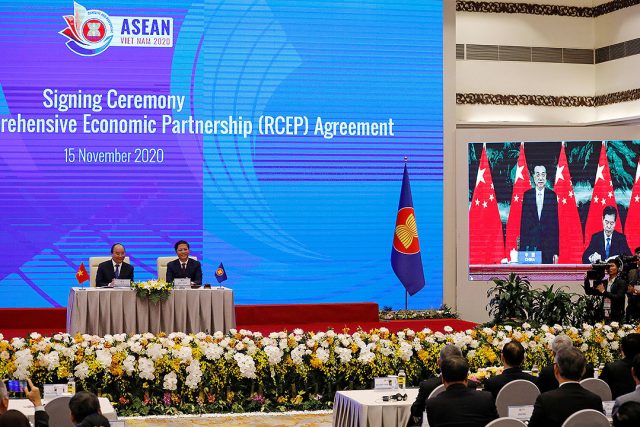
RCEP, which started taking effect on Jan. 1, 2022, involves Australia, China, Japan, South Korea, New Zealand and the 10 members of the ASEAN.

The Philippines has yet to join RCEP as the Senate was unable to ratify the agreement before adjourning on Feb. 3. President Rodrigo R. Duterte signed the trade agreement on Sept. 2. — Alyssa Nicole O. Tan


‘Strategic’ tag for ecozone logistics industry seen unlocking investments

POLLOC FREEPORT AND ECOZONE — BARMM FACEBOOK PAGE

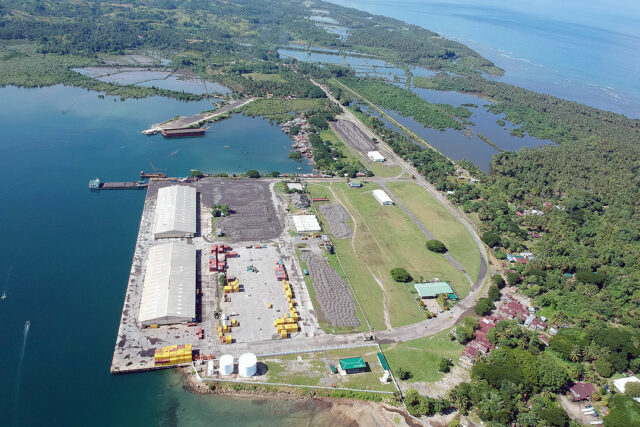
THE classification of economic zone logistics services enterprises (ELSEs) as eligible for incentives under the Strategic Investment Priorities Plan (SIPP) is expected to raise investment in the industry, the Philippine Economic Zone Authority (PEZA) said.

In a statement on Tuesday, PEZA Officer-in-Charge Tereso O. Panga said ELSEs can now avail of incentives under Republic Act No. 11534 or the Corporate Recovery and Tax Incentives for Enterprises (CREATE) Act.  

The industry was ruled eligible by the Board of Investments (BoI) in Memorandum Circular (MC) No. 2023-001 issued on Jan. 31, which clarified that ELSEs were covered under the 2022 SIPP.

PEZA also issued MC No. 2023-010 while the Bureau of Internal Revenue (BIR) issued Revenue Memorandum Circular No. 15-2023, both dated Feb. 3, which also ruled ELSEs eligible.  

“With the clarification issued by the BoI and BIR, the existing ELSEs can now enjoy their incentives (i.e., zero value-added tax rating on qualified local purchases) pursuant to the sunset provision. For new ELSEs, they may be entitled to the incentives under the CREATE Act,” Mr. Panga said.

According to PEZA, ELSEs are traders supplying production-related raw materials and equipment that cater exclusively to the needs of ecozone locators.

It added that ELSEs provide critical services to export manufacturing companies, which require logistics support for their import and export shipments, raw materials sourcing, inventory management, just-in-time delivery, localization, and process customization. 

Mr. Panga said companies providing support to export activities had been barred from availing of incentives prior to the clarification from the MCs.

The MCs affirmed the right to zero VAT rating incentives on local purchases by ELSEs. However, 70% of ELSE output or services should be provided to other registered export enterprises via direct or constructive exports in order to be considered exporters under the CREATE law.  

PEZA said there are 340 registered ELSEs which have taken in P11.15 billion worth of investments to date. Japanese ELSEs have taken on P3.50 billion worth of investment.  

Some of the registered Japanese ELSEs are Nagase Philippines International Services Corp.; Inabata Philippines, Inc.; Lima Logistics Corp.; Tokai Electronics Philippines, Inc.; and NX Logistics Philippines, Inc.

“Overall, the 884 Japanese locator companies continue to be the biggest investors in the PEZA ecozones accounting for P745.637 billion in investments, or 27.42% of the total investments in PEZA. These companies also generated $15.865 billion worth of exports and 315,619 direct jobs as of November 2022,” PEZA said. — Revin Mikhael D. Ochave

Bill requiring REITs to reinvest in PHL hurdles House panel

BW FILE PHOTO

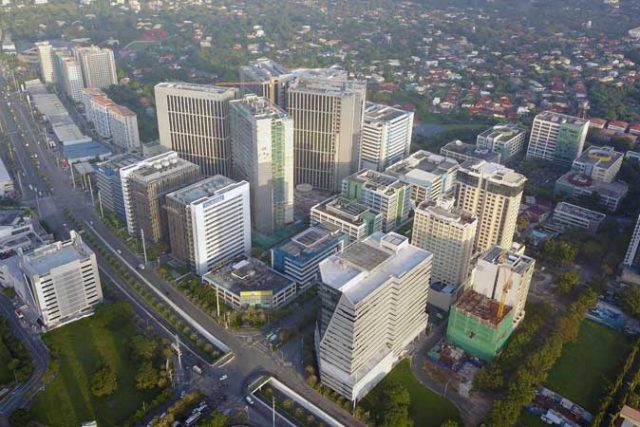
A BILL that requires real estate investment trusts (REITs) to reinvest proceeds from their fundraising activities in the Philippines has been approved at the committee level in the House of Representatives.

The House economic affairs committee approved on Tuesday House Bill No. 6500, which proposes to amend Republic Act No. 9856, or The Real Estate Investment Trust Act of 2009.

Cagayan de Oro Rep. Rufus B. Rodriguez, the author of the bill, said that there is “a need to ensure that the funds invested in these companies are reinvested in the Philippines to secure full domestic participation in the real estate industry.”

The proposed amendment would require a sponsor or promoter to reinvest in the Philippines proceeds realized from the sale of REIT shares “within one year from the date of receipt of proceeds or money by the sponsor/promoter.”

Proceeds subject to the reinvestment rule also include “other securities issued in exchange for income-generating real-estate transferred to the REIT, and any money raised by the sponsor or promoter from the sale of any of its income-generating real-estate to the REIT, in any real estate.”

This includes any redevelopment project and infrastructure projects in the Philippines.

REITs are required to submit a reinvestment plan to the Philippine Stock Exchange and Securities and Exchange Commission upon registration, and must also secure a certification yearly to show that it is compliant with its reinvestment plan.

According to the bill, a reinvestment plan is “a sworn statement duly received by the exchange and the commission, signed by the sponsor/promoter and the principal shareholder of the REIT.”

If signed into law, the proposed measure “would help increase and encourage more investments, employment/jobs, other business/economic activities in the country. Especially if the growth rate/potential in the country is more promising/attractive as a positive factor for investors,” Rizal Commercial Banking Corp. Chief Economist Michael L. Ricafort, said via chat.

UnionBank of the Philippines Chief Economist Ruben Carlo O. Asuncion said the measure aims to safeguard the industry since it is still in its nascent stages.

“Future amendments may have to deal with the easing of such rules once the industry is deemed more stable or mature. It would be good to look into best practices from other REIT markets in the region that have reached a high level of success,” he said in a Viber message.

Mr. Asuncion added though that the bill “can also be a deterrent since investors would be looking for more flexibility especially in this era of new and higher uncertainty.”

REITs are stock corporations primarily owning income-generating real estate properties. The seven REITs in the Philippines are AREIT, Inc., Citicore Energy REIT Corp., DDMP REIT, Inc., Filinvest Reit Corp., MREIT, Inc., Premier Island Power REIT Corp., RL Commercial REIT, Inc., and VistaREIT, Inc. — Beatriz Marie D. Cruz

Nestlé concerned about RCEP impact on bulk of coffee growers

PIXABAY

NESTLÉ Philippines said the Regional Comprehensive Economic Partnership (RCEP) may not be beneficial to the entire coffee industry, after specialty growers said the trade agreement could be an opportunity for the part of the sector than can successfully market its beans with distinctive geographical indications (GIs).

“We believe that overall, RCEP will boost free trade among its participants, especially those with competitive exports,” Nestlé Philippines said in a statement.

“In the case of the Philippine coffee sector, however, our farmers are supplying only 15% of domestic demand, and the coffee sector as a whole currently cannot export green coffee beans or processed coffee. Alongside opening the market to free trade, it is imperative for government to continue supporting, as we are doing for the long term with our Nescafé Plan, the development of increased efficiencies, productivity, and incomes of Filipino coffee farmers beyond subsistence levels, and to adequately meet local demand.”

Over the weekend, specialty coffee growers told BusinessWorld they see opportunity if the Philippines participates in the trade deal, with their beans likely to gain access to markets like Japan and South Korea, which are not covered by the Philippines’ current free trade agreements.

They said the key to the specialty beans market is whether the Philippines can establish a system of GIs to differentiate their high-end beans from the rest of the market.

Nestlé Philippines, which supports growers that supply it with robusta beans, which are made into Nescafé instant coffee, said in a statement that the state of the industry currently cannot support exports, and that government aid remains necessary if coffee farmers are to be exposed to foreign competition.

“Our farmers are supplying only 15% of domestic demand, and the coffee sector as a whole currently cannot export green coffee beans or processed coffee. Alongside opening the market to free trade, it is imperative for government to continue supporting, as we are doing for the long term with our Nescafé Plan, the development of increased efficiencies, productivity, and incomes of Filipino coffee farmers beyond subsistence levels, and to adequately meet local demand,” it said. 

It called on the government and the industry to continue to be “guided by the Philippine Coffee Roadmap, and with sustained interventions by the public and private sectors collaborating to address key challenges.”

Such a development path will help the industry “rise to its full potential, including self-sufficiency and even exportation in the future.”

It said it supports the industry via the Nescafé Plan, which it described as “a multi-year pilot project involving smallholder farmers has significantly increased their yields. Average production rose from 235kg/hectare in 2018 to close to 900kg/hectare in 2022. The project stands as a concrete example of a successful public-private partnership. With government and other coffee stakeholders, we will continue to work towards further increasing farmers’ yields and incomes.”

RCEP is a trade deal involving the 10 ASEAN countries, Australia, China, Japan, South Korea, and New Zealand. It started taking effect in the various member-countries on Jan. 1, 2022.

The Philippines has yet to join the trade deal, with the Senate yet to give its concurrence amid objections from most of the agriculture industry.

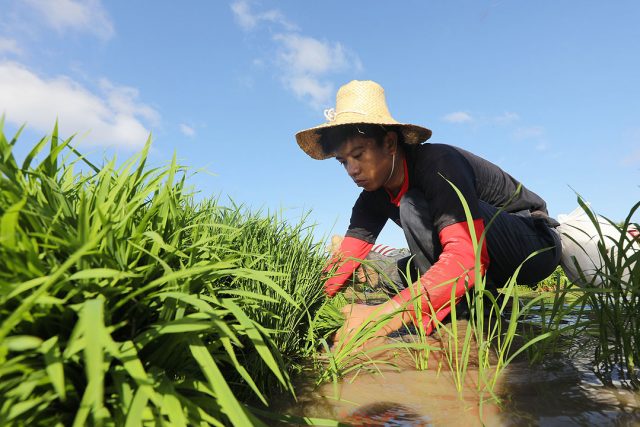
Rice affordability to hinge on stronger ASEAN trade

PHILIPPINE STAR/MICHAEL VARCAS

THE PHILIPPINES needs to strengthen its trade relationships with the rest of the Association of Southeast Asian Nations (ASEAN) to ensure access to affordable rice, an agricultural economist said.

“We have to strengthen our ASEAN trade relations to ensure rice availability and affordability…,” Karlo Fermin S. Adriano of the Ateneo de Manila University Economics department said. “Now, why do we need to ensure rice availability and affordability? Because we are basically a rice country.”

“When rice prices increase, there’s a panic (which is outsized in comparison to other expensive commodities) Even if prices of onion are soaring, there’s not much panic compared to rice,” he added.

In a briefing before the Makati Business Club on Tuesday, Mr. Adriano, an advisor to the Department of Agriculture (DA), said the DA’s “rice-centric budget” has led to the underperformance of the agriculture sector overall.

He said that an average of 50% of the DA budget was given over to rice in the 2017-2022 period, leading to the “neglect of the non-rice agriculture commodities.”

He said that the outsized budget cannot be tied to poverty relief as “rice farmers are relatively well off compared to other agricultural commodities and yet rice gets the lion’s share,” he said.

He added that the DA also suffers from “low absorptive capacity,” being unable to use all the funds allocated to it.

“Why are you going to give more money to the DA, when you know historically it has a (low) disbursement rate? You have to fix the low absorptive capacity before you actually give it more money,” he added.

Due to the insufficient supply of key agricultural commodities, he recommended a temporary reduction of import tariffs and an increase in the minimum access volume of key commodities, which is the volume of imports a World Trade Organization agrees to allow within its borders.

“We really need to import in the short term if we want to control food inflation,” he added.

He also recommended gradually opening agricultural commodities to foreign competition to promote innovation. — Sheldeen Joy Talavera

DENR issues cease-and-desist order against miner Altai

ALYANSA TIGIL MINA FACEBOOK PAGE

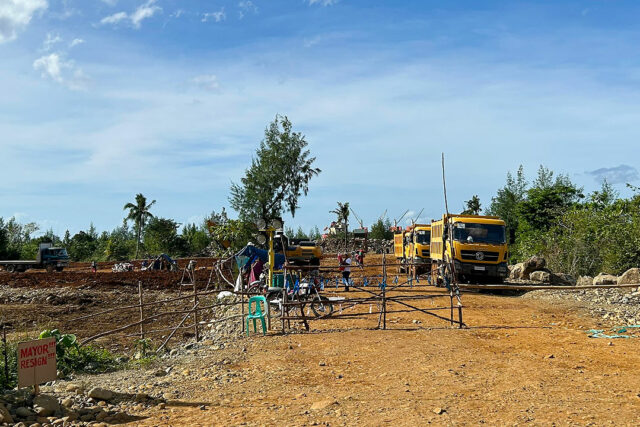
THE Department of Environment and Natural Resources (DENR) has issued a cease-and-desist order against the Altai Philippines Mining Corp. (APMC) following an alleged breach of environmental regulations at its nickel exploration site in Romblon.

The joint order issued by the DENR office in the Mimaropa (Mindoro, Marinduque, Romblon, Palawan) region on Monday also suspends the ore transport permit of APMC, which has attracted protestors to its mine site.

The department also rejected the company’s application of Miscellaneous Lease Agreement citing violations of Commonwealth Act 141 or the Public Land Act.

The Provincial Environment and Natural Resources Office (PENRO) of Romblon will also file “appropriate legal action” over the cutting of trees without a permit at the company’s site on Sibuyan island.

An inspection by the DENR Environmental Management Bureau in Mimaropa last week resulted in a notice of violation against the company and a suspension of mining operations.

Rodney R. Galicha, executive director of Living Laudato Si’, told BusinessWorld in a virtual interview that protesters picketing the site have determined not to leave their barricades until the company’s exploration permit and mineral production sharing agreement are revoked.

The suspension “will not weaken our resolve to stay on the barricades,” Mr. Galicha said.

The AMPC voluntarily halted exploration activity on Monday “to address any concerns or issues that have been raised.”

In an e-mail to BusinessWorld on Tuesday, APMC had no response to the suspension order but said it was legally permitted to conduct its activities.

“We will be answering the notices in the proper forum, specifically with the regulators, in a technical conference regarding the matter. We submit ourselves to the authority of the concerned regulators and welcome dialogue and/or due process,” Lee Altamirano of APMC Corporate Communications Department said. — Sheldeen Joy Talavera

PHL halal products roadshow organized for Gulf countries 

PHILIPPINE producers of Halal products will join a roadshow in the various Gulf Cooperation Council (GCC) countries between Feb. 11 and 25, the Department of Trade and Industry (DTI) said in a statement.

The DTI organized the outbound business matching mission together with the Export Marketing Bureau and the Philippine Trade and Investment Center in Dubai.

The delegation will include exporters of Halal-certified food, personal care, and cosmetic products.

“The Philippines is continuously strengthening its Halal ecosystem to be able to better serve the growing global Halal market. The mission aims to contribute to increased understanding by Philippine exporters of the Halal market in the GCC, especially for the 15 exporters who are first-time participants to the mission,” Trade Assistant Secretary Glenn G. Peñaranda said.

According to the DTI, the GCC mission will cover Manama, Bahrain between Feb. 11 and 13; Kuwait City between Feb. 13 and 14; Doha, Qatar between Feb. 14 and 16; and the Gulfood 2023 trade show in Dubai between Feb. 16 and 25.

“The GCC market serves as an important launch pad and driver for the internationalization of Philippine micro, small and medium enterprises (MSMEs), especially for halal exporters due to its unique market characteristics,” the DTI said.

“It hosts roughly half of the total number of overseas Filipino workers (OFWs) which serves as an anchor market for Philippine products abroad, especially for food and personal care products,” it added.

The delegation members are Cattleya & Rose Gourmet Foods Trading, Eng Seng Food Products, Francoeur Merchandising, Franklin Baker Company of the Philippines, Fruits of Life, Inc, G5 International Corp., Good Sense Food and Juices Corp., Innovative Packaging Industry Corp., Jamla Corp., La Carlota Food Enterprise, Liwayway Marketing Corp;

Lorenzana Food Corp., Mega Global Corp., Mica By The Sea Co., Miguelitos International Corp., Pasciolco Agri Ventures, Pearl Foods International, Inc., Pixcel Transglobal Foods, Inc, Sagrex Foods, Inc., Sandbox Middle East, See’s International Food Mfg. Corp., Turn Fruit Trading DMCC, and Villa Socorro Farm.

The cosmetics and personal care members of the delegation are C and H Cosmetics Industry, Greenstone Pharmaceutical, Inc., and Jegen SWE Enterprises, as well as service and business provider LBC Solutions Middle East.

In 2021, the United Arab Emirates accounted for 61.48% of Philippine exports to the GCC region, followed by Saudi Arabia at 18.38%, and Qatar at 10.69%. — Revin Mikhael D. Ochave

‘Green’ trade policy to help mitigate climate change impact — ADB

BW FILE PHOTO

GREEN TRADE and investment policies are needed to help mitigate the impact of climate change in the Asia and the Pacific, the Asian Development Bank (ADB) said.

“Asia generates around half of global carbon dioxide emissions, at the same time it also accounts for 40% of national disasters nationwide,” ADB Chief Economist Albert Park said in a virtual briefing on Tuesday.

“International trade and investment have been drivers of Asia’s economic growth and industrialization. With climate change looming, trade and investment policies must be aligned to support climate action,” he added.

ADB Principal Economist Jong Woo Kang said that Asia’s regional integration relies on trade, investment and finance.

“The region has great potential to deepen value chains in high-tech and services industries. Digital technologies and regional cooperation could help streamline remittance inflows and accelerate tourism recovery,” he added.

However, he said that Asia has been both a net importer and exporter of carbon emissions due to its rapid economic growth and industrialization.

“As economic size grows, it produces more emissions. The region remains the most carbon intensive exporter and importer. We have classified most carbon intensive sectors. These sectors account for 61% of Asia’s exports, (showing) Asia’s bias towards dirtier industries,” he added.

Mr. Kang said that cross border investment could be subdued this year, particularly in mergers and acquisitions because of tightening liquidity conditions, a looming global slowdown, and the impact of the Ukraine war.

According to the ADB, digitalization could help lower transaction costs of remittances.

“Remittance inflows were quite resilient after dipping slightly by 1.5%. They rebounded quickly to 3.4% growth in 2021 and 2022 it is expected to increase by up to 4%,” Mr. Kang said.

“Remittance costs are the major bottlenecks. In terms of mode of payment, mobile money shows the most efficient mode of payment. The region can benefit from expanding digital infrastructure,” he added.

The ADB also said that tourism can be boosted with regional cooperation.

“Going forward, we believe regional cooperation will help to address border measures, expand tourism infrastructure, and harness digital technology,” Mr. Kang said.

Cooperation is also crucial for food and energy security, the ADB said.

“Going forward, we believe in prohibiting export restrictions through international cooperation to ensure seamless flow of essential goods,” he added.

The bank said that the region must better integrate trade and investment policy into climate action by shifting to more services-driven economies and taking advantage of technological advancements.

“Facilitating trade in environmental goods and services can help bring down the cost of adopting green technologies and promote knowledge spillovers,” Mr. Kang said. — Luisa Maria Jacinta C. Jocson

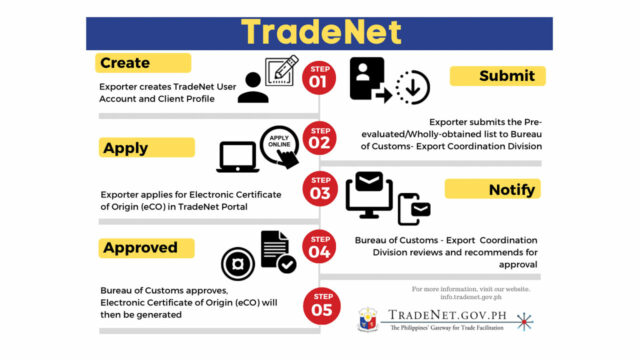
TradeNet moves closer to launch with MoA signing

BUREAU OF CUSTOMS

ONLINE trade platform TradeNet moved closer to launch with the signing of a memorandum of agreement (MoA) by the lead agencies, the Department of Finance (DoF) and the Department of Information and Communications Technology (DICT).

The Anti-Red Tape Authority (ARTA) said in a statement on Tuesday that the MoA was signed by Finance Secretary Benjamin E. Diokno and Information and Communications Secretary Ivan John E. Uy on Feb. 6.

The MoA paves the way for the full onboarding of the 73 government agencies with regulatory oversight over imports and exports.

ARTA is involved in onboarding the so-called Trade Regulatory Government Agencies (TRGAs) by virtue of its mandate under Republic Act 11032 or the Ease of Doing Business and Efficient Government Service Delivery Act.

“The agreement specifically defines the DoF as responsible for the overall coordination, facilitation, and onboarding of the TRGA to the TradeNet System. Meanwhile, the DICT will operate, maintain, acquire, and modify the technological design and architecture of the TradeNet,” ARTA said.

The signing facilitates the development and sustainability of the TradeNet system as the national single window platform that automates and integrates the licensing, permitting, clearance and certification system for trade goods.

TradeNet will also help ensure seamless trade with the rest of Southeast Asia, serving as the official government portal for the digital exchange of import and export data linked to the Association of the Southeast Asian Nations Single Window System.

“The MoA has been pending for three years due to several revisions in the agreement. However, in November 2022, TradeNet’s implementation gained headway after ARTA convened the agencies and earned their commitment on the individual and joint responsibilities relevant to the platform,” the ARTA said.

ARTA Director-General Ernesto V. Perez said there is a need to address high costs and long processing times in the Philippines to attract more foreign investment.

“We can look at TradeNet as another tool that can help us to curb over-regulation and high transaction costs with the government as it addresses the demand for efficiency by the public to transact with the government,” Mr. Perez said.

In January, the Office of the President called TradeNet one of the government’s priority digitalization programs for 2023.

Meanwhile, the ARTA said that the MoA also gives the go-ahead for the DoF to continue the onboarding of 18 priority TRGAs.

These are the Bureau of Plant Industry, Fertilizer and Pesticide Authority, Philippine Nuclear Research Institute, Bureau of Agriculture and Fisheries Standards, Bureau of Quarantine, Export Marketing Bureau of the Department of Trade and Industry, the National Meat Inspection Service, the Philippine Coconut Authority, and the Philippine National Police Civil Security Group’s Firearms and Explosive Office;

The Sugar Regulatory Administration, Philippine Fiber Industry Development Authority, Bureau of Internal Revenue, Bangko Sentral ng Pilipinas, National Commission for Culture and the Arts, Philippine Amusement and Gaming Corp., Forest Management Bureau, the Office of Protocol, and the Board of Investments. — Revin Mikhael D. Ochave

Philippines confirms first case of Omicron XBB.1.5 subvariant

A MICROSCOPIC photo of the coronavirus. — NIAID

THE PHILIPPINES has confirmed its first case of the Omicron subvariant XBB.1.5, which experts consider to be the most contagious coronavirus, the Department of Health (DoH) said on Tuesday.

In a report, the agency said 196 of 1,078 samples from Jan. 30 to Feb. 3 were XBB subvariants, including one case of XBB.1.5.

The XBB subvariants were found in all regions except in Eastern Visayas and the Bangsamoro region, DoH said.

The European Centre for Disease Prevention and Control had classified XBB.1.5, an offshoot of the XBB subvariant, as a variant of interest because of its increasing prevalence globally and enhanced immune-evading properties. It has been detected in 59 countries across six continents.

The XBB.1.5 subvariant accounted for two-thirds of infections in the United States on Jan. 29 to Feb. 4, according to estimates from the US Centers for Disease Control and Prevention.

The latest Omicron subvariant is the most contagious and can escape the immune system, the Health department said, citing the World Health Organization (WHO).

There’s no evidence that it causes a more severe disease than the original Omicron variant.

The WHO still reports the XBB.1.5 subvariant under XBB and will remain classified under Omicron until there’s evidence that its characteristics are significantly different from Omicron.

The subvariant is rapidly spreading in the US, accounting for 41% of COVID-19 cases at end-December.

XBB.1.5 has been found in several European countries including Britain, Germany and France. It has also been reported in India and Singapore.

Meanwhile, the Philippines expects to get at least 1.4 million doses of COVID-19 bivalent vaccines after the government got a commitment from another donor country, Health officer-in-charge Maria Rosario S. Vergeire told a news briefing.

The country will get 300,000 doses of the vaccine soon, she said.

These are on top of the more than a million bivalent vaccine doses that a World Health Organization-backed vaccine platform had committed to donate to the Philippines next month.

“We have a concrete [number] of almost 1.4 million doses of bivalent vaccines,” Ms. Vergeire said. She declined to name the donor country pending negotiations.

The first batch of bivalent vaccines, which will be delivered to the country by the WHO’s COVAX facility in March, will be used for health workers, seniors and people with health risks, she said.

She added that the Health department is coordinating with manufacturers for the procurement of bivalent vaccines, which target both the Omicron variant and original coronavirus strain.

The agency is drafting the guidelines for their use. “Guidelines will be issued soon so that our local government units can prepare already.”

‘HEALTH EQUITY’
Ms. Vergeire earlier asked the private sector not to buy more doses of the bivalent vaccines yet to avoid wastage. About 24 million vaccine doses have expired so far, she said, adding that about 26 million doses remained unused.

Of the unused vaccines, 16 million doses are in the national warehouse, while 10 million have been distributed to local governments.

President Ferdinand R. Marcos, Jr. has yet to appoint a secretary for the Health department, which has been temporarily headed by Ms. Vergeire since July.

Ms. Vergeire said she had yet to meet with the president to discuss the appointment of the Health chief. “We just wait and we do not like to preempt the decision of the president. Let’s just wait for his decision.”

Ms. Vergeire said she would prioritize health equity and access once she’s appointed Health secretary.

“I would like to focus on access and equity,” she said, noting that Filipinos should get health services when needed.

“Equity, of course, is the focus on the vulnerable, focus on the poor, focus on those who need government services and assistance.”

She said Filipinos should also have financial protection so that they could buy medicines and afford health services.

The Health department is working on financial protection programs, she said, citing the outpatient drug benefit package provided by the state-run Philippine Health Insurance Corp.

Under the package, health patients of primary care centers are sent to pharmacies accredited by the state health insurer to get medicines for free.

Ms. Vergeire also wants to focus on building more specialty centers in line with the president’s direction. “We’d like to expand these kinds of facilities.”

Last week, Ms. Vergeire said she’s ready to be tapped as the agency’s chief.

The Philippines continued to post more than a thousand weekly coronavirus infections, with 145 daily cases on average on Jan. 30 to Feb. 5, DoH said on Monday.

There were 1,012 COVID-19 cases in the past week. The daily average from Jan. 30 to Feb. 5 was 16% lower than a week earlier. There were no severe and critical cases, it added.

DoH said it had verified 85 more deaths in the past week, 11 of which occurred on Jan. 23 to Feb. 5.

It added that 288 of 2,030 intensive care unit (ICU) beds had been used as of Feb. 5, while 3,449 of 17,627 non-ICU beds were occupied. There were 388 severe and critical admissions.

The agency said 73.85 million Filipinos have been fully vaccinated against the coronavirus, 21.39 million of whom had booster shots.

“Cases are likely to remain low given that there is no surge in the rest of the world,” Fredegusto P. David, a fellow at OCTA Research Group, said in a Facebook Messenger chat. “But a new variant could cause a wave anytime.”

In its weekly report published on Feb. 1, the World Health Organization (WHO) said globally, almost 20 million new cases were reported on Jan. 2 to 29, 78% lower than in the past 28 days.

More than 114,000 more deaths were reported during the period, 65% higher than a month earlier.

As of Jan. 29, more than 753 million people have been sickened by the coronavirus worldwide, with 6.8 million deaths, WHO said. — Norman P. Aquino and Kyle Aristophere T. Atienza