Home Blog Page 5270

Health info systems sector bullish on growth prospects in PHL

FREEPIK

THE HEALTH management information systems (HMIS) market in the Philippines has the potential to expand if talent development, infrastructure, and ease of doing business are further enhanced, according to an industry player.

“The sector has this bold ambition to grow to P28 billion by 2028, assuming we have all the right ingredients to build it,” said Nora K. Terrado, country head of Carelon Global Solutions Philippines, Inc., a healthcare management services and solutions company. 

She said that healthcare will account for 10-30% of all offshorable services globally. “Hence, we are growing accordingly.”

The HMIS collects, stores, and evaluates health-related data. It provides analytical reports and visualizations that facilitate decision-making. 

According to Ms. Terrado, the most important ingredients for propelling the country’s HMIS market growth are talent development, infrastructure, and ease of doing business. 

“Policy shaping to align our regulations to that of the demand of the market is one thing we [also] really appreciate that our partners in government have been looking at,” she added.

Carelon, which rebranded from Legato Health Technologies in January, has offices in Iloilo, apart from the two it has in the capital region.

“We follow where the talent is,” Ms. Terrado said. Iloilo is conducive too because it only takes anyone 10-15 minutes to get anywhere, she added.

The company plans to build a core team of up to 1,500 individuals, to be trained in technology and data analytics, within the next 24 months. 

Ms. Terrado also underscored the complexity of global healthcare and that customers now prioritize whole health, referring to physical, behavioral, and social drivers that make up the overall wellbeing of a person.

“It’s important to actually improve primary care, because if you focus on primary care, you can address the issue of affordability,” Ms. Terrado said. 

“Healthcare continues to be exposed to the volatilities of economic dynamics.” — Patricia B. Mirasol

Musk did not need Tesla board to review buyout tweets, directors testify

DANIEL OBERHAUS-FLICKER

Tesla Inc’s board had no obligation to review CEO Elon Musk‘s 2018 tweets announcing a bid to take the electric car maker private, which investors allege were fraudulent, two independent directors testified at trial on Wednesday.

Mr. Musk‘s Aug. 7, 2018 tweets sent Tesla stock soaring and after they fell back down, shareholders sued, alleging they lost money. But board members James Murdoch and Ira Ehrenpreis each said the tweets did not need to be vetted by the company before Musk sent them because he had done so in his individual capacity.

Their testimony concluded live witnesses in the trial, which began in San Francisco federal court on Jan. 17.

Mr. Musk tweeted that he had “funding secured” to take the carmaker private at a $420 per share price, a premium of about 23% to the prior day’s close. The stock price soared after the tweet and then fell as it became clear the buyout would not happen. Tesla shareholders say they lost billions of dollars on their investments in stocks and other securities of the company.

The trial is testing whether Elon Musk, the world’s second-richest person, can be held liable when his sometimes impulsive use of Twitter rubs up against US Securities and Exchange Commission rules about corporate disclosures.

The two board members are named as defendants in the lawsuit. Their attorneys, who also represent Mr. Musk and Tesla, have asked the judge overseeing the case to toss allegations against them and other board members including Kimbal Musk, Elon Musk‘s brother, saying the investors failed to prove they are liable.

James Murdoch, son of media tycoon Rupert Murdoch, told the jury the tweets were consistent with what he knew about Musk‘s talks with Saudi Arabia’s sovereign wealth fund, the Public Investment Fund.

“They had great confidence in the availability of funding for such a transaction,” he said, referring to Mr. Musk and then Tesla CFO Chief Financial Officer Deepak Ahuja.

Mr. Musk testified last week that “funding was absolutely not an issue.” He acknowledged, however, that he did not have binding agreements with investors for specified amounts, leaving it to the jury to decide if he misled shareholders.

Both sides will make their closing arguments on Friday, after a day off. A jury of nine is expected to begin deliberating on Friday.

The jury will decide whether the Tesla CEO artificially inflated the company’s share price by touting the buyout‘s prospects, and if so, by how much.

The buyout deal never came together because investors, particularly retail shareholders, expressed their interest in keeping the company public, according to testimony by Mr. Musk. – Reuters

US investors have plowed billions into China’s AI sector, report shows

STOCK PHOTO | Image by Gerd Altmann from Pixabay

 – US investors including the investment arms of Intel Corp. and Qualcomm Inc. accounted for nearly a fifth of investments in Chinese artificial intelligence companies from 2015 to 2021, a report showed on Wednesday.

The document, released by CSET, a tech policy group at Georgetown University, comes amid growing scrutiny of US investments in AI, Quantum and semiconductors, as the Biden administration prepares to unveil new restrictions on US funding of Chinese tech companies.

According to the report, 167 US investors took part in 401 transactions, or roughly 17% of the investments into Chinese AI companies in the period.

Those transactions represented a total $40.2 billion in investment, or 37% of the total raised by Chinese AI companies in the 6-year period. It was not clear from the report, which pulled information from data provider Crunchbase, what percentage of the funding came from the US firms.

Qualcomm Ventures and Intel Capital were involved in 13 and 11 investments in Chinese AI companies respectively, outpaced by GGV Capital which led US firms with 43 total investments in the sector, the data showed.

The Biden administration is expected to unveil an executive order this year curbing some US investments in sensitive Chinese tech industries, as hawks in Washington blame American investors for transferring capital and valuable know-how to Chinese tech companies that could help advance Beijing’s military capabilities.

According to the report, US investor GSR Ventures invested alongside China’s IFlytek Co. Ltd. in a Chinese AI company after the speech recognition firm was added to a trade blacklist. Silicon Valley Bank and Wanxiang American Healthcare investments group made investments in Chinese AI firms alongside China’s Sensetime before the powerhouse in facial recognition technology was added to the same trade blacklist.

Both companies were added to the blacklist, which effectively bars them from receiving US tech exports, in 2019 for alleged human rights violations related to the repression of Uighur Muslims.

Some of the largest investments include Goldman Sachs’ solo investment in 1KMXC, an AI-enabled robotics company, as well as an investment by three US-based VC firms in Geek+, an autonomous mobile robot company, the report showed.

Only one Chinese AI company that received funding from US investors is involved in developing AI applications for military or public safety uses, according to CSET. – Reuters

Philippines grants US greater access to military bases

BW FILE PHOTO

 – The Philippines has granted the United States expanded access to its military bases, the countries said on Thursday, amid mounting concern over China’s increasing assertiveness in the disputed South China Sea and tensions over self-ruled Taiwan.

Statements from the defense ministries of both countries said Washington would be given access to four more locations under an Enhanced Defense Cooperation Agreement (EDCA) dating back to 2014.

The United States had allocated more than $82 million toward infrastructure investments at the existing five sites under the EDCA, the statements said.

EDCA allows US access to Philippine military bases for joint training, pre-positioning of equipment and the building of facilities such as runways, fuel storage and military housing, but not a permanent presence.

US Defense Secretary Lloyd Austin was in Manila for talks as Washington seeks to extend its security options in the Philippines as part of efforts to deter any move by China against self-ruled Taiwan.

The statements did not specify where the new locations would be. The former Philippine military chief said previously the United States had requested access to bases on the northern land mass of Luzon, the closest part of the Philippines to Taiwan, and on the island of Palawan, facing the disputed Spratly Islands in the South China Sea.

Mr. Austin also met with Philippine President Ferdinand Marcos Jr at the presidential palace on Thursday before meeting with his counterpart Carlito Galvez.

His visit follows a three-day trip by US Vice President Kamala Harris to the Philippines in November which included a stop on Palawan. – Reuters

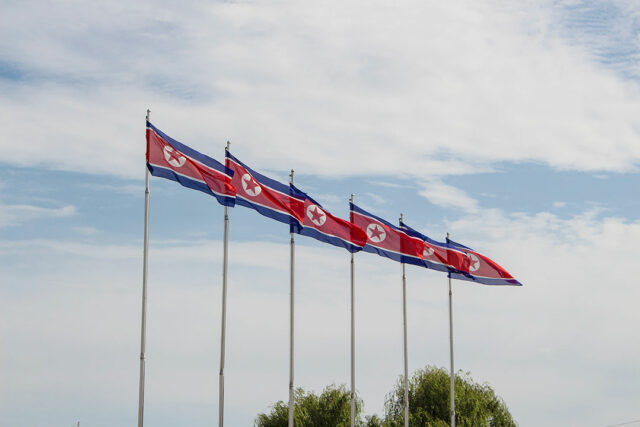
North Korea says US drills have pushed situation to ‘extreme red-line’ -KCNA

MICHA BRANDLI-UNSPLASH

 – North Korea‘s Foreign Ministry said on Thursday that drills by the United States and its allies have pushed the situation to an “extreme red-line” and threaten to turn the peninsula into a “huge war arsenal and a more critical war zone.”

The statement, carried by state news agency KCNA, said Pyongyang was not interested in dialogue as long as Washington pursues hostile policies.

“The military and political situation on the Korean peninsula and in the region has reached an extreme red-line due to the reckless military confrontational maneuvers and hostile acts of the US and its vassal forces,” an unnamed ministry spokesperson said in the statement.

The statement cited a visit to Seoul this week by US Defense Secretary Lloyd Austin. On Tuesday Mr. Austin and his South Korean counterpart vowed to expand military drills and deploy more “strategic assets,” such as aircraft carriers and long-range bombers, to counter North Korea‘s weapons development and prevent a war.

“This is a vivid expression of the US dangerous scenario which will result in turning the Korean peninsula into a huge war arsenal and a more critical war zone,” the North Korean statement said.

North Korea will respond to any military moves by the United States, and has strong counteraction strategies, including “the most overwhelming nuclear force” if necessary, the statement added.

More than 28,500 American troops are based in South Korea as a legacy of the 1950-1953 Korean War, which ended in an armistice rather than a peace treaty.

Last year, North Korea conducted a record number of ballistic missile tests, which are banned by United Nations Security Council resolutions. It was also observed reopening its shuttered nuclear weapons test site, raising expectations of a nuclear test for the first time since 2017.

In New York, South Korea‘s foreign minister, Park Jin, met with the United Nations Secretary-General Antonio Guterres on Wednesday and called for the UN’s continued attention to North Korea‘s recent provocations and efforts to implement sanctions on the reclusive regime.

Guterres said North Korea‘s additional nuclear test will deal a devastating blow to regional and international security, and reaffirmed support to build lasting peace on the Korean peninsula, according to Mr. Park’s office.

Park is on a four-day trip to the United States, which will include a meeting with US Secretary of State Antony Blinken in Washington on Friday.

On Wednesday the United States and South Korea carried out a joint air drill with American B-1B heavy bombers and F-22 stealth fighters, as well as F-35 jets from both countries, according to South Korea‘s Defense Ministry.

“The combined air drills this time show the US‘ will and capabilities to provide strong and credible extended deterrence against North Korea‘s nuclear and missile threats,” the Defense Ministry said in a statement. – Reuters

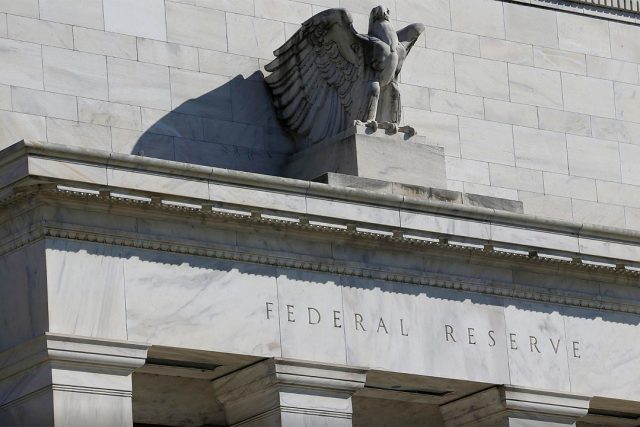
Fed delivers small rate increase; Powell suggests ‘couple’ more hikes coming

REUTERS

WASHINGTON – The Federal Reserve said on Wednesday it had turned a key corner in the fight against high inflation, but that “victory” would still require its benchmark overnight interest rate to be increased further and remain elevated at least through 2023.

In announcing its latest policy decision, the U.S. central bank scaled back to a quarter-percentage-point rate increase after a year of larger hikes and swept aside in its statement the long list of reasons, from war to the pandemic, that were driving prices higher to say simply that “inflation has eased.”

Yet policymakers also projected “ongoing increases” in borrowing costs would be needed, a still open-ended commitment that did not yet pinpoint when the rate hikes might stop, and pushed back against an expectation in financial markets that the Fed would pause soon and, indeed, cut rates later this year.

Investors nevertheless took a dovish cue from remarks by Fed Chair Jerome Powell, who referred repeatedly during a news conference to the “disinflationary” process that now appeared to be underway. Equity markets rose as Powell spoke and investors slightly boosted bets for coming rate cuts.

Meanwhile, Powell insisted that rate cuts are not in the offing, and took pains to walk what has become an increasingly fine line between the flow of data showing inflation in steady decline with the need to keep the public and investors attuned to the fact that interest rates will continue rising.

“We can now say for the first time that the disinflationary process has started,” Powell told reporters after the end of the Fed’s latest two-day policy meeting, with goods prices slowing, pandemic-related shortages easing, and supply chains getting back to normal. “This is a good thing.”‘EARLY STAGES’

From a peak of nearly 7% in June, the Fed’s preferred measure of inflation was 5% in December, still well above its 2% target but heading steadily in the right direction.

Yet “it’s just the early stages,” Powell said. “We’re going to be cautious about declaring victory and … sending signals that we think that the game is won, because we’ve got a long way to go.”

Important segments of the economy, including broad swaths of the service sector, have yet to see inflation slow, the Fed chief said, while a high level of job openings and still-strong wage increases showed the labor market was “extremely tight.”

“The labor market continues to be out of balance,” Powell said, flagging the fact that Fed officials feel it is likely that the unemployment rate will need to rise from its current low level of 3.5% for inflation to complete the journey back to the 2% level.

The Fed’s statement on Wednesday marked its first explicit acknowledgment of slowing inflation after a year in which prices accelerated much faster than anticipated – requiring a series of rapid three-quarters-of-a-percentage point and half-percentage-point rate increases to match the outbreak of rising prices.

Dynamics that the Fed during the past year has said were driving prices higher, including the pandemic, were either dropped from the statement altogether or, in the case of the war in Ukraine, cited only as a source of “global uncertainty” rather than inflation.

The rate hikes imposed by the Fed since March have now totaled 4.5 percentage points, with the policy rate now in a range between 4.50% and 4.75%, the highest since 2007.

That is reflected in an array of consumer borrowing costs from home mortgages to car loans.

The full impact of that monetary policy tightening has yet to be felt in the economy, but has so far been absorbed without derailing the “modest” economic growth and “robust” job gains that the Fed cited in its latest statement.

It is in part that resilience that has the central bank poised for “ongoing increases” in its policy interest rate.

With inflation still high and demand in the economy stronger than many anticipated, Powell said it remains unclear just how much higher rates will need to go. As of December, Fed policymakers projected a peak policy rate in a range between 5.00% and 5.25%, consistent with what Powell said, as an aside during his news conference, were likely a “couple” more rate hikes to come.

Stocks, modestly lower ahead of the Fed rate decision, turned sharply higher as Powell spoke. The benchmark S&P 500 index ended the day with just over a 1% gain.

At the same time, the yield on the 2-year Treasury note, the maturity most sensitive to Fed policy expectations, dropped abruptly and traded down more than 10 basis points at 4.10%. The U.S. dollar slid against a basket of major trading partner currencies.

“If you were hoping for clear signs of an upcoming pause in interest rate hikes, you were left wanting. The Federal Reserve retained the phrase ‘ongoing increases’ in their statement, leaving their options open depending on what upcoming economic data says,” said Greg McBride, chief financial analyst at Bankrate.INFLATION TARGET REAFFIRMED

The Fed statement indicated that any future rate increases would be in quarter-percentage-point increments, dropping a reference to the “pace” of future increases and instead referring to the “extent” of rate changes.

Fed policymakers hope the central bank can continue nudging inflation lower without triggering a deep recession or causing a substantial rise in unemployment.

The Fed did not issue new economic projections from its policymakers on Wednesday, but did reaffirm its commitment to its 2% average inflation target as part of its annual review of operating principles. – Reuters

ECB to raise rates again and face questions about future path

REUTERS

 – The European Central Bank is set to raise interest rates again on Thursday and pencil in more hikes for the next few months, with the only open question being how big these will be.

The ECB has been increasing rates at a record pace to fight a sudden bout of high inflation in the euro zone – the byproduct of factors including the aftermath of the COVID-19 pandemic and an energy crisis that followed Russia’s invasion of Ukraine.

The central bank for the 20 countries that share the euro is seen raising its deposit rate by another half a percentage point to 2.5% on Thursday, in line with what it said in December.

This would take the rate the ECB pays on bank deposits to the highest level since November 2008, after a steady climb from a record low of -0.5% in July.

But ECB President Christine Lagarde is certain to face questions about smaller rises from next month after the US Federal Reserve slowed the pace of its own hikes on Wednesday and some data pointed to a bleaker outlook for the euro zone.

So far Lagarde has pushed back on any suggestion that the ECB is relenting in its fight against inflation and investors generally expect her and her policymaking colleagues to reaffirm that line on Thursday.

“We suspect the ECB will reiterate its hawkish message in February as there are still uncertainties regarding underlying inflationary pressures and a change of tone would undermine the ECB‘s credibility,” Annalisa Piazza, a fixed-income research analyst at MFS Investment Management, said.


The ECB said in December that rates would be increased “at a steady pace” until it is happy inflation is heading back down to its 2% target.

But that guidance is now proving a source of contention within the Governing Council.

Policy hawks who favor higher rates, such as the Netherlands’ Klaas Knot, Slovakia’s Peter Kazimir and Slovenia’s Bostjan Vasle, have explicitly called for further 50-basis-point hikes in both February and March.

But doves like Greece’s Yannis Stournaras and Italian board member Fabio Panetta have argued for smaller moves, or at least for the ECB to refrain from making commitments for March.

This tension may result in a compromise on the language, as happened in December, whereby the ECB makes the size of its next rate hike dependent on incoming data, analysts said.

“This week the doves will ensure Lagarde’s signal of another 50 bp in March is conditional,” Jim Reid, head of global fundamental credit strategy at Deutsche Bank, said.

BNP Paribas also thought the ECB might take out the reference to a “steady pace” of rate hikes or offset it so that a 50-basis-point increase would be “not predetermined (but) still a possible outcome”.


MURKY OUTLOOK

Recent economic data has painted a mixed picture.

Headline inflation has been in rapid decline since peaking at a record 10.6% in October but core prices, which exclude volatile items such as food and fuel, have been rising at a steady or accelerating pace.

The euro zone unexpectedly eked out growth in the final three months of 2022 but this was largely due to an exceptionally mild winter and a stellar performance by Ireland.

And an ECB survey showed banks were tightening access to credit by the most since the 2011 debt crisis – usually the harbinger of lower growth and slowing inflation.

To some observers, this meant the ECB would be wise not to commit to any future policy move.

“In an environment with so many exogenous influences, forward guidance would be a recipe for disappointments that could ultimately weigh on the credibility of the ECB,” Karsten Junius, chief economist at J.Safra Sarasin, said.

Financial markets expect the ECB‘s deposit rate to peak at 3.5% by the summer, which would be the highest level since the turn of the century.

The ECB is also set to reveal how exactly it plans to reduce the multi-trillion euro stock of bonds on its balance sheet, unwinding some of the asset purchases it made to boost inflation during almost a decade when it was too low.

Barclays analysts estimate that 60 billion euros worth of maturing bonds the ECB will not replace between March and June will be split roughly evenly between government bonds and other debt, comprising corporate and covered bonds as well as asset-backed securities.  – Reuters

Sustainability at DMCI Holdings

In 2022, Semirara Mining and Power Corporation (SMPC) was recognized in the ASEAN Energy Awards, Southeast Asia’s highest recognition for excellence, creativity, practicality, and dedication to a cause in the field of energy. SMPC won in the Special Submission category for its accelerated rehabilitation of its South Panian pit in Semirara Island, Antique.

DMCI Holdings (PSE: DMC) is the only publicly listed holding company in the Philippines that has construction as its core competency.

Known for its strong financial performance and resilient business portfolio, the Company has been steadily improving its Environmental, Social and Governance (ESG) initiatives to promote purposeful and sustainable growth for its stakeholders.

Advancing Environmental Stewardship

DMCI Holdings has businesses that depend primarily on natural resources. Subsidiary Semirara Mining and Power Corporation (PSE: SCC) is the largest coal producer in the Philippines, and the only domestic power producer that generates its own fuel.

In 2022, SCC completed backfilling operations in its Panian mine, once regarded as the largest open pit mine in the Philippines.

After spending P2.9 billion and 11.5 million man-hours on its Panian rehabilitation efforts, SCC was able to fill the pit with over 452 million bank cubic meters of earth material, which is enough to fill 217,000 Olympic-size swimming pools. SCC is now implementing a science-based plan to reforest the land and restore biodiversity in the area.

SCC also supports the conservation and protection of avian, marine and aquatic resources in its host communities through wildlife rescue and rehabilitation, river and coastal cleanups, mangrove reforestation, giant clam propagation, seagrass protection and coral reef rehabilitation, to name a few.

Wholly-owned DMCI Mining Corporation is engaged in the exploration, extraction and export of nickel resources, an essential raw material for the energy transition. Nickel is used to produce batteries for energy storage systems and electric vehicles.

In 2021, DMCI Mining earmarked P110 million for its six-year final rehabilitation program for its Berong mine, which was fully depleted in the fourth quarter of the same year. The program covers 109 hectares of surface mine, 209 hectares of silt control structures and 25 hectares of stockpile area. Around 14 hectares of mine access road will also be rehabilitated and turned over to the host community for their use.

Aside from mine rehabilitation, DMCI Mining is involved in environmental research, genetic resource conservation of indigenous plants, and seedlings production for reforestation activities.

Most of its subsidiaries—namely, D.M. Consunji, Inc., SCC, DMCI Power, and DMCI Mining—also have environmental management systems that are certified to the ISO 14001:2015 standard, allowing them to manage their environmental responsibilities in a systematic and consistent manner.

Zambales Diversified Metals Corporation, a subsidiary of DMCI Mining Corporation, has a College Scholarship Program for qualified residents in its host communities. Some of its scholar-graduates were eventually hired by the company.

Towards Gender Equality 

The DMCI group mostly operates in male-dominated industries: engineering and construction, mining, power generation and utilities. Despite this, DMC and SCC have been constituents of the Bloomberg Gender-Equality Index (GEI) since 2021.

Bloomberg GEI tracks the performance of public companies across the world, based on their commitment to disclosing their efforts to support gender equality through policy development, representation, and transparency.

DMC and SCC have been included in the 2023 Bloomberg GEI which measures gender equality across five pillars: female leadership & talent pipeline, equal pay & gender pay parity, inclusive culture, anti-sexual harassment policies, and pro-women brand.

Only four listed companies in the Philippines joined this year’s roster. This is the third straight year that DMC and SCC have been included in the prestigious index. 

Semirara Mining and Power Corporation has propagated over 170,000 giant clams in Semirara Island through its Semirara Marine Hatchery. Giant clams are ecologically significant because they promote marine biodiversity and serve as bioindicators of the overall health of the marine ecosystem.

Strengthening Corporate Governance

In 2022, DMCI Holdings adopted a governance framework that outlines how the group manages risks and opportunities related to ESG factors. It also formed a Strategy and Sustainability Committee to assist and advise the Board of Directors in developing, assessing, and overseeing major plans and material issues that may affect the sustainability of the Company.

To strengthen Board independence and diversity, DMCI Holdings now has three independent directors whose expertise range from investment banking, finance, economics, law, and education. Its lead independent director (ID) is also the first female ID ever elected by the Company.

With these changes, independent directors now constitute one-third of the DMC Board while female directors account for nearly half (four out of nine) of the governing body.

DMCI Holdings likewise adopted a Diversity, Equality and Inclusion policy to foster an environment where employees are offered equal opportunities, and where employees feel safe, supported, and respected no matter their gender identity, religion, position in the company, or anything else that makes each different.


Spotlight is BusinessWorld’s sponsored section that allows advertisers to amplify their brand and connect with BusinessWorld’s audience by enabling them to publish their stories directly on the BusinessWorld Web site. For more information, send an email to online@bworldonline.com.

Join us on Viber to get more updates from BusinessWorld: https://bit.ly/3hv6bLA.

Factory activity highest in 7 months

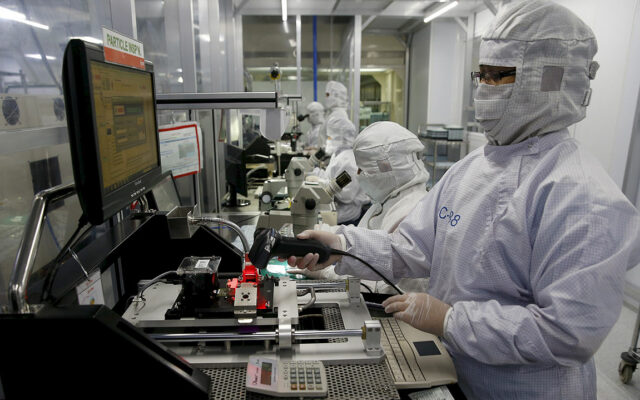
A worker uses a microscope at an electronics manufacturing assembly plant in Biñan, Laguna, April 20, 2016. — REUTERS

By Luisa Maria Jacinta C. Jocson, Reporter

FACTORY ACTIVITY in the Philippines continued to expand, hitting a seven-month high in January, as firms ramped up production levels due to an uptick in foreign demand.

The S&P Global Philippines Manufacturing Purchasing Managers’ Index (PMI) rose for a third straight month to 53.5 in January from 53.1 in December. This was the Philippines’ highest PMI reading since 53.8 in June 2022.

A PMI reading above 50 denotes improvement in operating conditions compared with the preceding month, while a reading below 50 signals deterioration.

Manufacturing Purchasing Managers’ Index (PMI) of select ASEAN economies, January 2023“Operating conditions across the Filipino manufacturing sector improved solidly during January, according to the latest PMI data. Sharp upturns were noted in both output and new orders, as panelists cited increased demand for Filipino manufactured goods,” Maryam Baluch, economist at S&P Global Market Intelligence, said in a report released on Wednesday.

The headline PMI measures manufacturing conditions through the weighted average of five indices: new orders (30%), output (25%), employment (20%), suppliers’ delivery times (15%), and stocks of purchases (10%).

The Philippines had the second-highest PMI reading among six Association of Southeast Asian (ASEAN) member countries, just behind Thailand (54.5) and ahead of Indonesia (51.3).

On the other hand, factory activity in Myanmar (49.6), Vietnam (47.4) and Malaysia (46.5) contracted during the month.

Overall, the ASEAN manufacturing sector jumped to a three-month high of 51 in January, from 50.3 in December.

STRONGER DEMAND
S&P Global noted a sharp rise in production levels, which expanded for a fifth month in a row.

“Anecdotal evidence pointed to increasing demand for Filipino manufacturing goods. Similarly, new orders also rose at a faster pace in January,” it said.

Foreign demand for Philippine-manufactured goods also rose in January.

“Growing international client numbers and stronger demand from China helped revive exports for the first time in 11 months,” S&P Global said.

Firms increased purchasing activity in January, with the pace of expansion one of the quickest on record.

Manufacturing companies also posted an increase in the level of unfinished work in January, which S&P Global said was only the fifth month of improved work backlog since January 2016.

“For the first time in a year, holdings of post-production inventories fell as firms utilized stocks to meet higher new orders,” it said, adding the drop was “slight.”

Despite stronger demand, S&P Global noted price pressures eased further in January.

“The pace of input price inflation was the slowest in two years and below the survey average, with charges levied also rising at a softer rate than that seen in over a year,” it added.

Ms. Baluch noted that the Bangko Sentral ng Pilipinas’ (BSP) aggressive tightening was effective as prices continued to ease in January.

“Encouragingly, demand has yet to be impacted negatively by policy changes,” she said.

The BSP raised rates by a total of 350 basis points (bps) last year. BSP Governor Felipe M. Medalla earlier signaled a 25- to 50-bp hike at the central bank’s first policy meeting of the year on Feb. 16.

“Additionally supply chain pressures also eased further, with panelists citing that improved infrastructure, more vendors and lifting of port restrictions helped with delivery times,” Ms. Baluch said.

However, hiring activity remained slow in January.

The S&P Global report showed the seasonally adjusted employment index edged closer to the 50 neutral mark, indicating only a fractional rise in employment numbers in January.

ING Bank N.V. Manila Senior Economist Nicholas Antonio T. Mapa said improved supply chain conditions and demand helped boost factory output in the first month of 2023.

“Supply chain conditions also (eased), which helped keep production costs down, a sign that the economy continues to reopen. Demand (was) also evident, notably also from abroad, which bodes well for export orders,” he said in a Viber message.

“The one disappointment would be the lack of pickup in labor market improvement as hiring was largely flat,” he added.

Rizal Commercial Banking Corp. Chief Economist Michael L. Ricafort said that the reopening of the economy drove manufacturing activity higher.

“The latest local manufacturing PMI gauge generally improved in recent months amid measures to further reopen the economy towards greater normalcy,” he said in an e-mail.

Mr. Ricafort added that the boost in foreign and local tourism also supported the recovery of businesses, including some manufacturers.


PEZA approves P6.4-B investments in January

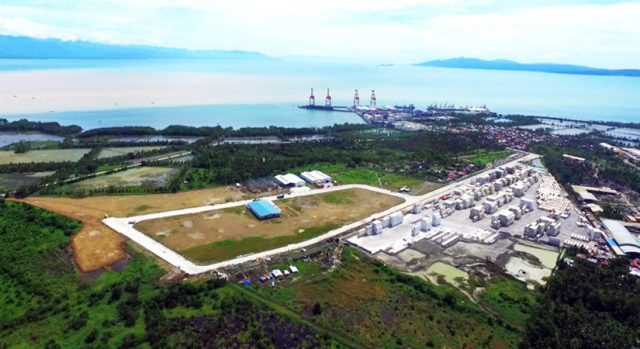
ANFLOINDUSTRIALESTATE.COM

THE PHILIPPINE Economic Zone Authority (PEZA) greenlit P6.39 billion worth of investments in January, which includes the development of an information technology (IT) center in Makati City.

In a statement on Wednesday, PEZA Officer-in-Charge Tereso O. Panga said the board approved last week 19 new and expansion projects of economic zone locators and developer/operators worth P6.39 billion.

He noted this is 83.69% higher than the P3.48-billion investments approved in January 2022.

“With the positive start of the year, we are bullish with our outlook this year, targeting a 10% investment growth based on the initial locator sector targets,” Mr. Panga said.

The biggest project approved by the PEZA board was an economic zone development envisioned as an IT center in Makati City that is expected to generate P4.116 billion worth of investments.

PEZA said the remaining P2.277 billion worth of approved investments will come from 18 new and expansion projects of registered locator companies. Broken down, the companies are comprised of 11 export manufacturing enterprises, four facilities enterprises, two IT enterprises, and one domestic market enterprise.  

According to the PEZA, the projects will be located in Makati City, Pasay City, Calabarzon, Cebu City, and South Cotabato.   

PEZA approved P140.7 billion worth of investments in 2022.   

Meanwhile, Mr. Panga said the inclusion of the ecozone development program in the Philippine Development Plan (PDP) 2023-2028 will help attract more investors.

“We are positive that more ecozones will be approved and created especially in the countryside,” he said.

Under the PDP 2023-2028, the PEZA is mandated to accelerate the implementation of the ecozone transformation roadmap that expands the various types of special ecozones that can be registered under the agency.

“Ecozones can be shields to soften the landing of the headwinds, the external constraints, and all these global disruptions happening especially during this time. The other side to this is that ecozones can be economic drivers to accelerate economic recovery and growth,” Mr. Panga said. — Revin Mikhael D. Ochave 

Marcos to sign 7 bilateral deals during Japan trip

A Japan Yen note is seen in this illustration photo taken June 1, 2017. — REUTERS

PRESIDENT Ferdinand R. Marcos, Jr. is expected to sign seven key bilateral deals covering infrastructure, defense, and tourism, among others, during his trip to Japan next week.

Mr. Marcos’ working visit from Feb. 8 to 12 also gives the Philippines a chance to further boost exports to Japan, Foreign Affairs Assistant Secretary for Asia and Pacific Affairs Nathaniel Imperial told a news briefing.

“During the visit, we anticipate the signing of seven key bilateral documents or agreements covering cooperation in infra development, defense, agriculture and information and communications technology — areas that are in the President’s priority agenda,” he said.

In terms of infrastructure cooperation, the Philippine government is set to sign the exchange of notes on loan agreements for the North-South Commuter Railway project from Malolos, Bulacan province to Clark International Airport, and from Manila’s Tutuban to Calamba, Laguna province.

“This will involve around $3 billion worth of loans that will be later signed also by the Department of Finance (DoF),” Mr. Imperial said.

Also on the list are agreements on humanitarian assistance and disaster relief cooperation between the Philippine Defense department and its Japanese counterpart.

“We are expecting the Japan trip to be more productive than the President’s speaking tour in Davos,” Terry L. Ridon, a public investment analyst, said in a Facebook Messenger chat.

“We are looking forward to continuing Japanese commitments towards completing ongoing infrastructure projects, particularly the Metro Manila subway and the North-South Commuter Railway.”

Mr. Imperial said the government hopes that the working visit would give Philippine agricultural exports, especially bananas and Hass avocados, better market access in Japan.

Japan has been the country’s biggest bilateral source of active official development assistance, providing concessional loans to finance important infrastructure and capacity building projects as well as programs on social safety, education, agriculture and science and technology, among “other high impact programs,” Mr. Imperial said.

Mr. Marcos will be joined by his wife First Lady Liza Araneta-Marcos and key administration allies including Senate President Juan Miguel F. Zubiri, House Speaker Ferdinand Martin G. Romualdez, and former President Gloria Macapagal-Arroyo.

His delegation also includes at least six Cabinet secretaries including Benjamin E. Diokno of the Finance department, Alfredo E. Pascual of the Trade department, Rafael P.M. Lotilla of the Energy department, Esperanza Christina Codilla-Frasco of the Tourism department, and Enrique A. Manalo of the Foreign Affairs department.

“Other Cabinet officials and undersecretaries” including Special Assistant to the President Antonio Ernesto F. Lagdameo, Jr. will also be part of the Philippine delegation, Mr. Imperial said, adding that there are around 150 “who signed up to join” the Philippine business delegation.

“As for the number of meetings and business activities lined up for the President, we foresee a lot of business deals to be signed in various areas,” he said, without giving details.

DFA’s Mr. Imperial said Mr. Marcos will also have roundtable and business meetings. A business seminar will also be held on Feb. 9 and 10.

“The President will also be meeting with CEOs of Japanese shipping companies and associations to advance partnerships with Philippine stakeholders in maritime education and welfare programs for our seafarers,” he said.

Mr. Marcos is also expected to meet with over a thousand Filipino migrant workers in Tokyo on Feb. 12, before returning to Manila in the evening.

Michael Henry Ll. Yusingco, a policy analyst, criticized the large retinue of government officials accompanying Mr. Marcos, saying this is “unnecessary and really just a waste of taxpayers’ money.”

“The least the government can do is to limit the politicizing of these trips. It will boost the credibility of the government and will demonstrate a firm resolve to protect our national interest,” Mr. Yusingco said in a Facebook Messenger chat. — Kyle Aristophere T. Atienza

Greenhills, Shopee on USTR list of notorious markets for counterfeits

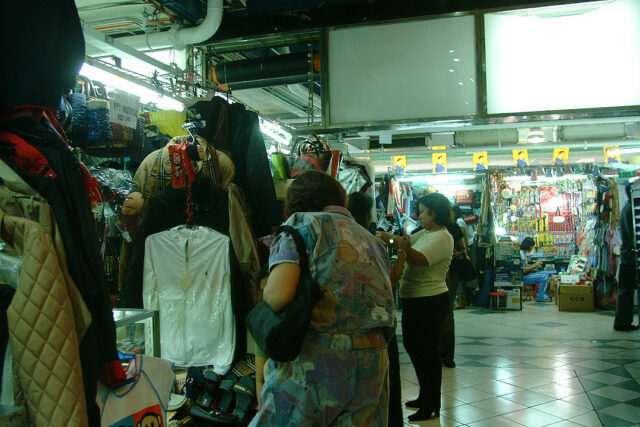
BW FILE PHOTO

THE GREENHILLS Shopping Center in San Juan City and popular e-commerce platform Shopee are included in the United States Trade Representative’s (USTR) list of notorious markets for counterfeit and pirated goods.

In a report released on Jan. 31, the USTR identified 33 physical markets including Greenhills Shopping Center, Bangkok’s MBK Center, Beijing’s Silk Market and Kuala Lumpur’s Petaling Street Market, that continue to enable “substantial trade” in counterfeit goods.

It also identified 39 online markets including Shopee, Taobao, and Aliexpress, that facilitate the sale of products that are known as counterfeit.

“During the pandemic, many sellers of counterfeit goods adapted by transitioning from physical stores to e-commerce platforms and using the physical storefronts to facilitate the fulfillment of online sales,” the USTR said, noting that online sellers now use social media ads, hidden links, and drop shipping schemes to evade authorities.

In the Philippines, the USTR said many stalls in Greenhills Shopping Center sell fake goods such as electronics, perfumes, watches, shoes, accessories, and fashion items. A new seven-story building will be opened in Greenhills early this year.

“Greenhills Shopping Center has expressed willingness to cooperate with authorities and a belief that the opening of this (new) building will provide leverage to transition sellers of counterfeit goods into ‘legitimate’ sellers,” it said.

The USTR noted that Philippine law enforcers have taken action to seize counterfeit luxury goods, which are sold openly in the shopping center. For instance, authorities seized $1.4 million worth of counterfeit luxury goods from sellers in Greenhills.

“Right holders report enforcement activity in the form of warning letters and subsequent suspension of business, but the targets of enforcement often evade such efforts by moving the location of their stalls,” it said.

The Intellectual Property Office of the Philippines (IPOPHL) said that it has proposed a work plan to address piracy and counterfeiting activities in Greenhills.

In a separate statement, the IPOPHL said the draft plan is being reviewed by the members of the interagency National Committee on Intellectual Property Rights (NCIPR).

The NCIPR is set to meet later this month to discuss the draft plan, which includes strategies to address the proliferation of counterfeit items in Greenhills. It wants the shopping center operator to implement stricter monitoring of stalls and to slap bigger penalties against sellers of counterfeit items.

Under the plan, NCIPR will work with brand owners to submit affidavits of complaints directly to the mall operator, which would “indicate their expression of filing a legal complaint and as notice to the mall’s management of potential violators.”

“Truly, clearing Greenhills of IP infringement activities will not be an easy feat. Its long-standing reputation as a market for Class As and Bs and pirated DVDs has cut across generations. The problem demands the close and consistent collaboration among NCIPR members, local governments, brand owners and Greenhills — both its managers and vendors,” IPOPHL Director-General Rowel S. Barba said.   

ONLINE PLATFORMS
Meanwhile, the USTR said there has been growing concern from right holders about the proliferation of counterfeit sales on social commerce platforms amid the e-commerce boom during the pandemic.

“Right holders state that while certain social commerce platforms have taken positive steps to implement anti-counterfeiting policies, many others still lack adequate anti-counterfeiting policies, processes, and tools such as identity verification, effective notice and takedown procedures, proactive anti- counterfeiting filters and tools, and strong policies against repeat infringers,” it said.

The USTR identified Shopee as one of the online markets where right holders have reported “high volumes of counterfeits” and have complained about “cumbersome and duplicative processes among the individual country-focused platforms, differing requirements for takedown requests, and slow response times.”

Shopee launched a pilot program for its new brand protection portal in 2022, but the USTR said right holders said the platform should improve procedures for vetting sellers and increase penalties against sellers of counterfeit goods.

The USTR also identified AliExpress, which is owned by China’s Alibaba, as a “dominant upstream distributor of counterfeit goods in wholesale quantities for online markets in the United States and other countries.” Another Alibaba-owned platform Taobao was also included in the USTR’s list.

“Another key concern of right holders is that penalties for repeat infringers do not stop known counterfeit sellers on AliExpress from remaining on the market, such as by operating multiple accounts,” it said. — RMDO