Home Blog Page 5211

BPOs given Dec. 31 deadline to switch registration to BoI

THE Philippine Economic Zone Authority (PEZA) said business process outsourcing (BPO) companies intending to switch their registration to the Board of Investments (BoI) have until Dec. 31 to do so. PEZA described this process as a “paper transfer.”

In a statement on Thursday, the PEZA said it issued Memorandum Circular (MC) No. 2022-067 on Oct. 21, which fixed the deadline for the end of the year.

BoI-registered BPOs, which are also known as Information Technology-Business Process Management (IT-BPM) companies, will be allowed to offer their employees unrestricted work-from-home (WFH) arrangements without losing their access to incentives.

While they were regulated by PEZA, BPOs were required to operate mostly within economic zones if they were to retain their incentives.

Regulation by the BoI was the compromise arrived at to keep BPO companies in possession of their incentives. The BoI does not enforce the economic zone requirement on the companies it oversees.

According to PEZA, MC No. 2022-067 supplements MC No. 22-19 issued by the Department of Trade and Industry on Oct. 18, which outlined the procedures for transferring registration from PEZA to the BoI.

“Under this arrangement, (the) BoI will issue a certificate of registration to transferee registered business enterprises (RBEs) for their conduct of 100% WFH and where PEZA will continue to administer to them the fiscal and non-fiscal incentives for the sunset period,” PEZA said.

PEZA added that the RBEs covered are not deemed to be cancelling their PEZA registrations, allowing PEZA to continue earning revenue from them.

“PEZA shall continue to administer the fiscal incentives of the RBEs such as validation of the income tax holiday incentive and issuance of Certificate of Entitlement to Tax Incentives (CETI), value-added tax certifications, and other applicable certificates,” according to the MC.

“Non-fiscal incentives such as the PEZA Visa, automated importation, issuance of building permits, and others shall still be provided by PEZA to the RBEs registering with the BoI,” it added.

However, PEZA said it has issued specific guidelines in the MC directing registered IT-BPM companies to maintain offices within PEZA-registered IT centers or buildings.

According to the MC, failure to comply will result in the cancellation of the PEZA and BoI registrations. 

“This is necessary in order for PEZA to retain its authority/jurisdiction over the transferee RBEs, which are required under the rules to operate inside the economic zone.” PEZA Officer-in-Charge and Deputy Director General for Policy and Planning Tereso O. Panga said.

Mr. Panga said the so-called “paper transfer” is “an interim measure to preserve their export enterprise status as they avail of 100% WFH arrangement with full incentives” when they move to the BoI, Mr. Panga said.

Mr. Panga said PEZA is hoping for a new law or policy formally allowing unrestricted hybrid work arrangements for IT locators in economic zones. Current tax law requires economic zone locators to work mostly onsite to continue enjoying incentives.

“We expect that PEZA will retain its mandate to promote and facilitate investments and keep the separate customs territory status vested in the ecozones to ensure the competitiveness of our IT sector,” Mr. Panga said.

The Fiscal Incentives Review Board has ruled that registered IT-BPM companies in economic zones can implement 100% WFH arrangements and still avail of incentives by transferring their registration from PEZA to BoI.

Republic Act No. 11534, or the Corporate Recovery and Tax Incentives for Enterprises imposes the onsite work requirement on economic zone locators. — Revin Mikhael D. Ochave

Meat processors lobby for continued low tariffs on deboned meat imports

Employees arrange canned goods on a shelf at a supermarket, Aug. 26. — PHILIPPINE STAR/EDD GUMBAN

MEAT processors said the retention of the 5% most-favored nation tariff on mechanically deboned meat (MDM), which it relies on as a key raw material, will help keep food inflation in check.

Jerome D. Ong, vice-president of the Philippine Association of Meat Processors, Inc. (PAMPI), said at a virtual hearing of the Tariff Commission (TC) that the group proposes to keep tariffs at 5% for chicken and turkey MDM between 2023 and 2025.

MDM is used to make hotdogs, dim sum products like siomai, and meat loaf.

“PAMPI’s petition is intended primarily to support the administration’s determined efforts to keep the national economy stable and help control inflation, especially food inflation. The stable economy ensures that processed meat manufacturers under PAMPI as well as those outside of PAMPI would be able to continue producing food for our people at affordable prices,” Mr. Ong said.  

The 5% tariff rate currently enjoyed by chicken and turkey MDM imports is authorized by Executive Order No. 123 signed by former President Rodrigo R. Duterte in January 2021. It is set to expire by the end of the year.

If not extended, tariffs on chicken and turkey MDM will return to 40% by Jan. 1.

“The 5% tariff on MDM helps keep prices of processed meat products reasonable,” Mr. Ong said.

“If we make it three years, I hope domestic sources of MDM will become available by then and we will not have to depend on imported MDM. As much as possible, we would like to buy all of our materials locally and support domestic producers,” he added.

Meanwhile, Samahang Industriya ng Agrikultura Executive Director Jayson H. Cainglet said the government loses at least P6 billion in revenue each year with tariff rates at 5%.  

“For MDM alone, we computed foregone government revenue of at least P6 billion annually. Because of the post-pandemic situation, the overarching economic blueprint of most governments is to raise government revenue to support economic recovery. Depriving the government of the much-needed revenue is self-serving,” Mr. Cainglet said.

“It is time to help the agriculture industry. It is clear in the marching orders of the new government (is to) support local production,” he added.

Mr. Cainglet said that the reduced tariff did not result in lower prices for canned and processed meat.

“The very basis of the proposal is to reduce the retail price. We looked at the data, the price never went down when the tariff was reduced,” Mr. Cainglet said.

The latest suggested retail price list of the Trade department issued on Aug. 12 indicates that the price of processed canned meat rose 6%.

According to TC data presented during the hearing, chicken MDM imports in the first half of 2022 increased 21% to 109,000 metric tons (MT), while turkey MDM imports fell 60% to 171 MT.

The TC also found that between 2019 and June 2022, the main source countries were Brazil with 34% of chicken MDM, the Netherlands 25%, Belgium 12%, the US 10%, and Canada 7%.

Some 97% of turkey MDM imports were from Canada. Brazil accounted for 2%, while the Netherlands and Turkey both supplied less than 1%. — Revin Mikhael D. Ochave

Inventory of refined sugar imports up 20% year on year at mid-October

BUREAU OF CUSTOMS FACEBOOK PAGE

THE inventory of imported refined sugar at mid-October is about 20% higher than their year-earlier levels, a sugar planter’s representative on the Sugar Regulatory Administration (SRA) said.

Pablo Luis S. Azcona, a member of the SRA board, said the estimate for inventory levels is as of Oct. 16. He did not give specific volume estimates.

“The bottlers already have their sugar,” he said in a Viber message. “If we are 20% better than last year, and we had no complaints from bottlers in 2021, then I guess the ‘so-called’ shortage has been addressed and fixed.”

He said imports include the 150,000 metric tons of refined sugar shipped in under Sugar Order No. 2.

The order requires the imports to be divided equally between industrial users and consumers.

Albay Rep. Jose Ma. Clemente S. Salceda has said that the government could lose about P2.5 billion a month in taxes on sweetened beverages if beverage companies are unable to obtain refined sugar.

Mr. Salceda said jobs, taxes and industry growth are on the line if industrial users are unable to secure their supply. — Kyanna Angela Bulan

Land acquisition, right of way seen as key hurdles for PPP projects

Workers are seen mixing cement at a construction site in Quezon City, May 19, 2020. — PHILIPPINE STAR/ MICHAEL VARCAS

REFORMS to streamline the process for land acquisition and obtaining right of way will remove the biggest hurdles to projects pursued under public-private partnership (PPP) arrangements, infrastructure stakeholders said.

“The challenge is acquiring the right of way and the get the balance of risk allocation right between the private and public sector,” Asian Development Bank Office of Public-Private Partnerships Director Siddhartha Bhaskar Shah said at a briefing on Thursday during the Philippine Infrastructure Summit.

Public Works Undersecretary Maria Catalina E. Cabral said that process for right-of-way acquisition is dictated by law and is “tedious.”

The law on right of way “is very tedious. It’s a long process (that affects) funding,” she said, “adding that project officers must contend with coordinating with local government units, the courts in charge of expropriation, among others.” 

“The objective is to ease the environment and enable more private sector (investment) to come in. There are still many challenges, and we are revisiting the current law to propose new amendments to ease acquiring land,” she added.

Earlier this month, the revised implementing rules and regulations (IRR) for the Build-Operate-Transfer Law took effect. 

The amendments addressed financial viability concerns as well as bottlenecks that caused delays. The IRR arose from concerns that the private sector was bearing the risk for delays in deliverables the government is responsible for. 

Ferdinand A. Pecson, former executive director of the Public-Private Partnership Center of the Philippines, called for encouraging competition amongst investors. 

“We need to address the current heavy concentration of investments amongst few players in the industry and that is because the way to maximize value is to have more competition, more players. That would help to reduce the cost of user fees or government payments,” he said.

“We also cannot sustain a situation where we rely mostly on commercial banks to provide the debt financing for PPPs. We do have potential sources of financing (from) pension funds or insurance companies. These remain untapped sources of financing,” he added.

Ms. Cabral said that local government units should be capacitated to implement their own projects.

“Infrastructure should not just be on a national planning scale, it should be synchronized with local planning,” she said.

“We know the National Government is in charge of financing transportation infrastructure, but in many large cities abroad, it is municipal transit authority that undertakes the development of the transit system,” Management Association of the Philippines Infrastructure Committee Chair Eduardo H. Yap said.

Mr. Yap noted that the Mandanas-Garcia ruling will help local governments finance more projects.

“It’s a question of whether they have the managerial expertise to undertake and utilize the financial resources,” he added.  — Luisa Maria Jacinta C. Jocson

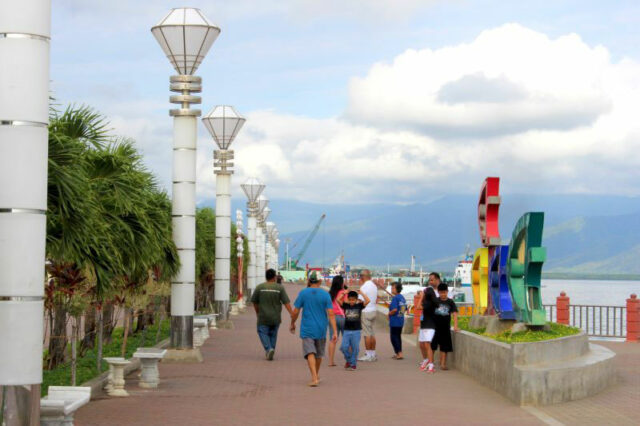
Puerto Princesa City sees fish port project, carbon-neutral policies driving growth

PHILSTAR FILE PHOTO

THE Puerto Princesa government said its investment promotion plan will center on the area’s fisheries and tourism potential, young workforce and favorable business environment.

“The city is poised to become the region’s economic growth hub,” it said, citing the city’s environment-friendly approach to economic development.

It said Puerto Princesa, the capital of Palawan province, is “one of the cleanest and greenest cities and the first carbon-neutral city in the Philippines,” Mayor Lucilo R. Bayron said in a speech delivered at the Puerto Princesa investment briefing on Thursday.

Puerto Princesa’s territory is 219,339.40 hectares across 66 barangays. According to the 2020 census, it is home to 307,079 people.

Mr. Bayron said Palawan waters are considered “the richest fishing grounds in the country.” He added that catch from the area supplies markets as distant as Metro Manila.

He said the city is developing the Puerto Princesa Integrated Fish Port, which will involve upgrades to fish ports in Barangay Bancao-Bancao, which is on the Sulu Sea, and Buenavista, in Ulugan Bay on the west coast of Palawan island.

Mr. Bayron said Puerto Princesa is working on Cuyito Bayfront, a 9.9-hectare site that will serve as a commercial and recreational space for locals and tourists. — Matthew Carl L. Montecillo

Filipino-Hawaiian business delegation tours Clark

New Clark City

THE Bases Conversion and Development Authority (BCDA) is exploring possible investments in New Clark City and the Clark Freeport Zone by members of a business delegation sent by the Filipino Chamber of Commerce of Hawaii (FCCH).

BCDA President Aileen R. Zosa said during a tour organized as part of the FCCH’s 30th Goodwill and Trade Mission to the Philippines on Oct. 25 that New Clark City was highlighted as a potential investment and growth hub for Central Luzon.  

The site visit was organized by the BCDA, Clark Development Corp., and Subic-Clark Alliance Development Council.

“We encourage you to take a look at New Clark City, which is envisioned to be the country’s next smart, sustainable and green metropolis. Partner with us and be a part of this city’s growth story,” Ms. Zosa said.

Rynah F. Ventura, CDC vice-president for business development and business enhancement, said the trade mission “will allow industry leaders to explore the various investment opportunities in Clark and the Philippines. We hope this will also stimulate more interest, meaningful collaboration, and stronger ties,” Ms. Ventura said.

The FCCH delegation consisted of about 40 members. It has been sending trade missions to the Philippines since 1963. — Revin Mikhael D. Ochave

Manila’s daily infections may hit 18,000 sans masks

PHILIPPINE STAR/ WALTER BOLLOZOS

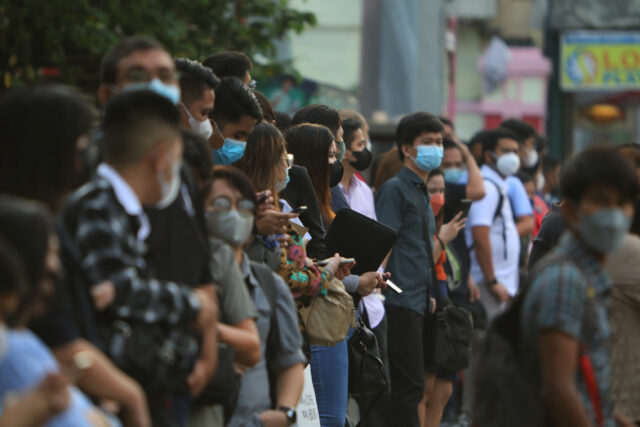
DAILY coronavirus infections in the Philippines could hit 18,000 once the mask mandate indoors is lifted, according to health authorities.

“Towards November or December, our cases might increase from 2,500, that’s the lower limit, to as high as 18,000,” Health officer-in-charge Maria Rosario S. Vergeire told the ABS-CBN News.

President Ferdinand R. Marcos, Jr. would make mask-wearing indoors optional, as the Southeast Asian nation tries to attract more foreigners into its tourism industry, Tourism Secretary Ma. Esperanza Christina Codilla Frasco said this week.

People must still wear face masks in public transportation and medical facilities, she said. Unvaccinated people, those with health complications and senior citizens are still “highly encouraged” to wear face masks.

Pre-departure RT-PCR testing for inbound travelers would also be removed.

The president was expected to issue an executive order about the policy after meeting with Cabinet officials on Tuesday, she added.’

Ms. Vergeire said different scenarios if face masks rules were relaxed, had been presented to an inter-agency task force on the pandemic. “We had this compromise that there would be a unified messaging, wherein we should teach people that this is an informed choice,” she said in mixed English and Filipino.

The Department of Health (DoH) has been asking Filipinos to keep wearing masks even after the government did away with the mask mandate outdoors.

Ms. Vergeire said coronavirus infections would probably balloon not only because of relaxed mask rules but also due to the threats from new subvariants and as Filipinos move more freely. “What we need to preserve would be our healthcare capacity.”

The Philippines posted 11,995 new coronavirus infections in the past week with a daily average of 1,714 cases. The country has also detected its first cases of the new Omicron XBB subvariant and XBC variant, which is said to be a recombinant of the Delta and BA.2 variants.

Mr. Marcos, 65, has yet to appoint a Health secretary. Last week, he told reporters he would only appoint a DoH chief once the country’s coronavirus situation returns to normal.

Experts earlier said business establishments are not prepared to improve ventilation indoors.

Businessman Jose Maria A. Concepcion III said it is time to do away with the mask mandate to boost economic recovery.

In a statement, the entrepreneur, who is also a member of the government’s Private Sector Advisory Council, said the government must pave the way for economic recovery.

“I think our problem now is not so much COVID-19 but ensuring the survival of the economy,” he said. “There are several factors that are making the case for the lifting of the protocols and I believe that the timing is just right.”

Mr. Concepcion said scrapping the mask mandate indoors would improve the competitiveness of the country’s tourism sector.   

“The strong dollar is attracting visitors who stand to get more for their dollar,” he said. “The other countries know this and they are aware of how important it is to show visitors that they have already moved on from COVID-19.”

Mr. Concepcion also said physical distancing “does not make sense at this point” because it limits the capacities of businesses seeking to boost revenue during the holiday season.

People should still wear masks in public transportation where physical distancing is impractical, he added.

“Consumption is very important at this point, and with our own kababayans struggling with high prices, we have to bring in the consumer spending from outside, which are the tourists,” Mr. Concepcion said.   

“The key word to remember here is ‘mandatory,’” he said. “People can still choose to wear their face masks and keep a safe distance from other people. If they are not confident about their protection, they can continue to observe the protocols. No one is forcing them.” Kyle Aristophere T. Atienza and Revin Mikhael D. Ochave

Lawmakers seek probe of martial law ‘rebranding’

LATE PRESIDENT Ferdinand E. Marcos, Sr. — COMMONS.WIKIMEDIA.ORG

PARTY-LIST representatives have filed a resolution asking Congress to probe the state’s alleged efforts to revise Philippine history by putting the martial rule era of the late dictator Ferdinand E. Marcos in school modules in a positive light.

“School modules, regardless of whether or not they are used for the Araling Panlipunan (Social Studies) subject, should contain facts,” Party-list Rep. France L. Castro said in a statement on Thursday.

The congressmen condemned the “rebranding” of the martial law era as “New Society,” based on a school module printed by the Education department.

They said the historical revision is “consistent with the acts and statements of President Ferdinand R. Marcos, Jr. and his family” in rebranding the period as a “golden era.”

The country’s economy plunged into recession in 1984 and 1985, when economic output shrank by 7.3%, according to the resolution. Inflation in 1984 was 49.5%, while the poverty incidence in 1985 was 59%, it added.

Ms. Castro and fellow party-list Reps. Raoul Danniel A. Manuel and Arlene D. Brosas filed House Resolution 496.

The lawmakers said the distortion violates the intent of a law that recognizes the sufferings of human rights victims during the dictatorship.

“Education must shine a light on, not whitewash the darkness and horror cast on the people when power is concentrated in a person, his family and a cabal of the economic elite,” they said.

The lawmakers also pushed the restoration of Philippine history subjects in high school to fight misinformation.

Vice-President and Education Secretary Sara Duterte-Carpio on Tuesday said her agency was not seeking to revise Philippine history by rebranding the martial law regime of the late dictator.

The Department of Education (DepEd) is preoccupied with education programs and does not have time for historical revisionism, she added. “DepEd is not in the business of erasing these facts and replacing them with something else.”

Ms. Carpio teamed up with President Ferdinand R. Marcos, Jr., the son of the dictator, for the top two government posts in the May elections.

A senior high school student from Marinduque province earlier posted on social media, including a photo of a DepEd module, that her class was being taught to call the dictatorship from 1972 to 1981 the “period of the New Society.”

Ms. Carpio accused critics of using the agency to incite feelings against the dictator’s martial rule. — Kyanna Angela Bulan

Marcos applauds China for $400-M bridge connecting Davao and Samal

AMBASSADOR HUANG XILIAN FACEBOOK PAGE

PRESIDENT Ferdinand R. Marcos, Jr. on Thursday called China an “active partner” of the Philippines as he led the groundbreaking ceremony for the construction of a $400-million (P23.3 billion) bridge by a Chinese company in the country’s south. 

The 3.86-kilometer four-lane bridge, which will connect Samal Island to Davao City, will serve at least 25,000 vehicles daily by 2027, Mr. Marcos said in a speech, based on a transcript sent by the presidential palace.

He said the bridge called Samal Island-Davao City Connector would boost economic development in the two areas, create jobs and improve social services.

China Road and Bridge Corp., a unit of China Communications Construction Co., will build the bridge. About 90% of the project will be funded by a loan from China.

“It is for us to also express our gratitude to the government of the People’s Republic of China as they were an active member and have always been a dependable partner in this infrastructure development program,” Mr. Marcos said.

The bridge is a “testament to the strong and ever-growing foundation of the bilateral relations and economic cooperation” between Manila and Beijing, he added.

“This is not the only project that we have depended upon, the concessional loans and even grants from the government of the People’s Republic of China, and it is clear to see the benefits that those projects bring to our people, to our economy and to the Philippines.”

Chinese Ambassador to the Philippines Huang Xilian, who was present during the ceremony, described the project as “a new milestone of the China-Philippines friendship.”

“[This is] a flagship project of our government-to-government cooperation,” he said. “It honors the strong bond of practical cooperation and close friendship between China and the Philippines.”

“With an investment of about $400 million, the construction of the bridge will bring thousands of jobs to Filipinos.”

Environmentalists warned the sea-crossing bridge project threatens protected areas in Davao City and Samal Island.

The bridge would destroy corals within the 7,500-square-meter Paradise Reef on Samal Island and a 2.7-hectare marine protected area in Davao, the Save Samal Reefs Alliance has said.

“Who speaks for the corals in this project? Who will answer for the communities relying on marine life in Davao Gulf when the bridge is there but the reefs are killed?” it earlier said in a statement.

Paradise Reef is home to yellow scroll, brain and table corals, giant clams, red-orange starfish and colorful tropical fish, said Joel E. Tabora, president of the Ateneo de Davao University.

“We are not against the connector bridge,” he said in a statement. “But where there are clear alternatives to destroying Paradise Reef by building the bridge to land in the Costa Marina Beach Resort, here we take a stand for the environment. Build the bridge, but preserve Paradise Reef.” — Kyle Aristophere T. Atienza

Torrential rains in parts of Luzon, Visayas expected this weekend as storm Paeng intensifies

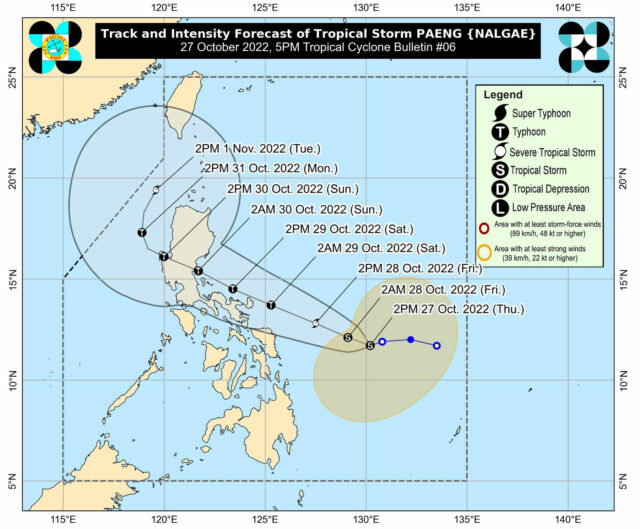
TROPICAL storm Paeng may intensify by Saturday into a typhoon, which means having maximum wind speed of 118 to 184 kilometers per hour (kph), and bring torrential rains in parts of Luzon and the Visayas, the state weather agency said on Thursday.   

Tropical cyclone wind signal #1 was already up over southern parts of the northern mainland Luzon, neighboring island provinces, and parts of Eastern Visayas in central Philippines.  

The wind signal alert prompted suspensions in sea travel.  

The Coast Guard station in Sorsogon had issued an advisory suspending all tripsto Northern Samar effective 11 a.m. Thursday.  

Paeng, the 16th storm to hit the country this year, was forecast to pass close to Catanduanes on Saturday and could possibly make landfall on Sunday in the eastern coast of Aurora or Quezon, PAGASA said in its 5 p.m. bulletin. 

Considering the southward shift in the forecast track, a possible landfall in the eastern portion of Bicol Region is not ruled out at this time,it added.   

The center of Paeng was located 510 kilometers east of Borongan City, Eastern Samar in central Philippines as of Thursday afternoon.   

It was slowly moving in a southwest direction with gale-force winds extending up to 480 km from the center.   

PAGASA said rapid intensificationin the next 72 hours was possible.   

Local governments on the typhoons path have been alerted by PAGASA to activate disaster preparedness plans, including preemptive evacuation of residents in areas at risk of flooding and landslides.   

The Energy department, meanwhile, has directed distribution utilities and other sector players to be ready for immediate response measures, “considering that we will be facing a long weekend when the tropical storm makes it landfall.”  

“The entire power system has to be protected; we have to make sure that generation plants are running. From the transmission lines to distribution, we have to be prepared,” Energy Undersecretary Felix William B. Fuentebella said a virtual press briefing on Thursday.  

Nov. 1 is a regular Philippine holiday in observance of All SaintsDay when Filipinos traditionally pay respects to their dead, while Oct. 31 has been declared a special holiday this year.    

The Philippines, an archipelago with more than 7,000 islands, is struck by an average of 20 typhoons annually. Marifi S. Jara and Ashley Erika O. Jose

Oct. 25 earthquake injuries up to 44, infra damage estimated at P58M

BFP

THE NUMBER of people injured during a magnitude 6.4 earthquake that rocked the northern Philippine province of Abra on Tuesday night has gone up to 44 from an initial count of nine, authorities said on Thursday.  

No fatalities were reported, the National Disaster Risk Reduction and Management Council (NDRRMC) said in an 8:00 am report.  

Of the confirmed injuries, 32 were in Abra while 12 were in Ilocos Norte. 

More injuries had been reported, NDRRMC spokesperson Bernardo Rafaelito R. Alejandro IV told a public briefing later in the day, as the council was still consolidating reports from local offices.  

Almost 40,000 families or 132,208 individuals have been affected by the quake, he said.  

The NDRRMC official said 2,052 houses have been damaged, 2,043 of which were partially damaged and nine were totally destroyed.  

Mr. Alejandro said 200 families or 486 people were still staying in evacuation centers.  

The earthquake has caused damage to infrastructure estimated at P57.7 million in Ilocos Region, Cagayan Valley and Cordillera regions, according to a report by state-run Philippine News Agency.   

The earthquake hit Lagayan, Abra at 10:59 p.m. on Tuesday, causing panic among residents who experienced a magnitude 7 quake in July that killed 11 people and injured hundreds.   

The Tuesday temblor was followed by than 600 aftershocks as of 7:00 a.m. Thursday. — Kyle Aristophere T. Atienza