Home Blog Page 521

BoI investment approvals reach P977B as of mid-Dec.
By Justine Irish D. Tabile, Reporter

THE DEPARTMENT of Trade and Industry (DTI), through the Board of Investments (BoI), endorsed last week 29 more projects worth P124.81 billion, bringing year-to-date approvals to P977 billion, which is only over half of the agency’s P1.7-billion full-year target.

“With a combined investment value of P124.81 billion, the projects are expected to generate 4,444 jobs nationwide, subject to confirmation by the BoI Board,” DTI said in a statement on Tuesday.

The endorsed projects are in various sectors such as renewable energy, infrastructure, transport and logistics, information technology and business process management (IT-BPM), housing, manufacturing, and tourism.

“A significant share of the total investment value is attributed to large-scale clean energy projects, including wind, solar, waste-to-energy, and battery energy storage facilities across Luzon and the Visayas,” it said.

“These projects are expected to contribute substantially to the country’s power supply while advancing national goals on energy security, sustainability, and climate resilience,” it added.

The list also includes key transport and connectivity investments, such as new-generation aircraft for domestic and international routes and maritime transport assets.

“These investments are expected to enhance regional connectivity and support the continued recovery of the transport and travel sectors,” the DTI said.

The bulk of the jobs will be generated by the IT-BPM and digital services projects across Metro Manila, Central Luzon, the Cordilleras, and Cebu. The jobs include customer support, technical services, remote staffing, and managed services.

“These developments reinforce the Philippines’ standing as a leading hub for global services,” it said.

According to the BoI, the list of approved investments includes housing and real estate projects.

“Leisure and recreation facilities included in the list are likewise expected to stimulate local economic activity and support community development,” it added.

With the latest endorsement, the BoI-approved investments for the year have now reached P977 billion. 

“[This reflects] robust investor confidence and the government’s sustained efforts to position the Philippines as a regional hub for smart and sustainable investments,” it said.

However, P977 billion is only 55.83% of the BoI’s P1.75-trillion target approvals for the year.

“While approvals have already reached P977 billion, the BoI continues to evaluate several high-ticket projects currently in the pipeline,” Trade Secretary and BoI Chairman Ma. Cristina A. Roque said.

“These major investments are undergoing due diligence and are expected to further boost the country’s overall investment performance as the year ends and into the next,” she added. 

The BoI is expected to approve more projects next week, according to DTI Undersecretary and BoI Managing Head Ceferino S. Rodolfo.

Rizal Commercial Banking Corp. Chief Economist Michael L. Ricafort said that the US reciprocal tariffs and a corruption scandal involving infrastructure projects have weakened investor sentiment in the Philippines.

“Trump’s higher tariffs, trade wars, and other protectionist measures also slowed down the global economy in terms of exports, investments, and employment amid some wait-and-see stance that, in turn, indirectly slowed down the local economy,” he said in a Viber message. 

“Local political noise in earlier months of 2025… amid the flood control infrastructure projects’ anomalies, also partly weighed on investor sentiment confidence,” he added.

Mr. Ricafort said that investors will continue to be in a wait-and-see mode until the dust settles.

Anti-corruption measures and other priority reforms “would help uplift investor confidence that would again help increase investments into the country,” he said.

Philippines improves seven spots in Government AI Readiness Index

An artificial intelligence (AI) sign is seen in this illustration taken on June 23, 2023. — REUTERS/DADO RUVIC/ILLUSTRATION

By Beatriz Marie D. Cruz, Reporter

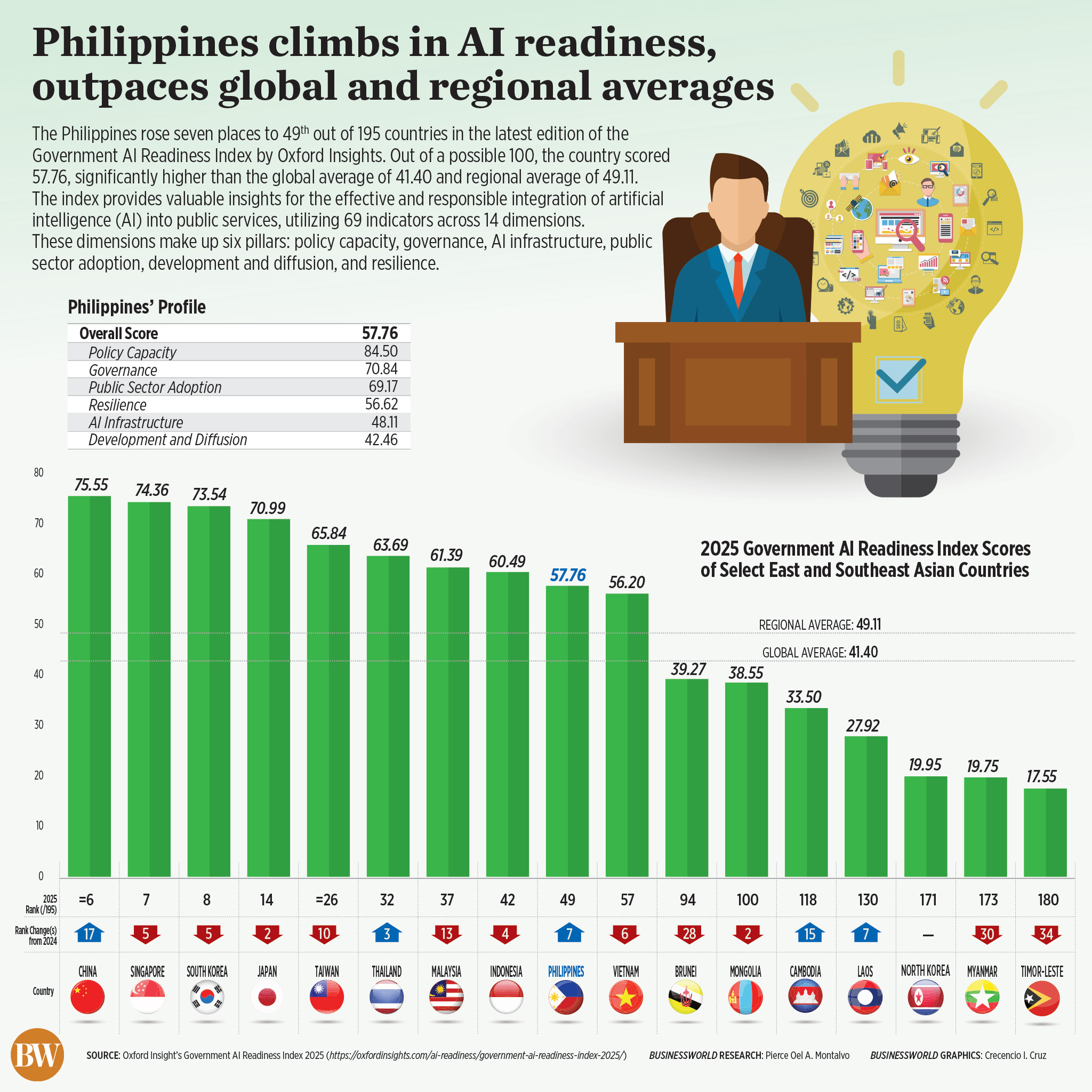
THE PHILIPPINES climbed seven spots in the Government AI Readiness Index by Oxford Insights but scored low in securing artificial intelligence (AI) infrastructure and resilience.

The country ranked 49th out of 195 countries with a score of 57.76 out of a possible 100 in the index, outperforming the regional average of 49.11.

The Philippines ranked ninth among its peers in the Asia-Pacific region, according to the report

China ranked sixth overall with a score of 75.55, followed by Singapore (7th), South Korea (8th), Japan (14th), Taiwan (26th), Thailand (32nd), Malaysia (37th), and Indonesia (42nd).

The Philippines was ahead of Vietnam (57th), Brunei (94th), Mongolia (100th), Cambodia (118th), Laos (130th), North Korea (171st), Myanmar (173rd), and Timor-Leste (180th).

The country’s score was also higher than the global average of 41.40, the report showed.

The index measures a country’s effective and responsible integration of AI into public services based on 69 indicators across 14 dimensions.

These dimensions form six pillars: policy capacity, governance, AI infrastructure, public sector adoption, development and diffusion, and resilience.

According to the report, the Philippines scored 84.50 on policy capacity, 70.84 on governance, 69.17 on public sector adoption, and 56.62 on resilience.

Meanwhile, the country received low scores in AI infrastructure (48.11) and development and diffusion (42.46).

“What the current results suggest is we are strong in policy capacity and governance, but weak everywhere else. Our biggest weakness is AI infrastructure and public sector adoption,” Philippine AI Business Association  Director for AI Ethics & Data Governance Dominic Vincent D. Ligot said in a Viber message.

The Department of Science and Technology has said it plans to invest P2.6 billion for AI projects through 2028.

The government has also launched AI roadmaps and filed proposed laws in Congress that aim to position the Philippines as a regional AI powerhouse.

However, Filipinos have yet to feel the benefits of the government’s AI adoption push as they face connectivity and digital literacy challenges, said Reynaldo C. Lugtu, Jr., chief executive officer of digital transformation consultant Hungry Workhorse Consultancy, Inc.

“In far-flung provinces and among micro, small, and medium enterprises, AI remains abstract — something that exists in press releases and pilot projects more than in daily life,” he said in an e-mail.

Oxford Insights also cited the Asia-Pacific region’s vibrant AI ecosystem, which benefits from a tech-savvy population, high use of mobile phones, and strong digital penetration.

The Philippines, which will assume chairmanship of the Association of Southeast Asian Nations (ASEAN) regional bloc next year, “could be an important voice in defining an ‘ASEAN way’ for the AI era,” the think tank said.

Mr. Ligot said the Philippines is at a turning point. “There’s momentum, but we need to turn that into broad-based impact,” he added.

The government must boost investments on modern data services to boost connectivity in rural communities, Mr. Lugtu said.

He also cited the need to increase public education and skills training for Filipinos to understand the benefits of AI across sectors, including healthcare, education, agriculture, or disaster response.

“We have to design AI solutions that speak local languages and reflect Filipino contexts because that’s when the technology feels useful, not foreign,” Mr. Lugtu said.

State-run institutions should also collaborate with startups, universities, and civil society to build on-the-ground AI solutions, he added.

Mr. Ligot also noted that the government should boost AI-related infrastructure, such as data centers, to support widespread AI use. It should also fast-track an AI code of conduct to ensure its ethical use while supporting innovation, he added.

Leonardo A. Lanzona, Jr., an economics professor at the Ateneo de Manila University, said the government should work with labor organizations to ensure that AI doesn’t result in job losses.

“AI dividends can be used to make labor more productive while substituting the need to use capital or imported inputs,” he said in a Facebook Messenger chat.

The government must also refine Science, Technology, Engineering, and Mathematics courses to equip students with core skills related to AI, Rizal Commercial Banking Corp. Chief Economist Michael L. Ricafort said.

Manila Water secures up to P15-B loan for projects

MANILA WATER

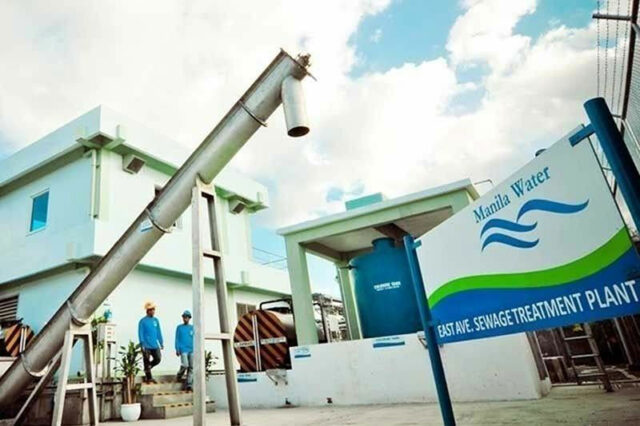
EAST ZONE concessionaire Manila Water Co., Inc. has tapped a loan facility of up to P15 billion from the Metropolitan Bank & Trust Co. (Metrobank) to fund its capital expenditure (capex) projects.

“The loan will be used to finance Manila Water’s capital expenditure projects and/or general corporate requirements,” the company said in a stock exchange disclosure on Tuesday.

For the nine months ending September, the utility and its subsidiaries borrowed P20.6 billion, mostly for working capital requirements. During the same period, the group also repaid P15.59 billion in loans.

Manila Water has earmarked P95 billion for its 2023-2027 capex program, primarily for initiatives on water supply security, service accessibility, service continuity, and environmental sustainability.

The company provides water supply, wastewater, and sanitation services to over 7.8 million customers across 23 cities and municipalities in Metro Manila’s east zone and Rizal province.

Residential households will see higher water bills in the first quarter of 2026 after the Metropolitan Waterworks and Sewerage System – Regulatory Office approved a rate hike.

Customers consuming 10 cubic meters (cu.m.) or less will pay an additional P29.86 monthly, while those using up to 20 cu.m. and 30 cu.m. will face increases of P66.25 and P135.22, respectively.

Manila Water also assured its customers of uninterrupted service during the holidays, citing strengthened operational readiness to meet higher household consumption.

“Our teams are closely monitoring the system throughout the holidays to ensure stable and reliable water service, so families can celebrate the season with confidence and without worrying about their water supply,” Manila Water Corporate Communication Affairs Group Director Jeric T. Sevilla said. — Sheldeen Joy Talavera

PetroEnergy to buy remaining stake in Aklan wind farm

BW FILE PHOTO

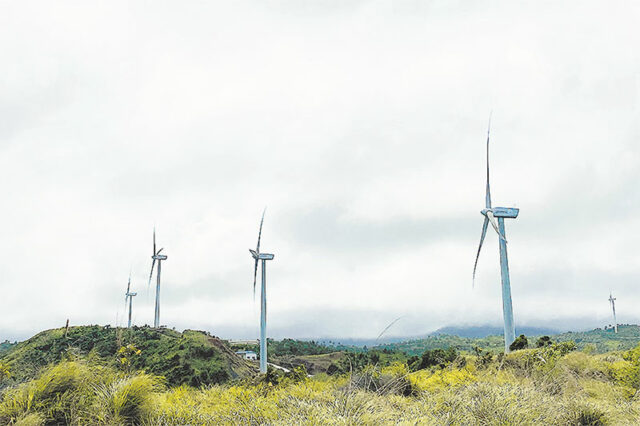
YUCHENGCO-LED PetroEnergy Resources Corp. is acquiring the entire stake held by Thailand’s BCPG Public Co. Ltd. for P1.9 billion to take full control of the 49.2-megawatt (MW) Nabas wind farm in Aklan.

The move follows PetroEnergy’s signing of a share purchase agreement with BCPG unit BCPG Wind Cooperatief U.A. to acquire its 7.81 million common shares in PetroWind Energy, Inc., representing a 40% stake, the company said in a regulatory filing on Tuesday.

PetroEnergy and its subsidiary, PetroGreen Energy Corp., currently hold 20% and 40% direct ownership in PetroWind, respectively, giving PetroEnergy an effective 50% interest in the wind energy firm.

Upon closing, PetroEnergy’s effective ownership will rise to 90%, comprising 60% direct ownership and 30% indirect ownership through PetroGreen Energy Corp.

“The transaction represents the acquisition of the remaining non-controlling interest in [PetroWind] and will not result in a change in control or consolidation status,” the company said.

PetroEnergy said the move is part of its strategy to simplify its ownership structure and increase its direct economic participation in its renewable energy portfolio.

“This is expected to streamline decision-making for the Nabas Wind Power Project, optimize capital allocation, and potentially enhance long-term revenue and shareholder value,” it added.

The transaction will close upon clearance from the Philippine Competition Commission and other internal and regulatory approvals.

PetroWind’s Nabas wind projects are located in the municipalities of Nabas and Malay. Phase 1, with a capacity of 36 MW, began commercial operations in 2015, while the remaining 13.2 MW is under development. — Sheldeen Joy Talavera

LFM Properties expands Makati portfolio with P1.1-B land deal

FREEPIK

LISTED real estate developer LFM Properties Corp. has acquired a 918-square-meter lot in Salcedo Village, Makati City, as part of its portfolio expansion.

In a disclosure on Tuesday, the company said it had entered into an agreement to acquire the property from Parity Values, Inc.

The land is situated along Valero and San Agustin Streets, Barangay Bel-Air, Makati City, and the acquisition is covered by Transfer Certificate of Title No. S-87611.

The property was acquired for a total of P1.1 billion, including value-added tax. LFM Properties’ board of directors approved the purchase on Dec. 23, it said.

The purchase price was based on a valuation report from a third-party adviser jointly selected by the company and the seller.

Payment for the property will be made under a one-year term, with no conditions precedent to the transaction.

“The acquisition is expected to add to the company’s property portfolio,” LFM Properties said.

The company currently owns three buildings in Makati City — Liberty Plaza Building, Liberty Center, and Liberty Building.

LFM Properties is a subsidiary of listed Liberty Flour Mills, Inc., a pioneer in flour milling since 1958.

The company reported a 14% decline in third-quarter gross revenues to P168.4 million from P196.7 million a year ago, mainly due to vacant units in Liberty Plaza Building.

Shares of LFM Properties last closed on Dec. 18 at four centavos each. — Beatriz Marie D. Cruz

SMC’s P55.87-B Skyway Stage 4 cost pending TRB approval

PHILIPPINE STAR/BOY SANTOS

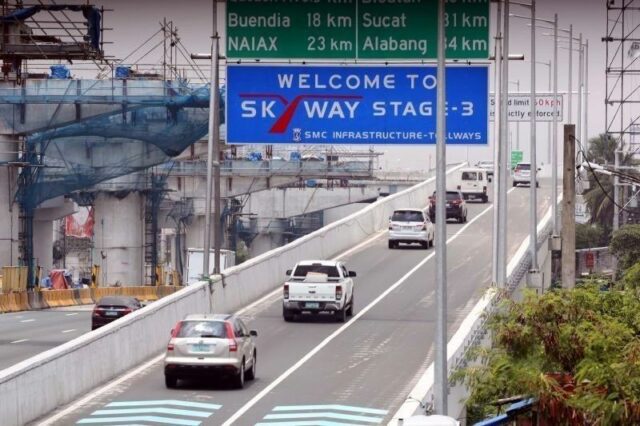
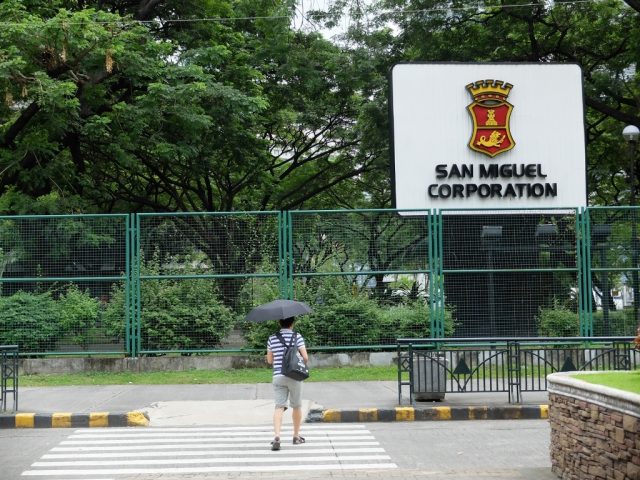
THE P55.87-billion estimated cost for the Southeast Metro Manila Expressway – Skyway Stage 4 Project remains subject to review and approval by the Toll Regulatory Board (TRB) and other government authorities, San Miguel Corp. (SMC) said.

Inflation, higher costs, and refinements in project scope have pushed the updated estimate from the P45.27 billion originally disclosed in 2019, the company told the local bourse on Tuesday.

“The increase is primarily attributable to inflation, updated unit costs, and refinements in project scope consistent with prevailing market conditions,” SMC said.

The figure reflects the current estimate of SMC Skyway Stage 4 Corp., the company’s concession unit for the project.

SMC noted that the increase does not change the fundamental nature, scope, or objectives of the project.

Skyway Stage 4, a 32.7-kilometer expressway, will be constructed in six phases.

Its first phase is expected to be completed within two years once right-of-way issues with the government are resolved.

The road will connect the Skyway system at Arca South in Taguig City to the Batasan Complex in Quezon City.

SMC said the expressway is expected to provide an alternate route for southern and eastern Metro Manila and ease traffic congestion along EDSA and C5. — Sheldeen Joy Talavera

2GO Travel expects over 20,000 passengers from Manila this week

FACEBOOK.COM/2GOTRAVEL

SEA TRAVEL PROVIDER 2GO Travel is projecting more than 20,000 passengers this week from Manila alone amid the holiday rush.

“We’re expecting a lot of passengers coming in our seaports. In fact, this week, we’re expecting more than 20,000 passengers just in Manila alone, leaving Manila,” 2GO Senior Assistant Vice-President and Business Unit Head Francis John Chua told Money Talks with Cathy Yang on One News on Tuesday.

Mr. Chua added that the company is also seeing heavy passenger volumes arriving in Cebu, Bacolod, Iloilo, and Cagayan de Oro.

He urged the public to plan ahead and purchase tickets early. “We do encourage everyone to please buy their tickets ahead because we will not be able to accommodate everyone. So it’s been a full week already,” he said.

2GO Travel provides passenger transport services across the country’s islands and is part of 2GO Group, Inc. The company also offers freight, courier, and logistics services.

2GO Express, the group’s courier arm, is handling a high volume of shipments, particularly from e-commerce businesses. Mr. Chua said the company is prepared for the holiday surge across all its service units.

On possible delays, he apologized for inconveniences caused by efforts to accommodate as many passengers as possible. “Despite the challenges, we remain committed to safe, secure, and reliable service,” he said.

On courier operations, he said: “We’re already looking at the operations… to make sure that packages and goods arrive on time as promised.” — Sheldeen Joy Talavera

Toyota PHL sees 45% jump in EV sales in Jan.-Nov.

TOYOTA MOTOR PHILIPPINES

TOYOTA MOTOR Philippines Corp. (TMP) reported a 45% increase in electrified vehicle (EV) sales in the first eleven months of 2025, which it plans to boost further through new EV launches.

Data from the company showed that combined EV sales of Toyota and Lexus models reached 16,986 units in January-November, up from 11,745 units in the same period last year.

Toyota accounted for most of the sales at 15,455 units, while Lexus contributed 1,531 units.

“With the ATIV hybrid EV lowering the barrier to EV ownership and the bZ4X joining the market along with Lexus battery EV models, TMP is strengthening its multi-pathway strategy to support the country’s transition toward cleaner and more sustainable mobility,” the company said.

TMP recently launched the ATIV hybrid EV and its first battery EV model in the Philippines, the bZ4X.

“The expansion of the electric lineup from Lexus to Toyota vehicle models signals TMP’s continued push to broaden specification options in line with the company’s ‘Beyond Zero’ sustainability vision,” it added.

The move aligns with Toyota Motor Asia’s target of achieving a 30% EV share of new vehicle sales in Southeast Asia by 2030.

“This broader strategy also reflects the growing need to address the environmental impact of the country’s transport sector,” TMP said, noting that the automotive sector remains a major contributor to greenhouse gases.

“TMP fully supports the Philippine government’s carbon reduction goals, which aim to reduce greenhouse gas emissions by 75% by 2030,” said Masando Hashimoto, president of TMP.

“Today, Philippine customers can choose from four vehicle types — gasoline, diesel, hybrid electric, and battery electric — to be their mobility partner, according to their lifestyle and location,” he added.

According to the company, hybrid EV technology remains the most viable and accessible option in the Philippine landscape.

“Their self-charging capability, fuel efficiency, and reliability make them effective for conditions where charging infrastructure is limited,” TMP said.

The company expects the launch of the ATIV hybrid EV to widen access to hybrid mobility, as it is the most affordable option in its current electrified lineup. — Justine Irish D. Tabile

Instead of ham, how about Seafood Paella for Noche Buena?

Seafood Paella by Benilde Culinary Arts Management Program Chairperson Chef Jester Garcia Arellano

A FEAST of the senses with its serving of rich flavors, Seafood Paella (Paella de Marisco), a popular Spanish dish which originated from the Valencia region, makes for an ideal entrée for family and loved ones to savor during Noche Buena.

This season of giving, chef Jester Garcia Arellano shares his personal recipe which symbolizes two special moments of his life as a culinarian. First, as a chef in a local restaurant in Spain. Second, as a loving son who channeled his passion in the kitchen to prepare his father’s favorite dish.

His version takes inspiration from his tenure as part of the culinary team of Carme Ruscalleda Sant Pau, a three Michelin Star-dining destination in Sant Pol de Mar, Barcelona.

It features aromatic short-grain rice cooked in a rich saffron-infused broth, and highlights an array of fresh seafood, from shrimps and squids, mussels to clams.

Mr. Arellano, who is currently the program chairperson of the Culinary Arts Management of the De La Salle-College of Saint Benilde (DLS-CSB), likewise notes how his paella became a family tradition which elevates the true essence of the holidays.

“It was the long-time favorite of my dad, whose birthday falls on Christmas Day,” he said. “Cooking this paella brings back fond memories of our family gatherings, laughter, and sharing meals together.”

With hopes that his recipe will likewise find a home in the culinary heritage of other Filipino families, he prepared a step-by-step guide for those who wish to include the Spanish favorite as part of their festivities.

“I have crafted a simpler version which fits perfectly into the hustle and bustle of Noche Buena preparations using local and more affordable ingredients,” he said. “Many components, such as the seafood broth and pre-cooked seafoods, can be prepped a day in advance, making it a breeze to serve during Christmas Eve,” he adds.

SEAFOOD PAELLA RECIPE BY CHEF JESTER GARCIA ARELLANO
Serves 5-10 Persons

INGREDIENTS:
• For the seafood saffron broth:

500 ml Fish stock (use dorado or maya-maya head and bones)

1 pinch Saffron (or 1 pack of paella mix)

100 grams Leeks (sliced)

200 ml White cooking wine

Salt and pepper to taste

Shrimp heads and skin (for flavor)

• For the rice mixture:

30 ml Olive oil

50 grams Onions, diced

50 grams Green bell pepper, diced

100 grams Tomatoes, diced

10 grams Garlic, finely chopped

250 grams Short grain rice, washed

250 grams Shrimp, peeled and deveined

150 grams Squid, cut into rings

200 grams Mussels, cleaned

250 grams Clams, cleaned

50 grams Green peas

Salt and pepper to taste

2 Lemon wedges

PROCEDURE:
1. Prepare the seafood broth. In a pot, combine the fish stock, shrimp heads and skins, leeks, white cooking wine, and saffron (or paella mix). Bring to a gentle simmer for about 10 to 15 minutes to infuse the flavors. Strain the broth to remove solids and keep it warm.

2. Cook the seafood. In the strained broth, add the mussels, clams, shrimp, and squid. Cook for three to five minutes until the seafood is just cooked through. Remove the seafood and set aside.

3. Sauté the base and rice. In a large paella pan or wide skillet, place the olive oil over medium heat. Add the diced onions, green bell pepper, and garlic. Sauté until the vegetables are soft and translucent, about five minutes. Stir in the diced tomatoes and cook until they break down and form a sauce, about five minutes. Pour in the washed Japanese short grain rice and stir to coat it well with the vegetable mixture, cooking for about two to three minutes.

4. Combine with broth. Pour the prepared seafood broth over the rice mixture. Season with salt and pepper to taste. Bring the mixture to a gentle simmer. Do not stir the rice once the broth is added.

5. Cook the rice. Allow the rice to cook, covered, over low heat for about 15 minutes, or until it is tender and absorbs most of the liquid.

6. Add the cooked seafood. Once the rice is cooked, evenly arrange the previously cooked shrimps, squid, mussels, and clams on top of the rice. Sprinkle green peas evenly over the seafood. Cover and let cook for an additional five minutes to warm the seafood through.

7. Rest and serve. Remove the paella from the heat and let it rest, covered, for five minutes. Serve with lemon wedges on the side for squeezing over the paella.

Yields on BSP’s term deposits continue to drop

BW FILE PHOTO

YIELDS on the Bangko Sentral ng Pilipinas’ (BSP) term deposit facility (TDF) fell on Tuesday, even as the offer went undersubscribed, as the market continued to price in expectations of further monetary easing,

The 10-day term deposits fetched just P76.657 billion in tenders on Tuesday, below the P80 billion on offer. This was also well below the P171.256 billion in bids for the P80 billion in six-day papers auctioned off on Dec. 17.

The central bank only accepted P72.657 billion in bids. The TDF tenor offered this week was adjusted from the usual seven-day term and the auction was held on a Tuesday instead of Wednesday due to upcoming holidays.

Accepted yields for the 10-day deposits ranged from 4.44% to 4.55%, wider than the 4.4515% to 4.55% band seen in the previous auction. With this, the average rate of the papers went down by 2.14 basis points (bps) to 4.5076% from 4.529% last week.

“The 10-day term deposit facility rate declined further,” the central bank said in a statement. “The BSP maintained the offer volume at P80 billion, while total tenders reached P76.7 billion, resulting in a bid-to-cover ratio of 0.96x.”

This was lower than the bid-to-cover ratio of 2.14x logged a week ago.

The central bank has not offered the 14-day term deposit tenor for two months. It last offered both the one- and two-week papers on Oct. 29.

Also, it has not auctioned off 28-day term deposits for over five years to give way to its weekly offerings of securities with the same tenor.

Both the TDF and BSP bills are used by the central bank to mop up excess liquidity in the financial system and better guide market yields towards the policy rate.

“The BSP TDF auction yield was again slightly lower after recent dovish signals on possibly one more 25-bp BSP rate cut in 2026, especially if economic recovery takes longer,” Rizal Commercial Banking Corp. Chief Economist Michael L. Ricafort said in a Viber message.

The market also priced in bets on further easing by the US Federal Reserve, he said, adding that demand was weaker amid a decline in market activity before the holidays.

On Dec. 11, the Monetary Board delivered a fifth straight 25-bp cut to bring the policy rate to an over three-year low of 4.5%. It has now slashed benchmark interest rates by 200 bps since August 2024.

BSP Governor Eli M. Remolona, Jr. said benign inflation gives them room to help support weak domestic demand amid lingering governance concerns that have affected investments, but stressed that they are nearing the end of their easing cycle.

He left the door open to one final 25-bp cut next year as economic prospects have darkened further, with the slowdown in third-quarter growth likely to extend to this quarter and with recovery seen to start only by the second half of 2026.

The Monetary Board will hold its first meeting for 2026 in February.

Meanwhile, the Fed’s rate cut this month brought the target range for US benchmark short-term borrowing costs to 3.5%-3.75%, in the upper range of policymakers’ estimates for a neutral level that neither boosts nor brakes the economy, Reuters reported.

About a third of the central bank’s 19 policymakers felt the rate cut was unnecessary, based on projections published by the Fed at the time.

Mr. Ricafort added that signals of a potential cut in big banks’ reserve requirement ratio (RRR) also helped bring down TDF yields as this would infuse more liquidity into the financial system.

Mr. Remolona earlier said they could bring down universal and commercial banks’ RRR by 300 bps next year, which would bring the ratio to 2% from the current 5%. — Katherine K. Chan

San Miguel lists P5.7-B fixed-rate notes on PDEx

BW FILE PHOTO

ANG-LED conglomerate San Miguel Corp. (SMC) listed its P5.7-billion fixed-rate notes issuance on the Philippine Dealing & Exchange Corp. (PDEx) as part of its funding initiatives.

“The 3-year fixed-rate notes will have a fixed interest rate equivalent to 6.3000% per annum, and have been enrolled with the Philippine Dealing & Exchange Corp. on the issue date, December 23, 2025,” the company said in a disclosure on Tuesday.

Proceeds from the issuance will be used for refinancing and redenominating the company’s US dollar obligations, for general corporate purposes, and for paying fees and expenses related to the issuance.

In its Nov. 13 disclosure, SMC said the notes are exempt from Securities and Exchange Commission registration requirements, as they are offered exclusively to qualified institutional buyers.

“The notes will be issued within December 2025 in scripless form, in minimum denominations of P5 million each, and in integral multiples of P1 million thereafter, with a tenor of 3 years,” the company added.

SMC shares were unchanged at P84 apiece on Tuesday. — Alexandria Grace C. Magno

A Simbang Gabi-inspired cocktail

SIMBANG GABI Cocktail by Quezon Club Head Bartender Martin Protacio.

SIMBANG GABI, the devotional nine-day novena of dawn Holy Masses attended by Catholics in anticipation of Christmas, has become a distinct Filipino tradition of faith.

This holiday season, beverage specialist Martin Ben Protacio was inspired by this profound religious-cultural experience and sense of community to come up with a festive, deep-purple highball dubbed as Noche Buena Star.

For this original after-dinner drink, the Hospitality Management graduate from the De La Salle-College of Saint Benilde (DLS-CSB) School of Hotel, Restaurant, and Institution Management blends the warm, comforting spirit of dark rum with a custom ube horchata — a fusion of Filipino purple yam and a milky rice drink. This is then garnished with grated Quezo de Bola, which adds a necessary salty-tangy counterpoint. The result is a creamy, earthy, spiced, and subtly sweet mix finished with a delightful savory-salty kick.

Mr. Protacio is currently the head bartender of Quezon Club at Solaire Resort North.

NOCHE BUENA STAR COCKTAIL
INGREDIENTS

45 ml Dark Rum

Ube Horchata

Grated Quezo de Bola

• For Ube Horchata:

1 cup Uncooked white rice

3 to 4 cups Water (for soaking the rice)

1 cup Evaporated milk

½ cup Condensed milk (adjust to taste)

2 to 3 drops Ube extract (start small)

½ teaspoon Vanilla extract (optional)

¼ teaspoon Ground cinnamon or cinnamon syrup (optional)

Ice (for serving)

PROCEDURE FOR UBE HORCHATA:
1. Rinse the rice thoroughly. Combine with water and soak for several hours or overnight to soften.

2. Transfer the soaked rice with the water into a blender. Blend until the mixture is fine.

3. Strain the mixture using a fine mesh strainer or cheesecloth to remove solids. Discard the rice pulp.

4. Add evaporated milk, condensed milk, ube extract, and the optional vanilla extract. Stir or blend again until well combined.

5. Taste and adjust sweetness or ube flavor as needed.

6. Chill in the refrigerator.

PROCEDURE FOR NOCHE BUENA STAR:
1. Add ice to a chilled highball glass.

2. Grate some Quezo de Bola.

3. Apply the cheese on the rim of the glass.

4. Add 45 ml of dark rum.

5. Top it with the Ube Horchata.

6. Serve.

ADVERTISEMENT
ADVERTISEMENT