Home Blog Page 5189

Toronto school board becomes first in Canada to recognize caste discrimination

STOCK PHOTO | Image by Reto Höhn from Pixabay

Toronto’s school board has become the first in Canada to recognize that caste discrimination exists in the city’s schools and has asked a provincial human rights body to help in creating a framework to address the issue.

The Toronto District School Board on Wednesday voted in favor of a motion to that effect, which was introduced by board trustee Yalini Rajakulasingam. Sixteen trustees voted in favor of the motion and five voted against it.

The move addresses an issue important to the area’s South Asian diaspora, particularly the Indian and Hindu communities. It comes weeks after Seattle became the first US city to outlaw caste discrimination after a city council vote.

India’s caste system is among the world’s oldest forms of rigid social stratification.

“This motion is not about division, it is about creating healing and empowering communities and providing them safer schools that students deserve,” Rajakulasingam said.

Rajakulasingam called for a partnership between the human rights commission of Ontario, Canada’s most populous province, and Toronto’s school board.

The caste system dates back thousands of years and allows many privileges to upper castes but represses lower castes. The Dalit community is on the lowest rung of the Hindu caste system and have been treated as “untouchables.”

Caste discrimination was outlawed in India over 70 years ago, yet bias persists, according to several studies in recent years, including one that found people from lower castes were underrepresented in higher-paying jobs.

Even though India has banned untouchability, Dalits still face widespread abuse across that country, where their attempts at upward social mobility have at times been violently put down.

Debate over the caste system’s hierarchy is contentious in India and abroad, with the issue intertwined with religion. Some people say discrimination is now rare. Indian government policies reserving seats for lower-caste students at top Indian universities have helped many land tech jobs in the West in recent years.

Activists opposing caste discrimination say it is no different from other forms of discrimination like racism and hence should be outlawed. — Reuters

North Korean leader Kim calls for intensified drills in case of ‘real war’

KCNA VIA REUTERS

SEOUL – North Korea’s Kim Jong Un ordered the military to intensify drills to deter and respond to a “real war” if necessary, state media said on Friday, after the leader oversaw a fire assault drill that it said proved the country’s capabilities.

North Korea fired a short-range ballistic missile off its west coast on Thursday, South Korea’s military said, adding it was analyzing possibilities the North may have launched multiple missiles simultaneously from the same area.

Photos released by the North’s KCNA news agency showed at least six missiles being fired at the same time.

KCNA said a unit trained for “strike missions” fired a “powerful volley at the targeted waters” and demonstrated its capability to “counter an actual war.”

“(Kim) stressed that the fire assault sub-units should be strictly prepared for the greatest perfection in carrying out the two strategic missions, that is, first to deter war and second to take the initiative in war, by steadily intensifying various simulated drills for real war …,” KCNA said.

Kim was accompanied by his young daughter who has appeared recently in a series of major events.

The latest missile launches came as the United States and South Korea were set to kick off large-scale military exercises known as the Freedom Shield drills next week. North Korea has long bristled at the allies’ drills as a rehearsal for invasion.

North Korean leader Kim’s sister, Kim Yo Jong, said earlier this week any move to shoot down one of its test missiles would be considered a declaration of war and blamed a joint military exercise between the United States and South Korea for growing tensions.

The US Indo-Pacific Command said the latest launch posed no threat to the United States or its allies, but Pyongyang’s weapons of mass destruction and ballistic missile programs have a destabilizing effect on the region.

The United States will hold an informal meetingof United Nations Security Council members next week on human rights abuses in North Korea, a move likely to anger Pyongyang and spur opposition from China and Russia. — Reuters

Actor Robert Blake, star of Baretta, 89

Robert Blake in a scene from the 1970s TV show Baretta.

Actor Robert Blake, best known as star of the 1970s TV drama Baretta and the film In Cold Blood, has died at the age of 89, CBS News reported on Thursday. 

Blake died at his home in Los Angeles, surrounded by family members, according to a statement released to CBS and other news agencies by his niece, Noreen Austin. 

Blake was acquitted in 2005 of murdering wife Bonnie Lee Bakley. A few months after the criminal case verdict, Bakley’s children filed a civil suit against the actor, winning a judgment that Blake was responsible for her death. 

Blake, whose parents had a song-and-dance act, was born on Sept. 18, 1933, in Nutley, New Jersey, as Michael James Gubitosi. He and two siblings were part of a vaudeville act known as “The Three Little Hillbillies” until the family moved to California. 

He started appearing as Mickey in the latter years of the Little Rascals short film series in 1939. — Reuters 


Top of the class: Celebrate the graduation season with these exciting vivo promos!

The much-awaited graduation season is here and vivo wants to make graduating students feel much more appreciated through a special promo made just for them.

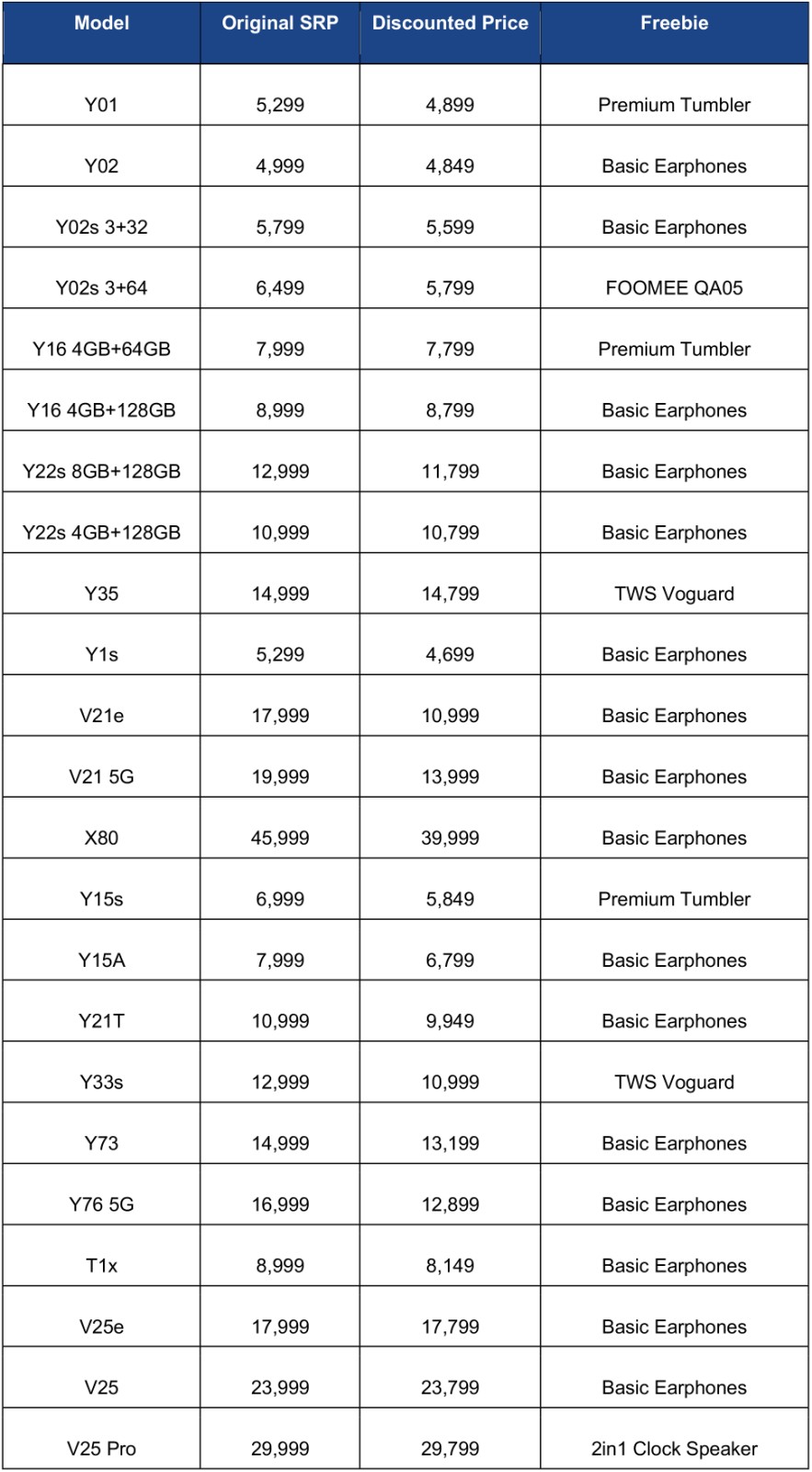
To reward fans who are about to attain an unforgettable and fulfilling life milestone, vivo is giving away huge discounts and special offers on its reliable and premium Y Series line – vivo Y35, vivo Y22s, vivo Y16 and vivo Y02. Aside from lower price tags, a lot of exciting freebies such as TWS Voguards, 2-in-1 clock speakers, premium tumblers, and more are also up for grabs with every purchase.

Don’t miss this opportunity to own a new vivo smartphone just in time for graduation! Promo will run from March 19 to 25 on vivo’s official e-store website.

Below are all the participating vivo smartphone models for this sale promo:

Celebrate your milestone with a vivo smartphone

Every moment during your commencement ceremony should be captured and kept – from the graduation march until the tassels of the graduation caps are moved from left to right. That’s why having a smartphone with enough storage capacity to store all these memories comes in handy. The vivo Y16 with 4GB+1GB Extended RAM and 4GB+128GB internal storage is the perfect device to immortalize all priceless memories on your graduation day.

On the other hand, you can keep the celebration going throughout the day using the vivo Y35 with a long-lasting 5000mAh battery power. Thanks to its 44W FastCharge technology, there’s  no need to halt the fun for too long  so you can continue video calling friends and family from abroad or reply to congratulatory messages in a flash!

If you’re keen to have a more affordable device with the same outstanding performance, there’s also the slim yet powerful vivo Y02 with a 5000mAh battery and capable of 10W FastCharge.

Celebrations don’t end after the graduation program so taking photos during the after-party from day ‘til night is a must. Use the 50MP Super Night Camera of the vivo Y22s to ensure the quality of your shots even during sundown. This camera feature will capture all your heartfelt interactions with your proud family members in clear, vivid detail. With the vivo Y22s, you can max out the night and relive your success with no worries about having poor-quality shots.

Whether you are a graduate or you have a loved one graduating soon, enjoy the gift of a functional yet affordable smartphone that will let you celebrate and capture your wonderful Commencement Day memories and more. Visit vivo’s official e-store website and add these vivo smartphones to your cart now!

To know more about vivo’s products and offers, visit its official website, Facebook, Twitter, TikTok, and YouTube pages.


Spotlight is BusinessWorld’s sponsored section that allows advertisers to amplify their brand and connect with BusinessWorld’s audience by enabling them to publish their stories directly on the BusinessWorld Web site. For more information, send an email to online@bworldonline.com.

Join us on Viber at https://bit.ly/3hv6bLA to get more updates and subscribe to BusinessWorld’s titles and get exclusive content through www.bworld-x.com.

The 32nd BAIPHIL Convention to focus on ‘bringing out the best in banking’ for a better normal

The banking industry, like all other sectors, saw the urgency for transformation to keep up with the new normal brought by the pandemic. Bankers must continue to be conversant with the developments, such as in technology and the renewed focus on sustainability, to further do their best in their role to the economy, even as the country moves past the crisis and looks forward to a better normal.

Being in a quest towards attaining banking excellence, the Bankers Institute of the Philippines, Inc. (BAIPHIL) will further uphold its purpose to educate and prime the bankers in the country in this year’s BAIPHIL Training and Development Week, which will be highlighted by the 32nd BAIPHIL Convention (BAICON).

The BAIPHIL Week takes place every second week of March, as declared through Proclamation No. 1248 signed by former president Gloria Macapagal-Arroyo. As such, from March 6 to 11 this year, BAIPHIL will conduct a series of lectures and trainings.

“We have a series of activities for the banks, the bankers, and the regulators of the banks to meet together,” BAIPHIL President Myrna E. Amahan told BusinessWorld in an interview. “This is really more to highlight banking and our role in the economy and the country.”

The BAIPHIL Week will culminate with the BAICON, which is biennially organized by the association. The 32nd BAICON will be held on March 10-12 at Taal Vista in Tagaytay City.

Centered on the theme “Innovate! Train! Certify! Bringing Out the Best in Banking,” the 32nd BAICON gathers the banking community and regulators for discussions relevant to the pursuit of improving the country’s banking industry.

“The theme is always aligned with the strategic direction of BAIPHIL for this year,” said BAIPHIL President Amahan.

The organization’s strategic planning involves continuing on with innovations and trainings, then the certification of bankers. “Why are we doing this? Because we really want to bring out the best in banking,” she said.

“We chose this theme because we believe that banking is a major component of the Philippine economy. And us doing our jobs well, we are actually also serving our country,” she added.

Relevant discussions

In the two days of BAICON, the general sessions will focus on maintaining the relevance, the future-proofing, and sustainability in the banking sector.

The first general session, which will look into the “Continuing Relevance of the Financial Industry in the New Normal,” will discuss making synergy happen through digital transformation as well as the experiences and initiatives to prepare an organization to keep its relevance.

“Future-Proofing Banks through Innovative Products and Services” will be the focus of the second general session, which will center on striking the balance in innovation through digital transformation and cybersecurity with regulatory compliance.

Other discussions will also include the collaboration of banks and electronic money institutions; outlook on cyberthreats in the country; and experiences and initiatives in future-proofing organizations.

“There are a lot of other competitors out there that are not banks; they are fintechs. They also eat already a piece of our pie. So what do we have to do? We have to keep up; we have to step up,” said Ms. Amahan, explaining the significance of such discussions.

She also mentioned the importance for banks to know the risks and regulations. “Regulations help us also to mitigate these risks. So, we have to future-proof our banks.”

The BAICON will also delve into “Sustainable Banking through the Integration of the Environmental, Social, and Governance (ESG) Principles,” which will talk about mental health and financial services for a society that is “prosperous, inclusive, and resilient.”

“Sustainability finance should already be integrated into the banking activity. So, this is what we will talk about, and financial inclusion as well,” Ms. Amahan shared.

Meeting regulators and fellow bankers

The highlight of BAICON will be the gathering of bankers and meeting the regulators, said Ms. Amahan.

With the regulators’ participation in the convention, Ms. Amahan highlighted how the event could be a way for bankers to further understand regulations on the banking sector coming from the regulators themselves.

“I really look forward to it because it’s my chance to hear the ‘why’ of our regulators,” she said.

“Banks are the most regulated industry. There are a lot of regulations that we have to follow. But if we understand the ‘why’, it is less difficult to do,” she added.

BAIPHIL has invited representatives from the Bangko Sentral ng Pilipinas and the Senate to join the convention.

Ms. Amahan shared that they are also looking to invite Senator Mark A. Villar, being the chair of the Senate Committee on Banks, Financial Institutions, and Currencies.

And as the BAICON will bring together bankers, they could share and learn from each other’s experiences during the event.

“We’d really like various banks to send representatives to BAICON because it’s really full of new learnings. Another would be new friends that they will meet there, that they can network with when they go back to their work, and even call up and share or ask for advice from,” she said.

BAIPHIL also hopes that the convention will be one of the avenues to deepen the engagement among its 68 institutional members and 147 associate members, as well as those who have already retired.

Members of the organization are made up of universal, commercial, foreign, OBUs, thrift, rural, and government banks, fintech companies, PCHC and regulatory agencies, such as BSP & PDIC, as well as key executives as associates and life members.

“Every two years, we bring all the bankers to strengthen the membership. So, it’s more of learning, networking, and strengthening,” BAIPHIL COO Ben Venardo Cual said.

“All that we do around BAIPHIL, particularly the national convention, is aligned with the essence of BAIPHIL, the vision-mission, and our corporate values,” he added.

Envisioning itself as a leader in the pursuit of banking excellence in Asia-Pacific, BAIPHIL is on a mission to support the banking sector in improving its capability and promoting good governance through continuing education, information exchange, and research.


Spotlight is BusinessWorld’s sponsored section that allows advertisers to amplify their brand and connect with BusinessWorld’s audience by enabling them to publish their stories directly on the BusinessWorld Web site. For more information, send an email to online@bworldonline.com.

Join us on Viber at https://bit.ly/3hv6bLA to get more updates and subscribe to BusinessWorld’s titles and get exclusive content through www.bworld-x.com.

Jobless rate hits 4-month high in Jan.

Job seekers fill out application forms at a job fair in Manila, Feb. 24, 2023. — PHILIPPINE STAR/EDD GUMBAN

By John Victor D. Ordoñez, Reporter

THE UNEMPLOYMENT RATE rose to a four-month high of 4.8% in January amid the loss of temporary holiday jobs, the Philippine Statistics Authority (PSA) said on Thursday.

Preliminary data from the PSA’s Labor Force Survey (LFS) showed the jobless rate went up to 4.8% in January, from 4.3% in December. It is the highest jobless rate since the 5% recorded in September.

This is equivalent to 2.37 million jobless Filipinos in January, higher than 2.22 million in December.

Philippine labor force situation

Year on year, the unemployment rate dropped from 6.4%, equivalent to 2.95 million, in January 2022.

PSA Undersecretary and National Statistician Claire Dennis S. Mapa said they had expected unemployment numbers to rise month on month in January due to the loss of temporary jobs during the holidays.

“There is some seasonality, although we have seen the source of (higher year-on-year) unemployment was construction,” he said during an online briefing in mixed English and Filipino.

Job quality worsened in January, as the underemployment rate jumped to 14.1%, from 12.6% in December. This translated to 6.65 million underemployed Filipinos or persons already working but still looking for more work or longer working hours, versus the 6.197 million in December.

Year on year, the underemployment rate improved from 14.9% in January 2022.

Despite the slight uptick in joblessness, the National Economic and Development Authority (NEDA) said the latest numbers showed the labor market’s “robust” recovery from a year earlier when a surge in coronavirus cases hit the country.

“However, we note that employment created year on year was mostly part-time and classified as vulnerable,” NEDA Secretary Arsenio M. Balisacan said in a statement.

“Thus, it is imperative that labor market policies and programs that directly contribute to labor productivity and employment generation must be prioritized, not only to preserve jobs but also to generate quality jobs.”

PSA’s Mr. Mapa said the employment rate would likely hover near the 4% to 5% level in the next few months.

“We see the unemployment trend to go back to pre-pandemic levels this year since it started this October and the second half of 2022,” he said.

WEAK JOBS MARKET?
In January, the size of the total labor force fell to 49.72 million, from 51.22 million in December.

This brought the labor force participation rate (LFPR) — the share of the Filipino workforce to the total working age population of 15 years old and over — to 64.5% in January, slightly lower than the 66.4% in December.

The employment rate dipped to 95.2% in January, from 95.7% in December. However, it was higher than 93.6% in the same month in 2022.

This means 47.35 million Filipinos had jobs in January, lower than the 49 million in December.

On average, an employed Filipino worked 39.5 hours a week in January compared with 40.3 hours logged in December and 41.8 hours in January last year.

The services sector remained the top employer in January with an employment rate of 60.7% followed by agriculture at 22.2% and industry at 17.1%

Month on month, higher employment was seen in human health and social work activities (up 185,000); transportation and storage (up 182,000); real estate activities (up 93,000); and professional, scientific and technical activities (up 79,000).

Meanwhile, job losses in January were seen in agriculture and forestry (down 1.113 million); wholesale and retail trade, repair of motor vehicles and motor vehicles and motorcycles (down 375,000); and construction (down 288,000).

Year on year, construction had the biggest drop in employment at 334,000, followed by water supply and sewerage at 34,000.

“The jobs market looks to be weakening as manufacturing and construction jobs will likely decline in the coming months,” China Banking Corp. Chief Economist Domini S. Velasquez said in a Viber message, citing the S&P Global Philippines’ latest Purchasing Managers’ Index (PMI) report.

“On a positive note, jobs in the services sector will do the heavy lifting due to the increase in tourism activities and flexible work arrangements of the business process outsourcing industry,” she added.

Jose G. Matula, president of the Federation of Free Workers, said the government should implement a more robust public employment program.

“While the increase in unemployment could be partly due to the lack of holiday jobs during the festive season, the rise in underemployment indicates that even those with jobs struggle to find sufficient work to make ends meet,” he said in a Viber message.

Mr. Matula, who heads the largest labor coalition in the country, also called for a P100 billion stimulus package for micro, small, and medium enterprises to cope with rising prices of basic commodities.

PSA data showed that wage and salary earners made up 62.3% of the workforce in January.

Inflation slowed to 8.6% in February from 8.7% in January, but core inflation accelerated to 7.8%, its fastest pace in over 22 years.

ING Bank N.V. Manila Senior Economist Nicholas Antonio T. Mapa said the rise in unemployment and underemployment reflects the “scarring effects” and challenges faced by the economy.

“Lower job creation amidst the cost of living crisis (not to mention surging borrowing costs) only highlights the factors that could force overall growth to slow this year,” he said in a Viber message.

ING’s Mr. Mapa said recent data makes it likely that the Bangko Sentral ng Pilipinas (BSP) will raise interest rates by 25 basis points (bps) at its meeting this month, as “monetary tightening will need to run its course while BSP remains cognizant of the slowing growth momentum of the economy.”

The BSP has raised rates by 400 basis points (bps) since May 2022, bringing the policy rate to 6%, the highest since 2007.

The Monetary Board’s next meeting is on March 23.

NEDA Board approves P9-T worth of projects

PHILIPPINE STAR/EDD GUMBAN

By Luisa Maria Jacinta C. Jocson, Reporter

THE NATIONAL Economic and Development Authority (NEDA) Board, chaired by President Ferdinand R. Marcos, Jr., on Thursday approved 194 flagship infrastructure projects worth P9 trillion, as well as the amendments to joint venture (JV) guidelines.

NEDA Secretary Arsenio M. Balisacan said the new list of infrastructure flagship projects and amendments to the agency’s JV rules are “game-changing initiatives that aim to further raise investments and transform the Philippine economic landscape.”

At a televised Palace briefing on Thursday, Mr. Balisacan said the new infrastructure flagship projects will help address constraints to investment and expansion, as well as create more jobs.

The bulk of the 194 projects are related to physical connectivity and water resources, which consists of projects in irrigation, water supply, and flood management. 

Other projects are related to digital connectivity, health, power and energy, and agriculture.

Of the total, 123 are new projects and were initiated by the current administration. The remaining 71 were from previous administrations, particularly the Duterte administration.

Mr. Balisacan said that of the total projects, 95 are currently being implemented while eight have secured government approval. Forty-seven projects are now undergoing preparations, while 44 are in the pre-project stage.

New projects on the list include the Panay Railway Project, Mindanao Railway Project III, North Long Haul Railway, San Mateo Railway, University of the Philippines-Philippine General Hospital (UP-PGH) Diliman Project, the Ninoy Aquino International Airport (NAIA) Rehabilitation Project, Ilocos Sur Trans-basin Project, and the Metro Cebu Expressway.   

Mr. Balisacan said these “high-impact and urgently needed infrastructure” projects will be funded through various development partners, the National Government, and the private sector.

Forty-five of these flagship projects will be financed through partnerships with the private sector.

“To hasten the rollout of these projects, the Marcos administration is strongly promoting the utilization of public-private partnerships (PPPs),” he added.

A number of projects will be operational in the next few years, particularly irrigation and health-related projects.

“Those can move quickly because they are PPPs and won’t involve much right of way acquisition. They can be quite quick,” the NEDA secretary said.

To prevent delays, Mr. Balisacan said Mr. Marcos will order the Anti-Red Tape Authority (ARTA) to make sure that agencies involved in issuing permits and licenses will prioritize these flagship projects.

“Where we might encounter a bit of difficulty are areas where we have to acquire right of way… in the past, these have been some of the bottlenecks. Agencies are so slow to issue licenses,” he said.

AMENDMENTS TO JV RULES
Meanwhile, Mr. Balisacan said the NEDA Board approved amendments to the agency’s joint venture guidelines, which were last revised in 2013.

“The amendments aim to enhance competition for projects under joint ventures, ensure better performance of private-sector participants, and improve checks and balances to ensure that the project is technically and financially sound,” the NEDA Secretary said.

A copy of the final version of the JV rules was not available as of press time.

Under the draft rules released last year, tolls, fees and rates will be subject to the approval of the appropriate regulatory body. These can also be adjusted during the life of a contract, based on an approved formula or adjustment schedule.

The draft rules also require JVs to get approval for amendments to the agreement, including increases in the project cost.

“What we are addressing there is to simplify the JVs. Again, to make sure that JVs can move efficiently and quickly and address the public interest concerns, putting in place features that improve the competitive processes in the selection of JV partners,” Mr. Balisacan said.

The approved guidelines are also aligned with the recently revised implementing rules and regulations of the Build-Operate-Transfer (BOT) law, as well as the proposed PPP Act.

The PPP Act, which seeks to revise the BOT law, has been approved by the House of Representatives and transmitted to the Senate.

“Recognizing that our country has much work to do to catch up with our dynamic neighbors in the region, we will pursue high-impact initiatives that aim to encourage greater local and foreign investment and private sector participation in infrastructure development,” Mr. Balisacan added.

This year, the government plans to spend 5-6% of gross domestic product (GDP) on infrastructure.

Philippines unlikely to expand trade away from ‘factory of the world’

EMPLOYEES work on the production line of American infant product and toy manufacturer Kids II, Inc. at a factory in Jiujiang, Jiangxi province, China, June 22, 2021. — REUTERS

By Kyle Aristophere T. Atienza, Reporter
and Norman P. Aquino, Special Reports Editor

MARIA LOUELLA MARQUEZ, 57, enjoys shopping for everything made in China.

“It’s convenient and you can find almost everything there,” the housewife from Las Piñas City said in an interview, referring to online shopping platform Lazada. “Everything is cheaper and the quality of products has improved a lot over time.”

Ms. Marquez buys trinkets, mobile phone stands and cases, portable electric fans and many more from online sellers mostly based in Shenzhen.

Both Lazada and rival Shopee have numerous Chinese suppliers who are also on Aliexpress, an online retail service based in China and owned by the Alibaba Group.

The Philippines is unlikely to diversify trade away from China despite its biggest trade partner’s increasing assertiveness in the South China Sea, trade and security experts said.

“We are at a disadvantage since we import more from China than we export,” Joseph P. Purugganan, convenor of Trade Justice Pilipinas, said in an e-mail. “We continue to have a trade deficit with China.”

“It’s difficult to leverage an economic strategy when we’re at an economic disadvantage because of this,” he added, noting that the Philippines’ trade deficit with China amounted to $15.25 billion at the end of 2021.

The Chinese economy thrives as a manufacturing powerhouse and the nation’s products seem to be everywhere. The majority of tags, labels, and stickers on a variety of goods proclaim they are “Made in China.”

While the Philippines imports smartphones from other countries such as India, Indonesia and Vietnam, majority or more than 70% of its smartphones come from China, Angela Jenny V. Medez, senior market analyst at IDC Philippines, said in an e-mail. “Almost all of the Chinese vendor shipments in the Philippines are manufactured in China and imported into the country.”

Relations between the Philippines and China, which span several centuries, have been predominantly warm and cordial, according to the Philippines Foreign Service Institute.

“But in recent years, both countries have experienced fiery issues that have resulted in their cooling off, hitting a low point since the establishment of their diplomatic relations in June 1975.”

Mr. Purugganan said diversifying Philippine exports continues to be a problem not just with China but with all Philippine trading partners.

The Philippines export basket is still dominated by semiconductors, agriculture products and minerals “with the same limited number of companies targeting the same markets.” 

Philippine exports to China hit $10.97 billion last year, while imports were $28.2 billion, according to the local statistics agency.

The Philippines had secured several trade deals during President Ferdinand R. Marcos, Jr.’s visit to China in January, including a deal to make Beijing a major market for Philippine durian. Aside from durian, cherry and banana are also among the top three fruits exported by the Philippines to China, accounting for 14% and 7%, respectively, of total export value in 2021.

The Marcos administration also expects more Chinese tourists to visit the Philippines after China relaxed a number of coronavirus restrictions amid domestic outrage.

Last month, the Philippine Senate ratified the Regional Comprehensive Economic Partnership (RCEP), the world’s largest free trade agreement, covering nearly a third of the global population and about 30% of its global gross domestic product.

The agreement involves the Association of Southeast Asian Nations (ASEAN) and partners China, Japan, South Korea, Australia and New Zealand.

The trade deal that took effect in 2022 is heavily supported by China, whose trade with member countries accounted for 30.4% of its total foreign trade value, according to a May 2022 analysis by China Briefing.

“It’s also difficult to diversify our trade away from China when the government has in fact entered into various agreements including RCEP and investment deals with Beijing,” Mr. Purugganan said.

“Our entry into RCEP makes this more difficult as we made additional concessions under the trade deal,” he said. “Studies show that our imports from China will increase as a result of these concessions.”

China’s exports are very competitive compared with other counties, George N. Manzano, an economist at the University of Asia and the Pacific, said in an e-mail. China is also a robust market for Philippine exports.

In 2021, China accounted for 57% of Philippine exports of copper, 71% of ores, 65% of mineral fuels, 30% of fish and crustacean and 13% of electrical machineries.

In terms of imports, China supplied 40% of Philippine imports of iron and steel. It also supplied 64% of Philippine imports of articles of iron and steel, almost 80% of edible fruits and nuts, 34% of fertilizers and 23% of plastics, Mr. Manzano said.

The disruption of supply chains is among the consequences of significantly minimizing trade with China, the economist said, noting that the local electronics sector and other Philippine industries rely heavily on Chinese imports for their raw materials and intermediate products.

“As China recovers from coronavirus restrictions, its import demand will again increase, benefiting the world’s exporters, the Philippines included,” he said.

But there is a case for greater diversification away from China and toward other countries considering the Philippine’s economic security, Mr. Manzano said.

“In the event of conflict, it is in the interest of the Philippines not to be hostage to too much trade dependence on China,” he added.

“Multinational corporations already take notice of this, when they embark on a China plus one strategy,” he said. “The lessons from the COVID-19 (coronavirus disease 2019) pandemic call for more careful outsourcing and just in time inventory decisions.”

Tensions in the South China Sea have worsened amid China’s increasing assertiveness, prompting the US, which competes with Beijing in trade, and its western allies to boost their presence in the region.

The Indo-Pacific region has also been beset by tensions between China and self-ruled Taiwan.

‘PURE MARKET FORCES’
Last month, the Philippines gave the US access to four more military bases under their 2014 Enhanced Defense Cooperation Agreement, a move that has angered China.

“China is a large country and it can source its needed resources from many countries,” Mr. Manzano said. “I don’t think we can use trade policy as effectively as other large countries do.” But the Philippines could use its trade policy “to limit fallout if ever conflicts arise, as a defensive move,” he added.

Finding a replacement market for China is possible through free trade deals including RCEP, he pointed out. “But it will take time.”

The Philippines will have a hard time expanding exports away from mainland China to the US, Japan and Singapore — some of its major trading partners — “with no political or diplomatic concessions,” Kwei-Bo Huang, director of the Center for Global and Regional Risk Assessment at the National ChengChi University in Taipei, said in an e-mail.

“Also, the Philippines must be aware of the likely competition from some ASEAN members that have higher product homogeneity — an important factor limiting the Philippines’ strategic choice in this game,” he added.

Mr. Huang noted that if the Philippines wants to diversify its trade away from China, it should find substitutes with the same or better quality from ASEAN, which already accounted for as much as 30% of its imports, or from Japan or the US, if the price is not a big issue. It should also determine whether it could sustain economic growth without strong trade ties with China.

“The Philippines should be cautious about the possibility that mainland China could use political and diplomatic measures to inconvenience it not only on the territorial issue but also in the Philippines’ desire for foreign capital,” he added.

Aside from the South China Sea dispute, the region has also had to deal with increasing tensions because of the issue of Taiwan, which China claims as its territory.

Some experts think the US and its western allies would impose economic sanctions on China once it invades the island.

Mr. Huang said it’s more difficult to impose sanctions on mainland China than on Russia, which the West has sanctioned for invading Ukraine, “given an obviously higher level of interdependence between mainland China and the West.”

In case the West imposes sanctions on China over Taiwan, the Philippines might show little support for it, he said.

Mr. Manzano said the Philippines’ security issues “definitely require a diversification roadmap because if you leave it to pure market forces, the natural source of import and export destinations for many sectors would be China.”

“This may mean providing incentives for sourcing imports and directing exports to other markets apart from China.”

The private sector, which bears the commercial risks when there are conflicts, should work closely with the government. “Trade costs can potentially increase and this possibility has to be incorporated in the strategy.”

Ms. Marquez, mentioned at the outset, is aware of the Philippine-China rift. But she couldn’t care less. “I just want to be able to get things that I need quick and easy. Hopefully, Lazada isn’t going away anytime soon.”


Mount Elizabeth Hospital’s heart rhythm specialist explains heart conditions and other key advancements in the field

Most people don’t realize that life depends on our heart beating regularly. Quivering or irregular heartbeat, for instance, can lead to blood clots, stroke, heart failure, and other heart-related complications. Dr. Pipin Kojodjojo, a cardiologist and heart rhythm specialist at Mount Elizabeth Hospital in Singapore, stresses these things as he explains how abnormal heartbeats should be diagnosed.

For inquiries, please contact Mount Elizabeth Hospital’s patient assistance centre located at G/F-B, Marco Polo Hotel, Meralco Avenue and Sapphire Street, Ortigas Center, Pasig City 1600, e-mail manila.ph@parkwaypantai.com or call 0917-526-7576. Follow them at facebook.com/MountElizabethHospitalsSGPhilippinesOffice.


Spotlight is BusinessWorld’s sponsored section that allows advertisers to amplify their brand and connect with BusinessWorld’s audience by enabling them to publish their stories directly on the BusinessWorld Web site. For more information, send an email to online@bworldonline.com.

Join us on Viber at https://bit.ly/3hv6bLA to get more updates and subscribe to BusinessWorld’s titles and get exclusive content through www.bworld-x.com.

Bryan Adams is keeping busy


On Filipino fans, a new album, and career longevity

AFTER going back on tour in February 2022 and playing over a hundred shows, Canadian singer-songwriter Bryan Adams is returning to Asia. Next week, he will be performing for his Filipino fans for the first time in six years when his So Happy It Hurts Tour makes a stop at Quezon City’s Smart Araneta Coliseum on March 15.

“I meet Filipino people all over the world and they always remind me that they love the songs,” Mr. Adams said at an online press conference on March 4. “So, when the opportunity came to come and play in Asia again, I said to my agents, ‘Make sure the Philippines is on there.’”

In Mr. Adams’ four-decade career, he has released 16 studio albums. His song writing has garnered him numerous awards and accolades including three Academy Award nominations, five Golden Globe nominations, a Grammy award, an American Music Award, an ASCAP Film and Television Music Award, and multiple Juno Awards, among others. He is a recipient of a star on the Hollywood Walk of Fame, the Allan Waters Humanitarian Award for his charitable concerts, as well as the Governor General’s Performing Arts Award for his lifetime contribution to the arts in Canada. He is also set to be inducted into the Songwriters Hall of Fame this fall.

KEEPING BUSY AMIDST COVID
In the midst of COVID-19 lockdowns, Mr. Adams has remained busy, releasing two new studio albums over the last two years. First was So Happy It Hurts, released in March 2021, which the concert tour is in support of. One of the songs on the album, also called “So Happy it Hurts,” was nominated for Best Rock Performance at the 2023 Grammy Awards). He then re-released Pretty Woman — The Musical with 16 tracks sung by himself. He also re-recorded some of his classic hits on Classic PT I (released in April 2022) and II (released in July 2022) which were released digitally with Platoon and are available physically under Bertelsmann Music Group (BMG).

“I’ve just been very busy making new music and creating a new live show. And with all the time I had on my hands for two years where I couldn’t work, I just wrote a lot of songs,” Mr. Adams said of the time he spent at the height of the coronavirus pandemic.

“I particularly needed to be writing music that was uplifting and positive,” he said of the new album’s title, So Happy it Hurts.

“I was not going to let that pandemic get me down. Even though it was the strangest time and also the most creative time I’ve ever had,” he added.

Apart from making music, the 63-year-old has also been engaged in photography for 25 years.

“I do all my album covers and promo pictures. What’s nice about being the writer of the song is that I can also try and visualize how I want to create my videos and how I want to create my albums,” he said. “I feel it’s kind of an extension of what I do as a musician,” he said.

OLD AND NEW
For his Manila concert, Mr. Adams will be playing his famous hits and songs from his new albums.

The singer’s popular songs include “Summer of ’69,” “Straight from the Heart,” “Cuts Like a Knife,” “I Finally Found Someone,” and “(Everything I Do) I Do It for You.”

“We’re going to be playing all the songs that you know and love,” he said, noting that “Please Forgive Me” is a “national anthem” amongst Filipino fans.

Still, it is not just about the past. “We’ve got a new live show and it’s a whole different look to the last time we were here in Philippines,” he said.

“I love the idea that when you play songs live is like playing them again for the first time, because something always happens, whether it be something within the musicians or when the people sing the song back to you. All kinds of things happen,” Mr. Adams said of the experience of performing live.

THEN AND NOW
Having had a long successful career as a musician, Mr. Adams said that starting out now is different from how it was back then. “Back then there were lots of places to play — clubs and live music was quite a big thing. It’s changed quite a bit now.”

Building a career as a musician involves “having some sort of conviction that you’re going to get there. Despite any rejections,” he said.  It is also about working with a team of musicians, a producer, and manager “to get to where you want to go.”

Aside from looking after one’s health and keeping grounded, Mr. Adams’ advise is “to stay true to yourself and don’t get swayed by influence.”

“Just stay on course. Trust your gut. And, most of all, have a laugh,” he said.

Tickets to the So Happy It Hurts Tour are now available at TicketNet.com.ph and TicketNet outlets nationwide. Michelle Anne P. Soliman

What could go wrong? Oscars team prepares for anything after Will Smith slap

WILL SMITH hits Chris Rock onstage during the 94th Academy Awards in Hollywood, Los Angeles, California, US, March 27, 2022. — REUTERS

LOS ANGELES — Organizers of Sunday’s 95th Academy Awards are preparing for the unexpected after Will Smith’s infamous slap of Chris Rock convulsed Hollywood’s biggest awards ceremony last year.

For the first time, the Academy of Motion Picture Arts and Sciences has created a crisis team to respond to any mishaps.

“It is our hope that we will be prepared for anything,” Academy Chief Executive Bill Kramer told Time magazine in a recent interview. “Because of last year, we’ve opened our minds to the many things that can happen at the Oscars.”

The film Academy was heavily criticized for allowing Mr. Smith to remain in the audience, and accept the best actor trophy, after attacking Mr. Rock on stage over a joke about Mr. Smith’s wife, Jada Pinkett Smith.

The organization has not disclosed details about the membership of the crisis team or how it may react to anything out of the ordinary. Smith will not be in attendance. He was banned from attending the event for 10 years.

At a February luncheon for nominees, Academy President Janet Yang said the group learned that it must act “swiftly, compassionately and decisively” in times of crisis, and “you should and can expect no less from us going forward.”

Security is tight at the Dolby Theater where the ceremony is held. Law enforcement closes off several blocks around the theater and the red carpet.

Show producers Glenn Weiss and Ricky Kirshner said they hope to keep the spotlight this time on the year’s nominated movies and the people who brought them to life.

“I don’t think anybody is particularly looking to harp too much on what’s happened in the past,” Mr. Weiss said.

The show will be broadcast on Walt Disney Co.’s ABC network.

In a departure from recent years when the Academy nominated many little-seen films, the field of best picture contenders features many of the biggest box-office hits of 2022. They include Avatar: The Way of Water, Top Gun: Maverick, Elvis, and Everything Everywhere All at Once.

“We’re there to entertain, and to highlight the great movies this year, many of which people have seen, which is great for us,” Mr. Kirshner said.

Like other awards shows, the Oscars have lost viewers in recent years, particularly among younger people who are glued to social media. Mr. Weiss said the team was planning to pepper the show with moments that they hope would spread on Twitter and TikTok.

Pop superstar Rihanna will sing her nominated song “Lift Me Up” from Wakanda Forever. Stephanie Hsu, David Byrne and the band Son Lux will perform “This is a Life” from Everything Everywhere.

“Natuu Natuu” singers Rahul Sipligunj and Kaala Bhairava also will appear with their song from Indian action film RRR.

Comedian Jimmy Kimmel, who helped navigate the 2017 mix-up when the wrong best-picture winner was announced, will be back to host this year’s ceremony.

A promo for the show described Mr. Kimmel as “unflappable and unslappable.” — Reuters

ADVERTISEMENT
ADVERTISEMENT