Home Blog Page 5052

Phinma earmarks P3 billion for capital expenditures

LISTED holding company Phinma Corp. announced on Tuesday that it had allocated around P3 billion for capital expenditures (capex) this year, with plans to use the funds for expanding its subsidiaries.

“Capex will be used [mainly] for schools and constructions, one of which is actually for [the new insulated panel business],” Phinma Construction and Material Group (CMG) President and Chief Executive Officer Eduardo A. Sahagun said during a briefing.

The new subsidiary, called Union Insulated Panel Corp., will specialize in producing insulated paneling and construction materials, according to the company.

The company plans to spend around P500 million to construct a new facility. It also aims to produce approximately one million square meters of insulated paneling materials every year.

“We will be providing effective thermal insulation and structurally efficient building materials that can reduce energy consumption,” Phinma CMG Vice-President for Insulated Panels Division Danielle del Rosario said.

She also said the company intends to commence the construction of the new facility this year, with the goal of starting operations at the end of 2024 or in early 2025.

At the same time, the company said that its subsidiary, Phinma Education Holdings, Inc., will prioritize the increasing number of student enrollments in its schools and universities.

“So, all of our schools from Dagupan all the way to Cagayan de Oro actually have projects as we speak,” Phinma Educations Philippine Country Chief Christopher Tan said.

Mr. Tan also said that Phinma Education has also expanded to other countries with two colleges in Karawang, Indonesia.

“We are now working with regulators to convert those into universities, that will allow us to acquire additional properties,” he added.

Mr. Tan also said that the company was working on expanding in Surabaya and Bogor.

The company recently announced a 30% surge in student enrollments for the academic year 2022-2023, reaching a total of 124,501 enrollments. It currently operates nine colleges and universities across the country.

Some of the capex for this year will be allocated to other units of the company, namely Phinma Property Holdings Corp. and Phinma Hospitality, Inc.

Shares closed unchanged at P19.00 apiece on Tuesday. — Adrian H. Halili
LT Group, Inc. to conduct annual stockholders’ meeting through remote communication on May 3


Spotlight is BusinessWorld’s sponsored section that allows advertisers to amplify their brand and connect with BusinessWorld’s audience by enabling them to publish their stories directly on the BusinessWorld Web site. For more information, send an email to online@bworldonline.com.

Join us on Viber at https://bit.ly/3hv6bLA to get more updates and subscribe to BusinessWorld’s titles and get exclusive content through www.bworld-x.com.

Art mirrors luxury: NFTs are out, Warhols is in

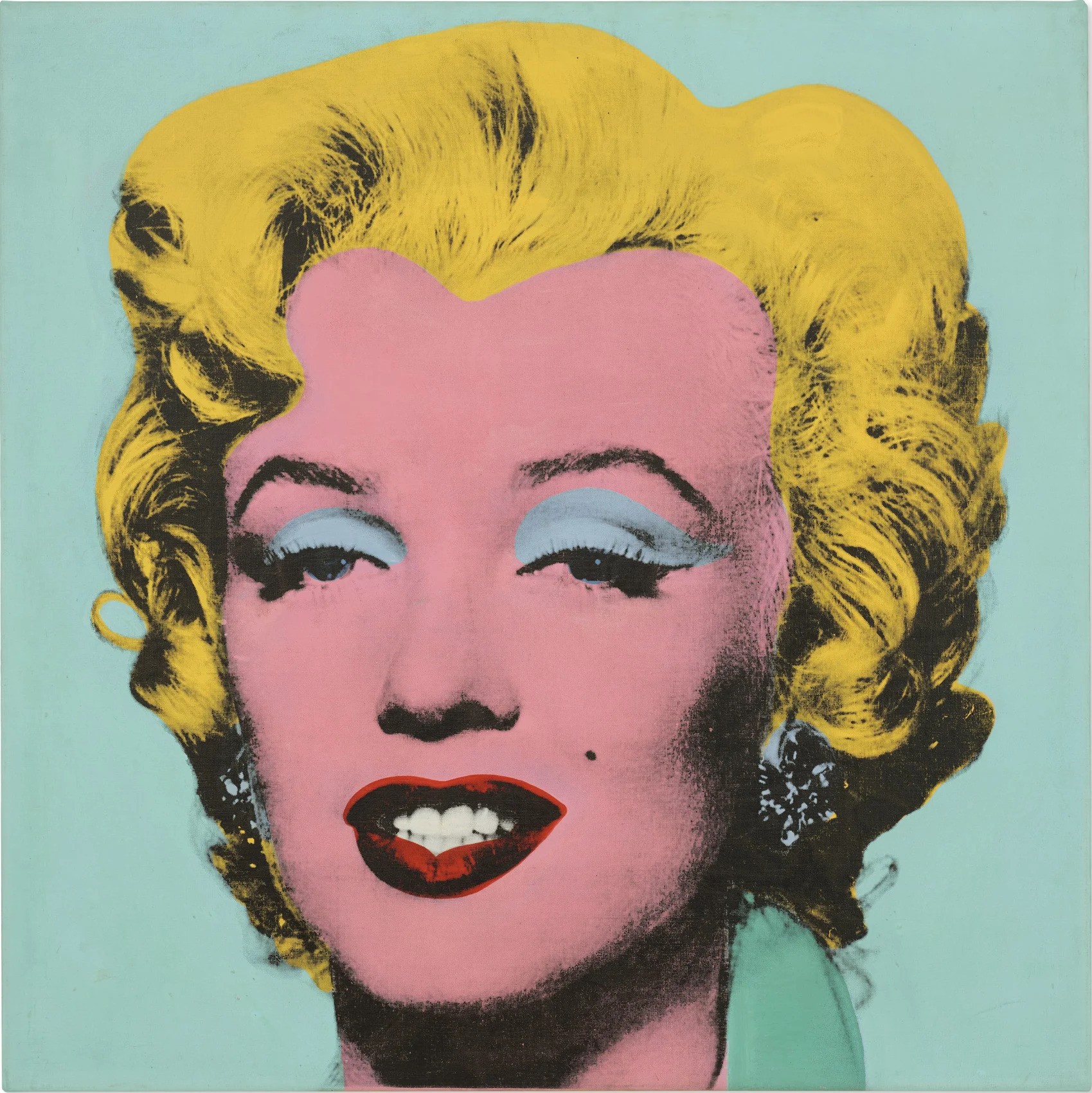
ANDY WARHOL’s Shot Sage Blue Marilyn, which sold for $195 million in New York in May 2022, became the second most expensive work ever to sell at auction behind Leonardo Da Vinci’s Salvator Mundi, which sold for $450 million in New York in 2017. —CHRISTIES.COM

By Andrea Felsted

THE RICH are living in a different economic world. You can see that from all the Dior handbags and Cartier watches they’re buying — but it becomes even clearer when you look at all the art they’re collecting.

Global art sales rose to $67.8 billion in 2022, according to art economist Clare McAndrew’s latest state-of-the-industry report for Art Basel and UBS Group AG. That marked a 3% increase from 2021, which saw a 31% rebound in sales from the pandemic-induced low point in 2020.

ANDY WARHOL’s Shot Sage Blue Marilyn, which sold for $195 million in New York in May 2022, became the second most expensive work ever to sell at auction behind Leonardo Da Vinci’s Salvator Mundi, which sold for $450 million in New York in 2017. —CHRISTIES.COM

As in the global luxury sector, it was the US market that drove the art industry last year. Andy Warhol’s Shot Sage Blue Marilyn, which sold for $195 million in New York in May, became the second most expensive work ever to sell at auction behind Leonardo Da Vinci’s Salvator Mundi, which sold for $450 million in New York in 2017.

Although the US retained its premier position in the global ranks, it’s notable that the UK also strengthened. The British art market hasn’t quite recovered to pre-pandemic levels, but it is still attracting international buyers post-Brexit. The slump in sterling last autumn didn’t hurt either.

Across all regions, the most expensive artworks were the strongest sellers, according to McAndrew’s Arts Economics. Pieces selling for more than $10 million were the only segment to increase the value of sales last year. This category includes Georges Seurat’s Les Poseuses, Ensemble (Petite Version), which sold for $149.2 million, and Paul Cezanne’s La Montagne Sainte-Victoire, which fetched $137.8 million. This top-end surge reflects increasing stores of wealth among the very richest collectors.

In contrast, stalled demand for lower-end works suggests that fear of recession, sky-high inflation, and rising interest rates crimped the style of those merely affluent. The market began to cool in the final quarter of 2022.

What’s happening in art echoes what’s happening in the luxury sector more broadly.

After soaring stock markets and cryptocurrencies boosted wealth in 2021, more people, particularly in the US, discovered the joys of upmarket shopping. But with the slump in tech stocks and Bitcoin, as well as higher borrowing costs, luxury companies including Britain’s Burberry Group Plc and Gucci-owner Kering SA have noted that some younger, more aspirational buyers, are reining in their extravagant purchases.

In art, this is glaringly evident when it comes to non-fungible tokens (NFTs), digital certificates of authenticity that run on blockchain technology. With crypto bros spending their gains on NFTs alongside Audemars Piguet watches, sales of art-related tokens surged to $2.9 billion in 2021, from $20 million in the year earlier, according to Arts Economics, with data from Nonfungible.com. The boom was best exemplified by Beeple’s Everydays: the First 5000 Days, which sold for $69.3 million two years ago.

After peaking in Aug. 2021, demand for art-related NFTs cooled as the price of Ethereum — the cryptocurrency of choice for trading the tokens — fell. Art-related NFT sales roughly halved in 2022 from the year earlier, though sales of collectibles NFTs have continued to expand.

Some young people are buying art as much as ever, but a separate report from McAndrew for Art Basel and UBS found that they were high-net-worth individuals, with more than $1 million of assets excluding real estate and private businesses, and they had spent at least $10,000 on art in each of the past three years. So these millennial and Gen Z buyers look a bit different from the crypto bros.

The question now is: How will the recent banking turmoil affect the art market? In troubled times, art can be seen as a tangible store of value. But stock market volatility and layoffs in the tech sector and beyond can hurt demand. External crises can also deter sellers of valuable works from bringing them to market, another important factor in determining the strength of art sales.

Either way, with the US cooling, China now holds the key to transforming both art and luxury.

Arts Economics notes that after the 2008 crisis, a booming market in China was one of the key factors behind the recovery, with sales rebounding in 2010. Already the signs there are promising. Art Basel Hong Kong last month was busy, indicating that there is significant pent-up demand for art. This adds to positive signals from brands including Prada and Moncler that luxury shoppers are back in force too. Analysts at Bernstein even noted that some Chinese fashionistas had begun to travel abroad again.

For sellers of creations by Balenciaga and Basquiat, Chinese shoppers unleashing another wave of revenge spending can’t come too soon. — Bloomberg

ACEN inks financing for Monsoon wind project in Lao PDR

AYALA-led ACEN Corp. on Tuesday said its subsidiary ACEN Renewables International Pte. Ltd. recently signed financing documents for its wind power project in Lao People’s Democratic Republic (PDR).

Monsoon Wind—the first wind power project in Lao PDR—will be the “largest renewable energy platform for regional connectivity and decarbonization in Southeast Asia,” the energy company told the stock exchange.

The project is a collaboration involving ACEN, BCPG Public Company Ltd., Impact Electrons Siam Ltd., Mitsubishi Corp., and SMP Consultation and STP&I Public Co. Ltd.

Monsoon Wind will construct, own, and operate the 600-megawatt wind power plant, as well as its 500-kiloVolt transmission line in the provinces of Sekong and Attapeu in Laos. 

ACEN said the power output of the project will then be sold to Vietnam’s state-owned electric utility, Vietnam Electricity, making it the first cross-border wind project in Southeast Asia.

ACEN said the Asian Development Bank (ADB) will co-finance the project as lead arranger.

On its website, ADB said it will provide a $692.55 million non-recourse financing package to the project.

The other lenders are Asia Infrastructure Investment Bank, Japan International Corp. Agency, the Export-Import Bank of Thailand, Hong Kong Mortgage Corporation Ltd., Sumitomo Mitsui Banking Corp., Kasikornbank, and Siam Commercial Bank.

“We are happy to be working with our partners for the Monsoon Wind project, and deliver the first cross-border wind project and largest renewable energy platform in Southeast Asia,” Patrice R. Clausse, chief executive officer of ACEN International, told the stock exchange.

According to the Ayala group’s energy company, this project is considered to be a crucial undertaking in Vietnam’s power development plan, as it is anticipated to help address the country’s supply-demand challenges.

“Vietnam has significantly scaled up solar and wind over the last few years which made it an ideal place for sustainable investments. Power demand in the country is recovering strong post-COVID,” Mr. Clausse said.

To date, ACEN owns a total of 637 MW of attributable capacity in Vietnam since it started building solar and wind projects in 2017 in the country.

At the local bourse on Tuesday, shares in the company gained 22 centavos or 3.53% to end at P6.02 per share. — Ashley Erika O. Jose

A stroll in the shadowed garden

(Left to Right): Ms. Luwalhati Alvero Kendrick, H.E. Ma. Hellen De La Vega, Ms. Emma Gowling, ACT Office of International Engagement, Ms. Libby Cass from the National Library of Australia, and Mr. Daniel Marc Delefia of SBS Filipino. —PHILEMBASSY.ORG.AU

PALANCA award-winning writer Luwalhati Alvero-Kendrick is just as passionate, empathetic, and forward with her emotions as her poems indicate. She’s not one to go into an endeavor half-heartedly nor is she the type to let an interview just be an interview.

Hours into speaking with her and you’ll get the feeling that she doesn’t box poetry into the confines of mere self-expression, or see the state of the Philippines and its people as just some topic of conversation.

Her poems, powerful and authentic, speak of complex nationalism, women’s struggles, the plight of the environment, and the lives of Filipinos abroad. So does she, with just as much fervor.

Though Ms. Alvero-Kendrick lived in Australia for nearly 50 years, she remains a Filipino through and through.

“You can take the Filipino out of the country, but you can’t take the Philippines away from the person,” she said in a conversation with BusinessWorld, quoting what her late Australian husband used to say about her.

A Filipino who moved to Australia in the 1970s, shortly after she won a Palanca award, her poems are equal parts endearing, moving, and provocative in their honesty. Most of all, they’re strikingly Filipino.

PASSION PROJECT
Being connected to one’s heritage and writing poems and stories that reflect that connection aren’t necessarily things you do on purpose.

Pag ukol, bubukol. Kung di ukol, di bubukol,” Ms. Alvero-Kendrick said, this time quoting a Filipino proverb that roughly translates to “If it’s meant to be, it will form. If it isn’t, then it won’t.”

The Shadowed Garden, a collection of poems reflecting her experiences combined with her father Aurelio Alvero’s own pieces, was fortunately meant to be.

It started as a passion project, an idea from her husband that her and her father’s works be published together. After all, they’re both Palanca awardees, he in 1954 for one-act play and she in 1975 for poetry.

The book is divided into two parts, the first half her mostly Tagalog poems and the second half her father’s poetry in English.

“Like my works, his work tackles the struggles of the Filipino people but in the 1930s,” she said. “It remains relevant, and his writings are still in demand among local literature lovers and collectors.”

It took 16 years for the combined collection to come to fruition, after years and years of thinking and contemplating and trying to keep busy once her husband, Major Gary John Kendrick, had passed.

Remembering him and his wishes turned out to be the key to actually doing it, recalled Ms. Alvero-Kendrick.

“He said it was his dream to help me and be my shadow. I’m a gardener at heart, so when I garden, I remember that,” she said. This is how the title of the book came to be.

GIVING BACK
Love, confusion, heartbreak, nationalism, the joys of the earth — these are all themes that the father and daughter present in their poems, albeit in different ways.

Ms. Alvero-Kendrick, though very forward about the things and people she observes around her, does so not to be blunt, but to honor and reflect on the sense of absence, distance, nostalgia, and love that informs the Filipino experience today.

Her hope is for her and her father’s words to contribute to and enrich the scope of Philippine literature, to celebrate Filipino roots, and also to inspire and provide cultural context for today’s generation.

“I saved up over the years to do this book, but publishing it is not for profit at all. What I really want is to give back,” she said.

A direct way to give back using the book is by donating all its earnings to sanitary projects that will build toilets in Gibitngil Island in Cebu.

The Shadowed Garden is very personal, but also very social and political, as seen in the content itself, in the author’s outlook in life, and in the varied intentions behind the book.

“I’m not here to give an interview and leave it at that, or write poems and publish them and talk about my book and leave it at that. I’m here to do something beyond that,” said Ms. Alvero-Kendrick. — Brontë H. Lacsamana

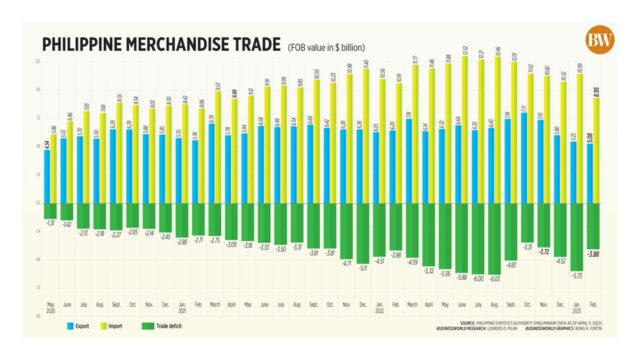
Philippine merchandise trade performance

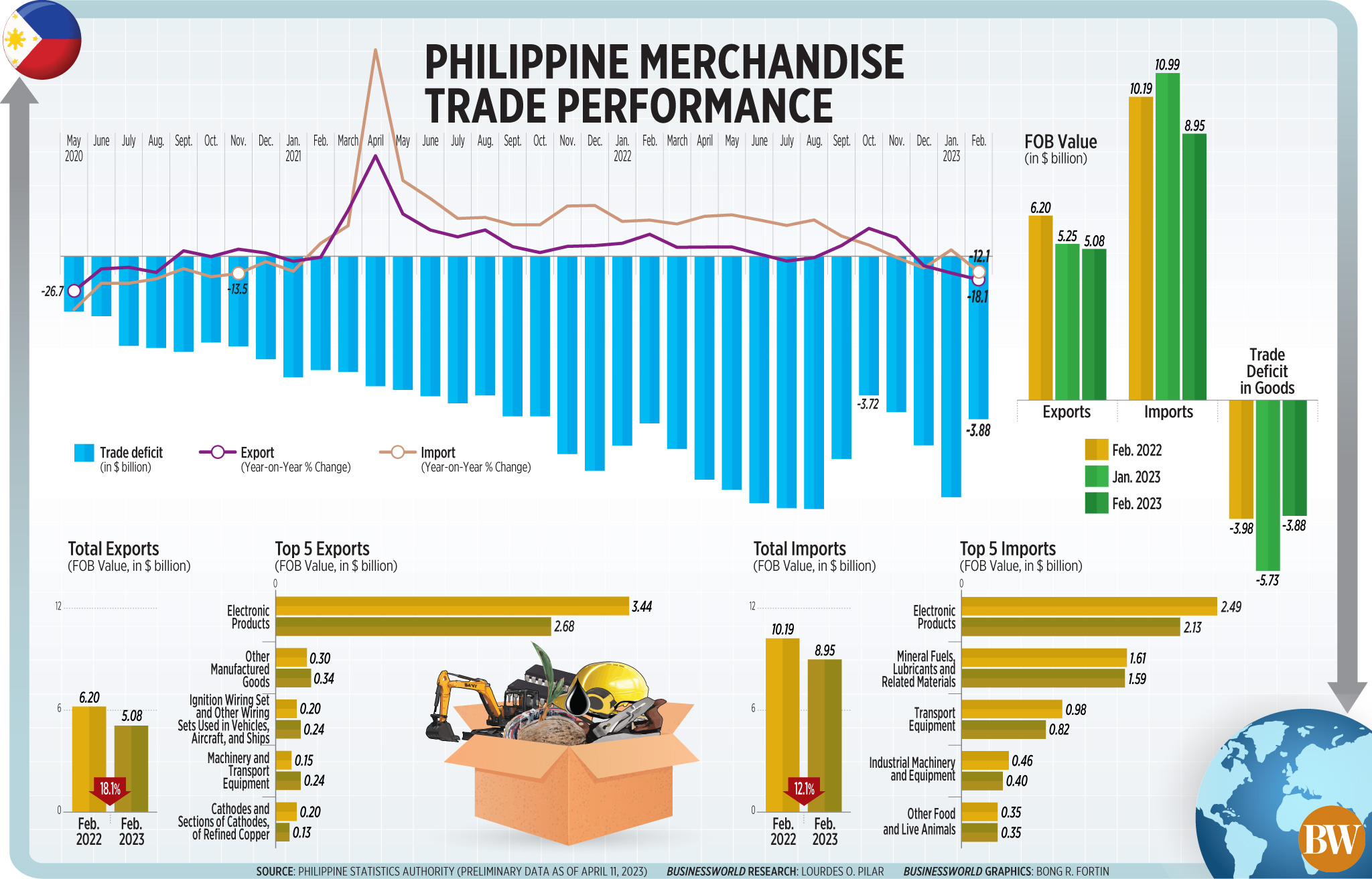
THE Philippines’ trade deficit in goods narrowed in February to the smallest in three months, as imports and exports slumped to their lowest levels in over two years. Read the full story.

Philippine merchandise trade performance

Xurpas plans to sell 21.17% stake in Altitude Games

LISTED technology services company Xurpas, Inc. plans to sell its 21.17% stake in Singapore-based mobile gaming company Altitude Games Pte. Ltd., the company announced on Tuesday.

“The sale of the assets and business of Altitude Games will be made effective upon signing of the definitive agreements,” the company said in a regulatory filing.

 “[It] will receive the proceeds from the sale and discharge of liabilities, upon completion of certain deliverables,” it added.

The company said that Altitude Games had approved the sale of its assets to an Australian based company, which includes its intellectual property and licenses. The company did not disclose the name of the buyer. The sale of assets will result in Xurpas receiving a net proceed of $900,982.04, which will cover the payment of convertible debt and the corresponding equity stake.

In February, the company’s board of directors approved the establishment of a new subsidiary in Australia.

According to the company, this will provide a new market to offer its products and services.

“Xurpas will offer a range of [information technology] services through the new subsidiary, ranging from staff augmentation and managed services to bespoke software development, among others,” the company said in a separate disclosure.

The company posted an attributable net loss of P5.05 million for the nine-month period ending Sept. 30 last year.

Revenues for the period decreased 6.6% to P174.49 million from P163.75 million previously. — Adrian H. Halili
Arts&Culture (04/12/23)

Tejido Jomike’s The Makers Space

Ang INK showcases At Home at UP Fine Arts Gallery

ANG ILUSTRADOR ng Kabataan (Ang INK), the organization of illustrators for children, opens its annual exhibit titledAt Home” on April 13 at Parola: UP Fine Arts Gallery in Quezon City. The opening reception will be held on Saturday, April 15 and will be open to the public. Featuring 60 house-shaped art pieces in various digital and traditional media, the exhibit presents a behind-the-scenes look at the home life of Ang INK members. The collection also showcases various interpretations of what “home” means to the members or what “home” could be like. Among the works are Viel Vidal’s Safe Safe Space Space, which spotlights a figure who appears to be dreaming while reclining comfortably with closed eyes. Mickey Velarde’s Shelter depicts several dogs of various breeds at play indoors. Clingy by May Tobias-Papa zooms in on a child enfolded by kisses of his parents. Other participants are Jomike Tejido, Angela Taguiang, Tinay Sison, Kim Santiago, Benedict Reyna, Rex Aguilar, Ian Reverente, Liz Ranola, and Patricia Ramos, among others. Held in conjunction with the exhibit will be a series of panel discussions and a mini art fair offering books, artworks and craft products produced by the members. The art fair will take place on April 15, noon, together with a panel discussion 1 p.m. on “What makes a good picture book?” Moderated by Zeus Bascon, the discussion features publisher Frances Ng, librarian and storyteller Zarah Gagatiga Adman, children’s book author and comics creator Russell Molina, and illustrator Fran Alvarez. The panel discussion on “The Artist as Storyteller: How Illustrations Shape Stories” is set for noon on April 18. Moderated by Liza Flores and Rommel Joson, the discussion features Ang Batang Papet illustrator Angela Taguiang, Tintin’s Birthday Party illustrator Marcus Nada, Tapak! Tapon! Tama! illustrator CJ Reynaldo, and Ang Unang Engkantada illustrator Jap Mikel. “Elsewhere: Philippine Children’s Illustration within the Global Landscape,” a panel discussion moderated by Isa Nazareno, will be held on April 29. The discussion features writer and reading advocate, Xi Zuq; writer and children’s storybook development specialist, Al Santos; and illustrator Bianca Lesaca. “At Home” runs until April 29. Parola gallery hours are Tuesdays to Fridays from 9 a.m. to 4 p.m. For more information about Ang INK, visit www.ang-ink.org or email hello@ang-ink.org.


New dance closes Ballet Philippines season

TO close this season, Ballet Philippines (BP) presents a debut performance: Carlo Calma’s Diyosa, a full-length contemporary ballet adaptation of Philippine mythology’s gods and goddesses alive in nature. This BP world premiere is a fantasy set in a dreamy, mythical world but rooted in strong Filipino culture and heritage and even a bit of Pinoy humor. It will fuse fashion, art, music, and architecture with dance. The ballet will be presented on April 14 to 16 at The Theatre at Solaire. Tickets are available at TicketWorld.


Free webinar tackles Moro resistance during WWII

A FREE webinar presented by the Ayala Foundation, Inc. and Filipinas Heritage Library as part of The Roderick Hall Memorial Lectures, “Unsung Heroes of Mindanao: The Moro Resistance Fighters of World War II” will be held on April 15, 10 a.m., online via Zoom and Facebook Live. Just weeks after the Japanese attacked Pearl Harbor, as General Douglas MacArthur’s forces evacuated Manila and withdrew to Bataan, Moro volunteers stopped the invasion of Mindanao. Armed only with swords and machetes, they bested Japanese assault troops in jungle warfare. What made the Moro guerilla resistance movement successful despite limited resources? Anthropologist Thomas McKenna, Ph.D. will discuss their heroic exploits during World War II. For inquiries, e-mail asklibrarian@filipinaslibrary.org.ph.


Silverlens opens Santi Bose exhibit

SILVERLENS will be presenting “Spirited Traces,” the third installment in the sequence of exhibitions on Santiago Bose conceived by Filipino art historian, curator, and critic Dr. Patrick Flores in 2019. As a conclusion to the series,Spirited Traces” closely reads the artist’s form and language. It stems from the effort of the earlier initiations to stage, first, the impulse of the intelligence (Bare Necessities, 2019), and second, the sites that specified his endeavor (Striking Affinities, 2021). The exhibition opens April 20 and runs until May 20 at Silverlens Manila, 2263 Don Chino Roces Ave. Ext., Makati.


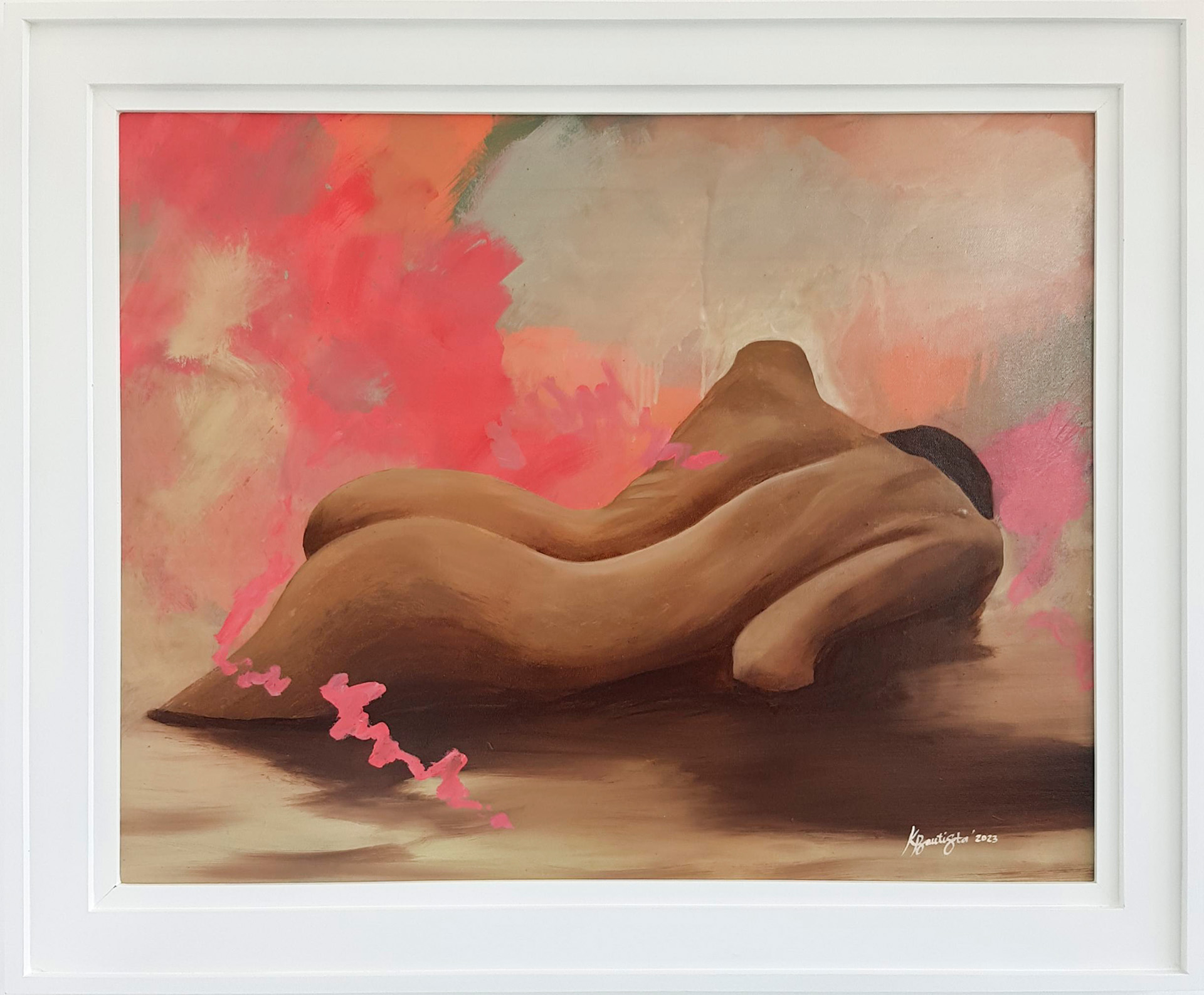
Imahica opens Kate Bautista exhibit

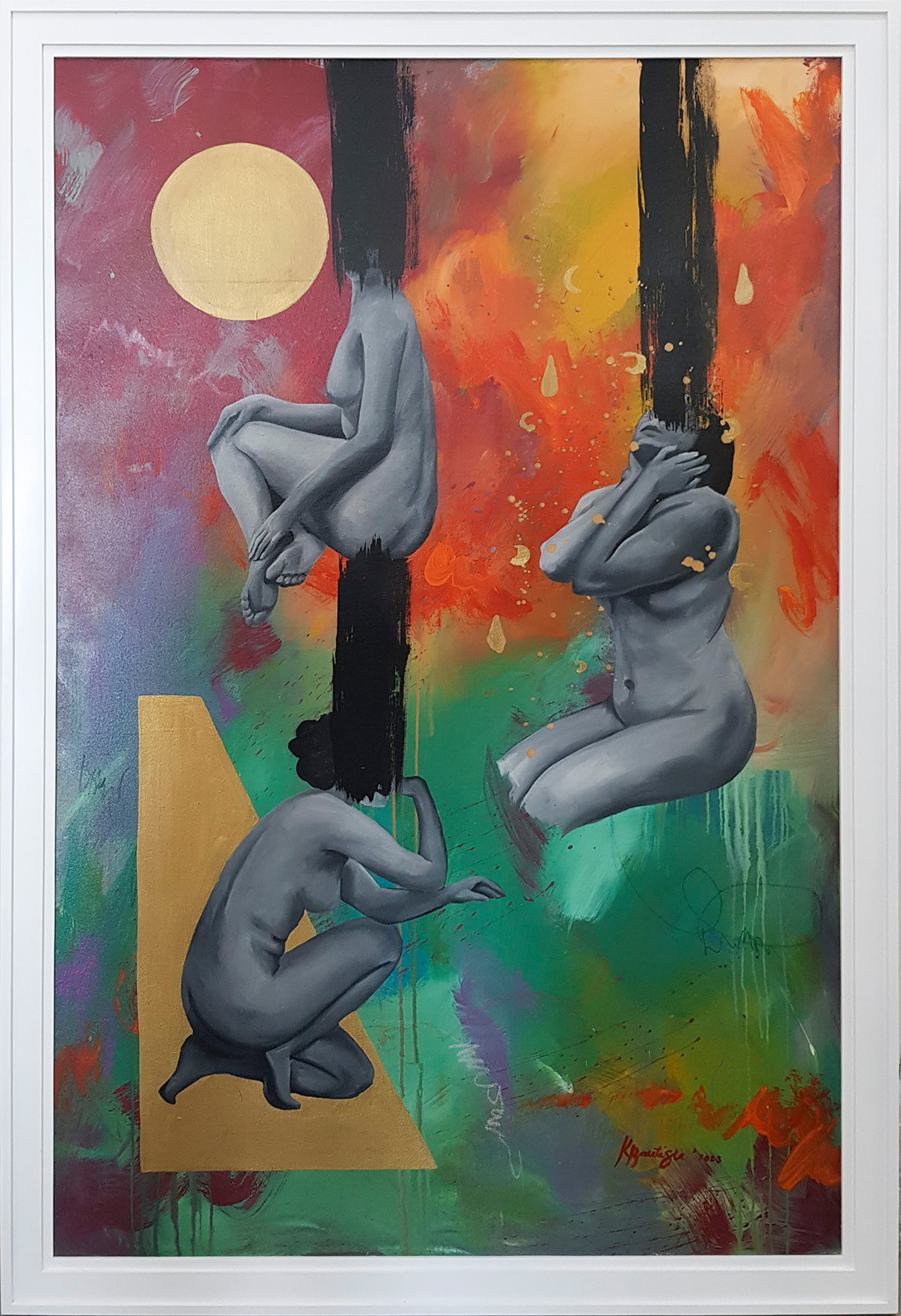
IMAHICA Art Gallery will open Kate Bautista’s solo exhibition, “Emotions All Over The Place” on April 15. The exhibit is suffused with themes of femininity, sensuality, and empowerment. It will be on view until May 6, at Imahica Art Gallery, 2A Lee Gardens, Lee Street, Wack-Wack, Mandaluyong City. Call 0917-894-5646, or 7622-4008 or email thegallery@Imahica.art for more details.


CCP Performatura goes online and offsite

WITH the mission to reach out to a wider audience, the Cultural Center of the Philippines (CCP) Performatura Festival 2023 will go beyond the complex and hold events online and offsite in various venues. The Flips Flippin’ Pages Book Club, in partnership with Milflores Publishing, will hold an online book discussion on The Reddest Rose Unfolds, a comic book by Swedish artist and writer Liv Stromquist, slated on April 15, 2 p.m., via Zoom. To join and listen to the discussion, e-mail: info@milflorespublishing.com. Pinoy Reads Pinoy Books (PRPB) Book Club honors and celebrates the life of Lualhati Bautista with a discussion on her self-published book Sixty in the City on April 22, 1 p.m., at the Holy Cross Memorial Park, Novaliches, Quezon City. The event is free and open to the public. Get in touch with the PRPB Book Club through their Facebook page. The Caloocan Historical and Cultural Studies Association, Inc. will hold the second installment of the Caloocan Writers Workshop on April 22 to 23 online. Workshop director is Mark Angeles, the author of short story collection Gagambeks at Iba Pang Kuwentongs Waratpad and collection Ang Huling Emotero. For further details, visit the Caloocan Historical and Cultural Studies Association, Inc. Facebook page.Poesia,” a poetry reading, will be held on April 26, 3 p.m., at the Zaguan of Museo de La Salle in Dasmariñas, Cavite. The activity aims to promote the museum as a space for people’s creativity and self-expression. Featured poems are from the 41st issue of the CCP literary journal Ani. Those who are interested, donating a book is an option to get in any CCP Performatura remote events. Collected books will be donated to CCP’s partner libraries. For inquiries, e-mail the ccpintertextualdivision@gmail.com, call 8832-1125 local 1706 or 0919-3175708.

Gov’t partially awards Treasury bills at higher rates

BW FILE PHOTO

THE GOVERNMENT made a partial award of the Treasury bills (T-bills) it auctioned off on Tuesday as investors wanted higher yields at par with benchmark borrowing costs.

The Bureau of the Treasury (BTr) raised just P13.9 billion from its offer of T-bills on Tuesday, below the P15-billion program, with total bids reaching P21.609 billion.

Broken down, the Treasury borrowed just P4.6 billion from the 91-day T-bills, below the P5-billion plan, despite tenders for the tenor reaching P6.744 billion. The average rate of the three-month paper rose by 26.9 basis points (bps) to 5.314% from the 5.045% seen at last week’s auction, with the accepted rates ranging from 5.05% to 5.5%.

The BTr likewise raised just P4.3 billion via the 182-day debt papers, lower than the P5-billion program, with bids at P8.578 billion. The average rate of the six-month T-bill went up by 2.6 bps to 5.7% from 5.674% last week. Accepted yields were from 5.673% to 5.75%.

Meanwhile, the government made a full P5-billion award of the 364-day securities as demand for the tenor stood at P9.287 billion. The one-year paper was awarded at an average rate of 5.991%, inching up by 1.4 bp from 5.977% the previous week, with accepted rates ranging from 5.95% to 6%.

At the secondary market on Tuesday, the 91-, 182-, and 364-day T-bills were quoted at 5.1479%, 5.6411%, and 5.9944%, respectively, based on PHP Bloomberg Valuation Service Reference Rates data provided by the BTr.

“Results were mixed in today’s Treasury bill auction as the Auction Committee decided to fully award bids for the 364-day T-bills while partially awarding the 91- and 182-day securities. The 364-day T-bills fetched an average of 5.991%, while the 91- and 182-day T-bill rates were capped at 5.314% and 5.7%, respectively,” the BTr said in a statement on Tuesday.

“The auction was 1.6 times oversubscribed, with total bids reaching P24.6 billion. With its decision, the committee raised P13.9 billion of the P15 billion offering,” it added.

The government made a partial award of its T-bill offer as the market wanted higher returns, a trader said in a Viber message.

“Investors are simply demanding higher rates because the overnight rate is at 6.25%, while these papers are longer but are yielding way below the policy rate,” the trader said.

The trader noted that the average rate of the one-year T-bill is already higher than the 5.883% average fetched for the reissued seven-year Treasury bonds (T-bonds) offered last week, as well as the 5.9283% quoted for the five-year bond at the secondary market as of April 5.

The Bangko Sentral ng Pilipinas (BSP) last month hiked benchmark interest rates by 25 bps to help bring down elevated inflation.

This brought the yield on its overnight reverse repurchase facility or its key rate to 6.25%.

Interest rates on the overnight deposit and lending facilities were also hiked by 25 bps to 5.75% and 6.75%, respectively.

Since May 2022, the central bank raised borrowing costs by a total of 425 bps.

The Monetary Board’s next meeting will be on May 18.

T-bill rates rose due to bets of a 25-bp hike by the US Federal Reserve in its May 2-3 meeting, which could be matched by the BSP in its own review next month, Rizal Commercial Banking Corp. Chief Economist Michael L. Ricafort said in a Viber message.

The Fed last month raised its target interest rate by 25 bps to the 4.75%-5% range.

It has hiked rates by 475 bps since March 2022.

On Wednesday, the BTr will offer P25 billion in reissued 10-year T-bonds that have a remaining life of nine years and five months.

The Treasury wants to raise P160 billion from the domestic market this month, or P60 billion via T-bills and P100 billion via T-bonds.

The government borrows from local and external sources to help fund its budget deficit, which is capped at 6.1% of gross domestic product this year. — A.M.C. Sy

MREIT, Inc. to hold annual stockholders’ meeting virtually on June 2


Spotlight is BusinessWorld’s sponsored section that allows advertisers to amplify their brand and connect with BusinessWorld’s audience by enabling them to publish their stories directly on the BusinessWorld Web site. For more information, send an email to online@bworldonline.com.

Join us on Viber at https://bit.ly/3hv6bLA to get more updates and subscribe to BusinessWorld’s titles and get exclusive content through www.bworld-x.com.

Globe Telecom appeals for SIM registration extension

PHILIPPINE STAR/EDD GUMBAN

GLOBE Telecom, Inc. is appealing for an extension of the subscriber identity module (SIM) registration to give subscribers more time to obtain necessary government IDs, according to a company official.

“We have seen a low registration count primarily due to the lack of valid government IDs, and challenged digital literacy,” Globe Chief Sustainability and Corporate Communications Officer Maria Yolanda C. Crisanto said in an e-mailed statement on Tuesday.

“Given these issues, we appeal to the government to extend the SIM registration process to give our customers more time to get their required government IDs and input the required information on our site,” she added.
As of 2 p.m. of April 11, Globe has recorded 27.85 million mobile customers in its registration, equivalent to 32% of its total mobile subscriber base.
“With just two weeks to go before the April 26 deadline, we have yet to touch at least 50% of total registrations — other telcos similarly situated based on the latest available data,” said Ms. Crisanto.

Ms. Crisanto also appealed for the government’s backing on alternative forms of identifications, conditional registration, and creation of always-on government handled assisted registration.

Under these requests, company and school IDs and barangay certificates will be accepted as a form of identification for those who do not have valid government-issued IDs, while the conditional registration will allow individuals to continue to use network services within a reasonable period while they work to get a valid ID.

“Globe is working closely with the National Telecommunications Commission, relevant government agencies and other stakeholders in ensuring that we register as many subscribers as possible before the April 26 deadline,” Ms. Crisanto said.

At the same time, Globe announced the deployment of 180 SIM registration booths across 72 provinces.

The assistance desks are said to help those subscribers who are using basic phones or phones limited to call and text capability as SIM registration is done online.

Meanwhile, PLDT, Inc.’s wireless unit Smart Communications, Inc. said it saw a surge in SIM registration during the Lenten break.

“Over the past nine days, we have seen a surge in registrations, averaging 400,000 daily, from the usual 200,000 to 300,000 in previous months,” said Catherine Y. Yang, first vice-president and group head of PLDT and Smart.

“This to us reveals there are a lot of last-minute registrations taking place, so we are hopeful we’d get to stay on this increasing trend as the deadline nears,” she added.

In the data provided by the Department of Information and Communications Technology, the total number of SIMs registered as of April 10 is at 65.15 million this is 38.79% of the total 168.98 million subscribers nationwide.

This shows a 13.94% increase from the 57.18 million registered SIMs as of April 2, or before the start of the Holy Week.

Of the total registered SIMs, 32.48 million are from Smart, 27.83 million from Globe, and 4.89 million from DITO Telecommunity Corp.

Republic Act 11934 or the SIM Registration Act requires all SIM users to register their SIMs under their name until April 26, or risk SIM deactivation.

The law aims to help mitigate the proliferation of text scams and other mobile phone-aided criminal activities. — Justine Irish D. Tabile

Philippine merchandise trade

THE Philippines’ trade deficit in goods narrowed in February to the smallest in three months, as imports and exports slumped to their lowest levels in over two years. Read the full story.

Philippine Merchandise Trade