Home Blog Page 4892

Metro Pacific plans delisting from stock exchange

MANILA – Philippine infrastructure conglomerate Metro Pacific Investments Corp said on Thursday its top shareholders will offer to buy out minority stockholders and conduct a voluntary delisting from the Philippine Stock Exchange.

The company did not provide a reason for the move, but its management has long said its shares were undervalued in the domestic bourse.

The tender offer price is P4.63 ($0.08) per share, an 8% premium versus Wednesday’s closing price and a price level last reached three and a half years ago.

“Metro Pacific intends to continue its business as currently conducted, particularly of owning and managing its portfolio of investments, as well as investing in other sectors of the economy, in the Philippines and other parts of Southeast Asia,” the company said in a disclosure.

Metro Pacific, which has interests in power, water, hospitals and toll roads, is a unit of First Pacific Co Ltd, which is owned by Indonesian tycoon, Anthoni Salim. It is valued at $2.2 billion. — Reuters


MPIC, which has a majority stake in Maynilad, is one of three Philippine units of Hong Kong-based First Pacific Co. Ltd., the others being Philex Mining Corp. and PLDT Inc.

Hastings Holdings, Inc., a unit of PLDT Beneficial Trust Fund subsidiary MediaQuest Holdings, Inc., has an interest in BusinessWorld through the Philippine Star Group, which it controls.

Medalla says: ‘Dangerous’ to cut rates faster than Fed

Bangko Sentral ng Pilipinas (BSP) Governor Felipe M. Medalla — KEISHA B. TA-ASAN

By Keisha B. Ta-asan, Reporter

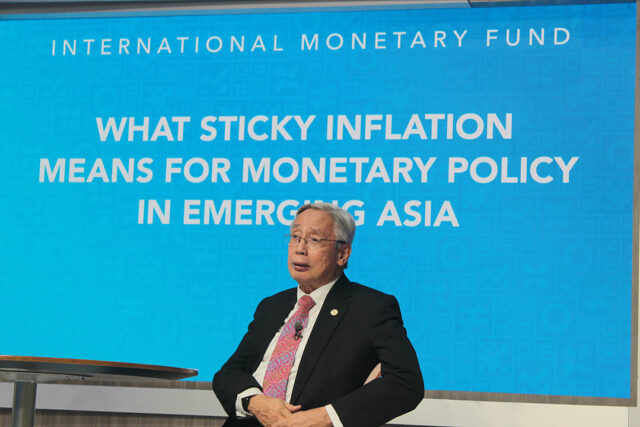
BANGKO SENTRAL ng Pilipinas (BSP) Governor Felipe M. Medalla said on Wednesday it is “dangerous” to cut benchmark rates faster than the US Federal Reserve’s easing because it might cause the peso to further depreciate against the dollar.

“If US inflation is sticky and the cuts are slow, it’s very dangerous for the Philippine central bank to cut faster than the US even if its inflation is falling faster,” he told reporters on the sidelines of a BSP event in Pasay City.

If the Philippines’ benchmark interest rate is lower than the US Fed, Mr. Medalla noted investors might flock to the dollar, putting more pressure on the peso.

The Monetary Board has raised borrowing costs by 425 basis points (bps) since May last year, bringing the key rate to 6.25%.

The US Federal Reserve, on the other hand, hiked the Fed fund rate by 25 bps to 4.75-5% last month. The Fed has raised the rate by 475 bps since March 2022.

Asked if the BSP will raise interest rates next month if the Fed continues its tightening cycle, Mr. Medalla said there is no need to mirror the US Fed because Philippine inflation is seen to slow within the target by yearend. 

Headline inflation eased to a six-month low of 7.6% in March from 8.6% in February. This brought the first-quarter inflation average to 8.3%.

The BSP’s full-year inflation forecast is 6%, although it expects inflation to return to the 2-4% target by the fourth quarter.

The Monetary Board is scheduled to meet on May 18, while the US Federal Reserve is set to discuss policy on May 2-3.

“If inflation will fall to 3% [by the end of the year], how can you justify an interest rate of 6.25%? From that point of view, we should at least not match the Fed. Even if they raise theirs, we may not have to raise ours,” Mr. Medalla said in mixed English and Filipino.

“Now, will that cause an overly weak peso? Maybe not because the markets know we have more than enough reserves,” he said, adding that the central bank could participate in the foreign exchange market to mitigate the impact of the strong dollar.

The peso closed at P55.62 a dollar on Wednesday, eight centavos weaker than Tuesday’s P55.54 finish, based on data from the Bankers Association of the Philippines.

Latest central bank data showed the country’s gross international reserves had inched up by 2% to $100.2 billion as of end-March from $98.2 billion at end-February.

Mr. Medalla said the Philippines likely expanded by 6% in the first quarter, lower than 8.2% a year earlier and 7.1% in the fourth quarter of 2022.

“Lower than last year, but not too much,” he said.

ING Bank N.V. Manila Senior Economist Nicholas Antonio T. Mapa said headline inflation might ease to 6.9% in April, and this would likely prompt the Monetary Board to pause on May 18.

“A print below 7% could be enough to elicit a pause from the BSP at the May policy meeting,” he said.

Union Bank of the Philippines, Inc. Chief Economist Ruben Carlo O. Asuncion said the BSP might still hike policy rates by 25 bps next month.

“We continue to expect one last BSP policy rate hike of 25 bps in May to 6.5% before the pause-and-hold, to enable nominal interest rates to stay relatively neutral or close to the inflation outlook this year running at 6% if not higher,” he said.

April inflation data are scheduled to be released on May 5.

Budget utilization at 98% as of end-March

Construction workers rest on a sidewalk at the Tagaytay City Sports Park in Tagaytay City. — PHILIPPINE STAR/EDD GUMBAN

THE CASH utilization rate of government agencies reached 98% at the end of the first quarter, the Department of Budget and Management (DBM) said on Wednesday.

Data from the DBM showed that the National Government, local governments and state-owned companies used 98% or P835.5 billion of the P852.79 billion in notice of cash allocation issued in January to March.

This was slightly lower than the usage rate of 99% a year earlier.

At the end of March, the remaining unused allocations totaled P17.29 billion.

Notice of cash allocations  are a quarterly disbursement authority that the DBM issues to agencies, allowing them to withdraw funds from the Bureau of the Treasury to support their spending needs.

“This may have to do with the early approval of the 2023 national budget, as well as the further reopening of the economy towards greater normalcy with no more large lockdowns since 2022 and as a policy priority going forward,” Rizal Commercial Banking Corp. Chief Economist Michael L. Ricafort said in a Viber message.

President Ferdinand R. Marcos, Jr. signed the P5.286-trillion 2023 national budget on Dec. 16, 2022. This was the “fastest and earliest date that a national budget had been signed,” according to the DBM.

“Agencies are aggressive in spending due to less constraints and greater avenues for productive spending,” John Paolo R. Rivera, an economist at the Asian Institute of Management, said in a Viber message.

Mr. Ricafort noted rising prices and financing costs might have led to the increased funding requirements of the government.

In March, the government said it would allot P9.3 billion for a two-month subsidy for more than nine million poor households to help mitigate the impact of inflation.

The last payout of the government’s targeted earlier cash transfer program ended in January. The program provided P18.3 billion in subsidies to about 9.2 million beneficiaries.

Inflation averaged 8.3% in the first quarter, still above the central bank’s 6% full-year forecast and 2-4% target.

As of March, line departments used P567 billion or 97% of their allotments, leaving P17.29 billion unused.

The Budget, Education, Energy, Environment, Foreign Affairs, Health, Interior and Local Government, Labor, Public Works, Science and Technology, Trade and Transportation departments all posted a budget usage rate of 100%.

Also at 100% were the Office of the Press Secretary, Joint Legislative-Executive Councils, Commission on Audit, Commission on Elections, Office of the Ombudsman and Commission on Human Rights.

The Department of Migrant Workers had the lowest usage rate of 48% as of March.

Meanwhile, budgetary support to government-owned companies as well as allotments to local government units were also fully used.

Budget Secretary Amenah F. Pangandaman earlier said that the DBM would slash the budgets of agencies with a low use rate.

“We have released most of the budget. Hopefully (utilization) is ongoing, all the procurement procedures, so they will be able to implement [these]. Especially in the infrastructure sector, I’ve released everything, so they can procure,” she said in a roundtable briefing with BusinessWorld editors and reporters last week.

“Some agencies have already come up to me because they saw their Tier 1, there were deductions because of their (low) utilization,” she added.

The DBM released P4.31 trillion or 81.9% of the P5.286-trillion 2023 national budget at the end of March. This was slightly faster than last year when the DBM had released P3.48 trillion or 69.4% of the P5.02-trillion budget as of the end of the first quarter. — Luisa Maria Jacinta C. Jocson

Proposed withholding tax on online sellers expected to boost compliance

STOCK PHOTO | Image by andrespradagarcia from Pixabay

By Luisa Maria Jacinta C. Jocson, Reporter

THE BUREAU of Internal Revenue’s (BIR) proposal to require online platform providers to impose a creditable withholding tax on their partner merchants is expected to improve tax compliance, experts said.

“The withholding tax system is a good control mechanism to ensure that all income earned by individuals or businesses is properly taxed. It allows the BIR to secure information from withholding agents and compare it with the income declared by sellers in their tax returns,” Richard R. Ibarra, a tax director at P&A Grant Thornton, said in a phone interview.

“The online platform providers will be mandated to withhold and remit tax to the BIR. As such, the online sellers will have no choice but to correctly declare their sales transactions,” he added.

Last week, the BIR announced its plan to amend Revenue Regulation No. 2-98, which sets the rules for withholding tax on income. The rules do not cover transactions by online platforms.

The draft rule calls for a creditable withholding tax of 1% on one-half of the gross remittances of online platforms to their partner sellers or merchants.

It defined an online platform as any entity that serves as an intermediary, where sellers and buyers of goods and services transact through the use of information technology and other electronic means, and deputized it to act as the government’s withholding agent.

These include marketplaces, food delivery services, lodging accommodation, travel or transportation, payment or remittances such as e-wallets, and other services.

The proposed withholding tax will also be imposed in addition to other existing withholding tax obligations, the BIR said.

Online platforms that do not require business registration from sellers will only collect withholding tax on single transactions of goods or services worth P10,000 and if the same buyer and seller have engaged in at least six transactions, regardless of amount per transaction, in the previous or current year.

Eleanor L. Roque, tax principal of P&A Grant Thornton, said online providers would need to have the systems and procedures in place to capture the withholding tax.

“It’s additional compliance cost for online platform providers,” she said in a Viber message.

Ms. Roque said the BIR should allow for situations where the seller’s total taxable income does not exceed P250,000 a year.

“This amount is not taxable; hence, any creditable withholding tax will not be useful for the online seller. So, the withholding tax should only apply if the taxable income of the seller exceeds P250,000 annually,” she said.

Under the Tax Reform for Acceleration and Inclusion law, people with income below P250,000 are exempt from paying personal income tax.

Mr. Ibarra said the BIR should also find ways to better educate online sellers on their compliance requirements.

“One challenge is the lack of documentation compliance by online sellers. They usually do not issue valid invoices or official receipts. Either they are not aware of the requirements, or they just do not know how to comply,” he said.

Albay Rep. Jose Maria Clemente S. Salceda, chairman of the House Ways and Means Committee, said in a Viber message the proposal would improve BIR efforts in collecting income tax from online merchants.

But the proposal is “not yet an imposed tax in the strictest sense” because it is credited against future income tax liabilities.

“Furthermore, the rate is analogous with the standard rate imposed on the income of credit card companies to establishments (50% of 1%) since online service providers are also financial intermediaries of payments to merchants. They even have their own layaway or installment options similar to credit cards. So, nothing irregular or unusual in this new regulation,” Mr. Salceda said.

“The better way is to include everyone in the VAT (value-added tax) regime so that we can lower the rate — perhaps to even 8% or 9%. But that requires the force of legislation,” he added.

The BIR has been seeking ways to tax the digital sector, as e-commerce surged during the pandemic as people were forced to stay home.

Last year, the digital economy accounted for 9.4% of the gross domestic product, equivalent to P2.08 trillion. This exceeded the pre-pandemic level of P1.96 trillion in 2019.

Employment in the digital economy rose by 8.2% to 6.05 million last year.

The Department of Trade and Industry estimates the number of entities doing business as online sellers at two million as of 2022.

Government sets P175-B borrowing plan for May

BW FILE PHOTO

THE NATIONAL GOVERNMENT (NG) plans to borrow P175 billion from the domestic market in May, the Bureau of the Treasury (BTr) said on Wednesday.

The BTr released its borrowing plan for next month that is 9.38% higher than the programmed P160 billion for April.

The government raised P140.922 billion this month, 12% below the program.

Next month, the BTr plans to borrow P75 billion in Treasury bills (T-bills) and P100 billion in Treasury bonds (T-bonds).

The Treasury will offer P5 billion worth of 91-day, 182-day and 364-day T-bills on May 2, 8, 15, 22, and 29.

The T-bill auction will be held on May 2 (Tuesday) since May 1 or Labor Day is a nonworking holiday.

For the long-term tenors, the BTr is looking to raise P25 billion from six-year T-bonds on May 2, and P25 billion from nine-year T-bonds on May 9.

It also seeks to generate P25 billion from 13-year instruments on May 16 and P25 billion in seven-year bonds on May 23.

A trader said in a Viber message it’s too early to tell how rates would move next month.

“But these will probably stay above 6% for these tenors given fundamentals (high inflation and overnight policy rate),” the trader said.

Rizal Commercial Banking Corp. Chief Economist Michael L. Ricafort said in a Viber message the rates for long-term tenors have gone down since peaking in November 2022, while the short-term debt has increased by 60-80 basis points (bps) since the start of this month.

Next month’s auctions could be affected by an anticipated slowdown in April inflation, which may lead to a possible pause in tightening by the Bangko Sentral ng Pilipinas (BSP), he said.

Headline inflation slowed to 7.6% in March from 8.6% in February, bringing the first-quarter average to 8.3%. This is well above the central bank’s full-year forecast of 6% and the 2-4% target band.

The Philippine Statistics Authority is scheduled to release April inflation data on May 5.

The Monetary Board has raised borrowing costs by 425 bps since May 2022. Its next meeting is scheduled on May 18.

“There would be less maturities of Treasury bonds from May-June 2023 compared with earlier months of 2023,” Mr. Ricafort said.

The gross domestic borrowing program this year is set at P1.654 trillion, composed of P54.1 billion in T-bills and P1.6 trillion in fixed-rate T-bonds.

The government borrows from local and external sources to help fund a budget deficit capped at 6.1% of the gross domestic product this year. — A.M.C.Sy

Pinoy food with an Australian flavor

COOKBOOK author Yasmin Newman shows off one of her creations during tea at the Australian Ambassador’s residence.

Filipino-Aussie author Yasmin Newman tackles her Pinoy heritage in new cookbook

FILIPINO-Australian food and travel content creator, cookbook author, and businesswoman Yasmin Newman is sharing her Filipino heritage with her fellow Australians a second time with her new cookbook, Under the Coconut Skies: Feasts and Stories from the Philippines.

Ms. Newman was in town on April 18 for morning tea — and to promote her new book —  at the Australian Ambassador’s residence. During the tea, she showed off one of the desserts from her book, a pavlova made with ube (purple yam).

Interestingly, Under the Coconut Skies approaches Filipino cuisine with Australian ingredients. It’s a little more experimental than her first book, 7000 Islands: A Food Portrait of the Philippines, which was published in 2013.

Ms. Newman is no stranger to the Philippines: she spent childhood summers with her grandparents in their home province, while in adulthood, she maintains a summer home in Siargao. “I have gone on to have my own children,” she wrote in the book’s introduction. “As a mother, I yearn for them to know my lolo and lola in loving spirit.”

Both Australian and Filipino, Ms. Newman then has perspective from inside and out. During a group interview, she described Filipino food from the perspective of an Australian. “I think it looks wildly delicious. The combinations of flavors are so unique. The ratios of sweetness to saltiness to sourness… they’re mouth-enlivening, and I don’t think you’d find that anywhere else.”

Drawing from her two origins, she discussed the similarities and differences between Australian and Filipino food culture. Both love food, she says, but, “Here, it’s very much about history, bringing families together, and the time around the table. I think food for us is very much part of a lifestyle.”

She talked about the multiple outdoor meals they have in Australia. “Food is kind of an anchor point around a lot of the ways in which we live our life. Because we have such beautiful ingredients and such an array of influences… we eat around the world every day.”

While there’s a growing market of Filipino cookbooks in Australia, Ms. Newman points to a group of people who have benefited from her books the most. “When I was writing this story, I was just really trying to help do my small part: document the cuisine so that there would be an access point for Australians.

“The people who have reached out to it, it’s a lot of people like myself in the first and second generation — or the partners of Filipinos.” Some of them had Filipino parents who didn’t cook, or else had parents and partners who cooked by taste, and could not pass on what Filipino food should taste like through a recipe. “This brings me a lot of joy to know that that’s helped them, like the food has for me, to understand more about where they’ve come from, and where they’re going.”

Under the Coconut Skies – Feasts and Stories from the Philippines is available on https://www.amazon.com/Under-Coconut-Skies-Stories-Philippines/dp/1925811689.Joseph L. Garcia

SMIC projects P95-B capex, maps provincial growth

BW FILE PHOTO

SM Investments Corp.’s (SMIC) capital expenditures (capex) could reach about P95 billion for 2023, which will be allocated mainly to property unit SM Prime Holdings, Inc., company officials said.

“Our projected capex this year will be between about P85 [billion] and P95 billion. It really all depends on how [our] projects progress,” SMIC Corporate Information Officer and Senior Vice-President for Finance Franklin C. Gomez said in a media briefing on Wednesday.

Of the group’s estimated capex, the majority will go to its real estate development arm, he added.

For the year, the company will focus the majority of its expansion plans on emerging regional areas outside of Metro Manila.

“Heading into 2023, we remain optimistic as a group. The majority of our expansion is focused on the regions, especially in emerging regional centers outside of Metro Manila,” SMIC President Frederic C. DyBuncio said.

“Our businesses are well-positioned and have clear strategies to participate in the country’s strong growth,” Mr. DyBuncio said added.

Mr. DyBuncio said SMIC’s provincial expansion was prompted by improvements in employment, quality of education, and connectivity in the regions.

Additionally, SM Prime plans to open three new malls for the year, while its residential arm aims to launch 15,000 to 20,000 housing units.

SM Retail, Inc. is looking to expand its store network by about 400 stores, which will mainly focus on food retail and specialty retail stores.

Meanwhile, the company approved a dividend payout of P9.17 billion or P7.50 per share for stockholders on record as of May 11.

The figure is a 20% increase from the P6.25 per share in the previous year. Dividends would be payable by May 25.

On Wednesday, SMIC shares fell by 0.22% or P2 to P898 apiece. — Adrian H. Halili

From vineyard to table: What it takes to bring Aussie grapes to the Philippines

HORTICULTURE INNOVATION AUSTRALIA

THE AUSTRALIAN table grape industry is Australia’s largest fresh fruit exporter: at its peak, it exported $623 million worth of grapes, out of a total national production value of $880 million. During an April 13 dinner at Quezon City’s Lemuria called One Grape Day by Hort Innovation (Horticulture Innovation Australia) through the Grown in Good Nature campaign, media guests saw these grapes up-close and personal.

Bunches of grapes hung above tables, which served the grapes in a salad and a mocktail. After dinner, guests were bidden to pick the grapes.

“Good soil is essential. Good irrigation, not too much water, and not so little. Plenty of sunshine,” said Christopher Lim, Senior Trade and Investment Commissioner & Minister-Counsellor (Commercial) at the Australian Embassy, explaining the conditions that grow the perfect grape: which are incidentally, present in Australia.

Sunshine is also responsible for giving the grapes their sweetness. The grape-growing regions in the southwest, south, and southeast of the country happen to enjoy a Mediterranean climate. “The good thing about our situation in Australia is that we have great open lands, very good environment; it’s perfect for growing such fresh produce,” he said.

Mr. Lim could not give exact figures on the amount of Aussie grapes that make it here to the Philippines, but he said, “It’s growing all the time.”

“We are very keen to get more Australian grapes here in the Philippines,” he added. A release said that the Philippines ranks fifth in the market consumption of table grapes.

More than the conditions given by geography, the grapes’ quality is also aided by efficiency. “What you get is good quality, good supply chain, good logistics, and good quality assurance. This is something that you could rely on with Australian grapes,” Mr. Lim said. He pointed out factors like minimal handling: once the fruit is harvested, it is placed in cool rooms within an hour and from there, all the way through the cold chain process, the grapes do not exceed 3 degrees Celsius. The bags in which the grapes are stored are the same bags that appear in the supermarkets.

“Distance traveled,” he said, citing another key factor in the quality of the grapes. “The time traveled is much shorter.” The nearest grape-growing area in Australia relative to the Philippines is in Perth, which is a 6.5-hour flight away from the Philippines. Other grape-growing areas in Australia are accessible through flights that take about 7.5 hours. According to a release, proximity to the Philippines means grapes can be in the market within 48 hours if air-freighted or 16 days by sea. “Where in under 48 hours can you get high-quality grapes? This is a very, very good competitive advantage. You know it’s going to be fresh. It’s not shipped halfway around the world,” said Mr. Lim.

Australian table grapes will be available this season from February to the end of June in leading supermarkets such as Landmark, Robinsons, and S&R. — Joseph L. Garcia

AREIT to pursue P22.5-billion prime asset infusion in 2023

AREIT, Inc. is targeting this year to infuse assets worth P22.5 billion, which its top official expects to bring the total assets of Ayala Land, Inc.’s real estate investment trust (REIT) to P87 billion.

“We look forward to 2023 being another banner year for AREIT as it turns three since its listing as a first Philippine REIT,” President and Chief Executive Officer Carol T. Mills said at the company’s annual stockholders meeting on Wednesday.

“The company will be undertaking its largest asset infusion, bringing total assets to P87 billion, triple our portfolio of P30 billion when we did the IPO (initial public offering),” she added.

Ms. Mills said the infusion is set to put AREIT way ahead of its investment plan of reaching P90 billion in assets in three years.

“This planned infusion of assets involves some of the prime flagship developments from our sponsor Ayala Land, setting AREIT as the latter’s commercial REIT platform,” Ms. Mills said.

The assets are One Ayala Avenue, Glorietta 1 and 2 mall and office buildings, and Ayala Malls’ MarQuee in Angeles, Pampanga. One Ayala Avenue’s east and west office towers has 71,000 square meters that were substantially leased during the pandemic, Ms. Mills said.

She said the P22.5-billion asset infusion will benefit the company in three ways: expansion of its portfolio, diversification of its asset base, and shareholder return.

“A diversified portfolio can reduce several risk exposures for AREIT. Diversification minimizes sector risk and balances are predominantly office-based portfolio with retail,” she said.

“It [also] mitigates tenant concentration risk, as we will have a larger and more diversified tenant base, reducing the impact of any third-party tenant leaving the portfolio,” she added.

After the infusion, the malls and offices in AREIT’s portfolio will comprise 10% and 42% of Ayala Land’s total malls and offices, respectively.

“As such, we still have significant room for growth. Our goal is to ensure that AREIT is not only large enough in size today but also has a healthy pipeline for future growth,” Ms. Mills said.

She added that the company is also open to third-party acquisitions as long as “the assets are prime, stable and can add to AREIT’s dividends.”

On Wednesday, the company’s share closed 20 centavos or 0.61% higher at P33 each. — Justine Irish D. Tabile

Dining In/Out (04/27/23)


Dine through Asia with Asian Eats 2023

One of the best ways to understand a country and its cultural nuances is through its food. On April 28-30, discover the diverse cuisines of the region through Asian Eats at the Grand Atrium of Shangri-La Plaza in Mandaluyong City. The weekend food fest is a collaboration between the Asia Society Philippines and various Asian embassies in Manila who put together a curated mix of merchants. Find out the latest food venture of award-winning chef, best-selling author and culinary heritage advocate, chef Myke “Tatung” Sarthou, at his TinDeli. Be transported to the streets of Bangkok at The Thai Plate and ChaTruMue. Discover aromatic spices that are the essence of Indian cuisine at Flavours Indian and Mediterranean Cuisine. Get your fix of kimchi fried rice and kalbi jjim at Kaya. Sample Laotian dishes that are hard to find in the metro as prepared by the ladies of the Embassy of the Laos People’s Democratic Republic. Savor a bowl of laksa and a plate of nasi lemak from PappaRam Malaysian Kitchen and the ladies of Perwakilan. Enjoy a Japanese classic, the okonomiyaki, at Botejyu. Pair a hearty pho with a crunchy bahn mi at Em Ha Noi. Enjoy the different layers of flavor of Indonesian comfort dishes at Bakmi Nyonya and at Rumah Makan Padang Huang Jia. Pick up bottles of Australian wine, cheese, and gourmet products for a wine and cheese party from Unitetris and Silverwave Corp. Grab some Vietnamese coffee and pastries from Highlands Coffee’s pop-up cart. Get sauces and condiments at NutriAsia’s booth. For HSBC cardholders and credit card applicants, get a chance to pick a prize at the HSBC booth. Over at the NOM booth, share cooking, dining and culinary travel experiences in the country’s first food community platform. At the Main Stage, learn how cooking can be made simple from Mr. Sarthou on April 29, at 4:30 p.m. The Korean Cultural Center of the Philippines, the Embassy of Indonesia, and Prof. Carlito Camahalan Amalla with the Tinampuso will take centerstage on April 28-30, 4-7 p.m., with cultural performances that give a glimpse of the culture and traditions of South Korea, Indonesia and the Philippines, respectively. Visit Asia Society Philippines’ website (https://asiasociety.org/philippines), Facebook, Twitter or Instagram pages at @AsiaSocietyPH or visit the official hashtag #AsianEats2023 for details and updates.


The Singleton opens pop-up bar

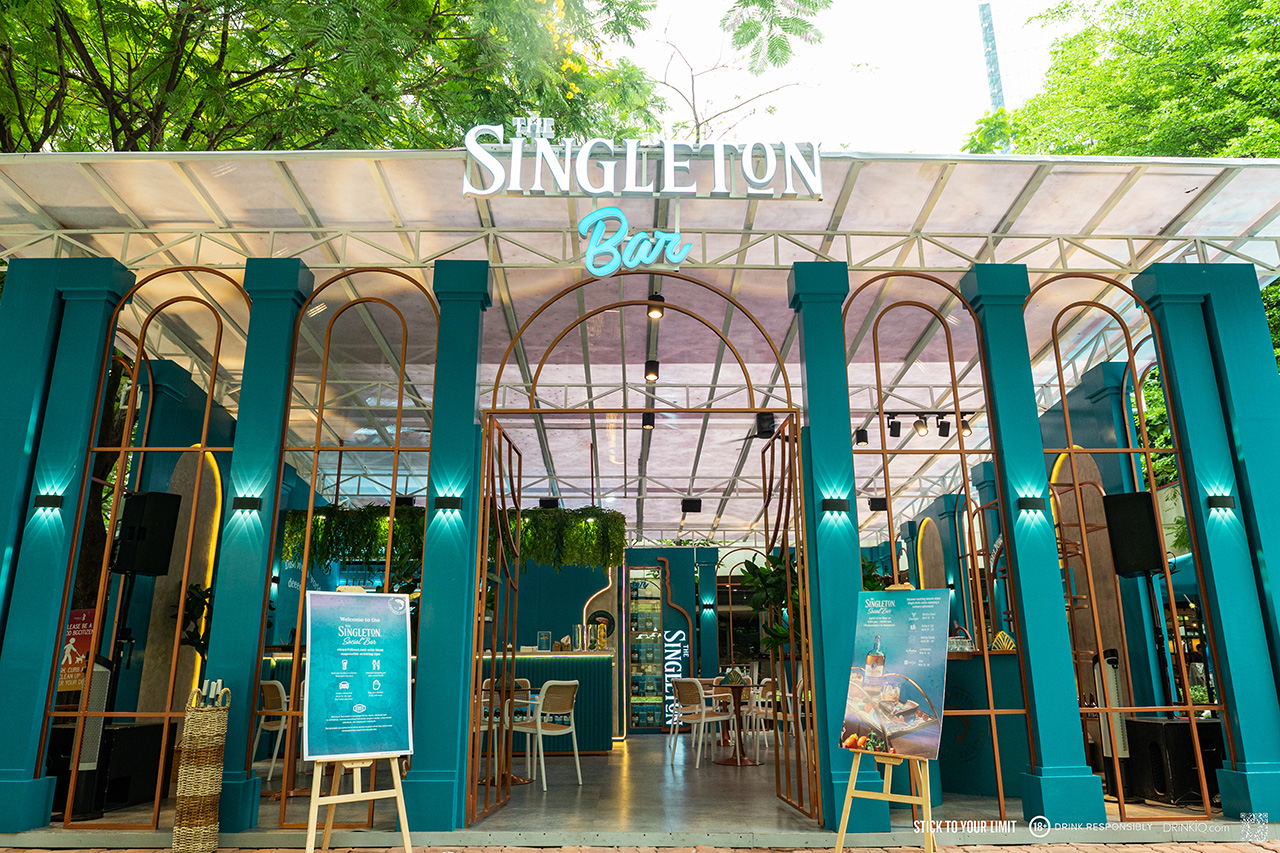
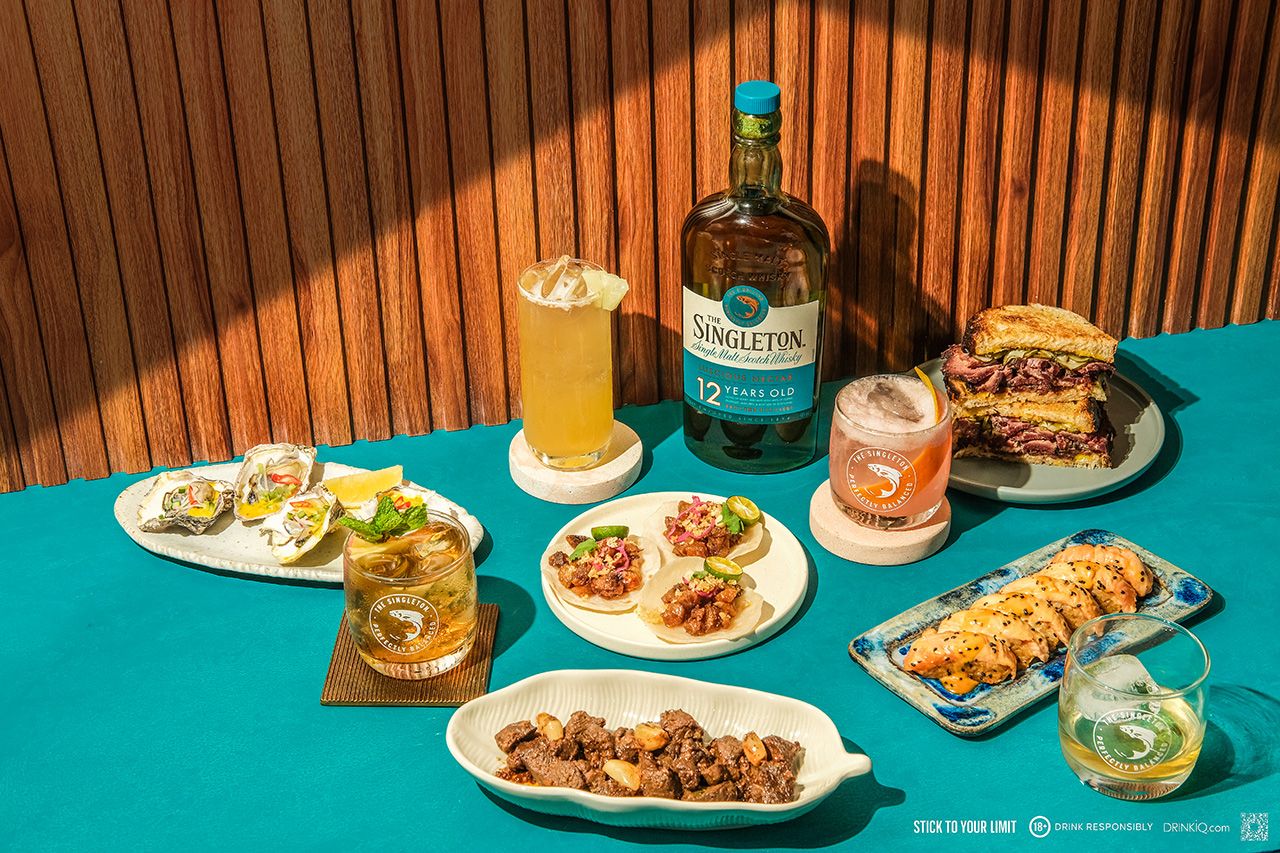
The Singleton is shaking things up with an all-new whisky and culinary experience with The Singleton Social Bar, which opened its doors at One Bonifacio High Street and runs until May 14. It offers a selection of The Singleton cocktails and specialty dishes. “We’re excited to bring The Singleton Social Bar to BGC, a one-of-a-kind pop-up to pave the way for people to discover single malts. By collaborating with today’s best chefs and food concepts along with some of the best bartenders in the country to create memorable events every weekend, we’re also allowing consumers to immerse themselves in a world of whisky flavors without the pressure of rules,” said Merell Beltran, Marketing Manager for Culture and Advocacy for Diageo Philippines, in a statement. For the next weekends, collaborators Deli by Chele, La Kantina, and Mijo Comfort Food will create a limited-edition menu featuring specialty dishes that guests can savor along with bespoke cocktails the brands have, each developed in partnership with award-winning bartenders from World Class Philippines. The collaborations are The Singleton x Deli by Chele, April 28-29; The Singleton x La Kantina, May 5-6; and, The Singleton x Mijo, May 12-13. The Singleton Social Bar is open from 5 p.m. to midnight, from Wednesdays to Sundays, for guests 18 years old and above until May 14.


Nespresso reintroduces Barista Creations Flavored coffee range

This year, Nespresso reintroduces its specialty Barista Creations Flavored coffee range with an update of its best-selling flavors, Cioccolatino, Caramello, and Vaniglia; and a new permanent addition, Nocciola, for hazelnut-flavor lovers. Inspired by the creativity and expertise of some of the world’s finest baristas, Nespresso has a range of specialty coffees to make one’s favorite coffee-with-milk recipes at home. The blends are: Cioccolatino (formerly Cocoa Truffle) is where the dark and bitter cocoa flavor meets the malted cereal note of the base espresso, plus a distinct cocoa note with a touch of almond sweetness and a hint of vanilla; Caramello (formerly Caramel Crème Brûlée) carries a caramel flavor that softens the roasted notes of the espresso, and brings out those notes of vanilla and coconut; Vaniglia (formerly Vanilla Éclair) is round, smooth Latin American Arabica espresso and warming vanilla on a base of malted cereal that is reminiscent of vanilla eclairs; and Nocciola, a new permanent addition to the range, a hazelnut flavor which has been proven a crowd-favorite taste profile with Nespresso’s previous hazelnut-flavored limited edition coffees. Nespresso has come up with “recipes” that can be made with flavored coffees including Nocciola Lemon and Vanilla Cappuccino, Soy Caramello Over Ice, and Vaniglia Con Pann. Learn more about the recipes and the Barista Creations Flavored range in Nespresso boutiques located in Power Plant Mall, Podium Mall, Robinsons Magnolia, One Bonifacio High Street Mall, Mitsukoshi BGC, and Ayala Center Cebu, and at pop-up stores in Greenbelt 5, Shangri-La Plaza, TriNoma, Alabang Town Center, and SM Mall of Asia, and online at www.nespresso.ph.


Corner Pizza introduces new Stuffed Baked Rolls

Corner Pizza has come up with new Stuffed Baked Rolls which come in four seven-inch overstuffed variants: Hawaiian, Spinach & Cheese, Spam Bacon & Cheese, and Buffalo Blue Cheese. The classic Hawaiian Stuffed Baked Roll is overstuffed with ham, pineapples, mozzarella, and cheddar cheese, while the Spinach & Cheese Stuffed Baked Roll is filled with a creamy and savory mixture of spinach, mozzarella, cheddar, and cream cheese. The Spam, Bacon & Cheese roll is overstuffed with Spam luncheon meat, bacon slices with cheddar, and mozzarella cheese, while the Buffalo Blue Cheese is made with sautéed chicken, covered with spicy buffalo sauce, and stuffed with real blue cheese to balance the spicy and creamy flavors. All stuffed rolls are baked fresh upon order and are best consumed when hot. Corner Pizza’s new Stuffed Baked Rolls are available for take out, pick up, and delivery made under cornerpizza.com.ph, hotline of 8-555-9000, or through Grab Food and Food Panda.


Mang Inasal’s bilao of favorites now in buddy size

Mang Inasal, has launched the new Buddy Fiesta, the small version of the best-selling Family Fiesta group meal that features a bilao (round tray) of chicken and pork inasal favorites with a platter of Java Rice. “The Mang Inasal Buddy Fiesta is in response to the clamor from our customers who are looking for a bundle for a smaller group,” said Mang Inasal Business Unit head Mike V. Castro. “This is the perfect treat for a group of two to three persons.” Starting at a takeout price of ₱399, the Buddy Fiesta comes in four different bundles: the All-Chicken Bundle (three pieces of Chicken Inasal Paa), All-Pork Bundle (four sticks of Pork BBQ and one order of Grilled Liempo), Chicken and Pork BBQ Bundle (two pieces Chicken Inasal Paa and two sticks of Pork BBQ), and Chicken and Liempo Bundle (two pieces of Chicken Inasal Paa and one order Grilled Liempo). All Buddy Fiesta bundles come with a small platter of Java Rice. The Buddy Fiesta is available for dine-in or takeout at Mang Inasal stores nationwide. It can also be ordered via delivery through the Mang Inasal Delivery App, https://manginasaldelivery.com.ph/ or through other food delivery apps like GrabFood and FoodPanda.


Tefal cookware sale for Mother’s Day

A suggested gift for Mother’s Day is some of the best cookware and bakeware they can use every day. Tefal Cookware items will be on sale at the Lazada 5.5 Brand Savers Sale on May 6 with up to 60% off on select items. There will be exclusive bundles plus other offers on that day, plus other 5.5 promo deals on May 5 to 9. For mothers who prefer cookware that is easy to clean and use, the newest Tefal Everyday Cooking Frypan 24 cm and Tefal Everyday Cooking Saucepan 18 cm + Lid might be for her. It’s the most resistant and convenient all-hobs-except-induction range to use as it ensures long-lasting performance with its 100% easy-to-clean Titanium non-stick coating, thick diffusion base, ergonomic stay-cool handle, and other special features such as the Thermo-Signal technology, which indicates the ideal starting cooking temperature to guarantee perfect texture, color, and taste. For moms who like baking, there is the Tefal Perfectbake Round Cake 24 cm and Tefal Perfectbake Baking Tray 38×28 cm. She will get perfect results with its Bake+ non-stick coating, which offers flawless unmolding of baked cakes and desserts, and effortless clean-up to round off the package. These highly reliable bakeware products are engineered with 100% recycled aluminum, up to two times more resistant than traditional aluminum, for robust performance.


Ginebra San Miguel marks 190 years

Ginebra San Miguel, Inc. (GSMI), the maker of Ginebra San Miguel, has officially kicked off the countdown to its flagship brand’s 190 years. Music, gin, and fun activities are lined up for the celebration. GSMI brings back on stage the popular GINuman Fest, an event that gathers the country’s top musical talents and bands. GINuman Fest 2023 kicked off last January at Pozzurubio, Pangasinan, with performances from the national band, Siakol, and social media star Ms. Gin-Bilog. Just recently, the tour made its stop at Alaminos, Pangasinan (March 17) and Calapan, Mindoro, bringing in Silent Sanctuary, among others. In the next two months, the GINuman Fest concert tour continues at Cauayan, Isabela (April 14), San Jose, Occidental Mindoro. More GINuman Fest events will be held throughout the year. GSMI’s gin booths will also be visible in over 50 fiestas nationwide. Over the next few months they will be found at the Bangus Festival (April 30) in Dagupan City, Pangasinan; the the Baggak Festival (May 16) in Bauang, La Union; Bacnotan Town Fiesta (May 3) in Bacnotan, La Union; and, the Carabao Festival (May 18) in Pulilan, Bulacan. For more details, log on to www.ginebrasanmiguel.com or visit the official Ginebra San Miguel Facebook page:www.facebook.com/BarangayGinebra.

Ayala Land to spend P15B for 2 mixed-use estates

AYALA Land, Inc. is set to spend P15.2 billion for the initial development of two of its mixed-used estates, a company official said on Wednesday.

“We are investing P15.2 billion for the initial development of these two estates over the next few years,” Ayala Land Chairman Jaime Augusto Zobel de Ayala said during the company’s annual stockholders’ meeting.

“We believe that will spur economic activity in these emerging localities, maximize synergies among our product lines, and enable us to deliver value to these local economies and their stakeholders,” he added.

Mr. Zobel was referring to the 92-hectare Areza estate development in Lipa, Batangas and the 83-hectare Crossroads in Plaridel, Bulacan.

Areza, a master-planned and mixed-use development, is the company’s first estate in Batangas. Ayala Land envisions the estate to be the new downtown of Lipa City.

Crossroads estate is another mixed-use development that the company targets to be the center for trade and commerce in the area by bringing in local enterprises.

Both development projects were launched and started construction in the previous year.

Ayala Land will extend the rollout of its large-scale, mixed-use and sustainable estates, according to Mr. Zobel.

“With 49 estates across the country we see these additional growth platforms for Ayala Land as catalysts for economic progress for the communities we serve,” he said

The company also plans to launch four new estates, according to Ayala Land President and Chief Executive Officer Bernard Vincent O. Dy in a panel discussion.

Meanwhile, the company anticipates renewed growth across all its business lines this year, Mr. Dy said.

“In the residential sector we plan to launch about P110 billion worth of inventory, that’s coming from P90 billion last year,” he said.

Our commercial leasing business continues to be quite robust with expected increases in office, mall, and hotel occupancy from last year’s levels,” he added.

On Wednesday, Ayala Land shares rose 0.19% or five centavos to P26.40 each. — Adrian H. Halili

Harry Belafonte, who mixed music, acting, and activism, 96

HARRY BELAFONTE, Goodwill Ambassador for the United Nations Children’s Fund (UNICEF) discuss visit to South Africa to examine first-hand that country’s efforts to counteract the devastating effects of the HIV/AIDS virus, June 26, 2001. —UN PHOTO/SUSAN MARKISZ

HARRY Belafonte, a singer, songwriter and groundbreaking actor who started his entertainment career belting “Day O” in his 1950s hit song “Banana Boat” before turning to political activism, has died at the age of 96.

Mr. Belafonte died of congestive heart failure at his home in New York on Tuesday with his wife Pamela by his side, the firm of his longtime spokesperson Ken Sunshine said in a statement.

As a Black leading man who explored racial themes in 1950s movies, Mr. Belafonte would later move on to working with his friend Martin Luther King, Jr. during the US civil rights movement in the early 1960s. He became the driving force behind the celebrity-studded, famine-fighting hit song “We Are the World” in the 1980s.

Mr. Belafonte once said he was in a constant state of rebellion that was driven by anger.

“I’ve got to be a part of whatever the rebellion is that tries to change all this,” he told the New York Times in 2001. “The anger is a necessary fuel. Rebellion is healthy.”

Mr. Belafonte was born in New York City’s borough of Manhattan but spent his early childhood in his family’s native Jamaica. Handsome and suave, he came to be known as the “King of Calypso” early in his career. He was the first Black person allowed to perform in many plush nightspots and also had racial breakthroughs in movies at a time when segregation prevailed in much of the United States.

In Island in the Sun in 1954 his character entertained notions of a relationship with a white woman played by Joan Fontaine, which reportedly triggered threats to burn down theaters in the American South. In 1959’s Odds Against Tomorrow Mr. Belafonte played a bank robber with a racist partner.

In the 1960s he campaigned with Mr. King, and in the 1980s, he worked to end apartheid in South Africa and coordinated Nelson Mandela’s first visit to the United States.

‘WE ARE THE WORLD’
Mr. Belafonte traveled the world as a goodwill ambassador for UNICEF, the United Nations Children’s Fund, in 1987 and later started an AIDS foundation. In 2014 he received an Academy Award for his humanitarian work.

Mr. Belafonte provided the impetus for “We Are the World,” the 1985 all-star musical collaboration that raised money for famine relief in Ethiopia. After seeing a grim news report on the famine, he wanted to do something similar to the fund-raising song “Do They Know It’s Christmas?” by the British supergroup Band Aid a year earlier.

“We Are the World” featured superstars such as Michael Jackson, Stevie Wonder, Tina Turner, Cyndi Lauper, Bruce Springsteen, Bob Dylan, Ray Charles, and Diana Ross and raised millions of dollars.

“A lot of people say to me, ‘When as an artist did you decide to become an activist?’” Mr. Belafonte said in a National Public Radio interview in 2011. “I say to them, ‘I was long an activist before I became an artist.’”

Even in his late 80s, Mr. Belafonte was still speaking out on race and income equality and urging President Barack Obama to do more to help the poor. He was a co-chair of the Women’s March on Washington held the day after Donald Trump was inaugurated as president in January 2017.

Mr. Belafonte’s politics made headlines in January 2006 during a trip to Venezuela when he called President George W. Bush “the greatest terrorist in the world.” That same month he compared the US Homeland Security Department to the Gestapo of Nazi Germany.

An anthology of his music was released to mark Mr. Belafonte’s 90th birthday on March 1, 2017. A few weeks before the launch, Mr. Belafonte told Rolling Stone magazine that singing was a way for him to express injustices in the world.

“It gave me a chance to make political commentary, to make social statements, to talk about things that I found that were unpleasant — and things that I found that were inspiring,” he said.

Born Harold George Bellanfanti in New York’s Harlem neighborhood, he moved to Jamaica before returning to New York to attend high school.

He had described his father as an abusive drunk who abandoned him and his mother, leaving Mr. Belafonte with a longing for a stable family. He drew strength from his mother, an uneducated domestic worker, who instilled the activist spirit in him.

“We were instructed to never capitulate, to never yield, to always resist oppression,” Mr. Belafonte told Yes! Magazine.

JOINING THE RESISTANCE
During World War II, those principles led him to join the Navy, which also provided stability after he dropped out of high school.

“The Navy came as a place of relief for me,” Mr. Belafonte told Yes! “… But I was also driven by the belief that Hitler had to be defeated … My commitment sustained itself after the war. Wherever I found resistance to oppression, whether in Africa, in Latin America, certainly here in America in the South, I joined that resistance.”

After the Navy, Mr. Belafonte worked as a janitor in an apartment building and as a stagehand at the American Negro Theater before getting roles and studying with Marlon Brando and Sidney Poitier, another pioneering Black actor who would become a close friend.

He also appeared on Broadway in Almanac, winning a Tony Award, and in the movie Carmen Jones in 1954.

Mr. Belafonte’s third album, Calypso, became the first by a single performer to sell more than 1 million copies. “Banana Boat,” a song about Caribbean dock workers with its resounding call of “Day O,” made him a star. Surgery to remove a node on his vocal cords in the 1960s, however, reduced his voice to a raspy whisper.

In 1959, he began producing films and teamed with Mr. Poitier to produce Buck and the Preacher and Uptown Saturday Night. In 1984, he produced Beat Street, one of the first movies about break-dancing and hip-hop culture.

Mr. Belafonte was the first Black performer to win a major Emmy in 1960 with his appearance on a television variety special. He also won Grammy Awards in 1960 and 1965 and received a lifetime achievement Grammy in 2000 but voiced frustration at the limits on Black artists in show business. In 1994, Belafonte was awarded the National Medal of Arts.

Mr. Belafonte was married three times. He and his first wife Marguerite Byrd had two children, including actress-model Shari Belafonte. He also had two children with second wife Julia Robinson, a former dancer. — Reuters