Home Blog Page 474

Razon files cyberlibel complaint against Barzaga

INTERNATIONAL Container Terminal Services, Inc. Chairman Enrique K. Razon, Jr. filed a cyberlibel complaint against Cavite Rep. Francisco A. Barzaga before the Makati City Prosecutor’s Office on Jan. 14.

INTERNATIONAL Container Terminal Services, Inc. Chairman Enrique K. Razon, Jr. has lodged a cyberlibel complaint against Cavite Rep. Francisco A. Barzaga, who accused the ports and casino tycoon of corruption and bribery in Congress.

In a complaint filed with the Makati City Prosecutor’s Office on Jan. 14, Mr. Razon alleged that Mr. Barzaga accused him of masterminding corruption in Congress.

Mr. Razon filed two counts of cyberlibel against Mr. Barzaga and is seeking civil damages of at least P100 million for moral damages and P10 million in exemplary damages, saying the accusations caused emotional distress and hurt his reputation.

Mr. Razon’s complaint stemmed from Mr. Barzaga’s social media accusing him of being the mastermind behind corruption and bribery.

He denied all the accusations and said that “all elements of cyber libel are present: the statements accused him of crimes such as corruption and bribery, they were published publicly through Facebook and amplified by news sites, they were maliciously made, and he was specifically named.”

The suspended lawmaker said he is prepared to face Mr. Razon in court, vowing to pursue his alleged bribery case through Congress and a formal case filing.

“I will be taking the Enrique Razon bribery case to court,” he said in a video statement published on his Facebook page. “I will be presenting the evidence of my claims in both Congress and in court.” — Ashley Erika O. Jose and Kenneth Christiane L. Basilio

Leviste says penalties to solar firm linked to Cabral files

PIXABAY

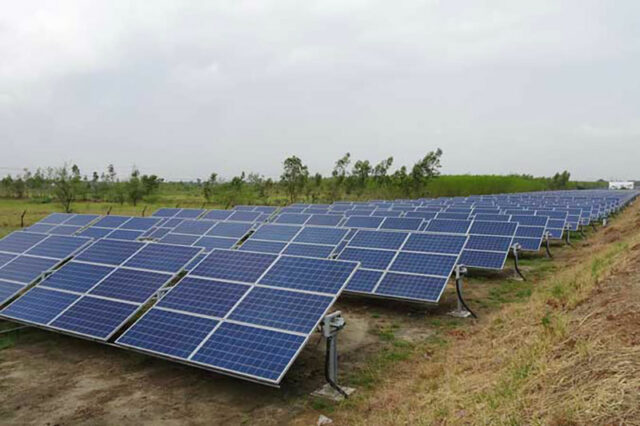
BATANGAS Rep. Leandro Antonio L. Leviste said on Wednesday he would respond to allegations of violations involving the solar power and holding company he founded in the “proper forum,” linking allegations against him to the so-called Cabral files.

Mr. Leviste said he respects the power of authorities to investigate alleged violations concerning the ownership of his company Solar Para sa Bayan Corp., which received a congressional franchise to operate microgrids in remote areas of the country.

“Since September, I have been warned that cases would be filed against me if I release the ‘Cabral Files,’ and told to remain silent for my own good,” he said in a statement. “I respect government employees and will respond to their statements in the proper forum.”

Granted a congressional franchise in 2019, Republic Act No. 11357 requires Solar Para sa Bayan Corp. to notify Congress of any sale or transfer, with such transactions subject to congressional approval.

Mr. Leviste’s Solar Philippines Power Project Holdings, Inc. also faces P24 billion in fines for its alleged failure to deliver nearly 12,000 megawatts of renewable energy, according to the Energy department.

“The company I founded built the country’s largest renewable energy capacity and brought in the biggest foreign investment to the Philippines in 2025,” he said. — Kenneth Christiane L. Basilio

Senate panel to tackle Cabral files

SENATOR Panfilo M. Lacson speaks to members of the media during a Kapihan sa Senado in Pasay City on Jan. 14. — PHILIPPINE STAR/RYAN BALDEMOR

THE SENATE Blue Ribbon Committee is set to tackle the so-called Cabral files, an alleged list of insertions and kickbacks, in its next hearing on anomalous flood control projects as it resumes next week, a senator said.

“On Monday, Jan. 19, we will resume the Blue Ribbon Committee hearings to further clarify some issues surrounding the flood control anomalies. Hence, we’d like to know more about the so-called Cabral Files,” Senator Panfilo “Ping” M. Lacson, who heads the panel, told a news briefing.

The documents are alleged to be a ledger of budget insertions and infrastructure projects, as well as a purported list of kickbacks received by officials in government flood control and infrastructure projects, previously held by former Undersecretary Maria Catalina E. Cabral.

He added that the committee will issue a subpoena duces tecum to Department of Public Works and Highways (DPWH) Secretary Vivencio B. Dizon to provide the alleged documents.

“(This is with) the end in view of consolidating all the files, including but not limited to what the late Undersecretary Cabral left before she died, that are confirmed to be in the possession of the department, and which the Blue Ribbon Committee needs to further enhance our inquiry and investigation,” Mr. Lacson said.

The DPWH last month submitted over a decade’s worth of records from the office of the late undersecretary to the Office of the Ombudsman.

He added that the panel will also invite Batangas Rep. Leandro Antonio L. Leviste, who previously claimed that the files were handed to him by the late DPWH official before she died.

The senator also claimed that former Public Works Secretary Manuel M. Bonoan provided false grid coordinates to the Presidential Palace.

“I have reliable information that former DPWH Secretary Manuel Bonoan deliberately submitted to Malacañang incorrect grid coordinates of thousands of flood control projects all over the country,” Mr. Lacson said.

He added that this resulted in inaccurate data involving about 421 ghost projects and previously inspected flood control projects reported by the DPWH.

“They are now trying to rectify by comparing the records in their multi-year planning and scheduling, project and contract management application, and other related documents that remain intact and in the possession of the department,” he said.

The senator said the panel will issue a subpoena for Mr. Bonoan to compel to attend the Jan. 19 hearing. Should he fail to attend, he will be cited in contempt, Mr. Lacson said, adding an arrest warrant may be issued against Mr. Bonoan.

The former DPWH chief has been staying the United States since November. — Adrian H. Halili

P62-B smuggled goods seized in 2025

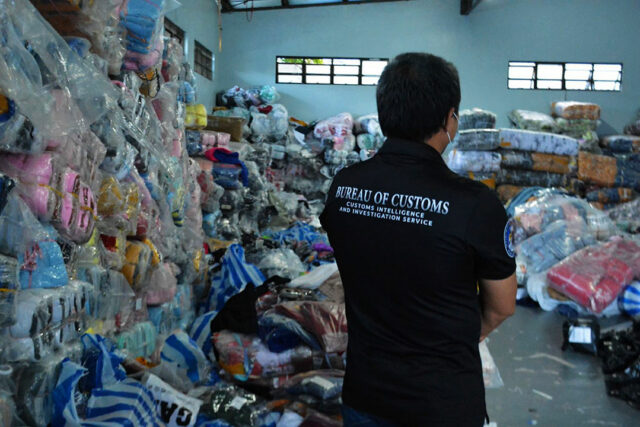
MEMBERS of the Bureau of Customs-Customs Intelligence Investigation Service inspect various counterfeit shirts, perfumes and other luxury goods at a warehouse in Las Piñas City. — PHILIPPINE STAR/MIGUEL DE GUZMAN

THE Bureau of Customs (BoC) said it seized a total of P61.71 billion worth of smuggled goods in 2025, as authorities tightened border security to curb illicit threats that erode revenue collections.

Preliminary data from the BoC showed that it confiscated P61.71-billion smuggled goods from 1,024 enforcement operations last year, it said in a statement on Wednesday.

These included P28.47 billion worth of general commodities, P17.72 billion in counterfeit goods, P5.63 billion in dangerous drugs, P4.80 billion in wildlife and natural resources, and P1.86 billion in tobacco products.

“From dismantling smuggling networks and enforcing strict integrity policies to ensuring the proper disposition of seized goods and strengthening the Fuel Marking Program, the Bureau of Customs remains firmly committed to transparent enforcement that protects government revenue, legitimate trade, and the welfare of the Filipino people,” BoC Commissioner Ariel F. Nepomuceno said.

Customs also rolled out 85 seizure operations involving agricultural products, resulting in the confiscation of more than P622 million worth of smuggled agricultural goods

“These enforcement actions helped protect public health, maintain fair market conditions, and safeguard government revenue,” the BoC said.

Customs is tasked with meeting a higher revenue goal of P1.0138 trillion in 2026, after falling short of its P958.7-billion target in 2025.

The BoC also revoked or suspended the accreditation of 40 importers and 12 customs brokers found to have violated customs laws and regulations.

It also filed 64 criminal cases with the Department of Justice, including 31 cases involving agricultural smuggling.

The BoC said 10 involved violations of the Anti-Agri Smuggling Act and 21 of the Customs Modernization and Tariff Act, noting its zero-tolerance policy against illicit trade and customs violations.

Under its Fuel Marking Program, Customs marked 21.1 billion liters of fuel last year and generated P247.12 billion in tax revenue.

“The program remains a key measure in detecting fuel smuggling, ensuring transparency in fuel distribution, and promoting fair competition in the oil industry,” it said. — Aubrey Rose A. Inosante

MIAA says NAIA passenger volume hit over 52 million

NINOY AQUINO INTERNATIONAL AIRPORT (NAIA) Terminal 3 — PHILIPPINE STAR/MIGUEL DE GUZMAN

PASSENGER volume at the Ninoy Aquino International Airport (NAIA) climbed to 52.2 million in 2025, jumping by 3.48% from 50.35 million in 2024 driven by a rise in domestic passenger volume in the period, according to the latest report of the Manila International Airport Authority (MIAA).

For the period, MIAA said the majority of the passenger traffic for 2025 were domestic passenger volume at 27.56 million, rising by 17.98% from 23.36 million in 2024; while domestic passenger traffic logged a total of 27.56 million from the 26.99 million in 2024.

The number of flights for 2025 fell by 0.47% to 292,048 from the 293,433 flights in 2024. For the fourth quarter in 2025, MIAA said passenger volume at NAIA logged a total of 13.23 million, up by 2.72% from 12.88 million in 2024.

In January, New NAIA Infra Corp. (NNIC), the operator of NAIA, reported that passenger volume at the airport reached 52 million for 2025.

NNIC credited operational improvements introduced last year for the smooth handling of passengers. These include new biometric immigration gates, upgraded passenger processing systems, and enhanced terminal facilities. — Ashley Erika O. Jose

DoTr to ensure train accessibility

PHILIPPINE STAR/MIGUEL DE GUZMAN

THE Department of Transportation (DoTr) said it will adopt accessible travel policy (ATP) guidelines for all railway operators and maintenance providers to ensure rail systems are more inclusive and disability friendly.

“We must ensure that daily travel is easier and that the railways are welcoming for all commuters,” Transportation Acting Secretary Giovanni Z. Lopez said in a media release on Wednesday.

The Transportation department said it will promote inclusivity across all rail lines to enable more safe and reliable transportation for all passengers.

Under Department Order No. 2025-024, railway operators must train staff on disability awareness and gender sensitivity, provide wheelchair boarding assistance at designated help points, and improve accessibility through clearer audio and visual announcements.

Existing operators must prepare for the transition and should outline compliance plans for the rollout of the guidelines, the DoTr said, adding that this plan will also be fully integrated in North-South Commuter Railway and the Metro Manila Subway project.

“With the ATP Guidelines, railway operators for the first time are formally guided to ensure that services are accessible and responsive to the diverse needs of the passengers,” DoTr said. — Ashley Erika O. Jose

Bill criminalizes red-tagging

PHILIPPINE STAR/ MICHAEL VARCAS

A PHILIPPINE senator has filed a bill seeking to criminalize red-tagging, citing the need to protect citizens from unwarranted harassment, intimidation, or persecution.

Senate Bill No. 1071 proposes to make red-tagging a punishable offense under Philippine law, defining it as the act of publicly branding individuals or groups as communists, terrorists, or enemies of the State without evidence.

“Red-tagging is not just a label — it is a threat. When someone is publicly named as a communist sympathizer, their life is immediately placed in danger,” Senator Jose “Jinggoy” P. Estrada, who filed the measure said.

The proposed measure seeks to impose penalties of up to 10 years in prison and a lifetime ban from holding public office for law enforcement agents, paramilitary, or military personnel found guilty.

“Red-tagging has long threatened the lives of human rights defenders and activists, created a chilling effect on legitimate dissenters and community leaders — including journalists — and created a climate of fear in the country. It has no place in a democracy,” the senator added.

The bill states that red-tagging may be committed through public statements, social media posts, tarpaulins, placards, declarations, public events, and other platforms used to label or vilify individuals or groups as enemies of the State. — Adrian H. Halili

Nueva Vizcaya generates P862M in tourism receipts in 2025

BAYOMBONG, Nueva Vizcaya — Nueva Vizcaya posted double-digit growth in tourism in 2025, with 214,792 overnight visitors and 706,017 day-trippers, the Provincial Tourism and Culture Office (PTCO) said.

Overnight arrivals rose 10.2% from 194,918 in 2024, while excursionists increased 5.4% from 670,003.

Tourism receipts totaled P862.1 million, with domestic travelers accounting for P852.4 million and foreign visitors contributing P9.72 million.

The gains reflect both rising visitor numbers and stronger economic impact on local businesses.

Governor Jose V. Gambito thanked tourists and reaffirmed tourism as a priority of his administration. “We will continue to invest in programs that protect our destinations and highlight what makes Nueva Vizcaya unique,” he said.

Top destinations in 2025 included Sky Escape 360 (Ambaguio), Tam-an Mt. Resort & Hotel (Bayombong), Love Camp (Ambaguio), PLT Wellness & Mt. Resort (Solano), and Lower Magat Eco Tourism Park (Diadi). Other favorites were Bambang Integrated Agri-Tourism & Learning Site, Heavenly Resort, and Edralin Falls, showcasing the province’s mix of adventure, eco-tourism, and cultural attractions.

PTCO Chief Marichelle O. Costales said the report consolidates local tourism data using the Department of Tourism’s standard system, based on submissions from municipal offices, tourist sites, and establishments.

With steady growth since 2023, Nueva Vizcaya continues to strengthen its reputation as a destination for nature, culture, and heritage tourism, drawing both domestic and international visitors. — Artemio A. Dumlao

BARMM lawmakers want tariff-free rice importation from Malaysia

COTABATO CITY — Three ranking members of the Bangsamoro parliament have drafted a resolution urging President Ferdinand R. Marcos, Jr. to exempt the importation of rice from Malaysia to Tawi-Tawi from tariff regulations.

The three authors of the resolution, John Anthony L. Lim, floor leader and spokesperson of the parliament, and its two deputy speakers, Nabil A. Tan and Jose I. Lorena, stated that Tawi-Tawi is so near the commercial hubs in Malaysia compared to those in Zamboanga City, the reason why stores in almost all of its 11 island municipalities sell merchandise, including rice, supplied by Malaysian merchants.

The authors are optimistic that their fellow regional lawmakers will approve the resolution they intend to forward to the Office of the President and the central offices of the Department of Trade and Industry (DTI), the Bureau of Customs and the Bureau of Internal Revenue.

“We are hoping that President Marcos will listen to us, grant us our wish, via a parliament resolution from a regional lawmaking body,” Mr. Lim told reporters on Wednesday.

Mr. Lim hails from Tawi-Tawi, one of the five provinces in the Bangsamoro Autonomous Region in Muslim Mindanao (BARMM), while Mr. Tan and Mr. Lorena are from Jolo and Siasi towns in Sulu in Region 9, respectively, both far from the Zamboanga peninsula.

They explained in their resolution that prices of rice procured by traders in Tawi-Tawi from suppliers in Zamboanga City are high owing to the cost of transport from there to the island towns in the province.

They asserted that prices of rice supplied by traders in Malaysia are cheap, affordable to marginalized residents of Tawi-Tawi relying mainly on deep sea fishing and propagation of marketable carrageenan seaweeds as sources of income.

Mr. Lim, Mr. Tan and Mr. Lorena separately told reporters that officials of the Ministry of Trade, Investments and Tourism-BARMM and experts in the DTI study the viability of the proposed exemption. “The national government can look deeper into the plight of Tawi-Tawi residents who are in an ordeal that can be resolved if our wish gets approved by the President,” Mr. Lim said.

Their draft resolution also pointed out that there seems no problem with the proposal, subject to approval by President Marcos, since Philippines is member of the Brunei Darussalam-Indonesia-Malaysia-Philippines East ASEAN Growth Area economic cooperation setup, established in 1994, aiming to spur economic development in less developed areas in its four member-states. — John Felix M. Unson

UAE granting tariff breaks to up to 95% of PHL exports

PHILSTAR FILE PHOTO

THE Philippine-United Arab Emirates (UAE) Comprehensive Economic Partnership Agreement (CEPA) will grant preferential tariff treatment to 95% of Philippine exports, the Department of Trade and Industry said.

“(This will help) manufacturers expand exports, scale up production, and generate more jobs at home,” the DTI said in a statement late Tuesday.

The deal, which marked the country’s first free trade agreement (FTA) with a Middle Eastern country, is expected to benefit industries like personal care and cosmetics, food products, electronic equipment, automotive and aircraft parts, and textiles and apparel.

Philippine Exporters Confederation, Inc. President Sergio R. Ortiz-Luis, Jr. said the agreement is a major boost for exporters and the country as a whole.

“The UAE is not only one of our important export destinations but also a strategic hub for global trade,” he said in a statement.

“This agreement will help Philippine exporters expand their presence in the Middle East and beyond, while creating new opportunities for investment, jobs, and inclusive growth at home,” he added.

Ferdinand A. Ferrer, president of the Philippine Chamber of Commerce and Industry, also welcomed the agreement, citing its role in giving exporters and small and medium enterprises (SMEs) greater access to a high-income and highly-connected market.

“The UAE serves not only as a major destination for Philippine exports but also as a global gateway linking Asia, the Middle East, Africa, and Europe,” he said via Viber.

“With CEPA, exporters, investors, and SMEs now have a stronger platform to grow — not only in the UAE but across the wider Middle East and beyond,” he added.

He said the agreement will help the Philippines reduce reliance on a limited number of export markets, making its “trade more resilient and better positioned for long-term growth.”

The CEPA is also expected to create opportunities in digital and professional services, allowing providers in the information technology and business process management, healthcare, and tourism industries to compete under more predictable and non-discriminatory conditions.

The agreement also contains specific provision for micro, small and medium-sized enterprises (MSMEs).

“Finally, we have an agreement that will now allow our small businesses to export products, offer services, and partner with UAE companies more easily,” Mr. Ferrer said. 

“This CEPA aligns with our national export growth strategies by providing clearer rules, lower tariffs, and greater predictability for exports,” Mr. Ortiz-Luis said.

“It not only benefits established exporters but also creates pathways for MSMEs to scale up, compete internationally, and contribute to inclusive growth across Filipino communities,” he added. 

Foreign Buyers Association of the Philippines President Robert M. Young said the CEPA will serve as a booster to garments and textile exports to the UAE.

“Demand from the UAE is increasing, accounting for $13 million in exports of both knitted and woven clothing articles in 2024,” he said via Viber.

“CEPA is giving preferential (duty exemption to) up to 95% of Philippine-made apparel. This shows that the Middle East can be a lucrative market worth exploring,” he added.

The IT and Business Process Association of the Philippines (IBPAP) said the CEPA with the UAE comes at a time when Middle Eastern economies are accelerating their digital transformation.

“For the IT-BPM sector, CEPA strengthens the Philippines’ value proposition as a trusted digital services hub by encouraging greater investment flows, supporting innovation, and expanding opportunities for job creation for digital Filipino workers,” IBPAP President Jonathan R. Madrid said via Viber. 

“It also enhances market confidence by promoting clearer rules and more consistent treatment for Philippine service providers operating in partnership with firms in the UAE,” he added. Justine Irish D. Tabile

Missing piece in unlocking FTAs: PHL competitiveness

REUTERS

By Justine Irish D. Tabile, Reporter

THE PHILIPPINES has been on a free-trade agreement (FTA) negotiating spree in anticipation of shifting trade patterns in the wake of the disruption brought by the US tariff regime.

Getting exporters to fully utilize the advantages on offer from FTA partners is another matter.

Since 2022, the Philippines has signed on to two major FTAs: the Regional Comprehensive Economic Partnership (RCEP) and the Philippines-South Korea trade agreement. The two deals brought the Philippines’ active FTAs to 11, according to the Department of Trade and Industry’s (DTI) FTA portal.

Nevertheless, exports continue to lag those of the other ASEAN economies, like Indonesia, Thailand, Myanmar, and Vietnam.

According to ASEANstats, the Philippines posted the sixth-most merchandise exports in 2023 within the bloc at $72.9 billion. That was the year RCEP entered into force for the Philippines.

The top exporter in the region was Singapore with $475.9 billion in 2023, followed by Vietnam ($353.1 billion), Myanmar ($312.6 billion), Thailand ($284.6 billion), and Indonesia ($258.9 billion).

Enunina V. Mangio, outgoing president of the Philippine Chamber of Commerce and Industry (PCCI), said that “while the country has an extensive network of FTAs, utilization on the export side remains low.”

Based on recent research commissioned by the PCCI, many exporters face persistent challenges such as limited awareness of FTA benefits, complex rules of origin and certification procedures, and high domestic costs related to production, logistics, and regulatory compliance, she said via Viber.

“These constraints reduce the ability of Philippine firms, particularly micro, small and medium enterprises (MSMEs), to fully take advantage of preferential market access, including in key markets such as Korea,” she added.

Citing DTI Undersecretary Allan B. Gepty, the PCCI said the Philippines’ utilization rate for RCEP is around 20%.

“The country continues to face a significant trade deficit with our trading partners, prompting the government to proactively strengthen its information and awareness campaigns to educate businesses on how to avail of and maximize the benefits of these FTAs,” Mr. Gepty said.

According to a report seen by the PCCI, many companies that are not using RCEP cited “not knowing where to start” as a reason for not utilizing the FTA.

To address this, Ms. Mangio called for stronger public–private collaboration, streamlined procedures, and a more comprehensive FTA support program.

“These are to ensure that our trade agreements translate into real export growth and competitiveness,” she added.

Associate Professor of the University of Asia and the Pacific George N. Manzano, a former tariff commissioner, said that the low utilization rate might have something to do with where Philippine exports fall under most favored nation (MFN) rates.

In particular, he said exports to South Korea could be declining this year even with an FTA in place because a “significant portion of Philippine exports to South Korea are classified as low tariff or are duty-free, such as electronic products under MFN rates.”

Philippine exports to South Korea declined 12% to $2.734 billion in the first 10 months of 2025. The FTA has been in place since Dec. 31, 2024.

Meanwhile South Korean exports to the Philippines grew 5.7% to $8.538 billion over the same period, according to the Philippine Statistics Authority (PSA).

“Another (reason) is that Philippine exports in the high-tariff sectors may have difficulty complying with the rules of origin, i.e., the value added of the Philippines may be low,” Mr. Manzano said via Viber.

He added that many exporters may still be learning the ropes with regard to using the FTA.

“Note that the Philippines-South Korea FTA was implemented late last year, so it is possible that it may take some time for Philippine exporters, like MSMEs, to use the FTA. Perhaps efforts to address the aforementioned issues may help increase utilization,” he added.

Mr. Gepty said many untapped opportunities remain, with the RCEP free trade area alone being the biggest market accounting  for 29% of global trade, 29% of total GDP, and a market of 2.3 billion people.

“Thus, it is important that investors and stakeholders take advantage of this trade agreement. More than the market access, it offers a stable and predictable business environment with clear and reasonable rules for trade and investment.”

He said the information side is being addressed through the Trade Education and Advocacy (TEA) Campaign and Usapang Exports.

“We also partner with business organizations such as the Philippine Chamber of Commerce and Industry, PhilExport, and the Women Business Council… we need more partners to increase awareness and utilization of FTAs.”

Regarding the Philippines-European Free Trade Association (EFTA) Free Trade Agreement, which offers access to Switzerland, Iceland, Norway, and Liechtenstein, “goods that can be exported duty free including most of our fish products and other key agricultural goods. There is also a good opportunity for services such as professionals, construction, and business services.”

“Our businesses need to be aware and at the same time be capacitated to access these foreign markets,” he said. “This is especially important because the Philippines is now more visible in the international economic community.”

Trading partners see the Philippines as “able and willing to shape the rules-based trading system and expand its trade network. The FTAs we are negotiating right now such as with the EU, Chile, and eventually with Canada, India, and Israel are indicators that we are expanding our preferential market access and that we are strengthening our foothold in the global economy.”

Foreign Buyers Association of the Philippines (FOBAP) President Robert M. Young said that although the Philippines needs more FTAs to keep up with regional counterparts, the government must make sure exporters have benefits at par with those enjoyed by exporters from the FTA partner.

“The Philippines must make sure that we can compete on an equal footing,” according to Mr. Young, who is also the trustee for the textile, yarn and fabric sector of the Philippine Exporters Confederation, Inc. (Philexport).

Speaking to BusinessWorld by phone, he noted that FTAs essentially remove the tariff revenue generated from exports. “For example, let’s say we are trading with Korea … we sell mangoes to them, but our mangoes are very high-priced, higher than the other guys exporting to Korea. Will Korea buy? Of course not,” he said.

“They have enough reason, and all the right to refuse our mangoes … The Philippines must be ready for the price war as far as FTAs are concerned,” he added.

Without preparing exporters for FTAs, he said such agreements could instead kill Philippine industries, as they will encourage more imports.

“You have to make sure that you can compete price-wise, quality-wise, and delivery-wise. Because otherwise, what will happen is puro importation ang mangyayari (imports will proliferate). That will result in a trade deficit,” he said.

“FTAs are very dangerous because they can cause job losses. When the country will be flooded with all these cheap imported goods; all the factories that are making these products will close shop,” he added.

These imports, he said, could also impact startups and developing industries.

The DTI’s Export Marketing Bureau reported that the Philippines is running a trade deficit even within its various regional partnerships.

In the 10 months to October, the Philippines exported $31.768 billion worth of merchandise to RCEP members, while importing $82.112 billion.

A similar pattern can be seen in the ASEAN Free Trade Area, the ASEAN-Australia-New Zealand Free Trade Area, the ASEAN-China Free Trade Area, the ASEAN-India Free Trade Area, the ASEAN-Japan Comprehensive Economic Partnership, and the ASEAN-Korea Free Trade Area, it said.

Mr. Young said not many garments exporters utilize the FTAs. “That is because the other countries are also producers of garments, and (partner countries) will never buy our garments because other countries’ garments are cheaper than ours,” he said. “The cost of garments in the Philippines is the highest in ASEAN now. The lowest price of our pants is $7; in Vietnam it’s $5, in Malaysia it’s $6, in Laos it’s $6.50,” he added.

He said this stems from high labor and power costs, as well as the absence of a textile industry.

“But the industry is still alive. In FOBAP, what we do is we go to the higher-priced items instead. We are catering to those that can pay more,” he said.

“Our prayer is that there will be a textile industry here in the Philippines and that the government will wake up and provide the sector with subsidies,” he added.


100% foreign ownership rules seen easing Abu Dhabi oil company’s PHL expansion

THE PHILIPPINES is “ready and open” for major foreign oil companies, including Abu Dhabi National Oil Co. (ADNOC), seeking to expand their presence in the country, Trade Secretary Ma. Cristina A. Roque said, citing deregulation rules that allow full foreign ownership in parts of the energy business.

In a statement on Wednesday, Ms. Roque noted that Republic Act 8479 or the Downstream Oil Industry Deregulation Act, allows 100% foreign ownership in refining and distribution.

ADNOC is a state-owned oil company of Abu Dhabi and one of the largest oil companies by production in the world.

“ADNOC shared plans to update a proposed PHL–UAE supply agreement and the establishment of a strategic petroleum depot in Subic or La Union, aimed at enhancing the Philippines’ energy security and supply resilience,” the DTI said in a separate social media post on Wednesday.

The Philippines signed a Comprehensive Economic Partnership Agreement with the UAE, which is expected to raise Philippine exports to the Gulf state by 9.13% and expand access for professionals and businesses.

Ms. Roque and Finance Secretary Frederick D. Go met UAE Minister of Industry and Advanced Technology Sultan Ahmed Al Jaber, who also chairs ADNOC.

“Our engagement with ADNOC is part of the Philippines’ continuous efforts to secure a reliable, affordable, and competitive energy supply,” Mr. Go said.

“Through the Philippines–UAE CEPA, we seek to build long-term partnerships with UAE companies that will strengthen energy security and expand opportunities for Filipino workers and businesses,” he added.

ADNOC operates a Philippine logistics arm supporting the country’s first LNG import terminal in Batangas.

ADNOC has participated in spot tenders with Philippine energy groups like First Gen and San Miguel, which the Philippine government is pushing to expand to longer‑term and aggregated supply deals.

“In April 2022, ADNOC Logistics & Services and AG&P signed a long-term charter agreement for the Floating Storage Unit ISH, which supports the country’s first LNG import terminal in Batangas Bay,” it added. — Aubrey Rose A. Inosante

ADVERTISEMENT
ADVERTISEMENT