Home Blog Page 4694

Community opposition cited as top hurdle to starting energy projects
REUTERS

ENERGY executives in the Philippines cited “community opposition” as a major hurdle to implementing energy projects and expressed concerns that such frictions could potentially hinder the country’s transition to greener energy.

Research firm GHD, citing the results of a study, said 76% of Philippine energy industry leaders identified community opposition as among the “biggest barriers” in pursuing energy projects.

About 82% said energy security is their top concern, higher than the global average of about 75%, the study found.

The inability to initiate energy projects without encountering opposition at the project site may slow the transition to greener forms of energy, Lucas Blight, GHD’s technical director and Future Energy coordination lead for Asia-Pacific, said in a statement.

“The Philippines is facing a rapid energy transition and is charting a course into new energy territories with changing energy blends. As a net importer of energy, the Philippines is vulnerable to supply shocks.”

“Philippine leaders point to community opposition as being one of the biggest barriers to getting new energy projects that could help tackle the crisis approved and off the ground,” the report said.

It said any disruption to the global energy supply would leave many countries with over two months’ supply of fuel on average.

“There is a need for integrated solutions that provide energy security and reduce emissions at the same time as generating low-cost power to fuel continued economic growth. For example, many of the country’s islands are dependent on diesel generators — which can be progressively replaced with renewable micro-grids,” Mr. Blight said.

Recently, the National Power Corp. signed a partnership with the German-Philippine Chamber of Commerce and Industry to study the feasibility of green hydrogen and fuel cell technologies in off-grid areas. 

The study also found that half of the world’s energy industry executives consider their net-zero goals to have been delayed by about six years on average.

GHD said the study was based on a survey of 450 respondents who are senior energy industry decision-makers, with input from interviews of 10 industry thought leaders. — Ashley Erika O. Jose

DoE calls for fair treatment of poor countries in transition to green-energy technology

REUTERS

ENERGY Secretary Raphael P.M. Lotilla called on developed countries to ensure a “just” transition to green technology for poorer countries, citing the need for low-cost financing and technology transfers.

“We hope our development partners and countries like Sweden would assist us not only in making the private sector share technology and access to innovation, but also to assist the Philippines in terms of securing favorable financing that would allow us to build the necessary infrastructure,” Mr. Lotilla said at an energy forum the Department of Energy (DoE) co-organized with the Embassy of Sweden.

Mr. Lotilla said technology is constantly developing, leaving the government the task of selecting which tech is most suitable for the Philippines’ green energy transition.

“First of all, green transition for a developing country like the Philippines must be a just transition; it must be a fair transition and therefore we must avoid transferring the burden of climate transition to an already overburdened Philippine population,” he said. 

Mr. Lotilla said that aside from harnessing indigenous renewable energy resources, the Philippines must also turn to liquefied natural gas (LNG) as a transition fuel while evaluating the various forms of technology available.

“We have to take full advantage of all sources of energy that are currently in place and to use them in a wise manner. At the same time, we need to be able to transition to a cleaner environment. And this we address by making sure that the additional capacities that we need will be sourced from renewable and greener sources of energy,” Mr. Lotilla said. 

He said that the Philippines cannot as yet transition away from coal-fired power plants, though the government must prepare for coal-fired energy to be phased out eventually.

“There is no denying that we need them still. But we have placed them in a trajectory (in which), clearly, over time, they are going to be replaced.,” Mr. Lotilla said. — Ashley Erika O. Jose

Bain cites PHL potential as renewable leader given its rich resources

REUTERS

THE PHILIPPINES can become a leader in developing renewable energy (RE) due to the resources it has at its disposal, openness to foreign investment, and flexible grid network, consulting firm Bain & Co. said.

“We are seeing countries like Vietnam and the Philippines lead the way in deploying renewable energy and transforming their power generation systems in parallel,” it said in its Southeast Asia’s Green Economy 2023 report.

The report noted the Philippines’ “abundance of natural resources” for solar, wind resources, and battery components like nickel.

“Countries like Indonesia, Vietnam, the Philippines, and Thailand all have high energy demand and acceptable offtaker quality compared to less-developed SEA countries where local offtaker risk is high due to poor credit history,” Bain & Co. said.

The Philippines’ open market structure will also work in its favor, Bain & Co. said.

Last year, the government allowed 100% foreign ownership in renewable energy projects.

Bain & Co. also noted the Philippine grid’s flexibility in terms of accommodating renewable energy.

The report also noted that the Department of Energy is working on streamlining approvals for renewable energy permits, which would improve the ease of doing business.

On the other hand, Bain & Co. said that Southeast Asia remains “heavily dependent” on fossil fuels.

“Indonesia, Brunei, Malaysia, and the Philippines still subsidize some fossil fuel use,” it added.

Archipelagoes like the Philippines also face “complicated interconnection challenges.”

Bain & Co. estimated that under 3% of the Philippine and Indonesian populations still lack access to electricity.

The higher cost of capital will also make it difficult to bring in renewable energy projects, it said, noting that banks in the Philippines do not finance renewable energy projects from smaller developers.

Meanwhile, Bain & Co. said that the Philippines is “unlikely to be on track” to deliver its 2030 climate targets.

“(There is) some progress in decarbonization supported by the right incentives and regulatory frameworks,” it said.

“Nationally determined contribution (NDC) commitments are modest, the government supports grid infrastructure development, but more needs to be done for electric vehicles and nature,” it added.

It also noted the need for more inter-island grid connectivity and investment in renewables. — Luisa Maria Jacinta C. Jocson

Energy dep’t clarifies on-grid rollout procedures for renewables

THE Department of Energy (DoE) has issued new procedures to increase the share of renewable energy (RE) in on-grid facilities under the Renewable Portfolio Standards (RPS) scheme starting this year.

In separate department circulars, the DoE issued amendments to the RPS for both on-grid and off-grid areas, which were signed on May 23.

“This RPS, for on-grid, clarifies the implementation and then the enhancement… For off-grid, we totally revised the earlier version we issued in 2018,” Mylene C. Capongcol, Energy assistant secretary, told reporters on the sidelines of an energy forum on Tuesday.

Last year, the Energy department said on-grid power suppliers must expand the share of RE in their output to 2.5% starting in 2023 from the current 1%. 

The DoE also required off-grid participants to accelerate their green energy transitions by reducing their dependence on fossil fuels by hybridization or use of alternative technology.

For off-grid areas, Ms. Capongcol said the off-grid order covers Small Power Utilities Group (SPUG) facilities, new power providers, and qualified third parties.

“More than 90% (of off-grid facilities) are conventional diesel… by implementing the RE Act we will eventually reduce the subsidies from the universal charge for missionary electrification (UCME) and volatility in supply and prices,” Ms. Capongcol said. 

The National Power Corp. and the DoE have proposed raising the UCME to sustain off-grid services as diesel prices increase. 

Republic Act No. 9136 or the Electric Power Industry Reform Act authorizes the collection of UCME to fund Napocor’s operations, including those of its SPUG unit, which serves remote areas not connected to the grid.

Napocor said that to date SPUG currently operates 281 power plants which are mostly powered by diesel. — Ashley Erika O. Jose

Philippines stays off European IP watch list

PHILIPPINE STAR/JONATHAN ASUNCION

THE PHILIPPINES has stayed out of the European Commission’s intellectual property rights (IPR) watch list since last being listed in 2019, with officials touting the achievement as a mark of the country’s attractiveness as a potential investment destination.

“Our exclusion from the list from 2019 signifies that we remain an attractive investment destination to trade partners. We have come a long way in maintaining a safe IP climate in tune with global economic standards,” Rowel S. Barba, director general of the Intellectual Property Office of the Philippines (IPOPHL), said. 

The watch list is a biennial publication that identifies countries that pose a high level of concern to IP rights holders in the European Union.

Topping the list was China which was the sole country listed as “priority one” due to the “persistence of IP rights violations through piracy and counterfeiting, paired with inconsistent IPR law enforcement and application.”

In the priority two category are India and Turkey, while the priority three countries are Argentina, Brazil, Ecuador, Indonesia, Malaysia, Nigeria, Saudi Arabia and Thailand.

“We acknowledge that there is much more work to be done to ensure a clean and reliable marketplace for IP rights owners across all nations. Since our last mention as a priority three (country), we have doubled down our efforts to safeguard our investment attractiveness,” Mr. Barba said.

The IPOPHL reported a 40% decrease in reports and complaints on counterfeiting and piracy it received in the 11 months to November 2022. — Justine Irish D. Tabile

Pandemic demand helped agri wages, employment recover, study concludes

TIM MOSSHOLDER-UNSPLASH

EMPLOYMENT and real wages in agriculture recovered during the pandemic due to surging demand for produce, the Philippine Institute for Development Studies (PIDS) said.

“The experience of agriculture during the COVID-19 crisis had evidently been a unique one in the Philippines, with the sector’s employment share increasing, temporarily interrupting a declining trend that had persisted over the last 15 years,” it said in a study.

“Agriculture had been the only sector where both employment and wages were able to simultaneously rise eventually, indicating robust demand,” it added.

The think tank said the industry was not impacted by employment or wage declines due to the nature of work in agriculture.

“Such resilience likely owes to agriculture’s dual nature, by being both a low-contact and essential sector; to possible substitution effects from non-food to food consumption of households; and to hefty support it received from both government and private business,” PIDS said.

It added that agriculture already practices social distancing by default, minimizing the impact of government restrictions on human contact.

“Economic activities that are deemed essential by the government — which include but are not limited to the activities that are related to health services and the production and transport of food and medicines — (observed) looser community quarantine measures, if any,” it added.

The study found that employment in agriculture had recovered to pre-pandemic levels. 

People were more likely to be employed in the industry in April 2021 than in April 2020. The probability of employment in the sector among men was also higher in April 2020 compared to April 2019.

“This time, the increase in the probability of employment in agriculture among women was also statistically significant like it was among men. Given that lower likelihood of employment in the non-agriculture sectors during the onset of the pandemic coincided with higher likelihood of employment in the agriculture sector, it is possible that some of the employment losses in the non-agriculture sector had been partially cushioned by the agriculture sector,” PIDS added. — Luisa Maria Jacinta C. Jocson

Code of conduct in South China Sea best route to stability, analysts say

PHOTO FROM PHILIPPINE COAST GUARD

By John Victor D. Ordoñez, Reporter

THE PHILIPPINES’ best course of action in easing tensions in the South China Sea is to push for the finalization of a code of conduct in the disputed waterway, political analysts said on Tuesday.

“The Philippines must be patient and pragmatic in negotiations with all concerned countries that have claims in the South China Sea,” Anna Rosario Malindog-Uy, vice president of the global think tank Asian Century Philippines Strategic Studies, said at the Pandesal Forum.

Negotiations for a code of conduct, being drawn up by the 10-member Association of Southeast Asian Nations (ASEAN) and China, started in 2002 after the signing of the non-binding Declaration on the Conduct of Parties in the South China Sea.

China, which asserts ownership over most of the resource-rich waters, has overlapping claims with the Philippines and fellow ASEAN members Brunei, Indonesia, Malaysia, and Vietnam as well as Taiwan.

A United Nations-backed international tribunal voided in 2016 China’s claim to more than 80% of the sea based on a 1940s map.

Bobby M. Tuazon, director of Policy Studies & In-house Policy Analyst of the Center for People Empowerment in Governance (CenPEG), told the same forum that China will likely continue being open to dialogue on resolving the territorial issues.

He urged newly-appointed Defense Secretary Gilberto “Gibo” C. Teodoro, Jr. and Foreign Affairs Secretary Enrique A. Manalo to work together to ensure that the country’s ties with the United States do not aggravate tensions with China.

“I hope that his appointment (Mr. Teodoro) would complement Secretary Manalo’s role, and would lead to a deeper understanding of President Ferdinand R. Marcos, Jr.’s so-called independent foreign policy,” he said.

The Philippines in February gave the US greater access to its military bases under their 2014 Enhanced Defense Cooperation Agreement (EDCA).

China has criticized the EDCA expansion, accusing the US of endangering regional peace and stability.

Last month, Philippine President Ferdinand R. Marcos, Jr. pushed for the completion of the code of conduct during the ASEAN Summit in Indonesia amid worsening tensions from China’s increased assertiveness at sea.

The Philippine Coast Guard (PCG) set up five navigational buoys in the disputed water on May 10- 12, which it said would protect Philippine maritime borders and raise the safety of maritime trade.

The Philippines is eyeing security partnerships with other countries, including a three-way security pact with Japan and the US. It is also in talks to include Australia and Japan in planned joint South China Sea patrols with the US.

Ms. Uy said the Philippines should prioritize becoming an “economic powerhouse” in Southeast Asia, to strengthen the country’s military prowess, which would reduce its dependence on other states.

Israel, Philippines to boost agri, water ties

EMBASSY OF ISRAEL MANILA

ISRAEL has vowed to boost its partnership with the Philippines in agriculture and water management, and tourism, the presidential palace said on Tuesday.

Israeli Foreign Minister Eli Cohen made the commitment during a meeting with President Ferdinand R. Marcos, Jr. on Monday, the Presidential Communications Office (PCO) said in a press release.

“I think that we can work together on the segment of agriculture. I just let you know that our land, 60% of our land is desert. But although 60% of our land is desert, we were able to provide all our water needs,” Mr. Cohen told the Philippine leader, based on the PCO release.

“And I think that we can work together and let’s say that less import, more export for the Philippines,” he added.

Aside from agriculture, Mr. Cohen said the Philippines and Israel can also collaborate on water management, noting Israel’s vast experience in the sector.

Israel has developed systems for reusing a large portion of its water resources to address scarcity.

Mr. Cohen said an Israeli expert can visit the Philippines to provide advice.

For his part, Mr. Marcos touted that his administration prioritizes the agriculture sector in boosting the economy.

“The offers that you make for assistance and partnership in those two areas are very, very welcome,” he said.

In addition to agriculture and water management, Mr. Cohen proposed the creation of more direct flights between the Philippines and Israel to boost tourism ties.

Mr. Cohen said he and his Philippine counterpart had agreed that they “will work together to have the direct flights.”

He said the move would allow more Israeli businessmen to visit the Philippines and invest in the Southeast Asian nation.

“So this is also another important action item that we will do.” — Kyle Aristophere T. Atienza

Complaint filed vs tanker firm, PCG, Marina over oil spill

PHILIPPINE COAST GUARD

THE NATIONAL Bureau of Investigation (NBI) on Tuesday filed a criminal complaint against the owners of the sunken fuel tanker that caused a major oil spill in Oriental Mindoro.

Officials from the Maritime Industry Authority (Marina) and the Philippine Coast Guard (PCG) were also named in the complaint that cites falsified documents for the vessel MT Princess Empress.

At a livestreamed news briefing, Justice spokesman Jose Dominic F. Clavano IV said officers from the NBI’s Environmental Crime Division filed the complaint over an alleged conspiracy between the government officials and the ship owners to illegally register the vessel.

“There were those who made statements under oath and then there are statements that contradicted these, stating that the condition of the ship is not how they present it to be,” he said in mixed English and Filipino

The Department of Justice and the NBI have yet to release a copy of the complaint to the media.

The tanker was carrying 800,000 liters of industrial oil when it sank off Naujan, Oriental Mindoro on Feb. 28, affecting the fisheries and tourism sectors. — John Victor D. Ordoñez

BARMM pilots LGU revenue enhancement program

@BANGSAMOROGOVT

THE BANGSAMORO Ministry of the Interior and Local Government has launched a program that aims to guide local governments on how they can increase their internally-generated revenue, which could be used for their own public service initiatives. 

The Revenue Enhancement Assistance for Local Government Units (REAL) program will be piloted in three towns in Maguindanao del Norte and two towns in Lanao del Sur.  

An agreement for the programs implementation was signed Friday by the Interior ministry and mayors of the towns of Sultan Mastura, Buldon and Datu Blah Sinsuat in Maguindanao del Norte, and Pualas and Binidayan in Lanao del Sur.  

Maguindanao Del Norte Gov. Abdulrauf A. Macacua welcomed the inclusion of three local government units (LGUs) in his province for what he called pioneering implementationof the REAL project.  

We are glad that the BARMM (Bangsamoro Autonomous Region in Muslim Mindanao) government has this kind of project to enhance the revenue-generation capability of LGUs in the autonomous region,Mr. Macacua told reporters on Tuesday.  

Interior and Local Government Minister Naguib G. Sinarimbo said the REAL project is focused on helping local government units diversify their revenue-generation activities.  

Mayor Marshall I. Sinsuat of Datu Blah Sinsuat, considered as the fishing capital of Maguindanao del Norte and the most peaceful town in the province, said residents and village officials have committed support to the program.  

The town has an average of 10 tons of catch daily from its territorial waters.  

Our barangay officials have assured to support the REAL project, knowing that efficiency in revenue-generation is essential to expansion of good governance activities that require funding,Mr. Sinsuat said.  

Hamid K. Sumirado, a Maranaw rice trader in Lanao del Sur, said he does not mind paying local taxes as long as he sees the impact on public services.  

Im a devout taxpayer. I will encourage my relatives and friends involved in various legitimate businesses to support the REAL project too,he said.    

Meanwhile, Lamitan City Mayor Roderick H. Furigay in Basilan said they are also ready for the implementation of the SEAL project to enhance local revenue.  

Our city has agricultural and fishing industries that pay taxes. We are ready for the implementation of the SEAL project in Lamitan City,Mr. Furigay said. John M. Unson 

Pilots alerted to avoid 3 PHL active volcanoes

CAAP

THE CIVIL Aviation Authority of the Philippines (CAAP) on Tuesday updated its warning to pilots relating to volcanoes that should be avoided, with Kanlaon now added to Taal and Mayon as being at risk of sudden eruptions.  

The CAAP has updated its NOTAM (notices to airmen) to inform and alert flying aircraft of the current alert levels and associated risks in light of the ongoing unrest at the Taal, Mayon, and Kanlaon volcanoes,the regulator said.   

All three NOTAMs indicate that sudden and hazardous steam-driven or phreatic eruptions can pose significant hazards to aircraft from the surface up to 10,000 feet.”   

Mayon Volcano in Bicol, a region in the southeastern part of Luzon, has been placed by state volcanologists under alert level 2, which indicates an increasing unrest.   

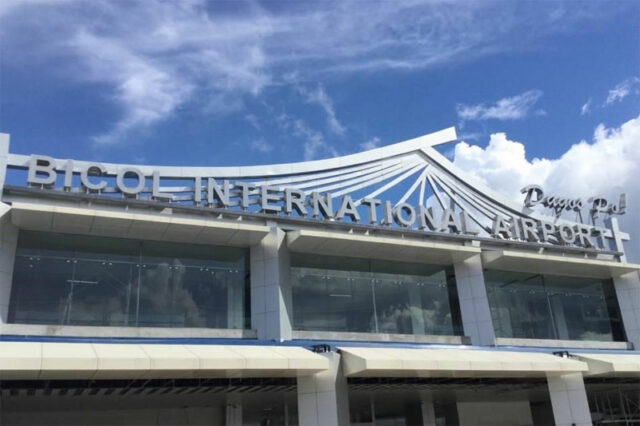
Seven airports in the Bicol Region are operated by CAAP. These are: Bulan, Sorsogon, Daet, Masbate, Naga, Virac, and the Bicol International Airport.  

Taal Volcano in southwestern Luzon and Mount Kanlaon in eastern Visayas are under a lower alert level 1, with both showing abnormal conditions or low-level unrest. Justine Irish D. Tabile 

Tropical depression Chedeng unlikely to bring heavy rains 

NO heavy rains are expected directly from tropical depression Chedeng, the third typhoon to enter the Philippines this year, but it could enhance the prevailing southwest monsoon, the state weather agency said on Tuesday.   

Chedeng is forecast to remain far from the Philippine landmass,the Philippine Atmospheric, Geophysical, and Astronomical Services Administration (PAGASA) said in its 5 p.m. bulletin.   

As such, it is unlikely to directly bring heavy rainfall over any portion of the country in the next 3 to 5 days,it said.   

However, PAGASA said several other weather conditions may trigger Chedeng to intensify the southwest monsoon, which could mean heavy rains in parts of the country, especially on the western side.   

A weather advisory will be issued should there be an increasing chance of monsoon heavy rainfall within the next three days.   

As of 4 p.m. Tuesday, the tropical depression was almost stationary, with the center located 1,150 kilometers east of southeastern Luzon.  

Chedeng is seen to intensify in the next four days and may reach typhoon category by Thursday while over the Philippine Sea in the eastern side of northern Luzon. MSJ