Home Blog Page 469

Trump: Israel and Hamas agree to first phase of Gaza ceasefire

STOCK IMAGE | Image by freepik

WASHINGTON/CAIRO – US President Donald Trump said on Wednesday that Israel and Hamas had reached a long-sought deal for a Gaza ceasefire and hostage release under his plan for ending the two-year-old war in the Palestinian enclave.

Just a day after the second anniversary of Hamas’ attack on Israel that triggered Israel’s devastating assault on Gaza, indirect talks in Egypt yielded an agreement on the initial stage of Trump’s 20-point framework.

The deal, if implemented, would bring the two sides closer than any previous effort to halt a war that had evolved into a regional conflict, drawing in countries such as Iran, Yemen and Lebanon, and reshaping the Middle East.

“I am very proud to announce that Israel and Hamas have both signed off on the first Phase of our Peace Plan,” Trump said on Truth Social.

“This means that ALL of the Hostages will be released very soon, and Israel will withdraw their Troops to an agreed upon line as the first steps toward a Strong, Durable, and Everlasting Peace,” Trump added.

Israeli Prime Minister Benjamin Netanyahu said in a written statement, referring to the hostages held by Hamas: “With God’s help we will bring them all home.” He said he would convene his government on Thursday to approve the agreement.

Hamas confirmed it had reached an agreement to end the war, saying the deal includes an Israeli withdrawal from the enclave and a hostage-prisoner exchange. But the group called on Trump and guarantor states to ensure Israel fully implements the ceasefire, it added in a statement.

Trump said earlier that a deal was almost done and that he may travel to Egypt this weekend, possibly leaving as soon as Saturday.

“All Parties will be treated fairly!” he said on Truth Social. “This is a GREAT Day for the Arab and Muslim World, Israel, all surrounding Nations, and the United States of America, and we thank the mediators from Qatar, Egypt, and Turkey, who worked with us to make this Historic and Unprecedented Event happen.

Successful completion of the deal would mark the biggest foreign policy achievement so far for a president who took office in January promising to quickly end the wars in Gaza and Ukraine, only to be confronted with obstacles and complexities he had apparently not foreseen.

Senior envoys from the US, Qatar and Turkey had joined the talks, apparently adding momentum to discussions launched on Monday in the Egyptian resort town of Sharm el-Sheikh.

Trump sent his son-in-law Jared Kushner and special envoy Steve Witkoff, and Israel was represented by Israeli Strategic Affairs Minister Ron Dermer, a close confidant of Netanyahu.

Despite the hopes raised for ending the war, crucial details are yet to be spelled out, including the timing, a post-war administration for the Gaza Strip and the fate of the Palestinian militant group Hamas.

Gaza authorities say more than 67,000 people have been killed and much of the enclave has been flattened since Israel began its military response to the Hamas cross-border attack on Oct. 7, 2023. Around 1,200 people were killed and 251 were taken hostage back to Gaza, according to Israeli officials, with 20 of the 48 hostages still held believed to be alive.

HOSTAGE RELEASE EXPECTED IN DAYS
A Hamas source said the living hostages would be handed over
within 72 hours of the Israeli government approving the deal. An Israeli government spokesperson said the hostage release was expected to begin on Saturday.

Netanyahu and Trump spoke by phone and congratulated each other on the agreement, and the Israeli prime minister invited the U.S president to address Israel’s parliament, according to Netanyahu’s office.

Hamas said earlier on Wednesday it had handed over its lists of the hostages it held and the Palestinian prisoners held by Israel that it wanted to be exchanged.

The list of Palestinians Hamas wants freed was expected to include some of the most prominent prisoners ever jailed by Israel, whose release had been off limits in previous ceasefires.

According to a Palestinian source close to the talks, the list includes Marwan al-Barghouti, a leader of the Fatah movement, and Ahmed Saadat, head of the Popular Front for the Liberation of Palestine. Both are serving multiple life sentences for involvement in attacks that killed Israelis.

Hamas has so far refused to discuss Israel’s demand that Hamas give up its arms, which the Palestinian source said Hamas would reject as long as Israeli troops occupy Palestinian land.

Two sources familiar with the talks confirmed that sticking points included the mechanism for the Israeli withdrawal, with Hamas seeking a clear timeline linked to the release of hostages and guarantees of a complete pullout by Israeli forces.

Within Gaza, Israel has dialled down its military campaign at Trump’s behest, but it has not halted strikes altogether. The Israeli military said its forces had killed several militants in Gaza City, Gaza’s main urban hub, who it said were on their way to attack Israeli soldiers.

Gaza medical authorities reported eight people killed in Israeli strikes in the last 24 hours, the lowest toll for weeks. Daily death tolls had been around 10 times as high over the past month as Israeli forces advance on Gaza City.

ARAB COUNTRIES SAY PLAN MUST LEAD TO PALESTINIAN STATE
The next phase of Trump’s plan calls for an international body led by Trump and including former British Prime Minister Tony Blair to play a role in Gaza’s post-war administration. Arab countries which back the plan say it must lead to eventual independence for a Palestinian state, which Netanyahu says will never happen.

There is no clear indication who will rule Gaza when the war ends. Netanyahu, Trump, Western and Arab states have ruled out a role for Hamas, which has run Gaza since driving out Palestinian rivals in 2007.

Hamas has said it would relinquish Gaza governance only to a Palestinian technocrat government supervised by the Palestinian Authority and backed by Arab and Muslim countries. It rejects any role for Blair or foreign rule of Gaza.

Global outrage has mounted against Israel’s assault. Multiple rights experts, scholars and a UN inquiry say it amounts to genocide. Israel calls its actions self-defense after the 2023 Hamas attack. — Reuters

New York City sues social media companies for allegedly addicting children

Social media logos are seen in this illustration taken on May 25, 2021. — REUTERS/DADO RUVIC/ILLUSTRATION

NEW YORK – New York City filed a new lawsuit accusing Facebook, Google, Snapchat, TikTok and other online platforms of fueling a mental health crisis among children by addicting them to social media.

Wednesday’s 327-page complaint in Manhattan federal court seeks damages from Facebook and Instagram owner Meta Platforms, Google and YouTube owner Alphabet, Snapchat owner Snap and TikTok owner ByteDance. It accuses the defendants of gross negligence and causing a public nuisance.

The city joined other governments, school districts and individuals pursuing approximately 2,050 similar lawsuits, in nationwide litigation in the Oakland, California, federal court.

New York City is among the largest plaintiffs, with a population of 8.48 million, including about 1.8 million under age 18. Its school and healthcare systems are also plaintiffs.

Google spokesperson Jose Castaneda said allegations concerning YouTube are “simply not true,” in part because it is a streaming service and not a social network where people catch up with friends.

The other defendants did not immediately respond to requests for comment.

A spokesperson for New York City’s law department said the city withdrew from litigation announced by Mayor Eric Adams in February 2024 and pending in California state courts so it could join the federal litigation.

DEFENDANTS BLAMED FOR COMPULSIVE USE, SUBWAY SURFING
According to Wednesday’s complaint, the defendants designed their platforms to “exploit the psychology and neurophysiology of youth,” and drive compulsive use in pursuit of profit.

The complaint said 77.3% of New York City high school students, and 82.1% of girls, admitted to spending three or more hours a day on “screen time” including TV, computers and smartphones, contributing to lost sleep and chronic school absences.

New York City’s health commissioner declared social media a public health hazard in January 2024, and the city including its schools has had to spend more taxpayer dollars to address the resulting youth mental health crisis, the complaint said.

The city also blamed social media for an increase in “subway surfing,” or riding atop or off the sides of moving trains. At least 16 subway surfers have died since 2023, including two girls aged 12 and 13 this month, police data show.

“Defendants should be held to account for the harms their conduct has inflicted,” the city said. “As it stands now, (the) plaintiffs are left to abate the nuisance and foot the bill.” — Reuters

Jobless rate eases to 3.9% in August

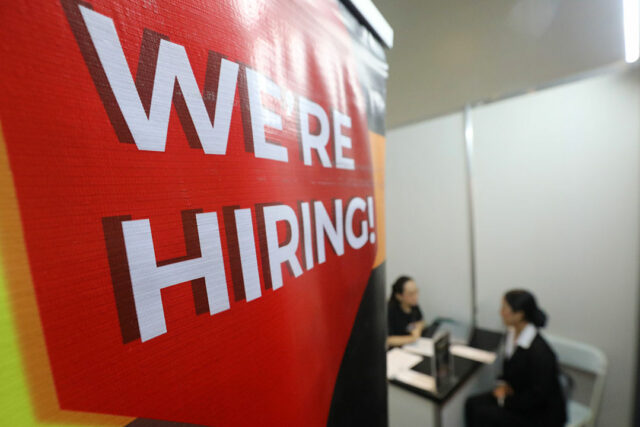
People attend a job fair in Pasay City. — PHILIPPINE STAR/EDD GUMBAN

By Chloe Mari A. Hufana, Reporter

THE PHILIPPINES’ unemployment rate dropped to 3.9% in August, driven by renewed hiring in the agriculture and construction sectors, the Philippine Statistics Authority (PSA) reported on Wednesday.

The August jobless rate is an improvement from the three-year high of 5.3% in July, and 4% in August 2024, preliminary Labor Force Survey data showed.

The number of jobless Filipinos slid to 2.03 million in August from 2.59 million in July and 2.07 million a year earlier.

Philippine Labor Force Situation

PSA Undersecretary and National Statistician Claire Dennis S. Mapa attributed improvement in the labor market in August to the recovery in some industries that were affected by typhoons in July.

“What we observed was that the biggest decline in July was in agriculture, retail trade, and construction — but they’ve now bounced back,” he told a news briefing in Filipino.

“So, in a way, the job losses in July turned out to be temporary, and those who were displaced have returned. Basically, these are the industries that recovered,” he added.

For the first eight months, the jobless rate stood at 4.1%, a tad higher than the 4% rate a year ago.

In August, the agriculture and forestry sector gained 1.35 million jobs from July, a month that was battered by bad weather. This brought the total number of workers in the sector to 8.73 million, up from 7.38 million a month prior. Year on year, the sector gained 300,000 workers in August.

The Philippines is struck by more tropical cyclones annually than any other region, with an average of 20 storms each year. According to the national weather bureau, typhoon activity peaks between July and October, accounting for nearly 70% of all cyclone formations during this period.

Labor Secretary Bienvenido E. Laguesma welcomed the improved jobs data, saying the government is committed to “future-proofing” and “weather-proofing” jobs.

“We hope and look forward to sustaining these favorable employment statistics through stronger collaboration and partnerships with business organizations and the private sector, as well as government agencies and departments,” he said via Viber.

251009Gainers_Industry

UNDEREMPLOYMENT FALLS
Meanwhile, underemployment eased to 10.7% in August from 11.2% a year prior and 14.8% a month before.

This was equivalent to 5.38 million Filipino workers that wanted more working hours or an additional job in August.

Of the underemployed workers in August, 62.4% worked less than 40 hours a week, while 37.6% worked 40 hours or more a week.

For the January-to-August period, the underemployment rate rose to 12.7% from 12.1% a year ago.

Also, the employment rate improved to 96.1% in August from 94.7% in July, with the total employed persons rising to 50.1 million.

This brought the eight-month average employment rate to 95.9%, down from 96% a year ago.

Wage and salary workers accounted for 64.4% of employed persons, followed by self-employed without any paid employees (27%), unpaid family workers (7%) and employers in own family-operated farm or business (1.6%).

Among wage and salary workers, those employed by private establishments accounted for 78%, followed by those employed in government or government-controlled corporations (14.1%).

The labor force participation rate climbed to 65.1% in August from 60.7% in July, equivalent to 52.13 million Filipinos aged 15 and older either working or seeking work.

PSA data showed the service sector remained the country’s biggest employer in August, accounting for 61.5% of total jobs, followed by agriculture at 20.4% and industry at 18.1%.

Wholesale and retail trade, agriculture and forestry, and construction were the top sub-sectors.

On an annual basis, construction gained 540,000 workers, followed by fishing and aquaculture (448,000), administrative and support service activities (307,000), agriculture and forestry (300,000), and other service activities (239,000).

In contrast, wholesale and retail trade; repair of motor vehicles and motorcycles posted the largest annual decline in workers at 788,000, followed by public administration and defense, compulsory social security (-220,000); education (-151,000); human health and social work activities (-134,000); and real estate activities (-75,000).

Youth employment also improved, with the employment rate among those aged 15 to 24 rising to 88.3% from 81.9% in July, the local statistics agency said.

On average, employees worked 41 hours a week, up from 40.7 hours in August last year.

251009Gainers_Industry

THREAT OF BAD WEATHER
Department of Economy, Planning, and Development Secretary Arsenio M. Balisacan called for continued investment in workforce development, infrastructure and digitalization — especially for micro, small, and medium enterprises — to build resilience in vulnerable sectors. 

“We aim to enhance resilience in sectors vulnerable to disruptions, such as retail trade and agriculture, by prioritizing improvements in logistics, infrastructure, digitalization, and workforce development,” he noted.

“The government is also ramping up investments in climate-resilient infrastructure and proactive measures, alongside timely emergency employment programs to support workers affected by disruptions.”

In a note, Chinabank Research said the threat of bad weather conditions persists and continues to pose a risk to job opportunities, especially in agriculture and fisheries, retail trade and construction.

“On a more positive note, seasonal demand due to the upcoming holidays should provide some support to the labor market this quarter,” it added.

University of the Philippines School of Labor and Industrial Relations Benjamin B. Velasco said historical data show an uptick in employment as the holiday season approaches.

“It can still be dampened by the impact of climate events on vulnerable sectors like agriculture,” he said via Facebook Messenger.

Mr. Velasco said the drop in unemployment and rise in labor force participation are positive developments as more people who were out of work or discouraged from working are now employed.

“Hopefully, more of them are in full-time work and good jobs, as shown in [a] slight decrease in the underemployed.”

PSA’s Mr. Mapa said the labor market in September may have been affected by the series of typhoons and the recent 6.9-magnitude earthquake that hit southern Philippines.

Scrapping VAT may trigger crisis — analysts

A woman shops for canned goods at a supermarket in Mandaluyong, Aug. 10, 2023. — PHILIPPINE STAR/MIGUEL DE GUZMAN

By Aubrey Rose A. Inosante, Reporter

ECONOMISTS and tax experts warned that scrapping the value-added tax (VAT) may trigger a fiscal or even an economic crisis, as the Bureau of Internal Revenue (BIR) collected P487 billion in the first eight months of 2025.

“Abolishing VAT will put the country in fiscal crisis, drive up inflation, constrain government spending for social welfare and other vital programs, and cause a ratings downgrade,” Foundation for Economic Freedom President Calixto V. Chikiamco told BusinessWorld in a Viber message.

“Feasible but insane.”

VAT is a 12% tax slapped on sales, leases, barters, and imports of goods and services in the Philippines. VAT collections account for around a fifth of the BIR’s total revenues.

Cavite Rep. Francisco A. Barzaga filed a bill on Monday seeking to remove the 12% VAT on goods and services, citing its disproportionate impact on low- and middle-income households amid elevated inflation and rising cost of living.

Mr. Barzaga had suggested that any revenue shortfalls could be offset by imposing “wealth taxes” and increasing excise duties on “nonessential and luxury goods,” including cigarettes, alcoholic drinks, vehicles and gambling activities.

Filomeno S. Sta. Ana III, coordinator of Action for Economic Reforms, said Mr. Barzaga’s “incredulous” proposal will result in an economic collapse.

“Removing VAT will not just result in a fiscal crisis. It would lead to an economic crisis,” he said in a Viber message.

Raymond “Mon” Abrea, chairman and chief executive officer of the Asian Consulting Group called the lawmaker’s proposal “reckless and populist.”

“The real issue is not the tax, but the billions lost to leakages and fake exemptions, including an estimated P88 billion abuses of PWD (persons with disability) perks in 2023,” he said in social media post on Tuesday.

Mr. Abrea said the “more prudent approach” would be trimming the VAT rate to 10% while eliminating unnecessary exemptions such as broadening the tax base, curbing abuse, and safeguarding fiscal stability without placing additional burden on consumers.

He earlier estimated that a 2% VAT reduction could cost the government around P200 billion annually, while saving households roughly P7,000 per year.

Mr. Abrea’s proposal to cut the VAT rate to 10% aligns with the bill filed by Batangas Rep. Leandro Antonio L. Leviste, who argued that the current tax system is “regressive.”

However, Mr. Chikiamco said lowering VAT will still have the “same bad effects although to a lesser degree.”

Eleanor L. Roque, a tax principal of P&A Grant Thornton, said abolishing VAT altogether is not feasible as the government relies on the VAT as a major source of tax collection.

“Congress can look at lowering the VAT rate and compare it with our peers in the ASEAN (Association of Southeast Asian Nations) region if they are looking for ways to help the taxpayers,” she said in a Viber message.

The Philippines’ 12% VAT rate is relatively higher compared with Southeast Asian countries. For instance, Indonesia’s VAT is at 12%, while Cambodia, Malaysia, Vietnam and Laos are at 10%; Singapore at 9% and Thailand at 7%.

Jose Enrique “Sonny” A. Africa, executive director at think tank IBON Foundation, said scrapping VAT would “ease the disproportionate tax burden on ordinary Filipinos.”

“Abolishing it and compensating with stronger billionaire wealth, corporate and wealthy family income taxes will make the tax system much fairer and more equitable,” he said in a Viber message.

Mr. Africa said that implementing a “billionaire wealth tax” could yield P500 billion to P600 billion in government revenues annually, and would be enough to supplement the funding shortfalls from the removal of VAT.

However, proposals to abolish VAT or amend the VAT law are unlikely to get the support of Finance Secretary Ralph G. Recto, who authored the legislation that raised the VAT rate to 12% in 2005.

Meanwhile, the BIR said it collected P487.12 billion in VAT as of end-August period, up 8.87% from P447.42 billion a year ago. However, this was 1.64% short of the BIR’s P495.26-billion VAT collection goal for the January-to-August period.

VAT collection accounted for 22.77% of the agency’s total revenues of P2.14 trillion during the eight-month period.

In an e-mailed document to BusinessWorld, the BIR said VAT collection from “government investments in healthcare, infrastructure and agriculture” helped drive overall revenue collection so far this year.

The BIR is expected to collect P796.87 billion from net of VAT refunds this year, climbing to P1.3 trillion by 2028, the latest Budget of Expenditures and Sources of Financing said.

Meanwhile, the Bureau of Customs is projected to generate P589.5 billion from VAT on imports in 2025, with collections reaching P695.77 billion by 2028.

Earlier, the World Bank said that the Philippines can boost its revenue collections by expanding its VAT base and improving tax administration.

World Bank Country Director for the Philippines, Malaysia, and Brunei Zafer Mustafaoğlu said the country has “substantial space to increase VAT revenues by improving compliance and reducing exemptions and special rates.” — with Kenneth Christiane L. Basilio

Marcos inks new energy deals, hopes to reduce PHL dependence on oil imports

President Ferdinand R. Marcos, Jr. awarded a petroleum service contract to a consortium of Triangle Energy Limited, Sunda Energy Plc, and Philippine-based firms PXP Energy Corp. and The Philodrill Corp. at Malacañan Palace, Oct. 8. In photo from left: PXP Energy President Daniel Stephen P. Carlos, PXP Energy Chairman Manuel V. Pangilinan, Environment Secretary Raphael P.M. Lotilla, Energy Secretary Sharon S. Garin, Mr. Marcos, Triangle Energy Managing Director Conrad Todd, and other company officials. — PPA POOL/NOEL B. PABALATE

By Sheldeen Joy Talavera, Reporter

PRESIDENT Ferdinand R. Marcos, Jr. on Wednesday signed eight new petroleum service contracts (PSCs), representing a potential investment of around $207 million (around P12 billion) over a seven-year exploration period.

The Department of Energy (DoE) said the awarding of these service contracts (SC) means that exploration for potential petroleum and hydrogen sources in key areas across the Sulu Sea, Cagayan, Cebu, Northwest Palawan, East Palawan, and Central Luzon can now begin.

“Unlocking over $200 million in investments, these service contracts represent our continued efforts to attain greater energy security, and therefore, economic stability, and self-reliance,” Mr. Marcos said in his speech during the official presentation of the signed agreements at Malacañan Palace.

The Philippines is a major importer of petroleum products, which are primarily sourced from the Middle East.

Mr. Marcos said the country imported over 340,600 barrels of liquid fuel last year, equivalent to approximately 99.68% of the Philippines’ entire petroleum supply.

To reduce dependence on imported oil and increase the utilization of indigenous resources, the Philippines also explores the potential of hydrogen as an alternative fuel.

“These service contracts signify not only our determination to secure new energy sources, but also our readiness to embrace innovation and sustainability while reducing import dependence,” said Energy Secretary Sharon S. Garin.

“From conventional petroleum to native hydrogen, we are expanding the frontiers of Philippine energy exploration,” she added.

Asked about the potential interference by China in the contracted areas, specifically those located in west of Palawan, the Energy chief said that all projects are well coordinated with the Department of National Defense “whether near the disputed areas or not.”

The DoE said that all the awarded contracts have undergone a transparent and competitive selection process under the Philippine Conventional Energy Contracting Program.

PSC Nos. 80 and 81 located in the southern Sulu Sea were awarded to a consortium comprising of Australia’s Triangle Energy (Global) Limited, United Kingdom’s Sunda Energy Plc., Pangilinan-led PXP Energy Corp. and The Philodrill Corp.

PSC 80 spans about 780,000 hectares, while PSC 81 covers 532,000 hectares. These contracts will be co-managed by the DoE and the Ministry of Environment, Natural Resources, and Energy of the Bangsamoro Autonomous Region in Muslim Mindanao.

Separately, PSC No. 82 was awarded to Triangle Energy, allowing it to proceed with petroleum exploration across 480,000 hectares in Cagayan basin.

For native hydrogen exploration in Central Luzon, the government awarded PSC Nos. 83 and 84 to US-based Koloma, Inc. SC 83 covers 126,645 hectares while SC 84 covers 85,082 hectares.

Gas 2 Grid Pte. Ltd. secured PSC No. 85 to explore 127,475 hectares in onshore Cebu.

A consortium of Filipino companies composed of Philodrill, Anglo Philippine Holdings Corp., PXP Energy, and Forum Energy Philippines Corp. received PSC No. 86, which covers 132,000 hectares in the Northwest Palawan Basin.

Situated in the East Palawan Basin, PSC No. 87 was awarded to Israel’s Ratio Petroleum Ltd.

With contracts in place, the companies can commence their respective work programs, which include geological and geophysical studies, seismic surveys, and drilling activities, as appropriate, to assess the potential of the contract areas.

Aside from exploration, service contractors will fund and undertake educational scholarships, capacity-building, and community development programs.

Edgar Benedict C. Cutiongco, president of the Philippine Petroleum Association, said that the PSCs unlock the potential of indigenous hydrocarbon resources to offer “a cost-effective and competitive energy supply” for consumers.

He said that reducing reliance on imported fuels “directly contributes to price stability and economic resilience.”

“The timely execution of these PSCs is expected to catalyze exploration and discovery activities, ensuring a reliable and secure energy supply for the future,” Mr. Cutiongco told BusinessWorld.

“The success of these initiatives will depend on the industry’s collective commitment to responsible and efficient resource development.”

Former Energy Undersecretary Jose M. Layug, Jr. said that the signing of eight PSCs is “a good signal for revival of oil and gas exploration in the Philippines.”

The President has urged investors to leverage their investments to drive meaningful progress for the Philippines.

“In return, I encourage our investors to turn your investments into engines of progress. Operate with accountability, with respect for the environment, and fairness towards the communities that host your operations,” Mr. Marcos said.

“Let us prove that responsible enterprise and national development can go hand-in-hand — that growth built on transparency and responsibility is growth that will last,” he added.

ACEN pours P1.9B into 133-MW solar venture in Cagayan

ACENRENEWABLES.COM

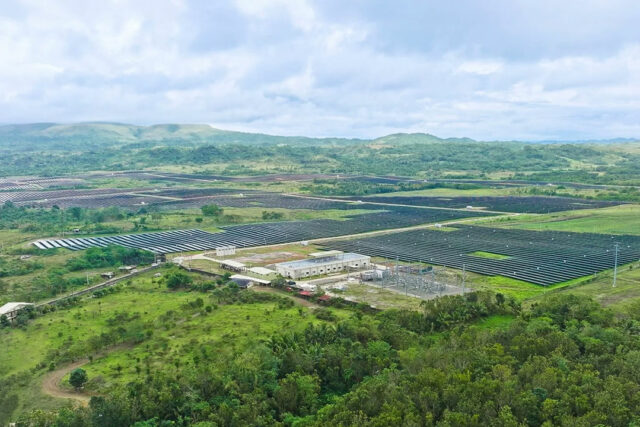
AYALA-LED ACEN Corp. has infused an additional P1.9 billion into its subsidiary operating a 133-megawatt (MW) solar farm in Cagayan to fund its expenses.

In a regulatory filing on Wednesday, ACEN said it had subscribed to 419,690 redeemable preferred shares of Natures Renewable Energy Development Corp. (NAREDCO) at P4,527.16 per share, representing 22% of the company.

NAREDCO is a joint venture between ACEN (60%) and Cleantech Renewable Energy 4 Corp. (40%) engaged in the development and operation of the Cagayan Solar Power Plant, which began commercial operations in October 2024.

“ACEN’s infusion of cash to NAREDCO will enable NAREDCO, its subsidiary, to have funds to service its loans and operating expenses,” ACEN said.

Spanning 115 hectares, the Cagayan solar farm generates an estimated 188 gigawatt-hours of clean electricity annually — enough to energize around 45,000 homes.

“Cagayan North Solar is the first renewable energy project in Cagayan supplying clean power to the Luzon grid. As demand for electricity continues to grow, this project plays a vital role in strengthening the country’s energy supply through reliable and sustainable generation,” ACEN President and Chief Executive Officer Eric T. Francia said.

Last week, ACEN extended P900 million in fresh funds to its subsidiary Giga Ace 6, Inc., which is developing a 553-MW wind farm in Quezon province.

ACEN, the listed energy platform of the Ayala group, holds 7 gigawatts (GW) of attributable renewable energy capacity across operational, under-construction, and committed projects. It operates in the Philippines, Australia, Vietnam, India, Indonesia, Laos, and the United States.

The company aims to operationalize power projects within and outside the Philippines with a combined capacity of about 1.2 GW by the end of next year.

On Wednesday, shares of ACEN Corp. fell by 1.2% or three centavos to close at P2.47 apiece. — Sheldeen Joy Talavera

SMC extends bondholder consent period for NAIA financing plan

NEWNAIA.COM.PH

SAN MIGUEL CORP. (SMC) has extended until Oct. 22 the deadline for bondholders to give their consent to proposed amendments to several bond terms, which would allow the conglomerate to use its shares in New NAIA Infra Corp. as collateral for project financing.

In a disclosure to the Philippine Stock Exchange on Wednesday, SMC said the expiration date for its consent solicitation covering multiple fixed-rate bonds has been moved from Oct. 8 to Oct. 22 at noon, giving record bondholders additional time to review the consent solicitation statement and compile the necessary documents.

“Record bondholders who have previously delivered consents do not need to redeliver such consents nor take any other action in response to this announcement,” the company said.

The consent solicitation involves several outstanding bonds maturing between 2027 and 2034, including the 5.7613% Series C bonds due 2027, 7.1250% Series G bonds due 2028, 7.4650% Series I bonds due 2027, 5.2704% Series J bonds due 2027, 5.8434% Series K bonds due 2029, 7.4458% Series L bonds due 2028, 7.8467% Series M bonds due 2029, 8.4890% Series N bonds due 2032, 7.2584% Series O bonds due 2033, and 7.7197% Series P bonds due 2034.

The initiative, first disclosed on Sept. 8, seeks bondholder approval to waive certain negative covenants and amend trust agreements, enabling SMC’s infrastructure arm, San Miguel Holdings Corp., to pledge its equity in New NAIA Infra Corp. for a loan related to the Ninoy Aquino International Airport (NAIA) rehabilitation project.

The proposed amendments also include raising the ownership threshold in the definition of “material subsidiary” from 25% to 30% and expanding the definition of “permitted liens” to accommodate project financing arrangements.

SMC said the revisions aim to align its bond terms with standard project finance structures while maintaining non-recourse debt at the parent level.

On Wednesday, shares of San Miguel Corp. fell by 0.44% or 25 centavos to close at P56.75 each. — A.G.C. Magno

Stories and drinks all the way from Albania

DRINKS by Sofokli Cali. — SCREENSHOT FROM THE PENINSULA MANILA FACEBOOK PAGE

QUICK — how many Albanians do you know? Thanks to its unstable politics and its history of isolation, probably not many. During a bar takeover at The Peninsula Manila’s The Bar on Oct. 3, we met an Albanian bartender who taught us not only the finer points of a drink, but also a little bit about karma and open borders.

Sofokli Cali is the owner and bartender at Nouvelle Vague in the Albanian Capital of Tirana. The bar was No. 95 on the World’s 50 Best Bars List, and was No. 86 the year before. He took four drink recipes to The Pen, quite good, but all of them telling a story.

For example, there was the English Climber, made with Eden Mill Original Gin, mountain tea, barley, honey, lemon, and sparkling water. Mr. Cali told BusinessWorld, “We have many ingredients which represent us. We have herbs, we have fruits — but mostly I would say that we have heritage.”

The drink, with a hint of bread from the barley and a bittersweet character, stems from food Albanians ate during the Communist Regime which began in 1946, falling only in 1992. “Because they were very poor, for breakfast and for dinner, they would have a piece of bread, mountain tea, with a little bit of sugar and lemon,” he said.

“For us, it’s important to translate this into a fine drink concept,” he said. “We want to not forget the past. We want to represent our country, for the tourists that come — but also for the new generations. It’s not good to forget where we came from and what our parents and grandparents have suffered.”

Through this lens, we began to see the drink menu quite differently. He had the Barbie (Eden Mill White Wine Cask Gin, forest fruits, coconut oils, rue berry, and sparkling water). The drink, deviating from the Pornstar Martini, removes the passionfruit and its accompanying tropical notes and replaces them with fruits found in Albania — this then reads as aspirational, as if the fruits of Albania are at par with whatever else the globe can produce. It was still delightfully fruity though, and we can imagine sipping this on the beach.

He had the Nou Fashion (Eden Mill Bourbon Cask Single Malt Scotch, ginger, lime, blended vermouth, bitters) the name deriving from their bar in Albania. It’s one of their signatures and derives from the Old Fashioned — it tastes like a photorealistic bitter orange.

His final drink, the Deviated Negroni (Eden Mill Red Wine Cask Gin, fortified Kallmet, bitters) once again takes from Albania’s history: it’s symbolic of their relationship with Italy, one that is bittersweet. In various stages of history, Italy has both provided and withdrawn support for Albania, and at one point they even shared a king — after Albania’s was deposed. Albania asserts itself here with local grape variety Kallmet, resulting in a lighter, more refreshing take on the Negroni.

Mr. Cali talked about the increasing number of tourists in Albania, and how that is changing the country’s landscape. “Karma never forgets. We suffered for 46 years. We were isolated, we suffered the civil war, immigration, poverty. Now, karma is paying us off. The world has started to know about Albania.”

More than the economic gains from tourism, he said, “Also for the people, for interaction. Due to isolation, for us, it’s very important to interact with foreigners, of different races. We need that to develop our brain and our fantasy.”

He himself was a migrant, growing up in Greece, which took in many Albanians in several waves of migration; only going back to Albania to finish university. He studied interior and furniture design, but, “The hospitality industry was grabbing me by my long hair.” To him, hospitality is more than service: “Hospitality is making other people happy.”

And stories make other people happy, we suppose. “As much as taste in the drink is important, as much important is the storytelling,” he said.

“You create a fantasy. It’s like watching a movie.” — Joseph L. Garcia

Alfamart launches MSME-focused franchising program

BW FILE PHOTO

ALFAMART PHILIPPINES, the minimart chain of the SM group, has rolled out its franchising program targeting micro, small, and medium enterprises (MSMEs) seeking to scale their operations.

“By allowing tenants to evolve into franchisees, Alfamart is enabling MSMEs to scale alongside its own expansion, strengthening local communities and livelihoods,” Alfamart Philippines Chief Operating Officer Harvey T. Ong said in a statement on Wednesday.

Alfamart began its franchising pilot in Laguna with two franchise-owned stores.

The first franchise store opened in October last year with Alfamart lessor Leovino C. Datario. The second store opened in August through a partnership with AAU Corp. President and Chief Executive Officer Arles A. Uy, Jr.

AAU Corp. operates 15 Express Clean laundromat branches beside Alfamart stores.

“Alfamart blends the convenience of a neighborhood store with the breadth of a supermarket — a format gaining strong traction across Southeast Asia, particularly among families and communities that value accessibility and affordability,” it said.

Mr. Ong earlier said the company plans to open about 300 new stores this year as part of its nationwide expansion.

As of end-September, Alfamart had 2,337 stores across the country.

The minimart chain operates under a joint venture between SM and Indonesia-based retail company PT Sumber Alfaria Trijaya Tbk.

Alfamart is part of the SM Group’s retail food business. Its products include basic groceries, SM Bonus items, fresh and frozen goods, snacks, and personal care products.

SM Retail, Inc. posted a 10% increase in first-half net income to P8.4 billion from P7.6 billion a year ago. Revenue for the period rose by 8% to P211.8 billion, while food retail revenue grew by 8% to P127.1 billion on the back of store expansions and higher volumes.

On Wednesday, shares of SM Investments Corp. closed flat at P735 apiece. — Beatriz Marie D. Cruz

Gordon Ramsay’s Knife Edge spotlights culinary world’s chase for Michelin glory

A CHEF prepares a dish in Knife Edge: Chasing Michelin Stars. — APPLE.COM

LONDON — Celebrity chef Gordon Ramsay goes behind the camera for a new series, Knife Edge: Chasing Michelin Stars, that shines the spotlight on restaurants working to attain the coveted culinary accolade. The multi-starred restaurateur and TV personality is an executive producer of the eight-part Apple TV+ series premiering on Friday, which visits eateries in the United States, Britain, Italy, the Nordic countries, and Mexico seeking to gain, or retain, stars.

“(It) is a sort of a real reflection on what goes on in these businesses: what’s at stake, what kind of jeopardy is up for grabs and then the emotions,” Mr. Ramsay told Reuters.

“This is (an)… unscripted, real version of life in the culinary world and the extent you go to for the badge of honor … Actors want Oscars, football players want F.A. Cup winners’ medals, chefs want Michelin stars.”

Episodes show host Jesse Burgess meeting chefs as they compose menus, primp up dishes, and seek to impress that lone diner who may be a secret Michelin inspector. There is also input from the anonymous Michelin inspectors, voiced by actors.

“We ask them questions and they answer. In reality, it was all… very secretive so that none of the producers or nobody actually saw the real-life inspectors,” Mr. Burgess said.

“They just judge the food on the plate.”

The first Michelin Guide was published by the French tire company in 1900, with the restaurant star rating introduced in the 1920s. The annual guides award up to three stars.

Mr. Ramsay received his first Michelin star when he was head chef at London restaurant Aubergine. His own Restaurant Gordon Ramsay has held three stars since 2001.

“You become an overnight sensation and then you’ve got the fight and the slug to maintain it… you need to understand the word delegation, teaching, creating, and most importantly, passing the baton on,” he said.

“I have one foot in the kitchen and one foot in the media world and am I there 16 hours a day? No, of course I’m not. I am there like a conductor and I’ll sign things off, but I want to hear from them… And so maintaining it is where the real work starts.”

Asked if he still gets nervous when Michelin issues new editions of the guide, Mr. Ramsay said:

“I do get nervous… no one likes losing… (going) down to even two stars is unique, but… it’s major headlines if you do. I’m often asked, ‘What would you do if you did lose a star?’ Then, I’d fight and win it back.” — Reuters

The inaugural Michelin Guide Ceremony: Manila and Environs & Cebu 2026 will be announced on Oct. 30 at the Marriott Manila Hotel, Newport World Resorts. The Philippines’ very first Michelin restaurant selection, Bib Gourmand awards, Michelin Stars, and Special Awards will be given during the occasion. The ceremony will also be live-streamed on the Michelin Guide Asia YouTube channel.

MGEN opens research hub in Iloilo City

MERALCO POWERGEN CORP.

MERALCO POWERGEN CORP. (MGEN), in partnership with the Meralco Power Academy (MPA), has established a learning and research hub in Iloilo City aimed at providing training and research programs related to the power industry.

The first MGEN Center for Innovation (MCI) seeks to empower communities, build local talent, and develop future leaders in the power sector, MGEN said in a statement on Wednesday.

Through the MCI, MGEN and MPA aim to strengthen regional energy innovation, promote technical excellence, and inspire the next generation of energy professionals, it added.

MGEN President and Chief Executive Officer Emmanuel V. Rubio said the facility was designed to meet the evolving needs of the industry and nearby communities.

“Now, MCI will serve a wider audience and aim to become a leading hub for energy education, research and innovation — the first of many Centers for Innovation we plan to establish across our sites in the Philippines,” he said.

MGEN is a subsidiary of power distributor Manila Electric Co. (Meralco), which operates a portfolio of power generation assets equipped with advanced technologies.

Meralco’s controlling stakeholder, Beacon Electric Asset Holdings, Inc., is partly owned by PLDT Inc. Hastings Holdings, Inc., a unit of the PLDT Beneficial Trust Fund subsidiary MediaQuest Holdings, Inc., has an interest in BusinessWorld through the Philippine Star Group, which it controls. — Sheldeen Joy Talavera

Lucky Me-rch: Pancit hops from plates to T-shirts

FOR THIS month’s National Noodle Day — which fell on Oct. 6 — noodle giant Lucky Me! has released a line of T-shirts and tote bags with Linya Linya, a social media and T-shirt company co-founded by Ali Sangalang.

The line was announced on Oct. 2 at the Monde Nissin offices in Pasig, along with a fashion show and standup comedy sets from James Caraan and Nonong Ballinan. The shirts, which come with the slogans “Pang-shirt Canton” and “Pancituationship” appeared on the runway along with the noodle brand’s mascot, Lucky M. Lucky M himself bore a tote bag, also from the collaboration, that said “Carry On Pancit Canton.”

Mr. Sangalang said in a statement, “At Linya Linya, our mission has always been to capture everyday Pinoy wit and experiences in ways that connect with people. This collab with Lucky Me! is natural and exciting — as noodles and Linya are both deeply woven into our lives. Now, you can literally wear what you’re feeling.”

Gen dela Peña, integrated marketing communications head of Monde Nissin, which owns the Lucky Me! brand, told BusinessWorld, “Lucky Me! is not just on their tables, in their pantries. It’s also a wearable item for them. They can take it wherever they go.

“That’s really our goal: to ensure that Lucky Me! is not just part of kain (eating) culture, but really embracing lifestyle and pop culture,” she said.

Alongside the merch, they also have a lineup of social media content with Linya Linya that will come out the entire month.

Fashion is not something new for Lucky Me!. The noodle brand collaborated with clothing brand Uniqlo in the past. “It’s nice to wear what you eat. Sometimes what we eat represents us also,” said Ms. Dela Peña. “Wear what you eat and be proud of it.”

On another note, we also talked nutrition with Lucky Me!: in a world that’s beginning to wise up to nutritional labels, will instant food still have a place at the table? “Lucky Me! noodles are actually a very, very good source of carbohydrates. We know that’s good for the body, for energy,” she said. “Even sodium, for example, the body also benefits from sodium.”

She also noted that some of their customers add vegetables or eggs to their product, increasing its nutritional value. She added, however: “We always promote eating in moderation. Lahat naman ng sobra, masama (everything in excess is bad).”

The limited-edition shirts (P650) and tote bag (P650) are available on Linya Linya’s online store. — J.L. Garcia