Home Blog Page 4449

Megawide’s property arm secures P3-B loan for QC project

MEGAWIDE.COM.PH

MEGAWIDE CONSTRUCTION Corp.’s property unit, PH1 World Developers, Inc., has secured a P3-billion development loan from BDO Unibank, Inc. for its vertical project in Quezon City, its president said on Wednesday.

PH1 World Developers intends to use the loan proceeds for its 45-storey development called My Enso Lofts, according to the company.

“The transaction marks a significant milestone for PH1, giving a seal of approval on the My Enso Lofts’ prospects and establishes our company’s credit worthiness as a legitimate player in the industry,” said PH1 President Ma. Gilda G. Alcantara in a press release.

My Enso Lofts was launched in November 2020 and is expected to be completed by 2026. It will follow the maiden development of PH1 in Taytay, Rizal which is said to be currently at the tail end of turning over.

“PH1 has shown its ability to deliver on its commitments, followed by a healthy take-up of newly launched projects,” said Cecile Tan, lead co-head of institutional banking group at BDO Unibank.

“The company’s rich pipeline can potentially anchor a stronger and longer-term business relationship between our organizations that we can further build on,” she said.

PH1’s other projects include the recently launched Modan Lofts Ortigas Hills, along with projects in Pasig City and Pampanga.

The company also plans to launch a horizontal development in Bulacan through Northscapes San Jose Del Monte, which will mark its first venture into horizontal projects.

Aiming to prioritize energy efficiency, Northscapes will incorporate solar panels, tinted windows, insulated walls, e-shuttles, and solar-powered street lights.

Last month, Megawide announced its intention to acquire the 100% outstanding capital stock of PH1 from Citicore Holdings Investments, Inc. for P5.2 billion. — Justine Irish D. Tabile

CTA affirms denial of Carmen Copper’s VAT refund claim

CTA.JUDICIARY.GOV.PH

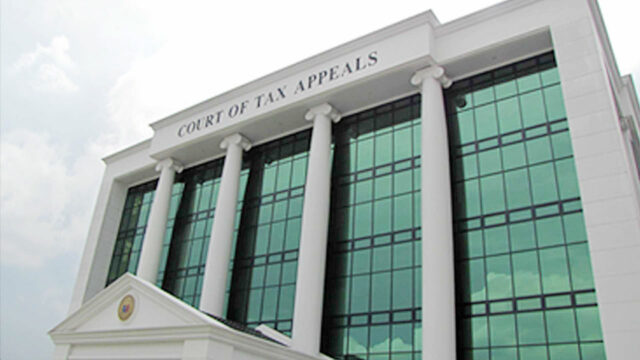
THE COURT of Tax Appeals (CTA) has upheld its decision to reject Carmen Copper Corp.’s tax refund claim of P11.4 million, which was said to represent the excessive value-added tax (VAT) on the company’s purchases of goods, services, and imports for the year 2015.

In a 19-page decision dated Aug. 2, the CTA full court said the firm failed to prove its entitlement to the amount and that the amount could be traced to zero-rated sales.

“Petitioner (Carmen Copper) was not able to prove that it is entitled to a refund in cash in the amount of P11,393,494.01, representing its excess and unutilized input VAT on purchases of goods and services, and importation of goods, for the first quarter of 2015,” the tax tribunal said.

The court also noted that its Second Division did not misuse its discretion in rejecting the company’s refund claim.

In 2017, former Assistant Revenue Commissioner Teresita M. Angeles partially granted Carmen Copper’s claim in the amount of P48.78 million of its initial P60.17 million claim for 2015.

Under the country’s tax code, zero-rated sales are transactions made by VAT-registered taxpayers that do not translate to any output tax.

If a sale is subject to 0% VAT, the term “zero-rated sale” must also be written on the company’s official invoices. — John Victor D. Ordoñez

San Francisco-Manila route sparks optimism for United Airlines

IMAGE VIA UNITED AIRLINES

UNITED AIRLINES is hopeful about travel demand in the Asia-Pacific region due to the expected interest in its San Francisco-Manila route, a company official said on Wednesday.

“We are very confident that this flight will perform exceptionally well,” said Walter Dias, United Airlines’ regional director for Greater China, Korea, and Southeast Asia sales, during a briefing.

“Our forecasts are grounded in the current economic conditions and observed travel trends within the region.”

Last month, the company unveiled plans to launch daily nonstop direct service between San Francisco and Manila, set to commence on Oct. 30.

The Manila-San Francisco flight will depart daily at 9:55 a.m. and arrive at 7:20 a.m., using a Boeing 777-300ER, the airline’s largest aircraft.

“This route has been a dream of mine for over 20 years. I’ve always envisioned a trans-continental flight connecting the US mainland to Manila,” said Mr. Dias.

He said that the new route would benefit the Philippines, as the San Francisco hub is anticipated to generate significant traffic to the country.

“The San Francisco hub stands as the largest US gateway into Asia. We facilitate over 200 flights daily to and from San Francisco, connecting to approximately 29 Asia-Pacific destinations,” he added.

The new route supplements the airline’s existing nonstop service to Manila from Guam and Palau, both of which, according to the airline, have seen strong demand.

“We’re very pleased with our load factor. Some days, it even surpasses our expectations,” United Airlines Country Manager for Sales-Philippines Pam C. Navarro said.

The San Francisco-Manila route is just one of the 15 planned Asia-Pacific destinations for the airline. The roster includes direct flights to New Zealand, Australia, Japan, South Korea, Tahiti, Singapore, Shanghai, Hong Kong, and Taipei.

For the upcoming winter period, United Airlines foresees its Asia-Pacific capacity being 50% larger than the combined capacity of the two other major US carriers in the region.

By 2032, the airline expects to receive delivery of 700 new narrow and wide-body aircraft, building upon its fleet of 770 aircraft at the end of 2022.

“Over the next eight or nine years, approximately 700 new aircraft will be integrated into our fleet. This is an exciting development,” said Mr. Dias. — Justine Irish D. Tabile

Makati Shangri-La reopens (and will be releasing their own gin)

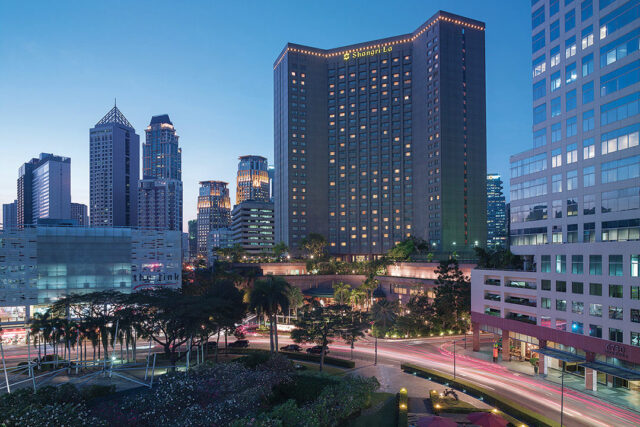
THE MAKATI SHANGRI-LA at dusk

THE LIGHTS are on again at the Makati Shangri-La.

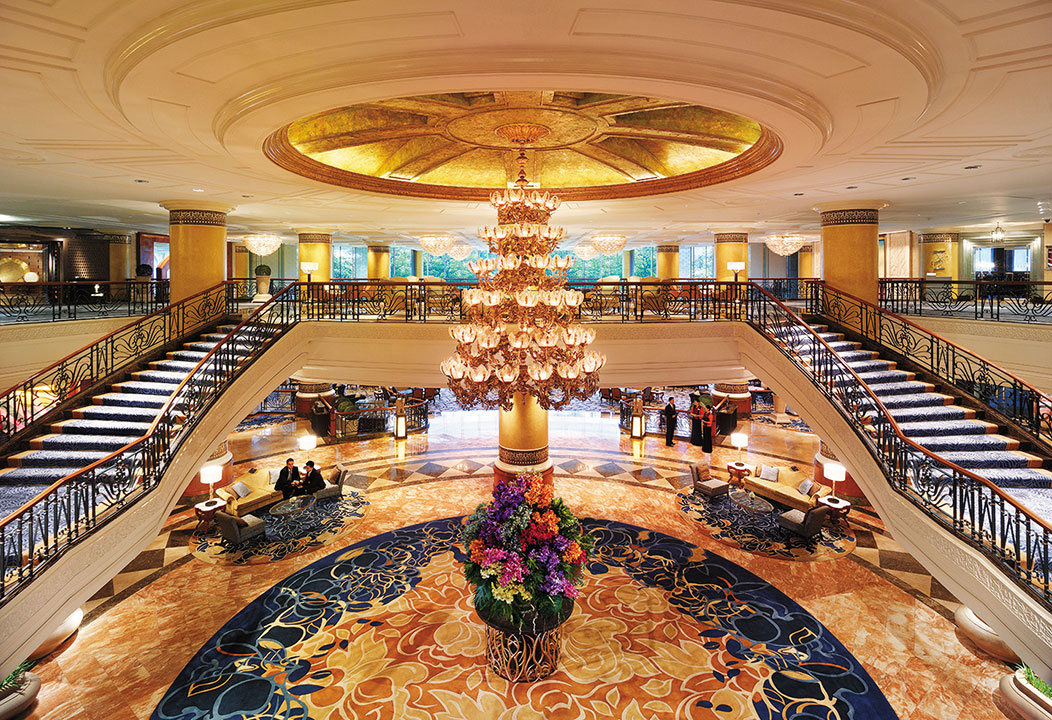
Last week, we saw every foot of the hotel’s grand chandelier had been lit as we walked up the stairs towards the reopened Sage restaurant for lunch. The hotel officially opened to guests again on Aug. 8.

Its temporary closure had been announced early in 2021, in the middle of the COVID-19 pandemic. In a previous BusinessWorld story, management of the three-decade old Makati landmark said that “the closure decision was made after low business levels and a prolonged recovery timeline.”

“It was always our intention to open the doors of Makati Shangri-La again,” explained John Rice, Vice-President for Operations for Shangri-La Group Philippines, during an interview with BusinessWorld. “We never actually closed, we just suspended operations for a period of time, until the economy improved and until we felt that the demand was there,” he explained.

“It was a difficult decision,” he admitted. “It wasn’t a situation where we closed at all. We just stopped… until we could get to a situation where economic conditions improved and the demand was there, and we could reopen for business.”

In the interim, he said that they had kept on a core team of people on the property. “It’s been incredibly well-maintained,” said Mr. Rice.

“Makati Shangri-La, Manila is an iconic landmark that has long been woven into the rich history of Makati City. For the past three decades, the hotel has provided a tranquil sanctuary within the city’s bustling business district,” said Udo Wittich, hotel manager at the Makati Shangri-La, Manila. “The reopening symbolizes a fresh beginning for Makati Shangri-La, Manila. It presents us a unique opportunity to provide guests with refreshed experiences and colorful joys of life that span our accommodations, dining destinations, and even in the ways we work with our community.”

RESTAURANTS ARE OPEN FOR BUSINESS
As of Friday, reopened dining outlets include Sage, Shang Palace, and the Lobby Lounge. The Japanese outlet Inagiku will also reopened soon. Other dining establishments such as the Circles Event Café and Sage Bar are slated to reopen in the coming months.

The hotel’s banquet operations are in full swing, as are its function rooms (the ballroom will actually play host to a party quite soon). Mr. Rice said that they will “progressively reopen other outlets as we move further into the year.”

The rooms will also be progressively released — with a refreshed look — as well as a new category called Horizon Business, which will feature ergonomic furniture and state-of-the-art IT equipment for business travelers. Each Horizon Club Business Room comes equipped with a range of remote work-friendly amenities such as an Omnidesk adjustable standing table paired with an ergonomic chair, and fuss-free modern electronics featuring dual-screen 4K monitors, a speakerphone, mobile stands, and fast-charging cable adaptors. The business traveler-centric design offers a conducive and distraction-free environment for work, ensuring elevated productivity.

Other hotel amenities — like the Health Club, the outdoor pool, children’s pool, and tennis courts — will gradually open. The hotel spa will reopen in the first quarter of 2024.

Udo Wittich, the Makati Shangri-La’s hotel manager, also announced changes such as adopting more environment- friendly measures at the hotel. These include four new parking slots with electric car-charging capabilities, and a reduction in the use of single-use plastics. This measure includes changing keycards and pens to wood from plastic, and replacing single-use toiletries with refillable options.

They are also planning on opening a rooftop herb garden, and a greenhouse by the first quarter of next year — which will help when they release their own gin (Mr. Rice said that the gin was being bottled as we spoke).

“A few other initiatives will come up as soon as we reach the end of the year,” said Mr. Wittich. Joseph L. Garcia

For room reservations, e-mail reservations.makati@shangri-la.com. For dining reservations, e-mail dining.makati@shangri-la.com or call 8813-8888.

DMCI Holdings Q2 income falls 9% to P8.24 billion

DMCI HOMES

DMCI HOLDINGS, Inc. on Wednesday reported a 9% decline in attributable net income for the second quarter (Q2) to P8.24 billion, down from P9 billion last year.

This decrease was attributed to reduced contributions from the company’s coal, nickel, and construction businesses, DMCI said in a statement.

“Our bottom line was supported by the strong recovery of our power and water businesses,” DMCI Chairman and President Isidro A. Consunji said.

“Despite double-digit drops in coal and nickel prices, as well as decreasing construction volumes, we achieved our second-highest Q2 performance ever,” Mr. Consunji added.

The company’s total revenue slipped by about 2% to P36.96 billion from P37.7 billion last year, with higher electricity sales offsetting the impact of weaker commodity prices and fewer construction achievements.

The major contributors during the three-month period were Semirara Mining and Power Corp. (SMPC), DMCI Project Developers, Inc. (DMCI Homes), and Maynilad, accounting for 92% of total core income.

Contributions from Semirara Mining and Power to the company’s net income declined by 5% to P5.8 billion from P6.1 billion, primarily due to weaker coal selling prices. 

However, this was largely offset by higher coal shipments, power generation, electricity sales, and average selling prices.

SMPC reported a 5% decrease in net income to P10.19 billion from P10.78 billion due to reduced domestic coal sales.

DMCI’s residential unit, DMCI Project Developers Inc. (DMCI Homes), saw an 8% increase in contributions to P1.4 billion from P1.3 billion the previous year, driven by higher finance and other income. Net income also increased by 6% to P1.41 billion from P1.32 billion.

DMCI affiliate Maynilad contributed P474 million, marking a 21% increase from P393 million, due to improved billed volume, customer mix, and average effective tariff.

The affiliate’s net income grew by 34% to P2.18 billion from P1.63 billion the previous year.

DMCI Mining Corp. contributed P250 million to the company’s bottom line for the period, reflecting a 51% decline from the P510 million in the previous year.

This decline was mainly due to lower selling prices and foreign exchange gains, coupled with higher costs. Net income decreased to P708 million from P1.09 billion the previous year.

DMCI Power Corp.’s net income contribution for the quarter increased by 13% to P231 million from P205 million, supported by higher electricity sales and lower fuel costs.

Net income also jumped by 12% to P231 million from P205 million the prior year.

Furthermore, due to slower construction progress, fewer projects, and delays in major projects, D.M. Consunji, Inc.’s contributions dropped by 73% to P139 million from P516 million last year.

D.M. Consunji’s net income for the quarter decreased to P216 million from P650 million in the same period last year.

DMCI Holdings shares closed 1.05% higher at P9.60 apiece on Wednesday. — Adrian H. Halili

Italian dining: More than tomatoes and cheese

IT’S A COMMON misconception that Italian cuisine is just tomatoes and cheese on something. The varied terrains and cultures of each Italian region provide many ingredients and techniques that make for various dishes, each town boasting a different recipe than the next, oftentimes, for the same thing.

Up north for example, closer to Switzerland, we get dishes rich in dairy and of a heavier texture, due to the need for sustenance in harsher climates. Down south, we get the lighter dishes with sunnier produce (such as tomatoes); and it is this cuisine that has become evocative of Italian cuisine due to the number of their citizens migrating to America. The modification of Italian cuisine to become more suited to new American environments is a different story all together.

But going back to Italy, all roads lead to Rome, and this is where Conrad Manila’s final guest chef for its Legendary Chefs series, Valerio Pierantonelli, comes from. His dishes will be served at the buffet at Conrad Manila’s Brasserie on 3.

For lunch earlier this week, Mr. Pierantonelli served Insalata di Polpo e Patate (Octopus salad with yellow potatoes and basil), Asparagi al Tartufo e funghi (Poached asparagus marinated with mushroom and truffle paste), a mushroom soup with a truffle paste, and a gnocchi of yellow potatoes roasted with gorgonzola. Taken collectively, these dishes had a homey, comforting quality. Next came a porchetta (pork belly), noisly crunchy; and a delicate sea bass with a sauce made from a seafood stock stewed for four hours. There was of course, an osso buco, a stew made from beef shanks that hit the spot. A piece de resistance was a risotto, colored pink from beetroot, mixed with chopped asparagus and dusted with olive powder. This had the right balance between comfort and luxury.

Debunking the misconception that it’s all tomatoes and cheese up in Italy, Mr. Pierantonelli said, “There are so many things. People outside the world know only the things that are the most common. But I think, if you actually travel all over Italy, there are so many things that not even Italians know.”

He makes an example of the dishes from his native Rome, the country’s capital. “It’s very heavy. There is a lot of strong flavor,” he said. “Even in Italy, when they go to Rome, they that they’re going to eat a lot.”

His own personal touch meanwhile, can be seen in the pizza sauce. Made of crushed tomatoes and a basil infusion, it’s cooked right on the crust as the pizza is baked, resulting in a richer, more expressive flavor.

NONNA’S FAVORITES
It’s not extraordinary for Mr. Pierantonelli’s food to have an element of down-to-earth domesticity, despite his work at Conrad Singapore Orchard’s Italian restaurant, Basilico. After all, he did receive his first education in cooking from both his grandmothers — nonnas — legendary fixtures in Italian cuisine. “I started very young with both my grandmothers,” he said. He said that he had been an energetic baby, so his grandmothers would give him pieces of dough to knead to keep him busy. During Carnevale, when children would dress up in all sorts of costumes, he would choose to wear a chef’s costume. “That’s how I started to love the food.”

Nonnas are the enduring figureheads of Italian cuisine (as opposed to the temperamental chef, as French cuisine is usually represented in the media). “I think it’s good, because even myself, that’s how I learned to cook. Like I said before, the kitchen is love for me.

“More than a grandmother, who else can give you so much love?”

Mr. Pierantonelli’s dishes will be available at Brasserie on 3 until Aug. 15. Prices range from P1,799 to P3,500. —  JL Garcia

For reservations and inquiries, contact Conrad Manila’s dining reservations at 8833-9999, 0917-650-3591 or e-mail MNLMB.FB@conradhotels.com. Prices range from P1799 to P3500.

Phinma’s profits drop to P208.76M on lower construction, property income

PHINMA CORP. said on Wednesday that its attributable net income declined to P208.76 million for the first half despite recording higher revenues from most of its business segments.

The company posted an attributable net income of P406.83 million in the same period last year.

Phinma’s consolidated top line reached P8.89 billion for the first six months of the year, an increase of 3% from last year, the company said in a regulatory filing.

Its education unit, Phinma Education Holdings, Inc., registered a 52% growth in its top line, driven by a 30% increase in enrollment during the second semester of the school year 2022-2023, 

Phinma Education saw consolidated net income three times higher at P307.47 million for the first half of the year, up from P96.88 million in the same period last year.

Its construction materials business, comprised of Union Galvasteel Corp., Philcement Corp., and Phinma Solar Corp., recorded a combined revenue of P6.59 billion for the first six months.

However, the three companies saw a decline in their combined net income, reaching P262.01 million, attributed to softness in construction demand and delayed government infrastructure spending.

“Construction materials group focused on improving operational efficiencies, expanding its distribution network and developing new markets to support future sales growth especially as government infrastructure spending is expected to accelerate in the second half,” the company said.

At the company’s board meeting on Tuesday, they approved the additional investment of P114 million to Philcement, which it said will fund the expansion and improve operational efficiencies in Visayas and Mindanao.

The board also approved a P170 million investment in Galvasteel to fund projects in Phinma Solar including the installation of 9.39-megawatt alternate current of solar rooftops.

Meanwhile, Phinma’s property unit booked a net loss of P83.95 million due to the acceleration of cancellation of sales amounting to P149.5 million.

“The bulk of which has been resold and are expected to be booked during the second half of the year,” the company said.

At the same meeting on Tuesday, the company’s board of directors also approved the incorporation of a new hospitality management company, which will be a wholly owned subsidiary of Phinma. — Justine Irish D. Tabile

Yields on term deposits rise amid growing inflation risks

BW FILE PHOTO

YIELDS on the term deposits auctioned off by the Bangko Sentral ng Pilipinas (BSP) edged higher on Wednesday as global crude oil prices rose and the peso depreciated to a two-month low against the dollar, which could affect inflation.

Demand for papers under the BSP’s term deposit facility (TDF) totaled P297.282 billion on Wednesday, lower than the P300 billion on the auction block. However, this is higher than the P280.088 billion in bids logged last week for the P280-billion offer.

Broken down, the seven-day deposits attracted tenders amounting to P167.147 billion, above the P160-billion offering and the P151.358 billion in bids recorded the prior week for a P150-billion offer.

Rates for the one-week papers ranged from 6.57% to 6.61%, slightly narrower than the 6.559% to 6.61% range logged in the previous week. This brought the average rate for the tenor to 6.5932%, inching up by 0.44 basis point (bp) from the 6.5888% seen on Aug. 2.

For the 14-day deposits, tenders hit P130.135 billion, below the P140-billion offering but slightly above the P128.730 billion in bids seen last week for the P130 billion on the auction block.

Accepted yields were from 6.5% to 6.62%, unchanged from the previous week. Still, the average rate of the two-week deposits went up by 0.71 bp to 6.5974% from the 6.5903% logged a week ago.

The central bank has not auctioned off 28-day term deposits for more than two years to give way to its weekly offering of securities with the same tenor.

The term deposits and the 28-day bills are used by the BSP to mop up excess liquidity in the financial system and to better guide market rates.

TDF yields were higher week on week after global crude oil prices went up, which could affect inflation, Rizal Commercial Banking Corp. Chief Economist Michael L. Ricafort said in a Viber message.

Brent crude futures and US West Texas Intermediate (WTI) gained nearly $1 on Tuesday. Brent crude futures gained 83 cents to $86.17 a barrel while US WTI crude rose 98 cents to $82.92, Reuters reported.

Yields went up amid the peso’s depreciation against the greenback, which could also lead to higher import prices and inflation, Mr. Ricafort added.

The peso weakened to a two-month low against the dollar on Tuesday due to hawkish remarks from a US Federal Reserve official.

The local currency closed at P56.24 versus the dollar on Tuesday, weakening by 22 centavos from Monday’s P56.02 finish, data from the Bankers Association of the Philippines’ website showed.

This was the peso’s weakest close in over two months or since its P56.26-per-dollar close on June 1.

Additional interest rate hikes will likely be needed in order to lower inflation to the Fed’s 2% target, Fed Governor Michelle Bowman said on Monday.

The Fed raised borrowing costs by 25 bps last month, bringing its target interest rate to a range between 5.25% and 5.5%.

The US central bank has hiked rates by a cumulative 525 bps since it began its tightening cycle in March last year.

The Federal Open Market Committee will hold its next policy meeting on Sept. 19-20.

Meanwhile, the BSP expects inflation to return to its 2-4% annual target before the year ends.

Headline inflation slowed to 4.7% in July from the 5.4% in June, its sixth straight month of decline.

From January to July, inflation averaged 6.8%, still higher than the 5.4% forecast of the central bank. — K.B. Ta-asan with Reuters

A new gourmet treasure trove

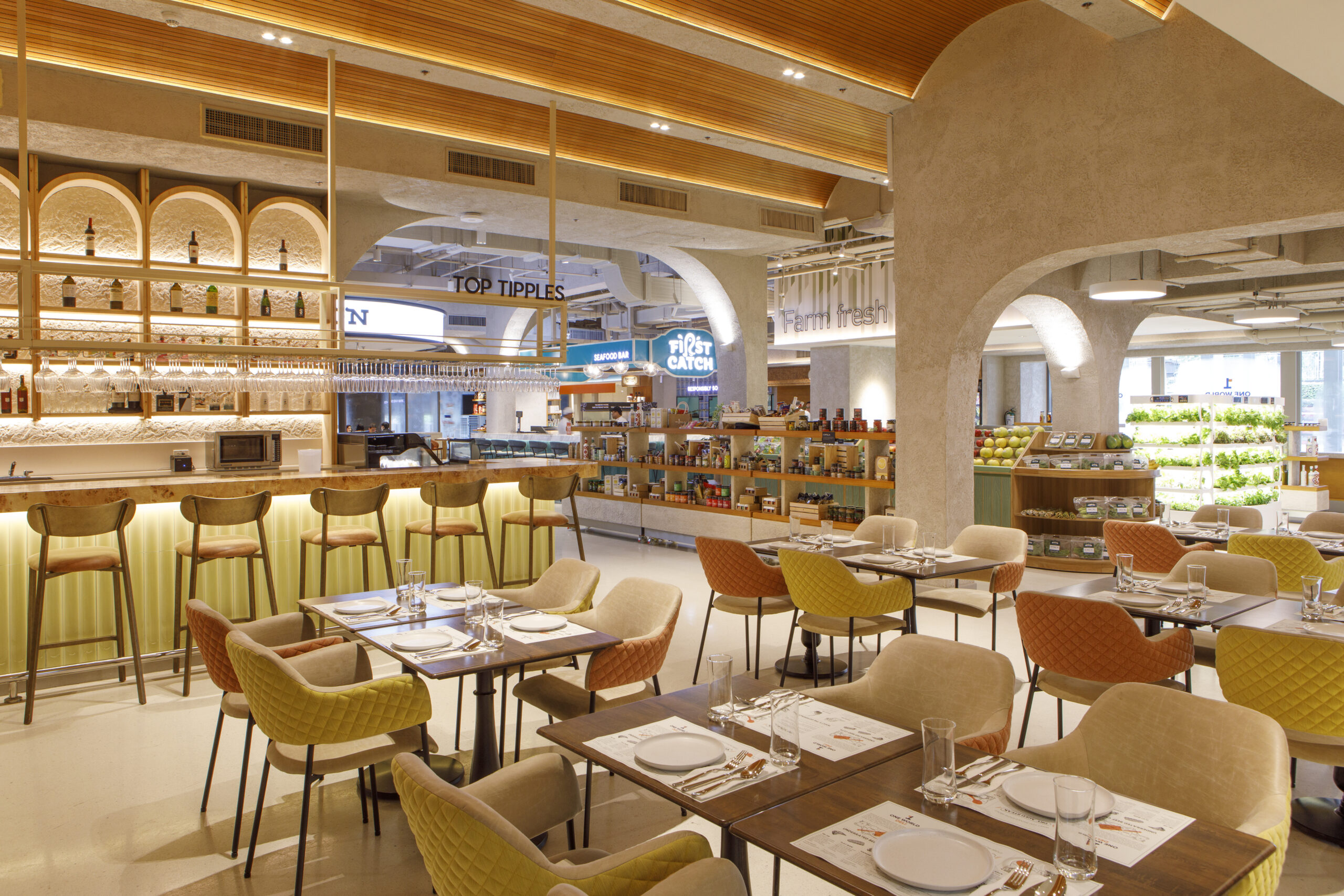
THE WORLD is getting bigger for One World Deli, which opened its latest branch in San Juan City on Aug. 7. Guests surveyed and celebrated the shelves and counters lined with fresh local produce, meats, seafood, and pantry staples brought in by the deli’s suppliers, chef collaborators, and in-house experts.

One World Deli presents goods from all around the world — the Meat Anton counter alone offering such specialties as John Stone Beef dry-aged meats from Ireland, black angus beef by Braveheart in the US, Red Duroc pork from Dingley Dell in the UK, and Satsuma Fukunaga wagyu from Japan.

The deli may look like a clean, spacious supermarket from the outside, but within lie high-grade items that can either be brought home or cooked and consumed on the spot.

For PYC Foods Corp. president and founder Julio “Jun” Sy, who owns One World Deli, it was a no-brainer to open the second branch in San Juan to follow up the success of the first one that opened in Makati last year.

He mentioned that others are slated to open this year, including a branch in Mall of Asia in Pasay City.

Many foodies joined the warm and lively opening in San Juan, commenting on the sheer cavernous space within the deli. It turns out, it was inspired by one of the city’s major attractions, the El Deposito, which is the Philippines’s oldest underground reservoir.

The various pods also reflect One World Deli’s various points of interest.

The Farm Fresh area, for instance, has a mix of local and imported organic fruits and vegetables, as well as towers of hydroponically grown greens. Whether it’s vibrant greens or flavorful mushrooms, this spot will have it all, according to Nicolo Durian of produce supplier Pedro Farms, based in Cavite.

Meanwhile, the Cellar houses a mix of old and new world wines, while the Top Tipples bar pours out choice wines and spirits. Tagaytay-based Monkey Eagle Beers provides bottles of premium craft beer.

“Everyone involved here loves food, loves exploring, loves experimenting, and loves sharing all of that with everyone else,” said chef John Lees of The Tattooed Baker, which stocks the deli’s bakery with bread baked daily.

He told BusinessWorld that there’s a delicious story behind every food item you pick out. His own macaroons, with flavors spanning carrot cake to Bailey’s to Vegemite with white chocolate, reflect that motto.

With that mentality, even condiments are a must-try and must-buy here — take for example a sweet honey elixir resulting from sustainable harvesting methods by A Buzz From The Bees.

“Eating is way more fun if you’re curious about everything,” he said.

One World Deli San Juan is located at The Corner House, C.M. Recto St., cor. P. Guevarra St., San Juan city. — Brontë H. Lacsamana

Villar group acquires Muntinlupa Cavite Expressway

PRIME ASSET Ventures, Inc. (PAVI) has signed the  implementing agreements for its acquisition of the four-kilometer Muntinlupa Cavite Expressway (MCX) from Ayala Corp., the Villar-led company said on Wednesday.

“This momentous event shows our resolve to provide our countrymen better services in the area of roads and toll ways,” Manuel B. Villar, Jr., Vista Land chairman, said in a statement.

The company said that this aligns with the Villar group’s ongoing investment portfolio expansion, extending from its core businesses in housing, retail, food, water, power, and utilities to integrated resorts and entertainment.

“Ayala developed MCX over a decade ago to connect Metro Manila to Imus, Dasmariñas and Bacoor in Cavite, which were experiencing rapid growth. MCX succeeded in relieving traffic congestion and reducing the travel time between Metro Manila and Cavite,” Ayala President and Chief Executive Officer Cezar P. Consing said.

Mr. Consing added that the sale of MCX represents the company’s aim to recycle capital to “benefit from opportunities in our core and emerging businesses.”

Ayala said last year that it would sell its entire stake in MCX to the Villar-led firm for P3.8 billion as part of its strategy to divest noncore assets.

The company said that it had signed an investment agreement with Prime Asset Ventures for the sale of its 100% ownership in MCX Project Company, Inc.

PAVI said that the Department of Public Works and Highways had given its consent for the transfer of ownership from Ayala to the Villar group on July 19, 2023.

The Villar-led PAVI is an investment and holdings company with a diverse portfolio of infrastructure and public utility assets. — Adrian H. Halili

IFC to invest $250M as sole subscriber of BPI green bond

THE INTERNATIONAL Finance Corp. (IFC) will invest $250 million in a green bond to be issued by the Bank of the Philippine Islands (BPI) to help boost climate finance in the country.

IFC will be the sole subscriber of the bond, the global developmental institution said in a joint statement with BPI on Wednesday. The bond will be aligned with the International Capital Market Association’s Green Bond Principles.

This is the biggest deal the IFC has done with a Philippine financial institution, they said.

“Proceeds will be used to finance eligible green assets in the Philippines, including renewable energy, energy efficiency, green buildings, electric vehicles, and climate-smart agriculture projects, among others,” they said.

“While most of the proceeds will be used for local projects, part could also be used to invest in bonds with underlying green assets overseas. IFC has also agreed to help BPI build its capacity to assess the eligibility and impact of its climate projects,” they added.

The issuance is also aligned with IFC’s 30 by 30 Zero Program, under which it targets to help financial institutions bring their climate-related lending to 30% of their portfolios and have minimal coal exposure by 2030.

“As a bank known for its commitment to sustainable finance and climate change mitigation, we are delighted that IFC has entrusted us with this significant investment. This is our third green bond issuance, and we will draw on our successful track record to fund projects that will make a lasting difference in the communities in which we operate,” BPI President and Chief Executive Officer Jose Teodoro K. Limcaoco was quoted as saying.

“IFC is pleased to continue its impactful partnership with BPI, a longtime client and partner in promoting climate finance in the Philippines. Thematic bonds are a key pillar of our longstanding commitment to not only tackle climate change, but also to help deepen sustainable capital markets in the country,” IFC Country Manager for the Philippines Jean-Marc Arbogast said.

BPI saw its net income rise by 4.5% year on year to P13 billion in the second quarter amid higher revenues.

Its shares rose by P2.60 or 2.3% to close at P115.80 apiece on Wednesday. — AMCS

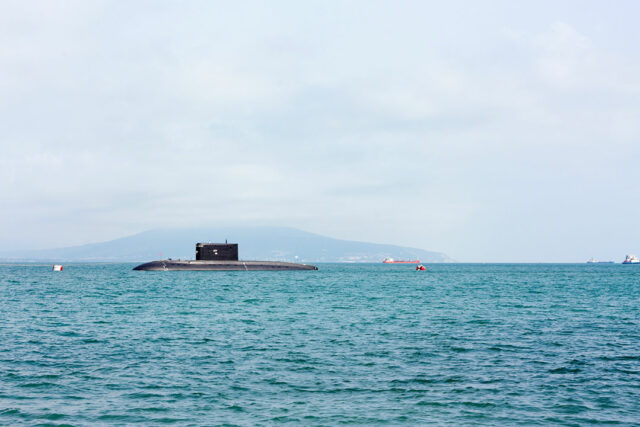
The incredible shrinking global sea powers

DANIIL ZAMESHAEV-UNSPLASH

THE OBVIOUS place to look if you want to understand the future is cyberspace — the birthplace of virtual worlds, artificial intelligence and other digital wonders. But we shouldn’t forget the case for keeping a watchful eye on something more elemental — the relative fortunes of land powers versus sea powers. Sages from Homer onwards have argued that land and sea powers generate different societies and we forget their wisdom at our peril.

Everywhere you look, land powers are on the march. Russia is trying to reassemble its old imperium by gobbling up first Crimea and now Ukraine. China has ingested the great seaport of Hong Kong and may be planning to do the same to the island of Taiwan. Brexit means that the European Union is more than ever a land-power: dominated by Germany and France and looking eastward towards land-locked Mitteleuropa. The United States, which has long flipped between being a land power and a sea power, is turning inwards once again.

This is bad news for the future of both free trade and liberty. Sea powers, most notably Great Britain, created both the institutional and intellectual infrastructure of a distinctively liberal form of capitalism: limited government at home and free trade abroad supported by innovative stock markets and powerful navies. Land powers, by contrast, pursued a more authoritarian road to modernity: overbearing governments, standing armies necessitating efficient tax systems, dirigiste economies, and, above all, a hunger for yet more land (at its most monstrous manifestation, Adolf Hitler’s lebensraum).

The founders of modern economic liberalism saw numerous links between open seas and open societies. Adam Smith argued that “water carriage” opens a more extensive market than “land carriage.” David Hume noted that merchants who “possess the secret of importation and exportation” check the power of the ancient nobility and “tempt other adventurers to become their rivals in commerce.” In the 16th century, England and another smallish seafaring nation, the Dutch Republic, became the world’s first capitalist powers. They both created powerful navies, ambitious merchant classes, sprawling empires, far-flung alliances and vital political philosophies — Hugo Grotius, John Locke — of global import.

The relationship between sea power and land power, and between both and liberty, was more nuanced than these great thinkers supposed. Spain had a powerful enough navy to challenge the British to a fight (the Armada of 1588 was repulsed as much by the weather as Francis Drake) and founded a giant empire in the Americas. Japan was a hermit kingdom until the late 19th century when it launched on imperial expansion in Asia and the Pacific.

The Atlantic world’s commitment to freedom was also nuanced. The Netherlands and Britain created vast overseas empires. British trading companies, particularly the Royal Africa Company, dealt in slaves. The navy’s detractors described ships as floating prisons that relied on press gangs to provide them with men — and rum and the lash to keep those men in order.

Yet qualifications don’t discredit the thesis. Spain was a highly centralized state that treated its South American territories as a source of gold to finance its military exploits on the European mainland rather than as a trading partner. Slavery and colonialism have been ubiquitous in human history. In 1807, Britain was the first country to abolish the slave trade within its territories and to use the might of its navy to enforce the abolition. And, for all their abuses, sea powers developed principles of limited government and secure property rights whereas prominent land powers, notably Russia and China, remain despotisms.

Britain’s history and culture are saturated in sea salt: many of the country’s greatest heroes were admirals (Horatio Nelson who still looks over central London from his column) and many of its greatest artists, notably J.M.W. Turner, focused on maritime themes. The British navy was known as “the Senior Service” to the army’s junior. The unofficial national anthem, “Rule Britannia,” was fully conscious that the country’s source of power came from ruling the waves.

The US was never as committed to the sea as Britain. It began life as a maritime power with its population concentrated on the north-east seaboard and its political elite soaked in the writings of Smith and Locke. In the 19th century it turned inwards, colonizing the vast interior, protecting its infant industries and steering clear of foreign entanglements. But in the late 19th century it turned outwards once again as it built its own navy, extended its commerce around the world, and renewed its links with Britain.

The US and Britain together twice prevented Europe from becoming a German province. During World War II, Winston Churchill and Franklin Roosevelt bonded in part over their shared naval experience — the US president was Assistant Secretary of State for the Navy in 1897-98 and the British prime minister was First Lord of the Admiralty in 1911-15. Seadog to seadog. The Atlantic Charter, which provided a joint declaration of Britain and America’s war aims on Aug. 14, 1941, was celebrated in an extraordinary religious service on the HMS Prince of Wales. Thereafter, Britain and America co-operated in re-founding the world on the basis of the liberal principles of free trade and rule-bound global institutions.

Victory, however, had its costs. While defeating the Axis, Britain lost about 280 major warships and 1,000 smaller ones like minesweepers. It was an astonishing demonstration of its continued naval prowess amid the decline of its empire but also a loss from which an exhausted power could never recover. Today, the UK scarcely has a fishing fleet, a shipbuilding industry, a merchant marine, or sailors. The Senior Service has suffered from merciless cuts. It is hard to see Britain sending a fleet to the South Seas to thwart an Argentinian invasion of the Falklands Islands as it did in 1982. The coastguard is locked in the endless job of rescuing refugees from the sea.

The US still has by far the world’s biggest navy. But it is nevertheless reverting to its old land-based habits. Joseph Biden has entrenched Donald Trump’s America First policies by reinforcing barriers to the export of strategic industries to China, focusing on promoting domestic manufacturing and national industrial strategies rather than global trade. Having played a leading part in creating the World Trade Organization, America is now sidelining or even undermining it. US culture is increasingly inward looking, focused on addressing domestic decay, which is understandable, or fighting toxic culture wars, which is less so. (Europe is now mimicking the US in subsidizing and protecting domestic manufacturers and turning its attention away from global trade.)

The critical shift in the balance of power is gathering pace elsewhere. China has the capacity to define the 21st century in the way that the US did the 20th. History and geography have conspired to make the Middle Kingdom a quintessential land power. The Emperor disbanded the country’s formidable navy in the 15th century and banned trading with the outside world. The government is based in the inland city of Beijing and has long been preoccupied by threats from marauders from the vast northern steppe, hence the Great Wall. The West once hoped that coastal provinces and cities — most notably Hong Kong — would pull the country towards freedom. Instead, the former British colony’s liberty has been crushed and the metropolis has gone from entrepot to garrison. The next great global clash may well be ignited should China try to conquer Taiwan.

China is allied to another great land power that stretches from Asia to Europe. In the 17th century, Peter the Great tried to reorient Russia to the West — and modernity — by building a navy and creating the port city of St. Petersburg. But, over the ensuing centuries, the enterprise failed spectacularly. Today Russia displays all the defects that have long been associated with land powers at their worst: an omnipotent state, a lack of private property rights, and an addiction to seeking power and prestige by acquiring land. Russia’s basic instinct is to extend its influence by marching into neighbors’ territories, but it is also extending its tentacles around the world, dispatching Wagner group mercenaries to Africa and using the proceeds of its mineral wealth to twist, subvert, or otherwise corrupt foreign institutions.

There have been dire consequences in the past when sea powers have been supplanted by land powers. Athens, the birthplace of democracy, declined rapidly after Sparta destroyed its navy at Aegospotami in 405 BCE. Venice pioneered limited government at home — the Doge was elected for life but required to take advice from a rotating council — while trading with all the known world. But it eventually sank into beautiful irrelevance. Its fate holds poignance for Britain. J.R. Seeley, one of the most influential 19th century historians, once dubbed Britain “a world Venice, with the sea for streets.”

One of the great 18th century politicians, Thomas Pelham-Holles, the first Duke of Newcastle, noted that Britain had no choice but to “consider the whole globe” because “every part of the world affects us.” Now, Britain can barely manage to look across the channel. It skitters from one geopolitical strategy to another — first joining Europe, then leaving it, and now feverishly searching for a place in a regionalizing world. The country’s departure from the EU has handed power to a Franco-German alliance — something that centuries of British foreign policy had tried to avoid — and reduced the size and sophistication of the free trade caucus in Brussels.

Many Brexiteers hoped to use the departure to construct an Anglosphere of culturally similar powers linked by similar maritime traditions — the United States, Canada, Australia, New Zealand — to function as a counterbalance to a land power future. But this has not happened. The AUKUS agreement, whereby Britain and the United States are helping to provide Australia with nuclear submarines, hardly compensates for the failure to create an Anglo-American trading deal.

A striking number of Britain’s seaside towns are moldering places like Clacton-on-Sea. They provided the Brexit-mongering UK Independence Party with its first footholds in British politics. British naval heroes have been moved from the center of school curriculums to the margins, mentioned, if they are mentioned at all, with a lecture on colonialism. University history departments have almost abandoned naval history.

The spirit that defined the buccaneering world of England’s Francis Drake is now finding new homes in cyberspace and outer space. Today’s pirates spend their time surfing the web rather than skimming the waves. Our contemporary adventurers finance flights to the moon and Mars rather than the East Indies. But will these they create a liberal culture in the way that the English and Dutch once did? China has broken the link between the web and liberty by building a Great Fire Wall and using the internet to spy on its people. Russia exerts its cyber prowess interfering in foreign elections and stirring up discord across the West.

The decline of sea power is clearly a tragedy for Britain. Over the coming decades, it is likely to prove just as tragic for the rest of the world.

BLOOMBERG OPINION