Home Blog Page 3576

Toyota agrees to biggest wage hike in 25 years in sign of Japan Inc’s big pay bump

Toyota Motor Corp’s logo is pictured on a car in Tokyo, Japan, Nov. 8, 2016. — REUTERS/KIM KYUNG-HOON/FILE PHOTO

 – Toyota Motor agreed to give factory workers their biggest pay increase in 25 years on Wednesday, heightening expectations that bumper pay raises will give the central bank leeway to make a key policy shift next week.

Toyota, Panasonic, Nissan and a number of other of Japan Inc’s biggest names said they had agreed to fully meet union demands for pay increases at annual wage negotiations that wrap on Wednesday.

The annual talks, long a defining feature of the usually collaborative relationship between Japanese management and labor, are being closely watched this year as the pay increases are expected to help clear the way for the central bank to end its years-long policy of negative interest rates as early as next week.

Toyota, the world’s biggest carmaker and traditionally a bellwether of the annual talks, said it agreed to the demands of monthly pay increases of as much as 28,440 yen ($193) and record bonus payments.

“We’re seeing strong momentum for wage hikes,” Chief Cabinet Secretary Yoshimasa Hayashi told reporters. “It’s important that the strong wage hike momentum will spread to small and mid-sized firms.”

Steelmaker Nippon Steel 5401.T also said it had agreed to union pay requests in full.

Economists see substantial wage increases as a prerequisite for the Bank of Japan (BOJ) to declare that its long-held goals of sustainable wage growth and stable prices are in sight and usher in an end to negative rates in place since 2016.

The bank, which has stuck with massive stimulus and ultra-low rates for years longer than other developed countries in an attempt to jumpstart a moribund economy, is set to hold its next policy setting meeting on March 18-19.

Workers at major firms have asked for annual increases of 5.85%, topping the 5% mark for the first time in 30 years, according to Japan’s biggest trade union grouping, Rengo. As a result, some analysts expect this year’s wage increases at 5% or more, from just under 4% previously. That would be the biggest increase in some 31 years.

Unions across industries, including automobiles, electronics, metals, heavy machinery and the service sector have all demanded hefty pay hikes. – Reuters

Russian nuclear-powered Losharik submarine to be tested in June or July after repairs, TASS reports

UNSPLASH

Russia’s AS-31 deep-diving nuclear powered submarine, known by its nickname as Losharik, will go out for testing in June or July after completing years of repairs, the state TASS news agency reported on Wednesday, citing an unnamed military source.

“The repair of Losharik is almost complete,” said the military source, who TASS said was close to the matter.

“After some remaining work, it is planned that it will go out for testing in June or July of this year.”

That vessel, which was launched in 2003 and is one of the most secret submarines in the Russian fleet, has been in repairs since 2019 when a fire on board killed 14 sailors.

After the accident, Russia’s defence ministry said the craft was nuclear-powered, but that the “nuclear elements” were fully isolated from the fire.

The source told TASS that after its repairs the vessel will retain the ability to dive to 6,000 meters (19,700 ft). TASS reported last year that the titanium hull of the submarine was not damaged, which ensures the vessel’s diving capacity.

After launching its full-scale invasion of Ukraine in 2022, President Vladimir Putin has made beefing up the country’s military capabilities a priority, saying Russia would continue to upgrade its nuclear forces and keep its combat readiness at a high level. – Reuters

Sports and music lessons for China’s kids in sharp decline as purse strings tighten

STOCK PHOTO | Image by Ann -- please donate from Pixabay

 – Last August, Zhang Zhaolin pulled her 10-year-old son out of soccer classes that he loved after she was laid off from her job at a Chinese internet firm.

Ms. Zhang, who had worked in livestreaming and was let go earlier in the year with dozens of other employees, said her family had to cut back on all unnecessary expenses given their monthly mortgage payments of 30,000 yuan ($4,200) for their apartment.

“We have savings but I’m not confident about finding another job with equivalent pay anytime soon or even if I will be able to find a new job ever,” the 41-year-old said.

Spending heavily on after-school activities was once par for the course for middle-class families who usually have just one child, but the world’s second-largest economy is in the throes of a crisis of confidence.

Companies have lost business due to trade tensions with the West and the property sector has been reeling under mountains of debt. The year began with a stock market rout, concerns abound that deflation may become entrenched and consumer confidence is hovering near record lows.

That’s had a devastating impact on schools and clubs offering activities like soccer, swimming, piano and dance with many having closed.

Piano teacher Liu Hongyu has seen her number of students more than halve since starting her Beijing school six years ago and frets more will quit.

When times were good in 2018 she employed two full-time and two part-time teachers for 70 students. After demand plummeted with the pandemic and continued to weaken, she shifted to smaller cheaper premises and now has just two part-time teachers.

“My worry is whether the 30 students we have now will renew their classes after they finish the classes already paid for,” she said.

Parents have also become reluctant to pay for long sets of lessons in advance, concerned about their own financial security and conscious that many schools have gone bust.

“Now, I have to accept that parents pay for one class at a time,” added Ms. Liu, who charges 300-350 yuan ($40-$48) per lesson.

Tellingly, the cutbacks on extracurriculars come at a time when parents, in theory, should have seen a steep drop in education-related costs.

In 2021, authorities cracked down on the private-sector tutoring industry – seeking to lessen the amount of homework given to students and to rein in the sky-high costs of education. China is the second most expensive place to raise a child after South Korea, according to Beijing-based YuWa Population Research Institute.

The crackdown has all but abolished extra classes for academic subjects although the option of tutoring at home is still allowed.

But while extracurriculars like music, dance and sport were not targeted by regulators, they’ve been hit hard by the unintended effects of the new policy.

Schools in many districts have now been ordered to stay open longer so that students have somewhere to go because private tutoring schools have closed. There are no formal classes but kids can do homework during that time.

That means families with two full-time working parents who once may have opted for after-school lessons to keep children occupied can choose to do fewer classes or none.

“Students are now at school till 5:30 p.m. at many schools whereas before they would finish at about 3:30 p.m. … there’s hardly any time for sports or arts classes,” said He Baosong, a coach at a swimming club in downtown Beijing.

China’s education ministry did not respond to requests for comment on the impact of the crackdown on sports and music schools.

He said many swim schools had closed and the school where he worked was losing about 200,000 yuan ($27,800) per month.

“The economy is really weak. It’s not just my club, every swimming club or rather every club in sports or the arts is like this,” he said. –  Reuters

SFA Semicon Philippines to hold 2024 Annual Stockholders’ Meeting on April 26 via Zoom


Spotlight is BusinessWorld’s sponsored section that allows advertisers to amplify their brand and connect with BusinessWorld’s audience by publishing their stories on the BusinessWorld Web site. For more information, send an email to online@bworldonline.com.

Join us on Viber at https://bit.ly/3hv6bLA to get more updates and subscribe to BusinessWorld’s titles and get exclusive content through www.bworld-x.com.

Trade gap shrinks to $4.2B in Jan.

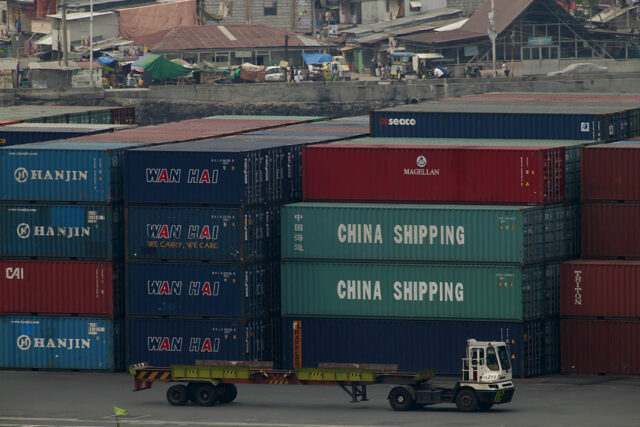
Container vans are seen inside the Manila South Harbor, Metro Manila. — REUTERS

By Abigail Marie P. Yraola, Deputy Research Head

THE PHILIPPINES’ trade deficit in goods narrowed sharply in January, as exports returned to positive territory while imports growth contracted, the Philippine Statistics Authority (PSA) reported on Tuesday.

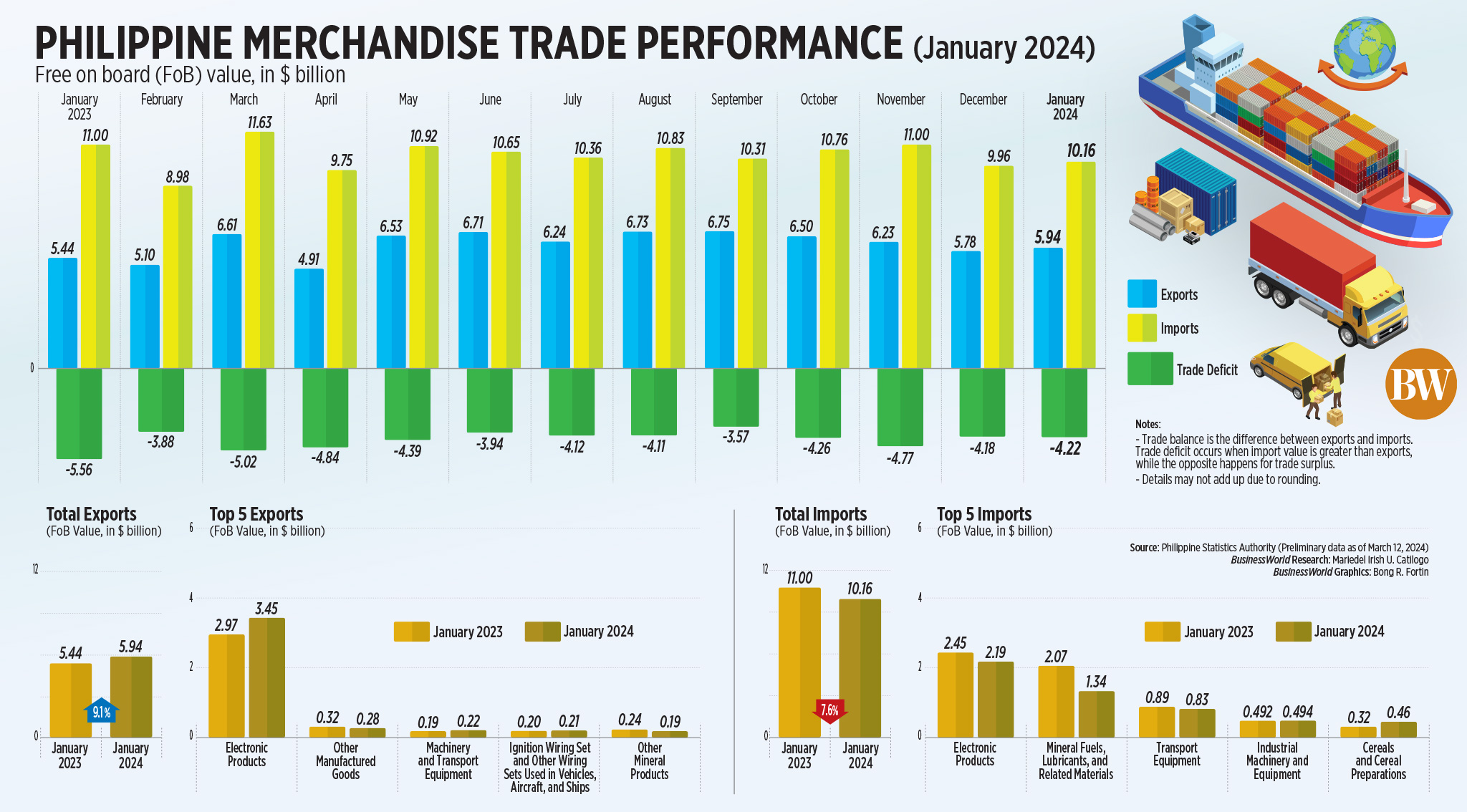
Preliminary data from the PSA showed the country’s trade-in-goods balance — the difference between exports and imports — reached a deficit of $4.22 billion in January, 24% smaller than the $5.56-billion deficit in January last year.

Month on month, the trade gap ballooned from the revised $4.18 billion in December.

Philippine Merchandise Trade Performance (January 2024)

January saw the widest trade deficit since the $4.77-billion gap in November 2023.

Total outbound sales of the country’s goods rose by 9.1% year on year to $5.94 billion in January, a turnaround from the 10.6% decline in the same month last year and the 0.5% dip in the previous month.

January ended four straight months of exports decline and marked the fastest growth in 14 months or since the 14.1% in November 2022.

Meanwhile, merchandise imports fell by 7.6% year on year to $10.16 billion in January, a reversal of the 4.2% growth a year earlier and a sharper drop than the -3.5% in December.

The imports decline was the biggest in four months or since the 14.1% decline in September 2023.

The Development Budget Coordination Committee (DBCC) projects a 5% and 7% growth in exports and imports, respectively, this year.

“Goods exports were boosted by higher semiconductor exports, which grew both sequentially and annually given the turn in the chip cycle and support from the AI (artificial intelligence) demand,” Makoto Tsuchiya, economist from Oxford Economics Japan, said in an e-mail.

Outbound shipments of manufactured goods in January, which accounted for 81.4% of total exports, grew by 10.5% year on year to $4.83 billion. 

Electronic products, which accounted for 58.2% of the manufactured goods or more than half of total exports, rose by 16.3% to $3.45 billion.   

Semiconductors, which made up 45.5% of the total, jumped nearly 20% to $2.7 billion in January.

“Electronics, the country’s largest export segment, showed a stronger recovery. This outturn was in line with positive trends in the global semiconductor industry, where technology bellwethers Taiwan and South Korea have also experienced improved export performance due to strong chip demand,” China Banking Corp. (China Bank) said in a research note.

However, ANZ Research economists Debalika Sarkar and Sanjay Mathur said the rebound in exports was mainly driven by favorable base effects.

“The base effect lift to exports was particularly evident in the electronics segment, which accounts for close to half of overall exports,” they said in a research note.

They added that even if the growth is impressive, export levels remained almost unchanged wherein the lack of improvement in level data makes them less confident about the real strength of the export recovery.

This also showed that the relationship between the Philippines’ semiconductor exports and the global technology cycle is weakening.

The United States was the main destination of Philippine-made goods in January as exports amounted to $902.33 million or 15.2% of the total exports that month.

Other top export trading partners include Japan, which accounted for a 14.6% share or $869.25 million, and Hong Kong with 12.8% or $761.08 million.

IMPORTS CONTINUE TO DROP
Robert Dan J. Roces, chief economist at Security Bank Corp., said in an e-mail that the imports decline in January can be attributed to “lower global commodity prices or a slowdown in domestic spending.”

The Philippines’ importation of raw materials and intermediate goods slipped by 5% to $3.73 billion in January. This segment accounted for 36.8% of the January import bill.

Imports of capital and consumer goods were valued at $2.95 billion (down 6.5%) and $2.09 billion (up 15.8%), respectively.

“The persistent decline in imports of capital goods and of raw materials and intermediate goods remains an area of concern for the economy, as it reflects businesses’ hesitance to invest in items that would contribute to economic productivity,” China Bank said.

Mineral fuels, lubricants and related materials plunged 35.4% to $1.34 billion in January from $2.07 billion a year earlier.

China remained the country’s biggest source of imports with a 26.1% share worth $2.65 billion. Japan trailed with a 7.8% share ($789.36 million) and Indonesia with a 7.7% share ($779.13 million).

Looking ahead, Mr. Tsuchiya expects exports growth to remain weak due to the expectations of a slowing global economy, which will put pressure on overall external demand.

“On the other hand, elevated interest rates and lower investment demand will weigh on capital goods,” he said.

Mr. Roces said it’s still too early to predict if the exports growth and imports decline seen in January will continue “given the possibility of market volatility due to various central banks globally preparing to unwind rates.”

China Bank said it expects a further recovery in exports, particularly semiconductors, in the second semester.

“Going forward, firm private consumption, government’s infrastructure spending and existing food supply issues in the domestic economy will provide a floor to imports. In combination with a tentative recovery in exports, we do not expect a material reduction in the trade deficit this year,” ANZ Research said.

US wants to help PHL double the number of its chip-making plants

US Commerce Secretary Gina Raimondo speaks during a press conference in Parañaque City, Metro Manila, March 11, 2024. — REUTERS

By Justine Irish D. Tabile, Reporter

AMERICAN COMPANIES are looking to invest in the Philippines’ semiconductor industry with the aim of doubling the number of existing packaging, testing, and assembly facilities, the US Department of Commerce said on Tuesday.

“The US companies realized that our chip supply chain is way too concentrated in just a few countries in the world,” US Commerce Secretary Gina M. Raimondo told a business forum in Makati City on Tuesday.

“Why do we allow ourselves to buy so many chips from only one or two countries? That is why we need to diversify. And that moment is now, and that is an opportunity for the Philippines,” she added.

The Philippines currently has 13 semiconductor assembly, testing, and packaging facilities.

“Let’s double it (the number of facilities). It’s now the moment for growth. Your country has the talent; you have the expertise,” Ms. Raimondo said.

She said the Philippines is at the top of the list for companies looking to diversify and make their supply chains more resilient.

“What do companies want? Democracy, which you have, rule of law, transparency, anti-corruption, reasonable regulations, and also talent,” she said.

Department of Trade and Industry (DTI) Undersecretary and Board of Investments Managing Head Ceferino S. Rodolfo said that Ms. Raimondo’s target of doubling the number of facilities is “doable.”

“This is doable. In fact, our objective is to produce 120,000 (engineers) for the semiconductor industry. So, it’s really anchored on talent development, and even the (US) Presidential Trade and Investment Mission said that the most important attraction of the Philippines is talent,” Mr. Rodolfo said in mixed English and Filipino.

“That is why there is a clear need for skilling and upskilling… those are the things that we must give our attention to,” he added.

The Philippines is one of seven countries that the US is partnering with to diversify its semiconductor supply chain under the CHIPS and Science Act.

Under the law, the US will provide $52.7 billion in federal subsidies to support chip manufacturing and persuade chipmakers with operations in China to relocate to the US or other friendly countries.

“But more than the funds, it’s access to the technical expertise that is important,” Mr. Rodolfo said.

However, American Chamber of Commerce of the Philippines, Inc. Executive Director Ebb Hinchliffe said that the cost of power remains a challenge in making the Philippines an attractive destination for investments in the semiconductor sector.

“The biggest obstacle is the cost of energy and consistent power. You can’t have a wafer factory or a semiconductor factory to go on and off, because that could cost you a million dollars,” Mr. Hinchliffe said.

“So, energy consistency and constant feed are very critical, and the cost of energy remains high. But DTI has taken steps now to let you have a rebate on your income tax if you invest a certain amount to help you cover your energy costs. So all those are very positive steps,” he added.

Electronic products are the Philippines’ top exports in January accounting for 58.2% or $3.42 billion of the total exports.

Last year, the country’s total electronic product exports totaled $41.9 billion, accounting for 57% of the country’s total exports.

MORE PARTNERSHIPS
Ms. Raimondo led a US Presidential Trade and Investment Mission, composed of executives from 22 US companies that have pledged to invest over a billion dollars in the country.

Some members of the trade mission announced partnerships with the Philippine government and local companies on the sidelines of the business forum on Tuesday.

One of the partnerships announced is with UltraPass ID, which signed a memorandum of understanding with the Department of Budget and Management (DBM) and NOW Corp.

“The expectations will be that we will embed inside existing applications and introduce another layer of login,” said Eric Starr, co-founder and chief executive officer of UltraPass ID.

“In the case of DBM, we will be using biometrics as a form of multi-factor … It introduces a much higher degree of security and authentication,” he added.

Scott McHugh, chief executive officer and chairman of the board of Sol-Go, Inc., said that the company plans to expand its operations in the country.

“We will expand it this year and increase the capacity of the factory by three times, so the personnel count will probably go up to about 30 people, and then we still have the capacity to expand by another three times,” Mr. McHugh said.

At present, he said that the 2,200-square-meter facility located in LIMA Estate has the capacity to produce 15 megawatts, which they will expand to 50 megawatts this year.

“In total, we invested in this factory somewhere around $500,000; we need to add around $200,000 to get to 50 megawatts, and to get to 150 megawatts, we will need probably around $5 million,” he added.

On Monday, the Asian Development Bank, Apl.de.Ap Foundation International, and Legacy EV, LLC signed a memorandum of understanding aiming to foster cooperation in clean mobility and e-vehicle training programs.


‘Temperature shock’ poses persistent inflation risk

A dry field is seen in Bulalacao in Oriental Mindoro, which has been placed under a state of calamity due to the severe damage caused by the El Niño weather phenomenon. — PHILIPPINE STAR/EDD GUMBAN

By Luisa Maria Jacinta C. Jocson, Reporter

RISING TEMPERATURES and climate shocks such as the El Niño weather event could fan inflationary pressures and reduce economic output growth over the next few years, according to a study by economists at the Bangko Sentral ng Pilipinas (BSP).

In a discussion paper titled “Macroeconomic effects of temperature shocks in the Philippines: Evidence from impulse responses by local projections,” BSP economists said the inflationary effect of temperature shocks was “significantly” persistent up to the fourth year after a shock.

“A 1-degree Celsius increase in annual mean temperature leads to persistent inflationary pressures up to four years, with a cumulative increase of 0.77 percentage point (ppt) in headline inflation after the initial shock,” they said.

The paper, authored by BSP Monetary Policy Research Group economists Jean Christine A. Armas, Ranelle Jasmin L. Asi, Dyan Rose L. Mandap, and Gabrielle Roanne L. Moral, also showed that the effect of temperature shocks could increase headline inflation by 0.46 ppt in the short term and up to 0.81 ppt in the long term.

The study also showed that El Niño Southern Oscillation (ENSO) events also stoke inflation.

“Short-term inflationary effects of temperature shocks on headline, food, and non-food are deeper in magnitude at 0.49 ppt, 0.69 ppt, and 0.49 ppt, respectively, when we incorporated dummy variables for episodes of ENSO events,” the BSP economists said.

The Philippines is currently in the midst of an El Niño weather event, which has caused dry spells that disrupted agricultural output and fueled food inflation. El Niño is expected to persist through the second quarter.

Headline inflation accelerated for the first time in five months to 3.4% in February as prices of food continued to rise. Rice inflation, which accounts for almost half of the headline print, surged to 23.7% in February — the fastest since the 24.6% in February 2009.

The BSP earlier said that inflation could temporarily accelerate above the 2-4% target range in the second quarter due to the “adverse impact of El Niño weather conditions on agricultural production and positive base effects.” The BSP expects inflation to average 3.6% this year.

In the study, BSP economists noted that temperature shocks more heavily impact the prices of food over non-food.

“Disaggregating the components of consumer prices, the results show that the inflationary impact of temperature shocks on food prices is deeper in magnitude and long-lasting in period at 0.79 ppt vis-a-vis the effect on non-food prices, which is rather small at 0.31 ppt and transitory up to 2 years only,” they said.

The BSP study also showed that inflationary effects from temperature shocks are more prevalent in Luzon.

“In the case of Luzon, where most of the regions are predominantly agricultural and have various industries including food processing and machinery production, temperature shocks affect the level of output in key production sectors, resulting in deeper magnitude of the inflationary effect,” they said.

Temperature shocks can also reduce economic growth.

“We find that, on the average, the short-run marginal impact of a 1-degree Celsius increase in the country’s annual mean temperature reduces aggregate output growth by 0.37 ppt,” the BSP economists said.

“The decline in output growth is larger at 0.47 ppt when we control for episodes of ENSO events vis-à-vis the 0.3 ppt drop in output growth after controlling for the occurrence of floods and storms.”

The study also showed that manufacturing and services sectors are “negatively affected” by an increase in mean temperature.

“However, we find that temperature shocks do not significantly affect labor productivity in heat-exposed industries such as construction, transportation, and manufacturing,” it added.

The study said that central banks will play a crucial role in managing the impact of climate change on price stability.

“On the one hand, the inflationary effects of temperature shocks in the short run are best addressed by the timely implementation of non-monetary policy interventions since monetary policy adjustment typically works with a lag,” they said.

“On the other hand, if inflation remains persistent and evidence of second-round effects materialized, the central bank will respond and adjust its policy interest rates accordingly.”

DBCC may revisit growth targets — Balisacan 

The skyline of Parañaque City is seen during sunset, March 7, 2024. — RUSSELL PALMA, THE PHILIPPINE STAR

THE DEVELOPMENT Budget Coordination Committee (DBCC) has a “good case” for revisiting its growth targets for this year amid a weaker global economic outlook, National Economic and Development Authority (NEDA) Secretary Arsenio M. Balisacan said on Tuesday. 

“When we were preparing our assumptions, forecast and growth programs in the last quarter of last year, we were working on the assumption that the global economy would recover from its downturn in 2023. Now, IMF (International Monetary Fund) and many other organizations are saying that it’s likely to continue to slow down further,” he told a media briefing in Pasig City.

Last December, the DBCC narrowed its gross domestic product (GDP) growth target to 6.5-7.5% from 6.5-8% previously. The Philippine economy grew by 5.6% in 2023, falling short of the DBCC’s 6-7% goal for the year and slower than the 7.6% expansion in 2022.

But since the start of 2024, Mr. Balisacan said the global economy has not been growing as much as earlier expected. According to the IMF, global growth is projected at 3.1% this year, but risks remain.

“In other words, it’s less robust. It’s more anemic the global growth than was initially expected,” he said.

The NEDA chief said the Philippine economy is also facing challenges from the El Niño weather phenomenon, inflation and high interest rates.

The El Niño phenomenon has been affecting agricultural production, with the weather bureau expecting it to last until the second quarter of the year.

Last month, the Philippine central bank kept the key rate at 6.5% — the highest in nearly 17 years — for a third straight meeting. The Bangko Sentral ng Pilipinas (BSP) has raised policy rates by 450 basis points (bps) from May 2022 to October 2023 to tame inflation.

For the first two months of 2024, headline inflation averaged 3.1%. The BSP expects inflation to average 3.6% this year.

Mr. Balisacan said there is a “good case” for revisiting the macroeconomic assumptions and targets, but they would still have to wait for the release of the first-quarter GDP data on May 9.

“But even if we set it from the range of 6.5-7.5%, to say 6-7%, that’s still to us, a good range. I think for this year, I’m okay with the 6-7% [target], it’s very much achievable,” he said.

Last month, Finance Secretary Ralph G. Recto said the government might have to adjust its fiscal targets for the year to be “more realistic.”

Most multilateral institutions’ Philippine growth forecasts do not meet the lower end of the DBCC’s target range for 2024, including the World Bank (5.8%), the International Monetary Fund (6%) and the Asian Development Bank (6.2%). — B.M.D. Cruz

CCP brings Metropolitan Opera to the big screen

DER ROSENKAVALIER - BRONTE LACSAMANA

FOR the 9th time, productions by the Metropolitan Opera in New York City will be screened at Ayala Malls’ Greenbelt 3 in Makati City, giving Filipinos access to a powerful art form from the West.

Seven operas were chosen for this edition of the Cultural Center of the Philippines’ (CCP) “The Met Live in HD” program.

Richard Strauss’ Der Rosenkavalier opened the season on March 5. First premiered in 1911, Strauss’ most popular opera follows a wise woman of the world involved with a much younger lover. She is later forced to accept the laws of time and give him up to a pretty young heiress.

“These are splendid operas that we don’t often get to see, so it is our hope that people will make it a habit to come here every first Tuesday of the month to enjoy an opera on the big screen,” CCP artistic director Dennis Marasigan said at the opening event.

This production of Der Rosenkavalier is set apart by the director Robert Carsen’s choice to transport the story from the mid-18th century to 1911, while staying true to the image of an idealized Vienna.

Soprano Lise Davidsen as the aging Marschallin was the stand-out, portraying the mature yet quietly tortured energy of a mid-life crisis in a luminous, operatic manner.

The tragic yet comical tale also came to life thanks to mezzo-soprano Samantha Hankey as the boyish lover Count Octavian, soprano Erin Morley as the beautiful young heiress Sophie, bass Günther Groissböck as the boorish Baron Ochs, and, of course, Strauss’ glorious score with Maestro Simone Young at the reins.

While Der Rosenkavalier is in German, and many other operas in Italian, the “Met Live in HD” screenings are provided with subtitles.

This show lasted four hours, but there were three 15-minute intermissions. During the intermissions, behind-the-scenes tidbits filmed by the Metropolitan Opera were shown, from singers rehearsing and production designers setting up, to the animal wranglers preparing the dogs that would go on stage for a brief scene.

“Met Live exists because opera is a fascinating, educational experience. We want it to be more accessible to Filipino audiences,” Mr. Marasigan said.

The upcoming productions to be screened this season are: Giuseppe Verdi’s Nabucco on April 2; Georges Bizet’s Carmen on May 7; Anthony Davis’ X: The Life and All Times of Malcolm X on June 4; Giuseppe Verdi’s La Forza del Destino on July 2; and Jake Heggie’s Dead Man Walking on Aug. 13.

All screenings are scheduled at 5:30 p.m. at Ayala Malls’ Greenbelt 3 Cinema 1 in Makati City. Regular tickets are priced at P450 while students get a discounted price of P100.

Tickets are available at Greenbelt ticket booths and via sureseats.com. — Brontë H. Lacsamana

Fil-Aussie artist wins award

FILIPINA-Australian artist Marikit Santiago speaks during the announcement of the 2024 La Prairie Art Award, at the Art Gallery of New South Wales, in Sydney, on March 12.

She won for two works, A Seat at the Table (Magulang) and A Seat at the Table (Kapatid). The award — a partnership between the Swiss luxury skincare house La Prairie and the Art Gallery of New South Wales — includes an international art residency, the acquisition of the artworks by the gallery, and attendance at the Art Basel art fair in Switzerland as a guest of La Prairie.

The Sydney-based artist is a three-time Archibald Prize finalist (2016, 2021, 2023). She won the 2020 Sir John Sulman Prize at the Art Gallery for a portrait of her three children. — Reuters

The Filipino woman comes alive in Limang Daan

Ballet Review
Limang Daan
Ballet Philippines

By Brontë H. Lacsamana, Reporter

THE CLOSING production of Ballet Philippines’ (BP) 54th performance season was held on International Women’s Day, and there was no better way to mark the occasion than with Limang Daan. It’s an ambitious ballet — full-length, completely original, and spanning 500 years of Filipino women’s history.

It is “a gritting tribute to the indomitable spirit of the Filipina, the women in this country, in honor of their journey, their triumphs and adversities, their joys and their struggles,” said BP president Kathleen Lior-Liechtenstein in a speech during the March 8 gala at the Theatre at Solaire.

Limang Daan is our way of celebrating our long-gone as well as our modern-day heroines who made the Philippines the most gender-equal country in Asia and the 16th in the world,” Ms. Lior-Liechtenstein said.

She also thanked the audience for continuing to support BP in this world premiere, right before it turns 55 years old in April.

Loosely inspired by a short dance film that BP produced with Salcedo Auctions in 2022, Limang Daan marks the triumphant milestone. The two-minute source material showcases stunning art and culture representing the Philippines’ colonial history, and this full ballet builds on that.

It follows several women and their individual struggles over the course of 500 years, drawing parallels between their oppression and their attempts to fight back.

There was a modern-day Filipina nurse in a foreign country, working tirelessly while facing sexual advances from a male doctor. There was an Igorot woman, an unwilling participant in the 1904 St. Louis’ World’s Fair which inhumanely put people on display at their “human zoo.”

Then there was a babaylan (shaman), represented by a masculine body in feminine robes, a figure of faith and non-conformity. One of the most moving numbers in the entire production was hers, as she tried to endure being stamped out by the Spaniards bringing Christianity to the Philippines.

A stroke of genius was how colonization was depicted through the priests brainwashing the locals by using a golden mirror. They thrust the mirrors in front of the native Filipinos’ faces to show them how barbaric they are, causing all of them, even the babaylan, to visibly recoil from their own reflections.

Three Cordillera women, full of joy and energy, come after that harrowing scene. They appeared to be from within the last 50 years as the outsiders they deal with are also Filipino, gesturing to the land as theirs to mine, to which the women express outrage and drive them away.

Finally, there was the typical Maria Clara figure, at first shown in a romance with Ibarra despite the disapproval of the controlling Padre Damaso. Later there was a nun, reminiscent of her character nearing the end of her life, being repressed in a convent ruled by a cruel Mother Superior.

The ballet begins with all these characters in boxes, and it ends with them all leaving these boxes and interacting, expressing their thoughts and feelings with each other through dance.

A first-time librettist, filmmaker Moira Lang was able to pick out specific female perspectives to effectively paint vivid brushstrokes of colonial history.

The original score by Erwin Romulo and Malek Lopez was transportive as it incorporated traditional instruments, orchestral music, and electronic sound to signify the changes in time and place.

JC Buendia’s costume design was stunning, allowing the graceful, powerful dancers full mobility. Most importantly, the designs evoke the right looks and silhouettes from the time periods they were meant to represent.

The choreography by BP’s artistic director Mikhail “Misha” Martynyuk left the audience in awe. Limang Daan explores many feelings — anger, faith, despair, strength — and he choreographed all of that to be evident to the naked eye, even as we jumped back and forth from one story to another.

While these women’s struggles came across as disjointed vignettes, the way the dancers were writhing in pain yet trying to resist outside forces in their respective situations highlighted a visceral underlying thread — one of colonial history.

All the audience had to do was listen to the raw emotions spoken through dance.

JFC allots P20-23B for capex, targets to open 700-750 stores

REUTERS

JOLLIBEE FOODS Corp. (JFC) is allocating P20-23 billion for its capital expenditure (capex) budget for 2024 as it plans to open 700 to 750 new stores, the listed fast food giant announced on Tuesday.

“Funding for the 2024 capex will come from JFC’s internally generated funds, issuance of preferred shares, and bank loans,” the company said in a regulatory filing.

The budget covers expenses for “new stores and renovations, construction of a new commissary in Cebu, maintenance of existing commissaries, main office improvements, and investments in technology,” it added.

The company opened 658 stores and expanded its store network by 6.3% annually to 6,885 by the end of 2023, JFC also said.

For 2023, the company saw 16% increase in its attributable net income to P8.77 billion due to stronger revenues.

The higher net income came as the company’s revenue grew by 15.2% to a record high of P244.11 billion last year, JFC Chief Executive Officer Ernesto Tanmantiong said.

“Overall system-wide sales for 2023 grew by 16.3% to P345.3 billion, driven by a 10.6% growth in same store sales and 5.4% from new stores,” he said.

“Our full year 2023 results reflect the strength of our execution and resiliency of our brands,” he added.

He said the company’s Philippine business saw a 17.6% growth in system-wide sales, while its international business rose by 14.4%. 

The company’s transaction volume increased by 8.2%, while the average check surged by 5.2%. Operating profit rose by 45% to P14.4 billion.

“Notably, our Jollibee brand, which has over 1,600 stores globally and accounts for 49% of JFC’s system-wide sales, grew by 18.5% in 2023,” Mr. Tanmantiong said.

JFC projected that its system-wide sales growth could range from 10% to 14% this year, while same-store sales growth could reach 5% to 7%, and the store network could expand by 7% to 8%. Operating profit is forecasted to grow by 10% to 15%.

To achieve the company’s targets, Mr. Tanmantiong said that JFC will focus on the global expansion of its Jollibee brand as well as the growth of its coffee and tea business.

Some of JFC’s coffee and tea brands include The Coffee Bean & Tea Leaf (CBTL), Highlands Coffee, and Common Man Coffee Roasters.

JFC will also concentrate on expanding into multiple lower-tier cities across China and maintaining strong growth and market leadership in the Philippines, Mr. Tanmantiong said.

“We will ramp up franchising to support our global expansion. We will also accelerate our digital transformation and bring capabilities on-par with global quick service restaurant leaders to increase operational efficiency and further improve customer experience and revenue management,” he added.

Of JFC’s 3,546 international stores, 567 are in China, 389 in North America, 337 in Europe, the Middle East, and Africa, 779 under Highlands Coffee mainly in Vietnam, 1,164 under CBTL, and 310 under Milksha.

The company has 3,339 stores in the Philippines.

JFC’s largest brands by store outlets worldwide are Jollibee at 1,660, CBTL at 1,164, Highlands Coffee at 779, Chowking at 613, and Mang Inasal at 573.

On Tuesday, JFC shares improved by 0.77% or P2 to P262 apiece. — Revin Mikhael D. Ochave