Home Blog Page 264

Detained journalist in terror financing case denied bail

A TACLOBAN City court has denied the petition for bail filed by detained journalist Frenchie Mae C. Cumpio and lay worker Mariel A. Domequil following their recent conviction for terrorism financing.

Judge Georgina Uy Perez of the Tacloban Regional Trial Court Branch 45 denied the joint motion for bail for lack of merit, according to an order dated Feb. 13. It added that a temporary release creates a “heightened incentive to evade custody.”

“The seriousness of terrorism financing, the substantial penalty imposed, and the accused’s connections to various organizations weigh heavily against the grant of bail pending appeal. These considerations outweigh the interest of the accused in provisional liberty,” the order read.

Ms. Cumpio and Ms. Domequil were sentenced on Jan. 22 to 12-18 years in prison and fined P500,000 each. They sought bail after being cleared of separate explosives charges, saying the law doesn’t bar them from release.

The National Union of Journalists of the Philippines (NUJP) said in a statement that the denial is “unfortunate and unfair,” stating that each day in jail separates Ms. Cumpio from her family and the community whose issues she reported on.

“The National Union of Journalists of the Philippines stands with them through the next stages of this legal battle and until their eventual and much deserved freedom,” the NUJP said. — Erika Mae P. Sinaking

Strong tremblor jolts Ilocos Sur

VIGAN CITY, Ilocos Sur — A magnitude 5.0 earthquake hit various towns in Ilocos Sur and areas as far as Bontoc in Mt. Province and La Union towns on Monday morning.

State-run Philippine Institute of Volcanology and Seismology (PHIVOLCS) said the quake struck at 9:36 a.m. at a depth of 10 kilometers. Its epicenter was located about 49 kilometers south 81 degrees west of San Esteban, Ilocos Sur.

PHIVOLCS said the earthquake was tectonic in origin.

Instrumental Intensity III was recorded in the City of Vigan, Ilocos Sur. Intensity II was felt in the City of Candon in Ilocos Sur, as well as Santol in La Union and Bontoc in Mountain Province.

Intensity I was recorded in Narvacan, Ilocos Sur and Aringay, La Union.

These lower intensity levels mean the shaking was weak and felt by only a few people in some areas.

There were no immediate reports of damage or injuries. — Artemio A. Dumlao

Lanao del Sur residents surrender 23 combat weapons to Army

COTABATO CITY — Residents of four towns in Lanao del Sur on Saturday surrendered 23 combat rifles and other firearms in support of a disarmament program of the military and the Office of the Presidential Adviser on Peace, Reconciliation and Unity.

The weapons cache that residents of Lanao del Sur’s Lumba Bayabao, Taraka, Tamparan and Mulondo towns turned over to the 5th Infantry Battalion (IB) is comprised of a B40 anti-tank rocket, four M-79 grenade launchers, four long-range bolt-action sniper rifles, a 5.56 M4A1 rifle, a 5.56 R4A3 rifle, a .30 caliber Browning Automatic Rifle, which is more known as the vintage BAR, two .30 caliber M1 Carbine rifles, two 9 millimeter KG 9 machine pistols, a 9 millimeter Ingram machine pistol and six 12 gauge shotguns.

Army Lt. Gen. Donald M. Gumiran, commander of the Western Mindanao Command, told reporters on Monday that the combat weapons were surrendered by owners to the 5th IB in compliance with the Small Arms and Light Weapons Management Program, or SALW Management Program.

“We are very grateful to all who helped us workout the surrender of those firearms by the residents of the four municipalities,” Mr. Gumiran said. — John Felix M. Unson

Data center boom expected to help accelerate RE growth

STOCK PHOTO | Image by Wirestock from Freepik

THE rapid expansion of data center capacity in the Philippines is expected to spur renewable energy (RE) development, provided that hubs are strategically located to connect with renewable sources, according to the Institute for Climate and Sustainable Cities (ICSC).

“By co-locating data centers with renewable energy zones, the Philippines can anchor demand where clean power is generated, creating a bankable market for renewable projects, and advancing the national energy transition,” the ICSC said in a report on Monday. 

Philippine data center capacity could hit 1.5 gigawatts by 2028 as more operators set up facilities in the Philippines starting this year, the Department of Information and Communications Technology (DICT) has said.

According to the Manila-based think tank, rising data center demand in the Philippines highlights the need for strategic planning between the energy and digital infrastructure sector.

The scale and energy needs of data centers can overload substations, stress transmission lines, and intensify grid congestion if clustered without adequate planning, it said.

“Strategic integration transforms this growth from a potential source of grid stress into a catalyst for clean power deployment and economic opportunities,” the ICSC said, noting that data centers are likely to expand the digital economy.

“The path forward is clear. The Philippines must move from siloed to synergistic planning, treating data centers as a strategic asset for its grid, not just a load on it. By anchoring this new digital demand to renewable energy zones, the country can secure investment, accelerate its energy transition, and build a resilient, high-value economy fit for the decades ahead.”

It said that data centers can also disrupt existing manufacturing, semiconductor, and industrial operations concentrated in Greater Metro Manila if data center siting is not properly planned.

“For the country’s industrial strategy to succeed, data center growth must not come at the expense of existing sectors. Therefore, proactive site selection and adherence to stringent grid standards are crucial,” it said.

The Philippines has sufficient renewable energy to meet the power requirements of data centers, the ICSC said, adding that rooftop solar and offshore wind energy sources can be tapped to supply their energy needs.

However, the ICSC said that some transmission expansion plans may not be able to accommodate offshore wind development and could lead to stranded capacity if grid upgrades are not fully aligned with expansion.

“Bringing large data center demand to high-RE potential areas could be an opportunity to reduce RE curtailment rates and the need for extensive transmission projects. ICSC recommends co-zoning data centers with renewable energy hubs, mandating green power procurement, and integrating data centers into transmission planning,” it said.

The top data center operators, particularly ST Telemedia Global Data Centres (STT GDC) Philippines and VITRO, Inc. utilize renewable energy to power their data centers. — Ashley Erika O. Jose

Bidding for Maharlika Highway rehabilitation targeted for May; construction by June or July

DPWH.GOV.PH

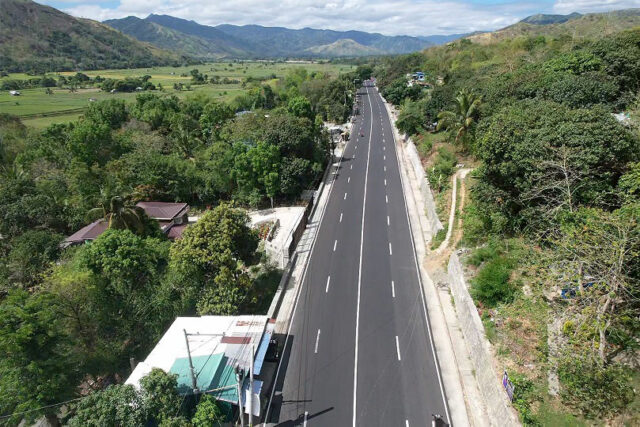
THE Department of Public Works and Highways (DPWH) said it hopes to start the bidding process for the rehabilitation of the Maharlika Highway in May, with construction due to start by June.

Public Works Secretary Vivencio B. Dizon said in a briefing on Monday that the timetable was set with an eye towards minimizing disruption for the Easter travel period.

The DPWH’s rehabilitation plan includes an initial phase of removing obstructions, undertaking clearing works and completing temporary patches of uneven road surfaces before Easter.

“Our target is to be as free from obstruction as soon as possible… By April or May, I think we can start the bidding,” he said.

Mr. Dizon said the procurement process and plan are being finalized.

“Only big contractors can join the bidding….  rehabilitation will begin, I think a month and a half after that, maybe around June or July. The plan for the most problematic areas of Maharlika is being ironed out right now,” he said.

The DPWH has also engaged foreign consultants to help design the rehabilitation plan, to ensure that suitable new technologies can be incorporated in the build to ensure the new road complies with international highway standards.

“I do not mean to demean small contractors. But for major highways like Maharlika,  we have to use modern technology. The problem is, only the big contractors have the financial capacity and technological capacity to use modern technology because they are expensive. We will require that whoever bids for Maharlika Highway needs to have (modern) equipment,” Mr. Dizon said.

Mr. Dizon said earlier this month that small, well-connected contractors who built many substandard flood control projects are “part of the problem” and expressed a preference for major construction companies like EEI Corp. and D.M. Consunji, Inc. (DMCI) in awarding major government projects.

The Maharlika Highway, also known as the Pan-Philippine Highway, connects northern Luzon to the Zamboanga Peninsula, with ferry crossings linking Bicol and Samar as well as Leyte and Surigao.

Aside from the Maharlika Highway, the DPWH is also conducting the rehabilitation of Epifanio de los Santos Avenue (EDSA).

The first phase of the EDSA rehabilitation project is on track for completion by May, Mr. Dizon said. — Ashley Erika O. Jose

Aerospace firm to manufacture drones in Cavite economic zone

PIXABAY

GLOBAL AEROSPACE Technology Philippines, Inc. is set to manufacture unmanned aerial vehicles (UAVs) and aircraft systems in Naic, Cavite, the Philippine Economic Zone Authority (PEZA) said.

In a social media post on Monday, PEZA said it signed a registration agreement with the company as a new export enterprise at the Cavite Technopark-Special Economic Zone.

“The company is set to manufacture, fabricate, machine, and assemble UAVs, unmanned aircraft systems, special-purpose machinery, and aerospace components,” it said.

PEZA Director General Tereso O. Panga said the investment will help deepen Philippine participation in the global value chain.

“The project forms part of the broader aerospace ecosystem, positioning the Philippines to integrate with Japan — one of the world’s largest aircraft manufacturing nations — as it progresses toward high-value systems engineering, defense platforms, next-generation aircraft technologies, and sustainable aviation solutions,” he said.

The project is also expected opportunities for micro, small and medium enterprises (MSMEs) within and outside PEZA economic zones (ecozones) to join the UAV supply chain.

“Through supplier linkages, subcontracting, precision parts manufacturing, logistics support, and technical services, MSMEs can integrate into the aerospace value chain, fostering inclusive industrial growth and domestic capability building,” it added.

PEZA said it hopes to create several aerotropolis ecozones in partnership with the Civil Aviation Authority of the Philippines (CAAP).

“This strategic direction aims to cluster aviation and aerospace enterprises near key airport hubs, strengthening infrastructure integration, supply chain efficiency, and global connectivity,” it said.

“To advance this vision, PEZA is working with CAAP and others to develop the guidelines and see aerotropolises and ecozones become a reality and operational in the near future,” it added. — Justine Irish D. Tabile

Agri, Tourism dep’ts sign farm tourism agreement

BUKID AMARA FB PAGE

THE departments of Agriculture (DA) and Tourism signed a memorandum of agreement on Monday to expand farm tourism and strengthen the links between the food production industry and travel.

In a statement, the DA said the two departments  committed to aligning their programs, infrastructure development, and promotional efforts to position the Philippines as a leading food and gastronomy destination.

According to the DA, the agreement builds upon programs authorized by the Tourism Act of 2009 and the Farm Tourism Development Act of 2016.

The two departments agreed to coordinate their efforts to expand farm tourism destinations, promote Filipino cuisine, and integrate agricultural priorities into tourism planning.

The DA’s farm-to-market road projects will also be aligned with tourism circuits overseen by the Tourism Road Infrastructure Program to improve farm logistics and access to emerging destinations.

Agriculture Secretary Francisco P. Tiu Laurel, Jr. said the partnership aims to create more stable institutional demand for local produce and integrate agriculture into the broader services economy. 

“When hotels and restaurants source consistently from Filipino farmers, we stimulate rural investment, generate employment, and expand economic activity beyond primary production,” Mr. Laurel was quoted as saying in the statement.

He added that linking agriculture to tourism could also incentivize higher standards in quality, food safety, and sustainability, helping producers compete in premium markets. — Vonn Andrei E. Villamiel

AmCham warns against overly restrictive media-safety laws

STOCK PHOTO | Image by kote baeza from Pexels

THE American Chamber of Commerce of the Philippines (AmCham) said the proposed Children’s Safety in Social Media Act must avoid being overly restrictive about information access.

AmCham said that the framework should protect children “while also preserving access to information, encouraging digital innovation, respecting data privacy, and ensuring practical and enforceable compliance standards.”

“Measures that are overly restrictive or technically impractical may unintentionally limit educational opportunities, hinder digital inclusion, and affect investor confidence in the Philippines’ digital economy,” it said in a statement on Monday.

“Thus, the need to carefully craft the provisions of the proposed legislation,” it added.

Several bills aiming to make social media platforms safer for minors have been filed with Congress and are at committee level, including Senate Bill No. 1735 and House Bill No. 7300.

“We believe that child online safety is best achieved through a whole-of-society approach, combining clear platform accountability, strong parental empowerment, digital literacy and education, and sustained public-private collaboration,” AmCham said.

“AmCham stands ready to work with stakeholders to help craft a policy framework that protects children, upholds fundamental rights, and supports a safe, innovative, and competitive digital ecosystem for the Philippines,” it added.

Separately, the British Chamber of Commerce of the Philippines (BCCP) said Philippine business leaders see technology and cybersecurity as pressing concerns.

“While demand for digital talent continues to accelerate, the supply of qualified professionals, especially in cybersecurity, remains limited,” BCCP Executive Vice Chairman Chris Nelson said in a statement.

He said that the challenges faced by business leaders reflect the need to pass the Cybersecurity Act.

“This law would give much greater reassurance and awareness, and also it would establish a cybersecurity college because the other thing you need is trained professionals,” he added.

He also said that the Philippines should leverage its chairmanship of the Association of Southeast Asian Nations (ASEAN) to accelerate skills development, strengthen cybersecurity capabilities, and unlock high-value employment opportunities.

“What we will need to do is try to see how ASEAN can create more business opportunities,” he said.

“ASEAN is obviously one of the more dynamic economies around the world, and this is a very good time for the Philippines to take that chairmanship and push it forward,” he added. — Justine Irish D. Tabile

MIC makes pitch to infra, energy-security  investors

FLICKR.COM/WORLDECONOMICFORUM

THE Maharlika Investment Corp. (MIC) said it engaged with potential investors at the World Economic Forum (WEF) in Davos to gauge their interest in infrastructure, energy security, digitalization and food security projects.

“WEF provided a key global platform for MIC to connect with international investors who are interested in investing in the Philippines,” MIC Chief Legal Officer and General Counsel Paul T. Salanga said.

He added that MIC is ready to step in for co-investment structures that de-risk large, strategic projects while advancing long-term national development.

“Being in the WEF allows us to connect global capital with priority sectors in the Philippines. Energy security, infrastructure, digitalization, and food security, where investments deliver both value and impact,” MIC Chief Investment and Operations Officer Kheed Ng said.

The MIC has said it is hoping to close investment deals with agricultural companies within the first half, saying that prospective recipients of its funding have strong export and job-creation potential.

Its latest deals include an P8-billion investment to buy up to 11.2% of port operator Asian Terminals, Inc.

The MIC posted income of P2.68 billion in 2024, up from P154.3 million a year earlier. It remitted P1.45 billion to the Treasury. — Aubrey Rose A. Inosante

Chinese New Year boost seen for sari-sari stores

PACKWORKS.IO

TECH STARTUP Packworks said it expects 10% gross merchandise value (GMV) boost for mom-and-pop stores during the Chinese New Year.

“Packworks expects a 10% GMV growth and a 4% increase in transactions for this year’s Chinese New Year celebrations,” it said in a statement on Monday,.

“[This is] as more Filipinos are buying the same product per transaction, particularly during the festive occasion,” it added in an analysis of the segment, also known as sari-sari stores, from which it compiles data via an app.

Packworks said that it saw a steady increase in sales of items linked to abundance and luck, including hopia (red bean pastries), Chinese wine, and Asian noodles, during the occasion for the last three years.

Hopia, a round pastry of Chinese origin symbolizing togetherness and good fortune, steadily grew sales from 2023 to 2025,” it said, noting that its median GMV rose 25% in 2025.

The Visayas posted strong sales growth, with the Central Visayas rising 240% in sales and 200% in number of transactions last year.

“This popularity reflects the region’s enduring Chinese cultural influence, particularly in the Western and Central Visayas, hubs home to significant Chinese-Filipino communities such as Iloilo, which is home to approximately 14,000 Chinese Filipinos,” it added.

Meanwhile, Chinese wine saw a 36% increase in median GMV last year from 3% in 2023.

“Growth was seen across most regions, with Central Luzon maintaining a consistent 10% sales increase each year, along with the Eastern Visayas, showing steadily rising growth from 72% in 2023, and the highest surge of 107% in 2024, and 115% in 2025,” it added.

Asian noodles also posted a 10% increase in sales last year, rebounding from a 3% decline in 2024.

“Soccsksargen recorded the highest sales in 2025 with a 25% increase, likely driven by a 36% rise in stores selling the product, the highest among all regions,” it said.

Packworks said the Western Visayas saw the largest jump in transactions at 25%, while Central Luzon and Eastern Visayas saw 17% and 9% growth in sales in 2025.

“Our historical data underscores how deeply traditional beliefs and cultural influences are embedded in the Filipino psyche, proving that commerce is inseparable from culture,” said Packworks Chief Data Officer Andoy Montiel.

“The sales trends show that for the average Filipino, Chinese New Year is not just a holiday but a window for investing in prosperity. These cultural nuances are mirrored in the sari-sari store ecosystem, proving that in our local market, heritage often leads the hand that shops,” he added. — Justine Irish D. Tabile

Zamboanga, Visayas closed fishing season ends

PHILIPPINE STAR/EDD GUMBAN

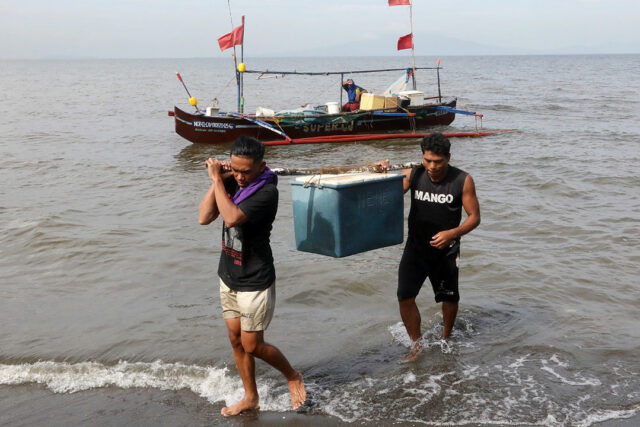
THE Bureau of Fisheries and Aquatic Resources (BFAR) announced the lifting of the annual three-month closed fishing season for sardines and other small pelagic species in key breeding grounds, allowing commercial fishing operation to resume starting Feb. 16.

In an advisory on Monday, the BFAR said the ban has ended in the Visayan Sea and waters off the Zamboanga Peninsula, covering the East Sulu Sea, Basilan Strait, and Sibuguey Bay.

The seasonal closure, implemented from Nov. 15 to Feb. 15, covered sardines in Zamboanga waters and sardines, herring, and mackerel in the Visayan Sea.

The ban restricted the use of commercial fishing methods, such as purse seines, ring nets, bag nets, and scoop nets, in the designated conservation zones.

According to the BFAR, the restrictions are imposed annually to protect economically important fish species during their spawning period and to support the long-term sustainability of fish stocks.

The BFAR has said that similar seasonal closures in past years contributed to improved sardine catches and helped sustain the fishing industry in affected regions. — Vonn Andrei E. Villamiel

Ban on pork imports from Czech Republic lifted

STOCK PHOTO | Image by Vladimircech from Freepik

THE Department of Agriculture (DA) said it lifted a ban on imports of domestic and wild pigs, as well as pork products and by-products, originating from the Czech Republic.

Via Department Circular No. 07, the DA lifted the 2022 restrictions that had barred the entry of live pigs, pork meat, pig skin, and semen from the Czech Republic due to an African Swine Fever (ASF) outbreak there.

According to the circular, the decision to lift the ban follows an official report from the State Veterinary Administration of the Czech Republic, which confirmed that the ASF outbreak in the country had been resolved.

The DA also said that the Czech Republic is now considered free from ASF, with the likelihood of contamination from such imports deemed negligible.

The DA said imports may resume, provided that the products were slaughtered or produced after the order took effect and that all transactions comply with existing rules and regulations.

The DA said that standard sanitary and import requirements will remain in place to ensure the continued protection of the hog industry. — Vonn Andrei E. Villamiel