Home Blog Page 2516

Chicken culling, disposal raise concern as bird flu spreads

STOCK PHOTO | Image by Ralph from Pixabay

THE SPREAD of bird flu among poultry and dairy farms has heightened some health experts’ concerns that the process of killing and disposing of poultry infected with the virus may pose a risk to humans and livestock.

Recent instances of farms dumping carcasses in landfills and using methods to kill chickens that put workers in close proximity to the virus show how the process of getting rid of infected birds could further spread the disease, according to data obtained by Reuters and interviews with officials and disease experts.

Extreme heat that made it difficult to keep protective equipment on during the asphyxiation by carbon dioxide of chickens on a Colorado egg farm likely contributed to five bird flu cases among workers, the largest cluster of human cases in the United States, the Centers for Disease Control (CDC) and Prevention said last week.

The situation highlights the need for systematic use of protective gear when killing the sick animals, said the CDC’s Principal Deputy Director Nirav Shah on a Tuesday call with reporters about the outbreak.

Workers killing chickens risk inhaling the virus, said Dr. Michael Osterholm, an infectious disease expert at the University of Minnesota, of the process. The workers had mild symptoms including pink eye and respiratory issues.

“Depopulation activities need to clearly focus on protection for these individuals,” he said.

The Colorado Department of Agriculture said in response to questions that the method of killing birds is decided jointly between the state, the farmer, and the US Department of Agriculture (USDA).

COLORADO’S CASE
Bird flu has migrated to nearly every US state over the past 2.5 years. There have been nine cases among poultry and dairy workers since March, including the Colorado poultry workers.

Further bird flu spread among livestock could increase the likelihood of human infections, though the risk to the general public is still low, officials from the CDC have said.

About 95 million chickens, turkeys, and other poultry have been killed and disposed of since February 2022, according to USDA data obtained by Reuters showing culling and disposal methods through late June.

Bird flu is fatal in birds and the government requires entire flocks to be culled once the virus is on a farm. The deadliest year was 2022, but nearly as many chickens have been disposed of so far in 2024 as in all of 2023, the data shows.

The sick workers in Colorado, for instance, were killing the birds with mobile gas chamber carts, said Julie Gauthier, an official at USDA’s Animal and Plant Health Inspection Service, on the Tuesday call.

The carts can typically accommodate between a dozen and 50 birds and workers asphyxiate them batch by batch, Ms. Gauthier said. A USDA spokesperson said the agency had reviewed the farm’s use of the method as part of its response to the outbreak.

More than 150 of the workers were exposed to infected poultry, 69 displayed symptoms and were tested, and five were positive, said AnneMarie Harper, communications director at the Colorado Department of Public Health and Environment.

Most chickens are killed by asphyxiation either with portable chambers like those used in Colorado, or by spraying a firefighting foam on the birds or shutting down ventilation to the chicken barns, the USDA data shows.

A small number are killed with firearms, by cervical dislocation, or other means.

DISPOSING OF THE DEAD
Most of the culled birds are composted, either in chicken houses or on farms, or buried, according to the USDA data. To compost the birds, farmers cover them in material like wood shavings, maintain the compost piles at a high temperature, and stir them occasionally with farm equipment in a process that typically takes several weeks.

So far, there have been no human or livestock cases linked directly to disposal of dead animals with avian flu.

Federal and state officials work with farmers to determine the best disposal methods, said John Clifford, a former USDA chief veterinarian, now an advisor for the USA Poultry and Egg Export Council, an industry group.

It is safest to compost on site to avoid moving the carcasses and potentially spreading the virus, said Myah Walker, compliance unit supervisor at the Minnesota Board of Animal Health.

In rarer cases, carcasses are transported to landfills, a process that can meet some federal and state regulations.

Michigan egg producer Herbruck’s Poultry Ranch disposed of nearly 2 million chickens between April 15 and June 8 in private landfills, according to USDA data and Michigan state records of the disposal process obtained by Reuters.

Herbruck’s declined to comment.

Just 3% of all poultry have been disposed of in landfills since 2022, and the Herbruck’s outbreak accounts for about two-thirds of them, the USDA data shows.

Soon after the Herbruck’s disposal, a dairy farm near one of the landfills tested positive for bird flu, alarming area farmers. Even so, whole genome sequencing showed the disposed Herbruck’s carcasses did not cause the infection, said Adeline Hambley, Ottawa County’s health officer.

Wild birds have helped spread the virus between poultry farms and to other species.

Brian Hoefs, the state veterinarian for Minnesota, said he would not recommend disposing of dead poultry in landfills.

“That’s the restaurant for scavengers. It would be a recipe for disaster,” he said. — Reuters

Protecting people through research

NATIONAL CANCER INSTITUTE-UNSPLASH

The research-based pharmaceutical industry champions innovation as the driving force behind progress in healthcare, contributing to healthier lives and societies. By constantly innovating, we are able to address evolving health challenges, discover novel treatments, and improve patient outcomes. This is why the innovative pharmaceutical industry consistently invests more in research and development (R&D) than any other industries.

At the same time, our industry strives to comply with research ethics that govern the standards of conduct for scientific researchers. We believe that adhering to ethical principles is important in order to protect the dignity, rights and welfare of research participants.

In May this year, the International Federation of Pharmaceutical Manufacturers and Associations (IFPMA), which represents the global innovative pharmaceutical industry, participated in a two-day targeted interdisciplinary discussion in Munich, Germany on the paragraphs in the Declaration of Helsinki focused on vulnerable people in research, with a view to contribute the findings to the revision process. Developed by the World Medical Association (WMA), the Declaration of Helsinki is a statement of ethical principles for medical research involving human subjects, including research on identifiable human material and data.

The National Ethical Guidelines for Health and Health-Related Research crafted by the Philippine Health Research Ethics Board (PHREB) defines vulnerable participants as “those who are relatively or absolutely incapable of deciding for themselves whether or not to participate in a study for reasons such as physical and mental disabilities, poverty, asymmetric power relations, and marginalization, among others and who are at greater risk for some harms.” Vulnerable groups include children, elderly people, people with low incomes, uninsured people, homeless people, racial or ethnic minorities, people in prison, pregnant women, and victims of trauma and accidents, among others.

PHREB is the national policy making body in health research ethics in the country, which ensures adherence to the universal ethical principles for the protection and promotion of the dignity of health research participants. The PHREB guidelines prohibit the inclusion of vulnerable groups as research participants unless the research is necessary to promote the welfare of the population represented and cannot be performed on non-vulnerable persons or groups. Vulnerable groups must be provided with competent advice and assistance, as they are liable to give informed consent for a research project under duress or without the benefit of adequate information.

During the interdisciplinary discussion, IFPMA through representative Karla Childers, said that the requirements associated with conducting research with vulnerable populations are well intended and important. She also stressed that being vulnerable does not necessarily mean an individual does not have the capacity to make their own decisions about participation in research.

The research ecosystem has at times failed to advance treatments and solutions for the unique conditions of vulnerable groups or did not gather the data critical to safely administer existing treatments, Childers explained. On the positive side, she pointed out the shift over time in the mindset from protecting people from research to protecting them through research.

To this end, IFPMA has been increasing efforts to broaden access to clinical trials and ensure more diverse and equitable inclusion, often engaging with vulnerable populations and finding that delicate balance between inclusion and protection, while ensuring voluntary and informed consent. Furthermore, the increasing use of novel, complex technology has required new and evolving thinking around vulnerability as we attempt to provide appropriate and understandable information about these new modalities to facilitate informed consent of all research participants.

IFPMA has been making important inroads into including vulnerable and historically excluded populations in critical research, such as pediatrics, neurologically debilitating diseases, research with pregnant persons, to name a few. We believe there is a great depth of experience in industry to draw upon in engaging with these populations and those who care for them.

Childers highlighted three things that are top of mind in contemplating potential changes to the Declaration of Helsinki regarding vulnerability: balancing protection, inclusivity, and the potential unintended consequences of adding specificity. IFPMA thinks there is the opportunity to encourage engagement with vulnerable populations to better understand their preferences and personal willingness to participate in research.

IFPMA is also striving to encourage greater diversity and broader inclusion in research to enable access for populations previously not represented in clinical trials. We are committed to doing this in a fair and transparent manner, as articulated in the Ethos of IFPMA which we have also adopted at the Pharmaceutical and Healthcare Association of the Philippines.

Apart from fairness and transparency, the Ethos include trust, care, respect and honesty. These are the values that we adhere to in the conduct of research and in our conduct and interactions.


Teodoro B. Padilla is the executive director of Pharmaceutical and Healthcare Association of the Philippines (PHAP).  PHAP represents the biopharmaceutical medicines and vaccines industry in the country. Its members are in the forefront of research and development efforts for COVID-19 and other diseases that affect Filipinos.

SMIC stock rises as PSEi nears 6,800 level

INVESTORS snapped up Sy-led SM Investments Corp. (SMIC) shares last week as the main index finished below the 6,800 level.

According to data from the Philippine Stock Exchange, a total of P1.98 billion worth of 2.19 million shares were traded from July 15 to 19, placing the Sy-led conglomerate in third place in terms of value turnover.

SMIC shares closed at P911 apiece last Friday, 3.5% higher than the P880 closing price on July 12. The stock has gained 4.5% since the start of the year.

“Investors can draw several reasons from the recent price movement of SM,” Regina Capital Development Corp. Equity Analyst Alexandra G. Yatco said in a Viber message, referring to the company’s ticker symbol. “As a whole, the index has been experiencing strong upward movement, with the PSEi (Philippine Stock Exchange index) closing just below 6,800 after falling below 6,200 several weeks ago.”

“Naturally, as SM is a main index heavyweight, it would lead this price movement,” she added.

The local bourse’s main index rose by 1.29% or 86.68 points to 6,791.69 last Friday. It was the PSEi’s best finish since April 4, when it closed at 6,827.06.

Meanwhile, Mercantile Securities Corp. Head Trader Jeff Radley C. See said in a Viber message that SM’s rally in recent days is attributed to the recent inflation report in the United States.

According to a Reuters report, US consumer prices decreased for the first time in four years last June, amid moderating rents and cheap gasoline prices.

“This is bullish news because the [Federal Reserve Bank] might signal a rate cut this year,” he said, adding that the US dollar has started to weaken against the peso, which may encourage foreign investors to return.

SMIC’s attributable net income grew by 6.3% to P18.39 billion in the first quarter, up from P17.3 billion in the same period last year.

Mr. See expects profit taking next week, as SMIC is currently trading at overbought levels.

He placed SMIC’s resistance level at P930, while its support levels are P900 and P860. Established support and resistance levels for the stock are P869 and P923, respectively. — CWEL

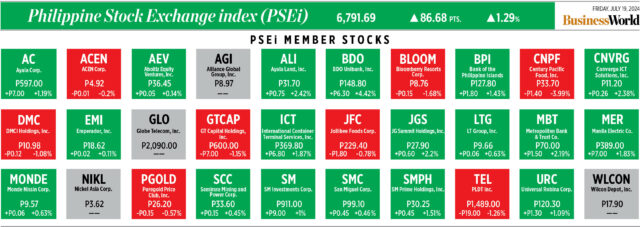
How PSEi member stocks performed — July 19, 2024

Here’s a quick glance at how PSEi stocks fared on Friday, July 19, 2024.


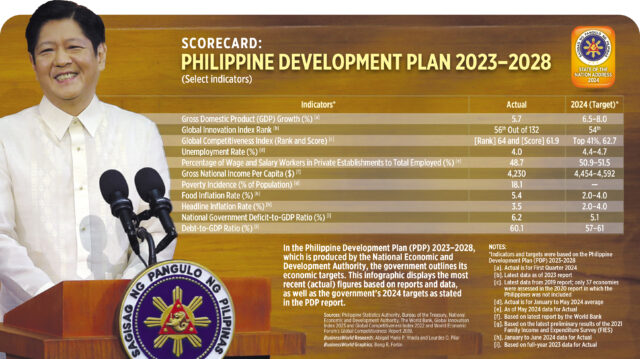
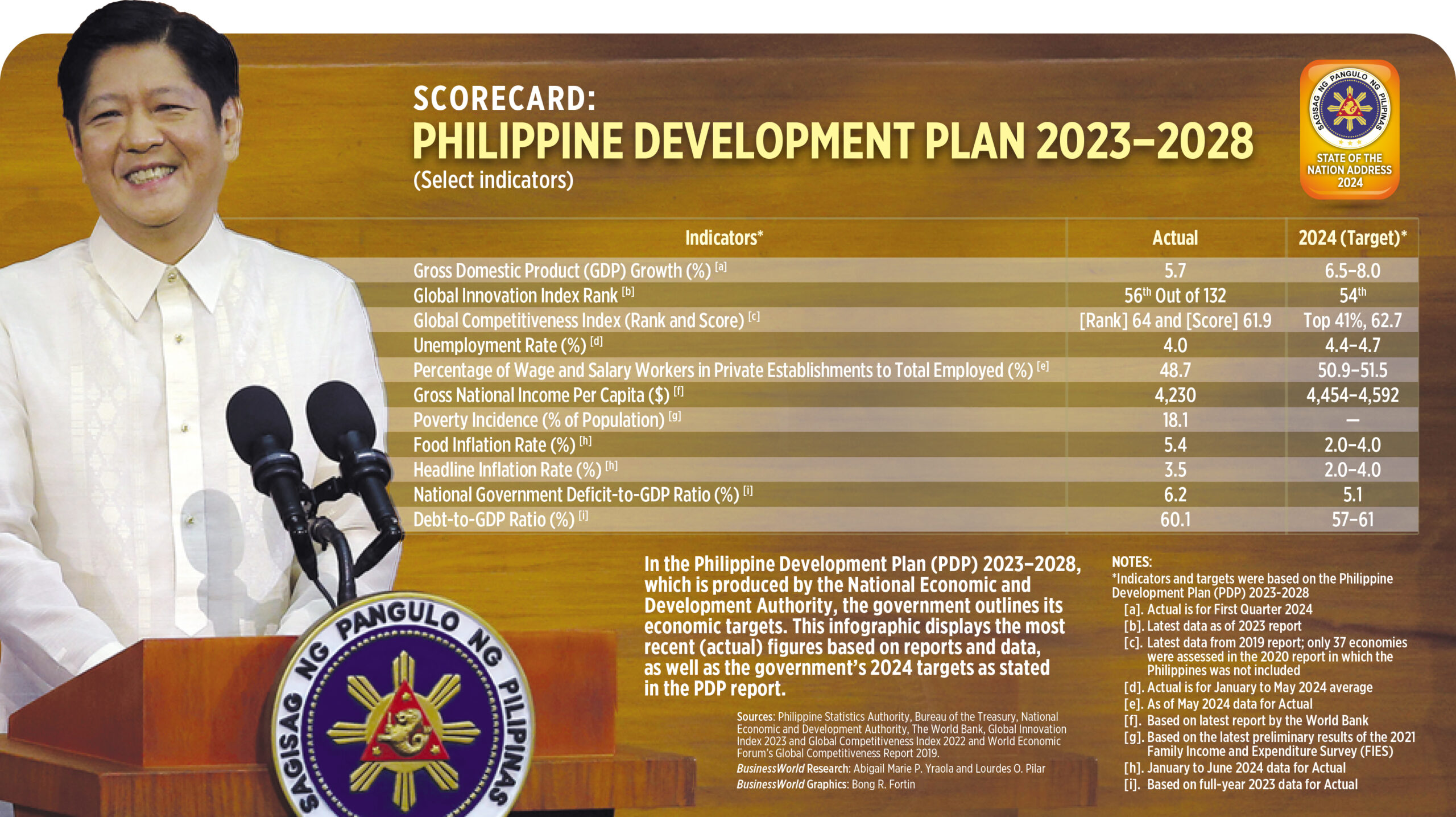
Scorecard: Philippine Development Plan 2023–2028

In the Philippine Development Plan (PDP) 2023–2028, which is produced by the National Economic and Development Authority, the government outlines its economic targets. This infographic displays the most recent (actual) figures based on reports and data, as well as the government’s 2024 targets as stated in the PDP report.

Read the related article: Marcos told to get real as he delivers address in his 3rd year

Peso may rise before US PCE

BW FILE PHOTO

THE PESO may strengthen against the dollar this week ahead of the release of June US personal consumption expenditures (PCE) index data on Friday and as markets digest comments from US Federal Reserve officials.

The local unit closed at P58.335 per dollar on Friday, weakening by 8.5 centavos from its P58.25 finish on Thursday, Bankers Association of the Philippines data showed.

Still, week on week, the peso rose by 4.5 centavos from its P58.38-per-dollar finish on July 12.

The peso declined on Friday amid broad dollar strength and higher US Treasury yields, Security Bank Corp. Chief Economist Robert Dan J. Roces said in a Viber message.

The dollar rose against other major currencies on Friday amid mixed signals from Fed officials, Rizal Commercial Banking Corp. Chief Economist Michael L. Ricafort added in a Viber message.

For this week, the peso may remain range-bound with an upward bias ahead of the release of June PCE data on July 26 (Friday), which could affect the Fed’s policy path, Mr. Roces said.

June’s PCE price index is expected to have climbed 0.1% on a monthly basis, according to a Reuters poll.

Meanwhile, Mr. Ricafort expects the peso to move between P58.25 to P58.45 per dollar on Monday. — AMCS

Rate cut anticipation to fuel stock market’s rally

BW FILE PHOTO

PHILIPPINE SHARES could extend their climb this week in anticipation of the expected interest rate cut from the Bangko Sentral ng Pilipinas (BSP) by next month and as more firms report their latest financial results.

On Friday, the Philippine Stock Exchange index (PSEi) jumped by 1.29% or 86.68 points to finish at 6,791.69, while the broader all shares index increased by 0.69% or 24.97 points to close at 3,627.83.

This was the PSEi’s best finish in over three months or since it closed at 6,827.06 on April 4.

Week on week, the bellwether index surged by 2.16% or 143.46 points from its 6,648.23 finish on July 12, marking four consecutive weeks of gains.

“Bulls continued to sustain momentum, zooming past 6,700, carried by optimistic expectations on policy rates,” online brokerage firm 2TradeAsia.com said in a note.

“We continue to see a buildup in positive momentum for the local bourse as it extended its rally to a fourth straight week. The local market has also gotten past the 6,700 level, which was previously considered as a resistance. Its 50-day and 200-day exponential moving averages are about to form a golden cross. Finally, value turnover, whilst still tepid, is seen to be improving compared to previous weeks,” Philstocks Financial, Inc. Senior Research Analyst Japhet Louis O. Tantiangco said in a Viber message.

For this week, Mr. Tantiangco said the market could initially decline as investors pocket their gains from the PSEi’s recent rally. “However, at its current level, the local market is still deemed to be fundamentally undervalued. Hence, long-term investors may also take positions this week.”

“The market could still be able to post gains this week with optimism driven by hopes of a rate cut by the BSP soon and anticipation of second-quarter corporate results,” Mr. Tantiangco said.

BSP Governor Eli M. Remolona, Jr. last month said the Monetary Board may deliver its first rate cut in over three years at its Aug. 15 review — the only policy meeting scheduled in the third quarter — as they expect inflation to continue easing this semester.

The Monetary Board could reduce borrowing costs by 25 basis points (bps) in the third quarter and by another 25 bps in the fourth quarter, he said.

The BSP last month kept its policy rate at a 17-year high of 6.5% for a sixth straight meeting after raising interest rates by 450 bps from May 2022 to October 2023.

“The local currency, if it strengthens further against the US dollar and Wall Street, if it continues to post record performances, are also expected to provide aid to the bourse,” Mr. Tantiangco added. He put the PSEi’s support at 6,700 and resistance at 7,000 for this week.

2TradeAsia.com placed the PSEi’s immediate primary support at 6,650, secondary support at 6,500, and resistance at 7,000.

“The PSEi made a stopping point just a touch south of a strong resistance point in 6,800. It would be a relatively tall order to break this level,… but so far, the macro backdrop plus corporate fundamentals are backing lofty ambitions towards 7,000,” it said. — R.M.D. Ochave

PCCI backs removal of VAT on electricity sales

MATTHEW HENRY-UNSPLASH

By Justine Irish D. Tabile, Reporter and Chloe Mari A. Hufana

PRESIDENT Ferdinand R. Marcos, Jr. should push a bill that seeks to do away with the value-added tax (VAT) on electricity charges to help lower the cost of power, which is a major concern of investors, according to the Philippine Chamber of Commerce and Industry (PCCI).

The 12% tax on electricity charges from distribution to the end-user should be removed, PCCI President Enunina V. Mangio told reporters last week.

“We wish for our President to consider making VAT exempt or at least reduce the VAT imposed on electricity charges from distribution to the users because it has a big impact,” she said in mixed English and Filipino.

“Our investors, because of the cost of power here, are having problems, making them go to other countries instead of the Philippines,” she added.

Ms. Mangio said sales of generated power are VAT-zero-rated under the Electric Power Industry Reform Act. But this was repealed after the amended VAT provisions of the National Internal Revenue Code of 1997.

“During the time of then President Gloria Macapagal Arroyo, as a temporary measure, she declared that the electricity charges from distribution to the end-user would be subjected to VAT,” she said.

“It was just a temporary measure. However, it became permanent… so what we are pushing right now is to expand the zero-rating on electricity charges up to the end-user or at least reduce the VAT imposed on them,” she added.

Ms. Mangio said the cost of power is a major complaint of investors, pushes them away even if the Philippines has an English-speaking and technically equipped workforce.

She noted that while the industry is waiting for additional base load and renewable energy sources, the state should temporarily remove or cut the VAT on electricity sales to lower power rates.

“If this happens, we will be able to invite more investors, and more investors means more employment and taxes,” she added.

Last year, Senator Francis G. Escudero filed Senate Bill No. 2301, which seeks to exempt electricity sales from VAT. The bill is pending before a Senate committee.

A similar bill in the House of Representatives has been pending with the ways and means committee since August 2022.

Meanwhile, Ms. Mangio urged Mr. Marcos to push economic measures that support the business sector in his third State of the Nation Address.

PCCI sought the passage of the capital income and financial tax reform to streamline taxes on passive income and financial transactions, align tax rates on interest, dividends and capital gains, and simplify the documentary stamp tax to lower expenses.

At a virtual news briefing on Sunday, PCCI also sought the liberalization of foreign equity restrictions through constitutional amendments.

“We are strictly supporting economic amendments in our Constitution… We should be careful not to touch other provisions,” she said.

PCCI also sought the passage of a bill that seeks to improve the country’s digital infrastructure by lowering internet costs.

Lower internet charges would help micro, small and medium enterprises, which make up 99% of businesses in the Philippines, she said.

“They dream of being digitized and we can only do that if we have strong and stable internet connectivity,” Ms. Mangio said in mixed English and Filipino.

PCCI also said the government should promote digital payments among agencies, government-owned and -controlled corporations and local governments.

She said online payments, especially for processing various forms of permits, could hasten business registration processes.

Ms. Mangio also said they are hoping for changes to the Corporate Recovery and Tax Incentives for Enterprises (CREATE) and Philippine Economic Zone Authority laws, specifically the promotion of a flexible work schedule among government agencies.

PCCI is also advocating for a national unemployment insurance to protect jobless Filipinos.

The group also sought priority treatment for the Freedom of Information Act, changes to the Secrecy of Bank Deposits law and creation of a Disaster Resilience Department.

Japanese companies eyeing auction of MRT-3 O&M contract

A Metro Rail Transit Line 3 (MRT-3) train is seen along EDSA, Quezon City, March 24, 2024. — PHILIPPINE STAR/RYAN BALDEMOR

SEVERAL Japanese companies are interested in participating in the auction for the operations and maintenance (O&M) of the Metro Rail Transit Line 3 (MRT-3), according to the Japan International Cooperation Agency (JICA).

“There are many Japanese private companies that are interested to join the bid,” JICA Chief Representative in the Philippines Takema Sakamoto told BusinessWorld last week. “But they have some sort of concerns — business risks — because of the very low ticketing price.”

The Department of Transportation (DoTr) targets to auction the operations and maintenance contract for MRT-3 by the first quarter of next year.

Last month, the agency said it was still trying to determine the scope of the contract. It is now working with the Asian Development Bank to develop a public–private partnership  for the MRT-3 project.

JICA is willing to help the Transportation department create a better environment for the bidding, Mr. Sakamoto said.

“We are proposing to consider the possibility of providing the budget support to DoTr so they can prepare enough budget or resources for the availability payment for MRT-3,” he said.

“In such a case, there might be a very competitive environment for getting more competitive bids, which is a win-win case,” he added.

Availability payments refer to predetermined payments by the agency to the project proponent in exchange for the delivery of an asset or service under the contract.

The DoTr aims to privatize MRT-3 before the contract expires next year under the build, lease and transfer agreement with MRT-3 operator Metro Rail Transit Corp.

While the government had announced its intentions of going the solicited route for the operations and maintenance of the MRT-3, there are two unsolicited proposals for it.

Last month, the DoTr said it was evaluating the unsolicited proposal made by the Metro Pacific Investments Corp. to integrate the operations of MRT-3 and the LRT-1.

Aside from the group, San Miguel Corp., which was declared the original proponent for the MRT-3’s operations and maintenance contract in 2022, has also submitted a proposal. — Ashley Erika O. Jose

BIR says Sukuk gains to be taxed according to contractual terms

BW FILE PHOTO

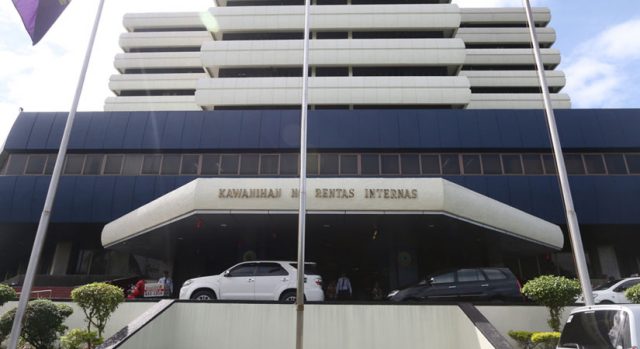
TAX ON SUKUK or Islamic bonds will be determined based on how the gains or profits are specified in their contracts, the Bureau of Internal Revenue (BIR) said.

Sukuk are Islamic financial certificates that operate similarly to bonds but are structured to comply with Shari’ah law, which prohibits interest.

In a circular, the bureau said that a Sukuk bond’s gains or profits would be “calculated through profit-sharing ratios, rental income, mark-up or price differentials, or the sale of underlying assets.”

The BIR added that the gains or profits would depend on the contractual arrangements outlined in the Sukuk documentation.

Gains or profits realized from Sukuk transactions with a maturity of less than five years will be subject to a 20% final withholding tax.

If Sukuk holders withdraw their bonds before maturity, gains and profits will be subject to a 5% final withholding tax for bonds with maturities of under four years, 12% for those with under three years, and 20% for those with less than three years.

Conversely, gains or profits from Sukuk with a maturity of more than five years will be excluded from gross income and exempt from income tax, the BIR added.

A 25% final withholding tax will be imposed on gains and profits realized by Sukuk shareholders who are non-resident aliens not engaged in trade or business in the Philippines, as well as non-resident foreign corporations.

Gains or profits realized by the originator or obligor, arranger, manager, and underwriter from Sukuk transactions will be subject to regular income tax and value-added tax (VAT), as applicable.

Meanwhile, gains or profits from special purpose vehicles will be subject to regular income tax but exempt from VAT, the bureau said.

All Sukuk instruments will also be subject to a documentary stamp tax unless exempted, it noted.

“Any disposal or lease of the underlying asset, and execution of any additional instrument required in a Sukuk transaction, for the purpose of compliance with Shari’ah principles but which will not be required in a conventional bond transaction, shall be deemed excluded for taxation purposes,” BIR said.

All banks, including Islamic banks and conventional banks’ Islamic banking units or non-bank financial intermediaries, will classify and measure a Sukuk investment either at amortized cost, fair value through other comprehensive income, or fair value through profit or loss.

The investment will also be measured based on the contractual cash flow characteristics of the bond under Philippine Financial Reporting Standards, according to the BIR.

When a Sukuk is issued, it will initially be recognized at fair value, typically at its transaction price, the bureau noted. Transaction costs directly attributable to the issuance will be deducted from the initial carrying amount.

A Sukuk instrument will be assessed for impairment based on expected credit losses. It will be derecognized when redeemed, repurchased, matured, or when the contractual rights to cash flows expire.

For disclosures, a Sukuk instrument will be presented on the balance sheet according to its classification.

“Additionally, ensure that the financial instruments provide the required disclosures, including information about the nature, terms and extent of risks arising from financial instruments, including information about the nature, terms and extent of risks arising from financial instruments, as well as the accounting policies applied.”

The tax treatment of Sukuk bonds are based on Revenue Regulations No. 17-2020, which seeks a “neutral tax treatment” of equivalent transactions between Islamic banks and conventional banks. — Beatriz Marie D. Cruz

Approved investment pledges under Marcos hit P2.73 trillion

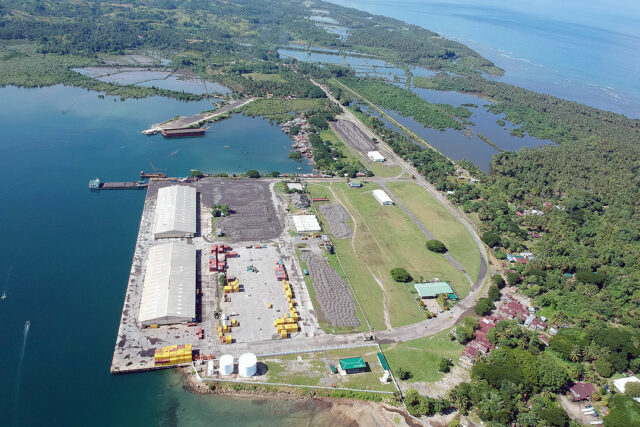
POLLOC FREEPORT AND ECOZONE — BARMM FACEBOOK PAGE

INVESTMENT promotion agencies have approved P2.73 trillion worth of investment pledges in the first two years of the Marcos government, the Department of Trade and Industry (DTI) said last week.

The Board of Investments (BoI) and Philippine Economic Zone Authority (PEZA) approved 1,090 projects with a combined value of P2.73 trillion from July 2022 to May 2024, Trade Secretary Alfredo E. Pascual told a news briefing on Friday.

The BoI approved 668 projects worth P2.4 trillion, while PEZA greenlighted 432 investment pledges worth P331 billion.

About 90% of the projects approved by the BoI were in renewable energy, while almost half of the PEZA-approved projects were in export manufacturing, Trade Undersecretary and BoI Managing Head Ceferino S. Rodolfo told the same briefing.

Mr. Pascual said the BoI saw an increase in renewable energy (RE) projects after the government allowed full foreign ownership in the sector starting in November 2022. Foreign ownership in RE projects used to be limited to 40%.

For the first half, BoI approved P950 billion of investment pledges, up 36.1% from a year earlier, while PEZA approved P45.48 billion worth of projects, down 43.6% year on year.

This year, the BoI expects investment approvals to hit P1.25 trillion to P1.6 trillion, while PEZA estimates are from P200 billion to P250 billion.

Mr. Pascual said $18.86 billion (P1.1 trillion) worth of investment pledges have been initiated from the deals secured during President Ferdinand R. Marcos, Jr.’s overseas trips.

Of the 73 projects, 20 projects worth $1.26 billion are under category 6, meaning they are operating and are registered with an investment promotion agency. These are valued at $1.26 billion.

Investments in category 5, covering 23 projects that have registered with investment promotion agencies but are not yet operating, were estimated at $1.6 billion.

The 30 projects under category 4, which are in the process of registering, are worth $16 billion.

The 73 projects form part of the $60.9 billion worth of investment leads gathered during the President’s trips. The leads cover 210 projects and exclude 30 public-private partnerships.

Mr. Pascual said another potential indication of investment approvals are the projects endorsed for the green lane, which spans sectors such as RE, digital infrastructure, food security and manufacturing.

“For green lanes, we have already certified 102 projects worth P3 trillion,” he added.

Mr. Rodolfo said some of the projects endorsed to the BoI’s One-Stop Action Center for Strategic Investments had not been registered.

“For green lanes, not all of the projects will register with BoI, but mostly we foresee them to register with BoI due to the nature of the projects,” he added.

The government through Executive Order No. 18 established the “green lane” in all government agencies to speed up the approval and registration process for priority or strategic investments.

Aside from investments, the DTI said free trade agreements and cooperation were reached last year.

These include the Philippines-Korea free trade deal, the start of negotiations for the Philippine-European Union and ASEAN-Canada free trade agreements and the signing of the 123 Agreement. — Justine Irish D. Tabile

DoT sees sustained growth in tourism sector

Tourists enjoy the sight of Taal volcano while walking around Picnic Grove in Tagaytay City, Feb.17, 2024. — PHILIPPINE STAR/MIGUEL DE GUZMAN

THE Department of Tourism (DoT) said it expects to sustain industry growth following last year’s performance, citing the administration’s prioritization of tourism.

“The President’s prioritization of the industry enabled it to achieve record-breaking numbers and notable milestones in 2023,” said Tourism Chief Maria Esperanza Christina G. Frasco in a statement sent over the weekend.

“The DoT is optimistic about achieving even greater heights for Philippine tourism this year and in the coming years,” she added.

Ms. Frasco noted that 2023 became a banner year for the tourism sector, contributing 8.6% to the country’s gross domestic product, marking the highest growth rate in tourism direct gross value added in 24 years.

The sector also recorded a $2.45 billion net trade surplus last year, the first in 15 years, and P509 billion in investments, a 34% increase from the previous year.

The industry exceeded its 4.8 million international arrival target for last year by welcoming 5.45 million international visitors in 2023, a 75.3% increase from the previous year.

As of July 19, the country had already received 3.33 million international arrivals, representing 43% of the DoT’s 7.7 million target for 2024.

Meanwhile, January-to-June tourism earnings grew 32.8% to P282.17 billion from P212.47 billion in the same period last year.

Ms. Frasco said that with Mr. Marcos’ support, the DoT was able to craft and implement innovative programs that enhanced the quality of tourism services and expanded opportunities nationwide, resulting in longer stays and increased spending.

“Together with our partners across government agencies and the private sector, we have worked collaboratively toward the President’s aspiration for the Philippines to take its rightful position on the global tourism stage,” she added. — Justine Irish D. Tabile