Home Blog Page 2493

Tech working group formed to study salt industry dev’t

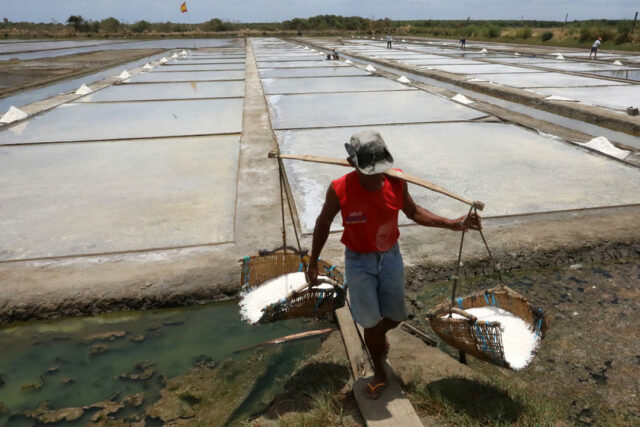
PHILIPPINE STAR/EDD GUMBAN

THE Department of Agriculture (DA) said it formed a technical working group (TWG) to evaluate projects to modernize the salt industry via the adoption of new technology.

In a special order, the DA said the TWG will develop, validate and verify the latest available technology used in salt production, particularly methods that allow “year-round production of salt even under erratic weather patterns.”

The TWG has also been tasked to study ways for the industry to mechanize the entire process of salt-making from pre- to post-harvest.

It has also been assigned to find “cost-effective techniques” for production.

In March, President Ferdinand R. Marcos, Jr. signed Republic Act No. 11985, or the Philippine Salt Industry Development Act, which seeks to revive the neglected salt industry. — Adrian H. Halili

Bioplastics roadmap due for completion by fourth quarter

CHEIL JEDANG

THE Board of Investments (BoI) said the Philippine Bioplastics Industry Roadmap is expected to be completed by the fourth quarter.

According to the BoI, the roadmap is one of the outputs of a zero-waste initiative known as “Building Plastic Circularity through Biodegradable Plastic to Ensure Zero Waste in the Philippines.”

The Philippines’ partners in the project are the Global Green Growth Institute and the Korea Export-Import Bank.

On Tuesday, the BoI announced that it led an eight-member Philippine delegation on a five-day industry familiarization activity in South Korea to gather input for drafting the roadmap.

The delegation was joined by representatives from the Department of Science and Technology, the Climate Change Commission, the Philippine Plastics Industry Association, Inc. (PPIA), the Philippine Alliance for Recycling and Materials Sustainability (PARMS), and the Sustainable and Compostable Horizons Industry Group, Inc.

The BoI said that bioplastics applications in South Korea include fishing nets and gear, packaging, single-use plastics, textiles, and other uses.

“This industry benchmarking and capacity-building activity included lectures on bioplastics testing, certification labeling, and research and development (R&D) strategy,” it added.

During the visit, the delegation visited the KTR testing laboratory and the KRICT biodegradable R&D facility to hear presentations on best practices and policy options.

The visit also led to a discussion with Cheil Jedang (CJ), which has made overseas investments in Indonesia to make the biopolymer PBAT (polybutylene adipate terephthalate).

“This activity allowed the BoI to develop strategies for positioning the Philippines as an attractive destination for future investments from not only CJ but also other major Korean companies like LG Chem, SK Chemical, and Lotte Chem, which are actively engaged in biopolymer and bioplastic manufacturing,” it said.

“Additionally, both PARMS and PPIA have pledged their proactive support for the strategic application of bioplastics in the Philippines,” it added.

Quoting Ministry of Economy and Finance Director General Taekon Kim, the BoI said that South Korea is closely monitoring Southeast Asia for potential investment partnerships in bioplastics. 

“He noted the region’s comparative advantages in biomass and feedstock production, as well as the growing demand for bioplastics,” it added. — Justine Irish D. Tabile

Party-list legislator to propose higher alcohol tax

A man arranges bottles inside a liquor store in Quezon City, March 15, 2021. — PHILIPPINE STAR/MICHAEL VARCAS

A BILL seeking to increase excise taxes on alcoholic beverages will be filed in Congress by the time it returns from recess, a party-list legislator said.

“Once we get the numbers, hopefully even before the State of the Nation Address (SONA), we will actually have a bill ready,” AnaKalusugan Party-list Rep. Ray T. Reyes said at a briefing on Tuesday.

“We wanted to do the number crunching first to find the optimal tax structure. If the government is going to be concerned about revenue generation, then I think they are willing to listen to find out the right tax structure to maximize their revenues at the soonest possible time without any effect on our economic productivity,” he added.

To reduce alcohol consumption, the government will have to raise prices by 6.5% every year, Action for Economic Reforms Fiscal Policy Program Officer Adolfo Jose A. Montesa said.

The Sin Tax Coalition has a target to bring alcohol consumption down to 2.9 liters per capita by 2030.

Citing data from the Bureau of Internal Revenue, Mr. Montesa said per capita consumption is currently 5.4 liters per capita, up from 3.6 liters in 2010.

Aside from raising the alcohol tax, Mr. Reyes said other bills will also seek to penalize improper alcohol sales, regulate the marketing, labeling, and packaging of such beverages, and put more teeth in the rules against drunk driving.

The Department of Health (DoH) said it supports the general intent of the bills, which is to deter excessive drinking.

“We will await the filing of the bills. The DoH reaffirms our commitment to advocate… alcohol use prevention and control policies and forge partnerships that will facilitate a collaborative effort to reduce alcohol use,” Health department Director III Rodley Desmond Daniel M. Carza said.

Meanwhile, Mr. Montesa said the government can afford to increase the alcohol tax without worrying about inflation, contrary to the Finance department’s reluctance to introduce new taxes, adding that alcohol is not a basic need.

Finance Secretary Ralph G. Recto has expressed a preference to improving tax collection efficiency.

“We’d like to differentiate between excise taxes on tobacco, alcohol, products which are harmful to people, versus other kinds of taxes… We’d like to appeal to (Mr. Recto) to reconsider his stance on alcohol taxes because as the data show, there is not just a harm that needs to be addressed, but (also) a greater benefit that can be derived from raising alcohol taxes,” Mr. Montesa said.

Increasing alcohol tax could also boost economic growth as alcohol-related deaths in the younger demographic will fall, ensuring the steady entry of young people entering the workforce, he added.

“Raising alcohol taxes will (reduce the rate of) disease and death, which will reinvigorate our economy because you’ll have more healthy people who can participate in the labor force. At the same time, you are generating revenue to fund social programs,” he said. — Aaron Michael C. Sy

Census-takers to start headcount in mid-July

PHILIPPINE STAR/ MICHAEL VARCAS

THE Philippine Statistics Authority (PSA) said it will start deploying census-takers in the middle of this month, with an eye towards improving government data on welfare beneficiaries.

The PSA announced on Tuesday the launch of its 2024 Census of Population (POPCEN) and Community-Based Monitoring System (CBMS), which will start on July 15.

“To optimize government resources and to avoid fatigue to respondents, the PSA deems it necessary to integrate the POPCEN with the CBMS operations ahead of its original schedule in 2025,” it said.

President Ferdinand R. Marcos, Jr. had ordered the PSA to conduct a new census to “ensure that the government’s anti-poverty efforts are responsive and effective.”

The PSA hopes to survey 27 million households for the census, employing 70,000 census-takers to conduct household interviews across 1,634 local government units.

National Economic and Development Authority (NEDA) Secretary Arsenio M. Balisacan said that the census is a “crucial tool of national and local governance.”

“It provides vital information about population size and spatial distribution, as well as population socioeconomic demographic characteristics down to the barangay level,” he said in a pre-recorded message.

“By law, it is the basis for resource allocation of all local government units or LGUs. The census data are helpful for businesses, development partners, researchers, and individuals.”

The CBMS focuses on health, education, and employment data.

“The data derived from this CBMS will also help identify the vulnerable sectors and communities that require immediate support and tailor our socio-economic interventions to be responsive to their specific needs,” Mr. Balisacan added.

Census participation is a legal obligation, though census-takers will issue consent forms to participants in the CBMS.

Those failing to cooperate with census-takers could face penalties of one years’ imprisonment or fines of up to P100,000.

By December, the PSA said it will release the national headcount while submitting the CBMS data to NEDA.

The CBMS data will be shared with local governments by the first quarter of 2025.

The overall budget for the POPCEN-CBMS is P5.2 billion, the PSA said. — Luisa Maria Jacinta C. Jocson

NAIA ranks 199th in 2024 global airport ranking

PHILIPPINE STAR/MIGUEL DE GUZMAN

The Ninoy Aquino International Airport (NAIA) placed 199th out of 239 in the 2024 global airport ranking report released by passenger rights and flight compensation company, AirHelp. 

According to the company, it combined its own extensive database and passenger insights and experiences to establish its “AirHelp Score” to rank airports from 69 countries. 

From May 1, 2023, to April 30, 2024, three categories – on-time performance, customer opinion, and food and shops, were established to give fair ratings. 

  • On-time performance: 60% of the scores came from flight arrival within 15 minutes of the published arrival time. Higher scores equate to a higher percentage of on-time flights.  
  • Customer opinion: 20% of the score came from surveys with random airport users regarding airport staff, wait times, accessibility, and cleanliness.  
  • Food and Shops: 20% of the score came from passengers’ ratings on airport shops and restaurants. 

Doha Hamad Airport in Qatar led the list with an 8.52 score, followed by the Cape Town Airport in South Africa with 8.50, and Chubu Centrair Airport in Japan with 8.49.  

Other airports that made it into the top ten were Osaka Itami Airport, Brasília–Presidente Juscelino Kubitschek Airport, Johannesburg OR Tambo Airport, Muscat Airport, Salt Lake City Airport, Belém/Val-de-Cans Airport, Tokyo Narita Airport. 

Japanese airports such as Chubu Centrair Airport, Osaka Itami Airport, Tokyo Narita Airport, Nagasaki Airport, Sapporo New Chitose Airport, Hiroshima Airport, and Tokyo Haneda Airport dominated the top ten best airports in Asia. 

“(We gave) precedence to on-time performance, as we believe this should outweigh the importance of service quality and food and shops,” the company said on its website. 

With a 7.19 AirHelp Score, NAIA scored 7.2 in on-time performance, 6.7 in customer opinion, and 7.7 in food and shopping. 

Back in 2023, it was cited that NAIA suffered from both passenger and runway congestion, according to a study by the Philippine Institute for Development Studies (PIDS). 

Department of Transportation (DOTr) Secretary Jaime J. Bautista, in an interview with government-owned PTV4 on July 5, acknowledged that congestion is still a pressing issue at the international airport. 

“Pag pupunta ka rito sa MIA ay makikita mo na napakacongested. Mahaba ang pila, kung minsan walang maupuan, [MIA is really congested. The lines are long, and the seats are insufficient],” he said. 

Mr. Bautista said that travelers using NAIA grew from 32 million to 50 million per year from. 


Improvements in NAIA 

As passengers continued to flock to the airport, travelers shared on social media NAIA’s faulty facilities and maintenance issues. 

Mr. Bautista assured the public that preparations for the renovation are ongoing. 

“As early as now nagstart na mag-order ng mga parts ang winning bidder, [As early as now, the winning bidder has already started ordering parts for the renovation,”] he said on the improvement and repair of elevators, escalators, travelator after receiving complaints online. 

“By early next year, dapat makakita na tayo ng reform, ng improvement [we should already see reform and improvement].”Almira Louise S. Martinez

Philippines belies China’s claim of reef damage from rusted warship

FILE PHOTO of BRP Sierra Madre taken March 29, 2014. — REUTERS

By John Victor D. Ordoñez, Reporter

THE PHILIPPINES on Tuesday belied China’s claim that its military outpost at Second Thomas Shoal in the South China Sea has damaged the area’s marine and coral reef ecosystem.

“It is China who has been found to have caused irreparable damage to corals,” Jonathan E. Malaya, spokesman of the country’s task force on the South China Sea and assistant director-general of the National Security Council, said in a statement.

“It is China that has caused untold damage to the maritime environment and jeopardized the natural habitat and livelihood of thousands of Filipino fisherfolk,” he added.

The Chinese Embassy in Manila did not immediately reply to a Viber message seeking comment.

Chinese state media Global Times published a report on Monday that said the BRP Sierra Madre at Second Thomas Shoal “seriously damaged the diversity, stability and sustainability” of the coral reef ecosystem in the area.

The Philippines has a handful of soldiers at the shoal, where it grounded the World War II-era ship in 1999 to bolster its sea claim.

The “illegally grounded” warship had caused concentrations of heavy metals such as dissolved inorganic phosphorus in the seawater, it said, citing Chinese marine scientists.

“By ruling out these potential natural causes, Chinese researchers are confident that the damage and degradation of the coral reef ecosystem at Ren’ai Jiao can be attributed primarily to the grounded military vessel and related human activities,” Hu Yuwei and Zhao Juecheng said in the report.

“The accusation against the Philippines by so-called Chinese experts is false and a classic misdirection,” Mr. Malaya said.

The shoal is about 200 kilometers from the Philippine island of Palawan and more than 1,000 kilometers from China’s nearest major landmass, Hainan Island.

China claims more than 80% of the South China Sea based on a 1940s map, which a United Nations-backed arbitration court voided in 2016 for being illegal.

The Philippines has failed to enforce the ruling and has since filed hundreds of protests over what it calls encroachment and harassment by China’s coast guard and its vast fishing fleet.

The Center for Strategic and International Studies in a December study said China’s dredging and giant clam harvesting have damaged at least 21,000 acres of coral reefs in the South China Sea. The Chinese Embassy has questioned the study’s results, saying it only relied on satellite imagery.

Last week, the Philippines and China resumed talks to ease tensions in the waterway, days after a standoff at Second Thomas Shoal.

Aside from the Philippines and China, Brunei, Malaysia, Taiwan and Vietnam also have claims to parts of the sea.

Meanwhile, the recently signed defense pact between the Philippines and Japan that eases entry of equipment and troops for combat training is unlikely to ease Chinese aggression at sea, according to security and political analysts.

“China would likely show that the reciprocal access agreement does and would not deter it from its activities, whether in the East or South China Seas,” Lucio B. Pitlo III, a research fellow at the Asia-Pacific Pathways to Progress Foundation, said in a Facebook Messenger chat.

“As in the case of the Enhanced Defense Cooperation Agreement expansion with the US, China may even double down on its pressure against the Philippines,” he added.

Manila and Tokyo signed the military pact in Manila on Monday in time for the visit of Japanese Foreign Minister Yoko Kamikawa and Defense Minister Minoru Kihara for a 2+2 ministerial meeting.

JAPAN ‘COLONIAL RULE’
Beijing is likely to double down on its aggression, Hansley A. Juliano, who teaches political science at the Ateneo de Manila University, said in a Facebook Messenger chat.

“They take everything as a provocation these days, but that doesn’t mean we shouldn’t do what we must,” he said.

At a news briefing late Monday, Chinese Foreign Ministry spokesman Lin Jian said the Asia-Pacific region does not need a military bloc, adding that Japan should “reflect” on its colonial rule over the region during World War II.

“Japan needs to reflect on that part of history and act prudently in fields related to military and security,” he said.

“Any move that undermines regional peace and stability, and harms regional solidarity and cooperation will be met with vigilance and opposition from people in regional countries.”

Japan, which last year announced its biggest military build-up since World War II in a step away from its post-war pacifism, does not have any claims to the South China Sea, but has a separate maritime dispute with China in the East China Sea, where they have repeatedly faced off.

It has supported the Philippines’ position in the South China Sea and has expressed serious concern over China’s actions, including recent incidents that resulted in damage to Philippine vessels and injured a Filipino sailor.

The defense partnership is not targeted against any party, but is crucial to maintain peace and stability in the Indo-Pacific region, Ms. Kamikawa told a news briefing in Taguig City on Monday.

“Japan in particular is emerging and is asserting itself as a regional security leader, which will be crucial for deterring Beijing’s aggressive moves,” Raymond M. Powell, a fellow at Stanford University’s Gordian Knot Center for National Security Innovation, said in an X message.

Senators will scrutinize the defense deal like “other treaties that the Senate is asked to ratify by the Executive, regardless of whether it agitates another country,” Senate President Francis G. Escudero on Tuesday told reporters in a Viber message on Monday.

Senator Maria Imelda “Imee” R. Marcos, who heads the foreign relations committee, said senators would go through every line in the treaty to ensure it does not go against national interests.

“We welcome having stronger security ties with our neighbors in the Asia-Pacific region,” she said in a statement on Monday.

The Philippines has a visiting forces agreement with the United States and Australia. Tokyo, which hosts the biggest concentration of US forces abroad, has a similar deal with Australia and Britain, and is negotiating another with France.

The reciprocal access agreement will take effect after it is ratified by both countries’ Parliaments.


Marcos asked to ban POGOs given state’s ‘flawed’ regulation

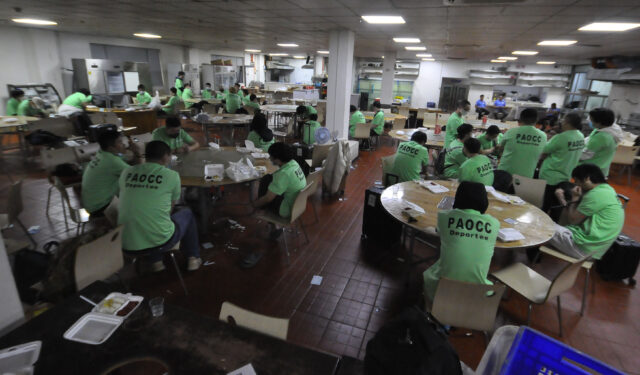
PRESIDENTIAL ANTI-ORGANIZED CRIME COMMISSION

PHILIPPINE senators on Tuesday urged President Ferdinand R. Marcos, Jr. to ban offshore gaming operators in the country given the host of crimes linked to them despite state regulation.

“Some really did not have licenses or permits from the very start but got their foreign managers and workers from authorized Philippine Offshore Gaming Operators (POGO),” Senate Minority Floor Leader Aquilino Martin L. Pimentel told reporters in a Viber message.

“Hence, the entire system that allows POGOs (to operate) has become the problem because the system has been ‘gamed.’”

He was commenting on Finance Secretary Ralph G. Recto’s remarks that he was open to recommend the ban of these gambling operators, mostly Chinese firms that operate online casinos, to Mr. Marcos.

The Philippine Amusement and Gaming Corp. (Pagcor) earlier said the government could lose P20 billion in yearly revenues if POGOs are banned.

“We tried regulating them, but our experience shows that a POGO is not one that can be regulated,” Senator Mary Grace N. Poe-Llamanzares said in a statement. “It is time to drop POGOs and attract the right investors in the country.”

Last week, the Presidential Anti-Organized Crime Commission (PAOCC) said it was looking into more offshore gaming operations across the country including those that are near key military facilities.

Manila and Beijing have agreed to boost cooperation against transnational crimes including those linked to POGOs after Executive Secretary Lucas P. Bersamin, who heads the commission, met with Chinese Ambassador to the Philippines Huang Xilian on July 3.

Under an executive order issued by ex-President Rodrigo R. Duterte in 2017, only Pagcor and three investment promotion agencies — Cagayan Economic Zone Authority, Aurora Pacific Economic Zone Free Port Authority and Authority of the Freeport Area of Bataan — can give a license to online gambling operators.

Philippine authorities have raided POGOs allegedly linked to crimes including human trafficking.

Senators are looking into cases of human trafficking, torture and other crimes committed at POGO hubs after a raid resulted in the rescue of hundreds of workers in Bamban, Tarlac.

Congress under Mr. Duterte passed a law taxing POGOs to legalize them, despite concerns about their social costs. Chinese President Xi Jinping had asked him to ban their operations.

“It is up to the Executive branch if they will continue to allow it or not since it was not allowed by a law to begin with,” Senate President Francis G. Escudero told reporters in a Viber message. — John Victor D. Ordoñez

Gov’t told to fight illicit alcohol trade before mulling tax hike

DES RÉCITS-UNSPLASH

THE GOVERNMENT should improve efforts against the illicit trade of alcoholic drinks before considering an increase in ‘sin taxes,’ a congressman said on Tuesday.

Increasing taxes could spur an uptick in the illicit alcohol trade including smuggling, similar to what is happening to the illegal cigarette trade, Albay Rep. Jose Ma. Clemente S. Salceda said in a statement.

“I’m all for increased tax rates on alcohol,” the head of the House of Representatives ways and means committee said. “It’s still far too cheap that it allows binge drinking. I am alarmed, however, by the prevalence of illicit trade in alcohol and tobacco.”

The National Government has lost about P221 billion in revenues since 2021 because of illegal cigarettes, Mr. Salceda said.

The thriving tobacco black market has led to declining tax collections despite high tax rates on the cigarette industry, he pointed out.

The Philippines applies an excise tax of P60 per pack of 20 cigarettes, while vape products are levied P54.60 per milliliter for salt nicotine and P63 per 10ml tax for classic nicotine products, based on the excise tax rates prescribed by the Bureau of Customs.

“Tobacco excise tax revenues have been declining despite higher tax rates, so something is up, and we can’t simply ignore it,” Mr. Salceda said.

He said his committee would look into the practices and protocols of the Bureau of Customs regarding alcoholic drinks before an across-the-board increase in tax rates.

Distilled alcoholic beverages such as brandy and rum are taxed P63 per liter, while fermented liquors such as beer are levied P43 per liter and P63.12 per liter for wine products.

“Because legal alcohol has become too expensive for the legal market, we really need to deal with the illicit trade,” Mr. Salceda said.

“That’s the policy balance I’m working with — not an argument against higher rates but an argument for better enforcement alongside higher rates,” he added. — Kenneth Christiane L. Basilio

Imports unlikely to cut rice prices

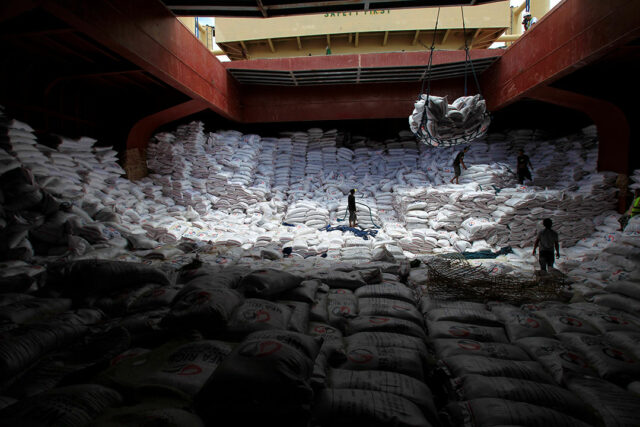
REUTERS

PRESIDENT Ferdinand R. Marcos, Jr.’s promise to lower rice prices through imports is unlikely to materialize, with private traders controlling retail prices, according to a former congressman.

“Private importers have control over the retail price, so even if they bought imported rice at a lower price, they will sell imported rice at a higher price,” former Party-list Rep. Argel Joseph T. Cabatbat, who represented the farm sector when he was still a congressman, told BusinessWorld in a text message.

“Due to the absence of government control over the prices of imported rice, we need to beg for mercy from importers,” he said. “Add to that, Vietnam and other countries have already raised the prices of rice in the world market after hearing about Executive Order No. 62,” he added.

Mr. Marcos has issued an order cutting rice tariffs to 15% from 35% amid spiraling prices.

Last week, Mr. Cabatbat and other farmer’s groups asked the Supreme Court to stop the executive order, which they said would bleed local farmers.

IBON Foundation Executive Director Jose Enrique “Sonny” A. Africa said the extended rice tariff cuts remove the protection enjoyed by farmers.

“Removing the protection will make market conditions more difficult for marginal rice producers,” he said in a Viber message. “If they opt out, then domestic palay output will be compromised.” — Chloe Mari A. Hufana

Comelec contract probe sought

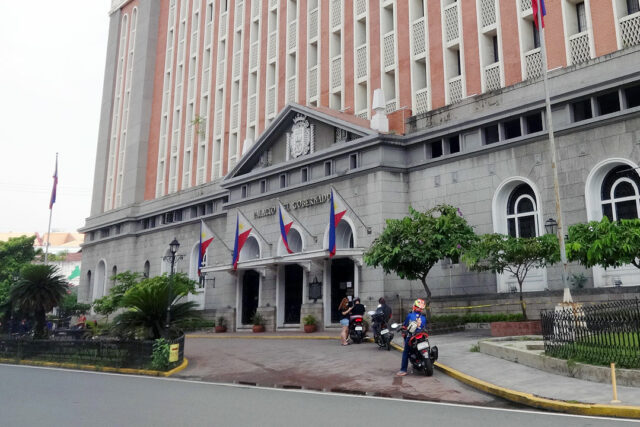
THE COMELEC office in Intramuros, Manila — PATRICK ROQUE

A CONGRESSMAN on Tuesday asked the House of Representatives to investigate the award by the Commission on Elections’ (Comelec) of its automated election contract to a South Korean technology provider despite what he said was its shaky history.

Party-list Rep. Rodante D. Marcoleta also claimed an election official whom he did not name had received bribes in exchange for the contract to automate the 2025 midterm elections.

“Is there any proof that the hybrid system [by the election tech provider] has been used in any jurisdiction, here or abroad?” he asked. “They will not be able to show any certainty that this hybrid machine will function.”

The bribery allegation is part of a demolition job against Comelec, election chairman George Erwin M. Garcia told reporters. — Kenneth Christiane L. Basilio

PhilHealth fund use questioned

PNA/JOAN BONDOC

A FORMER adviser of the Department of Health (DoH) on Tuesday urged legislators to investigate the state-owned health insurer for allegedly failing to use excess funds to boost the benefits of its members and reduce their annual contributions.

The Finance department has issued a circular allowing the unused funds of the Philippine Health Insurance Corp. (PhilHealth) worth P89.9 billion to be classified as unprogrammed appropriations.

Antonio C. Leachon, a former Health special adviser, in a statement noted that under the Universal Health Care law, excess PhilHealth reserves should be used to increase benefits and cut contributions.

PhilHealth Executive Vice President and Chief Operating Officer Eli Dino D. Santos did not immediately reply to a text message seeking comment.

Mr. Leachon said the excess PhilHealth funds that should be classified as unprogrammed funds include taxes on tobacco, vapes, alcohol and sugar-sweetened beverages that have been earmarked for health programs. — Kyle Aristophere T. Atienza

PHL eyes more Indian tourists

SHRESHTH GUPTA-UNSPLASH

THE PHILIPPINES expects more Indian tourists after President Ferdinand R. Marcos, Jr. ordered easier e-Visa transactions for Indian nationals,

“It’s a market opportunity for us,” Sharlene Zabala-Batin, Tourism regional director for the National Capital Region, told a news briefing on Tuesday. “We hope to see this number significantly increase in the next few years.”

Ms. Batin also said they expect tourism in the Philippine capital and nearby cities to be boosted by meetings, incentives, conferences and exhibition events, medical and education tourism.

More than 45,000 Indian tourists visited the Philippines last year, according to Tourism data. “If it breaches 50,000 that will be an exponential increase,” Ms. Batin said. — Adrian H. Halili