Home Blog Page 2387

OceanaGold Philippines’ net income down 30.7% in Q2

OCEANAGOLD (Philippines), Inc. saw its net income drop by 30.7% year on year to $14.2 million in the second quarter (Q2) from $20.5 million due to lower ore production.

The company’s revenues dropped 22.1% to $68.8 million in the period from $88.3 million a year prior, it said in a disclosure to the stock exchange.

OceanaGold operates the Didipio gold and copper mine in Nueva Vizcaya.

Gold ore production fell by 28% to 23,100 ounces in the second quarter from 32,200 ounces. Copper output likewise dropped by 18% to 2,800 tons from last year’s 3,400 tons.

Production was affected by the lower ore grade mined during the period, OceanaGold said. It also pushed back the extraction of the higher-grade ore body to the third quarter due to a fatality at the company’s mine site last month.

Meanwhile, the company’s gold sales totaled 18,900 ounces, a 42% drop from 32,700 ounces a year ago. Copper sales fell by 37% to 2,200 tons from 3,500 tons.

The average price for gold during the period was at $2,531 per ounce, while copper prices averaged $4.58 per pound.

“The company sold 33% of the second quarter’s total gold doré to the BSP (Bangko Sentral ng Pilipinas),” it added.

Under the company’s Financial or Technical Assistance Agreement, 60% of its net revenues go to the Philippine government.

The company’s net revenues amounted to $11.4 million during the quarter, down from last year’s $39.7 million. This put the government’s share at $6.9 million.

Meanwhile, for the first semester, OceanaGold’s net income declined by 40% to $25.7 million from $42.6 million the same period in 2023. Its revenues fell by 11% year on year to $160.9 million.

“We expect gold production to increase in the second half of the year as we access higher grade ore and increase mining rates from the underground,” OceanaGold Philippines President Joan D. Adaci-Cattiling said.

“We are also continuing to invest in exploration, both near-mine and regionally, and look forward to sharing results in the future.” Ms. Adaci-Cattiling added.

OceanaGold earlier said it expects to produce 120,000-135,000 ounces of gold and 12,000-14,000 tons of copper this year. It is spending $2 million this year on drilling and exploration for an ore body in Nueva Viscaya.

OceanaGold shares fell by 2.32% or 32 centavos to close at P13.48 apiece on Wednesday. — Adrian H. Halili

The Tantocos return to the grocery game

But this time they are going artisanal

THE TANTOCOS are going back to the grocery game, and who better to help them than a long-missed family member?

In 2018, the Tantoco family sold the Rustan’s Supermarket and Shopwise brands to the Gokongwei family’s Robinsons Retail Holdings, Inc. Joel’s Place marks their return to that business, but as Donnie Tantoco — its Chief Executive Officer (and concurrent Rustan’s chair) — makes clear, “We’re perfecting this, it’s very new.”

There are currently two branches: the newest one in Glorietta which opened this month, and the first one in Rockwell, which opened late last year.

“Once we find our stride, we’re going to roll out more Joels. Every Joel is better than the previous one,” said Mr. Tantoco.

WHAT’S IN A NAME?
The place is named after the late Jose Luis “Joel” Tantoco, Mr. Tantoco’s brother who passed away in 2007. Asked why, Mr. Tantoco said in an interview with BusinessWorld on July 30, “One serendipitous reason.” Project Joel was a codename they used when he was conceptualizing the project. Then, a British branding company they consulted drew up a list of first names to christen the place, and out of 50, “They said the best one was Joel.”

“In hindsight, it really makes a lot of sense,” he said.

The concept was borne out of trips to Paris, where Mr. Tantoco observed La Grande Épicerie de Paris, as well as smaller stores in the capital of chic. “That was Joel’s favorite place on Earth. That’s where he discovered his dignity, his confidence, his identity. He was very shy until he discovered Paris,” said Mr. Tantoco of his brother.

“We want this to be like second family; a second home of all our customers — including our employees,” he said. “I wanted our company to be an ark in this more tumultuous world.”

MORE THAN A GROCERY STORE
Joel’s Place is several things: it’s a grocery, but it also has a lunch counter with ready-to-eat meals, a deli, a bakery, and it even has a gelato counter with creations by renowned chef Miko Aspiras.

We toured the aisles of the Glorietta branch of Joel’s Place when it opened on July 18: think local produce straight from Filipino farmers, but also luxurious selections like artisanal olive oils, and European butter and meat.

We saw some familiar names (and more incognito ones) at the lunch counter, buying things while wearing tsinelas (but they were Gucci). “Basically, we’re a replacement for cooking at home. We want to be an extension of your kitchen,” said Mr. Tantoco.

During our visit to the Glorietta branch we got to taste some of the lunch counter offerings. We had the salmon bowl, a combination of a croissant and an empanada, and a probiotic soda. The croissant cost less than P100, and was quite filling and delicious on its own (filled as it was with beef stew). The salmon bowl, made with several grains and garnished with several vegetables, had the same quality, but with a hint of refinement. It cost less than P400. That amount can get you to a lot of places in Glorietta, for sure, but few will have the quality that Joel’s Place has to offer.

“We deal direct,” said Mr. Tantoco. “We don’t concession, we run and own everything. We break through the layers that add to the cost.”

At the grocery, this writer saw French brands and Italian ones, and vegetables we wouldn’t have found anywhere else (fresh artichoke hearts, when everybody else has them canned).

FOOD WITH SOUL
“We wanted to work with artisans. We wanted to provide the space where people that are really into their craft, that are really passionate about their product… there’s a soul. We wanted to be that place, whether it’s European, American, Australian, or a Filipino dairy from Bukidnon,” said Mr. Tantoco. “These people aren’t transactional. This is their calling.”

“We’re in the food business, but it’s an aspiration that people have, on so many levels. Gourmet that’s healthy, that’s accessibly priced,” he said. “That’s the world we’re in. We’re not going to go into the commercial, mainsteam side of grocery that we used to do. It’s really all about making these relationships, and creating an ecosystem that works.

“At the heart of it, it’s a community.”

Joel’s Place in Glorietta 4, Makati is open Mondays to Thursdays from 9 a.m. to 9 p.m. and Fridays to Sundays from 9 a.m. to 10 p.m. — Joseph L. Garcia

Central bank amends electronic payment settlement rules for InstaPay, PESONet

BW FILE PHOTO

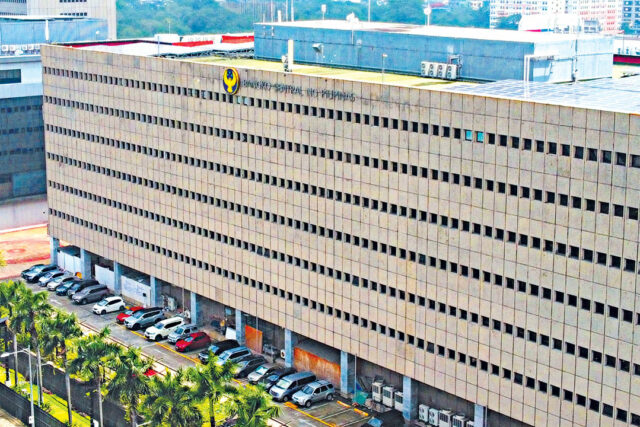
ANY planned changes to the settlement of electronic payments coursed through InstaPay and PESONet will now require regulatory approval, the Bangko Sentral ng Pilipinas (BSP) said on Wednesday.

The Monetary Board has approved amended guidelines on the settlement of electronic payments under the National Retail Payment System (NRPS) Framework under Circular No. 1196, the BSP said in a statement.

The changes are “part of ongoing efforts to ensure integrity and efficiency of the payment system,” the central bank added.

“Issued under Circular No. 1196 on June 27, the revised guidelines provide operational flexibility to Automated Clearing Houses (ACHs) organized under the NRPS Framework,” it said.

“The Circular requires prior BSP approval for new rules or enhancements to the settlement of e-payments under the Manual of Regulations for Payment Systems. This ensures that all enhancements to the settlement guidelines of ACHs are thoroughly reviewed and approved by BSP prior to implementation,” the central bank added.

The two ACHs organized under the NPRS Framweork are InstaPay and PESONet. InstaPay is a real-time, low-value electronic fund transfer facility for transactions up to P50,000 and is mostly used for remittances and e-commerce, while PESONet caters to high-value transactions.

“Under the policy, ACHs may now lodge requests with the BSP when they deem that adjustments are necessary to enable more settlement cycles, support faster settlement, and improve the overall efficiency of e-payments,” the central bank said.

“For instance, subject to BSP approval, an ACH may recommend the use of a particular demand deposit account (DDA) maintained with the BSP when settling e-payments, instead of separate DDAs. This can be requested in view of evolving circumstances, or when there are new use cases.”

The latest data from the BSP showed the value of transactions done through InstaPay and PESONet surged by 34.6% to P7.98 trillion as of June.

In terms of volume, transactions done via both clearing houses jumped by 66.1% year on year to 660.7 million.

The BSP, Philippine Payments Management, Inc. and PESONet Steering Committee on July 8 activated the third settlement cycle for PESONet transactions, the central bank announced on Wednesday. 

The PESONet Multiple Batch Settlement facility now has a midday schedule, increasing its batch settlements to three cycles per banking day from the previous two cycles done in the morning and afternoon.

“The roll out of “PESONet 3MBS” shortens clearing intervals within a banking day, improves user experience by enabling faster crediting of funds to recipients’ accounts, and facilitates easier cash flow management for businesses,” the BSP said.

“It likewise enables PESONet participating banks and electronic money issuers to better manage settlement risks as settlement of PESONet transactions are now divided among three batches in a banking day,” it added.

In 2023, digital payments made up 52.8% of the volume of retail transactions. In terms of value, 55.3% of retail transactions last year were done online.

The BSP wanted at least 50% of the volume and value of retail transactions done online by end-2023 under its Digital Payments Transformation Roadmap.

The central bank wants online payments to make up 60-70% of the country’s total retail transaction volume by 2028. — L.M.J.C. Jocson

Microsoft says Azure apps outage began as a DDoS cyberattack

MICROSOFT CORP. said an outage of Azure cloud applications was triggered by a distributed-denial-of-service (DDoS) cyberattack.

The DDoS attack began early Tuesday and an error in Microsoft’s automated protection mechanisms worsened the impact rather than mitigating it, the company said in a status update.

Customers were affected in multiple regions, including services running on Azure. For example, mobile ordering at Starbucks Corp. was disabled for hours because of the issues affecting Azure, according to a person familiar with the matter.

Denial-of-service attacks direct internet traffic at a website in mass volume to disrupt it or shut it down. The incidents have become a persistent annoyance for financial institutions, causing intermittent downtime and forcing security staffers to repel the activity.

Reports of outages on Azure and Microsoft 365 began to spike shortly after 7 a.m. in New York and comprised hundreds of complaints at the incident’s peak, according to user reports compiled by Downdetector. Microsoft said the incident was fixed by about 5 p.m. in New York.

The issue also affected multiple Microsoft 365 services and features, Microsoft said in a post on social network X. Microsoft 365 includes common productivity applications like Outlook, Word and Excel.

Mobile ordering for Starbucks had largely been restored by about 1 p.m. in New York. The company was working to address limited interruptions that continued, a Starbucks spokesperson said.

Earlier this month, some eight million computers running on the Windows operating system crashed after the cybersecurity firm CrowdStrike Holdings, Inc. released a flawed software update. In addition, Microsoft has also been grappling with the fallout from a series of cyberattacks that prompted the US government to issue a scathing report calling for company-wide changes.

Microsoft Chief Executive Officer Satya Nadella touted progress in the company’s cybersecurity products during a conference call Tuesday after the company reported quarterly earnings. He said the company has more than 1.2 million security customers.

“We continue to prioritize security above all else,” Mr. Nadella said. — Bloomberg

Wilcon Depot profit falls 10% in Q2

By Revin Mikhael D. Ochave, Reporter

LISTED home improvement and construction supplies retailer Wilcon Depot, Inc. saw a 10% decline in net income to P770.41 million in the second quarter (Q2) from P855.77 million a year ago due to higher operating expenses related to expansion and one-off charges.

In a statement, Wilcon President and Chief Executive Officer Lorraine Belo-Cincochan attributed the profit drop in the second quarter to the one-off charge of P98 million for inventory allowances and loss due to fire.

In April, a fire hit the Wilcon depot branch in Baliwag, Bulacan.

Wilcon Depot’s latest financial statement showed net sales increased by 2.9% to P8.88 billion in the April to June period from P8.62 billion in the same period last year.

The company opened two new Wilcon Depot branches in the second quarter.

“The improved second-quarter performance was partly due to the timing of the long holidays but we also rolled out programs focused on contractors and professionals and best deals promotions to increase turnover,” Ms. Belo-Cincochan said.

Operating expenses, including lease-related interest, rose by 10.2% to P2.61 billion due to expansion-related expenses.

For the first half, Wilcon said its net income fell by 16.9% to P1.51 billion from P1.82 billion last year.

In January to June, net sales rose by 0.2% to P17.18 billion due to the sales from five new stores. Same-store sales in the first half fell by 4.6%.

Wilcon Depot branches saw a 1% decline in net sales to P16.47 billion, while smaller Do-It-Wilcon format stores recorded a 39.1% rise in sales to P488 million. Project sales to institutional accounts increased by 41.5% to P227 million.

Including lease-related interest, operating expenses rose by 8.6% to P5.08 billion.

“We are looking forward to a better second half as we continue to push for higher sales while realigning resources deployed with the current market demand,” Ms. Belo-Cincochan said.

She said the company is planning to open more stores to reach its 100-store target by end-2024.

As of end-June, Wilcon had 95 branches.

Wilcon shares fell by 2.23% or 40 centavos to P17.50 each on Wednesday.

Food for sport as British enlist performance chef

INSTAGRAM.COM_ PRO.PERFORMANCE.CHEF

MARSEILLE, France — Britain has hired “performance chef” Bryony Johnson to fuel its sailors, serving up dishes such as honey chipotle salmon, rice and black beans and tahini coleslaw with mint and jalapenos.

Ms. Johnson said this was one of the most popular meals among the Olympic sailors so far.

“It’s not just about fuelling somebody, but how it makes them feel,” Ms. Johnson, 39, told Reuters from the team’s base in Marseille, where she is catering for 47 people.

“There was such a big disconnect between the food that people felt they should be eating and what they wanted to eat,” she says of her mission to encourage alternatives to chicken, broccoli, and boiled rice.

“One thing that they absolutely love are the dark chocolate brownies, with almonds for extra protein,” Ms. Johnson said.

Ingredients such as black beans, Ms. Johnson said, are rich in polyphenols, which are an antioxidant.

Among the big sporting names she has cooked for, Johnson lists Roger Federer, boxer Anthony Joshua, and British sailor Ben Ainslie.

Ms. Johnson has to cater for a range of demands, with some athletes looking to gain weight and others want to shed kilograms.

“You give them control over how they want to eat,” said Johnson, adding that she separates carbohydrates from vegetables so that they can pick and choose.

“Because they have worked with nutritionists, they know what works for them individually.”

Ms. Johnson also offers snacks which include rice balls with Oreo biscuits, which has been “an absolute fave.”

While empty plates are the norm, Ms. Johnson said, appetites can wane if an athlete suffers from pre-race nerves. — Reuters

That maddening sight

MAGAT DAM

Almost like clockwork at around this time of the year, we are treated to the spectacle of tons of water overflowing or released from dams every time rainstorms strike.

These events always leave death in their wake (39 fatalities from the recent floods unleashed by storm-enhanced monsoon rains as of this writing), as well as infrastructure and property damage, while floods erode production of rice, corn, and high-value crops.

I don’t know about you, but that seasonal scene always leaves me with a mix of exasperation and dismay, coming as it does this year right in the wake of six months of drought (ok, some bureaucrats balk at that term and prefer the milder term, “dry spell”) that dries up fields as well as taps in parts of Metro Manila. You just never get used to it.

So, we reel from a lack of water in the first half of every year (a “dry spell” serious enough for Catholic bishops to ask the faithful to pray for deliverance from drought and record heat), and from an excess of it in the second half. It is almost a comic situation were it not for the deaths, infrastructure and property damage, as well as other dire consequences to households (and, by inference, to every inconvenienced factory and service worker, teacher and student) and to agriculture, which contributes nearly 9% (used to be a tenth about a decade or so ago) to the overall economy.

For a calamity that can be expected to strike almost to the month each year, one would hope that the government had a solution by now.

Well, at least we no longer hear bureaucrats extol the “resilience” of the ordinary Pinoy every time public services fail big time — an official mantra which more and more citizens now regard as an insulting smoke screen for government incompetence.

And so I await the next public hearing which the Senate will hold any day now on the government’s funding for flood control projects under the Department of Public Works and Highways (DPWH), totaling some P556 billion since the start of this administration in 2022, including about P244 billion just for this year (compared to P182 billion last year, P128 billion in 2022, P101 billion in 2021, and over P90 billion in 2020, according to a Senate statement a few days ago).

SEEKING MODELS
Back to the scene of overflowing dams, which for some reason evokes the image of the Chinese character for “crisis,” consisting of the word “wei” (“danger”) and “ji” (“inflection point,” which the West very loosely — some experts say, erroneously — interprets as “opportunity”): is there opportunity staring us in the face there?

In the wake of the recent calamity, netizens cited examples of how other nations have dealt rather successfully with floods.

Worth noting in Asia are the likes of Japan and Singapore, which prevent floods from overwhelming existing drainage infrastructure through integrated systems that include surface and underground water retention structures that then release the excess runoff slowly into surrounding canals and other bodies of water when floods recede.

Singapore, which had grappled with severe floods from the 1950s (well, it secured its independence in August 1965) to as late as the early 2000s, has built flood management infrastructure that include an 8.9 hectare “pond” on Jurong Island with a capacity equivalent to 50 Olympic-sized swimming pools. There, accumulated stormwater gradually seeps into the aquifer and drains slowly into the sea. And slated to be completed in the third quarter of 2025 is the massive underground Syed Ali Detention Tank that will temporarily hold excess water during heavy rain.

What does this tell us? That even advanced economies like Singapore — which has the wherewithal to plan and execute projects and programs efficiently and effectively — are hard-pressed to keep coping with climate challenges.

NATURAL FLOOD PLAIN
And what of the Philippines?

Civil and environmental engineers (like those of the University of the Philippines who were interviewed on TV after the latest floods) tell us that water always seeks the lowest point, and that the land on which Metro Manila sits has always been a natural flood plain that drains excess waters from surrounding mountains into Manila Bay (oh, great). Blocking that natural flow with manmade structures simply forces floodwaters to find another route through surrounding areas to try to drain into the bay — or else collect like stagnant ponds in the capital region.

My home is perched atop a hill overlooking the Marikina Valley, and I recall watching, back in the 1970s to 1980s, the water from the Marikina River spill amid storms into the adjacent forests… all of which have been replaced completely by subdivisions and commercial establishments.

While it will be interesting to check the components of the DPWH’s flood control program, what is clear from this month’s experience is that rainstorms can overwhelm the capacity of our existing drainage pumping stations. Even a layman can see that our flood-control systems — which should be upgraded or tweaked as regularly as those of our neighbors — have been sorely inadequate. Something more — or even something else — needs to be done.

Pinoys’ general lack of garbage discipline (just note how many times in a week one has seen someone in an SUV throw food wrappers out of the window or how much trash is left on tables or seats in public areas at any given time — even with near-empty garbage bins in plain sight) and local governments’ poor waste disposal systems worsen the problem. But they are not primarily to blame.

THE WAY TO GO
We need not look just to our neighbors for other readily available remedies. By now, many of us are aware that Bonifacio Global City (BGC) has been spared the floods that regularly inundate much of Metro Manila, since it benefits from a big water detention tank lying under Burgos Circle. That facility, reportedly about five-storeys deep, can hold enough stormwater to fill up eight Olympic-sized pools. That water is pumped out to the Pasig River once the floods in Metro Manila recede.

A few days ago, I had the privilege of chatting briefly with Rogelio L. Singson, who had served as Public Works and Highways secretary from 2010 to 2016, president/chief executive officer (CEO) of Maynilad Water Services, Inc. from 2007 to 2010, and president/chairman of the Bases Conversion Development Authority from early 1998 to early 2002, among others. He is currently non-executive director at the Metro Pacific Investments Corp., which has a 51.27% controlling stake at Maynilad Water Holding Co., Inc. (the others being DMCI Holdings, Inc. with about 27.19%, and Marubeni with 21.54%), as well as president/CEO of Metro Pacific Water and Metro Pacific Tollways Corp.

Mr. Singson has always advocated for the construction of more water detention tanks like that of BGC, which was built in the early 1990s as Fort Bonifacio was privatized.

“It isn’t that costly,” he insisted, and in a television interview before the pandemic he said that the BGC facility cost about P65 million. Now, compare that to the DPWH’s own billions of pesos in annual flood control projects that have failed to measure up to the challenge. We have enough money to do several of these dams, water impounding or regulating ponds,” he said.

MORE THAN FLOOD CONTROL
And we are no longer talking just of flood control here, mind you.

As I said, where there is crisis, there may be opportunity. Hence, I was glad to read that President Ferdinand R. Marcos, Jr. himself said last week that the government is now looking for sites outside Metro Manila for big water impounding projects that can also serve irrigation needs.

Water impounding is not a new technology for us, since the United Nations’ Food and Agriculture Organization has been helping the government for quite some time now in putting up small water impounding facilities for far-flung communities nationwide that do not have ready access to potable and irrigation water.

So this is tantamount to hitting three birds with one stone — flood mitigation, irrigation, and household water.

Mr. Singson had also proposed a similar facility in other flood-prone areas like Pampanga, where he said a 200-hectare water-impounding pond can be put up in the Candaba swamp (taking up just a tenth of the entire area.) The idea was opposed by some officials there.

In any case, he said, water impounding can be considered a “medium-term” solution, to Metro Manila’s worsening water supply. The establishment of new dams like Kaliwa in Tanay, Rizal — which has languished for more than two decades — remains the long-term solution to Metro Manila’s worsening water supply woes as Angat Dam, which provides more than 90% of the capital region’s supply, has increasingly fallen short of demand. Metro Manila’s water service concessionaires — Metro Pacific’s Maynilad and Ayala’s Manila Water Co., Inc. — estimate their supply-demand gap is more than 1,500 million liters per day each, with supply remaining relatively stable even as the capital’s congestion worsens.

Both concessionaires have been looking for ways to augment their supply. Maynilad, for example, has allocated some P686 million to transform the four lagoons in the La Mesa Compound in Quezon City, where sludge from water treatment is disposed, into an impounding reservoir for raw water from the Angat-Ipo Dam system. When completed in the fourth quarter of 2025, the six-meter-deep reservoir will store about 200 million liters of raw water. This, Maynilad said the other week, should help address reduced water supply when a “dry spell” forces a lower allocation from Angat.

Mr. Singson said that water impounding may even be better planned and executed at the local level, with local governments and even subdivision and economic zone developers — which know their needs better than the National Government — taking the lead. It may even be a regulatory requirement for new subdivisions to include such floodwater detention tanks in their plans, he said, noting that DPWH flood control drains are designed to accommodate only excess water from major roads and not from subdivisions.

Of course, the devil is always in the details, and if there is one thing that can derail even a well-designed and -planned project, it is the approval of affected communities (just recall the Kaliwa project’s history). Every project, it must be remembered, requires an environmental compliance certificate that has the green light of affected households as a prerequisite. Would folks be amenable to the ground being dug up from under their feet to accommodate such a massive structure? Or would such an inbuilt facility affect the attractiveness of subdivision projects?

But even if communities’ opposition were to pose a significant hurdle to this option, local governments can still choose to locate such structures under public spaces.

Perhaps it would help if the floodwater in these tanks could also be processed into potable water. Is such technology available to us? Of course it is! Maynilad’s New Water Treatment Plant in Parañaque City, for instance, uses water from a sewage treatment plant and converts it into potable water that meets the 2017 Philippine National Standards for Drinking Water. For now, two barangays in the city have been benefitting from this new technology. Elsewhere in Southeast Asia, groups in flood-prone countries like Thailand have developed solar-powered modular facilities that purify floodwaters for household use.

KEY QUESTIONS
So, with all these possibilities on the table, what could pose as major hurdles to moving forward in Metro Manila’s quest for less floods and more potable water?

Asked this, Mr. Singson posed his own three questions, which I guess lawmakers could cover in their upcoming inquiry:

• Are these the right projects?

• Do they have the right cost?

• Do they have the right quality (properly executed according to established technical standards)?

Tatlong tanong lang ’yan; napakasimple nyan (Those are just three simple questions),” he said, explaining that the three points are interrelated, i.e., flawed pricing after anomalous project bidding will affect the quality of materials used. “Sagutin lang nila ’yan (They should just answer those questions). I’ll be as direct as that.”

He declined to elaborate with a chuckle, but one can put two and two together by reading between the lines there.

Water security and a worsening climate are intertwined, and the Philippines has constantly figured as one of the countries worst hit by climate change. Hence, both the government and private sectors have their work cut out for them in figuring out a way towards a more sustainable water supply.

Told in a legislative hearing some years back on Metro Manila’s recurring water crisis that desalination would be too costly an option, one lawmaker replied: “Ang pinaka mahal na tubig ay ’yung walang tubig” (The most expensive water is the water you do not have).


Wilfredo G. Reyes was editor-in-chief of BusinessWorld from 2020 through 2023.

Higher capital requirement for HMOs to ensure ample coverage for clients, IC chief says

BW FILE PHOTO

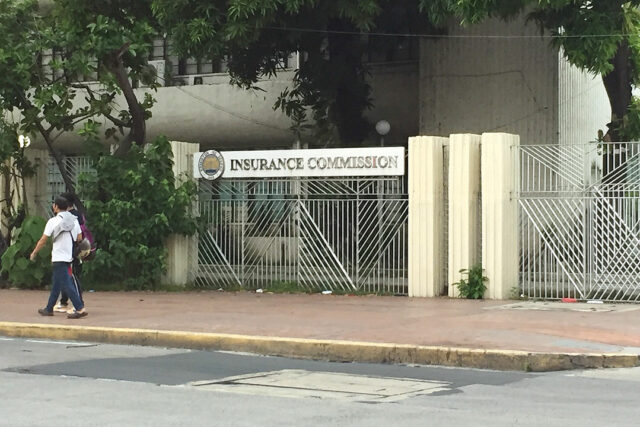
THE PROPOSED higher minimum capitalization requirement for health maintenance organizations (HMOs) could cause “a few” providers to halt their operations but is unlikely to affect larger firms, the Insurance Commission (IC) chief said.

“We studied it and only a few will be hit. If I remember correctly, around seven providers will be affected, but they only have small coverages. What we might do is limit the number of those who have lower capitalization. We’re still open to suggestions,” Insurance Commissioner Reynaldo A. Regalado told reporters on Tuesday.

Mr. Regalado said he hopes to immediately implement the new capital rules as these would help ensure that HMO clients can be adequately covered by their providers.

The IC last month issued an advisory seeking industry comments on a possible increase in HMOs’ minimum paid-up capital requirement, which will be implemented over 10 years.

Under the proposal, from the current P10-million requirement, existing HMOs will need to have at least P50 million in paid-up capital by end-2024, while new HMOs will need to put up at least P100 million in capital.

By end-2025, all HMOs should have at least P100 million in capital. This will be increased to P200 million by end-2028, P350 million by end-2031, and to P500 million by end-2034.

Most of the bigger firms are already compliant with the increased capital requirement as some life insurance companies are setting up or have established their own HMOs, which ensures they have enough buffers, Mr. Regalado said.

Meanwhile, the IC has already closed two HMOs and could close two more, due to their inability to meet the current minimum capital level, he noted.

Mr. Regalado said they will help find ways to keep existing HMOs from being closed down when the higher capital requirements are implemented, including facilitating mergers.

“We’re very open because they have existing coverages already. We have to take care of the public, so the adjustments have to be clearly set out,” he added.

The HMO industry swung to profit in the first quarter amid higher revenues despite increased benefit payouts, IC data showed.

The industry booked a combined net income of P6.8 million in the first three months of 2024, a turnaround from the P319-million net loss incurred in the same period last year, IC data based on the financial statements of 24 licensed HMOs showed.

Only five out of the 24 licensed HMO companies recorded net losses in the period, according to the report, with all firms meeting the current P10-million capital requirement. — A.M.C. Sy

Building stronger defenses with smarter password management

By Ramprakash Ramamoorthy

THE PHILIPPINE government is taking action to strengthen its cybersecurity measures, such as enforcing appropriate regulations on digitalization. In recent news, the Philippine Computer Emergency Response Team has urged big organizations to establish an incident response team that can act quickly to mitigate damage in the event of a successful data breach.

One of the most common cybersecurity threats is weak, unchanged passwords. Why do we choose bad passwords? Are we faithful to our old passwords, keeping the same ones for years and years? Are we partial to certain accounts and their passwords?

People tend to prioritize financial accounts over retail, social media, and entertainment accounts because a breach of a mobile payment, online banking, or trading account could result in severe financial damage. It is crucial, however, to protect our personal information, no matter the type of account.

Why do people find it difficult to remember passwords, though?

First, we don’t use passwords daily. This is especially true after we save passwords on our mobile phones or PCs. Nonetheless, saving passwords on devices is not advisable as just about anyone could access the data without our permission.

Second, we have too many accounts and passwords. Now, it is nearly impossible not to have an account (and a corresponding password) for every service and app. There are accounts we access daily, while others we use weekly or every few months, and recalling all of these passwords off the top of our head is indeed a tall order unless we have an exceptional memory. Thus, many people use one common password for all their accounts, which makes things easy not just for them but unfortunately also for hackers.

Third, there are rules to follow when creating a password for an account. These include the password needing to have at least one special character and a length of at least eight characters. These strict password policies, recommended by the National Institute of Standards and Technology (NIST), are designed to reduce cybersecurity risks and protect data and networks. They play an important role, even though they can sometimes be a pain in the neck.

Fourth, we know we can change our passwords when needed. If the option to reset passwords did not exist, however, there would be chaos for both users and organizations.

Fifth, we do not save them in the right place. The practice of listing our passwords in a spreadsheet and storing it on our desktop is most assuredly not the best way to store our passwords!

If people are not doing so already, they must now begin to take their privacy more seriously. Based on the guidelines provided by NIST, we need to make certain that all of our online passwords meet these criteria: lengthy, unique, devoid of personal meaning, and updated whenever a breach is suspected.

The preferred length is 12 or more characters because it takes hackers 62 trillion times longer to crack a 12-character password than a six-character one. Meanwhile, unique passwords mean that if one is broken, other accounts are not compromised. As for not having personal meaning, this is so that social media profiles do not provide any clues as to what a person’s password might be. Following these criteria ensures the strength of our passwords, thus helping us secure our privacy and reduce the risk of a cyberattack.

At the organization level, it is essential and worth it to invest in an enterprise-grade password manager tool. This helps businesses and authorities control access to administrative passwords. It is vital to the Philippines’ cyber resilience that individuals not only make efforts to effectively protect their passwords but also that organizations lead the way in cybersecurity.


Ramprakash Ramamoorthy is the director of AI research, ManageEngine.

AirAsia Philippines to launch Nagoya route in October

NEWSROOM.AIRASIA.COM

AIRASIA PHILIPPINES is set to mount flights to Nagoya, Japan from Manila by end-October as part of the low-cost carrier’s international route expansion, it said on Wednesday.

The airline will start operating flights to Nagoya from Manila three times a week on Tuesdays, Thursdays, and Saturdays beginning Oct. 29, it said in a statement.

As part of the launch, AirAsia Philippines is offering a promotional P888 one-way base fare to Nagoya for flights booked via its AirAsia MOVE app until Aug. 11. The travel period for the promo fare is from Oct. 29 until March 29, 2025.

Nagoya will mark the company’s third route to Japan as AirAsia also operates flights to Tokyo (Narita) and Osaka.

“Japan is one of the strongest regional markets for AirAsia Philippines. In fact, we’ve already flown 210,000 guests for the first half of 2024,” Ricardo P. Isla, president and chief executive officer of AirAsia Philippines, said in a statement.

“We are confident we will double the 270,000 guests flown in 2023 with our competitive airfares, more services, better flight timings and world leading service,” he added.

AirAsia Philippines recorded 3.86 million passengers as of July 15, data provided by the company showed. In 2023, the airline logged a total of 6.6 million passengers.

In July, the airline said it also plans to capitalize on the recently approved increase in seat entitlements for flights between the Philippines and South Korea.

AirAsia Philippines has also said that it likewise plans to expand its domestic routes by adding more direct flights to popular local destinations. — A.E.O. Jose

Champagne galore! Shipwreck gives Polish divers something to celebrate

BUBBLY MAUREEN LONG/FLICKR

WARSAW — Polish divers have found a 19th-century shipwreck off the coast of Sweden laden with bottles of champagne, a “very exclusive” cargo they say may have been destined for the tsar of Russia before the vessel sank.

They discovered the wreck, which also contains porcelain and bottles of mineral water, around 60 meters below the surface of the Baltic Sea, but say they would need permission from Swedish authorities to bring the cargo to shore.

“This ship is almost whole there, it is not destroyed much, only the bow was a bit damaged,” said Marek Cacaj from the Baltictech diving group.

“In the beginning, we didn’t pay attention to the load of this ship, we just went around it. But then we noticed many bottles, firstly the bottles of champagne.”

Mr. Cacaj said the divers had identified the brand of champagne, which he described as “very exclusive.”

“Most likely, this champagne belonged to the tsar, so the load was meant to go to Russia, which could really increase its value a lot,” he said.

“We also know, because we are in touch with the producer of this champagne, that there was a champagne produced specifically for the tsar that was sweeter, just for him.”

If the divers get permission to remove some bottles, Mr. Cacaj said, they will send them to the manufacturer to ascertain how much they might now be worth and whether they are still drinkable.

However, it is not only the champagne that would have been valuable to people at the time, as mineral water was highly prized for its reputed medicinal qualities.

“We need to remember that in those times… mineral water was a very precious load,” Mr. Cacaj said. “It was often escorted by police or the army.” — Reuters

Carina and EV insurance

PHILIPPINE STAR/MIGUEL DE GUZMAN

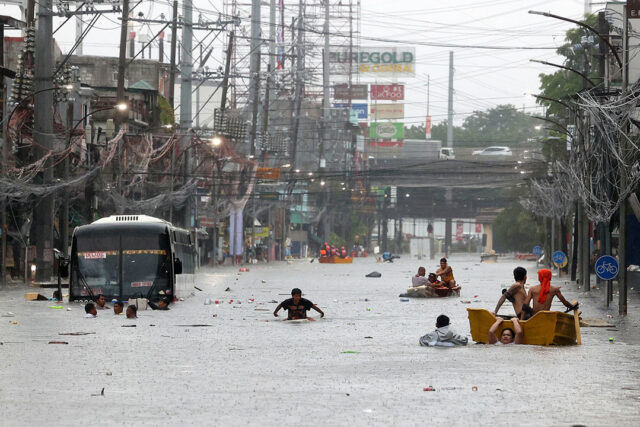
Typhoon Carina and the monsoon rains resulted in flooding in many parts of the country last week, which led to much damage not only in Metro Manila but more so in Northern and Central Luzon. Seeing how the floods adversely affected particularly land transport, I can only wonder if the recent typhoon is making electric vehicles (EV) owners rethink their purchases.

Late last year, I wrote about how improvements in EV range, and EV’s seemingly lower maintenance cost compared to regular cars, were making me consider shifting to an EV for daily use. But with last week’s rains, and the ensuing damage to many vehicles caused by the widespread flooding, I now have my doubts.

Car manufacturers, car dealers, and the motor vehicle insurance industry will be helping the market make a more informed decision on future vehicle purchases if they can make public any data on how vulnerable EVs and hybrid cars are to flood damage. Are EVs and hybrid cars more vulnerable than gas or diesel cars to severe or even “total” damage from floods?

Also, are flood-damaged EVs and hybrid cars more expensive or more difficult to repair? How big is the inventory of parts and components that manufacturers make available to car dealers to repair these EVs and hybrid cars? And, what is the level of expertise of dealerships to repair damaged vehicles in a timely manner? I reckon at this point EVs and hybrid cars can be repaired only by the casa or the dealerships.

I am unsure as to what metrics can be presented to the public. Perhaps the number of insurance claims filed by EV owners claiming flood damage? And of these claims, how many of these EVs or hybrid cars were declared a “total loss”? And maybe the average cost of repair for these EVs and hybrid cars? As for regular cars claiming flood damage, what percentage are declared a “total loss” and the average cost of repair?

I can only assume that flood damage to hybrid and EVs can present significant challenges for both owners and insurers. I am unsure how complex the process is of handling such insurance claims, but I guess even the level of expertise of in-house claims evaluators may not be very high when it comes to EVs and hybrid cars and determining whether they can be repaired.

It is my understanding that EVs and hybrids can incur higher repair costs due to their specialized components, particularly the battery, which I reckon can be highly susceptible to water damage as it is “electric” and is usually mounted at the bottom of the vehicle. The high cost of EV battery replacement may be enough to prompt insurers to classify flood-damaged EVs as total losses.

And given the relatively small size of the EV and hybrid market at present, there may be a limitation if not scarcity of parts and perhaps even the specialized skills required for repairs. And then there are the potential difficulties in processing claims. I am uncertain at this point if EVs and hybrid vehicles pay higher insurance premiums because of these reasons.

There have been enough public discussions on how damaged EV batteries can pose very serious safety risks, such as short circuits or fires, making EVs risky to repair in many cases. The standards required for containment, for instance, are also different for EVs compared to regular vehicles. Isolation and fire proofing are a must for damaged EVs under repair. In this sense, insurers may be more inclined to just pay for a total loss than pay for a costly and risky repair job.

The bigger question is how feasible it is to repair a flood-damaged EV. Also, is it cost-effective? Water exposure can already lead to extensive damage to the battery, electrical systems, and other critical components of regular cars, what more for EVs and hybrid vehicles? And, assuming cost-effective repairs are possible, what is the impact of flood damage on the long-term reliability of an electric vehicle?

For many flood-damaged regular cars, corrosion and electrical issues can persist after repairs, leading to recurring maintenance problems. And considering that EVs and hybrid vehicles may be more vulnerable to flood damage given the nature and character of their electrical systems, the risks posed by corrosion and electrical issues to them may be more severe.

Carina is one instance where transparency in insurance claims data will be helpful to the market. Car manufacturers and their dealers should also be upfront and forthright when responding to inquiries from customers on how their EVs and hybrid vehicles performed during and after the floods, and how their service centers dealt with flood-damaged vehicles.

The simplified approach is to simply declare as a total loss any EV that was submerged in flood water from maybe the dashboard and up, and for a specific period, say two hours or more. This can simplify the claims process, and, in a way, reduce future risks related to the performance and safety of an EV or hybrid car that is repaired. However, this can also be very costly to insurance companies, and the insured.

The issue is whether we can risk attempting extensive repairs on complex and sensitive machinery such as EVs and hybrid vehicles. It is a fact that EVs and hybrids do not run or operate anything like gas or diesel vehicles. In the coming months, I am sure the pre-owned market will be flooded — no pun intended — with relatively new cars.

Ultimately, the market might see a rise in insurance premiums for EVs and hybrid vehicles. At this point, I believe it will be difficult for the public to insist on parity with insurance premiums for regular cars. Again, claim history after Carina will be a determinant here, and perhaps the Insurance Commission should thoroughly analyze the data before making any calibrations.


Marvin Tort is a former managing editor of BusinessWorld, and a former chairman of the Philippine Press Council

matort@yahoo.com