Home Blog Page 2211

How SMIC balances risk preparedness with community gains

TIMOTHY DANIELS

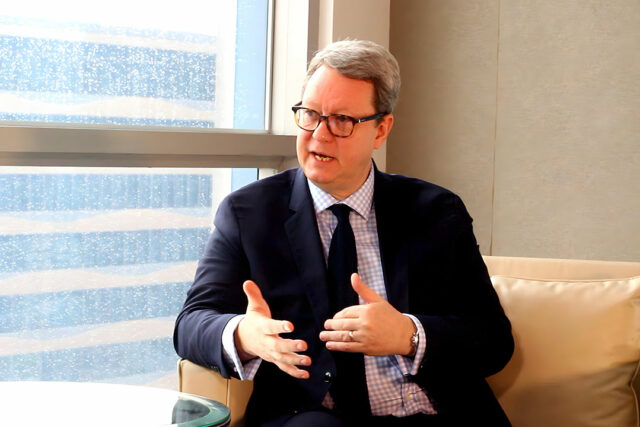
SM Investments Corp. (SMIC) is working to enhance the conglomerate’s preparedness for future risks while driving long-term benefits for communities and the environment, according to Timothy Daniels, SMIC consultant for investor relations and sustainability.

The conglomerate is dedicating 10% of its annual capital expenditure (capex) budget, primarily through SM Prime Holdings, Inc., to incorporating disaster-resilient features across its businesses, Mr. Daniels told Editor-in-Chief Cathy Rose A. Garcia during an episode of BusinessWorld One-on-One online interview series themed “The Reinvention of Business.”

“Sustainability is also thinking about the long-term risks, which a business should be thinking about. You have to pull back for a second and not get hung up on the frameworks,” he added.

For 2024, SMIC has allocated up to P115 billion in capex to support its expansion plans.

“We do look very long term, and we think we have a tremendous amount to contribute in the areas where we are experts. I think how we want to do it is to create win-win situations for everybody,” Mr. Daniels said.

He noted that the SM group’s companies each have their own sustainability initiatives.

“Every part of the group has sustainability things… Whether it’s looking at how to design energy-efficient buildings, how to prepare for disaster resilience or climate change, those are very property specific initiatives in SM Prime,” he said.

“In our retailing arm, it’s very customer-facing initiatives. We introduce more green habits and more green products into the country. In our banks, it’s how we create financial inclusion, and funding green and blue projects and renewable energy,” he added.

Mr. Daniels said incorporating sustainability features will pay off in the long term.

“When we look at the environment, it’s extra cost to design and build buildings that are energy efficient and disaster resilient. But we get it back by being more efficient operators,” he said.

“In the long term, we get it back by being prepared for when the worst things could happen. There isn’t a trade-off from our point of view between being responsible and being a successful business. Being a successful business means you think responsibly,” he added.

He said companies can benefit both shareholders and communities without losing profitability.

“A successful long-term company thinks about its stakeholders. It’s just a wise business decision to look after the people who make you successful. It’s a very practical thing that corporates should do to protect their own assets. If you do it right, you can also look after tenants, the communities around us, and we can try to make sure that everybody is gaining from how we think about dealing with climate change,” Mr. Daniels said.

“One of the things you have to realize is it’s not a trade-off between doing good business and doing sustainable business. It’s actually the same thing. As a group overall, we have a very big role to play in creating modern development, in creating employment, in creating economic growth. That benefits so many people,” he added. — Revin Mikhael Ochave

T-bill rates drop further on robust demand

BW FILE PHOTO

THE GOVERNMENT made a full award of the Treasury bills (T-bills) it offered on Monday as yields declined across the board amid strong demand after the central bank announced it would cut banks’ reserve requirement ratios (RRR) and the Finance chief said he would back a big rate cut at the Monetary Board’s next policy meeting to mirror the US Federal Reserve’s latest move.

The Bureau of the Treasury (BTr) raised P20 billion as planned from the T-bills it auctioned off on Monday as total bids reached P93.257 billion, almost five times as much as the amount on offer and higher than the P77.899 billion in tenders seen the previous week.

Broken down, the Treasury borrowed P6.5 billion as programmed from the 91-day T-bills as tenders for the tenor reached P29.64 billion. The three-month papers were quoted at an average rate of 5.38%, 36.3 basis points (bps) lower than 5.743% recorded last week, with the BTr only accepting bids with this yield.

The government made a full P6.5-billion award of the 182-day securities, with bids for the tenor reaching P24.66 billion. The average rate of the six-month T-bill stood at 5.48%, down by 46 bps from the 5.94% fetched last week and with all accepted bid yields being at this level.

Lastly, the Treasury raised P7 billion as planned via the 364-day debt papers as demand totaled P38.957 billion. The average rate of the one-year debt fell by 39 bps to 5.583% from the 5.973% quoted last week, with accepted rates ranging from 5.58% to 5.6%.

At the secondary market before the auction, the 91-, 182-, and 364-day T-bills were quoted at 5.7359%, 5.8795%, and 5.9249%, respectively, based on PHP Bloomberg Valuation Service Reference Rates data provided by the Treasury.

The government fully awarded its offer as rates declined across all tenors after the BSP announced reductions to banks’ reserve ratios, a trader said in a text message.

The RRR cut will free up about P400 billion in liquidity, which banks can lend and put in instruments like government debt, Rizal Commercial Banking Corp. Chief Economist Michael L. Ricafort said in a Viber message.

The BSP on Friday said it will reduce the RRR for universal and commercial banks and nonbank financial institutions with quasi-banking functions by 250 bps to 7% effective on Oct. 25.

It will also cut the RRR for digital banks by 200 bps to 4%, while the ratio for thrift lenders will be reduced by 100 bps to 1%. Rural and cooperative banks’ RRR will likewise go down by 100 bps to 0%.

T-bill yields rallied after Finance Secretary Ralph G. Recto’s rate cut comments, the trader added.

Mr. Recto, who represents the government in the central bank’s rate-setting board, said he will back a 50-bp rate cut at the panel’s next meeting in October, Bloomberg reported.

“Yes, I will support a similar rate cut,” Mr. Recto said in a mobile phone message when asked whether he sees a more compelling reason for Bangko Sentral ng Pilipinas to reduce borrowing costs again at next month’s meeting after the Federal Reserve’s half-point easing move last week.

The Finance chief’s remarks on Thursday came a day after BSP Governor Eli M. Remolona, Jr. signaled that the Fed move isn’t the main consideration in deciding borrowing costs.

The BSP began its easing cycle on Aug. 15 with a 25-bp cut that brought its policy rate to 6.25%.

Mr. Remolona has said they could slash benchmark interest rates by another 25 bps within the year. The Monetary Board’s last two policy-setting meetings this year are on Oct. 17 and Dec. 19.

Monday’s T-bill auction was the last for the month. The government raised P85.2 billion from the short-term papers in September, higher than the P80-billion program, as it hiked the awarded volume at two of its four auctions.

On Tuesday, the BTr will offer P25 billion in reissued 20-year Treasury bonds (T-bonds) with a remaining life of 19 years and eight months.

The Treasury wants to raise P195 billion from the domestic market this month, or P80 billion through T-bills and P115 billion via T-bonds.

The government borrows from local and foreign sources to help fund its budget deficit, which is capped at P1.48 trillion or 5.6% of gross domestic product for this year. — A.M.C. Sy with Bloomberg

RE players seek improvements in green energy auction

FREEPIK

By Sheldeen Joy Talavera, Reporter

RENEWABLE ENERGY (RE) leaders are seeking improvements in the green energy auction program (GEAP) to allow more energy players to participate actively.

At an energy forum organized by ING Philippines on Monday, SunAsia Energy, Inc. President and Chief Executive Officer Maria Theresa Cruz-Capellan said that the government should craft “a more sophisticated auction design.”

“Gas and pump storage and even geothermal needs a special kind of auction design because it is not the same as solar and wind…That kind of a market mechanism has to be more specific function design. I think we’re getting there,” Ms. Capellan said.

She said that the GEA was designed to support and fit new green technologies.

“There has to be a more sophisticated auction design that will allow leaders in the energy sector to participate actively and see the signals as correct,” Ms. Capellan said.

The GEAP aims to promote renewable energy as one of the country’s primary sources of energy through competitive selection.

The Department of Energy (DoE) is set to stage two rounds of GEAP this year.

GEA-3 involves geothermal, pump-storage hydro, run-of-river hydro, and impounding hydro with a total capacity of 4,399 megawatts (MW).

Meanwhile, the DoE is also targeting to hold GEA-4 which involves renewable energy technologies and energy storage systems and liquefied natural gas technologies.

Ms. Capellan noted the “red flags” during the second round of GEA, which resulted in few takers and subscribed capacities.

To recall, the DoE blamed the low turnout of GEA-2 on concerns about transmission lines available for the projects and the low reserve prices on offer.

First Gen Corp. Vice-President and Head of Power Marketing, Trading & Economics Carlos Lorenzo L. Vega said that there was “a huge gap” during the previous round as the capacity offered was at more than 11,000 MW, but only over 3,000 MW were subscribed.

“Clearly, we welcome more off-take mechanisms. This will help the strategy in managing risks. Having said that, it is not without difficulty because you know, while it’s good to have more off-take mechanisms, the devil is really in the details,” Mr. Vega said.

While the company looks forward to geothermal being part of the next round of GEA, Mr. Vega said that the policy makers should put up proper “price signal.”

“We hope before we get to the tenth round, the DoE has already kind of sorted it out,” Ms. Capellan said.

GEA was first conducted in 2022 and attracted 1,996.3 MW worth of renewables, while GEA-2 was held in 2023, where 3,440.756 MW were awarded.

Petron lists P16.8B worth of shares on PSE

ANG-LED Petron Corp. has listed P16.8 billion worth of shares on the Philippine Stock Exchange (PSE) following its recent follow-on offering, the oil company announced on Monday.

“We thank the investment community for their strong response and continued confidence in our company. Through their support, Petron remains a viable investment option and we are committed to making sure that we continue to grow and succeed, while being a partner in nation-building,” Petron President and Chief Executive Officer (CEO)Ramon S. Ang said in a statement.

The shares were offered from Sept. 5 to Sept. 13, consisting of 13 million preferred shares and an oversubscription option of up to four million additional shares, at a share price of P1,000 each.

Proceeds from the offering would be used to redeem the company’s Series 3A preferred shares, refinance maturing obligations, and fund general corporate purposes, including the purchase of crude oil inventory.

“These two successive oversubscribed offerings are clear testaments to the investor’s confidence in the company’s continued growth and profitability and investor’s positive perception of its management,” PSE President and CEO Ramon S. Monzon said during the bell-ringing ceremony.

The latest offering marks the second tranche of Petron’s shelf registration for up to 50 million preferred shares. In the first tranche, the company offered up to 22.5 million preferred shares.

Petron tapped BDO Capital & Investment Corp. as the sole issue manager. Bank of Commerce, BDO Capital, Chinabank Capital Corp., Philippine Commercial Capital, Inc., PNB Capital and Investment Corp., and SB Capital Investment Corp. have been designated as joint lead underwriters and joint bookrunners.

Meanwhile, East West Banking Corp., First Metro Investment Corp., and RCBC Capital Corp. were tapped as the selling agents for the offer. — Sheldeen Joy Talavera

Stories of angst, voices of hope

SINE KABATAAN 2024 WINNERS

FDCP presents Sine Kabataan

NINE FILMS that reflect youth’s creativity in tackling issues both personal and political were shown at this year’s Sine Kabataan Short Film Festival.

In celebration of Philippine Film Industry Month, the selection of films was screened from Sept. 20 to 22 at the Red Carpet cinemas of Shangri-La Plaza.

While the festival is over, the Sine Kabataan shorts will screen at a later date on FDCP’s all-Filipino streaming platform Juanflix.

“Besides all the enjoyment we get escaping from our real-life problems inside the dark movie theater, we put importance on Philippine cinema because of how it shapes our lives and our culture. This includes works by student filmmakers and young filmmakers, who represent the voices of the future,” said Jose Javier Reyes, chairperson of the Film Development Council of the Philippines (FDCP), at the awarding night of the short films on Sept. 22.

In May of this year, the finalists were selected after FDCP’s extensive deliberation process. They each received a production grant worth P150,000 and underwent an editing lab with industry experts.

The festival’s 7th edition boasts a mix of genres, from drama and coming-of-age stories to horror and animation. They all explore themes of identity, trauma, and aspirations, displaying the youth’s fighting spirit amid the issues of today.

CHILDREN’S PERSPECTIVE
Four of the nine films offered a unique glimpse into the minds of children to shed light on societal ills.

Zeus Batondo’s ARAPAAP, which earned a Special Mention, did this in the form of a small adventure taken on by two 12-year-old boys, Dong and Carlos. Set in the province of Abra, their little project reveals each of their heartwrenching familial motivations behind an escape to the skies.

Meanwhile, Silver Racca’s Kwitis kicks off when its central child protagonist Bonbon is tasked to find out his parents’ dream as an assignment — except his parents are no longer around and he only has his lola Belen to ask. He himself claims that his own dream is to be dead, shocking his entire class.

The sole animated film of the group, My Dog Knows All My Secrets by Vynce Ong, is another endearing childlike view of family. In it, a young girl dealing with living in a new neighborhood and the constant arguing of her parents confides in her best friend, her dog. Its end also briefly shows the perspective of the girl’s mother who gives insight to dysfunction in families.

Last Shift na ni Jaguar! by Josam Dalman is the most unconventional of the child-centered shorts. Marketed as a horror film, its lead is a hospital security guard nicknamed Jaguar, who encounters child ghost Cascas during the night shift. The well-crafted story reveals that instead of the usual ghostly fare, the real horrors are the dire healthcare situation in the country, affecting children like Cascas, and the inhumane labor conditions suffered by workers like Jaguar.

YOUNG ADULTS SPEAK UP
The other five films in the festival selection center on older protagonists, either high-schoolers or young working adults, who speak up about their respective realities.

Sa Dulo ng Linya, a drama short by Gian Arre, follows 28-year-old Erwin who stumbles upon an old tin can telephone he made with his father as a child. In testing the long-forgotten toy, his long-dead father responds, prompting him to open up about his life and seek solace in the unexpected reunion. Tensions later arise as their conversation turns to the unresovled dysfunctional relationship Erwin has with his parents.

Special Jury Prize winner Ang Halikan sa Water Fountain by Clyde Gamale starts off as a carefree look into a night of drinking by a male high-school barkada. Two boys in the group, Maki and Kaloy, share small moments of affection, often passed off as playful jests amid the macho environment, making it a subtle portrayal of the exploration of sexual identity.

Denbert Tiamson’s If I Were A Voice is more straightforward in this regard. It follows Ralph, a gay student leader being discriminated against for his homosexuality, all while a male teacher goes unpunished for inappropriate behavior towards female students. Ralph and his class decide to speak up about these injustices through a speech choir performance, in a scene that deservedly earns the film a Best Editing award.

High Tide or Low Tide by Gio Alpuente is another film with a gay protagonist, this time struggling to cope in a small, homophobic coastal barangay in Mauban, Quezon. The closeted high school student grapples with poor mental health as he navigates the complexities of his sexuality, a story that took the award for Best Screenplay.

Finally, Best Cinematography, Best Director, and Best Film winner Sa Ilalum sa Balabal sa Alitaptap (Beneath The Firefly Veil) takes viewers to another remote community, this time in Maragusan, Davao de Oro. There, young adult Joy (played by the film’s director Juvy Ann Clarito) lives with her grandfather on their ancestral land that is under threat of land grabbing. She turns to sacred rituals to drive away any further abuse to their land.

FDCP chairperson Mr. Reyes said that all the films convey a “sense of angst” that the Filipino youth feel about their society, but also “a remarkable strength” that can give people hope.

A subscription to FDCP’s all-Filipino streaming platform Juanflix costs P99 a month. — Brontë H. Lacsamana

15th Asia CEO Awards unveils 188 Circle of Excellence honorees

The long wait is over as the 15th Asia CEO Awards announces its Circle of Excellence.

Considered the largest event of its kind in the Southeast Asia, the Asia CEO Awards honors the most successful companies and individuals in terms of excellence in business achievements and positive impact to society.

View the list of 188 companies and executives who will be honored as Circle of Excellence here: https://www.asia-ceo-awards.org/.

Presented by Robinsons Land, a number of reputable partners collaborate to ensure everyone is given an opportunity to be recognized for their inspiring entrepreneurial spirit, which ultimately leads to making the Philippines a first world nation.

“Most categories received 40 and 60 submissions from which the Circle of Excellence awardees were chosen. These organizations and people are the best of these, chosen for their out-sized contributions to the nation’s progress,” shares Richard Mills, Chairman of the Asia CEO Awards.

He added that hundreds of submissions were received which showcases the amazing strength and diversity of the country’s economy.

Mr. Mills, who is also Chairman of the Board of Judges, said, “Our research experts at PwC spent weeks analyzing and confirming information for the Board of Judges who spent many intense hours to determine awardees.”

The Circle of Excellence are part of the following categories: Airspeed SME Company of the Year, Figari Entrepreneur of the Year, IBPAP IT-BPM TechBlazer of the Year, iCXeed Diversity Company of the Year, KMC Solutions Woman Leader of the Year, KonsultaMD Most Innovative Company of the Year, Maybank Sustainability Company of the Year, MicroSourcing Young Leader of the Year, Sante Wellness Company of the Year, Sprout Solutions Technology Company of the Year, and White & Case Governance Organization of the Year.

Other categories are Company of the Year, CSR Company of the Year, Service Excellence Company of the Year, Top Employer of the Year, and CEO of the Year.

White & Case Governance Organization of the Year

  1. Cloudstaff
  2. Immuni Global, Inc.
  3. Land Bank of the Philippines
  4. Polytechnic University of the Philippines
  5. Tech Mahindra Limited
  6. Zenutna Holdings Corp. (ZHC)

KonsultaMD Most Innovative Company of the Year

  1. Cloudstaff
  2. Concentrix Philippines
  3. Eastvantage
  4. GoTyme Bank
  5. Lexmark Research and Development Corp.
  6. LSEG (London Stock Exchange Group)
  7. Pili AdheSeal, Inc.
  8. Rizal Commercial Banking Corp. (RCBC)
  9. RUSH Technologies, Inc.
  10. Securities and Exchange Commission
  11. TDCX (PH), Inc.
  12. Teleperformance
  13. UNO Digital Bank

Service Excellence Company of the Year

  1. Airspeed
  2. ASUS Phils. Corp.
  3. CGI Phils, Inc.
  4. ING Hubs BV Philippine Branch.
  5. Inventi Intellectual Holdings Corp.
  6. RELX Reed Elsevier Philippines
  7. Seda Hotels
  8. Sprout Solutions
  9. SSS
  10. Theos Cyber Solutions, Inc.
  11. VXI Global Holdings BV Phils.
  12. Wipro Phils, Inc.

Airspeed SME Company of the Year

  1. Angkat PH
  2. Aficionado-Central Affirmative Co., Inc.
  3. Asialink Finance Corp.
  4. Asian Consultancy Group
  5. Devteam Outsourcing, Inc.
  6. Ebizolution, Inc.
  7. EdukSine Production Corp.
  8. Motovita
  9. Prometheus
  10. PSO Manila | Pepper Money
  11. Tent King

Sprout Solutions Technology Company of the Year

  1. Aboitiz Land, Inc.
  2. Ask Lex PH Academy
  3. Citicore Renewable Energy Corp.
  4. Concentrix Philippines
  5. Datamatics Global Services Corp.
  6. GoTyme Bank thru Frederick Blancas
  7. Hytec Power, Inc.
  8. Inventi Intellectual Holdings Corp.
  9. KonsultaMD
  10. Land Bank of the Philippines
  11. Lenovo PCCW Solutions
  12. Lexmark Research and Development Corp.
  13. UNO Digital Bank

Top Employer of the Year

  1. Ayala Land, Inc.
  2. Bank of the Philippine Islands
  3. Concentrix Philippines
  4. Foundever Philippines
  5. Gcash
  6. Gardenia Bakeries (Philippines), Inc.
  7. Hewlett Packard Enterprise
  8. HSBC Electronic Data Processing Philippines, Inc.
  9. IBM in the Philippines — Consulting Client Innovation Center (CIC)
  10. ING Hubs Philippines
  11. Macquarie Group Services (Philippines), Inc.
  12. Magsaysay Maritime Corp.
  13. MicroSourcing Philippines, Inc.
  14. RELX | Reed Elsevier Philippines
  15. Sun Life of Canada (Philippines), Inc.
  16. Wipro Philippines

Company of the Year

  1. Clark Development Corp.
  2. Concentrix Philippines
  3. Filinvest Land, Inc.
  4. Home Credit Philippines
  5. IBM in the Philippines —Consulting Client Innovation Center (CIC)
  6. MicroSourcing Philippines, Inc.
  7. Pru Life UK
  8. Santé International, Inc.
  9. Sun Life of Canada (Philippines), Inc.
  10. UHS Essential Health Philippines, Inc.

CSR Company of the Year

  1. Amazon Operation Services Philippines, Inc.
  2. Chevron Holdings, Inc.
  3. IBM
  4. Innodata Knowledge Services, Inc.
  5. Maybank Philippines
  6. Megaworld Foundation, Inc. 
  7. Merck Business Solutions Asia, Inc.
  8. NEARSOL
  9. Philippine Manufacturing Co. of Murata, Inc.
  10. PJ Lhuillier, Inc.
  11. Port Management Office of Surigao of the Philippine Ports Authority
  12. SM Foundation
  13. Teleperformance
  14. The Medical City Clark
  15. Tsuneishi Technical Services (Phils.), Inc.

Sustainability Company of the Year

  1. Avida Land Corp.
  2. Ayala Land, Inc.
  3. Bank of the Philippine Islands (BPI)
  4. Booth & Partners Philippines, Inc.
  5. Cognizant Technology Solutions Philippines, Inc.
  6. Genpact Philippines
  7. Metro Pacific Tollways Corp.
  8. Newport World Resorts
  9. Personal Collection Direct Selling, Inc.
  10. Rizal Commercial Banking Corp. (RCBC)

iCXeed Diversity Company of the Year

  1. DDB Group Philippines
  2. DXC Technology Philippines
  3. Foundever Philippines
  4. Genpact Philippines
  5. Home Credit Philippines
  6. Northern Trust
  7. Shopee Philippines, Inc.
  8. Sun Life Global Solutions Philippines
  9. Sutherland Global Services Philippines, Inc.
  10. Synchrony Global Services, Inc.
  11. Tech Mahindra Limited
  12. Teleperformance Philippines
  13. Ubisoft Philippines

Sante Wellness Company of the Year

  1. Bank of the Philippine Islands
  2. Cognizant Technology Solutions Philippines, Inc.
  3. Fluor Daniel, Inc. — Philippines
  4. Hewlett Packard Enterprise
  5. IBM in the Philippines
  6. KonsultaMD
  7. Quantrics
  8. Shopee Philippines, Inc.
  9. Tech Mahindra Limited
  10. Ubisoft Philippines
  11. VXI Global Holdings B.V. (Philippines)
  12. Zenutna Holdings Corp. (ZHC)

Figari Entrepreneur of the Year

  1. Chino San Diego, What’s Your Flan International
  2. Eric Peter Roxas, Pure Energy
  3. Felix Veroya, Ask Lex PH Academy
  4. Jason Romeo Valderrama, JCV & Associates Project Management & Development, Inc.
  5. Jettson Yu, PRIME Philippines
  6. Jonathan So / Carlito Macadangdang, JC Premiere
  7. Karen Jane Salutan-Krukover, EdukSine Production Corp.
  8. Marydae Hannah Ramos, Chizmozza
  9. Nathaniel Marquez, MNSA, Ebizolution, Inc.
  10. Raemin Reyes, Motovita
  11. Regieno G. Valencia, Interior Construction Services
  12. Ricardo Cuna, Kurimi Milk Tea Bar
  13. Robert Jordan, Jr., Asialink Finance Corp.

MicroSourcing Young Leader of the Year

  1. Cindy Burdette, Chief Commercial Officer, KonsultaMD
  2. Felix Concepcion Veroya, Founder and CEO, Ask Lex PH Academy
  3. Jettson P. Yu, Founder and CEO PRIME Philippines
  4. Lenard G. Jabolin, President, Casapa Livestock Raisers Association, Inc.
  5. Lcid Crescent Fernandez, Chief Executive Officer, Prometheus Productions OPC
  6. Maria Isabela Blancas, Owner and Founder, One Closet
  7. Ralph Ray Dacay Chua, President and Chairman of the Board, Immuni Global Inc. and Shireli Manufacturing Company
  8. Regieno G. Valencia, Owner, Interior Construction Services

KMC Solutions Woman Leader of the Year

  1. Abigail Tina M. Del Rosario, Country Director for Philippines and President & CEO, Maybank Philippines
  2. Aleli Arcilla, Vice-President & Managing Director, Mondelez Philippines, Inc.
  3. Alex Gentry, Co-Founder, Sprout Solutions
  4. Agnes Vicenta Salayo Torres Devanadera, President and CEO, Clark Development Corp.
  5. Beatriz Latay, Chief Executive Officer, KonsultaMD
  6. Cherrie De Erit Atilano, Founding Farmer, CEO and President, AGREA Agricultural System International, Inc.
  7. Coy Ordonez, Country Executive, Northern Trust
  8. Elizabeth Digna Ventura, President, Anchor Land Holdings
  9. Maria Catalina Estamo Cabral, Undersecretary for Planning and PPP Services, Department of Public Works and Highways
  10. Jemima Villa, Country Head, Innodata Knowledge Services, Inc.
  11. Lourdes T. Gutierrez-Alfonso, President, Megaworld Corp.
  12. Ma. Gilda “Gigi” Alcantara, President, PH1 World Developers, Inc.
  13. Martha Sazon, President and CEO, GCash
  14. Mel Migriño, Country Head and Southeast Asia Regional Director, Gogolook Co. Ltd.
  15. Rosemarie P. Rafael, Chairperson and President Airspeed
  16. Vivian Que-Azcona, President, Mercury Drug Corp.

CEO of the Year 

  1. Alan Jones, CEO, Asia Energy Company (AECO) Pte. Ltd.
  2. Anand Achuthan, Global Head,Tech Mahindra Ltd.
  3. Aseem Roy, Country Head, Wipro Phils., Inc.
  4. Cesar L Wee Jr., President & CEO, Wee Community Developers, Inc.
  5. David L. Rafael, President & CEO, Aboitiz Land, Inc.
  6. Ivy Ledres, GM, Insight Direct Phils. LLC
  7. Jaeger Tanco, President & CEO, Phil Care
  8. Jennire S. Torres, Country Head & CEO, Atos
  9. Jesus Joey Marcelo, CEO, Sante International, Inc.
  10. Lars Wittig, Country Manager, International Workplace Group
  11. Patrick Gentry, CEO, Sprout Solutions
  12. Sanjeev Kumar Gupta, President & Country Head, IBM Solutions Delivery, Inc.

IBPAP IT-BPM Techblazer

  1. Elias Patrick Salazar, Delivery Head, Tech Mahindra Limited
  2. Jacob Catayoc, Chief Technology Officer, EdukSine Production Corp.
  3. Kamal Asarpota, CEO, Eastvantage
  4. Lloyd Ernst, Founder and CEO, Cloudstaff
  5. Macario Solis Fojas, Founder and President, Seven Seven Global Services, Inc.
  6. Praveer Chadha, Senior Vice-President of Customer Management Solutions, Datamatics Global Services Corp.
  7. Rosette Carrao, Managing Director, delaware Philippines
  8. Shiju Varghese, Country Head, Tata Consultancy Services (Philippines), Inc.

The 15th Asia CEO Awards, the largest business awards event in the Philippines, is supported by PwC as the Official Knowledge Partner. Official Event Venue is Manila Marriott. Official Cocktail Sponsor is PSG Global Solutions. Technology Partners are DOOHand Globaltronics. Supporters include Admall and 1Sycamore Food Ventures, Inc.

Media Partners are BusinessMirror, BusinessWorld, Manila Bulletin, Manila Standard, NET25, Philippine Daily Inquirer, and THEPHILBIZNEWS.

Experience how the Asia CEO Awards and their partners promote leadership excellence and highlight Filipino business accomplishments to the world’s business leaders. Book your seats and join the grand awards night happening on Tuesday, Oct. 8 (starting 5:00 p.m.) at the Grand Ballroom of the fabulous Manila Marriott, Pasay City.

REGISTER: https://www.asia-ceo-awards.org/registrations.


Spotlight is BusinessWorld’s sponsored section that allows advertisers to amplify their brand and connect with BusinessWorld’s audience by publishing their stories on the BusinessWorld Web site. For more information, send an email to online@bworldonline.com.

Join us on Viber at https://bit.ly/3hv6bLA to get more updates and subscribe to BusinessWorld’s titles and get exclusive content through www.bworld-x.com.

Senate approves new DBP charter on final reading

COURTESY OF DBP FACEBOOK PAGE

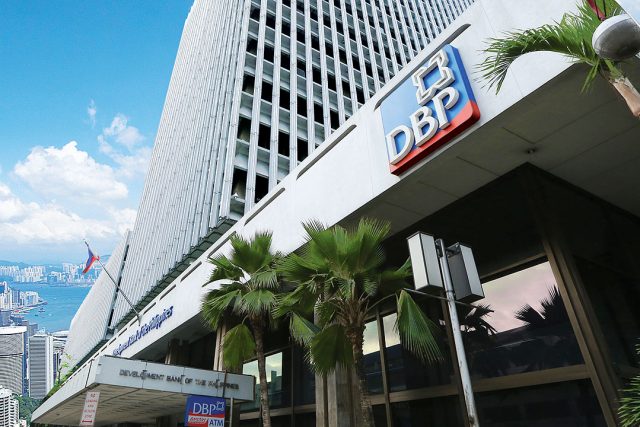
THE SENATE on Monday approved on third and final reading a measure that provides for a new charter for the Development Bank of the Philippines (DBP), which will raise its authorized capital stock and allow it to conduct an initial public offering.

Twenty-one senators voted in favor of Senate Bill No. 2804, which will repeal the DBP’s current charter. The bill increases the state-run bank’s authorized capital stock to P300 billion from P35 billion to allow it to finance its priority sectors.

“The approval on third reading of this bill takes us one step closer in providing greater accessibility of financial resources to our fellow Filipinos,” Senator Mark A. Villar, who sponsored the measure, told the plenary after the bill’s approval.

The capital hike will allow DBP to increase its assistance to its priority sectors, including social infrastructure and micro, small, and medium enterprises, among others, he said.

Under the new charter, the National Government must own 70% of the bank’s capital stock at all times, with P32 billion or 10.67% of it being fully subscribed to and paid for by the state.

The President is authorized to further increase the capitalization of the bank upon the recommendation of the Finance secretary, and to use the DBP’s unrestricted retained earnings to fund the hike.

Senate Minority Leader Aquilino “Koko” D. Pimentel abstained from voting on the measure and opposed the provision on using the unrestricted earnings to hike its capital stock, saying shareholders must have a say in how the earnings are used.

“It is my opinion that all shareholders have a stake in the unrestricted retained earnings,” he told the Senate floor. “The law must recognize the distinct juridical personality of the bank from the juridical personality of the national government as a shareholder of the bank.”

DBP will also be authorized to engage in financial leasing related to government projects.

“Since its establishment, the DBP has served the medium- and long-term financial needs of various sectors, particularly agricultural and industrial enterprises in the countryside,” Senator Emmanuel Joel J. Villanueva told the floor after the measure’s approval.

“This bill is a response to the changing times that require us to provide our people with more resources to fund developmental projects and ventures and promote financial inclusion,” he said. — John Victor D. Ordoñez

Court rules in favor of Meralco in dispute over power supply charges

PHILSTAR FILE PHOTO

THE Court of Appeals (CA) has ruled in favor of the Manila Electric Co. (Meralco) and its supplier MPower, overturning a decision by the Energy Regulatory Commission (ERC) that barred MPower from disconnecting the power supply of Atlanta Industries, Inc. over unpaid fuel cost recovery adjustments.

The CA Seventh Division said the ERC had no jurisdiction to resolve the pricing dispute between MPower and Atlanta Industries, as such matters are outside the scope of the ERC under the Electric Power Industry Reform Act.

“The ERC should have referred the matter to arbitration, as agreed upon by the parties in the Retail and Electricity Supply Agreement (RESA),” the 14-page decision penned by Associate Justice Ramon A. Cruz read.

“More importantly, because the ERC lacks jurisdiction to hear the dispute between MPower and Atlanta, the assailed Order was issued without jurisdiction and is therefore null and void,” the ruling publicized on Sept. 18 added.

The court ruled that the ERC had no legal basis to intervene in the pricing dispute that stemmed from the 2016 RESA, in which MPower agreed to supply electricity to Atlanta at a fixed price.

Meralco and MPower questioned ERC’s jurisdiction, arguing that pricing in the contestable market is beyond the agency’s power, to which the tribunal agreed.

In 2022, MPower introduced fuel cost recovery adjustments, citing increasing global fuel costs.

Atlanta rejected the additional charges, saying the fixed price should not be subject to adjustments, prompting it to file a petition before the ERC to challenge the imposition.

The ERC ruled in favor of Atlanta in March 2023, ordering MPower to stop issuing disconnection notices and refrain from cutting Atlanta’s power while the dispute was being resolved.

Meralco’s controlling stakeholder, Beacon Electric Asset Holdings, Inc., is partly owned by PLDT Inc.

Hastings Holdings, Inc., a unit of PLDT Beneficial Trust Fund subsidiary MediaQuest Holdings, Inc., has an interest in BusinessWorld through the Philippine Star Group, which it controls. — Chloe Mari A. Hufana

5 key skills SMEs should master during peak season

JCOMP-FREEPIK

Peak seasons are both a blessing and a challenge for business owners. While it brings in demand and revenue, it also tests a company’s ability to manage multiple projects and orders simultaneously. During these high-demand periods, any organization without sufficient inventory management skills will have a hard time delivering satisfactory results — in turn disappointing clients and turning away potential long-term business.

By staying ahead in key skills, like inventory management and cash flow management, order management, and supplier management, businesses will not only meet customer expectations but thrive during peak seasons.

1. Inventory Management: For Mastering Demand and Reducing Waste

Inventory management is more than just tracking stock levels — it’s about making sure you have the right supplies in the right quantities at the right time.

There are so many sophisticated tools in the market to track inventory in real time, and just as many inventory management methods. Find the best method for your business to avoid waste and reduce costs. There are some of the most common:

ABC analysis. Splits goods into three categories to identify products that contribute the most and the least to your profit and inventory cost.

Just-in-time management (JIT). Timing supplier deliveries with your production schedule so you receive raw materials only as needed for the production process.

FIFO (First in, first out). Moving the oldest stock first to keep inventory fresh.

MOQ (Minimum order quantity). Ordering the smallest possible amount of inventory to keep costs low.

If your inventory management method is working, your stockouts rates and dead stock should be reduced; inventory turnover rate, which measures how quickly stock is sold and replaced, should go up.

2. Demand Forecasting: For Predicting Customer Needs

One of the most important aspects of inventory management during peak season is demand forecasting. If you can accurately predict what products will be in high demand at a future point in time, you can prepare your inventory accordingly — preventing stockouts or over-ordering. For the most accurate demand forecasting outcomes, pay attention to the following information:

• Previous peak season sales data, to help you identify customer trends;

• Current market conditions, to help you adjust inventory orders based on external factors, like competitors, new product announcements and the like; and,

• Pre-orders and other early indicators of demand.

Demand forecasting can be as simple as looking at historical data or as complicated as factoring in market trends and long-term sales projections. Aligning your inventory management strategy with a solid demand forecasting strategy ensures that you always have enough stock to meet customer expectations without wasting resources.

3. Cash Flow Management: For Keeping Your Finances in Check

While demand forecasting helps ensure you have enough inventory, cash flow management ensures you can afford to stock that inventory. For your business to thrive during the peak season, you need a clear picture of your cash flow and financing needs.

Effective cash flow management is critical in preventing businesses from running out of funds before they can fulfill orders. If businesses overextend themselves with too much inventory, they risk depleting their cash reserves — leaving them unable to cover operational costs, like payroll, marketing, or shipping.

Here are some cash flow management tips to better support inventory management:

• Understand your fixed and variable costs, and which of these can be expendable in the case of a cash flow gap.

• Maintain a healthy balance between incoming payments and outgoing costs by invoicing promptly and tracking payment terms closely.

• Practice year-round cash flow forecasting to predict potential seasonal cash flow problems and cash on hand in advance.

Use a credit line to cover temporary gaps in cash flow without affecting long-term financial health.

4. Order Management: For Streamlining the Ordering Process

Peak season means dealing with multiple orders and projects at once, which can be overwhelming without a proper order management system in place. Order management is the process of tracking and fulfilling customer orders, from purchase to delivery, ensuring efficiency and accuracy.

Some best practices for order management during peak season are:

• Implement an order management system that integrates with your inventory management tools. An automated system can ensure seamless coordination between sales, warehouse, and logistics, allowing for faster fulfillment and fewer mistakes.

• Prioritize high-volume and high-value orders to ensure on-time delivery.

• Set clear expectations with customers about delivery times and keep them informed about their order status.

5. Supplier Management: For Reliable Inventory Replenishment

Supplier management is the process of overseeing and optimizing relationships with suppliers to ensure timely deliveries, maintain quality standards, and manage costs efficiently, ultimately supporting business operations and supply chain effectiveness.

During peak seasons, your suppliers may be stretched thin —leading to delayed deliveries, out-of-stock raw materials, and miscommunications. To avoid this, cultivate a good relationship with multiple suppliers so you have a network of reliable partners that can help you mitigate risks in case of supply chain disruptions.

Always establish clear communication with suppliers and discuss your projected demand ahead of time. Negotiating favorable terms and discounts should also be done ahead of time — especially if you need flexible delivery schedules and bulk orders.

As peak season approaches, you may struggle with the capital needed to keep your inventory levels high. This is where flexible financing solutions, like a credit line, come into play. Find a credit line that is free to open and requires no collateral so you have a standby safety net for funding inventory purchases, warehouse expansions, and logistics costs. This allows you to handle multiple orders and projects simultaneously without the fear of running out of resources.

Effective inventory management is the cornerstone of a successful peak season. When balanced with demand forecasting, cash flow management, order management, and strong supplier relationships, businesses can ensure they are well-prepared to meet the challenges of increased demand.

This article reflects the personal opinion of the author and does not reflect the official stand of the Management Association of the Philippines or MAP.


Benedict S. Carandang is a member of the MAP ICT Committee and the vice-president for External Relations of First Circle. This article was co-written with Jess Jacutan, content marketing consultant for First Circle, a fintech company that empowers SMEs through funding and free growth tools.

map@map.org.ph

benedict@firstcircle.ph

Filipino Pro Wrestling ramps up the energy

THE LOUD SLAMS on the ring and the cheers of an ecstatic crowd were a fair indicator of the comeback of live wrestling at the latest show of Filipino Pro Wrestling (FPW) on Sept. 15. It also saw FPW president and standup comedian Red Ollero make his long-awaited return to the ring.

“This is the most attended FPW event in history!,” he said before the show began. In a more smug voice, he added, “Because obviously I put myself in the main event.”

The match, titled Unfinished Business, was the culmination of Mr. Ollero’s long-standing public disapproval of FPW champion Mike Madrigal. Inspired by authority figures in pro wrestling, like World Wrestling Entertainment (WWE) impresario Vince McMahon, Mr. Ollero took on the character of a man with an inflated ego, but injected with distinctly Filipino humor.

For the show, he orchestrated a 5-on-5 match, with Cali Nueva, Evan Carleaux, Jeffrey, and James “Idol” Martinez on Team Mike, and Quatro, the YOLO Twins, and Thiago on Team Red.

To the delight of fans, Team Mike won, not because of Mr. Madrigal, who is nicknamed “The Walking Death,” but because of the fun “playtime” antics of his teammate Mr. Martinez.

However, on Oct. 20, the FPW Championship will once again be under contention as Mr. Ollero has sought the help of part-Filipino New Japan Pro Wrestling (NJPW) powerhouse Jeff Cobb to seize the belt.

“He will be my biggest challenge yet, basically Red Ollero’s last line of defense,” Mr. Madrigal said after the show.

On the overall return of in-person live wrestling, Mr. Ollero said at the sidelines of the event that there is “a promising road ahead” for FPW.

“We’ve embraced digital promotion, but we’re also glad that live events have become well-attended again,” he told reporters.

Fan favorites like FPW wrestler “Blessed” Chino Guinto also draws enthusiasm from crowds, most recently in a bid to stand his ground against favored opponent Jan Evander.

Mr. Guinto, who hones his craft in neighboring countries like Vietnam, said after the show that the local wrestling scene is “at par with global standards.”

“We’re definitely a major hitter in the global independent scene. We can only expect more,” he added.

FPW’s next show, Astig, which features the match-up of Jeff Cobb versus reigning champion Mike Madrigal, will be on Oct. 20 at Baked Studios, Makati. Tickets are available at ticket2me.net, at an early bird rate of P850 until Sept. 30, and at P1,000 for the regular rate. — Brontë H. Lacsamana

Manila office market likely to fully recover in 18-24 months — Cushman

THE METRO MANILA office real estate market is expected to fully recover in 18-24 months, according to real estate services firm Cushman & Wakefield.

“The return to full recovery trajectory of the commercial real estate market will likely take place in 18 to 24 months, depending on the speed of take-up of vacant and newly completed office spaces,” Claro dG. Cordero, Jr., director and head of research, consulting and advisory services at Cushman & Wakefield, said in an e-mail on Sept. 16.

He cited risks like the West Philippine Sea conflict, La Niña, sticky inflation, and higher-than-average interest rates.

“We will likely see an improvement in the office real estate’s vacancy rate and net absorption in the third quarter of 2024,” Mr. Cordero said.

He said Metro Manila’s commercial real estate market is expected to grow by another 100,000 square meters next quarter.

“The slower-than-expected recovery of the global economy from the cumulative effected of higher interest rates and inflation forming pressure on the growth of consumer and business confidence affecting the growth of office space demand from global companies,” he said.

Mr. Cordero said lower local interest rates will likely boost demand in key property market segments.

The Bangko Sentral ng Pilipinas (BSP) on Aug. 15, cut its policy rate for the first time in almost four years by 25 basis points (bps) to 6.25% from a 17-year high of 6.5%.

“The unexpected reduction in key policy rates will likely force more positive forward-looking market expectations of monetary policy stance,” he said.

Mr. Cordero added that the BSP’s decision will boost business and investor confidence.

Headline inflation eased to 3.3% in August from 4.4% in July, as food and transport costs growth decelerated, staying within the central bank’s 2-4% target for the year.

In its previous report, the firm said Prime and Grade A offices overall vacancies in Metro Manila fell to an estimate of 15.2% by the end of the second quarter.

This was 167 bps lower than the reported vacancy rate of 16.9% in the same quarter the previous year. — Aubrey Rose A. Inosante

GSIS lends P208B under MPL Loan Flex program

GSIS FACEBOOK PAGE

GOVERNMENT Service Insurance System (GSIS) has lent P208.17 billion to 790,514 members through its Multi-Purpose Loan Flex (MPL Flex) program in just a year since its launch, it said on Monday.

The state-run pension fund has made consistent loan disbursements under its MPL Flex program since it was launched in September 2023, it said in a statement.

“This unprecedented milestone of MPL Flex’s first anniversary only strengthens the GSIS mandate to continue to provide accessible loans to our members. The MPL Flex Loan Program is a vital resource in helping them achieve their financial goals while ensuring overall well-being,” GSIS President and General Manager Jose Arnulfo A. Veloso said.

“Loan proceeds can be used as seed capital for small businesses, providing an additional stream of income. I encourage our members to maximize the benefits of MPL Flex for personal and investment purposes,” Mr. Veloso added.

The loan program aims to provide government employees with a flexible financial solution at a 6% interest rate with repayment terms up to 15 years.

Members can borrow up to 14 times their basic monthly salary, with a maximum loan limit of P5 million.

Eligible borrowers include active and special GSIS members who are not on leave without pay and have made at least one-month premium payment. They must also have a net take-home pay of at least P5,000, in accordance with the General Appropriations Act.

GSIS saw its net income rise by 21% year on year to P37 billion in the first quarter amid strong revenues. — AMCS