Home Blog Page 2119

Higher biodiesel blend takes effect

PHILSTAR FILE PHOTO

THE MANDATE for oil companies to increase the coco biodiesel blend is set to take effect, according to the Department of Energy (DoE).

Starting Oct. 1, all diesel fuel sold in the country should contain a biodiesel blend of 3%, from 2% previously.  The blend will further increase to 4% by Oct. 1, 2025, and to 5% by Oct. 1, 2026.

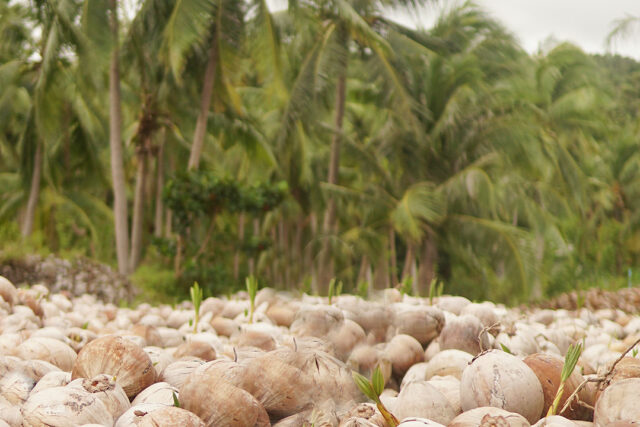
“This increase in the CME (coco methyl ester) blend is expected to benefit coconut farmers, biodiesel producers, and other stakeholders in the coconut industry with around 900 million additional coconut nuts to produce 100 to 120 million liters of CME requirements to satisfy a 1% mandatory increase in CME blend,” the DoE said.

The Biofuels Act of 2006 mandates that all liquid fuels for motors and engines contain locally sourced biofuel components.

Since February 2009, oil companies have been required to implement a 2% biodiesel blend by volume in all diesel fuel sold and distributed in the country.

The agency said that consumers are expected to benefit from the improvement in mileage from the average of 10 kilometers per liter of diesel to less than 11 kilometers. — Sheldeen Joy Talavera

Julian closes Cordillera roads

BAGUIO CITY — Access roads in Apayao province were closed down, as of 10:30 a.m., the 2nd District Engineering Office of Department of Public Works and Highways (DPWH) in Apayao said, as heavy rains pounded the province and the rest of the Cordillera region Monday.

Even the Apayao-Ilocos Norte road is closed as floodwaters engulfed major inter-provincial road systems, while waters have submerged the detour road at the ongoing Annaran Bridge Construction Project at the Madalagudug River at K0661+950 in Butao, Calanasan, Apayao.

Necessary equipment is on standby to fix the detour once the water level subsides, the DPWH-Apayao assured.

The Apayao-Ilocos Norte Road (Tertiary Road in Calanasan) is also closed due to high-water level along the detour road at the ongoing Tanglagan Bridge Construction Project at Apayao/Tanglagan River.

The Claveria-Calanasan-Kabugao Road (Tertiary Road), and Abra-Kalinga Road were also shut down due to soil collapse. The Abra-Ilocos Norte Road in Nagaparan, Danglas, Abra was also closed due to a landslide.

“Punch through operations are set to recommence today as soon as the weather improves and conditions are safe,” the DPWH-Apayao added. — Artemio A. Dumlao

SC asks DPWH to pay rehab project

PHOTO BY MIKE GONZALEZ

THE Philippine Supreme Court (SC) has ordered the Department of Public Works and Highways (DPWH) to pay a construction firm more than P5 million plus interest for rehabilitation work on the Abacan Project that was damaged by the eruption of Mt. Pinatubo in 1991.

In a 12-page ruling penned by Justice Antonio T. Kho, Jr., the high court agreed with rulings of the Regional Trial Court (RTC) of San Fernando City, Pampanga Branch 46, and the Court of Appeals in ordering DPWH to settle its P5.36 million debt to Gonzales Construction.

It also imposed a 6% interest rate per annum on the unpaid balance from the date of the RTC decision on July 17, 2014, until full payment is made.

“Gonzales Construction should be paid what is due to them; otherwise, this would amount to unjust enrichment to the State at the expense of Gonzales Construction, which this Court cannot countenance,” the top court said in a decision publicized on Sept. 27.

The construction firm finished the Abacan River Control Cut-Off Channel and Gumain-Porac Division Channel in Pampanga in the 1990s.

Despite the two projects’ completion, only over P1.18 million was paid representing partial payment for the Abacan Project, leaving an unpaid amount of over P9.7 million for the two projects.

The RTC in 2014 ruled in favor of Gonzales, finding that 90.61% of the Abacan Project had been completed and ordered DPWH to pay over PHP 5.36 million.

DPWH did not immediately respond to a Viber message seeking comment. — Chloe Mari A. Hufana

CoA flags Agusan del Norte LGU

PHILIPPINE STAR/ MICHAEL VARCAS

THE Commission on Audit (CoA) has flagged the provincial government of Agusan del Norte for failing to reclassify close to half-a-billion pesos worth of construction projects to its property accounts, resulting in misstatements that casts doubt on the accuracy of its books.

State auditors gave a qualified opinion on Agusan del Norte’s financial report as its provincial accountant failed to reclassify P463 million worth of completed construction projects to their respective proper accounts.

“Completed Infrastructure Projects amounting to P463,381,241 were not reclassified to their respective Property, Plant and Equipment (PPE) Accounts, understating the said accounts by the same amount, overstating the Construction in Progress accounts by P413,451,021.96 and understating the Accounts Payable account by P49,930,219,” the CoA report read in part.

The Provincial Government of Agusan del Norte did not immediately respond to an e-mail seeking comment.

The provincial accountant did not reclassify the completed construction projects as “final payments for the said projects not yet made,” according to the audit report. — Kenneth Christiane L. Basilio

Bomb wounds Basilan outpost cop

COTABATO CITY — A bomber lobbed a fragmentation grenade at one side of a roadside police detachment in Barangay Sunrise in Isabela City in Basilan late Sunday, hurting a policeman and causing tension among villagers in houses around.

In a report on Monday to the office of Brig. Gen. Prexy D. Tanggawohn, director of the Police Regional Office-Bangsamoro Autonomous Region, the Basilan Provincial Police Office stated that Patrolman Aldimar M. Salahuddin, then on duty, sustained shrapnel wounds in different parts of his body.

The governor of Basilan, Hadjiman H. Salliman, has condemned the bombing and offered an earnest reward for any information leading to the arrest of its perpetrators.

“That is something we will not take sitting down. We are helping the police resolve that grenade attack,” Mr. Salliman, chairman of the Basilan Provincial Peace and Order Council, said.

Talks are spreading around Isabela City, a port city in Basilan, stating that two men were behind the atrocity. One of them acted as a lookout, while the other threw the grenade beside the police checkpoint at an intersection in Barangay Sunrise. The duo escaped after a powerful explosion ripped through the surroundings.

Brig. Gen. Alvin V. Luzon, commander of the Army’s 101st Brigade in Basilan, told reporters on Monday that personnel of their intelligence unit are helping gather information that could help put closure to the incident. — John Felix M. Unson

PSEi drops on profit taking after 4 weeks of rally

REUTERS

By Revin Mikhael D. Ochave, Reporter

PHILIPPINE STOCKS closed lower on Monday as investors booked gains after a four-week rally.

The bellwether Philippine Stock Exchange index (PSEi) fell by 2.09% or 155.65 points to 7,272.65. The broader all-share index lost 1.3% or 51.75 points to 3,918.68.

“The local market plunged as investors continued with their profit-taking,” Japhet Louis O. Tantiangco, senior research analyst at Philstocks Financial, Inc., said in a Viber message. “Investors decided to book gains as the market has already been on a four-week rally.”

The market also took a cautious stance while waiting for September inflation data due this week, he added. Inflation data will be released on Friday.

Philippine inflation eased to a seven-month low of 3.3% in August from 4.4% in July and 5.3% a year earlier.

“Philippine shares fell due to profittaking ahead of September consumer price index data on Friday,” Luis A. Limlingan, head of sales at Regina Capital Development Corp., said in a Viber message.

He said the September S&P Manufacturing Purchasing Managers’ Index and August producer price index are also due this week.

In the US, key data releases include job openings and labor turnover survey report, ISM Manufacturing Index on Tuesday and the employment report on Friday, aside from speeches from US Federal Reserve Chairman Jerome H. Powell and other officials, he added.

Back home, all of the market’s sectoral indices closed lower, led by holding firms which dropped by 2.84% or 180.06 points to 6,150.15. The property index fell by 1.95% or 58.37 points to 2,930.63, while the financial index lost 1.78% or 41.76 points to 2,297.62.

Services declined by 1.32% or 29.95 points to 2,231.26, while mining and oil retreated by 1.31% or 115.75 points to 8,675.63. The industrial index fell by 1.09% or 107.01 points to 9,710.68.

Value turnover rose to P7.22 billion covering 1.1 billion shares from P6.97 billion involving 1.37 billion shares on Friday.

Decliners beat advancers 115 to 93, while 45 stocks were unchanged. Net foreign buying dropped to P87.71 million from P175.76 million.

Peso tracks dollar’s broad weakness

BW FILE PHOTO

THE PHILIPPINE PESO rose against the dollar on Monday, tracking the greenback’s broad weakness after US personal consumption expenditures for August came out cooler than expected.

It closed at P56.03 a dollar, 4.7 centavos stronger than its P56.077 close on Friday, Bankers Association of the Philippines data showed.

The peso opened at P56.03, appreciated to as much as P55.93 and weakened to as much as P56.075 against the greenback. Dollars exchanged went down to $1.29 billion from $1.47 billion on Friday.

The peso tracked the dollar’s broad dollar weakness at the weekend due to the cooler-than-expected US personal consumption data, a trader said by phone.

The personal consumption expenditures price index, the Fed’s favored inflation measure, rose by 0.1% in August after a 0.2% gain in July.

In the 12 months through August, the index rose 2.2% after rising 2.5% in July, Reuters reported on Friday.

The dollar index was weaker at 100.4, while most Asian currencies gained, led by the Malaysian ringgit and Thai baht, which were both up by 0.5%.

Investors were also cautious as the market awaited the US inflation data later this week, the trader said.

Lower global crude oil prices have also supported the peso, Michael L. Ricafort, chief economist at Rizal Commercial Banking Corp., said in a Viber message.

Brent crude futures for November delivery gained 1.56% or $1.12 to $73.10 a barrel as of 6:11 GMT. That contract was due to expire on Monday, and the more active contract for December delivery climbed by 1.45% or $1.04 to $72.58.

US West Texas Intermediate crude futures advanced 1.36% or 93 cents to $69.11 a barrel. Prices also rose on Friday, though for the week, Brent fell by 3% and WTI fell by 5%.

The trader expects the peso to trade at P55.80 to P56.20 a dollar on Tuesday, while Mr. Ricafort sees it at P55.90 to P56.10. — Aaron Michael C. Sy

PHL identified as priority site for infra investment within IPEF bloc

PHILSTAR FILE PHOTO

THE energy industry could unlock more financing as a result of Philippine membership in the Indo-Pacific Economic Framework (IPEF) after the country was singled out as a priority site for infrastructure investment by a coalition of global investors, according to the Department of Energy (DoE).

In a statement on Monday, the DoE said that the Coalition for Emerging Market Infrastructure Investment (CEMII) has picked the Philippines as its initial focus for infrastructure investment across the IPEF economies.

The Indo-Pacific Partnership for Prosperity (IP3), convenor of the coalition, called the Philippines an “ideal market” for the initiative given its “rapid growth in energy demand and ambitious renewables targets.”

IP3 is a collaboration of public, private, and non-profit organizations dedicated to mobilizing capital and expertise to advance economic growth, sustainability and inclusivity in the 14 IPEF countries.

The Philippines is targeting raising the share of renewable energy in its power generation mix to 35% by 2030 and to 50% by 2040.

The DoE said it welcomes the opportunity to collaborate with CEMII to develop a joint roadmap to accelerate investment in clean energy infrastructure.

“We look forward to working closely with the Coalition to realize our shared vision of a clean energy future for the Philippines and the broader Indo-Pacific region,” Energy Secretary Raphael P.M. Lotilla said.

Private developers will likely benefit from the initiative as they will have access to capital that is expected to be deployed quickly, the DoE said.

According to the DoE, the Philippines is estimated to require around $500 billion in investment between 2024 and 2050 to achieve a successful clean energy transition.

CEMII has announced that it will be launching country platforms dedicated to catalyzing infrastructure investment across IPEF emerging economies.

“In collaboration with the Commerce department and the government of the Philippines, the Coalition will engage in high-level meetings to identify mutual areas of interest and develop a joint roadmap to accelerate investment in clean energy infrastructure,” IP3 said in a separate statement.

CEMII was created to support IPEF economies “in achieving their economic development, human capital, and sustainability goals, through the identification, promotion and development of successful infrastructure projects throughout the region.” — Sheldeen Joy Talavera

Vietnam to remain top rice supplier after India eases restrictions

REUTERS

RICE IMPORTERS are expected to continue relying on Vietnam for their supply even after India eased it export controls on white rice, analysts said.

On Saturday, the India’s Directorate of Foreign Trade announced the lifting of the export ban on non-basmati white rice, citing high inventory levels. The Indian government imposed a minimum export price of $490 per metric ton (MT).

Former Agriculture Undersecretary Fermin D. Adriano said Vietnamese traders are expected to match India’s low export price, pushing prices lower overall.

Vietnam is the Philippines’ top supplier of rice. Both governments signed a supply agreement in January giving the Philippines a quota of 1.5 million MT to 2 million MT of rice annually for five years.

“If that happens, our traders will import from their usual Vietnamese ‘suki’ (trusted sellers) instead of buying from India as they are not familiar with the exporters there,” Mr. Adriano said via Viber.

India, the world’s largest exporter of white rice, suspended exports of non-basmati white rice last year amid concerns over domestic supply, putting upward pressure on international prices.

“We hope that world price of rice will go down a bit,” Agriculture Secretary Francisco P. Tiu Laurel, Jr. said via text message.

Mr. Laurel has said that the ban on Indian rice exports pushed world rice prices higher, elevating the cost of imports which the government is counting on to keep rice affordable.

To lower the price of rice, President Ferdinand R. Marcos, Jr. signed Executive Order No. (EO) 62, which reduced tariffs on imported rice to 15% from 35% until 2028.

The Department of Agriculture (DA) said that EO 62 could bring down rice prices by P6 to P7 per kilogram.

“The lifting of the import ban could increase overall supply in the global rice market and lead to a softening of international rice prices,” Federation of Free Farmers National Director Raul Q. Montemayor said via Viber.

He added that the minimum export price is about 10% less than the $500 per MT export price charged by Vietnam and Thailand.

“It is only a minimum, so actual selling prices could be higher,” Mr. Montemayor said.

He added that importers have not patronized Indian rice despite the low price, citing quality and reliability concerns. “In the past, more rice from Pakistan was imported than from India,” he added.

“This is a big relief globally and particularly the Philippines. With EO 62 in place, the importers will now have a choice as where to source rice, much more affordable rice,” former Agriculture Secretary William D. Dar said in a text message.

The Philippines typically imports about 20% of its rice requirement.

“The Indian rice will be an attraction to importers because it will be cheaper as long as the quality is the same as that those coming from Vietnam and Thailand,” he added.

Rice imports totaled 3.09 million MT as of Sept. 19, according to the Bureau of Plant Industry. Rice imports from Pakistan amounted to 157,044 MT.

The US Department of Agriculture said that Philippine rice imports are expected to hit 4.6 million MT this year. — Adrian H. Halili

Councils to oversee individual farm commodities

BW FILE PHOTO

THE Department of Agriculture (DA) said it hopes to organize councils to oversee each key commodity, which will meet monthly in order to achieve more systematic industry consultation.

“We will be creating councils between the DA and the private sector and the other stakeholders who will meet on a monthly basis,” Agriculture Secretary Francisco P. Tiu Laurel, Jr. told reporters, noting the need to promote and increase farm output.

He added that the DA officials on the council will be tasked with managing specific commodities commonly grown in the Philippines.

“It really needs to be focused; there should be someone assigned to each industry,” he said.

He added that the DA will set short-term goals in addressing the concerns of various industries.

“We are the most complicated department in the country; we have fertilizer, pesticides, various commodities. We need to be creating councils and assigning a person per council,” he said. — Adrian H. Halili

New Cavite economic zones expecting four locators

GATEWAYBUSINESSPARK.COM.PH

THE Philippine Economic Zone Authority (PEZA) said on Monday that four companies are set to locate in the two newly proclaimed economic zones (ecozones) in Cavite.

In a statement, the investment promotion agency said that the ecozones proclaimed through Proclamation Nos. 669 and 677 have an estimated project cost of P723 million.

These are the 2,898-square-meter expansion of Gateway Business Park worth P380 million and the 191,000-square-meter new special ecozone known as NDC Industrial Estate, valued at P343 million.

According to PEZA, Gateway Business Park’s expansion is anticipating the registration of a metalworking company.

The ecozone currently hosts 28 companies, which generated $430 million worth of exports, employing 29,000.

Meanwhile, NDC Industrial Estate is set to welcome three companies engaged in the production of soap and other detergents, renewable energy, and custom electronics.

The National Development Co. industrial estate targets both PEZA-registered exporters and domestic market enterprises.

PEZA Director General Tereso O. Panga said that the two newly proclaimed ecozones are expected to boost economic activity in the region.

“These projects attract more investments and generate high-value jobs,” he said.

“In the long run, this will significantly contribute to industrial development and our goal of becoming a regional hub for manufacturing and innovation,” he added.

With the proclamation of the two Cavite locations in August, President Ferdinand R. Marcos, Jr. has so far proclaimed 24 ecozones, which included expansions, since April 2023.

This year, Mr. Marcos proclaimed 13 ecozones which have a combined cost of P2.74 billion.

To date, PEZA manages 427 operating ecozones, or ecozones with at least one existing and operating PEZA-registered business enterprise.

These ecozones are home to 4,382 locators, PEZA said. — Justine Irish D. Tabile

BIR signals major push against smuggling of farm commodities

PHILSTAR/MIGUEL DE GUZMAN

THE Bureau of Internal Revenue (BIR) said on Monday that it will deploy as many personnel as needed to deter the smuggling of farm commodities.

“The BIR will deploy all revenuers needed to fully enforce the Anti-Agricultural Economic Sabotage Act,” BIR Commissioner Romeo D. Lumagui, Jr. said in a statement.

The recently signed law, which went into the books as Republic Act (RA) No. 12022, expanded the definition of agricultural products to cover livestock, aquatic products, and tobacco.

Under the law, selling tobacco products at 30% below the daily price index will be deemed an act of smuggling.

The law covers both unmanufactured and manufactured tobacco products. It will also include cigarettes, cigars, heated tobacco products, vape, or any form of tobacco product for smoking, heating, puffing, oral or nasal use.

For 2024, the government is expected to forego P33.7 billion in revenue due to the illicit tobacco trade, Mr. Lumagui told a forum last year.

RA 12022 also classifies the smuggling and hoarding of agricultural products as economic sabotage if the value of goods is over P10 million.

The possession of smuggled goods in a warehouse, vessel, vehicle, or other storage area also counts as economic sabotage under the law.

Violators could face a fine worth five times the value of the smuggled or hoarded goods, and face life imprisonment.

The law also empowers BoC to act against corporations or entities involved in acts of economic sabotage.

Finance Secretary Ralph G. Recto last week said the new law will help boost the government’s revenue collections.

“Through a stronger and stricter crackdown on these offenders, we protect our people’s access to affordable goods and boost our revenue collections, which will allow the government to provide more essential public services to Filipinos,” he said in a statement. — Beatriz Marie D. Cruz