Home Blog Page 211

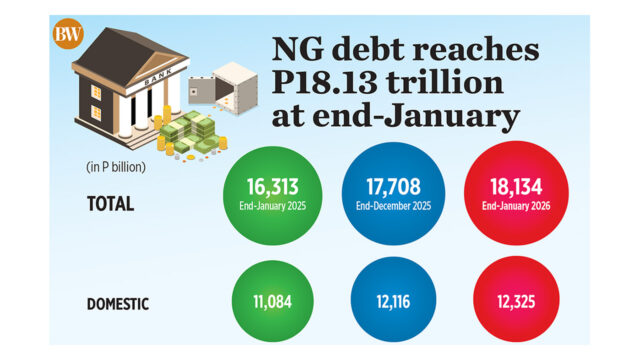
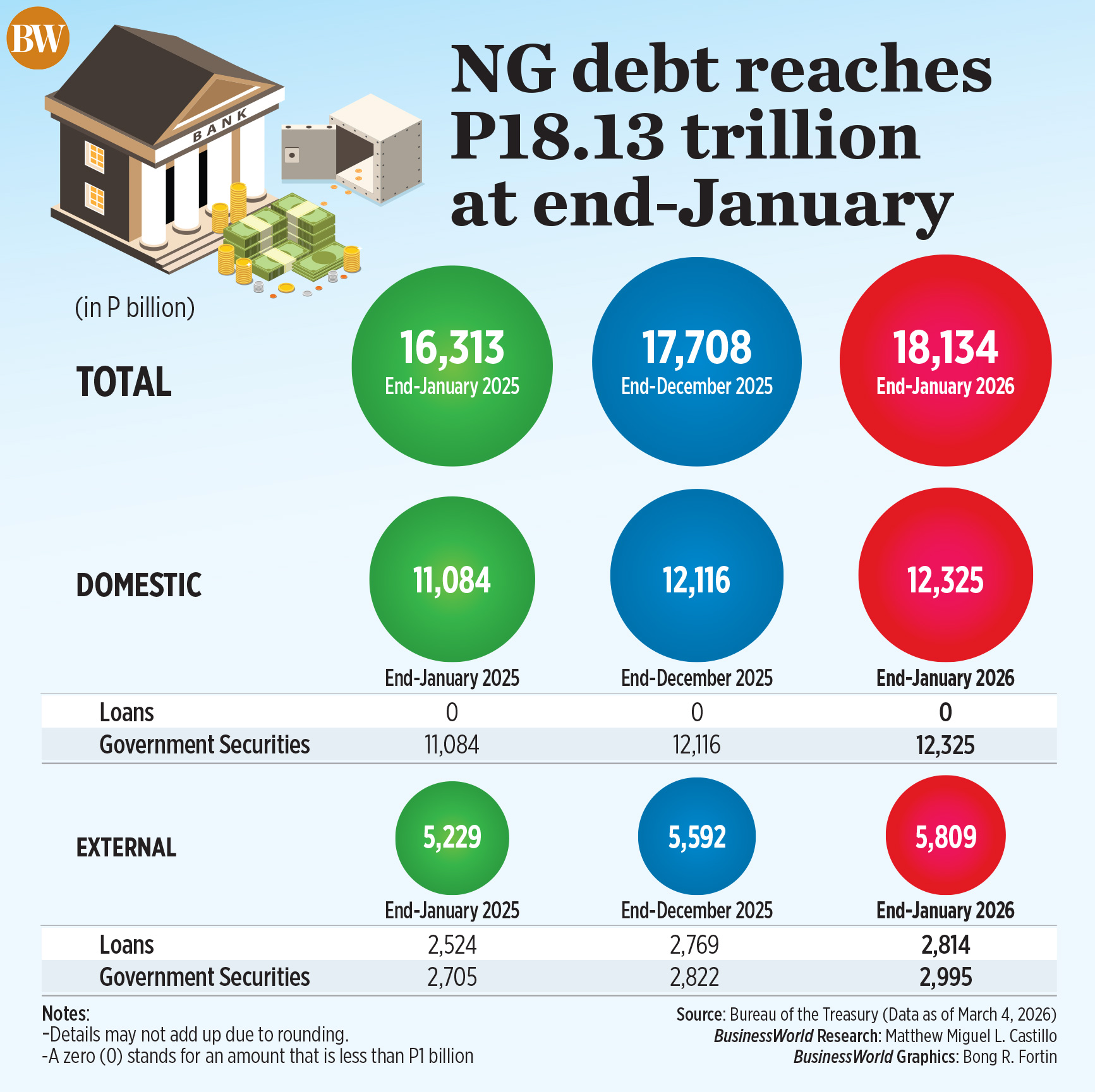
NG debt reaches P18.13 trillion at end-January

THE PHILIPPINES’ outstanding National Government (NG) debt rose to P18.13 trillion at the end of January, as the state accelerated borrowing at the start of the year to lock in funding ahead of global market volatility. Read the full story.

Buyback plans aren’t enough to soothe investors after software-sector rout

REUTERS

US SOFTWARE companies have stepped up their stock buyback plans during a months-long rout. Investors and strategists are skeptical that it will stem the selling.

Investors have been dumping software stocks since the fall, with the S&P 500 software index down 28% since late October, on worries that developments in artificial intelligence (AI) will dramatically disrupt the competitive landscape for the richly valued sector.

The selloff accelerated in January following product announcements from AI company Anthropic that raised concerns that the rapid changes in AI make it difficult to evaluate the business prospects of software companies for the coming years.

Since Jan. 12, US-listed software companies have authorized $70.5 billion in stock repurchases, nearly four times the value of announcements for the same period a year ago, according to EPFR, a division of ISI Markets. Salesforce announced a $30-billion increase to its existing share repurchase program. ServiceNow authorized an additional $5 billion in buybacks on top of the $1.4 billion remaining in its existing share repurchase plan, including plans for a $2 billion accelerated buyback.

Over the same time period, buyback announcements from US-traded companies in the broader technology sector rose roughly 63% to $110.1 billion from $67.6 billion a year ago.

“When a company announces a buyback after their stock has been hit hard, I think that is an attempt to stop the decline,” said Andrew Slimmon, senior portfolio manager at Morgan Stanley Investment Management. He said he prefers companies that repurchase shares when they have strong fundamentals and price momentum.

Investors generally like buybacks because they boost quarterly earnings-per-share by reducing shares outstanding, while also signaling confidence by management in the company.

BUYBACKS AREN’T ENOUGH
Peter Tuz, president of Chase Investment Counsel in Charlottesville, Virginia, said he is unconvinced that buybacks can be a catalyst for the software sector as a whole.

“I don’t think the buybacks are enough,” said Mr. Tuz. “There needs to be demonstrated evidence that AI isn’t going to fundamentally hurt the business of a specific software company. That just takes time.”

Mr. Tuz said his firm added to its holdings of human resources software and services company Paychex after it backed its annual financial guidance in December and then announced a $1-billion buyback program on Jan. 16, replacing a 2024 plan that called for $400 million in repurchases.

Shares have fallen 15% since that announcement to close at $94.25 on Monday, more than 40% below its June 2025 record close. Mr. Tuz said it could take “several quarters of hitting and hopefully exceeding revenue and earnings targets before the stock probably rises.”

Historically, companies that buy back their shares have tended to beat the broader market. The S&P buyback index has outperformed the S&P 500 over the last 20 years, though in the last three years the index has lagged the broad-market benchmark. Share repurchases hit a $1.38 trillion record in 2025, up from $1.34 trillion in 2024, according to EPFR.

Daniel Morgan, portfolio manager at Synovus Trust in Atlanta, Georgia said that buybacks would likely not boost the performance of software stocks “as investors will focus more on the long-term fundamental outlook.”

That outlook is undergoing a reappraisal. The S&P software and services index as of late February traded at a valuation of 22 times forward 12-month earnings, down sharply from 32 in October. — Reuters

Peso drops to near one-month low as Mideast war jolts markets

BW FILE PHOTO

THE PESO fell to a near one-month low against the dollar on Wednesday as the Middle East conflict continued to weigh on market sentiment.

The local unit dropped by 13.5 centavos to close at P58.57 against the greenback from its P58.435 finish on Tuesday, data from the Bankers Association of the Philippines showed.

This was its weakest finish in almost a month or since it ended at P58.585 a dollar on Feb. 6.

The peso opened Wednesday’s trading session lower at P58.50 per dollar. It climbed to a high of P58.45, while its intraday low was at P58.649 versus the greenback.

Dollars traded went down to $1.774 billion from $1.927 billion on Tuesday.

A trader said by phone that the war in the Middle East and its impact on oil prices dragged market sentiment, weighing on the peso.

The local currency sank further as the dollar was generally stronger as increasing oil prices heightened inflation expectations and reduced monetary easing bets, Rizal Commercial banking Corp. Chief Economist Michael L. Ricafort said in a Viber message.

“The possible large increase in local fuel pump prices could lead to higher inflation and inflation expectations as well as second-round inflation effects if the war on Iran drags on,” he added.

For Thursday, the trader sees the peso moving between P58.30 and P58.70 per dollar, while Mr. Ricafort expects it to range from P58.45 to P58.65.

The dollar held firm near a three-month high in Asia on Wednesday, with investors retreating from the euro as the conflict in the Middle East sparked fears of a sustained rise in energy prices and took a heavy toll on stock markets, Reuters reported.

The euro slipped 0.2% to $1.1590, extending losses into a third day after earlier hitting its weakest since late November. That followed data released on Tuesday which showed euro zone inflation at a higher-than-expected level in February before the start of the Iran conflict.

Financial markets resumed their sell-off on Wednesday as growing fears of a surge in inflation rippled across stocks and bonds after Israeli and US forces pounded targets across Iran, prompting a rush for cash among investors.

Global oil and gas prices have jumped as the strikes on Iran disrupts energy exports from the Middle East, with Tehran’s retaliatory attacks on ships and energy facilities closing navigation in the Gulf and forcing production stoppages from Qatar to Iraq.

The benchmark Brent crude oil contract gained 1.9% on Wednesday to $82.94 per barrel, hitting the highest since July 2024 and taking gains since Friday to 14%. European gas prices are up 70% since the end of last week.

The US dollar index, which measures the greenback’s strength against a basket of six currencies, was up 0.1% at 99.208, after earlier reaching its strongest level since Nov. 28.

Against the yen, the dollar was down 0.2% at 157.52 yen. — A.M.C. Sy with Reuters

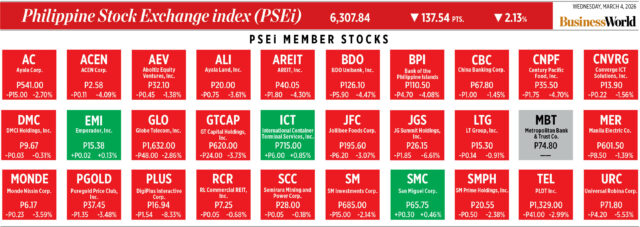
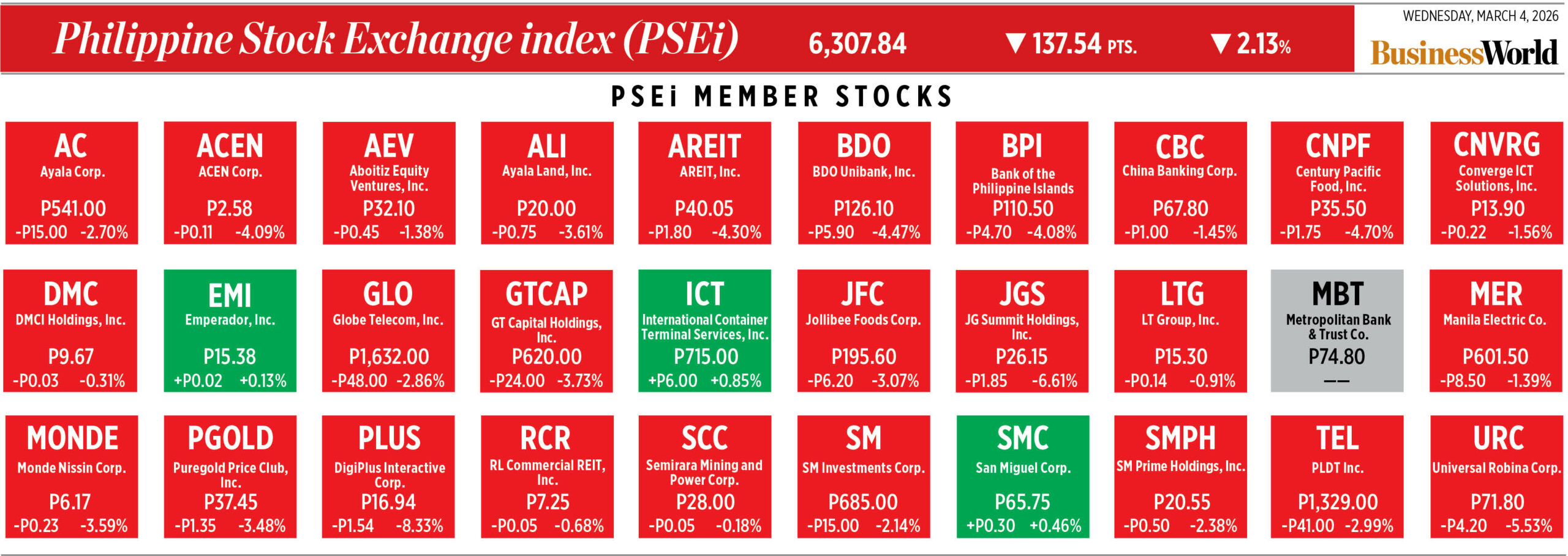
How PSEi member stocks performed — March 4, 2026

Here’s a quick glance at how PSEi stocks fared on Wednesday, March 4, 2026.


PSEi sinks to 6,300 range, joins Asia stock rout

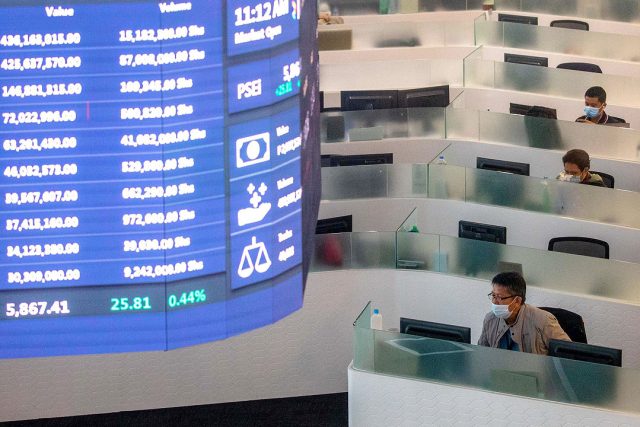
REUTERS

PHILIPPINE SHARES sank on Wednesday to pull the main gauge back to the 6,300 level, joining a regional rout, on heightened inflation concerns as the ongoing conflict in the Middle East continued to drive up oil prices.

The Philippine Stock Exchange index (PSEi) decreased by 2.13% or 137.54 points to close at 6,307.84, while the broader all shares index went down by 2.02% or 72.09 points to end at 3,485.62.

This was the PSEi’s lowest finish in a month or since it closed at 6,297.08 on Feb. 2.

“The market sank as the Iran war continued, pushing more investors to the sidelines as worries that rising oil prices could accelerate inflation heighten,” AP Securities, Inc. said in a market note.

“The local bourse declined again after a day of relief as the conflict in the Middle East weighed on sentiment,” Philstocks Financial, Inc. Research Manager Japhet Louis O. Tantiangco said in a Viber message. “Investors were worried over the effects of the war in the Middle East, primarily the rise in oil prices, on the local economy, especially on inflation, the peso, and economic growth.”

Asian stocks tanked on Wednesday, with a record-breaking market crash in Seoul, as investors dumped crowded bets on chipmakers on worries a widening Middle East war will drive an oil shock that raises inflation and delays interest rate cuts, Reuters reported.

Asia is heavily dependent on energy imports shipped through the near-shuttered Strait of Hormuz and nowhere was the strain clearer than in Seoul, where the session finished with the market plunging 12%, the largest drop on record.

Benchmark Brent crude oil futures were on the rise and up more than 13% for the week at $82.08 a barrel, though prices have come off highs since US President Donald J. Trump ordered an insurance guarantee on Gulf shipping and said the navy may escort oil tankers through the Strait of Hormuz.

All sectoral indices ended lower on Wednesday. Mining and oil plummeted by 6.37% or 1242.69 points to 18,252.96; financials sank by 3% or 63.52 points to 2,050.18; property plunged by 2.48% or 53.82 points to 2,108.16; holding firms dropped by 2.47% or 125.06 points to 4,929.90; industrials fell by 2.43% or 221.58 points to 8,892.09; and services decreased by 0.55% or 15.64 points to 2,800.05.

Decliners overwhelmed advancers, 179 to 35, while 58 names closed unchanged.

“There were only three index gainers for the day led by International Container Terminal Services, Inc., climbing 0.85% to P715. DigiPlus Interactive Corp. was the worst index performer, plunging 8.33% to P16.94,” Mr. Tantiangco said.

Value turnover declined to P8.67 billion on Wednesday with 4.5 billion shares traded from the P8.88 billion with 3.15 billion issues that changed hands on Tuesday.

Net foreign selling was at P1.31 billion, a reversal of the P1.57 billion in net buying recorded in the previous session. — A.G.C. Magno with Reuters

PHL House panel finds ‘substance’ in impeachment raps against VP Duterte

Vice President Sara Duterte arrives at the Department of Justice, May 9, 2025. — PHILIPPINE STAR/RYAN BALDEMOR

By Kenneth Christiane L. Basilio, Reporter

A HOUSE of Representatives panel on Wednesday found the impeachment complaints against Vice-President (VP) Sara Duterte-Carpio sufficient in “substance,” moving the cases forward to a congressional inquiry that will determine whether the charges should be elevated to the Senate for trial.

The House Justice Committee approved two complaints against Ms. Duterte after earlier striking out one that failed an eligibility test and another withdrawn by its complainants.

“This is about accountability over politics,” House Deputy Speaker and La Union Rep. Francisco Paolo P. Ortega V, who sponsored a complaint against the Vice-President, told reporters in mixed English and Filipino after the vote. “The situation is very different now, and all the complaints are very strong.”

The panel’s ruling will advance them to an inquiry that will determine their merits, setting the stage for a protracted debate over charges that have politically weighed on Ms. Duterte and risks reopening a deep political rift with President Ferdinand R. Marcos, Jr.

The Vice-President’s legal team refrained from commenting on the outcome of the initial proceedings but is reviewing the “actions taken” by the 39-member committee, its spokesman Michael T. Poa said in a statement. The panel ordered Ms. Duterte to respond to the accusations against her within 10 days before moving forward in the process.

Wednesday’s vote comes as Ms. Duterte, who has emerged as a strong contender in election surveys, announced her presidential bid in 2028. Mr. Marcos, who is limited to a single six-year term, is yet to name a clear successor.

Ms. Duterte had earlier survived an impeachment attempt after the Supreme Court struck down last year’s proceedings over procedural flaws.

The Vice-President faces a range of accusations, including claims she misused hundreds of millions of pesos in secret funds under the Office of the Vice-President and the Education department during her tenure as its secretary.

The filings also include accusations she amassed wealth disproportionate to her income, efforts to destabilize the government and plotting to assassinate Mr. Marcos, his wife and former Speaker Ferdinand Martin G. Romualdez, charges which she has denied.

Four new cases were filed against her after the one-year ban, but one was dismissed over a rule barring impeachable officials from facing multiple ouster complaints. Another was withdrawn by its complainants to fast-track the proceedings.

The third complaint, sponsored by Senior Deputy Minority Leader and Party-list Rep. Leila M. de Lima, cleared the substance test as 54 lawmakers voted in its favor, with one against.

It accused Ms. Duterte of misusing P500 million in confidential funds allocated to the Office of the Vice-President from 2022 to 2023, as well as P112.5 million allotted to the Department of Education during her time as its secretary.

“There is no doubt for me that our complaint is really sufficient in both form and substance,” she told reporters, whose charges also include accusations that Ms. Duterte plotted to undermine the government.

A fourth complaint backed by Mr. Ortega and Manila Rep. Bienvenido M. Abante, Jr., which raised similar allegations, also passed the committee’s initial assessment with 54 affirmative votes, and one against. Their filing also accused the Vice-President of failing to fully disclose assets in her statements of net worth.

Batangas Rep. Gerville R. Luistro, who heads the Justice committee, explained in a media briefing the panel also counted votes of ex-officio members, including deputy speakers and majority and minority leaders, on top of the 39 listed members.

The Justice panel will now examine the “discussion of actual facts” in its succeeding hearings rather than the technicalities the complaints underwent in the initial step of the impeachment process, Party-list Rep. Terry L. Ridon said.

“There are now testimonies and documents that could be sourced from resource persons and offices,” he said in the same briefing.

Ederson DT. Tapia, a political science professor at the University of Makati, said the overwhelming vote favoring the complaints shows the House remains aligned with the Marcos administration.

“Many members may view their vote not as a political verdict against the Vice-President, but as allowing the constitutional process to take its course,” he said in a Facebook Messenger chat. “At the same time, the tally does suggest that the chamber remains broadly aligned with the leadership, at least at this early procedural stage.”

Mr. Marcos survived an impeachment attempt last month after his allies in the House voted to dismiss the complaints, ruling they lacked substance.

ASEAN foreign ministers call for immediate halt to hostilities in Middle East

Smoke rises after reported Iranian missile attacks, following strikes by the United States and Israel against Iran, in Manama, Bahrain, February 28, 2026. — REUTERS/STRINGER TPX IMAGES OF THE DAY

By Adrian H. Halili, Reporter

FOREIGN MINISTERS of the Association of Southeast Asian Nations (ASEAN) member states called for the immediate cessation of hostilities in the Middle East, describing it as a “regrettable” escalation of conflict.

“This escalation is particularly regrettable as it occurred amid ongoing diplomatic efforts, including mediation initiatives led by the Sultanate of Oman aimed at advancing a negotiated solution,” the ministers said in a statement on Wednesday.

Over the weekend, the Unites States and Israel conducted a coordinated military attack on Iran resulting in the destruction of Tehran’s assets and the death of its Supreme Leader Ayatollah Ali Khamenei.

In retaliation, Iran had launched several counter attacks against Israel and US bases located in Gulf states, these include Iraq, the United Arab Emirates (UAE), Kuwait, Bahrain, Qatar, and Saudi Arabia.

The foreign ministers called on the parties to respect international law, noting that the escalating conflict continues to pose a grave threat to the lives and safety of civilians, as well as to regional and global peace and stability.

“We emphasize the importance of an immediate cessation of hostilities and call on all parties concerned to exercise utmost self-restraint, avoid any acts that may further aggravate the situation, and resolve differences through diplomacy and dialogue in the interest of maintaining peace and stability in the region,” the ministers added.

The ASEAN heads also said that they will provide emergency assistance to ASEAN nationals affected by the ongoing conflict.

PHL RESPONSE
The widening conflict in the Middle East also prompted the Philippine Senate to adopt a resolution calling on the government to hasten the deployment of measures to shield the Philippine economy and to protect and repatriate overseas Filipino workers (OFWs).

In a plenary session late on Tuesday, the chamber adopted Senate Resolution No. 41, sponsored by Senator Francis N. Pangilinan, urging the Philippine government to adopt interventions to mitigate the impact of the war and protect OFWs in the region.

The resolution calls on the Philippine government to activate targeted fuel assistance programs for the vulnerable sector, including public transportation drivers, agriculture and fisheries beneficiaries.

“We have fuel subsidy programs in the transport sector, for farmers, for fishermen because when the price of oil increases, the experience of our small workers, farmers, and fishermen will be difficult,” Mr. Pangilinan said in Filipino in a statement, late on Tuesday.

President Ferdinand R. Marcos, Jr. earlier called on Congress to grant him special powers to lower the excise tax on petroleum products, amid potential shocks in oil prices due to the ongoing conflict.

Separately, Senator Ma. Imelda Josefa Remedios “Imee” R. Marcos filed a resolution urging the Senate to conduct an inquiry into the country’s energy reserves.

“It is imperative for the Senate to assess the adequacy of the country’s energy reserves and evaluate the preparedness and responsiveness of relevant government agencies to mitigate potential ‘energy shock,’” she said in Senate Resolution No. 333.

Ms. Marcos added that the government must “exert all efforts” to secure long-term contracts that establish fixed prices to ease and buffer against sudden market spikes, as well as to access alternate markets to diversify and safeguard energy supply.

“If we have fixed-price contracts, we won’t be hit by sudden increases. The people are protected,” she said.

The Philippines imports the majority of its petroleum requirement from Middle Eastern states, any disruptions may warrant a potential surge in oil prices.

OFW WELFARE
The Senate, under Senate Resolution No. 41, also called on the government to intensify travel advisories and crisis communications for OFWs, and ensure clear guidance on registration, hotlines, and safe movement amid the ongoing conflict.

“We also want to know the immediate actions government agencies will take directly related to its impact to our economy and our Filipinos abroad,” Mr. Pangilinan said.

The Senate also urged the Department of Migrant Workers and the Overseas Workers Welfare Administration in coordination with recruitment agencies and employers to implement and expand its monitoring of Filipino workers by conducting regular welfare checks and updating verified locations and deployment lists.

It also called on relevant agencies to update contingency plans including evacuation protocols, temporary shelters, and repatriation pathways.

The resolution also urged the strict compliance with compulsory insurance coverage for agency-hired overseas workers and to strengthen claims assistance and documentation support.

The Middle East is home to about 2.4 million Filipino workers in hospitals, homes, construction and other sectors.


Philippines, China finalizing joint coast guard agreement

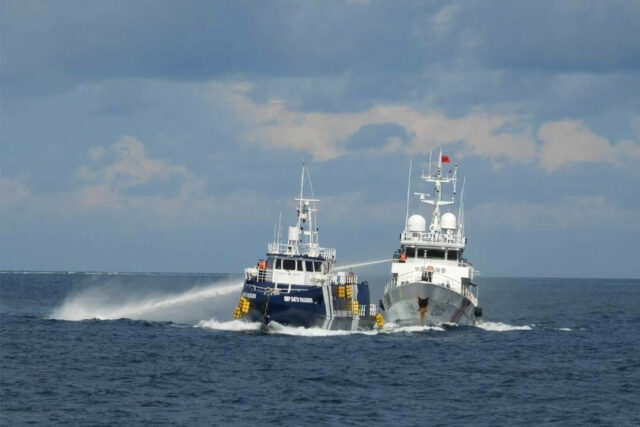
FILE PHOTO of a China Coast Guard vessel fires a water cannon at the BRP Datu Pagbuaya near Thitu Island, in the latest flare-up between Manila and Beijing in the disputed South China Sea. — PCG

MANILA and Beijing are finalizing details of a cooperation agreement between the Philippine Coast Guard and the China Coast Guard as they move to conclude negotiations, the Department of Foreign Affairs (DFA) said on Wednesday.

“There is an ongoing effort to conclude a memorandum of understanding (MoU) between the Philippine Coast Guard and the Chinese Coast Guard,” DFA Maritime Affairs spokesman Rogelio E. Villanueva, Jr. told a news briefing.

He added that the details of the MoU are still up for discussion and negotiations between the two parties.

The Foreign Affairs department earlier disclosed plans to draft an MoU to address operational issues and prevent further incidents in the South China Sea.

Tensions between Manila and Beijing have intensified amid repeated encounters at in the South China Sea between their vessels.

“The MoU serves as a confidence-building measure. We would want to hold the negotiations and to conclude this MoU as soon as possible,” Mr. Villanueva said, noting that the conclusion of talks does not have a definite timeline.

He added that it had also held talks with its Chinese foreign ministry counterparts in Beijing last month, where parties discussed views on maritime domain.

“Both sides had an open and candid exchange of views on prevailing bilateral concerns, including in the maritime domain, and explored possible areas of mutually beneficial cooperation,” he said.

The DFA official also said that discussion centered on a possible schedule for the next bilateral consultation mechanism (BCM) between Manila and Beijing.

“We are working closely with the Chinese side to determine the most opportune time and the right environment to hold this BCM,” Mr. Villanueva said. “The DFA will announce soon when this will take place.”

The BCM was established in 2017 as a diplomatic venue for both countries to discuss issues of mutual concern and explore areas of cooperation, particularly in oil and gas development. The Philippines and China last held this meeting in January 2025.

He added that both countries will also hold monthly meetings to finalize the Code of Conduct (CoC) in the South China Sea, which the Philippines aims to complete within the year as chair of the Association of Southeast Asian Nations.

“There are monthly meetings already taking place. Next week we’ll have another meeting to take place on CoC negotiations in Thailand,” he said. “There will be monthly meetings until the end of the year.”

The proposed sea code will implement rules for maritime conduct, dispute resolution and conflict prevention in the South China Sea, where China has continued to assert and expand its presence.

This is despite a 2016 ruling by a United Nations-backed arbitral tribunal that voided its expansive claims, which China continues to disregard.

Philippine officials have reported incidents involving Chinese coast guard and maritime militia vessels, including harassment, such as the use of water cannons on Philippine boats, the conduct of dangerous maneuvers, and swarming near features Manila considers part of its exclusive economic zone. — Adrian H. Halili

House panel urged to seek alternative CHED funding as travel tax cut advances 

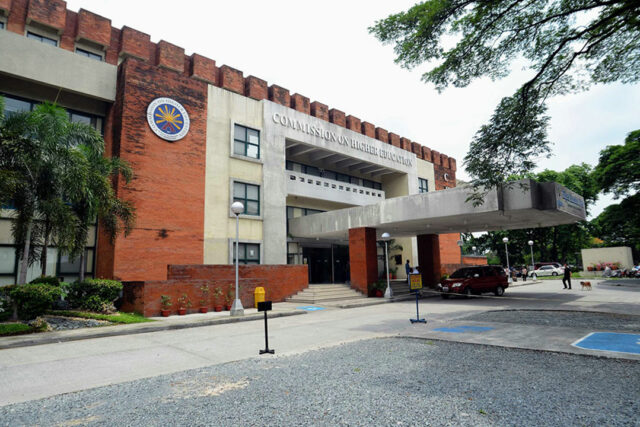
COMMISSION ON HIGHER EDUCATION

THE Commission on Higher Education (CHED) on Wednesday urged lawmakers to consider alternative funding sources for its tertiary education support program, as its chief warned of shortfalls should the government decide to abolish the travel tax.

At a congressional hearing, CHED Chairwoman Shirley C. Agrupis said that scrapping the travel tax for Filipino overseas travelers would cut a stable funding source for the Higher Education Development Program, which supports “long-term education reforms” and could affect scholarship and research programs.

“It will lose 85.6% of its funding, of which comes from the 40% of the travel tax collected,” she told the House of Representatives Ways and Means Committee. “This is a structural loss that directly affects scholarships, research, institutional upgrading and tourism education programs nationwide.”

Her appeal comes as lawmakers move to cut the travel levy, which critics deem burdensome for international travelers. The proposal has advanced in the House, where tax laws originate, with members now ironing out details amid concerns that scrapping the levy would remove funding sources for some government agencies.

At present, the government collects a travel tax of P1,620 from economy air passengers and P2,700 from first class air passengers if they are flying to a foreign country.

Exempt from travel tax are overseas Filipino workers, Filipino permanent residents overseas who stayed less than a year in the Philippines, and children aged two years and below.

The levy was first imposed by Republic Act No. 1478 in 1956 and was later amended through Presidential Decree No. 1183 in 1977. Under the law, 50% of the proceeds from the travel tax collection go to TIEZA, while 40% go to the CHED for tourism-related education programs. 

The remaining 10% goes to the National Commission for Culture and the Arts.

President Ferdinand R. Marcos, Jr. has declared proposals abolishing the travel levy as a priority of his administration.

Ms. Agrupis recommended that funding for the commission’s reform program be sourced from at least 5% of collections by the Philippine Charity Sweepstakes Office, a share of gaming revenues from the state gambling regulator, or mandatory contributions from government-owned or -controlled corporations equivalent to at least 5% of their surplus funds.

“We are here to plead and pray to the honorable members of the Ways and Means committee to find ways and means to substitute the sources, because otherwise, we will be left behind,” Ms. Agrupis told lawmakers.

She also recommended that funding for the program be sourced from new taxes, such as the digital value-added tax, or through the corporate social responsibility initiatives of private companies.

Maria Karla L. Espinosa, director at the Department of Finance, said lawmakers should consider how programs affected by funding cuts would be financed again.

“The proposal would need to consider how these programs can continue to be sustainably funded,” she told lawmakers, adding that the agency “supports the abolition of the travel tax.” — Kenneth Christiane L. Basilio

PCO inks deal with major newspapers

THE Presidential Communications Office (PCO) signed a memorandum of understanding with media executives on Wednesday in Malacañan Palace, as part of its initiatives to combat fake news. Present during the signing are (L-R), Arjay L. Balinbin, Corporate editor of BusinessWorld; Luisito “Chito” Lozada, executive editor of the Daily Tribune; T. Anthony C. Cabangon, publisher of BusinessMirror; Paolo R. Prieto, president and chief executive officer (CEO) of the Inquirer; Secretary Dave M. Gomez, acting secretary of the PCO; Herminio B. Coloma, Jr., publisher of the Manila Bulletin; Rolando Estabillo, publisher of the Manila Standard; Allen A. Macasaet, publisher and chairman of Malaya Business Insight; Anna Marie Ang-Thompson, CEO of The Manila Times; and Teresa “Tammy” T. Mendoza, senior vice-president of The Philippine Star. — YUMMIE DINGDING/PPA POOL

THE Presidential Communications Office (PCO) wants to institutionalize a multi-sectoral framework to combat digital disinformation as it formalized a partnership with several of the country’s leading broadsheets on Wednesday.

Dubbed “Oplan Kontra Fake News,” the initiative seeks to establish a unified framework for verifying social media claims and ensuring accountability in the digital space.

PCO Acting Secretary Dave M. Gomez led the signing of a memorandum of understanding at Malacañang, joined by publishers from nine major newspapers, including BusinessWorld, The Philippine Star, BusinessMirror, Daily Tribune, Malaya Business Insight, Manila Bulletin, Manila Standard, Philippine Daily Inquirer, and The Manila Times.

The agreement defines fake news as content lacking factual basis, deliberately deceptive, and capable of causing public harm, such as panic, reputational damage, or interference in democratic processes.

Under the agreement, the PCO has established a dedicated Anti-Fake News Desk to evaluate reports of misleading content.

Verified cases of disinformation will be referred to the Department of Information and Communications Technology and the Department of Justice for “prompt and proper action,” according to PCO.

“Fake news is already widespread, especially on social media; many are already believing and being deceived by it,” Mr. Gomez said in a speech in Filipino. — Erika Mae P. Sinaking

Senator calls for total vape ban

STOCK PHOTO | Image by FREEPIK

A SENATOR called on the Philippine government to ban the use of electronic cigarettes or vape products, in line with other Association of Southeast Asian Nations (ASEAN) member states that imposed a ban amid health concerns.

Senator Pilar Juliana “Pia” S. Cayetano, who heads the Ways and Means Committee, said that the Philippines should follow ASEAN countries in banning vape products following increase in e-cigarette use among adolescents aged 10 to 19.

“The tobacco industry would like us to believe that vapes and all these alternative products are safer for us. That has been their battle cry. It is not safer, that is the big problem that we have right now,” she said in a statement on Wednesday.

Among ASEAN countries that already banned vape products are Brunei, Cambodia, Laos, Singapore, Thailand, Timor-Leste, and Vietnam.

Ms. Cayetano added that the implementation of existing regulations on the use of vapes remained weak.

She said that the Food and Drug Administration (FDA) should handle the regulation of vape products instead of the Department of Trade and Industry (DTI), noting that the FDA has the proper mandate and technical expertise to control the products.

“The vape law gave the DTI the power to test and to regulate. They’re not doing their job,” Ms. Cayetano said.

Republic Act No. 11900, the Vaporized Nicotine and Non-Nicotine Products Regulation Act, granted authority to the DTI to regulate Philippine vape businesses, and lowering the purchasing age to 18. — Adrian H. Halili

MMDA teams up with RLC, GET PHL

THE Metropolitan Manila Development Authority (MMDA) has partnered with Robinsons Land Corp. (RLC) and Global Electronic Transport Philippines (GET Philippines) to provide free rides to commuters through the Electric Love Bus program.

The partnership will provide a point-to-point service to patrons of Robinsons Galleria and Bridgetowne Destination Estate, RLC said in a statement on Wednesday.

The PWD-friendly Electronic Love Bus, which will operate from 6 a.m. to 8 p.m., has a capacity of 30-35 passengers. It will run a total of eight trips per day for seven days a week, except on holidays.   

RLC noted that pick-up points will be located at Robinsons Galleria’s steel parking lay-by and between Tera Tower and Opus Mall in Bridgetowne Destination Estate.

The Libreng Sakay initiative supports modern, eco-friendly mobility for the public, which will be launched this summer, it added.
MMDA Chairman Romando S. Artes (third from right), Robinsons Land President and Chief Executive Officer Mybelle V. Aragon-GoBio (third from left), and GET Philippines President Sigfrido R. Tinga (second from left) led the signing of the memorandum of agreement for the Electronic Love Bus program.

They were joined by (left to right) MMDA Deputy Chairman Frisco San Juan, Jr., RLC Executive Vice-President (VP) and Group Business Unit General Manager Faraday D. Go, MMDA Legal Counsel Victor Maria D. Nuñez, and RLC VP for Public-Private Partnership Projects Bambie L. Andal. — CAT