Home Blog Page 2014

Stewart, Laney-Hamilton guide Liberty past Lynx in Game 2

FOR THE FIRST TIME since July 6, Betnijah Laney-Hamilton scored 20 points, and she did so in a game where the New York Liberty desperately needed it.

“What ‘B’ brings is like, this grit, this toughness. She’s giving us whatever she’s got,” Liberty forward Breanna Stewart said. “They were going under on her and she knocked that thing down with confidence. It was good to see her get into a good rhythm.”

Behind Laney-Hamilton’s breakout performance, and 21 points and a WNBA Finals-record seven steals from Stewart, host New York evened the score against the Minnesota Lynx in the championship series, winning Game 2 80-66 on Sunday afternoon in front of 18,046 fans — a record crowd for WNBA at the Barclays Center.

Stewart also had eight rebounds and five assists while shooting 7-of-18 from the floor in a stat-stuffing performance. Laney-Hamilton, a ninth-year forward, shot 8-of-14 from the floor, including 4-of-6 from 3-point land, and also had two rebounds and two assists.

The Liberty, who tied up the best-of-five series at 1-1, also got 14 points and nine rebounds from Jonquel Jones and 15 points and five assists from Sabrina Ionescu.

Liberty coach Sandy Brondello said Laney-Hamilton hadn’t been 100% healthy in the postseason, but on Sunday, she provided a big boost.

“She was massive,” Brondello said. “They had been going under on screens, so we encouraged her to shoot the 3. B helped us get this margin and win the game.” — Reuters

World Bank says 26 poorest nations in worst financial shape since 2006

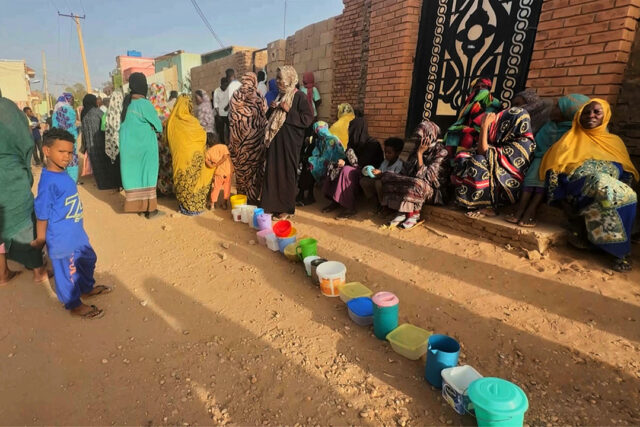
RESIDENTS wait to collect food in containers from a soup kitchen in Omdurman, Sudan, March 11, 2024. — REUTERS

WASHINGTON — The world’s 26 poorest countries, home to 40% of the most poverty-stricken people, are more in debt than at any time since 2006 and increasingly vulnerable to natural disasters and other shocks, a new World Bank report showed on Sunday.

The report finds that these economies are poorer today on average than they were on the eve of the coronavirus disease 2019 (COVID-19) pandemic, even as the rest of the world has largely recovered from COVID and resumed its growth trajectory.

Released a week before World Bank and International Monetary Fund annual meetings get underway in Washington, the report confirms a major setback to efforts to eradicate extreme poverty and underscores the World Bank’s efforts this year to raise $100 billion to replenish its financing fund for the world’s poorest countries, the International Development Association (IDA).

The 26 poorest economies studied, which have annual per-capita incomes of less than $1,145, are increasingly reliant on IDA grants and near-zero interest rate loans as market financing has largely dried up, the World Bank said. Their average debt-to-GDP ratio of 72% is at an 18-year high and half of the group are either in debt distress or at high risk of it.

Most of the countries in the study are in sub-Saharan Africa, from Ethiopia to Chad and Congo, but the list also includes Afghanistan and Yemen.

Two-thirds of the 26 poorest countries are either in armed conflicts or have difficulty maintaining order because of institutional and social fragility, which inhibit foreign investment, and nearly all export commodities, exposing them to frequent boom-and-bust cycles, the report said.

“At a time when much of the world simply backed away from the poorest countries, IDA has been their lifeline,” World Bank Chief Economist Indermit Gill said in a statement. “Over the past five years, it has poured most of its financial resources into the 26 low-income economies, keeping them afloat through the historic setbacks they suffered.”

IDA normally is replenished every three years with contributions from World Bank shareholding countries. It raised a record $93 billion in 2021 and World Bank President Ajay Banga is aiming to exceed that with more than $100 billion in pledges by Dec. 6.

Natural disasters have also taken a greater toll on these countries over the past decade. Between 2011 and 2023, natural disasters were associated with average annual losses of 2% of GDP, five times the average among lower middle-income countries, pointing to the need for much higher investment, the World Bank said.

The report also recommended that these economies, which have large informal sectors operating outside their tax systems, do more to help themselves. This includes improving tax collections by simplifying taxpayer registration and tax administration and improving the efficiency of public spending. — Reuters

China launches war games around Taiwan

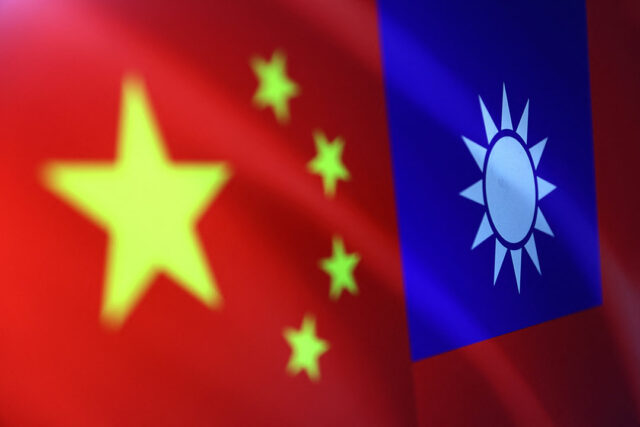
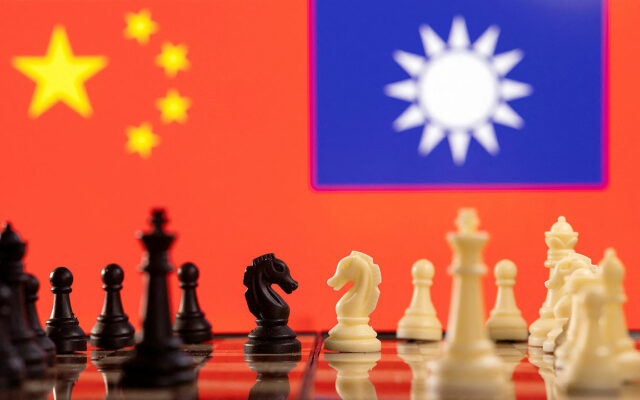
CHINESE AND TAIWANESE flags are seen in this illustration, Aug. 6, 2022. — REUTERS

TAIPEI — China’s military launched a new round of war games near Taiwan on Monday, saying it was a warning to the “separatist acts of Taiwan independence forces,” drawing condemnation from the Taipei and US governments.

Democratically governed Taiwan, which China views as its own territory, had been on alert for more war games since last week’s national day speech by President Lai Ching-te. Mr. Lai’s address was condemned by Beijing after he said China had no right to represent Taiwan even as he offered to cooperate with Beijing.

The Chinese military’s Eastern Theatre Command said the “Joint Sword-2024B” drills were taking place in the Taiwan Strait and areas to the north, south and east of Taiwan.

“The drill also serves as a stern warning to the separatist acts of Taiwan independence forces. It is a legitimate and necessary operation for safeguarding state sovereignty and national unity,” it said in a statement carried both in Chinese and English.

The command did not state when the drills would end.

It published a map showing nine areas around Taiwan where the drills were taking place — two on the island’s east coast, three on the west coast, one to the north and three around Taiwan-controlled islands next to the Chinese coast.

Chinese ships and aircraft are approaching Taiwan in “close proximity from different directions,” focusing on sea-air combat-readiness patrols, blockading key ports and areas, assaulting maritime and ground targets and “joint seizure of comprehensive superiority,” the command said.

However, it did not announce any live-fire exercises or any no fly areas. In 2022, shortly after then-US House Speaker Nancy Pelosi visited Taiwan, China fired missiles over the island.

In rare operations, China’s coast guard circled Taiwan and staged “law enforcement” patrols close to Taiwan’s offshore islands, according to Chinese state media.

Taiwan’s Defense ministry and coast guard said both agencies had dispatched their own forces while officials said Mr. Lai’s National Security Council met on Monday to discuss the situation.

National Security Council Secretary-General Joseph Wu said China had ignored Mr. Lai’s message of goodwill.

“Using military force to threaten other countries goes against the basic spirit of the United Nations charter to peacefully resolve disputes,” he told reporters in Taipei.

Chinese state media said the rocket force carried out simulated missile launches while fighter jets “opened up air assault corridors” and bombers carried out long range missions.

In a propaganda video, the Eastern Theatre Command showed a cartoon caricature of Mr. Lai with pointed ears like a devil and fighter jets and warships around the island, before ending with the image of a fist turning into hammer and then a sword pointed at Taiwan.

A Taiwan security source said there were so signs so far of any missile launches.

‘BLATANT PROVOCATIONS’
Taiwan’s China policy making Mainland Affairs Council said China’s latest war games and refusal to renounce the use of force were “blatant provocations” that seriously undermined regional peace and stability.

Taiwan’s presidential office said in a statement that China should face up to the fact of the existence the Republic of China -— Taiwan’s formal name — and respect the people of Taiwan’s choice of a free and democratic way of life.

It should “refrain from military provocations that would disrupt the status quo of peace and stability in the region, and threaten Taiwan’s democratic freedoms,” the statement said.

In Washington, officials from the administration of US President Joseph R. Biden said they were monitoring the drills and there was no justification for them after Mr. Lai’s “routine” speech. 

“We call on the PRC to act with restraint and to avoid any further actions that may undermine peace and stability across the Taiwan Strait and in the broader region, which is essential to regional peace and prosperity and a matter of international concern,” State department spokesperson Matthew Miller said, using the initials for the People’s Republic of China (PRC), China’s official name.

A senior Taiwan security official, speaking to Reuters on condition of anonymity given the sensitivity of the situation, said they believed China was practicing blockading Taiwanese ports to the north and south of the island and international shipping lanes as well as repelling the arrival of foreign forces.

Taiwan’s stock exchange largely brushed off the tensions, with the benchmark index rising 0.4% in late morning trade, and there was no sign of public alarm.

“I am actually worried that there might be accidental fire between the two sides, but I have total confidence in our country and our national army,” said finance worker Ben Lai, 51, watching jets land and take off at the Hsinchu air base.

Taiwan on Sunday had reported a Chinese aircraft carrier group sailing to the island’s south through the strategic Bashi Channel which separates Taiwan from the Philippines and connects the South China Sea to the Pacific.

Chinese state media has since Thursday run a series of stories and commentaries denouncing Lai’s speech, and on Sunday the Eastern Theatre Command released a video saying it was “prepared for battle”.

The People’s Liberation Army’s (PLA) Liberation Army Daily newspaper wrote on Monday that “those who play with fire get burned!”

“As long as the ‘Taiwan independence’ provocations continue, the PLA’s actions to defend national sovereignty and territorial integrity will not stop,” the paper said.

China held the “Joint Sword-2024A” drills for two days around Taiwan in May shortly after Mr. Lai took office, saying they were “punishment” for separatist content in his inauguration speech.

Mr. Lai has repeatedly offered talks with China but has been rebuffed. He says only Taiwan’s people can decide their future and rejects Beijing’s sovereignty claims. — Reuters

North Korea set to blow up cross-border roads with South Korea amid drone row

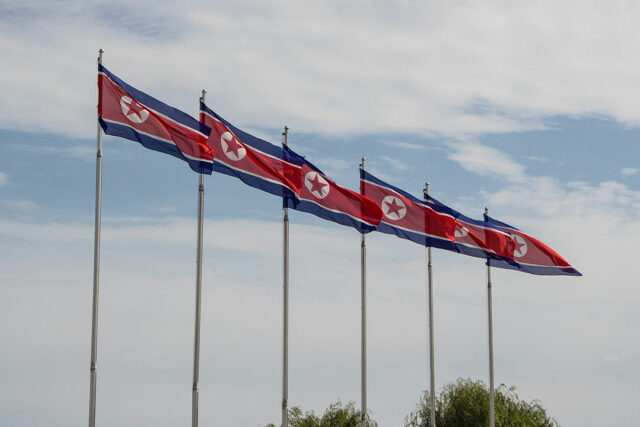
MICHA BRANDLI-UNSPLASH

SEOUL — North Korea is getting ready to blow up roads that cross the heavily militarized border with South Korea, Seoul said on Monday, amid an escalating war of words after the North accused its rival of sending drones over its capital Pyongyang.

North Korean troops were working under camouflage on the roads on its side of the border near the west and east coasts that are likely preparations to blow up the roads, possibly as early as on Monday, South Korea’s military spokesman said.

Last week, North Korea’s Army said it would completely cut roads and railways connected to South Korea and fortify the areas on its side of the border, state media KCNA reported.

Separately, North Korea on Friday accused South Korea of sending drones to scatter a “huge number” of anti-North leaflets over Pyongyang, in what it called a political and military provocation that could lead to armed conflict.

Lee Sung-jun, a spokesman for the South’s Joint Chiefs of Staff, declined on Monday to answer questions over whether the South Korean military or civilians flew the drones.

In further statements over the weekend, North Korea warned of a “horrible disaster” if South Korean drones were again found to be flying over Pyongyang. On Sunday, it said it has put eight fully armed artillery units at the border “on standby to open fire.”

South Korea’s military has said its refusal to answer questions on the drones is because addressing what the North has alleged would be to get drawn into a tactic by Pyongyang to fabricate excuses for provocations.

South Korea has sought to boost its anti-drone defenses since 2022, Mr. Lee said, when five North Korean drones entered its airspace and flew over the capital Seoul for several hours.

Lee Kyoung-haing, an expert in military drone operations at Jungwon University, said civilians would have no trouble getting drones with ranges of 300 km (186 miles), the round trip from the South to Pyongyang, with light payloads such as leaflets.

On Sunday, North Korea’s defense ministry said the drones, which it said were detected over Pyongyang on three days earlier this month, were the kind that required a special launcher or a runway and it was impossible a civilian group could launch them.

The two Koreas are still technically at war after their 1950-53 war ended in an armistice, not a peace treaty.

The cross-border links are remnants of periods of rapprochement between the countries including a 2018 summit between the leaders when they declared there would be no more war and a new era of peace had opened.

North Korea has reintroduced heavy weapons into the Demilitarized Zone border buffer and restored guard posts, after the two sides declared a 2018 military agreement aimed at easing tensions no longer valid. — Reuters

Eight monkeys found dead at Hong Kong zoo, government says

HONG KONG — Eight animals were found dead in a Hong Kong zoo, the city’s government said on Monday, a rare incident in the financial hub, with necropsy and laboratory tests arranged to find out the cause of deaths.

The animals, a De Brazza’s Monkey, one Common Squirrel Monkey, three Cotton-top Tamarins and three White-faced Sakis, were found dead at the city’s Zoological and Botanical Gardens (HKZBG) on Sunday, Hong Kong’s Leisure and Cultural Services Department said in a statement.

While awaiting test results, the mammals section of the zoo will be shut from Monday for disinfection and cleaning.

“We will also closely monitor the health conditions of other animals. During this period, other facilities of the HKZBG will remain open,” the statement said.

The HKZBG is the oldest park in the territory. Built in 1860, it houses around 158 birds, 93 mammals and 21 reptiles in about 40 enclosures. — Reuters

NASA spacecraft to study whether Jupiter’s moon Europa can harbor life

Painting of the NASA logo, also called the meatball, continues on the 525-foot-tall Vehicle Assembly Build ing (VAB) at the agency’s Kennedy Space Center in Florida on June 23, 2020. — NASA/BEN SMEGELSKY

WASHINGTON — The National Aeronautics and Space Administration (NASA) is set to launch a spacecraft to Jupiter’s moon Europa, considered one of our solar system’s most promising spots to search for life beyond Earth, to learn whether this ice-encased world believed to harbor a vast underground ocean is habitable.

The US space agency’s robotic solar-powered Europa Clipper spacecraft will be launched on a SpaceX Falcon Heavy rocket from the Kennedy Space Center in Cape Canaveral, carrying nine scientific instruments. After traveling 1.8 billion miles (2.9 billion km) in a trip lasting about 5-1/2 years, Europa Clipper is due to enter orbit around Jupiter in 2030.

After a delay caused by Hurricane Milton, NASA set a tentative launch time for 12:06 p.m. ET (1606 GMT) on Monday.

Scientists have a keen interest in the salty liquid water ocean that previous observations have indicated resides below Europa’s icy shell.

“There is very strong evidence that the ingredients for life exist on Europa. But we have to go there to find out,” said planetary scientist Bonnie Buratti of NASA’s Jet Propulsion Laboratory, the mission’s deputy project scientist.

“Just to emphasize: we’re not a life-detection mission. We’re just looking for the conditions for life,” Ms. Buratti added.

Europa Clipper is the biggest spacecraft NASA has ever built for a planetary mission, measuring about 100 feet (30.5 meters) long, about 58 feet (17.6 meters) wide and weighing approximately 13,000 pounds (6,000 kg). It is larger than a basketball court because of its sizable solar arrays to gather sunlight for powering scientific instruments, electronics and its other subsystems.

The spacecraft is due to fly by Mars, then back by Earth, using the gravity of each planet to increase its momentum like a slingshot. It has three main science objectives: gauging the thickness of Europa’s outer layer of ice and its interactions with the subsurface below, figuring out the moon’s composition, and determining its geology.

NASA is planning for its spacecraft to conduct 49 close flybys of Europa over a span of three years.

Europa’s diameter is about 1,940 miles (3,100 km) at its equator, roughly 90% that of our moon. Europa’s icy shell is currently believed to be 10-15 miles (15-25 km) thick, floating atop an ocean 40-100 miles (60-150 km) deep.

AN OCEAN WORLD
This moon is considered an “ocean world.” Even though Europa is just a quarter of Earth’s diameter, its subsurface ocean may contain twice the water in Earth’s oceans.

“As an ocean world, Europa is very intriguing. And this mission is going to help us to understand a complex piece of our solar system,” said Gina DiBraccio, acting director of NASA’s planetary science division.

Ocean worlds, Ms. DiBraccio said, might be a common type of body outside our solar system.

“Clipper is going to be the first in-depth mission that will allow us to characterize habitability on what could be the most common type of inhabited world in our universe,” Ms. DiBraccio said.

Despite its hostile and frigid surface, scientists believe Europa could be capable of nurturing life. Ms. Buratti noted that there are three main requirements for life to form: liquid water, certain chemistry — specifically organic compounds that could serve as food for any primitive organisms — and an energy source.

Europa receives only about 4% of the solar radiation that Earth — five times closer to the sun — gets. But Ms. Buratti noted that Europa flexes as its orbit comes nearer and farther from Jupiter, thanks to the huge planet’s strong gravitational pull — a process that produces heat on the moon.

“That’s the source of energy we have,” Ms. Buratti said.

At the bottom of Europa’s ocean, where the water meets the rocky mantle, there may be thermal vents where heat releases chemical energy.

“They may be similar to thermal vents in the deep oceans of the Earth where primitive life exists and where life may have originated on the Earth,” Ms. Buratti said.

The spacecraft’s MASPEX instrument will sample gases to study Europa’s ocean, surface and atmospheric chemistries. MASPEX will look for “sophisticated organic molecules that could provide the food, if there are any primitive organisms,” Ms. Buratti added.

Jupiter is our solar system’s largest planet. Among its 95 officially recognized moons, Europa is fourth largest, behind Ganymede, Callisto and Io. Europa orbits about 417,000 miles (671,000 km) from Jupiter.

Ms. Buratti said exploratory missions like this one always uncover something “that we could not have imagined.”

“There is going to be something there — the unknown — that is going to be so wonderful that we can’t conceive of it right now,” Ms. Buratti said. “That’s the thing that excites me most.” — Reuters

Lessons from Iran missile attacks for defending against China’s advanced arsenal

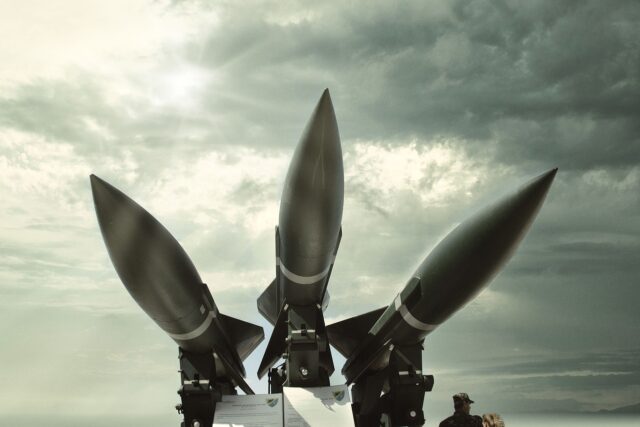
STOCK PHOTO | Image by Dice Me from Pixabay

SINGAPORE – Iran’s missile barrage this month against Israel, after a similar large-scale attack in April, shows the value, as well as the shortcomings, of U.S and allied missile defenses in a potential Indo-Pacific conflict with China, analysts say.

Although differences between the two scenarios limit the lessons that can be learnt, the nearly 400 missiles of different types that Iran has fired at Israel this year offer the United States and China some idea of what works and what does not.

For Washington, the main takeaway from Iran’s Oct. 1 attacks – the largest sample yet of ballistic missiles fired against modern defenses – could be that Beijing’s missiles would be more difficult to intercept than Iran’s and that the ability to strike back would be needed to deter a mass attack, said Collin Koh of the S. Rajaratnam School of International Studies in Singapore.

“If we look purely through the lenses of deterrence, no longer can one pin hopes on deterrence by denial only – that is, the hope that effective defenes can blunt the efficacy of missile strikes,” Mr. Koh said. “Deterrence by punishment might have to become normative going forward.”

There is no immediate threat of missile conflict in the Indo-Pacific region. The distances, thousands of kilometres, are greater than in the Middle East. China’s weapons are more advanced, including manoeuvring warheads and precision guidance. And the target areas are scattered across the region, making a massed attack more difficult.

The United States has developed and deployed new weapons in the region this year to counter China, including the AIM-174B air-to-air missile and the ground-based Typhon missile battery in the Philippines, which can launch SM-6 and Tomahawk missiles.

The U.S. Indo-Pacific Command and China’s Ministry of Defense did not immediately respond to requests for comment.

CHINA’S MISSILES LONGER-RANGE, LESS ACCURATE

On the other hand, simply being better informed about how offensive and defensive systems perform after Iran’s missile fusillades – many were intercepted – may reduce the chance of conflict, said Ankit Panda of the U.S.-based Carnegie Endowment for International Peace.

“Any military force planning long-range missile strikes will need to plan around the possible effects of missile defenses,” Mr. Panda said.

“Of course, without clarity on how well a given missile defense system might perform, this could lead to massive escalation.”

Israel’s layered air and missile defenses – from its long-range Arrow systems to the Iron Dome shield meant to handle slower, less complex threats – are tailored to the threats it faces: guided ballistic missiles from powers such as Iran mixed with unguided rockets launched from just over Israel’s borders.

The picture is much different in the Indo-Pacific region for the U.S. and its allies, which use the Lockheed Martin and Raytheon Patriot, THAAD and sea-based Aegis systems for missile defense.

The accuracy of China’s DF-26, its most numerous conventional intermediate-range ballistic missile, is estimated to be as good as 150 m (500 feet), according to the Center for Strategic and International Studies’ Missile Defense Project. Its DF-21 is shorter-ranged, though some variants have an accuracy of 50 m.

Both can hit most U.S. and allied targets in the region. The DF-26 can reach Guam, the site of major U.S. military facilities. The Pentagon has estimated that China may have several hundred of the missiles.

By contrast, Iran’s missiles such as the Fattah-1 are theoretically more accurate – within tens of meters – but are much shorter-ranged. The number of these newer missiles is not public, but U.S. Air Force General Kenneth McKenzie told Congress last year that Iran had more than 3,000 ballistic missiles of all types.

China’s capabilities outstrip Iran’s in other ways, said Malcolm Davis, a senior analyst at the Australian Strategic Policy Institute. Missile attacks would most likely be coordinated with anti-satellite strikes and cyberwarfare, both designed to complicate defense.

“Western (integrated air and missile defense) systems in the Indo-Pacific would have a much tougher time defeating a large Chinese missile strike, comprising hundreds or even thousands of missiles, compared to what the Iranians are capable of,” Mr. Davis said. — Reuters

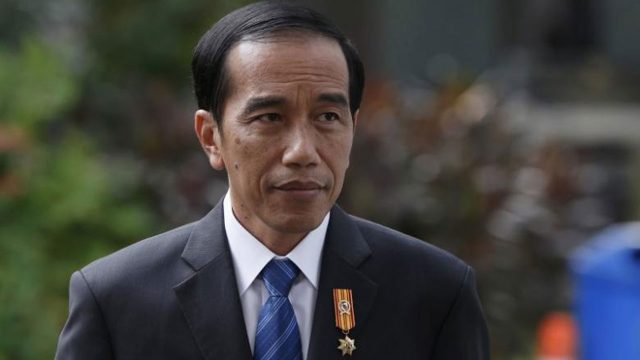
A decade of Jokowi: Indonesia’s democracy icon leaves illiberal legacy, critics say

REUTERS

JAKARTA – In 2014, then presidential hopeful and outsider Joko Widodo attended packed campaigns with a white ribbon warning against election fraud tied around his head.

At the time Mr. Jokowi – as the president is known – symbolized democracy and change, embodying the hope of a better, cleaner Indonesia.

After two terms and a decade in power, he has left an indelible mark on the nation of 280 million, presiding over a period of strong economic growth and massive infrastructure development. But critics say his rule also has been marked by a rise in old-time patronage and dynastic politics, and the diminished integrity of courts and other state institutions.

Analysts say the trend may continue under President-elect Prabowo Subianto, a member of the old elite that ruled Indonesia before Mr. Jokowi and an ex-special forces commander who was dismissed from the military amid speculation of human rights abuses, assertions he has denied.

“Widodo has done a lot of damage to democratization in recent years,” said political analyst Kevin O’Rourke. “It’s hard to see how the recovery can come about.”

For a man once celebrated for his lack of ties to Indonesia’s powerful military and civilian oligarchs, Mr. Jokowi leaves office facing accusations he has tried to change laws to benefit his family, and co-opt state bodies to control his opponents.

Spokespeople for the president’s office did not respond to requests for comment. Mr. Jokowi said in July that democracy was thriving in the country, citing the holding of elections and freedom of speech.

Once a furniture manufacturer in the city of Surakarta, Mr. Jokowi rose from mayor to Jakarta governor before he was elected president in 2014, defeating Mr. Prabowo. He beat Mr. Prabowo again when he was re-elected in 2019 but then made him his defense minister.

When Mr. Jokowi steps down on Oct. 20, his legacy will importantly include leaving Indonesia in the hands of Mr. Prabowo, the former son-in-law of authoritarian ruler Mr. Suharto and the son of a former cabinet minister.

“He’s brought about the empowerment of Prabowo and that’s already jeopardizing Indonesia’s democratic institutions,” said Mr. O’Rourke.

TERM LIMITS

Mr. Prabowo has in the past advocated returning to an earlier version of the constitution where the president is not directly elected by the people.

Indonesia adopted term limits after Suharto’s three-decade rule, marred by corruption and nepotism, ended in 1998 amid the economic and political chaos triggered by the Asian economic crisis.

This March, Mr. Prabowo described democracy as tiring, costly and messy but he has not recently referred to reviving the old constitution.

Spokespeople for the president-elect did not respond to requests for comment.

It was with great promise that Jokowi came to power a decade ago, hailed at the time as a man capable of making real change.

And for the first term he did, said his former deputy chief of staff, Yanuar Nugroho.

“Jokowi’s first period is when he really delivered what he promised,” he said, including an improved national health insurance scheme, which now covers more than 90% of the population, and mammoth infrastructure development.

During the Mr. Jokowi years, Indonesia posted solid economic growth and low inflation and successfully courted foreign investors to develop its domestic mineral processing industry, notably in nickel, a key component in electric vehicle batteries.

A distinct shift came in Mr. Jokowi’s second term when he consolidated power and his aides began talking about a possible constitutional change to allow him a third term, and when that went nowhere, a term extension, according to many media reports.

Neither idea bore fruit, and Mr. Jokowi eventually urged government ministers to stop talking about him staying in office.

Another worrying sign, say academics and critics, is how the Jokowi administration has used institutions such as courts, the anti-corruption body and the attorney general’s office for political gain. The president’s office did not respond to a request for comment.

COURT RULING

The critics say the president’s supporters have deployed threats of corruption charges to keep opponents in line, including rival party figures and government critics. The sudden resignation of Golkar party chief Airlangga Hartarto in August and his replacement by a Jokowi loyalist was among the cases where legal threats were deployed for political gain, media reports said.

Airlangga declined comment. Mr. Jokowi’s office said his decision to resign had nothing to do with the president.

“What we’ve seen is the president growing confident because he’s learned that he can actually get away with it,” said Sana Jaffrey, a research fellow at the Australian National University (ANU).

The integrity of the judiciary came into sharp focus last October when the constitutional court – at the time headed by Mr. Jokowi’s brother-in-law – issued a ruling that allowed the president’s elder son, 37-year-old Gibran Rakabuming Raka, to successfully run for vice president by changing age requirements.

Protests erupted this August, after parliament proposed more election changes that would have allowed Jokowi’s younger son Kaesang to run in regional elections in November. Lawmakers then abandoned the plan.

“It’s as if he erased all the good things that he has done,” said his former staffer Mr. Yanuar, who joined the protests.

Still, Mr. Jokowi remains immensely popular. His approval rating fell to its lowest level this year, a poll by Indikator Politik Indonesia showed last week, with the outgoing leader retaining 75% support, higher than the average over his two terms in office.

Reflecting on his decade, ANU’s Jaffrey said Mr. Jokowi has taken Indonesia right to the edge, but not yet into “competitive authoritarianism”.

“In a system like that, all the structures of democracy exist… but none of them are meaningful”, she said.

That means Mr. Prabowo will inherit a country more powerful and less accountable than it has been since 1998, when its reform period began, she said.

Mr. O’Rourke, the analyst, said: “A return to Suharto-era political structures is likely. Prabowo has made clear that he will brook very little dissent.” — Reuters

Russia says more than 30,000 evacuated from areas bordering Ukraine

Army soldier figurines are displayed in front of the Ukrainian and Russian flag colors background in this illustration taken, Feb. 13, 2022. — REUTERS/DADO RUVIC/ILLUSTRATION

Some 30,415 people including nearly 8,000 children have been evacuated from areas bordering Ukraine due to shelling and attacks, Russia’s human rights commissioner said in remarks published on Monday.

Tatyana Moskalkova, the commissioner, told news outlet Argumenty I Fakty in an interview that the evacuees have been placed in nearly 1,000 temporary accommodation centers across Russia.

Ukraine, subjected to an invasion from Russia since February 2022, has retaliated with shelling and other attacks on Russia’s border regions, with the military saying the strikes target infrastructure key to Moscow’s war effort.

Ukrainian forces launched an incursion into the Kursk region in August, taking control of dozens of settlements and holding most positions since.

Ms. Moskalkova said she had received appeals regarding more than 1,000 Russian citizens from Kursk, whose whereabouts are unknown and who were said to have been taken by Ukrainian forces.

Reuters could not independently verify Ms. Moskalkova’s reports. There was no immediate comment from Kyiv.

Both sides deny targeting or imprisoning civilians but thousands have died in the war, the vast majority of them Ukrainians.

Moskalkova also told the news outlet that she has visited more than 2,000 Ukrainian prisoners of war in Russia and that similar visits with Russian prisoners have been conducted by her counterpart in Ukraine. — Reuters

Senior Taiwan security official says pressure on Taiwan from China is ‘not light’

CHESS PIECES are seen in front of displayed China and Taiwan’s flags in this illustration taken Jan. 25, 2022. — REUTERS

TAIPEI – A senior Taiwan security official said on Monday pressure on Taiwan from China is “not light”, after China began a new round of war games around the island.

Speaking at an international forum on Chinese politics being held in Taipei, National Security Council Secretary-General Joseph Wu said, “we need to stay alert at all times. We will stay moderate and responsible, maintain status quo across the Taiwan Strait.”

China, which views democratically governed Taiwan as its own territory, calls Taiwan President Lai Ching-te a “separatist”. Mr. Lai and his government reject Beijing’s sovereignty claims, saying only Taiwan’s people can decide their future.

“Leaders around the world talk more than ever about the need for peace and stability across Taiwan Strait,” Mr. Wu said. “Taiwan will continue to seek possibilities for talks with China.”

Last week at his keynote national day speech, Mr. Lai said the People’s Republic of China had no right to represent Taiwan, but that the island was willing to work with Beijing to combat challenges like climate change, striking both a firm and conciliatory tone, drawing anger from China.

China staged war games around Taiwan in May shortly after Lai’s inauguration, saying it was “punishment” for separatist content in his speech, and Chinese warplanes and warships operate near the island on an almost daily basis. — Reuters

India’s space strategy: harness data and tiny satellites to capture market beyond SpaceX

STOCK IMAGE | Image by 0fjd125gk87 from Pixabay

BENGALURU – India has a plan to carve out a beachhead in the battle for commercial space, officials say: crunching space data, building small satellites and launching them cheaply into orbit rather than challenging heavyweights such as SpaceX head-on.

In particular, it is taking aim at providing cost-effective services and hardware to sectors such as communications, agriculture and commodities, where high-quality data is a precious resource.

At stake is a launch market worth $14.54 billion by 2031, and a related data services market pegged at $45 billion by 2030.

“The world has gone from satellites the size of a Boeing plane to the size of a laptop,” said AK Bhatt, director general of the Indian Space Association, an industry body.

“This is a sector that India can win, instead of challenging heavy launches where Elon Musk has dominance. The country already has an historical advantage in data mining and interpretation.”

Since February, India has opened its space sector to private players and created a 10 billion rupee ($119 million) venture fund to support space startups. It has also unveiled plans for crewed space exploration and a mission to Venus, but the focus is on developing commercial ventures.

In many ways it will be an uphill fight. Other countries such as Japan and China have advanced space industries, and designs on cheap launches. Spaceflight itself is difficult; the startup landscape globally is littered with failed boosters and satellite designs.

For India, “the tech is there and the ability is there… but space is tricky and very competitive, and while private companies have shown that they can create a niche for themselves, we need more proof of concept,” said Namrata Goswami, a space policy expert at Arizona State University.

She added that the Indian government must be an “anchor customer” for private industry.

Most of the revenue growth is expected to come from so-called downstream data applications, said Pawan Goenka, chairman of IN-SPACe, India’s space regulatory body.

Those involve crunching data from orbit to help improve crop yields on earth, build more accurate navigation systems, bolster telecommunications, tighten border security and fight climate change, Goenka said.

Indian companies such as Bellatrix Aerospace, Pixxel, Agnikul Cosmos, Dhruva Space and others are already building or have launched small satellites or satellite components.

India’s space agency, ISRO, last month completed the third and final developmental flight for its Small Satellite Launch Vehicle. The design will then be handed to private companies.

“The end uses of Earth observation are vast,” Goenka said. “What we are doing is address various parts of the puzzle.”

Bengaluru-based SatSure, for example, has been providing real-time satellite data to the Airports Authority of India to enhance air traffic management and safety, helping planes avoid weather hazards. The project is expected to save 37.5 billion rupees ($446 million) in fuel costs for airlines annually by 2025 and result in a roughly 70% reduction in airport process planning timelines, the authority said.

Earth observation (EO) satellites – orbiting cameras and sensors – can unlock similar savings in other areas, said the company’s chief executive, Prateep Basu.

“EO is solving problems that span across utilities, navigation, trading, industries, helping save millions of dollars,” Basu said.

GOVERNMENT PUSH

Since the government opened up the market, companies big and small have jumped in, with legacy IT firms like Infosys investing in satellite imaging company GalaxEye Space Solutions, Google-backed Pixxel signing contracts with NASA, and Baring- and Promus-backed SatSure taking on clients such as HDFC Bank and global seed company Syngenta.

Dhruva Space became one of the first to be handed a permit to operate satellite communication centers on earth – to date the dominion of ISRO.

“India is a software powerhouse and produces some of the best minds in the world in data science, machine learning, and artificial intelligence. The space downstream market is, at the end of the day, a software play,” said Aravind Ravichandran, founder of France-based advisory firm Terrawatch Space.

The consultancy Euroconsult forecasts that between 2023 and 2032, about 26,104 small satellites – weighing less than 500 kilogrammes (1,100 lb) – will be put in orbit, averaging 1.5 tons of daily launch mass. The firm expects the overall small satellite industry to be worth $110.5 billion in the next decade.

Indian space companies have already seen an influx of funding – $126 million in 2023, a 7% increase from the $118 million raised in 2022 and an increase of 235% from the $37.6 million raised in 2021, according to Tracxn data.

But India has only about 2% of market share in commercial space activities, demand is still largely dependent on global clients, and well-established U.S., Russian and Chinese companies are formidable rivals.

“To truly make a dent, (Indian) solutions have to scale to the rest of south Asia and then to the rest of the world,” said Pixxel founder and CEO Awais Ahmed. — Reuters

Beyond the brush of Abe L. Orobia

Artist and art educator ABE L. OROBIA believes that forging one’s own path is of greater significance than relying on inherited fame

During the height of the pandemic, artist Eleazar Abraham L. Orobia, better known as Abe, was one of those artists who didn’t stop teaching art, even though there was difficulty communicating it. A lecturer at the College of St. Benilde, Abe had a full setup, a dual cam and recorded art sessions via Zoom. “Even though sometimes the sessions are long, my students appreciate it. Other online study sessions were stressful for students during the pandemic. Maybe, our sessions made them happy since it was something new,” shares Abe.

Abe hails from a lineage of artists. He belongs to the Luna bloodline; yet, Abe believes that one’s greatness should not solely rely on having a prestigious family member. “Whether you’re a son or a grandchild. My mantra is to make your own path to become great yourself. Where you’re good at, that’s your goal because the circumstances of the time given to you are different,” he says. At the age of five, he achieved the distinction of being the youngest participant in two group exhibitions organized by the First Filipino Good Samaritan Artists. These exhibitions took place in the Philamlife Pavilion at U.N. Avenue, Manila, in 1989. Abe, a Fine Arts graduate from the University of Santo Tomas, has participated in various group exhibitions and developed his own solo exhibitions. He was the recipient of the TOYM (The Outstanding Young Men of the Philippines) Award in 2022 for his long-standing artistry, education, and cultural activities. His recent showcase titled Unconquerable at the Pinto Art Museum in 2023 explores the themes of time and nature, emphasizing their all-encompassing nature. However, the exhibition primarily focuses on the tenacious strength of the human soul, portrayed by crumpled papers.

Last year, he also created several pieces for Kinetix+, the first luxury boutique gym in the country, which he collectively named “Bodies of Motion” featuring grayscale line art pieces of people participating in strength training. “It’s about energy. It’s about power and strength,” he shares. Know more about the artist as he shares his creative process and upcoming exhibits.

How long have you been painting and what prompted you to start painting?

I came from a family of artists so at a young age, I was exposed to arts, because of my dad, and his peers. I was exposed to exhibitions early. When I was five years old, I was already participating in art exhibitions. I had my solo exhibition at six years old. What prompted me to paint was because of the environment that I am in. In college, I had an organization which I handled. I was the founder of Surit Sining, Surit, to search in art, the deeper meaning of art. Our advisor was the UST Museum Director and the Secretary General at the time of UST, Father Isidro Abano.

What is your favorite subject to paint?

I really do symbolism. And then nature subjects. During the pandemic, my love for bicycles came back. I’m from Muntinlupa. I’m able to bike to Rizal, Laguna, and Batangas. Anywhere, actually. Nature got deeper for me. It became all-encompassing since so much was lost during the pandemic. Nature became a healing thing to me. Human figures are also there but I prefer nature as a subject matter, currently.

I had an exhibition at the National Commission for Culture and the Arts, the title was Images of the Nation. I championed the farmers, the maritime people, the health workers, the policemen, everyone that got affected by the pandemic. I painted human figures. Then, there are floating papers because floating papers represent the life of a person, it’s short; it’s beautiful but it’s short. We’re just in transit in the world. In my nature subject, those floating papers are still there. But eventually, I changed the material of the papers into aluminum foils from the tube of my paints. Human presence, it means that humans have a great influence on nature. We should take care of it.

As an artist, I don’t change my style. I just like to add details even if it’s black and white.

As an educator and lecturer, what do you teach others about arts?

I have workshops in Ayala Museum. We work with the collections of the Ayala Museum. There’s Amorsolo, Juan Luna, Lozano. I tour people around, my students in particular. When I tour them around, I tell them about the factors about the artworks. The “stylism” at the time.

There is a lecture portion, and they were pleased that I taught them how to apply the method, style, and draw. And then as an educator, I encourage my students to always be passionate in what they do. Time is really essential. In reality, it is irrelevant whether one is wealthy or not; it is crucial to strive for excellence. If you’re already putting in effort but not giving it your all, it’s a waste. Maybe that’s why kids learn so much from me: I always show them demos. However, they may become overwhelmed with me at times due to my high expectations. Nevertheless, I’m generous. I’m just stern, I really warn them.

For example, your student is not sure what medium they want to use. How do you inspire them? Or how do you make them decide on which medium to choose?

Actually, what I always say is, I might be your teacher but I’m just one of many. I don’t give myself much praise. I’m only one of the artists they’ll be acquainted with once they start working professionally. What I’m teaching is just an eye-opener. I introduce many mediums that students may use. There are pastels, oils, and acrylics. I often think that the most vital aspect of a good painting is your ability to draw. If you’re not skilled at drawing, you’ll struggle to paint. I encourage them to experiment with several mediums until they find one that they appreciate. Others may struggle with one medium but excel at another.

I encourage them. I supply them with videos that I own. I allow my students to record how I work. Especially during the pandemic. My lectures are like a workshop for them. In areas such as anatomy, I take a scientific approach rather than simply painting. I split things down as much as possible into modules. And, during the pandemic, I ask my head to lead a plenary session. It may seem arrogant to say this, but we were the professors who were most sought-after by pupils following the pandemic. We never saw each other in class throughout the pandemic since it was all online. I mean, when they began attending school in person, they looked for us. They said that even though teaching them was all online, they really learned something.

Out of all the exhibits that you have done, do you have a favorite?

Maybe my last two exhibitions, Images of the Nation, because I was able to showcase creative voices in a disenfranchised population. Art is crucial. Doctors are the most important thing during the pandemic. However, if there were no painters or photographers at the time, no one would have been able to provide an update on what was going on in society. Through my paintings and poems, I was able to demonstrate the value of art amid a difficult time such as the pandemic. And then, my last exhibition at the Pinto Art Gallery, “Unconquerable.” These are my reflections of the pandemic. “Unconquerable” is the human spirit. I was inspired by Ecclesiastes, a time for everything. There are things that are meant for everything. A time to die, a time to be born. The floating papers are also present.

You did artworks for Kinetix+, which are collectively entitled “Bodies of Motion.” Is there anything more that you can tell us about it? What was the medium that you used for the artworks at the gym?

My work in Kinetix+ was commissioned almost by the end of 2022 and I finished it in the latter part of 2023 which was revealed to the public during the gym’s soft launch in October 2023. I asked for a creative brief. That’s what I always do. My client asked me if I can portray body builders in motion doing workouts. He wanted the color to be in gray, use monotones to fit the interior of Kinetix+, more on lines, and no faces. I went through several studies using ink on paper and acrylic emphasizing on movements while I was guided on the proper forms. First, I also textured the canvas with an acrylic medium. To add more depth and layers. I enjoyed that process. That’s where you can show less is more in grayscale or black and white. It’s big but when you look closely, you can see the depth, the texture. The lines that I created were powerful because the lines I made were suggestive. The ones that were lifting the barbell, I really showed the raw energy. Even the ground was exploding. The ones that were bench-pressing, there were lines pointing up to create an impression that there was struggle. You can tell a lot by doing the simplest things, lines then black and white. It was right not to put faces on the subjects to represent everyone. The linear element gives quality about the movement and power.  I really appreciated my client’s attention to detail and it really helped me understand the science behind it. When I say science, the correct postures like in the three major depictions of the series deadlift, back squat and bench press since we both agreed that my paintings will not just be mounted to adorn Kinetix+’s walls but also serve as a visual guide. Kinetix+ is more than simply a gym; it’s a sophisticated and smart gym with professional and skilled coaches to help any fitness enthusiast. Going back to the other three paintings, the decision not to include faces is really appropriate. It depicts as if the lifters are truly zoned in. In addition, I developed a rationale for the greyscale portrayals of the figures in my series. Grey denotes control, insight, and self-worth, all of which gym-goers strive for. They would feel more skilled and exemplary after completing Kinetix+’s training.

What advice can you give young artists or your co-artists if they find themselves uninspired to continue a certain artwork or to start an artwork?

First and foremost, you must be fundamentally skilled, since if you do not develop yourself fundamentally, you will struggle to progress. Sometimes you have to force yourself to work. It can help if you’re more versatile as an artist, know more subjects, or simply doodle every day. At the same time, in terms of skill, having confidence is essential because many artists lose faith in themselves. Also, don’t let what you see influence you. Simply continue doing what you are doing. The more distractions there are, the less productive you will be. If you have to lock yourself in your room, do so. Remove any distractions that may interfere with your ability to concentrate. Remain focused.

What are you looking forward to this year?

I’ll be having a solo exhibition at Art Verite next year. I’ll be attending the Mindanao Art Fair this year. I will also attend Art Dubai next year.

For updates regarding Abe L. Orobia’s work, visit https://www.facebook.com/SiningWithABE.


Spotlight is BusinessWorld’s sponsored section that allows advertisers to amplify their brand and connect with BusinessWorld’s audience by publishing their stories on the BusinessWorld Web site. For more information, send an email to online@bworldonline.com.

Join us on Viber at https://bit.ly/3hv6bLA to get more updates and subscribe to BusinessWorld’s titles and get exclusive content through www.bworld-x.com.