Home Blog Page 1945

LGUs asked to help fund classrooms

BW FILE PHOTO

A PHILIPPINE senator on Sunday pushed for local government units (LGUs) to help fund building more classrooms with the national government as the country lacks 165,443 classrooms around the country.

In a statement, Senator Sherwin T. Gatchalian proposed for LGUs to shoulder half the cost of each classroom while the national government takes care of the other half. He said the government needs about P413.6 billion to address the classroom shortage problem.

He said the “counterpart program” would pave the way for more classrooms to be built around the country.

“Due to the significant shortage of classrooms in our country and the substantial amount of funding required to address this gap, we need to find various ways to meet this challenge,” the senator, who heads the basic education committee, said in Filipino.

The Department of Budget and Management in April released P5.83 billion to help build classrooms nationwide, which covers 1,834 classrooms.

Last year, the Education department failed to meet its target of building 6,379 classrooms, having built only 3,600 classrooms.

“If we do not find creative ways to build classrooms, the shortages we face will only continue to grow,” Mr. Gatchalian said. — John Victor D. Ordoñez

SMC says 8-M tons of river waste removed across Luzon river systems

PHILSTAR FILE PHOTO

CONGLOMERATE San Miguel Corp. (SMC) said it has removed eight million tons of silt and waste from 136 kilometers of river systems in Luzon, with plans to revisit previously cleared areas following the recent heavy rains.

The cleanup initiative, launched in 2020, covered waterways such as the Tullahan, Pasig, and San Juan rivers, as well as those in Bulacan, Pampanga, and Laguna.

SMC Chairman and Chief Executive Officer Ramon S. Ang said the conglomerate’s river cleanup teams will return to the Tullahan, Pasig, and San Juan rivers after heavy rains led to renewed silt buildup and waste accumulation.

“River cleanups are a continuous effort. Heavy rains bring eroded soil, and improper disposal continues to be a challenge. Maintenance is very important to make sure these rivers continue to flow freely,”Mr. Ang said in an emailed statement over the weekend.

Meanwhile, SMC said its cleanup initiative has removed 506,616 tons of silt and waste from Pampanga River. The company has covered 8.15 kilometers of the river since August.

The river is a major source of flooding in Pampanga and Bulacan.

SMC said its teams are also cleaning rivers in Biñan, Laguna, and around the Ninoy Aquino International Airport, while also clearing its drainage system. — Revin Mikhael D. Ochave

Tech-based health recording implemented in Baguio

PHILSTAR FILE PHOTO

BAGUIO CITY— Baguio City is now implementing the Baguio Inclusive and Accessible Health Governance (BIAG) system, a pioneering technology-based health service recording and provision system.

Mayor Benjamin B. Magalong explained that BIAG system seeks to strengthen the public health recording system by providing “standardized, accessible and comprehensive health surveillance, long-term monitoring, improved continuity of care and streamlined health emergency preparedness” through a technology-based recording system.

This addresses the problem of fragmented health records that causes inaccurate patient information that compromises safety and treatment outcomes, affecting long-term health monitoring and provision of proactive interventions.

The lack of accurate data also hampers public health surveillance thereby delaying detection of disease leading to outbreaks and slowing down response, Magalong explained.

“All in all, BIAG aims to transform the health care system in the city into a more responsive technology-based structure in line with the city’s thrust to become a people-centered smart city,” the mayor said.

The system was designed and executed by the Management Information and Technology Division of the City Mayor’s Office under Francis Camarao.

Camarao said the system is named after the local word “biag” which means life and is designed to ensure inclusive, high-quality healthcare for all residents.

“By integrating a comprehensive range of health records, reducing medical errors, enhancing public health monitoring, and bolstering emergency preparedness, the system ensures continuous care from birth to later life. It’s a solution that addresses the real needs of the community while setting a new standard for healthcare governance,” he said.

Mr. Camarao said the system integrates modules to ensure efficient patient management, enhance service delivery and maintain health records for easy access by the public. — Artemio A. Dumlao

Barangay officials hurt in Cotabato City gun attack

MAX KLEINEN-UNSPLASH

COTABATO CITY — A barangay councilor and their office bookkeeper were badly hurt when gunmen attacked them while in a roadside store in Barangay Rosary Heights 9 in Cotabato City on Saturday night.

Brig Gen. Romeo J. Macapaz, director of the Police Regional Office-Bangsamoro Autonomous Region, told reporters on Sunday that Jordan S. Kalipa, 47, an incumbent barangay councilor in Rosary Heights 9, and their 33-year-old barangay bookkeeper, Virlie L. Joy Quijano, 33, sustained bullet wounds in different parts of their bodies.

They are now both confined in a hospital, guarded by policemen.

Mr. Kalipa and Ms. Quijano were at a store along a thoroughfare in Barangay Rosary Heights 9 when gunmen approached them and opened fire.

Their attackers managed to escape before responding volunteer community watchmen and barangay officials could reach the scene.

Mr. Macapaz said intelligence agents and investigators in the Cotabato City Police Office and barangay officials are cooperating in trying to identify the culprits for prosecution  — John Felix M. Unson

BoC estimates foregone revenue due to rice tariff cut at P16 billion

PHILIPPINE STAR/KRIZ JOHN ROSALES

THE Bureau of Customs (BoC) said revenue foregone in the second half due to the reduced rice tariffs is estimated at P16.34 billion.

In an e-mail to BusinessWorld, Customs Commissioner Bienvenido Y. Rubio said rice tariff collections in the six months to December will fall 57.45% to P12.1 billion under the new 15% tariff on imports of the staple grain.

“The BoC was projected to collect P28.447 billion using the (original) 35% tariff rate. Applying a 15% tariff rate reduces BoC collections to P12.103 billion… resulting in a decrease of P16.344 billion,” Mr. Rubio said.

In a bid to tame rice prices, President Ferdinand R. Marcos, Jr. slashed the tariff on rice imports to 15% from 35% until 2028 via Executive Order (EO) No. 62, which took effect on July 7.

In July, collections generated by imported rice dropped 27.9% to P889.13 million.

Had the government retained the 35% import tariff on rice, the BoC would have collected P2.15 billion that month, it said.

Meanwhile, Samahang Industriya ng Agrikultura Executive Director Jayson H. Cainglet said EO 62 has not succeeded in substantially lowering rice prices.

“As what we have pointed out from the outset, savings of importers from tariff reduction will not automatically translate to cheaper rice prices. Importers and traders are pocketing the savings from the tariff reduction,” he said via Viber.

At the end of October, the price of imported regular-milled rice rose 73 centavos month on month to P45.22 per kilogram, according to Agriculture department price monitors.

On the other hand, well-milled rice at the end of October fetched P48.93 per kilo, down 38 centavos from a month earlier.

Rice import tariffs are allocated to the Rice Competitiveness Enhancement Fund (RCEF) under Republic Act No. 11203 or the Rice Tariffication Law (RTL).

Under the law, P10 billion in tariff money is to be allocated to RCEF for six years to distribute machinery, seed, credit, and fertilizer to farmers. The RCEF expired in June, but the President is due to sign amendments to the law seeking to extend its term and expand its allocation.

The decline in rice tariffs would also mean fewer subsidies for rice farmers, who are anticipating the looming effects of the La Niña weather pattern on production, Mr. Cainglet said.

“We are yet to approach peak harvest, and there is concern that the farmgate price of palay will further drop. Worse, the rice industry has been receiving significantly less from the RCEF,” he said.

In a Viber message, Federation of Free Farmers National Manager Raul Q. Montemayor said the foregone tariffs would mean farmers would receive less budgetary support under the Rice Farmer Financial Assistance Program (RFFA), one of the initiatives funded by excess tariff collections.

Under the RTL, if annual tariff revenues exceed P10 billion, extra revenues would be earmarked for the RFFA, the Expanded Crop Insurance Program on Rice, titling of agricultural rice lands, and the Crop Diversification Program.

At the end of September, BoC collections rose 4.59% to P690.7 billion, about 0.46% short of its P693.9-billion target for the nine-month period.

Customs aims to collect P939.7 billion in revenue for 2024. — Beatriz Marie D. Cruz

Green energy auction pricing to involve two-stage evaluation

THE Energy Regulatory Commission (ERC) said the draft pricing rules for the upcoming green energy auction (GEA) round involve two sets of evaluations to assess the “reasonableness and prudency” of each price offer.

The regulator last week posted the draft price determination methodology (PDM) to seek comment from the public.

The ERC will set parameters for each type of renewable energy facility covered in the program. It is also required to establish “acceptable value ranges” to serve as thresholds for each parameter, and define the criteria for the weighted scoring system to be applied in its evaluation of price offers. 

“Bids shall first undergo evaluation for compliance with the thresholds established for each parameter and to assess the reasonableness and prudency of the price offer,” the ERC said.

Those that meet the threshold will advance to the next stage of evaluation, which will involve two “checkpoints.”

Price offers will be first evaluated to determine whether the project development cost, net capacity factor, and weighted average cost of capital components meet the minimum score requirements for the primary parameters.

Bids that pass the initial evaluation will then be scored on each of the remaining parameters.

Next, each parameter will be assigned a predetermined weight depending on its impact on the tariff, and compliant bids will earn the corresponding score for each parameter.

“A total score of 90% is required to pass the evaluation, ensuring that all critical parameters are prioritized and complied with,” the regulator said.

Qualified bidders will be required to submit supporting documents such as a written explanation, the financial model, quotations and similar documents, and audited financial statements.

The regulator will endorse the price offers that pass evaluation to the Department of Energy (DoE) for confirmation as winning bidder.

The ERC is responsible for establishing the PDM that the bidders will adopt under the GEA program. The PDM is used to evaluate the price offered by bidders.

The GEA program is designed to increase renewable energy capacity, which will help the government meet its goal of 35% renewable energy in the power mix by 2035 and 50% by 2040.

In the last two years, the DoE conducted two GEA rounds, which generated a total of 5,306 megawatts (MW) of renewable energy commitments for delivery in 2024 to 2026.

This year, the DoE plans to auction renewable energy projects with a total capacity of 4,399 MW.

The third round of GEA will cover mostly technologies not eligible for the feed-in tariff (FIT) such as geothermal, impounding hydro, and pumped storage hydro.

It will also cater to run-of-river hydro, a FIT-eligible renewable energy technology. — Sheldeen Joy Talavera

UK investors pitched on PHL gov’t bonds

REUTERS

THE Department of Finance (DoF) said it pitched British investors to increase their exposure to Philippine bonds ahead of the Philippines’ return to the JP Morgan bond index.

“The Euro market has been a vital source of financing for the Philippines, with our bond offerings consistently attracting exceptional demand. This strong appetite has enabled us to tighten pricing and trade above our credit rating,” Finance Secretary Ralph G. Recto said in a keynote speech during the Philippine Economic Briefing in London on Oct. 31.

“It certainly makes strategic sense for us to increase our financial integration, especially as we enter JP Morgan’s Bond Index soon,” Mr. Recto said.

The re-inclusion of peso-denominated government bonds in the index will help boost investor interest in Philippine government bonds, potentially lowering borrowing costs and improving market liquidity, the DoF said.

Mr. Recto has said the Philippines has been working with JP Morgan to rejoin the index. It has been removed due to declining liquidity.

The Philippines issued its first zero-coupon Euro bond in 2020.

Mr. Recto also urged British firms to invest in the Philippines, citing its young workforce, with reforms for their upskilling boding well for foreign investment.

“The competitive advantage offered by our demographic sweet spot — a young median-age population of only 25 years — strategically makes us an ideal demographic partner for the UK whose median age is 40,” he said.

“We are committed to continuously upskilling our workforce through our Artificial Intelligence Strategy Roadmap to fully harness their talents and ensure that they can power up your forward-looking industries,” he added.

Mr. Recto also said that the Philippines’ high overseas remittances, tourist receipts and business process outsourcing revenues make it “resilient” during trade wars.

He noted that the government is expected to sign amendments to the Corporate Recovery and Tax Incentives for Enterprises Act, increasing the appeal of strategic projects like the Luzon Economic Corridor.

The corridor is expected to be a “perfect nexus for British investors involved in manufacturing, semiconductor supply chains, renewable energy, and sustainable agribusiness.”

He added that declining inflation and the continuation of the central bank’s easing cycle shows the Philippines is on track to achieve upper middle-income status next year.

“Coupled with this strong potential, our commitment to prudent economic and fiscal management ensures stability for British enterprises,” he said.

As of the end of July, the Philippines’ received £585.74 million (P44.22 billion) worth of investments from the UK. — Beatriz Marie D. Cruz

StB Gigafactory to set up two more battery lines in Clark

STB GIGAFACTORY, Inc. said that it is planning to add two more production lines in New Clark City in pursuit of its goal to build capacity to two gigawatt-hours (GWh) in the Philippines.

In a recent media briefing, Paulo Salvador of StB Gigafactory said the company’s current capacity in the country is around 300 to 600 megawatt-hours.

“Our plan for up to 2030 is to produce two GWh production, so we are adding, I think, two more factories,” he told reporters.

He added that although the location of the facilities is not yet definite, the two factories will also be built in Clark.

Asked for the size of the investment, Jose Montaño of StB Pure EVs described the amount as “substantial.”

He said there are also plans to build chargers in the Philippines as well as renewable energy components in the next few years.

In September, the company inaugurated its battery manufacturing plant in the Clark Special Economic Zone in Capas, Tarlac, which is among the P86 billion worth of deals secured by President Ferdinand R. Marcos, Jr. during the ASEAN-Australia Special Summit in March.

StB GigaFactory produces energy storage batteries for solar technology for residential, commercial, and industrial use.

The company hopes to export 70% of its output to Australia and Southeast Asia, with some of its output to be distributed within the Philippines.

Mr. Montaño cited an opportunity in the global electric vehicle market that the Philippines could tap.

“Right now with the current US tariff regulation on imported Chinese products, there’s a big hole in that market,” he said.

“That is why we set up the factory … We are trying to get it made in the Philippines, and just to let you know that when we fit in our batteries to our local e-tricycle, which is produced here also, our value added shoots up to about 70-80%,” he added. — Justine Irish D. Tabile

US-PHL relations not expected to change substantially ahead of presidential polls

REUTERS

THE American Chamber of Commerce in the Philippines (AmCham) said the outcome of the US presidential election this week will have little effect on the Philippine bilateral relationship with the US.

“I think that the relationship between the US and the Philippines is strong. It probably doesn’t matter too much. I mean, it didn’t matter so much who is the President of the Philippines. I would say it’s better now under Marcos than it was under his predecessor,” AmCham Executive Director Ebb Hinchliffe told BusinessWorld in chance remarks.

“Overall, we still saw really good investment into the Philippines during all presidencies. So I think no matter who’s in Washington or who’s in Malacañang, it’s not going to make a whole lot of difference. We’re going to have good relations between the two countries,” he added.

He cited indicators like business missions visiting the Philippines, including two delegations representing industries like renewable energy, smart cities, agriculture, and education visiting in the third and fourth weeks of October.

“The one coming next, though, is exciting because, remember, in March, we brought over the Secretary of Commerce? She’s sending another group on November 12th-14th. They’re focused more on smart cities,” he said.

“It’s really exciting. They are bringing about 30 people, and these are really the people that are looking for investment,” he added.

The mission will be headed by US Undersecretary of Commerce for International Trade Marisa Lago, he said.

“She’s second only to Commerce Secretary Gina Raimondo. So it tells you the importance that the Biden administration is putting on the Philippines,” he added.

Aside from the US Department of Commerce’s mission, he said that the chamber is also expecting business missions from Texas and Tennessee to come this year.

“It just hasn’t been finalized… the next big one will be from San Diego. They’ll be here in February, and again, I’m thinking this would be around 30 to 40 people,” Mr. Hinchliffe said. — Justine Irish D. Tabile

Safeguard measures, Tatak Pinoy seen curbing cement imports

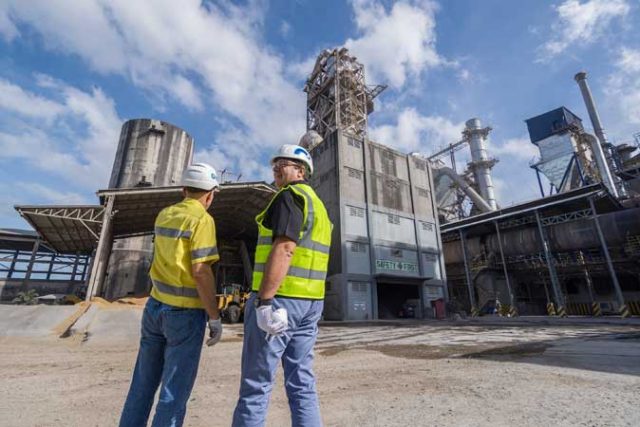
REPUBLIC CEMENT/NESTLE.COM.PH

SAFEGUARD measures as well as the Tatak Pinoy Act, could address the persistent influx of foreign cement, the Cement Manufacturers Association of the Philippines (CeMAP) said.

According to CeMAP, cement imports continue to flood the market even with domestic producers experiencing overcapacity.

The Department of Trade and Industry (DTI) launched a preliminary safeguard measures investigation on the increasing imports of cement classified under AHTN Codes 2523.29.90 and 2523,90.00.

“It is our prayer that this investigation regarding the influx of imported cement by the DTI would lead to recognizing the negative impact to the local industry (as) safeguard measures can definitely relieve the injury,” Renato A. Baja, executive director of CeMAP, said via Viber.

“We are in the same with DTI as far as acknowledging and recognizing that the influx of imported cement, particularly from Vietnam, has caused injury to the domestic industry,” he added.

He said the Philippine cement industry can produce up to 50 million tons annually, exceeding estimated demand of around 35 million tons.

“However, imported cement, particularly from countries like Vietnam, where domestic demand is declining and surplus production is exported, continues to exert pressure on Philippine manufacturers,” he added.

Last week, the DTI said cement imports are projected to increase 4.96% year on year to 7.36 million metric tons (MT) this year.

Cement imports grew 10.34% in 2020 and 17.2% in 2021, then dropped 2.89% in 2022. They rose 4.74% in 2023.

“Based on the initial findings, there is substantial evidence indicating that increased imports of cement have caused serious injury to the domestic industry,” the DTI said.

“This injury is manifested in declining market share, reduced production and sales, decreased capacity utilization, diminished profitability, price depression, undercutting, and suppression,” it added.

It said that the surge in imports has led imported cement to displace domestic products.

“Relative to domestic production, the volume of imports of cement increased from approximately 30% in 2019 to 35% in 2020 and from 36% in 2021 to 41% in 2022,” the DTI said.

“In 2023, the share of imports to domestic production increased further to 47% and 51% in January to June 2024 as domestic production declined,” it added.

In terms of country of origin, DTI’s report showed that 93%, or 3.44 million MT, of the cement imports in the January to June period came from Vietnam, while the other sources are Indonesia (2%) and Japan (5%).

According to CeMAP, the cement industry is among the few where nearly 100% of raw materials are sourced locally.

“This industry is both capital and energy intensive and operates without government subsidies for energy costs or taxes. Despite these challenges, it capitalizes on the country’s abundant natural resources and skilled workforce to produce cement at fair and competitive prices,” it said.

“Economies of scale and high capacity utilization are crucial for cost efficiency; however, with current utilization rates at only 55% to 60%, production costs remain suboptimal, forcing some plants to temporarily shut down,” it added. 

Nonetheless, CeMAP said that the initiation of the investigation is very timely as the imports are really making the local industry suffer.

“By supporting local production through these safeguard measures and the recently passed Tatak Pinoy Act, the government plays a crucial role in stabilizing employment, bolstering local industries, and maintaining essential construction standards,” it said.

“Without such measures, the ongoing influx of foreign cement poses significant risks to jobs, businesses, and the broader economy,” it added.

The DTI, through a department order in Dec. 16, 2022, imposed anti-dumping duties on Ordinary Portland Cement Type 1 and Blended Cement Type 1P imports from Vietnam for five years.

This was later on updated through a department order dated Feb. 14, 2023.

In March 2023, the Bureau of Customs posted Customs Memorandum Order 05-2023 which imposed a definitive anti-dumping duty on imports from Vietnam ranging from 2.33% to 23.33% depending on the company.

Meanwhile, DTI Bureau of Import Services Director Maria Guiza B. Lim noted that safeguards and anti-dumping measures are applied differently.

“Safeguard measures are global in application while anti-dumping is country- and exporter-specific,” Ms. Lim said in a Viber message.

“Safeguard measures are a safety net for the surge in imports causing injury to domestic industry, while anti-dumpinWg occurs when manufacturers export a product to another country at a price below the normal price with an injuring effect,” she added. — Justine Irish D. Tabile

Key components for strategic risk management

IN BRIEF:

• Board surveys reveal a pressing need for more effective risk management, with several boards recognizing room for improvement.

• The strategic empowerment of CROs is essential to navigate the complex risk landscape and capitalize on emerging opportunities.

Implementing a connected risk approach and embracing technology are key steps to advancing risk management practices and driving organizational value.

In an era where risk landscapes are rapidly evolving, the role of Chief Risk Officers (CROs) has never been more crucial. The 2023 EY Global Board Risk Survey revealed a stark reality: 60% of boards agree that emerging risks are insufficiently addressed in risk management. Looking ahead, the survey suggests that boards need to strengthen their governance structures, processes and knowledge to improve oversight of both risks and opportunities.

The survey further echoes the urgency for robust risk management, identifying various risks poised to severely impact organizations in the upcoming year. From geopolitical events and supply chain disruptions to cyberattacks and changing customer demands, the array of threats is diverse and daunting. Notably, while certain risks such as changing customer demands have decreased in perceived importance since 2021, others like misaligned culture and increased remote working have surged in significance.

EMPOWERING THE CHIEF RISK OFFICER
Successful risk management lies in the empowerment of the CRO. In many non-regulated sectors, this role is not formally recognized within the C-suite, despite the intense demands on risk leaders. As the complexity of the risk environment evolves, the need for CROs to collaborate closely with executive management and the board becomes paramount.

Boards now expect executive management to identify risks and uncover the opportunities they may present. For example, a competitor’s new joint venture could be seen as a threat, but from a strategic standpoint, it might also represent an acquisition target or potential partnership. Additionally, boards are calling for a deeper understanding of interconnected risks and their second-order impacts, such as the multifaceted challenges posed by climate change.

CROs must be fully integrated into the business strategy and kept abreast of emerging megatrends that could affect the organization. Their insights are invaluable for mitigating downside risk and seizing “upside” opportunities. To be effective, CROs need clear and open communication channels with other senior executives and should be involved in regular management reporting, including strategies, business plans, and investment proposals.

Successful risk stewards are characterized by their ability to break down organizational silos and work across all lines of defense. They understand the cultural risk appetite and can motivate leaders to adopt a common risk definition. Their experience in prioritizing risk outcomes is crucial for organizational performance.

CONNECTED RISK APPROACH
A connected risk approach leverages improved data access to risk taxonomy, implements dynamic risk assessment methods that adapt to the changing business environment, and coordinates risk response and reporting across all Three Lines (e.g., management, risk and compliance teams and internal audit). This approach unifies data on a common platform, offering continuous refresh capabilities and creating value through analytics and dashboards for better risk management planning.

To execute a connected risk approach, an integrated risk taxonomy is essential. It provides a single view of risk by connecting data from traditionally siloed functions across the Three Lines. This enables rapid identification and assessment of risks that matter. Building a dynamic risk assessment is a collaborative effort that must be comprehensive and flexible, incorporating new data and market changes for agility.

The dynamic risk assessment process includes orienting the mandate to manage risk, identifying risks through data-driven inputs, prioritizing current risks, and responding in a manner that fits the organization’s risk posture. It incorporates qualitative assessments, quantitative metrics, risk performance leveraging a common taxonomy, and external data to challenge internal risk assessments.

TECHNOLOGY-ENABLED RISK MANAGEMENT
The 2023 EY Global Board Risk Survey indicates that only 31% of boards say their oversight of risks related to digital transformations is very effective, while 19% say it is slightly or less effective. Traditional risk management, which relied on professional judgment and manual processes, must evolve to take advantage of automation and data analysis capabilities.

Integrated Risk Management treats risk and compliance activities as an enterprise-wide responsibility, promoting transparency and better decision-making. Automation technology can process low-value manual tasks and free up management time to enable them to focus on emerging risks, while data collection and monitoring can be automated to occur in real time to flag issues earlier. Cloud and AI technologies can execute complex scenario analyses and reveal insights into risk interdependencies.

An integrated risk platform is foundational for connected risk capabilities, storing and modeling relationships between various data sources. This unified technology solution provides better insights, enabling a common risk ecosystem, consolidating risk management activities, and managing customer expectations through informed risk-taking.

FOSTERING RESILIENT RISK LEADERSHIP
To be risk resilient, the boards need to understand the full spectrum of current and emerging risks that could impact the organization. CROs can swiftly generate value by aggregating risk registers to form a comprehensive risk landscape and conducting collaborative sessions to unify risk definitions across the organization. This establishes a centralized framework and common taxonomy, essential for integrating risk management with strategic and operational planning. By embedding risk considerations into decision-making and employing technology for automation, CROs enhance the organization’s proactive risk posture, turning risk management into a strategic asset for resilience and success.

As organizations strive for resilience amid escalating risks, empowering CROs is essential. They must break down silos, foster collaborative interactions, adopt a connected risk approach, and harness technology to modernize risk management strategies. The strategic empowerment of CROs is not just beneficial — it is imperative for safeguarding and driving value.

This article is for general information only and is not a substitute for professional advice where the facts and circumstances warrant. The views and opinions expressed above are those of the authors and do not necessarily represent the views of SGV & Co.


Christiane Joymiel C. Say-Mendoza and Joseph Ian M. Canlas are business consulting partners of SGV & Co.

Philippines blasts HK, 9-2, to sweep East Asia Baseball Cup

ROMEO JASMIN — ROMEO JASMIN’S FACEBOOK ACCOUNT

THE PHILIPPINES smothered Hong Kong (HK), 9-2, on Sunday to complete a sweet sweep of the East Asia Baseball Cup and a spectacular five-peat feat in the event at The Villages Sports Center in Clark, Pampanga.

Romeo Jasmin was the Filipinos’ deliverance as he allowed just one-run in the first six innings that helped set the tone before catcher Mark Manaig belted a three-run homer that lit the decisive five-run eighth inning.

The crown underscored the country’s dominance of the biennial event after reigning supreme for the fifth straight time in the edition presented by Smart, PLDT Home and the Philippine Sports Commission.

“It’s a sense of relief, honestly,” said Philippines manager Vince Sagisi, a former Cleveland Indians scout who took the challenge to coach the country where he was born to honor his Filipino parents.

“Anytime you play a tournament of this magnitude in your home country, there’s a lot of expectations. So the eventual winning of the championship, it’s almost a relief,” he added.

The championship sealed the nation a spot to next year’s Asian Championships next year.

Mr. Jasmin was eventually named MVP for his heroics.

He was nothing short of magnificent on this one after he yielded just a run on four hits and fanned out four batters, and, in the fourth inning with the bases loaded, escaped with a double play that helped quashed Hong Kong’s attempt to turn things around in its favor.

Up by just two, 4-2, Mr. Manaig blasted away with that three-run homer that nailed the coffin of the Hong Kong batters to the delight of the good-sized weekend crowd that went home with smiles on their faces.

Thailand took the bronze by edging Singapore, 11-10, in the tournament also supported by San Miguel Foods, Clark Development Corp., Pythos Technologies, Metro Pacific Tollways, Meralco, MWell, Genesis, Kenko, SSK, Brett, Carmen’s Best, Cogent, and CEDC. — Joey Villar