Home Blog Page 1797

LTFRB monitoring roadworthiness of old jeepneys

PHILIPPINE STAR/MICHAEL VARCAS

THE LAND Transportation Franchising and Regulatory Board (LTFRB) on Tuesday said it is keeping an eye on the roadworthiness of jeepneys under its modernization program through private emission testing centers.

This after Senator Mary Grace Natividad Poe-Llamanzares asked the agency to tap state lenders to help fund the modernization program.

At a Senate public service committee hearing, LTFRB Chairman Teofilo E. Guadiz III said the government would use these testing centers to certify jeepneys for road safety ahead of cooperatives’ vehicle modernization obligations once transport routes are finalized by 2026.

“We should also focus on the Clean Air Act,” he told senators. “These are the private emission testing centers and private motor vehicle inspection centers. How do these jeepneys pass registration? They emit harmful black smoke.”

LTFRB Undersecretary Jesus Ferdinand D. Ortega told DZBB radio at the weekend his agency aims to come up with at least half of the final transport routes for modern jeepneys by the end of this year and finish these routes by 2026. He said about 15% of routes have been completed.

The routes will determine the number of public utility vehicle units that will serve each route.

“After the route rationalization, which is scheduled for 2025 to 2026, that’s when the obligation for them to modernize will come in,” Mr. Ortega said. “We can’t modernize them now because we’re not yet sure how many vehicles are actually needed on the routes.”

In August last year, Philippine President Ferdinand R. Marcos, Jr. rejected a proposal to suspend the government’s jeepney modernization program, rejecting criticisms that the plan had been rushed.

Transportation Secretary Jaime J. Bautista earlier said suspending the modernization program would waste investments that have been made to roll out the plan.

Senate President Francis “Chiz” G. Escudero earlier sought to halt the program since operators are finding it difficult to buy expensive modern jeepneys that cost at least P2.6 million.

The deadline for jeepneys to consolidate into cooperatives lapsed on Dec. 31, 2023 but public utility vehicles were allowed to keep operating until a month later. The President later extended the deadline to April 30 last year.

The modernization program started in 2017, aiming to replace traditional jeepneys with units that have at least a Euro 4-compliant engine to cut pollution.

Meanwhile, Mr. Guadiz said his agency might release a memo requiring ride-hailing operators and owners to bear the 20% discount for persons with disabilities, senior citizens and students instead of passing these on to the drivers.

“Definitely, the driver should not be included in the equation. The driver should not need to shoulder any of the discounts,” he said at the same hearing.

Based on data from the LTFRB, ride-hailing services such as Grab Philippines absorb about 40% of the discount, while the operator shoulders 60%. — John Victor D. Ordoñez

Manila under Marcos has filed 199 protests vs China

PRESIDENT FERDINAND R. MARCOS, JR. — PPA POOL/NOEL B. PABALATE

THE PHILIPPINES under President Ferdinand R. Marcos, Jr. has filed 199 diplomatic protests against China, according to the Department of Foreign Affairs, amid growing tensions in the South China.

Last year, the Marcos government filed 63 protests over Beijing’s actions in the waterway, while one was filed on Jan. 13 after Beijing deployed its biggest coast guard ship vessel into the Philippines’ exclusive economic zone in the South China Sea, Foreign Affairs spokesperson Ma. Teresita C. Daza told reporters in a WhatsApp message on Tuesday.

The rest were filed from July 2022 to 2023.

The Philippines, the US and Japan on Monday vowed to further boost cooperation under a trilateral arrangement in the face of rising tensions in the South China Sea, the three nations said after a call among their leaders.

“Diplomacy and lawfulness are the same boiling waters that could soften China’s sticks,” Chester B. Cabalza, founding president of Manila-based think tank International Development and Security Cooperation, said in a Facebook Messenger chat.

Mr. Marcos, outgoing US President Joseph R. Biden and Japanese Prime Minister Shigeru Ishiba met virtually on Monday morning, in which they “agreed to enhance and deepen economic, maritime and technology cooperation,” the presidential palace in Manila said in a statement.

The United States has called out China for interfering in Philippine maritime operations and undermining regional stability, urging Beijing to stop its “dangerous and destabilizing conduct” in the strategic waters.

In 2016, a United Nations-backed arbitration court based in the Hague said China’s claim to nearly the entire South China Sea was illegal.

China has largely ignored the ruling, calling it void. Aside from the Philippines and China, Brunei, Malaysia, Taiwan and Vietnam also claim parts of the waterway.

Senator Ana Theresia N. Hontiveros-Baraquel on Monday urged the government to file cases before an international court and bolster alliances to deter Chinese aggression.

National Security Council spokesman Jonathan E. Malaya last week said the so-called monster ship would be “met with appropriate response” if it does something provocative. — John Victor D. Ordoñez

DoH told to ensure PhilHealth services remain unhampered

PCO.GOV.PH

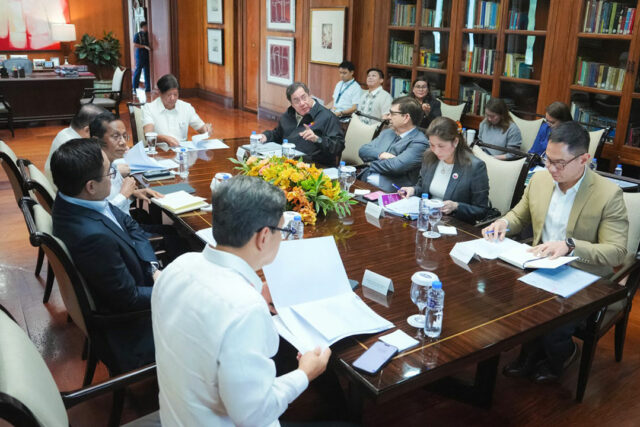
PRESIDENT Ferdinand R. Marcos, Jr. on Tuesday directed the Health department to ensure the uninterrupted delivery of services by the Philippine Health Insurance Corp. (PhilHealth) after it was given zero subsidy.

Mr. Marcos and his economic team met with the Department of Health among other government agencies to review their budgets under the 2025 General Appropriations Act (GAA).

“Make sure that services of PhilHealth remain unhampered,” Mr. Marcos told Health Secretary Teodoro J. Herbosa at a meeting at the presidential palace, based on a press release from his office.

The health insurer has no government subsidies under 2025 General Appropriations Act, prompting backlash from civic groups.

The President said the “zero budget” for PhilHealth should not affect the delivery of healthcare services.”

PhilHealth members’ out-of-pocket expenditures were already at 44%-50%, the third highest in Southeast Asia, former Department of Health advisor Anthony C. Leachon told BusinessWorld in late December.

He said if the P74-billion government subsidy for PhilHealth was not taken down, the expenses could be reduced to 30% in the next three years.

Mr. Marcos, meanwhile, urged Mr. Herbosa to shift the DoH’s focus to prevention from cure, stressing that “an ounce of prevention is better than a pound in cure.”   

“The President also underscored the importance of digitalizing the DoH to enhance service delivery and efficiency,” the Presidential Communications Office (PCO) said.

It said the President “reiterated the administration’s commitment to prioritizing social services in the 2025 national budget, focusing on key sectors such as education, health, economic services, infrastructure and agriculture.”

The P6.326-trillion national budget is 0.4% lower than the P6.352-trillion spending plan that the Department of Budget and Management submitted to Congress in August. This is equivalent to 22% of the projected gross domestic product in 2025.

The President, meanwhile, said the programs of the Department of Social Welfare and Development (DSWD) should be excluded from unprogrammed appropriations next year. 

This will enable the fast implementation of state welfare programs, he said in a separate meeting with the DSWD.

“DSWD programs should no longer [be] in the unprogrammed appropriation next year,” he said. 

“It should be under programmed funds so it could be quickly availed,” he added in Filipino.

The DSWD budget was reduced by P10.85 billion or 4.79% to P215.82 billion in the 2025 GAA from P226.67 billion in the 2024 national budget.

“The DSWD is requesting P41.8 billion as additional funding from the Unprogrammed Appropriations (UA) to cover the Pantawid Pamilyang Pilipino Program (4Ps) grants for the period August to December 2025,” the PCO said.

Also on Tuesday, Mr. Marcos asked the Department of Information and Communications Technology (DICT) to prioritize the department’s Common Tower Program (CTP).

“Focus on the Common Tower [Program] because we will be serving more people through that,” he said in a separate meeting with the DICT.

The PCO said the Marcos government is now handling 1,277 government systems from 250 earlier. 

DICT Secretary Ivan John E. Uy assured the President of uninterrupted and more efficient operations for renewing 15,715 Free Wi-Fi access point sites at P6 billion. 

About P1.5 billion could be allocated for new sites and other initiatives, including the CTP, he said, according to the PCO.

He said the CTP is expected to “serve at least 404,600 direct beneficiaries and an estimated 2,023,000 indirect beneficiaries.” — Kyle Aristophere T. Atienza

House panel compels NGCP to submit shareholders’ agreement

JUDGEFLORO

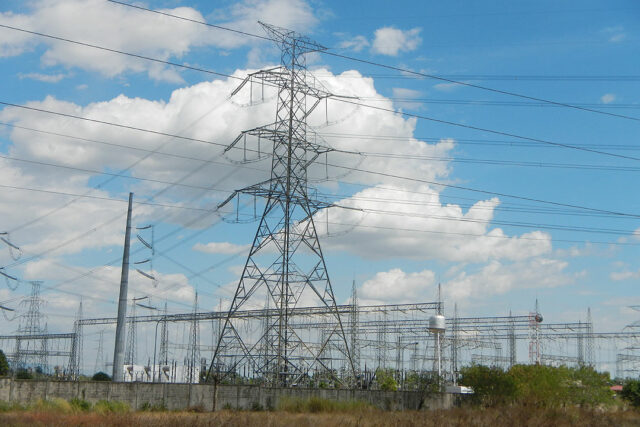
A HOUSE of Representatives committee on Tuesday mandated the National Grid Corp. of the Philippines (NGCP) to submit a copy of its shareholders’ agreement amid national security concerns over China’s involvement with the state grid operator.

The House legislative franchises panel gave NGCP a week to comply with its order to submit the grid operator’s shareholders’ agreement with congressmen.

A shareholders’ agreement is a document outlining how a company is to be operated, and the rights and obligations it provides to stockholders.

“I feel that the document is very important in this inquiry because we’d like to determine if it’s run, controlled, managed, and operated by the Chinese or Filipinos,” Surigao del Norte Rep. Robert Ace S. Barbers told lawmakers during an inquiry into the NGCP’s performance.

NGCP lawyer Lally C. Ortilla-Mallari, however, said the document is “confidential” as it is currently being used as evidence in an arbitration case.

NGCP’s shareholders’ agreement is the “subject of and has been produced as evidence in an ongoing arbitration proceedings” against the Philippine government’s grid asset management agencies, Ms. Ortilla-Mallari told the committee.

“As evidence in an arbitration proceeding, the shareholders’ agreement is protected by confidentiality under Sec. 23 of Republic Act No. 9285 or the Alternative Dispute Resolution.”

In a statement on Tuesday, the NGCP reiterated it is a Filipino-led company, with 60% of its shares owned by Filipinos.

The consortium comprised of Monte Oro Grid Resources Corporation, Calaca High Power Corporation, and State Grid Corporation of China won the bidding for the operation of the country’s transmission grid for a purchase price of $3.95 billion.

Monte Oro Grid Resources and Calaca own 60% of the company while State Grid Corporation of China holds 40%, meeting the law’s requirement for foreign investors.

Lawmakers in the past years have raised concerns over the State Grid Corp. of China’s involvement with the NGCP. The Chinese company has a 40% stake in the power grid operator. It gained partial ownership of the NGCP in 2007, running it alongside other Philippine companies.

The House also floated the possibility of subjecting NGCP to a “national security review” last week, with Albay Rep. Jose Ma. Clemente S. Salceda saying the state grid operator could’ve violated the Philippine Anti-Dummy Law.

The grid operator also said there is no single button to cut down power in the country amid fears of a power grid attack.

“Decisions are based on established procedures. There are separate procedures for maintenance and emergency cases,” Clark N. Agustin, NGCP Assistant Vice-President for System Operations, said in mixed English and Filipino in the same statement. He noted that there are control centers in Luzon, Visayas and Mindanao.

“If you decide to cut off power for the entire country, there’s no central control point with a single button,” he said.

Mr. Agustin also China is a technical partner, allowed by the government, hence, the use of China-made equipment in its operations.

“There were no midnight deals. The NGCP remains transparent in all its transactions,” he said. — Kenneth Christiane L. Basilio

Quimbo is House budget panel OIC

MARIKINA REP. STELLA QUIMBO FACEBOOK PAGE

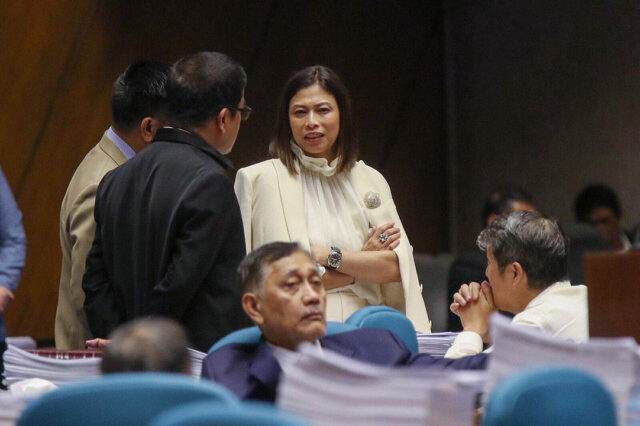
THE House of Representatives has assigned Marikina Rep. Stella Luz A. Quimbo as officer-in-charge (OIC) of the chamber’s appropriations committee, which was vacated in a surprise move on Monday.

In a statement, House Secretary-General Reginald S. Velasco said Ms. Quimbo would serve as “acting leader” of the House budget panel, performing in an “acting capacity” while congressmen are yet to name a replacement for Party-list Rep. Elizaldy S. Co.

The House floor on Monday declared the chairmanship of the appropriations committee vacant as Mr. Co “stepped down” from the post amid health concerns.

“She (Ms. Quimbo) is serving as the Officer-in-Charge of the committee and will perform the functions of the chairperson in an acting capacity until the House designates a permanent chairperson in accordance with the applicable rules,” said Mr. Velasco.

Ms. Quimbo is the House budget panel’s highest-ranking officer aside from the chairman, serving as senior vice-chairperson of the committee before being designated as OIC.

In an interview with reporters, Ms. Quimbo said the appropriation committee will continue its legislative work without a hitch despite Mr. Co’s departure from the body.

“[The] committee of appropriations will continue to function as before,” she said. — Kenneth Christiane L. Basilio

SMC adjusts speed limit at NAIAx

PHILSTAR FILE PHOTO

SAN MIGUEL CORP. (SMC), through its unit SMC Infrastructure, has implemented an adjusted speed limit on the NAIA Expressway (NAIAx) to 80 kilometers per hour (kph) starting Jan. 15.

“This change will make travel on NAIAx and Skyway Stage 3 faster and more efficient for everyone… We have carefully studied this to make sure that it benefits motorists while prioritizing safety,” SMC Chairman and Chief Executive Officer Ramon S. Ang said in a media release on Tuesday. 

The speed limit at NAIAx is 60 kph. SMC said it also plans to increase the speed limit to 80 kph on straight sections of Skyway Stage 3 beginning Jan. 20. 

“These adjustments follow a comprehensive study conducted by the company’s traffic safety managers,” SMC said. 

The changes will complement the ongoing reconfiguration of exit plazas at NAIAx, Mr. Ang said, adding that this would also allow for less congestion on the expressway. 

Further, the company noted that a 60-kph speed limit will be retained on the curved sections for both expressways. 

“This is to maintain safety, as we do not want to put any motorists at risk of accidents due to miscalculation or oversteering, especially where there are sharp curves, given the limitations to the design of both the NAIAx and Skyway 3,” Mr. Ang said. — Ashley Erika O. Jose

Tech use to track tobacco sales urged

MOHAMMAD MAJID-UNSPLASH

THE Metro Manila Council (MMC) approved a resolution urging all local government units (LGUs) in the National Capital Region (NCR) to adopt Geographical Information System (GIS) technology for regulating business permits and licenses related to the sale of tobacco and electronic smoking products.

The initiative aims to ensure compliance with existing laws prohibiting the sale of the products within a 100-meter radius of schools, public playgrounds, and other youth-centric facilities under Republic Act 9211 (Tobacco Regulation Act of 2003) and Republic Act 11900 (Vaporized Nicotine and Non-Nicotine Products Regulation Act), the Metropolitan Manila Development Authority (MMDA) said in a statement on Monday.

Chairman Romando S. Artes said the initiative will support LGUs’ under the Smoke-Free Project to strictly enforce vape and tobacco control policies by crafting respective local laws.

“Ordinances to be enacted by the LGUs must include provisions prohibiting ambulant or mobile vendors of cigarettes and electronic smoking products, as these vendors are capable of circumventing laws prohibiting the sale of such products within prohibited areas,” he added.

The use of GIS technology will provide an accurate and efficient means for LGUs to guarantee the locations are verified before issuing business permits and licenses.

NCR LGUs are also enjoined in enacting rules on the display of signage prohibiting the sale of tobacco and e-cigarettes within the prohibited distance.

The signage will include graphic health warning illustrations and legal citations.

Local governments use GIS information as a tool to guide the issuance and renewal of business permits and licenses, ensuring compliance with existing laws and ordinances.

The MMC, composed of the 17 Metro Manila mayors, is the governing and policy-making body of the MMDA. — Chloe Mari A. Hufana

Moratorium on sin tax hike eyed

SVKLIMKIN -PIXABAY

THE HOUSE ways and means committee is looking at imposing a moratorium on the yearly excise tax rate increase over tobacco products in a bid to strengthen the government’s tax administration on cigarettes and to address smuggling.

“The scheduled yearly increase shall not apply for the period effective January 1, 2026, until December 31, 2026… provided that the 5% increase shall again be imposed beginning January 1, 2026, and every three years thereafter,” according to the unnumbered substitute bill obtained by BusinessWorld.

The Philippines applies an excise tax rate of P63 per pack of 20 cigarettes while vape products are levied with a tax of P109.20 for two milliliter (mL) salt nicotine pods and P63 per 10 mL tax for classic nicotine products, according to the Bureau of Internal Revenue (BIR).

The BIR has collected P130.91 billion in tobacco excise taxes from January to November 2024, well behind the pace needed to hit the P185.34 billion target last year.

Meanwhile, Albay Rep. Jose Ma. Clemente S. Salceda said the House ways and means panel is looking at rationalizing the excise taxes on tobacco products by levying an additional P8 tax per 2 mL vape pods.

“There will be an attempt to rationalize taxes on vapes and cigarettes,” Mr. Salceda, panel chairman, told reporters. — Kenneth Christiane L. Basilio

Senate OKs bill extending term for village, youth council officials

PHILIPPINE STAR/MICHAEL VARCAS

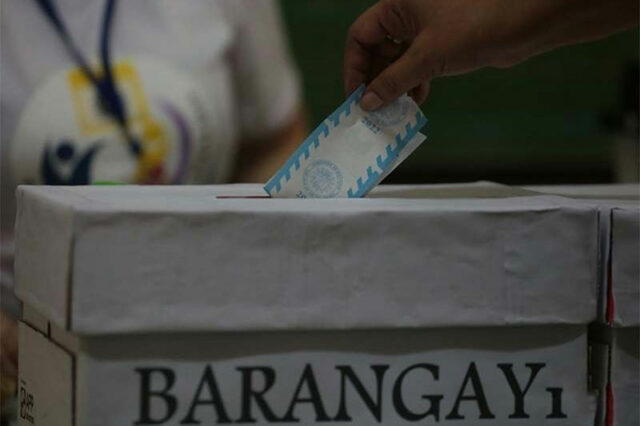
THE SENATE on Tuesday approved on third reading a bill that sets the term of office for village and youth council officials to four years and bars elected officials from serving more than three consecutive terms in the same post.

“With the longer fixed term, the barangay officials and members of the SK will deepen their understanding of both national and local issues, as well as implement their own medium- and long-term initiative at the barangay level,” Senator Maria Imelda R. Marcos earlier said in her sponsorship speech of Senate bill No. 2816.

Twenty-two senators unanimously voted in favor of the bill with no negative votes nor abstentions.

If enacted into law, the measure would mandate that all incumbent village and youth council officials stay in office unless “sooner removed or suspended” until successors have been elected.

Current officials serving a third consecutive term will be barred from running for the same position in the October 2027 village and youth council elections.

The bill also mandates that these elections will be held every first Monday of October starting in 2027 and every four years after.

Senators also approved bills amending the Safe Spaces Act to punish spreading explicit deepfakes of individuals, modernizing the Philippine Institute of Volcanology and Seismology and another seeking additional monthly pension differential for retired ambassadors and other foreign service officers. — John Victor D. Ordoñez

P72.8-M illegal drugs seized in NAIA

PHILSTAR FILE PHOTO

BUREAU OF CUSTOMS (BoC) seized P72.8 million worth of illegal drugs at the Ninoy Aquino International Airport (NAIA).

In a statement, Customs said the 10,706 grams of suspected methamphetamine hydrochloride, commonly known as “shabu,” was intercepted in the airport hidden in abandoned inbound luggage.

“The items were traced back to a passenger who had traveled from South Africa, with a stopover in Doha, Qatar, before reaching Manila,” the BoC said.

It added that concealed within the luggage were improvised pouches of packaging tape wrapped in black carbon paper, hidden in five handbags, four file organizer bags, and one portfolio bag.

The operation conducted on Jan. 6, was conducted in coordination with the NAIA Inter-Agency Drug Interdiction Task Group. — Aubrey Rose A. Inosante

SC issues TRO vs disqualifying Erice, 4 others in 2025 polls

PHILSTAR FILE PHOTO

THE Supreme Court (SC) on Tuesday directed the Commission on Elections (Comelec) to reinstate the name of a former congressman, who had been initially excluded from the ballots for the May 2025 national and local elections.

Spokesperson Camille Sue Mae L. Ting, in a press briefing in Manila City, said the top court en banc ordered the polling body to include former Caloocan Second District Representative Edgar R. Erice’s name in the ballots for the next election as it issued a temporary restraining order (TRO) prohibiting it from disqualifying the former lawmaker.

“The SC also ordered the Comelec to comment on Erice’s petition within a non-extendible period of 10 days from receipt of notice,” she added.

Apart from Mr. Erice, the top court also issued TROs against the Comelec in the cases of Subair Guinthum Mustapha, Charles Savellano, Chito Bulatao Balintay, and Florendo De Ramos Ritualo, Jr.

Ms. Ting said the order is immediately executory.

The tribunal ordered Comelec to include all their names in the ballots despite the commencement of printing starting early last Jan. 6.

“Part of the process. We will have to find a way to comply with the SC directive,” Comelec Chairman George Erwin M. Garcia told reporters in a Viber chat.

“That is part of the implications, but we are now going to meet if indeed we are to suspend the printing in the meantime. The [Election Management System] will be changed, including the database, and we have to start again the serialization of each and every candidate’s name nationwide.”

The Comelec last December disqualified Mr. Erice due to his statements questioning the credibility of Miru Systems, the automated election system provider of the next polls.

Mr. Mustapha and Mr. Savellano were earlier declared by the poll body as nuisance candidates, while it rejected Mr. Balintay’s certificate of candidacy (CoC) as Zambales Governor. Comelec also canceled Mr. Ritualo’s CoC for a Sangguniang Panlungsod Member position. — Chloe Mari A. Hufana

Use of EDSA bus lane for food trucks pushed

PHILIPPINE STAR/MICHAEL VARCAS

A RESOLUTION seeking to expedite the transportation of food and perishable products by allowing delivery trucks to ply the EDSA busway lane at night was filed at the House of Representatives on Monday.

Allowing trucks carrying food products to use the EDSA bus lane from 10 p.m. to 5 a.m. would provide an “efficient route” for the transportation of food items and improve supply chain productivity between producers and consumers, said Party-list Rep. Wilbert T. Lee, who filed House Resolution (HR) No. 2162.

“Through this, we can ensure the timely transport of fresh produce, meats, dairy, and other essential food items to Metro Manila and neighboring areas, which will help lower food prices and achieve food security,” he said in a statement.

The EDSA busway is a dedicated lane for the bus rapid transit system of the Philippine capital region. It runs along several Metro Manila cities, serving as a major transportation artery.

“The use of the EDSA busway at night would be able to avoid the peak traffic hours and allow for the efficient movement of goods without disrupting the regular operations of public transportation… during daytime hours,” HR No. 2162 stated. — Kenneth Christiane L. Basilio