Home Blog Page 1774

Western intelligence agencies warn spyware threat targeting Taiwan, Tibetan rights advocates

STOCK PHOTO | Image by geralt from Pixabay

DETROIT — Western intelligence agencies warned on Tuesday of an increasing threat from Beijing’s security services to use malicious mobile phone applications to surveil Taiwanese independence activists, Tibetan rights advocates and others opposed by the Chinese government.

An advisory issued late on Tuesday warned of “the growing threat” posed by malicious surveillance software deployed by a Chengdu-based contractor reported to have ties to China’s Ministry of Public Security. The advisory was signed by cybersecurity agencies in Britain, the US, Canada, New Zealand, Australia and Germany.

Those most at risk include people connected to Taiwanese independence, Tibetan rights, Uyghur Muslims and other minorities in the Xinjiang Uyghur Autonomous Region, democracy advocates (including in Hong Kong) and the Falun Gong spiritual movement, according to Britain’s National Cyber Security Centre (NCSC)  in the advisory.

The warning comes amid increasing tensions surrounding Taiwan, including April 1 Chinese military drills around the island and a March 28 visit to the Philippines by U.S. Defense Secretary Pete Hegseth in which he reaffirmed Washington’s commitment to deterring Chinese aggression in the region.

The Chengdu-based contractor, Sichuan Dianke Network Security Technology Co., Ltd., was linked to the deployment of a pair of distinct malware packages. They were tracked as “BADBAZAAR” and “MOONSHINE” and used to ferret sensitive information from mobile devices while also giving operators remote access to devices’ cameras, microphones and location data, the advisory said.

The warning is for non-governmental organizations, journalists, businesses and other individuals who advocate for or represent the groups, the NCSC said in the advisory.

“The indiscriminate way this spyware is spread online also means there is a risk that infections could spread beyond intended victims,” it said.

Liu Pengyu, spokesperson for the Chinese Embassy in Washington, told Reuters that China “firmly opposes the smear attacks against China without any factual basis,” and that the tracing of cyberattacks is complex. “We hope that relevant parties will adopt a professional and responsible attitude when characterizing cyber incidents, basing their conclusions on sufficient evidence rather than unfounded speculation and accusations.”

The warnings build on previous cybersecurity industry reporting that detailed malware and infrastructure have been used by the contractor going back several years.

The advisory cited a Jan. 29 report published by Intelligence Online, a news organization focused on international intelligence operations, linking the malware to the contractor. The report said the contractor has provided services to China’s Ministry of Public Security.

The FBI, NSA and intelligence agencies in Australia, Canada, Germany and New Zealand participated in the advisories, according to the NCSC.

The FBI declined to comment and the NSA did not respond to requests for comment. — Reuters

Judge lifts Trump White House restrictions on AP while lawsuit proceeds

STOCK PHOTO | Image by Pexels from Pixabay

WASHINGTON — A US judge on Tuesday ordered President Donald Trump’s White House to lift access restrictions imposed on the Associated Press (AP) over the news agency’s decision to continue to refer to the Gulf of Mexico in its coverage.

US District Judge Trevor McFadden, who was appointed by Mr. Trump during his first term, ruled the White House must allow AP journalists access to the Oval Office, Air Force One and events held at the White House while the AP’s lawsuit moves forward.

The White House began limiting AP’s access to several events that featured Mr. Trump after the news agency said it would continue using the name Gulf of Mexico while acknowledging Mr. Trump’s order to change the name of the body of water to the Gulf of America.

“The Court simply holds that under the First Amendment, if the Government opens its doors to some journalists — be it to the Oval Office, the East Room, or elsewhere — it cannot then shut those doors to other journalists because of their viewpoints,” Mr. McFadden wrote in his ruling.

Mr. McFadden said his ruling will not go into effect until Sunday to give the Trump administration time to appeal his decision. The judge is expected to issue a final ruling in coming months; that ruling could also be subject to appeal.

“Today’s ruling affirms the fundamental right of the press and public to speak freely without government retaliation,” AP spokesperson Lauren Easton said in a statement.

The White House did not immediately respond to a request for comment.

The AP says in its stylebook that the Gulf of Mexico has carried that name for more than 400 years and, as a global news agency, the AP will refer to it by its original name while acknowledging the new name Mr. Trump has chosen.

The AP sued three senior Trump aides in February, alleging the restrictions were an attempt to coerce the press into using the administration’s preferred language. The lawsuit alleged the restrictions violated protections under the US Constitution for free speech and due process, since the AP was unable to challenge the ban.

Lawyers for the Trump administration have argued that the AP does not have a right to what the White House has called special access to the president.

Two AP journalists, Zeke Miller, the agency’s chief White House correspondent, and Evan Vucci, its chief Washington photographer, told the court at a March 27 hearing that the restrictions had hampered the AP’s ability to cover Mr. Trump.

“We’re basically dead in the water on major stories,” testified Mr. Vucci, who had taken a now-iconic photograph of Mr. Trump pumping his fist after a 2024 assassination attempt.

Mr. Miller said he had noticed a “softening of the tone and tenor of the questions that some reporters are asking of the president.”

Brian Hudak, a Justice department lawyer representing the Trump officials, disputed during the hearing that the AP had been entirely shut out.

Mr. Hudak said the White House had the authority to keep AP journalists from the president’s personal and work spaces and accused the agency, in its editorial choices, of “refusing to adhere to what the president believes is the law of the United States.”

AP journalists were barred from the group of White House reporters, known as the “press pool,” that covers events in the Oval Office and travels with the president.

The White House in February took charge of deciding which media outlets are part of the press pool. Reuters, which has issued a statement in support of the AP, has historically been a permanent member of the pool and now has a rotating spot for wire services.

The AP has also been blocked from attending larger events in the White House that were open to other reporters with White House press credentials, according to the news agency’s complaint.

The AP, formed in 1846, says on its website that it operates from nearly 250 locations in nearly 100 countries. Its journalists provide news to customers worldwide in text, photos, graphics and video.

The restrictions prevent the AP’s journalists from seeing and hearing Mr. Trump and other top White House officials as they take newsworthy actions or respond in real time to news events.

The move has been criticized by several press freedom groups and the White House Correspondents’ Association.

Most news organizations, including Reuters, call it the Gulf of Mexico and where relevant include the context about Mr. Trump’s executive order. — Reuters

US tariffs, China slowdown cloud developing Asia’s growth outlook, says ADB

US President Donald J. Trump announced he will impose a 10% baseline tariff on all imports to the United States. — REUTERS

MANILA — The full implementation of US tariffs could cut developing Asia’s growth by about a third of a percentage point this year and nearly a full percentage point in 2026, the Asian Development Bank said on Wednesday.

In its Asian Development Outlook report, the ADB projected that growth in developing Asia will ease slightly to 4.9% in 2025 — the slowest pace since 2022 — and slow further to 4.7% in 2026, from 5.0% in 2024.

The forecasts were finalized before the US unveiled sweeping new import tariffs last week, the ADB said at a press conference for the report’s release.

“The elephant in the room is clearly whether the US tariffs will be fully implemented, which would lead to lower growth in our baseline forecast,” ADB chief economist Albert Park said.

Developing Asia, as defined by the ADB, is made up of 46 Asia-Pacific countries stretching from Georgia to Samoa – and excludes countries such as Japan, Australia and New Zealand.

Park said the eventual effects of the US tariffs remain uncertain, as their scope and timing could change due to negotiations, delays, or exemptions being granted.

“On the flip side, stronger retaliation and further escalation could result in bigger impacts,” he said.

“Additionally, the size and speed of policy changes under the new US administration could reduce investment globally and in the region, while rising trade tensions and fragmentation would boost trade costs and disrupt global supply chains.”

The weaker baseline projections already reflect an expected slowdown in China, with growth forecast at 4.7% this year, down from 5.0% in 2024, and slowing further to 4.3% in 2026.

Southeast Asia, which benefited from trade diversion during the 2018 US-China trade war, is expected to lose some steam with growth in the subregion seen at 4.7% this year and next, down slightly from 4.8% in 2024.

A bright spot is South Asia, the ADB said, where strong domestic demand is projected to drive growth of 6.0% in 2025 and 6.2% in 2026, up from last year’s 5.8%.

Sustained global demand for semiconductors should help underpin growth in developing Asia.

Regional inflation is forecast to ease to 2.3% this year and 2.2% next year, from 2.6% in 2024, due to falling prices of global oil and other commodities. This should allow central banks to continue monetary easing, the ADB said, although at a slower pace given expectations the US Federal Reserve would keep rates elevated for longer. — Reuters

Trump’s latest tariffs loom, set to deepen global trade war

REUTERS

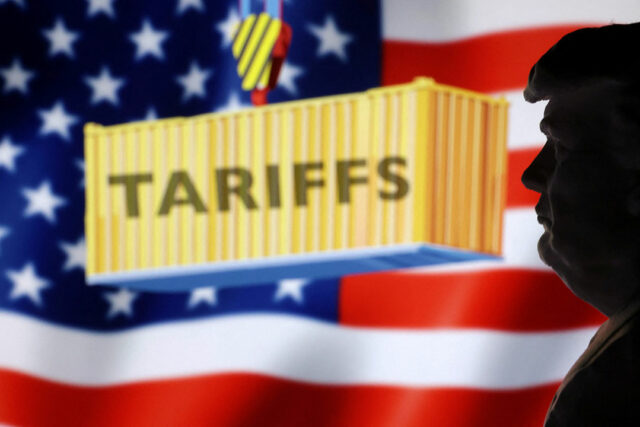
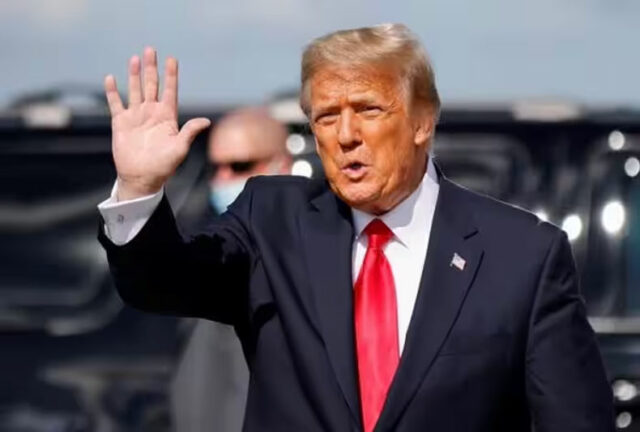
 – President Donald Trump’s “reciprocal” tariffs on dozens of countries were set to take effect on Wednesday, including massive 104% duties on Chinese goods, deepening his global trade war even as he prepared for negotiations with some nations.

Mr. Trump’s punishing tariffs have shaken a global trading order that has persisted for decades, raised fears of recession and driven worldwide stocks sharply downward.

The S&P closed below 5,000 for the first time in nearly a year on Tuesday and is nearing a bear market, defined as 20% below its most recent high.

S&P 500 companies have lost $5.8 trillion in stock market value since Trump unveiled the tariffs last Wednesday, the deepest four-day loss since the benchmark’s creation in the 1950s, according to LSEG data.

A sell-off across Asian markets resumed on Wednesday after a brief respite, with Japan’s Nikkei down over 3% and South Korea’s won currency sliding to a 16-year low. U.S. stock futures also pointed to a fifth straight day of losses on Wall Street.

Mr. Trump has offered investors mixed signals about whether the tariffs will remain in the long term, describing them as “permanent” but also boasting that they are pressuring other leaders to ask for negotiations.

“We have a lot of countries coming in that want to make deals,” he said at a White House event on Tuesday afternoon. He said at a later event that he expected China to pursue an agreement as well.

Mr. Trump’s administration has scheduled talks with South Korea and Japan, two close allies and major trading partners, and Italian Prime Minister Giorgia Meloni is due to visit next week.

The prospect of deals with other countries had pushed stock markets up earlier on Tuesday, but U.S. stocks had ceded their gains by the end of the trading day.

Mr. Trump nearly doubled duties on Chinese imports, which had been set at 54% last week, in response to counter-tariffs that Beijing announced last week. China has vowed to fight what it views as blackmail.

Economists have warned that U.S. consumers are likely to face higher prices on everything from sneakers to wine as a result of the trade war.

The full effects of Wednesday’s tariffs may not be felt for some time, as any goods already in transit as of midnight will be exempt from the new levies as long as they arrive in the U.S. by May 27.

Nearly three-quarters of Americans expect the prices of everyday items to rise in the next six months, a new Reuters/Ipsos poll found.

Mr. Trump’s earlier across-the-board 10% tariffs on all imports from many countries began on Saturday. The latest round of duties, which took effect at 12:01 a.m. ET (0401 GMT), are aimed at countries that are “ripping off” the U.S., according to Trump.

That list includes many of the United States’ closest allies, including the European Union, which was hit with a 20% tariff. Vietnam, which benefited from the shift of U.S. supply chains away from China during Trump’s first-term trade war with Beijing, faces a 46% tariff.

Mr. Trump has said the tariffs are a response to barriers put on U.S. goods that have stymied American businesses. He has also accused countries including Japan of devaluing their currencies to gain a trade advantage, something Tokyo denies.

Japan’s finance minister on Wednesday said trade negotiations with Washington could include foreign exchange rates.

Mr. Trump has signaled he may not be finished on tariffs.

In remarks to Republican lawmakers on Tuesday evening, he said he would soon announce “major” tariffs on pharmaceutical imports, one of a handful of categories of goods that have been exempted from the new taxes. – Reuters

Taiwan hopes for quick agreement with US on tariffs issue

JOHNSON HUNG-UNSPLASH

 – Taiwan’s hopes that it can come to a quick agreement with the United States to resolve the tariffs issue and last weekend already approached Washington to discuss the issue, a senior Taiwanese official said on Wednesday.

Taiwan has responded to U.S. President Donald Trump’s 32% tariff on island with an offer of zero tariffs, more investment in the country and purchases from it, and said it will not retaliate.

Speaking to reporters at parliament, Taiwan National Security Bureau Director-General Tsai Ming-yen said the government’s position was not to take retaliatory measures, but to come up with more specific solutions.

President Lai Ching-te has instructed officials to initiate “strategic communication” between Taiwan and the United States, he added.

“So last weekend, we used channels to talk to the U.S. to reflect our position on Taiwan-U.S. tariff negotiations and some of our proposals,” Mr. Tsai said, without giving details.

Lai has held many meetings with officials to discuss the detailed response, including how to strengthen investment or procurement in the United States, he added.

“I think that through this more comprehensive negotiation preparation, we hope that once the United States agrees that Taiwan and the U.S. can have a related negotiation process, the two sides can quickly come to an agreement to promote the progress of the relevant negotiation.”

The tariffs have hammered Taiwan’s stock market.

The government on Tuesday evening announced the activation of its $15 billion stock stabilization fund to restore investor confidence and ensure market stability.

The benchmark stock index was down around 1.5% on Wednesday, after hefty losses in the two previous sessions.

Shares in top chipmaker TSMC were flat, while Apple supplier Foxconn’s shares dropped around 4%. – Reuters

South Korea announces emergency measures for auto industry hit by US tariffs

 – South Korea on Wednesday announced emergency support measures for its auto sector, seeking to reduce the blow of U.S. President Donald Trump’s tariffs on a sector that has seen years of sharply rising exports to the United States.

The measures include financial support for the auto industry as well as tax cuts and subsidies to boost domestic demand, while the government also vowed efforts to negotiate with the U.S. and help expand markets.

Mr. Trump has announced a 25% tariff on imported cars and light trucks starting on Thursday. Manufacturers are expected to bear some of the tariff costs in the first year, but will eventually alter production and possibly cease importing certain low-volume models into the U.S. market.

“Given the (lower) proportion of South Korean automakers’ local production in the United States, our industry is comparably at a disadvantage,” the government said in a statement.

The tariff was expected to cause “significant” damage to South Korean automakers and auto parts manufacturers, though it was difficult to come up with numerical estimates at the moment, the government said.

To help prevent any liquidity issues, the government will raise policy financing support for the auto industry to 15 trillion won ($10.18 billion) in 2025 from the 13 trillion won previously planned, according to the statement.

The government will lower taxes on automobile purchases to 3.5% from the current 5% until June 2025 and raise electric-vehicle subsidies to 30%-80% of price discounts from the current 20-40% with the period extended by six months to the end of this year.

The government said it would also actively support automakers’ efforts to expand export markets in the “Global South”, which refers to less developed countries in Africa, Latin America and Asia, where demand is growing.

Regarding U.S. tariffs, the government said: “We will do our best to ensure that the U.S. does not treat South Korea in a disadvantageous way compared with other allies, through negotiations and by strengthening bilateral cooperation,” without details.

The auto industry welcomed the support plan, but said further discussions were needed on more tax benefits to boost domestic demand. “There is a lot of concern in the auto industry about whether this alone will be enough,” an industry official told Reuters, speaking on condition of anonymity because he was not permitted to speak to the media.

In 2024, South Korea’s exports of automobiles to the United States stood at $34.7 billion, accounting for 49% of its total auto exports.

Hyundai Motor said last week that it plans to keep sticker prices on its current model lineup steady for the next two months in an effort to ease customer concerns that the fallout from tariffs will impact dealer lots.

The program runs until June 2, and comes after the South Korean group’s $21 billion investment in the U.S. announced last month.

Hyundai Motor’s co-CEO Jose Munoz said there were no plans to raise prices in the United States, Hyundai’s biggest revenue-generating market.

Analysts said that Mr. Trump may have a preference to propose aggressive tariffs in order to extract quick concessions in a negotiation, adding that auto tariffs will put upward pressure on input costs for vehicles in general. Relative to the combustion engine vehicle supply chain, the electric vehicle (EV) supply chain would likely suffer a bigger impact due to a dependence on China for EV parts. – Reuters

TSMC could face $1 billion or more fine from US probe, sources say

REUTERS

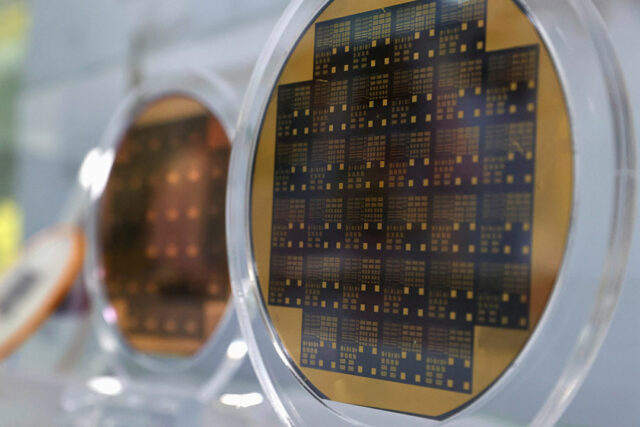
Taiwan Semiconductor Manufacturing could face a penalty of $1 billion or more to settle a U.S. export control investigation over a chip it made that ended up inside a Huawei AI processor, according to two people familiar with the matter.

The U.S. Department of Commerce has been investigating the world’s biggest contract chipmaker’s work for China-based Sophgothe sources said. The design company’s TSMC-made chip matched one found in Huawei’s high-end Ascend 910B artificial intelligence processor, according to the people, who requested anonymity because they were not authorized to speak publicly about the matter.

Huawei – a company at the center of China’s AI chip ambitions that has been accused of sanctions busting and trade secret theft – is on a U.S. trade list that restricts it from receiving goods made with U.S. technology.

TSMC made nearly three million chips in recent years that matched the design ordered by Sophgo and likely ended up with Huawei, according to Lennart Heim, a researcher at RAND’s Technology and Security and Policy Center in ArlingtonVirginiawho is tracking Chinese developments in AI.

The $1 billion-plus potential penalty comes from export control regulations allowing for a fine of up to twice the value of transactions that violate the rules, the sources said.

Because TSMC’s chipmaking equipment includes U.S. technology, the company’s Taiwan factories are within reach of U.S. export controls that prevent it from making chips for Huawei, or producing certain advanced chips for any customer in China without a U.S. license.

Heim said that based on the design, which is for AI applications, TSMC should not have made the chip for a company headquartered in China, especially given the risk that it could be diverted to a restricted entity like Huawei.

Shares of TSMC traded in the U.S. erased a nearly 3% gain to trade slightly lower after the news.

Penalizing TSMC comes at a critical moment for U.S.-Taiwan relations as the two begin re-negotiating their trading relationship after Trump last week slapped a 32% levy on imports from Taipei. The tariffs exclude chips, but Trump has said his team is looking at levies on semiconductors.

In March, TSMC said at the White House that it plans to make a fresh $100 billion investment in the United States that includes building five additional chip facilities in coming years.

Reuters could not determine how the Trump administration will proceed with TSMC or when the matter would be resolved. Top officials have said they plan to seek higher penalties for export violations.

A spokesperson for the Commerce Department declined comment. TSMC spokesperson Nina Kao said in a statement that the company is committed to complying with the law. She added that TSMC has not supplied to Huawei since mid-September 2020 and that they are cooperating with the Commerce Department.

Speaking to reporters in Taipei on Wednesday, Taiwan Economy Minister Kuo Jyh-huei said TSMC is a company that respects laws and regulations, but his ministry has not received any notification about a possible fine and he could not comment further.

No public action has been taken against TSMC. But typically, Commerce issues a “proposed charging letter” to a company it believes has engaged in prohibited conduct. The letter usually cites the dates alleged violations took place, the value, and the formula for a civil penalty, and it gives the company 30 days to respond.


MORE ENFORCEMENT

At a conference in Washington last month, U.S. Commerce Secretary Howard Lutnick spoke about the role of export control enforcement in addressing the threat from China.

“We are going to seek in this administration a dramatic increase in enforcement and fines for people who break the rules,” Mr. Lutnick said. “We have had enough of people trying to make a dollar supporting the people who seek to destroy our way of life.”

Jeffrey Kessler, who was confirmed in March as Under Secretary of Commerce for Industry and Security to oversee U.S. export controls, was more targeted at his Feb. 27 nomination hearing, saying that reports of TSMC chips going to Huawei was “a huge concern” and that “strong enforcement” was critical.

A 10-figure fine for export control violations would be rare. In 2023, BIS imposed a $300 million penalty on Seagate Technology Holdings STX.O as part of a settlement over its shipping over $1.1 billion worth of hard disk drives to Huawei, as first reported by Reuters.

TSMC first came under scrutiny last fall. TechInsights, a Canadian tech research firm, took apart a Huawei 910B AI accelerator and found a TSMC die, as it’s also called, in the multi-chip system.

After the TechInsights finding, TSMC suspended shipments to Sophgo and, in November, as Reuters reported, the Commerce Department ordered the chipmaker to halt shipments to China of seven-nanometer or more advanced chips that could be used in AI applications.

In January, Sophgo, which in October denied any business relationship with Huawei, was placed on the same Commerce department restricted trade list as Huawei. Sophgo could not be reached for comment.

Huawei’s Ascend 910B has been viewed as the most advanced mass-produced AI chip available from a Chinese company, providing an alternative to California-based industry leader Nvidia. – Reuters

Trump issues order to block state climate change policies

US PRESIDENT-ELECT Donald J. Trump is set to assume office on Jan. 20, 2025. — REUTERS

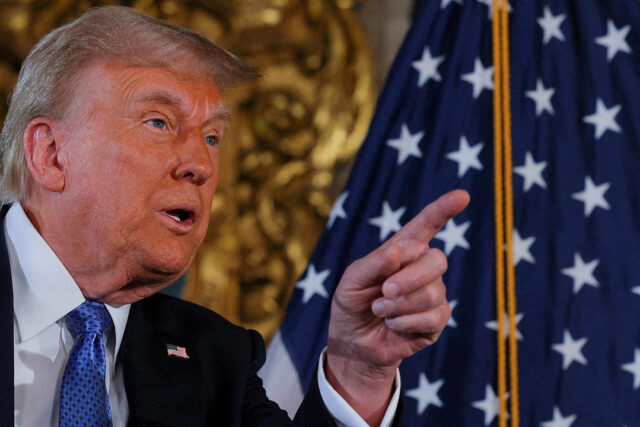
U.S. President Donald Trump issued an executive order on Tuesday that aims to block the enforcement of state laws passed to reduce the use of fossil fuels and combat climate change.

The move is the latest in a string of efforts by Trump’s administration to pump up domestic energy output and push back against largely Democratic-led policies to curb carbon emissions. It came just hours after Mr. Trump, a Republican, issued orders to increase coal production.

The order directed the U.S. attorney general to identify state laws that address climate change, ESG initiatives, environmental justice and carbon emissions, and to take action to block them.

“Many States have enacted, or are in the process of enacting, burdensome and ideologically motivated ‘climate change’ or energy policies that threaten American energy dominance and our economic and national security,” the order said.

Mr. Trump specifically cited laws in New York and Vermont that fine fossil fuel companies for their contribution to climate change, California’s cap-and-trade policy, and lawsuits by states that have sought to hold energy companies accountable for their role in global warming.

The two Democratic governors who co-chair the U.S. Climate Alliance – Kathy Hochul of New York and Michelle Lujan Grisham of New Mexico – said states could not be stripped of their authority and would not be deterred by the executive order.

“We will keep advancing solutions to the climate crisis that safeguard Americans’ fundamental right to clean air and water, create good-paying jobs, grow the clean energy economy, and make our future healthier and safer,” they said in a joint statement.

The Alliance is a group of 24 governors dedicated to climate action.

The American Petroleum Institute, an oil and gas trade group, praised the order.

“We welcome President Trump’s action to hold states like New York and California accountable for pursuing unconstitutional efforts that illegally penalize U.S. oil and natural gas producers for delivering the energy American consumers rely on every day,” API Senior Vice President Ryan Meyers said in a statement. – Reuters

US to ‘take back’ Panama Canal from Chinese influence, visiting Pentagon chief says

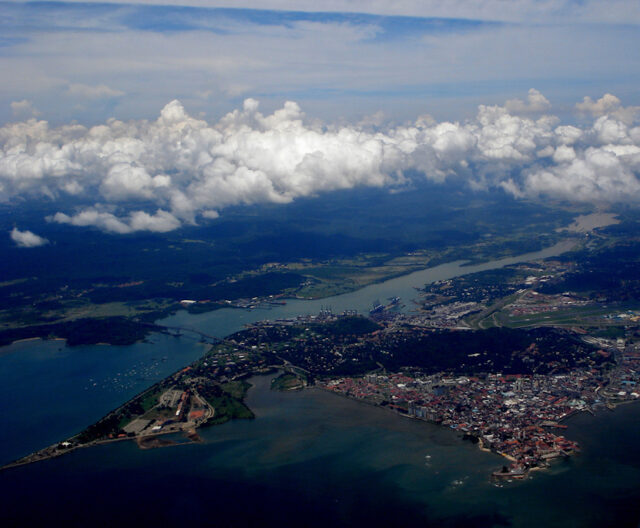
By Camilo Molinaderivative work: MrPanyGoff - https://www.flickr.com/photos/milhoooox/1454717385/sizes/l/in/set-72157603216901000/Uploaded by MrPanyGoff, CC BY-SA 2.0, https://commons.wikimedia.org/w/index.php?curid=18722432

 – The United States will “take back” the Panama Canal from Chinese influence, U.S. Defense Secretary Pete Hegseth said on Tuesday during a visit to the Central American nation.

After talks with Panama’s government, Mr. Hegseth vowed to deepen security cooperation with Panamanian security forces and said China would not be allowed to “weaponize” the canal by using Chinese firms’ commercial relationships for espionage.

“Together, we will take back the Panama Canal from China’s influence,” Mr. Hegseth said, speaking at a pier renovated with U.S. assistance in Panama City.

“China did not build this canal. China does not operate this canal and China will not weaponize this canal. Together with Panama in the lead, we will keep the canal secure and available for all nations.”

More than 40% of U.S. container traffic, valued at roughly $270 billion a year, goes through the Panama Canal, accounting for more than two-thirds of vessels passing each day through the world’s second-busiest interoceanic waterway.

Mr. Hegseth, the first U.S. defense secretary in decades to visit Panama, flew over the canal in a Black Hawk helicopter after meeting U.S. troops and Panamanian security forces. He also toured the Miraflores lock, waving to sailors passing through on a container ship.

His language appeared fine-tuned, talking tough but offering some assurances to Panamanians still unsettled by Mr. Trump‘s threats to reclaim the canal.

While Mr. Hegseth spoke about removing Chinese influence, Trump has spoken in broader terms and not ruled out using military force.

Mr. Hegseth’s trip follows reports that the Trump administration has requested options from the U.S. military to ensure access to the canal, which the United States built more than a century ago and handed over to Panama in 1999.

Mr. Trump has complained that was a bad deal for the United States.

Given Mr. Trump’s tough rhetoric, the stakes were high for Mr. Hegseth’s visit.

“On the whole, this hasn’t been a winning issue for the United States in terms of public diplomacy in Panama,” said Ryan Berg, director of the Americas Program at the Center for Strategic and International Studies.

Still, current and former U.S. officials and experts say the United States has found a willing partner in tackling Chinese influence in Panama’s President Jose Raul Mulino, whom Mr. Hegseth met earlier on Tuesday.

In February, Mr. Mulino announced Panama’s formal move to exit China’s Belt and Road Initiative and he has aided Trump’s crackdown on migrants.

He has accepted deportation flights of non-Panamanians and worked to stem migration from South America by those crossing through his country’s dangerous Darien jungle.

Mr. Hegseth praised Mulino, saying his government understood the threat from China, and his remarks about Panama being in the lead on addressing the canal’s security concerns appeared to be a nod to Panamanian sensitivities.

During his visits to bases, which once had names including Fort Sherman and Rodman Naval Station before the U.S. exit, Mr. Hegseth spoke about the canal as “key terrain” and held out hope for more frequent engagements by U.S. troops, including by revitalizing a jungle survival training center.

“In reality or in perception, the communist Chinese have had designs on more control of this canal, and to that we say: Not on our watch,” Mr. Hegseth told U.S. troops and Panamanian security forces. “We will grow our partnership even more.”

Mr. Hegseth, a U.S. military veteran and former Fox News host, has enthusiastically backed Trump’s southern-focused security agenda, by means such as dispatching U.S. troops to the U.S. border with Mexico, offering space at a base at Guantanamo Bay, Cuba to detain migrants, and military aircraft for deportation flights.


U.S. SECURITY CONCERNS

Mr. Trump has falsely claimed that China is operating the canal, something even Mr. Hegseth said was not true on Tuesday, and that Chinese soldiers are present.

But experts acknowledge U.S. security concerns, particularly regarding espionage, with an expansive Chinese commercial presence in Panama that also includes plans by Chinese firms to build a bridge over the canal.

“China has never been involved in the management and operation of the Panama Canal, nor has it ever interfered in the affairs of the canal,” said a statement by the Chinese Embassy in Panama.

“The only time in history the canal has been cut off was because of a U.S. invasion. Who is truly safeguarding the canal’s neutrality and prosperity? Who keeps clamoring to ‘take back’ the canal? Who is the real threat to it?”

Last month, Mr. Trump celebrated a deal led by U.S. firm BlackRock to buy most of the $22.8-billion ports business of Hong Kong conglomerate CK Hutchison, including its ports on either end of the Panama Canal.

Mr. Trump said the purchase was an example of how the United States was “reclaiming” the canal.

But China has criticized it, with the market regulator saying it will carry out an antitrust review of the deal.

Current and former U.S. officials say the Panama Canal would be critical for the passage of U.S. warships during any future conflict in Asia, since Navy vessels would transit from the Atlantic to the Pacific to support the war effort.

Even without blocking the canal, China could keep tabs on vessels passing through it.

Still, John Feeley, who was U.S. ambassador to Panama from 2015 to 2018, disputed the Trump administration’s assertion that China’s presence in Panama was a violation of the U.S.-Panama treaty.

“What’s not legitimate about the way Trump has gone about this is the bullying tactic that he’s used, which is to claim that there has been a violation of the neutrality treaty. There hasn’t been,” Mr. Feeley said.

Mr. Mulino has defended Panama’s administration of the canal, saying it has been handled responsibly for world trade, including that of the United States, and that it “is, and will continue to be, Panamanian.” – Reuters

US says it is alarmed by American academic’s arrest in Thailand

STOCK PHOTO | Image by 4711018 from Pixabay

 – The U.S. State Department said on Tuesday it was alarmed by the arrest in Thailand of American academic and U.S. citizen Paul Chambers who was charged with insulting the monarchy, in a rare prosecution of a foreigner under one of the world’s strictest lese-majeste laws.

Local police said Chambers, a lecturer at Thailand’s Naresuan University, reported to a precinct in the northern province of Phitsanulok after a warrant for his arrest was issued last week following a complaint filed by the army.

Thailand’s monarchy is protected by Section 112 of the country’s penal code, which says anyone found guilty of defaming, insulting or threatening the king, queen, heir apparent or regent shall be punished with imprisonment of three to 15 years.

Chambers was also charged with a computer crime violation.

“As a treaty ally of Thailand, we will closely monitor this issue and advocate for the fair treatment of Paul Chambers,” the State Department said in a statement.

“This case reinforces our longstanding concerns about the use of lese majeste laws in Thailand. We continue to urge Thai authorities to respect freedom of expression and to ensure that laws are not used to stifle permitted expression,” it added.

Thai royalists consider the monarchy sacrosanct. Public discussion of the law has for decades been a taboo issue, with dozens of people jailed for perceived insults of the crown.

A lawyer for Chambers denied the charges and said the accusations stemmed from a blurb for an online academic seminar last year at which he was a speaker. The blurb was posted on a website of a research institute based outside of Thailand, the lawyer said. – Reuters

IMF reaches $20 billion staff-level agreement with Argentina

 – The International Monetary Fund said on Tuesday it reached a staff-level agreement with Argentina on a 48-month extended fund facility totaling $20 billion.

The IMF said the agreement, which is subject to approval by its executive board, “builds on the authorities’ impressive early progress in stabilizing the economy, underpinned by a strong fiscal anchor, that is delivering rapid disinflation and a recovery in activity and social indicators.”

Argentina desperately needs the $20 billion deal to unlock investment-blocking capital controls, bolster its depleted foreign currency reserves and come out of a tight inflationary pinch.

“When the board discusses the program, the amount of the first disbursement will be known,” an IMF source said.

IMF’s executive board will consider the proposed arrangement in the coming days, according to the statement.

Libertarian president Javier Milei congratulated his Economy Minister Luis Caputo on X after the deal was announced. – Reuters

Taal Vista Hotel expands its sustainability efforts with new ‘Plate for the Planet’ dish

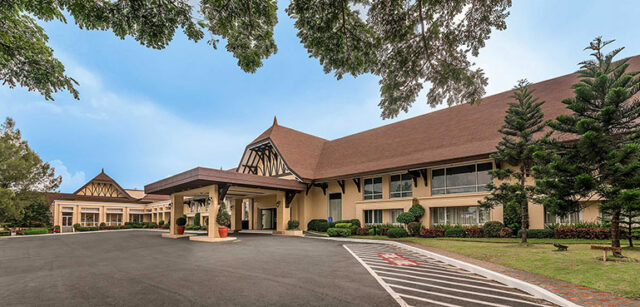
Taal Vista Hotel: A cultural landmark in the heart of Tagaytay

As part of its ongoing commitment to sustainability, Taal Vista Hotel continues to enhance its eco-friendly initiatives with thoughtful programs designed to reduce its environmental footprint while maintaining exceptional guest experiences. This year, the hotel proudly introduces its latest “Plate for the Planet” dish, Malunggay Pancit Verde — a flavorful and nutrient-rich take on a Filipino classic merienda, made with locally sourced ingredients that support both the environment and the community.

Sustainable Dining: The Heart of Plate for the Planet

Malunggay Pancit Verde: Rice noodles tossed in malunggay pesto topped with seafood and smoked fish

With sustainability at its core, Taal Vista Hotel has embraced garden-to-table principles, sourcing local and seasonal ingredients to minimize food miles and support nearby farmers. The latest addition to its ‘Plate for the Planet’ initiative, the Malunggay Pancit Verde, embodies this vision. Infused with the goodness of malunggay — a powerhouse of nutrients — the dish not only provides a wholesome and delicious meal but also highlights the hotel’s dedication to sustainable food choices.

This eco-friendly menu addition is part of a broader initiative that includes:

  • Locally Sourced Ingredients: Supporting small-scale farmers and reducing carbon emissions from transportation.
  • Waste Reduction: Encouraging mindful dining through portion control and food waste management.
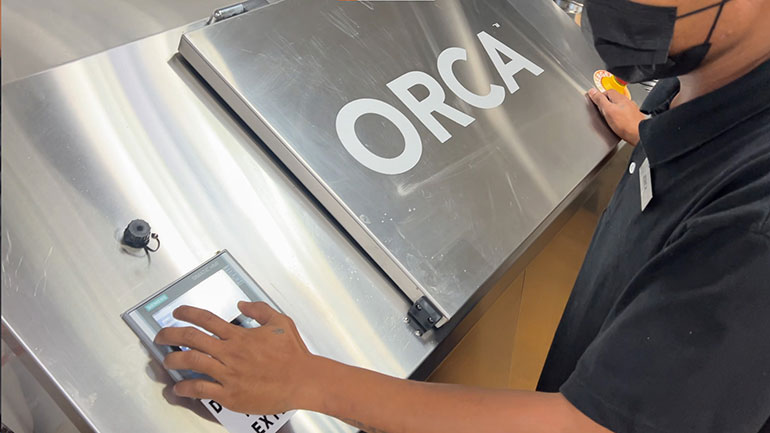
  • Eco-Conscious Operations: Utilizing the ORCA biodigester, which converts food waste into a liquid safely discharged into the sewer system, preventing landfill waste.
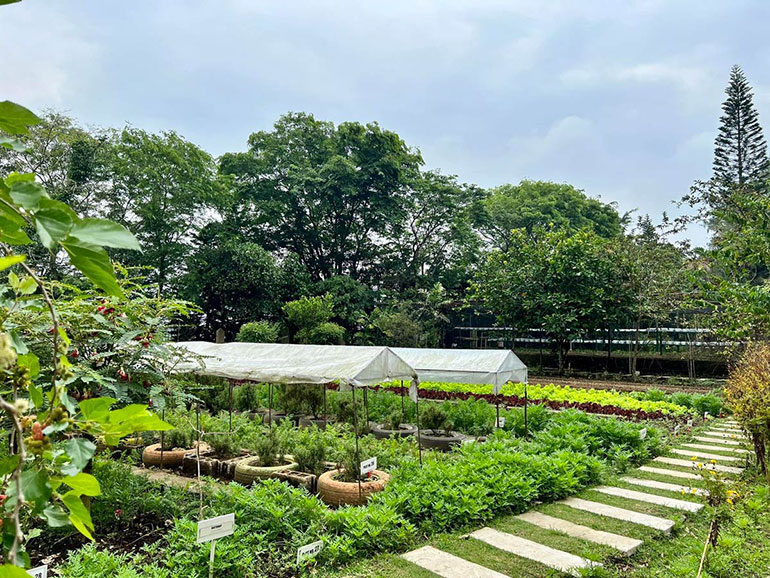
Taal Vista Hotel Organic Vegetable Garden

Beyond the Plate: Hotel-Wide Sustainability Initiatives

Taal Vista Hotel’s commitment to sustainability extends beyond the kitchen. The hotel has implemented energy-saving measures, including transitioning to inverter air-conditioning units and LED lighting, reducing energy consumption across all 262 guest rooms. Additionally, it actively conserves water through rainwater harvesting and the use of water-efficient fixtures.

ORCA Rapid Composter: A groundbreaking microbial process to convert food waste into a safe liquid which is then seamlessly discharged into the sewer system

To further minimize plastic waste, the hotel has replaced single-use toiletries with dispenser systems, generating an annual savings of P823,000, and eliminated plastic water bottles in favor of refillable glass pitchers, saving P640,000 yearly.

A Commitment to a Greener Future

Taal Vista Hotel has been actively working towards reducing its carbon footprint, with a strong focus on energy efficiency, water conservation, waste reduction, and responsible sourcing. In 2024, the hotel recorded 5,021 tons of greenhouse gas (GHG) emissions and has set an ambitious yet strategic goal of reducing this by 10% in 2025. This initiative aligns with SM Hotels and Conventions Corp. (SMHCC)’s sustainability objectives, ensuring that every step toward eco-conscious operations is taken with careful consideration of both environmental impact and guest experience.

“Our approach to sustainability is not just about making changes — it’s about making a difference,” said Ramon Makilan, General Manager of Taal Vista Hotel. “By gradually upgrading our equipment and operations, we are able to introduce impactful programs while keeping the warmth and hospitality our guests love.”

Inviting Guests to Be Part of the Change

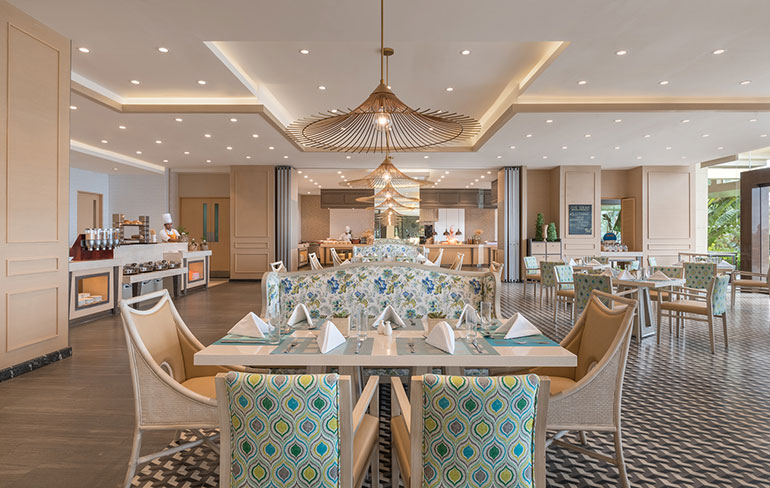
Veranda Restaurant is National Ecolabelling Programme Green Choice Philippines (NELP-GCP)-certified, with 33% of its à la carte menu locally sourced.

Taal Vista Hotel believes that sustainability is a shared responsibility. Guests are encouraged to join the movement by embracing eco-friendly practices, such as using their own tumblers, participating in the towel and linen reuse program, and practicing mindful dining by taking only what they can consume at the buffet.

As Taal Vista Hotel continues to innovate in its sustainability journey, initiatives like ‘Plate for the Planet’ and its new Malunggay Pancit Verde serve as a reminder that small, intentional choices can create a lasting impact — for both the planet and future generations.

For more information on Taal Vista Hotel’s sustainability efforts and dining offerings, visit https://www.taalvistahotel.com/sustainability-program/ or follow @taalvistahotel on social media.


Spotlight is BusinessWorld’s sponsored section that allows advertisers to amplify their brand and connect with BusinessWorld’s audience by publishing their stories on the BusinessWorld Web site. For more information, send an email to online@bworldonline.com.

Join us on Viber at https://bit.ly/3hv6bLA to get more updates and subscribe to BusinessWorld’s titles and get exclusive content through www.bworld-x.com.

ADVERTISEMENT
ADVERTISEMENT